
We are on the cusp of autumn here on the Western Slope and the weather is truly spectacular; any Colorado resident will tell you that September here is like nowhere else. Most days remain warm and bluebird sunny, but the overnight lows routinely drop into the mid-40s, and our morning and evening chores require an extra layer. A hard freeze is in our near future – three to four weeks, at most – and this year I won’t be too sad about letting the crops go. It has been a tough season of learning, and we need time to rest and regroup.

Our sworn mortal enemy for all eternity.
Our greatest challenge was a relentless onslaught of grasshoppers. We had an invasion last year and thought that was intense, but that pest pressure was nothing compared to this season. Early lettuces, hardy greens, newly germinated beets and carrots, almost all brassicas – everything gone; these hungry monsters leave only devastation in their wake. Because we do not use sprays or treatments of any kind, all we can do is cultivate a healthy ecosystem in the hope that birds, praying mantises and other natural predators will keep the population under control. Local lore says grasshoppers invade on a three-year cycle, so it will be interesting to see how we fare next year.

Broccoli plants destroyed by grasshoppers. Note that the leaves are nearly stripped clean.
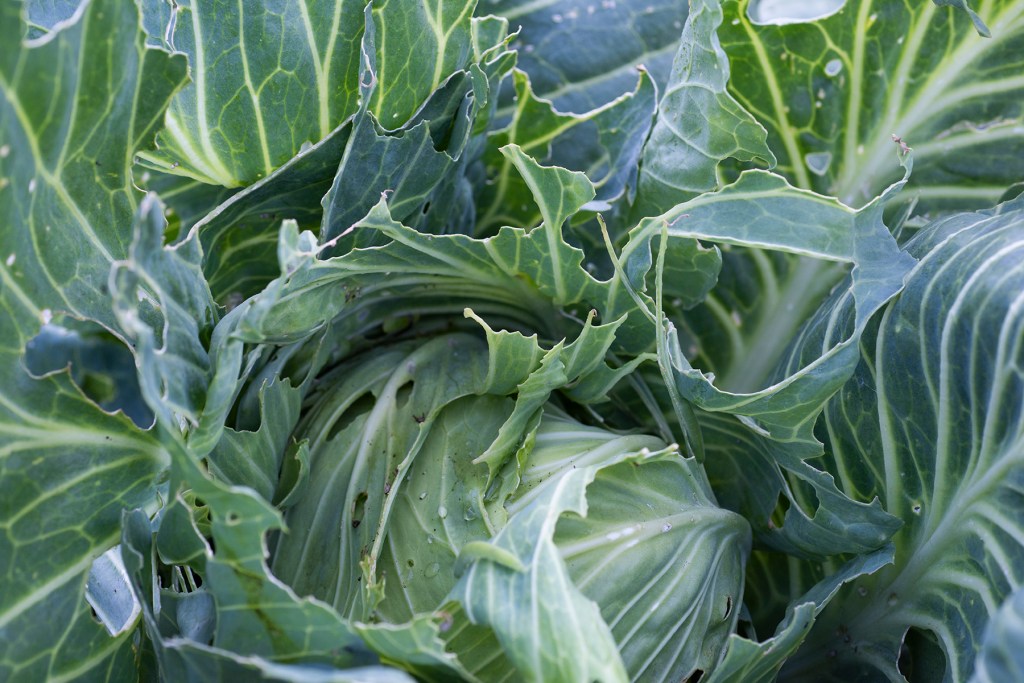
Again, note the extensive leaf damage.
The grasshoppers definitely preferred brassicas to any other crop; two dozen red cabbage starts vanished overnight in early June. The ‘Late Flat Dutch’ cabbage, however, managed to withstand most of the attacks. The outer leaves are definitely eaten, but the heads remained intact – and massive! We are harvesting heads at 12-14 lbs. each, so large they have to be cut into pieces to fit in the fridge. And the cabbage is delicious, crunchy and spicy! This is a terrific cultivar for our area; it can clearly put up a fight against the grasshoppers and is a great choice for sauerkraut. We’ll add this to our regular crop selection.
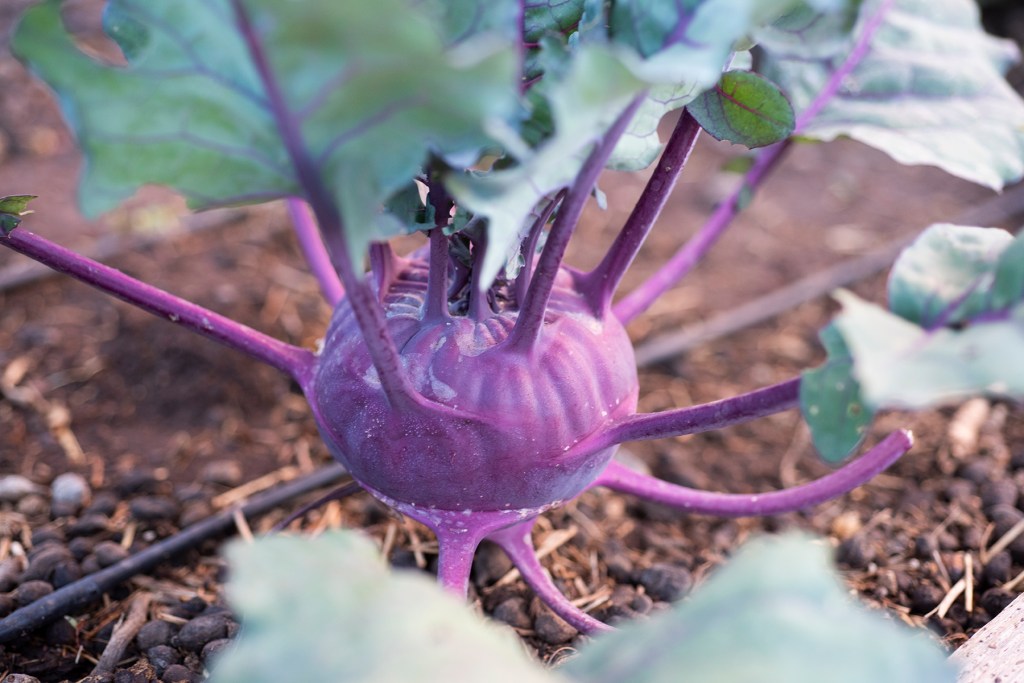
The grasshoppers mostly left the kohlrabi alone – a welcome respite.
Do you eat or grow kohlrabi? Kohlrabi isn’t well known in much of the U.S. and isn’t frequently found in standard grocery stores, but it’s crisp and flavorful and does well in our climate, plus it’s a great source of vitamin C, potassium and fiber. Our ‘Azur Star’ kohlrabi also survived the marauding hordes and the hot, dry July. Kohlrabi can be eaten raw or cooked, but I usually julienne it into a crunchy slaw with apples, cabbage, scallions and a tangy apple cider-poppy seed dressing.
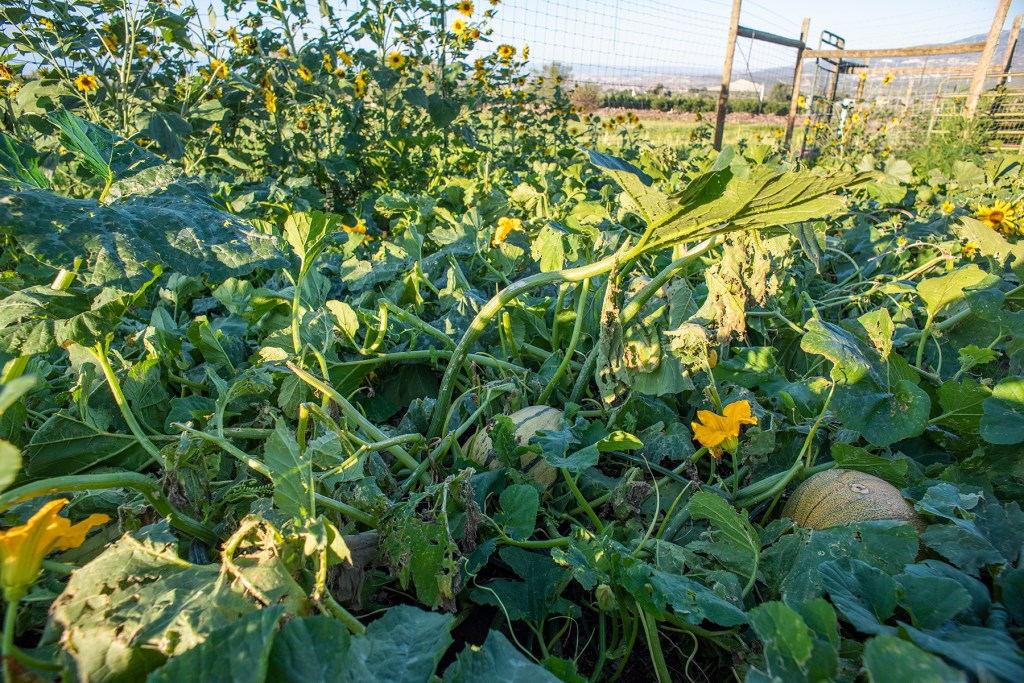
The crushed winter squash patch after our second major hailstorm.
We had two significant hail events this year, in a region where we rarely if ever see hail. The second storm, towards the end of a cool, wet August, did a lot of damage not only to our crops but to our neighboring peach and apple orchards. Our winter squash patch was looking proud, leafy and lush, but ten minutes of hail left its mark. Most of the fruit survived, but the giant leaf canopy was badly damaged; since the plant needs its leaves to survive, it’s likely that there will be a serious yield loss. Farmers around the world are scrambling to anticipate and respond to ever more serious weather events as climate change intensifies, and we’re no different.

Anyone want to provide a cultivar ID on this hot pepper?
The small hot peppers performed okay – they’re neither bothered by grasshoppers nor damaged by hail, and they thrive in our marginal soils. The larger bells and frying peppers, on the other hand, actually suffered from blossom end rot this year thanks to the aforementioned cool, damp August, and we’ve harvested very few decent sweet peppers. Blossom end rot is caused by poor uptake of calcium and is common in some tomato cultivars; a period of drought followed by excessive moisture (or any wildly inconsistent watering) can trigger it. Our hot, dry July followed by August’s rain clearly provided the perfect conditions. Until this year I hadn’t even known that peppers could suffer from BER as I’d never before experienced it. As mentioned, this was a season of learning. So. Much. Learning.

Apples destined for hard cider in the orchard block to our north.
Neighbors and friends have again been very generous with their peaches and apples this season; we’re always happy to glean hail-damaged fruit. I’ve put up thirty quarts of peaches already and just yesterday we gleaned six boxes of Galas, neatly stacked in winter storage and destined for applesauce and animal treats. As always, we are thankful to be surrounded by such a wealth of incredible local fruit.

1960 Aston Martin DB4GT (left, about $3M) and 1958 Ferrari 250 Testa Rossa (right, about $35M).
We don’t leave the farm often, but we never miss the Colorado Grand, which comes through our area almost every September. The Grand is a thousand-mile rally across the state showcasing pre-1960 cars that have raced competitively at least once; the cars vary each year, but entrants can range from a $15K MG to an exceptionally rare $70M Ferrari 250 GTO. This is an incredibly unique event and is kept very low-key, with drivers and enthusiasts congregating for a casual lunch or coffee at a town park to raise money for local scholarships. For gearheads, the Grand is an event not to be missed and one of the highlights of our fall.
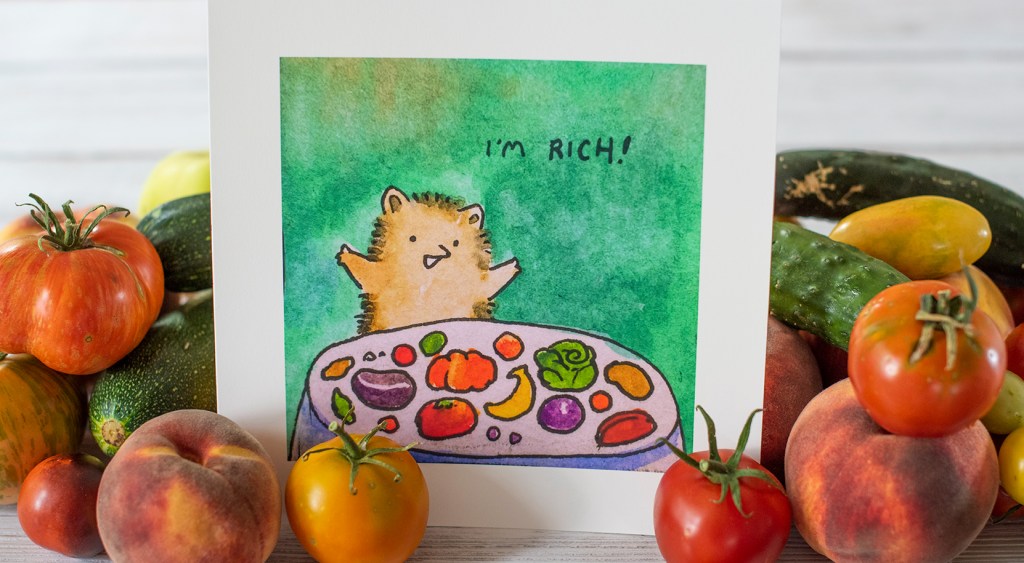
We drag our tired selves to the tail end of an exceptionally difficult and challenging season – and finally, finally towers of red and yellow and green and purple tomatoes shimmer precariously on countertops. Peaches, pears and apples threaten to topple every which way. Long braids of garlic dry in the tractor shed. The refrigerator is crammed with fresh, crisp greens and huge wedges of crunchy cabbage. Winter squash is almost ready for harvesting and curing. Soil-encrusted potatoes nestle peacefully in the pantry. The beans promise to finish drying down soon enough. Even in a tough year, we have grown and harvested so much incredible food; this little painting perfectly sums up how I feel about this season of abundance. (Original artwork by Anna-Laura Sullivan.)
Wishing you abundance as well, dear friends.
P.S. I’ll be a featured presenter at two upcoming events: the Homesteading Conference in Montrose on September 21 and the Harvest Festival at our local arts center on October 12. If you’re in the area, please come out and say hello!
 Finding Quiet Farm
Love the updates Elizabeth! Here is to a better season next year and hopefully all that you learned will be useful and valuable in future seasons.
LikeLike
Thanks, Sara! The best thing about farming is you can never learn it all – and yes, hard lessons will (hopefully) always pay future dividends!
LikeLike
Goodness, weather and insects remind me how fortunate I am to be in such a mild climate without many insect problems. It can be boring, but is worth it. I have no idea what that pepper is. I grow only the simplest and common varieties, and only rarely. Mild weather and temperatures has its disadvantages.
LikeLike
Hi Tony! Our climate is definitely full of challenges! I always joke that if I ever grow food anywhere else than a high-plains desert, I’ll think it’s the easiest thing in the world. Hoping you had a successful and productive season!
LikeLiked by 1 person