On the road again + best travel tips

It’s early October, cool and crisp. N and I have been home from our round-the-world adventure for about four months, and it’s time to go again. We’re at the moment in a flurry of last-minute preparations to head to Oregon for a month, where we’ll volunteer on another goat dairy. This trip is quite a bit easier than the last one: no worrying about visas or passports, no cramming everything into just one bag, plus we’ll only be gone for one month, instead of five. But in the spirit of adventure, we thought we’d share some of our most useful travel tips, gleaned from nearly two decades (!) of short- and long-term travel.
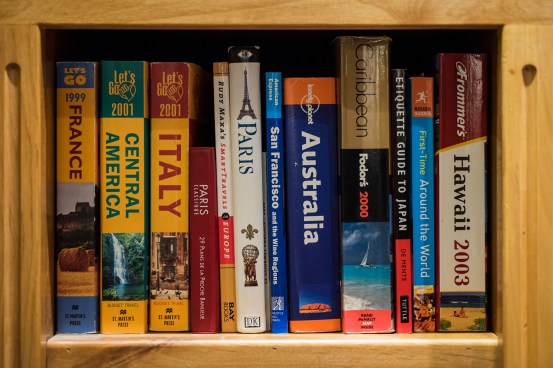
Travel Books.jpg

There are vacations, and then there are trips. One could argue that a trip is a bit more serious than a vacation; it might last for more than a month and involve a committed disentanglement from the everyday world. And nowadays, with opportunities for remote work increasing, it’s more likely that you might be able to swing that four-months-or-more abroad plan you’ve been ruminating on for ever so long. Below, our most useful tips for those of you who might be thinking about making the leap from a standard holiday to a trip.

  • Identify – roughly, at least – what you expect to get out of your travel. If you’re just traveling to capture Insta followers or get paid for blogging, fair enough. Or if you’re running away from a difficult situation, be honest about that, too. But don’t go traveling without at least a reasonably clear idea of what you hope to accomplish. Any less, and you’re asking the travel itself to do all the work. You have to show up, too.

Travel Blur.jpg

  • Make a budget. Then increase it by 25%. The old adage goes like this: “Lay out everything you think you need. Then take half that and twice the money,” and it holds true. For our five months overseas, we budgeted generously for two adults and still went over that number by 20%. They may say that the best things in life are free, but the truth is that travel costs money, and there is no glory in arriving back in your own country completely, totally broke. Account for the unexpected; for us, that was the high cost of point-to-point travel in Japan and unexpected gratuities required literally everywhere in India.
  • Ensure your passport is valid for at least six months beyond your return date. This seems like a surprisingly obvious tip, but you’d be amazed at how many travelers are caught out by it. Different countries have different requirements, but having at least six months’ validity, plus at least three or four blank pages, in your passport will make border crossings much easier.

Travel Diary.jpg

  • Please, research your destinations – and their visa rules – before you go. Again, different countries have different requirements and all of this information can easily be found online, most likely through your home country’s government. “I didn’t know” is simply not a valid excuse at any international border crossing.
  • Also, do a bit of research on your destinations and their customs. In many countries, it’s not appropriate to show shoulders and/or knees. Women might be expected to cover their heads. Certain countries may only eat with the right hand. Knowing this in advance can save a lot of awkwardness once you arrive, and you should always, always be respectful of the customs of the country you’re visiting.

IMG_20171011_095945299.jpg

  • If possible, sign up for a debit card that reimburses ATM fees. In the U.S., Charles Schwab provides some terrific options that can save you a lot of money. Find out if any banks in your country offer similar programs because ATMs are simply the very best way to withdraw local currency and avoid usurious fees. Money changers – especially in airports and train stations – should be used as an absolute last resort. (Thanks, India, for only having broken ATMs in your airports so we were forced to use money changers.)
  • Get travel insurance, and know its limitations. There are a number of great plans out there, but they vary enormously based on your home country and where and how long you plan to travel for. Do your research and don’t skimp on the essentials, and make sure you understand what will be covered if you’re required to be repatriated to your home country for additional treatment. Oh, and know that you’re rarely, if ever, covered for high-risk activities like skydiving, bungee jumping and so on.

Travel backpack.jpg

Five months in just one backpack each.

  • Pack less than you think you need, and buy your travel clothes at your local Goodwill or op-shop. It sounds counterintuitive, but you actually need far less for travel of more than two weeks than you do for a standard holiday. Bring some concentrated biodegradable laundry soap, and get used to washing your smalls in a hostel sink. Pegs and a simple washing line come in handy, too. Don’t take any article of clothing that you absolutely treasure – my favorite jumper is lost forever somewhere on an Indian train, or hopefully keeping someone else warm. You can always buy things on the road and donate what no longer serves you.
  • Ziptop bags, duct tape, safety pins and a small sewing kit are absolute necessities. If there is one thing that long-term travel teaches you, it’s to be resourceful with what you have. Especially if you’re traveling extensively in underdeveloped countries, you’ll find that things we take for granted at home aren’t always available. Being able to successfully repair your own kit is good for the wallet and the psyche.

TajMahal 1.jpg

Oh, this? Just doing a few renovations at our summer cottage.

  • Identify your priorities, and leave the rest to chance. In any country, there will be a few must-sees. Choose your top two or three mandatory sights, and let the rest of your trip happen as it will. Serendipitous travel moments rarely occur when every single second is carefully plotted out.

Above all else, go. Don’t let this or any of the billions of other pre-travel posts out there scare you – just go. There are few experiences in life as enriching as long-term travel and it will change you in ways you never even knew were possible. Grab your passport and your backpack and get out there. The world needs you.

 

Cooking Class: Udaipur, India

It’s been two months since we returned and N and I are missing our travels more than we expected. We thought we might revisit a few of our most memorable experiences here.

We went on lots of market tours during our travels and took a couple of incredible cooking classes, too. Udaipur, in the western Indian state of Rajasthan, was one of our favorite cities in India. It’s friendly and accessible, easy to walk and to navigate and filled with compelling sights and smells. While we were here, we went to an in-home cooking class led by a quiet, lovely Indian woman named Gita. She didn’t speak much English, but this was definitely one of those times when not many words were needed; the idea of food as a universal language is such an accurate cliché.

NJB_6253

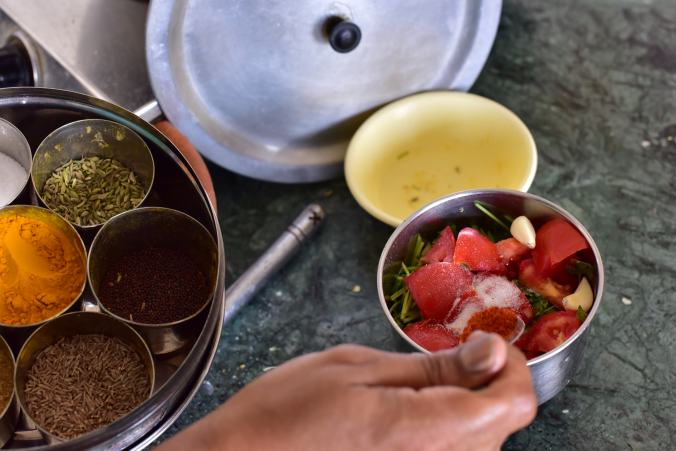
Traditional masala boxes contain cooking spices. Women are often given these as a wedding gift to bring to their new husband’s home.

NJB_6313

Combining fresh tomatoes, coriander and garlic for tomato chutney.

NJB_6273

Toasting whole spices brings out their aromatic oils.

NJB_6286

Making aloo gobi masala, cauliflower and potatoes with peas.

NJB_6287

This will be the filling for our samosas.

NJB_6294

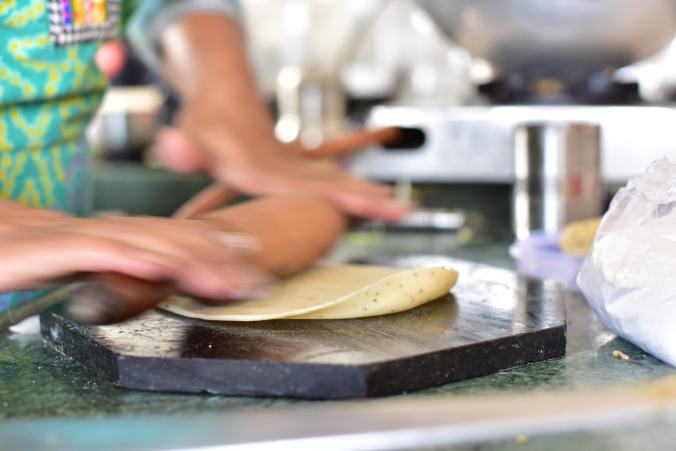
Rolling fresh dough for samosas.

NJB_6297

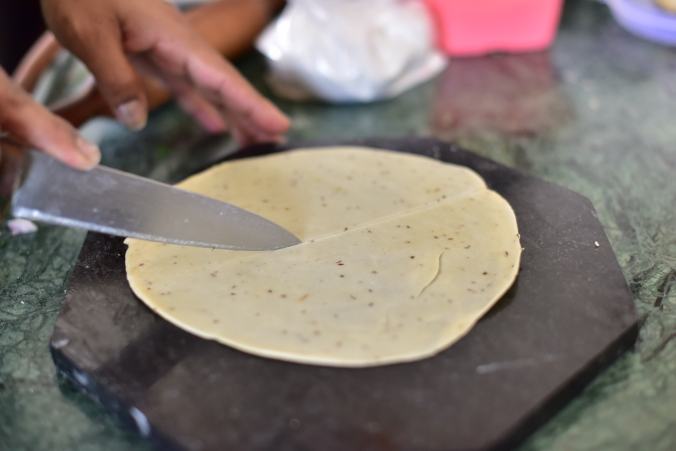
The dough, speckled with cumin seeds, is cut into quarters.

NJB_6298

Years of practice make this look easy.

NJB_6301

Filling the samosas

NJB_6307

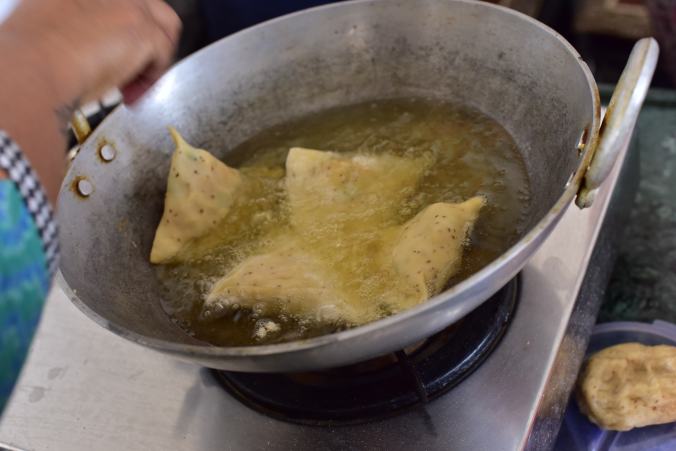
…and into the fryer they go.

NJB_6326.1

You don’t need fancy kitchen gear to produce amazing food.

NJB_6377

Many homes in rural India still don’t have refrigerators or freezers, so you buy what you need and cook fresh food every day.

NJB_6394

Indian cuisine includes an array of incredible breads.

NJB_6386

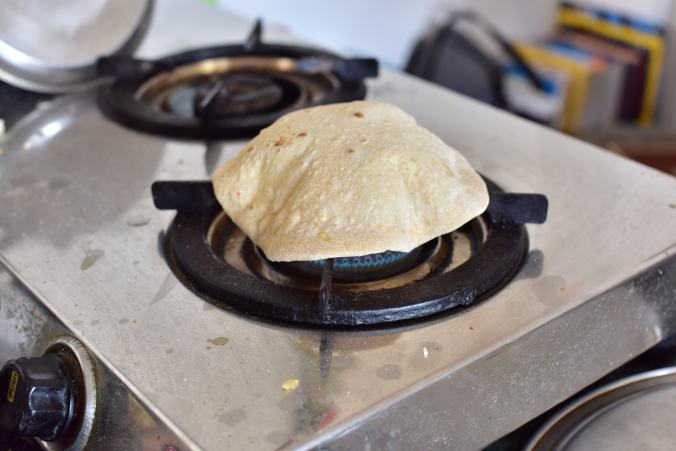
Poori puffs up when it’s cooked over an open flame.

NJB_6404.1

The best part of any cooking class is sitting down together to eat delicious food!

NJB_6413

Our kind, generous host, Gita – a truly incredible cook.

We miss you, India!

32,831 miles later

About eight months ago, we decided to put our regular lives on hold for a brief period and venture out to see the world again. We were heartsick and weary and in desperate need of a break from pretty much everything except each other. So we gave away our chickens, threw a few clothes in a backpack and locked up our house. And thus it happened that on a chilly January day, we left Colorado for Japan.

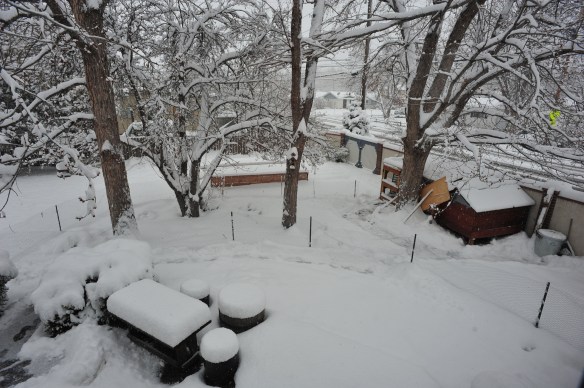
Garden Snow 01

Colorado

Tokyo Fuji sunset 01 sml

Japan

In Japan, we visited monkeys in hot tubs and worked on farms. We ate ramen and tempura and so many other delicious things. We walked Tokyo and Kyoto and fell deeply, completely in love with a country so strange and different and welcoming and lovely that we cannot wait to return.

New Zealand 01 sml

New Zealand

From Japan, we flew to New Zealand. We rented a ragged campervan and drove the length and breadth of the country. We stumbled on an old sheep station and did some stunning walks and learned how macadamia nuts grow. And we discovered that we are perfectly content to live in a campervan…and we plan to do that again soon, too.

Cambodia 01 sml

Cambodia

After New Zealand, we were off to southeast Asia. We started in Cambodia with Angkor Wat and we also saw interesting things being made, like incense and rice noodles and tofu. Oh, and it was hot. (At least we thought so until we got to India, where we learned what heat really is.)

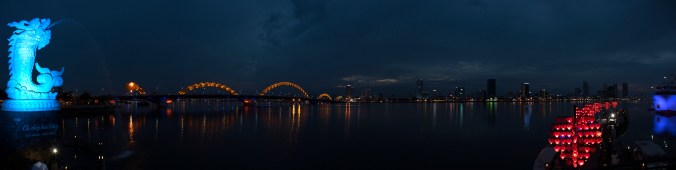
Da Nang 03 sml

Vietnam

We traveled overland to Vietnam, where we jumped on trains, dodged motorbikes, devoured street food and struggled to learn more about a conflicted country with a conflicted history.

Chiang Mai sml

Thailand

Then it was time for a brief rest in Thailand; we went to more markets and bicycled through rice paddies and learned how to make handmade paper. We didn’t ride any elephants but we loved our time on the Banana Pancake Trail.

Flower Market 01 sml

India

No matter what, we weren’t ready for the heat and noise and crush and total sensory assault that is India. We’ve never traveled anywhere that we loved and hated in equal measure – sometimes in the exact same moment – and this complicated country has for certain gotten under our skin. We’ll be back here, too, and much better prepared this time.

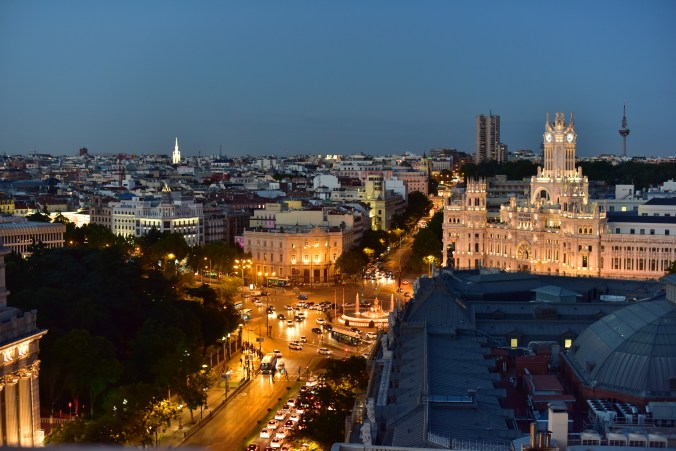
Madrid palace 01

Spain

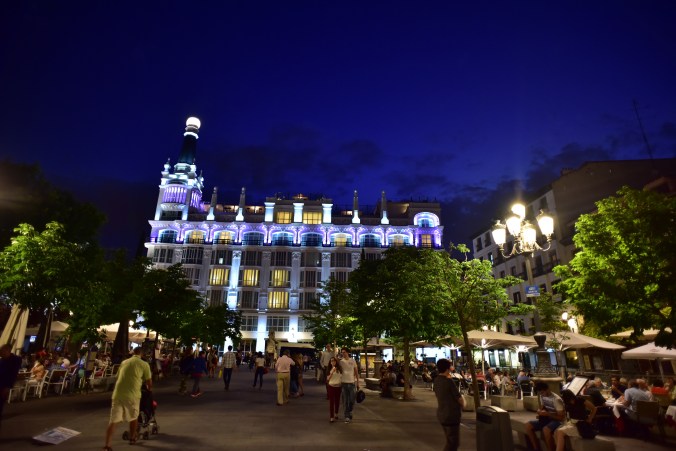
We flew from India to England, with a brief jaunt to gorgeous Madrid. This is one hell of a city…we miss drinking canas and eating jamón y queso at 2AM with hundreds of other people in the city’s beautiful plazas.

Bushby 01 sml

England

We finished with some restorative time in the Midlands’ lush, rolling hills, where the innumerable shades of intense green defy belief. Hours of walking with only cows and sheep for company and then perhaps a brief stop at the local pub for a pint of Tiger. It’s not the worst way to spend a day.

Denver Moon

Colorado

And that brings us to now. We’ve been home for about three weeks and we’re struggling to adjust. This is not the country we left; it has been immensely challenging to reconcile the joy and freedom and lovely people of our travels with the rage and divisiveness and fear currently smothering all of us like a dense fog. But we’re back on our bikes, we’re volunteering on a goat farm and we’ve planted our garden. And this fall, we’ll be out on the road again to search for our farm property in earnest. Thanks for joining us on our travels over these past months and please stay tuned, friends, as our journey has just begun. We’re off to find Quiet Farm.

The photos we didn’t take

N took a lot of remarkable photos during our round-the-world trip, but you won’t see us riding elephants, cradling sea turtles, posing for selfies with tiger cubs or swimming with captive dolphins. (We’ve certainly swum with wild dolphins in the middle of the ocean, but we don’t have the photos to prove it.)

NJB_4032

Animal tourism is all of a sudden a hot topic. Last year, SeaWorld announced that it would cease its controversial orca captive breeding program. In May, Ringling Brothers Circus performed its last show; ticket revenue had dwindled for years once the animal attractions were eliminated. And last autumn, TripAdvisor – one of the world’s largest ticket sellers for tourist attractions worldwide – announced that they would no longer sell tickets to most animal attractions. All of these stories, and many more, clearly indicate that knowledge about this topic is growing, and quickly.

A recent Oxford University study indicated that between two and four million visitors per year pay to visit animal attractions that are considered harmful to animal welfare. Most of this is done out of ignorance, not cruelty. If you’re an American tourist, for example, you might assume that other countries have strict standards for the animals’ health and wellbeing (even though America doesn’t). The reality, however, is that most animal attractions are in desperately poor countries, and the “trainers” might be impoverished people simply looking to feed their family. The possibility of strict regulations, competent oversight or of punishments meted out for violations, is laughable just about everywhere.

NJB_3561

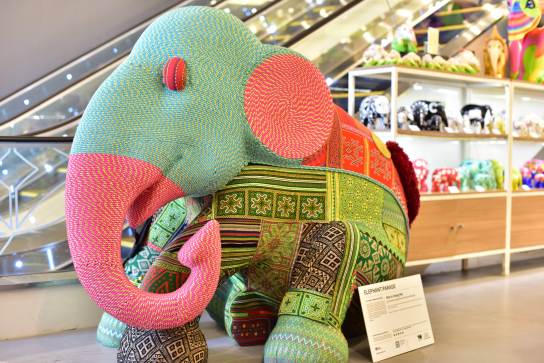
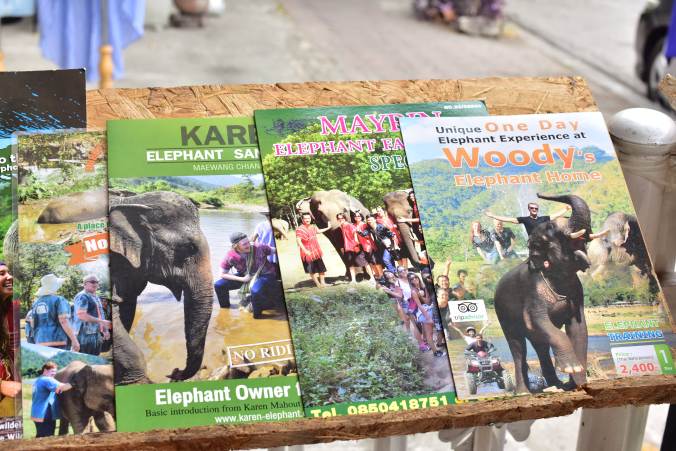
As such, animal tourism was a major issue during much of our trip, particularly in southeast Asia. If you visit Thailand for the first time, one of the things you’ll notice quickly is that elephants are ubiquitous. They’re used in high-end art and on cheap tourist trinkets.

NJB_4051

Elephants advertise beer here too.

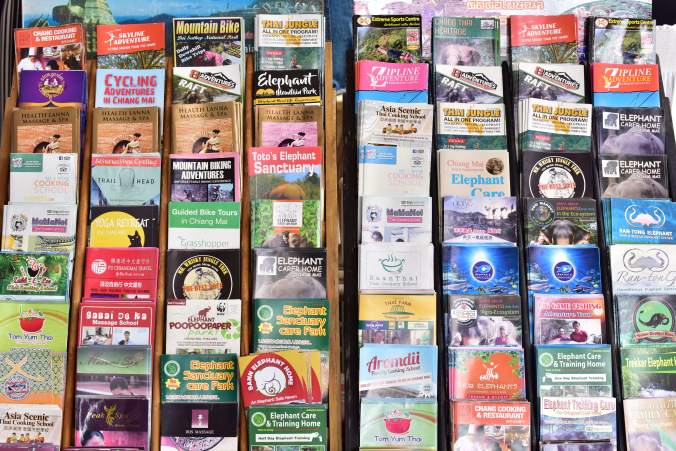
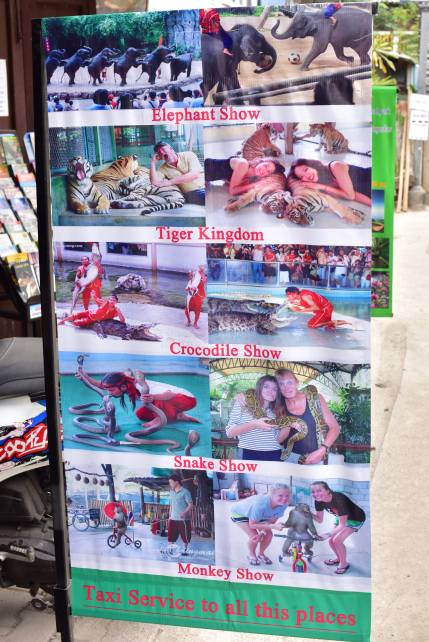
Their elegant silhouette can be seen everywhere, and nowhere more glaringly than in the racks and racks of tourist brochures found outside just about every restaurant and guesthouse in Chiang Mai, where these photos were all taken. (Please know that elephant riding and other abusive animal tourism is available all over Asia; we just spent the most time in Thailand and therefore found its constant and unrelenting promotion here particularly overwhelming.)

NJB_4028

Look at all the options you have! Definitely go for the cheapest one. The animals like it there best.

NJB_4017

NJB_4031

NJB_4016

Notice words like happysanctuary and home? These places are anything but.

Many people don’t know that elephants aren’t physiologically designed to be ridden. Despite seeming sort of like a giant, floppy horse, elephants’ spines aren’t built to support weight. Plus, elephants are fundamentally wild animals, and in order to be “domesticated” enough for tourists, they have their spirits broken. They’re also naturally social creatures with intricate familial relationships, and in these camps they typically exist in solitude. And adult females are routinely slaughtered in order to capture wild calves. I could go on and on, but I’m sure you get the idea. Elephants are not supposed to be a tourist attraction.

NJB_4019

Tired of this lecture? We haven’t even discussed cuddling tiger cubs yet! Tigers aren’t like house cats and they’re not thrilled about you pawing them. Most of the “tiger sanctuaries” in Asia sedate the tigers before letting the tourists in, just to ensure that the creatures are docile enough to avoid incidents. Oh, and sometimes they’re heavily involved in wildlife trafficking, too! Really some good people here. Absolutely give them your money.

NJB_4035

Don’t these look like fun? The animals are absolutely thrilled to have such an opportunity to enhance your vacation.

Or perhaps you’d rather donate your money a little closer to home, to a place like Lion’s Gate in Colorado, which recently euthanized all of its animals even after other sanctuaries volunteered to take the lions, tigers and bears. These people do not care a fig about animal welfare, and don’t let the cute pictures make you think otherwise. Animal attractions rake in billions of dollars every year, and since there is massive profit to be made from charging people to “experience” (i.e. unintentionally mistreat) animals, it will continue to happen.

NJB_4026

Could we discuss how animal tourism provides jobs and livelihoods in some of the world’s poorest countries? Of course. Should we talk about zoos, which in some places are top-notch research and breeding facilities and in other places absolute horror shows, especially when the population is starving? Sure. Maybe we can discuss the fact that – at least in America – we raise animals for food in horrifying conditions and most people aren’t particularly bothered about that so why shouldn’t we mistreat them for our entertainment, too? And in response to all those hypotheticals, I would argue: because we as humans are better than that. Or at least we should be.

NJB_4049

The advertisements for the animal attractions are literally everywhere.

People who visit animal tourism attractions are typically people who love animals. They want to get up close and personal with fascinating creatures they don’t often encounter, and they’re willing to pay for that privilege. But the Oxford study demonstrated that as many as 80% of these people will visit animal attractions and post positive reviews online, without acknowledging the risks to the animals’ health and welfare. They argue that they really love tigers – they were even born in the Year of the Tiger! – so just one selfie with a drugged tiger cub won’t hurt. Because it shows their social media feed how much they love tigers! It is simply not acceptable, friends. Just as the way America currently raises most of its animals for food isn’t acceptable, neither is this.

NJB_4029

If you made it all the way to the end of this post, thank you. We’ve written about this because we think it’s important and we hope you do too. Please, if you’re considering visiting any sort of animal tourism attraction – whether in the U.S. or overseas – do your research, and don’t just fool yourself with glowing online reviews. Use your common sense and ask yourself whether a large, predatory and naturally solitary animal like a tiger really wants to be handled by human beings for endless hours each day. Not all animal attractions are necessarily poorly managed or abusive, but the bad ones definitely outweigh the good ones.
We say it a lot, but vote with your wallet – refuse to support organizations or attractions that promote any sort of animal cruelty (looking at you, Tyson, Hormel and countless others). This is especially relevant if you’re traveling in the Third World, but as we know from films like Blackfish, we’re to blame here in the U.S. as well. We write a lot about animal welfare on this site, and that’s true not only for what we eat, but what we exploit for entertainment, too. How you choose to spend your money matters, always – and the recent policy changes from major companies like SeaWorld and TripAdvisor shows that they’re paying attention to your choices. Use those choices wisely.

Comer y beber en Madrid

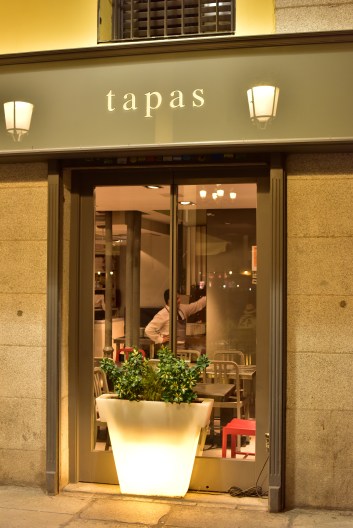
Dear friends, it should come as no surprise by now that eating (comer) and drinking (beber) are two of our favorite travel activities. We are quick to search out food and market tours wherever we go, and Madrid was no exception. Many thanks to Jorge at Secret Food Tours for taking us on a gastronomic adventure through his city!

NJB_7856

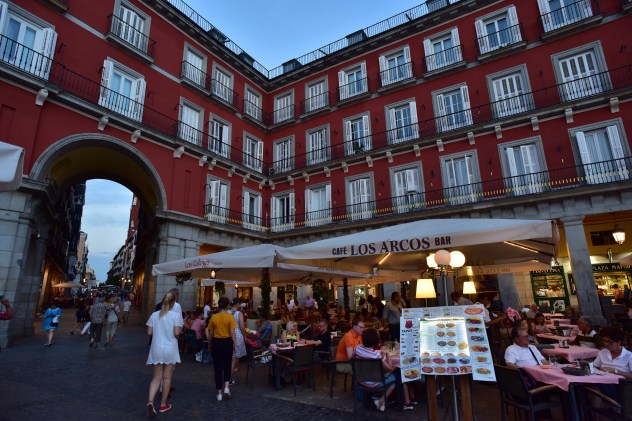
Madrid’s Plaza Major, a perfect example of Spain’s café culture.

NJB_7886.JPG

The Spanish verb tapear translates literally as “to eat small portions” – and of course from that we get tapas.  

NJB_7842

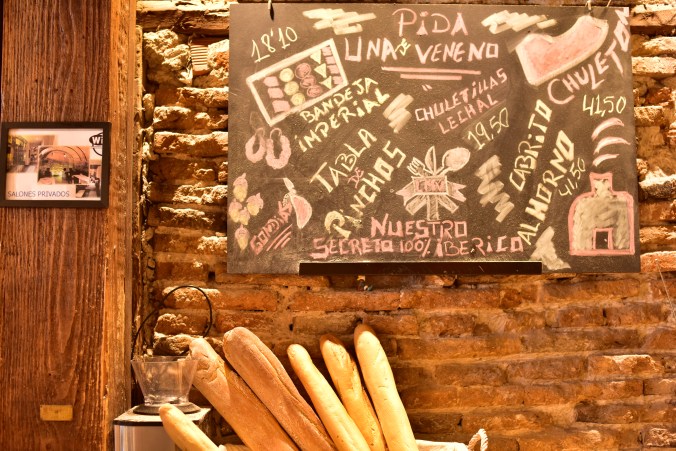
Chalkboard menus (and fresh baguettes) dot the city.

NJB_7841.JPG

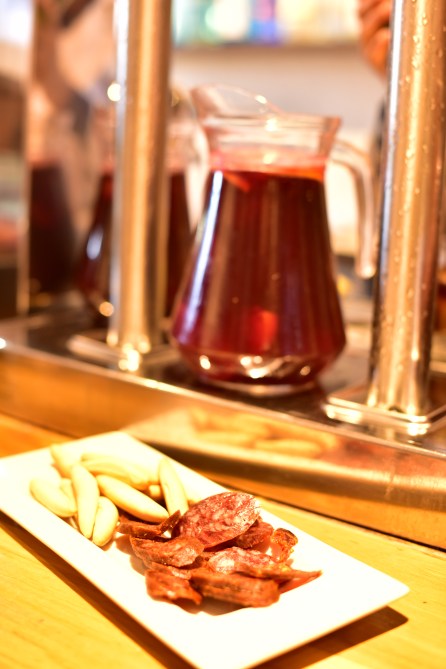
Chorizo and sangria. What more do you need, really?

NJB_7787

The city of Madrid issues plaques like the one above to stores and restaurants of historical significance in the city; this one dates from 1837. Many of these places pay rent that is far below market rates to keep their businesses open, because Madrid’s government has decided that they don’t wish to have the center of town filled with Starbucks, McDonald’s and tacky tourist stores able to pay inflated prices. Smart decisions like this help cities maintain their cultural character instead of becoming homogenized corporate copies.

NJB_7792

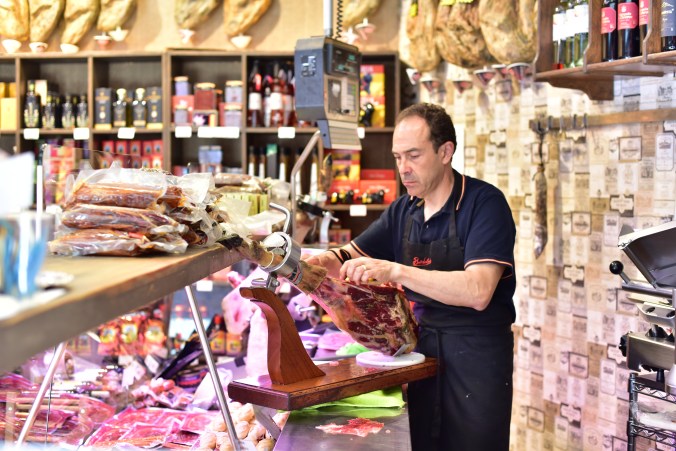
Slicing jamón by hand.

NJB_7851

Legs are hung for months or years to cure properly.

NJB_7795

Spain is justifiably famous for its jamón, which comes in different grades. Jamón ibérico, or Iberian ham, can only be made in Spain and Portugal from pigs that are at least 50% Iberian. The very best is called jamón ibérico de bellota, which comes from pigs allowed to forage in the wild for acorns, giving the flesh a sweet taste and silky texture. Jamón ibérico de bellota is so valuable that individual pigs often have armed bodyguards, since the entire pig can be worth as much as $4,000. Traditionally, it’s always shaved very thinly by hand and served as tapas with tiny breadsticks, above.

NJB_7849

Notice how the leg is stamped? Since they’re so valuable, it’s important that they can be traced to prevent forgeries and theft.

NJB_7798.JPG

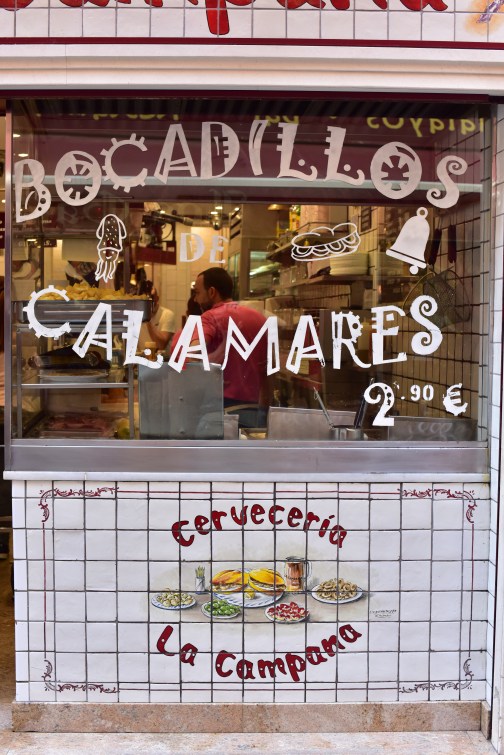
Calamari sandwiches are another classic snack in Madrid.

NJB_7809.JPG

NJB_7800.JPG

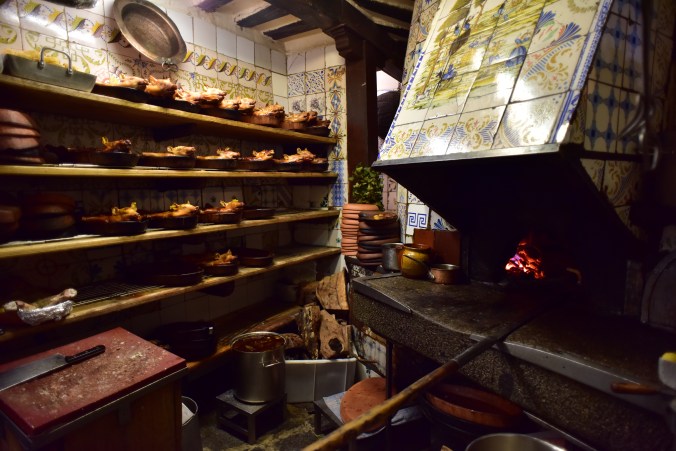
Did you know that the oldest continuously operating restaurant in the world is in Madrid? It’s famous for suckling pig, which you can see in the dishes on the left.

NJB_7775

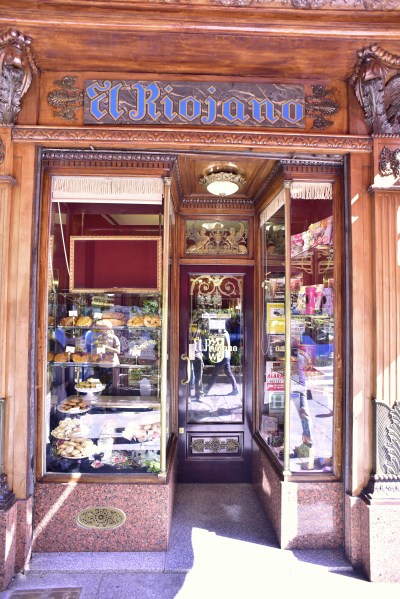
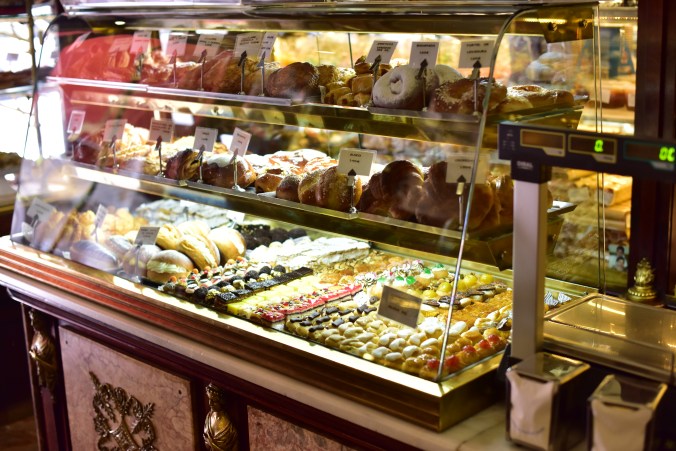
One of the oldest pastry shops in Madrid…

NJB_7779.JPG

…and their famous ponche segoviano, a layered pastry made with marzipan.

NJB_7780.JPG

France gets all the press, but Spain makes its fair share of incredible pastries.

NJB_7838

NJB_7822

Jorge demonstrating how to pour Spanish cidre, made from apples grown in the north of Spain.

NJB_7835.1

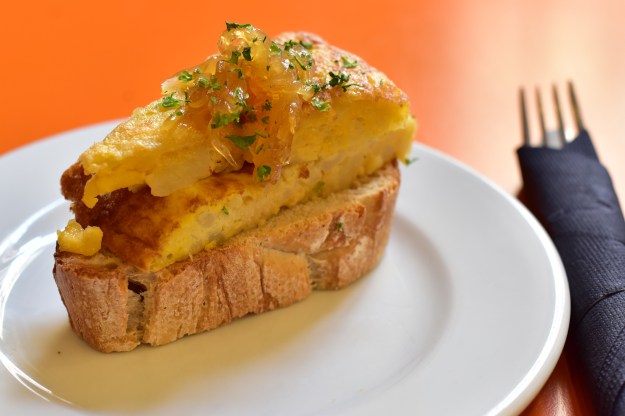
Classic tapas: a Spanish omelette, or tortilla, made of eggs, potatoes and onions, served on fresh bread. Simple, filling and delicious.

NJB_7831

A perfect pair: manchego and cidre.

NJB_7814

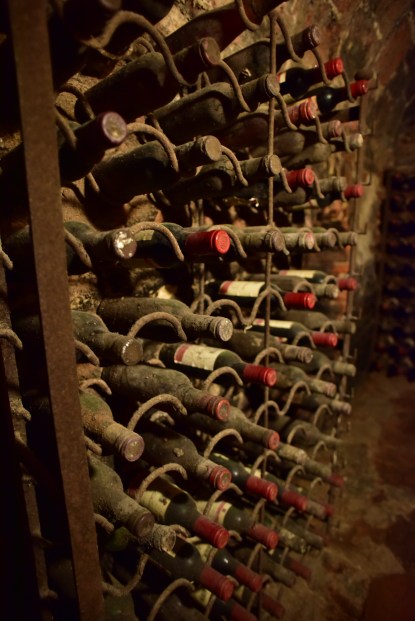
I’ll be in the cellar if anyone needs me.


Four days in Spain

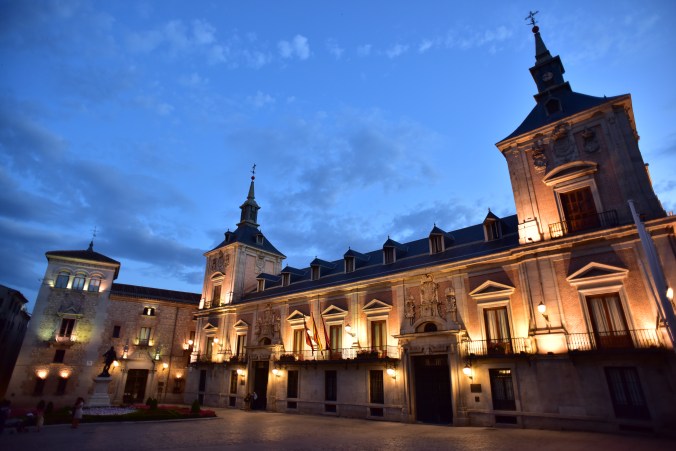
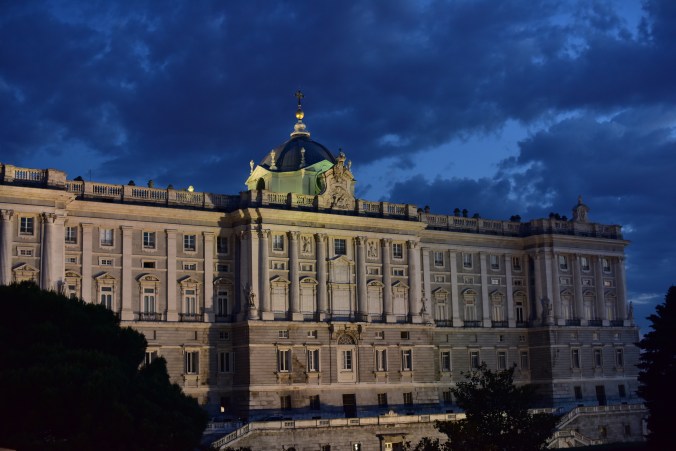
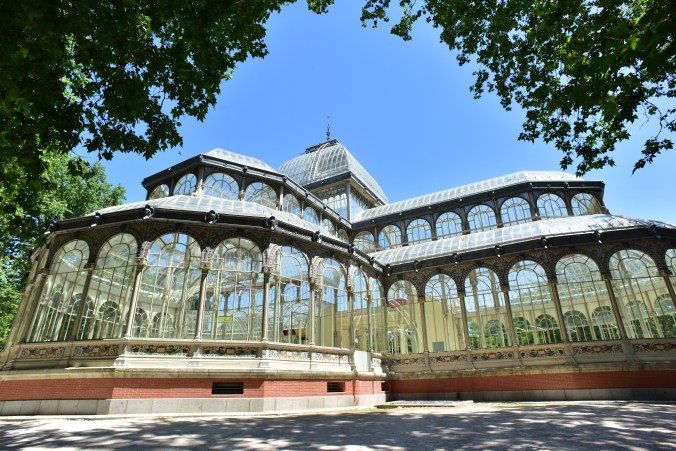
In the midst of a few weeks in England with N’s family, we tucked in a quick trip to Madrid. N and I have both been to other parts of Spain before – Barcelona, the Balearics, Valencia, Seville and Granada – but neither of us had visited Madrid, and we absolutely adored this city. Just look at this architecture!

NJB_7739

NJB_7687

NJB_7866

NJB_7862.JPG

NJB_7680.JPG

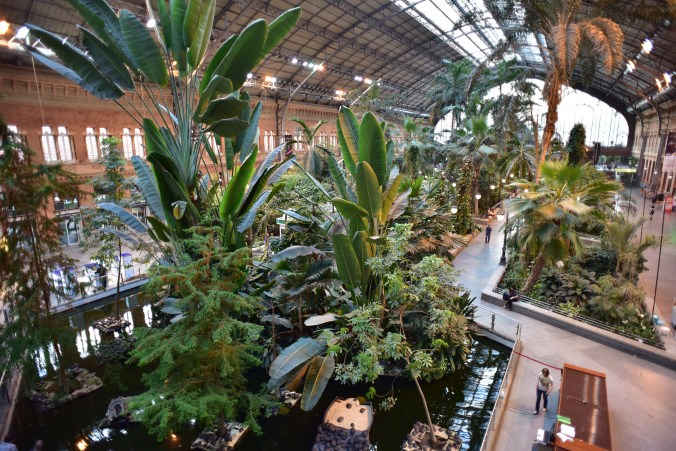
See the small black dots in the lower center? They’re turtles! In a train station!

NJB_7882

NJB_7863

NJB_7693

NJB_7887

NJB_7729.JPG

NJB_7783.JPG

NJB_7885.1

Interlude: We like big boats

…and we cannot lie. For this travel interlude, we thought we might revisit our seagoing years. N and I worked on a wide variety of different boats all over the world for nearly a decade, he as dive instructor and deckhand and me as chef. More often than not, people think we worked on cruise ships. This is understandable, because people know what a cruise ship is, and many of the boats we worked on have – quite frankly – no relevance to the real world whatsoever. Welcome to our former life!

T Lady

Far and away the best yacht we ever worked on…may we present the legendary and much-missed M/Y Triumphant Lady.

Boats’ status and other relevant information is generally conveyed by the name’s prefix. Triumphant Lady is a motor yacht, so she bears M/Y before her name. Sailing yachts are labeled S/Y (though they almost always still have engines), research vessels R/V, motor vessels (such as dive boats) M/V, and fishing vessels F/V. This allows you to tell at a glance a boat’s primary purpose, though the prefix is typically only used in formal settings and not when referring to the boat casually in conversation. Our crew uniforms, for example, almost never carried the prefix – just the boat’s name and image.

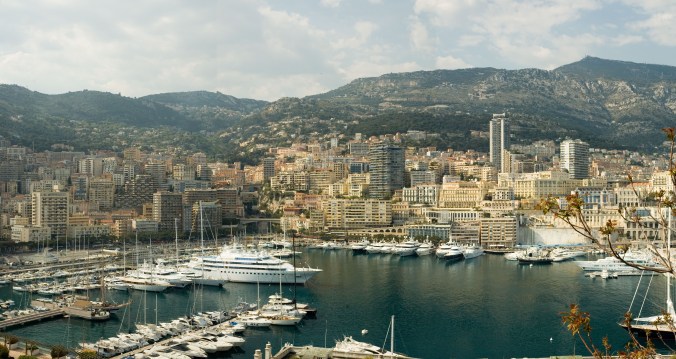
Monaco

There is no place in the world quite like Monaco’s harbor.

N and I worked on boats both together and separately. We started aboard scuba diving liveaboards and sailboats in Australia and the Caribbean, then progressed to the “white boats,” as private yachts (in a blend of derision and envy) are known. The snide label exists because there are so many crew constantly cleaning the boat, polishing its hull to a perfect gleaming white; the rough-and-tumble dive boats we worked on were a bit untidy, to say the least. Seawater and diesel exhaust leave a boat’s hull rather grimy, but a proud motor yacht would never arrive in port looking shabby. Depending on sea conditions, the deckhands would start scrubbing the hull with long-handled brushes on the way into port.

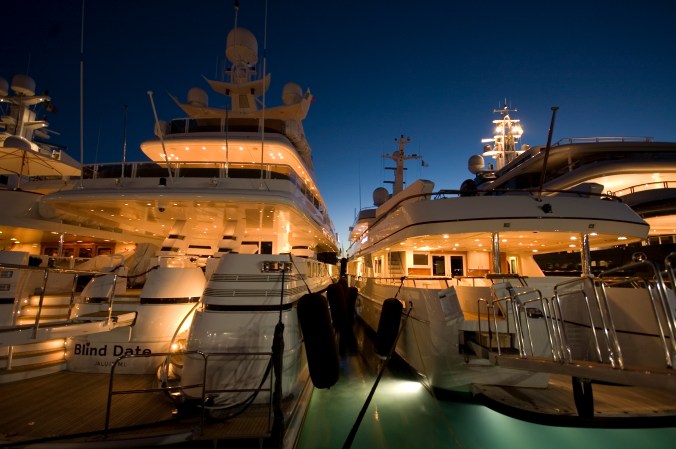
Charisma and Blind Date

M/Y Charisma (right) at the dock in Viareggio, Italy.

Our last yachting season was spent in the Mediterranean on Charisma. Our first charter guests, a young hedge fund manager and his wife, chartered both Charisma and Blind Date (above) simultaneously for their family group because each yacht could only accommodate twelve guests. At the time, each chartered for about $350,000 per week. The two yachts traveled in tandem for the week of the charter.

During our final season aboard Charisma we crossed from Florida to Europe (stopping at Bermuda, the Azores, Gibraltar and Palma en route) in April and returned to Florida in September. Traditionally, boats spend the winter in the Caribbean and the summer in the Med – the route ideally hopes to avoid hurricanes – but obviously yachts can go pretty much anywhere they want. Even the boat’s draw (or draft), which indicates how much of the boat is under the hull line and determines where it can enter, doesn’t matter much because fast tenders can ferry guests, crew and supplies to and from shore as needed.

Staniel Cay

Staniel Cay, Bahamas. Oddly, this island is famous for its swimming pigs.

Between the dive boats and the private yachts we’ve worked on, we’ve spent a lot of time in the Bahamas and the Caribbean (despite popular belief, the Bahamas aren’t technically part of the Caribbean because they’re not located in the Caribbean Sea). Definitely some of the best diving in the world, but as a chef it is exceptionally tricky (and shockingly expensive) to find fresh produce and other provisions. Some day, ask me about the time I spent well over $1,000 of the boat’s money on just a few basic groceries in St. Lucia.

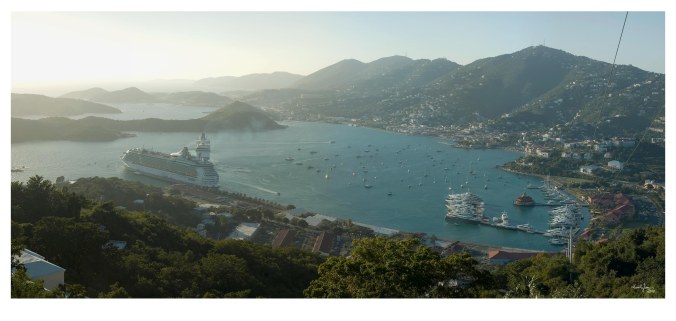
Charlotte Amalie.jpg

Charlotte Amalie, St. Thomas, USVI, taken from the bow of Sea Fox.

Notice that there is a cruise ship in the background, but we worked on private yachts similar to those in the foreground. It was always common to have cruise ship passengers strolling the docks, asking the deckhands which celebrity owned the yacht. Interestingly, most private yachts are owned by people you’ve probably never heard of, rather than the super-famous.

Rybovich

Rybovich Shipyard, West Palm Beach, Florida.

Charisma, at 150 feet, is second from the right in the photo above. As you can see from the yacht to the far right, that’s still little! Seawater really isn’t kind to machinery, so boats spend a lot of time in the shipyard for various reasons. Most yachts are in the yard for at least a few days at the end of every season; this may be to refresh the boat before upcoming charters, or it may be for something major, like a hull extension or a total refit, which often happens when a boat changed hands.

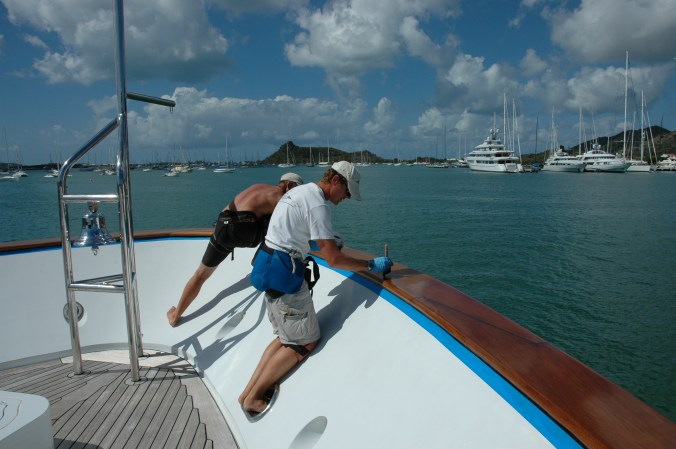
T Lady varnish

A rare photo of N (foreground) applying one of fifteen eventual coats of varnish on Triumphant Lady‘s caprail.

Stereotypical gender roles are mostly alive and well on the private yachts; with few exceptions, men work outside as deckhands, mates and captains, whereas women are traditionally responsible for the interior as stewardesses. Chefs tend to be both male and female, and most often there is only one. Unless there is a second chef, which is unusual on yachts under 180 feet, chefs cook three meals a day for both guests and crew, plus snacks and specialty requests as needed. The chef is also responsible for ordering and stocking all edible provisions as well as doing dishes and cleaning the galley.

Bahamas

Triumphant Lady‘s tender on the beach, Bahamas.

Having a private yacht means you can go places other people can’t. On charter, the chef will pack a picnic lunch for the guests and the deckhands will organize water toys, JetSkis, snorkeling gear and any other equipment the guests might want to use. Depending on water depth, the yachts could anchor just off stunning deserted beaches.

Portofino

The harbor of Portofino, Italy.

Some owners and guests want to see and be seen, and the Med is known for many glamorous ports. Portofino is certainly one; others include Monaco, St. Tropez, Capri, Cannes, Beaulieu-sur-Mer, Cap Ferrat, Antibes and many more. Celebrities and other high-profile guests who actually don’t want to be seen will avoid these places like the proverbial plague – or stay on anchor full-time.

Charisma.jpg

Charisma on anchor at sunset near Sardinia, Italy.

As a rule, crew would rather be at the dock than at anchor – it is so much easier to get guests and supplies on and off the boat by walking down the gangplank rather than using the tender(s). Depending on location, though, a space at the dock might not be available, or the marina might be too small for the boat. In high season in the popular places, like St. Tropez and Monaco and definitely Cannes during the film festival, captains are known to carry envelopes full of cash to bribe dockmasters for premium placement.

T Lady Polish

Another rare shot of N polishing Triumphant Lady‘s extensive stainless.

There is always – always – something to clean aboard a yacht. Notice his crew shirt bears a line drawing of the yacht on the back; this is traditional of the vast majority of yacht crew uniforms. T-shirts are just for work days; when owners or guests are on board, crew wear polo shirts and pressed khakis during the day and “blacks” (epaulettes and black trousers) at night, depending on the boat’s level of formality. The chef, of course, is always in a chef jacket.

T Lady bow waves

Working on a boat isn’t always smooth sailing. This bow shot was taken on Triumphant Lady during an especially rough crossing from Fort Lauderdale to Tortola, BVI.

If we needed to move the boat over long distances, owners would most often fly in to meet us. Crossings can be really rough and are challenging for crew and hard on the boat. Since the boat is always underway during a long crossing, crew rotate on two-man four-hour watches. The chef is typically exempt from watch duty because they still need to cook for the crew. It’s imperative that the chef doesn’t get seasick, though on rough crossings the rest of the crew might well be.

Red Dragon

S/Y Red Dragon, St. Tropez, France.

The majority of the most impressive private yachts are motor yachts, but there are a few gorgeous luxury sailing yachts too. People who haven’t sailed before often don’t realize that when under sail the entire boat might be on a severe heel, meaning that it’s leaning pretty far over to one side and nothing can be set on a flat surface. This can often be uncomfortable for guests unless they’re accustomed to it, and the boat (including the artwork, the furniture, and the wine storage) have to be specially designed for it.

T Lady Cabin 01

Our beloved cabin aboard Triumphant Lady. 

One reason N and I could love a month in a tiny campervan? Because we spent years living together in cabins like this. Keeping things shipshape really does have relevance when two people live in a tiny space. Also, captains are well within their rights to inspect quarters at any time, so the cabin had better be neat and tidy.

Golden Boy II

Golden Boy II in moody weather, Essex, Connecticut.

We spent one season traveling the East Coast of the U.S., from West Palm Beach to New Hampshire. The seas can be tricky here and this itinerary is typically only done in summer, but ports like Nantucket and Martha’s Vineyard are worth the effort. The superyachts are too big to enter these smaller, older harbors and have to anchor offshore and tender in.

Tobago Cays

Aboard Sea Fox, Tobago Cays.

Both the Bahamas and the Caribbean are full of tiny islands to explore, but the big motor yachts always have to watch out for the small sailboats, especially in the avid sailing areas like the British Virgin Islands.

St Thomas

St. Thomas, USVI. The relative size difference between cruise ships (left) and private yachts (right) is a little easier to understand from this photo.

Working on boats was an amazing, incredible life, and we’re thankful to have had the experiences we did. But we wouldn’t go back to it again, and we’re looking forward to finding Quiet Farm more than ever.

Lost in translation, vol. 2

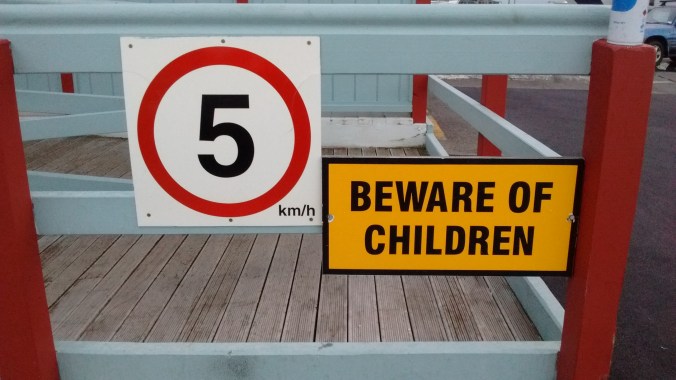
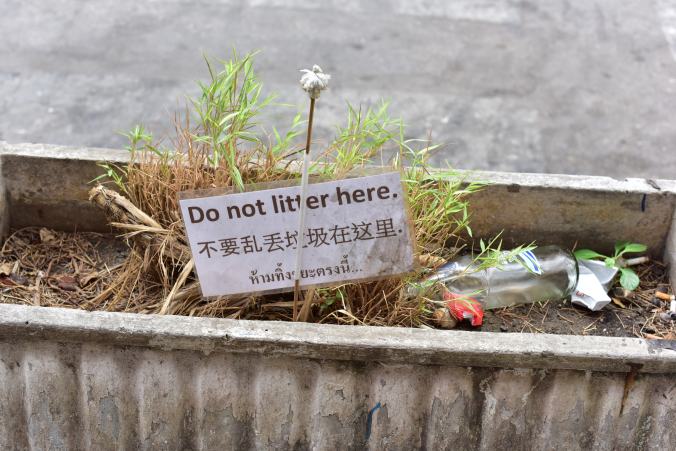
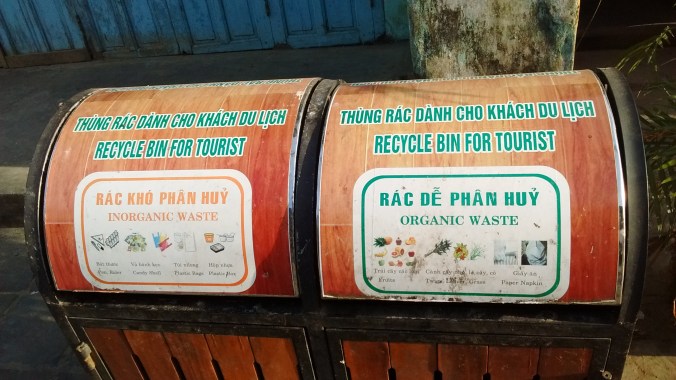
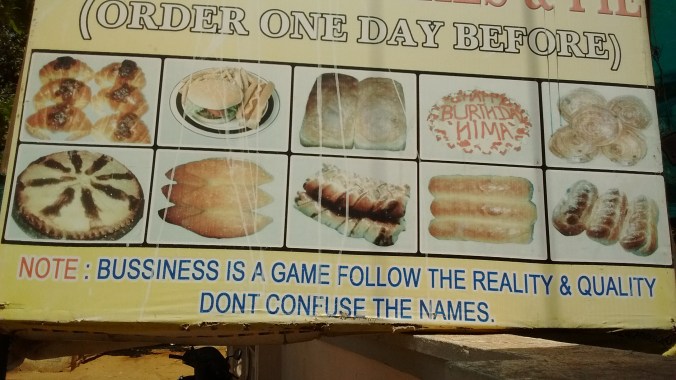
What’s more fun when traveling than searching out funny signs? (As always, this is gentle humor – no disrespect or mockery is intended.)

IMG_20170217_232254711

Dear New Zealand: this could perhaps be rephrased.

NJB_4050

Maybe try it in a fourth language?

IMG_20170503_130009474

If only they came together in one handy product.

NJB_7073

A helpful tip on a menu in India. Don’t talk to strangers, ever.

IMG_20170321_165018105 (1)

Those crazy tourists in Vietnam! They always want to recycle!

IMG_20170315_073608266

And right next to the recycling bins shown above, you’ll find this.

(As with India, this is what Vietnam actually looks like. Pretty sure it’s not just the tourists’ fault.)

IMG_20170429_140818679

What?

NJB_4039

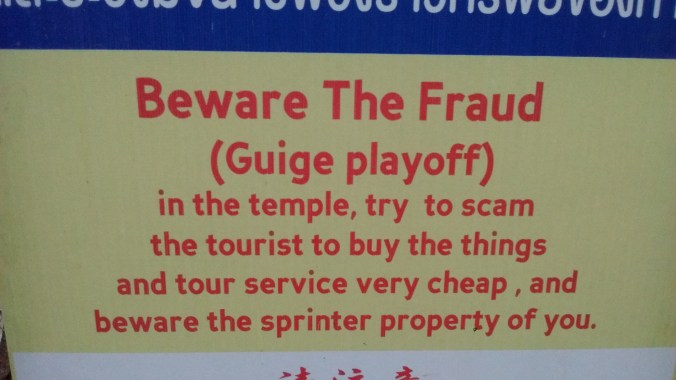
Notice #9…this sign was in a temple. So definitely watch out for muggers there. Muggers love temples.

IMG_20170330_182830973

Again, temples are very dangerous places.

Funniest thing about these two signs? We were actually very politely mugged in a temple in Vietnam. A “monk” approached us and escorted us on a “secret” tour to a “hidden” altar not open to “regular” tourists (all in broken English, obviously). We were given an “honored blessing,” at which point he demanded 200,000 Vietnamese dong, or about $9. We handed him 100,000 and scampered, fully aware that we really didn’t have to pay him anything. But he was one of the few people in Vietnam who was actually (fake) nice to us, and isn’t it bad karma to skip out on a blessing? So really, please watch out for muggers in temples. We’re pretty sure he wasn’t even a monk.

IMG_20170318_154117533

Having trouble with a caption on this one.

Farewell, India

To wrap up our nearly five weeks in India, we offer you a few more of our favorite photos. There is no way we could sum up our time here in merely a handful of images; we’ll be processing our experiences in this country for a long time to come. Thank you, India: you were beautiful and difficult and amazing and maddening and always, always memorable.

NJB_5786

Elephants for riding at Jaipur, a practice we abhor. (Related post on animal tourism coming soon.)

NJB_6903

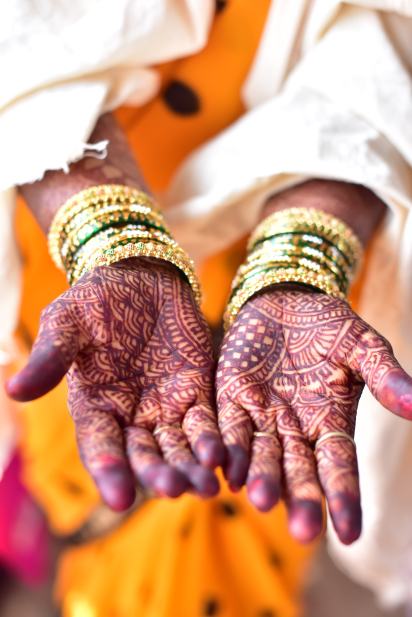
The bride’s palms and soles of the feet are traditionally painted with henna for a Hindu wedding ceremony.

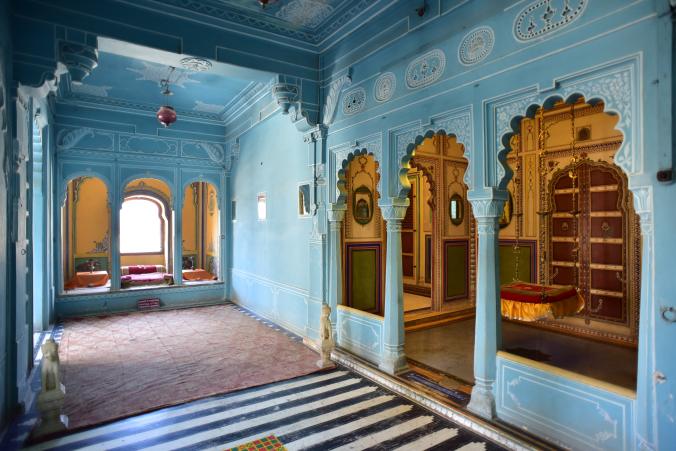
NJB_5969

This gorgeous shade of blue appears all over Indian temples and palaces.

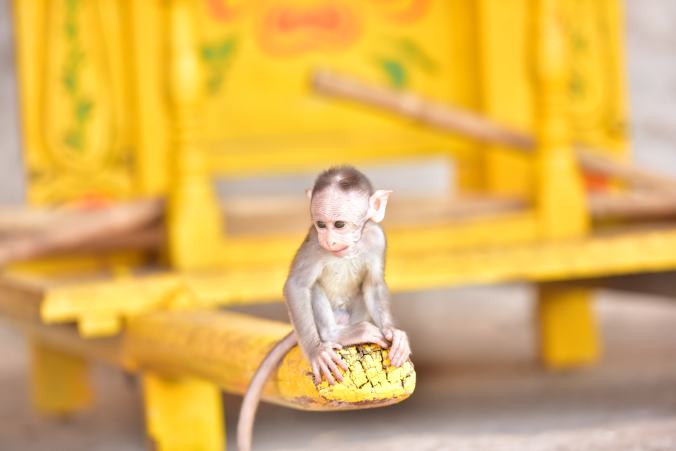
NJB_6812

What’s more manipulative than including photos of cute baby animals?

NJB_5884

Even the simplest street scenes here are filled with color.

NJB_6611

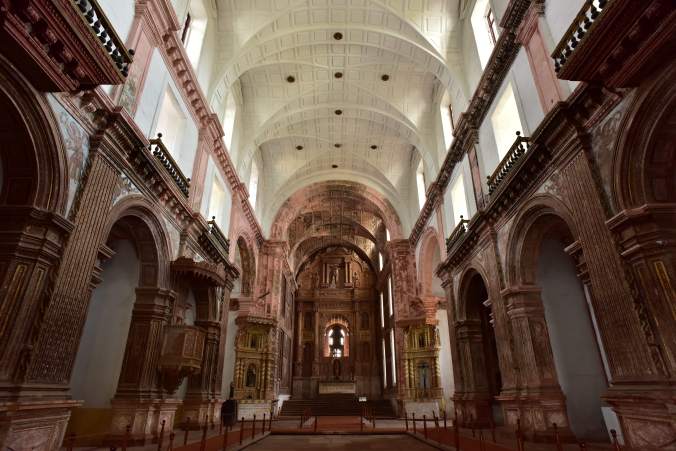
The Church of St. Francis of Assisi in Goa.

NJB_7036

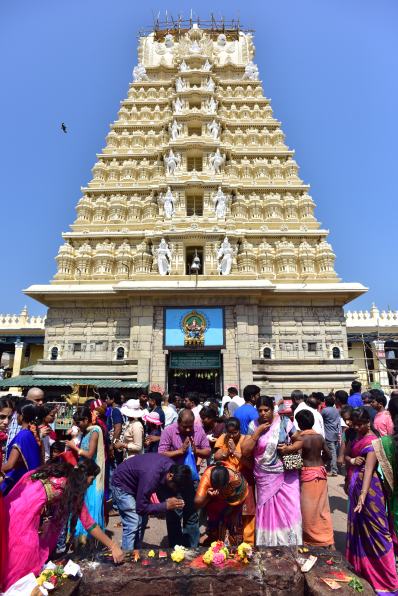
Chamundeshwari Temple near Mysore.

IMG_20170422_114415637

Only in India can you see an actual bull in an actual china shop.

NJB_7085

Monks at worship in a Buddhist temple in Madikeri. Buddhism is not at all common in India; only about 10 million people (less than 1% of the population) identify as Buddhist.

NJB_5882

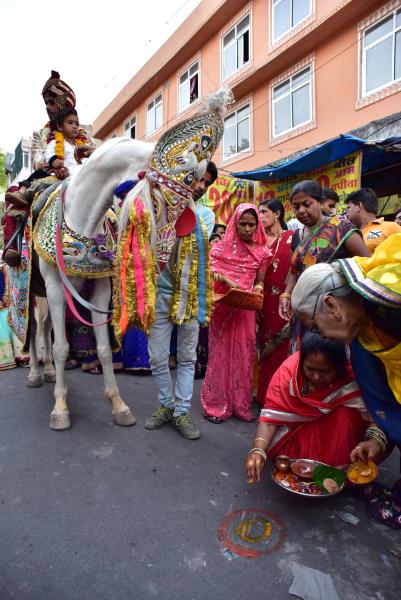
A wedding celebration in Jaipur; the parade goes through the streets so everyone can join in.

NJB_6727

View from the top of Hanuman Temple in Hampi.

NJB_7180

Fishing in the Arabian Sea.

NJB_5979

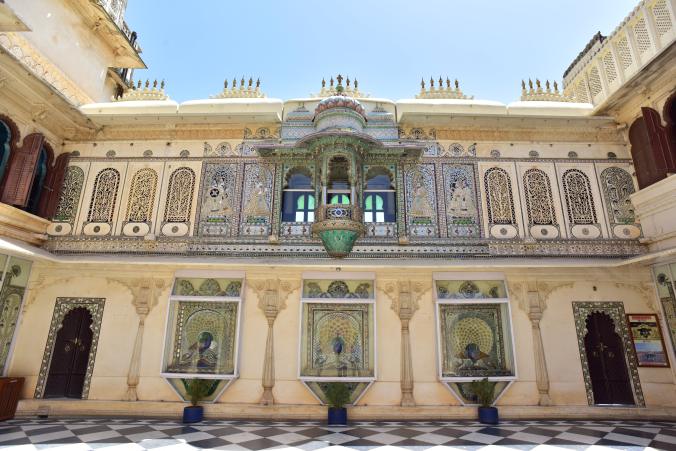
City Palace, Udaipur.

NJB_6987

Kochi’s central square.

NJB_6685.1

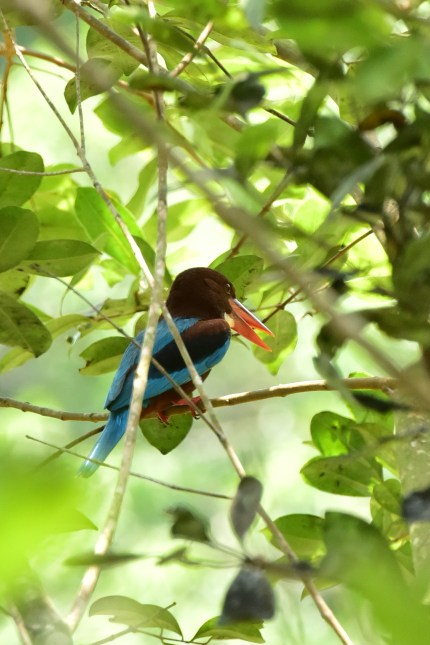
The white-breasted kingfisher, very common in central India.


Some honesty

We’ve shared lots of striking images of India, and in this brief post we want to share a few more. Unfortunately, these are striking for all the wrong reasons.

IMG_20170504_181829785_HDR

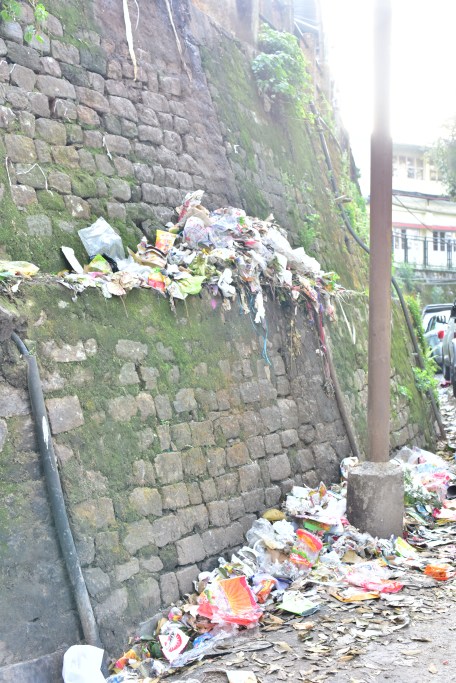
For everything that we read about India before our visit there – to dress conservatively, to travel in groups, to keep our passports and money close by, to watch our luggage at all times – we never read about this. We had no idea just how unbelievably filthy India actually would be.

IMG_20170419_105959082

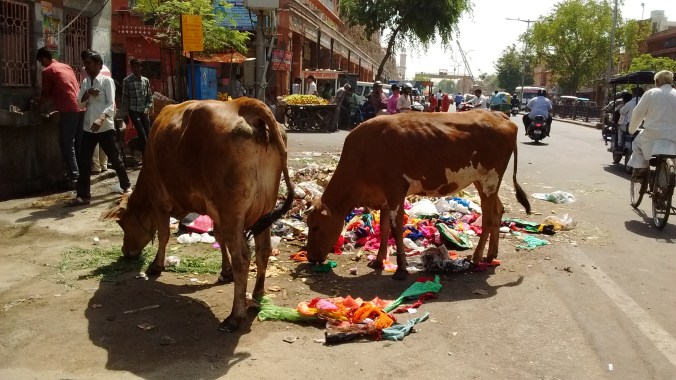
We talked a lot about whether we should share photos like this, and obviously we ultimately decided yes. If everything on the Internet is fake, then we want this site not to be. And when we remember India, some of the most vivid memories we have are of amazing experiences like visiting tea plantations and spice gardens and eating dinner in a Sikh temple with five hundred strangers, but they’re also of the nearly incomprehensible piles of rubbish (and human and animal waste) we stepped around and through and over just about every single place we went.

NJB_4672.1

To be fair, some parts of India are cleaner than others. We covered nearly 3,000 kilometers in the country over a month, so we do feel as though we’ve visited enough places to form a reasonably educated opinion. Mumbai was lovely, and so was Mysore. But Agra (home of India’s most-visited tourist attraction!) was filthy, and Bundi was – quite frankly – disgusting. What you don’t see in most of the India photos elsewhere on the blog is how frequently N had to crop images or frame things differently to avoid photographing all of the trash.

IMG_20170419_103356714

There are a lot of things about India that are difficult for Western travelers to comprehend; culture shock was a very real thing for us. More people in India have mobile phones than have access to clean drinking water or toilets; this is an especially dangerous problem for women and girls. The rails of India’s train system have to be replaced, on average, after two years rather than the expected thirty years because the human waste dumped on the tracks corrodes the rails entirely. And in many places, you can’t just throw your trash “away” because there is no “away.” There is no one to come collect it and nowhere to put it even if they did. And if there is a place to dispose of it, people still live there, too. So it most often stays on the streets, and the animals eat it, and the rats come, and it spirals from there.

IMG_20170419_094428666_HDR

Please don’t misinterpret this – we loved our time in India, and we’re so glad we went. And we’re not in any way claiming that solving India’s immensely complex social and cultural issues will be easy, or quick. But travel blogs are full of carefully curated, spectacularly gorgeous photos – and most of the time, ours is, too. This post is designed to provide an honest counterpoint to all that beauty, and to remind ourselves that even in our First World countries, throwing something away isn’t really away, because it doesn’t disappear – it just disappears from our sight. And it’s not typically in a huge pile on the street with animals and people both fighting over it and living in it.