A season of rest

As is our custom every year about now, Finding Quiet Farm will be going on hiatus until January. In true agricultural tradition, we believe the dark, cold winter months are a time of rest and reflection, and this year more than any other demands that we reset and recharge. We will spend the winter baking bread, sewing quilts, reading books, rebuilding engines and (hopefully) crafting a plan to safely launch our cooking classes in 2021. If 2020 has taught us anything, it’s that adaptability, patience and grace are key to surviving in this new world.

Perhaps you’ve missed some of our previous adventures, and might like to read about our round-the-world trip, including a hot spring in Japan, a gurudwara in India, or a sheep farm in New Zealand? Or you might like some book recommendations? Or you want to know more about eating better, or saving seeds, or making hot sauce? Whatever aspect of travel, food or farming you might be interested in, we’ve probably got you covered. And if you don’t find what you’d like to read about, let us know and we’ll do our best to accommodate those wishes in the new year.

We might not be writing and photographing each week, but we are still here. If you want to ask a question about bread or squash or beans or kimchi or hummus or planning a garden or buying ethical meat, please contact us. If you want to order handmade baked goods, like fresh sourdough loaves and naan and crackers (local pick-up only!), please contact us. And if you simply want to say hello, please contact us. Be kind, and stay safe, active and healthy. Cook something delicious and nourishing. Take good care of yourselves, dear friends. We look forward to seeing you here again in the new year.

The meat of the matter

The past two months have exposed a great number of frailties in systems we’ve long taken for granted. From child care to health care, we’ve learned firsthand that most – if not all – of our societal structures are built on debt-ridden quicksand. Nowhere has this fragility been more apparent than in our food supply, long the envy of less-developed nations.

Meat 01 sml

Mmmm…meat in tubes. Delicious.

If you’ve ever traveled in the Caribbean or Africa or Asia – really, anywhere outside of the U.S. and Europe – you know that a standard Western grocery store is a thing of miracles. The glossy, perfect produce, appealingly stacked in lush displays. With artificial thunderstorms! Acres of cold-storage, displaying hygienically shrink-wrapped packages of beef, pork, chicken and fish, none of which resemble the animal they once were. The deli abounds with cheeses and olives and overflowing dishes of prepared foods, enticingly displayed on beds of ornamental kale.  Aisle upon aisle of boxed mixes and snack foods and sodas and candy and cookies and chips, plus thousands of cleaning products and toiletries and other various and sundry items, all brightly-colored and stocked in abundance. A standard Western grocery store never has bare shelves, because that violates its very reason for existing – that we have so much, we can replenish each item before it’s even made its way to the check-out.

Continue reading

The sourdough bandwagon

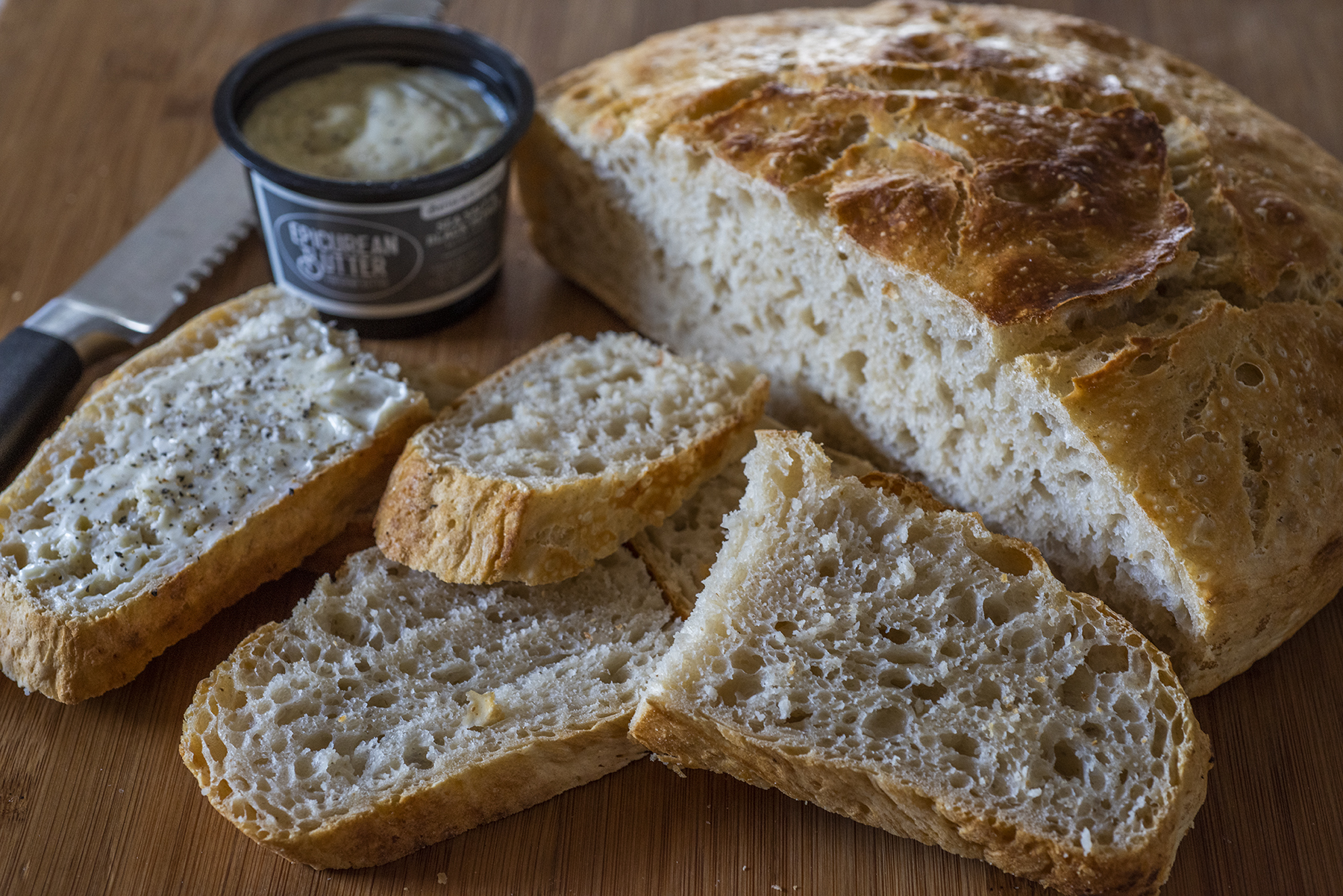
Here’s what N and I have learned in the five-odd weeks since this madness really kicked off: the things we’ve been doing for years – growing food, baking bread, keeping chickens, buying only secondhand, cutting our own hair – are exactly what all of America seems to want to do right now. Listen up, everyone: we’re cool and we’re on-trend and we are probably influencers too. We’re going to call ourselves influencers, anyway. We’d like to influence you to bake sourdough, mostly because no one can find any yeast yet people still really, really like fresh bread.

Sourdough 05 sml

Really, what’s better than fresh bread and good butter?

I’m not at all surprised by the gardening and the bread baking, truly. People have extra time on their hands and want to do something both purposeful and satisfying, plus spring has arrived in most places and it’s a pleasure to be outside. But the sourdough thing? That did take me by surprise, as sourdough has a reputation for being so tricky and difficult and obsessive and a little weird because people name their sourdough starters and refer to them as pets. But then of course all of the country’s commercial yeast disappeared somewhere so it’s only natural that everyone would turn to sourdough, and people also need new pets in this time of isolation, kind of like Wilson in Castaway, so it all sort of makes sense.

Continue reading

The second week

Citrus 01 sml

Hi there. How are you holding up? Like most of you, we’re entering our second week of self-quarantine. Some of you are under a mandatory shelter-in-place order. It is no exaggeration to say that our world has turned completely upside down over the past week, and that we’re all doing our best to make sense of a fraught situation that has no logic, no precedent, no guidebook.

I am working diligently on acknowledging what I can control and letting go of the rest. To that end, I believe that our single most important job right now is to stay healthy. For those of us who are low-risk and currently healthy, the most valuable contribution we can make to our community is to remain isolated and entirely out of the medical system, so they can put their attention and skills and dwindling supplies towards those who need it. Obviously everyone’s situation is unique, but here’s what we’re prioritizing at Quiet Farm:

Limited sugar / unlimited fruits and vegetables. When this pandemic imploded in the U.S. two weeks ago, my first instinct was to grab all of my chocolate and butter and flour and cover every available surface in my kitchen with an elaborate array of cookies and brownies and comfort cakes, like some sort of mad bakery vision devised by Lewis Carroll. Baking is regimented and precise and calming, and something we can control when everything else has gone by the wayside. Instead of filling our house with sweets, though, we’re eating as much fresh (and frozen!) fruit and vegetables as we can manage. (When everyone else was stocking up on toilet paper, we were buying citrus. There was plenty.) It’s easy to justify scarfing a lot of junk food and “emergency snacks” when we’re anxious, but sugar is highly inflammatory and I think our bodies are under enough stress as it is. We’re consuming lots of salads and green smoothies and stir-fries, and when I do bake, I bake muffins loaded with fruit purees and nuts and seeds.

(P.S. If you’re buying salad ingredients for longer-than-usual storage now, avoid anything pre-cut and think hardy brassicas like kale, Brussels sprouts and cabbages. These are all super-nutritious and delicious shredded into a salad, and they’ll keep much longer than pre-washed bagged greens.)

Hydration. We live at 6,300 feet in a high-plains desert, so we’re naturally a bit dehydrated most of the time anyway. Dehydration contributes to headaches, irritability, muscle aches, mental fuzziness, exhaustion and a host of other ailments, none of which we need right now. We might be less active these days and so think that we need to drink less, but a cool glass of water could be exactly what we need to right our ship in this moment. We’re drinking lots of water, plus plenty of mint tea and a hot honey-lemon-ginger tonic that soothes throats and nerves. When it seems like everything is about to go entirely off the rails and I can’t take this for one more minute, I stop, breathe and drink a glass of water. It doesn’t change what’s happening in the world, but it does allow me to accept it without panicking.

Movement and fresh air. I’d much rather be outdoors than in even in the best of times, but a heavy, wet spring snowstorm this week has turned our farm into one giant muddy puddle. Despite the poor weather, I compel myself to get outside every day for at least thirty minutes, even if it’s just to empty the compost bin or watch the chickens or check on seedlings. And I never seem to actually want to go for a walk or a run, but once I’m out and moving, I never regret the decision. If you’re able to do so safely (and with appropriate six-foot-plus social distancing), please get outside, even if it’s just to feel the sun on your face. Do ten jumping jacks. Stretch like a contented cat. Skip rope. Run around in circles. Dance like a person possessed. Spring is here, and there is new growth to see everywhere, even if it doesn’t feel much like a time of hope and renewal right now.

Sleep. It is oddly comforting to me, somehow, to know that every single human on the planet right now is under some degree of stress from this new enemy; collectively, we are suffering together. But we’re concentrating on keeping our immune systems strong, and stress, anxiety and poor sleep are in direct opposition to this. So we sleep, as much as we’re able. There is no shame in going to bed at nine o’clock (without our phones!); no shame in sleeping past our usual waking time. Sleep is our bodies’ time to heal and to repair, and we all need that right now. If you can, get some extra sleep. It definitely can’t hurt.

I’m well aware that these are small and meaningless tasks, and they’re nothing compared to what the people on the front lines of this crisis are facing. But these are things I can control, and that’s all any of us have right now. And we need to stay healthy, first and foremost.

How is your household navigating our new world? We’d love to hear what you’re prioritizing. Stay healthy and well.
Farm update: February 24

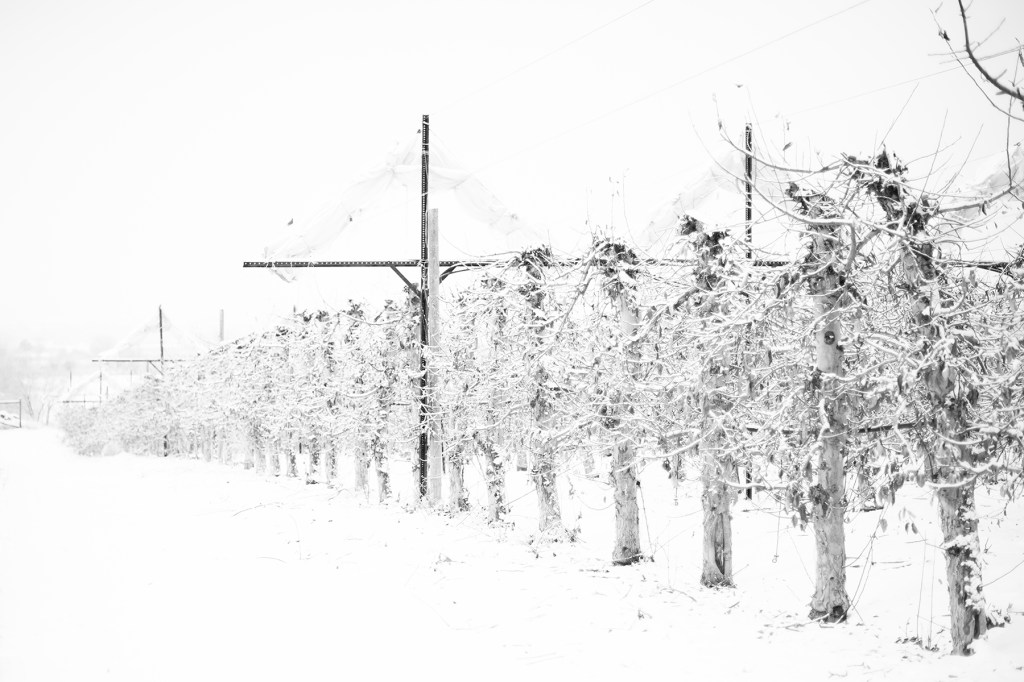
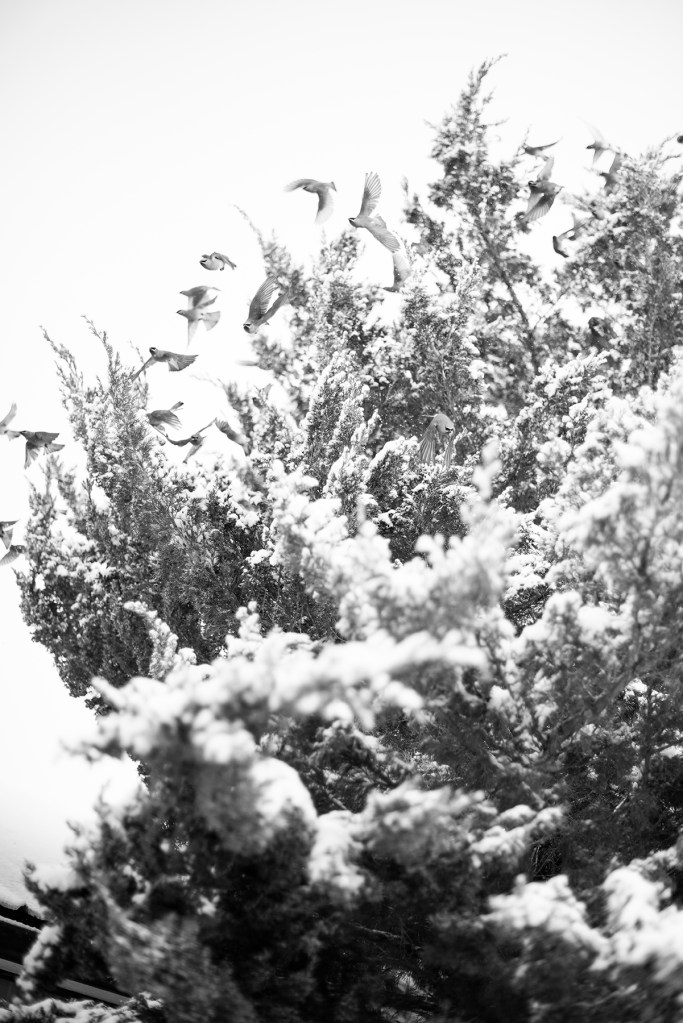
Greetings! We are currently stuck in that awkward phase between winter and spring. Some days it’s all teasing warmth and perfect blue skies, and some days it’s bleak and grey with icy, biting winds. Most of our snow is gone, though we expect (and hope for) one or two more storms, at least. It’s a changeable season, but spring is definitely in the air and we’re starting to hear more songbirds and see new growth everywhere we look. Here are a few things we’ve been up to recently.

Prairie Falcon 01 sml

A prairie falcon (Falco mexicanus) in one of our towering cottonwoods.

We still haven’t captured a photo of our shy Northern harrier, seen regularly hunting mice in our pasture on sunny afternoons, but N did snap this lovely photo of a prairie falcon. The prairie falcon is about the size of a peregrine falcon, but with a much different hunting style (low swooping over the ground, rather than rapid dives). Unfortunately for the songbirds we’ve been hearing, much of the prairie falcon’s winter diet is the Western meadowlark, but we hope this one will focus more on our ground squirrel population. As with all falcons, the female is substantially larger than the male. Continue reading

The best books about food

Apparently this country is electing a president this year and probably electing some other people too, though over here at Quiet Farm we’re doing our damnedest to ignore the entire circus. One thing that still surprises (and infuriates!) me immensely in every single election cycle is that we never, ever discuss national food policy. Neither side even mentions it in passing, unless a hotdish fundraiser happens. We talk about defense, and education, and occasionally the climate crisis, and of course health care, and yet we never discuss the single issue that unites every one of us, regardless of party affiliation. We never talk about the fact that if we changed our food system, we’d naturally change our health care system for the better. And that changing our food system would be a huge step towards repairing our devastated planet. Changing our food system would also mean more military readiness, since we’re now too fat to fight. And our children would gain a better education if they had access to better nutrition for growing brains and bodies. We always ignore the food, when it’s the one issue we should talk about more than any other.

Continue reading

Floor plan

Who remembers way, way back in April when we purchased beetle-kill planks for the master bedroom and closet? Not us. And who remembers back when building and installing custom bookshelves was the trickiest project we had taken on? Apparently we forgot about that, too. Let us say frankly that laying this pine flooring is by far the most infuriating, the most frustrating, the most demoralizing task we’ve ever tackled here at Quiet Farm. Oh, I know I say this about every project but I am not joking here.

Master Floor 05 sml

The planks are “curing.” (They’ve been abandoned in favor of other projects.)

The best thing about this flooring project is 1. it’s finished (mostly) and 2. we learned so, so much about flooring and our own tolerance for suffering. It’s such an honorable, martyr-ish, humble-brag thing to talk about how you renovated your entire antique farmhouse yourself, but this project was truly the closest we’ve come to calling in a professional to bail us out of the mess we’d created. But since you’re already here, friends – who doesn’t like to read about other people’s DIY trauma? – let’s share what we’ve learned.

Continue reading

On hiatus

Over the next eight weeks (at least in the U.S.), we’ll careen wildly from one overwrought celebration to another. From a holiday where we decorate with fresh, healthy vegetables but celebrate with cheap processed candy (while leaving the vegetables to rot in the landfill) to a holiday where we throw away the equivalent of fourteen million turkeys to a holiday predicated entirely upon excessive spending, consumption, packaging and waste, the next two months are a difficult and challenging time of year for many people – including us.

And thus Finding Quiet Farm is on hiatus for the rest of 2019, though we’ll stay busy. We’re going to bundle up, hunker down and get to work on all sorts of interesting tasks, both indoors and out. We’ll be back in the new year with farm updates, lots of book recommendations, and photos of all our projects. We’ll be quiet and productive and we’ll skip the holidays entirely, thanks very much.

Take good care of yourselves, friends, and cook something tasty and nourishing. We hope to see you back here in 2020.

How to save the world

Last Friday, millions of people around the world marched as part of a “global climate strike.” The march was intended to draw world leaders’ attention to the climate crisis in advance of the U.N. General Assembly taking place this week in New York City. While the sight of millions of mostly young people taking to the streets to make their voices heard is heartening in theory, teenagers in expensive sneakers carrying smartphones and pithy signs aren’t going to change the perilous trajectory we’re on.

Despite the fact that we are by far the world’s largest consumer and by extension the world’s largest polluter per capita, the U.S. is the only country in the world still debating the very existence of climate change. While other countries have their heads down working to find solutions, we’re still arguing over whether this is actually happening, and if so whose fault it is. (Spoiler alert: ours.) This disparity will be on full public view this week at the U.N.; once again, we’ll look like idiots on the world stage, a role in which we’re becoming increasingly comfortable.

Here’s the painful truth: we can’t protest the idea of large corporations destroying the planet, because we are the reason those corporations exist. If we didn’t buy their products – if we didn’t upgrade our iPhones every year, if we didn’t rob each other at gunpoint for thousand-dollar puffer jackets, if we didn’t accept and then dispose of two million plastic bags per minute – these corporations wouldn’t be able to plunder the planet. We are the problem, and by that logic we also have to be the solution.

Mental health professionals have reported a sharp uptick in the number of people seeking treatment for depression related to the environmental catastrophe we’re facing. It’s a massive, complex problem, and it’s easy to feel hopeless when confronted with its scale. On a personal level, I’ve long since graduated from severe eco-anxiety and now find myself teetering on the cliff of abject climate despair. I don’t think we’re going to be able to fix this, but we can’t choose to do nothing and watch the world implode around us. With that in mind, here are five things we can implement immediately that might just make a difference.

Continue reading

Small victories

In ten years of growing food, this is by far the most challenging season we’ve ever experienced. Between punishing hail, voracious deer, late snows, devastating winds, crafty rodents and ten million grasshoppers (I’m certain the locusts are on their way), we feel we’ve taken everything the world can throw at new farmers. We might be down, we might be bruised, but we’re not out yet. And in that spirit, how about we count up some wins?

Sunflowers 01 sml

Thanks, sunflowers, for cheering us on with your bright faces.

Our farm is awash in sunflowers right now, not one of which we planted. They weren’t here last year when we moved in (historic drought?), but we’re so glad to see them this year. Hopefully they’ll continue to self-seed and their cheerful countenances will be part of every summer here.

Continue reading