Keep going

Today’s life lesson is simple but essential: keep going. Keep going even when things aren’t working out, when your carefully laid plans have imploded, when you feel like an abject failure at pretty much everything. I’m pretending this is a post about how you should keep cooking even when recipes aren’t turning out right, and it is, but it’s also just a reminder that in life you can either crumple to the ground in a heap, or you can keep going.

Breadsticks

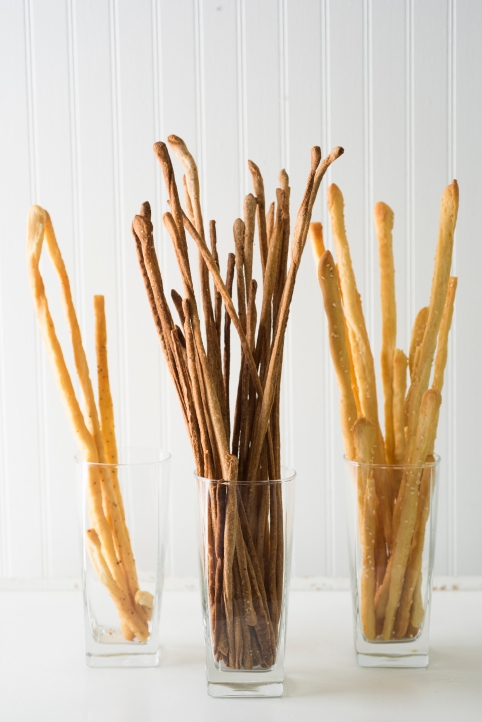
These breadsticks look pretty, but they posed a major risk to dental work.

There exists a perception that professional chefs cook everything perfectly all the time, and I’m here to tell you that this couldn’t be further from the truth. I go through phases where it honestly seems as though nothing in the kitchen works properly. Recipes that should work don’t, recipes that I’ve made hundreds of times without fail suddenly turn out poorly, and nothing tastes right. It would be easy to just storm out of the kitchen.

CCA-94.jpg

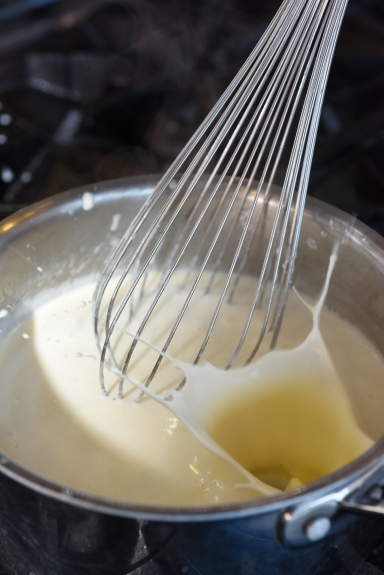
This probably boiled over mere seconds after the shot was taken.

Recently, for example, I’ve made three different breadstick recipes with lousy results all three times. I overfed my treasured sourdough starter with whole-wheat flour and increased the acidity so much that it’s like a biological weapon is lurking in my sunroom. In an attempt to use up my pantry stores, I made a Key lime and ginger tart that didn’t set at all, even after six hours in the refrigerator. It tasted delicious, but the presentation was appalling. (There are no photos of this event.)

Apple flatbread 1.jpg

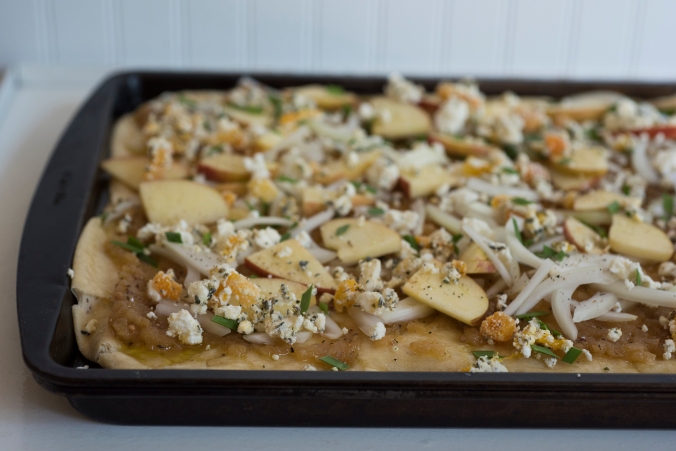
Trying to salvage overproofed pizza dough left over from bread class…

But these occasions are precisely the times when you just have to keep going. When you have to work harder to figure out exactly what went wrong, and how you can improve it next time. When you have to acknowledge that not every single thing you cook will be perfect every time, but trust that the learning is in the process. It’s why I recommend keeping a kitchen journal and taking notes on just about every single recipe you make.

Apple flatbread 2.jpg

…and it actually worked!

We live in an age of immediate gratification. We expect things to happen instantaneously and perfectly, and we no longer know how to fail. This is an especially challenging concept for home cooks, especially people who come to cooking later on in life. Those of us who started cooking young – with this recipe, most likely – remember mistaking a tablespoon for a teaspoon and producing salty, inedible cookies. We laugh about it now and count it as a learning experience. Yet if we made that same mistake as adults, we’d castigate ourselves for our stupidity and perhaps give up on baking altogether, because we didn’t get it right the first time.

CCA-36.jpg

In cooking, as with just about every worthwhile skill, the devil is in the countless hours of practice. No one starts out as a brilliant chef, just as athletes don’t start out as Olympians. When you’re just beginning in the kitchen, you might be disappointed with the results, but it’s imperative that you keep going. You will learn how to season, how to adjust recipes, how to trust your own palate. You will learn how to prepare food that you like and you’ll gain confidence every single time you cook. You will get better. But in order to do that, you have to keep cooking – and that’s tough, especially when perhaps your efforts aren’t received with enthusiasm by your household. (And if that’s the case? Invite your family into the kitchen and make meal preparation a household activity, so that everyone can share in both the effort and the result.)

Tofu Bok Choi.jpg

A very simple tofu and bok choy stir-fry with brown rice…and one of my favorite things I’ve cooked recently.

So please, friends, don’t give up. Don’t get weighed down with disappointment over kitchen experiments that aren’t a roaring success. Keep going. Try something new, fail well, make notes about it and get up and do it again. And above all else, please keep cooking.

P.S. I wrote a guest blog on this very topic over at Healthy Baby Fit Mom! Read more here!

P.P.S. Read a brilliant post about the concept of “constructive growth” and being a “tenacious loser” here; thanks to Karen for sending this link!


Food politics book club

Our house is filled with books. On shelves, stacked by the bed, in my office…the only place that doesn’t contain any books is the kitchen. N reads a lot of military history mixed with an eclectic selection of farming books and autobiographies, and my choices tend to be modern fiction plus just about anything on food. I feel as strongly about books as I do about food: if they’re not good, I won’t finish them. I have no sense of obligation having started a book; there are simply too many stellar books out there to waste time on the appallingly bad ones. I’ve written before about how choosing books for our trip was one of the toughest parts of packing; I didn’t care at all about which tattered shirts and frayed cargo pants I brought, but I cared a lot about the reading material.

cookbooks-4-sml.jpg

Because I talk a lot about food politics both here and in my cooking classes, I’m often asked for book recommendations. I’ve put together a compilation of some of my favorite books on food politics and America’s desperately compromised food system. Know that there are many more great selections out there, and if you have recommendations for books I haven’t included, please share them! If you’re looking for an even more comprehensive list of some of the best books on food politics, go here.

Cookbooks 1 sml

It is not possible to have a discussion about food politics in America without mentioning Michael Pollan. In my opinion, no author has done more to explain how what was once just “food” evolved into “industrialized agriculture.” I think Cooked is by far his most accessible work; even for me, The Omnivore’s Dilemma and The Botany of Desire get a little…technical. But really, anything by Mr. Pollan is guaranteed to get you questioning your assumptions. And if you can’t commit to reading his books, watch his Netflix series based on Cooked. Plus, his breathtakingly simple manifesto “Eat food. Not too much. Mostly plants.” is by far the best seven-word statement on food I’ve ever encountered.

Cookbooks 2 sml

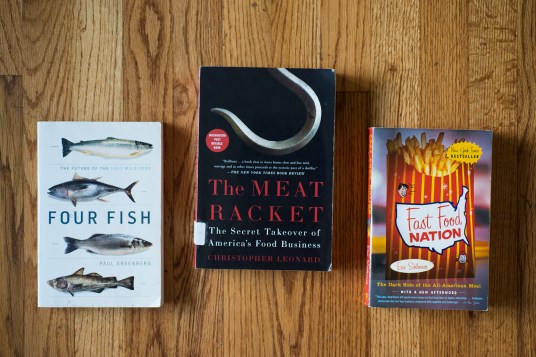
Four Fish, Paul Greenberg

It is virtually certain that certain species of fish currently used as food will become extinct within our lifetimes; our visit to Japan’s famous Tsukiji fish market simply stunned us with the sheer quantity of seafood caught and sold every single day. There isn’t much positive that can be said about the world’s fishing industry, but this book explains it in a clear, simple manner. (Please, if you’re in the U.S. and you choose to eat fish: consider buying only sustainably caught or responsibly farmed American seafood. Or eat much, much lower on the ocean food chain, like sardines and anchovies. Whatever you do, please don’t buy farmed fish from southeast Asia; their abuse of both humans and the environment makes ours here in the U.S. look positively benign.)

The Meat Racket, Christopher Leonard

One of the best and most difficult books I’ve ever read on our industrial meat supply, The Meat Racket exposes the brilliantly cruel “bracket” system used in modern CAFOs. This book is a carefully researched and shockingly grim portrait of the massive corporations like Tyson currently controlling the vast majority of America’s meat market, and of the farmers trying desperately to stay afloat in a game totally rigged against them. Read at your own risk; you’ll have a hard time buying frozen chicken nuggets after this one.

Fast Food Nation, Eric Schlosser

This book, published in 2001, is subtitled “The Dark Side of the All-American Meal” and could be rightfully argued as the one that started it all. No one really has anything nice to say about fast food in general; it is toxic to the people who eat it, the people who work there, the animals sacrificed for it and most definitely the planet. But it’s great for shareholders…or at least it was, until the fast food industry started slowing down after decades of growth. This is one area where there may actually be something positive on the horizon: fewer Golden Arches across our country.

Cookbooks 3 sml

Twinkie, Deconstructed, Steve Ettlinger

Ever been curious about sodium caseinate? How about modified food starch? Hydrolyzed soy protein? Polysorbate 60? Learn more than you ever wanted to know about how our processed food is made. (Remember, food at home is “cooked.” Food in packages is “processed.”) And we wonder why our gut microbes can no longer handle anything.

The Third Plate, Dan Barber

Last December, N and I had the honor of attending the Young Farmers Conference, held annually at Chef Barber’s Blue Hill at Stone Barns just outside of New York City. I’ve admired and respected this chef since his early days of farm-to-table cuisine; in the professional chef world, he is at the forefront as an advocate for less food waste and a more conscious approach to cooking and food overall. Simply one of my very favorite food books.

Tomatoland, Barry Estabrook

This book sort of pretends to be just about tomatoes and is actually much more about the workers planting and picking them, but it’s still worth a read. We’ve had out-of-season produce in supermarkets for so long that we rarely think about it anymore, but it’s not just the earth that takes a beating – the people do, too. This book almost singlehandedly brought about a very public and (somewhat) successful battle with fast food companies and supermarkets over fair pay for farmworkers; learn more here.

Animal, Vegetable, Miracle, Barbara Kingsolver

Kingsolver might be more known for her fiction, but when she and her family packed up and left Arizona for rural Kentucky, then documented their attempts to eat solely from their own land for a year, the food cognoscenti paid attention. It’s a deceptively simple book (with recipes!) that explains why modern turkeys can’t reproduce naturally and why organic certification is almost impossible for small farms to get and why you should bake your own bread, but there is a lot more under the surface. If you’re thinking about running away to your own piece of land as we are, this book will push you farther in that direction.

Other books I recommend not pictured here (most likely because I loaned them to someone):

The American Way of Eating, Tracie McMillan

Eating Animals, Jonathan Safran Foer

Salt, Sugar, Fat, Michael Moss

Anything by Marion Nestle

Anything by Joel Salatin


32,831 miles later

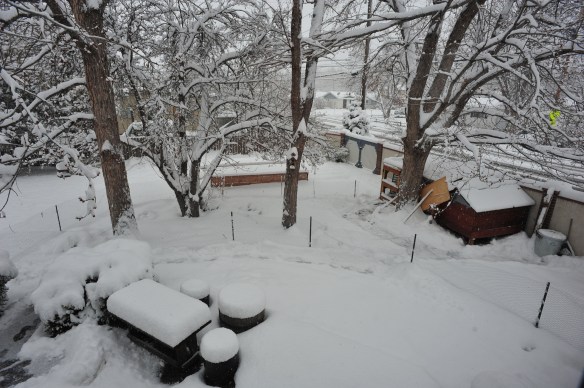
About eight months ago, we decided to put our regular lives on hold for a brief period and venture out to see the world again. We were heartsick and weary and in desperate need of a break from pretty much everything except each other. So we gave away our chickens, threw a few clothes in a backpack and locked up our house. And thus it happened that on a chilly January day, we left Colorado for Japan.
Garden Snow 01

Colorado

Tokyo Fuji sunset 01 sml

Japan

In Japan, we visited monkeys in hot tubs and worked on farms. We ate ramen and tempura and so many other delicious things. We walked Tokyo and Kyoto and fell deeply, completely in love with a country so strange and different and welcoming and lovely that we cannot wait to return.

New Zealand 01 sml

New Zealand

From Japan, we flew to New Zealand. We rented a ragged campervan and drove the length and breadth of the country. We stumbled on an old sheep station and did some stunning walks and learned how macadamia nuts grow. And we discovered that we are perfectly content to live in a campervan…and we plan to do that again soon, too.

Cambodia 01 sml

Cambodia

After New Zealand, we were off to southeast Asia. We started in Cambodia with Angkor Wat and we also saw interesting things being made, like incense and rice noodles and tofu. Oh, and it was hot. (At least we thought so until we got to India, where we learned what heat really is.)

Da Nang 03 sml

Vietnam

We traveled overland to Vietnam, where we jumped on trains, dodged motorbikes, devoured street food and struggled to learn more about a conflicted country with a conflicted history.

Chiang Mai sml

Thailand

Then it was time for a brief rest in Thailand; we went to more markets and bicycled through rice paddies and learned how to make handmade paper. We didn’t ride any elephants but we loved our time on the Banana Pancake Trail.

Flower Market 01 sml

India

No matter what, we weren’t ready for the heat and noise and crush and total sensory assault that is India. We’ve never traveled anywhere that we loved and hated in equal measure – sometimes in the exact same moment – and this complicated country has for certain gotten under our skin. We’ll be back here, too, and much better prepared this time.

Madrid palace 01

Spain

We flew from India to England, with a brief jaunt to gorgeous Madrid. This is one hell of a city…we miss drinking canas and eating jamón y queso at 2AM with hundreds of other people in the city’s beautiful plazas.

Bushby 01 sml

England

We finished with some restorative time in the Midlands’ lush, rolling hills, where the innumerable shades of intense green defy belief. Hours of walking with only cows and sheep for company and then perhaps a brief stop at the local pub for a pint of Tiger. It’s not the worst way to spend a day.

Denver Moon

Colorado

And that brings us to now. We’ve been home for about three weeks and we’re struggling to adjust. This is not the country we left; it has been immensely challenging to reconcile the joy and freedom and lovely people of our travels with the rage and divisiveness and fear currently smothering all of us like a dense fog. But we’re back on our bikes, we’re volunteering on a goat farm and we’ve planted our garden. And this fall, we’ll be out on the road again to search for our farm property in earnest. Thanks for joining us on our travels over these past months and please stay tuned, friends, as our journey has just begun. We’re off to find Quiet Farm.

The photos we didn’t take

N took a lot of remarkable photos during our round-the-world trip, but you won’t see us riding elephants, cradling sea turtles, posing for selfies with tiger cubs or swimming with captive dolphins. (We’ve certainly swum with wild dolphins in the middle of the ocean, but we don’t have the photos to prove it.)

NJB_4032

Animal tourism is all of a sudden a hot topic. Last year, SeaWorld announced that it would cease its controversial orca captive breeding program. In May, Ringling Brothers Circus performed its last show; ticket revenue had dwindled for years once the animal attractions were eliminated. And last autumn, TripAdvisor – one of the world’s largest ticket sellers for tourist attractions worldwide – announced that they would no longer sell tickets to most animal attractions. All of these stories, and many more, clearly indicate that knowledge about this topic is growing, and quickly.

A recent Oxford University study indicated that between two and four million visitors per year pay to visit animal attractions that are considered harmful to animal welfare. Most of this is done out of ignorance, not cruelty. If you’re an American tourist, for example, you might assume that other countries have strict standards for the animals’ health and wellbeing (even though America doesn’t). The reality, however, is that most animal attractions are in desperately poor countries, and the “trainers” might be impoverished people simply looking to feed their family. The possibility of strict regulations, competent oversight or of punishments meted out for violations, is laughable just about everywhere.

NJB_3561

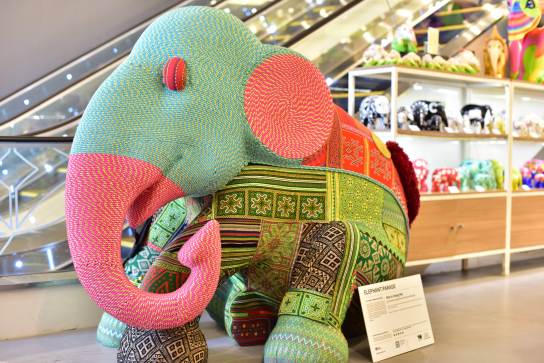
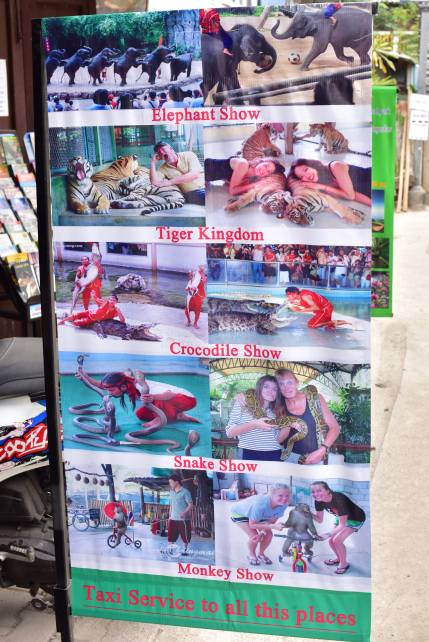
As such, animal tourism was a major issue during much of our trip, particularly in southeast Asia. If you visit Thailand for the first time, one of the things you’ll notice quickly is that elephants are ubiquitous. They’re used in high-end art and on cheap tourist trinkets.

NJB_4051

Elephants advertise beer here too.

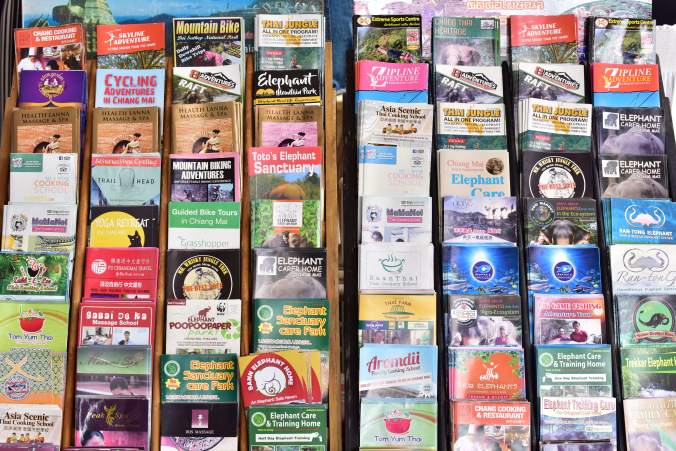
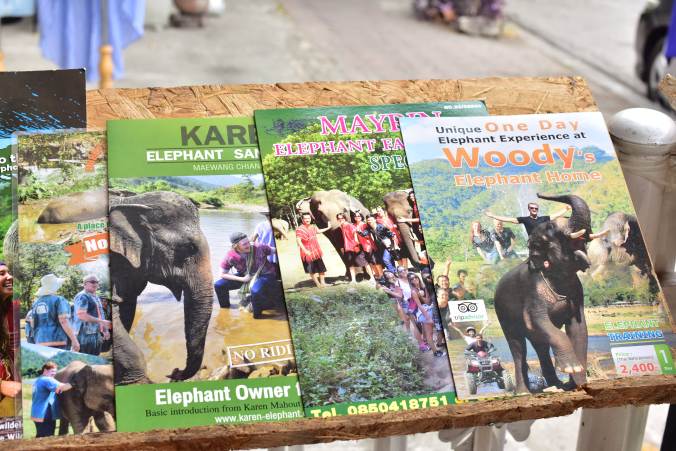
Their elegant silhouette can be seen everywhere, and nowhere more glaringly than in the racks and racks of tourist brochures found outside just about every restaurant and guesthouse in Chiang Mai, where these photos were all taken. (Please know that elephant riding and other abusive animal tourism is available all over Asia; we just spent the most time in Thailand and therefore found its constant and unrelenting promotion here particularly overwhelming.)

NJB_4028

Look at all the options you have! Definitely go for the cheapest one. The animals like it there best.

NJB_4017

NJB_4031

NJB_4016

Notice words like happysanctuary and home? These places are anything but.

Many people don’t know that elephants aren’t physiologically designed to be ridden. Despite seeming sort of like a giant, floppy horse, elephants’ spines aren’t built to support weight. Plus, elephants are fundamentally wild animals, and in order to be “domesticated” enough for tourists, they have their spirits broken. They’re also naturally social creatures with intricate familial relationships, and in these camps they typically exist in solitude. And adult females are routinely slaughtered in order to capture wild calves. I could go on and on, but I’m sure you get the idea. Elephants are not supposed to be a tourist attraction.

NJB_4019

Tired of this lecture? We haven’t even discussed cuddling tiger cubs yet! Tigers aren’t like house cats and they’re not thrilled about you pawing them. Most of the “tiger sanctuaries” in Asia sedate the tigers before letting the tourists in, just to ensure that the creatures are docile enough to avoid incidents. Oh, and sometimes they’re heavily involved in wildlife trafficking, too! Really some good people here. Absolutely give them your money.

NJB_4035

Don’t these look like fun? The animals are absolutely thrilled to have such an opportunity to enhance your vacation.

Or perhaps you’d rather donate your money a little closer to home, to a place like Lion’s Gate in Colorado, which recently euthanized all of its animals even after other sanctuaries volunteered to take the lions, tigers and bears. These people do not care a fig about animal welfare, and don’t let the cute pictures make you think otherwise. Animal attractions rake in billions of dollars every year, and since there is massive profit to be made from charging people to “experience” (i.e. unintentionally mistreat) animals, it will continue to happen.

NJB_4026

Could we discuss how animal tourism provides jobs and livelihoods in some of the world’s poorest countries? Of course. Should we talk about zoos, which in some places are top-notch research and breeding facilities and in other places absolute horror shows, especially when the population is starving? Sure. Maybe we can discuss the fact that – at least in America – we raise animals for food in horrifying conditions and most people aren’t particularly bothered about that so why shouldn’t we mistreat them for our entertainment, too? And in response to all those hypotheticals, I would argue: because we as humans are better than that. Or at least we should be.

NJB_4049

The advertisements for the animal attractions are literally everywhere.

People who visit animal tourism attractions are typically people who love animals. They want to get up close and personal with fascinating creatures they don’t often encounter, and they’re willing to pay for that privilege. But the Oxford study demonstrated that as many as 80% of these people will visit animal attractions and post positive reviews online, without acknowledging the risks to the animals’ health and welfare. They argue that they really love tigers – they were even born in the Year of the Tiger! – so just one selfie with a drugged tiger cub won’t hurt. Because it shows their social media feed how much they love tigers! It is simply not acceptable, friends. Just as the way America currently raises most of its animals for food isn’t acceptable, neither is this.

NJB_4029

If you made it all the way to the end of this post, thank you. We’ve written about this because we think it’s important and we hope you do too. Please, if you’re considering visiting any sort of animal tourism attraction – whether in the U.S. or overseas – do your research, and don’t just fool yourself with glowing online reviews. Use your common sense and ask yourself whether a large, predatory and naturally solitary animal like a tiger really wants to be handled by human beings for endless hours each day. Not all animal attractions are necessarily poorly managed or abusive, but the bad ones definitely outweigh the good ones.

We say it a lot, but vote with your wallet – refuse to support organizations or attractions that promote any sort of animal cruelty (looking at you, Tyson, Hormel and countless others). This is especially relevant if you’re traveling in the Third World, but as we know from films like Blackfish, we’re to blame here in the U.S. as well. We write a lot about animal welfare on this site, and that’s true not only for what we eat, but what we exploit for entertainment, too. How you choose to spend your money matters, always – and the recent policy changes from major companies like SeaWorld and TripAdvisor shows that they’re paying attention to your choices. Use those choices wisely.

Some honesty

We’ve shared lots of striking images of India, and in this brief post we want to share a few more. Unfortunately, these are striking for all the wrong reasons.

IMG_20170504_181829785_HDR

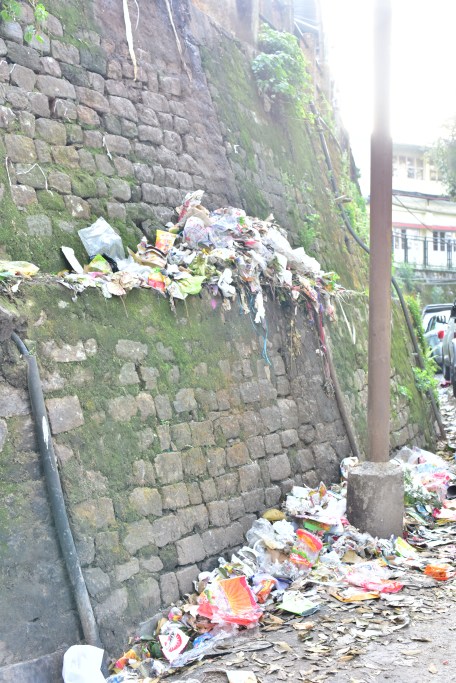
For everything that we read about India before our visit there – to dress conservatively, to travel in groups, to keep our passports and money close by, to watch our luggage at all times – we never read about this. We had no idea just how unbelievably filthy India actually would be.

IMG_20170419_105959082

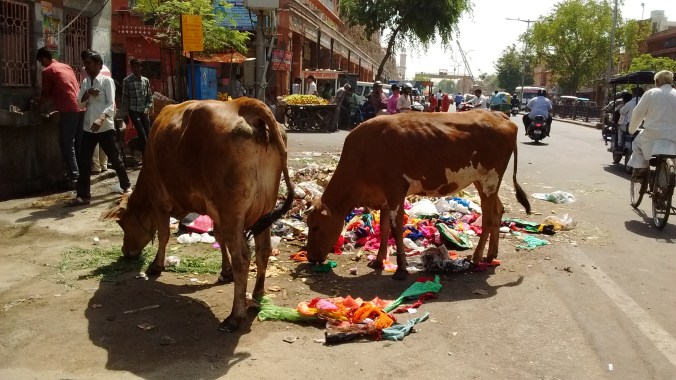
We talked a lot about whether we should share photos like this, and obviously we ultimately decided yes. If everything on the Internet is fake, then we want this site not to be. And when we remember India, some of the most vivid memories we have are of amazing experiences like visiting tea plantations and spice gardens and eating dinner in a Sikh temple with five hundred strangers, but they’re also of the nearly incomprehensible piles of rubbish (and human and animal waste) we stepped around and through and over just about every single place we went.

NJB_4672.1

To be fair, some parts of India are cleaner than others. We covered nearly 3,000 kilometers in the country over a month, so we do feel as though we’ve visited enough places to form a reasonably educated opinion. Mumbai was lovely, and so was Mysore. But Agra (home of India’s most-visited tourist attraction!) was filthy, and Bundi was – quite frankly – disgusting. What you don’t see in most of the India photos elsewhere on the blog is how frequently N had to crop images or frame things differently to avoid photographing all of the trash.

IMG_20170419_103356714

There are a lot of things about India that are difficult for Western travelers to comprehend; culture shock was a very real thing for us. More people in India have mobile phones than have access to clean drinking water or toilets; this is an especially dangerous problem for women and girls. The rails of India’s train system have to be replaced, on average, after two years rather than the expected thirty years because the human waste dumped on the tracks corrodes the rails entirely. And in many places, you can’t just throw your trash “away” because there is no “away.” There is no one to come collect it and nowhere to put it even if they did. And if there is a place to dispose of it, people still live there, too. So it most often stays on the streets, and the animals eat it, and the rats come, and it spirals from there.

IMG_20170419_094428666_HDR

Please don’t misinterpret this – we loved our time in India, and we’re so glad we went. And we’re not in any way claiming that solving India’s immensely complex social and cultural issues will be easy, or quick. But travel blogs are full of carefully curated, spectacularly gorgeous photos – and most of the time, ours is, too. This post is designed to provide an honest counterpoint to all that beauty, and to remind ourselves that even in our First World countries, throwing something away isn’t really away, because it doesn’t disappear – it just disappears from our sight. And it’s not typically in a huge pile on the street with animals and people both fighting over it and living in it.