Saving the bees

On a cool spring day four years ago, our friend Jim came to pick us up in his truck. We drove to a local feed store where we waited forever with dozens of other eager apiarists to pick up our new beehive. The sellers had driven down from Wyoming, where their hives and queens were specifically raised in extreme environments (mainly intense winter winds), meaning they’d likely survive their move to the Front Range.

Bee 01.jpg

That first hive didn’t make it. We lost it two years ago, and to this day we still don’t know why it didn’t overwinter successfully. Because our neighbors’ lawn care company uses ten thousand different poisonous chemicals? Because we didn’t maintain the winter sugar water supply properly? Because of colony collapse disorder? We don’t know, and we won’t ever know. That total lack of knowledge is one of the most challenging aspects of keeping honeybees.

Bumble Bee 01.jpg

Such remarkably strong and beautiful creatures.

We are very new to beekeeping. We’re on our second hive, and though it seems to be exceptionally strong at the moment, there are a lot of different pressures on pollinators right now. We try to do our very best by our bees; we read and we talk to friends who keep bees and we monitor the hive carefully, but ultimately we’re not entirely in control of the situation.

Bee 02.jpg

Planting flowers that bees love is one of the best things you can do to help them.

In June, the U.S. officially withdrew from the Paris climate accord. This decision sent yet another exceptionally strong message to the rest of the world that Americans are basically a bunch of nutjob flat-earthers who believe climate change is a global conspiracy cooked up by the Chinese. In challenging times like these, it’s easy to believe that nothing we do makes any difference and that we’re all doomed. Keeping bees, however, is one of our small commitments to creating the kind of world we want to live in.

Hive

Our basic hive set-up, strapped down to keep out hungry raccoons.

It’s no great secret that honeybees and other pollinators are under a huge amount of stress. Whether from loss of habitat, monocropping, neonicotinoids, or other factors, pollinators are disappearing at critical rates. One-third of our total food supply requires pollinators to thrive, and it’s only in recent years that farmers, home gardeners and scientists have started addressing this issue. Colony collapse disorder has gotten a lot of attention, but it’s still not widely understood, and the disappearance of pollinators most likely can’t be exclusively blamed on CCD. It’s a complicated story.
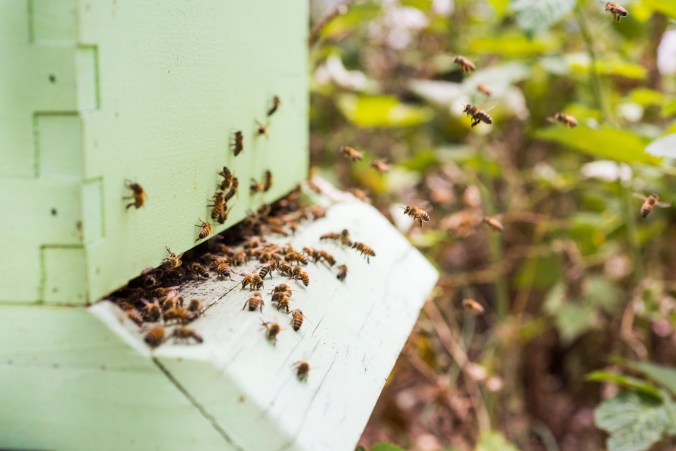
Bee entrance.jpg

Watching the bees at the hive entrance is one of the great joys of beekeeping.

The term pollinator doesn’t refer to just bees; pollinators can also include birds, bats, butterflies, beetles and other small mammals. All of these creatures are responsible for helping to propagate certain plants, but honeybees give humans the greatest return for their investment. Honey is the only food produced by insects that humans eat, although protein derived from insects is about to become the next big trend in sustainable eating. (You heard it here first, friends.)

Hive 02

Our hive is a Langstroth; the other most common style is called a top-bar hive.

We started keeping bees to help pollinators and to help our garden, and because we know we’ll have hives on our farm. The honey is no small bonus either, especially since eating it regularly has seemed to really help N with the seasonal allergies he’s struggled with here in Colorado. Beekeeping isn’t necessarily difficult, but it does require a certain investment in time, money and equipment; we’re always trying to learn more about how we can become better beekeepers.
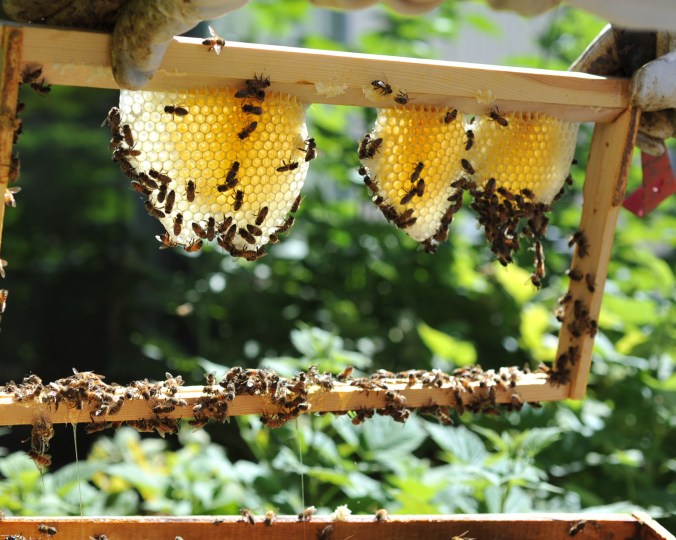
Honeycomb

Examining built-up comb on a frame.

Beehives are unbelievably complex and elaborate communities; a typical honeybee hive usually contains about 50,000 bees. There is a basic three-tier caste system: one queen, plus workers, who are female, and drones, who are male. Drones only exist to mate with the queen and are incapable of feeding themselves or foraging, plus they die immediately after mating. Workers, on the other hand, might be nurses, attendants, cleaners, foragers, guards or undertakers. Healthy queens live for an average of two to three years but have been known to live as long as five years; workers and drones live between two to four months, depending on their role in the hive.

NJB_0213.JPG

Greenhouses often have to bring in pollinators to mimic conditions outdoors.

A single bee colony can produce between sixty and one hundred pounds of honey in a year. For every pound of honey produced, the bees have visited two million flowers and flown over 55,000 miles. And each individual honeybee only produces about 1/12th of a teaspoon of honey in its lifetime, so the next time you’re grousing over the price of local honey, consider how much work went into creating it. Bees fly up to about five miles from their home hive to forage; for obvious reasons it’s tough to find true organic honey – how often can you guarantee that every single plant bees might visit within a five-mile radius is completely organic? Our honey definitely isn’t (see neighbor reference above).

Bumble Bee 02.jpg

Bumblebees are easily recognizable by their plump, furry bodies.

People are scared of bees. We’re always careful to warn guests and workmen about our hive and to inquire about allergies. We’ve both been stung numerous times, some occasions definitively our fault and some entirely unprovoked. I’ve been lucky enough to actually see the bees swarm – when the hive becomes too crowded and a group decides to set off for greener pastures – which isn’t ideal for beekeepers but is a remarkable (and slightly spooky) experience. Our hive this year is also strong enough that we’ve been able to take a split, which is essentially a controlled division of the hive before it has a chance to swarm. Splits are better than swarms in most cases, because with a swarm there is always a risk of losing the queen. Unless the hive can produce a new queen, the entire colony will die.

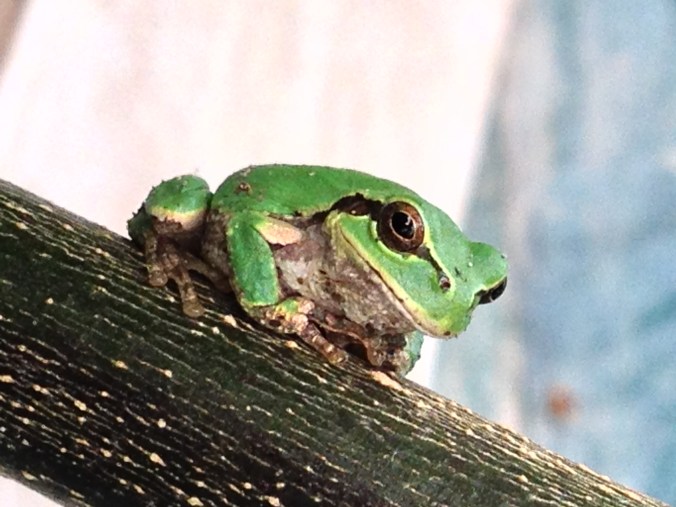
Spider bee.jpg

Spiders have to eat too.

To make the clear, clean honey you most often find at the grocery store, the honey is heated and filtered to remove beeswax, pollen, bee parts and other potential contaminants. Certain beekeepers claim that this heat treatment removes the most beneficial components of the honey, so some honey is labeled “raw.” True raw honey has never been heated beyond naturally occurring hive temperatures, about 95 degrees Fahrenheit, but this labeling term – like so many in the U.S. – isn’t regulated and therefore no one is checking up on manufacturers who use the term illicitly. There have also been numerous instances of honey being adulterated with corn syrup and other sweeteners; when there is money to be made someone will always find a way to do so fraudulently. As with just about every food, buy as close to the source as possible, read the label carefully and ask questions. Local honey is sold almost everywhere in the world; it’s worth seeking some out where you live.
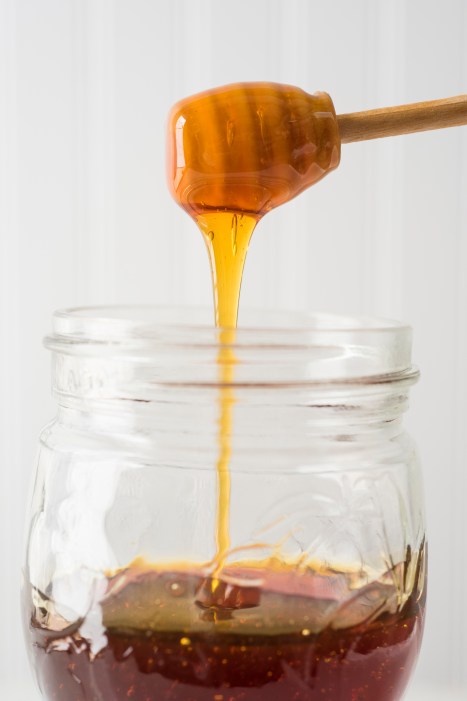
Honey Flow

Is it any wonder this stuff is referred to as liquid gold?

In the Western world, it’s common for new mothers to be told not to feed honey to infants under one year of age. This came about in the late 1970s because it is theoretically possible for honey to contain Clostridium botulinum bacterium, which could (again theoretically) cause infant botulism. It’s extremely rare, however, and after twelve months the intestinal system has matured so that the toxin will no longer pose a risk. Considering that the bacterium is commonly found in dirt and dust everywhere, and that we regularly advocate feeding infants formula containing monocropped GMO soybeans and yogurt laced with food dye and high-fructose corn syrup, this warning against one of nature’s true pure foods seems a little panicky. As we’ve discussed, however, we love to identify a single villain rather than target the entire compromised system. Invariably we ignore all sensible advice to the contrary.

Honey Jars.jpg

Notice the different colors; darker honey is typically stronger in flavor than lighter.

If you have the space and the inclination, please consider starting your own backyard hive. Like chickens, it’s a lot less work than people think, and the rewards are more than worth the effort. If having your own hive isn’t practical, seek out the best local honey you can find and support your local beekeepers. A farmers’ market is often a great place to find local honey, or you can try this site. If you’re buying honey at the grocery store, read the label carefully: in Colorado, I’ve seen “local honey” on products from California and other states. That might have been local when it was collected and packaged, but it’s also a very easy way to mislead consumers into paying more. Be a conscious consumer.
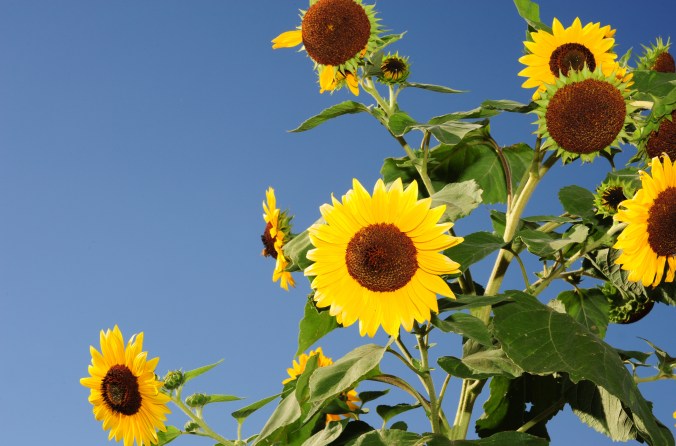
Sunflowers

It’s easy to feel overwhelmed when faced with critical issues of this scale, but this is actually one where small actions can make a difference. Want to learn more about pollinators and how you can help? Go here, here and here.

Tea party

After water, tea is the most-consumed beverage in the world. It is produced in forty different countries in Asia, Africa and South America; China is the world’s largest tea grower, followed by India.

NJB_4728

The eastern Himalayan range as seen from Tiger Hill, Darjeeling.

NJB_4820

Recognize that famous red circle and blue bar logo?

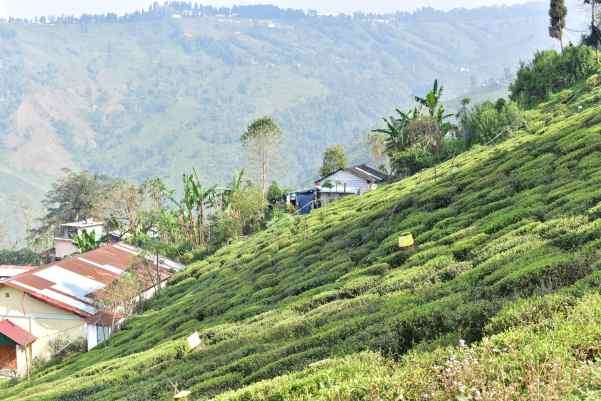
India is particularly famous for its Darjeeling and Assam teas, from the regions of the same names. We visited Darjeeling, which sits at close to 7,000 feet and was a famous “hill station” during the colonial era.

NJB_4645

Tea plantation, Darjeeling.

In Darjeeling, tea is grown on steep slopes like these. Pickers – always women – harvest tea leaves into bamboo baskets they carry on their heads or backs. The pickers are paid about $2 a day for a minimum of ten hours of work. Leaves are harvested no matter the weather; the flush refers to the season when the tea was harvested. We visited during first flush, which is the first time the plant is harvested after its winter dormancy and produces the most flavorful and sought-after tea.

NJB_4643.1

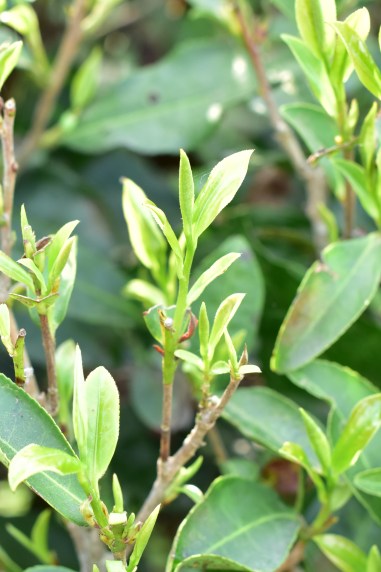
Camellia sinensis, or tea plant.

All true tea – white, green, oolong and black – comes from the leaves of the camellia sinensis plant, an evergreen shrub native to Asia. Herbal teas, like mint, chamomile or lemongrass, are technically tisanes and not teas since they contain no camellia sinensis. Once a tea bush is healthy and established, it can produce healthy leaves for about eighty years.

NJB_5237

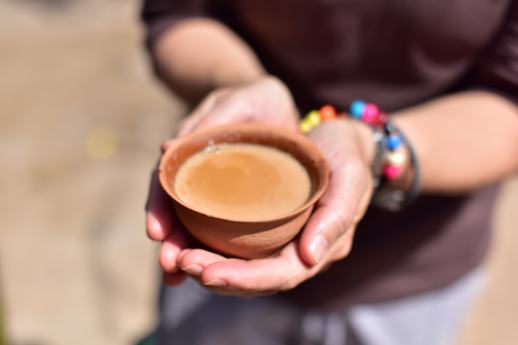
On the street, chai is sold everywhere in tiny terra cotta cups for 10 rupees (about 15 cents). After drinking, the cups are smashed on the ground.

India is famous for its chai tea, which is black tea blended with fragrant spices like cinnamon, cardamom and cloves, and served hot, milky and sweet. On the trains, chaiwallahs prowl the carriages selling drinks to passengers. Sometimes you even get little cookies, too!

NJB_4568

As with any agricultural crop, monitoring temperature and rainfall is paramount.

NJB_4578

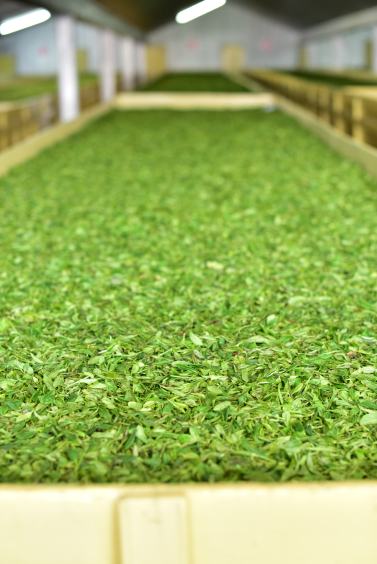
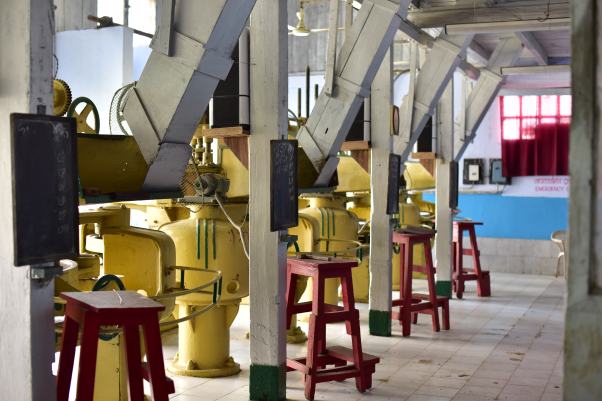
After harvesting, the green tea leaves are “withered” to reduce moisture.

The difference in teas simply comes from how it’s processed. White tea is the most expensive and only comes from the very best tips of the plant. Green tea isn’t fermented, leaving it delicate and soft; both black and oolong teas are fermented, which gives them a stronger flavor. True tea will always contain at least a small amount of caffeine; the amount depends on how the tea was processed and fermented. Herbal “teas” will only contain caffeine if it’s been added in.

NJB_4580

The tea leaves are exceedingly delicate before they’re dried and rolled.

NJB_4571

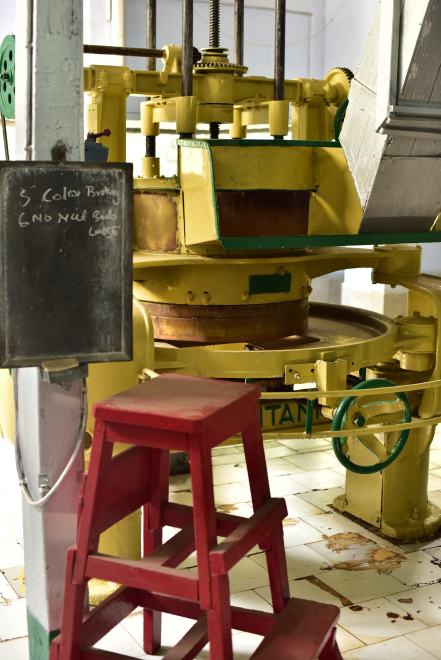
Withered leaves are funneled into rolling machines.

NJB_4584

The rolling machines crush the dried leaves to start the oxidation process.

The Darjeeling region is famous for delicate black teas that are traditionally served without milk or sugar. Because these teas aren’t as strong or tannic as Assam teas, they can be enjoyed straight. Darjeeling isn’t actually that big and produces a relatively small amount of tea; it’s common to find tea labeled as “100% Darjeeling” when it’s simply lower-grade tea from elsewhere in India. As with places like Champagne or Stilton that also produce unique foods or drinks, the name itself is a valuable brand and one that’s often misappropriated.

NJB_4570

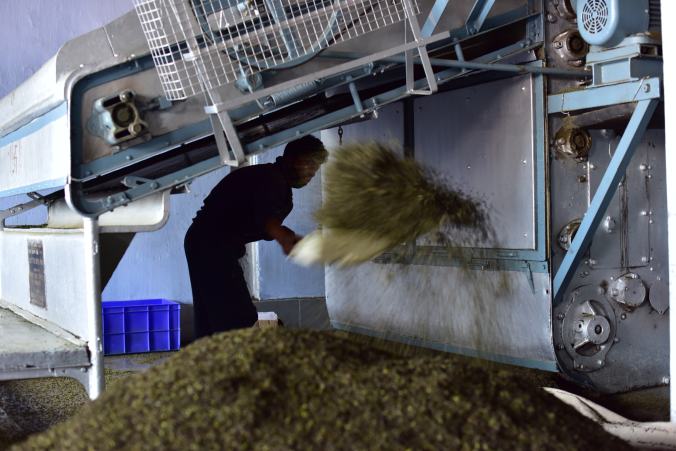
The tea is placed into drying machines to remove remaining moisture.

NJB_4609

Moving the dried tea.

NJB_4593

NJB_4595

NJB_4623

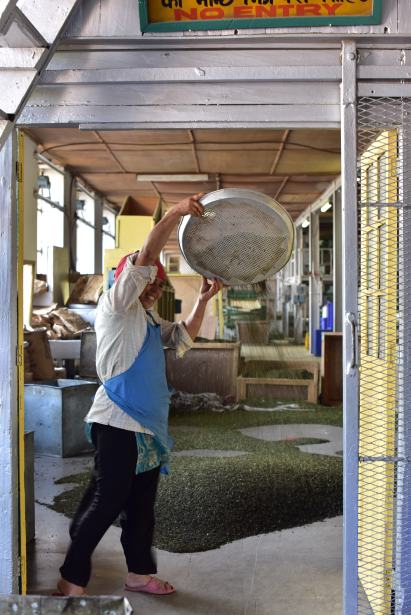
The dried tea is sifted and graded.

After the tea has been dried and sifted, it’s separated into grades of loose tea and “tea dust,” for bagged tea. Tea purists will always opt for loose tea; it is definitely of much higher quality than bagged tea. There is no arguing the convenience of tea bags, however.

NJB_4614

Finished tea in linen bags.

True tea aficionados will swear that you must use exact measurements when brewing tea, such as two grams of tea for eight ounces of water. Like cooking, however, I believe that what matters most is your own palate. Start with the professional guidelines and adjust from there to find out what you like best – I prefer my tea much stronger than most “experts” recommend, so that’s how I drink it. Ultimately, it’s your tea and you should drink it the way you like it.

NJB_4588

Loose tea ready for transport.

NJB_4629

NJB_4628

Tea tasting.

Tea is without question one of the world’s healthiest beverages (when it’s not loaded with sugar, obviously!) and Americans are slowly starting to explore the range of delicious teas available. Interested in learning more about teas and how to taste properly? Try here, here or here!


Scenes from the Banana Pancake Trail

We’ve never claimed to be the world’s most adventurous travelers, and our travel in southeast Asia definitely adhered to the classic Banana Pancake Trail. Nevertheless, we had a phenomenal time here and loved seeing countries that were new to both of us. We visited Cambodia, Vietnam and Thailand in just under a month; below, some of our favorite images from this portion of the trip. We’re off to India!

NJB_3399

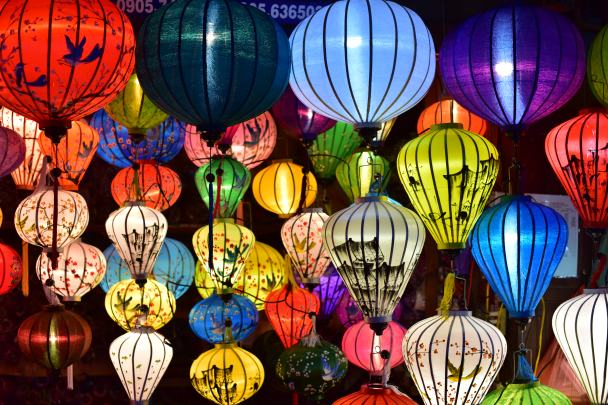
Illuminated lanterns in Hoi An’s Old Quarter.

Hoi An, near Da Nang on Vietnam’s central coast, was most certainly our favorite place in the country. We loved its antiquated feel and the charming Old Quarter, which is decorated with tens of thousands of brightly colored lanterns hung all over the shops and streets. Strolling here after sunset was such a pleasure.

NJB_3433.1

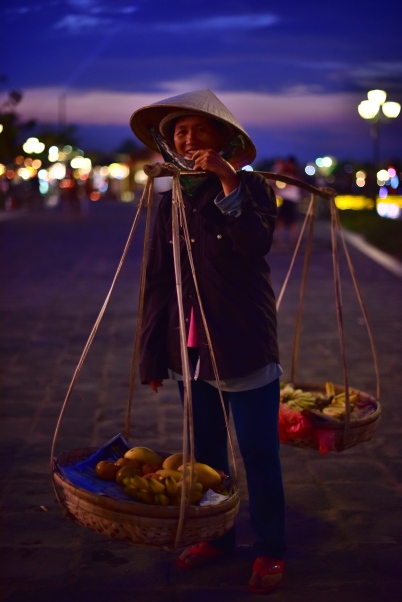
A fruit vendor in Hoi An.

NJB_3349.1

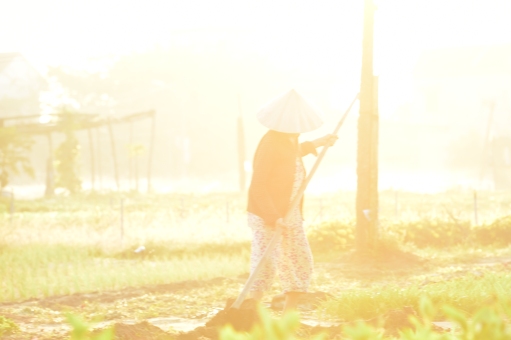
Early morning gardening in Vietnam.

In Hoi An, we participated in a sunrise bicycle tour that took us to the daily market, an organic farm and out to the rice paddies. Truthfully, most small village farms in developing countries are organic because labor there is cheap and chemicals are expensive. In the U.S., unfortunately, the opposite is true.

NJB_2552

The stunning interior of a village temple outside of Siem Reap.

This gorgeous temple was on a dusty road leading out of Siem Reap; from the outside, you’d never know that the interior was this incredible. Each fresco had a number painted in the corner; this indicated the amount of money raised by the village to pay for that particular painting.

NJB_3491

Vietnam’s favorite son is absolutely revered in this country.

Vietnam’s national hero, Ho Chi Minh, is celebrated all over the country but nowhere more so than in his namesake museum in Hanoi. The museum is one of the strangest and darkest – both in terms of actual light and the overall mood – places we’ve ever visited. It’s an unsettling combination of blatant propaganda and modern art installation, and worth seeing just for the weirdness.

NJB_3495

See how dark this museum is?

The placard on this exhibit in the Ho Chi Minh Museum read, in part, “The models in this hall give visitors information about how scientific and technical achievements have been made use of for peaceful and beneficial purposes. The models at the same time condemn those who have utilized these achievements for aggressive and destructive purposes.” What?

NJB_3717

A ferocious temple guardian in Chiang Mai.

NJB_3353

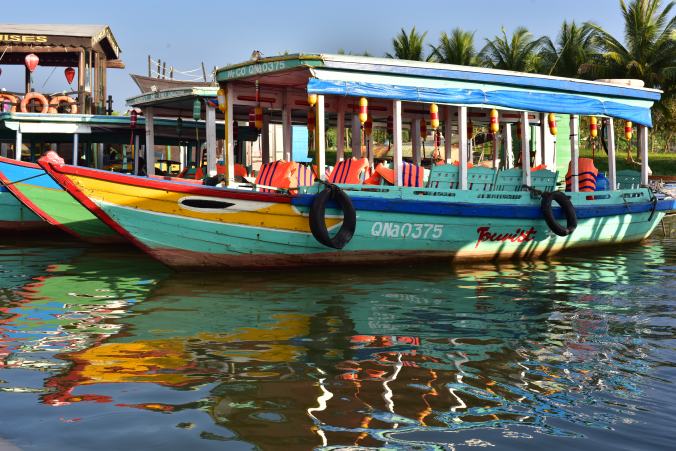
Look closely: the labeling on these boats in Hoi An lets everyone know you’re a tourist.

NJB_3482

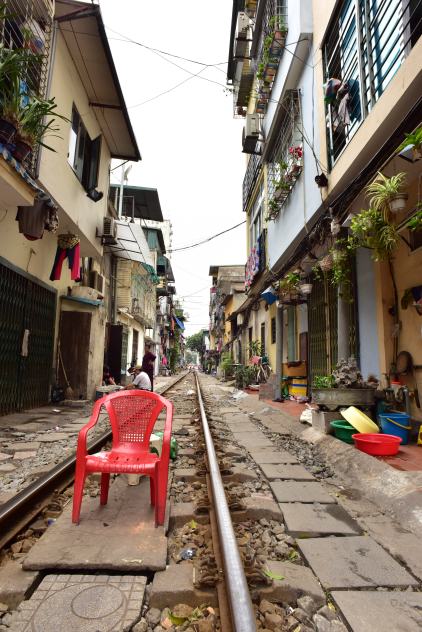
Trainspotting might be a bit risky in Vietnam.

NJB_3827

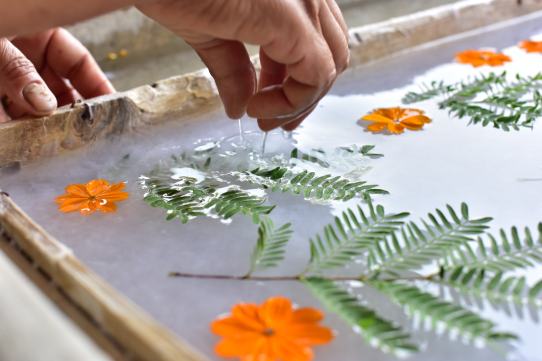
Adding decoration to our handmade paper.

In Thailand, we took a papermaking class and created gorgeous papers with leaves and blossoms. It’s simple and rewarding and beautiful; we’re hoping to make our own to wrap our handmade cheeses in at Quiet Farm.

NJB_2953

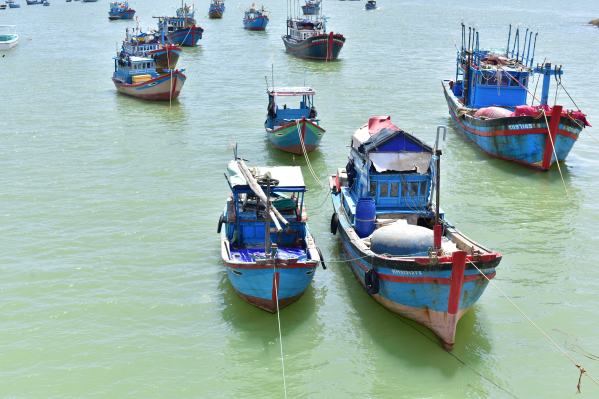
Fishing boats on the river in Nha Trang.

NJB_3700

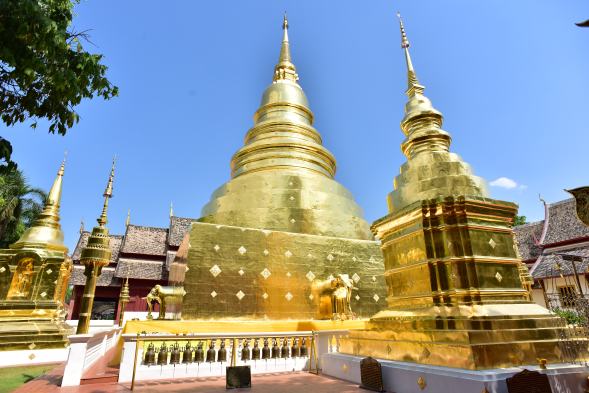
One of Chiang Mai’s many elaborately decorated temples.

NJB_3138

Da Nang’s famous (and very expensive) Dragon Bridge changes colors – and on weekend nights, it also sprays water and breathes fire!

NJB_3389

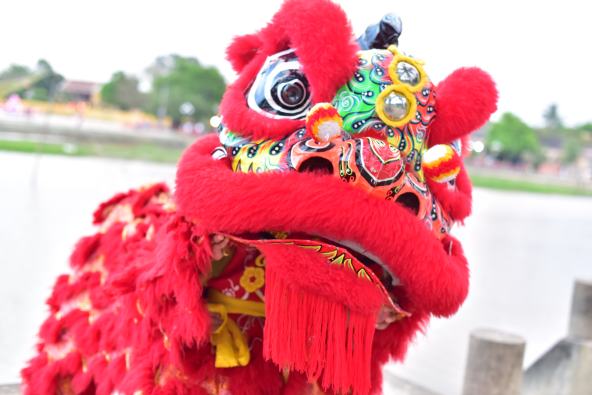
We found this lion dancer at an international food festival in Vietnam.

NJB_2917

The building boom in Nha Trang, a beach resort popular with Russian tourists.

Vietnam is in a mad rush to modernize, so hotels are constructed at a breakneck pace. This means that not only are there hammers and saws competing with motorbike horns at all hours, but that a lot of construction is left partially finished when workers move on to the next project.

NJB_3550

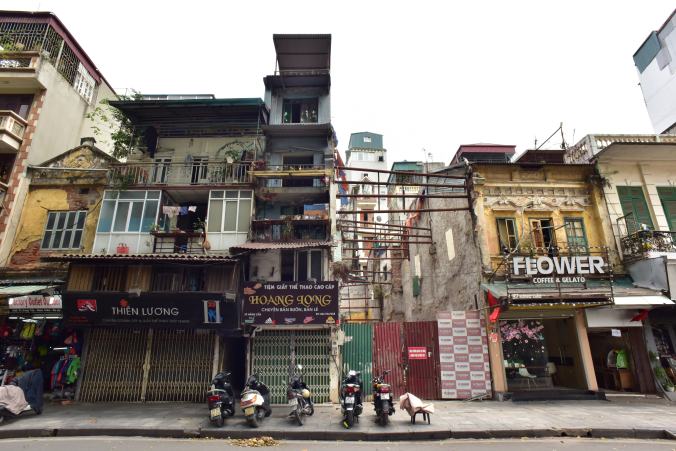
A “skinny house” in Hanoi.

Even more common than all the new construction is making do with what’s already there. The skinny house above has been tucked in; notice that the bamboo poles are actually structural and are keeping the two buildings from leaning in. Presumably something will be quickly built in that empty space. But there’s a fancy coffee shop! With gelato!

NJB_3565

The exterior of the traditional lanna house we stayed at outside Chiang Mai.

NJB_2742

A monk studying at a temple in Phnom Penh.

Monks in orange robes with shaved heads are a common sight throughout southeast Asia; it’s amusing to see them with earbuds and mobile phones, too. Even monks have to modernize.

NJB_3747

Is this for here or to go?

And we leave you with this photo, and dare you not to smile. While dogs are still eaten in southeast Asia, as the region grows in economic prosperity, its people want what they perceive as middle-class luxuries – and that includes house pets. So now it’s more common here to see dogs on a leash rather than on a grill.

Vietnam by train

Thus far on this trip, we’ve used just about every imaginable method of transportation, so long-distance trains in Vietnam fit perfectly into our plans.

NJB_3279

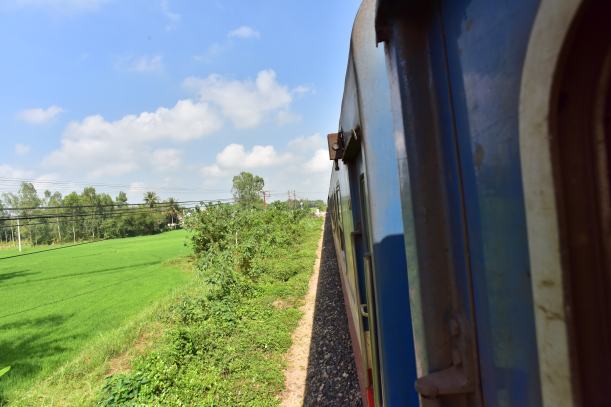
Hazy sunrise over the rice paddies.

Long-distance trains were established by the French in Vietnam in the 1880s; the North-South line, connecting Hanoi and Ho Chi Minh City (formerly Saigon), opened in 1936. The line was cut in 1954 at the beginning of Vietnam’s war against the French when the country divided into North and South. It was rebuilt in 1976 and is still known to many as the Reunification Express.

NJB_2900

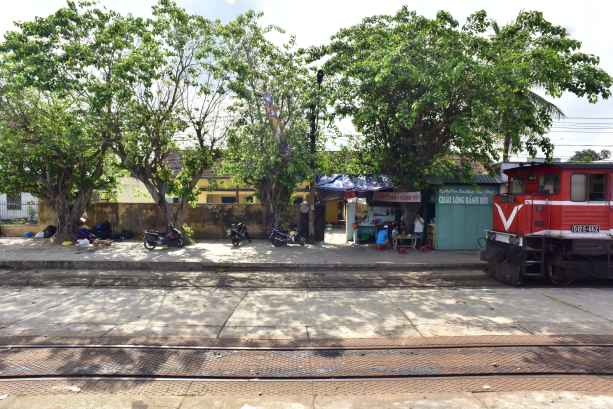
No one is striving for architectural greatness at these train stations.

NJB_2985

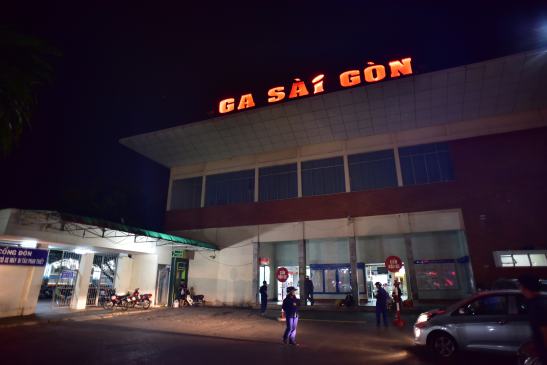
Though it’s officially called Ho Chi Minh City, the station signage and the timetables still use Saigon. We’re not certain which one is socially correct.

NJB_2904

It is advisable to purchase snacks for the journey from the station vendors, though they will almost certainly shortchange you.

NJB_2982

This doesn’t show the large family groups camped in the room behind, but the waiting rooms are clearly both luxurious and comfortable.

NJB_2986

Unlike the precision of Japan, Vietnamese trains are on a bit more of a casual schedule.

NJB_2992

A four-bed “soft sleeper” cabin.

Train accommodations in Vietnam come in fairly self-explanatory flavors: hard seat, soft seat, hard sleeper and soft sleeper; sleepers can be either four-bed or six-bed. We first used soft seats for day trains, but learned the hard way that this meant we’d be subjected to Vietnamese musicals played on the communal televisions at ear-splitting volume. Presumably this was very enjoyable for the Vietnamese passengers, but it did diminish our love of train travel somewhat. So did the physically aggressive food vendors who hopped on board at stations.

NJB_2994

NJB_3000

NJB_3005

This rice paddy photo is clearly lacking the iconic tiny Vietnamese woman in a conical cap.

NJB_3023

Everything – and we mean everything – is under construction in Vietnam. This includes every single hotel we stayed at.

NJB_3018

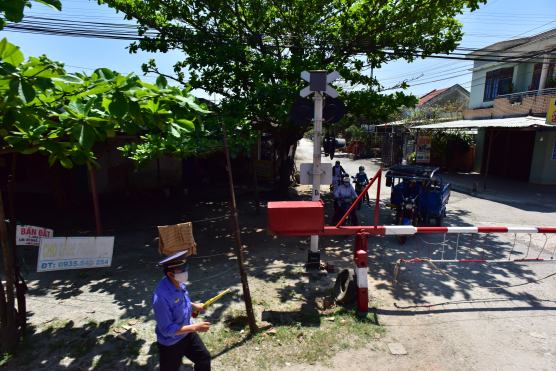
Railway crossings are not automated, so the train employee runs to shut the barrier as the train passes.

NJB_3025

NJB_3016

Almost every house we passed had a large vegetable garden.

In addition to the vegetable gardens we saw at most homes, families also harvest part of communal rice paddies. Their allotment is determined by the size of the family, so there is certainly an incentive to have more children. Obviously, no one actually owns land here; land is theoretically owned collectively by the people, but of course in reality controlled entirely by the government.

NJB_3010

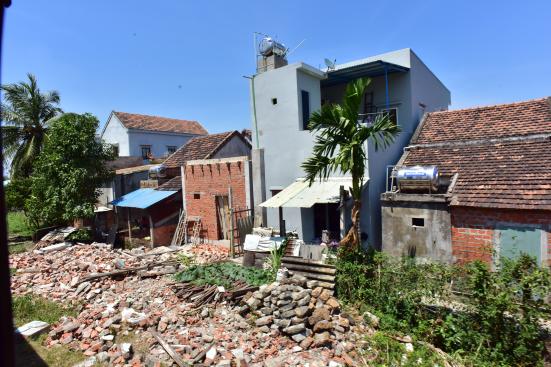
On many occasions, we passed close enough to touch the buildings outside.

NJB_3026

We were a little surprised by the cavalier attitude towards crossing live tracks, but when in Vietnam…

Here’s the honest truth: trains are not the most efficient way to travel around Vietnam, and unfortunately they’re not the most economical, either. Though we had planned on doing all of our travel up the coast via train, budget airlines like AirAsia and JetStar have made the decision much more difficult. From Da Nang to Hanoi, for example, it’s sixteen hours by train and about ninety minutes by plane. The trains are by no means particularly comfortable or clean, and the airline tickets are often cheaper! So we’d love to tell you that we honored the backpacker credo and traveled slow, but that’s not the entire story. This is a complicated, difficult country, and the vagaries of train travel are just the beginning.

NJB_3040

We finished our train journey about halfway up the coast at Da Nang, or “China Beach” to Americans.

Happy hour

Between filming Hobbit movies and grilling lamb chops, New Zealand also manages to make some pretty decent beverages. Wine represents a hugely important component of New Zealand’s agricultural exports; craft beer has always been second fiddle to wine here, but the microbrew industry is definitely on the rise. We obviously wanted to be as fair and open-minded as possible, so we made sure to taste just as much beer as we did wine during our time here.
NJB_1523.JPG

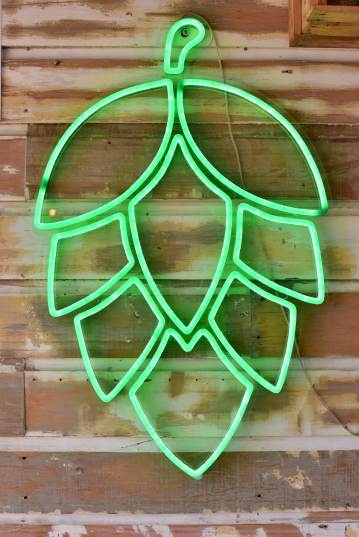
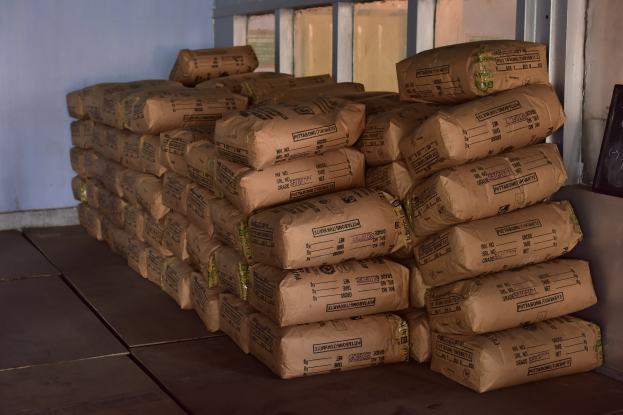
Hops are the flowers of the female hop plant (Humulus lupulus), and they’re used primarily as flavoring and stability agents in beer.

NJB_1522.JPG

All of New Zealand’s hops are grown in the Nelson region on the South Island. As the craft beer industry has exploded around the world, hops have become a much more lucrative crop.

NJB_1519.JPG

The tap line-up at Hop Federation, Riwaka.

NJB_1628.JPG

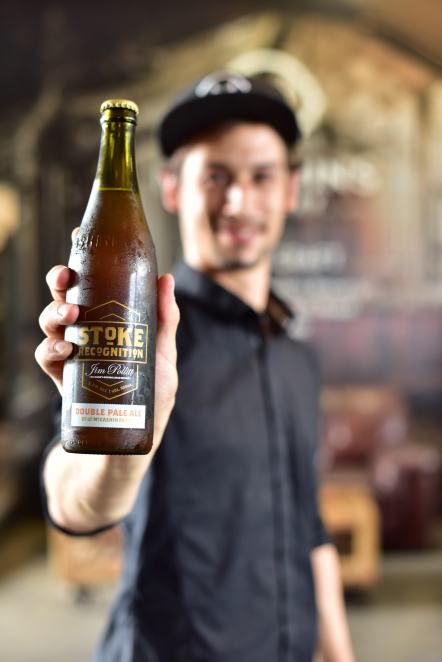
Rule No. 1: when photographing for your blog, find a friendly, amenable bartender.

NJB_1623.JPG

NJB_1621.JPG

A beer tasting board at McCashin’s.

In the U.S., at least, New Zealand is most known for its sauvignon blanc, specifically from the Marlborough region at the top of the South Island. Walk into any American wine shop and you’re almost guaranteed to find a bottle of Cloudy Bay, the wine that basically introduced the rest of the world to New Zealand wine. Central Otago pinot noir, however, is also starting to make a name for itself, as are a number of other unique varietals.  Like other New World wine regions, New Zealand has more freedom to experiment with its grapes and winemaking styles than the Old World with its deeply entrenched rules.

NJB_1659.JPG

Brancott Estate, Marlborough.

NJB_1691

Harvest is about three weeks away for these merlot grapes.

NJB_1946

These fruit crates are seen everywhere in New Zealand; they’re used for apples, plums, pears and of course wine grapes too.

NJB_1699

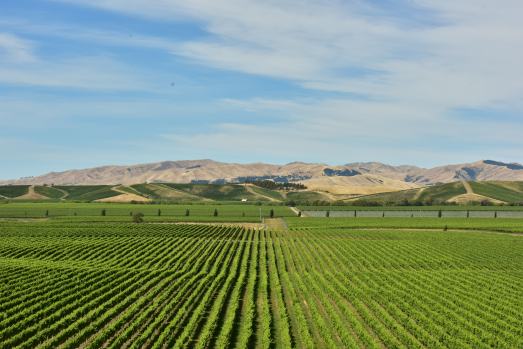
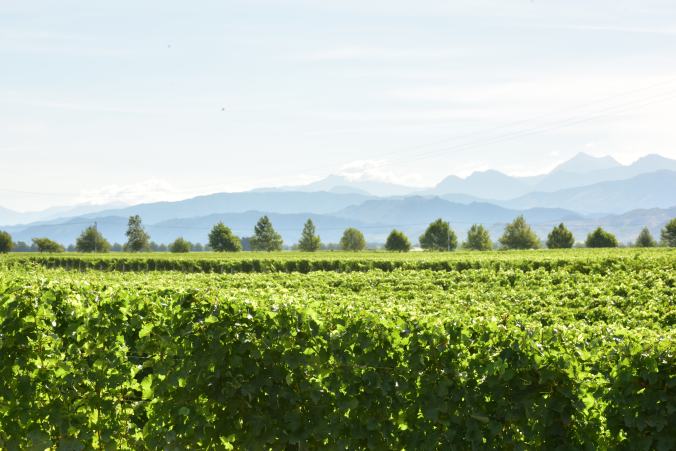
The vines and the mountains in Marlborough.

NJB_1695

Cellar door at Forrest Wines, Marlborough.

Wine tasting in New Zealand is easy and accessible; cellar doors are signposted and tastings usually cost between $5-$15 per person. Many regions, such as Hawke’s Bay, have numerous cellar doors close enough to tour by bike, and of course there are dozens of tour companies happy to drive while you drink, too.

NJB_1527

Neudorf Winery, Nelson. The vines are covered in netting to protect the ripe fruit from hungry birds. Many of the wineries have lovely gardens where you can enjoy a glass of wine and a picnic.

NJB_1945

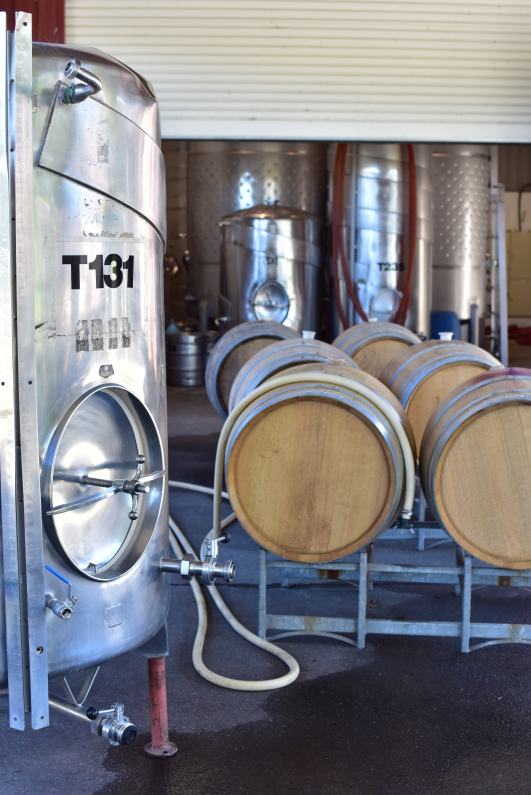
Wine moving from tank to barrel at Moana Park, Hawke’s Bay.

Surprisingly, most of the lower-end bottles ($8-15) you find in the grocery store here are actually from Australia or South Africa, because New Zealand makes more money exporting its wines – especially to China – than it does selling them at home.

NJB_1924

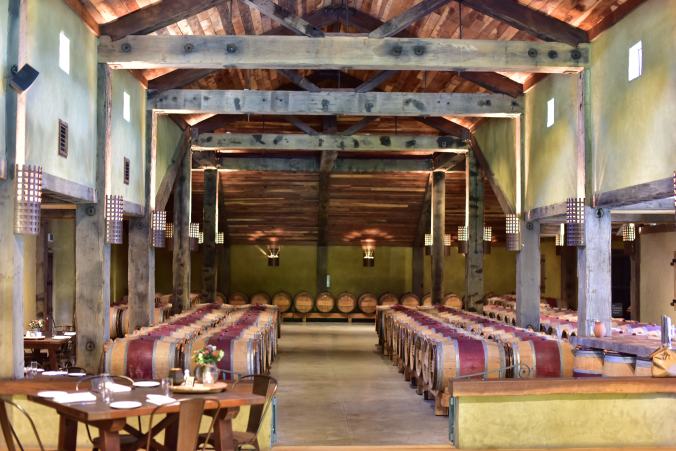
Old barrels put to good use as decor at Church Road Winery, Hawke’s Bay.

NJB_1948

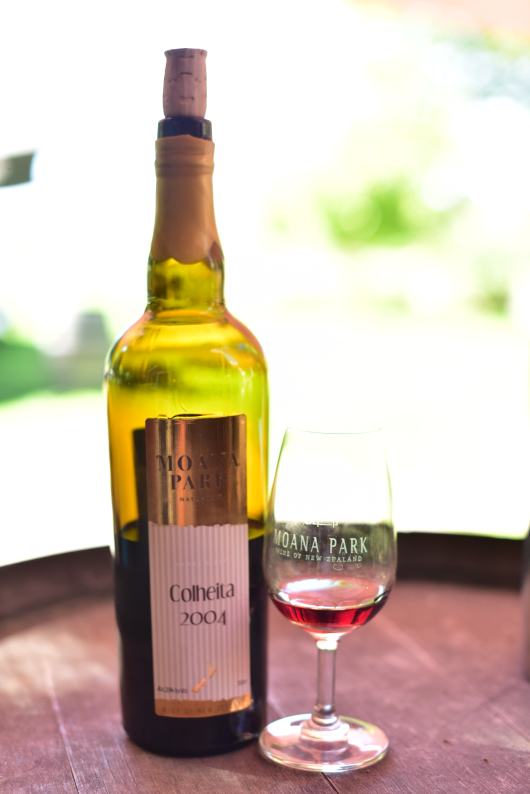
Finishing our picnic at Moana Park with their 2004 Colheita Port.

Mad about ewe

It is impossible to overstate the importance of the humble sheep in New Zealand. The famous Captain Cook first introduced sheep here in 1773; meat and wool, as well as numerous other byproducts, quickly formed the economic background of this young nation. Even today, New Zealand is well-known for its lamb and wool, and the oft-cited statistic that New Zealand has a lot more sheep than people (about 27 million to 4 million) still holds true, although the animal numbers have fallen dramatically in recent years. The worldwide introduction of synthetic fibers understandably had a massive impact on the wool industry.

NJB_1837

One of the great joys of travel – especially on road trips – is stumbling upon something amazing that wasn’t in the day’s plans. We were on our way to camp on the beach at Clifton, in Hawke’s Bay on the east coast of the North Island, when we drove by Wool World. My head immediately filled with visions of a slick, American-style theme park devoted entirely to sheep, hopefully with a petting zoo, roller coaster and extensive gift shop. The reality was far different, and much better.

NJB_1891

Clifton Station, Hawke’s Bay.

NJB_1846

The dogs are coming…

Clifton Station (ranches in the U.S. are stations here) was founded in 1859 and has been run by the same family since. It encompasses about 2,000 acres on the east coast of the North Island. Despite the signage outside advertising shearing and herding demonstrations, Wool World is now only open for large groups of pre-booked cruise ship passengers. We got lucky, however, and walked up while a station hand was treating lambs in a gated paddock near the road. These lambs had just been taken off their mothers and were headed out to munch on fresh new pasture; the abrupt change in diet causes their delicate little lamb tummies to go a bit haywire, so they’re essentially given a pre-emptive antacid.

NJB_1865

The station hand gave us free rein to walk into the old shearing barn, built in 1886 and still in use today. This barn is true living history and it was incredible to see the pride that this family takes in their property, their animals and their way of life. Places like these are becoming more and more rare, and recognizing the past is especially relevant because modern agriculture is changing so quickly. The opportunity to see this space will be one of the highlights of our trip to New Zealand.

NJB_1880

Blade shearers in 1893 with shedhands and shepherds. The records indicate that 25,000 sheep were shorn in the shed that year.

NJB_1876

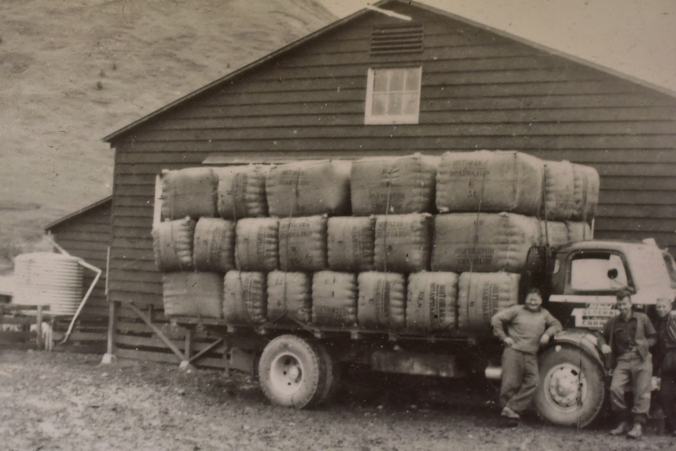
Horse-drawn wool bales headed to the railyard for transport to Wellington or Napier.

NJB_1877

Bales of wool bound for a local wool sale.

NJB_1848

Not much has changed in this woolshed since the late 1800s.

NJB_1853

Shearing stalls.

NJB_1871

Belt-driven machinery allowed multiple sheep to be shorn at one time.

NJB_1860

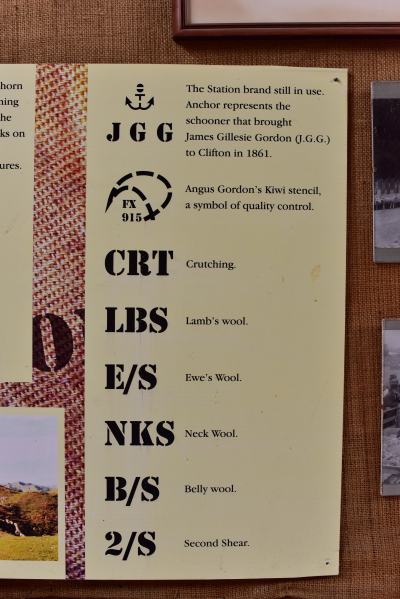
Wool bales are stenciled with their station origin, destination, pack year and grade. Low-grade wool (and the sacks) were often used on walls for home insulation.

NJB_1873

A helpful identification key for bale stencils.

NJB_1861

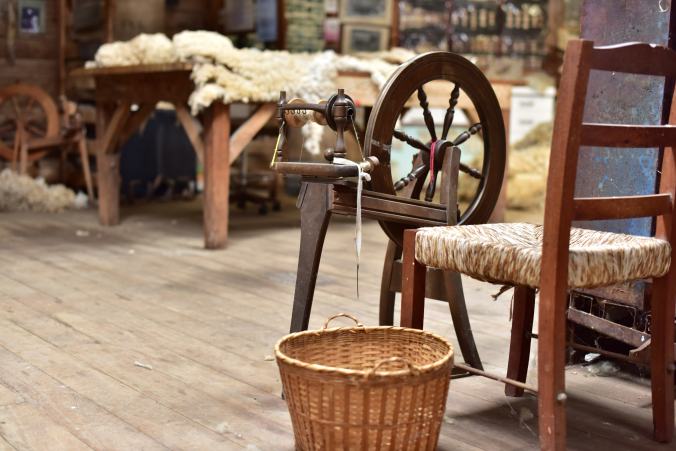
Ye Olde Spinning Wheel. Avoid at all costs, princesses.

NJB_1843

If you should ever have the opportunity to see a herding demonstration, do not miss it! Watching the shepherd and the dogs run the sheep is truly remarkable.

Going nuts, vol. 1

When roadtripping in New Zealand in a converted 1999 Ford Transit van with less-than-ideal brakes, there are few things that your partner – who is gamely doing all of the driving – enjoys more than you screeching “Hey! Fresh avocados!” or “Stop! They’ve got pick-your-own strawberries!”, thus forcing him to make dramatic unplanned stops and U-turns, typically on dusty gravel roads with no turning room whatsoever. No, seriously, he loves this! Sometimes, however, you get your act together enough in advance that you can actually plan a visit to a farm, and so it was with our stop at Cathedral Cove Macadamias.

NJB_1177

Cathedral Cove is located on the Coromandel Peninsula, east of Auckland on New Zealand’s North Island. Macadamias, named in 1857 in honor of Scottish-Australian chemist John Macadam, are native to Australia and grown commercially in many of the world’s tropical regions, including Hawaii, South America, Australia and New Zealand.

NJB_1178

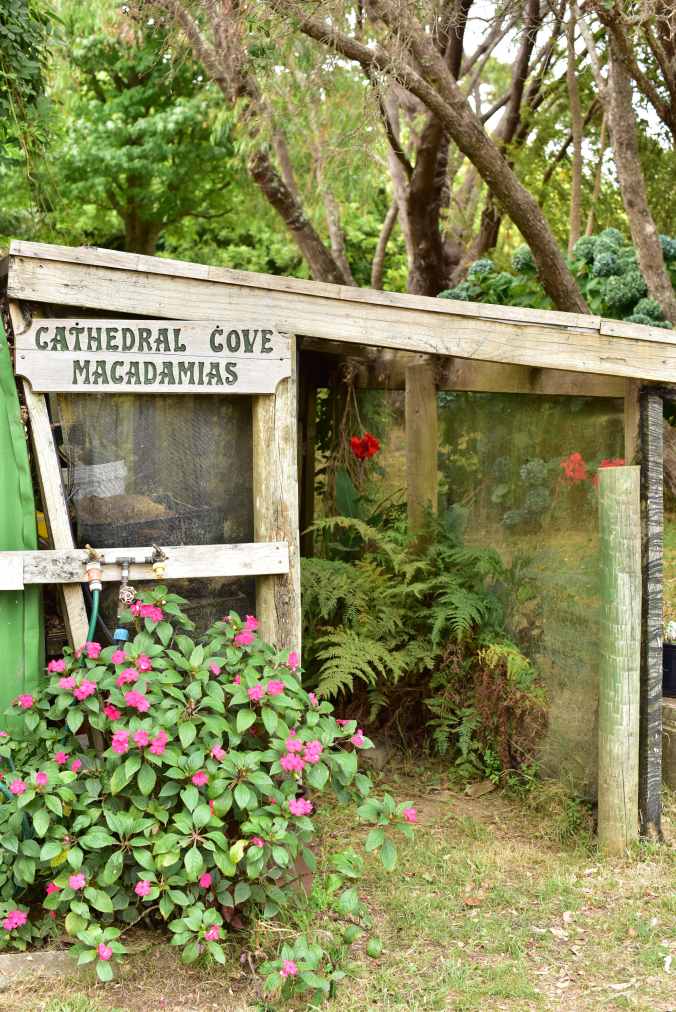
Cathedral Cove’s storefront and open-air tasting parlor.

South Africa now produces most of the world’s macadamias, although Hawaii is credited with “introducing” the nut to consumers, specifically with their ubiquitous and smartly-marketed Royal Hawaiian chocolate macadamia boxes which have been given as gifts by travelers returning from Hawaii for decades.

NJB_1182

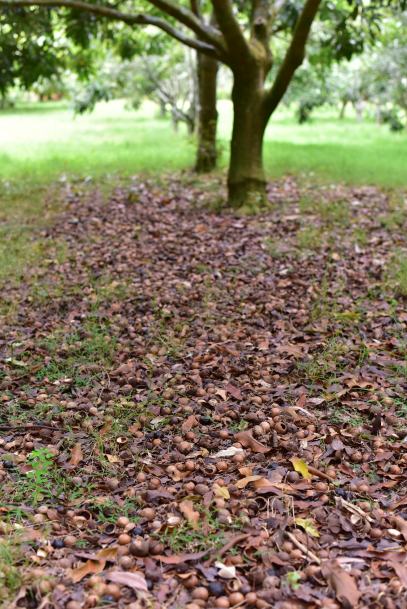
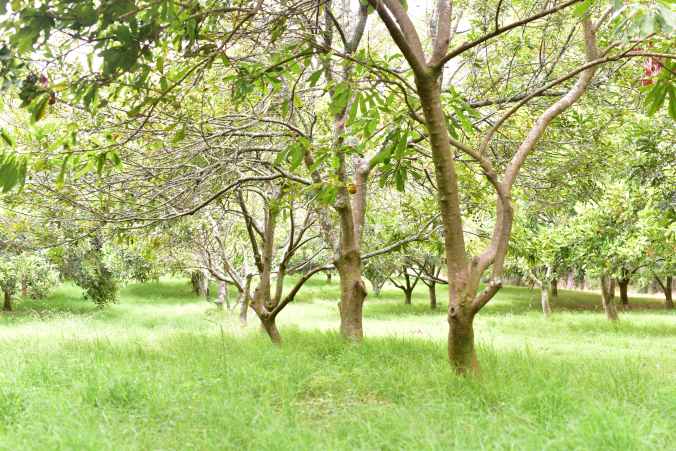
A few of Cathedral Cove’s mature macadamia trees.

Macadamia trees are propagated by grafting, and they start producing in abundance at about seven to ten years of age. Once established, the trees can produce for over 100 years. They are higher in overall nutrition than any other nut, and they are also typically the most expensive, with the exception of the treasured pine nut.

NJB_1187

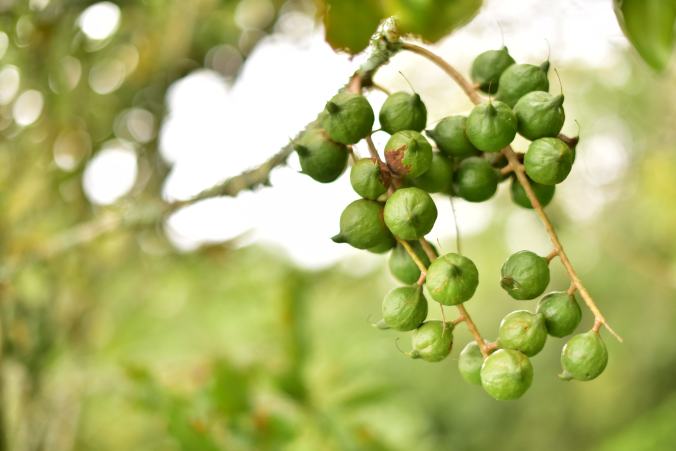
These macadamias will be ready to harvest in April or May. After they’re hulled, they’ll be dried for about six weeks before they’re ready to consume.

NJB_1190

Hulls from the previous year’s crop are used as mulch in the orchard, ensuring that nothing goes to waste.

At Cathedral Cove, the macadamias are processed entirely by hand from start to finish, and they’re also completely organic. The macadamias are sold fresh and roasted, and pressed into oil and made into butter, brittle and other value-added products. In addition to macadamias, Cathedral Cove also grows avocados, figs, apples and a variety of citrus fruits.

NJB_1173

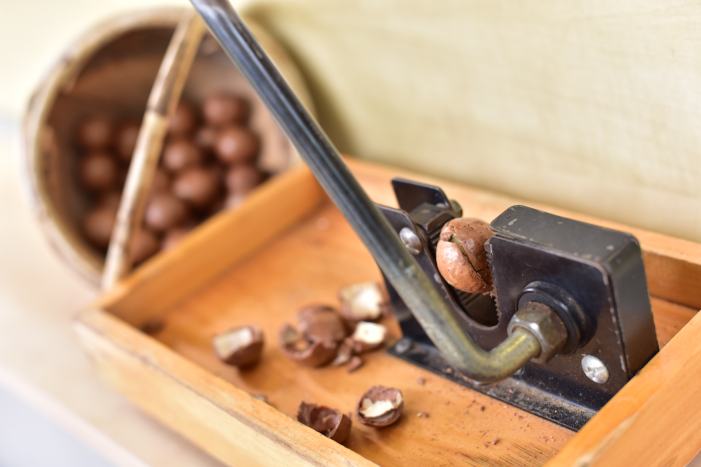
At the little storefront you get to eat as many macadamias as you crack!

NJB_1181

Macadamia oil, best used as a simple, flavorful drizzle over salad or grilled bread. It also works wonders as a hair or skin moisturizer!

NJB_1215

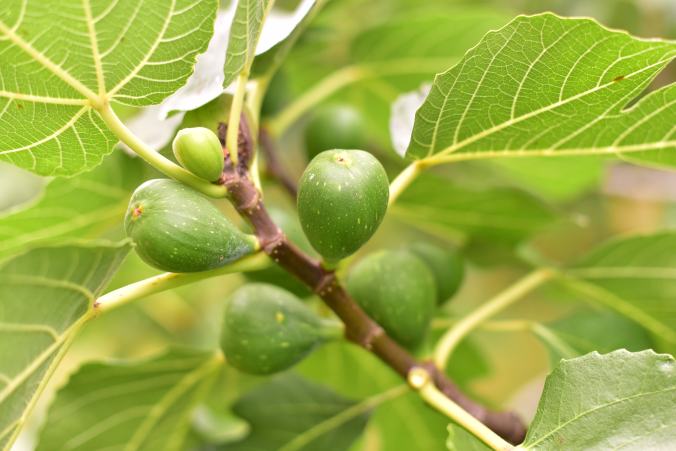
Fresh figs that were sadly not yet ready to eat when we visited.

NJB_1191

Cathedral Cove is organic, so no chemical pesticides or herbicides are used in the orchard.

NJB_1188

Bees are absolutely integral to a successful orchard. As at most of the farms we’ve seen, maintaining a healthy pollinator population is essential to a healthy ecosystem.

NJB_1204

We bought avocados to eat with heirloom tomatoes from the farmers’ market…it is summer here, after all.

NJB_1199

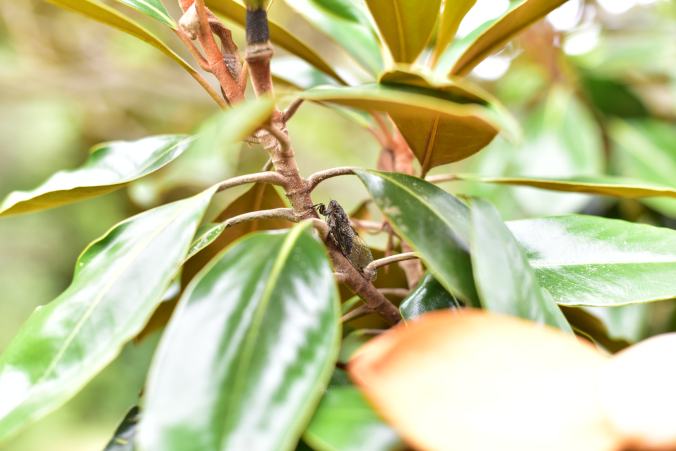
Look closely…New Zealand’s most vocal yet least seen creature, the cicada, is hiding here.
NJB_1205

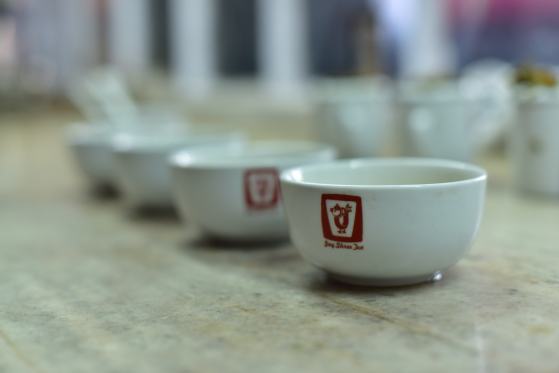
One of the many citrus trees on the property.

NJB_1213

Definitive proof that “drinking wine” actually qualifies as “eating fruit.”

NJB_1203

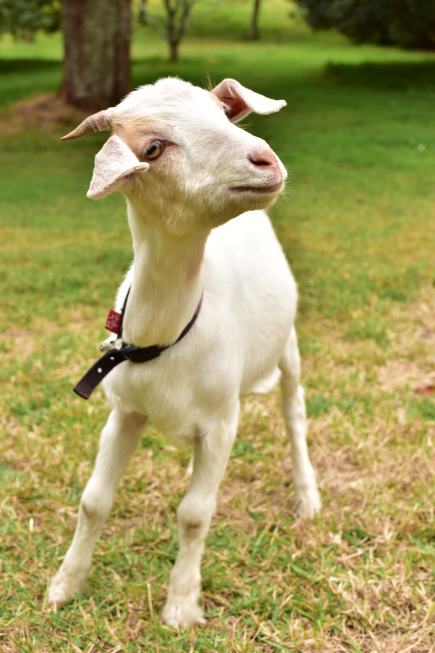
Meet Willow, one of Cathedral Cove’s organic lawnmowers.

Because macadamias are so delicious (and so precious), they’re best used as a showcase ingredient. As with all nuts, lightly toasting them in a dry pan will bring out their flavorful oils, but tread carefully – nuts burn very quickly. For storage, place in an airtight bag or container in the refrigerator or freezer as the good fats in nuts cause them to turn rancid quickly. Always buy nuts from stores with high turnover (of product, not staff) and whenever possible, smell them before purchasing – rancidity is definitely noticeable. Should you find yourself with a wealth of macadamias, try this. Or maybe this. Or just eat them lightly toasted and salted, perhaps with a gentle dusting of curry powder.

Many thanks to Cathedral Cove Macadamias for welcoming us onto their beautiful property!

Interlude: Cows love Skittles

Friends, we interrupt our regularly scheduled light and fluffy travel programming to bring you a brief interlude on cows. Cows and Skittles, to be precise. If you are here just for fun travel adventures, please feel free to tune out now – this one is about food politics.

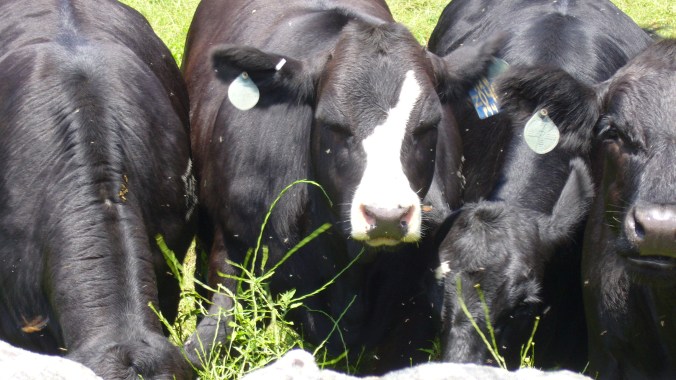
Perhaps some of you noticed a little story that a couple of papers ran recently about a Skittles spill on a Wisconsin highway (although I’m painfully aware that there are one or two more significant American news stories to focus on right now). To summarize, a truckload of red Skittles missing their signature “S” spilled onto the road thanks to a rain-saturated cardboard box. When the local sheriff’s department came out to investigate, they discovered that the candy was on its way to be used as cattle feed. Maybe it’s fake news? Now that so much of what we read contains “alternative facts,” it’s hard to know what to believe. (You can read versions of the article here, here and here, and I’m sure there are plenty more.) Feeding food waste to cattle is apparently common practice in the U.S.

Stone Barns-06

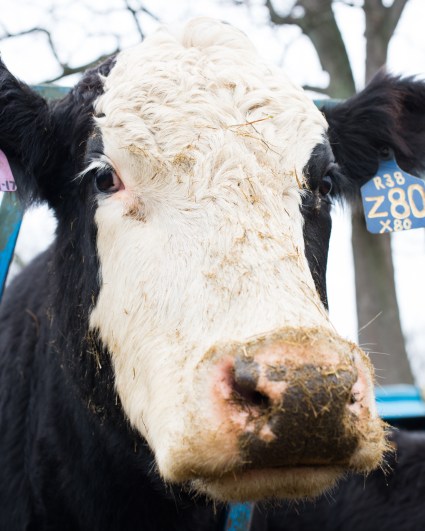
Bessie here actually prefers M&Ms to Skittles, if you want to know the truth.

Back in 2012, the severe drought that swept across the country caused corn prices to skyrocket, and that’s reportedly when the trend of feeding excess food to cattle really accelerated. In some cases, cows were even fed candy that was still wrapped, although a professor of animal nutrition seemed mostly convinced that the wrappers would pass through the cow without issue. I’m in no way a vet or other animal expert, but I imagine that plastic really can’t be good for an animal’s insides – even one as large and tough as a cow.

But wait, you might say. Skittles are mostly just corn syrup, which is just corn, right? And that’s what the cow would be eating if corn prices hadn’t risen so much, so really, what’s the big deal? It’s actually not the Skittles that bother me – it’s all the other stuff we don’t know about. Consider that the only reason we now know that these Skittles were intended for cattle feed is because they spilled. Had they not spilled, we’d still be shoveling our CAFO hamburgers in, none the wiser. This story indicates that a lot of other mysterious food waste goes to our cows, including but not limited to stale baked goods, peanut and almond shells, and orange rinds. Probably harmless, yes, but do these ingredients affect the integrity (what little there is) of the meat? Could a severely peanut-allergic person have a reaction to beef from a cow fed on peanut meal? I have no idea. And I also have no idea what is in our food.

Stone Barns 074

My point is not that the Skittles themselves that are inherently bad (although they are). It’s that you didn’t know they were there. How can anyone make an informed decision about what they eat when they don’t have all the information? How can I implore my cooking students to read the label of every food item they buy when I know full well that label is inherently misleading? I also resent the implication that feeding Skittles to cows saves them from the landfill and is therefore virtuous. In a country that wastes over 40% of all edible food produced, I’m fairly certain that the quantity of Skittles we’re talking about here is negligible enough that the landfill excuse doesn’t hold up – greenwashing at its finest.

Some time ago, a friend who shops very consciously received a recall notice at the bottom of her grocery store receipt indicating that the big-brand chicken she’d purchased weeks earlier had been recalled. Since she deliberately never purchased big-brand chicken, she knew this had to be a mistake – yet when she contacted store management, she received a boilerplate customer service response that didn’t address the issue. Follow-up calls and emails went ignored, leaving her to assume that of course she had purchased that chicken – labeled as organic and packaged under a “clean” name – even while trying so hard not to. Plus, organic and conventional chicken were both part of the same recall, so how can one trust that the organic product really is? And that leaves us here, stumbling around the grocery store in a panic, reading labels frantically and generally feeling like a failure all the time because we no longer have any faith in a system designed to protect us from fraud and mislabeling.

These stories are compelling on many levels, but my takeaway is this: unless we’ve grown, raised and processed food ourselves from start to finish, we no longer can have any faith that we’re buying what we think we’re buying. I know plenty of people who wouldn’t feed their kid Skittles (concerns over Red 40 high on the list) but would certainly offer a lean beef stir-fry with plenty of supposedly organic vegetables and arsenic-free brown rice. Yet these same people, who are working so hard to get it right, are getting it wrong. Again and again, because they cannot trust that they’re buying and consuming what they think they are.
Stone Barns 070

I’d love to end on a positive note, so I’ll leave you with this – if you want to trust your food, grow your own. Start a small garden. (If you’re in the Denver area, support a locally-owned business and go here for everything you need to get growing.) Raise backyard chickens. Get a beehive. Join a CSA. Know what you’re eating and where it came from, and be willing to ask questions. Also: eat less meat, and spend more money on it, and know who raised and processed it. And please, let us know your thoughts on this story. We’d specifically like to hear if you feel confident about label honesty and accuracy (including organic vs. conventional) and what exactly is in the food you buy.
chickens2

Japanese farm life

We spent two weeks volunteering on two very different Japanese farms, one in the wintry valleys of Nagano and one about ninety minutes outside of Tokyo, in the Ibaraki prefecture. We did this through WWOOF, which isn’t well-known in the U.S. but is very popular in much of the rest of the world. Essentially, you work a specified number of hours per day (usually between six and seven, depending on tasks) in exchange for room and board. This is a great way for travelers to get to know a specific area and culture a little better; we obviously hoped to learn a bit more about different ways of farming, too.

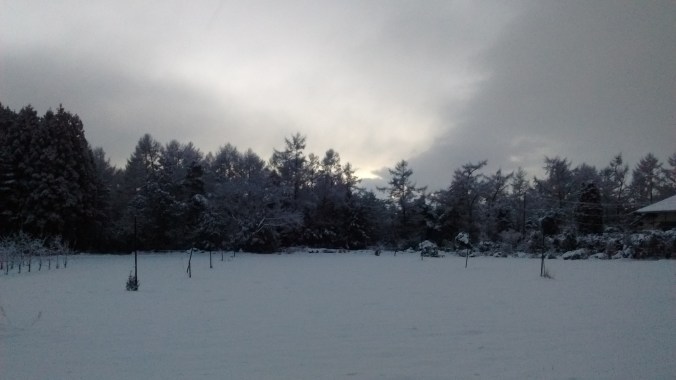
Our two farms couldn’t have been more different, and as is the rule with travel in general, sometimes things don’t go exactly as you’d expect. Our first farm was primarily an orchard, with hundreds of apple, pear, plum and persimmon trees. Obviously, in the winter the work has very little to do with fruit. We harvested carrots from underneath the snow, spread rice hulls as mulch in the orchard, and chopped a lot of firewood. Accommodations there were a bit rustic, to be charitable. We slept in an unheated packing shed with a composting toilet (that’s Latin for “hole in the ground”) with no hot water. It was never above 30 degrees there, and we were cold. Really, really cold.

IMG_20170120_134103010

A haiku: “Sunrise in winter. Today I am cold again. Where is my warm coat?”

IMG_20170119_190417177

We harvested well over a thousand pounds of carrots from underneath the snow.

IMG_20170118_162124810

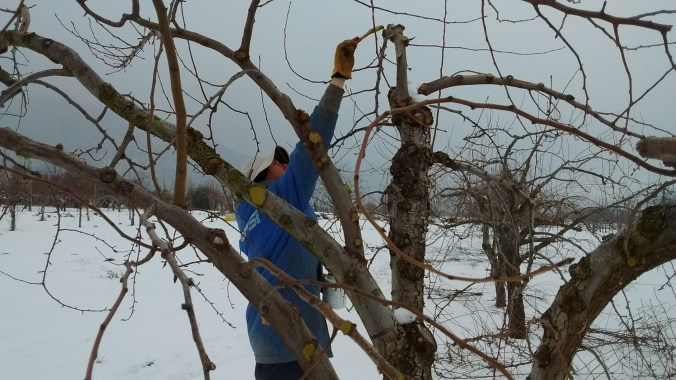
One team pruned the fruit trees, while we followed with a special sealant to paint the pruning cuts so the tree didn’t get infected. 

IMG_20170117_191024915_HDR

Thankfully the farm’s chainsaw was very similar to N’s at home. The farmhouse was only heated by a woodburning stove, so they needed lots of firewood. Basically, we were in Little House on the Japanese Prairie.

IMG_20170120_182358534

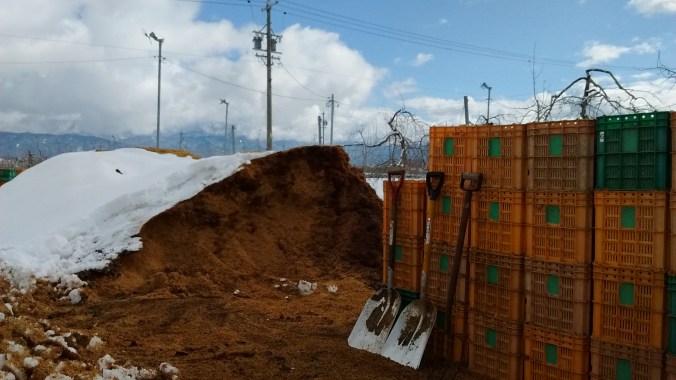
We filled the crates with rice husks from the pile, then spread the husks in the orchard as mulch. 

Our second farm brought us back to life. We stayed in an incredible traditional Japanese wooden farmhouse, built about thirty years ago from just three trees harvested from the owner’s property.

NJB_0266

The entrance to our second farmhouse with traditional Japanese gardens out front.

NJB_0269

A rice field on our second farm. We were sort of in the Nebraska of Japan, which is genuinely intended as a compliment. 

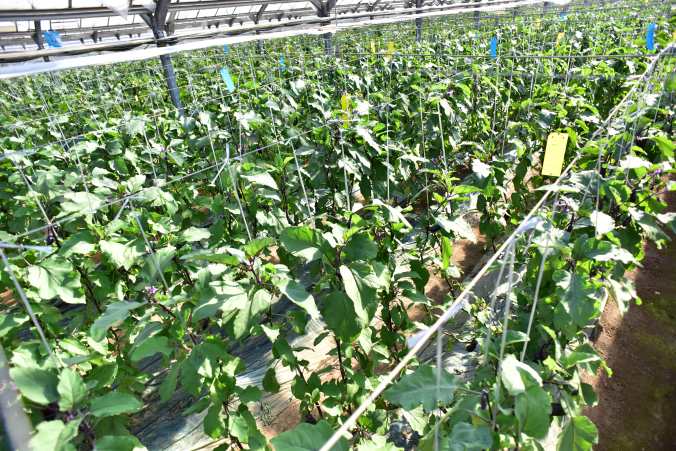
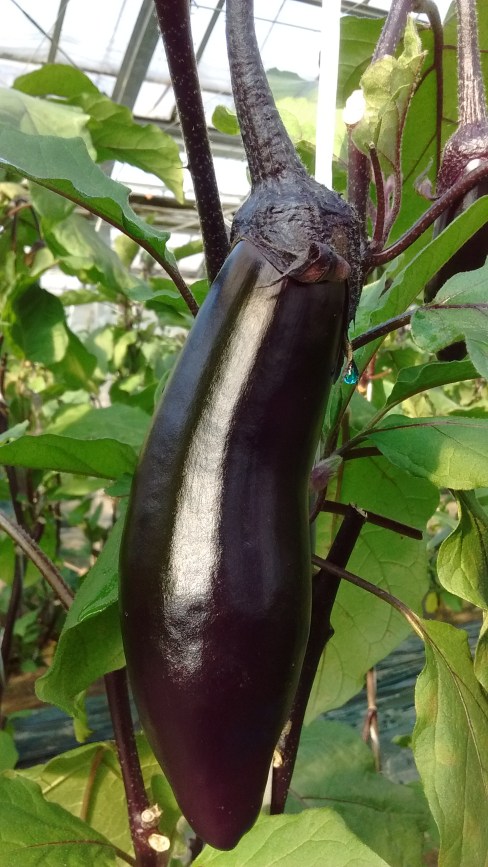
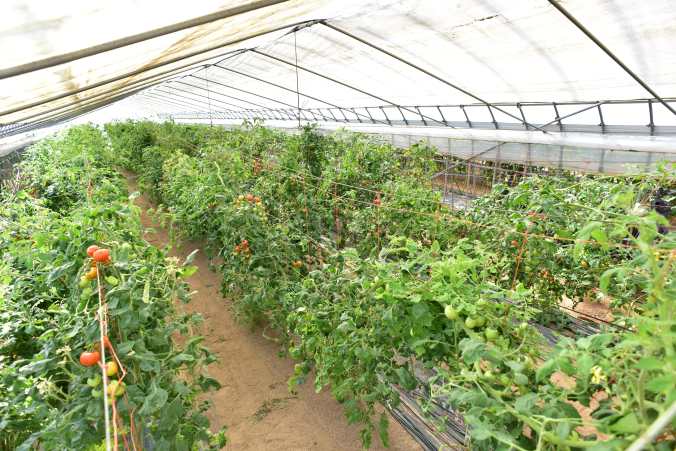
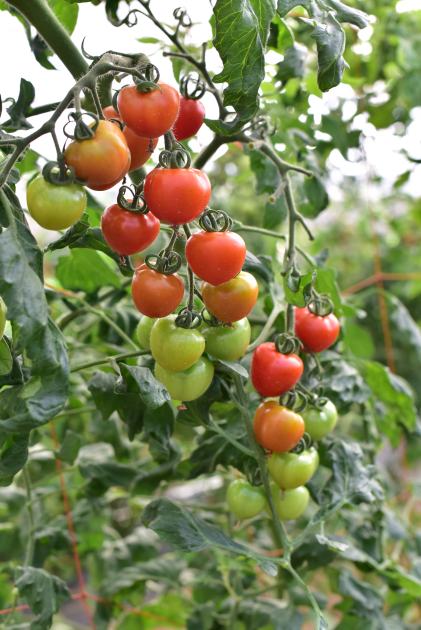
Perfect greenhouse-grown eggplants (aubergines, for our British readers) and cherry tomatoes are the farm’s primary cash crop, although they also grow and process a hundred tons of different rice varieties. Our first task each morning was typically to harvest that day’s eggplants (nasu in Japanese), and if you think that’s easy, try harvesting only the eggplants that weigh above 80g. Without weighing them. There was a bit of a learning curve.

NJB_0214

One of the eggplant greenhouses. The plants are pruned aggressively to keep them producing consistently for over eight months; the technique was completely different from anything I’d seen before.

IMG_20170127_172037488

Gorgeous Japanese eggplant, or nasu. They’re harvested from the greenhouse every single day to ensure they’re the perfect size.

IMG_0483

Our task one morning was to spray the eggplant flowers with pollination liquid, because in winter it’s too cold for the bees to go to work. The liquid is clear, so it’s colored with blue food-grade dye so you can easily see the flowers that have already been sprayed.

NJB_0217

One of the tomato greenhouses. All of the tomatoes were indeterminate cherry varieties so they produced for months and months.

NJB_0200

Tomatoes were harvested every day too, and we had to be extremely careful to pick only those that were perfectly ripe.

IMG_0491

N found this little one on an eggplant branch while weeding the greenhouse. He’s only about an inch and a half or so.

We’re very glad that we got to experience a side of Japan away from the touristy commotion of the big cities, and we learned a lot – especially about how important it is to keep your farm clean, tidy and safe and how to profitably grow and maintain eggplants and tomatoes in greenhouses. And also that we don’t really want to farm in eighteen inches of snow. That knowledge will definitely come with us to Quiet Farm.

Your helpful onsen etiquette guide

While planning our five-month trip (in a ridiculously short period of time) I only researched a few activities for each country, assuming that the rest would take care of itself. In Japan, however, I knew I wanted to visit an onsen, or mineral hot springs.

P1030773

This cheery Scandinavian fellow greets you at the entrance to the onsen. Why isn’t he Japanese? I have no idea.

The onsen tradition is revered in Japan with hundreds of springs scattered all over. Many are located in scenic areas like the Japanese Alps, and are a natural complement to skiing and other winter activities. Onsens require a bit of introduction, however, especially to Western visitors – and it’s important to understand the etiquette before partaking.

Onsens are separated by gender and are always taken without clothing of any kind. (And they’re often used as company team-building activities! Can you imagine explaining to an American HR department that you’re going naked hot-tubbing with your work colleagues?)

IMG_20170116_184602344

A row of harvested carrots on our farmstay. In the upper left you can see the onsen set high up on the hill. It was about a fifteen-minute walk from our farm straight up the wooden stairs built into the slope.

When you first enter the onsen, you remove your outdoor shoes and put on a pair of slippers. (In all of the places we’ve been thus far in Japan, you never, ever wear your outdoor shoes into a home. I love this.) You buy an entrance ticket – this one cost about $5 – from the vending machine then head to the changing area. All of your clothes and belongings are stowed in lockers, and you enter the central shower area. It’s imperative that everyone is very clean before entering the communal pools; not showering first is a major transgression.

NJB_0176

After showering, you can choose from a variety of different pools, depending on the onsen. At this location there were three: a large, warm pool and a hot tub with serious pressure jets, both indoors, and an outdoor pool constructed of rocks that looked over the snow-covered valley. When you move from the indoor to the outdoor pool you just walk – naked as a baby – and once you get past the Western mentality of embarrassment about being completely unclothed amongst strangers, it’s really amazing. The outdoor pool was the hottest and my favorite, because it was absolutely freezing outside and as soon as you got too hot you could sit up on the edge to cool off. I could have stayed there all day.

P1030778

The view from the balcony; for obvious reasons, I have no photos from inside the onsen.

A couple of interesting notes about onsens: you don’t use the large fluffy beach towels we might use at home. Instead, you can bring (or rent) a small body towel and a face towel. It is incredibly bad manners to put your face towel into the hot water; leave it resting on your head. You can also use the larger towel for modesty as you move from one pool to another, but many guests didn’t bother. Also, most onsens still prohibit any sort of tattoos. Traditionally, tattoos were only for yakuza, or gangsters, and onsens didn’t want this type of clientele. As tourism expands and foreign visitors become more and more important, it seems that the prohibition against tattoos is relaxing slightly, but only if they’re covered with a bandage or patch. Full-sleeve or other extensive tattoos (or piercings) will absolutely get you politely escorted out of an onsen, even if they already let you in.

NJB_0161

Steam from one of Yudanaka’s onsens.

Onsens are mostly silent too, a time to sit quietly with your thoughts and enjoy the soothing water. While there were children at the onsen I visited, they were polite and respectful and not splashing around. I heard very little conversation, and that I did hear was in appropriately hushed tones.

We visited the famous snow monkeys at Jigokudani, or Hell’s Valley, and the town we stayed in – Yudanaka – is known for its onsens. Much like Glenwood Springs and Idaho Springs in Colorado, the mineral-rich waters are seen as a cure for just about any physical ailment. Yudanaka has nine special onsens, each with a different mineral composition, located along public streets and marked by numbers. The doors are kept locked and keys can only be obtained by staying at certain ryokans, or traditional inns. Visiting all nine, and collecting a stamp from each to be attached to a special souvenir cloth, is thought to bring good fortune. While out walking we often saw ryokan guests walking from onsen to onsen in their designated yukata robes and wooden slippers. Many of the inns here are well over four hundred years old, and the streets have retained a truly lovely ancient atmosphere.

NJB_0179

Ryokan guests en route from one onsen to another.

After a week on the farm of harvesting and sorting carrots, chopping firewood and spreading rice husks in the orchard in bone-chilling temperatures, my two onsen visits were borderline miraculous. If you travel to Japan and have the opportunity to visit an onsen, go! It is a not-to-be-missed experience you won’t find anywhere else. Just get your tattoos removed first.
NJB_0160

Yudanaka’s ancient streets.

Want to learn more about the onsen tradition? Go here!