Japanese farm life

We spent two weeks volunteering on two very different Japanese farms, one in the wintry valleys of Nagano and one about ninety minutes outside of Tokyo, in the Ibaraki prefecture. We did this through WWOOF, which isn’t well-known in the U.S. but is very popular in much of the rest of the world. Essentially, you work a specified number of hours per day (usually between six and seven, depending on tasks) in exchange for room and board. This is a great way for travelers to get to know a specific area and culture a little better; we obviously hoped to learn a bit more about different ways of farming, too.

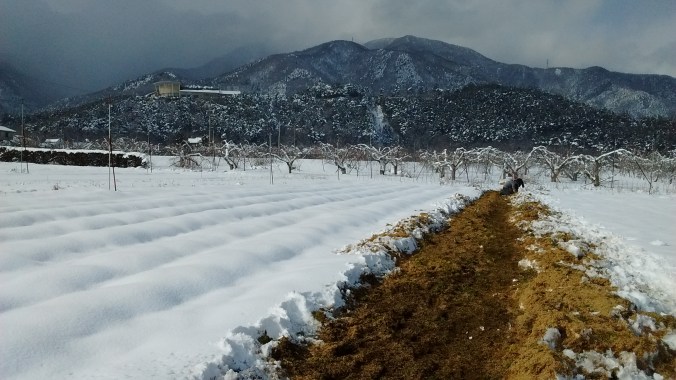
Our two farms couldn’t have been more different, and as is the rule with travel in general, sometimes things don’t go exactly as you’d expect. Our first farm was primarily an orchard, with hundreds of apple, pear, plum and persimmon trees. Obviously, in the winter the work has very little to do with fruit. We harvested carrots from underneath the snow, spread rice hulls as mulch in the orchard, and chopped a lot of firewood. Accommodations there were a bit rustic, to be charitable. We slept in an unheated packing shed with a composting toilet (that’s Latin for “hole in the ground”) with no hot water. It was never above 30 degrees there, and we were cold. Really, really cold.
IMG_20170120_134103010

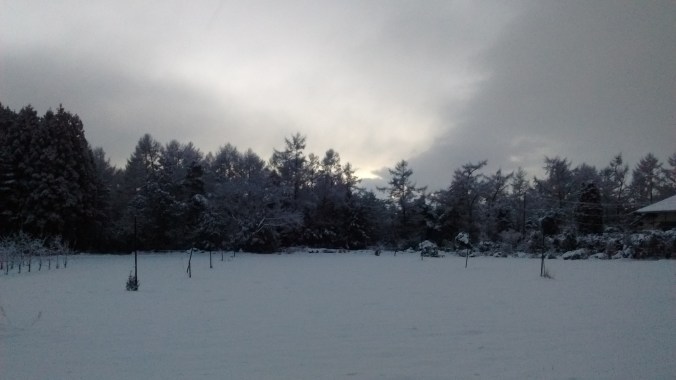
A haiku: “Sunrise in winter. Today I am cold again. Where is my warm coat?”

IMG_20170119_190417177

We harvested well over a thousand pounds of carrots from underneath the snow.
IMG_20170118_162124810

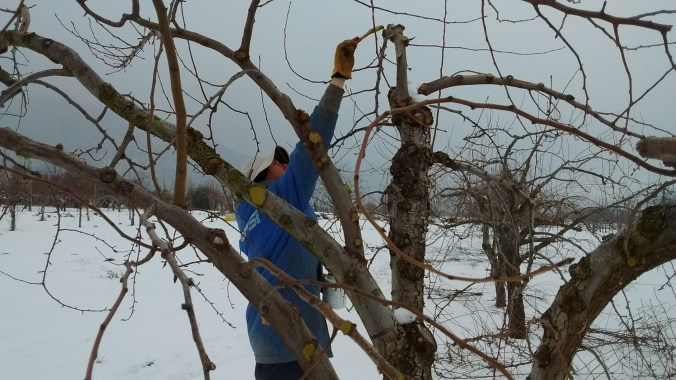
One team pruned the fruit trees, while we followed with a special sealant to paint the pruning cuts so the tree didn’t get infected. 

IMG_20170117_191024915_HDR

Thankfully the farm’s chainsaw was very similar to N’s at home. The farmhouse was only heated by a woodburning stove, so they needed lots of firewood. Basically, we were in Little House on the Japanese Prairie.
IMG_20170120_182358534

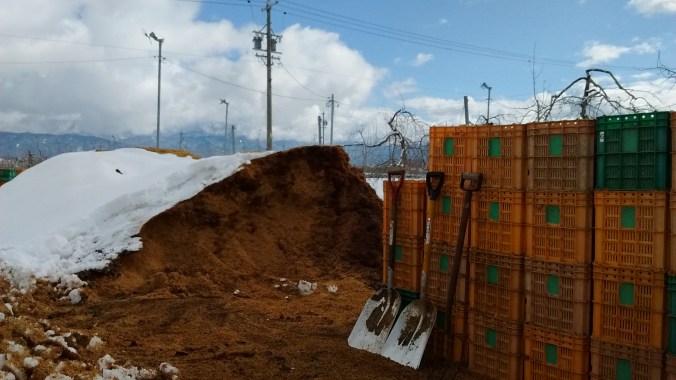
We filled the crates with rice husks from the pile, then spread the husks in the orchard as mulch. 

Our second farm brought us back to life. We stayed in an incredible traditional Japanese wooden farmhouse, built about thirty years ago from just three trees harvested from the owner’s property.

NJB_0266

The entrance to our second farmhouse with traditional Japanese gardens out front.

NJB_0269

A rice field on our second farm. We were sort of in the Nebraska of Japan, which is genuinely intended as a compliment. 

Perfect greenhouse-grown eggplants (aubergines, for our British readers) and cherry tomatoes are the farm’s primary cash crop, although they also grow and process a hundred tons of different rice varieties. Our first task each morning was typically to harvest that day’s eggplants (nasu in Japanese), and if you think that’s easy, try harvesting only the eggplants that weigh above 80g. Without weighing them. There was a bit of a learning curve.
NJB_0214

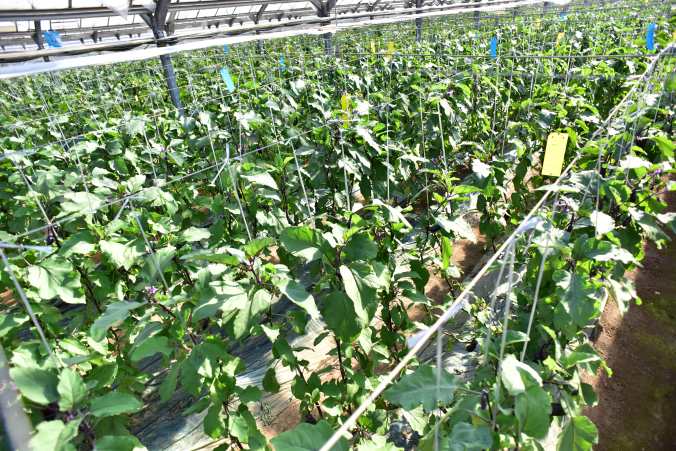
One of the eggplant greenhouses. The plants are pruned aggressively to keep them producing consistently for over eight months; the technique was completely different from anything I’d seen before.
IMG_20170127_172037488

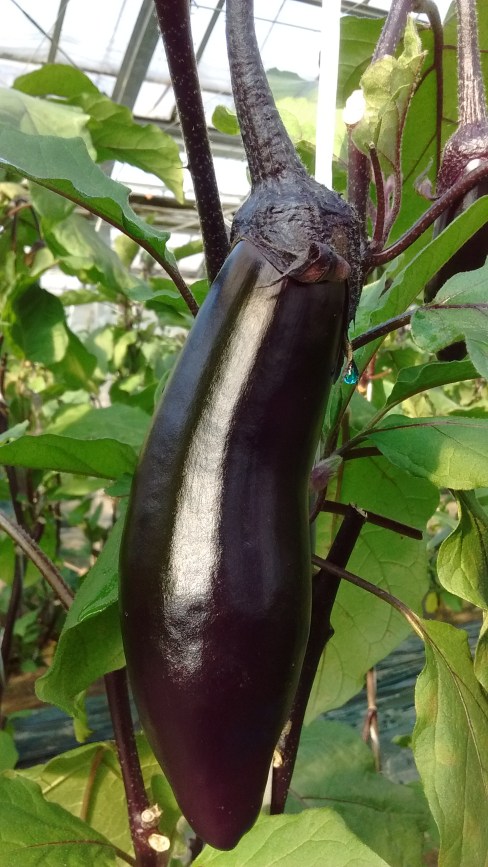
Gorgeous Japanese eggplant, or nasu. They’re harvested from the greenhouse every single day to ensure they’re the perfect size.

IMG_0483

Our task one morning was to spray the eggplant flowers with pollination liquid, because in winter it’s too cold for the bees to go to work. The liquid is clear, so it’s colored with blue food-grade dye so you can easily see the flowers that have already been sprayed.
NJB_0217

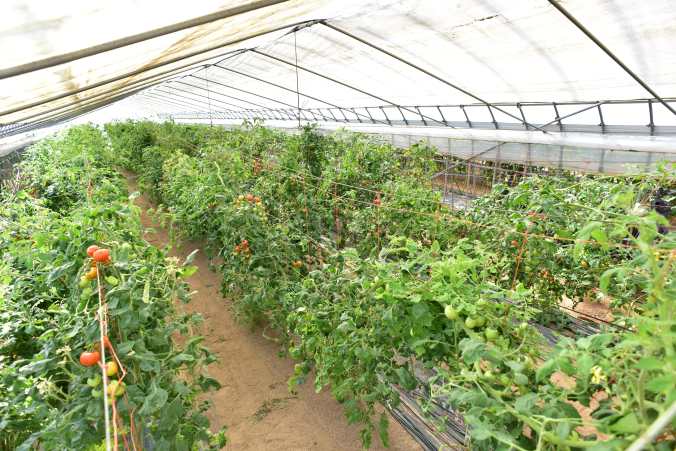
One of the tomato greenhouses. All of the tomatoes were indeterminate cherry varieties so they produced for months and months.
NJB_0200

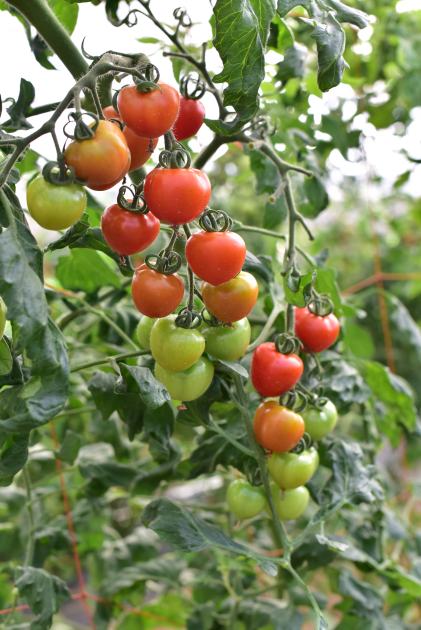
Tomatoes were harvested every day too, and we had to be extremely careful to pick only those that were perfectly ripe.
IMG_0491

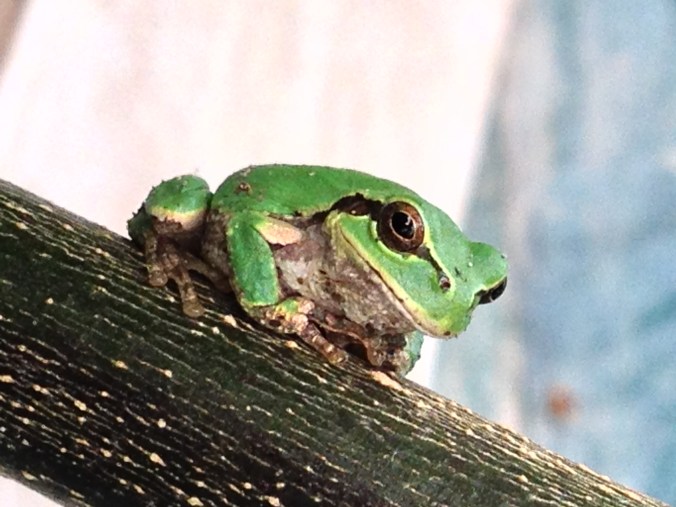
N found this little one on an eggplant branch while weeding the greenhouse. He’s only about an inch and a half or so.

We’re very glad that we got to experience a side of Japan away from the touristy commotion of the big cities, and we learned a lot – especially about how important it is to keep your farm clean, tidy and safe and how to profitably grow and maintain eggplants and tomatoes in greenhouses. And also that we don’t really want to farm in eighteen inches of snow. That knowledge will definitely come with us to Quiet Farm.
Your helpful onsen etiquette guide

While planning our five-month trip (in a ridiculously short period of time) I only researched a few activities for each country, assuming that the rest would take care of itself. In Japan, however, I knew I wanted to visit an onsen, or mineral hot springs.

P1030773

This cheery Scandinavian fellow greets you at the entrance to the onsen. Why isn’t he Japanese? I have no idea.

The onsen tradition is revered in Japan with hundreds of springs scattered all over. Many are located in scenic areas like the Japanese Alps, and are a natural complement to skiing and other winter activities. Onsens require a bit of introduction, however, especially to Western visitors – and it’s important to understand the etiquette before partaking.

Onsens are separated by gender and are always taken without clothing of any kind. (And they’re often used as company team-building activities! Can you imagine explaining to an American HR department that you’re going naked hot-tubbing with your work colleagues?)

IMG_20170116_184602344

A row of harvested carrots on our farmstay. In the upper left you can see the onsen set high up on the hill. It was about a fifteen-minute walk from our farm straight up the wooden stairs built into the slope.

When you first enter the onsen, you remove your outdoor shoes and put on a pair of slippers. (In all of the places we’ve been thus far in Japan, you never, ever wear your outdoor shoes into a home. I love this.) You buy an entrance ticket – this one cost about $5 – from the vending machine then head to the changing area. All of your clothes and belongings are stowed in lockers, and you enter the central shower area. It’s imperative that everyone is very clean before entering the communal pools; not showering first is a major transgression.

NJB_0176

After showering, you can choose from a variety of different pools, depending on the onsen. At this location there were three: a large, warm pool and a hot tub with serious pressure jets, both indoors, and an outdoor pool constructed of rocks that looked over the snow-covered valley. When you move from the indoor to the outdoor pool you just walk – naked as a baby – and once you get past the Western mentality of embarrassment about being completely unclothed amongst strangers, it’s really amazing. The outdoor pool was the hottest and my favorite, because it was absolutely freezing outside and as soon as you got too hot you could sit up on the edge to cool off. I could have stayed there all day.

P1030778

The view from the balcony; for obvious reasons, I have no photos from inside the onsen.

A couple of interesting notes about onsens: you don’t use the large fluffy beach towels we might use at home. Instead, you can bring (or rent) a small body towel and a face towel. It is incredibly bad manners to put your face towel into the hot water; leave it resting on your head. You can also use the larger towel for modesty as you move from one pool to another, but many guests didn’t bother. Also, most onsens still prohibit any sort of tattoos. Traditionally, tattoos were only for yakuza, or gangsters, and onsens didn’t want this type of clientele. As tourism expands and foreign visitors become more and more important, it seems that the prohibition against tattoos is relaxing slightly, but only if they’re covered with a bandage or patch. Full-sleeve or other extensive tattoos (or piercings) will absolutely get you politely escorted out of an onsen, even if they already let you in.

NJB_0161

Steam from one of Yudanaka’s onsens.

Onsens are mostly silent too, a time to sit quietly with your thoughts and enjoy the soothing water. While there were children at the onsen I visited, they were polite and respectful and not splashing around. I heard very little conversation, and that I did hear was in appropriately hushed tones.

We visited the famous snow monkeys at Jigokudani, or Hell’s Valley, and the town we stayed in – Yudanaka – is known for its onsens. Much like Glenwood Springs and Idaho Springs in Colorado, the mineral-rich waters are seen as a cure for just about any physical ailment. Yudanaka has nine special onsens, each with a different mineral composition, located along public streets and marked by numbers. The doors are kept locked and keys can only be obtained by staying at certain ryokans, or traditional inns. Visiting all nine, and collecting a stamp from each to be attached to a special souvenir cloth, is thought to bring good fortune. While out walking we often saw ryokan guests walking from onsen to onsen in their designated yukata robes and wooden slippers. Many of the inns here are well over four hundred years old, and the streets have retained a truly lovely ancient atmosphere.

NJB_0179

Ryokan guests en route from one onsen to another.

After a week on the farm of harvesting and sorting carrots, chopping firewood and spreading rice husks in the orchard in bone-chilling temperatures, my two onsen visits were borderline miraculous. If you travel to Japan and have the opportunity to visit an onsen, go! It is a not-to-be-missed experience you won’t find anywhere else. Just get your tattoos removed first.

NJB_0160

Yudanaka’s ancient streets.

Want to learn more about the onsen tradition? Go here!

Opting out

Stone Barns-01.jpg

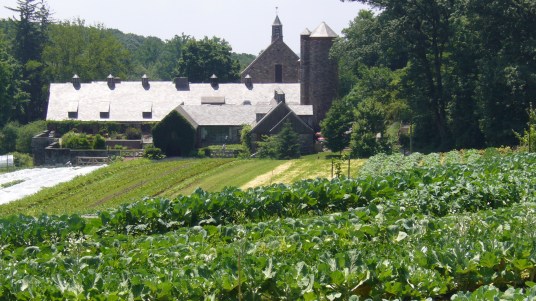
The entrance to Stone Barns, Pocantico Hills, New York.

N and I live in a modest home in a modest suburban neighborhood where most of the houses date from the early to mid-1960s. (Photo above: not our house.) It’s our first house together, the first place we’ve really had space, since we spent the early years of our relationship living on dive boats and private yachts and in cheap short-term yachtie housing all over the world.

I love our house. I am more attached to our house than one should be, but it represents so much of who we are, individually and as a partnership. I love its built-in bookshelves and the odd thrift-store art and the wood stove that N hates that I use so much because he’s convinced I’m going to set the entire house on fire.

Unfortunately, our house that I love so much is surrounded by other houses. And in the other houses live people. People with dogs.

Stone Barns 011.jpg

Every house around us has at least one dog; our neighbor to the east has five (five? really?) Chihuahuas. And these dogs bark. All the time. Day in and day out. And at night, too. The neighbors are at work, or at home with the TV on, or somewhere else, and it doesn’t matter to them that the dogs are barking. They don’t hear it, or they do and they don’t care. Either way, the dogs in our neighborhood have made living here hard, especially because of how much we love our house. Animal Control has no teeth and we’ve had the police called on us for harassing our neighbors when we rang their doorbell at 1AM because their dogs were out and wouldn’t stop barking.

And so we are opting out. We are opting out of a constant aural assault where listening to other people’s pets and music and television in public (and private) places is becoming commonplace. We are opting out of a society that expects us to buy cheaply-made things with built-in obsolescence to be happy. We are opting out of a “consume rather than produce” mentality.  We are opting out of a desperately compromised food and health-care system designed to keep us all just a little bit sick, because there is no money to be made off healthy people and certainly no money to be made off dead people.

Some years ago, while listening to the dogs’ unending cacophony, N said that all he wanted was to live someplace quiet. And so was the name Quiet Farm born, and the title of this blog, too. (N’s suggestion for the blog title was Buckingham Shrugged. Go here if that allusion requires explanation.) We are on a quest to find our own piece of land where we can live peacefully and quietly, raising, growing and processing our own food and hopefully teaching others to do the same.

Stone Barns 067.jpg

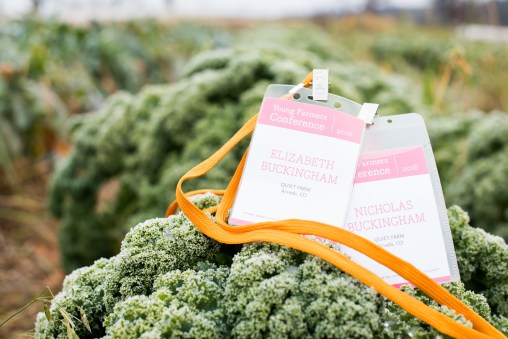
We spent last week here, at the country’s pre-eminent sustainable farming conference. The average age of farmers in the U.S. is nearly 60, and many of those farmers have no succession plan in place. Current estimates suggest that we lose nearly 40 acres of farmland an hour (AN HOUR!), most to urban development and sprawl. This conference, which is only open by lottery and which we’ve waited for three years to attend, is designed for people like us – those who are opting out.

Stone Barns-09.jpg

This event is like a college semester packed into three days. We attended classes on beekeeping and poultry processing and biodynamic farming and liability insurance and finding farmland and animal necropsy. We listened to inspiring talks from Dan Barber and Mark Bittman, and we ate amazing food. Oh, and I got to cook in the kitchen of the best restaurant in the U.S. so that wasn’t a big deal for me at all.

And while we definitely skewed older than the average attendee (damn you, Millennials – you’re drowning in debt so where are you getting the money to farm?) we also reinforced our bone-deep knowledge that this is where we’re supposed to be. This is our tribe, this is our religion. Finding Quiet Farm is the most significant journey we’ve embarked on yet. Thanks for joining us.

Stone Barns-13.jpg