Back in 2021, farmer colleagues down in southwestern Colorado launched the Grasshopper Collective. This cooperative operation amongst growers was created in response to a particularly devastating grasshopper invasion that year:
“The intense growing conditions left us with many questions. In an age of drought and increasing climate instability, how can we adapt? How can vegetable growers be better prepared for years like this? What crops make sense for the future? Amongst our four farms, one plant stood out as particularly resilient, and that was GARLIC! Garlic harvests were bountiful across the board. It seemed that this pungent, powerful Allium was exceptionally undesirable to the hoppers. Beyond that, its timely July harvest window makes garlic a reliable crop to produce, even in the tightest of water years. Garlic thrives at our high elevation and appreciates the cool nights and desert air. On the consumer and market end, it is a keystone of the culinary world, and an essential item in many growers seed stock. Thus, the idea was born – let’s grow more garlic – let’s start a Garlic Seed Company – and with what better name than “The Grasshopper Collective.”
This is a smart team of growers who chose to work together to address the ongoing challenges presented by a changing climate, and one of their answers to those challenges was ‘garlic.’ While we are too far away geographically to team up with this lovely group, ‘garlic’ is the answer to some of our challenges here, too.
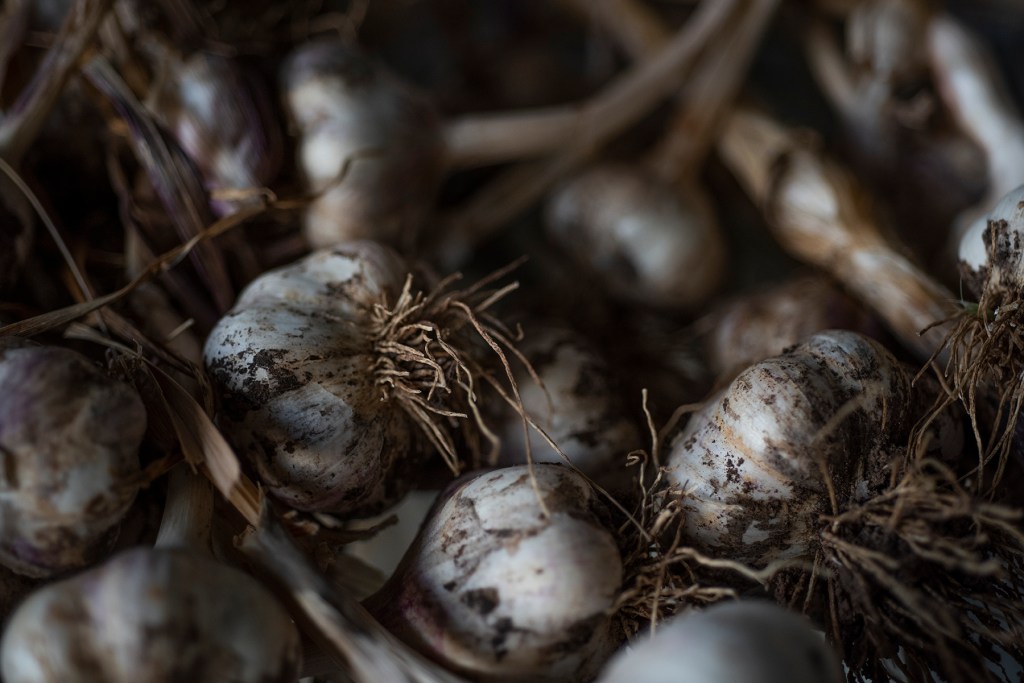
We mentioned in our last post that the grasshopper infestation this year is apocalyptic, dwarfing the damage we saw last year. This means we have missed out entirely on many of the favorite crops we grow, including tender salad greens, head lettuces, chard, kale, beets and carrots, to name a few. But in our lived experience (and this might certainly vary for others!) the grasshoppers never touch the alliums, a spicy, pungent plant family that also includes onion, leek, shallot and chive. And so, we’ve had a terrific garlic harvest of almost eighty pounds this year, nearly doubling last year’s yield.
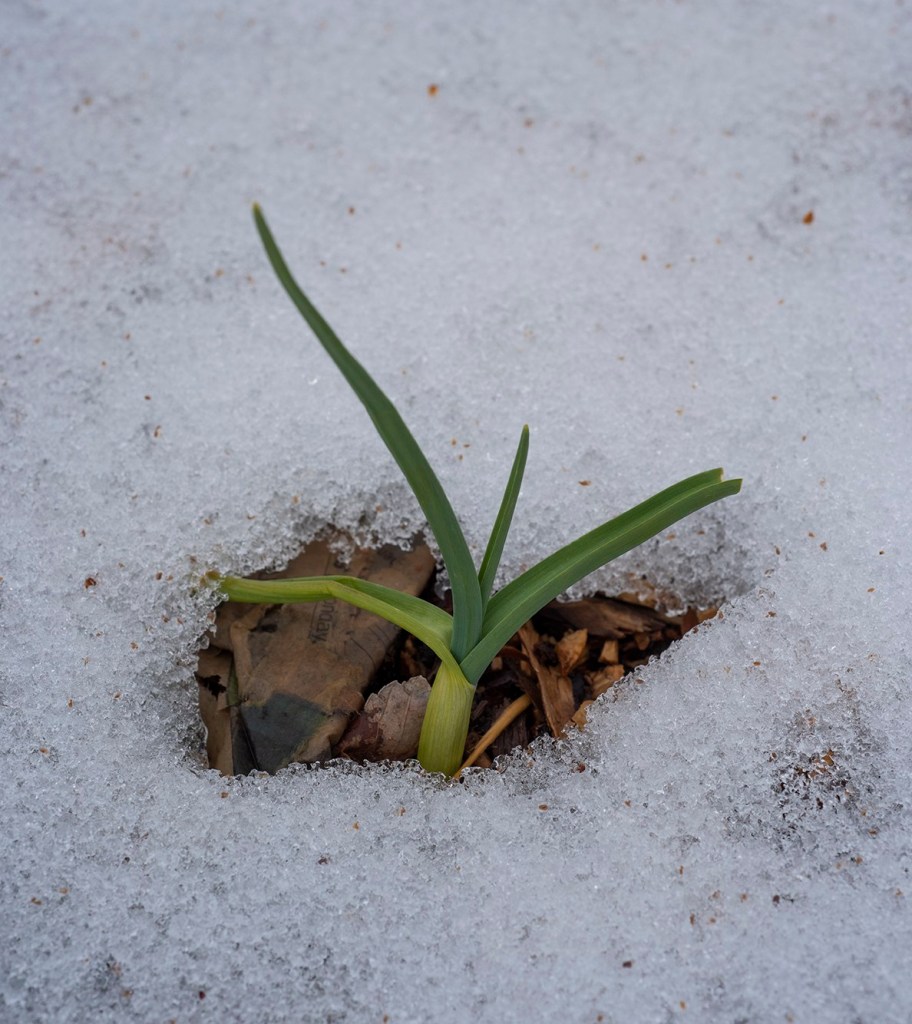
Garlic shoots in late March.
Garlic is a fascinating crop; it’s so commonplace and so widely used in cooking, yet many people are unfamiliar with how it’s grown. It is unusual in that it’s an annual that overwinters, unlike most. Here in Zone 5b, a high-plains desert at 6,300 feet, we plant garlic in mid-October. I select and save the largest cloves from the year’s harvest, and plant each clove about six inches apart in loose, well-amended soil. The cloves go in about two to three inches deep with the tip up and the root side down. Garlic loves fertile, rich soil; ours is heavily amended with organic alpaca manure and plenty of compost, and I mulch generously with spent hay from the corral. Shoots will appear in early spring; it’s important to keep the garlic beds carefully weeded and irrigated, but they don’t require much attention beyond the basics. There are two main types, hardneck and softneck: hardneck garlic produces scapes, which should be trimmed (and eaten!) to channel the plant’s energy into larger bulbs; softneck doesn’t produce scapes. Despite its nine-month season, garlic is simple and easy to grow, and resistant to just about everything – a very validating crop, especially in a tough year!
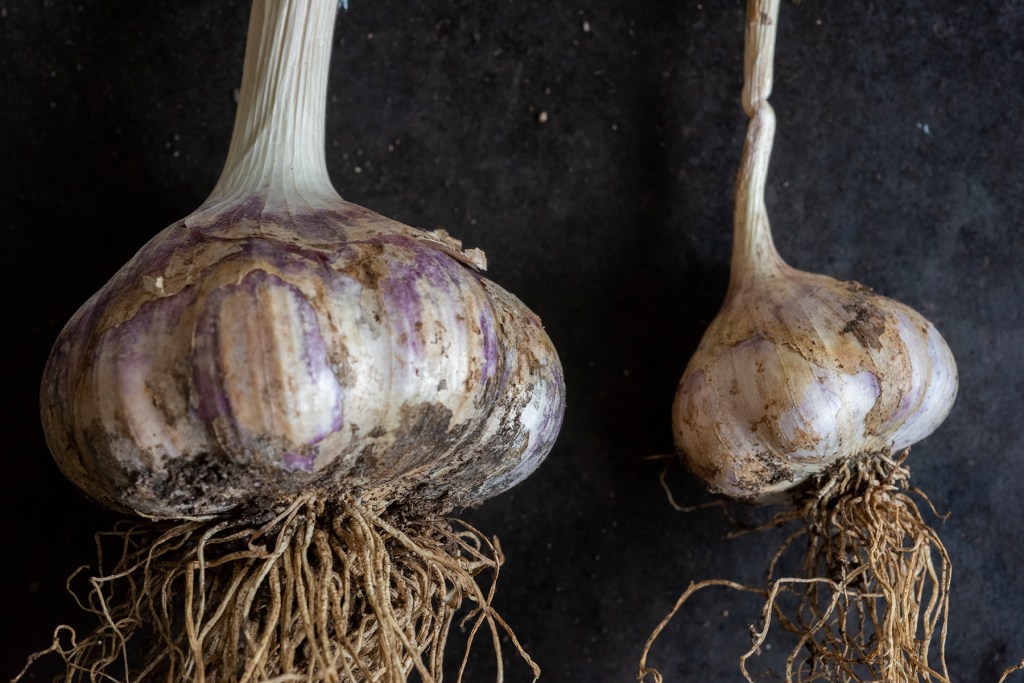
If you’re saving your own garlic for planting, choose the largest cloves from the largest heads, such as those on the left. Enjoy the smaller heads in the kitchen!
One of garlic’s most appealing qualities, in addition to how easy it is to grow, is that it demonstrates what’s called “phenotype plasticity.” This is a biologist’s way of identifying a plant that adapts and changes in response to stimuli or inputs from its environment. In garlic’s case, that means that it very quickly becomes adapted to its unique microclimate. Our garlic started out as as seed garlic from another Colorado farm, but in the five years that we’ve been growing and saving it here, it has morphed and improved into a varietal unique to our farm – and our garlic harvest gets better every year! If you’re buying garlic to start your own homegrown crop, try to buy from an environment as similar to yours as possible, particularly in regards to precipitation, frost dates and temperature extremes. Never plant grocery store garlic; it has likely been irradiated to prevent sprouting and most certainly shipped in from California or China.
As with most other common fruits and vegetables that we purchase, a standard American grocery store usually only carries one garlic variety – silverskin. Just like Cavendish bananas or Red Delicious apples, this variety is chosen for its consistency, high yields and reliability, rather than flavor. If you start browsing seed garlic online, however, you’ll see that there are dozens of garlic types available. Our garlic is locally-adapted, as mentioned above, but we do see a mix of both porcelain and purple-striping garlic in our harvest. Like anything you might grow at home, there are far more choices available in seed catalogs than you’ll ever encounter in the supermarket. Most grocery store garlic is also pretty old, which is why you’ll frequently see the little green sprouts inside (unless it’s been irradiated; remove these as they’re likely to be bitter) and why it desiccates quickly. Fresh garlic will knock your socks off with its bright, punchy flavor.
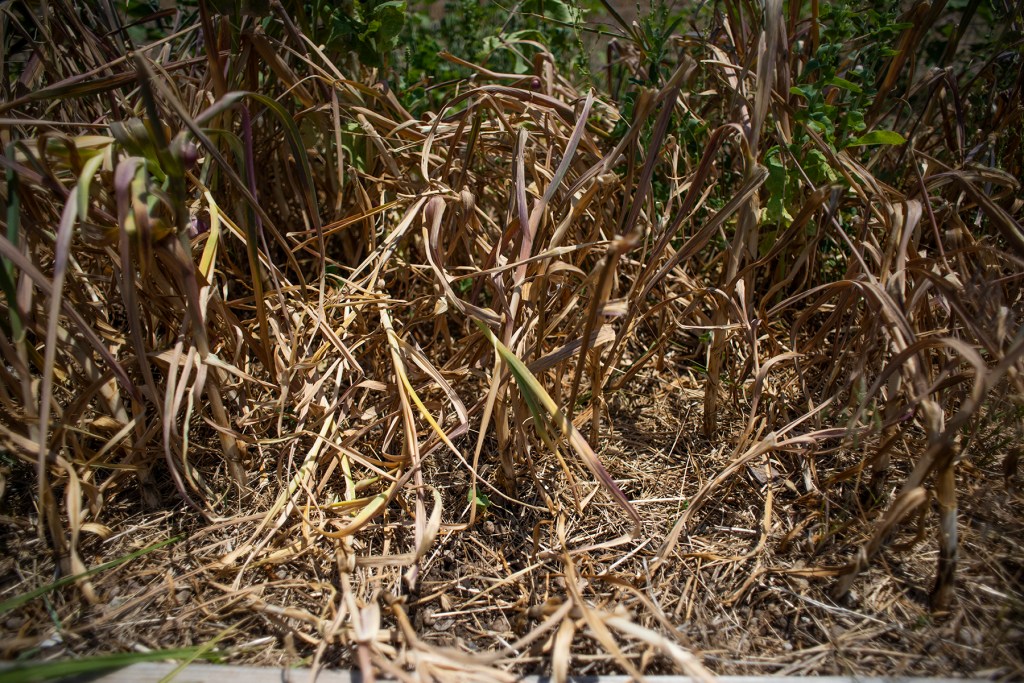
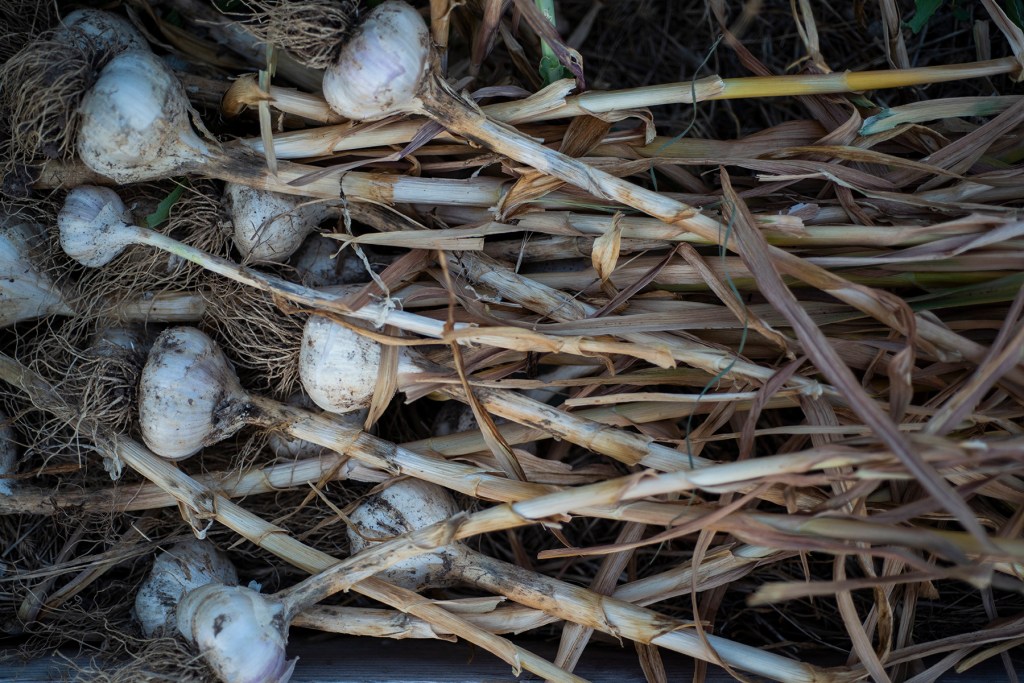
A messy garlic bed, ready for harvesting.
Garlic is harvested based on when the bulb is ready, not on specific days in the ground. Harvest time can vary based on day length and ambient temperatures; here, we typically harvest in mid-July. It’s important to get the harvest timing right, both to produce the largest bulbs and to allow for long-term storage. We stop watering our garlic about two weeks before we plan to harvest to allow it to fully dry; once the lower leaves start to die back, the garlic is close to ready. I usually pull a bulb every few days to see how the heads are maturing; I’m looking for consistent clove development and nice rounded shoulders. Once about half of the leaves have died back, the bulbs are likely ready for harvest. I leave a few scapes on the hardneck garlic, even though this means smaller bulbs; when those scapes unfurl and stand straight up, the hardneck is ready.
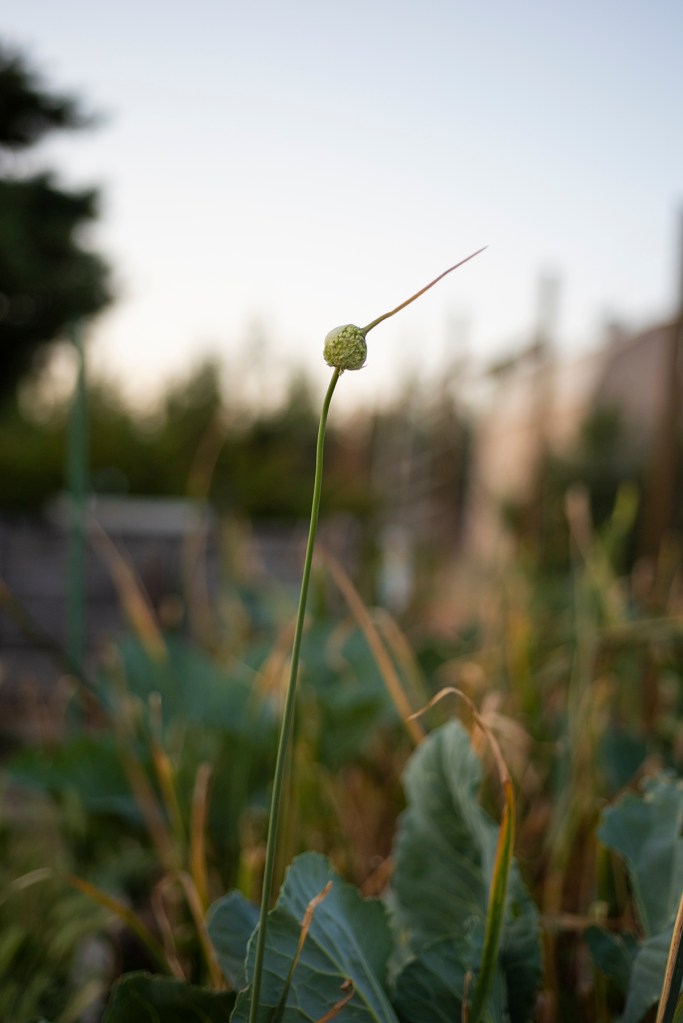
This garlic scape has unfurled and is standing proud, a sure sign that the hardneck garlic is ready to be harvested.
When harvest day arrives, we use a small hand fork to carefully remove the individual bulbs from the soil. The bed is likely to be extremely dry since we’ve stopped watering, so the bulbs will be easier to remove, but it’s important to dig them out gently and not to simply pull from the stem. The goal is to keep the stem intact, since it helps preserve the garlic and also makes a handy hanger for braiding, drying and storage. Using a full-size pitchfork isn’t recommended; it’s too easy to stab the bulbs, and once the papery skin has been penetrated, the head won’t cure properly and will need to be eaten quickly. As with any crop, care in harvest means a much higher-quality product.
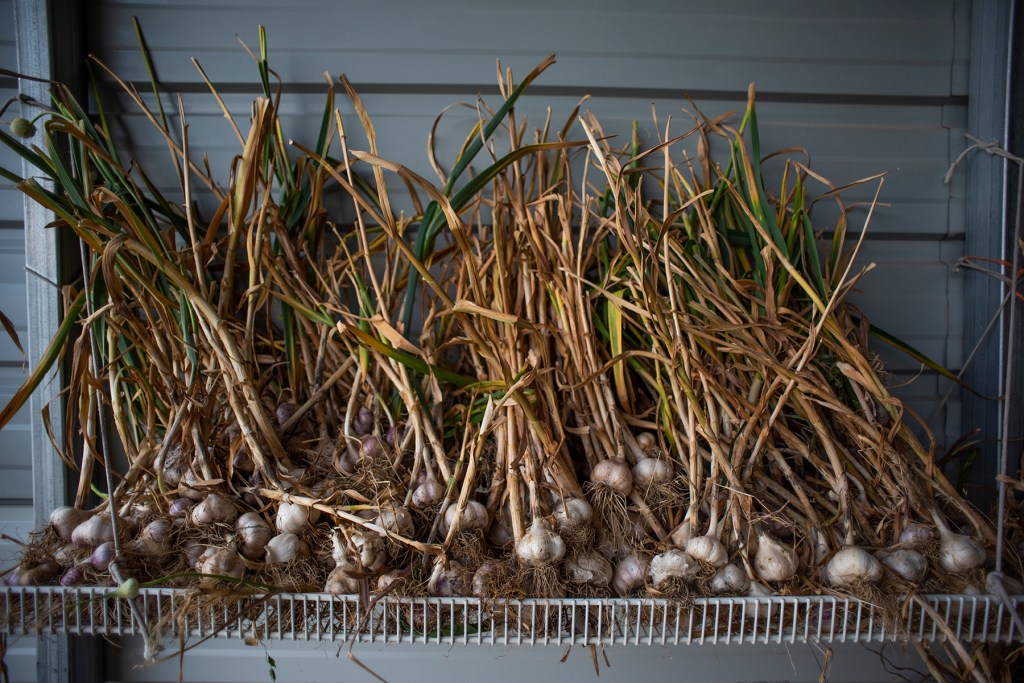
Hardneck garlic curing in our open-air tractor shed.
We weigh the harvest, keeping hardneck and softneck separate, then the heads are tumbled onto open wire shelves in our tractor barn to cure. It’s essential to cure the bulbs in a dry spot out of direct sunlight so that they can be properly stored. After curing (about three weeks in our climate), garlic should always be kept in a cool, dark, well-ventilated space, and should never be stored in airtight containers or plastic bags, as this will cause it to mold. We keep ours in breathable netted bags set on trestles in one of our dark, cool outbuildings. Properly stored garlic can last six months or more; we only just finished last year’s crop before we started harvesting this year. Before storing, I set aside all the largest cloves that I’ll plant in mid-October. I won’t plant in the same beds, instead rotating the garlic beds from year to year. Planting garlic is one of our last big tasks before winterizing the farm for the year, and it is such a lovely, calm way to wrap up the season.
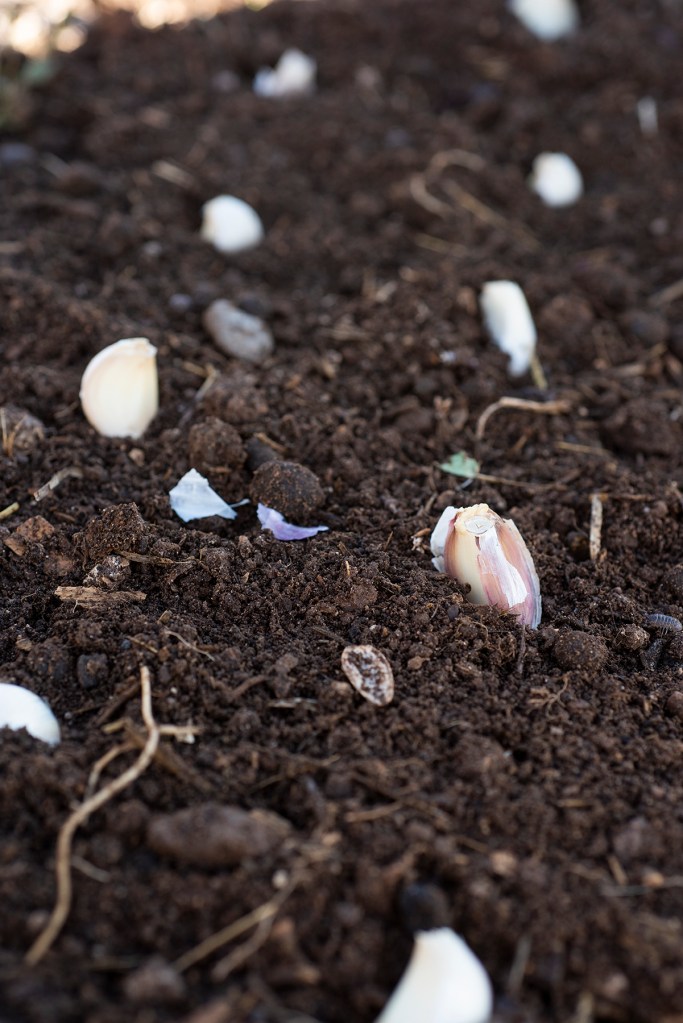
We plant in mid-October, before the beds freeze.
We are excited to announce that we have beautiful organic hardneck and softneck garlic for sale! We are selling both culinary garlic (smaller cloves, ideal for enjoying now) or seed garlic (larger cloves perfect for planting in mid-October). Want to cook with the freshest garlic possible? Always wanted to try growing your own garlic? Contact us and we’ll get you set up for success! (We are just selling locally at this time and are not set up to ship the garlic. If you want to support small farmers, however, Grasshopper Collective would love to ship you fresh garlic!)
If you have questions about growing, storing or using garlic, please leave a comment! Thanks for reading, friends, and thanks as always for supporting small local farms whenever possible.
 Finding Quiet Farm
You are correct that so many of us use garlic everyday but do not know much about it. Thanks for all the great information!
LikeLike
Thanks for reading, Sara!
LikeLike
I simply love this. I’m going to order some from the collective. Tell me if this is a no-no. If I think my garlic might offshoot or go bad, I peel it and freeze it. I also find it easy to grate.
LikeLike
Thanks, Jo! You can absolutely peel and freeze garlic – and yes, it makes it much easier to grate! And if your garlic cloves do have the little green sprout in them, you can always just remove those and use the rest of the clove.
LikeLike
How cold does it get where you store your garlic? I thought my braid this year would last but it was only good for 5 months. I stored it in my pantry (which is dark and dry) but maybe cooler temps would help?
LikeLike
Hi Nikki! We store our garlic in a stone outbuilding, which maintains a fairly consistent year-round temperature of about 55 degrees. I do think a pantry in a typical home might be a bit warm. If you could keep it cooler but without refrigerating it (this introduces moisture which typically causes it to spoil faster) you might find the garlic lasting a bit longer. Shelf life definitely depends on storage conditions – and five months is still really good!
LikeLike