The Farm Series: Colorado Aromatics

Simply put, we are killing it over here at Finding Quiet Farm! In addition to our new FAQ Series (which already has not one but TWO posts, on salt and cooking fats), we’re launching yet another new programming line-up. This series is focused on farms, because we’re focused on farms. Also, we think sometimes our audience might need just the tiniest break from the constant lecturing on food politics blah blah blah and know your ingredients blah blah blah. Behold: pretty pictures from The Farm Series!

Garden Flags

It’s not much of a secret – our blog title might actually give it away – that N and I plan to buy a farm. We want to find a piece of agricultural property between fifty and one hundred acres, but we only plan on farming the tiniest portion of that land. The remainder we want to turn into a nature reserve of sorts, a place where farm guests can walk for miles and hopefully see native birds, plant life and more. We want our farm to fit comfortably into an existing place; we don’t want to bulldoze acres of wetland or turn a previously wild space into a bare, sterile monoculture.

Mountains.jpg

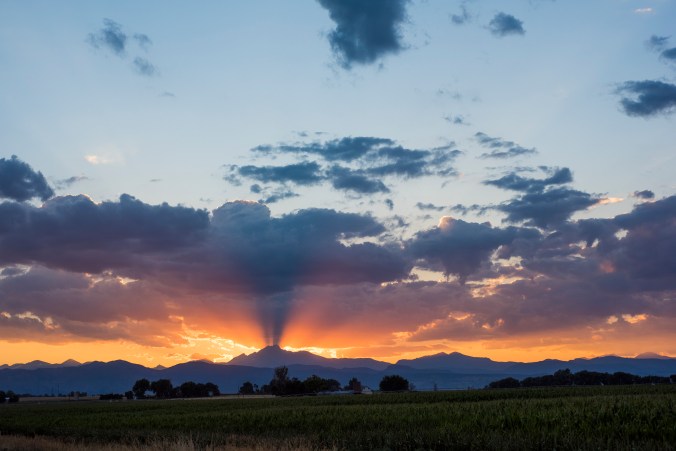
Longs and Meeker Peak, looking west from Colorado Aromatics.

Great; those are all lofty goals. But how do we do this? How do we go about the process of 1. finding a farm and 2. determining if that farm is the right place for us? Our answer: we visit as many farms as we possibly can, in Japan and England and in the U.S. And we talk to farmers and we volunteer on farms and we just make every effort possible to get as much experience as we can before we jump in with both feet. It might not be the right answer, but it’s our answer.

Farm Sign.jpg

A couple of weeks ago, we visited Colorado Aromatics, north of us in Longmont; we are always appreciative of any farmer who opens up their property to visitors. Colorado Aromatics offers “farm-to-skin” products made from plants grown on their nine-acre property. They are certified naturally grown, which allows smaller market growers to achieve recognizable certification without jumping through the (somewhat absurd) hoops required by national organic certification programs.

Tour Group

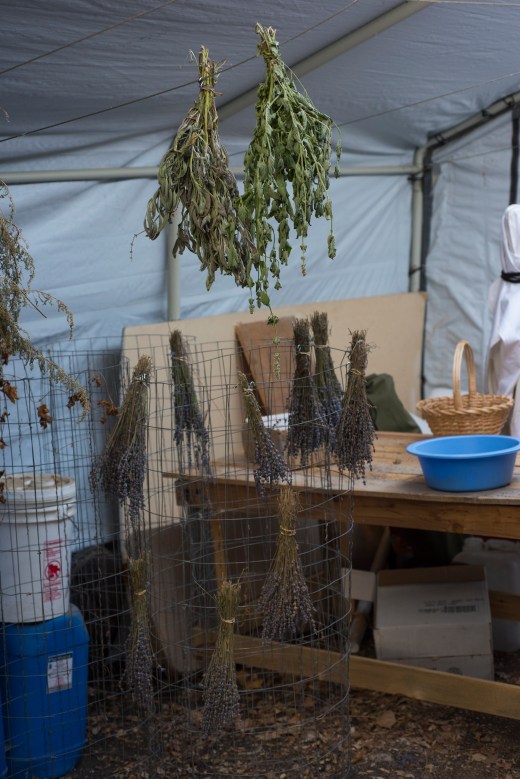
Colorado Aromatics’ primary crop is lavender, which grows beautifully in much of Colorado’s high-plains desert climate. But they also grow a wide variety of other medicinal herbs, plus they keep chickens and goats who provide valuable manure for the farm’s plants. Any good farmer knows that well-raised animals (and their waste) are an essential aspect of a healthy farm.

Chickens.jpg

Everyone needs backyard chickens!

Goat.jpg

Angora goats are most often raised for their lovely wool rather than their meat or milk.

Lavender Garden.jpg

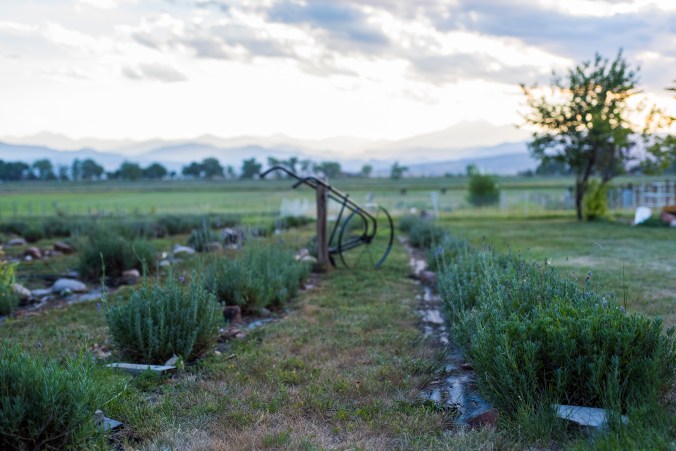
Lavender in the field.

Comfrey.jpg

Bees love comfrey!

Calendula.jpg

Calendula in flower.

Black Peppermint.jpg

Black peppermint.

Bulgarian Roses

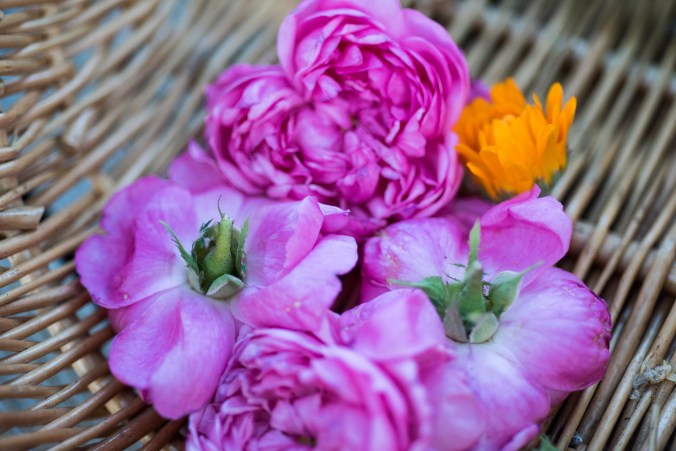
Bulgarian roses, grown for their intense scent (and oils) rather than their appearance.

Fennel.jpg

Fennel in bloom.

Distil.jpg

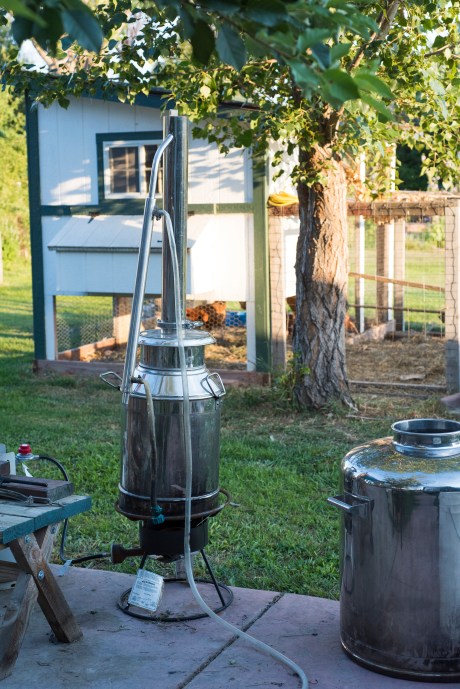
The distillate operation.

Red Clover Dried.jpg

Red clover drying.

Lemon Balm.jpg

Here lemon balm is an actual cash crop rather than an invasive weed, as most of us in Colorado perceive it.

Drying Room.jpg

The drying room.

Mailette.jpg

One of the many varieties of lavender grown here.

Thank you for hosting us, Colorado Aromatics!


The FAQ Series: Oils + Fats

We kicked off our new FAQ Series with a post on salt; for our second installment, we’ll discuss cooking oils and fats. One of the most common questions I hear in my classes is “What sort of oil (or fat) should I cook with?” The short answer: it depends.

Olive Oil 02.jpg

As per usual, raiding my pantry yielded a surprising number of oils.

The most important things to know about any specific cooking oil or fat, beyond its potential health benefits, are its flavor profile and its smoke point. Certain oils, like sesame and unrefined coconut, will have a pronounced flavor and may not be applicable in all situations. A fat’s smoke point is the temperature at which it starts to break down; this can be a bit vague as it happens over a range of degrees rather than at a precise moment. When the fat starts to break down, it indicates a loss of flavor and nutrients, and possibly an imminent fire.

Olive Oil Splash.jpg

Taste your olive oil straight…but maybe not out of a martini glass.

Oils are crushed, pressed or centrifuged out of nuts, seeds and fruits. Refined oils may have been subjected to additional filtration, bleaching, heat, chemicals and other treatments; they’re typically usable at higher temperatures than unrefined. They also generally have a neutral flavor and a longer shelf life. With true unrefined, or raw, oils, there is very little or no heat used to produce the oil. This is where the term cold-press comes in; the highest-quality olive oils are made without any heat which might compromise the delicate flavor nuances of the oil.

Flambe

Please don’t try this at home.

All oils can catch fire when heat is applied, so it’s important to know what temperatures you’ll be cooking at. An oil’s flash point refers to the temperature at which it could conceivably catch fire. Don’t ever leave cooking oils or fats unattended while heating; if for any reason oil does catch fire, turn the heat source off immediately and cover the pan with a metal lid to remove the oxygen source. Don’t ever use water on a grease fire, and don’t try to move the pot, as you could burn yourself or others. Baking soda or flour can also be used to douse the flames, but you’ll need a lot. In other words, prevention is a much better and safer option.
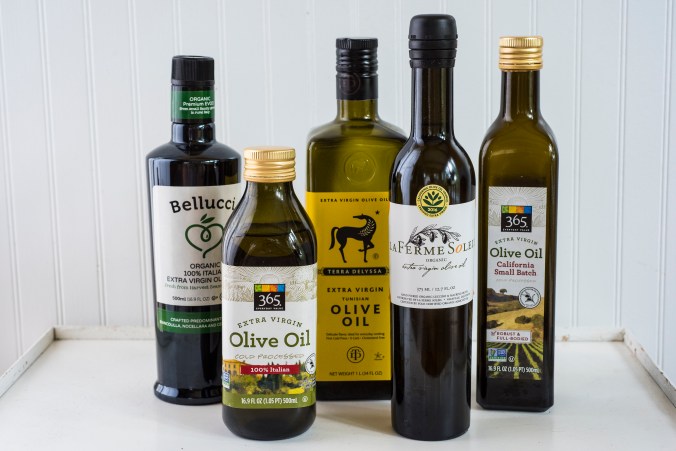
Olive Oil 01.jpg

Definitely the most-used oil in my kitchen.

Thanks to the Mediterranean diet, olive oil has gotten a lot of attention recently. It’s certainly versatile, and without question the oil I use most in my kitchen. But like so many other food items, it can be confusing; most of our olive oil comes from other countries, and the FDA doesn’t regulate imported olive oils. As with honey, there have been many, many instances of adulterated olive oils sold in the U.S.; a 2010 study indicated that close to 70% of imported olive oil was incorrectly labeled. Some states, like California, have passed stringent labeling laws, but be aware that it’s pretty easy to slap just about anything on a bottle of oil and not get called out for it.

Coconut Oil.jpg

So trendy that even Crisco got in on it.

Never cook with fancy, expensive olive oils; these oils are best for drizzling over salads or vegetables, or dipping with bread. There is no point in spending $30 a bottle (or more) for an oil that you’re going to subject to high heat; you’re just wasting your money. Always smell your oils; like any fat, oils can turn rancid. Keep them in a cool, dark, dry place, out of direct sunlight, and buy in small amounts. Expensive, delicate oils, like nut oils, are often sold in opaque containers rather than glass so they aren’t subject to as much degradation. Still, many consumers actually prefer rancid olive oil; this is probably attributable to the low-quality olive oil we grew up on – we think it’s supposed to taste like that.

Sunflower.jpg

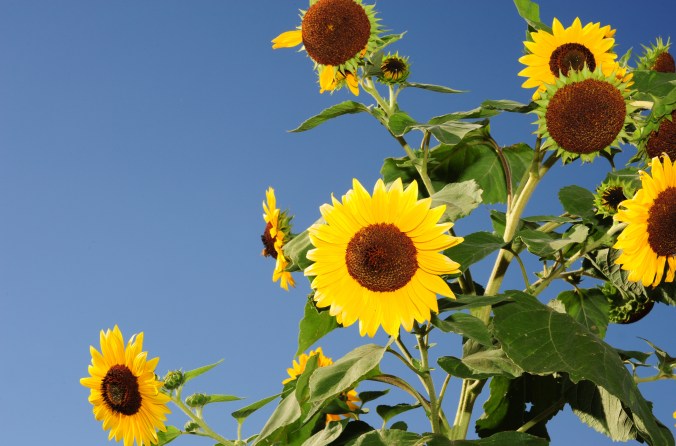
Both pretty and useful!

As with most foods, what matters most is your own palate. Before you spend hundreds on fancy olive oils, buy a few small bottles and taste the oil straight. Even better, go to a store that sells different oils and also offers a tasting bar. Some will taste sharp, or grassy, or bitter, depending on age and harvest and other factors. Don’t be swayed by celebrity chef brand names or pretty labels; price isn’t necessarily your best guide here. Figure out what you like, then buy it.

Butter 01

Thank the sweet Lord we’re allowed to love butter again.

When it comes to butter, quality definitely matters. In America, butter must be at least 80% butterfat to be labeled as butter; in Europe, it’s 82%. We’re starting to see more butterfat quantities on labels here (note Vermont Creamery products in photo above at 86%) and it does provide richer mouthfeel and certainly more flakiness in pastries. I use unsalted butter exclusively in baking and cooking so I can control the final salt content, but for spreading on good bread nothing compares to fresh, cultured, salted butter. Want to make your own? Try this recipe.
Butter 04

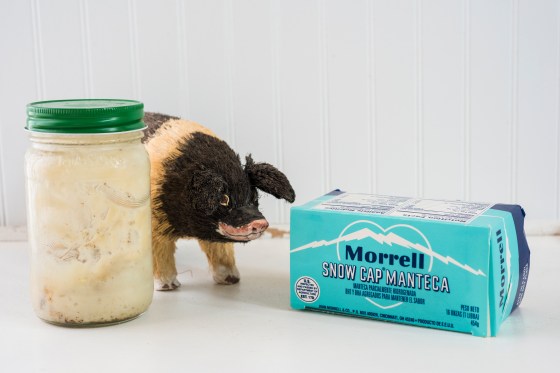
This little piggy became lard…

Remember when your grandmother kept the old metal coffee can filled with bacon drippings next to the stove? Like butter, lard, tallow and drippings are back in fashion; we can probably thank Team Paleo for that. It’s real fat, rather than fake fat, and it’s delicious. Use sparingly but with great enjoyment, and just like any animal product, buy from a reputable source. How the animals were raised matters.
Hazelnut Walnut Oil

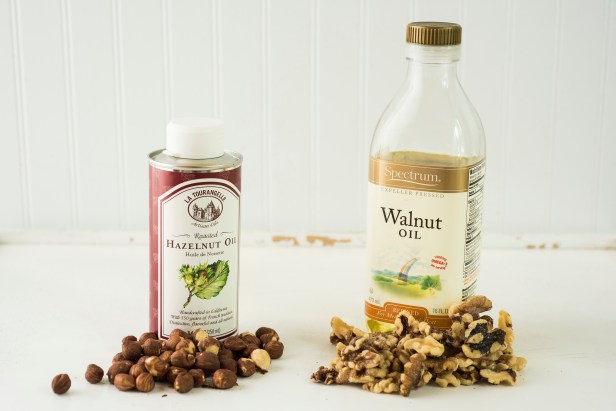
Nut oils are delicious, expensive and prone to rancidity; use judiciously.

A simple (and by no means definitive) guide to cooking fats and oils:

Butter: literally nothing compares for flavor, plus exemplary flakiness in baked goods, but it has a low smoke point and burns easily. Use when the flavor will shine: in simple eggs, on top of pancakes or waffles, in pie crusts and pastries. Or make brown butter into an elegant sauce for fish or pasta. Try compound butters with herbs, garlic or other add-ins; it’s easy to make your own or buy from these lovely folks.

Canola oil: useful in baking when a neutral oil is desired; also good for sautéing and frying. This oil is a tricky one: it comes from the rapeseed plant and was developed using traditional plant breeding methods before the advent of GMOs. It was renamed for the sensitive U.S. market; the word canola is a hodgepodge of “Canada” and “oil,” since most of our rapeseed comes from Canada. There exists a misconception that all canola is GMO; although that isn’t true, rapeseed is one of the most common GMO crops, so if you’re avoiding GMOs, watch your labels.

Coconut oil: currently very trendy along with everything else coconut. Solid at cool room temperature so it behaves like shortening or butter in baking and is therefore very popular with vegans. Previously a nutritional villain, and now a hero (see also: butter, eggs, coffee, salt, red wine…)

Ghee: butter that has been clarified to remove the milk solids so that its smoke point is higher. Common in Indian cuisine.

Grapeseed oil: a byproduct of the winemaking industry, it’s neutral in flavor and best for baking, sautéing, and salad dressings when you don’t want a pronounced olive flavor.

Lard: rendered hog fat; it is neutral in flavor (unlike bacon drippings, which are smoky and bacon-y) and produces amazing pie crusts, especially when combined with butter. Obviously not suitable for vegetarians. Moderately high smoke point.

Margarine or other “fake butters”: never. Not even ever. Totally lab-created; typically hydrogenated oils often with mysterious additives. Stay away; there is literally nothing of value in these products. No, they absolutely do not reduce your cholesterol. I don’t care what the package says.

Olive oil: the most versatile and a favorite of Mediterranean diet proponents. Use olive oil for moderately high temperature sautéing, tossing with cooked pasta and drizzling over roasted vegetables. Expensive, flavorful olive oils should be reserved for salad dressings and as an accompaniment to good bread and should never be heated.

Nut oil, such as hazelnut or walnut: expensive, flavorful and great for salad dressings, especially when the same toasted nut is used in the dish. Try this simple beauty from the great Ottolenghi!

Peanut oil: high smoke point and good for frying; popular in Asian cuisine. Pronounced flavor and possible allergen issues. Great for deep-frying.

Sesame: see peanut oil, above, except that it’s way too expensive and strongly flavored for deep-frying. Dark sesame oil will have a stronger flavor.

Safflower oil: related to sunflowers, this is a neutral oil fine for frying and baking.

Sunflower oil: high in Vitamin E plus a high smoke point; neutral flavor. Use for baking and frying.

Vegetable shortening: Crisco introduced vegetable shortening in 1911 as a lard alternative. It’s solid at cool room temperature and therefore behaves similarly to butter or lard in baked goods. It’s also partially hydrogenated and not an ideal choice for health, although now the label claims “zero trans fats.” I’ll confess that it works beautifully in pie crusts and it is a vegan option.

Vegetable oil: most products labeled “vegetable oil” are typically soy, yet another primarily GMO crop. Soybean oil is one of the most common ingredients in heavily processed foods and has virtually no benefits whatsoever. If you’re looking for a neutral baking oil, choose non-GMO canola.

What should we discuss next? Let us know!


Saving the bees

On a cool spring day four years ago, our friend Jim came to pick us up in his truck. We drove to a local feed store where we waited forever with dozens of other eager apiarists to pick up our new beehive. The sellers had driven down from Wyoming, where their hives and queens were specifically raised in extreme environments (mainly intense winter winds), meaning they’d likely survive their move to the Front Range.

Bee 01.jpg

That first hive didn’t make it. We lost it two years ago, and to this day we still don’t know why it didn’t overwinter successfully. Because our neighbors’ lawn care company uses ten thousand different poisonous chemicals? Because we didn’t maintain the winter sugar water supply properly? Because of colony collapse disorder? We don’t know, and we won’t ever know. That total lack of knowledge is one of the most challenging aspects of keeping honeybees.

Bumble Bee 01.jpg

Such remarkably strong and beautiful creatures.

We are very new to beekeeping. We’re on our second hive, and though it seems to be exceptionally strong at the moment, there are a lot of different pressures on pollinators right now. We try to do our very best by our bees; we read and we talk to friends who keep bees and we monitor the hive carefully, but ultimately we’re not entirely in control of the situation.

Bee 02.jpg

Planting flowers that bees love is one of the best things you can do to help them.

In June, the U.S. officially withdrew from the Paris climate accord. This decision sent yet another exceptionally strong message to the rest of the world that Americans are basically a bunch of nutjob flat-earthers who believe climate change is a global conspiracy cooked up by the Chinese. In challenging times like these, it’s easy to believe that nothing we do makes any difference and that we’re all doomed. Keeping bees, however, is one of our small commitments to creating the kind of world we want to live in.

Hive

Our basic hive set-up, strapped down to keep out hungry raccoons.

It’s no great secret that honeybees and other pollinators are under a huge amount of stress. Whether from loss of habitat, monocropping, neonicotinoids, or other factors, pollinators are disappearing at critical rates. One-third of our total food supply requires pollinators to thrive, and it’s only in recent years that farmers, home gardeners and scientists have started addressing this issue. Colony collapse disorder has gotten a lot of attention, but it’s still not widely understood, and the disappearance of pollinators most likely can’t be exclusively blamed on CCD. It’s a complicated story.

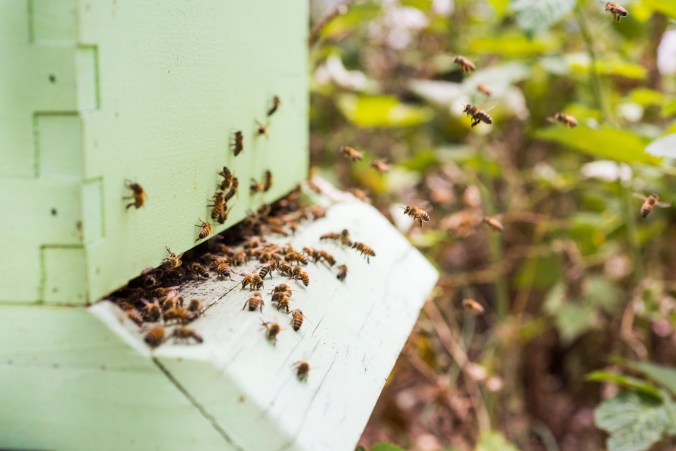
Bee entrance.jpg

Watching the bees at the hive entrance is one of the great joys of beekeeping.

The term pollinator doesn’t refer to just bees; pollinators can also include birds, bats, butterflies, beetles and other small mammals. All of these creatures are responsible for helping to propagate certain plants, but honeybees give humans the greatest return for their investment. Honey is the only food produced by insects that humans eat, although protein derived from insects is about to become the next big trend in sustainable eating. (You heard it here first, friends.)

Hive 02

Our hive is a Langstroth; the other most common style is called a top-bar hive.

We started keeping bees to help pollinators and to help our garden, and because we know we’ll have hives on our farm. The honey is no small bonus either, especially since eating it regularly has seemed to really help N with the seasonal allergies he’s struggled with here in Colorado. Beekeeping isn’t necessarily difficult, but it does require a certain investment in time, money and equipment; we’re always trying to learn more about how we can become better beekeepers.

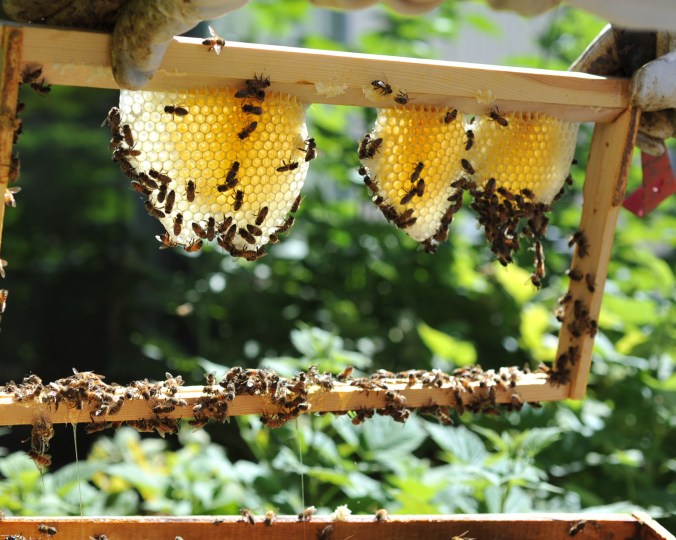
Honeycomb

Examining built-up comb on a frame.

Beehives are unbelievably complex and elaborate communities; a typical honeybee hive usually contains about 50,000 bees. There is a basic three-tier caste system: one queen, plus workers, who are female, and drones, who are male. Drones only exist to mate with the queen and are incapable of feeding themselves or foraging, plus they die immediately after mating. Workers, on the other hand, might be nurses, attendants, cleaners, foragers, guards or undertakers. Healthy queens live for an average of two to three years but have been known to live as long as five years; workers and drones live between two to four months, depending on their role in the hive.

NJB_0213.JPG

Greenhouses often have to bring in pollinators to mimic conditions outdoors.

A single bee colony can produce between sixty and one hundred pounds of honey in a year. For every pound of honey produced, the bees have visited two million flowers and flown over 55,000 miles. And each individual honeybee only produces about 1/12th of a teaspoon of honey in its lifetime, so the next time you’re grousing over the price of local honey, consider how much work went into creating it. Bees fly up to about five miles from their home hive to forage; for obvious reasons it’s tough to find true organic honey – how often can you guarantee that every single plant bees might visit within a five-mile radius is completely organic? Our honey definitely isn’t (see neighbor reference above).

Bumble Bee 02.jpg

Bumblebees are easily recognizable by their plump, furry bodies.

People are scared of bees. We’re always careful to warn guests and workmen about our hive and to inquire about allergies. We’ve both been stung numerous times, some occasions definitively our fault and some entirely unprovoked. I’ve been lucky enough to actually see the bees swarm – when the hive becomes too crowded and a group decides to set off for greener pastures – which isn’t ideal for beekeepers but is a remarkable (and slightly spooky) experience. Our hive this year is also strong enough that we’ve been able to take a split, which is essentially a controlled division of the hive before it has a chance to swarm. Splits are better than swarms in most cases, because with a swarm there is always a risk of losing the queen. Unless the hive can produce a new queen, the entire colony will die.

Spider bee.jpg

Spiders have to eat too.

To make the clear, clean honey you most often find at the grocery store, the honey is heated and filtered to remove beeswax, pollen, bee parts and other potential contaminants. Certain beekeepers claim that this heat treatment removes the most beneficial components of the honey, so some honey is labeled “raw.” True raw honey has never been heated beyond naturally occurring hive temperatures, about 95 degrees Fahrenheit, but this labeling term – like so many in the U.S. – isn’t regulated and therefore no one is checking up on manufacturers who use the term illicitly. There have also been numerous instances of honey being adulterated with corn syrup and other sweeteners; when there is money to be made someone will always find a way to do so fraudulently. As with just about every food, buy as close to the source as possible, read the label carefully and ask questions. Local honey is sold almost everywhere in the world; it’s worth seeking some out where you live.

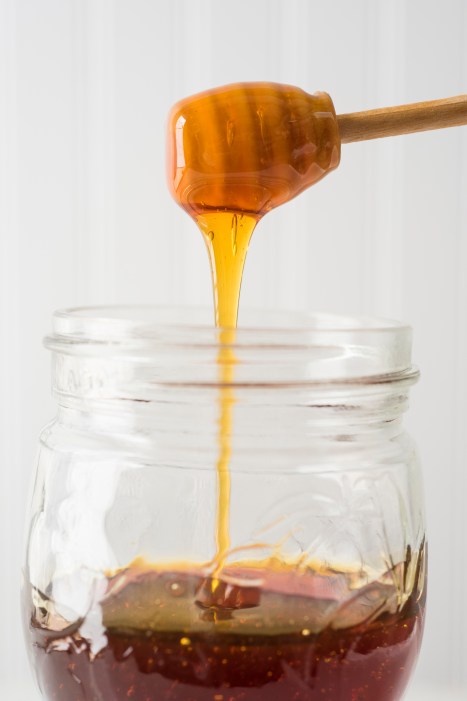
Honey Flow

Is it any wonder this stuff is referred to as liquid gold?

In the Western world, it’s common for new mothers to be told not to feed honey to infants under one year of age. This came about in the late 1970s because it is theoretically possible for honey to contain Clostridium botulinum bacterium, which could (again theoretically) cause infant botulism. It’s extremely rare, however, and after twelve months the intestinal system has matured so that the toxin will no longer pose a risk. Considering that the bacterium is commonly found in dirt and dust everywhere, and that we regularly advocate feeding infants formula containing monocropped GMO soybeans and yogurt laced with food dye and high-fructose corn syrup, this warning against one of nature’s true pure foods seems a little panicky. As we’ve discussed, however, we love to identify a single villain rather than target the entire compromised system. Invariably we ignore all sensible advice to the contrary.

Honey Jars.jpg

Notice the different colors; darker honey is typically stronger in flavor than lighter.

If you have the space and the inclination, please consider starting your own backyard hive. Like chickens, it’s a lot less work than people think, and the rewards are more than worth the effort. If having your own hive isn’t practical, seek out the best local honey you can find and support your local beekeepers. A farmers’ market is often a great place to find local honey, or you can try this site. If you’re buying honey at the grocery store, read the label carefully: in Colorado, I’ve seen “local honey” on products from California and other states. That might have been local when it was collected and packaged, but it’s also a very easy way to mislead consumers into paying more. Be a conscious consumer.

Sunflowers

It’s easy to feel overwhelmed when faced with critical issues of this scale, but this is actually one where small actions can make a difference. Want to learn more about pollinators and how you can help? Go here, here and here.

Cooking Class: Udaipur, India

It’s been two months since we returned and N and I are missing our travels more than we expected. We thought we might revisit a few of our most memorable experiences here.

We went on lots of market tours during our travels and took a couple of incredible cooking classes, too. Udaipur, in the western Indian state of Rajasthan, was one of our favorite cities in India. It’s friendly and accessible, easy to walk and to navigate and filled with compelling sights and smells. While we were here, we went to an in-home cooking class led by a quiet, lovely Indian woman named Gita. She didn’t speak much English, but this was definitely one of those times when not many words were needed; the idea of food as a universal language is such an accurate cliché.

NJB_6253

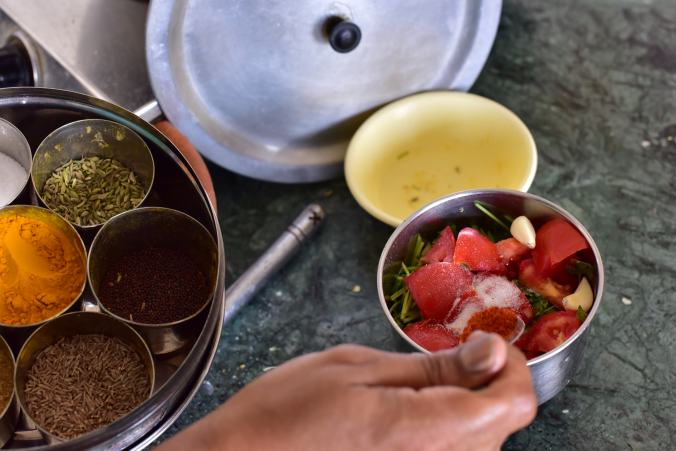
Traditional masala boxes contain cooking spices. Women are often given these as a wedding gift to bring to their new husband’s home.

NJB_6313

Combining fresh tomatoes, coriander and garlic for tomato chutney.

NJB_6273

Toasting whole spices brings out their aromatic oils.

NJB_6286

Making aloo gobi masala, cauliflower and potatoes with peas.

NJB_6287

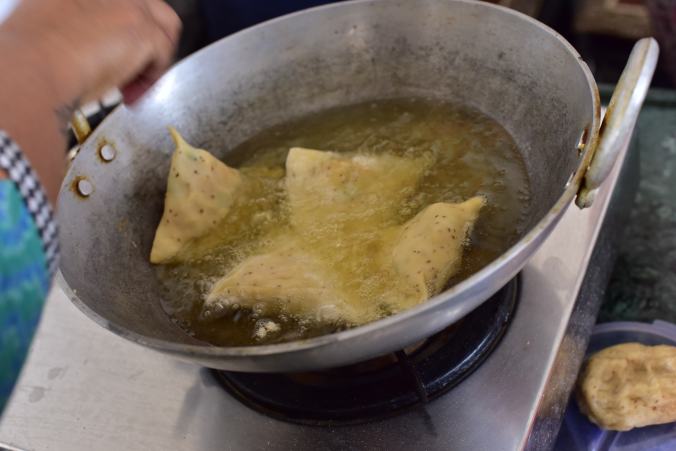
This will be the filling for our samosas.

NJB_6294

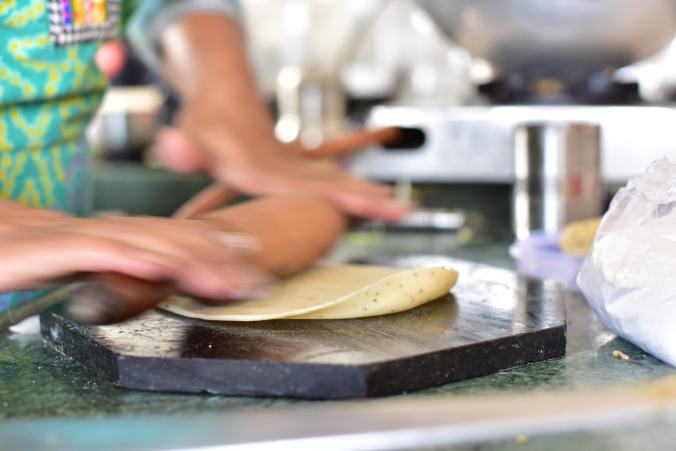
Rolling fresh dough for samosas.

NJB_6297

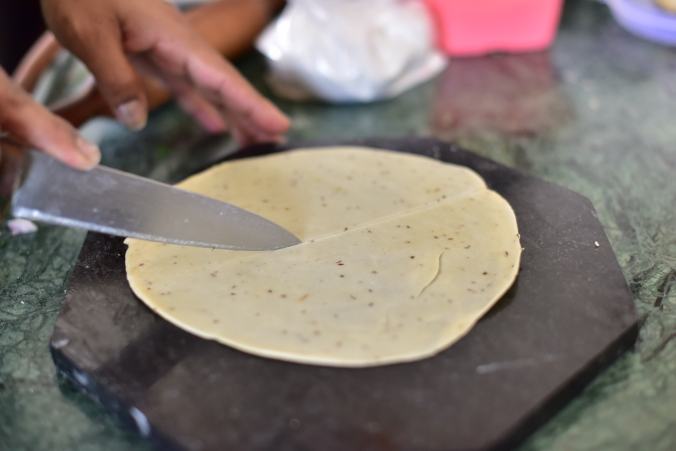
The dough, speckled with cumin seeds, is cut into quarters.

NJB_6298

Years of practice make this look easy.

NJB_6301

Filling the samosas

NJB_6307

…and into the fryer they go.

NJB_6326.1

You don’t need fancy kitchen gear to produce amazing food.

NJB_6377

Many homes in rural India still don’t have refrigerators or freezers, so you buy what you need and cook fresh food every day.

NJB_6394

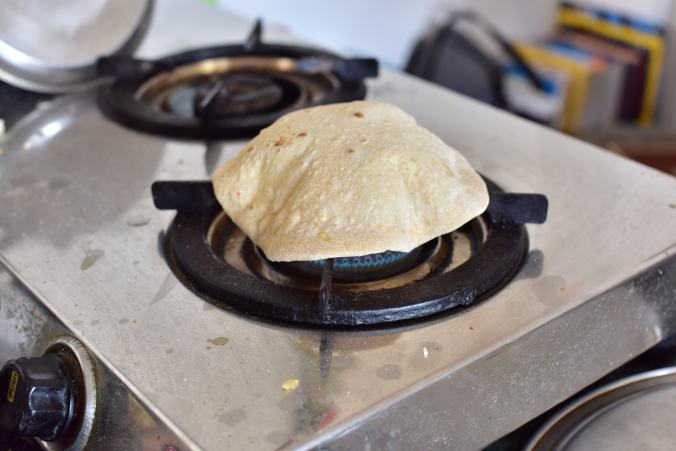
Indian cuisine includes an array of incredible breads.

NJB_6386

Poori puffs up when it’s cooked over an open flame.

NJB_6404.1

The best part of any cooking class is sitting down together to eat delicious food!

NJB_6413

Our kind, generous host, Gita – a truly incredible cook.

We miss you, India!

Keep going

Today’s life lesson is simple but essential: keep going. Keep going even when things aren’t working out, when your carefully laid plans have imploded, when you feel like an abject failure at pretty much everything. I’m pretending this is a post about how you should keep cooking even when recipes aren’t turning out right, and it is, but it’s also just a reminder that in life you can either crumple to the ground in a heap, or you can keep going.

Breadsticks

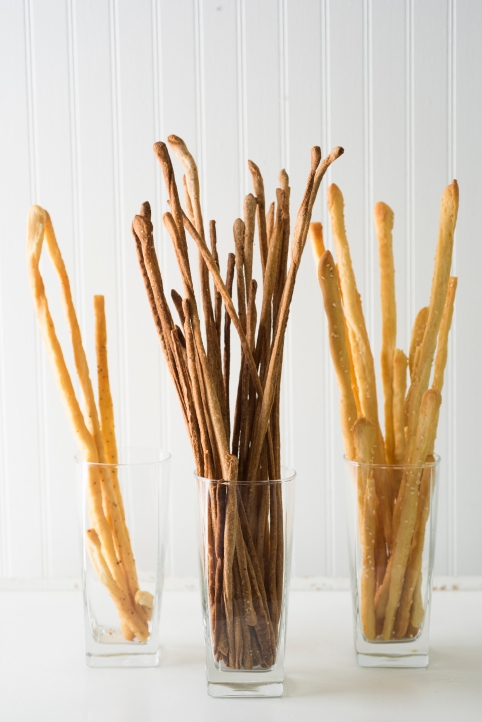
These breadsticks look pretty, but they posed a major risk to dental work.

There exists a perception that professional chefs cook everything perfectly all the time, and I’m here to tell you that this couldn’t be further from the truth. I go through phases where it honestly seems as though nothing in the kitchen works properly. Recipes that should work don’t, recipes that I’ve made hundreds of times without fail suddenly turn out poorly, and nothing tastes right. It would be easy to just storm out of the kitchen.

CCA-94.jpg

This probably boiled over mere seconds after the shot was taken.

Recently, for example, I’ve made three different breadstick recipes with lousy results all three times. I overfed my treasured sourdough starter with whole-wheat flour and increased the acidity so much that it’s like a biological weapon is lurking in my sunroom. In an attempt to use up my pantry stores, I made a Key lime and ginger tart that didn’t set at all, even after six hours in the refrigerator. It tasted delicious, but the presentation was appalling. (There are no photos of this event.)

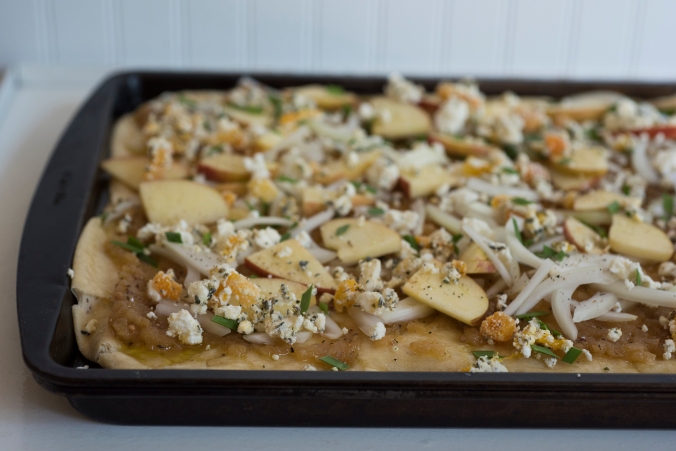
Apple flatbread 1.jpg

Trying to salvage overproofed pizza dough left over from bread class…

But these occasions are precisely the times when you just have to keep going. When you have to work harder to figure out exactly what went wrong, and how you can improve it next time. When you have to acknowledge that not every single thing you cook will be perfect every time, but trust that the learning is in the process. It’s why I recommend keeping a kitchen journal and taking notes on just about every single recipe you make.

Apple flatbread 2.jpg

…and it actually worked!

We live in an age of immediate gratification. We expect things to happen instantaneously and perfectly, and we no longer know how to fail. This is an especially challenging concept for home cooks, especially people who come to cooking later on in life. Those of us who started cooking young – with this recipe, most likely – remember mistaking a tablespoon for a teaspoon and producing salty, inedible cookies. We laugh about it now and count it as a learning experience. Yet if we made that same mistake as adults, we’d castigate ourselves for our stupidity and perhaps give up on baking altogether, because we didn’t get it right the first time.

CCA-36.jpg

In cooking, as with just about every worthwhile skill, the devil is in the countless hours of practice. No one starts out as a brilliant chef, just as athletes don’t start out as Olympians. When you’re just beginning in the kitchen, you might be disappointed with the results, but it’s imperative that you keep going. You will learn how to season, how to adjust recipes, how to trust your own palate. You will learn how to prepare food that you like and you’ll gain confidence every single time you cook. You will get better. But in order to do that, you have to keep cooking – and that’s tough, especially when perhaps your efforts aren’t received with enthusiasm by your household. (And if that’s the case? Invite your family into the kitchen and make meal preparation a household activity, so that everyone can share in both the effort and the result.)

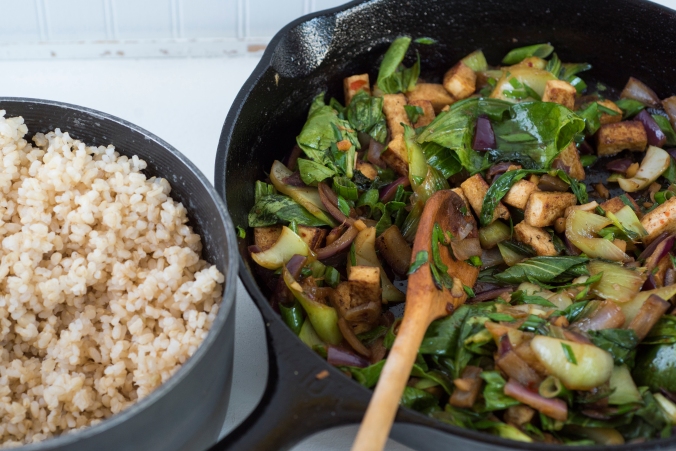
Tofu Bok Choi.jpg

A very simple tofu and bok choy stir-fry with brown rice…and one of my favorite things I’ve cooked recently.

So please, friends, don’t give up. Don’t get weighed down with disappointment over kitchen experiments that aren’t a roaring success. Keep going. Try something new, fail well, make notes about it and get up and do it again. And above all else, please keep cooking.

P.S. I wrote a guest blog on this very topic over at Healthy Baby Fit Mom! Read more here!

P.P.S. Read a brilliant post about the concept of “constructive growth” and being a “tenacious loser” here; thanks to Karen for sending this link!


How to buy knives

Perhaps this post’s title isn’t exactly the sort of thing you want discovered in your browser history, but we’re going to proceed as planned because it’s important. There is literally nothing that will improve your time in the kitchen more than owning good knives and knowing how to use them. I meet people regularly who tell me how tedious they find cooking; I’m willing to bet that they’re using cheap, dull knives. Most of cooking is actually prepping the ingredients, and lousy knives make this task far more laborious than it needs to be.

CCA-10.jpg

I used to teach cooking classes at a fancy kitchenware store. While I always loved teaching the classes, I failed miserably at the most important part of the job: selling people silly gadgets and pointless equipment they didn’t really need. The spiralizer and the popcorn maker and the banana slicer and the electric egg poacher and the chocolate fountain seem like necessary additions to your already-crowded countertops, I know. But in order to cook well, you need just a few things: a couple of decent, heavy pots and pans (hopefully a cast-iron skillet!), a good cutting board, and well-made knives that suit you.

Wusthof 01.jpg

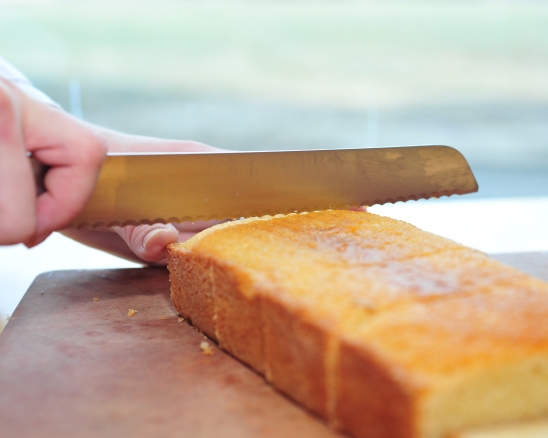
Knives come in all sorts of expansive sets, like the one shown above. The average home cook has no need for eight or ten or twelve knives, unless you host posh steak dinners for a crowd on a regular basis. I’d far rather you spend the same amount of money on three really good knives: a chef’s knife, a paring knife and a bread knife. Costly, yes. But knives aren’t an iPhone; they’re not designed to be replaced every six months. If you take good care of them, knives can last a lifetime.

Knife Skills

Never buy a knife that you haven’t had the opportunity to hold and cut with. Like tennis rackets or skis or golf clubs, knives come in different sizes and will fit one person better than another. A good knife store will offer demo knives, cutting boards, and fresh herbs or vegetables to cut; make the most of this opportunity and try various knives to see what you like. Knives are broadly grouped into two categories, Western (such as Wusthof and Henckels) and Eastern (such as Shun and Global). The blades and handles are different, and there is no right or wrong choice – just the one that fits you best.

NIK_1540.jpg

Once you’ve spent a couple hundred dollars on knives, please take good care of your investment. Knives NEVER go in the dishwasher or a sink of soapy water; they should be washed and dried carefully after use. The dishwasher destroys knives faster than anything else, and if knives are left in a sink the water seeps into the handle, plus it’s a huge safety risk.

You want to devote yourself to keeping that edge sharp, so store knives properly in a knife block or on a magnetic strip. Throwing knives in a drawer where they can bang around guarantees that you’ll ruin the blade.

Know the difference between honing and sharpening. A honing steel might have come with your knives; watch a basic YouTube video and learn how to hone. Sharpening, however, should be done by a professional at least once or twice a year, depending on how often you cook. A sharp knife makes kitchen prep enjoyable rather than tedious.

Wusthof 02.jpg

Use quality cutting boards made of wood or polypropylene; NEVER ever use knives directly on glass, marble or granite. Knives shouldn’t be used to hammer, pry or stir ingredients, and your knife isn’t a can opener! Never use the knife in a manner that causes the blade to twist, and don’t cut frozen foods with a straight-edge knife – this is a quick way to ruin the edge.

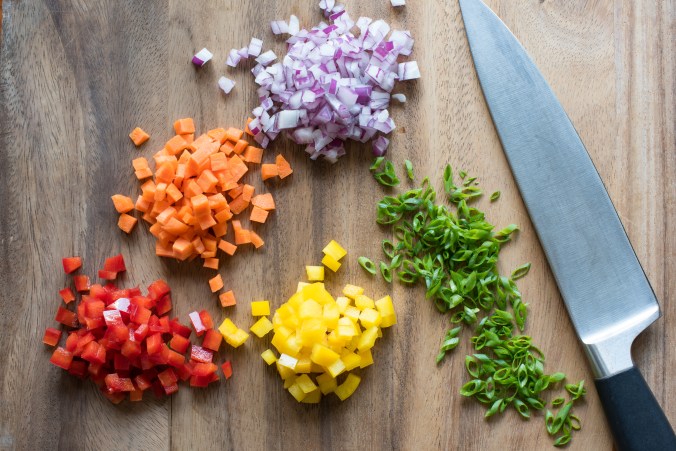
Learn basic cuts (mince, dice, julienne, chiffonade) and understand why each might be used in a recipe. Cutting foods into similarly-sized pieces means ingredients cook more evenly. Always keep ingredients flat and stable when cutting; if necessary, cut a thin slice from one side of the fruit or vegetable to provide an anchoring surface. Lay a damp kitchen towel under your cutting board to keep it from moving on the counter.

And above all else, PRACTICE PRACTICE PRACTICE. The only way to improve your knife skills is to practice them as often as possible. Knife skills are more muscle memory than anything else. Buy inexpensive vegetables and make lots of soups, chopped salads and mashed potatoes!

P.S. Want to learn more? If you’re in Denver, come to my hands-on knife skills class on July 25. I’ll guide you through the classic cuts and you’ll have plenty of opportunity to practice with your own knives and mine too! Details and registration here!

Work with what you have

We’ve returned home after five months away and are trying desperately to reinsert ourselves back into our normal lives. This is proving to be substantially more difficult than we had anticipated, but thankfully the task of cooking is always there to ground me. My aspirational motto for this summer (and forever, really) is “Work with what you have.” It’s easy to wish that circumstances were different, or that we had an alternate set of tools at our disposal to complete a specific task, but in the kitchen, as in life, sometimes you simply have to work with what you have. And so my task for the summer, at least, is to cook from our existing food supplies rather than buying more.

Grains and pulses

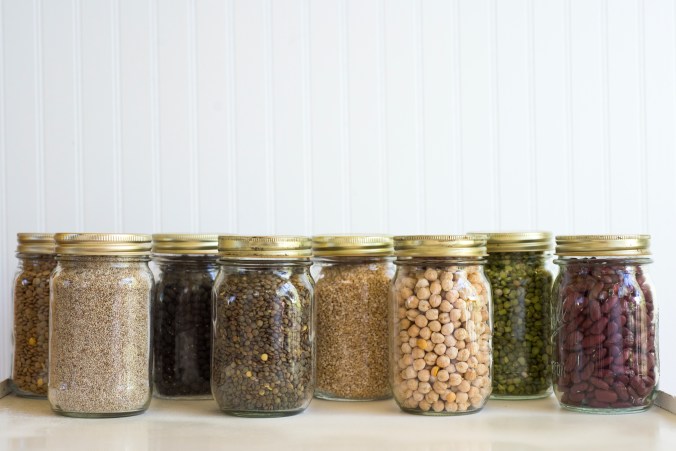
Dry beans, grains, seeds and legumes are a pantry staple.

By most estimates, about 40% of all edible food produced in America is thrown out (more, if it’s fresh produce) instead of eaten. This is a statistic that I cite often in my classes; I ask my guests to calculate their own food budget and determine how much money they’re throwing away. I’ve even gone so far as to put actual dollar bills in the trash can (later retrieved, obviously) because for some reason that sludgy green bag of decomposing kale in the bottom of the crisper drawer doesn’t seem to equate to real money to most people. Apparently we care about our food waste problem, but we’re just too busy to do anything about it.

Sauces

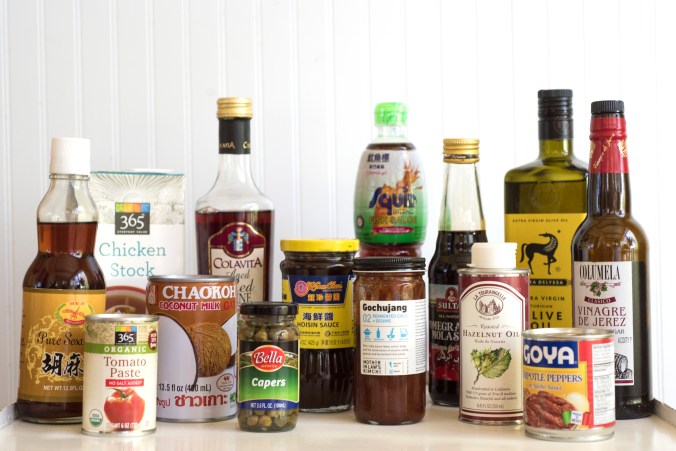
How to add flavor and interest to your food.

Americans spend less money on food than any country in the First World. Calories are cheap here and we’re obsessed with aesthetic perfection, plus we have absolutely no idea what all those “best by” and “use by” dates actually mean. (Answer: nothing. There are no regulations. Use your common sense; it’s designed to protect you from food poisoning. Plus, food manufacturers and grocery stores love those misleading labels because the sooner they expire, the sooner you buy more.) That means that not only do we waste food before it even arrives in the grocery store, but we buy more when our fridge and freezer and cupboards are already filled to the brim. Hence, the summer challenge.

Baking

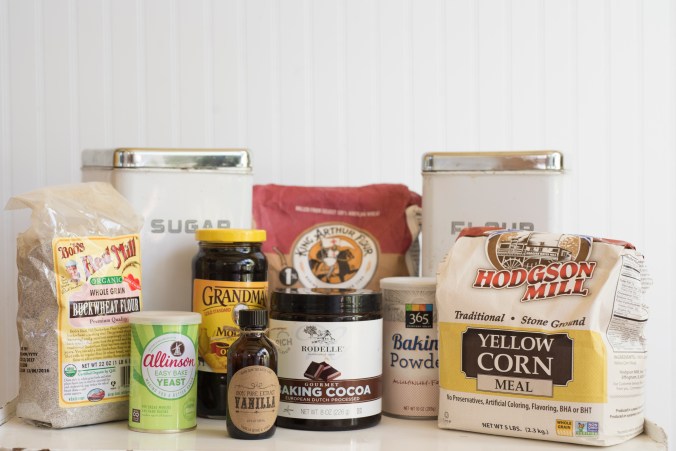
I bake frequently, so I keep a well-stocked baking pantry.

One of the most important concepts I try to get across in my cooking classes is the idea of cooking without a recipe. I would love not to hand out recipes in class, but am well aware that this would not endear me to my guests. I want people to feel comfortable working towards a basic end goal; i.e. “Tonight I’d like to make a stir-fry,” rather than “Tonight I’m making Mark Bittman’s Beef with Broccoli and I have to stop by the store on the way home to buy beef and broccoli and fourteen other specialty ingredients.” If you look in your fridge and you’ve got a little leftover steak plus some carrots and peppers (because you already used all the broccoli earlier this week), and you know you have rice in your pantry along with Asian basics like soy or hoisin sauce, then you’ve got a meal. Start with what you have, and figure out where you’re going from there.

Spice dishes dark

So much flavor hidden in these little dishes.

In addition to teaching people specific recipes (which I invariably deviate from in class – people hate this) I also teach how to stock your pantry. Oils and vinegars, sauces and condiments, spices and seasonings, grains, pasta, beans and legumes, plus freezer basics like frozen vegetables (which get a bad rap but are in many cases better and cheaper than fresh) all come together to form the basis of some truly amazing meals. I know that people who are new to cooking require the comfort and guidance of a recipe. But I also think that as you grow and develop as a home cook, you should challenge yourself to work with what you have, rather than buying exactly what you need. Oh, and those specialty ingredients you bought for that one recipe you made months ago but never used again? A quick online search for “What should I do with tahini?” goes a long way towards using those up.

Freezer

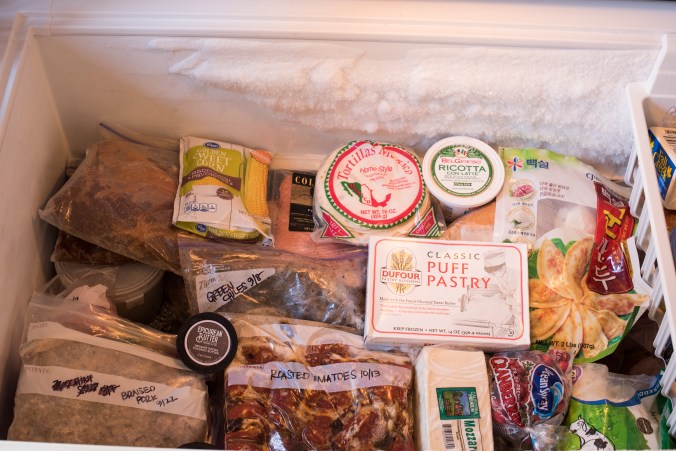
Don’t judge. I’m working on it.

So please, friends, try this at home. I’m willing to bet that you have at least two weeks’ worth of food in your house already. Challenge yourself – for a day, a week, even a month – to only cook with what you have. See if you can come up with interesting, delicious and healthy options to use up all that food you’re stockpiling. Learning how to trust yourself and improvise a bit in the kitchen is one of the biggest steps towards becoming a better cook, and I promise you that the reward is worth the effort.

32,831 miles later

About eight months ago, we decided to put our regular lives on hold for a brief period and venture out to see the world again. We were heartsick and weary and in desperate need of a break from pretty much everything except each other. So we gave away our chickens, threw a few clothes in a backpack and locked up our house. And thus it happened that on a chilly January day, we left Colorado for Japan.

Garden Snow 01

Colorado

Tokyo Fuji sunset 01 sml

Japan

In Japan, we visited monkeys in hot tubs and worked on farms. We ate ramen and tempura and so many other delicious things. We walked Tokyo and Kyoto and fell deeply, completely in love with a country so strange and different and welcoming and lovely that we cannot wait to return.

New Zealand 01 sml

New Zealand

From Japan, we flew to New Zealand. We rented a ragged campervan and drove the length and breadth of the country. We stumbled on an old sheep station and did some stunning walks and learned how macadamia nuts grow. And we discovered that we are perfectly content to live in a campervan…and we plan to do that again soon, too.

Cambodia 01 sml

Cambodia

After New Zealand, we were off to southeast Asia. We started in Cambodia with Angkor Wat and we also saw interesting things being made, like incense and rice noodles and tofu. Oh, and it was hot. (At least we thought so until we got to India, where we learned what heat really is.)

Da Nang 03 sml

Vietnam

We traveled overland to Vietnam, where we jumped on trains, dodged motorbikes, devoured street food and struggled to learn more about a conflicted country with a conflicted history.

Chiang Mai sml

Thailand

Then it was time for a brief rest in Thailand; we went to more markets and bicycled through rice paddies and learned how to make handmade paper. We didn’t ride any elephants but we loved our time on the Banana Pancake Trail.

Flower Market 01 sml

India

No matter what, we weren’t ready for the heat and noise and crush and total sensory assault that is India. We’ve never traveled anywhere that we loved and hated in equal measure – sometimes in the exact same moment – and this complicated country has for certain gotten under our skin. We’ll be back here, too, and much better prepared this time.

Madrid palace 01

Spain

We flew from India to England, with a brief jaunt to gorgeous Madrid. This is one hell of a city…we miss drinking canas and eating jamón y queso at 2AM with hundreds of other people in the city’s beautiful plazas.

Bushby 01 sml

England

We finished with some restorative time in the Midlands’ lush, rolling hills, where the innumerable shades of intense green defy belief. Hours of walking with only cows and sheep for company and then perhaps a brief stop at the local pub for a pint of Tiger. It’s not the worst way to spend a day.

Denver Moon

Colorado

And that brings us to now. We’ve been home for about three weeks and we’re struggling to adjust. This is not the country we left; it has been immensely challenging to reconcile the joy and freedom and lovely people of our travels with the rage and divisiveness and fear currently smothering all of us like a dense fog. But we’re back on our bikes, we’re volunteering on a goat farm and we’ve planted our garden. And this fall, we’ll be out on the road again to search for our farm property in earnest. Thanks for joining us on our travels over these past months and please stay tuned, friends, as our journey has just begun. We’re off to find Quiet Farm.

The photos we didn’t take

N took a lot of remarkable photos during our round-the-world trip, but you won’t see us riding elephants, cradling sea turtles, posing for selfies with tiger cubs or swimming with captive dolphins. (We’ve certainly swum with wild dolphins in the middle of the ocean, but we don’t have the photos to prove it.)

NJB_4032

Animal tourism is all of a sudden a hot topic. Last year, SeaWorld announced that it would cease its controversial orca captive breeding program. In May, Ringling Brothers Circus performed its last show; ticket revenue had dwindled for years once the animal attractions were eliminated. And last autumn, TripAdvisor – one of the world’s largest ticket sellers for tourist attractions worldwide – announced that they would no longer sell tickets to most animal attractions. All of these stories, and many more, clearly indicate that knowledge about this topic is growing, and quickly.

A recent Oxford University study indicated that between two and four million visitors per year pay to visit animal attractions that are considered harmful to animal welfare. Most of this is done out of ignorance, not cruelty. If you’re an American tourist, for example, you might assume that other countries have strict standards for the animals’ health and wellbeing (even though America doesn’t). The reality, however, is that most animal attractions are in desperately poor countries, and the “trainers” might be impoverished people simply looking to feed their family. The possibility of strict regulations, competent oversight or of punishments meted out for violations, is laughable just about everywhere.

NJB_3561

As such, animal tourism was a major issue during much of our trip, particularly in southeast Asia. If you visit Thailand for the first time, one of the things you’ll notice quickly is that elephants are ubiquitous. They’re used in high-end art and on cheap tourist trinkets.

NJB_4051

Elephants advertise beer here too.

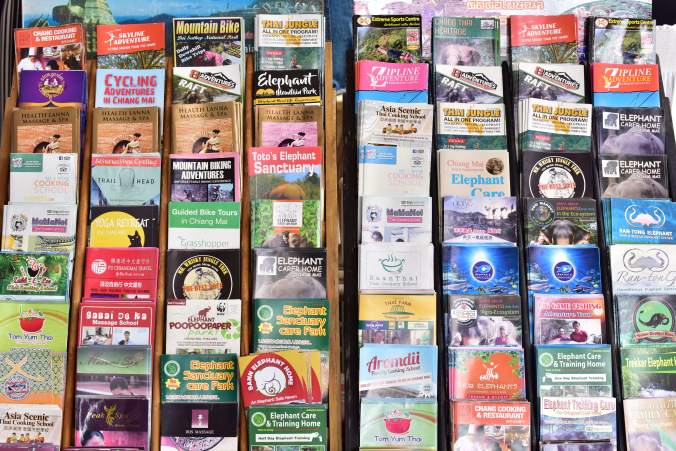
Their elegant silhouette can be seen everywhere, and nowhere more glaringly than in the racks and racks of tourist brochures found outside just about every restaurant and guesthouse in Chiang Mai, where these photos were all taken. (Please know that elephant riding and other abusive animal tourism is available all over Asia; we just spent the most time in Thailand and therefore found its constant and unrelenting promotion here particularly overwhelming.)

NJB_4028

Look at all the options you have! Definitely go for the cheapest one. The animals like it there best.

NJB_4017

NJB_4031

NJB_4016

Notice words like happysanctuary and home? These places are anything but.

Many people don’t know that elephants aren’t physiologically designed to be ridden. Despite seeming sort of like a giant, floppy horse, elephants’ spines aren’t built to support weight. Plus, elephants are fundamentally wild animals, and in order to be “domesticated” enough for tourists, they have their spirits broken. They’re also naturally social creatures with intricate familial relationships, and in these camps they typically exist in solitude. And adult females are routinely slaughtered in order to capture wild calves. I could go on and on, but I’m sure you get the idea. Elephants are not supposed to be a tourist attraction.

NJB_4019

Tired of this lecture? We haven’t even discussed cuddling tiger cubs yet! Tigers aren’t like house cats and they’re not thrilled about you pawing them. Most of the “tiger sanctuaries” in Asia sedate the tigers before letting the tourists in, just to ensure that the creatures are docile enough to avoid incidents. Oh, and sometimes they’re heavily involved in wildlife trafficking, too! Really some good people here. Absolutely give them your money.

NJB_4035

Don’t these look like fun? The animals are absolutely thrilled to have such an opportunity to enhance your vacation.

Or perhaps you’d rather donate your money a little closer to home, to a place like Lion’s Gate in Colorado, which recently euthanized all of its animals even after other sanctuaries volunteered to take the lions, tigers and bears. These people do not care a fig about animal welfare, and don’t let the cute pictures make you think otherwise. Animal attractions rake in billions of dollars every year, and since there is massive profit to be made from charging people to “experience” (i.e. unintentionally mistreat) animals, it will continue to happen.

NJB_4026

Could we discuss how animal tourism provides jobs and livelihoods in some of the world’s poorest countries? Of course. Should we talk about zoos, which in some places are top-notch research and breeding facilities and in other places absolute horror shows, especially when the population is starving? Sure. Maybe we can discuss the fact that – at least in America – we raise animals for food in horrifying conditions and most people aren’t particularly bothered about that so why shouldn’t we mistreat them for our entertainment, too? And in response to all those hypotheticals, I would argue: because we as humans are better than that. Or at least we should be.

NJB_4049

The advertisements for the animal attractions are literally everywhere.

People who visit animal tourism attractions are typically people who love animals. They want to get up close and personal with fascinating creatures they don’t often encounter, and they’re willing to pay for that privilege. But the Oxford study demonstrated that as many as 80% of these people will visit animal attractions and post positive reviews online, without acknowledging the risks to the animals’ health and welfare. They argue that they really love tigers – they were even born in the Year of the Tiger! – so just one selfie with a drugged tiger cub won’t hurt. Because it shows their social media feed how much they love tigers! It is simply not acceptable, friends. Just as the way America currently raises most of its animals for food isn’t acceptable, neither is this.

NJB_4029

If you made it all the way to the end of this post, thank you. We’ve written about this because we think it’s important and we hope you do too. Please, if you’re considering visiting any sort of animal tourism attraction – whether in the U.S. or overseas – do your research, and don’t just fool yourself with glowing online reviews. Use your common sense and ask yourself whether a large, predatory and naturally solitary animal like a tiger really wants to be handled by human beings for endless hours each day. Not all animal attractions are necessarily poorly managed or abusive, but the bad ones definitely outweigh the good ones.

We say it a lot, but vote with your wallet – refuse to support organizations or attractions that promote any sort of animal cruelty (looking at you, Tyson, Hormel and countless others). This is especially relevant if you’re traveling in the Third World, but as we know from films like Blackfish, we’re to blame here in the U.S. as well. We write a lot about animal welfare on this site, and that’s true not only for what we eat, but what we exploit for entertainment, too. How you choose to spend your money matters, always – and the recent policy changes from major companies like SeaWorld and TripAdvisor shows that they’re paying attention to your choices. Use those choices wisely.

Comer y beber en Madrid

Dear friends, it should come as no surprise by now that eating (comer) and drinking (beber) are two of our favorite travel activities. We are quick to search out food and market tours wherever we go, and Madrid was no exception. Many thanks to Jorge at Secret Food Tours for taking us on a gastronomic adventure through his city!

NJB_7856

Madrid’s Plaza Major, a perfect example of Spain’s café culture.

NJB_7886.JPG

The Spanish verb tapear translates literally as “to eat small portions” – and of course from that we get tapas.  

NJB_7842

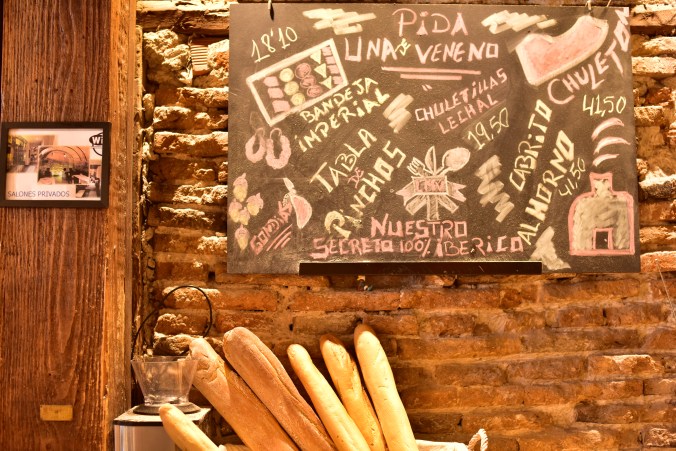
Chalkboard menus (and fresh baguettes) dot the city.

NJB_7841.JPG

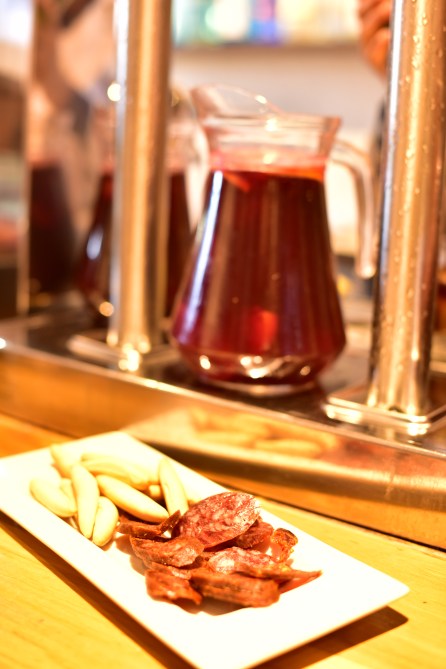
Chorizo and sangria. What more do you need, really?

NJB_7787

The city of Madrid issues plaques like the one above to stores and restaurants of historical significance in the city; this one dates from 1837. Many of these places pay rent that is far below market rates to keep their businesses open, because Madrid’s government has decided that they don’t wish to have the center of town filled with Starbucks, McDonald’s and tacky tourist stores able to pay inflated prices. Smart decisions like this help cities maintain their cultural character instead of becoming homogenized corporate copies.

NJB_7792

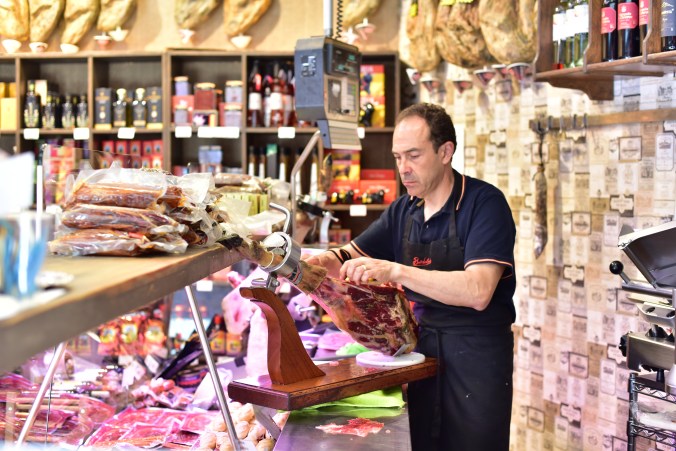
Slicing jamón by hand.

NJB_7851

Legs are hung for months or years to cure properly.

NJB_7795

Spain is justifiably famous for its jamón, which comes in different grades. Jamón ibérico, or Iberian ham, can only be made in Spain and Portugal from pigs that are at least 50% Iberian. The very best is called jamón ibérico de bellota, which comes from pigs allowed to forage in the wild for acorns, giving the flesh a sweet taste and silky texture. Jamón ibérico de bellota is so valuable that individual pigs often have armed bodyguards, since the entire pig can be worth as much as $4,000. Traditionally, it’s always shaved very thinly by hand and served as tapas with tiny breadsticks, above.

NJB_7849

Notice how the leg is stamped? Since they’re so valuable, it’s important that they can be traced to prevent forgeries and theft.

NJB_7798.JPG

Calamari sandwiches are another classic snack in Madrid.

NJB_7809.JPG

NJB_7800.JPG

Did you know that the oldest continuously operating restaurant in the world is in Madrid? It’s famous for suckling pig, which you can see in the dishes on the left.

NJB_7775

One of the oldest pastry shops in Madrid…

NJB_7779.JPG

…and their famous ponche segoviano, a layered pastry made with marzipan.

NJB_7780.JPG

France gets all the press, but Spain makes its fair share of incredible pastries.

NJB_7838

NJB_7822

Jorge demonstrating how to pour Spanish cidre, made from apples grown in the north of Spain.

NJB_7835.1

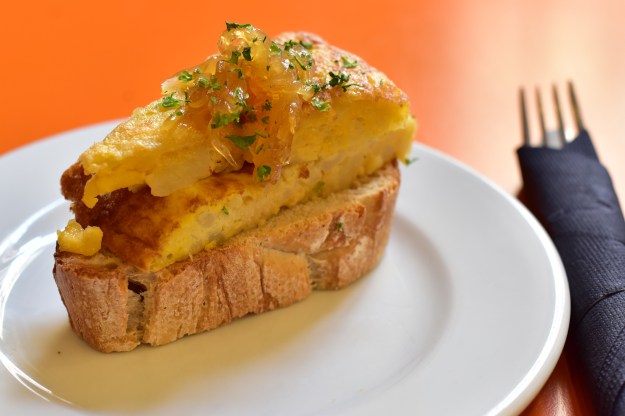
Classic tapas: a Spanish omelette, or tortilla, made of eggs, potatoes and onions, served on fresh bread. Simple, filling and delicious.

NJB_7831

A perfect pair: manchego and cidre.

NJB_7814

I’ll be in the cellar if anyone needs me.