Interlude: How chocolate is made

Can’t speak for your household, friends, but we need a break from the winter doldrums over here. I’d claim that it’s all grey and gloomy outside – typical February weather – but the truth is, it’s bright and sunny and windy and disturbingly warm and snow-free for this time of year. Our “exceptional drought” is no longer exceptional, it’s just the way things are now. (Or to throw down an overused phrase from 2020: it’s the “new normal.”) Our town has pre-announced water restrictions, as have many cities on the Front Range. We’re hoping for some moisture later this week, but this late in the season it’s highly unlikely we’ll make up the deficit.

To that end, we’re going on a tropical vacation. Of course I mean this metaphorically, not literally! We haven’t traveled in well more than a year, and have no plans to do so anytime soon. A couple of years ago, however, we went on a chocolate trip to Belize where we learned about the process of making chocolate from bean to bar. And so, let’s imagine that we are all calm, warm and relaxed in the tropics and that everything is right with the world.

Cacao trees are a tropical plant, typically reaching fifteen to twenty-five feet in height.

All chocolate comes from cacao trees (Theobroma cacao) which only grow in a limited geographical range: about twenty degrees north and south of the equator. This tropical belt is also where you’ll find coffee and lots of delicious fruits, like pineapple, guava, papaya and many more (coffee and chocolate are both botanically fruit). Most of the world’s chocolate comes from Africa, but a small amount is produced in Latin America.

Cacao pods are about eight inches in length, though the size depends on variety and climate.

Cacao pods are ripe when they turn a bright yellow-orange color. Not all the pods ripen at the same time, so the trees are usually harvested continuously throughout the year.
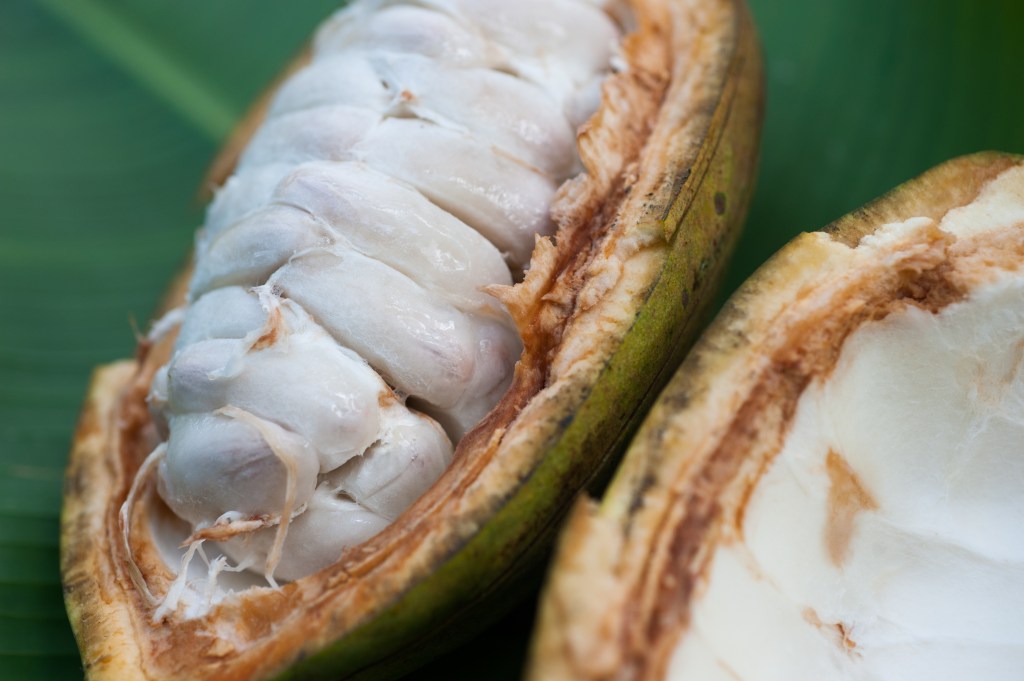
The pulp encasing the beans is often used to make a fermented drink.

Once harvested, the seedpods are opened and the cacao beans removed. The beans are surrounded by a white pulp called baba, which tastes fresh and fruity.
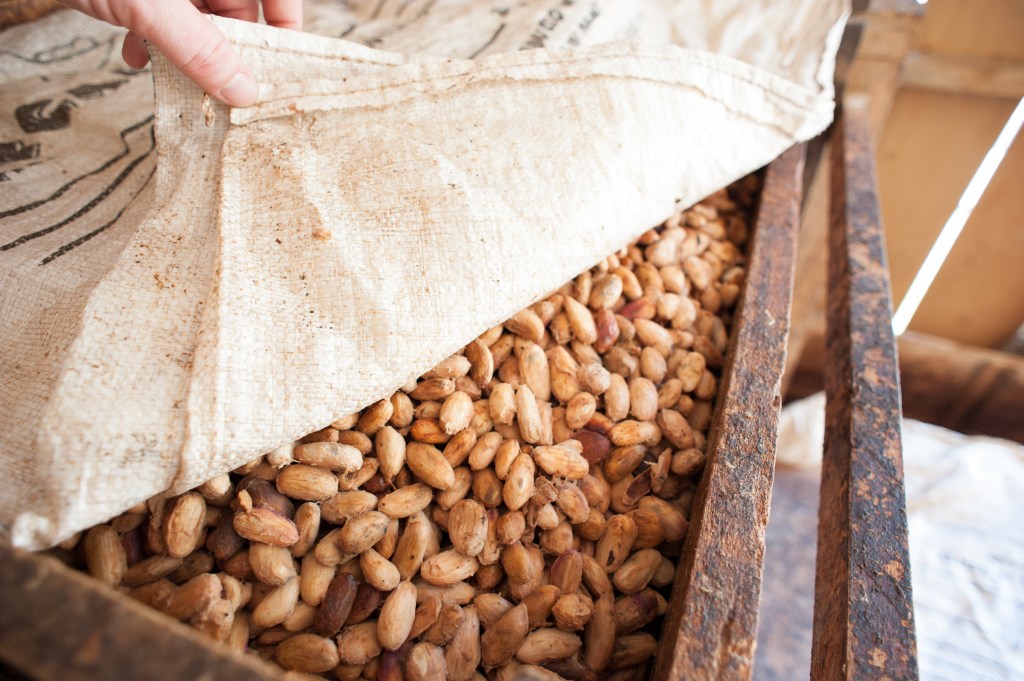
The smell of the fermenting cacao beans is intense and amazing.

The beans are cleaned of most of the baba and left to ferment for about a week. (Exposure to light turns the pale, creamy beans a darker violet color.) In Latin America, the fermentation is most often done through a simple yet elegant series of cascading boxes; in Africa, beans are typically fermented in piles on the ground.

Checking for readiness.

Fermenting cacao beans are sliced open regularly to determine the degree of fermentation. It takes a great deal of skill and knowledge to know when the beans are perfect.
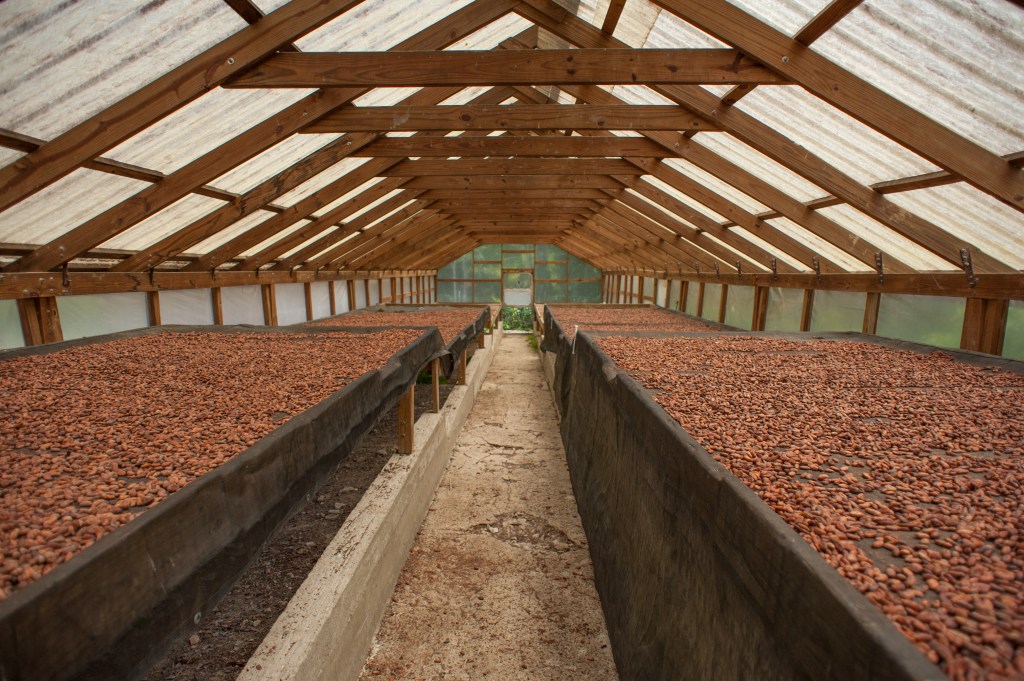
Drying beans need tropical heat but not tropical moisture.

After fermentation is complete, the cacao beans are dried. This is an important step; if the beans are shipped with excess moisture, they’ll spoil in transit. Enormous covered drying barns are used, and the beans are turned regularly to ensure even drying. The tropical weather can make this step challenging.

Ready for transport.

Once the beans are completely dried, they’re sorted, graded and shipped to wholesalers or chocolate manufacturers. Belize produces a very small amount of cacao relative to other countries, but the cacao is of a spectacularly high quality.
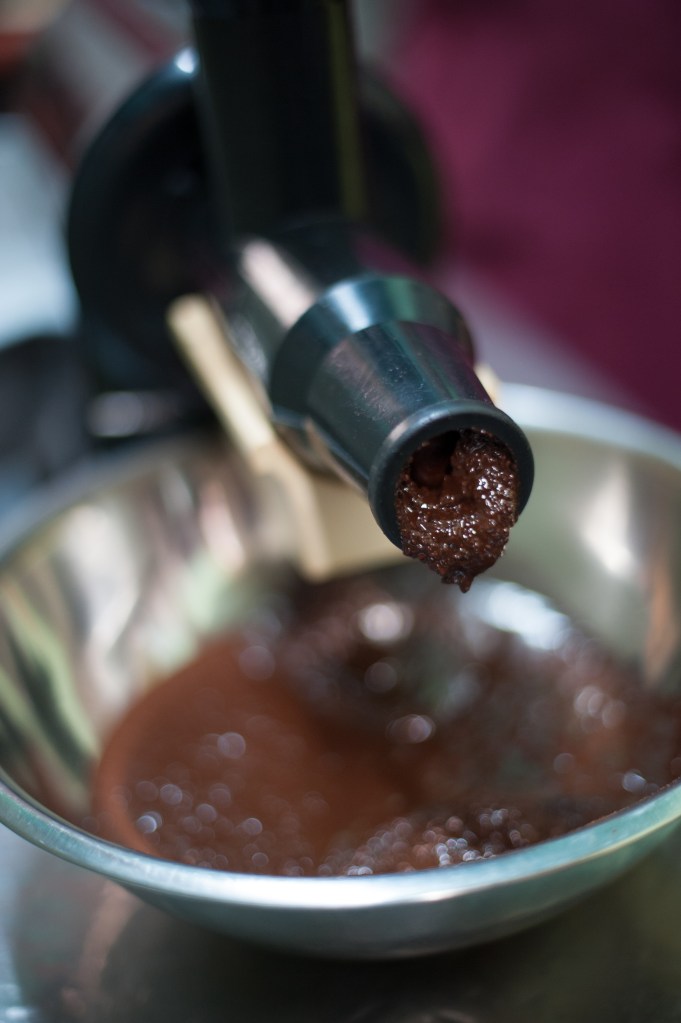
Grinding cacao nibs into chocolate paste.

When the cacao beans arrive at the manufacturer, they’re inspected and cleaned again. The whole beans are roasted at low temperatures to bring out flavor (much like coffee beans), then the shell is separated from the nib (the “meat” of the bean) by winnowing. (Cacao shells are frequently used as garden mulch.) Grinding pure cacao nibs yields “cocoa mass”; applying high pressure to this cocoa mass produces cocoa butter and cocoa powder.
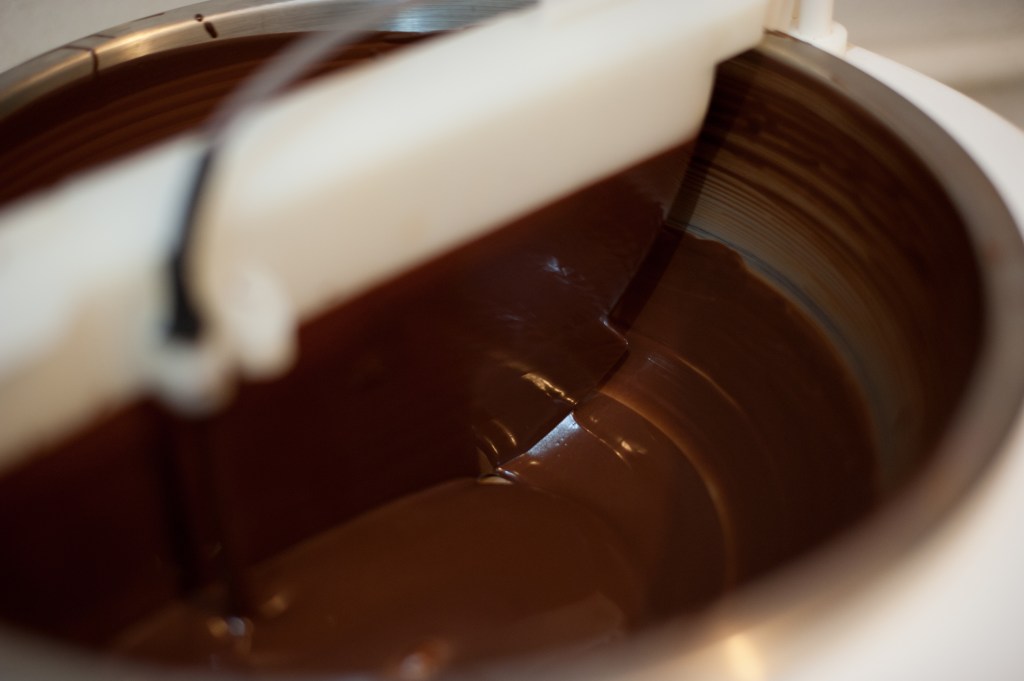
Conching chocolate is a complicated process of aeration, blending and kneading.

The chocolate we eat is made from cocoa mass with other ingredients added in, including additional cocoa butter, emulsifiers (most commonly soy lecithin) and sweeteners. True dark chocolate doesn’t contain any milk solids, whereas milk chocolate obviously does. White chocolate is most often cocoa butter, sugar, palm oil and soy, with no cocoa mass, and as such isn’t technically chocolate. That percentage on the label of a chocolate bar tells you the chocolate-to-sugar ratio: a 70% bar, for example, contains 30% sugar. The higher the percentage, the less sugar and therefore the less sweet the chocolate. Unsweetened chocolate is 100% cocoa mass with no sugar whatsoever; terms like semisweet and bittersweet have no defined meaning.
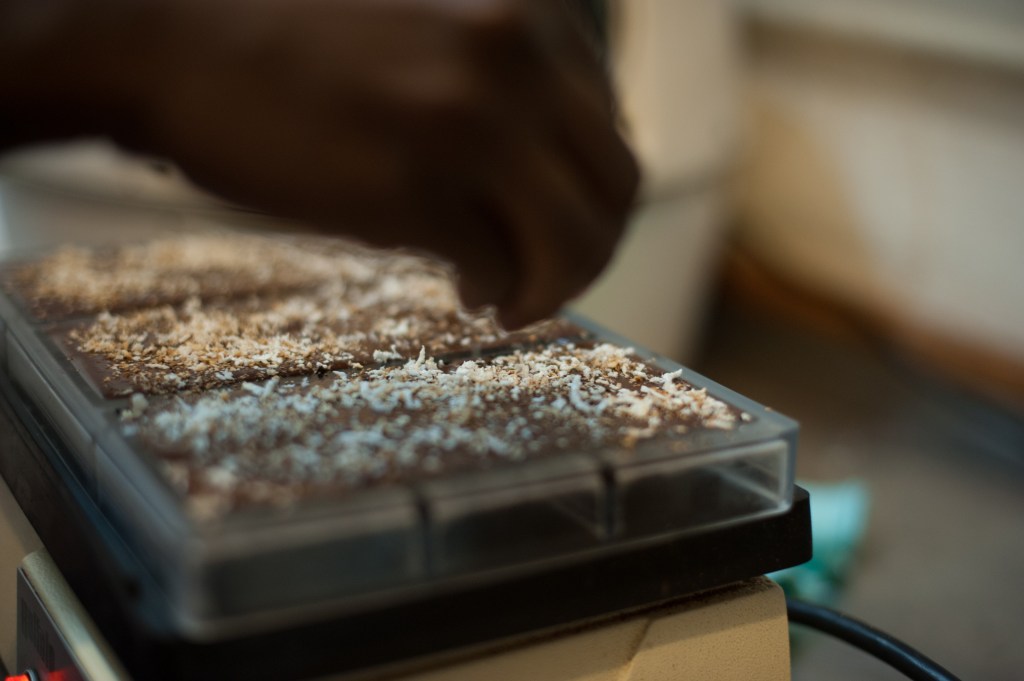
Finishing chocolate bars with toasted coconut.

After the chocolate is thoroughly conched, it’s tempered and molded. Tempering chocolate is a finicky process that involves carefully warming the mixture to the perfect temperature, then holding it there for a prescribed period. Tempering stabilizes the cocoa butter molecules, and gives premium chocolate its snap and sheen. (If you’ve ever opened a chocolate bar to find white spots on it, fear not – it’s simply the cocoa butter rising to the surface. It’s called bloom and is totally harmless.) The tempered chocolate is poured into molds and chilled to produce its final form, then packaged for sale.

As with all our food, chocolate production is a complicated and troubled subject. Most chocolate in the world is grown and manufactured under terrible conditions and is kind neither to the planet nor the workers involved. Spend a little more on your chocolate – look for single-origin and direct trade! – and avoid any with palm oil or soy lecithin, both of which are environmentally devastating. As a rule, chocolate from Latin America is a better choice than that from Africa. Quality chocolate costs more for good reason: read the labels and vote with your dollars.

Wishing everyone an imaginary tropical vacation this week, or at least some good chocolate.
A sweet treat

We’ve been honest about the fact that we don’t eat many sweets here at Quiet Farm – our tastes definitely lean more towards the salty and savory. That said, when we do have a sugar craving, we’re seeking something spectacular, rather than something merely mediocre. Dry, tasteless storebought cookies? No thanks. Artificially sweetened plastic-wrapped gas station pastries? Absolutely not. Homemade millionaire’s shortbread with a hot cup of coffee? Yes, please.

What’s that, you say? You are an American raised on Twix bars and you have never in your lifetime heard of this mysterious thing called millionaire’s shortbread? Well, please allow your intrepid guides to introduce you to this magical sweet. The name millionaire’s shortbread apparently originates in Scotland (totally unverifiable), and refers to the unbelievably rich layered combination of shortbread crust, sticky-sweet butterscotch caramel, and chocolate. The confection, also known as caramel slice, caramel shortbread or caramel shortcake, is well known in Britain and Australia but not so much here in the U.S. (Unless of course it’s packaged and called a Twix bar.)

This version, lightly adapted from this Bon Appétit recipe, is jokingly referred to as billionaire’s shortbread because it incorporates both whole sesame seeds and tahini, exotic (and somewhat pricey) ingredients. Tahini is simply sesame seed paste, and it’s commonly found in savory Middle Eastern cooking – notably hummus. Of late, however, many pastry chefs have started incorporating it into desserts, and I am all for this trend. There is no denying that millionaire’s shortbread is almost teeth-achingly sweet, with the decadent combination of shortbread, caramel and chocolate, and the tahini (as well as the toasted sesame seeds in both the shortbread and sprinkled on top) cut that richness. I like the crunch, the textural contrast, and the slight bitterness the sesame seeds bring to the party.

Pre-made tahini is surprisingly costly to purchase, but it does keep forever if refrigerated and it is a terrific addition to salad dressings, bean dips and certain baked goods. If you are the sort of person who already makes your own nut butters, preparing your own tahini will be an easy step  – simply puree raw sesame seeds in your high-powered blender much as you might almonds or peanuts. As with all nut and seed butters, tahini is likely to separate after a time, so always give it a good stir to re-incorporate the oil that might have settled on top.

Tip the crumbly dough into the pan, then press into an even layer and pierce with a fork.

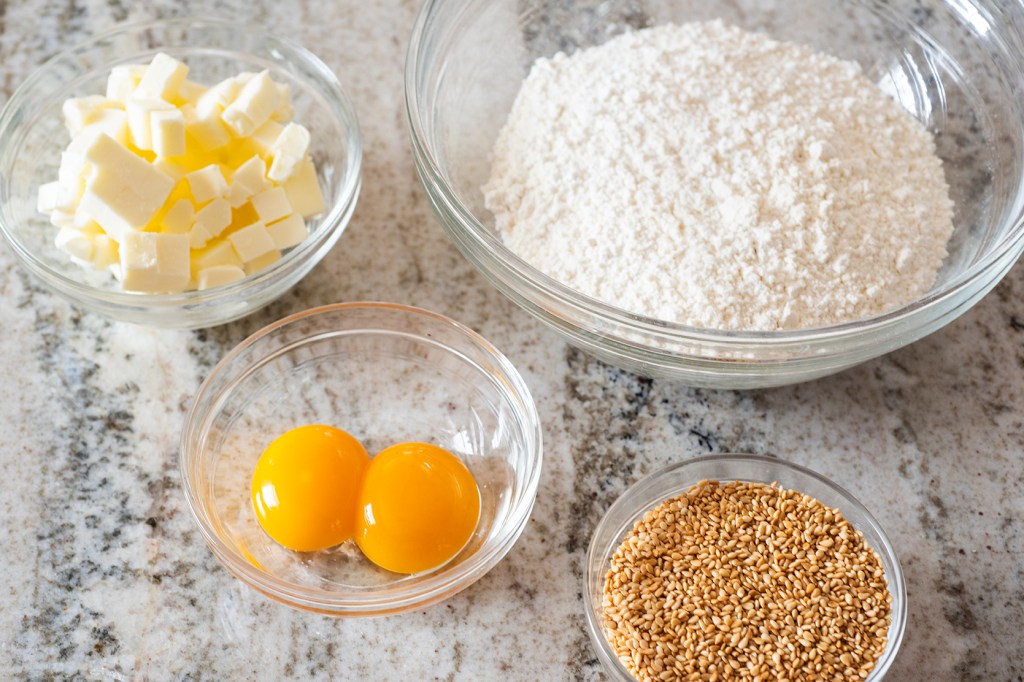
Ready to tackle this? Let’s go. As always when baking and cooking – especially when you’re trying a new and/or complicated recipe – it’s super-helpful to put together your mise-en-place, which is a simply a fancy French culinary term meaning “to put in place.” I like to use the glass bowl set shown in these photos to assemble all of my ingredients; setting things up in this fashion also helps if you get distracted midway through, because you can see at a glance if you’ve added all of the required ingredients. “Did I add the salt yet, or not?” is not generally conducive to successful baking.

If it’s your first time making shortbread, here are a few tips: 1. Make sure your butter chunks are good and cold; I chop the butter then pop it into the freezer until I’m ready to use it. 2. Don’t overmix the ingredients; they won’t be homogenized (see bits of golden yolk above) and that’s just fine. 3. When you press the dough into the pan, use some effort so it stays together when you cut it later. (Also, please note that the binder clips in the photo above are simply used to keep the parchment paper in place while preparing the dough. They do not go into the oven!)

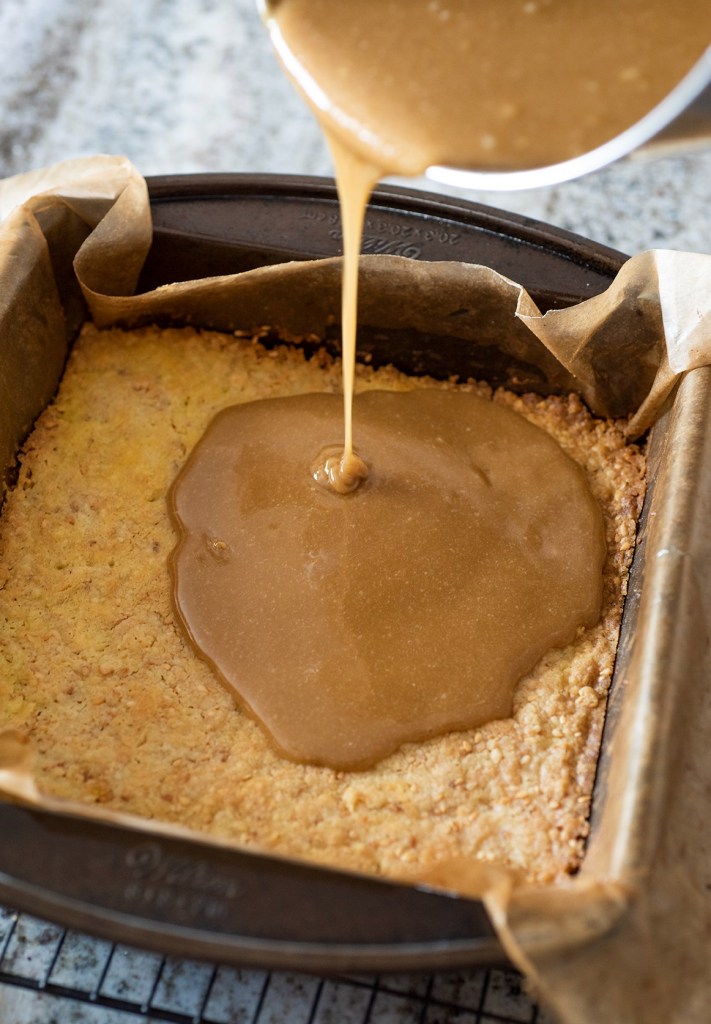
Once your shortbread crust is baked and cooled, you’ll pour the caramel layer on top. This recipe calls for a simple caramel that doesn’t require a candy thermometer, but caramel still takes a bit of experience. Whenever you’re making any caramel, use a larger, deeper pan than you think is necessary, because the mixture always wants to boil over. Remember that if you’re baking at altitude you actually want to cook the caramel a bit less, since the lower air pressure means that water boils at a lower temperature here (and water evaporation is key to making successful caramel). Also, caramel (and candy-making in general) really isn’t a kitchen activity for kids; the risk of severe sugar burns is pretty high if you’re not careful.

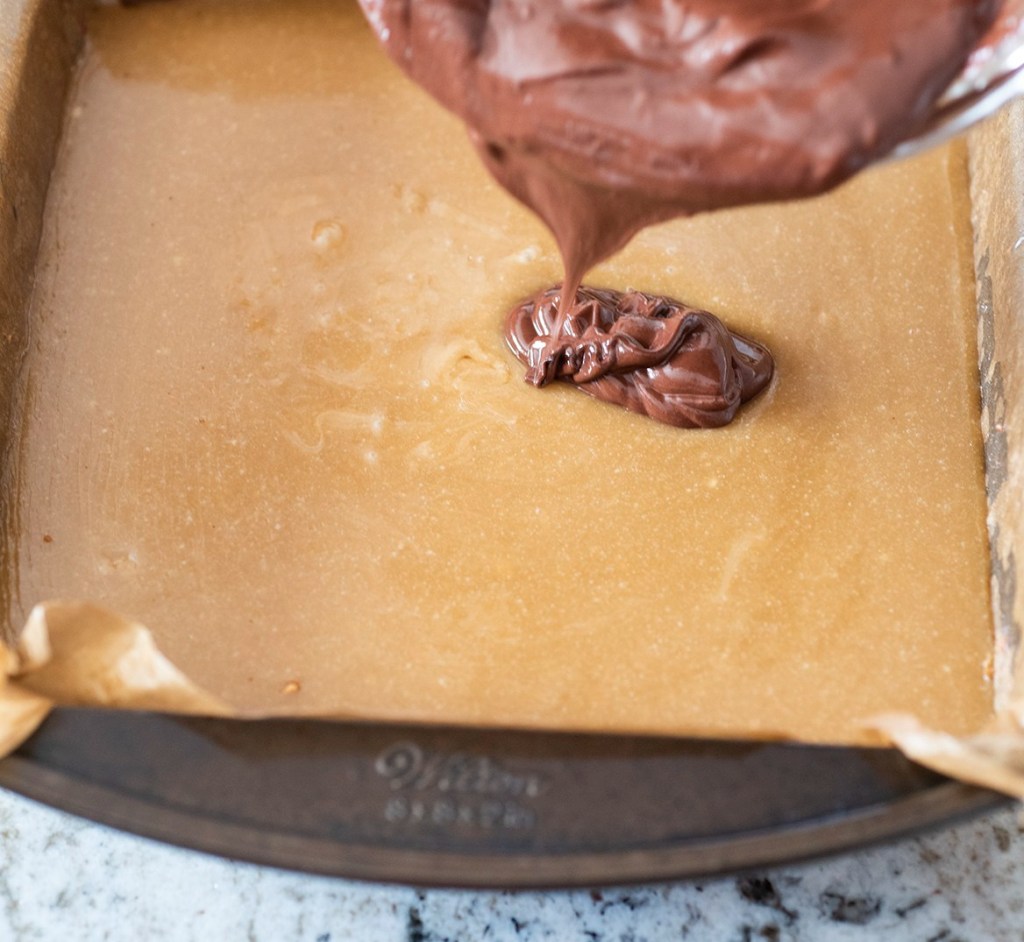
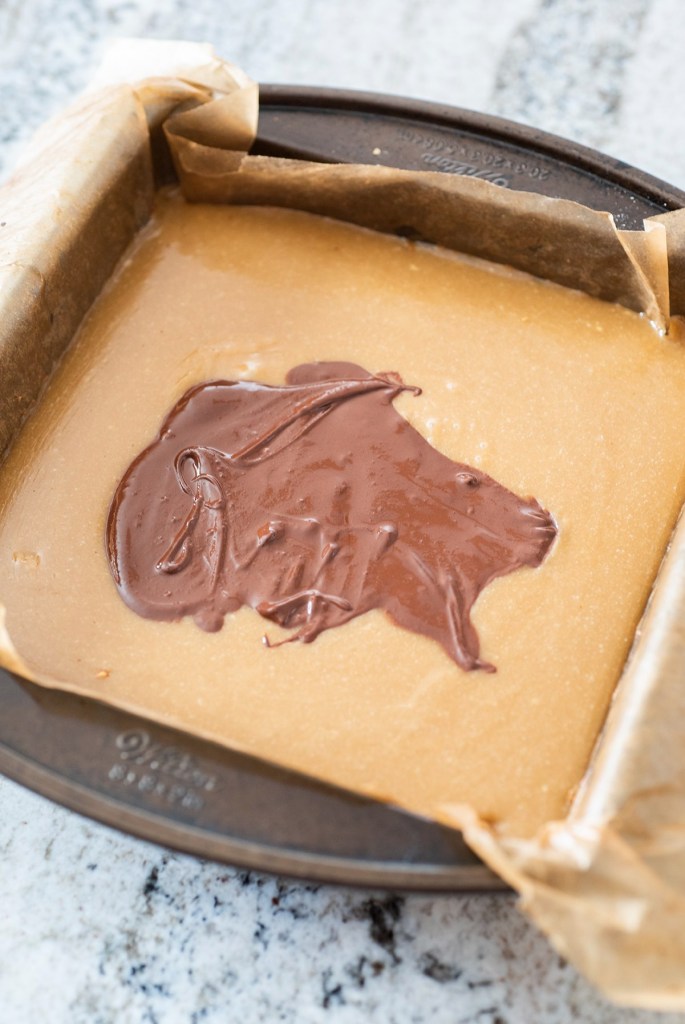
No no no! Don’t do it like this!

Here’s a pro tip: make absolutely sure that the caramel layer is thoroughly chilled before you pour the melted chocolate on top. In the photos above, you can see that the chocolate is actually sinking into the caramel, rather than spreading out smoothly. Do not skimp on chilling the caramel and shortbread; you can even tuck it in the freezer for a few minutes, just make sure to keep the pan level so all the warm caramel doesn’t slouch to one side. And when you’re melting chocolate, avoid using chocolate chips. These are specially formulated not to melt, since their whole point is to stay whole in cookies and the like. Buy a stash of good-quality chocolate bars and when you need melted chocolate for a recipe, chop into chunks and melt gently in a glass bowl set over a pan of simmering water. (I am not a fan of melting chocolate in the microwave; I think it runs the very real risk of burning the chocolate.)

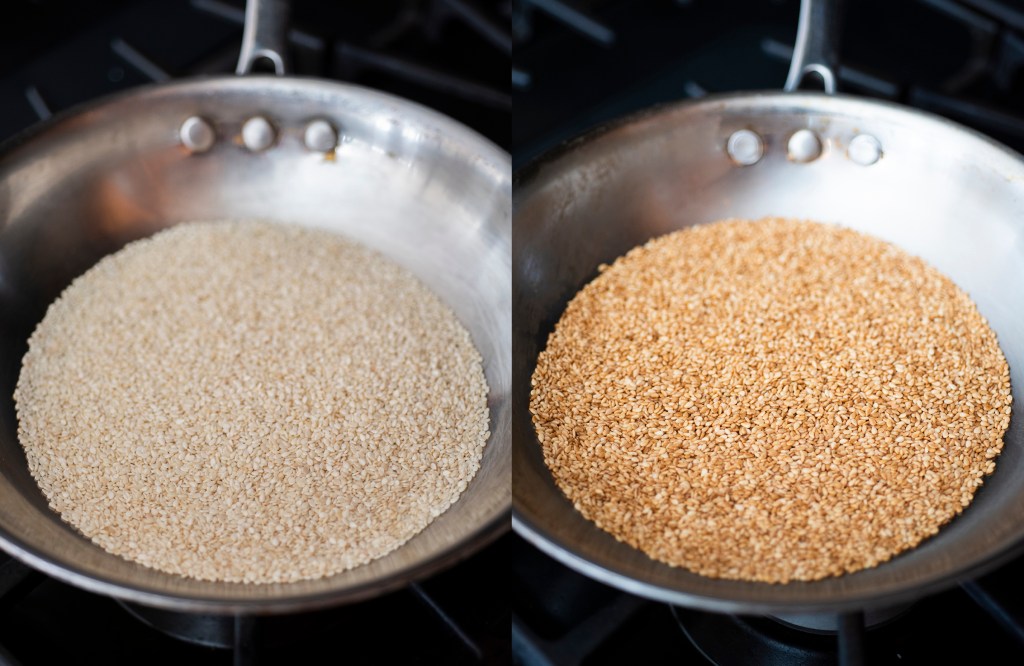
This happens surprisingly quickly! Don’t walk away.

Any time you use nuts or seeds in any format, be it in baked goods, sprinkled on a salad, or in trail mix, know that they’ll be much more flavorful if toasted first. Many recipes call for using the oven to toast a sheet pan of nuts or seeds; from long experience, I can tell you that this is a great way to burn twenty dollars’ worth of pecans. I always, always dry-toast my nuts and seeds in a shallow frying pan on the stovetop, where I can babysit them carefully. Depending on the variety, nuts and seeds can go from pale and raw to charred and ruined in a matter of seconds, and the oven doesn’t allow me enough control. Also, once the nuts and seeds are toasted to the level you’d like – taste them! – make sure you transfer them from the hot pan to a plate and let them cool completely. There will be enough residual heat in the pan to keep on cooking, and you might find they’re burnt anyway.

Almost ready to enjoy…but needs some salt on top.

Once you’ve poured and smoothed the melted chocolate, the pan goes back into the fridge for a final set. Feel free to sprinkle with flaky sea salt in addition to the toasted sesame seeds, if your fancies swing that way. When you’re ready to cut the millionaire’s shortbread, gently lift the entire mess out of the pan using the parchment paper as handles, and set on a cutting board. Use a serrated knife and saw into small squares; a chef’s knife, no matter how sharp, will press down on the bars and cause the caramel to squish out.

These are unbelievably rich and sugary, and you really only want a tiny piece. We keep ours in a covered container in the fridge for better texture and longer shelf life; I actually cut the entire tray into tiny squares and freeze most of them, so we can have a small treat as and when circumstances call for it. Millionaire’s shortbread isn’t an everyday pleasure, but it’s lovely to have a little bite of something sweet every so often.

So rich! So delicious! Enjoy with strong, hot coffee.

Have a good week, friends, and perhaps bake yourself a treat, too.

P.S. If you’re not feeling the tahini in this variation, you can find a more traditional millionaire’s shortbread here, here or here. Please note that we have tested none of these!

An ode to citrus

I mentioned this in last week’s post, but citrus plays a key role in our winter diet. We eat a lot of fresh fruit on the regular, mostly our gorgeous local peaches and cherries and apples, but in winter our counters are piled high with grapefruit and clementines and oranges of every variety. Is it local? Absolutely not, although with the warming trends we’re seeing here it may be soon. Is it necessary? Absolutely yes, because “I feel like I’m swallowing the sun, and it’s so dark outside.” There are a thousand good reasons to incorporate more citrus in your diet, but for the moment, let’s just focus on how it provides a thin slice of joy during an increasingly bleak season. (Also it’s far cheaper than buying totally unregulated “vitamin C capsules” in little plastic bottles.)

More sunshine, please.

Lots of people remember receiving oranges in Christmas stockings, back when food was truly seasonal and therefore quite precious and rare. Citrus fruit is of course available year-round nowadays, but it really is best in the northern hemisphere’s winter. American citrus production is concentrated in California and Florida; California grows most of the citrus used for fresh eating, whereas Florida’s production is focused on juice. Texas and Arizona both grow some commercial citrus too, but their numbers pale in comparison to the Left Coast and Right Coast groves, even though Florida is suffering from a variety of citrus diseases. Brazil, Spain and Mexico dominate the world citrus market.

Did you know that most mammals can synthesize their own vitamin C – but that humans and other primates cannot? (Capybaras and guinea pigs can’t either. Don’t feel bad.) During the eighteenth century, disease killed far more British soldiers than military action; scurvy was the leading cause of death, particularly for sailors without access to fresh fruits and vegetables for months at a time. Though anecdotal evidence suggested that lemon and lime juice (and sauerkraut) prevented scurvy, and the few hardy sailors who consumed shipboard rats did not contract it (rats can synthesize their own vitamin C!), it wasn’t until very late in the century that citrus fruit was issued in sailors’ rations. Once one of the world’s most devastating diseases, scurvy is now rarely seen in the developed world, except in cases of severe malnutrition.

Continue reading

Farm update: November 9

There’s no question that it’s been one hell of a week. Scratch that: it’s been one hell of a year. Over here at Quiet Farm, though, we carry on planting, tidying, baking, canning, caring for our animals and preparing for winter. Here are a few things we’ve been up to recently, if you’d like to see.

Ready for a long winter’s nap.

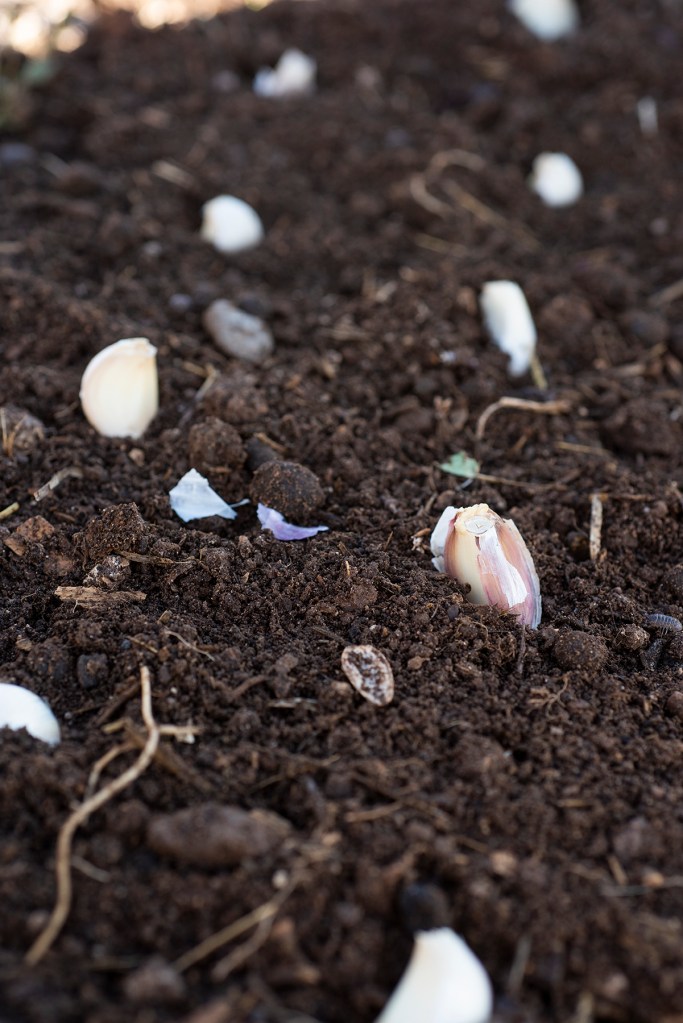
We planted our 2021 garlic crop this week; it’s tucked under a warm, cozy blanket of compost, alpaca manure and straw. Garlic is a unique annual crop in that it stays in the ground for about nine months, but during that time it requires almost no maintenance beyond occasional watering. As usual, we’d separated this year’s garlic harvest and saved the largest cloves for planting; thanks to garden magic, each individual clove grows into a full head. We planted about one hundred and fifty cloves in two new beds, then a friend texted with an offer of extra garlic that she had over-ordered (thanks, Judy!), so another seventy cloves went into an additional row. Every year I run out of garlic before the July harvest, and every year I vow to plant more. Will over two hundred heads be enough for next year? Stay tuned, and vampires beware.

Simple. Elegant. Gorgeous. (Also filthy.)

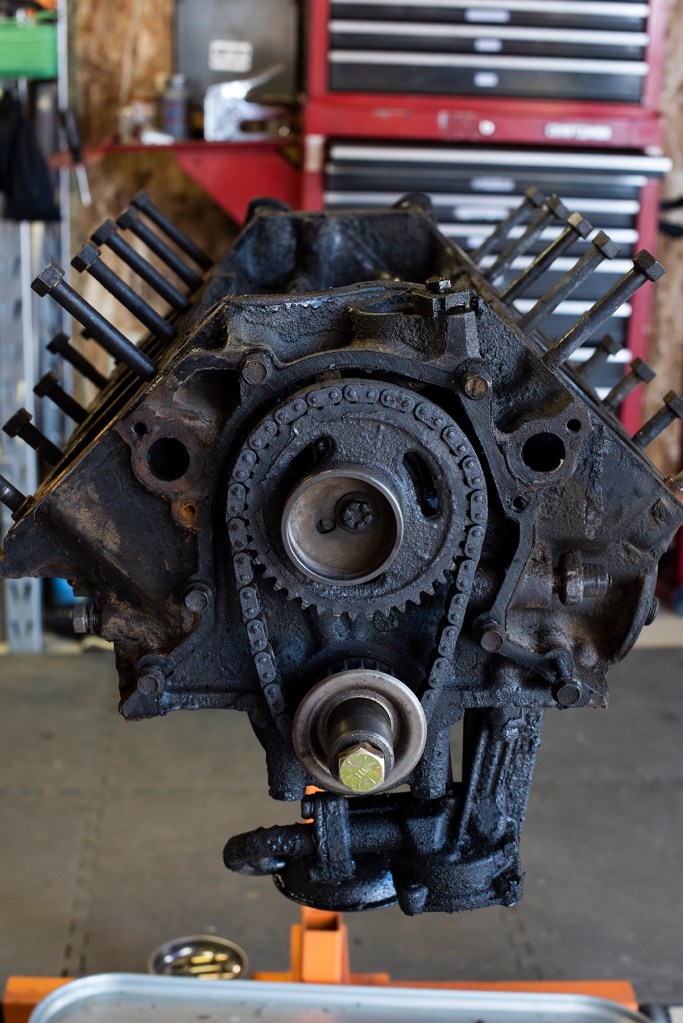
My winter will hopefully involve lots of sewing and reading, and N will focus his time and energy on this rescued beauty. For all you gearheads out there, this is a classic example of American motor muscle: a Ford 289 small-block V8 manufactured in the summer of 1964; it likely came out of a Mustang or a Galaxie. At the moment, it needs a lot of cleaning and possibly a replacement part or two, but who knows what it could accomplish once restored to its former glory? While electric cars might be all the rage, there is much to be said for the elegant simplicity of a powerful internal combustion engine. (We obviously love beautiful 1960s Americana here; see also the recently-acquired Singer Touch ‘N’ Sew.)

So thrilled with our dry bean harvest!

I may well be more proud of the beans we grew than just about any other crop. While I love growing vegetables, with each passing year (especially when there’s a pandemic and associated food scarcity!) I am more and more committed to growing long-term food storage crops like grains and beans. We planted just one small row of these ‘Peregion’ beans this season, and though I doubt I have more than a few pounds of homegrown beans for the winter, I know that I’ll be expanding on the varieties we grow next season. Dry beans are easy to grow and to store, require very little post-harvest processing and punch well above their weight in terms of nutritional value. Plus, they’re delicious! We hope to grow a lot more beans here at Quiet Farm.

Flying the coop.

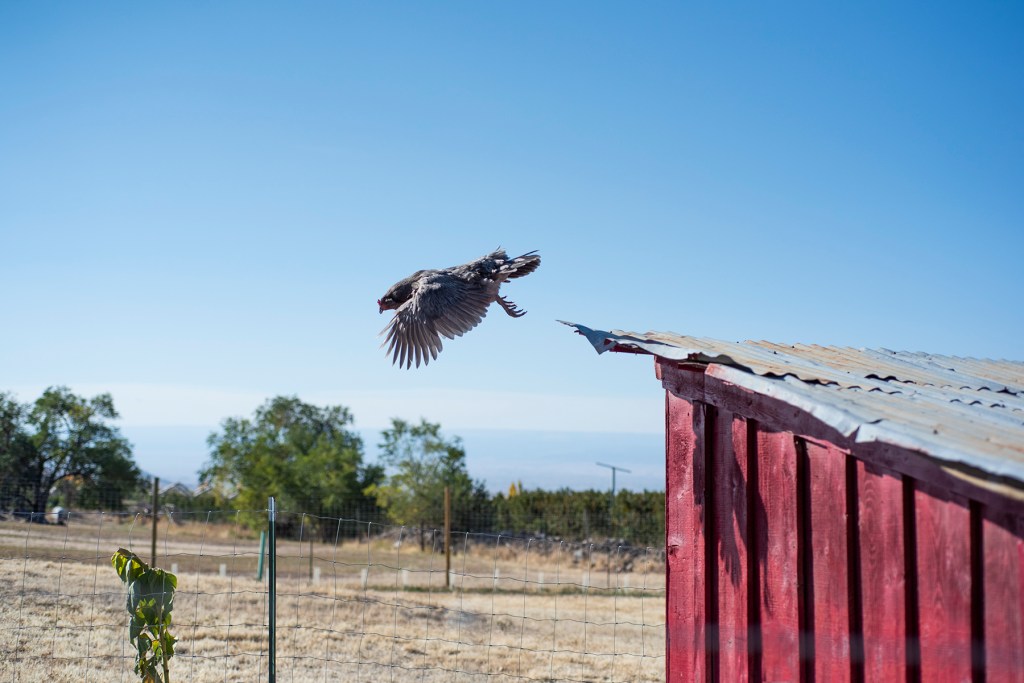
Domestic chickens are the closest living relatives of the T.Rex (that’s true) and have similarly tiny brains. Here, one of our genius hens decided to make her way to the top of the chicken house, but was understandably somewhat perplexed as to how she might get down – although she did finally make the leap. Little does she know that the roof offers zero protection from raptors, of which we have many, and actually makes a perfect runway for a hungry hawk searching for a tasty chicken meal. If she continues her high-flying adventures, she’ll learn that lesson the hard way.

This is how we roll.

True confession time, friends: all November and December issues of food and entertaining magazines (Bon Appetit, Food & Wine, Martha Stewart, etc.) received at Quiet Farm usually go straight into the library donation bin without even being opened once. Such is the extent of my loathing for the end-of-year holidays and all the attendant expectations, “must-have foods,” waste and excess! This year, however, a customer requested soft, fluffy dinner rolls, and I wanted to experiment with a few different iterations. Plus, I was completely sold on this caption: “If food could give you a hug, these rolls definitely would.” As we face the end of one of the most difficult years any of us have ever experienced, is there anything we all need more than a giant, warm, comforting hug? I think not. (P.S. The rolls are a bit labor-intensive but excellent, and they work at altitude. Worth your time.)

Wishing everyone a calm, restful and healthy week.

The zucchini chronicles

Zucchinis 01 sml

This is only one day’s harvest!

(…or the courgette chronicles, for our English audience.) By now we’re likely all familiar with the time-honored adage about how rural residents only lock their cars in July and August, because that’s when a fiendish neighbor is most likely to deposit a bag of overgrown and unwanted zucchini on the passenger seat. It’s an apt joke, however; anyone who has grown summer squash knows that it absolutely has a mind of its own. One day, there are tiny flowers on the plant; not even twenty-four hours later, it seems, zucchini the size of baseball bats have taken over the garden. If not carefully monitored, these plants can become unmanageable very quickly.

Squash 01 sml

Please, someone, tell me what’s wrong with this zucchini plant?

I always think of zucchini (like my beloved kale) as a self-esteem boost for the gardener. It grows well in just about any conditions, needs little care and produces voluminously and reliably. Interestingly, this is the first season I’ve struggled with zucchini – of seven plants, four look like the photo above: small and stunted with initially green leaves that turn crisp and brown without growing larger. The plant keeps putting on new leaves, which promptly die; no blossoms or fruit appear. All of the seven plants are from the same seed and in the same bed and none are planted where squash grew last year; I’ve never seen anything like this. Are they diseased? Attacked by a mysterious pest? Why are three plants growing perfectly? If any experienced gardeners want to weigh in on this unexpected quandary, I’d love to hear your thoughts.

Continue reading

Farm update: July 20

“Still, I cook. We need to cook, after all, to nourish ourselves and those around us. We need to cook to feel better, to make others feel better, to get along. I may begin the process in weariness, but as often as not I end it in surprise and triumph, happy at least to have made something delicious, to have shared it with those with whom I shelter.”

-Sam Sifton, The New York Times

Quiche 01 sml

No longer trendy but still delicious.

One of the cruel ironies of being a farmer is that when the vegetables really start rolling in, it’s way too hot to cook. Plus, after twelve hours working in the blazing sun all we want is chilled watermelon and ice-cold beer – not exactly a balanced diet. Enter the quiche! Long a mainstay of stuffy, boring women’s luncheons, quiche is hopelessly out of fashion but so well-suited for hot summer months, especially when fresh eggs, vegetables and herbs are in abundance. I always bake first thing in the morning (the house doesn’t need any help heating up later in the day), and quiche is perfect warm, cold or at room temperature. It has a reputation for being terribly unhealthy, but loaded with broccoli, spinach, peppers and herbs, with just a little egg and sharp, savory cheese to bind it all together, it’s an ideal summer staple. Let’s bring quiche back!

Continue reading

Farm update: June 8

“Good morning. Concentration is hard to come by these days, amid the nation’s strife. We are living through a tough and chaotic and wrenching time, filled with fury and an abiding sadness. We’re unsettled. We’re tense. We’re divided. The emotions arrange themselves in combinations that make it hard to work, to read, to watch, to listen, much less to think.

Cooking can help. The act of preparing food is a deliberate and caring one, even if you’re just making yourself a bowl of oatmeal at the end of a long night of worry. The way you sprinkle raisins over the top is an intentional act of kindness to yourself. So what I’m doing now, amid my restless skimming of nonfiction and news, thrillers and literature, poems that don’t bring solace: I read recipes, think about who in my family they might please, and I cook.”

-Sam Sifton, The New York Times

Brownies 01 sml

So much effort, yet so worth it.

While I was flipping through the April issue of Bon Appétit, N saw this recipe and asked me to make these “camouflage brownies.” And so I did. They required approximately seventeen different bowls, forty-two utensils, nine measuring devices and three separate batter components. (When a professional chef tells you a recipe is complicated and elaborate, believe her.) But the end result? Amazing. We don’t eat a lot of sweets, so we devoured this pan a little quicker than good sense would indicate, and it was entirely worth it. And I had to buy the cream cheese in a two-pack, so we’ll probably see these again in our kitchen very soon.

Continue reading

The sourdough bandwagon

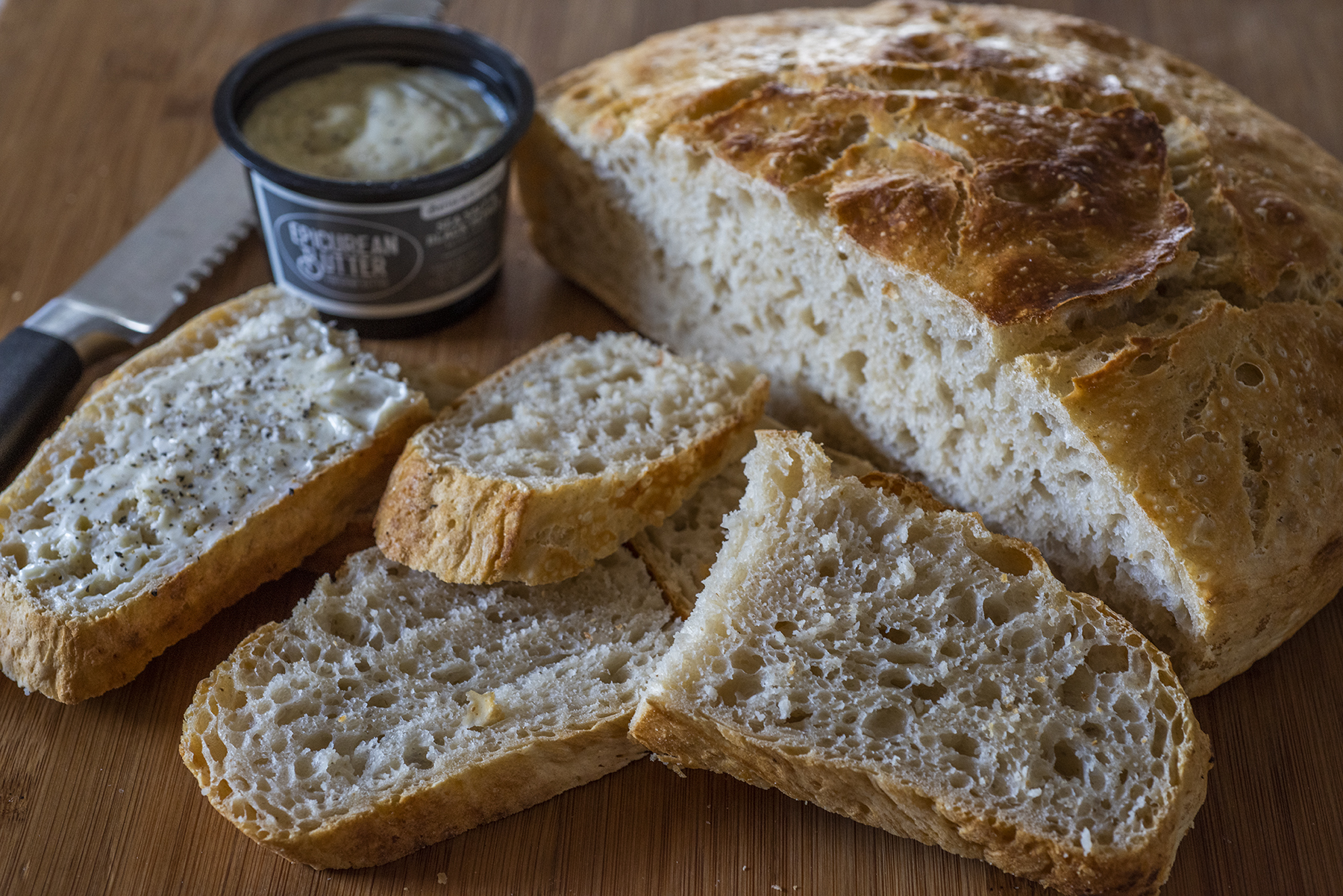
Here’s what N and I have learned in the five-odd weeks since this madness really kicked off: the things we’ve been doing for years – growing food, baking bread, keeping chickens, buying only secondhand, cutting our own hair – are exactly what all of America seems to want to do right now. Listen up, everyone: we’re cool and we’re on-trend and we are probably influencers too. We’re going to call ourselves influencers, anyway. We’d like to influence you to bake sourdough, mostly because no one can find any yeast yet people still really, really like fresh bread.

Sourdough 05 sml

Really, what’s better than fresh bread and good butter?

I’m not at all surprised by the gardening and the bread baking, truly. People have extra time on their hands and want to do something both purposeful and satisfying, plus spring has arrived in most places and it’s a pleasure to be outside. But the sourdough thing? That did take me by surprise, as sourdough has a reputation for being so tricky and difficult and obsessive and a little weird because people name their sourdough starters and refer to them as pets. But then of course all of the country’s commercial yeast disappeared somewhere so it’s only natural that everyone would turn to sourdough, and people also need new pets in this time of isolation, kind of like Wilson in Castaway, so it all sort of makes sense.

Continue reading

Kitchen substitutions

A lifetime ago, N and I worked and lived on boats. We worked on fancy boats and not-so-fancy boats and were often at sea for days or even weeks at a time, traveling from southern Florida to the Caribbean, or across the Atlantic to make quick landfall in the Azores before an intense Mediterranean charter season. Being at sea meant no quick runs to the store, no online grocery delivery, and so I grew adept at using the ingredients I had on hand and figuring out what substitutions I could make.

It turns out that this skill comes in handy in our new world, too. Americans are cooking and baking more than ever – which is fantastic! – and more often than not, we’re doing so with a limited selection of ingredients, thanks to supply-chain bottlenecks and unnecessary hoarding and other factors. So it might be useful to learn some simple kitchen substitutions, which will make you a better cook and a better baker both during quarantine and once things return to “normal,” whatever that might mean.

Continue reading

The second week

Citrus 01 sml

Hi there. How are you holding up? Like most of you, we’re entering our second week of self-quarantine. Some of you are under a mandatory shelter-in-place order. It is no exaggeration to say that our world has turned completely upside down over the past week, and that we’re all doing our best to make sense of a fraught situation that has no logic, no precedent, no guidebook.

I am working diligently on acknowledging what I can control and letting go of the rest. To that end, I believe that our single most important job right now is to stay healthy. For those of us who are low-risk and currently healthy, the most valuable contribution we can make to our community is to remain isolated and entirely out of the medical system, so they can put their attention and skills and dwindling supplies towards those who need it. Obviously everyone’s situation is unique, but here’s what we’re prioritizing at Quiet Farm:

Limited sugar / unlimited fruits and vegetables. When this pandemic imploded in the U.S. two weeks ago, my first instinct was to grab all of my chocolate and butter and flour and cover every available surface in my kitchen with an elaborate array of cookies and brownies and comfort cakes, like some sort of mad bakery vision devised by Lewis Carroll. Baking is regimented and precise and calming, and something we can control when everything else has gone by the wayside. Instead of filling our house with sweets, though, we’re eating as much fresh (and frozen!) fruit and vegetables as we can manage. (When everyone else was stocking up on toilet paper, we were buying citrus. There was plenty.) It’s easy to justify scarfing a lot of junk food and “emergency snacks” when we’re anxious, but sugar is highly inflammatory and I think our bodies are under enough stress as it is. We’re consuming lots of salads and green smoothies and stir-fries, and when I do bake, I bake muffins loaded with fruit purees and nuts and seeds.

(P.S. If you’re buying salad ingredients for longer-than-usual storage now, avoid anything pre-cut and think hardy brassicas like kale, Brussels sprouts and cabbages. These are all super-nutritious and delicious shredded into a salad, and they’ll keep much longer than pre-washed bagged greens.)

Hydration. We live at 6,300 feet in a high-plains desert, so we’re naturally a bit dehydrated most of the time anyway. Dehydration contributes to headaches, irritability, muscle aches, mental fuzziness, exhaustion and a host of other ailments, none of which we need right now. We might be less active these days and so think that we need to drink less, but a cool glass of water could be exactly what we need to right our ship in this moment. We’re drinking lots of water, plus plenty of mint tea and a hot honey-lemon-ginger tonic that soothes throats and nerves. When it seems like everything is about to go entirely off the rails and I can’t take this for one more minute, I stop, breathe and drink a glass of water. It doesn’t change what’s happening in the world, but it does allow me to accept it without panicking.

Movement and fresh air. I’d much rather be outdoors than in even in the best of times, but a heavy, wet spring snowstorm this week has turned our farm into one giant muddy puddle. Despite the poor weather, I compel myself to get outside every day for at least thirty minutes, even if it’s just to empty the compost bin or watch the chickens or check on seedlings. And I never seem to actually want to go for a walk or a run, but once I’m out and moving, I never regret the decision. If you’re able to do so safely (and with appropriate six-foot-plus social distancing), please get outside, even if it’s just to feel the sun on your face. Do ten jumping jacks. Stretch like a contented cat. Skip rope. Run around in circles. Dance like a person possessed. Spring is here, and there is new growth to see everywhere, even if it doesn’t feel much like a time of hope and renewal right now.

Sleep. It is oddly comforting to me, somehow, to know that every single human on the planet right now is under some degree of stress from this new enemy; collectively, we are suffering together. But we’re concentrating on keeping our immune systems strong, and stress, anxiety and poor sleep are in direct opposition to this. So we sleep, as much as we’re able. There is no shame in going to bed at nine o’clock (without our phones!); no shame in sleeping past our usual waking time. Sleep is our bodies’ time to heal and to repair, and we all need that right now. If you can, get some extra sleep. It definitely can’t hurt.

I’m well aware that these are small and meaningless tasks, and they’re nothing compared to what the people on the front lines of this crisis are facing. But these are things I can control, and that’s all any of us have right now. And we need to stay healthy, first and foremost.

How is your household navigating our new world? We’d love to hear what you’re prioritizing. Stay healthy and well.