Farm update: July 20

“Still, I cook. We need to cook, after all, to nourish ourselves and those around us. We need to cook to feel better, to make others feel better, to get along. I may begin the process in weariness, but as often as not I end it in surprise and triumph, happy at least to have made something delicious, to have shared it with those with whom I shelter.”

-Sam Sifton, The New York Times

Quiche 01 sml

No longer trendy but still delicious.

One of the cruel ironies of being a farmer is that when the vegetables really start rolling in, it’s way too hot to cook. Plus, after twelve hours working in the blazing sun all we want is chilled watermelon and ice-cold beer – not exactly a balanced diet. Enter the quiche! Long a mainstay of stuffy, boring women’s luncheons, quiche is hopelessly out of fashion but so well-suited for hot summer months, especially when fresh eggs, vegetables and herbs are in abundance. I always bake first thing in the morning (the house doesn’t need any help heating up later in the day), and quiche is perfect warm, cold or at room temperature. It has a reputation for being terribly unhealthy, but loaded with broccoli, spinach, peppers and herbs, with just a little egg and sharp, savory cheese to bind it all together, it’s an ideal summer staple. Let’s bring quiche back!

Continue reading

Farm update: June 22

‘Tis the season of both growth and destruction. We spend most of our time weeding and watering and looking for new growth on our crops and in our pasture; in response, all of our crafty farm pests have come out with hunger in their tummies and destruction on their minds. Time spent not watering or weeding is instead spent defending our territory. It’s a hard-fought war of attrition out here, and both sides are digging their heels in.

Raspberry Growth 01 sml

A raspberry cane with reassuring new growth.

We’re so pleased to see new growth on most of our raspberry canes. You might remember that we planted forty canes last year and every single one failed; this year we regrouped with drip irrigation and we believe that made all the difference. Bramble fruits like raspberries and blackberries typically do well in our climate; we’d love to grow our own fruit as well as our own vegetables. We’re always, always learning out here, and we’re trying hard not to make the same mistakes twice. We like to make lots of different mistakes instead.

Continue reading

This week in flowers: June 1

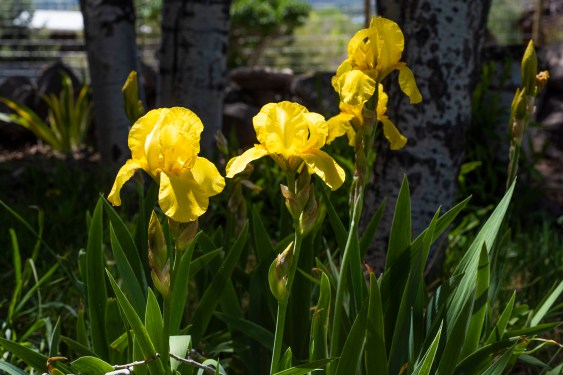
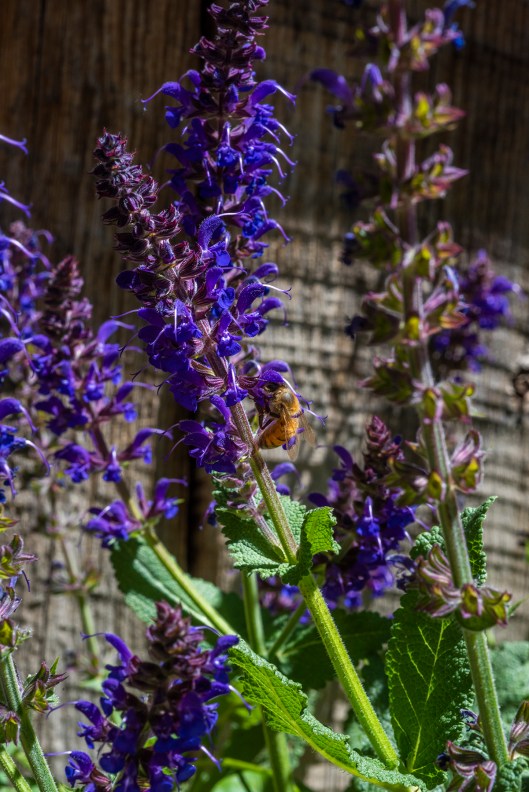
We’re working hard at creating space for a diverse array of organisms at Quiet Farm. We want plants blooming and flowering and setting seed, plants in every stage of life, throughout the season. We want our plants and trees to provide food and pollen and a home for all manner of things. We want to be a welcoming haven for songbirds and bees and insects and hummingbirds and toads and raptors and every other winged and crawling creature. We want not monoculture but polyculture, a place that mimics a natural ecosystem as closely as possible. We want life, and lots of it, everywhere we look and listen.

Flowers 03 sml

Bumble Bee 01 sml

Iris 02 sml

Flowers 04 sml

Iris 04 sml

Flowers 05 sml

If we spent all our time spraying poisons and pulling “weeds,” or removing plants that didn’t fit a perfect garden aesthetic, we’d have none of this. No birdsong, no beneficial insects, no pollinators. Instead, we have a farm that bursts with color and vibrancy and life.

The world is furious and raging right now. In response: plant something colorful. Grow something delicious. Create something beautiful. Cook something nourishing. Wishing you and yours a calm, peaceful and healthy week.

One potato, two potato

Last year we planted potatoes for the first time and achieved a reasonable level of success for a freshman effort, though our part of Colorado isn’t at all suited for potato growing. To our south and east, however, you’ll find the San Luis Valley: the second-largest fresh potato-growing region in the country and justifiably famous for the crop. Their loose, sandy soils are much better for potatoes than our heavy, rocky clay.

Potato Towers 01 sml

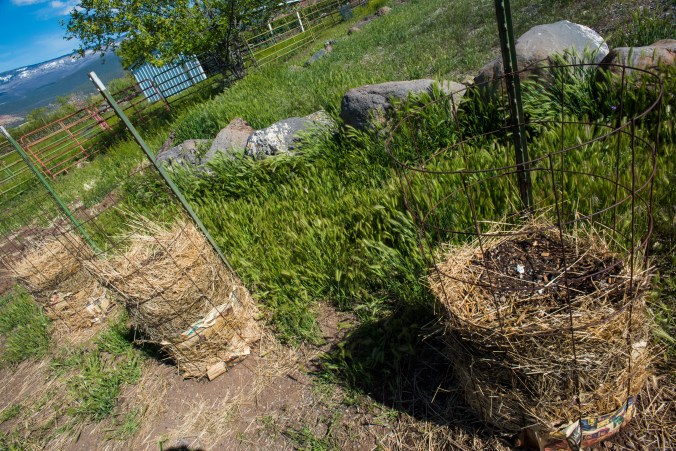
Last season’s potato towers.

But like any stubborn farmer, we love being told what we can’t grow, so that we can try it anyway. We quickly realized that we wouldn’t be planting potatoes in the ground and so opted for potato towers: layers of soil, compost, newspaper and straw in a wire cage, with seed potatoes nestled gently in between. We planted about one and a half pounds of seed potatoes in each of three potato towers, and yielded about twenty pounds of potatoes in total – not bad, considering the minimal growing space and effort required, but not the thirty-plus pounds we were hoping for. And some of the potatoes were really tiny, like the size of marbles. Not very practical.

Continue reading

Winter on the farm

In nautical terminology, “the doldrums” refer to an actual place – waters near the Equator where sailing ships were often stuck for days or weeks in windless seas. In common parlance, however, the doldrums mean “a state or period of stagnation, inactivity or depression.” And so here we are in deepest winter.

Raised Beds 02 sml

Our dormant raised beds, slumbering under snow.

Continue reading

Floor plan

Who remembers way, way back in April when we purchased beetle-kill planks for the master bedroom and closet? Not us. And who remembers back when building and installing custom bookshelves was the trickiest project we had taken on? Apparently we forgot about that, too. Let us say frankly that laying this pine flooring is by far the most infuriating, the most frustrating, the most demoralizing task we’ve ever tackled here at Quiet Farm. Oh, I know I say this about every project but I am not joking here.

Master Floor 05 sml

The planks are “curing.” (They’ve been abandoned in favor of other projects.)

The best thing about this flooring project is 1. it’s finished (mostly) and 2. we learned so, so much about flooring and our own tolerance for suffering. It’s such an honorable, martyr-ish, humble-brag thing to talk about how you renovated your entire antique farmhouse yourself, but this project was truly the closest we’ve come to calling in a professional to bail us out of the mess we’d created. But since you’re already here, friends – who doesn’t like to read about other people’s DIY trauma? – let’s share what we’ve learned.

Continue reading

Farm update: January 6

Hello there, and a very happy new year to you and yours. If you’re here for the first time, welcome! If you’re returning after our hiatus, thanks for coming back! We look forward to sharing a new year of food and farm adventures with you.

ATV Plow 01 sml

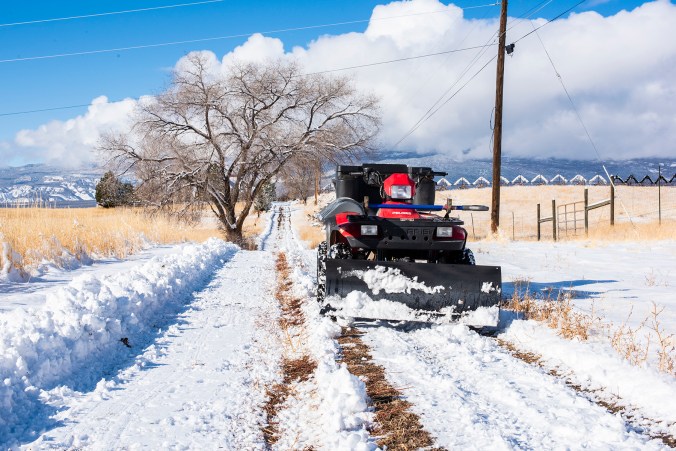
Our updated Snow Management Plan in action!

Last winter – our first winter at Quiet Farm – our area received an unprecedented amount of snow. Our inaugural Snow Management Plan was…ineffective, shall we say; we had no tractor and no plow and no way of getting out of our quarter-mile driveway with a foot of snow on the ground. At one point, we resorted to begging a friend with a truck to flatten the snow by driving up and down our lane so we could at least leave the farm (thanks, Joe!). Needless to say, that was not a sustainable long-term solution.

This winter we haven’t had nearly as much snow, but we do have a plan – a detachable plow for our ATV. And so far, the ATV plow has worked like a champion. We’re even thinking of purchasing other implements for the ATV, so that we can use it like a mini-tractor, since we’ve been unsuccessful in finding a reasonably-priced midsize tractor to manage our pasture. Stay tuned.

Continue reading

Farm update: October 21

Buck 01 sml

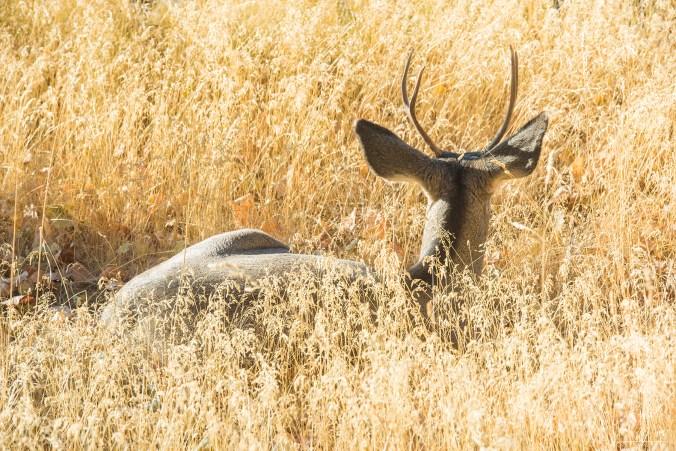
The south lawn of our house makes a peaceful resting spot.

Is it autumn where you live? Is it crisp and cool with bright scarlet and gold leaves everywhere? Is it dark when you wake up in the morning? It is here, and we’re settling into this brief transition season before winter extends its icy grip. Much of our work these days involves cleaning, tidying, preserving, covering and generally setting things in place for the colder months. We try to take advantage of these bluebird fall days for as long as we can; once the snows come, we won’t be working outside much.

Garlic Slate 01 sml

Growing garlic takes forever, but it’s worth the wait.

Ninety of this season’s largest garlic cloves have been planted in a bed newly prepared with lots of rich compost. Last year’s garlic went into an existing cinderblock bed that was here when we moved in; a few weeks ago we broke that bed down and dispersed the soil into new trenches for garlic and asparagus. The cloves will slumber quietly here over the winter, and in the spring we’ll hopefully see green garlic peeking up through mulch and snow. Every year we’ll plant more and more garlic; we eat a lot of it, of course, but since garlic adapts to its unique environment, we want a generous quantity to save for planting.
Irrigation Water 01 sml

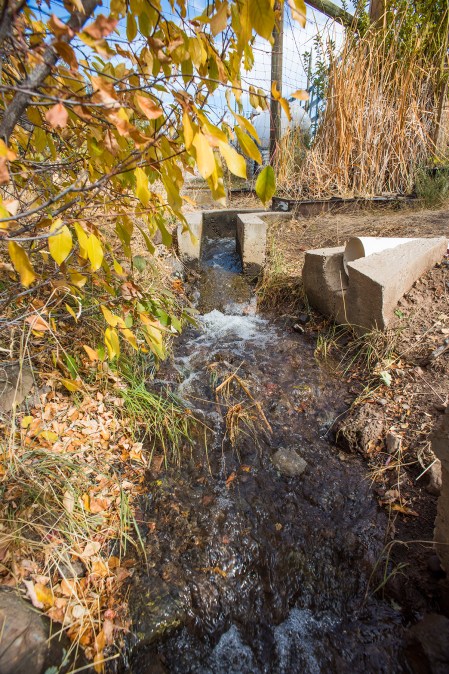
The water runs through a culvert underneath our driveway and out into our pasture. You can see our flume in the upper right.

We ran our irrigation water for the first time this season, and it went surprisingly well. Our pasture isn’t planted right now so the irrigation run was more of an experiment to see how the water would move through our gated pipe system. We own shares in a local creek that pulls water from reservoirs on the Grand Mesa; when we want to run water we order a certain amount for a certain period and that water is deducted from our account. This run was for two days (forty-eight hours straight!) and it requires a lot of hands-on management, mainly opening and closing gates manually in the big pipes. When we’re more comfortable with our irrigation we won’t need to babysit it as much, but we’re unleashing hundreds of thousands of gallons of water mere feet from our house, and we definitely want to pay close attention to where it’s going.

Tomatoes Ripening 01 sml

Our tomato crop redeemed itself after a rocky start.

We harvested all of our vegetables prior to our recent hard freeze and brought in just over one hundred pounds of green, unripe tomatoes. In the past I’ve never had good luck ripening tomatoes indoors, but for whatever reason these are ripening quite well. They’re no longer good to eat fresh – the overnight temperatures dropped too low, so the tomatoes taste as though they’ve been refrigerated – but they’re perfect for sauces, soups and purees. A pantry stocked with canned homegrown tomatoes is a winter gift indeed.
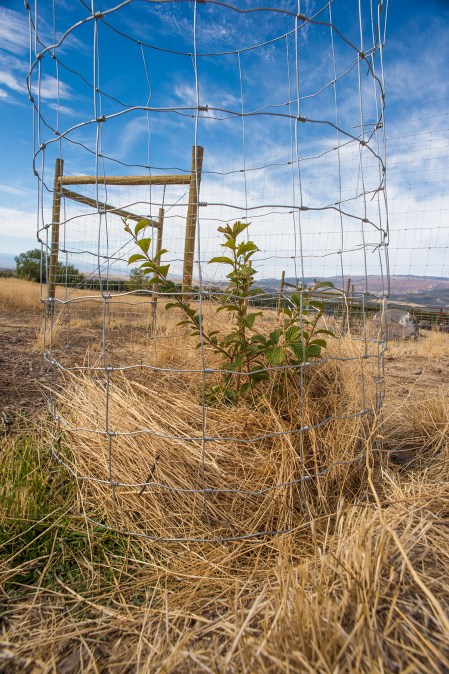
Tree Mulch 01 sml

One of our little saplings, hopefully protected from winter weather (and deer). 

We’ve hustled recently to layer all of our fruit tree saplings with warm winter mulch. Some of our little trees look healthy and others are…struggling. We’re hopeful that the mulch blanket will keep the trees protected from our harsh winter weather, since their root systems are likely to still be quite delicate. One of our priority spring projects next year will be to put a drip irrigation system in the orchard so we can stop watering the trees by hand.

We’re back to work, friends. We wish you a good week.
 

Coming home to roost

One of the many reasons we were drawn to Quiet Farm was its collection of rather ramshackle yet usable outbuildings. Since keeping chickens for eggs (and entertainment) was always a top priority, renovating the chicken house was definitely high on our project list.

Chicken House 01 sml

The ‘before’ photo, in bleakest winter.

Chicken House 02 sml

The original nest boxes on the far wall indicate that this may previously have been used as a henhouse.

Continue reading

The Farm Series: I-Guana Farm

As we’ve discussed previously, Quiet Farm is located in the “fruit basket” of Colorado. The Western Slope produces Colorado’s revered Palisade peaches, along with apples, cherries, plums, apricots, table grapes and wine grapes. Fruit grows so well here because the climate doesn’t experience the significant diurnal swings common on the Front Range. (In February 2018, the temperature in Denver dropped 72 degrees in forty hours.) Fruit trees, especially once they’re in flower, cannot survive extreme temperature shifts, so harvesting fruit on the Front Range is hit-or-miss. It’s hit-or-miss over here, too, as all farming is, but with a lot more hits than misses.

I-Guana Farm 03 sml

Last year – our first year as official Western Slope residents – we ate ourselves silly on local peaches, plums, cherries and apples. The apricots, though, were lost to a late spring freeze, so while a few orchards had a very small amount of fruit to sell, it wasn’t widely available and we missed out entirely. This year, between our record snowfall and ideal spring weather, the fruit growers in our area have a bumper crop of just about everything, with apricots no exception. We’re even seeing wild apricot trees, heavy with fruit, growing on roadsides around us. It’s been a banner year.

Continue reading