The FAQ Series: Oils + Fats

We kicked off our new FAQ Series with a post on salt; for our second installment, we’ll discuss cooking oils and fats. One of the most common questions I hear in my classes is “What sort of oil (or fat) should I cook with?” The short answer: it depends.

Olive Oil 02.jpg

As per usual, raiding my pantry yielded a surprising number of oils.

The most important things to know about any specific cooking oil or fat, beyond its potential health benefits, are its flavor profile and its smoke point. Certain oils, like sesame and unrefined coconut, will have a pronounced flavor and may not be applicable in all situations. A fat’s smoke point is the temperature at which it starts to break down; this can be a bit vague as it happens over a range of degrees rather than at a precise moment. When the fat starts to break down, it indicates a loss of flavor and nutrients, and possibly an imminent fire.

Olive Oil Splash.jpg

Taste your olive oil straight…but maybe not out of a martini glass.

Oils are crushed, pressed or centrifuged out of nuts, seeds and fruits. Refined oils may have been subjected to additional filtration, bleaching, heat, chemicals and other treatments; they’re typically usable at higher temperatures than unrefined. They also generally have a neutral flavor and a longer shelf life. With true unrefined, or raw, oils, there is very little or no heat used to produce the oil. This is where the term cold-press comes in; the highest-quality olive oils are made without any heat which might compromise the delicate flavor nuances of the oil.

Flambe

Please don’t try this at home.

All oils can catch fire when heat is applied, so it’s important to know what temperatures you’ll be cooking at. An oil’s flash point refers to the temperature at which it could conceivably catch fire. Don’t ever leave cooking oils or fats unattended while heating; if for any reason oil does catch fire, turn the heat source off immediately and cover the pan with a metal lid to remove the oxygen source. Don’t ever use water on a grease fire, and don’t try to move the pot, as you could burn yourself or others. Baking soda or flour can also be used to douse the flames, but you’ll need a lot. In other words, prevention is a much better and safer option.

Olive Oil 01.jpg

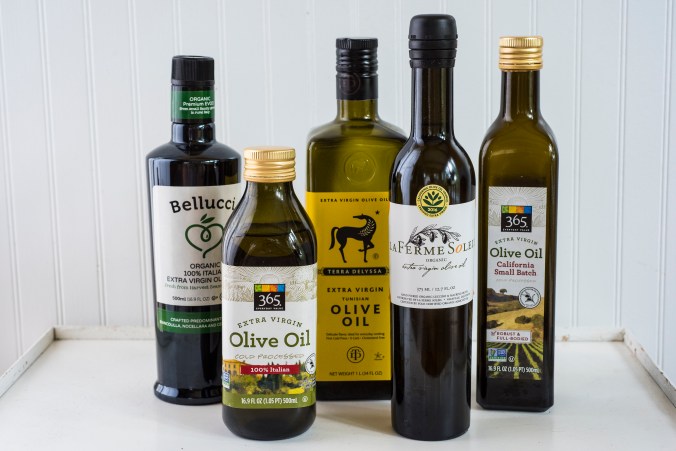
Definitely the most-used oil in my kitchen.

Thanks to the Mediterranean diet, olive oil has gotten a lot of attention recently. It’s certainly versatile, and without question the oil I use most in my kitchen. But like so many other food items, it can be confusing; most of our olive oil comes from other countries, and the FDA doesn’t regulate imported olive oils. As with honey, there have been many, many instances of adulterated olive oils sold in the U.S.; a 2010 study indicated that close to 70% of imported olive oil was incorrectly labeled. Some states, like California, have passed stringent labeling laws, but be aware that it’s pretty easy to slap just about anything on a bottle of oil and not get called out for it.

Coconut Oil.jpg

So trendy that even Crisco got in on it.

Never cook with fancy, expensive olive oils; these oils are best for drizzling over salads or vegetables, or dipping with bread. There is no point in spending $30 a bottle (or more) for an oil that you’re going to subject to high heat; you’re just wasting your money. Always smell your oils; like any fat, oils can turn rancid. Keep them in a cool, dark, dry place, out of direct sunlight, and buy in small amounts. Expensive, delicate oils, like nut oils, are often sold in opaque containers rather than glass so they aren’t subject to as much degradation. Still, many consumers actually prefer rancid olive oil; this is probably attributable to the low-quality olive oil we grew up on – we think it’s supposed to taste like that.

Sunflower.jpg

Both pretty and useful!

As with most foods, what matters most is your own palate. Before you spend hundreds on fancy olive oils, buy a few small bottles and taste the oil straight. Even better, go to a store that sells different oils and also offers a tasting bar. Some will taste sharp, or grassy, or bitter, depending on age and harvest and other factors. Don’t be swayed by celebrity chef brand names or pretty labels; price isn’t necessarily your best guide here. Figure out what you like, then buy it.

Butter 01

Thank the sweet Lord we’re allowed to love butter again.

When it comes to butter, quality definitely matters. In America, butter must be at least 80% butterfat to be labeled as butter; in Europe, it’s 82%. We’re starting to see more butterfat quantities on labels here (note Vermont Creamery products in photo above at 86%) and it does provide richer mouthfeel and certainly more flakiness in pastries. I use unsalted butter exclusively in baking and cooking so I can control the final salt content, but for spreading on good bread nothing compares to fresh, cultured, salted butter. Want to make your own? Try this recipe.

Butter 04

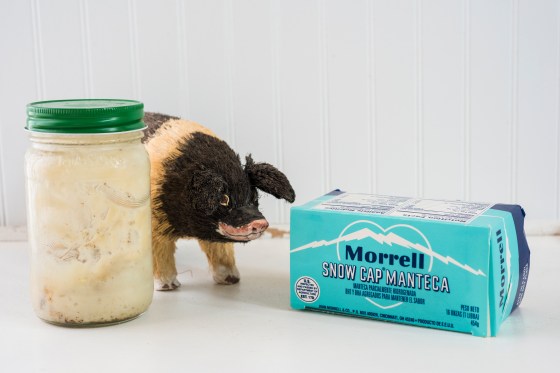
This little piggy became lard…

Remember when your grandmother kept the old metal coffee can filled with bacon drippings next to the stove? Like butter, lard, tallow and drippings are back in fashion; we can probably thank Team Paleo for that. It’s real fat, rather than fake fat, and it’s delicious. Use sparingly but with great enjoyment, and just like any animal product, buy from a reputable source. How the animals were raised matters.

Hazelnut Walnut Oil

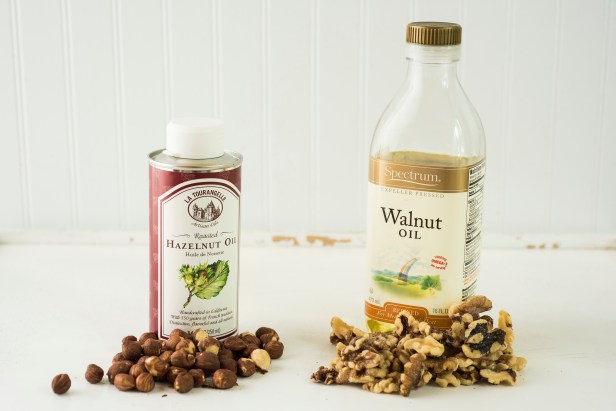
Nut oils are delicious, expensive and prone to rancidity; use judiciously.

A simple (and by no means definitive) guide to cooking fats and oils:

Butter: literally nothing compares for flavor, plus exemplary flakiness in baked goods, but it has a low smoke point and burns easily. Use when the flavor will shine: in simple eggs, on top of pancakes or waffles, in pie crusts and pastries. Or make brown butter into an elegant sauce for fish or pasta. Try compound butters with herbs, garlic or other add-ins; it’s easy to make your own or buy from these lovely folks.

Canola oil: useful in baking when a neutral oil is desired; also good for sautéing and frying. This oil is a tricky one: it comes from the rapeseed plant and was developed using traditional plant breeding methods before the advent of GMOs. It was renamed for the sensitive U.S. market; the word canola is a hodgepodge of “Canada” and “oil,” since most of our rapeseed comes from Canada. There exists a misconception that all canola is GMO; although that isn’t true, rapeseed is one of the most common GMO crops, so if you’re avoiding GMOs, watch your labels.

Coconut oil: currently very trendy along with everything else coconut. Solid at cool room temperature so it behaves like shortening or butter in baking and is therefore very popular with vegans. Previously a nutritional villain, and now a hero (see also: butter, eggs, coffee, salt, red wine…)

Ghee: butter that has been clarified to remove the milk solids so that its smoke point is higher. Common in Indian cuisine.

Grapeseed oil: a byproduct of the winemaking industry, it’s neutral in flavor and best for baking, sautéing, and salad dressings when you don’t want a pronounced olive flavor.

Lard: rendered hog fat; it is neutral in flavor (unlike bacon drippings, which are smoky and bacon-y) and produces amazing pie crusts, especially when combined with butter. Obviously not suitable for vegetarians. Moderately high smoke point.

Margarine or other “fake butters”: never. Not even ever. Totally lab-created; typically hydrogenated oils often with mysterious additives. Stay away; there is literally nothing of value in these products. No, they absolutely do not reduce your cholesterol. I don’t care what the package says.

Olive oil: the most versatile and a favorite of Mediterranean diet proponents. Use olive oil for moderately high temperature sautéing, tossing with cooked pasta and drizzling over roasted vegetables. Expensive, flavorful olive oils should be reserved for salad dressings and as an accompaniment to good bread and should never be heated.

Nut oil, such as hazelnut or walnut: expensive, flavorful and great for salad dressings, especially when the same toasted nut is used in the dish. Try this simple beauty from the great Ottolenghi!

Peanut oil: high smoke point and good for frying; popular in Asian cuisine. Pronounced flavor and possible allergen issues. Great for deep-frying.

Sesame: see peanut oil, above, except that it’s way too expensive and strongly flavored for deep-frying. Dark sesame oil will have a stronger flavor.

Safflower oil: related to sunflowers, this is a neutral oil fine for frying and baking.

Sunflower oil: high in Vitamin E plus a high smoke point; neutral flavor. Use for baking and frying.

Vegetable shortening: Crisco introduced vegetable shortening in 1911 as a lard alternative. It’s solid at cool room temperature and therefore behaves similarly to butter or lard in baked goods. It’s also partially hydrogenated and not an ideal choice for health, although now the label claims “zero trans fats.” I’ll confess that it works beautifully in pie crusts and it is a vegan option.

Vegetable oil: most products labeled “vegetable oil” are typically soy, yet another primarily GMO crop. Soybean oil is one of the most common ingredients in heavily processed foods and has virtually no benefits whatsoever. If you’re looking for a neutral baking oil, choose non-GMO canola.

What should we discuss next? Let us know!


Cooking Class: Udaipur, India

It’s been two months since we returned and N and I are missing our travels more than we expected. We thought we might revisit a few of our most memorable experiences here.

We went on lots of market tours during our travels and took a couple of incredible cooking classes, too. Udaipur, in the western Indian state of Rajasthan, was one of our favorite cities in India. It’s friendly and accessible, easy to walk and to navigate and filled with compelling sights and smells. While we were here, we went to an in-home cooking class led by a quiet, lovely Indian woman named Gita. She didn’t speak much English, but this was definitely one of those times when not many words were needed; the idea of food as a universal language is such an accurate cliché.

NJB_6253

Traditional masala boxes contain cooking spices. Women are often given these as a wedding gift to bring to their new husband’s home.

NJB_6313

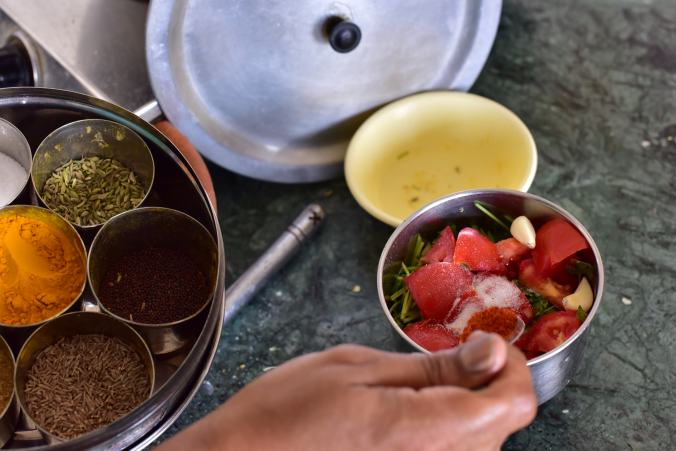
Combining fresh tomatoes, coriander and garlic for tomato chutney.

NJB_6273

Toasting whole spices brings out their aromatic oils.

NJB_6286

Making aloo gobi masala, cauliflower and potatoes with peas.

NJB_6287

This will be the filling for our samosas.

NJB_6294

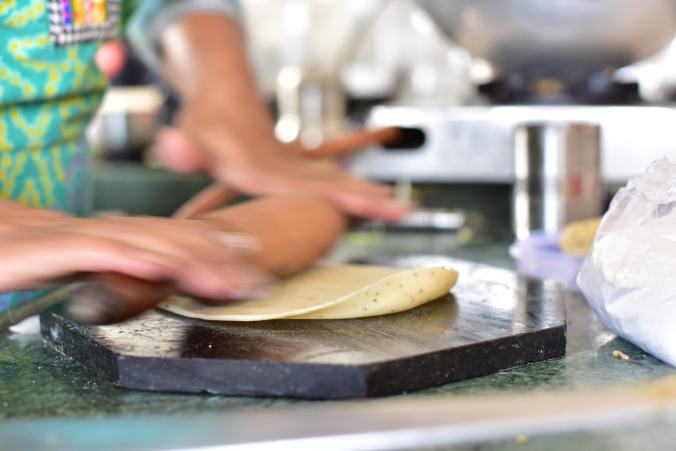
Rolling fresh dough for samosas.

NJB_6297

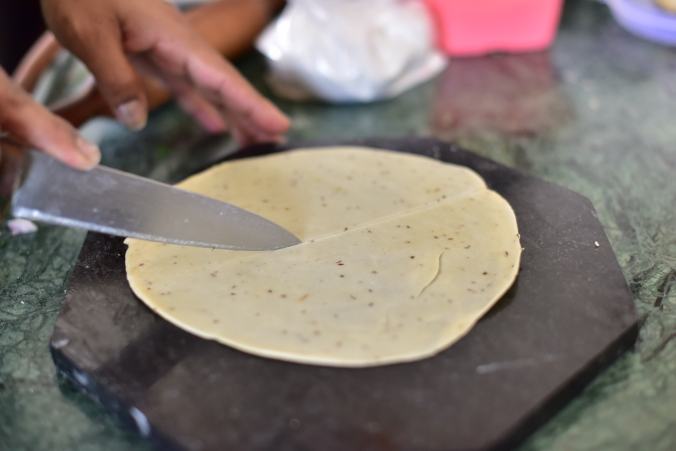
The dough, speckled with cumin seeds, is cut into quarters.

NJB_6298

Years of practice make this look easy.

NJB_6301

Filling the samosas

NJB_6307

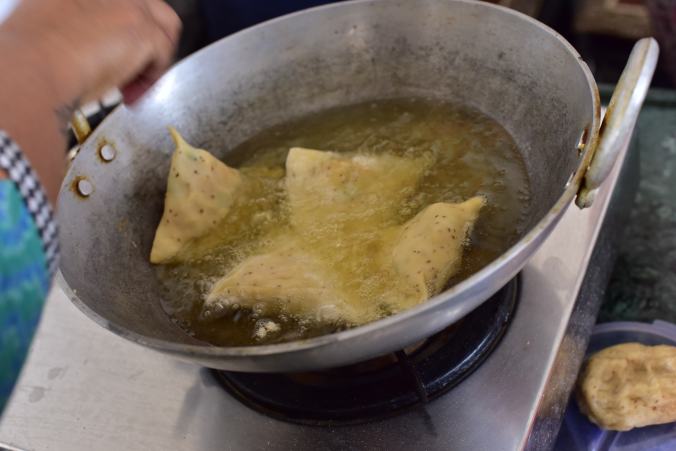
…and into the fryer they go.

NJB_6326.1

You don’t need fancy kitchen gear to produce amazing food.

NJB_6377

Many homes in rural India still don’t have refrigerators or freezers, so you buy what you need and cook fresh food every day.

NJB_6394

Indian cuisine includes an array of incredible breads.

NJB_6386

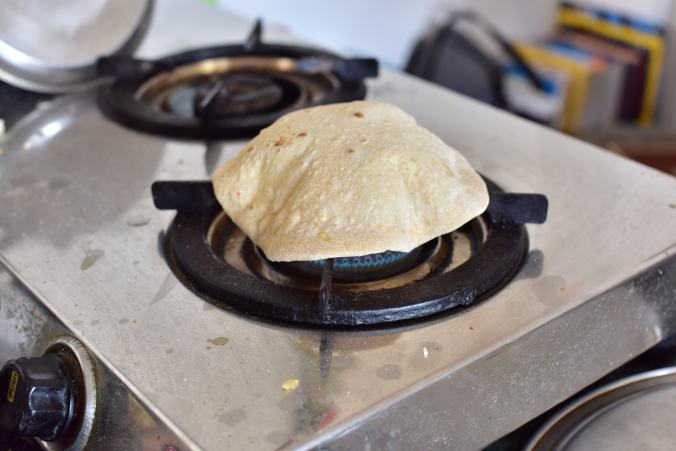
Poori puffs up when it’s cooked over an open flame.

NJB_6404.1

The best part of any cooking class is sitting down together to eat delicious food!

NJB_6413

Our kind, generous host, Gita – a truly incredible cook.

We miss you, India!

The FAQ Series: Salt

We’re starting a new thing over here at Finding Quiet Farm: the FAQ Series. This programming will be based on the most common questions I’ve been asked over nearly a decade of teaching cooking classes to thousands of people; hopefully you’ll learn something and improve your own cooking. Let’s kick this show off right with the number-one question I hear: “How can I make my food taste more like restaurant food?”

Salt Crystals 01

The iconic pyramidal crystals of Maldon salt, harvested off the coast of England.

Pose this question to any professional chef, and the answer will be the same: learn how to use salt properly. (Just to quell the suspense, the second most popular question is “What sort of salt should I use?”)

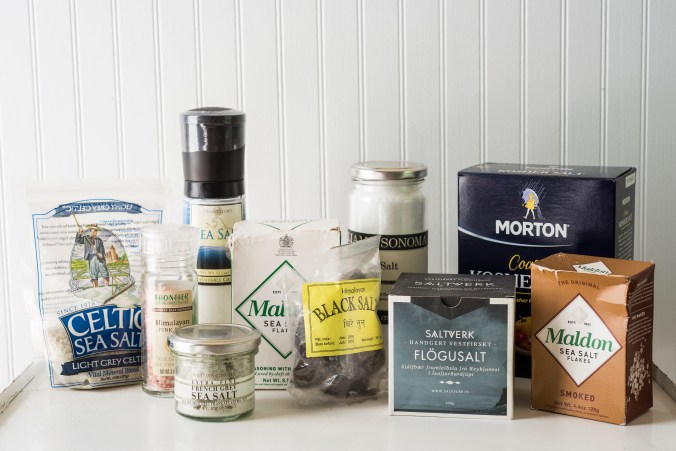
Salt Selection.jpg

I don’t find it at all unreasonable that I have more than ten varieties of salt in my kitchen…except I only use two. You don’t need this many.

Learning how to season food properly – and specifically, how to use salt – is what separates mediocre cooks from amazing cooks. Whether in a restaurant or at home, salt is far and away the single most important component after the raw ingredients themselves – you can get by without almost anything else, but nothing (savory, at least) tastes good unless it’s been properly salted. And most sweet things need a little salt too, for balance. (Looking at you, salted caramel.)

Salt is the only rock we eat, and it’s vital to our health. It’s been prized for thousands of years throughout the world; Roman soldiers used to be paid their monthly wages in salt, hence our word salary. Salad, too, originates from salt since the Romans salted their greens. The Bible carries dozens of references, including salt of the earth and pillar of salt. Someone without esteem is not worth their salt. Simply put, it’s essential to our survival.

Salt Flats

The salt flats in Bonaire.

Salt is actually composed of two minerals, sodium and chloride. It’s produced either through mining deep deposits in the earth, or through solar evaporation. Most standard table salt is heavily processed and includes both added iodine (as a public health measure) and anti-caking agents to keep it free-flowing. Sea salt is, as you might expect, evaporated from seawater; fleur de sel is the crunchy, delicate top layer of sea salt and is typically used as a finishing salt. There are no health benefits to sea salt, despite a marketing campaign designed to make you think otherwise, but chefs don’t like the intensely chemical taste of iodized salt. We also use so much of it that we can’t spend our entire budget on fancy sea salts. We love coarse kosher salt.

Kosher Salt.jpg

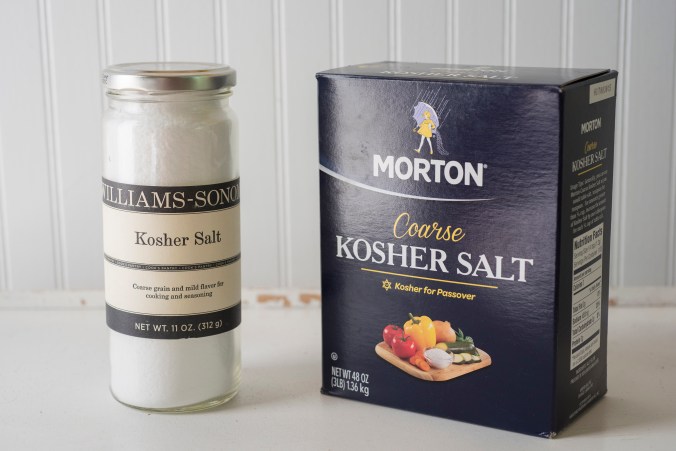
So 11 ounces is less than 48 ounces but the bottle costs $12.95 and the box costs $2.99? I sense a swindle.

The term kosher just means that the crystals are larger and therefore more effective in drawing blood out of meat after it’s been slaughtered, in keeping with kosher tradition. Chefs love it because we use our fingertips to pick it up; most of us have those measurements so carefully calibrated that we’re more accurate than a set of teaspoons. All you need in your kitchen is a box of coarse kosher salt, poured into a small dish and set near the stove, plus a finishing salt like Maldon, whose large pyramidal crystals offer a satisfying crunch and burst of flavor when used properly on top of caramels or fresh ricotta with peaches on crostini or a beautifully seared steak. Don’t ever waste your finishing salt in pasta water or in baking recipes, and don’t ever pay $12.95 for the branded bottle on the left when the box on the right is the exact same thing, contains more than four times as much and costs $2.99.

Salt Dishes.jpg

It’s the only rock we eat…and it’s gorgeous. And delicious. And necessary.

Like our newfound obsession with the mysterious gluten, however, we’ve gotten our relationship with salt all wrong. The American Heart Association and other major medical organizations have shouted for years that Americans consume way too much salt and that it is a leading cause of high blood pressure, diabetes and other lifestyle-related diseases. The Mayo Clinic claims the average American consumes about 3,400 milligrams of salt each day, while the recommendation is 1,500 milligrams or less.

We avoid using salt the few times we do cook at home – that’s the salt we can control – because we’re so scared of it, and as a result our food is bland and tasteless. So we go out, or buy premade foods, because they taste better. Unfortunately, we get the vast majority of our salt (and our sugar) from these processed foods, including the ones we don’t even think about: sliced bread. Salad dressing. Bottled spaghetti sauce. Pastries. And obviously, any fast food will be loaded with salt. A single Egg McMuffin contains over 700 milligrams of salt – good luck staying under that 1,500 milligram mark if you eat fast food. Salt is a flavor enhancer, but more importantly for the processed food industry, it’s a preservative.

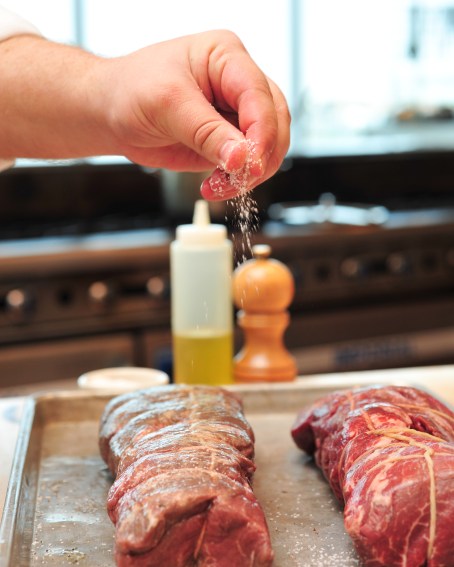
Kosher Salt Seasoned

I’ve taught numerous cooking classes where I’ve added salt to a dish and acknowledged gasps of horror at the quantity I’m using. Please, trust me on this: if you are eating most of your meals at home, cooked from fresh, healthy, whole foods and not from boxes and packets, and if you avoid processed foods like bottled salad dressings, take-out pizza, commercial lunch meats and cheap sliced sandwich bread, you don’t need to worry about adding salt when you cook. You’re already way ahead of the game.

Salt Book.jpg

You only need two salts: one for finishing, on the left, and one for everything else, on the right. Oh, and read that book.

How can you become more proficient about using salt? Taste your food. Taste it before you add salt, and after. Slice a fresh summer tomato and eat it without any salt. Now take another slice, sprinkle it with crunchy Maldon, and taste it again. Cut a steak in half, and cook it exactly the same, but use salt on one portion and not on the other. Your pasta water should taste like the sea, according to Italian grandmothers everywhere, and you should never cook beans or rice or vegetables or grains in unsalted water. Seasoning should be done in layers, as you build a dish, rather than just dumping a bunch of salt on at the end. Taste and taste again. Salt should never make food taste salty, it should make food taste more like itself; it’s designed to enhance food, not to overwhelm it. Restaurant food tastes delicious – and ideally not salty – because those amounts are carefully calibrated.  And because chefs have spent years learning how to season.

CCA-11.jpg

Learning to cook well at home is a process, as I’ve mentioned many times. And learning to season is part of that process, just like learning your own palate. Remember those famous words: “salt to taste.” So go get a box of kosher salt, and start using it. With your fingertips, please.

Salt Crystals 02.jpg


On bread (and gluten)

It is not hyperbole to state that wheat is the reason human civilization exists today. As always, Michael Pollan says it best:

“Compared with earlier and simpler methods humans have devised for turning plants and animals into foods – the roasted chunk of meat, say, or pot of stew, either of which an individual or small group can pull off – a loaf of bread implies a whole civilization. It emerges only at the end of a long, complicated process assuming settlement and involving an intricate division of human, plant and even microbial labor. In addition to an agriculture and a culture of milling and baking, the loaf of bread depends on a nonhuman culture as well: it won’t rise without the active contribution of some highly specialized living creatures besides the baker, the miller and the farmer. Few things are as ordinary as a loaf of bread, yet the process by which it is made is extraordinary – and still something of a mystery even to those who study it or practice it every day.”

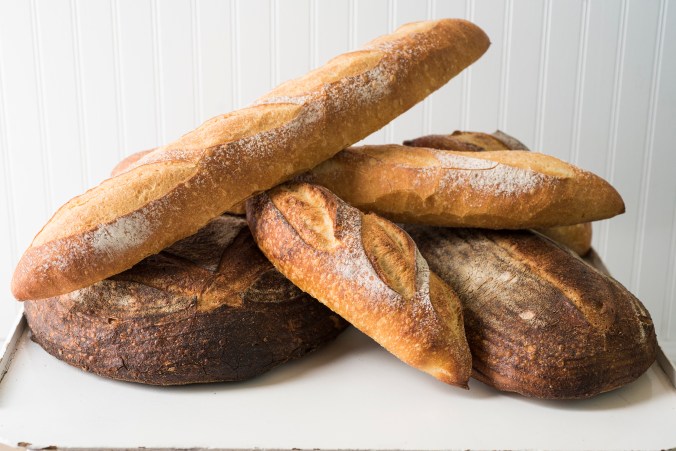
Bread Loaves.jpg

Nom nom nom.

That last sentence says it all: it’s ordinary, it’s extraordinary, and it’s a mystery, even when you do it every day. Is it any wonder people refer to baking bread as a religion?

It’s impossible to put into words how much I love good bread. I’d much rather eat bread than just about any dessert. With olive oil, with cheese, perhaps homemade jam or backyard honey, a thick smear of salted butter or just on its own, well-made bread is one of life’s great edible pleasures. Like Mr. Pollan, I particularly adore rustic breads with rugged, crunchy crusts that are thisclose to burned and conceal a “soft, custardy interior.” Many people don’t like this type of bread; they think the outside is cooked too much while the inside isn’t cooked enough. But as we know, one of the many magical pleasures of cooking at home is that you get to make things exactly the way you like them.

Bread Bowl-01

My namesake grandmother’s bread bowl and one of my most treasured possessions.

Before we left on our round-the-world trip, when I was stressed and overwhelmed with all the things that needed to be done, I wrote a short post about baking bread. I honestly think it’s one of life’s most cathartic activities, and when you’re done with your cheap therapy you’re rewarded with a loaf of homemade bread. What I’m trying to understand nowadays is why we’ve so wholeheartedly rejected a truly time-honored and pleasurable task. It seems unreasonable to mourn bread when there are so many other things to mourn in the world right now, yet over the past decade, very few foods have been as maligned as the humble loaf of bread. More accurately, it’s rare that we collectively have found something to vilify on the scale that we’ve vilified wheat.

Humans have been eating wheat for about ten thousand years. Wheat represents one-fifth of all the food consumed worldwide, and it’s also the world’s most important source of non-animal protein. Its production surpasses every other grain, including rice and maize, and it can be grown almost everywhere on the planet. Human civilization as we know it would not exist without wheat and all the agricultural settlement that goes along with its production, processing, storage and conversion into digestible foodstuffs.

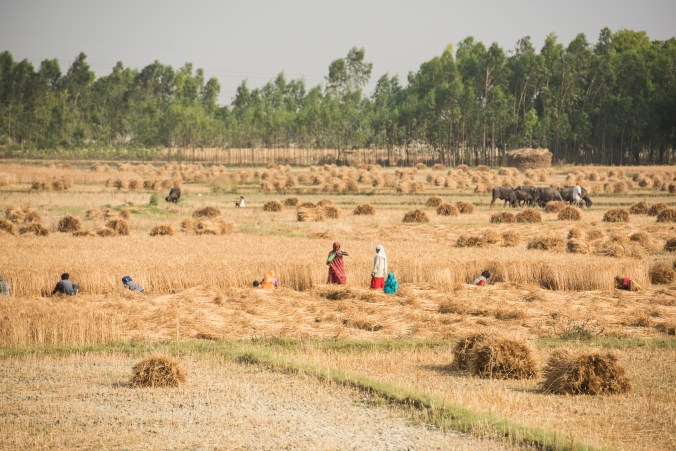
Wheat Field.jpg

Wheat fields in India.

Gluten is a protein that occurs naturally in wheat as well as other grasses such as rye, triticale and barley. Gluten is one of the primary factors responsible for that amazing chew we get in pizza crusts and breads; softer baked goods, like flaky pie crusts and tender cakes, don’t perform well with high-gluten flours. The type of wheat, i.e. soft spring or hard red winter, determines the amount of gluten in the final flour.

Despite its importance, about 20% of the U.S. avoids gluten; numbers are increasing in the UK, Australia and other Western countries as well. Chefs and other food and nutrition professionals have questioned (both covertly and openly) why everyone has suddenly gone gluten-free. A very small percentage of the population – less than 1%, depending on which sources you choose to believe – has celiac disease, which makes digesting gluten difficult. But it is scientifically impossible for one-fifth of the Western world to suddenly, collectively develop the same allergy or intolerance. It simply can’t happen.

What can happen is for everyone to decide that a gluten-free diet is somehow healthier and – by extension – will help one lose weight with very little effort. People who go gluten-free say they feel better, and that may well be true. If you legitimately feel better eating a gluten-free diet, then by all means, please carry on. But I’d unscientifically attribute “feeling better” to avoiding processed foods, eating more fruits and vegetables and generally being more conscious of your diet, although a gluten-free doughnut is, ultimately, still a doughnut. “Gluten-free” also means profit; sales of gluten-free foods have increased nearly 70% over the past four years, which translates to billions of dollars. The vast majority of gluten-free devotees are middle- to upper-class white women, and savvy food manufacturers know well that there is an enormous amount of money to be made from this market.

YetiCake.1

Chocolate stout cake. Yes, please.

Why have we all decided that gluten is making us sick? Some sources believe that GMOs are responsible, although there is no commercially available GMO wheat. (There are, however, escaped volunteer plants in Washington.) Many say it’s because we’ve hybridized our wheat, though we hybridize a lot of plants. And still others claim that it’s because we grind all of the nutrition out of the wheat to produce white flour, which travels better, stays fresher longer and produces the light, fluffy taste and texture that most people prefer. Once the bran and germ are removed and the flour is enriched, they say, we struggle to digest it.

If I had to choose, I’d fall firmly into the third camp, but I simply refuse to acknowledge that good bread is somehow singlehandedly responsible for the Western world’s catastrophic increase in diabetes, heart disease and other lifestyle-related diseases. Bread isn’t the problem; our entire industrialized, inhumane, chemically-drenched food system is the problem. As usual, though, we’ve chosen one villain to attack because to address the actual issue would be tantamount to admitting that our shockingly profitable agricultural fiefdom – based on cheap corn, soy, and animal protein – isn’t working. We somehow selected gluten, an ingredient most people can’t actually define, and decided that it was to blame for all of our health issues. Plain and simple: I disagree.

CCA-64.jpg

Every single culture in the world has some form of bread.

Ever wondered about what is actually in Wonder Bread? I’ve conveniently assembled the ingredient list here for your consideration: unbleached enriched flour (wheat flour, malted barley flour, niacin, reduced iron, thiamin mononitrate, riboflavin, folic acid), water, high fructose corn syrup, yeast, contains 2% or less of each of the following: calcium carbonate, soybean oil, wheat gluten, salt, dough conditioners (contains one or more of the following: sodium stearoyl lactylate, calcium stearoyl lactylate, monoglycerides, mono- and diglycerides, azodicarbonamide, enzymes, ascorbic acid), vinegar, monocalcium phosphate, yeast extract, modified corn starch, sucrose, sugar, soy lecithin, cholecalciferol (vitamin d3), soy flour, ammonium sulfate, calcium sulfate, calcium propionate (to retard spoilage).

Do you even know what most of these words mean? Can you buy those ingredients (separately) in your local grocery store to assemble your own homemade version of Wonder Bread? The simplest bread made at home contains four ingredients: flour, salt, yeast and water. No commercial yeast, even, if you’re using a wild starter. Review that ingredient list above once more. I don’t deny that we’re pretty sick, but we cannot logically blame gluten.

How to buy knives

Perhaps this post’s title isn’t exactly the sort of thing you want discovered in your browser history, but we’re going to proceed as planned because it’s important. There is literally nothing that will improve your time in the kitchen more than owning good knives and knowing how to use them. I meet people regularly who tell me how tedious they find cooking; I’m willing to bet that they’re using cheap, dull knives. Most of cooking is actually prepping the ingredients, and lousy knives make this task far more laborious than it needs to be.

CCA-10.jpg

I used to teach cooking classes at a fancy kitchenware store. While I always loved teaching the classes, I failed miserably at the most important part of the job: selling people silly gadgets and pointless equipment they didn’t really need. The spiralizer and the popcorn maker and the banana slicer and the electric egg poacher and the chocolate fountain seem like necessary additions to your already-crowded countertops, I know. But in order to cook well, you need just a few things: a couple of decent, heavy pots and pans (hopefully a cast-iron skillet!), a good cutting board, and well-made knives that suit you.

Wusthof 01.jpg

Knives come in all sorts of expansive sets, like the one shown above. The average home cook has no need for eight or ten or twelve knives, unless you host posh steak dinners for a crowd on a regular basis. I’d far rather you spend the same amount of money on three really good knives: a chef’s knife, a paring knife and a bread knife. Costly, yes. But knives aren’t an iPhone; they’re not designed to be replaced every six months. If you take good care of them, knives can last a lifetime.

Knife Skills

Never buy a knife that you haven’t had the opportunity to hold and cut with. Like tennis rackets or skis or golf clubs, knives come in different sizes and will fit one person better than another. A good knife store will offer demo knives, cutting boards, and fresh herbs or vegetables to cut; make the most of this opportunity and try various knives to see what you like. Knives are broadly grouped into two categories, Western (such as Wusthof and Henckels) and Eastern (such as Shun and Global). The blades and handles are different, and there is no right or wrong choice – just the one that fits you best.

NIK_1540.jpg

Once you’ve spent a couple hundred dollars on knives, please take good care of your investment. Knives NEVER go in the dishwasher or a sink of soapy water; they should be washed and dried carefully after use. The dishwasher destroys knives faster than anything else, and if knives are left in a sink the water seeps into the handle, plus it’s a huge safety risk.

You want to devote yourself to keeping that edge sharp, so store knives properly in a knife block or on a magnetic strip. Throwing knives in a drawer where they can bang around guarantees that you’ll ruin the blade.

Know the difference between honing and sharpening. A honing steel might have come with your knives; watch a basic YouTube video and learn how to hone. Sharpening, however, should be done by a professional at least once or twice a year, depending on how often you cook. A sharp knife makes kitchen prep enjoyable rather than tedious.

Wusthof 02.jpg

Use quality cutting boards made of wood or polypropylene; NEVER ever use knives directly on glass, marble or granite. Knives shouldn’t be used to hammer, pry or stir ingredients, and your knife isn’t a can opener! Never use the knife in a manner that causes the blade to twist, and don’t cut frozen foods with a straight-edge knife – this is a quick way to ruin the edge.

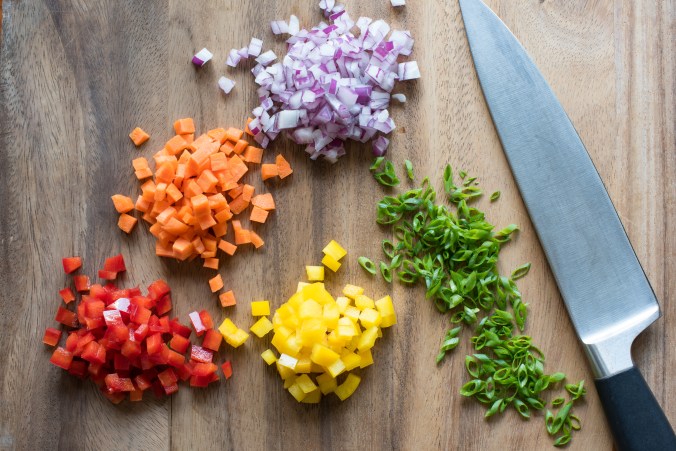
Learn basic cuts (mince, dice, julienne, chiffonade) and understand why each might be used in a recipe. Cutting foods into similarly-sized pieces means ingredients cook more evenly. Always keep ingredients flat and stable when cutting; if necessary, cut a thin slice from one side of the fruit or vegetable to provide an anchoring surface. Lay a damp kitchen towel under your cutting board to keep it from moving on the counter.

And above all else, PRACTICE PRACTICE PRACTICE. The only way to improve your knife skills is to practice them as often as possible. Knife skills are more muscle memory than anything else. Buy inexpensive vegetables and make lots of soups, chopped salads and mashed potatoes!

P.S. Want to learn more? If you’re in Denver, come to my hands-on knife skills class on July 25. I’ll guide you through the classic cuts and you’ll have plenty of opportunity to practice with your own knives and mine too! Details and registration here!

Food politics book club

Our house is filled with books. On shelves, stacked by the bed, in my office…the only place that doesn’t contain any books is the kitchen. N reads a lot of military history mixed with an eclectic selection of farming books and autobiographies, and my choices tend to be modern fiction plus just about anything on food. I feel as strongly about books as I do about food: if they’re not good, I won’t finish them. I have no sense of obligation having started a book; there are simply too many stellar books out there to waste time on the appallingly bad ones. I’ve written before about how choosing books for our trip was one of the toughest parts of packing; I didn’t care at all about which tattered shirts and frayed cargo pants I brought, but I cared a lot about the reading material.

cookbooks-4-sml.jpg

Because I talk a lot about food politics both here and in my cooking classes, I’m often asked for book recommendations. I’ve put together a compilation of some of my favorite books on food politics and America’s desperately compromised food system. Know that there are many more great selections out there, and if you have recommendations for books I haven’t included, please share them! If you’re looking for an even more comprehensive list of some of the best books on food politics, go here.
Cookbooks 1 sml

It is not possible to have a discussion about food politics in America without mentioning Michael Pollan. In my opinion, no author has done more to explain how what was once just “food” evolved into “industrialized agriculture.” I think Cooked is by far his most accessible work; even for me, The Omnivore’s Dilemma and The Botany of Desire get a little…technical. But really, anything by Mr. Pollan is guaranteed to get you questioning your assumptions. And if you can’t commit to reading his books, watch his Netflix series based on Cooked. Plus, his breathtakingly simple manifesto “Eat food. Not too much. Mostly plants.” is by far the best seven-word statement on food I’ve ever encountered.

Cookbooks 2 sml

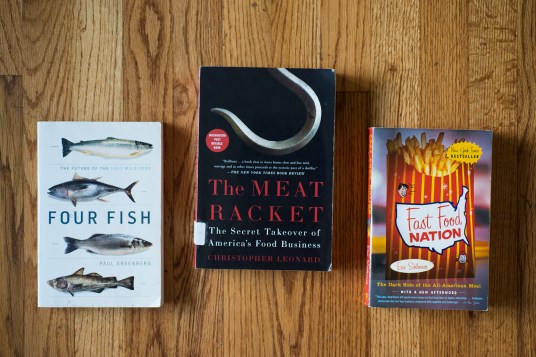
Four Fish, Paul Greenberg

It is virtually certain that certain species of fish currently used as food will become extinct within our lifetimes; our visit to Japan’s famous Tsukiji fish market simply stunned us with the sheer quantity of seafood caught and sold every single day. There isn’t much positive that can be said about the world’s fishing industry, but this book explains it in a clear, simple manner. (Please, if you’re in the U.S. and you choose to eat fish: consider buying only sustainably caught or responsibly farmed American seafood. Or eat much, much lower on the ocean food chain, like sardines and anchovies. Whatever you do, please don’t buy farmed fish from southeast Asia; their abuse of both humans and the environment makes ours here in the U.S. look positively benign.)

The Meat Racket, Christopher Leonard

One of the best and most difficult books I’ve ever read on our industrial meat supply, The Meat Racket exposes the brilliantly cruel “bracket” system used in modern CAFOs. This book is a carefully researched and shockingly grim portrait of the massive corporations like Tyson currently controlling the vast majority of America’s meat market, and of the farmers trying desperately to stay afloat in a game totally rigged against them. Read at your own risk; you’ll have a hard time buying frozen chicken nuggets after this one.

Fast Food Nation, Eric Schlosser

This book, published in 2001, is subtitled “The Dark Side of the All-American Meal” and could be rightfully argued as the one that started it all. No one really has anything nice to say about fast food in general; it is toxic to the people who eat it, the people who work there, the animals sacrificed for it and most definitely the planet. But it’s great for shareholders…or at least it was, until the fast food industry started slowing down after decades of growth. This is one area where there may actually be something positive on the horizon: fewer Golden Arches across our country.

Cookbooks 3 sml

Twinkie, Deconstructed, Steve Ettlinger

Ever been curious about sodium caseinate? How about modified food starch? Hydrolyzed soy protein? Polysorbate 60? Learn more than you ever wanted to know about how our processed food is made. (Remember, food at home is “cooked.” Food in packages is “processed.”) And we wonder why our gut microbes can no longer handle anything.

The Third Plate, Dan Barber

Last December, N and I had the honor of attending the Young Farmers Conference, held annually at Chef Barber’s Blue Hill at Stone Barns just outside of New York City. I’ve admired and respected this chef since his early days of farm-to-table cuisine; in the professional chef world, he is at the forefront as an advocate for less food waste and a more conscious approach to cooking and food overall. Simply one of my very favorite food books.

Tomatoland, Barry Estabrook

This book sort of pretends to be just about tomatoes and is actually much more about the workers planting and picking them, but it’s still worth a read. We’ve had out-of-season produce in supermarkets for so long that we rarely think about it anymore, but it’s not just the earth that takes a beating – the people do, too. This book almost singlehandedly brought about a very public and (somewhat) successful battle with fast food companies and supermarkets over fair pay for farmworkers; learn more here.

Animal, Vegetable, Miracle, Barbara Kingsolver

Kingsolver might be more known for her fiction, but when she and her family packed up and left Arizona for rural Kentucky, then documented their attempts to eat solely from their own land for a year, the food cognoscenti paid attention. It’s a deceptively simple book (with recipes!) that explains why modern turkeys can’t reproduce naturally and why organic certification is almost impossible for small farms to get and why you should bake your own bread, but there is a lot more under the surface. If you’re thinking about running away to your own piece of land as we are, this book will push you farther in that direction.

Other books I recommend not pictured here (most likely because I loaned them to someone):

The American Way of Eating, Tracie McMillan

Eating Animals, Jonathan Safran Foer

Salt, Sugar, Fat, Michael Moss

Anything by Marion Nestle

Anything by Joel Salatin


Work with what you have

We’ve returned home after five months away and are trying desperately to reinsert ourselves back into our normal lives. This is proving to be substantially more difficult than we had anticipated, but thankfully the task of cooking is always there to ground me. My aspirational motto for this summer (and forever, really) is “Work with what you have.” It’s easy to wish that circumstances were different, or that we had an alternate set of tools at our disposal to complete a specific task, but in the kitchen, as in life, sometimes you simply have to work with what you have. And so my task for the summer, at least, is to cook from our existing food supplies rather than buying more.

Grains and pulses

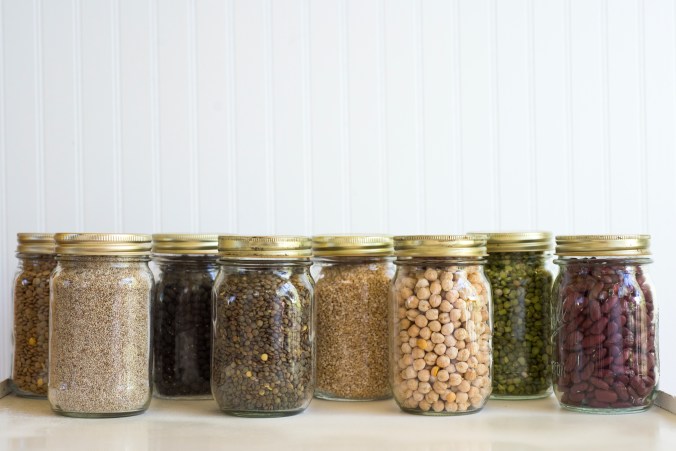
Dry beans, grains, seeds and legumes are a pantry staple.

By most estimates, about 40% of all edible food produced in America is thrown out (more, if it’s fresh produce) instead of eaten. This is a statistic that I cite often in my classes; I ask my guests to calculate their own food budget and determine how much money they’re throwing away. I’ve even gone so far as to put actual dollar bills in the trash can (later retrieved, obviously) because for some reason that sludgy green bag of decomposing kale in the bottom of the crisper drawer doesn’t seem to equate to real money to most people. Apparently we care about our food waste problem, but we’re just too busy to do anything about it.

Sauces

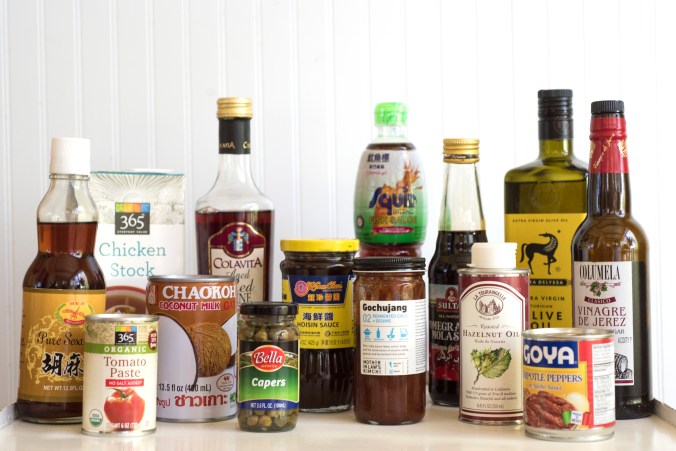
How to add flavor and interest to your food.

Americans spend less money on food than any country in the First World. Calories are cheap here and we’re obsessed with aesthetic perfection, plus we have absolutely no idea what all those “best by” and “use by” dates actually mean. (Answer: nothing. There are no regulations. Use your common sense; it’s designed to protect you from food poisoning. Plus, food manufacturers and grocery stores love those misleading labels because the sooner they expire, the sooner you buy more.) That means that not only do we waste food before it even arrives in the grocery store, but we buy more when our fridge and freezer and cupboards are already filled to the brim. Hence, the summer challenge.

Baking

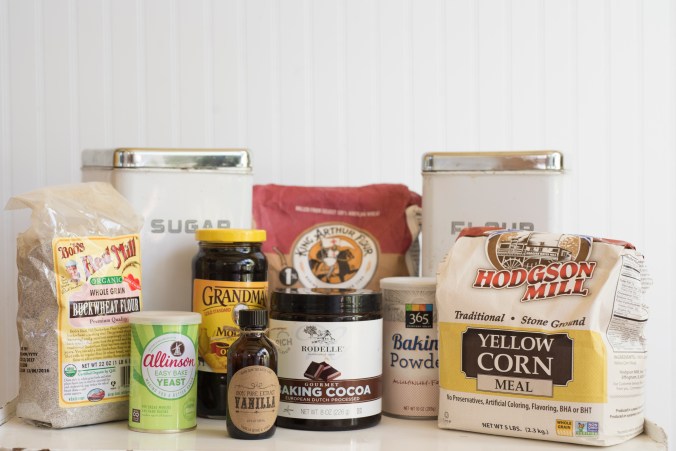
I bake frequently, so I keep a well-stocked baking pantry.

One of the most important concepts I try to get across in my cooking classes is the idea of cooking without a recipe. I would love not to hand out recipes in class, but am well aware that this would not endear me to my guests. I want people to feel comfortable working towards a basic end goal; i.e. “Tonight I’d like to make a stir-fry,” rather than “Tonight I’m making Mark Bittman’s Beef with Broccoli and I have to stop by the store on the way home to buy beef and broccoli and fourteen other specialty ingredients.” If you look in your fridge and you’ve got a little leftover steak plus some carrots and peppers (because you already used all the broccoli earlier this week), and you know you have rice in your pantry along with Asian basics like soy or hoisin sauce, then you’ve got a meal. Start with what you have, and figure out where you’re going from there.

Spice dishes dark

So much flavor hidden in these little dishes.

In addition to teaching people specific recipes (which I invariably deviate from in class – people hate this) I also teach how to stock your pantry. Oils and vinegars, sauces and condiments, spices and seasonings, grains, pasta, beans and legumes, plus freezer basics like frozen vegetables (which get a bad rap but are in many cases better and cheaper than fresh) all come together to form the basis of some truly amazing meals. I know that people who are new to cooking require the comfort and guidance of a recipe. But I also think that as you grow and develop as a home cook, you should challenge yourself to work with what you have, rather than buying exactly what you need. Oh, and those specialty ingredients you bought for that one recipe you made months ago but never used again? A quick online search for “What should I do with tahini?” goes a long way towards using those up.

Freezer

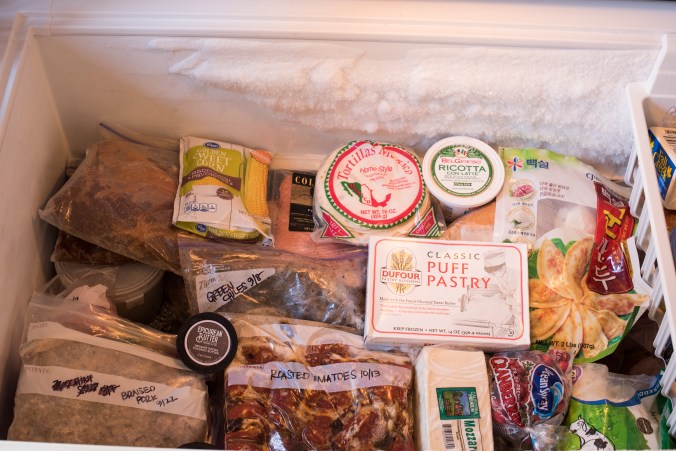
Don’t judge. I’m working on it.

So please, friends, try this at home. I’m willing to bet that you have at least two weeks’ worth of food in your house already. Challenge yourself – for a day, a week, even a month – to only cook with what you have. See if you can come up with interesting, delicious and healthy options to use up all that food you’re stockpiling. Learning how to trust yourself and improvise a bit in the kitchen is one of the biggest steps towards becoming a better cook, and I promise you that the reward is worth the effort.

Comer y beber en Madrid

Dear friends, it should come as no surprise by now that eating (comer) and drinking (beber) are two of our favorite travel activities. We are quick to search out food and market tours wherever we go, and Madrid was no exception. Many thanks to Jorge at Secret Food Tours for taking us on a gastronomic adventure through his city!

NJB_7856

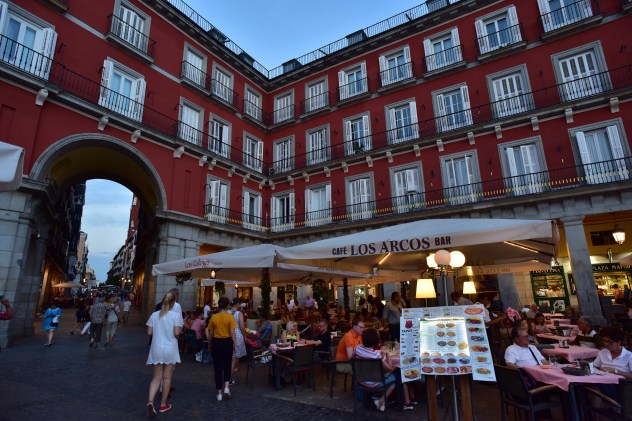
Madrid’s Plaza Major, a perfect example of Spain’s café culture.

NJB_7886.JPG

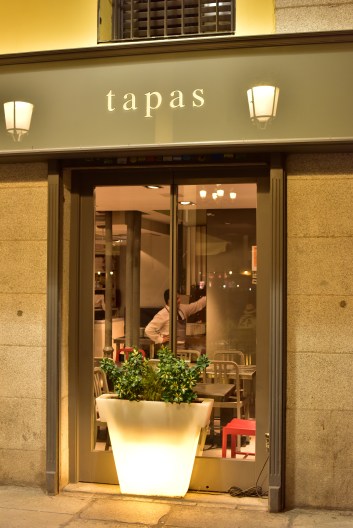
The Spanish verb tapear translates literally as “to eat small portions” – and of course from that we get tapas.  

NJB_7842

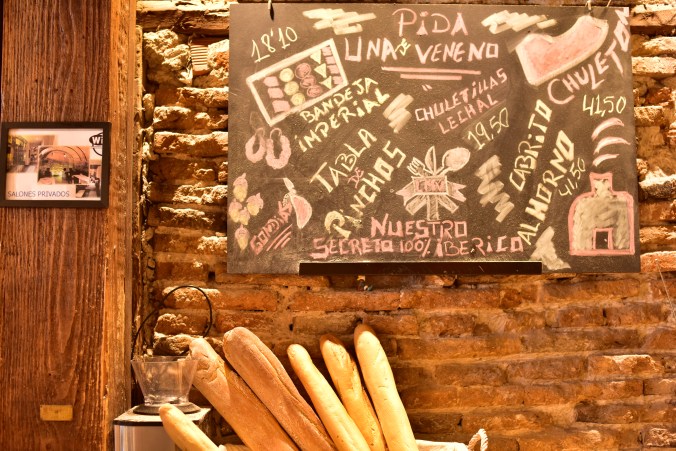
Chalkboard menus (and fresh baguettes) dot the city.

NJB_7841.JPG

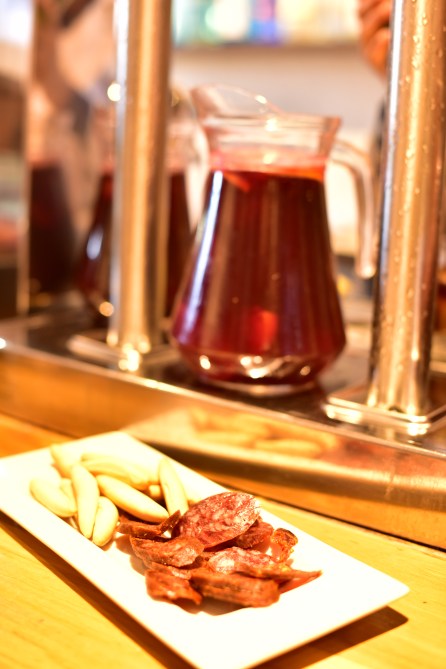
Chorizo and sangria. What more do you need, really?

NJB_7787

The city of Madrid issues plaques like the one above to stores and restaurants of historical significance in the city; this one dates from 1837. Many of these places pay rent that is far below market rates to keep their businesses open, because Madrid’s government has decided that they don’t wish to have the center of town filled with Starbucks, McDonald’s and tacky tourist stores able to pay inflated prices. Smart decisions like this help cities maintain their cultural character instead of becoming homogenized corporate copies.

NJB_7792

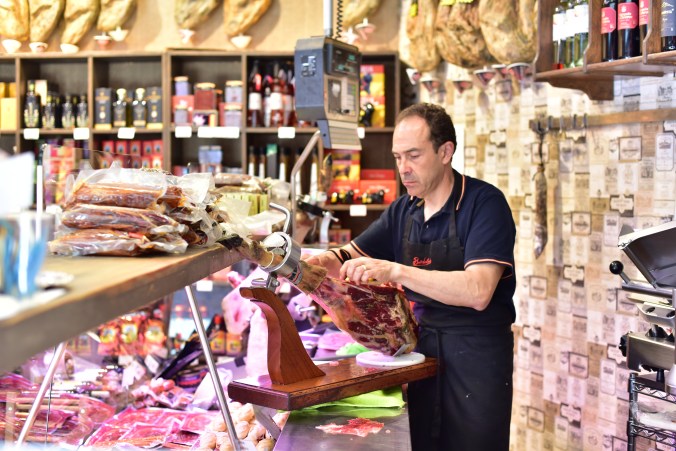
Slicing jamón by hand.

NJB_7851

Legs are hung for months or years to cure properly.

NJB_7795

Spain is justifiably famous for its jamón, which comes in different grades. Jamón ibérico, or Iberian ham, can only be made in Spain and Portugal from pigs that are at least 50% Iberian. The very best is called jamón ibérico de bellota, which comes from pigs allowed to forage in the wild for acorns, giving the flesh a sweet taste and silky texture. Jamón ibérico de bellota is so valuable that individual pigs often have armed bodyguards, since the entire pig can be worth as much as $4,000. Traditionally, it’s always shaved very thinly by hand and served as tapas with tiny breadsticks, above.

NJB_7849

Notice how the leg is stamped? Since they’re so valuable, it’s important that they can be traced to prevent forgeries and theft.

NJB_7798.JPG

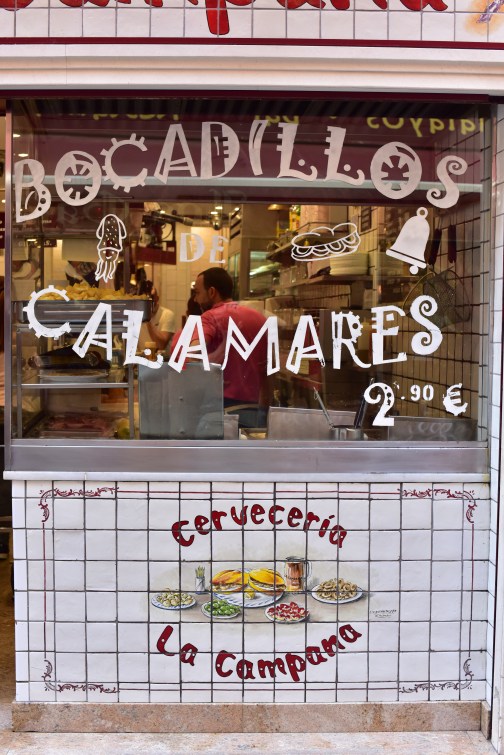
Calamari sandwiches are another classic snack in Madrid.

NJB_7809.JPG

NJB_7800.JPG

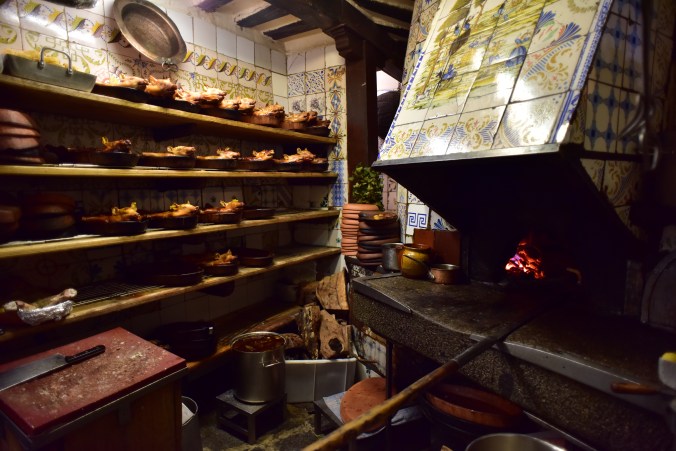
Did you know that the oldest continuously operating restaurant in the world is in Madrid? It’s famous for suckling pig, which you can see in the dishes on the left.

NJB_7775

One of the oldest pastry shops in Madrid…

NJB_7779.JPG

…and their famous ponche segoviano, a layered pastry made with marzipan.

NJB_7780.JPG

France gets all the press, but Spain makes its fair share of incredible pastries.

NJB_7838

NJB_7822

Jorge demonstrating how to pour Spanish cidre, made from apples grown in the north of Spain.

NJB_7835.1

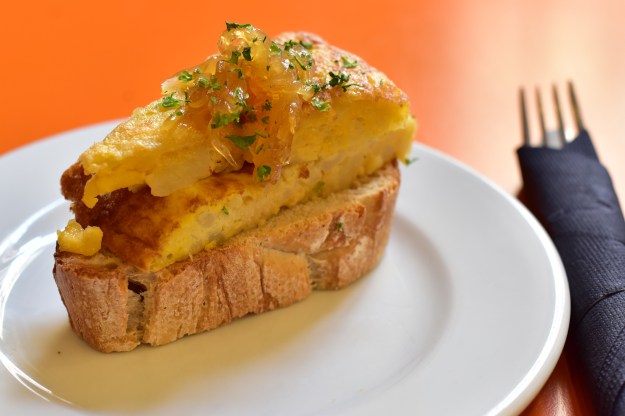
Classic tapas: a Spanish omelette, or tortilla, made of eggs, potatoes and onions, served on fresh bread. Simple, filling and delicious.

NJB_7831

A perfect pair: manchego and cidre.

NJB_7814

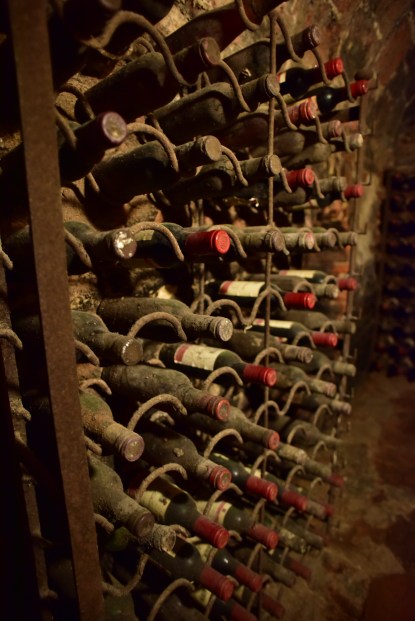
I’ll be in the cellar if anyone needs me.


Spice plantation

We spent a few days in Goa, a state in western India situated along the Arabian Sea. Up until 1961, Goa was a Portuguese colony; it’s a major tourist destination now and is famous for its beaches. It’s India’s wealthiest state, with a per-capita GDP nearly three times that of the rest of the country. While we’re not so much for beaches, Goa is also famous for its tropical flora and fauna, and we loved visiting one of its spice plantations.

NJB_7252

spice is a seed, fruit, root, bark, berry, bud or vegetable substance primarily used for flavoring, coloring or preserving food. Spices are different from herbs, which are parts of leafy green plants used for flavoring or as a garnish. Modern cooks definitely do not appreciate our plentiful and inexpensive supply of spices and herbs, many formerly so valuable that they were used as currency. (Want to incorporate more fresh herbs into your cooking? Join me on June 10 at the Denver Botanic Gardens. Learn more here!)

NJB_6637

A green cardamom plant, which will produce the familiar little seed pods.

NJB_6632

Black cardamom, which in Indian cuisine is used only for flavoring and isn’t eaten, unlike the green cardamom pods.

The majority of the most common culinary spices are grown in tropical areas, roughly twenty-five degrees north and south of the equator. This is the same area of the world where coffee and cacao are grown, too.

NJB_6651

Nutmeg on the tree.

Two of our most-loved baking spices, nutmeg and mace, both come from the same tree. Nutmeg is the seed and mace is the lacy covering of the seed. This is the only plant that produces two different commercially viable spices.

NJB_6704

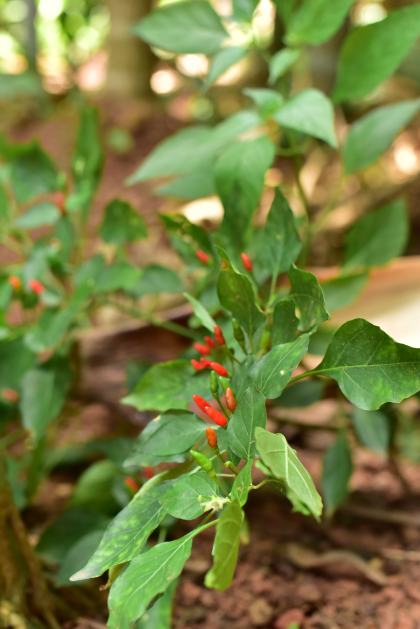
Peri peri chile peppers. Very small and very potent.

NJB_6638

Arabica coffee beans.

NJB_6653

This plant looks rather unassuming, but it’s actually the world’s second most expensive spice, after saffron. That vine will eventually produce vanilla pods.

NJB_6715.1

Turmeric is the new trendy ingredient in everything from lattes to roasted cauliflower. Here, the root has just been harvested…

NJB_5551

…and here it’s for sale in the market.

NJB_6625

Unripe peppercorns.

Black, green and white peppercorns all come from the same plant – like tea, the variation lies in how they’re dried and processed. (Pink peppercorns come from an entirely different plant altogether.) These were once so valuable that a serf could buy his freedom with a pound of peppercorns.

NJB_5538

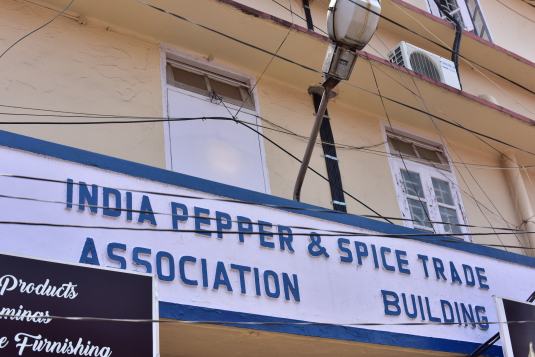
Spice traders at work.

NJB_5533

NJB_5541

NJB_6533

NJB_5559

NJB_5864

A gorgeous array of after-dinner refreshers, mostly based on fennel seed.

The next time you’re rummaging through your spice cabinet, remember that these seemingly innocuous plants changed the course of history! And while those of us in temperate zones can’t grow these spices without a greenhouse, you can easily grow lots of useful culinary herbs like basil, parsley, chives, mint and more in containers or a backyard garden.

NJB_6696

And if anyone can tell us what tropical spice plant this is, we’d be most grateful…it’s the only one we didn’t make a note of!

Street food

After the markets, street food vendors are one of the most colorful sights in southeast Asia. From fresh fruits and vegetables to juices, meat and snacks, just about anything you fancy is available from a street stall. Although you might not know exactly what you’re eating, it’s worth watching just for the show.

NJB_2928

A lobster stall in Nha Trang setting up for business.

NJB_2926

Crocodile farming – for both meat and leather – is big business in central Vietnam; the industry is definitely not PETA-approved. This enticement is outside a restaurant in Nha Trang.

NJB_2645

These delicious little packets contain sticky rice stuffed with bananas, eaten as a snack or dessert.

NJB_3735

These lovely women are running a rotee stand. Rotees in Thailand fall somewhere between a crêpe and a pancake and are filled with sweet or savory ingredients.

NJB_3723

Carts are set up along just about every street.

NJB_2923

This woman is making Vietnam’s world-famous banh mi sandwich, sold for about 75 cents.

NJB_2911

These tiny bananas (about the length of a finger) are so much more flavorful than the standard Cavendish variety we get at home.

NJB_3173

Fancy some whiskey or red wine with your street food meal? You can have it.

NJB_3743

Perhaps you’d like a meatball skewer?

NJB_2496

Salted whole fish, ready to eat.

NJB_2486

Fried sweet potato, banana and other tasty treats.

NJB_2597

The “special meat” restaurant outside of Siem Reap. Sit, stay…good dog.

NJB_2488

Little sweet cakes, served hot.

NJB_2781

Skewers and more, ready for the grill.

NJB_2755

Baling sugarcane on the streets of Phnom Penh.

NJB_2479

The sugarcane is crushed through a press to produce delicious juice, which is flavored with fresh lime and sold in little baggies as a refreshing drink.

NJB_2656

Chefs demonstrate their stir-fry skills at Siem Reap’s night market.

NJB_3740

Honestly, I don’t know. But what colors!