As is our custom every year about now, Finding Quiet Farm will be going on hiatus until January. In true agricultural tradition, we believe the dark, cold winter months are a time of rest and reflection, and this year more than any other demands that we reset and recharge. We will spend the winter baking bread, sewing quilts, reading books, rebuilding engines and (hopefully) crafting a plan to safely launch our cooking classes in 2021. If 2020 has taught us anything, it’s that adaptability, patience and grace are key to surviving in this new world.
We might not be writing and photographing each week, but we are still here. If you want to ask a question about bread or squash or beans or kimchi or hummus or planning a garden or buying ethical meat, please contact us. If you want to order handmade baked goods, like fresh sourdough loaves and naan and crackers (local pick-up only!), please contact us. And if you simply want to say hello, please contact us. Be kind, and stay safe, active and healthy. Cook something delicious and nourishing. Take good care of yourselves, dear friends. We look forward to seeing you here again in the new year.
There’s no question that it’s been one hell of a week. Scratch that: it’s been one hell of a year. Over here at Quiet Farm, though, we carry on planting, tidying, baking, canning, caring for our animals and preparing for winter. Here are a few things we’ve been up to recently, if you’d like to see.
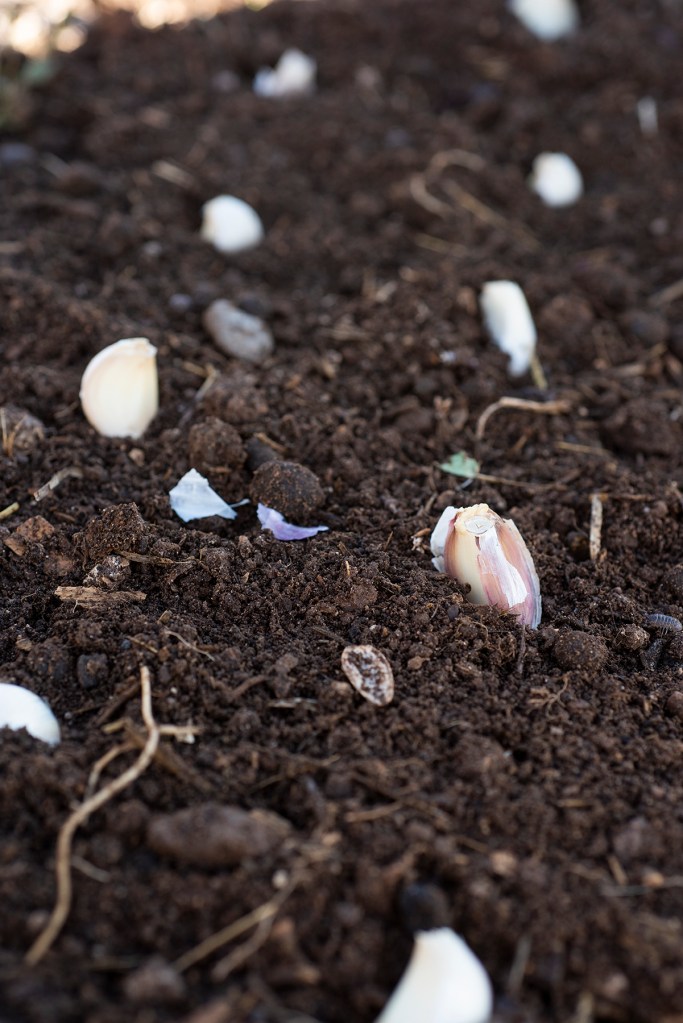
Ready for a long winter’s nap.
We planted our 2021 garlic crop this week; it’s tucked under a warm, cozy blanket of compost, alpaca manure and straw. Garlic is a unique annual crop in that it stays in the ground for about nine months, but during that time it requires almost no maintenance beyond occasional watering. As usual, we’d separated this year’s garlic harvest and saved the largest cloves for planting; thanks to garden magic, each individual clove grows into a full head. We planted about one hundred and fifty cloves in two new beds, then a friend texted with an offer of extra garlic that she had over-ordered (thanks, Judy!), so another seventy cloves went into an additional row. Every year I run out of garlic before the July harvest, and every year I vow to plant more. Will over two hundred heads be enough for next year? Stay tuned, and vampires beware.
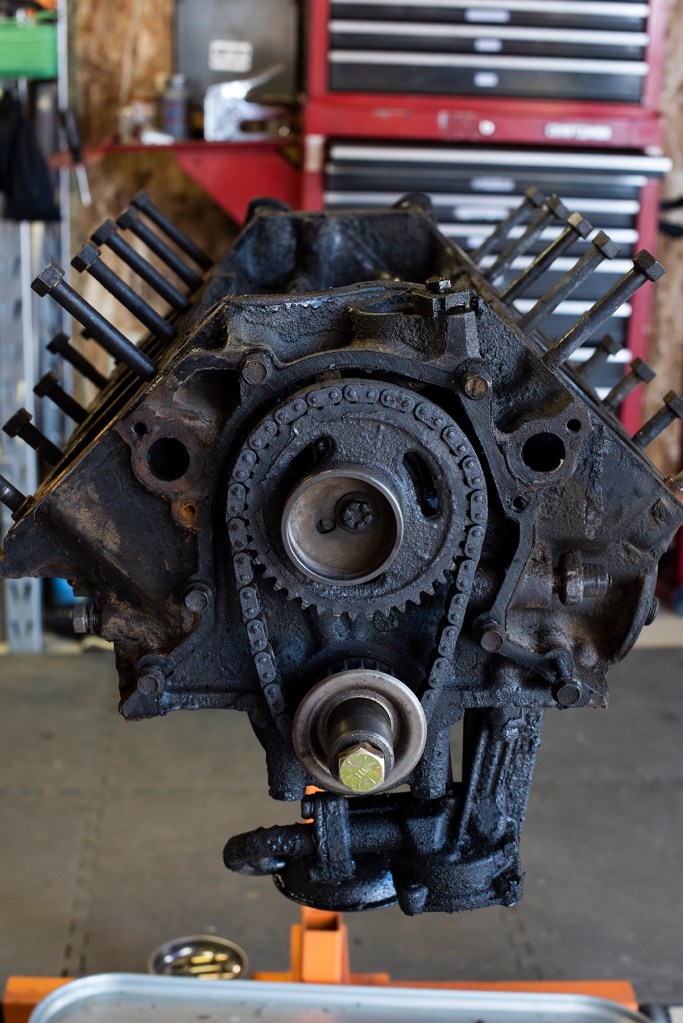
Simple. Elegant. Gorgeous. (Also filthy.)
My winter will hopefully involve lots of sewing and reading, and N will focus his time and energy on this rescued beauty. For all you gearheads out there, this is a classic example of American motor muscle: a Ford 289 small-block V8 manufactured in the summer of 1964; it likely came out of a Mustang or a Galaxie. At the moment, it needs a lot of cleaning and possibly a replacement part or two, but who knows what it could accomplish once restored to its former glory? While electric cars might be all the rage, there is much to be said for the elegant simplicity of a powerful internal combustion engine. (We obviously love beautiful 1960s Americana here; see also the recently-acquired Singer Touch ‘N’ Sew.)
So thrilled with our dry bean harvest!
I may well be more proud of the beans we grew than just about any other crop. While I love growing vegetables, with each passing year (especially when there’s a pandemic and associated food scarcity!) I am more and more committed to growing long-term food storage crops like grains and beans. We planted just one small row of these ‘Peregion’ beans this season, and though I doubt I have more than a few pounds of homegrown beans for the winter, I know that I’ll be expanding on the varieties we grow next season. Dry beans are easy to grow and to store, require very little post-harvest processing and punch well above their weight in terms of nutritional value. Plus, they’re delicious! We hope to grow a lot more beans here at Quiet Farm.
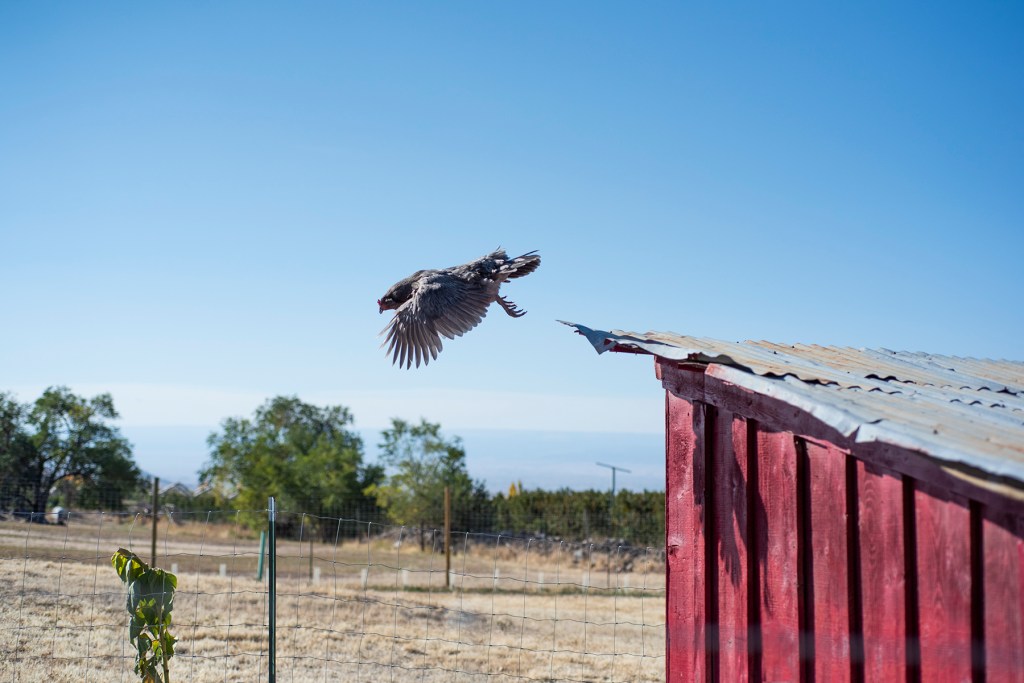
Flying the coop.
Domestic chickens are the closest living relatives of the T.Rex (that’s true) and have similarly tiny brains. Here, one of our genius hens decided to make her way to the top of the chicken house, but was understandably somewhat perplexed as to how she might get down – although she did finally make the leap. Little does she know that the roof offers zero protection from raptors, of which we have many, and actually makes a perfect runway for a hungry hawk searching for a tasty chicken meal. If she continues her high-flying adventures, she’ll learn that lesson the hard way.
This is how we roll.
True confession time, friends: all November and December issues of food and entertaining magazines (Bon Appetit, Food & Wine, Martha Stewart, etc.) received at Quiet Farm usually go straight into the library donation bin without even being opened once. Such is the extent of my loathing for the end-of-year holidays and all the attendant expectations, “must-have foods,” waste and excess! This year, however, a customer requested soft, fluffy dinner rolls, and I wanted to experiment with a few different iterations. Plus, I was completely sold on this caption: “If food could give you a hug, these rolls definitely would.” As we face the end of one of the most difficult years any of us have ever experienced, is there anything we all need more than a giant, warm, comforting hug? I think not. (P.S. The rolls are a bit labor-intensive but excellent, and they work at altitude. Worth your time.)
Wishing everyone a calm, restful and healthy week.
When it comes to pantry staples that are simple and inexpensive to make rather than buy, hot sauce should definitely be high on the list. I can’t speak for your household, but we enjoy a lot of hot sauce and related spicy condiments (salsa, pickled peppers) over here, and it’s much more fun to make our own than to buy these.
Homemade hot sauce only requires three ingredients.
Unlike yogurt, hummus and bread, which are also simple and inexpensive to make, store-bought hot sauce typically isn’t full of terrifying ingredients (that said, always read the ingredient label). The most popular hot sauces in the U.S. include Tabasco, Frank’s, Texas Pete and Cholula, all of which are variations on the classic aged chile, vinegar and salt combination. Sriracha, which has only recently staked its claim on the American hot sauce market, is a sweeter hot sauce; sugar is its second ingredient. But as with anything you choose to make rather than buy, hot sauce can be infinitely customized to your own tastes.
Our first snowstorm arrived late last night, and with that, the 2020 growing season at Quiet Farm has officially concluded. Much of the past week has been spent preparing for this introduction to winter; though our skies will clear and temperatures will rise again later in the week, none of our annual crops will survive this cold snap. We’ve been threatened with hard freezes prior to this and have been lucky enough not to lose any plants; our season lasted far longer than expected. We’re hopeful that this early, wet storm will help the firefighters battling the numerous destructive wildfires currently raging across Colorado.
Flooding our pasture with snowmelt from the Grand Mesa.
We ran our final irrigation last week, then broke down most of our gated pipe so that we can repair any damaged gates and valves during the off-season. We have stellar water shares here at Quiet Farm, and thanks to N’s careful planning, we made our water last all season. This year was definitely a rebuilding year for our pasture, and we’re optimistic that our plans for next year’s irrigation run, which include reseeding, marking and thoughtful grazing by our herd, will yield even better results. Small farms are key to fighting climate change – if managed well, land like ours can absorb far more carbon than it emits. Establishing these “carbon sinks” across the country should be of highest priority; if this season’s devastating wildfires are any indication, the Rocky Mountain West has a tough road ahead.
It’s been an age since we’ve done a book round-up, mostly because I haven’t read much recently. For someone who typically tears through about a book a week, on average, this has come as somewhat of a surprise. I’d love to attribute my lack of reading entirely to our second full farming season, but the truth is, I did a lot of doomscrolling this year, particularly during spring and summer. This was a pointless, destructive habit that benefitted no one – did I really need a to-the-minute update on western Europe’s infection rates? – but a habit that was tough to break, nevertheless. I also stop-started an unreasonable number of books: I’d pick something up, hoping to get lost in a story or a world, only to find that I couldn’t focus or that the book contained just as much (or more) tragedy as real life. I found myself unable to finish most of the books I began, not my normal tendency at all.
As we move from a busy summer and fall into the quieter, colder days of winter, I aim to increase my book reading and limit my news consumption. With that in mind, here are a few capsule reviews of books I’ve read recently (and not so recently, too).
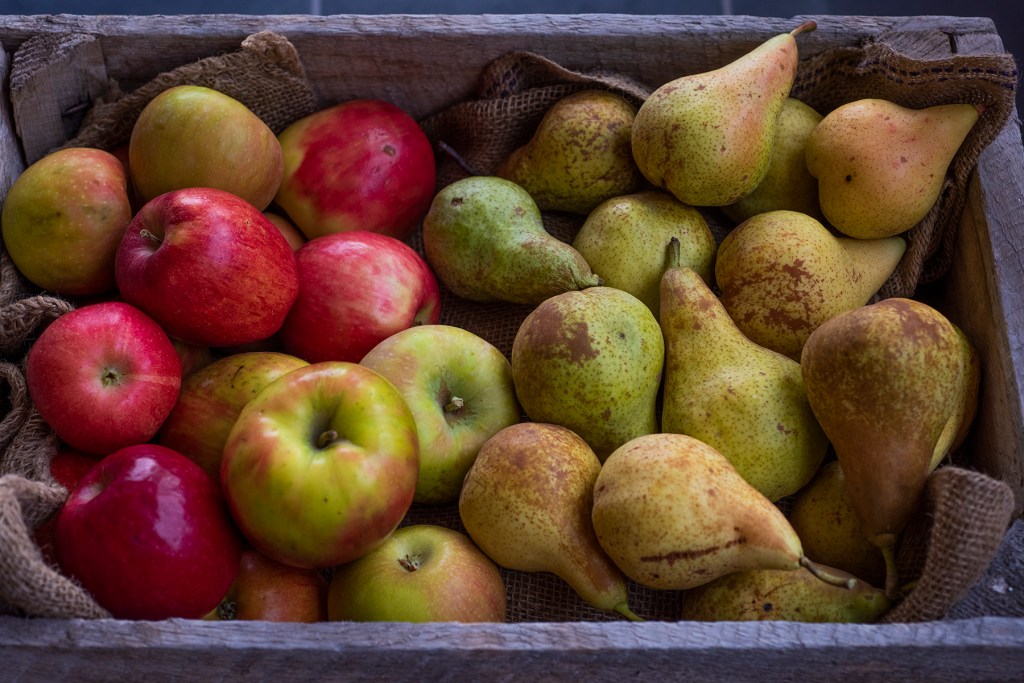
Fresh, local fruit is one of the great joys of living where we do.
There is much to be done outdoors – plant garlic, collect seeds, tidy irrigation – but there is much to be done indoors, too. We are in the height of harvest season, and every available surface in our house is littered with canning jars, dehydrator trays and other preservation projects in various stages of completion. Our goal is to eat locally as much as possible, and in the dark months of winter and early spring, that means we eat from the pantry and freezer – but only if we’ve done the hard work in advance.
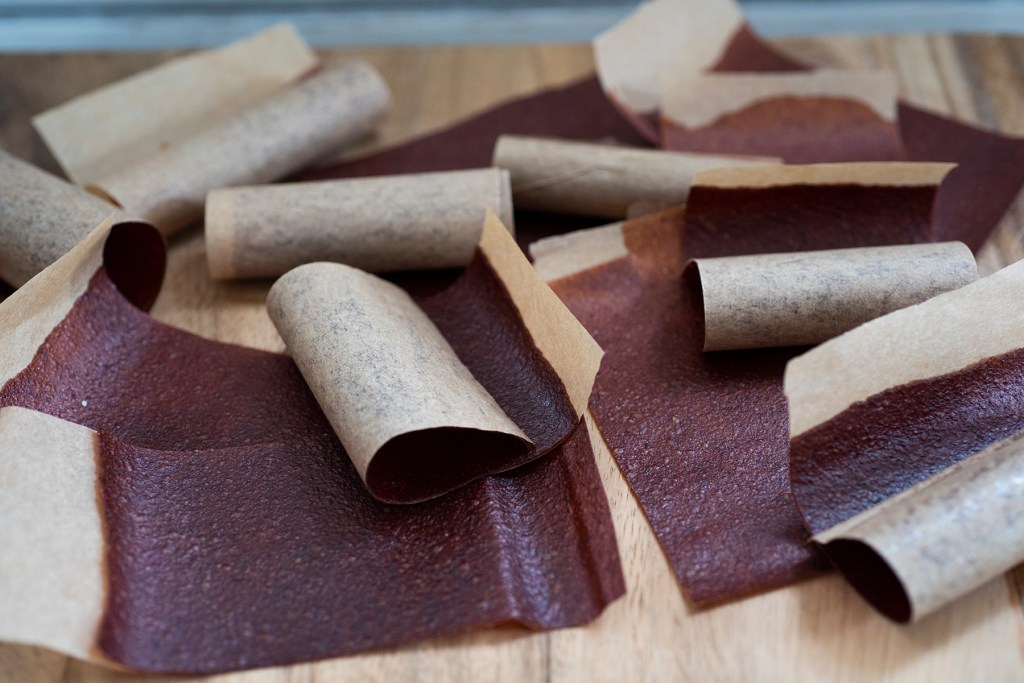
Homemade fruit leather makes a perfect healthy and portable snack.
Obviously, no one has to preserve and store the harvest any longer, and many would think the extra work we do this time of year is preposterous. Preservation is a dying art, because we live in a magical world where any food we might want, in season or not, is available with a single click. Also, most of us don’t grow our own food, so there’s even less incentive to preserve. Where our great-grandmothers might have been obligated to can their summer vegetables in order to have anything to eat in winter, we most definitely are not. And preserving can be tedious, time-consuming work. Why, then, go through all this extra effort?
How are things in your world, friends? It’s officially autumn here, with clear bluebird days and crisp, cool nights; the destructive Pine Gulch fire, sparked at the end of July about seventy miles away, is thankfully entirely contained. Our neighboring orchards are nearly all harvested, and our task list is packed with tidying, organizing, preserving, cleaning and stocking up for what we hope is a very snowy winter.
Hay for animal feed has to stay dry at all costs.
The winter feed for our alpacas and llama has been delivered and safely stored in our de facto hay barn. As this is our first year with the animals, we had to guess on quantities and are hoping that we won’t find ourselves out of hay in frigid January with no green pasture on the near horizon – in a situation like that, a hay farmer will be able to charge us whatever he wishes, and rightfully so. Our llama, Kingston, has already figured out that with some crafty contortionist maneuvering he can reach the fresh bales through the corral panels. Bless his tenacity, and his flexible neck.
“It’s difficult to think anything but pleasant thoughts while eating a homegrown tomato.” -Lewis Grizzard
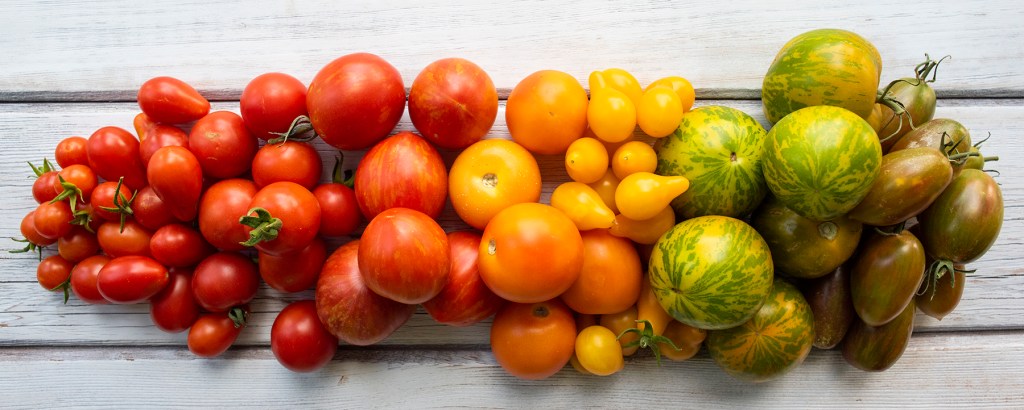
Although our recent cold snap didn’t kill our tomatoes, the season is definitely wrapping up. Our daytime temperatures remain warm and pleasant, but overnight lows stay steady in the low 50s, and tomatoes do not thrive in this weather; as one would expect, they start to taste refrigerated. To mark the natural conclusion of the warm-weather crops, we offer you a review of this season’s tomatoes.
We talk a lot about saving seeds here at FQF, and since fall is definitely underway, they’re on our minds more than ever at the moment. In addition to all of our canning and preserving projects and other preparations for winter, collecting and storing seeds is a big part of our autumn task list.
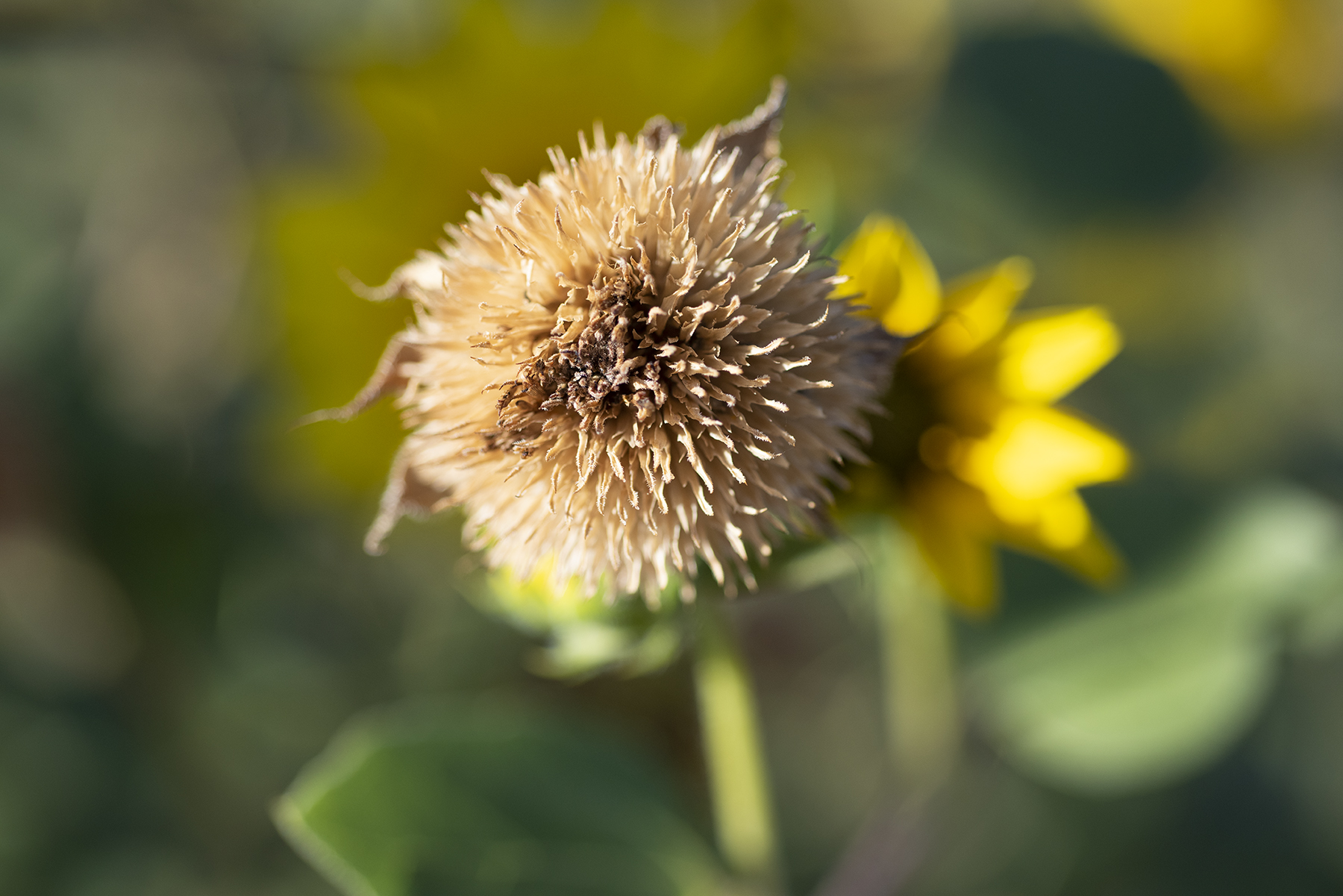
Collect your sunflower seeds before the birds and squirrels do!
We use the idiom “go to seed” to refer to someone or something that’s let itself go. It’s become messy or unattractive or disheveled or unkempt; it no longer appears tidy and neat. It’s obviously a phrase of agricultural origin, and this is the time of year when it takes on significance in the garden, as most annuals are coming to the end of their natural lives. In their quest to reproduce, the plants have gone to seed: typically they flower first, then the flowers produce seeds, which are spread by wind, insects, animals or human intervention.
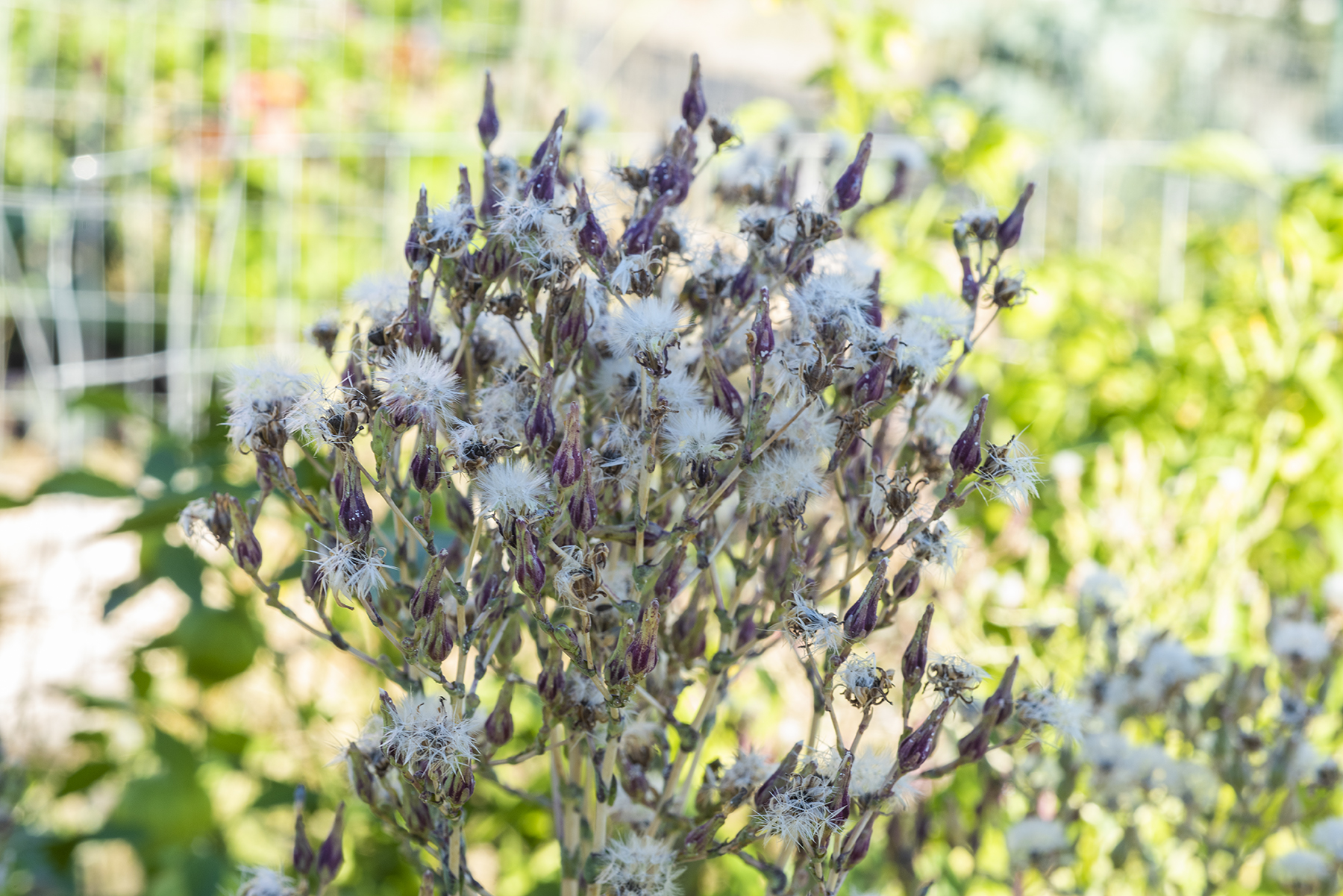
Lettuces are one of the easiest plant families from which to save seeds.
It’s unfortunate, truly, that so many gardeners are offended by the appearance of plants gone to seed, and especially in perfectly manicured suburban settings are likely to rip plants out at the first sign of flowering. Letting plants proceed through their natural life cycle teaches you a lot about botany and helps you become a better grower. Plus, if you’re careful and diligent, you can start building your own unique seed bank, which will both save you money and improve plant diversity.
Slowly but surely, summer is giving way to fall – or winter, really, considering Tuesday night’s forecast. From a high today of just above 90, the thermometer will plummet sixty degrees to a projected hard freeze Tuesday night, and possibly snow, too. This shockingly early first frost (it usually occurs in the first or second week of October) is on-brand for the utter debacle that is 2020, and it will likely kill all of our tomatoes, peppers, squash, cucumbers, flowers and delicate herbs. None of these plants are even close to finished for the season, so our overall yields will be cut in half, at least. It’s a terrible, heartbreaking situation for any farmer, and we’re no exception.
At the moment, though, we still have lots of blooms on the farm, and it’s fascinating to watch the flowering plants shift with the seasons. Here are a few we’ve spotted recently (see blossoms from earlier this season here and here). After Wednesday morning, all of these will have vanished.