Work with what you have

We’ve returned home after five months away and are trying desperately to reinsert ourselves back into our normal lives. This is proving to be substantially more difficult than we had anticipated, but thankfully the task of cooking is always there to ground me. My aspirational motto for this summer (and forever, really) is “Work with what you have.” It’s easy to wish that circumstances were different, or that we had an alternate set of tools at our disposal to complete a specific task, but in the kitchen, as in life, sometimes you simply have to work with what you have. And so my task for the summer, at least, is to cook from our existing food supplies rather than buying more.

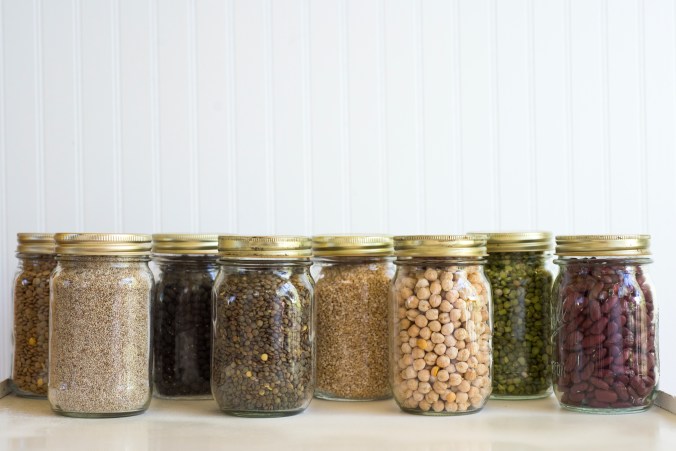
Grains and pulses

Dry beans, grains, seeds and legumes are a pantry staple.

By most estimates, about 40% of all edible food produced in America is thrown out (more, if it’s fresh produce) instead of eaten. This is a statistic that I cite often in my classes; I ask my guests to calculate their own food budget and determine how much money they’re throwing away. I’ve even gone so far as to put actual dollar bills in the trash can (later retrieved, obviously) because for some reason that sludgy green bag of decomposing kale in the bottom of the crisper drawer doesn’t seem to equate to real money to most people. Apparently we care about our food waste problem, but we’re just too busy to do anything about it.

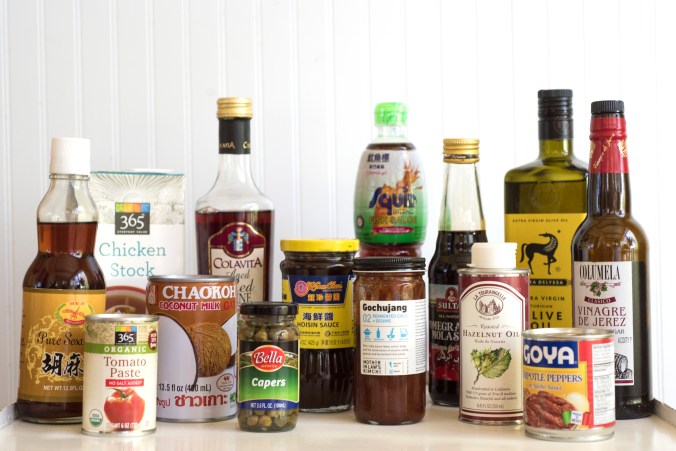
Sauces

How to add flavor and interest to your food.

Americans spend less money on food than any country in the First World. Calories are cheap here and we’re obsessed with aesthetic perfection, plus we have absolutely no idea what all those “best by” and “use by” dates actually mean. (Answer: nothing. There are no regulations. Use your common sense; it’s designed to protect you from food poisoning. Plus, food manufacturers and grocery stores love those misleading labels because the sooner they expire, the sooner you buy more.) That means that not only do we waste food before it even arrives in the grocery store, but we buy more when our fridge and freezer and cupboards are already filled to the brim. Hence, the summer challenge.

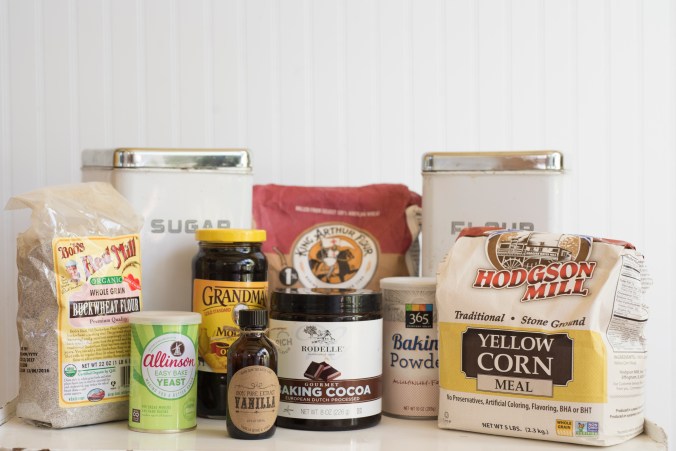
Baking

I bake frequently, so I keep a well-stocked baking pantry.

One of the most important concepts I try to get across in my cooking classes is the idea of cooking without a recipe. I would love not to hand out recipes in class, but am well aware that this would not endear me to my guests. I want people to feel comfortable working towards a basic end goal; i.e. “Tonight I’d like to make a stir-fry,” rather than “Tonight I’m making Mark Bittman’s Beef with Broccoli and I have to stop by the store on the way home to buy beef and broccoli and fourteen other specialty ingredients.” If you look in your fridge and you’ve got a little leftover steak plus some carrots and peppers (because you already used all the broccoli earlier this week), and you know you have rice in your pantry along with Asian basics like soy or hoisin sauce, then you’ve got a meal. Start with what you have, and figure out where you’re going from there.

Spice dishes dark

So much flavor hidden in these little dishes.

In addition to teaching people specific recipes (which I invariably deviate from in class – people hate this) I also teach how to stock your pantry. Oils and vinegars, sauces and condiments, spices and seasonings, grains, pasta, beans and legumes, plus freezer basics like frozen vegetables (which get a bad rap but are in many cases better and cheaper than fresh) all come together to form the basis of some truly amazing meals. I know that people who are new to cooking require the comfort and guidance of a recipe. But I also think that as you grow and develop as a home cook, you should challenge yourself to work with what you have, rather than buying exactly what you need. Oh, and those specialty ingredients you bought for that one recipe you made months ago but never used again? A quick online search for “What should I do with tahini?” goes a long way towards using those up.

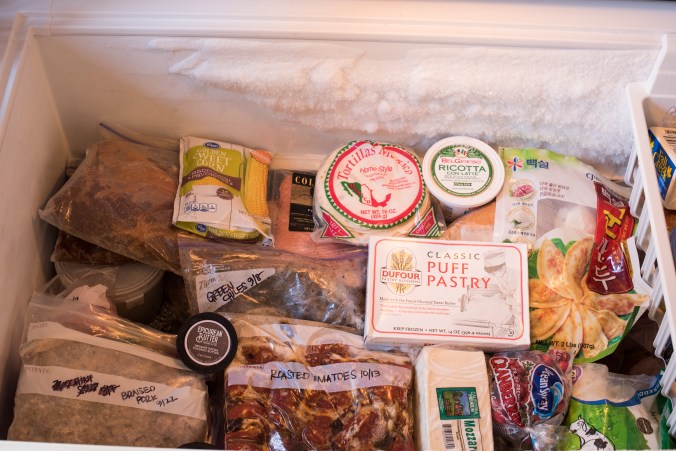
Freezer

Don’t judge. I’m working on it.

So please, friends, try this at home. I’m willing to bet that you have at least two weeks’ worth of food in your house already. Challenge yourself – for a day, a week, even a month – to only cook with what you have. See if you can come up with interesting, delicious and healthy options to use up all that food you’re stockpiling. Learning how to trust yourself and improvise a bit in the kitchen is one of the biggest steps towards becoming a better cook, and I promise you that the reward is worth the effort.

32,831 miles later

About eight months ago, we decided to put our regular lives on hold for a brief period and venture out to see the world again. We were heartsick and weary and in desperate need of a break from pretty much everything except each other. So we gave away our chickens, threw a few clothes in a backpack and locked up our house. And thus it happened that on a chilly January day, we left Colorado for Japan.

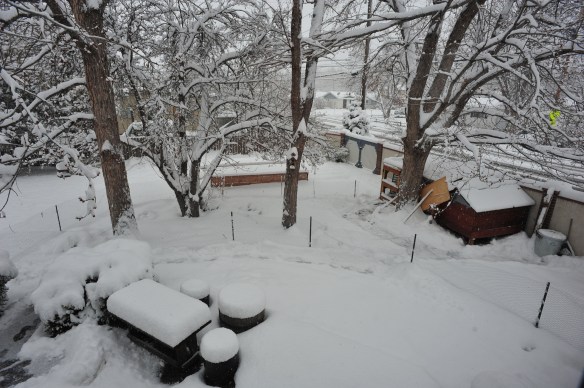
Garden Snow 01

Colorado

Tokyo Fuji sunset 01 sml

Japan

In Japan, we visited monkeys in hot tubs and worked on farms. We ate ramen and tempura and so many other delicious things. We walked Tokyo and Kyoto and fell deeply, completely in love with a country so strange and different and welcoming and lovely that we cannot wait to return.

New Zealand 01 sml

New Zealand

From Japan, we flew to New Zealand. We rented a ragged campervan and drove the length and breadth of the country. We stumbled on an old sheep station and did some stunning walks and learned how macadamia nuts grow. And we discovered that we are perfectly content to live in a campervan…and we plan to do that again soon, too.

Cambodia 01 sml

Cambodia

After New Zealand, we were off to southeast Asia. We started in Cambodia with Angkor Wat and we also saw interesting things being made, like incense and rice noodles and tofu. Oh, and it was hot. (At least we thought so until we got to India, where we learned what heat really is.)

Da Nang 03 sml

Vietnam

We traveled overland to Vietnam, where we jumped on trains, dodged motorbikes, devoured street food and struggled to learn more about a conflicted country with a conflicted history.

Chiang Mai sml

Thailand

Then it was time for a brief rest in Thailand; we went to more markets and bicycled through rice paddies and learned how to make handmade paper. We didn’t ride any elephants but we loved our time on the Banana Pancake Trail.

Flower Market 01 sml

India

No matter what, we weren’t ready for the heat and noise and crush and total sensory assault that is India. We’ve never traveled anywhere that we loved and hated in equal measure – sometimes in the exact same moment – and this complicated country has for certain gotten under our skin. We’ll be back here, too, and much better prepared this time.

Madrid palace 01

Spain

We flew from India to England, with a brief jaunt to gorgeous Madrid. This is one hell of a city…we miss drinking canas and eating jamón y queso at 2AM with hundreds of other people in the city’s beautiful plazas.

Bushby 01 sml

England

We finished with some restorative time in the Midlands’ lush, rolling hills, where the innumerable shades of intense green defy belief. Hours of walking with only cows and sheep for company and then perhaps a brief stop at the local pub for a pint of Tiger. It’s not the worst way to spend a day.

Denver Moon

Colorado

And that brings us to now. We’ve been home for about three weeks and we’re struggling to adjust. This is not the country we left; it has been immensely challenging to reconcile the joy and freedom and lovely people of our travels with the rage and divisiveness and fear currently smothering all of us like a dense fog. But we’re back on our bikes, we’re volunteering on a goat farm and we’ve planted our garden. And this fall, we’ll be out on the road again to search for our farm property in earnest. Thanks for joining us on our travels over these past months and please stay tuned, friends, as our journey has just begun. We’re off to find Quiet Farm.

The realities of travel

Friends, join me in the Trust Tree for just a moment and let us speak honestly. Let us speak honestly about the realities of travel, or Everything Is Not Always As Perfect As It Seems. As you are all well aware, we live in a manufactured world, where fake news and social media dominate our feeds and our brains. And the truth is…well, not everything is as it seems. This is especially true when it comes to travel.

NJB_1438

No, camping next to an airport won’t be loud at all. Why would you think that?

When you see beautifully Instagrammed photos of your friends and family sunning and sipping fruity cocktails on some pristine white sand beach, you might think, “What jerks! Why are they on vacation and I’m slaving away in this hellhole?” But what you don’t see in that perfect photo is the tortuous four-hour ride in a rickety school bus over gravel roads to get there, the thousands of sandflies currently attacking them, and the bar bill where those cocktails were $25 each.

IMG_20170205_192113061.jpg

What a stunning beach! Is there a backstory? 

Travel is not always glamorous. In fact, unless you travel at a pretty high level (which we do not), travel is actually rarely glamorous. And this is where in a normal travel article I would pleadingly claim, “But that’s where the best experiences happen! You know, when everything goes wrong!” Rubbish. The best experiences happen when you accept that many, many things are going to go wrong, or at least take ten times longer than you thought they would, and you learn to deal with it anyway. That’s what good travel actually encompasses. Before we left, I clipped the following unattributed quote and pasted it in my travel journal: “I’ve always felt that lowered expectations are the key to a great holiday.” This has proved relevant on more than one occasion during our travels.


NJB_9531

Kyoto’s futuristic train station.

Allow me to provide merely one example: N and I wanted to do some laundry. Simple enough. We’re each travelling out of one large backpack, so doing laundry every week to ten days (unless we’re on a farm in Japan wearing all of our clothes at one time) is adequate. One Saturday, we decided to do our laundry early the following morning as we had to leave our campsite by 7AM, and the museum we wanted to visit that day didn’t open until 10AM. Three hours should be more than enough, right? So we do what every modern traveler might do: we Google “24 hour Laundromats in Wellington” and find two likely candidates.

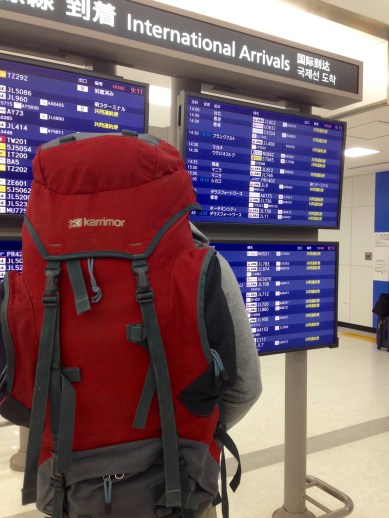
FullSizeRender (1).jpg

This backpack has served N well since he first ventured to Honduras more than fifteen years ago.

We wake up Sunday at 5AM and get ourselves together. By 5:30 we’re on the road, but our GPS has decided that it’s taking the morning off for reasons unknown. We have a vague knowledge of downtown Wellington from walking the previous day, but the Laundromats we’re heading for are definitely not in the touristy areas. So we opt to troll a few downtown hotels, waking up sleepy front desk staff and asking for old-fashioned paper maps. When we finally get one, it just reaches the outer edge of the area we’re headed for, meaning we’ll have to wing it from there. (Oh, and if you’re wondering why we didn’t just use GPS on our phones? When your American cell service provider swears that you’ll have “really fast unlimited data in over 140 countries,” THEY ARE ABSOLUTELY AND TOTALLY LYING.)

NJB_1441

The interisland ferry from Wellington on New Zealand’s North Island to Picton on the South Island. The photo was taken at 5:15AM; travel isn’t always about sleeping in.

So. Now the sun is just coming up, and I’m trying to use a paper map (remember that you always have to be in the map to navigate) to guide N through the narrow, twisty, turny, windy streets of Wellington (much like the hilliest parts of San Francisco) in a campervan definitely not designed for such silly Fast and the Furious games. We just make it to the first Laundromat when the GPS decides to show up for work. And the Laundromat is out of business.

No worries; onto the next Laundromat. It’s open! We grab all of our laundry and load up two of the tiny washing machines. Seeing that we’ve put our clothes in and are clearly ready to start washing, the young couple next to us asks if they can just pay us to use our KeyCard because the minimart next door where you buy them doesn’t open until 8 and it’s only just after 7.

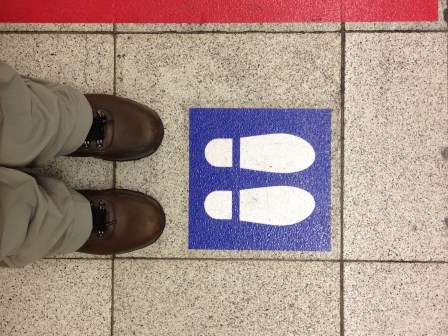
IMG_0354

Sometimes travelers need a little guidance; Japanese train stations helpfully provide that. We could have used the assistance in Wellington.

Wait, what? What’s a KeyCard? We’d loaded up with coins, which shows you how long it’s been since we used a Laundromat. No, it turns out that this Laundromat doesn’t use coins (presumably because the machines have been broken into repeatedly) and instead uses a KeyCard that we don’t have and can’t buy. Remove all laundry from machines and climb into van, dejected.

Search for next Laundromat on non-working but unlimited data; it doesn’t open until 9AM. We find a supermarket parking lot where we can sit comfortably for about an hour; of course, the area we’ve chosen is the site of an annual charity run attracting about 15,000 runners to the waterfront. We may actually be blocked in unless we can find an alternate route across the city. We are making poor choice after poor choice and our quiet Sunday morning is quickly imploding.

IMG_20170217_223915397

Race volunteers chalked encouraging messages along the course in Wellington. We definitely needed them too that day.

A few minutes before 9, we manage to make it to the day’s third Laundromat. It’s open! They accept actual money! We’re in! (And we’ve been to more Laundromats in one morning than in the entirety of our previous fifteen years.) We load in our laundry, then spend the time canvassing the neighborhood for potable water taps, clean public bathrooms and free Wi-Fi. Truly, when you’re campervan hobos like we are, these things matter. (And please note that we’re trademarking Campervan Hobos as our band name.)

Two hours and fifteen minutes, 30 kilometers, many wrong turns and $20 later, we have fresh, clean laundry. If you’ve been keeping track, it took us over six hours – six hours! – to wash and dry one large load of laundry, and we accomplished virtually nothing else during that time. And that, my loves, is often the reality of travel. So the next time you look at some glossy photo on social media and find yourself filled with envy, just remember the sandflies. And don’t forget your KeyCard.

Why cooking matters, vol. 1

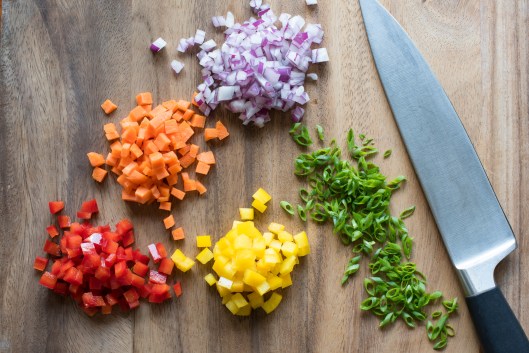
Knife Skills.jpg

Some months ago, I was setting up for one of my corporate Lunch & Learns. A staff member poked her head in “to see what smelled so good!” When I explained that I was there to teach a class on healthy cooking at home, I could literally see her shut down. “I don’t cook,” she said emphatically – derisively, in my (perhaps biased) opinion. I interpreted her comment to mean that no sane person would waste their time cooking when they didn’t have to.

And it’s true – no one, at least in the U.S., actually has to cook ever again. Between traditional restaurants, fast-casual, delivery, $8 green juices and four million different meal replacement energy bars, why would anyone cook at home? You could use that time to catch a Pokemon or update your status or watch Game of Thrones.

CCA-118.jpg

And yet, I believe that learning to cook is a necessary life skill, like writing a resume, or sewing a button, or changing a tire. Except that we’re no longer passing this skill on – cooking is now something done for us, rather than by us. We are now in an unprecedented era – one in which today’s children are expected to have a lower life expectancy than their parents. This has never before occurred in an industrialized nation, and I’d be the first to argue that our movement towards eating the majority of our food in restaurants plays a huge role. But despite our looming health crisis, somehow cooking at home has lost its luster and I cannot understand why. Maybe that’s easy for a professional chef to say, but cooking at home is so much easier than most people think it is.

We live in an age of instant gratification, where food or booze or cheap Chinese-made goods are available within minutes. Cooking – and cooking well – isn’t. People who attend my classes often ask how they can learn to cook better. My answer, while boring, is invariably the same: in order to cook well, you have to cook regularly. You have to get it wrong in order to know when you’ve gotten it right. Needless to say, no one likes this answer.

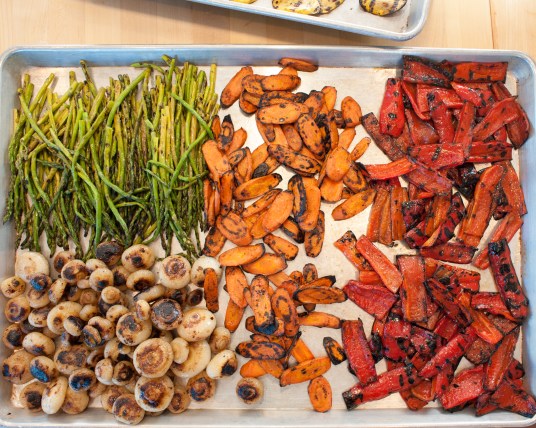
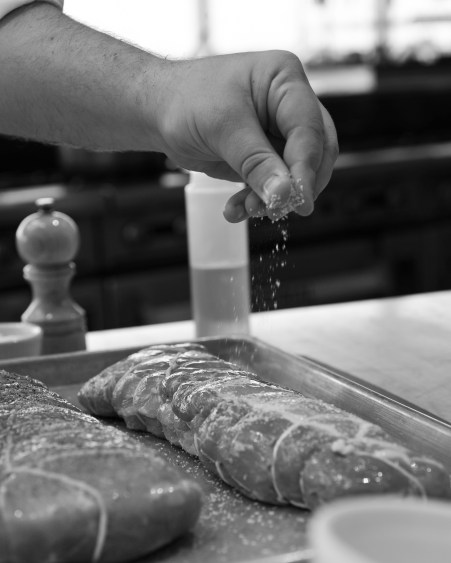
While there might be a million cooking apps, there is no app to teach you how to season properly. How to cook meat to your preferred doneness. How to roast vegetables until they have those delicious caramelized crackly edges. How to know when a cake is done. These are things that can only be learned with practice. Repeated practice. Tasting, tasting and more tasting. And yes, you will make mistakes. And some of the things you cook won’t be amazing. But the learning curve isn’t steep, and you’ll improve quickly. Soon, your food will be better than most restaurants. Trust me on that, but mostly trust yourself and trust your palate.

CCA-05 2.jpg

Here we are, at the beginning of the new year – a time when many of us resolve to get healthy. If you’ve made a commitment to living a healthier lifestyle this year and beyond, and if you don’t cook, I ask you politely – please try. There is simply no one thing you can do that is better for your physical health, your financial health and the planet’s health than cooking at home. Start small; commit to cooking one or two meals at home each week. Plan your meals. Devote a couple of hours on a Sunday afternoon to preparing batches of food for the week ahead. Pack repurposed leftovers for your work lunches. Minimize your food waste by making delicious soups and stir-fries and frittatas. And please, if I can be of more assistance in encouraging you to cook at home, contact me – I have a wealth of helpful tips that I’ll gladly share.

I leave you with this manifesto from Amanda Hesser and Merrill Stubbs of Food52, a site that passionately encourages home cooks.

Because, if you cook:

Your family will eat dinner together.
You will naturally have a more sustainable household.
You’ll set a lifelong example for your children.
You’ll understand what goes into food and will eat more healthily.
You’ll make your home an important place in your life.
You’ll make others happy.
People will remember you.

Wishing you the joy of learning to cook in 2017!