Hello there. We want to say that we’re still here on Quiet Farm, and that it’s been a rather challenging start to the growing season. One hundred percent of our county is currently in “exceptional drought” – the scale doesn’t go any higher! In official government parlance that translates to “dust storms and topsoil removal are widespread; agricultural and recreational economic losses are large.” We’d agree with that assessment – and it’s only May.
We have not yet received our official irrigation allotment for the season, but are expecting less than half of what we had last year. Wildfire season (now really year-round rather than just a season) has already started in California, New Mexico and Arizona, and promises to be grim here again, too. Dust storms and relentless wind are a regular feature of our days, and it’s impossible to keep the cool-weather crops properly irrigated. We have not had any moisture at all since January.
To compound our troubles, our hundreds of plant seedlings in the sunroom have been infected by an unknown disease or other ailment, and as a result are tiny, stunted and definitely not thriving. They should be going outside in about three weeks, but at this point it’s unlikely that we’ll have any at all, and it’s too late now to start more warm-weather crops. Perhaps the universe is sending a clear message that this isn’t our year.
That said, what else can we do but keep going? This blog isn’t meant to be a place for complaints and whining. We have a comfortable house, plenty to eat and we’re healthy and safe. Many, many people have it far worse than we do, and we’re well aware of that. We will do what we can with what we have, and perhaps the growing season will stage a recovery of sorts. And if it’s a total write-off, then we’ll try again next year.
Tip your hat to a farmer the next time you meet one – this growing food thing is no joke. Thanks as always for reading, and we hope you and yours are safe, healthy and well.
The world feels far too heavy and sad, particularly here in Colorado, for some absurdly cheerful post about alpacas or chickens or whatever we’re doing on the farm. Instead, we’ll offer a brief round-up of some favorite gardening books, in the hopes that you might be inspired to search these out at your local library or favorite independent bookseller. As with cooking, there is always something new to learn about gardening and growing food, no matter how long you’ve been doing it. And as with cooking, where feeding hungry people nourishing, healthy food feels like an act of pure hope and a direct rebellion against the stupid, meaningless tragedy of the world, so does planting a seed or a sapling.
We are sorely disappointed to report that we did not receive even one paltry inch of snow from the massive spring storm that walloped Denver and the Front Range last weekend. To add insult to injury, snow was in the forecast again today, to no avail – I promise you that it is clear and dry outside right now. We joke regularly about checking (In)AccuWeather on our phones, where it’s always “currently snowing in Delta County” – no. No, it isn’t. We have learned from our time here to only trust the weather that we can actually see and feel. All other promises and forecasts ring hollow.
So what we’re not doing on the farm right now is plowing or shoveling snow. But here are a few other things we’ve been up to lately, if you’d care to see.
Hello there, and welcome to March. (March?!? Really? We are completely not prepared for all of our spring tasks yet.)Also, welcome to the nearly one-year anniversary of the pandemic lockdowns. A year of this madness. How is everyone doing out there? The “pandemic wall” is a real thing, make no mistake, and I think a lot of us have hit it. Hard.
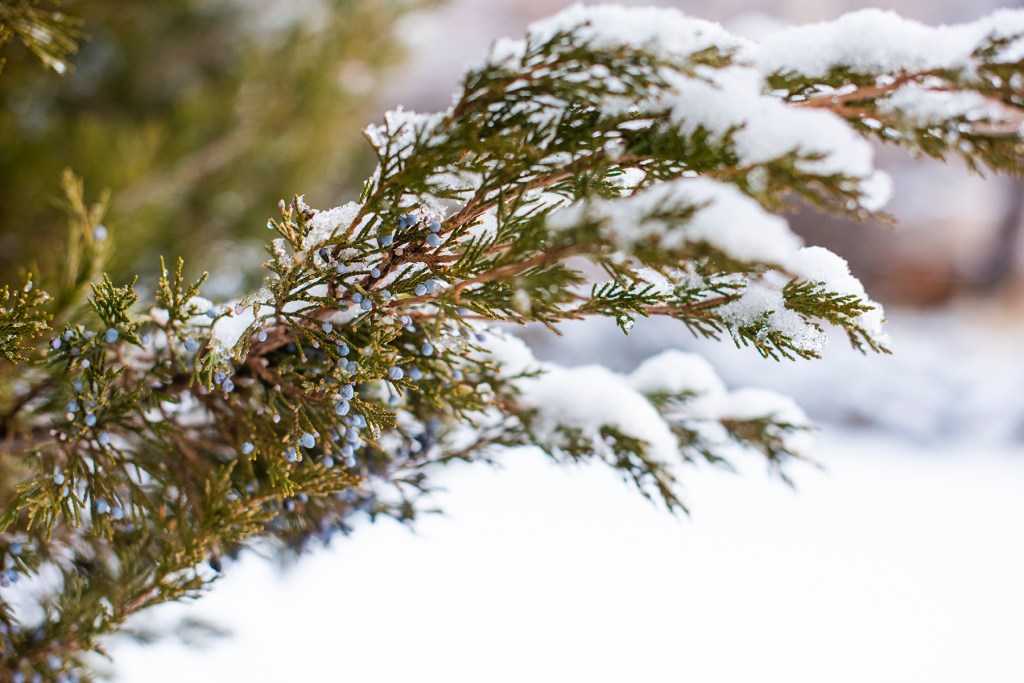
The images in this post might convince you that we’re buried in snow over here at Quiet Farm; sadly, that is not at all true. We have gotten a bit of snow both here and up on the mesa, and of course we’re grateful for every last flake, but it’s still looking as though it’s going to be a painfully dry year. As always, the only thing within our control is how we use the water we do have, so we’ll be focusing our efforts on making sure that not a drop goes to waste.
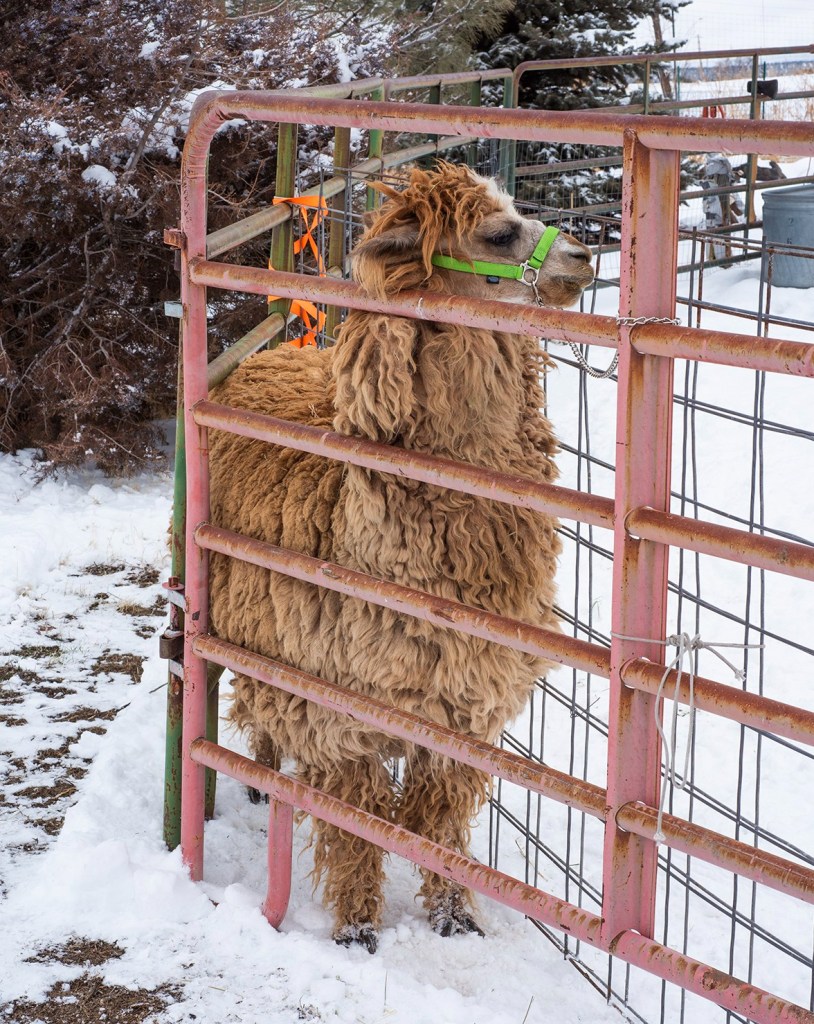
Paris secured in our makeshift crush before the vet’s arrival.
One great accomplishment that we’ve had recently is to successfully geld one of our male alpacas, Paris. His behavior had become increasingly aggressive and since we are not running a breeding program, there is no reason to keep an intact male on the farm. We were able to safely secure him in a “crush,” and our terrific local vet took care of the rest. It takes about sixty days for all the testosterone to leave his system, but his aggressive behavior has definitely lessened since the fateful day. We’re also pleased to announce that we’re on the mobile shearing schedule for the spring, so the alpacas will be getting a tidy cut in late May or early June, which will make them much more comfortable this summer. We are working on halter-training all the animals so that we can handle them in a safe and calm manner – this is much easier said than done, and frequently both humans and alpacas stomp off in frustration and tears. (Okay, maybe not the alpacas. Definitely the humans.)
Our game fence is good for more than just keeping out deer!
I’m also proud to announce that I’ve finished a patchwork quilt I started late last year. I won’t lie: I made approximately ten million mistakes on this quilt and learned so much about what not to do in quilting. I also unknowingly caused a lot of my own problems by designing a somewhat complicated pattern that required an excessive amount of piecework and stop/start stitching. (It’s only my fourth full-size quilt, however, so perhaps I should cut myself a bit of slack. I am very much a novice.) I read an article recently about different crafting hobbies people had taken up during the pandemic; one woman tackled a complicated shawl using fairly advanced knitting techniques. She wrote, “I almost quit a lot of times. But I kept at it, and I was both miserable and joyful at times – it was a good emotional process for me. The challenge was a great distraction from the chaos and stress of the unknown.” That accurately sums up my feelings about making this quilt – and I’m already excited about starting my next one.
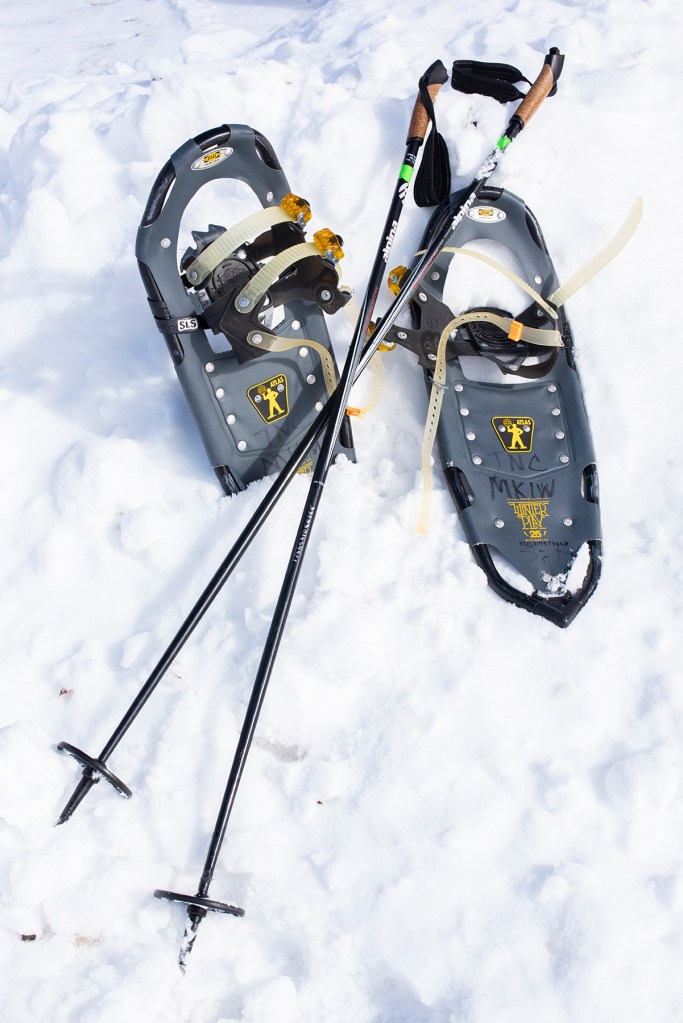
Snowshoeing is a surprisingly challenging workout!
We’ve mentioned on more than one occasion how much we adore our local library system; to make us love them even more, they’ve started loaning snowshoeing equipment! We’re about twenty minutes’ away from some of the best snowshoe/cross-country trails in the West, and borrowing equipment and just running up the mountain for a couple of hours has been a terrific break. (Even better: many of the trails ban loud, obnoxious snowmobiles.) We’re hopeful that we’ll be able to go a few more times before the demands of spring on the farm limit our time away.
This is an ideal afternoon snackwith a strong cup of PG Tips.
There’s been more comfort baking than usual ’round these parts lately. One favorite is a long-ago classic that I’ve resurrected because for once I have a massive bag of spelt flour andplenty of fresh rosemary on hand: this rosemary-chocolate olive oil cake, originally from Kim Boyce’s Good to the Grain. This may not be to everyone’s liking – rosemary isn’t frequently used in desserts – but I love it and don’t find the piney herb flavor overwhelming at all. The cake is tender, delicate and not too sweet, and is a perfect afternoon pick-me-up. I highly recommend a good-quality 70% dark chocolate bar here, cut into rough chunks, plus a generous sprinkling of turbinado sugar on top for extra crunch and texture. (For high-altitude bakers: I reduced the baking powder to 1 tsp. but didn’t make any other changes.) As with most things I bake, more than half of this cake promptly went straight into the freezer as a gift to my future self.
Stay calm and stay sane out there, dear friends. The best thing we can do is just to keep going.
I think we can all agree that the World Wide Web is, for the most part, a fetid swamp of horrors. But! On rare occasions, the Internet can produce some magic, too. Helpful sewing tutorials! Funny commercial parodies! Everything useful we’ve learned on YouTube about how to renovate a house! And above all else, there is the Grub Street Diet from New York magazine, which is very hit-or-miss – but when it’s on, there’s nothing better. (See this fabulous example.) I absolutely adore food diaries, and if someone combined a daily food diary with a personal finance diary and threw in some quilting tips for good measure I’d probably never read anything else ever again.
Here’s the thing: as someone who has spent the vast majority of her life thus far working with food, thinking about food, reading about food and generally obsessing over food, I need to know what everyone is eating at all times. And also why you’re eating that particular thing. Are you enjoying it, or just eating it because it’s there? Are you even hungry right now? Did you make it or buy it or was it made for you? Did you plan on eating it? Did you seek it out? Would you eat it again? And that brings me neatly to my next question: do you plan your meals?
No need to plan: we eat this lovely breakfast every single day.
One might argue that this question was more relevant pre-pandemic, when Americans ate well more than half their meals outside the home and our schedules were totally different. Of course, since the world stopped eleven months ago, our eating and cooking habits have altered pretty dramatically. One thing that hasn’t changed, though – and I know I have some audience support on this one – is that dinner still, for no apparent reason, happens every single night. How and why this metaphysical error is possible I cannot explain, as each afternoon around 4:30PM I invariably think, “Didn’t I just make dinner?” This situation is particularly embarrassing, of course, because a) I am a professional chef and making dinner really shouldn’t be quite so challenging and b) I voluntarily never leave our gorgeous farm and so if dinner doesn’t appear I can’t even come up with a reasonable excuse about traffic or working late or some such. I’m here, and I’m available, and I have the time, and still, dinner regularly takes me by surprise.
For the record, we didn’t eat out or order delivery even pre-pandemic. In the nearly three years that we’ve lived here, we’ve eaten out precisely once, and in our rural area I’m not even sure where you would get take-out or delivery. (DoorDash is not exactly staking its business success on our county.) So that means we eat all our meals at home, like much of the world these days, and that means not losing interest in your own cooking. It’s a tough challenge, even for a professional chef.
The makings of a stir-fry.
In my years teaching cooking classes, I’ve learned that most households tend to be on about a ten-day rotation of standard meals, which accounts for a few nights of leftovers or take-out in a two-week period. I can completely understand wanting to grab for those “known quantities,” meals that will please everyone without too much time and effort. There are few things more heartbreaking to a dedicated home cook than hours spent slaving away over a spectacular new recipe, only to have your loved ones politely ask you to please, please never make that again. (Looking at you, ma po tofu.) If spaghetti bolognaise works, and you’re tired and hungry, and everyone else is tired and hungry, why not just have spaghetti bolognaise, even though this is the third time in two weeks? Just about everyone can relate to this familiar situation.
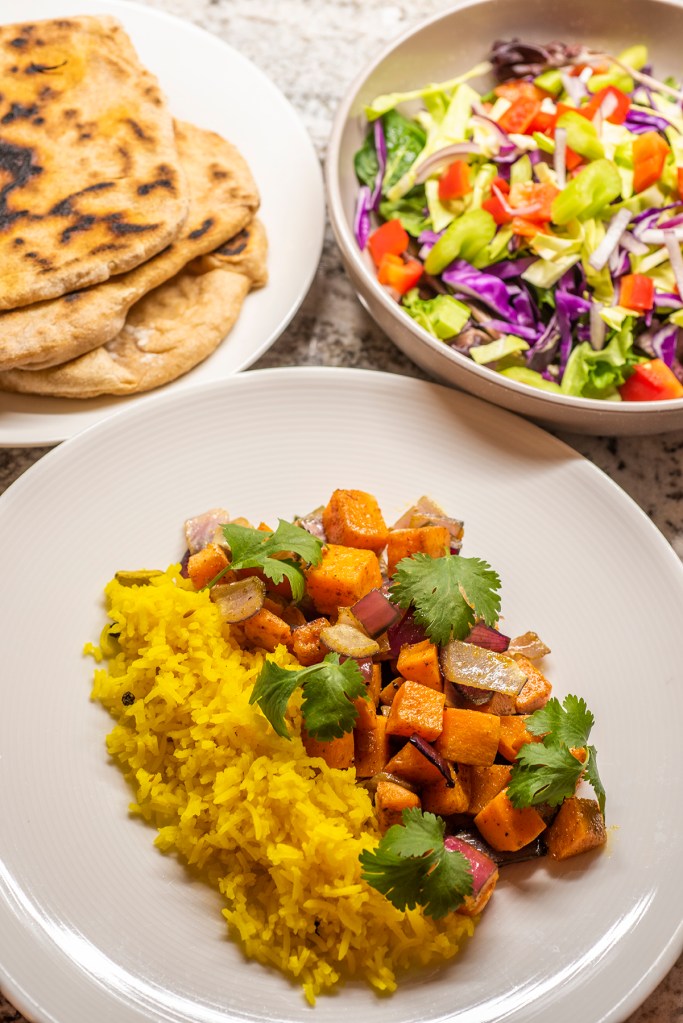
Curry-roasted sweet potatoes, pilau rice, fresh naan and salad.
Even in our calm household, which does not have the added complications of varying sports schedules or child care issues or long commutes, I’ve found that planning meals in advance makes a huge difference in how I view the daily chore of dinner. Knowing what I have in the fridge, freezer and pantry, and what meals I can compose from those ingredients, is essential. This is especially true because our “big” grocery store (in a relative sense) is nearly twenty miles away, so we grocery shop infrequently. In a rural county, I don’t have the luxury of running to the store for a bunch of cilantro or a box of pasta fifteen minutes before serving, so we keep a very well-stocked kitchen.
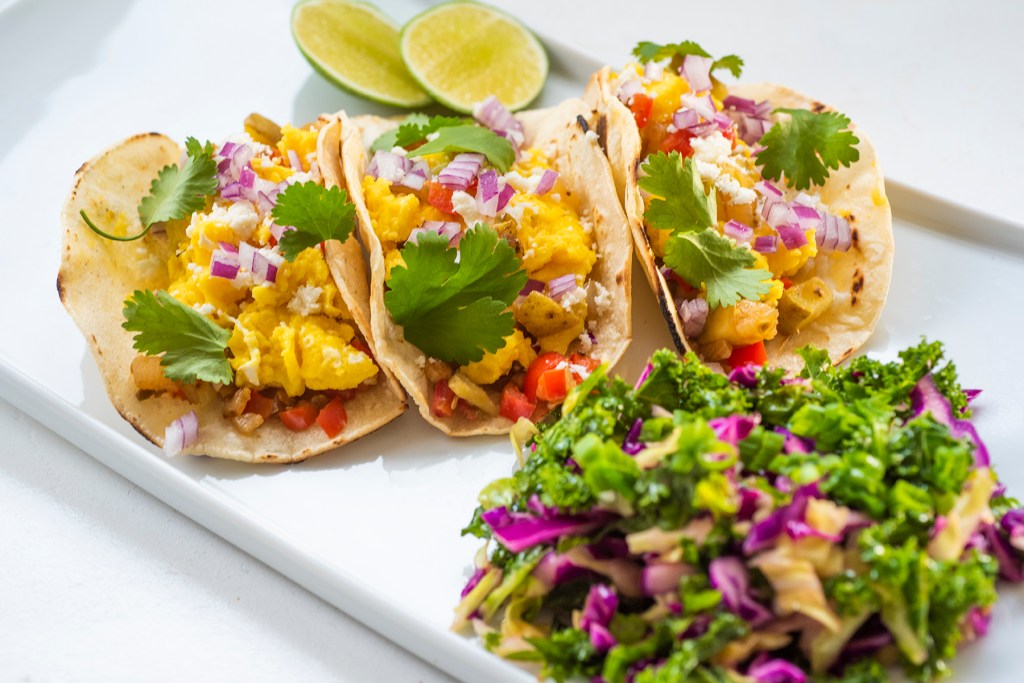
Breakfast tacos are a household staple – usually for dinner.
I also make an effort to cook in batches, so if I’m making a roasted pumpkin soup with coconut and ginger, I’ll make a big pot of it and freeze it in quart deli containers for a quick and easy meal. I make batches of “components,” too – versatile prepped foods, like steamed brown rice, beans, hard-boiled eggs, roasted potatoes or sautéed peppers and onions – that can be utilized in a variety of different meals. Of course we also can and freeze lots of our farm produce, too, but as N famously once said while staring at a packed fridge: “There isn’t any food in here. Just ingredients.” Joking aside, his point was that there was nothing ready toeat, and even the best cook can sometimes look at a full pantry and feel no inspiration whatsoever. That’s when a list of favorite recipe ideas pinned to the side of the fridge can come in handy.
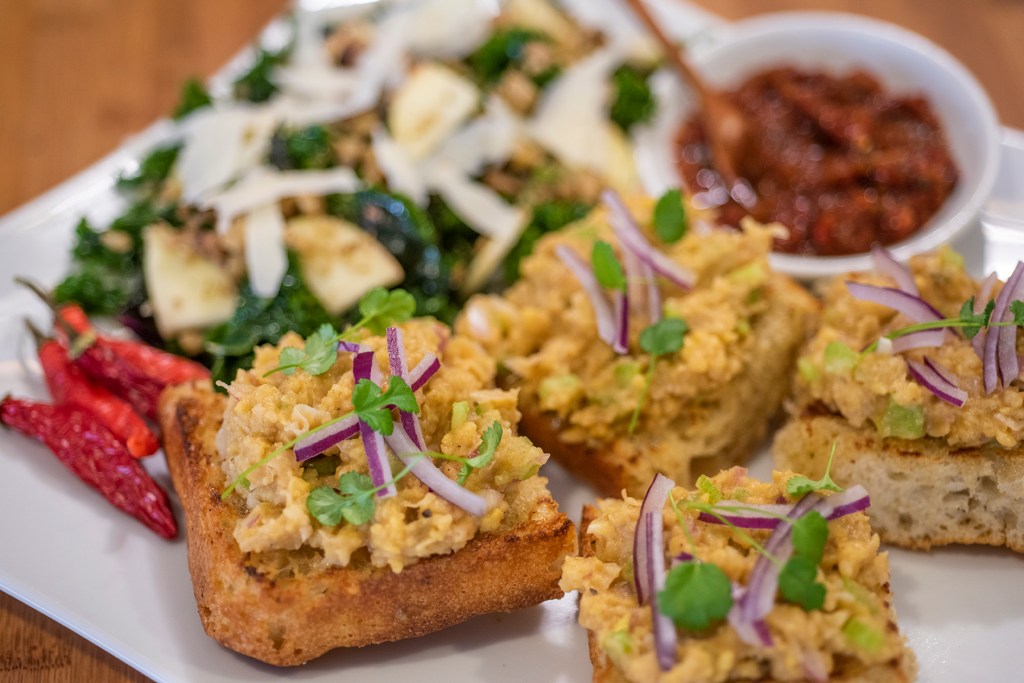
Chickpea smash on toasted focaccia is another favorite in heavy rotation.
The classic American meal typically starts with a protein as the main course – mostly chicken breasts or ground beef. Occasionally a steak, or salmon, or maybe something exotic like shrimp or scallops. A starch and a green vegetable might be on the plate, but they’re side dishes, merely afterthoughts. Here, though, we eat meat barely once or twice a month, and seafood never, so we start with vegetables or legumes, and build from there. We frequently eat stir-fries; they’re quick and easy to pull together. Lots of spicy, warming soups, especially in the colder months. Roasted vegetables feature regularly as do variations on curries. We eat eggs for dinner, usually as breakfast tacos, and many, many incarnations of flatbreads are consumed here. Pasta is a stalwart; loaded with vegetables, it doesn’t deserve its unhealthy reputation. Warmer weather brings lots of main course salads, packed with grains and eggs and myriad vegetables. And sometimes, we just have “snack plate dinner,” which is pretty much exactly what it sounds like: cheese, crackers, vegetables with hummus, good toasted bread with a variety of dips and spreads and anything else that can be used up in the fridge.
My meal planning starts with cookbooks, magazines, a recipe idea file and a pantry inventory.
I will freely admit that strict meal planning doesn’t happen every week; sometimes it’s a bit more impromptu. The weeks when I do write a meal plan, however, absolutely feel much calmer and easier and less stressful than when I don’t. But if we lived in a stereotypically frenetic American household, with lots of people running hither and thither, and various schedules to manage, a meal plan would be an absolute necessity for maintaining order. Here, though, we eat lots of plants and do our best not to waste any food – and a weekly menu plan helps make that happen.
So please share, dear friends: do you plan your meals? Do you stick to the plan? Do you have tried-and-true favorites, or are you regularly tucking in new experiments? Do you do all the cooking, or do other members of the family pitch in? This avid Grub Street Diet reader is longing to know!
Hello there, and how are things in your world? We’re still in the slower season here at Quiet Farm, but we’re starting to think about spring planting and other farm tasks on our to-do list. The biggest issue on our minds right now is definitely water, or lack thereof – it’s been far too warm and dry this winter, with very little snow. We need about twenty feet of snowpack on the Grand Mesa in order to have decent irrigation run-off in spring and summer, and right now we have two feet – or ten percent of what we need. We are hoping for an exceptionally wet spring, but to be honest it’s looking as though our “extraordinary drought conditions” will persist, which likely means more wildfires, too. With that concern front and center, we’re always thinking of ways we can use the water we do have more efficiently.
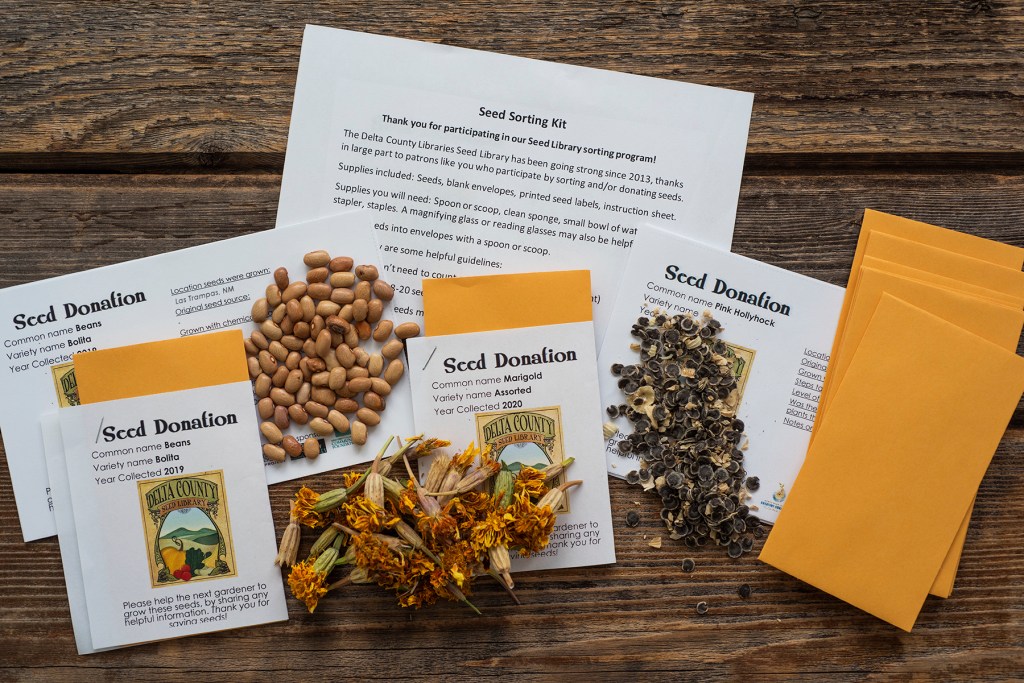
We love our local library’s seed bank!
We are huge fans of the Delta County Library system, which does yeoman’s work on a painfully limited budget. In years past we’ve attended “seed-sorting parties” in late winter to help the library prepare its extensive seed bank for the spring growing season. Obviously we cannot gather in person at the moment, so the library managed a perfect pivot and created take-home kits for volunteers. Each kit contained donated seeds (we received bolita beans, marigolds and pink hollyhock) and we sorted and packaged the seeds into individual labeled envelopes. Local gardeners are encouraged to “check out” seeds in spring, grow out the crop, then collect and return seeds to the library in autumn to share with other gardeners. The seed library has been going strong in Delta County since 2013; this program not only encourages seed-saving, but also provides an incredible wealth of locally-adapted seeds and helps build our foodshed’s sovereignty. A task like this is well worth our time.
“In a year that stripped life to bare fundamentals, the natural world has become our shared story. Seasons have offered the rare reminder that the world moves on even as our sense of time blurs.”
“The undeniable hardship of this winter is a reminder that for much of human history, particularly in colder climates, winter was a season simply to be survived. Winter is a primal time of death and loss, and a time for grief. It reminds us that darkness, not only light, is part of the recurring rhythm of what it means to be human.”
There’s no question that it’s been one hell of a week. Scratch that: it’s been one hell of a year. Over here at Quiet Farm, though, we carry on planting, tidying, baking, canning, caring for our animals and preparing for winter. Here are a few things we’ve been up to recently, if you’d like to see.
Ready for a long winter’s nap.
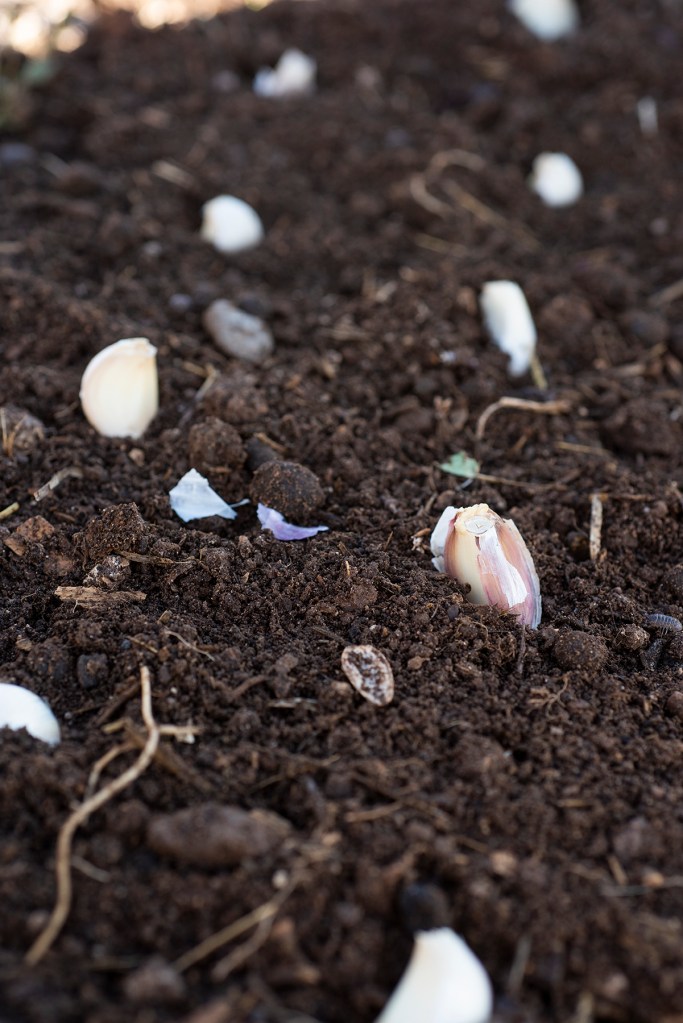
We planted our 2021 garlic crop this week; it’s tucked under a warm, cozy blanket of compost, alpaca manure and straw. Garlic is a unique annual crop in that it stays in the ground for about nine months, but during that time it requires almost no maintenance beyond occasional watering. As usual, we’d separated this year’s garlic harvest and saved the largest cloves for planting; thanks to garden magic, each individual clove grows into a full head. We planted about one hundred and fifty cloves in two new beds, then a friend texted with an offer of extra garlic that she had over-ordered (thanks, Judy!), so another seventy cloves went into an additional row. Every year I run out of garlic before the July harvest, and every year I vow to plant more. Will over two hundred heads be enough for next year? Stay tuned, and vampires beware.
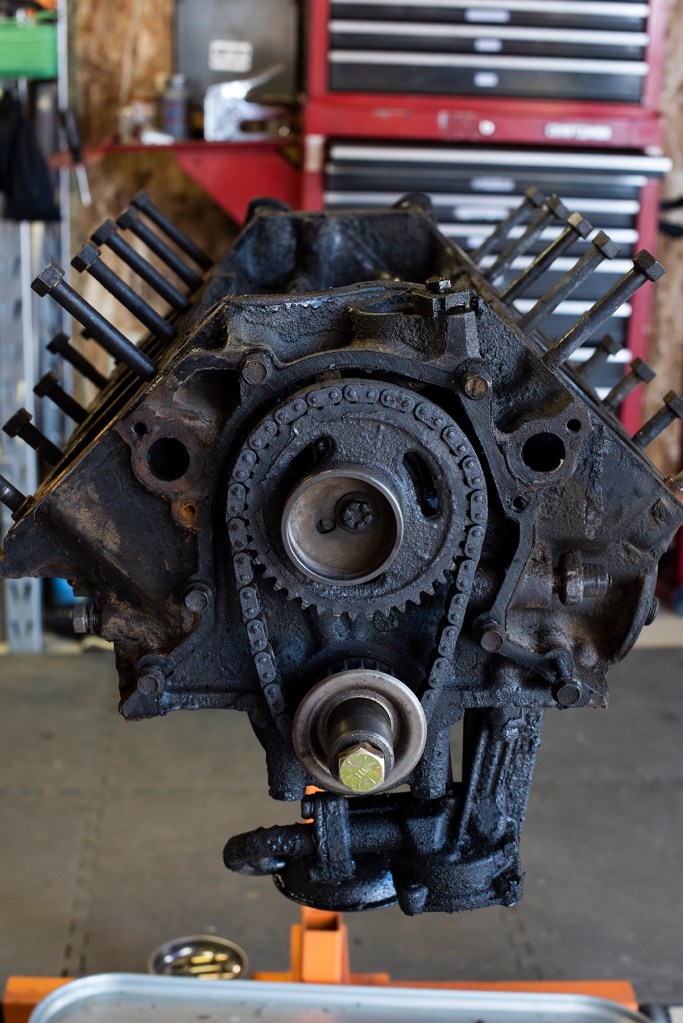
Simple. Elegant. Gorgeous. (Also filthy.)
My winter will hopefully involve lots of sewing and reading, and N will focus his time and energy on this rescued beauty. For all you gearheads out there, this is a classic example of American motor muscle: a Ford 289 small-block V8 manufactured in the summer of 1964; it likely came out of a Mustang or a Galaxie. At the moment, it needs a lot of cleaning and possibly a replacement part or two, but who knows what it could accomplish once restored to its former glory? While electric cars might be all the rage, there is much to be said for the elegant simplicity of a powerful internal combustion engine. (We obviously love beautiful 1960s Americana here; see also the recently-acquired Singer Touch ‘N’ Sew.)
So thrilled with our dry bean harvest!
I may well be more proud of the beans we grew than just about any other crop. While I love growing vegetables, with each passing year (especially when there’s a pandemic and associated food scarcity!) I am more and more committed to growing long-term food storage crops like grains and beans. We planted just one small row of these ‘Peregion’ beans this season, and though I doubt I have more than a few pounds of homegrown beans for the winter, I know that I’ll be expanding on the varieties we grow next season. Dry beans are easy to grow and to store, require very little post-harvest processing and punch well above their weight in terms of nutritional value. Plus, they’re delicious! We hope to grow a lot more beans here at Quiet Farm.
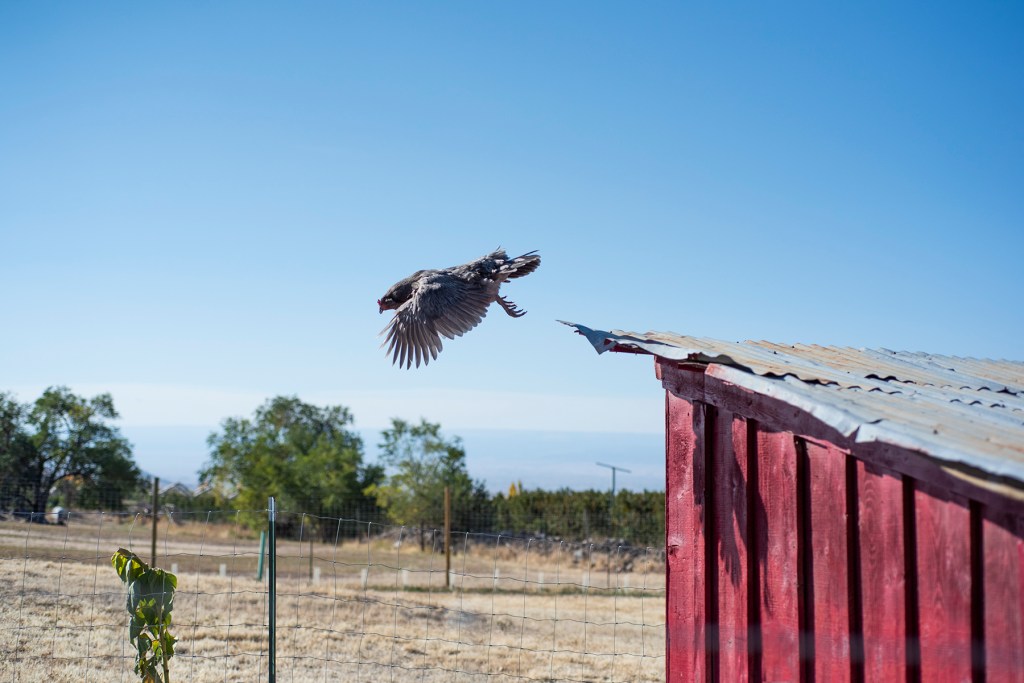
Flying the coop.
Domestic chickens are the closest living relatives of the T.Rex (that’s true) and have similarly tiny brains. Here, one of our genius hens decided to make her way to the top of the chicken house, but was understandably somewhat perplexed as to how she might get down – although she did finally make the leap. Little does she know that the roof offers zero protection from raptors, of which we have many, and actually makes a perfect runway for a hungry hawk searching for a tasty chicken meal. If she continues her high-flying adventures, she’ll learn that lesson the hard way.
This is how we roll.
True confession time, friends: all November and December issues of food and entertaining magazines (Bon Appetit, Food & Wine, Martha Stewart, etc.) received at Quiet Farm usually go straight into the library donation bin without even being opened once. Such is the extent of my loathing for the end-of-year holidays and all the attendant expectations, “must-have foods,” waste and excess! This year, however, a customer requested soft, fluffy dinner rolls, and I wanted to experiment with a few different iterations. Plus, I was completely sold on this caption: “If food could give you a hug, these rolls definitely would.” As we face the end of one of the most difficult years any of us have ever experienced, is there anything we all need more than a giant, warm, comforting hug? I think not. (P.S. The rolls are a bit labor-intensive but excellent, and they work at altitude. Worth your time.)
Wishing everyone a calm, restful and healthy week.
When it comes to pantry staples that are simple and inexpensive to make rather than buy, hot sauce should definitely be high on the list. I can’t speak for your household, but we enjoy a lot of hot sauce and related spicy condiments (salsa, pickled peppers) over here, and it’s much more fun to make our own than to buy these.
Homemade hot sauce only requires three ingredients.
Unlike yogurt, hummus and bread, which are also simple and inexpensive to make, store-bought hot sauce typically isn’t full of terrifying ingredients (that said, always read the ingredient label). The most popular hot sauces in the U.S. include Tabasco, Frank’s, Texas Pete and Cholula, all of which are variations on the classic aged chile, vinegar and salt combination. Sriracha, which has only recently staked its claim on the American hot sauce market, is a sweeter hot sauce; sugar is its second ingredient. But as with anything you choose to make rather than buy, hot sauce can be infinitely customized to your own tastes.
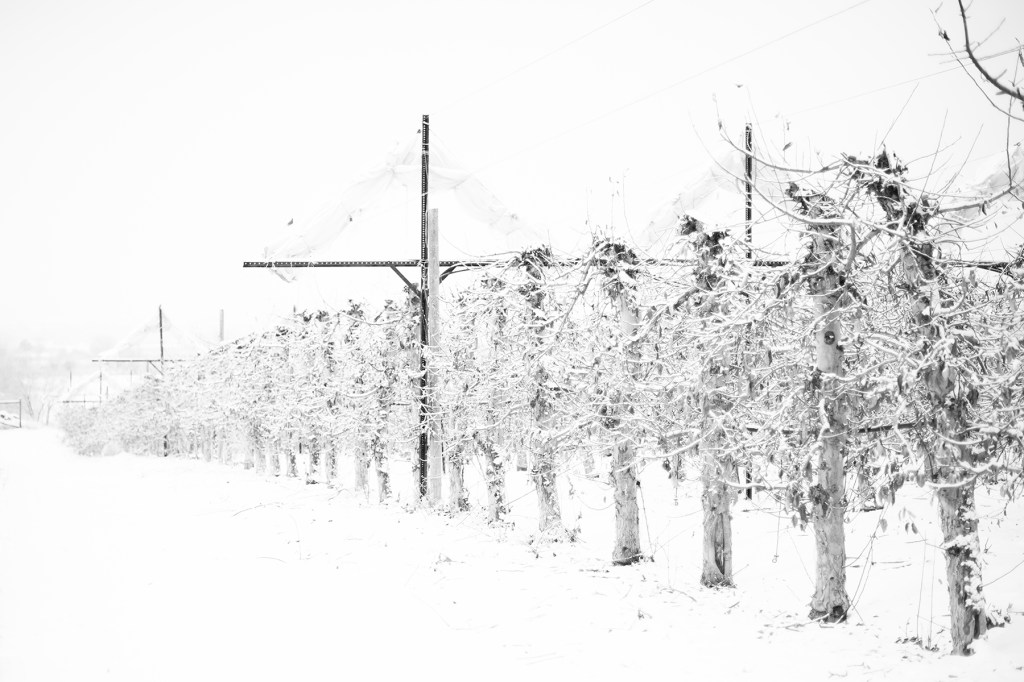
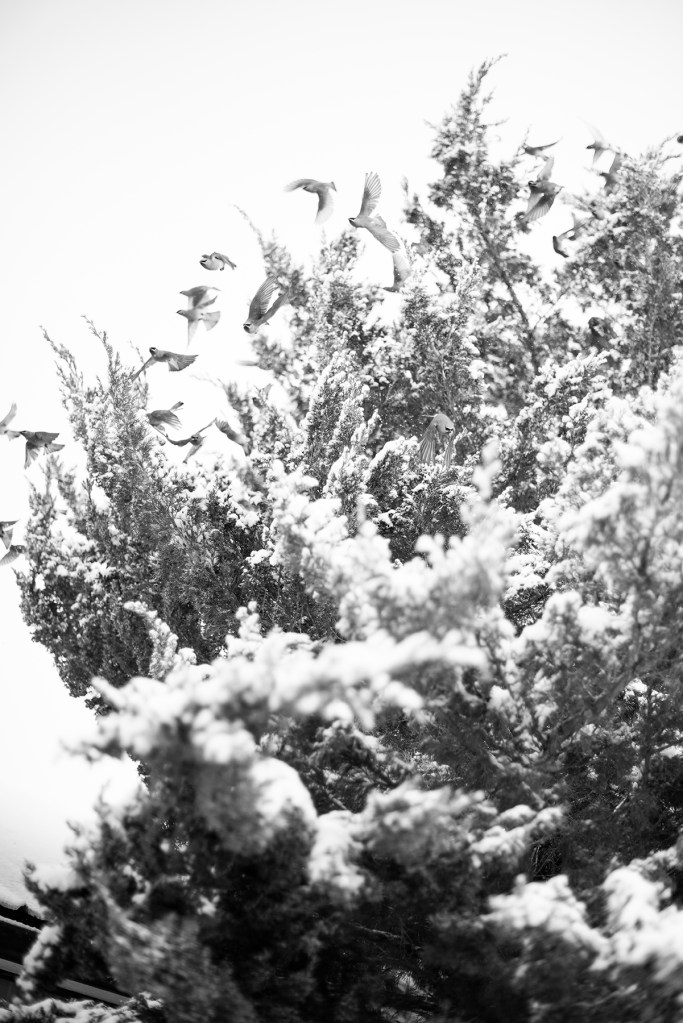
Our first snowstorm arrived late last night, and with that, the 2020 growing season at Quiet Farm has officially concluded. Much of the past week has been spent preparing for this introduction to winter; though our skies will clear and temperatures will rise again later in the week, none of our annual crops will survive this cold snap. We’ve been threatened with hard freezes prior to this and have been lucky enough not to lose any plants; our season lasted far longer than expected. We’re hopeful that this early, wet storm will help the firefighters battling the numerous destructive wildfires currently raging across Colorado.
Flooding our pasture with snowmelt from the Grand Mesa.
We ran our final irrigation last week, then broke down most of our gated pipe so that we can repair any damaged gates and valves during the off-season. We have stellar water shares here at Quiet Farm, and thanks to N’s careful planning, we made our water last all season. This year was definitely a rebuilding year for our pasture, and we’re optimistic that our plans for next year’s irrigation run, which include reseeding, marking and thoughtful grazing by our herd, will yield even better results. Small farms are key to fighting climate change – if managed well, land like ours can absorb far more carbon than it emits. Establishing these “carbon sinks” across the country should be of highest priority; if this season’s devastating wildfires are any indication, the Rocky Mountain West has a tough road ahead.








 Finding Quiet Farm