Farm update: April 29

San Juans 00

Spring is truly here and the Quiet Farm project list expands daily! The weather has been unusually warm, so much so that everyone is concerned about our wonderful mesa snowpack melting too quickly and flooding the creeks. This sunny (and windy) week alone, we received deliveries of soil, lumber, fencing and concrete. We hauled railroad ties, hefted 80-pound bags of Quikrete, wheelbarrowed soil, hammered in T-posts and more. Our farm muscles are coming along nicely, and we’re trying hard to remember to apply sunscreen and drink enough water. When people say farming is hard work, they aren’t kidding – especially when you don’t yet own a tractor.

Continue reading

How to grow microgreens

We’re still firmly in winter’s icy grip here on Colorado’s Western Slope, and there’s no better cure for spring fever than growing something indoors. Let’s learn how to grow microgreens!

Microgreens 01 sml

Microgreens sound fancy and expensive, but really they’re just tiny versions of things we already eat, like kale, radishes and beets. They are packed with nutrition, super flavorful, quick and easy to grow with no special equipment needed and absolutely gorgeous on the plate. What more could you ask from an indoor crop?

Continue reading

Farm update: February 18

Despite the snow on the ground, spring is in the air. We’re entering the freeze-thaw cycle (also known as mud season) and our quarter-mile driveway is the worse for it, but all around us, things seem to be softening and readying for growth. We’re excited for spring, friends. This winter has offered much more moisture than last year’s punishing drought, and we’re looking forward to seeing how our fields regenerate once the snows have disappeared for good.

Snow Tracks 01 sml

One of our favorite winter activities has been watching for wildlife across our land; the persistent snow has made tracks easy to see. We’ve spotted coyotes, foxes, rabbits, raccoons, ground squirrels and of course our nemesis, deer. We are trying hard to learn this land, to know what lives here now and what was here before us so we can figure out how to best live in harmony.

Continue reading

Things that are great, vol. 2

Modern lives contain way too much negativity, a cycle perpetrated by a fear-mongering media looking to sell us stuff we don’t need. In the interest of combatting that mentality, then, we present our second “Things That Are Great” link round-up, highlighting news stories and trends that we think are worth celebrating. (Read our first positive link collection here!)

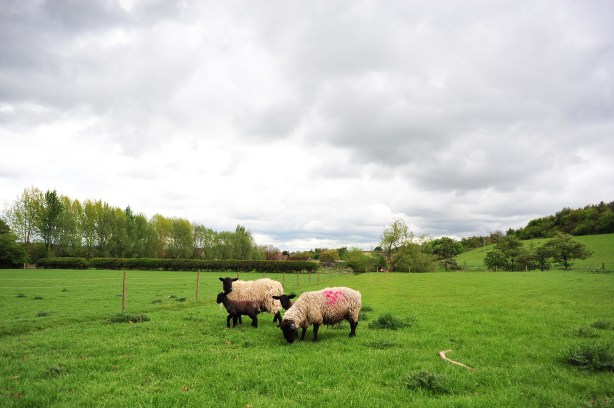
Sheepsies 01 sml

Photo clearly not taken in Colorado.

If you had to guess at the largest irrigated crop in America, you might well assume corn or soy. You’d be wrong; however; according to a 2015 NASA study, lawns represent about 40 million acres in the U.S., or about three times as much land as corn. All this grass comes at a steep price: 9 billion gallons of water per day, plus hundreds of millions of pounds of fertilizers and pesticides and other chemical treatments, all of which eventually end up in our water sources. And yard waste, including grass clippings and leaves, represents the largest single occupant of our landfills, too. All this for a crop we can’t even eat? Ridiculous.

02 February

Thankfully, though, forward-thinking companies are working to change that antiquated attitude. All across the country, edible landscapes are “unlawning” America. Converting pointless, thirsty lawns into healthy, local human food? Yes, please. These edible landscapers often face a lot of resistance from restrictive HOAs, but progress is still being made, albeit slowly. If you’d like to replace your lawn with native plants, check with your local extension agent – they’re often the best source of information for what will grow best and still look nice in your region.

Continue reading

Cooking with winter squash

I may not love the excesses of the holidays, but I do love cooking this time of year. Ideally the weather is chilly enough to make us crave warm, earthy dishes, rich in the nutrients we need to sustain ourselves through the cold, dark winter. There’s a lot to be said for eating seasonally – not only does it make more sense to eat what’s available right now (or to preserve it for later), but nature magically gives us exactly what our bodies need. In the case of winter squash, that’s a lot.

Squash 01 sml

A large component of our winter storage pantry.

Edible squashes are in the curcubit family and essentially fit into two categories: summer and winter. Summer squashes include the thin-skinned varieties, like commonly available green zucchini and yellow squash. Winter squashes don’t ripen until late summer and early fall, then must be cured for extended storage. Most winter squashes are encased in a hard, protective skin, allowing them to be kept for months without refrigeration. As with other long-keeping vegetables (onions, potatoes, root crops), this comes in handy when there isn’t much else around to eat and you can’t just run to the store.

Continue reading

Farm update: October 1

Hello there! It’s officially autumn, although you wouldn’t know it from our weather; it’s still hot and dry. Everything feels crispy and parched and we’re hoping desperately for some moisture from a Pacific hurricane system this week.

We’ve got lots of projects underway at the farm. Here are a few things we’ve been up to:

QF Living Room 03 sml

Our living room in a state of disrepair.

Although our farmhouse is livable, it needs a lot of work. N tore up all of the carpet but kept it intact so we could donate it. We had hoped to find hardwood floors underneath and although we did find some in the older portion of the house, we’ll have to install new floors on most of the main floor. Our renovation list grows by the minute.

Canning 03 sml

It’s canning season!

Canning 04 sml

An experiment: fermented green hot sauce.

Obviously we didn’t have our own garden this summer, so I was excited to unpack my canning supplies. Our grocery shopping options are extremely limited here, so preserving local produce now will make our winters much more pleasant. I put up a hundred pounds of tomatoes and forty pounds of apples in various formats, plus roasted and froze plenty of green chiles. The onions will keep in a cool, dry place; eventually we’ll have a root cellar of sorts for all of our long-keeping vegetables. I feel calm and confident when I have a full pantry.
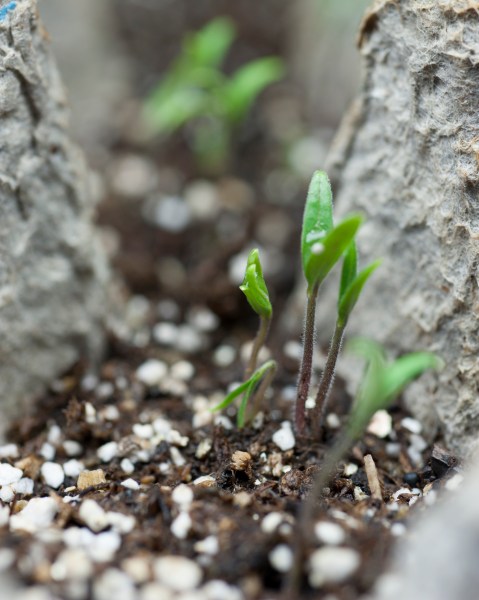
QF Seedlings 01 sml

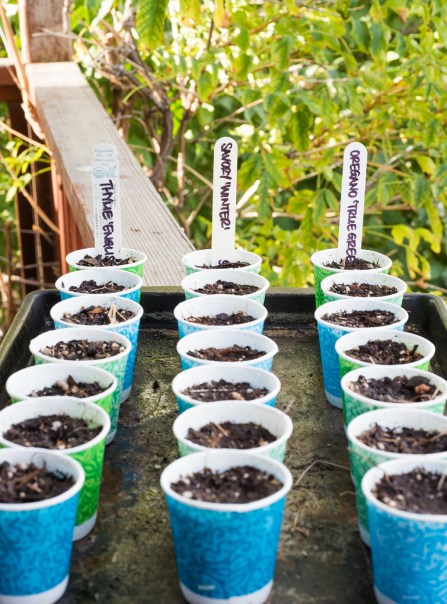
Perennial seedlings for next spring.

In addition to growing vegetables on our farm, we also need to rebuild perennial beds around the property. I’ve started perennial herbs from seed to see if I can keep them alive over the winter and plant them when the ground thaws in spring. This would be better done in a true greenhouse, but it’s worth a shot. Here you can see English thyme, winter savory and Greek oregano, all useful both in the kitchen and (hopefully) as deer repellent.

This week we’re tackling our irrigation system because we’re hoping to call for water next Monday! We’ll also get our old hardwood floors refinished and it’s Applefest this weekend, so there’s a lot going on in our tiny world. Have a great week!


Sowing the seeds

As recently as three or four generations ago, the vast majority of seeds planted in home gardens were saved from year to year. Gardeners learned what plants thrived in their unique microcosm, and they might have saved seeds from the earliest beans, or the largest cucumber, or the most delicious tomato. Season after season, these saved seeds protected plant diversity, acted as a hedge against famine and in many cases were so treasured that they were sewn into hems of immigrants’ clothes when they traveled – voluntarily or not – to new lands.

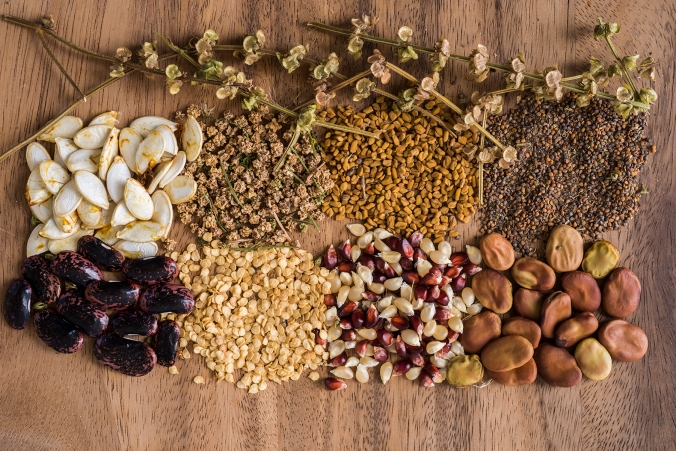
Seeds 02 sml

A few samples from the Quiet Farm seed bank.

Now, we think nothing of buying seed packets every growing season. Wintertime brings glossy seed catalogs to the mailbox, filled with mouth-watering descriptions of intensely flavorful tomatoes, trendy kalettes, or spicier peppers. We page through these during the dark, cold days, eagerly anticipating the chance to get our hands in the soil once again, and often we order much more than we need. Most home gardeners have a wealth of seeds left over from previous years, and even this abundance doesn’t stop us from buying just a few more. They’re just tiny packets, we reason. A few more couldn’t hurt.

Continue reading

Food swap

Friends, good day to you! We’ve been in absentia over here at FQF HQ for a few weeks now, as we’re in the trenches of selling our current miniature urban farm and deciding where we’re headed next. These sorts of grown-up activities are simply not for the faint of heart. This is our first home and therefore our first home sale, and the entire process has been much more challenging and elaborate and tricky and bittersweet than we imagined. But enough of all that! Let’s discuss delightful food-focused activities! How about food swaps?

food-swap-14-sml.jpg

Food Swap 13 sml

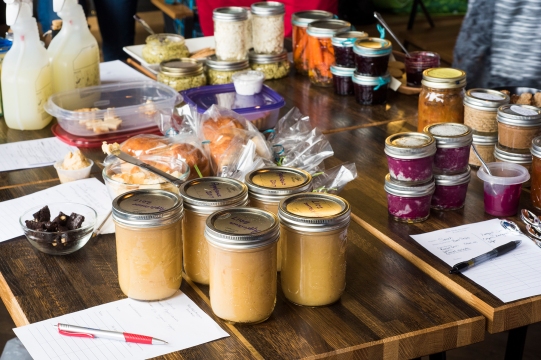
What is a food swap, you might ask? Well, it’s an incredibly fun community event where a bunch of like-minded gardeners, canners, cooks, bakers, hunters and other food-loving people come together to eat, drink and trade homemade treats. The concept is pretty simple: bring five or more of your own homemade goods and go home with the same number of other people’s delicious contributions.

Food Swap 11 sml

Our community table set up for the swap.

Food Swap 05 sml

Almond-flax butter ready for sampling.

Continue reading

The Farm Series: Rebel Farm

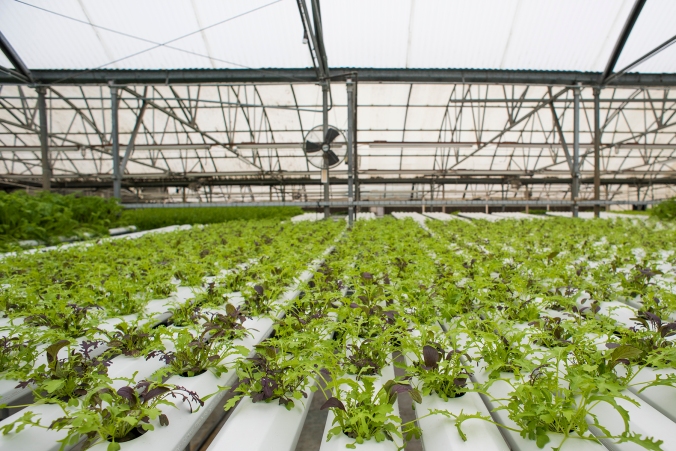
Friends, we don’t want you to think that all we do is trek around wintry European countries, eating schnitzel and drinking wine. No, sometimes we also visit delightful urban hydroponic farms and we eat handfuls of just-harvested fresh greens. Balance. It’s all about balance.rebel-farm-01-sml.jpg

Rebel Farm 05 sml

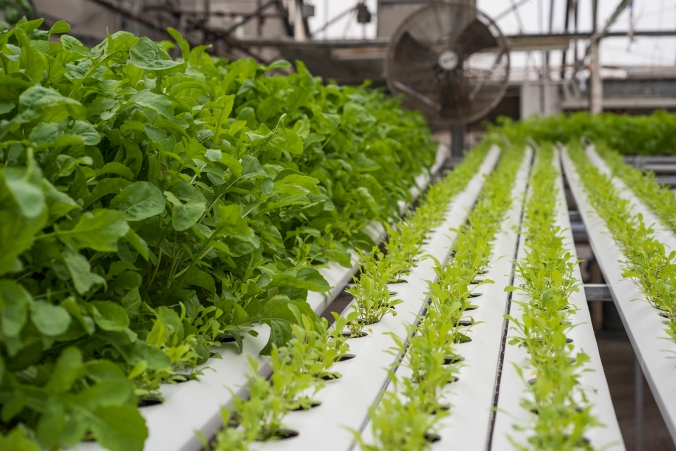
Rebel Farm, run by Jake and Lauren, is a 15,000 square-foot hydroponic greenhouse on the border of Denver and Lakewood. For those readers who live in Colorado, you may well wonder how these fine folks can afford to grow lettuce, rather than weed, considering that just about every greenhouse in the state has been snatched up by the marijuana industry. In the case of Rebel Farm, however, the greenhouse is perfectly situated between two schools – which means it cannot be a grow operation, and instead it can grow food. Brilliant.

Rebel Farm 19 sml

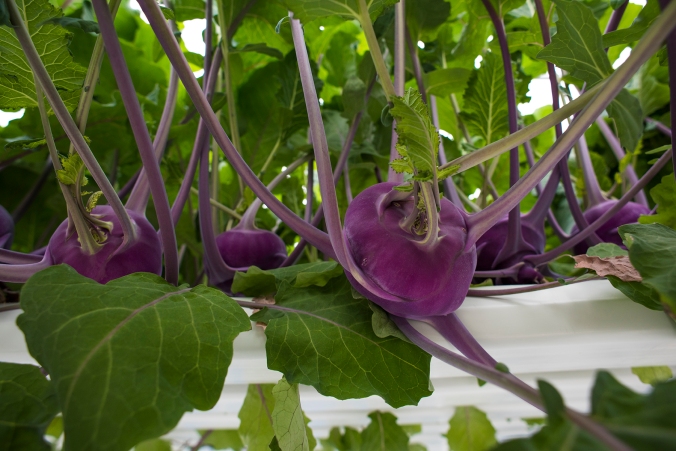
Purple kohlrabi, sadly underappreciated by CSA members everywhere.

Rebel Farm 08 sml

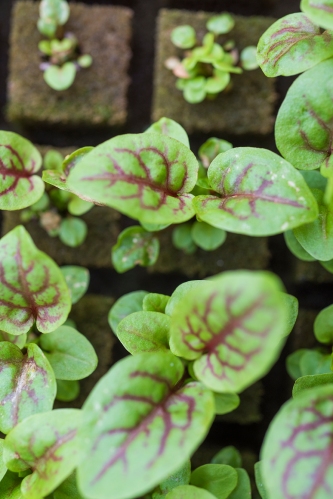
Tangy, citrusy red sorrel.

Rebel Farm 04 sml

If you’re not familiar with hydroponics, don’t feel alone. In its simplest form, hydroponics is a method of growing plants without soil. The plants can be planted in gravel, sand or other inert materials, or their roots can be suspended in a nutrient-rich water mixture. There are lots of different ways to grow hydroponically; Rebel Farm uses the NFT, or nutrient film technique, method.

Continue reading

How to eat healthier

I may not love Thanksgiving, but I do love everything about January. I love the quiet after the holidays, the fresh start, the clean slate. And of course, this is the time of year when so many of us promise to do better. When we promise to eat right, drink less, stop going out to restaurants so often, quit smoking, save our money, exercise more and all the rest.Snowy trees.jpgI don’t subscribe to the negativity often associated with New Year’s resolutions. (By mid-January, over a quarter of all New Year’s resolutions have been discarded, and only a scant 10% are actually followed through to the end of the year. Those are some pretty bleak statistics.) Changing habits is hard enough; I’d much rather start off on a positive note. I make a list of goals, not resolutions.

And with that positivity in mind, how about a quick primer on eating better in 2018? This isn’t designed to be an exhaustive list, nor a restrictive diet plan, merely a few simple tips to get your head in the right place for making healthy changes in your daily eating. Diets don’t work, but changing your mindset does.

Continue reading