Farm update: December 3

And somehow, it’s December. It’s quiet here at Quiet Farm, and we have no complaints. We’re deep in the trenches of our home renovation – sometimes, it seems that painting is all we do – and we’re hoping to unveil some amazing new floors and a wicked cool bookshelf sometime soon. But for the moment we’ve got our heads down, our music cranked, our soups simmering and we’re gunning hard for an entirely livable house – with furniture, even! – by the end of 2018. Will we make it? Stay tuned!

QF Snow 01 sml

We got our first real snow here at the farm, and it was lovely. Everything seemed to snuggle under a crisp white blanket – and we don’t even have to shovel here! (Take that, City of Arvada!) Later in the season we may well question our lack of a snowplow when trying to get out of our quarter-mile driveway, but for the moment we’ll stay cozy and warm indoors.

Continue reading

Cooking with winter squash

I may not love the excesses of the holidays, but I do love cooking this time of year. Ideally the weather is chilly enough to make us crave warm, earthy dishes, rich in the nutrients we need to sustain ourselves through the cold, dark winter. There’s a lot to be said for eating seasonally – not only does it make more sense to eat what’s available right now (or to preserve it for later), but nature magically gives us exactly what our bodies need. In the case of winter squash, that’s a lot.

Squash 01 sml

A large component of our winter storage pantry.

Edible squashes are in the curcubit family and essentially fit into two categories: summer and winter. Summer squashes include the thin-skinned varieties, like commonly available green zucchini and yellow squash. Winter squashes don’t ripen until late summer and early fall, then must be cured for extended storage. Most winter squashes are encased in a hard, protective skin, allowing them to be kept for months without refrigeration. As with other long-keeping vegetables (onions, potatoes, root crops), this comes in handy when there isn’t much else around to eat and you can’t just run to the store.

Continue reading

Farm update: November 19

Hi there! Is it cold and snowy where you live? We think everyone in the world is getting lots of snow except us, but really that’s fine. It has been remarkably chilly, though, so most of our activities and projects are indoors these days.

Fall CSA wk2 01 sml

Nom nom nom.

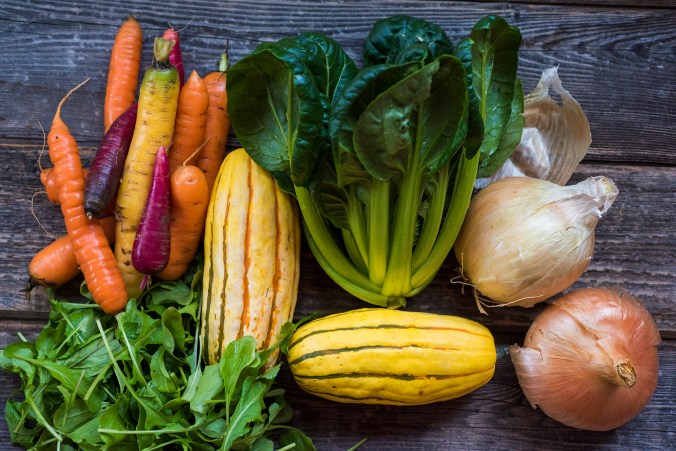
We are loving our fall CSA share; each week we receive delicious vegetables that we’d never find in our grocery store. Those sweet, colorful carrots were devoured raw; the delicata squash was roasted and served over the arugula, and the tatsoi went into a spicy stir-fry with local pork. We highly recommend joining a CSA in your community if you have the option.

Paint Sprayer 01 sml

Like a Roomba, only better.

Our new pet looks like a Star Wars extra, but when you have this much painting to do, a sprayer makes things a whole lot easier. There is a learning curve with a paint sprayer, but once you’ve mastered set-up and clean-up it saves hours. Pro tip: do not skip the cleaning and storage instructions. If you store the sprayer without cleaning it properly, you will regret it. Trust us on this.

Continue reading

The Farm Series: Western Culture

Western Culture 01 sml

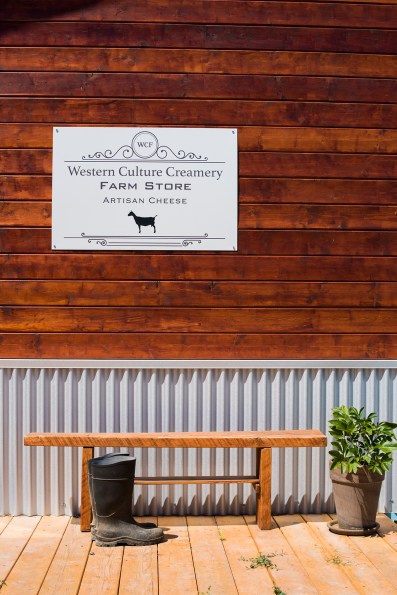
Now that we actually have a farm, we can get a bit more serious about researching where we’ll obtain our animals. We plan to raise dairy goats and laying hens, with the intention of producing enough milk, cheese and eggs to supply our own kitchen as well as our cooking school. Because healthy animals produce healthy food, it’s essential that we know exactly where our animals come from.

Western Culture 07 sml

We still have a lot of work to do on both our chicken house and our goat barn to get them ready for animals, and we don’t plan to purchase any until next spring. We want to make our reservations now, however, so that when we’re ready we’ve got animals waiting for us. Small dairies especially need to know in advance how many animals they can sell during a given season so they can plan their breeding program.

Western Culture 11 sml

Continue reading

The Farm Series: Desert Weyr

Of late, our Western Slope farm visits have taken us to pick delicious cherries and to meet happy pigs. How about we introduce you to some unusual sheep?

Weyr 01 sml - Copy

Desert Weyr is perched high on a mesa above the town of Paonia.

In the late 1990s, Eugenie “Oogie” McGuire decided she wanted to craft herself a traditional medieval cloak – from scratch. It would be made from wool, of course. She purchased one ram, five ewes and a loom, taught herself how to spin, weave and sew, and eventually made the cloak. As she says, “It’s more accurate for the 18th century. It took me six years to weave the fabric, two more to get up the courage to cut it, and two weeks to hand-sew it.” But what commitment! Now, Oogie and her husband, Ken, raise a large flock of Black Welsh Mountain sheep on pasture above Paonia.

Continue reading

Ode to the cherry

One key element missing from our globalized grocery industry is seasonality. By that, I mean that we can have virtually whatever food we want, whenever we want it. It doesn’t occur to us that tomatoes taste better in August, or that citrus is sweeter and juicier in winter. Our supermarket produce departments know no seasons, and that is a loss – but because most of us have never known true seasonality, we don’t demand it. We should.

AH Cherries 01 sml

AH Cherries 03 sml

AH Cherries 06 sml

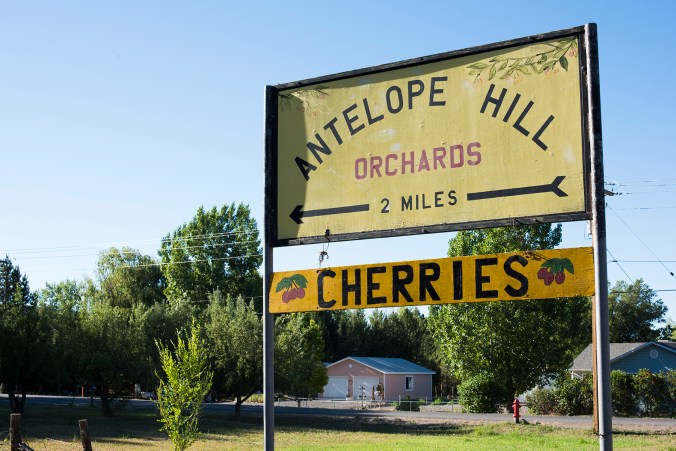
Colorado’s Western Slope has long grown most of the stone fruit produced between California and the Midwest, and wine grapes are now in vogue here as well. Make no mistake, though: growing fruit in a high-plains desert more than five thousand feet above sea level, with less than ten inches of total precipitation a year (that’s rain and snow), isn’t easy. Plus, the orchards and vineyards here are tiny, averaging only a few dozen acres; these are micro-orchards compared to those in California and Oregon and Washington, which cover thousands of acres. All of that means when cherries are in season here, often for as little as two weeks, one must act quickly. And so we did, hustling up to Antelope Hill Orchards for the opportunity to pick our own.

Continue reading

The Farm Series: Colorado Pastured Pork

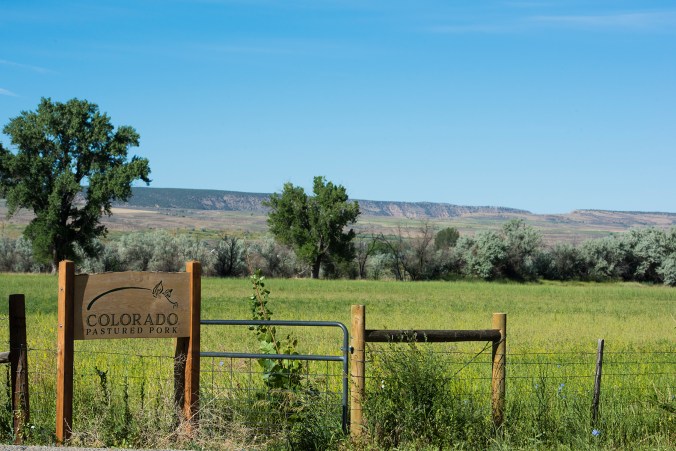
We’ve (sort of) relocated to the Western Slope, and we’re focused on meeting as many local farmers as possible. If we truly intend to start Quiet Farm here, and if we intend for it to grow into a thriving business, building a strong local producer network will be key to our success. To that end, when we’re not driving around looking for property, we’re visiting farms and ranches who practice the same sort of farming we plan to embrace.

CPP 01 sml

The Western Slope – specifically Delta County, where we’re currently based – has a long history of agriculture, but most of those ag products were shipped to population centers in Denver (to the east) and Salt Lake City (to the west). Now, with “local food” and “agritourism” evolving as valid ways for poorer counties to earn revenue, there is a movement afoot to encourage small farmers and other sustainable, innovative producers to make their mark here. Surprisingly, Delta County has more acres of organic farmland than any other county in Colorado (I know, we thought it was the Kingdom of Boulder, too).

CPP 02 sml

CPP 03 sml

Continue reading

Let’s learn about goats!

JGGD 11 sml

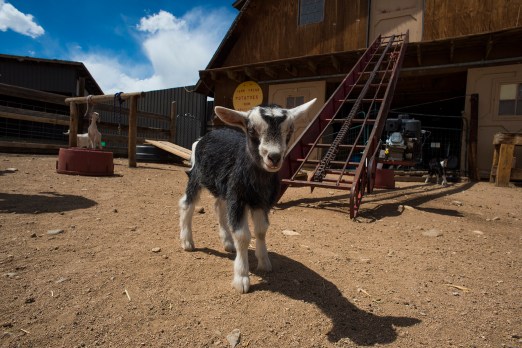
This is not the first time we’ve posted photos of #totesadorbs baby goats, and it certainly won’t be the last. We’ve known since we first invented Quiet Farm in our heads that we want to keep milking does, so as with all other aspects of farming, we’re learning how to do that from books and the University of YouTube and on-farm experience, too. By the time we actually find our farm, hopefully we’ll (sort of) know what we’re doing.

NJB_5018

Some fun facts about goats:

  • Goats have a reputation for eating just about anything, including clothes, trash and other inedible items. This is entirely untrue; goats are browsers, rather than grazers, and are naturally curious. They use their lips and teeth much as we use our fingertips – to investigate unknown objects – and they’re actually quite fussy about what they’ll eat. Goats also only have teeth on their bottom jaw, not their upper.
  • Goats are fantastic climbers and love to quickly attain the highest perch available – hence the popularity of goat yoga. Goats can climb trees!

Continue reading

How to recognize a superfood

Now that we potentially all have attention spans less than that of a goldfish – can’t believe you’re still reading this! – it is apparently more important than ever that we distill information down into small, digestible bits. One way we do this is by labeling everything, especially food. This is so we can recognize it, so we can boast about it, so we can post a photo of it, so we can pay more for it. So we can say, Oh, don’t mind me, I’m just eating my superfood salad over here. Goji berries, acai, spirulina, wheatgrass…the list of trendy branded superfoods goes on and on.
Vegetables Color 01 sml

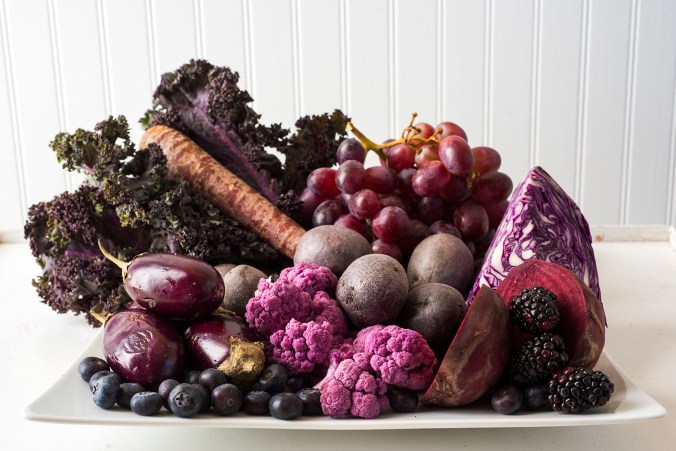
Purple foods are rich in anthocyanins, a specific type of antioxidant.

Western society, particularly America, has some serious food issues. We are collectively overfed and undernourished. We all know that obesity, heart disease, diabetes and other lifestyle diseases are on the rise, and yet still we consume on average more than twice the calories we need in a day. We’re overwhelmed by choice and information and the constant barrage of marketing thrown at us every second. We’re no longer able to think for ourselves.

“We are a society obsessed with the potential harmful effects of eating, according to the University of Pennsylvania psychologist Paul Rozin, renowned for his theories on the role that fear and disgust play in modern food culture. Overwhelmed by the abundance and variety of foods in our groceries, and flooded with competing health claims, we can’t help but make instinctive food-purchase decisions, subject to the whims of the latest trends and health scares. No wonder that, when confronted with ambiguities in health-based marketing claims, we fill in the gaps with inaccurate inferences, as the Cornell University economist Brian Wansink found in a 2006 study. Food companies bragging about supposed health benefits, such as low calorie count or low cholesterol, create what the influential study dubbed a “health halo,” a vague but positive glow that temporarily relieves our food-centered anxieties—at least long enough to get through checkout.”

-Michael Fitzgerald, Pacific Standard, May 26, 2017

Continue reading

Sowing the seeds

As recently as three or four generations ago, the vast majority of seeds planted in home gardens were saved from year to year. Gardeners learned what plants thrived in their unique microcosm, and they might have saved seeds from the earliest beans, or the largest cucumber, or the most delicious tomato. Season after season, these saved seeds protected plant diversity, acted as a hedge against famine and in many cases were so treasured that they were sewn into hems of immigrants’ clothes when they traveled – voluntarily or not – to new lands.

Seeds 02 sml

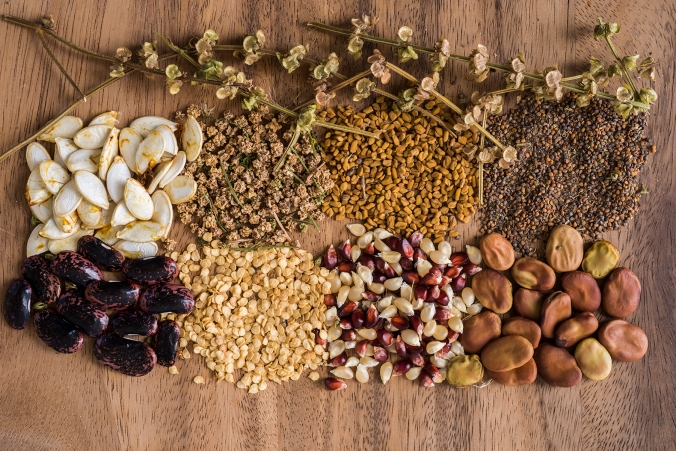
A few samples from the Quiet Farm seed bank.

Now, we think nothing of buying seed packets every growing season. Wintertime brings glossy seed catalogs to the mailbox, filled with mouth-watering descriptions of intensely flavorful tomatoes, trendy kalettes, or spicier peppers. We page through these during the dark, cold days, eagerly anticipating the chance to get our hands in the soil once again, and often we order much more than we need. Most home gardeners have a wealth of seeds left over from previous years, and even this abundance doesn’t stop us from buying just a few more. They’re just tiny packets, we reason. A few more couldn’t hurt.

Continue reading