The best books about food

Apparently this country is electing a president this year and probably electing some other people too, though over here at Quiet Farm we’re doing our damnedest to ignore the entire circus. One thing that still surprises (and infuriates!) me immensely in every single election cycle is that we never, ever discuss national food policy. Neither side even mentions it in passing, unless a hotdish fundraiser happens. We talk about defense, and education, and occasionally the climate crisis, and of course health care, and yet we never discuss the single issue that unites every one of us, regardless of party affiliation. We never talk about the fact that if we changed our food system, we’d naturally change our health care system for the better. And that changing our food system would be a huge step towards repairing our devastated planet. Changing our food system would also mean more military readiness, since we’re now too fat to fight. And our children would gain a better education if they had access to better nutrition for growing brains and bodies. We always ignore the food, when it’s the one issue we should talk about more than any other.

Continue reading

On hiatus

Over the next eight weeks (at least in the U.S.), we’ll careen wildly from one overwrought celebration to another. From a holiday where we decorate with fresh, healthy vegetables but celebrate with cheap processed candy (while leaving the vegetables to rot in the landfill) to a holiday where we throw away the equivalent of fourteen million turkeys to a holiday predicated entirely upon excessive spending, consumption, packaging and waste, the next two months are a difficult and challenging time of year for many people – including us.

And thus Finding Quiet Farm is on hiatus for the rest of 2019, though we’ll stay busy. We’re going to bundle up, hunker down and get to work on all sorts of interesting tasks, both indoors and out. We’ll be back in the new year with farm updates, lots of book recommendations, and photos of all our projects. We’ll be quiet and productive and we’ll skip the holidays entirely, thanks very much.

Take good care of yourselves, friends, and cook something tasty and nourishing. We hope to see you back here in 2020.

Save our seeds

Seeds 01 sml

Our first hard frost is forecast this week, so there is much to be done. In addition to lots of canning and preserving, autumn on a small homestead means saving seeds. We’ve talked about the importance of seed saving previously, and each season we’re working on expanding our seed bank. Never before has it been so important to save our own seeds and thereby take responsibility for our own food supply; as seed companies are again and again snapped up by massive agrochemical conglomerates, our control of our own seeds – our fundamental birthright, and the source of our food supply – becomes ever more tenuous.

Lettuce Seed 01 sml

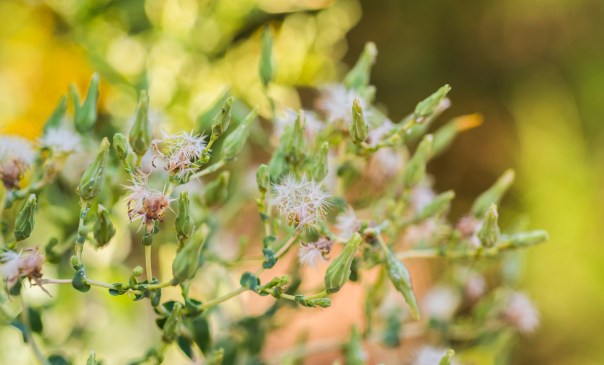
Most lettuces and other salad greens encase their seeds in little windblown puffballs.

As I wrote in our previous seed post, “Today, nearly three-quarters of all seeds planted in the U.S. – both unmodified and genetically engineered varieties – are privately owned and controlled by three large agrichemical corporations. Growing food is a basic human right, and we are quickly moving towards a future in which we will no longer own the source of our food. Lack of food leads to hunger, which leads to unrest, which leads to revolution, which leads to profitable wars benefitting those same corporations. Building our own seed banks, even if technically illegal, means we still have some say in our food supply. Seed saving is a small but powerful act of resistance.”

Continue reading

How to save the world

Last Friday, millions of people around the world marched as part of a “global climate strike.” The march was intended to draw world leaders’ attention to the climate crisis in advance of the U.N. General Assembly taking place this week in New York City. While the sight of millions of mostly young people taking to the streets to make their voices heard is heartening in theory, teenagers in expensive sneakers carrying smartphones and pithy signs aren’t going to change the perilous trajectory we’re on.

Despite the fact that we are by far the world’s largest consumer and by extension the world’s largest polluter per capita, the U.S. is the only country in the world still debating the very existence of climate change. While other countries have their heads down working to find solutions, we’re still arguing over whether this is actually happening, and if so whose fault it is. (Spoiler alert: ours.) This disparity will be on full public view this week at the U.N.; once again, we’ll look like idiots on the world stage, a role in which we’re becoming increasingly comfortable.

Here’s the painful truth: we can’t protest the idea of large corporations destroying the planet, because we are the reason those corporations exist. If we didn’t buy their products – if we didn’t upgrade our iPhones every year, if we didn’t rob each other at gunpoint for thousand-dollar puffer jackets, if we didn’t accept and then dispose of two million plastic bags per minute – these corporations wouldn’t be able to plunder the planet. We are the problem, and by that logic we also have to be the solution.

Mental health professionals have reported a sharp uptick in the number of people seeking treatment for depression related to the environmental catastrophe we’re facing. It’s a massive, complex problem, and it’s easy to feel hopeless when confronted with its scale. On a personal level, I’ve long since graduated from severe eco-anxiety and now find myself teetering on the cliff of abject climate despair. I don’t think we’re going to be able to fix this, but we can’t choose to do nothing and watch the world implode around us. With that in mind, here are five things we can implement immediately that might just make a difference.

Continue reading

Small victories

In ten years of growing food, this is by far the most challenging season we’ve ever experienced. Between punishing hail, voracious deer, late snows, devastating winds, crafty rodents and ten million grasshoppers (I’m certain the locusts are on their way), we feel we’ve taken everything the world can throw at new farmers. We might be down, we might be bruised, but we’re not out yet. And in that spirit, how about we count up some wins?

Sunflowers 01 sml

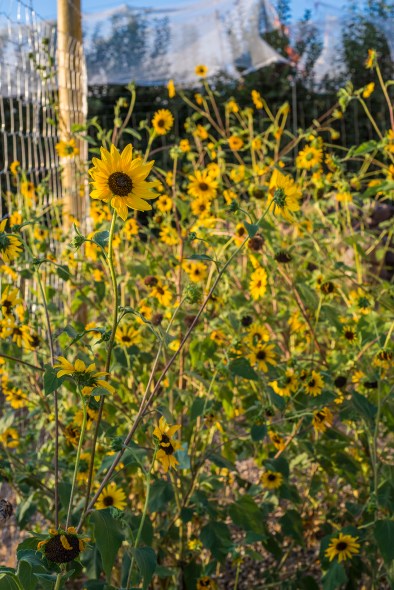
Thanks, sunflowers, for cheering us on with your bright faces.

Our farm is awash in sunflowers right now, not one of which we planted. They weren’t here last year when we moved in (historic drought?), but we’re so glad to see them this year. Hopefully they’ll continue to self-seed and their cheerful countenances will be part of every summer here.

Continue reading

Lessons learned

Hello again, and please forgive us our recent absence. We’ve taken a small summer hiatus – not because we’ve actually been on vacation, but because for a period of time there we didn’t have many nice things to say about farming, and we didn’t want our space here to sound whiny and negative. We’re genuinely thrilled to be farming, even when we aren’t.

Hail 01 sml

One of early summer’s low points.

It’s been just under one year since we found Quiet Farm, and what a year it’s been. There have been highs and lows and successes and failures. And now that we’re one year wiser and can officially call ourselves farmers, we’re working hard on learning from our experiences. We always say that we’re allowed to make as many mistakes as we want, but we have to make different mistakes. If we make the same mistakes over and over, then we obviously haven’t learned anything.

Continue reading

This week in flowers: July 1

There are lots of amazing aspects of living where we do now, but one of the most rewarding has to be watching the farm change with the seasons. Since we’re still learning our land, we’re constantly surprised by plants or blooms or bushes that appear seemingly overnight. Summer is here, and we’ve got lots of lovely flowers all over.

QF Flowers 07 sml

‘English Munstead’ lavender (Lavandula angustifolia), fragrant and bee-friendly. Continue reading

Farm update: April 29

San Juans 00

Spring is truly here and the Quiet Farm project list expands daily! The weather has been unusually warm, so much so that everyone is concerned about our wonderful mesa snowpack melting too quickly and flooding the creeks. This sunny (and windy) week alone, we received deliveries of soil, lumber, fencing and concrete. We hauled railroad ties, hefted 80-pound bags of Quikrete, wheelbarrowed soil, hammered in T-posts and more. Our farm muscles are coming along nicely, and we’re trying hard to remember to apply sunscreen and drink enough water. When people say farming is hard work, they aren’t kidding – especially when you don’t yet own a tractor.

Continue reading

Farm update: April 8

QF Purple Flowers 01 sml

The hills are alive…with weeds! But we call them “wildflowers.”

The snow is finally gone at this elevation, even though plenty can still be seen on the mesa. Our pasture is coming back with a vengeance, and we spend our days walking the land, looking at what plants are coming up and trying to decide whether they’re helpful or harmful to us. Since we bought Quiet Farm at the end of a blistering summer in the midst of a hundred-year drought, pretty much everything was crispy and dormant. We hadn’t yet determined what bushes and trees might survive, and what would need to be removed. We’re giving everything a generous opportunity to stage a spring comeback before we tear it out.

Continue reading