A crash course in irrigation, vol. 2

Hello, could everyone please put on their interested faces? We’re going to get into the nuts and bolts of learning how to run ditch water on our farm, and we know you won’t want to miss a single moment.

We ordered our water two weeks ago; today is the final day of the season we can have it. We’ve called for half a foot for two days, the minimum we can request and hopefully enough for us to test our gated pipe and our repairs. There will be no more testing this season after this run, so we need to learn all we can.

QF Irrigation 11 sml

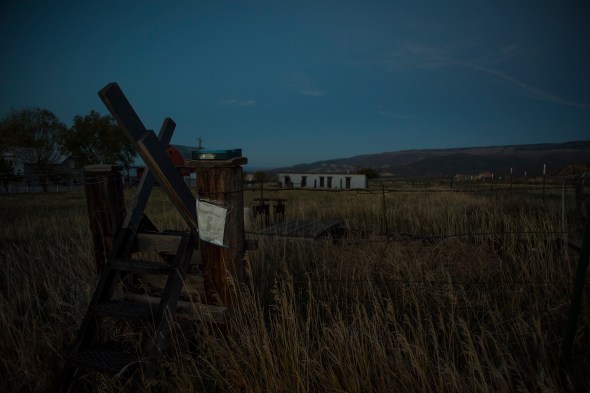
At the headgate before sunrise.

The morning of the irrigation call starts with a pre-dawn alarm and a drive to the headgate (about a half-mile north of our farm). On the stile post we find a metal tin with the day’s water requests: where the water is going and in what quantity. The paper below it lists which households are on which ditch lateral (west or south).

QF Irrigation 12 sml

This is the Stevens and Linder ditch ticket; there are four requests with the totals listed (names underneath ours removed for privacy). All four of the day’s requests are located on the west lateral so the first task was to shut the headgate to the south lateral, thereby directing all the water to the west.

The ticket shows the quantity of water requested by us (.50 or half a foot), the corresponding gauge chart conversion (.47) – to be remembered to help set the flow gauge on our property – and lastly the water shrink to be expected due to ditch loss (6%). Requests three and four on the ticket won’t suffer the 6% water shrink because they’re on decree water and it doesn’t apply. Those folks have senior water rights which allows them decree water (free and separate from their water shares) even at the end of the season. For almost everyone else this season, there was no decree water at all; the reservoirs are too low to allow it. We’re supposedly in a hundred-year drought, but even that is a misnomer; we’ll almost certainly see a drought this severe or worse again in our lifetimes. Extreme drought is the new normal here, and learning how to properly manage our water rights will be key to our longterm success.

Continue reading

Farm update: October 22

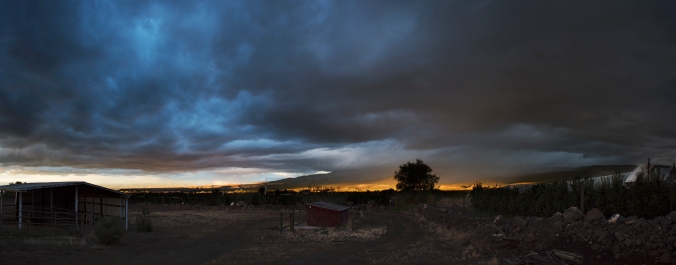
Panorama 01 sml

We are enjoying spectacular sunrises and sunsets here on the farm as the weather seems to settle comfortably into true fall. The days are crisp and the evenings are chilly – but we finally figured out our tricky gas stoves, so we’re staying toasty when we’re inside. We don’t have a furnace in our farmhouse, so we keep warm with the stoves plus lots of layers. A near-constant simmering soup pot and frequent bread baking help too.

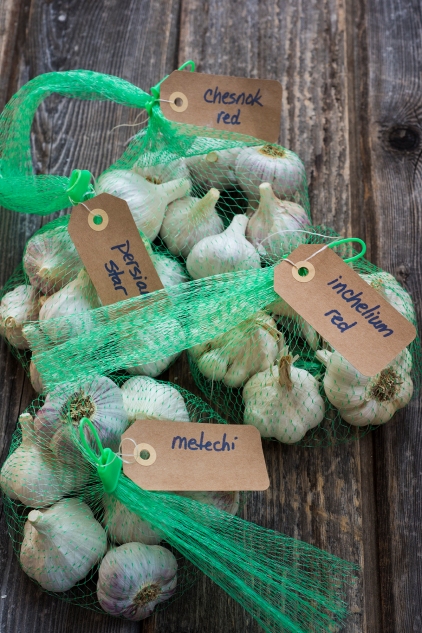
Garlic 01 sml

I’m pleased to report that next year’s garlic has been planted in the arugula (and grass and thistle) bed. Garlic is a fall-planted crop in our climate; we typically plant it in mid-October and harvest it the following July. Our good friend and farming mentor Lara generously donated this seed garlic to Quiet Farm; one of the many cool things about garlic is that it adapts to the microclimate in which it’s planted. This means that within a few years Quiet Farm will grow entirely unique garlic, which we’ll then pass on to other farmers. (If you live in the Lafayette/Boulder/Louisville area, you should join Lara’s CSA next year. She’s an amazing farmer and has taught us so much, and she grows truly spectacular vegetables and herbs. We think the world of her.)

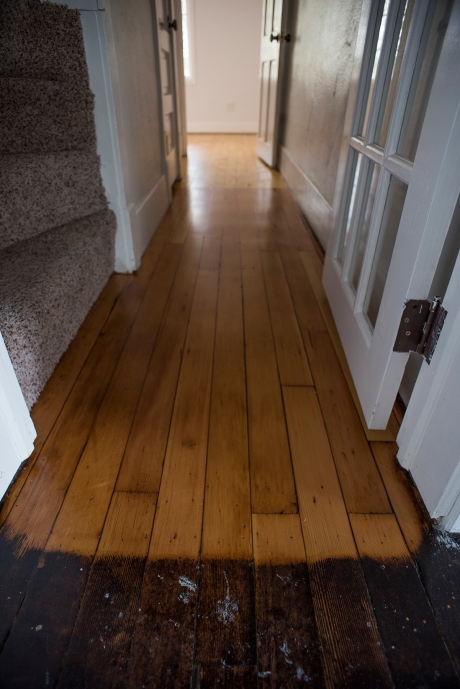
Hallway Floor Contrast 01 sml

Look at our gorgeous pine-and-fir floors!

The Quiet Farmhouse Major League Very Serious Renovation Project is kicking off with a vengeance, and we started by refinishing some vintage hardwood floors. We were disappointed to only find salvageable floors in a small part of the original 1901 house, but we opted to save what we could. The floors had been dark stained and then used as a careless dropcloth for later painting projects, and they were in rough shape. We’re so pleased with how the sanding and refinishing turned out, but now comes the difficult decision of what sort of flooring we’ll install in the rest of the house.

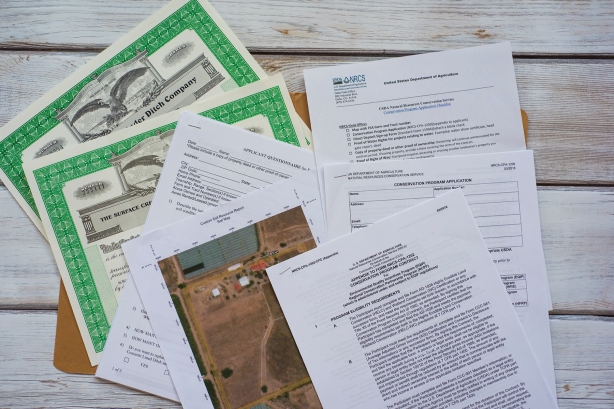
NRCS 01 sml

Government paperwork is good for insomnia.

Another task on our to-do list recently has been to apply for a season extension grant through the NRCS. There is lots to learn about applying for grants as a small start-up farm, but we’re hopeful that this grant will assist us in building hoop houses (also called high tunnels) to extend our growing season. We’re quite lucky because, unlike many other programs for small farmers, this grant will still be funded whether or not our government manages to pass a new Farm Bill before they go on yet another unnecessary vacation or campaign trip or whatever it is they do while not doing their jobs. (And on that note, please could everyone remember to vote in the upcoming midterms? Astonishingly, only 37% of eligible voters managed to make time for this in 2016. Your small farmers thank you.)

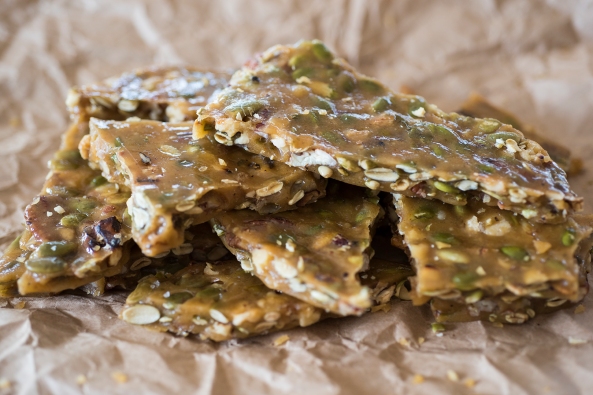
Brittle 01 sml

Pumpkin spice what?

While avoiding the news I’m diligently testing recipes for my “Fall Treats” class this week at Broomfield Public Library. Though I’m not at all a fan of sugar, especially the quantities consumed in the average American diet, I think an occasional homemade indulgence might be permitted. This here is a chile-spiced brittle with pecans and toasted pumpkin seeds, and I’m looking forward to sharing it with you. We’ll taste curried pumpkin soup and other delicious fall things, too. Not registered yet? Go here!

This week I’m in seed school and N is painting our walls. We hope to have positive irrigation news for you next week, and I hope to see many of you in class on Wednesday evening!


A crash course in irrigation

Before we moved to the Western Slope, we were told again and again to make sure we buy water, not just a farm. Over here, water and land are sold separately, like toys and batteries. Just because water runs through, on or over your property doesn’t necessarily mean you have any right to use it.

The good news is that Quiet Farm does have adequate water, in most years. The bad news, however, is twofold: first, the Western Slope is in an unprecedented drought and at the moment no one has enough water. And second, we know precisely nothing about irrigation management. When you live in modern suburbia you just turn on the tap and the water flows magically, right? That is so much not the case here.

Water Droplets
Irrigation management on Quiet Farm doesn’t look like this.

QF Irrigation 01 sml

It looks like this: our Parshall flume (or weir) with attached flow gauge. No, we don’t know what any of those words mean, either.
QF Irrigation 02 sml

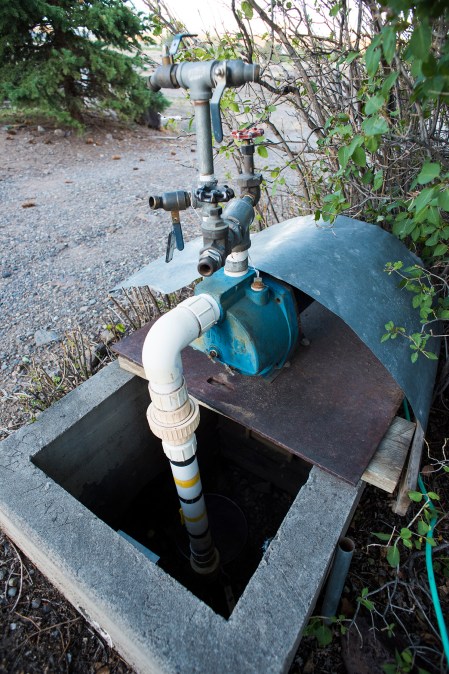
This is our water pump with screen to catch wildlife – raccoons, ground squirrels, marmots, whistlepigs, ponies, etc. – when they fall in. Looking forward to THAT happening.

We now own two shares of one of the Western Slope’s strongest irrigation ditches. There are dozens of ditch and reservoir companies; the vast majority of the area’s water comes from hundreds of lakes and reservoirs up on the Grand Mesa which are filled with precipitation each winter. When there is no snow, like last year, then there is no water in the ditches or reservoirs. And so water becomes a very valuable commodity.

QF Irrigation 03 sml

This is known as an “ag tap,” an abbreviation for agricultural. The water from this tap, however, is from our domestic supply. Confused? So are we.

QF Irrigation 04 sml

This is downstream of the water pump and will help irrigate our land with irrigation water. We think. Or maybe not.

When we want some of our water for irrigation – which we can have between the beginning of April and the end of October – we order a precise amount from the ditch company, accounting for absorption and loss along the way. Ditch riders, who live up on the mesa during the season, use a complicated system to send the water down the correct ditch to our property on a specific day. We have to be out at our headgates at about 6AM to start our run, and the water we use is debited from our account, just like a bank. We can lease, sell, trade or give away our water as we see fit, but if we order water, it’s coming to our property whether we’re ready or not. So figuring out our irrigation system is of paramount importance to our future success.

QF Irrigation 06 sml

Our water will run through gated pipe, a common sight in our area. Big farms will own thousands of feet and it’s set up according to your property’s individual landscape and contour. The black gates open and shut to control the water flow.

QF Irrigation 08 sml

A lot of our gated pipe currently looks like this, which is obviously not workable. Even we know that.

In case you’re worried that we’re actually living in Little House on the Prairie, our house has a domestic tap, which is just like water in a normal house. Except that domestic water here is crushingly expensive, especially compared to Front Range rates, which means we absolutely cannot run a farm on domestic water without bankrupting ourselves. No more domestic taps are being issued in our area; local government doesn’t think we have the water to support additional growth – unlike on the Front Range, where greedy, short-sighted counties sell their water to the big cities and then wonder why their towns die. Domestic taps are worth tens of thousands of dollars over here, if you could even buy one.
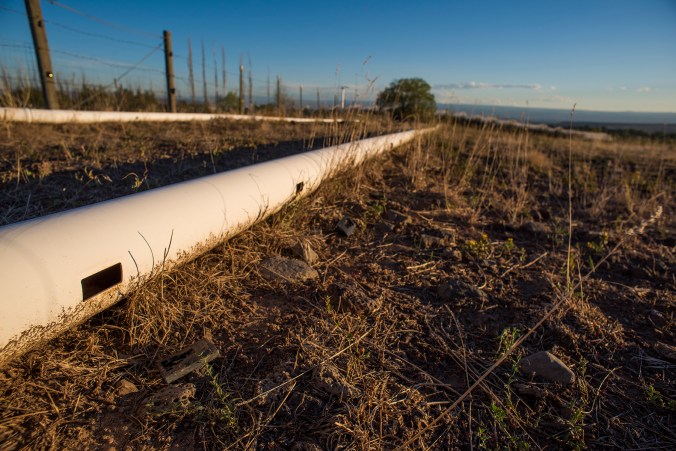
QF Irrigation 07 sml

Apparently little critters like chewing on the gates inside the pipe. The gates cost $3 each, and we have dozens missing. The few remaining intact ones are probably being eaten right now while you’re reading this.

QF Irrigation 05 sml

The end of the line. Of course, if the pipes aren’t connected properly we’ll just flood everything and there is no way to turn the water off once we’ve called for it. So good luck with that.

We’ve got just about a month to figure this system out, because once the water goes off at the end of October we’ll have no way of testing our work. And when the water (hopefully) starts running again next spring, we want to be ready to get our pasture in good shape.

QF Irrigation 09 sml

Good news, though! We’re unknowingly growing a pasture of invasive elm trees that will need to be removed by hand…

QF Irrigation 10 sml

…when we’re not growing anything at all. Surprisingly, bare pasture is actually worse than having even invasive plants in the ground.

The moral of this tale, friends, is not to take water for granted. The daily luxury of fresh, clean, potable water is an absolute gift and one that not even everyone in the U.S. has access to. So treat your water like the precious resource it is, and know that it is finite. And wars over water will be much more devastating than wars over oil.

There is much work to be done, and winter is coming. Pray for snow.
An announcement

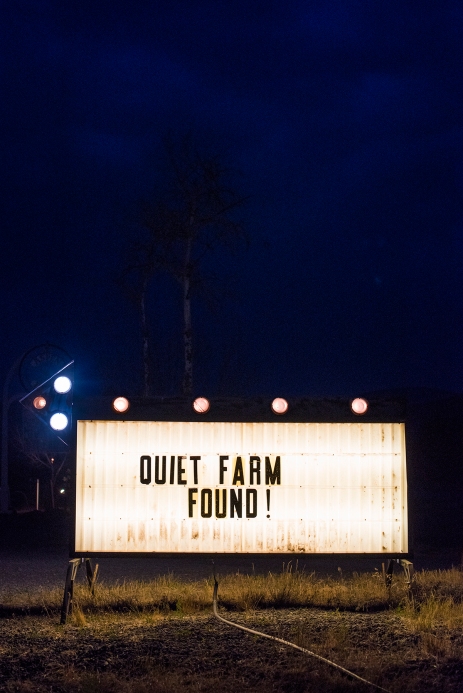
Many of you know this, and the rest of you have probably guessed, but N and I found Quiet Farm. (We’re not changing our website, however.) We closed on the property in early August and have just now gotten all of our things moved from the Front Range over to our (new to us) house. We heard too many horror stories about unscrupulous, lazy and irresponsible moving companies, so we opted to do the whole move ourselves. N had plenty of experience driving a 25-foot RV, so driving a 26-foot box truck couldn’t be much different, right? (P.S. We sold the RV. Bittersweet, but it served its purpose for our transient summer. And it’s just right down the road from us, so we can visit it if we want!)

QF 02 sml

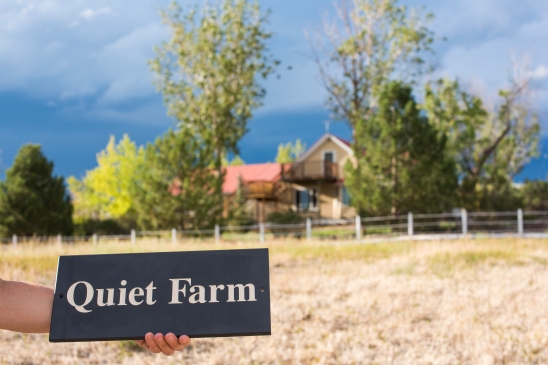
Quiet Farm is a ten-acre parcel just outside of Cedaredge, on Colorado’s Western Slope. We’re tucked under the Grand Mesa and surrounded on three sides by apple orchards; to the south we can see all the way to the San Juan Mountains. Just over eight acres of the property is in pasture, but both the land and the house have been essentially abandoned and unloved for about five years. It will take a lot of time and hard work and water to regenerate the pasture; historically it’s always been alfalfa, but we’re looking at other drought-tolerant options, too – maybe hops or quinoa?

Bluebird Rooster grey final

Our vision for Quiet Farm is an organic teaching farm and cooking school. We plan to build a certified commercial kitchen in a detached garage on the property. We’ll offer classes on everything from healthy cooking basics to bread baking to canning and preserving to beekeeping to fermentation to knife skills, and any other homesteading topics that our guests might be interested in. We’ll keep laying hens for eggs and pest control, goats for milk and entertainment, beehives and extensive vegetable and perennial plantings. We want to be part of the community and host potluck suppers and farm tours and coffee klatches and food swaps. We want to showcase the amazing fruit and animals and people this part of Colorado offers. We want Quiet Farm to be an agritourism destination.

QF sign 01 sml.jpg

We’ll post regular farm updates here, with before-and-after pictures so you can see our progress. It took us three years to find Quiet Farm, and we’ve got a lot of work to do to fully realize our vision, but we’re exactly where we want to be. Thank you for joining us on this journey, and we’re so much looking forward to all of the incredible adventures ahead. We can’t wait to share Quiet Farm with you!


The Farm Series: Fritchman Orchards

Fritchman 01 sml

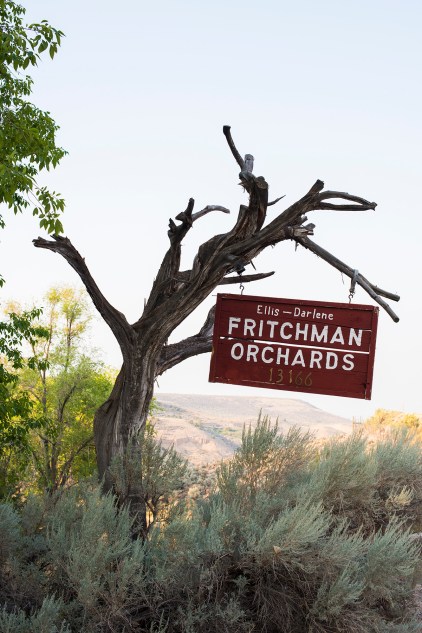
It’s August, and it’s punishingly hot, but at least we’ve got peaches. This week we went up to Fritchman Orchards to watch a bit of the peach harvest. As always, it’s humbling to observe just how much work goes into producing the fruits and vegetables we take for granted. At this time of year, harvest starts around six in the morning, so that the majority of the work can be done before the temperature tops 90 degrees.

Fritchman 03 sml

Fritchman 13 sml

Experienced pickers harvest peaches by color.

When we tell people on the Front Range that we’re moving to the Western Slope, they invariably ask about peaches. Specifically, they ask about Palisade peaches. And this is not designed to malign Palisade peaches – because they’re spectacular, of course! – but to introduce the concept of branding, and how it can perhaps to be used to confuse a situation, especially when it comes to local food.

Continue reading

The Farm Series: Desert Weyr

Of late, our Western Slope farm visits have taken us to pick delicious cherries and to meet happy pigs. How about we introduce you to some unusual sheep?

Weyr 01 sml - Copy

Desert Weyr is perched high on a mesa above the town of Paonia.

In the late 1990s, Eugenie “Oogie” McGuire decided she wanted to craft herself a traditional medieval cloak – from scratch. It would be made from wool, of course. She purchased one ram, five ewes and a loom, taught herself how to spin, weave and sew, and eventually made the cloak. As she says, “It’s more accurate for the 18th century. It took me six years to weave the fabric, two more to get up the courage to cut it, and two weeks to hand-sew it.” But what commitment! Now, Oogie and her husband, Ken, raise a large flock of Black Welsh Mountain sheep on pasture above Paonia.

Continue reading

Sowing the seeds

As recently as three or four generations ago, the vast majority of seeds planted in home gardens were saved from year to year. Gardeners learned what plants thrived in their unique microcosm, and they might have saved seeds from the earliest beans, or the largest cucumber, or the most delicious tomato. Season after season, these saved seeds protected plant diversity, acted as a hedge against famine and in many cases were so treasured that they were sewn into hems of immigrants’ clothes when they traveled – voluntarily or not – to new lands.

Seeds 02 sml

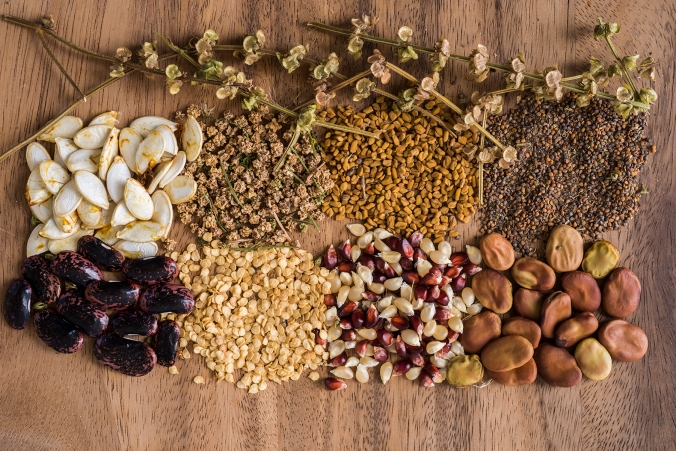
A few samples from the Quiet Farm seed bank.

Now, we think nothing of buying seed packets every growing season. Wintertime brings glossy seed catalogs to the mailbox, filled with mouth-watering descriptions of intensely flavorful tomatoes, trendy kalettes, or spicier peppers. We page through these during the dark, cold days, eagerly anticipating the chance to get our hands in the soil once again, and often we order much more than we need. Most home gardeners have a wealth of seeds left over from previous years, and even this abundance doesn’t stop us from buying just a few more. They’re just tiny packets, we reason. A few more couldn’t hurt.

Continue reading

Sausages and laws

One of the toughest things about deciding that you want to become a farmer (especially when you decide this in your late 30s) is that you can’t really go to Farm School, mostly because it doesn’t exist. Farming used to be a profession passed down from generation to generation; farms stayed in the same family for decades, and sons and daughters learned how to care for animals and grow food and nurture the land from the time they were tiny. This is so much not the case any longer.

Advocacy 01 sml

We named February our Month of Education, and so in our pursuit of self-designed Farm School, we attended just about every single course, seminar, conference, talk or networking event geared towards farmers and ranchers in Colorado. We’ve been to a lot of classes since we started seriously planning Quiet Farm three years ago, but this past month took our education to a new level. We went to a grantwriting course and Alfalfa University and a tax planning class and a potluck farm forum and toured a hydroponic farm and a million other events. And we went to the State Capitol, too.

Advocacy 03 sml

Continue reading

The Farm Series: Rebel Farm

Friends, we don’t want you to think that all we do is trek around wintry European countries, eating schnitzel and drinking wine. No, sometimes we also visit delightful urban hydroponic farms and we eat handfuls of just-harvested fresh greens. Balance. It’s all about balance.rebel-farm-01-sml.jpg

Rebel Farm 05 sml

Rebel Farm, run by Jake and Lauren, is a 15,000 square-foot hydroponic greenhouse on the border of Denver and Lakewood. For those readers who live in Colorado, you may well wonder how these fine folks can afford to grow lettuce, rather than weed, considering that just about every greenhouse in the state has been snatched up by the marijuana industry. In the case of Rebel Farm, however, the greenhouse is perfectly situated between two schools – which means it cannot be a grow operation, and instead it can grow food. Brilliant.

Rebel Farm 19 sml

Purple kohlrabi, sadly underappreciated by CSA members everywhere.

Rebel Farm 08 sml

Tangy, citrusy red sorrel.

Rebel Farm 04 sml

If you’re not familiar with hydroponics, don’t feel alone. In its simplest form, hydroponics is a method of growing plants without soil. The plants can be planted in gravel, sand or other inert materials, or their roots can be suspended in a nutrient-rich water mixture. There are lots of different ways to grow hydroponically; Rebel Farm uses the NFT, or nutrient film technique, method.

Continue reading

The FAQ Series: Box Meal Kits

Well, hello there! How is 2018 treating you thus far? We over here at FQF are currently swanning our way through France and Germany, and we’ll be sending you some delightful travel missives in the not-too-distant future. But until then, we’d like to talk about box meal kits, because they’ve been a popular topic of conversation lately on both our professional and personal circuits.

What are box meal kits, you might ask? They’re basically recipes and ingredients shipped to you on a regular or on-demand basis, from which you craft (hopefully) delicious, quick(ish) meals. You don’t need to shop or plan; all you need to do is decide which meals you want and how often you want them. And there are many, many companies from which to choose. HelloFresh is probably the most well-known, but there is also Blue Apron, Green Chef, Purple Carrot, Plated, Sun Basket and many others. Plus, Amazon recently bought Whole Foods, so they’re expected to enter the ring any day now, and Wal-Mart is jumping in, too.

Food Box 01 sml

Thanks to our good friends over at Epicurean Butter, we received two HelloFresh meals to test: Prosciutto-Wrapped Chicken with Mushroom Risotto and Kale Grilled Cheese Sandwiches with Tomato Soup. Although HelloFresh offers a number of different plans to choose from, these two meals were each designed to serve two people and they cost about $20 each, or $10 per serving.

Each meal arrives much as you see above: a shopping bag contains the ingredients, plus a photo recipe card and nutritional info; the shopping bags are then all tucked into an insulated box with packing material and ice packs. Typically, you receive three different meals in a box, but again, this varies according to your plan and the company. Cooking oils, salt and pepper are not included, but everything else you need should be.

Food Box 02 sml

Despite the fact that I find following recipes very similar to being put in a choke collar, I wanted to honor the spirit of this experiment and pretend that I was a standard HelloFresh customer, rather than a professional chef. So I laid out all of my ingredients, checked them carefully against the recipe card, and followed the directions to the letter. N even read out the instructions to me while I was at the stove; this resulted in much hilarity as my natural instinct was to do everything my way – he had to correct me frequently, and of course I argued. My goal, obviously, was to see how close I could get to the presentation in the photo as well as the preparation time indicated.

Continue reading