Mid-March over here and we are preparing for a growing season that will challenge us yet again. While last year was the toughest we’ve experienced, 2026 looks likely to be harder. We simply did not have winter at all this year. This week’s predicted heat dome will break records across the region and might push our highs into the mid 80s – in March. Snowpack across the American West is in many places at its lowest recorded levels ever, most Mesa reservoirs are at 20% or less of capacity, the Colorado River will not meet its obligations this year, and we are girding ourselves for a hot, dry and fiery season. Will the grasshoppers return? Probably; they thrive in drought conditions, unlike us.
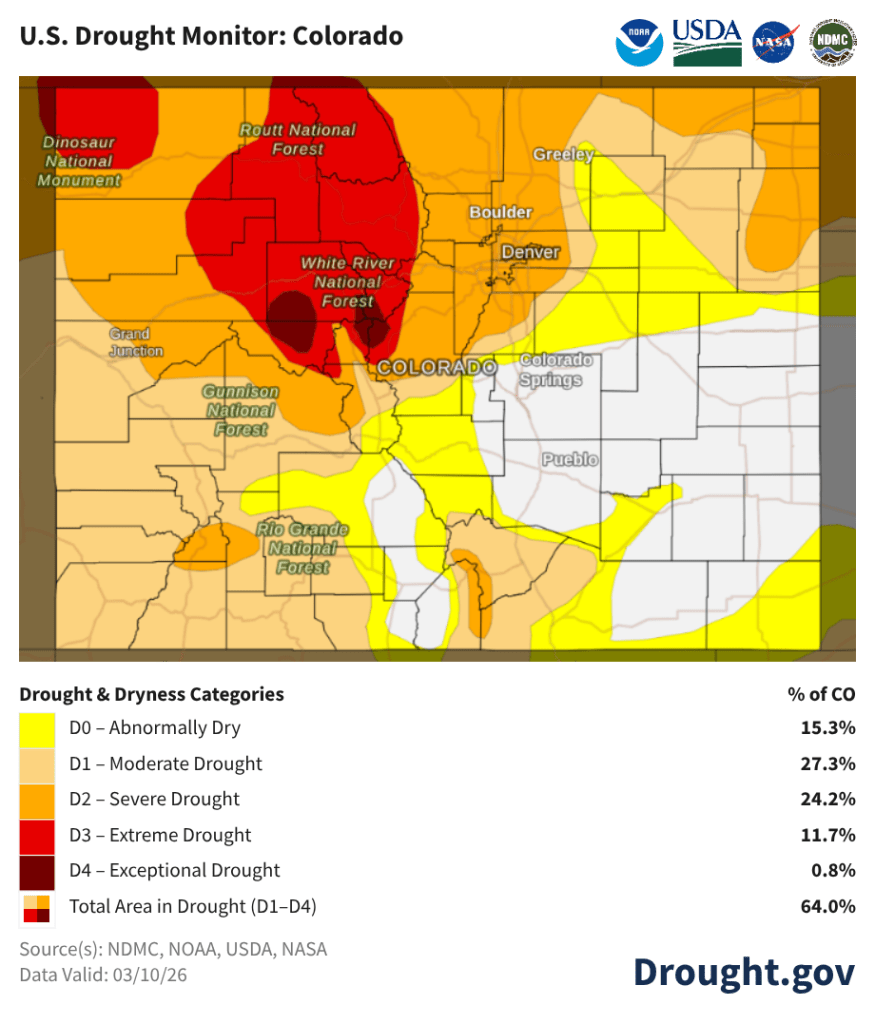
Enjoy this federally-provided data while you still can.
While our irrigation allocation won’t be announced until mid-May or later, we are preparing for our lowest allotment since starting the farm in 2018. This means altering our irrigation schedule, buying in more hay, and planting fewer crops. We are having lots of hard conversations about how we’ll manage our pasture and our crops on minimal water, and what changes we’ll make to prioritize our own physical and mental health – something we really struggled with last year.
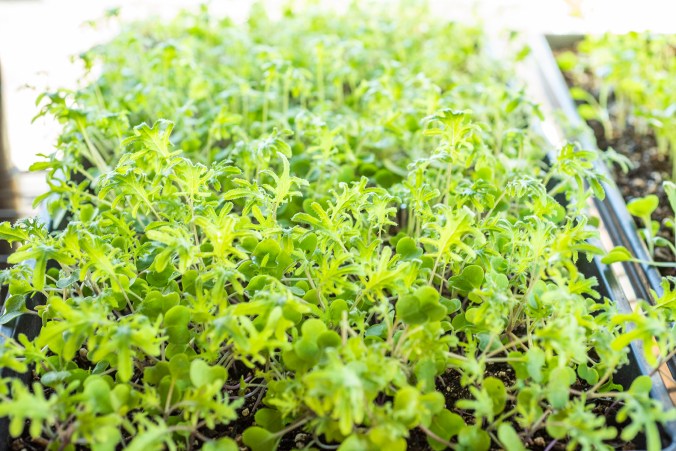
Kale sprouts in the sunroom.
The sunroom is currently packed with the usual assortment of starts – peppers, tomatoes, greens, onions and much more. Even though it’s unlikely that I’ll plant as much I have in previous years, on the outside chance that we score a wet spring I’d still like to have our own organic starts ready to go in. I’m also growing lots of salad sprouts this year, which has been remarkably gratifying – the nutritious sprouts are so crunchy and fresh in our daily salads, and I can control the environment much better indoors. I plan to grow sprouts continuously, if I can manage it!
Outside beds have been seeded with all manner of hardy greens, plus peas and fava beans. I’m trying black chickpeas for the first time this season; unlike most dry beans, they’re planted early and I’m curious to see how they’ll fare here. We usually go straight from winter into summer, skipping the cool season loved by peas, rhubarb, cilantro and asparagus, but since we’re already in spring and have been since January…well, it’s difficult to know how well anything will grow. Historic temperature records and weather patterns might once have been useful, but now all bets are off and it’s just one big rickety roulette wheel. In a stable climate, temperature and precipitation levels are rarely broken; highs and lows exist within established, constant parameters. In a destabilizing climate, however, records are broken all the time; certainly we’ve seen this play out across the country over the past few years and especially this winter.
The climate crisis is forcing us all to adapt in various ways, and farmers are no exception. This week we watched this one-hour documentary about farmers across Colorado incorporating agrivoltaics on their land. Much of the film was shot here in Delta County and features many of our farmer friends and colleagues. Watch for free here, if you’d like.
Despite the obstacles, we’ll carry on growing food in a high-plains desert – at least for now. It feels like our food security is shakier and therefore more important than ever, yet in my anecdotal experience, fewer people are choosing to grow food, even in small quantities. Will you plant a garden this year or has it all become too much?
Take good care of yourselves, dear friends, and hope to see you in the streets on March 28.
 Finding Quiet Farm
It’s clear to me that climate engineering has broken the small water cycle. I’m facing the same growing issues with hay although the hay feeds the animals. I wish you the best and I’m interested in purchasing some of your salad sprouts. Please let us know if they will be available for sale.
LikeLike
Hi Alida, thanks for your message. Unfortunately no sprouts for sale as they’re not under the Cottage Foods Act. We really appreciate your support of our little farm!
LikeLike
Appreciate your personal perspective on such a global situation. We are trying some cherry tomato plants inside our patio. Our HOA made us get rid of our planter box on wheels. Good thoughts to you and Nick.
Cathy, Jupiter FL
LikeLike
Good to hear from you, Cathy, but so disheartening that HOAs can restrict efforts to grow food. In Florida you get a much longer season than we do but we have fewer mold and bug issues thanks to our low humidity! Wishing you and yours all the best, and hope you get some delicious cherry tomatoes.
LikeLike
Hi Libby! Growing crops in a high altitude desert sounds exceedingly difficult, even in the best of seasons, but certainly in less than ideal seasons. Have you considered moving Quite Farm to land better suited for farming? There are such better suited farmlands in the “heartland” of the country. Wishing you the best! Kelly
LikeLike