Temples of boom

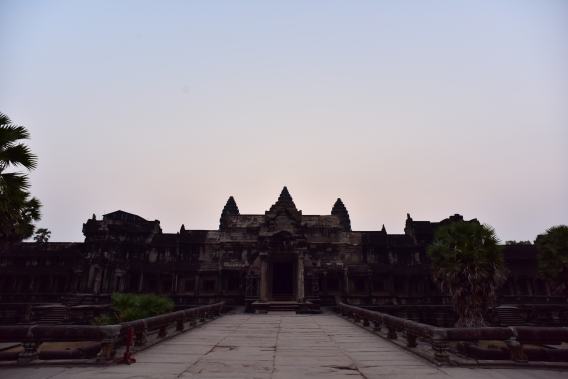
We thought of calling this post “Angkor what?,” but it’s a bit of a cheap shot. To sum things up rather simplistically, tourism in Cambodia exists primarily because of one place:

NJB_2392

The famous view of Angkor Wat at sunrise. 

Over two million tourists visit Cambodia each year, and the vast majority – like us – make Angkor Wat and the nearby temples central to their trip. Last year, the government-run organization that recently took over management of the temples (some sources claim this cultural treasure is actually owned by a businessman) announced a dramatic increase in the price of a one-day temple pass, from $20 to $37.
NJB_2336.JPG

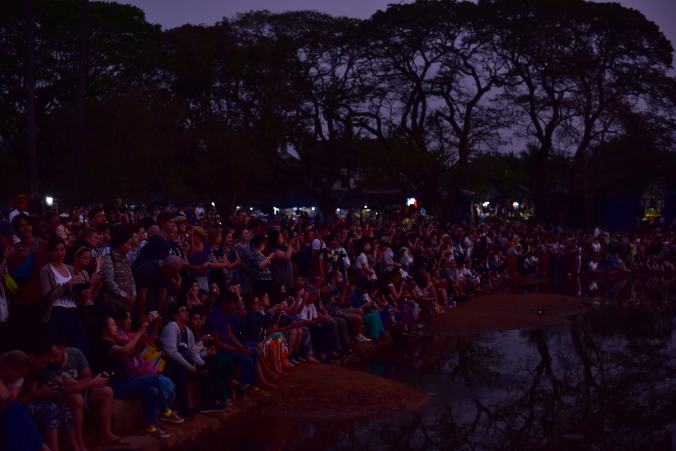
You’ll want to arrive early, since you’ll be jostling for space with hundreds and hundreds of other tourists angling for the same sunrise shot.

Based on the throngs of people already at Angkor Wat at 5AM, it seems very few tourists have been put off by this price increase, despite concerns to the contrary. Although there are hundreds of temples in the immediate area, most tourists – like us – visit just a few and if we’re speaking honestly, it’s because this is a tourist attraction we’re supposed to see, rather than one we’re really interested in. It’s easy to get “templed out” here very quickly, especially in the blistering heat and pervasive dust of the dry season.

NJB_2372

One of Angkor Wat’s towers.

NJB_2369

Stone carving detail, Angkor Wat.

NJB_2349

Angkor Wat is the largest and best-preserved of the main temples, hence its overwhelming popularity.

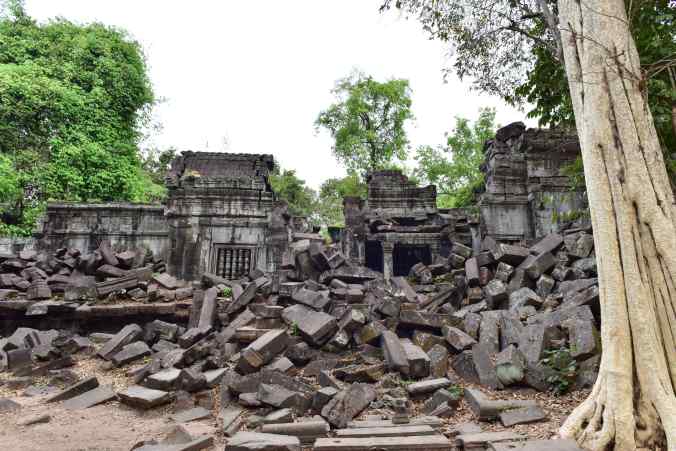
As good tourists with unlimited access to travel guides and “places to go before you die” lists, travel too often becomes a series of boxes checked off, mostly based on others’ experiences (or glossy Instagram photos). Angkor Wat and its compatriots are UNESCO World Heritage Sites and regularly cited as one of the world’s most important historical monuments. The reality, however, is that unless you’re a devoted student of history, archeology and/or crumbling stone, you might actually find the endless piles of rubble and maddening crowds rather underwhelming.

NJB_2399

Temple entrance at Banteay Srei.

NJB_2414

Banteay Srei is carved from red sandstone, making it particularly unique amongst other temples in the area.

It’s also difficult for us, at least, to feel charitable towards a government who might have made somewhere in the neighborhood of $30 million last year (based on a conservative 1.5 million visitors buying $20 temple passes) plus about $35 a head for visitor visas (again, conservatively about $70 million) but can’t seem to find the resources to organize clean drinking water or trash collection for its citizens. Where, exactly, are these millions going?

NJB_2407

Stone guards on duty at Banteay Srei.

NJB_2416

Carving detail, Banteay Srei. The temple’s name roughly translates as “citadel of the women;” one possible explanation is that men couldn’t have managed the intricacy of the carvings.
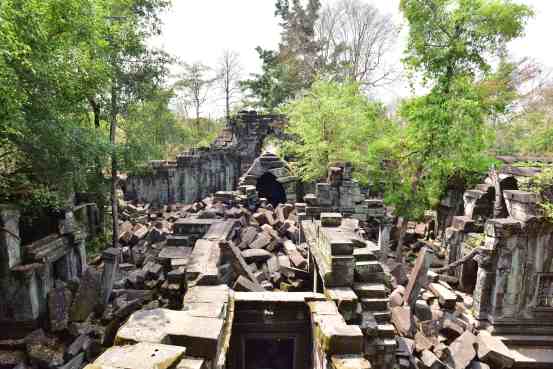
NJB_2439

Some of the thousands of tons of rubble at Beng Mealea.

NJB_2432

Beng Mealea’s grounds were only recently cleared of landmines and opened to the public.
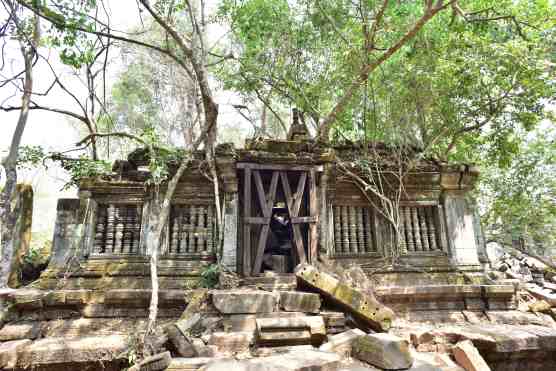
NJB_2447

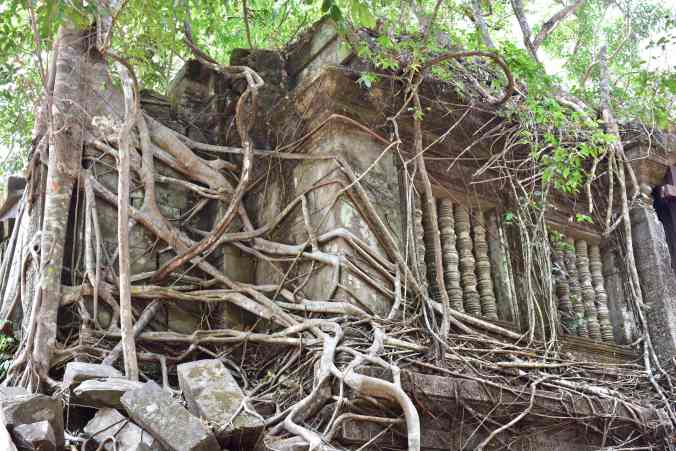
Crumbling walls at Beng Mealea.

NJB_2470

It’s a bit of a fixer-upper…

NJB_2455

Need any more convincing that nature rules absolutely?

Please don’t misunderstand: the temples are absolutely amazing. Most were built during the 10th or 11th centuries, and the Angkor area once comprised the world’s largest city. The history and craftsmanship carved into this stone is palpable. But it’s also hot, crowded and dirty, and it’s essential to acknowledge that when you travel, you will probably visit some “touristy” spots.

Look past the trash and the hordes, close your eyes and imagine what life might have been like in these temple complexes over a thousand years ago. Birth and death and war and famine and joy and love would all exist then, just as it does today. The main challenge we as tourists face now is how to appreciate significant places like this while still preserving them for future generations. Is there really such a thing as sustainable tourism?

How things are made

Hi! We’re in Cambodia! Adjusting to southeast Asia’s extreme temperatures (currently 96°F with 43% humidity) after New Zealand’s temperate climate has been a bit of a shock, but we’re adapting. The key? Drinking plenty of water and a hotel with a pool. Plus, no heavy-duty touring activities (like dusty temples) between the intense hours of noon and 5PM. One must take good care of oneself when traveling.

NJB_2321.JPG

$29 a night gets you quite a bit of luxury in Siem Reap.

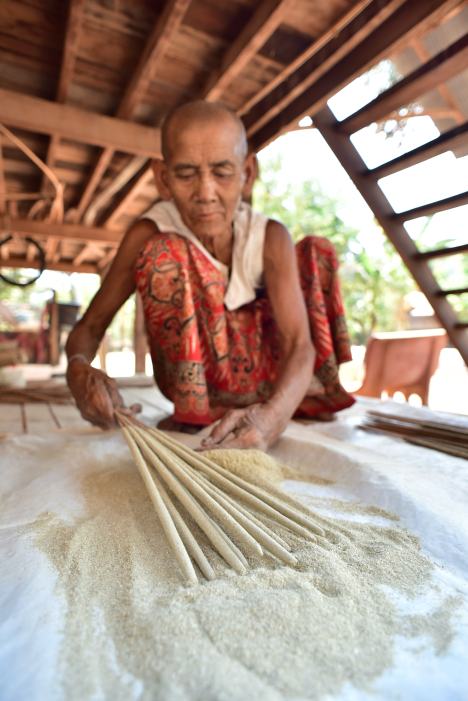
One of the benefits of traveling in less developed countries like Cambodia is often the opportunity to see things being made by hand that are almost always created by machine elsewhere. We participated in a tour that took us through small villages outside of Siem Reap where we had the chance to see incense, rice noodles, and tofu, among other things, all crafted by hand.

NJB_2608

This incredible woman has been making incense sticks since she was 15. She’s now 76.

NJB_2614

Scented bark, used as the base for the incense sticks.

Bark and other raw materials for the incense are collected from the surrounding area, then sifted and made into a paste with water. The paste is rolled around bamboo sticks, dusted and dried in the sun.

NJB_2609.JPG

61 years of making incense by hand might be the embodiment of mastering one’s craft.

NJB_2620

Dusting the incense sticks before they’re left to dry in the sun.

NJB_2613.JPG

The finished incense sticks are collected into bundles and sold at the market for ceremonial use at altars such as the one below.

NJB_2558

An altar at a village pagoda.

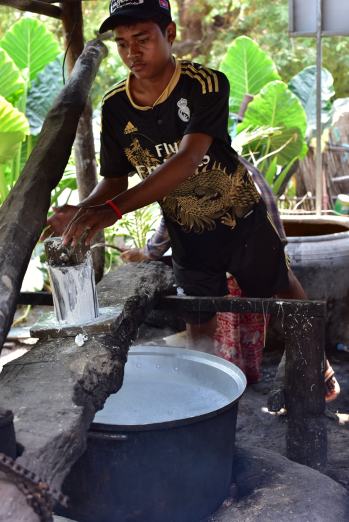
We stopped at a home in a village outside of Siem Reap where fresh rice noodles are made. As with most of the homes we visited, this business is a family affair, with everyone participating in the household’s livelihood.

NJB_2583

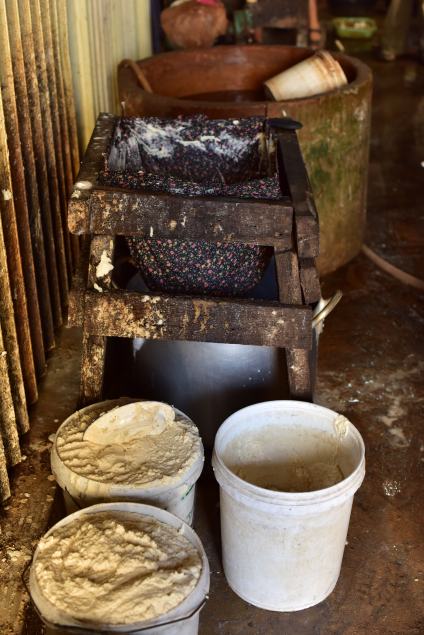
The dough for these noodles is simply finely ground rice and water.

NJB_2592

This contraption uses the well-known engineering theory of “playground seesaw” to knead and pound the dough in shallow pans.

NJB_2577

The noodle dough is placed in the cylindrical press and tamped down with a wooden plunger.

NJB_2584

The boy wasn’t heavy enough to weigh down the press, so another family member joined in.

NJB_2580

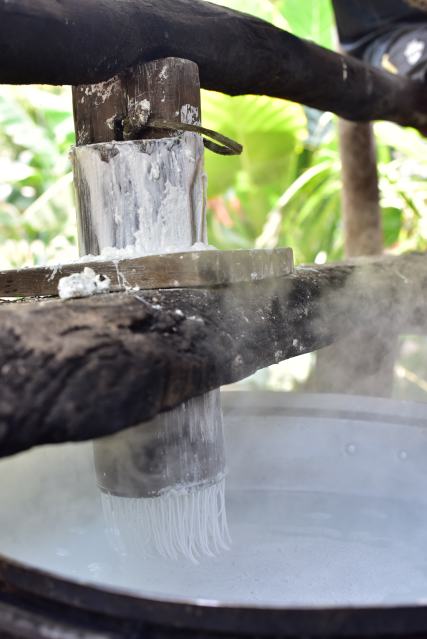
Noodles gently dropping into their hot bath.

The family’s press is a simple yet ingenious human-weighted device that forces the thick, dense dough through a metal sheet pricked with tiny holes, creating the thin noodles. The noodles are quickly cooked in boiling water, then removed and drained.

NJB_2590

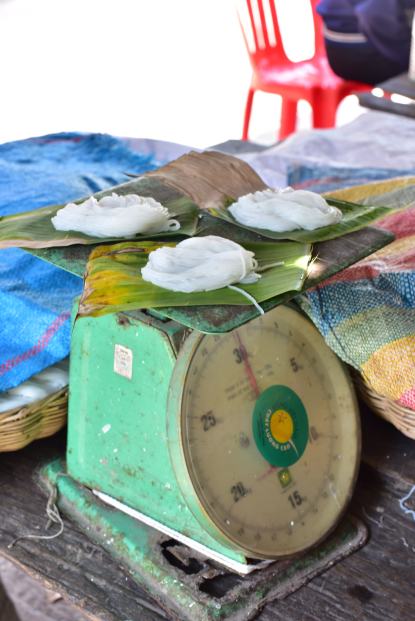
Bundles are carefully weighed, although these women are so skilled and accurate that the scale probably isn’t even necessary.

NJB_2576

The noodle bundles are packed in bamboo-lined rattan baskets for transport to the market and local restaurants.

Another stop was a house near Siem Reap’s wholesale market where a local family makes fresh tofu. Batches and batches are made every day and sold at the market or to a multitude of small restaurants. The “production kitchen” is of course also the family’s home.

NJB_2525

The wood-fired stove used for heating the soymilk.

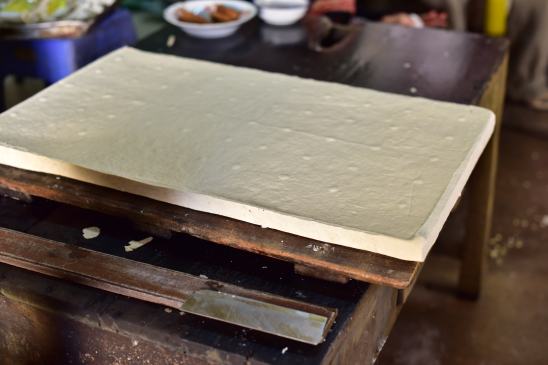
Tofu is made in a manner very similar to cheese: fresh soy milk is heated, a coagulant is added to curdle the milk, and the mixture is pressed to remove liquid.

NJB_2537

The hot soymilk curdles immediately after the coagulant is added. 

NJB_2526

The curd is drained through fabric before being placed in the press.

NJB_2527

The drained curd is placed in a tray and pressed to remove liquid. Note the clever use of a bottle jack!

NJB_2529

Finished tofu.

NJB_2531

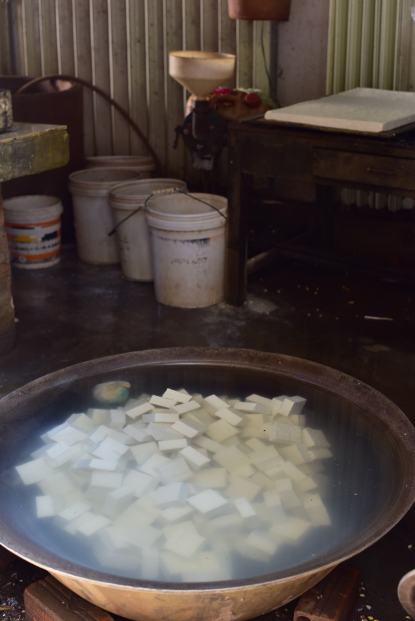
Tofu cubes, ready for sale. Tofu is always stored in liquid (usually filtered water) to keep it fresh and moist. 

If you’re interested in making your own homemade tofu, start here!

A walk in the woods

Any time we stop at a campground or visitor information booth in New Zealand, we face brochure racks stocked with dozens of flashy, full-color advertising cards for every adventure imaginable. Sky diving! Bungee jumping! River rafting! This country’s tourism industry caters heavily to the adrenaline junkie, and many of the young backpackers we’ve encountered seem more than happy to shell out hundreds of dollars pursuing their long-held dreams of jumping into, and out of, various modes of vaguely dangerous transport.

NJB_1733

Gnarled old trees on the walk to “The Snout” in Picton.

N and I, however, are sage and sensible in our advanced years, and we choose quieter, calmer, less aggressive activities. Like walking, for example. For all its jumping and rafting and diving, New Zealand really is perfect for people who just want to put on a pair of sturdy shoes (and perhaps lug thirty pounds of camera gear) and walk.

NJB_1984

Boardwalk into the bush near Tongariro National Park.

The country is absolutely overrun with well-maintained tracks, perfect for a few hours or for multi-day treks. While we’ve only ever gone out for day trips, all of our walks have been more than worth the time and effort, and a great way to see the country slowly. The photos collected here truly emphasize New Zealand’s incredible natural diversity.

NJB_2235.JPG

The Champagne Pool at Wai-O-Tapu Thermal Park.

All of New Zealand is volcanic, but thermal activity is highly concentrated around Rotorua, roughly in the center of the North Island. The Wai-O-Tapu Thermal Park allows visitors to see volcanic activity in a close and colorful manner.

NJB_2151

Wai-O-Tapu’s famous Boiling Mud Pool in action.

NJB_2268

This is not Colorado’s EPA-poisoned Animas River; rather, it’s a sulfur pool at Wai-O-Tapu. 

NJB_1510.JPG

Abel Tasman National Park, on the northern edge of the South Island, is rightfully famous for both its kayaking and its extensive coast track. We only spent a couple of days here but loved its beachy-desert feel.

NJB_1488

View from the Abel Tasman coast track.

NJB_1491

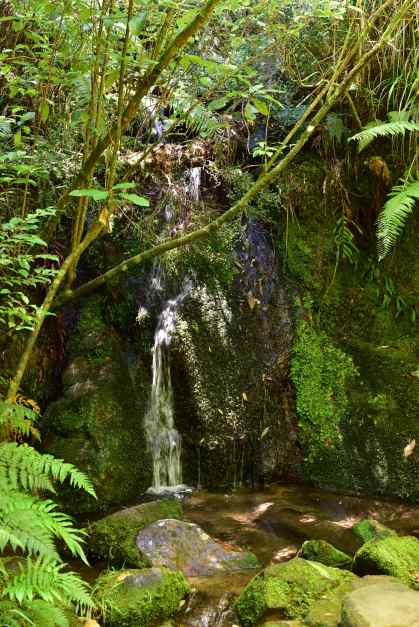
Tropical waterfall in Abel Tasman National Park.

NJB_1709

Lumberyard and harbor near Picton. Timber is New Zealand’s most important agricultural export.

IMG_20170226_130837035 (1).jpg

Pro tip: while foraging may be all the rage, don’t ever, ever eat mushrooms you find while hiking unless a mycologist can confidently identify them.

NJB_1721.JPG

On the way to Picton’s “Snout.” Most of the walking tracks we encountered varied between open country and tropical forest.

NJB_1323

Huka Falls, near Great Lake Taupo.

Huka Falls is apparently New Zealand’s most-visited natural attraction. We’re convinced this is because it’s located about ten feet from the parking lot.

NJB_1744.JPG

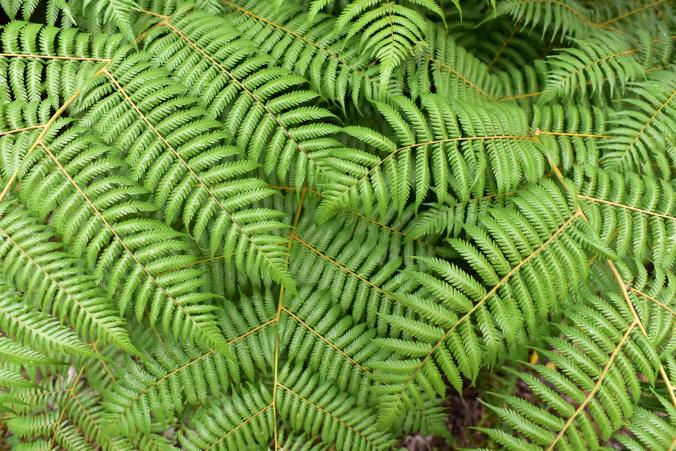
New Zealand has a wealth of diverse plant life, but ferns are ubiquitous.

Kiwis are rightfully very proud of their country, and the fern emblem is seen everywhere, most notably on the All-Blacks’ uniform. Recently, the country even tried to change its flag to incorporate the iconic fern image, though the referendum failed.

NJB_2108.JPG

Whakarewarewa Forest, Rotorua.

Like many island nations, New Zealand has fought for hundreds of years against invasive non-native species. The most destructive example is the possum, introduced in 1837 in an attempt to start a fur trade. Now there are thought to be more than 30 million – and they eat more than 20,000 tons of vegetation every night. The Redwood Forest pictured above, however, is an example of a non-native species that hasn’t spread ferociously. These trees, native to California, were planted in Rotorua in 1901 in the hopes of expanding the country’s timber industry. Unfortunately (for the timber industry) but fortunately (for the island’s native trees), only six hectares of the original twelve hectares survived, and the wood produced is far too soft for use in construction. They love the rich volcanic soils in this sheltered grove, but they can’t grow beyond this particular area.

NJB_2060.JPG

The hardest hike we did by far was the legendary Tongariro Alpine Crossing, considered New Zealand’s best one-day hike and also one of the best in the world. It’s only about twelve miles from start to finish, but it ascends more than 2,000 feet and descends more than 3,000, and it’s tough, even for these Colorado hikers. We started before dawn – both to beat the crowds and the midday sun – and completed it in about six hours.

NJB_2002.JPG

The beginnings of sunrise on the Tongariro Crossing.

NJB_2012.JPG

Looking west at the ominous shadow of Mount Ngaurahoe, more famously known as Mount Doom.

NJB_2032.JPG

This photo of Mount Ngaurahoe emphasizes the area’s stark volcanic landscape.

NJB_2069.JPG

The weather shifted frequently while we hiked the Crossing, from bright sun to low enveloping clouds. It’s easy to see why Tolkien’s books were filmed here!

NJB_2054.JPG

The Emerald Lakes of the Tongariro Crossing.

Thank you, New Zealand, for your beauty and your hospitality. We’ve loved our time here and look forward to returning. Onwards to Cambodia!


Mad about ewe

It is impossible to overstate the importance of the humble sheep in New Zealand. The famous Captain Cook first introduced sheep here in 1773; meat and wool, as well as numerous other byproducts, quickly formed the economic background of this young nation. Even today, New Zealand is well-known for its lamb and wool, and the oft-cited statistic that New Zealand has a lot more sheep than people (about 27 million to 4 million) still holds true, although the animal numbers have fallen dramatically in recent years. The worldwide introduction of synthetic fibers understandably had a massive impact on the wool industry.

NJB_1837

One of the great joys of travel – especially on road trips – is stumbling upon something amazing that wasn’t in the day’s plans. We were on our way to camp on the beach at Clifton, in Hawke’s Bay on the east coast of the North Island, when we drove by Wool World. My head immediately filled with visions of a slick, American-style theme park devoted entirely to sheep, hopefully with a petting zoo, roller coaster and extensive gift shop. The reality was far different, and much better.

NJB_1891

Clifton Station, Hawke’s Bay.

NJB_1846

The dogs are coming…

Clifton Station (ranches in the U.S. are stations here) was founded in 1859 and has been run by the same family since. It encompasses about 2,000 acres on the east coast of the North Island. Despite the signage outside advertising shearing and herding demonstrations, Wool World is now only open for large groups of pre-booked cruise ship passengers. We got lucky, however, and walked up while a station hand was treating lambs in a gated paddock near the road. These lambs had just been taken off their mothers and were headed out to munch on fresh new pasture; the abrupt change in diet causes their delicate little lamb tummies to go a bit haywire, so they’re essentially given a pre-emptive antacid.

NJB_1865

The station hand gave us free rein to walk into the old shearing barn, built in 1886 and still in use today. This barn is true living history and it was incredible to see the pride that this family takes in their property, their animals and their way of life. Places like these are becoming more and more rare, and recognizing the past is especially relevant because modern agriculture is changing so quickly. The opportunity to see this space will be one of the highlights of our trip to New Zealand.

NJB_1880

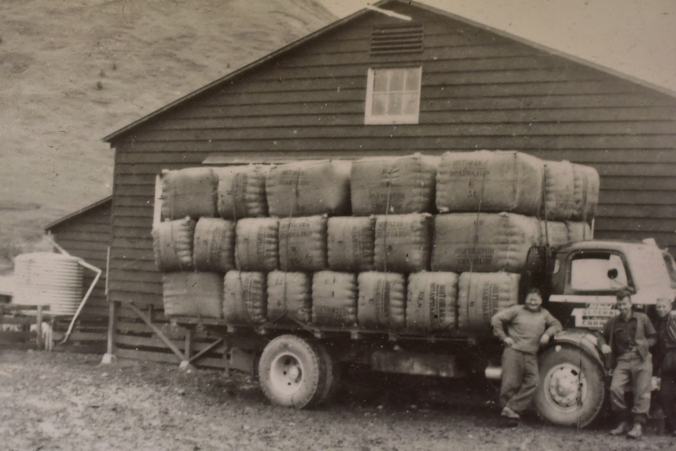
Blade shearers in 1893 with shedhands and shepherds. The records indicate that 25,000 sheep were shorn in the shed that year.

NJB_1876

Horse-drawn wool bales headed to the railyard for transport to Wellington or Napier.

NJB_1877

Bales of wool bound for a local wool sale.

NJB_1848

Not much has changed in this woolshed since the late 1800s.

NJB_1853

Shearing stalls.

NJB_1871

Belt-driven machinery allowed multiple sheep to be shorn at one time.

NJB_1860

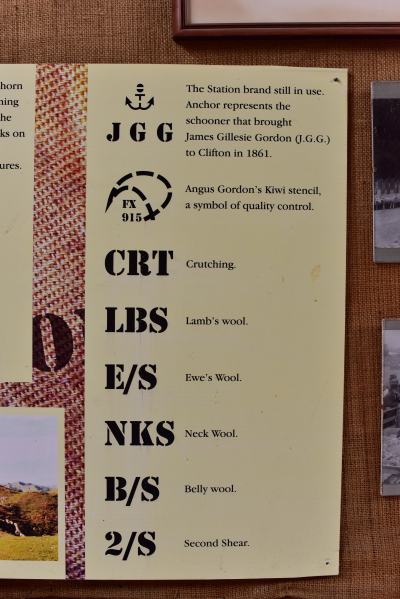
Wool bales are stenciled with their station origin, destination, pack year and grade. Low-grade wool (and the sacks) were often used on walls for home insulation.

NJB_1873

A helpful identification key for bale stencils.

NJB_1861

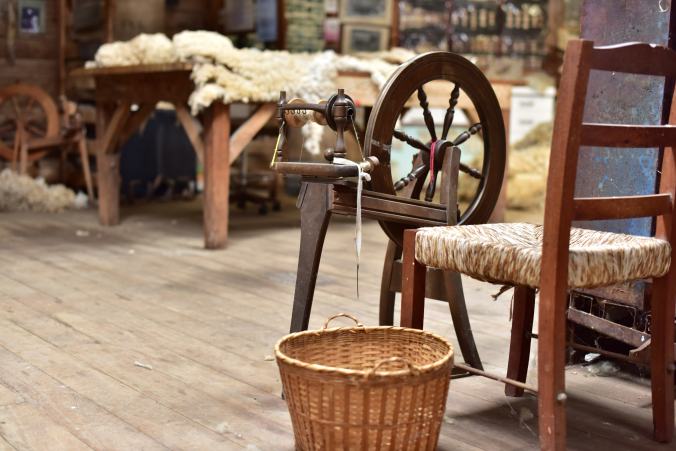
Ye Olde Spinning Wheel. Avoid at all costs, princesses.

NJB_1843

If you should ever have the opportunity to see a herding demonstration, do not miss it! Watching the shepherd and the dogs run the sheep is truly remarkable.

How to campervan in New Zealand

When organizing this impulsive trip, we gave a lot of thought not only to where we would go, but also how we’d get around once we got there. We planned on mostly using public transportation – trains, buses, ferries and so on – instead of renting cars, but in New Zealand, we wanted to rent a campervan. And we are so pleased that we did.

NJB_1153

If you’re British, you probably get the inside joke of the license plate.

New Zealand is roughly the same size as Great Britain or Japan, but holds just over four million residents in comparison with Britain’s 64 million and Japan’s stunning 127 million. This means, of course, that there is a great deal of open country – and because food and accommodation might be few and far between, a campervan is the perfect way to explore. (It’s also called caravanning, but that’s usually only when you’re using a regular vehicle to tow a caravan that has no engine of its own. That’s commonly known as fifth-wheeling in the U.S.)

New Zealand is so friendly and welcoming to campervans; we’ve seen hundreds and hundreds of vans of all shapes and sizes during our time here, proving that it is one of the most popular ways to see the country. There are campgrounds everywhere, from basic and rustic to luxurious; most of these have small motel rooms as well as powered and non-powered sites plus places for tent campers. Amenities vary, but almost always include common showers, toilets and kitchens, and there is often a pool or hot spring too.

NJB_1319

Fernland Spa, near Tauranga, offers private open-air hot spring pools. The pools are filled from the spring, then drained into the nearby estuary, cleaned and refilled after every use, eliminating the need for chemical treatments.

The greatest advantage of campervanning is definitely the flexibility. We drafted a rough itinerary before we arrived, mostly based on N’s year living here back in the early 2000s, of places he wanted to revisit or had never been. But once we got on the road, we loved being able to stay in a place longer or leave early if it suited our plans. Had we booked all of our accommodation at B&Bs and hotels in advance, there would be none of this.

IMG_20170227_152617942

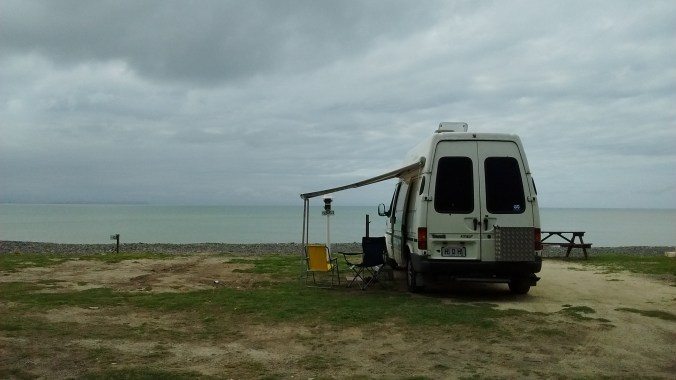
One of our very favorite campsites right on the ocean in Clifton, Hawke’s Bay.

The other biggest draw, especially on a trip of this length, is the ability to save a lot of money by cooking most of our own food. While I’m not making anything fancy, I am cooking simple, delicious meals appropriate to the summery weather and what we discover on our travels. We’ve been in a lot of agricultural regions, and many farms and orchards have unmanned honesty stands on the side of the road. Signs advertise what’s available, you select what you want and put your money in the box. We’ve bought just-harvested tomatoes, dried figs, zucchini, new potatoes, tons of fruit and anything else that catches our fancy. We’ve eaten a lot of local lamb, plus fresh sausages from the butcher, and it’s refreshing not to agonize over my meat purchase for endless minutes: all of the meat is pasture-raised in New Zealand, and none of it comes from a CAFO. Even tiny grocery stores in dusty little towns have a great selection of local meat. Just being able to make our own coffee and tea saves so much money rather than buying to-go drinks every day.

NJB_1485

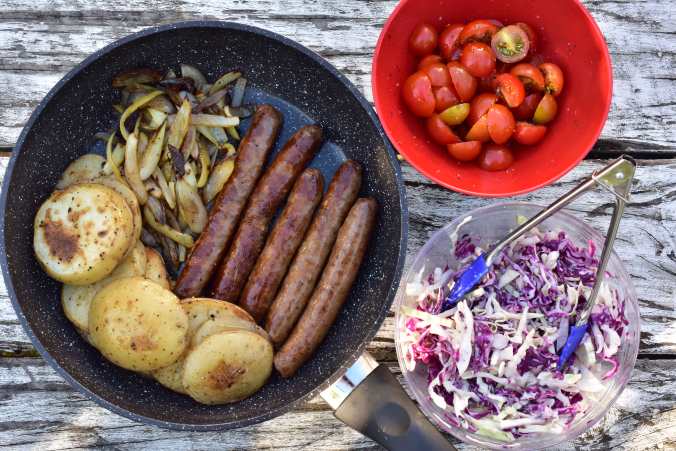
On the menu: local venison and merlot sausages, grilled potatoes and onions, fresh tomatoes with olive oil and salt, and a simple cabbage coleslaw.

As in the U.S., there are various membership programs you can join that offer discounted rates at particular campgrounds; we’ve used an invaluable (and free!) app called CamperMate to navigate our way to parks in a particular region. Freedom camping is also popular and it’s pretty much exactly what it sounds like: sleeping in a designated area for free, but without any services like showers and sometimes not even toilets. This is often not popular with local residents, however, because there have been many cases of freedom campers basically turning a lovely local spot into their own unserviced campground, and therefore freedom camping is heavily regulated and often banned outright. We’ve freedom-camped a couple of times, but it’s not always ideal for a variety of reasons.

NJB_1344

Camping by a gorgeous river near Tongariro National Park.

If you want to travel New Zealand by campervan, do your research; it’s essential to understand exactly what size and style of vehicle you’ll be renting. If you plan on doing any freedom camping, you’ll need to be certified self-contained, or CSC. The CSC sticker allows you to stay in more remote sites where other vehicles wouldn’t be permitted, and there are definitely rangers patrolling who will issue stiff $200 fines if yours isn’t displayed. You should also know that renting a campervan isn’t cheap; when we were first researching, we were stunned by quotes of nearly $8K for our month here, and after that you still need to pay for campgrounds unless you freedom-camp exclusively. There are also diesel taxes, tolls, and hefty charges for the ferry if you want to travel between the North and South Islands.

NJB_1446

Semis at sunrise on the Interisland Ferry en route from Wellington to Picton.

For our American readers, remember that New Zealand drives on the left; unless you’re very comfortable with handling larger vehicles, you’ll absolutely want to book in some practice time in a safe area before you hit the open road. And finally, New Zealand has basically one major north-south motorway; all of its other roads are relatively small two-lane roads, especially compared to our massive flat, straight American highways. Journeys here are measured by time, not by distance; you can’t read “Auckland to Wellington, 658 kilometers” on the map and assume that will only be an six-hour journey – it’s closer to ten. It takes a lot longer to get to places here than you might expect, and the driving can be challenging and tiring with a lot of hills and narrow, windy roads. Driving a campervan in New Zealand isn’t for the faint-of-heart – but we’d argue that it’s by far the best way to see these gorgeous islands.

P.S. A million thanks to my amazing, incredible partner, who grew up driving on the left and took on the challenge of this journey with literally no help from me whatsoever. I will never be able to make him enough coffees to thank him!

The realities of travel

Friends, join me in the Trust Tree for just a moment and let us speak honestly. Let us speak honestly about the realities of travel, or Everything Is Not Always As Perfect As It Seems. As you are all well aware, we live in a manufactured world, where fake news and social media dominate our feeds and our brains. And the truth is…well, not everything is as it seems. This is especially true when it comes to travel.

NJB_1438

No, camping next to an airport won’t be loud at all. Why would you think that?

When you see beautifully Instagrammed photos of your friends and family sunning and sipping fruity cocktails on some pristine white sand beach, you might think, “What jerks! Why are they on vacation and I’m slaving away in this hellhole?” But what you don’t see in that perfect photo is the tortuous four-hour ride in a rickety school bus over gravel roads to get there, the thousands of sandflies currently attacking them, and the bar bill where those cocktails were $25 each.

IMG_20170205_192113061.jpg

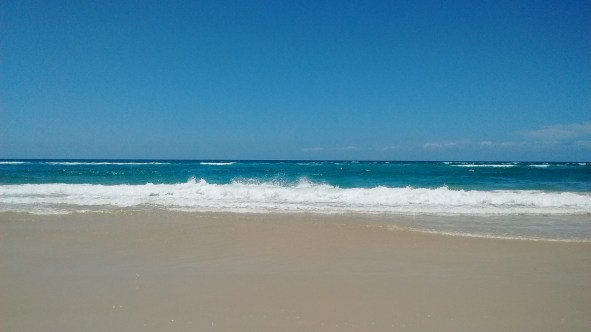
What a stunning beach! Is there a backstory? 

Travel is not always glamorous. In fact, unless you travel at a pretty high level (which we do not), travel is actually rarely glamorous. And this is where in a normal travel article I would pleadingly claim, “But that’s where the best experiences happen! You know, when everything goes wrong!” Rubbish. The best experiences happen when you accept that many, many things are going to go wrong, or at least take ten times longer than you thought they would, and you learn to deal with it anyway. That’s what good travel actually encompasses. Before we left, I clipped the following unattributed quote and pasted it in my travel journal: “I’ve always felt that lowered expectations are the key to a great holiday.” This has proved relevant on more than one occasion during our travels.


NJB_9531

Kyoto’s futuristic train station.

Allow me to provide merely one example: N and I wanted to do some laundry. Simple enough. We’re each travelling out of one large backpack, so doing laundry every week to ten days (unless we’re on a farm in Japan wearing all of our clothes at one time) is adequate. One Saturday, we decided to do our laundry early the following morning as we had to leave our campsite by 7AM, and the museum we wanted to visit that day didn’t open until 10AM. Three hours should be more than enough, right? So we do what every modern traveler might do: we Google “24 hour Laundromats in Wellington” and find two likely candidates.

FullSizeRender (1).jpg

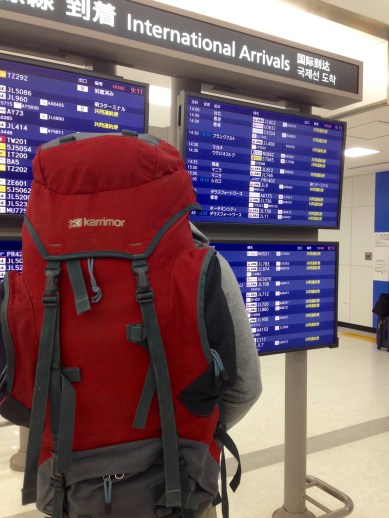
This backpack has served N well since he first ventured to Honduras more than fifteen years ago.

We wake up Sunday at 5AM and get ourselves together. By 5:30 we’re on the road, but our GPS has decided that it’s taking the morning off for reasons unknown. We have a vague knowledge of downtown Wellington from walking the previous day, but the Laundromats we’re heading for are definitely not in the touristy areas. So we opt to troll a few downtown hotels, waking up sleepy front desk staff and asking for old-fashioned paper maps. When we finally get one, it just reaches the outer edge of the area we’re headed for, meaning we’ll have to wing it from there. (Oh, and if you’re wondering why we didn’t just use GPS on our phones? When your American cell service provider swears that you’ll have “really fast unlimited data in over 140 countries,” THEY ARE ABSOLUTELY AND TOTALLY LYING.)

NJB_1441

The interisland ferry from Wellington on New Zealand’s North Island to Picton on the South Island. The photo was taken at 5:15AM; travel isn’t always about sleeping in.

So. Now the sun is just coming up, and I’m trying to use a paper map (remember that you always have to be in the map to navigate) to guide N through the narrow, twisty, turny, windy streets of Wellington (much like the hilliest parts of San Francisco) in a campervan definitely not designed for such silly Fast and the Furious games. We just make it to the first Laundromat when the GPS decides to show up for work. And the Laundromat is out of business.

No worries; onto the next Laundromat. It’s open! We grab all of our laundry and load up two of the tiny washing machines. Seeing that we’ve put our clothes in and are clearly ready to start washing, the young couple next to us asks if they can just pay us to use our KeyCard because the minimart next door where you buy them doesn’t open until 8 and it’s only just after 7.

IMG_0354

Sometimes travelers need a little guidance; Japanese train stations helpfully provide that. We could have used the assistance in Wellington.

Wait, what? What’s a KeyCard? We’d loaded up with coins, which shows you how long it’s been since we used a Laundromat. No, it turns out that this Laundromat doesn’t use coins (presumably because the machines have been broken into repeatedly) and instead uses a KeyCard that we don’t have and can’t buy. Remove all laundry from machines and climb into van, dejected.

Search for next Laundromat on non-working but unlimited data; it doesn’t open until 9AM. We find a supermarket parking lot where we can sit comfortably for about an hour; of course, the area we’ve chosen is the site of an annual charity run attracting about 15,000 runners to the waterfront. We may actually be blocked in unless we can find an alternate route across the city. We are making poor choice after poor choice and our quiet Sunday morning is quickly imploding.

IMG_20170217_223915397

Race volunteers chalked encouraging messages along the course in Wellington. We definitely needed them too that day.

A few minutes before 9, we manage to make it to the day’s third Laundromat. It’s open! They accept actual money! We’re in! (And we’ve been to more Laundromats in one morning than in the entirety of our previous fifteen years.) We load in our laundry, then spend the time canvassing the neighborhood for potable water taps, clean public bathrooms and free Wi-Fi. Truly, when you’re campervan hobos like we are, these things matter. (And please note that we’re trademarking Campervan Hobos as our band name.)

Two hours and fifteen minutes, 30 kilometers, many wrong turns and $20 later, we have fresh, clean laundry. If you’ve been keeping track, it took us over six hours – six hours! – to wash and dry one large load of laundry, and we accomplished virtually nothing else during that time. And that, my loves, is often the reality of travel. So the next time you look at some glossy photo on social media and find yourself filled with envy, just remember the sandflies. And don’t forget your KeyCard.

Going nuts, vol. 1

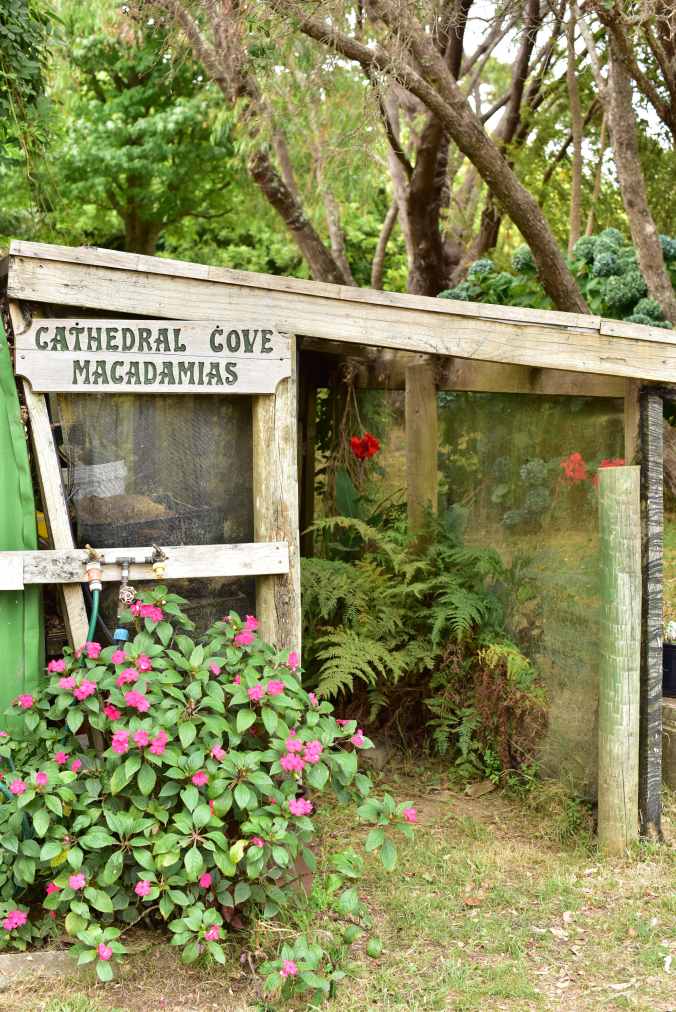
When roadtripping in New Zealand in a converted 1999 Ford Transit van with less-than-ideal brakes, there are few things that your partner – who is gamely doing all of the driving – enjoys more than you screeching “Hey! Fresh avocados!” or “Stop! They’ve got pick-your-own strawberries!”, thus forcing him to make dramatic unplanned stops and U-turns, typically on dusty gravel roads with no turning room whatsoever. No, seriously, he loves this! Sometimes, however, you get your act together enough in advance that you can actually plan a visit to a farm, and so it was with our stop at Cathedral Cove Macadamias.

NJB_1177

Cathedral Cove is located on the Coromandel Peninsula, east of Auckland on New Zealand’s North Island. Macadamias, named in 1857 in honor of Scottish-Australian chemist John Macadam, are native to Australia and grown commercially in many of the world’s tropical regions, including Hawaii, South America, Australia and New Zealand.

NJB_1178

Cathedral Cove’s storefront and open-air tasting parlor.

South Africa now produces most of the world’s macadamias, although Hawaii is credited with “introducing” the nut to consumers, specifically with their ubiquitous and smartly-marketed Royal Hawaiian chocolate macadamia boxes which have been given as gifts by travelers returning from Hawaii for decades.

NJB_1182

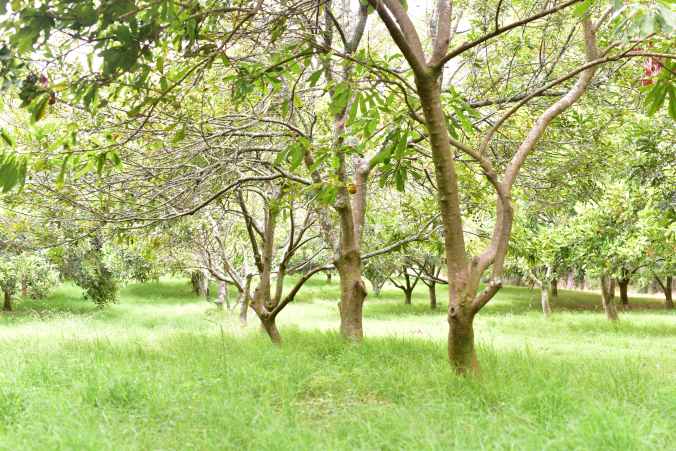
A few of Cathedral Cove’s mature macadamia trees.

Macadamia trees are propagated by grafting, and they start producing in abundance at about seven to ten years of age. Once established, the trees can produce for over 100 years. They are higher in overall nutrition than any other nut, and they are also typically the most expensive, with the exception of the treasured pine nut.

NJB_1187

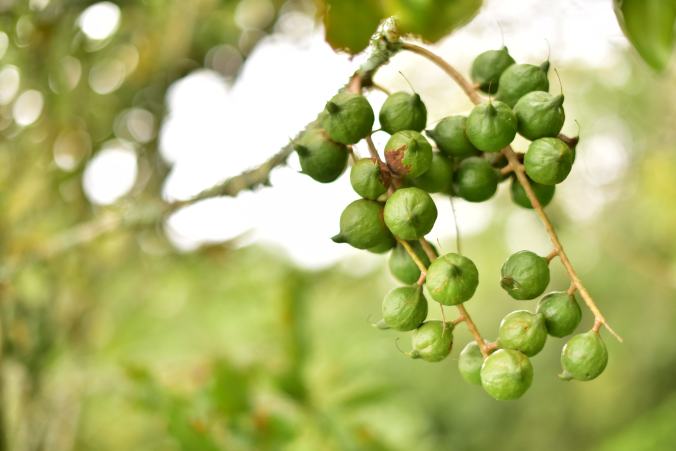
These macadamias will be ready to harvest in April or May. After they’re hulled, they’ll be dried for about six weeks before they’re ready to consume.

NJB_1190

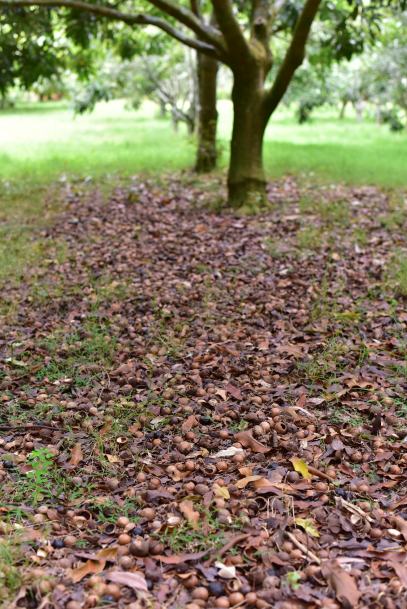
Hulls from the previous year’s crop are used as mulch in the orchard, ensuring that nothing goes to waste.

At Cathedral Cove, the macadamias are processed entirely by hand from start to finish, and they’re also completely organic. The macadamias are sold fresh and roasted, and pressed into oil and made into butter, brittle and other value-added products. In addition to macadamias, Cathedral Cove also grows avocados, figs, apples and a variety of citrus fruits.

NJB_1173

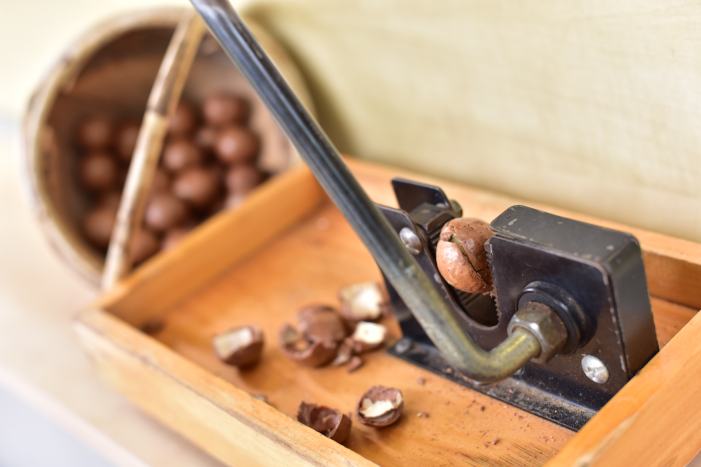
At the little storefront you get to eat as many macadamias as you crack!

NJB_1181

Macadamia oil, best used as a simple, flavorful drizzle over salad or grilled bread. It also works wonders as a hair or skin moisturizer!

NJB_1215

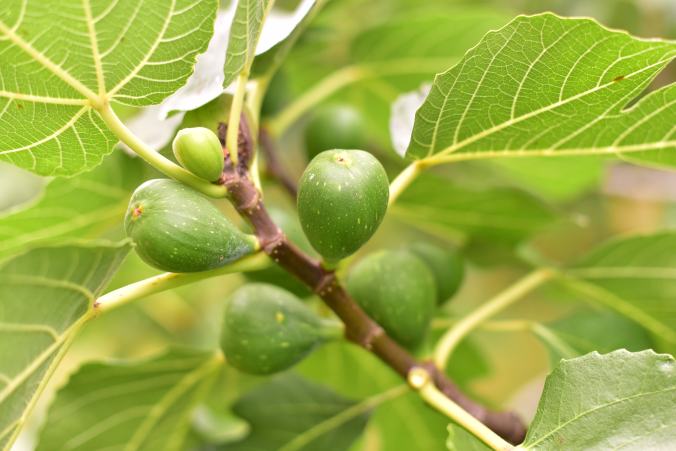
Fresh figs that were sadly not yet ready to eat when we visited.

NJB_1191

Cathedral Cove is organic, so no chemical pesticides or herbicides are used in the orchard.

NJB_1188

Bees are absolutely integral to a successful orchard. As at most of the farms we’ve seen, maintaining a healthy pollinator population is essential to a healthy ecosystem.

NJB_1204

We bought avocados to eat with heirloom tomatoes from the farmers’ market…it is summer here, after all.

NJB_1199

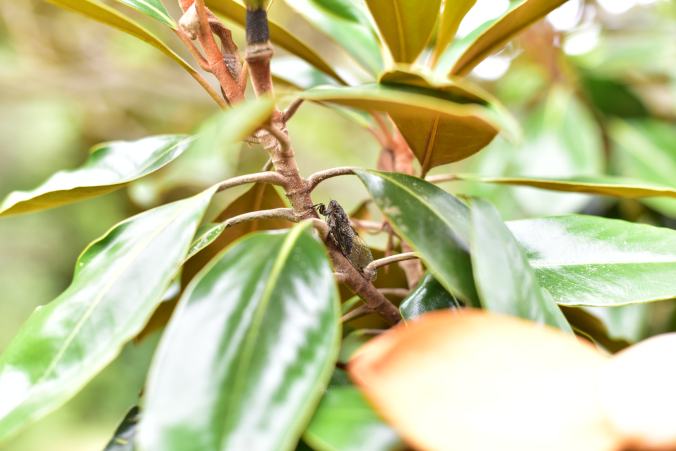
Look closely…New Zealand’s most vocal yet least seen creature, the cicada, is hiding here.

NJB_1205

One of the many citrus trees on the property.

NJB_1213

Definitive proof that “drinking wine” actually qualifies as “eating fruit.”

NJB_1203

Meet Willow, one of Cathedral Cove’s organic lawnmowers.

Because macadamias are so delicious (and so precious), they’re best used as a showcase ingredient. As with all nuts, lightly toasting them in a dry pan will bring out their flavorful oils, but tread carefully – nuts burn very quickly. For storage, place in an airtight bag or container in the refrigerator or freezer as the good fats in nuts cause them to turn rancid quickly. Always buy nuts from stores with high turnover (of product, not staff) and whenever possible, smell them before purchasing – rancidity is definitely noticeable. Should you find yourself with a wealth of macadamias, try this. Or maybe this. Or just eat them lightly toasted and salted, perhaps with a gentle dusting of curry powder.

Many thanks to Cathedral Cove Macadamias for welcoming us onto their beautiful property!

Chapter Two: New Zealand

Haere mai and welcome to Aotearoa, Land of the Long White Cloud. We’ve gone from Japanese winter straight into Kiwi summer! We started our journey in Auckland as most international travelers do, where we picked up a campervan and drove north first, to visit an area where N taught diving long, long ago. We’re about halfway through the North Island right now, with the intention of making it just to the northern tip of the South Island before we have to turn around and come back. To say that we’re in a different world than Japan would be an understatement.

NJB_1240

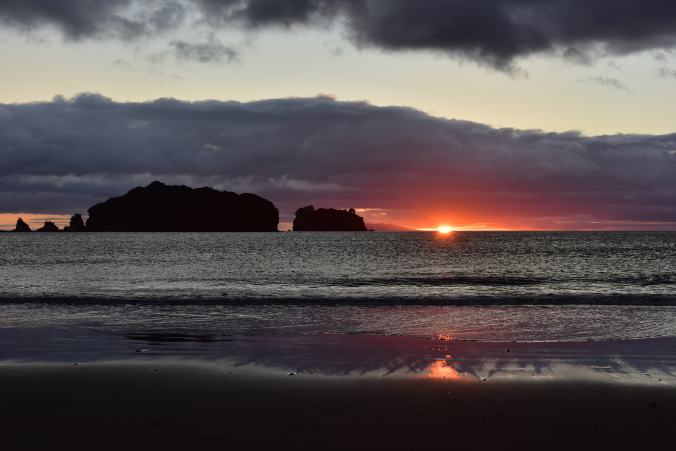
Our sunrise view at Whangamata, where we freedom-camped on the beach.

NJB_1308

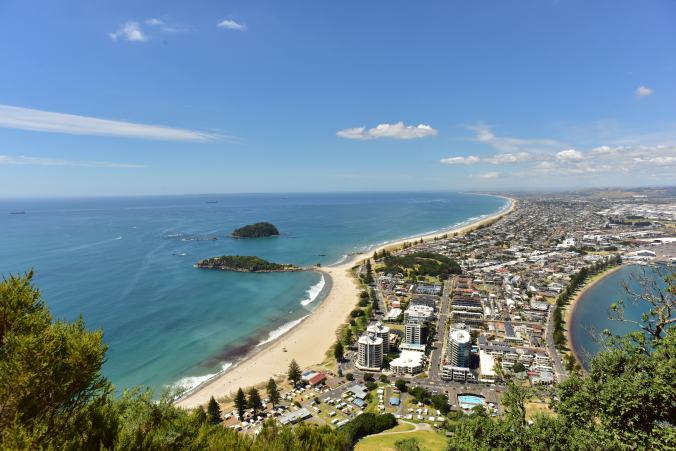
Tauranga seen from the top of Mount Maunganui.

NJB_1262

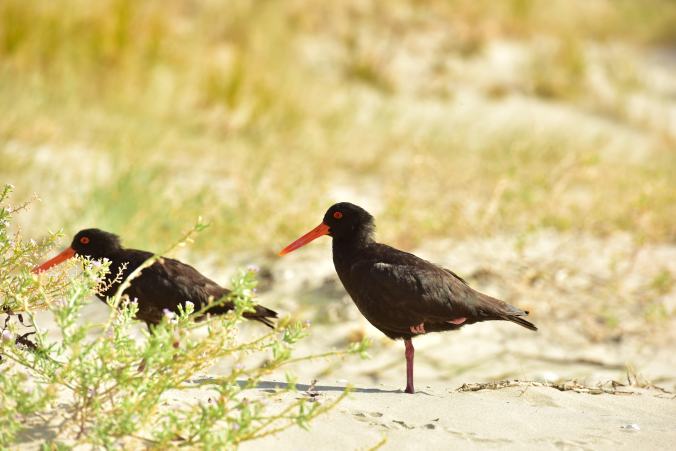
Oystercatchers on the dunes.

IMG_20170213_202358521

Surf school at Omanu Beach.

NJB_1146

Waipu Caves.

NJB_1147

It’s easy to see why many fantasy movies have been filmed in these prehistoric forests.

IMG_20170208_134451056

New Zealand is home to an unusual number of “wild” chickens, seen here hiding from the rain at a picnic spot near Haruru Falls. Are they dumped in the woods by people who don’t want them? We have no idea, but we’ve seen (and heard) a lot of them!

IMG_20170213_190441035

Stormy day at the beach in Tauranga.

Next up for us: Lake Taupo and (hopefully) the legendary Tongariro Crossing!

Scenes from Tokyo

For our final week in Japan, we tackled the world’s largest metropolitan area. Tokyo has 13 million people in its center and about 33 million when the surrounding areas are included. Even with our travel experience in cities like Paris, London and New York, this city is a bit overwhelming. It definitely takes a couple of days to get oriented and to feel comfortable, and even then it can still knock you for six. Below please find some of N’s favorite photos from our week.

NJB_0327

Tokyo is an often dizzying mix of ancient and modern.

NJB_0404

Shrines and skyscrapers, kimonos and street fashion: a constant study in contrast.

NJB_0803

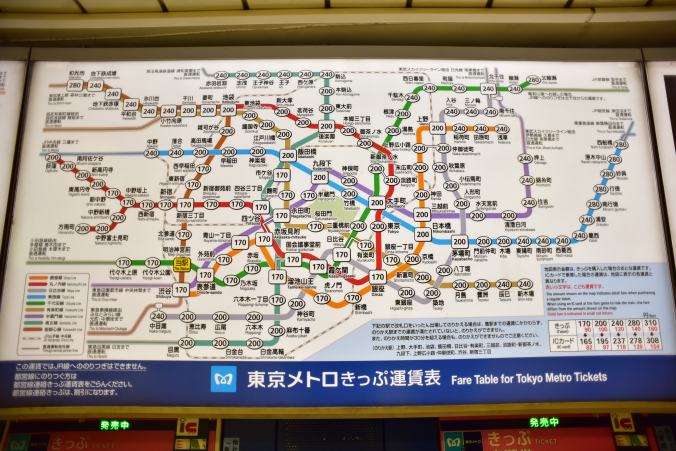
Welcome to one of the world’s most efficient (and clean) public transport systems.

NJB_0504

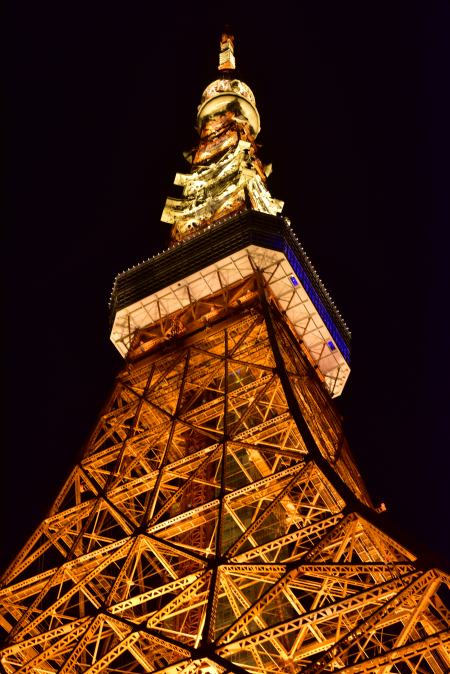
Installed in 1958, Tokyo Tower bested the Eiffel Tower by thirteen meters. One can imagine the French were none too pleased by this.

NJB_0794

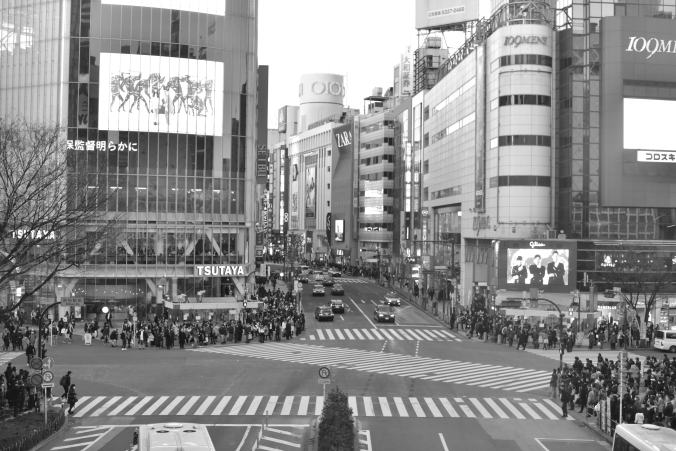
The legendary Shibuya “scramble crossing,” part one…

NJB_0796

…and part two, taken seconds later.

NJB_0839

We went to a traditional Shinto wedding! Well, not really. We visited Meiji Shrine on a Saturday and it’s an extremely popular wedding spot. Now N can legitimately claim that he is an international wedding photographer! 

NJB_0393

The enormous lantern at Senso-ji Temple.

NJB_0406

Even amidst all the chaos and neon, peaceful places exist.

NJB_0686

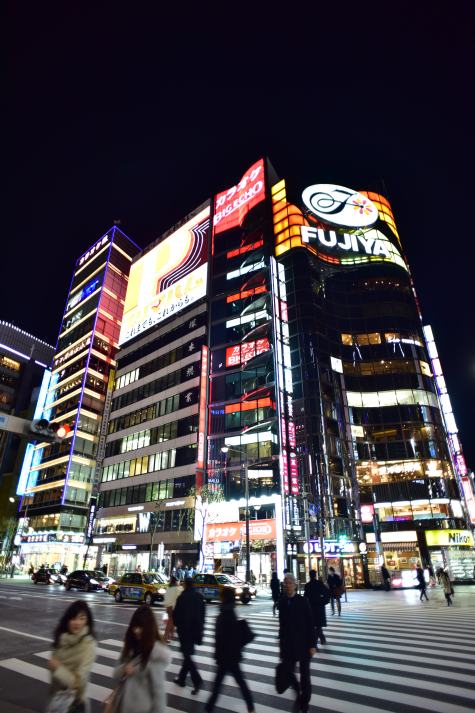
It is virtually impossible to convey the visual impact of Tokyo at night.

NJB_0663

A Nissan 2020 concept car in a showroom in Ginza district. The high-end area is famous for new product launches for everything from cars to fashion to electronics. 

NJB_0588

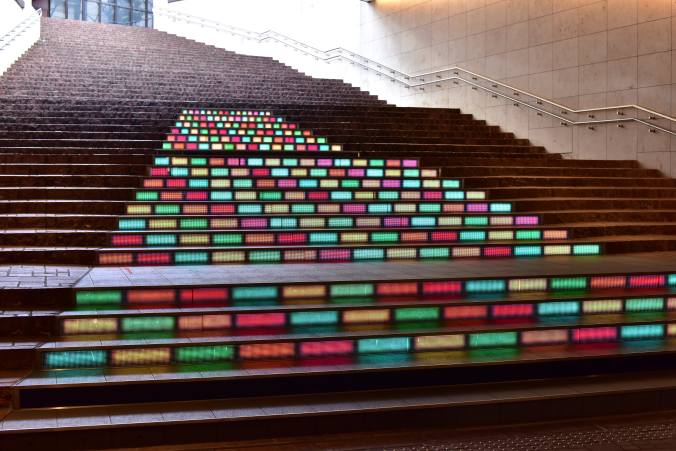
Even when Tokyo infuriates, it also manages to delight. These steps at Akasaka Station are actually TV screens with a constantly changing display. Stumbling (sometimes literally) upon public art like this is one of the joys of travel.

NJB_0386

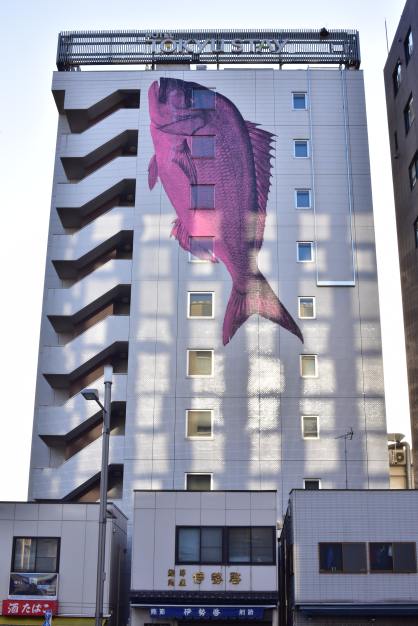
Street art on a hotel near Tsukiji Fish Market.

NJB_0516

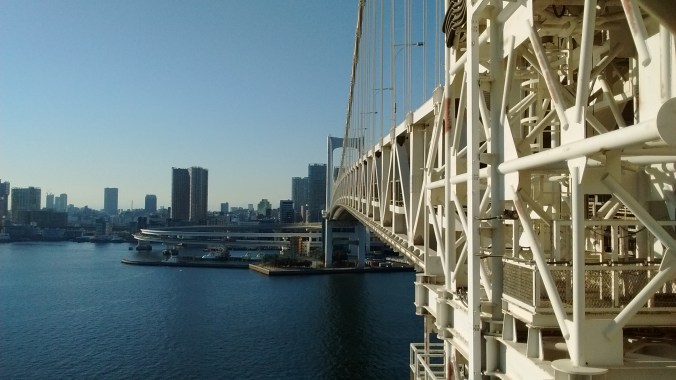
The Rainbow Bridge connects Tokyo and Odaiba and is illuminated in different colors according to season or holiday.

IMG_20170203_225724442

There is actually a pedestrian walkway along the Rainbow Bridge! It takes about thirty minutes to cross the bridge on foot.

NJB_1018

Iconic Mount Fuji…with Tokyo’s haze, it’s more difficult to see than one might expect.

NJB_1070

N waited for days to take these skyline photos from the SkyDeck at Roppongi Hills. It’s the only observation deck in the city that isn’t enclosed by glass; as such, it’s frequently closed due to high winds. 

NJB_1127

And with this, we leave Japan behind. See you in New Zealand!

Temples and shrines

There are few more iconic images of Japan than the ubiquitous temples and shrines found all over the country. Certain places, like Kyoto, have one around every corner, but even in Tokyo’s Blade Runner landscape they turn up in the most unexpected places. The temples are Buddhist and the shrines are Shinto, and in Japan these two primary religions co-exist peacefully. To paraphrase a lovely book I read about pre-Western Japan during our travels, Christianity would have done better here if they’d just installed gorgeous churches next to these temples and shrines. Essentially, these are as much about beauty, calm and aesthetics as they are about religion, and as such everyone is welcome, regardless of their beliefs.

NJB_9448

Nonomiya Shrine, Arashiyama.

NJB_9837

Matsuo-taisha Shrine, Arashiyama.

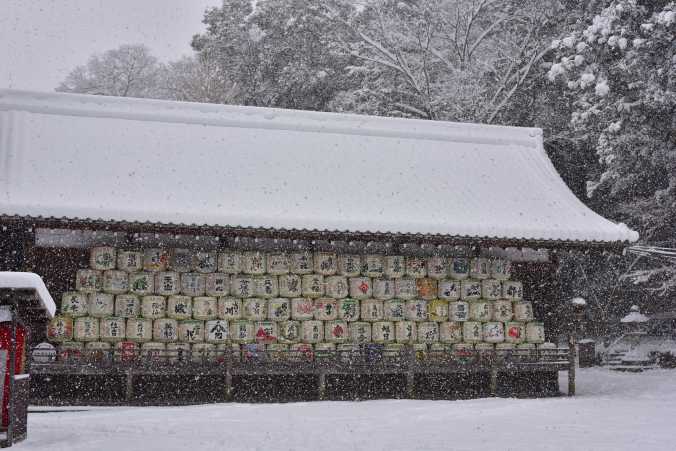
NJB_9838

Ceremonial sake barrels at Matsuo-taisha Shrine. This shrine is a favorite pilgrimage site for sake brewers to pray for the success of their vintages.

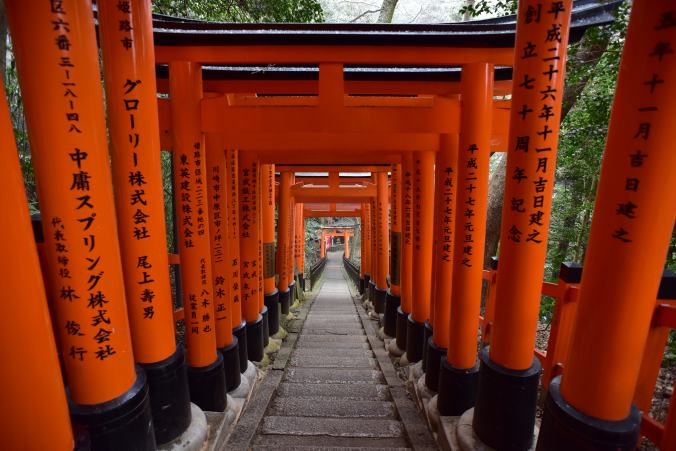
NJB_9660

Fushimi Inari-taisha Shrine, Kyoto.

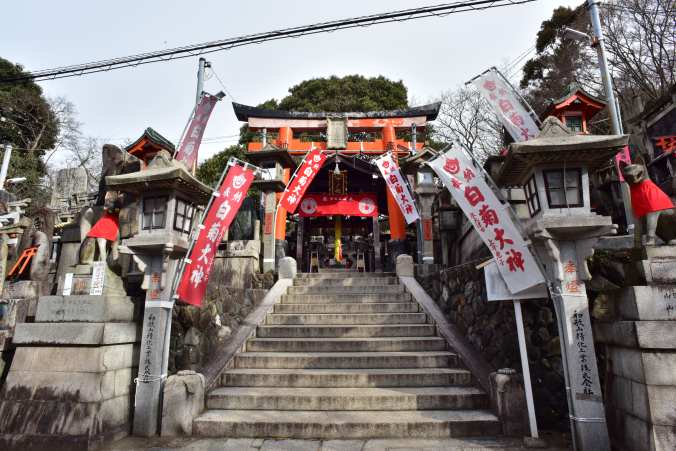
NJB_9643

The summit of Fushimi Inari-taisha Shrine.

NJB_9621

When you approach a Shinto shrine, you first throw a coin into the offering box. Then you ring a bell like the one above to summon the spirits. Bow twice, clap your hands twice, focus on your prayer in your mind, then bow once more.

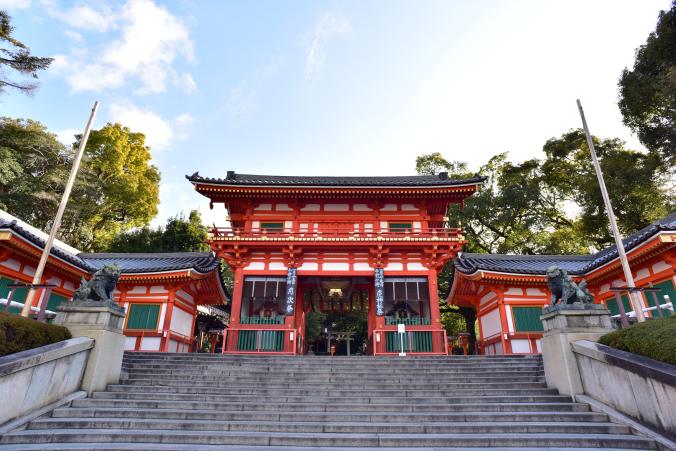
NJB_9534

Yasaka Shrine, Gion District, Kyoto.

NJB_9536

Most of the shrines and temples have gorgeous paper lanterns that are illuminated at night.

NJB_0229

Osugi Shrine, Inishiki City, Ibaraki. We were taken to visit this shrine by Mitsuru-san, the owner of our second farmstay.

NJB_0224

Though common themes could be seen, all of the shrines and temples we visited had incredibly unique details.

NJB_0223

When you enter temple grounds, you wash your hands and rinse out your mouth from a ceremonial fountain.

NJB_0272

We frequently came across statues with hand-knitted caps, scarves and cowls. A little research indicated that these are Jizo statues, named for the protector of children; he reverently guides their souls into the afterlife. The statues are placed on temple grounds to honor deceased children.

NJB_0805

The main entrance gate at Meiji Shrine in Tokyo. The shrine is in a large leafy park which is a wonderful oasis of green in this frenetic city.

NJB_0815

Meiji Shrine, Tokyo. The large drums are used for summoning the spirits.

NJB_0880

Ravens aren’t necessarily malevolent in Japanese culture as they are in Western cultures; this bird is guarding wooden prayer placards at Meiji Shrine.

These varied and beautiful sites were such a joy to discover as we traveled around Japan, and their interesting architectural details and rich symbolism made them a highlight of our month there.