Farm update: May 6

It’s been mostly cool and rainy this week. We’re of course grateful for the moisture and lower temperatures, which might keep our snowpack in place longer, but the weather has literally put a damper on our excavator plans. Never mind, though; there are always plenty of other things to do!

Broad Tailed Hummingbird 02 sml

A male black-chinned hummingbird getting its sugar fix.

One of our most successful ventures recently has been installing hummingbird feeders around our house. We’ve been utterly astounded at the sheer number of hummingbirds that have appeared, including both the black-chinned and broad-tailed varieties. They’ve apparently informed all their friends that the bar is open!

Continue reading

Farm update: April 8

QF Purple Flowers 01 sml

The hills are alive…with weeds! But we call them “wildflowers.”

The snow is finally gone at this elevation, even though plenty can still be seen on the mesa. Our pasture is coming back with a vengeance, and we spend our days walking the land, looking at what plants are coming up and trying to decide whether they’re helpful or harmful to us. Since we bought Quiet Farm at the end of a blistering summer in the midst of a hundred-year drought, pretty much everything was crispy and dormant. We hadn’t yet determined what bushes and trees might survive, and what would need to be removed. We’re giving everything a generous opportunity to stage a spring comeback before we tear it out.

Continue reading

Farm update: April 1

Spring is finally here…with the exception of a small blizzard that blew in Friday evening, of course. The weather right now is capricious – gorgeous one minute, hurricane-like the next. But we haven’t yet spent spring on our farm, so we’re ready for all of it. Here’s what we’re up to these days!

Deldee 01 sml

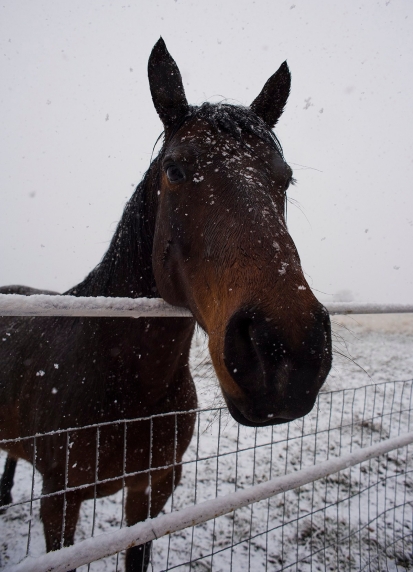
Why the long face?

Despite this photo, our pastures are greening up rather nicely, so we have a new resident at Quiet Farm. Temporary Pony belongs to our neighbor, and since we have grazing land available and no animals to graze it, Temporary Pony lives at Quiet Farm until she goes to her new home later this spring. She is a lovely, spirited horse who likes to sprint along the fence line, and she also runs straight at you full-bore when you’re out in the field – heartwarming and yet terrifying at the same time. It’s a pleasure to have an actual animal here; it makes our farm feel much more legitimate!

Continue reading

The Farm Series: Western Culture

Western Culture 01 sml

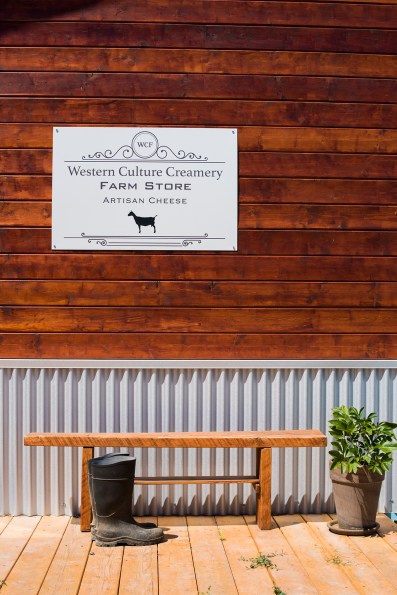
Now that we actually have a farm, we can get a bit more serious about researching where we’ll obtain our animals. We plan to raise dairy goats and laying hens, with the intention of producing enough milk, cheese and eggs to supply our own kitchen as well as our cooking school. Because healthy animals produce healthy food, it’s essential that we know exactly where our animals come from.

Western Culture 07 sml

We still have a lot of work to do on both our chicken house and our goat barn to get them ready for animals, and we don’t plan to purchase any until next spring. We want to make our reservations now, however, so that when we’re ready we’ve got animals waiting for us. Small dairies especially need to know in advance how many animals they can sell during a given season so they can plan their breeding program.

Western Culture 11 sml

Continue reading

Farm update: October 8

Hi! How was your weekend? We survived our first Applefest and we think we’ve made all of the necessary repairs on our irrigation system so that we can call for water in two weeks (more on that soon). I made yogurt, but I’m still searching for a source of truly local milk that I can get basically straight from the cow. Most of the cattle around here, however, are raised for meat, not dairy, so I’ll keep on looking. Here a few other things we’re up to:

Storm Clouds 01 sml

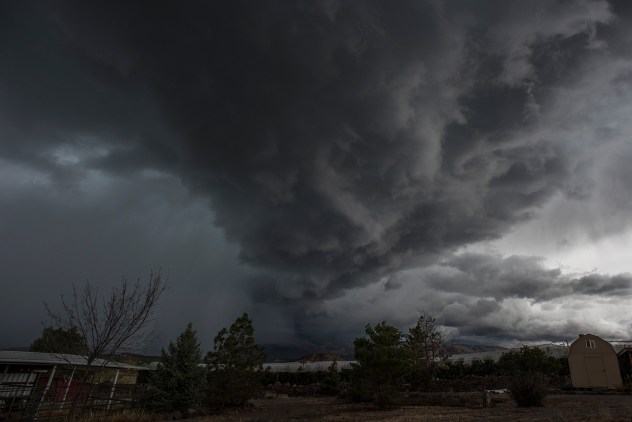
It was all very dramatic here for a time.

We were thrilled to have nearly a week of cool, damp weather (the mesa got its first snowfall!). This is such a rarity over here that you could almost hear the valley’s farmers cheering when the rains came. The high winds destroyed our flagpole (N rescued the flag) and the heavy rains helpfully identified some heretofore unknown leaks in our house, but we are still inestimably grateful for the moisture. Even the pasture came back a bit, with tiny green sprouts everywhere. Water is life, make no mistake.

QF Seedlings 02 sml

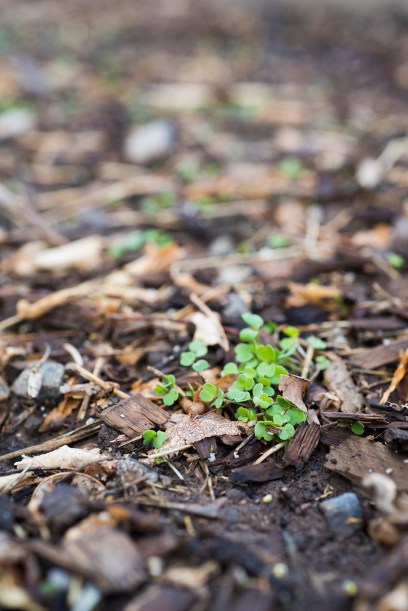
Quiet Farm’s first official crop! I’ll sell them as fancy microgreens and charge a fortune.

Speaking of tiny green sprouts, I attended a women’s farming conference last weekend in Estes Park and I planted some arugula before I left so that I could say in all honesty that I’m a farmer! Spicy, peppery arugula is one of our favorite greens, and it grows so well, especially in spring and fall, that I used it to test the soil fertility in an existing makeshift raised bed shoddily constructed (not by us) from cinderblocks. The arugula sprouted beautifully – along with tons of grass and possibly some thistles. Since there is no grass (or thistles) nearby, I’m at a loss to explain this, but now I have to painstakingly weed my tiny arugula. Pro tip: know your soil before you plant. This is not a good use of farm time.

QF Seed Saving 01 sml

Local sunflowers drying for seed harvesting.

This spring I attended a seed saving class, and I’m looking forward to participating in an even more intensive teacher training in a few weeks. Saving seeds is an important part of food sovereignty; if we really want to opt out of our industrial food complex, we need to own the seeds, too. So we’re working on building up our own Quiet Farm seed bank, and we’re collecting, drying and storing seeds whenever we can. Once we grow our own vegetables, grains and herbs, seed saving will become an even bigger task each fall.

QF Compost 01 sml

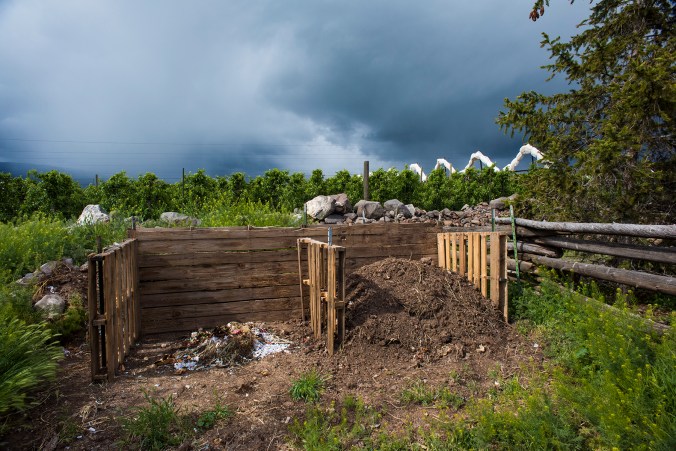
Our compost pile. It’s not pretty, but it’s so valuable.

Just about any gardening or small-scale farming book you’ll ever read will extol the virtues of compost, and we’ve got ours started. We identified an otherwise unusable plot about equidistant between the kitchen and the future raised beds, so it’s easily accessible to all. We began with lots of old straw bedding and manure from the animal pens; we’ll need to clean the pens out anyway before we purchase our goats and it makes a beneficial addition to the pile, especially since the manure is well-aged. All of our kitchen waste, leaves, weeds and other organic material go in, too. At the moment we’re watering it frequently because it’s been so dry, but we’re hoping for a long, wet winter and it will be perfect for building up the fertility of our raised beds next spring. As a rule, never let even a scrap of organic material leave your property.

This week we plan to tear up the oddly rumpled carpet in our sun porch and replace it with some durable and water-resistant flooring, since it will shortly become a mud porch. We’ll repair two broken window mechanisms and patch our newly discovered leaks. We may take down a couple of dead trees, and hopefully establish our woodpile, too. Thanks for reading, and have a lovely week!

A crash course in irrigation

Before we moved to the Western Slope, we were told again and again to make sure we buy water, not just a farm. Over here, water and land are sold separately, like toys and batteries. Just because water runs through, on or over your property doesn’t necessarily mean you have any right to use it.

The good news is that Quiet Farm does have adequate water, in most years. The bad news, however, is twofold: first, the Western Slope is in an unprecedented drought and at the moment no one has enough water. And second, we know precisely nothing about irrigation management. When you live in modern suburbia you just turn on the tap and the water flows magically, right? That is so much not the case here.

Water Droplets
Irrigation management on Quiet Farm doesn’t look like this.

QF Irrigation 01 sml

It looks like this: our Parshall flume (or weir) with attached flow gauge. No, we don’t know what any of those words mean, either.

QF Irrigation 02 sml

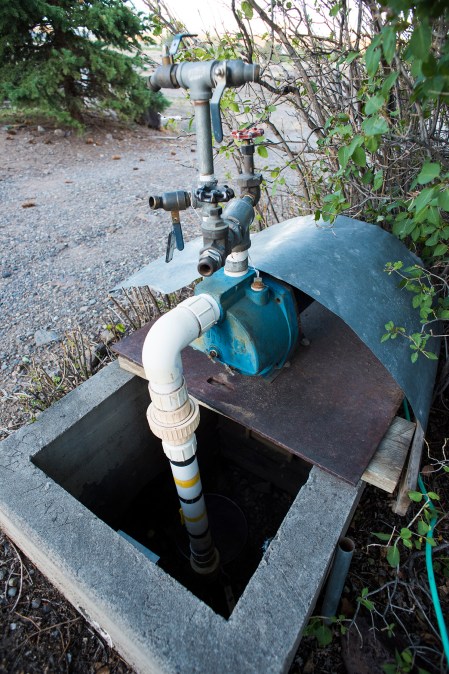
This is our water pump with screen to catch wildlife – raccoons, ground squirrels, marmots, whistlepigs, ponies, etc. – when they fall in. Looking forward to THAT happening.

We now own two shares of one of the Western Slope’s strongest irrigation ditches. There are dozens of ditch and reservoir companies; the vast majority of the area’s water comes from hundreds of lakes and reservoirs up on the Grand Mesa which are filled with precipitation each winter. When there is no snow, like last year, then there is no water in the ditches or reservoirs. And so water becomes a very valuable commodity.

QF Irrigation 03 sml

This is known as an “ag tap,” an abbreviation for agricultural. The water from this tap, however, is from our domestic supply. Confused? So are we.

QF Irrigation 04 sml

This is downstream of the water pump and will help irrigate our land with irrigation water. We think. Or maybe not.

When we want some of our water for irrigation – which we can have between the beginning of April and the end of October – we order a precise amount from the ditch company, accounting for absorption and loss along the way. Ditch riders, who live up on the mesa during the season, use a complicated system to send the water down the correct ditch to our property on a specific day. We have to be out at our headgates at about 6AM to start our run, and the water we use is debited from our account, just like a bank. We can lease, sell, trade or give away our water as we see fit, but if we order water, it’s coming to our property whether we’re ready or not. So figuring out our irrigation system is of paramount importance to our future success.

QF Irrigation 06 sml

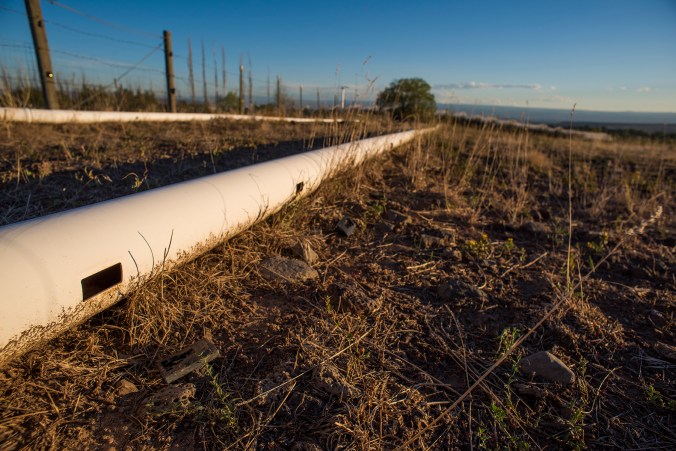
Our water will run through gated pipe, a common sight in our area. Big farms will own thousands of feet and it’s set up according to your property’s individual landscape and contour. The black gates open and shut to control the water flow.

QF Irrigation 08 sml

A lot of our gated pipe currently looks like this, which is obviously not workable. Even we know that.

In case you’re worried that we’re actually living in Little House on the Prairie, our house has a domestic tap, which is just like water in a normal house. Except that domestic water here is crushingly expensive, especially compared to Front Range rates, which means we absolutely cannot run a farm on domestic water without bankrupting ourselves. No more domestic taps are being issued in our area; local government doesn’t think we have the water to support additional growth – unlike on the Front Range, where greedy, short-sighted counties sell their water to the big cities and then wonder why their towns die. Domestic taps are worth tens of thousands of dollars over here, if you could even buy one.

QF Irrigation 07 sml

Apparently little critters like chewing on the gates inside the pipe. The gates cost $3 each, and we have dozens missing. The few remaining intact ones are probably being eaten right now while you’re reading this.

QF Irrigation 05 sml

The end of the line. Of course, if the pipes aren’t connected properly we’ll just flood everything and there is no way to turn the water off once we’ve called for it. So good luck with that.

We’ve got just about a month to figure this system out, because once the water goes off at the end of October we’ll have no way of testing our work. And when the water (hopefully) starts running again next spring, we want to be ready to get our pasture in good shape.

QF Irrigation 09 sml

Good news, though! We’re unknowingly growing a pasture of invasive elm trees that will need to be removed by hand…

QF Irrigation 10 sml

…when we’re not growing anything at all. Surprisingly, bare pasture is actually worse than having even invasive plants in the ground.

The moral of this tale, friends, is not to take water for granted. The daily luxury of fresh, clean, potable water is an absolute gift and one that not even everyone in the U.S. has access to. So treat your water like the precious resource it is, and know that it is finite. And wars over water will be much more devastating than wars over oil.

There is much work to be done, and winter is coming. Pray for snow.

The Farm Series: Desert Weyr

Of late, our Western Slope farm visits have taken us to pick delicious cherries and to meet happy pigs. How about we introduce you to some unusual sheep?

Weyr 01 sml - Copy

Desert Weyr is perched high on a mesa above the town of Paonia.

In the late 1990s, Eugenie “Oogie” McGuire decided she wanted to craft herself a traditional medieval cloak – from scratch. It would be made from wool, of course. She purchased one ram, five ewes and a loom, taught herself how to spin, weave and sew, and eventually made the cloak. As she says, “It’s more accurate for the 18th century. It took me six years to weave the fabric, two more to get up the courage to cut it, and two weeks to hand-sew it.” But what commitment! Now, Oogie and her husband, Ken, raise a large flock of Black Welsh Mountain sheep on pasture above Paonia.

Continue reading

Let’s learn about goats!

JGGD 11 sml

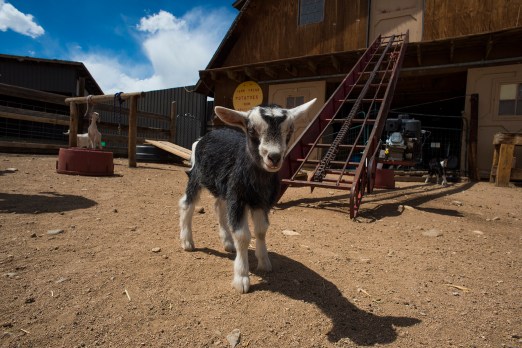
This is not the first time we’ve posted photos of #totesadorbs baby goats, and it certainly won’t be the last. We’ve known since we first invented Quiet Farm in our heads that we want to keep milking does, so as with all other aspects of farming, we’re learning how to do that from books and the University of YouTube and on-farm experience, too. By the time we actually find our farm, hopefully we’ll (sort of) know what we’re doing.

NJB_5018

Some fun facts about goats:

  • Goats have a reputation for eating just about anything, including clothes, trash and other inedible items. This is entirely untrue; goats are browsers, rather than grazers, and are naturally curious. They use their lips and teeth much as we use our fingertips – to investigate unknown objects – and they’re actually quite fussy about what they’ll eat. Goats also only have teeth on their bottom jaw, not their upper.
  • Goats are fantastic climbers and love to quickly attain the highest perch available – hence the popularity of goat yoga. Goats can climb trees!

Continue reading

Sausages and laws

One of the toughest things about deciding that you want to become a farmer (especially when you decide this in your late 30s) is that you can’t really go to Farm School, mostly because it doesn’t exist. Farming used to be a profession passed down from generation to generation; farms stayed in the same family for decades, and sons and daughters learned how to care for animals and grow food and nurture the land from the time they were tiny. This is so much not the case any longer.

Advocacy 01 sml

We named February our Month of Education, and so in our pursuit of self-designed Farm School, we attended just about every single course, seminar, conference, talk or networking event geared towards farmers and ranchers in Colorado. We’ve been to a lot of classes since we started seriously planning Quiet Farm three years ago, but this past month took our education to a new level. We went to a grantwriting course and Alfalfa University and a tax planning class and a potluck farm forum and toured a hydroponic farm and a million other events. And we went to the State Capitol, too.

Advocacy 03 sml

Continue reading

The Farm Series: Rebel Farm

Friends, we don’t want you to think that all we do is trek around wintry European countries, eating schnitzel and drinking wine. No, sometimes we also visit delightful urban hydroponic farms and we eat handfuls of just-harvested fresh greens. Balance. It’s all about balance.rebel-farm-01-sml.jpg

Rebel Farm 05 sml

Rebel Farm, run by Jake and Lauren, is a 15,000 square-foot hydroponic greenhouse on the border of Denver and Lakewood. For those readers who live in Colorado, you may well wonder how these fine folks can afford to grow lettuce, rather than weed, considering that just about every greenhouse in the state has been snatched up by the marijuana industry. In the case of Rebel Farm, however, the greenhouse is perfectly situated between two schools – which means it cannot be a grow operation, and instead it can grow food. Brilliant.

Rebel Farm 19 sml

Purple kohlrabi, sadly underappreciated by CSA members everywhere.

Rebel Farm 08 sml

Tangy, citrusy red sorrel.

Rebel Farm 04 sml

If you’re not familiar with hydroponics, don’t feel alone. In its simplest form, hydroponics is a method of growing plants without soil. The plants can be planted in gravel, sand or other inert materials, or their roots can be suspended in a nutrient-rich water mixture. There are lots of different ways to grow hydroponically; Rebel Farm uses the NFT, or nutrient film technique, method.

Continue reading