Farm update: October 1

Hello there! It’s officially autumn, although you wouldn’t know it from our weather; it’s still hot and dry. Everything feels crispy and parched and we’re hoping desperately for some moisture from a Pacific hurricane system this week.

We’ve got lots of projects underway at the farm. Here are a few things we’ve been up to:

QF Living Room 03 sml

Our living room in a state of disrepair.

Although our farmhouse is livable, it needs a lot of work. N tore up all of the carpet but kept it intact so we could donate it. We had hoped to find hardwood floors underneath and although we did find some in the older portion of the house, we’ll have to install new floors on most of the main floor. Our renovation list grows by the minute.

Canning 03 sml

It’s canning season!

Canning 04 sml

An experiment: fermented green hot sauce.

Obviously we didn’t have our own garden this summer, so I was excited to unpack my canning supplies. Our grocery shopping options are extremely limited here, so preserving local produce now will make our winters much more pleasant. I put up a hundred pounds of tomatoes and forty pounds of apples in various formats, plus roasted and froze plenty of green chiles. The onions will keep in a cool, dry place; eventually we’ll have a root cellar of sorts for all of our long-keeping vegetables. I feel calm and confident when I have a full pantry.

QF Seedlings 01 sml

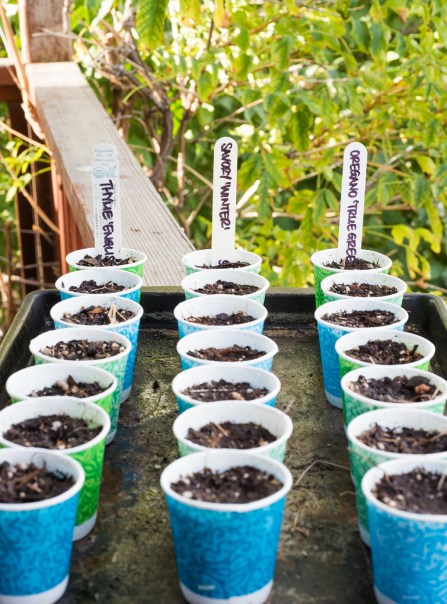
Perennial seedlings for next spring.

In addition to growing vegetables on our farm, we also need to rebuild perennial beds around the property. I’ve started perennial herbs from seed to see if I can keep them alive over the winter and plant them when the ground thaws in spring. This would be better done in a true greenhouse, but it’s worth a shot. Here you can see English thyme, winter savory and Greek oregano, all useful both in the kitchen and (hopefully) as deer repellent.

This week we’re tackling our irrigation system because we’re hoping to call for water next Monday! We’ll also get our old hardwood floors refinished and it’s Applefest this weekend, so there’s a lot going on in our tiny world. Have a great week!


A crash course in irrigation

Before we moved to the Western Slope, we were told again and again to make sure we buy water, not just a farm. Over here, water and land are sold separately, like toys and batteries. Just because water runs through, on or over your property doesn’t necessarily mean you have any right to use it.

The good news is that Quiet Farm does have adequate water, in most years. The bad news, however, is twofold: first, the Western Slope is in an unprecedented drought and at the moment no one has enough water. And second, we know precisely nothing about irrigation management. When you live in modern suburbia you just turn on the tap and the water flows magically, right? That is so much not the case here.

Water Droplets
Irrigation management on Quiet Farm doesn’t look like this.

QF Irrigation 01 sml

It looks like this: our Parshall flume (or weir) with attached flow gauge. No, we don’t know what any of those words mean, either.

QF Irrigation 02 sml

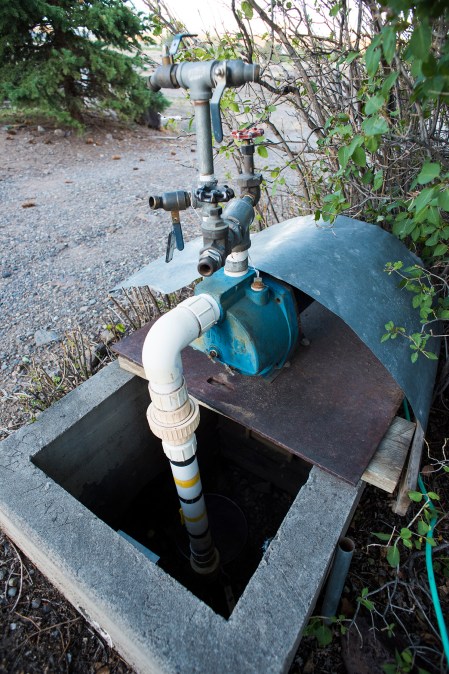
This is our water pump with screen to catch wildlife – raccoons, ground squirrels, marmots, whistlepigs, ponies, etc. – when they fall in. Looking forward to THAT happening.

We now own two shares of one of the Western Slope’s strongest irrigation ditches. There are dozens of ditch and reservoir companies; the vast majority of the area’s water comes from hundreds of lakes and reservoirs up on the Grand Mesa which are filled with precipitation each winter. When there is no snow, like last year, then there is no water in the ditches or reservoirs. And so water becomes a very valuable commodity.

QF Irrigation 03 sml

This is known as an “ag tap,” an abbreviation for agricultural. The water from this tap, however, is from our domestic supply. Confused? So are we.

QF Irrigation 04 sml

This is downstream of the water pump and will help irrigate our land with irrigation water. We think. Or maybe not.

When we want some of our water for irrigation – which we can have between the beginning of April and the end of October – we order a precise amount from the ditch company, accounting for absorption and loss along the way. Ditch riders, who live up on the mesa during the season, use a complicated system to send the water down the correct ditch to our property on a specific day. We have to be out at our headgates at about 6AM to start our run, and the water we use is debited from our account, just like a bank. We can lease, sell, trade or give away our water as we see fit, but if we order water, it’s coming to our property whether we’re ready or not. So figuring out our irrigation system is of paramount importance to our future success.

QF Irrigation 06 sml

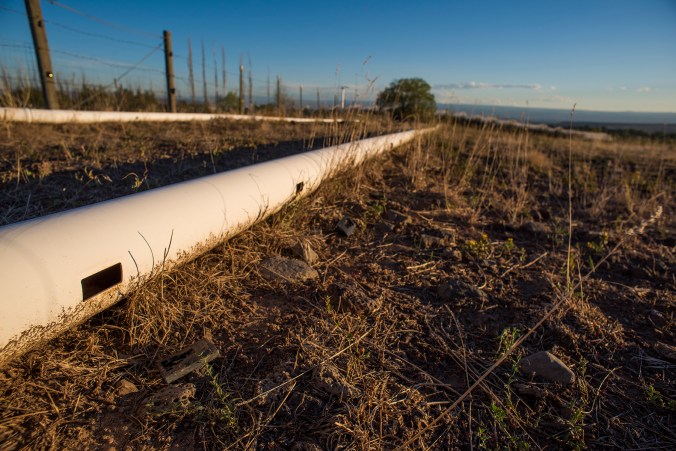
Our water will run through gated pipe, a common sight in our area. Big farms will own thousands of feet and it’s set up according to your property’s individual landscape and contour. The black gates open and shut to control the water flow.

QF Irrigation 08 sml

A lot of our gated pipe currently looks like this, which is obviously not workable. Even we know that.

In case you’re worried that we’re actually living in Little House on the Prairie, our house has a domestic tap, which is just like water in a normal house. Except that domestic water here is crushingly expensive, especially compared to Front Range rates, which means we absolutely cannot run a farm on domestic water without bankrupting ourselves. No more domestic taps are being issued in our area; local government doesn’t think we have the water to support additional growth – unlike on the Front Range, where greedy, short-sighted counties sell their water to the big cities and then wonder why their towns die. Domestic taps are worth tens of thousands of dollars over here, if you could even buy one.

QF Irrigation 07 sml

Apparently little critters like chewing on the gates inside the pipe. The gates cost $3 each, and we have dozens missing. The few remaining intact ones are probably being eaten right now while you’re reading this.

QF Irrigation 05 sml

The end of the line. Of course, if the pipes aren’t connected properly we’ll just flood everything and there is no way to turn the water off once we’ve called for it. So good luck with that.

We’ve got just about a month to figure this system out, because once the water goes off at the end of October we’ll have no way of testing our work. And when the water (hopefully) starts running again next spring, we want to be ready to get our pasture in good shape.

QF Irrigation 09 sml

Good news, though! We’re unknowingly growing a pasture of invasive elm trees that will need to be removed by hand…

QF Irrigation 10 sml

…when we’re not growing anything at all. Surprisingly, bare pasture is actually worse than having even invasive plants in the ground.

The moral of this tale, friends, is not to take water for granted. The daily luxury of fresh, clean, potable water is an absolute gift and one that not even everyone in the U.S. has access to. So treat your water like the precious resource it is, and know that it is finite. And wars over water will be much more devastating than wars over oil.

There is much work to be done, and winter is coming. Pray for snow.

An announcement

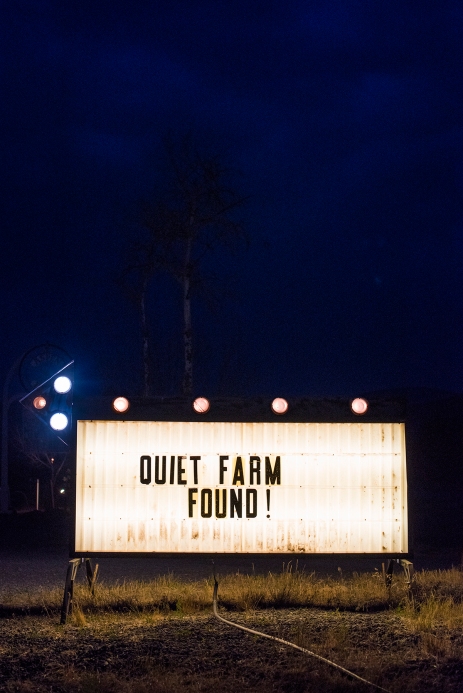
Many of you know this, and the rest of you have probably guessed, but N and I found Quiet Farm. (We’re not changing our website, however.) We closed on the property in early August and have just now gotten all of our things moved from the Front Range over to our (new to us) house. We heard too many horror stories about unscrupulous, lazy and irresponsible moving companies, so we opted to do the whole move ourselves. N had plenty of experience driving a 25-foot RV, so driving a 26-foot box truck couldn’t be much different, right? (P.S. We sold the RV. Bittersweet, but it served its purpose for our transient summer. And it’s just right down the road from us, so we can visit it if we want!)

QF 02 sml

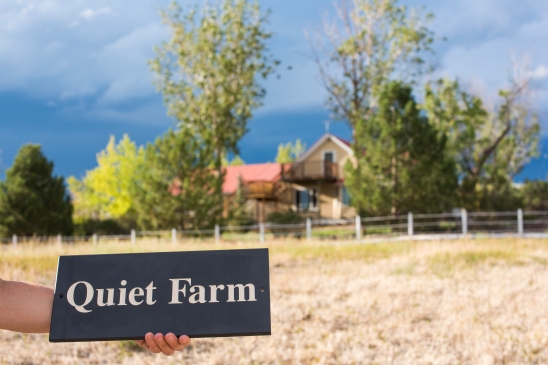
Quiet Farm is a ten-acre parcel just outside of Cedaredge, on Colorado’s Western Slope. We’re tucked under the Grand Mesa and surrounded on three sides by apple orchards; to the south we can see all the way to the San Juan Mountains. Just over eight acres of the property is in pasture, but both the land and the house have been essentially abandoned and unloved for about five years. It will take a lot of time and hard work and water to regenerate the pasture; historically it’s always been alfalfa, but we’re looking at other drought-tolerant options, too – maybe hops or quinoa?

Bluebird Rooster grey final

Our vision for Quiet Farm is an organic teaching farm and cooking school. We plan to build a certified commercial kitchen in a detached garage on the property. We’ll offer classes on everything from healthy cooking basics to bread baking to canning and preserving to beekeeping to fermentation to knife skills, and any other homesteading topics that our guests might be interested in. We’ll keep laying hens for eggs and pest control, goats for milk and entertainment, beehives and extensive vegetable and perennial plantings. We want to be part of the community and host potluck suppers and farm tours and coffee klatches and food swaps. We want to showcase the amazing fruit and animals and people this part of Colorado offers. We want Quiet Farm to be an agritourism destination.

QF sign 01 sml.jpg

We’ll post regular farm updates here, with before-and-after pictures so you can see our progress. It took us three years to find Quiet Farm, and we’ve got a lot of work to do to fully realize our vision, but we’re exactly where we want to be. Thank you for joining us on this journey, and we’re so much looking forward to all of the incredible adventures ahead. We can’t wait to share Quiet Farm with you!


The Farm Series: Desert Weyr

Of late, our Western Slope farm visits have taken us to pick delicious cherries and to meet happy pigs. How about we introduce you to some unusual sheep?

Weyr 01 sml - Copy

Desert Weyr is perched high on a mesa above the town of Paonia.

In the late 1990s, Eugenie “Oogie” McGuire decided she wanted to craft herself a traditional medieval cloak – from scratch. It would be made from wool, of course. She purchased one ram, five ewes and a loom, taught herself how to spin, weave and sew, and eventually made the cloak. As she says, “It’s more accurate for the 18th century. It took me six years to weave the fabric, two more to get up the courage to cut it, and two weeks to hand-sew it.” But what commitment! Now, Oogie and her husband, Ken, raise a large flock of Black Welsh Mountain sheep on pasture above Paonia.

Continue reading

Let’s learn about goats!

JGGD 11 sml

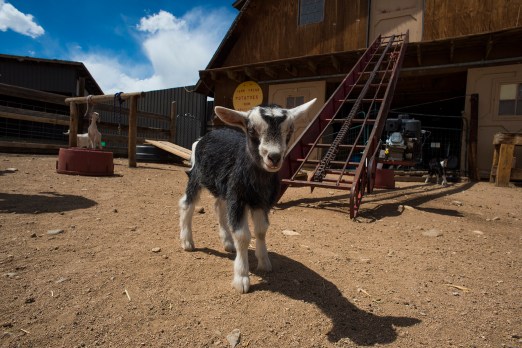
This is not the first time we’ve posted photos of #totesadorbs baby goats, and it certainly won’t be the last. We’ve known since we first invented Quiet Farm in our heads that we want to keep milking does, so as with all other aspects of farming, we’re learning how to do that from books and the University of YouTube and on-farm experience, too. By the time we actually find our farm, hopefully we’ll (sort of) know what we’re doing.

NJB_5018

Some fun facts about goats:

  • Goats have a reputation for eating just about anything, including clothes, trash and other inedible items. This is entirely untrue; goats are browsers, rather than grazers, and are naturally curious. They use their lips and teeth much as we use our fingertips – to investigate unknown objects – and they’re actually quite fussy about what they’ll eat. Goats also only have teeth on their bottom jaw, not their upper.
  • Goats are fantastic climbers and love to quickly attain the highest perch available – hence the popularity of goat yoga. Goats can climb trees!

Continue reading

Thanks, but no thanks

Dear Oregon:

It is with regret that we inform you that you are no longer a candidate for the location of Quiet Farm. Although we visited you with highest hopes, we found that our expectations did not coincide with reality.

NJB_1223

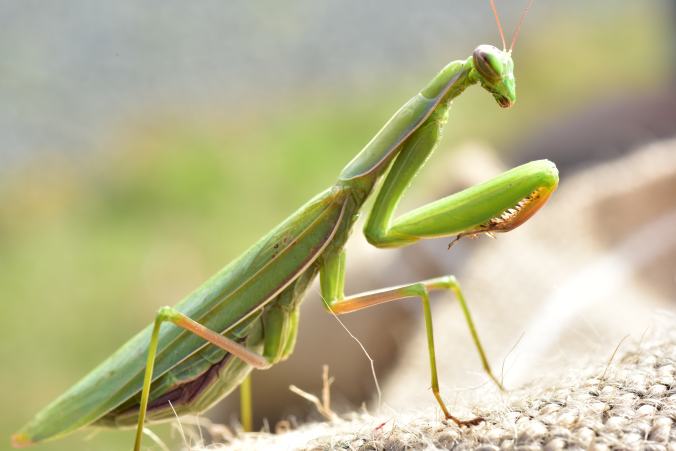
Praying Mantis

NJB_1196

Fly Agaric Mushroom (poisonous!)

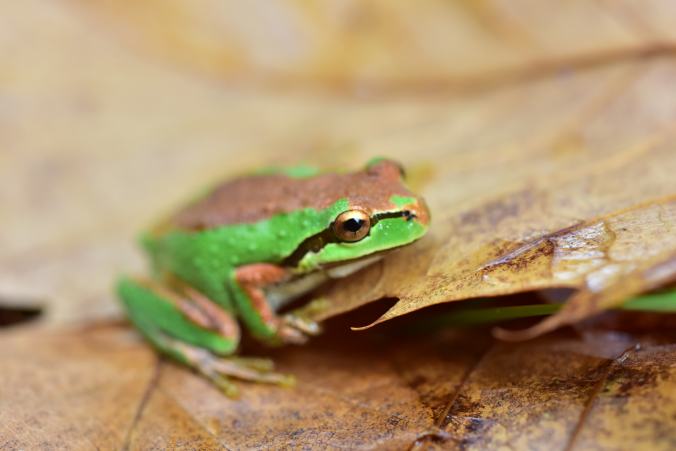
It goes without saying, Oregon, that your flora and fauna are simply exceptional. Just look at these photos! Coming from our dry, stark, high-plains desert, we were stunned by the sheer life found everywhere in this damp climate: on fallen logs, under chestnut leaves, buried in cranberry bogs.

NJB_1278

Pacific Tree Frog

NJB_1199

Still Life with Mushrooms

And the water! All the free water, everywhere! Just falling from the sky! Oh look, it’s still raining! Truly, it’s a miracle, and it means you can grow pretty much anything here. But we also found that farming in the pouring rain wasn’t as much fun as we’d hoped. Slogging through inches of sloppy mud while trying to dig out a stuck tractor or get feed to hungry animals sounds adventurous, but we’re afraid it would just become rather tedious.

NJB_1260

Rough-Skinned Newt (its underside is bright orange!)

NJB_1044

Cascades Frog

(While we’re on the topic of growing things, Oregon, we’d like to talk about “medicinal substances,” if you get our meaning. As a state, it seemed to us that you’ve embraced the recreational drug lifestyle just a touch too enthusiastically for our comfort, and that’s saying something, considering we hail from Colorado.)

NJB_1049

Woolly Bear Caterpillar

NJB_1268

Angel Mushroom (unconfirmed ID)

This is a tough letter for us to write, Oregon, because we were pretty much ready to set up shop and get Quiet Farm up and running. But outside of Portland or possibly Eugene, we don’t feel confident that the community can support the type of business we want to start. And unfortunately, we can’t afford any property near Portland or Eugene. Apparently it’s all being snatched up by escaping Californians.

NJB_1206

Red-Veined Meadowhawk

Please know, Oregon, that you’re more than welcome to reapply as a potential Quiet Farm location at any time. We’ll just need to see a dramatic reduction in your extortionate property prices as well as a corresponding reduction in your precipitation rates. Oh, and lay off the weed for a bit, please. There’s work to be done.

With regards,

The Quiet Farm Scouting Team


Crantastic!

We continue our never-ending quest to absorb everything we can about all types of farming, and just in time for America’s most revered Day of Gluttony, N and I learned how to harvest, sort and process cranberries! One of the farms we worked on in Oregon was home to three organic cranberry bogs, so we were able to see firsthand how this unique fruit is both grown and harvested.
NJB_1166

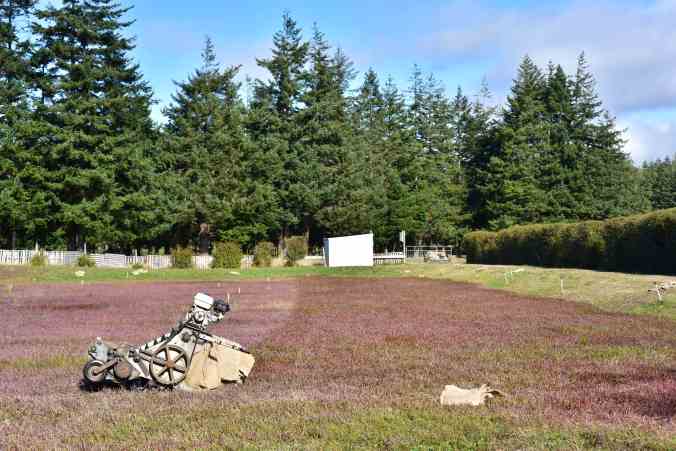
A one-acre dry cranberry bog with harvester. The portion on the left still needs to be harvested, while the section on the right is finished. 

Cranberries are grown in Washington, Oregon, Wisconsin, Massachusetts and New Jersey, as well as in Canada; they’re a low-growing vined shrub and the plants can live indefinitely if cared for properly. The vast majority of cranberries are conventionally wet-harvested, in the traditional bog we know from the Ocean Spray commercials. The organic farm we worked on, however, used dry harvesting. This is substantially more labor-intensive and has lower yields, but organic dry-harvested berries sell for nearly twenty times the amount that conventional wet-harvested berries do. This is primarily because dry cranberries can be sold fresh, packaged into bags in your produce department. Wet berries need to be processed into juice or other cranberry products almost immediately.

NJB_1160

Aren’t they gorgeous? And so good for you. I ate a lot.

NJB_1114

The harvester at work.

NJB_1164

The harvester removes a lot of branches, but not all.

NJB_1141

We filled burlap sacks with berries for transport to the packing shed.

NJB_1225

A surprising number of cranberries are left behind after harvesting.

We followed our farmer with clean, dry burlap sacks, ready to replace the one on the harvester as soon as it was full. It’s really important not to overpack the bags and not to double-stack them on the trailer, as too much pressure will crush the berries and render them unsaleable. I hand-harvested a few pounds of berries left behind; this was unbelievably labor-intensive. Agricultural work is not for the faint-of-heart.
NJB_1245

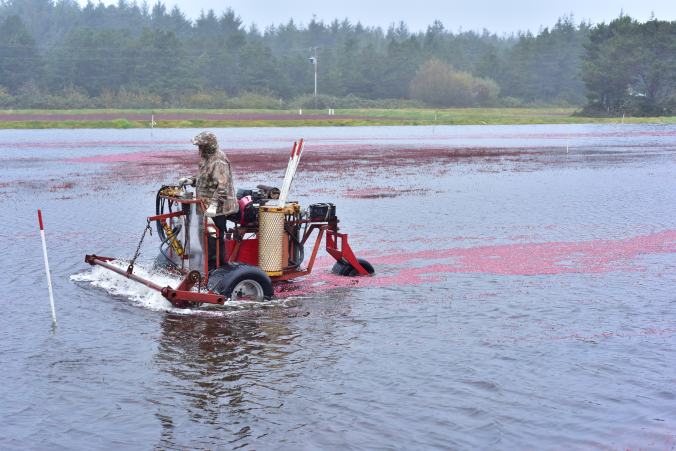
Traditional wet-harvesting involves flooding the bogs and a harvester like this one.

NJB_1246

The berries float to the surface of the flooded bog, where they can be easily scooped. 

We watched a traditional farmer wet-harvest his bogs on a miserably cold, rainy day: not at all fun. Our farmer can only harvest when it’s dry and clear, as the goal is for the berries never to get wet. Even the morning dew had to dry before we could harvest.

NJB_1239

Our daily harvest, ready to be put through the sorter.

Every day after we harvested, we took our berries to a shared packing shed. Our farmer ran the berries through the sorter, and N and I sorted and packed on the opposite side. Once the berries started tumbling through the chute on our side, we really had to work quickly to keep up, and to ensure that our crates didn’t get too full. As with loading the bags during harvest, it’s essential not to crush the berries on the bottom.
NJB_1241

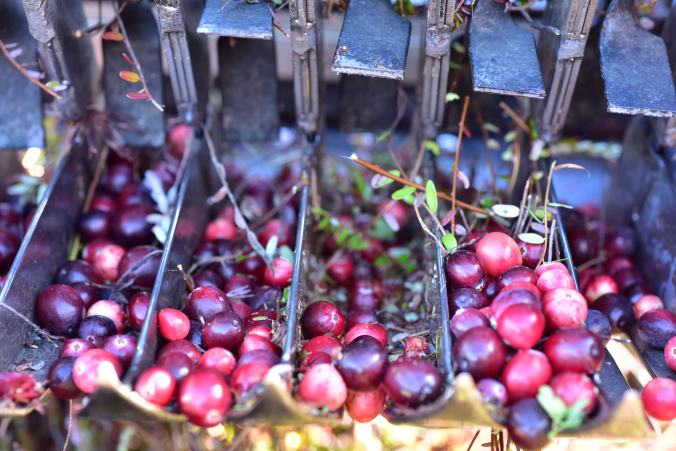
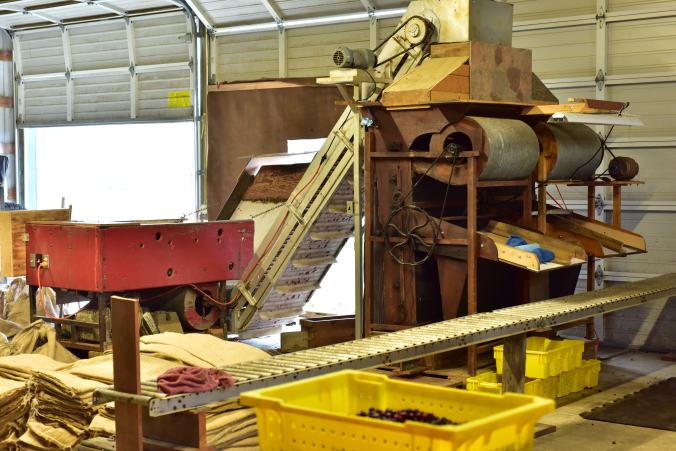
Berries are run up the conveyor belt, where they’re tested for ripeness.

NJB_1250

We stood here and sorted through the berries as they came down the belt, removing small branches, twigs, leaves and any damaged berries.

Unusually for most produce, cranberries actually bounce when they’re ripe (and float when they’re flooded), so the sorter both removes the larger vines and branches and tests the cranberries for ripeness. Berries that don’t make the cut are dropped into the yellow crates down below, and they’ll eventually be fed to pigs – just like our apple cider waste.
NJB_1211

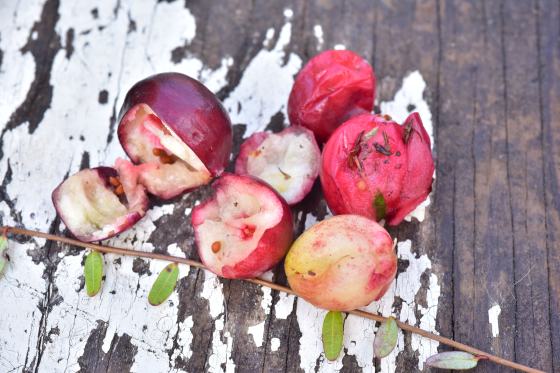
Berries that are split, crushed or otherwise open need to be removed, or they’ll spoil.

NJB_1249

Each crate holds about fifteen pounds of fruit after sorting.

Once our cranberries were sorted into the crates, they would be sent to a central distribution center, where they would be sorted again, washed and bagged. And then they’ll be on the shelves at your local grocery store!

IMG_0976

Only in cranberry country would you see fresh cranberries in bulk; mostly they’re sold pre-bagged.

I grew up in a household where the only “cranberries” we ever saw were in the exact shape of the can they came in. Once I discovered fresh cranberries, I always wondered why Americans only seem to use these once a year. They’re tart, crisp and delicious, and high in vitamin C, fiber and antioxidants, among numerous other health benefits. They’re delicious in oatmeal, baked goods, smoothies and of course as a condiment for roast turkey, goose or ham. Plus, they freeze beautifully, so buy a few extra bags when they’re on sale, and use them throughout the year. They’re great dried, too, but be aware that Craisins and other sweetened dried cranberries can contain as much as 85% sugar by weight, so they’re not nearly as healthy as you’d like to think. Buy unsweetened dried cranberries whenever possible. Oh, and “cranberry juice cocktail”? More sugar than soda. Don’t ever, ever drink it.

Cranberry sauce

Making your own cranberry sauce is by far the easiest thing you’ll prepare for a holiday dinner, and you can do it well in advance. Rinse one bag of fresh cranberries and place in a medium saucepan. Add about 1/2 cup water or orange juice (or Grand Marnier, if you’re feeling flush), a pinch of salt, the grated rind of two oranges or clementines, a bit of grated fresh ginger (or 1/4 tsp. powdered ginger) and about 1/4 cup brown sugar or honey. Simmer gently to allow the cranberries to burst, and stir occasionally to keep the sauce from sticking. Cook over low heat for about fifteen minutes or so, or until the sauce is the consistency you’d like, adding more liquid if needed. Taste and adjust the seasoning. I like to keep my cranberry sauce super-tart because I love the flavor and don’t like things overly sweet, but feel free to add more sweetener if you like. The sauce will thicken once refrigerated and will keep in the fridge for at least two weeks. I keep it thick and use it as jam on toast, too!

Need more inspiration for fresh cranberries? Go here.

 

Going nuts, vol. 2

We started the year learning about macadamias in New Zealand, so it’s only fitting that we should close it out harvesting chestnuts in Oregon. Prior to marrying an Englishman, I had never eaten a fresh chestnut – only candied, at culinary school in France – but they’ve become part of our fall traditions, as they were for him in childhood. And now that I’ve harvested them myself, I truly have a newfound appreciation for their exorbitant price. These things are little monsters.

NJB_1272

The trees in the grove we harvested are between fifteen and twenty years old.

Chestnut trees are grown across much of the world; chestnuts themselves are important food crops in Asia and Europe. Chestnuts were also hugely valuable to native Americans and early settlers; the fruit is primarily carbohydrates, has more starch by weight than potatoes and contains enough vitamin C to prevent scurvy. In the early 1900s, however, the Bronx Zoo imported Asian chestnut trees for their botanical collection and inadvertently introduced chestnut blight to North America. Within forty years, the blight wiped out nearly every single one of the forty billion chestnut trees in America, with only a few small isolated stands now remaining across the country.

NJB_1275

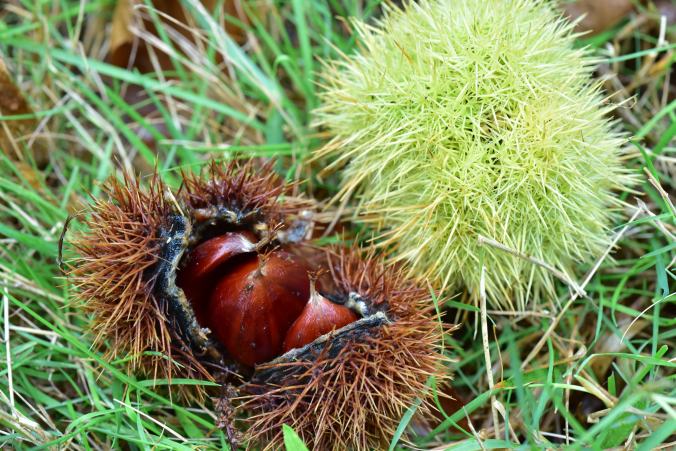
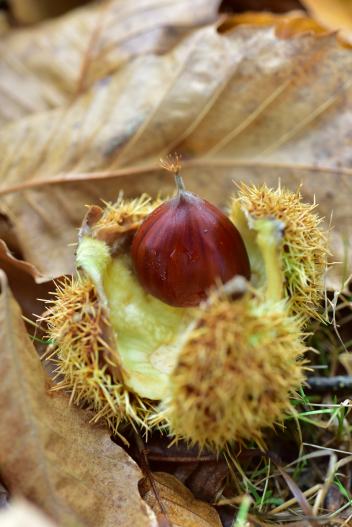
Usually you’ll find three chestnuts in the burr, but it depends on the species.

The actual chestnuts are contained in a burr, or hull, which is exactly like a tiny, angry porcupine. When the chestnuts are ripe, the chocolate-colored burrs fall to the ground; unlike other fruits or nuts, chestnuts are never harvested directly from the tree.

NJB_1279

Ripe burrs split open, as on the left.

The burrs split open on their own, further indicating ripeness; this is primarily due to soil humidity, as chestnut trees prefer more humid climates. Sometimes unripe (green) burrs will also fall, and if they haven’t opened they should be left to ripen further.

NJB_1271

Dry leaves and empty burrs after harvesting.

Things to know when harvesting chestnuts: you’ll need gloves. Kevlar gloves, to be precise, and yes, that is the material used for bulletproof vests. These things look relatively harmless but are truly vicious, and good gloves are mandatory. And it will take you ages to harvest these; the little burrs love to hide in the huge piles of dry leaves that have also fallen from the tree. They’re like adorable, spiky landmines, and now I know personally why they’re criminally expensive: the pain level is extraordinarily high. (I’m almost certain they were used as extras in this film.)

NJB_1262

Looks harmless. Isn’t.

These edible chestnuts aren’t to be confused with horse chestnuts, which are mildly toxic to humans, or water chestnuts, which are grown aquatically and used in Asian cuisine. Attempts have been made since the 1930s to hybridize the American and Asian chestnut trees, in order to create a native species resistant to blight, but it hasn’t as yet been hugely successful. (On a related note, we’re about to suffer another major loss of trees, as the emerald ash borer – also imported from Asia, on shipping pallets this time – continues its trail of destruction across America. Colorado alone is projected to lose more than two million trees.)

NJB_1261

It took forever to harvest a three-gallon bucket!

Chestnuts are used in savory and sweet preparations all over France and Italy; as with cranberries, they’re commonly seen in holiday recipes because their harvest time coincides perfectly. And in wintertime in cities like London or New York or Paris, you’ll often find street vendors roasting chestnuts over repurposed fifty-gallon oil drums.

NJB_1284

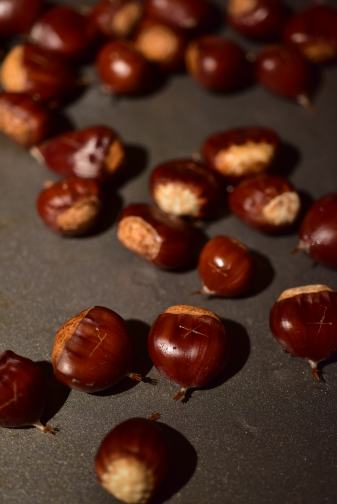
To roast fresh chestnuts at home, carefully cut an ‘X’ into the flat side of each nut. Use sturdy kitchen shears to do this and be very, very careful; the nuts are slippery and unwieldy. Place on a baking sheet and broil until you hear the first explosion, about ten minutes depending on the quantity and your broiler temperature; be patient and wait until the second explosion, which indicates that all of them should be cooked through. Open the oven carefully and quickly lay a kitchen towel over the entire tray as more explosions are likely to follow. Let cool until you can safely handle them, then peel and dip each nut into coarse salt and enjoy. (Sorry about your oven; you’ll probably need to clean up the shrapnel once it’s cooled down. And a pro tip: it’s not a great idea to roast chestnuts in someone else’s oven, unless you’re also willing to clean it.)

NJB_1290

Although chestnuts seem to thwart you at every turn, the reward is well worth the potential injury. Roasted chestnuts pair perfectly with a wee snifter of bourbon and are even better if enjoyed in front of a roaring fire. Take pleasure in the simple things, friends, and clean up the oven later.
Cider days

Gather round, kiddos, and let your crazy old auntie tell you stories about what people did down on the farm when they didn’t have these newfangled modern conveniences like “wifi” and “television” and “an actual life.” We participated in fun old-timey group activities like apple pressing, yes we did. And we have the photos to prove it.

NJB_0997.JPG

First, start with apples.

Grassward Dairy had about a dozen mature apple trees on the property; I felt especially silly because we went grocery shopping prior to our stay there and I bought apples. Like spent actual money! And there were thousands of delicious apples, free for the taking.

NJB_1028

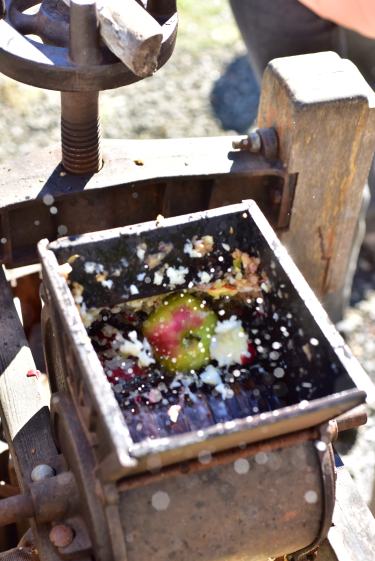
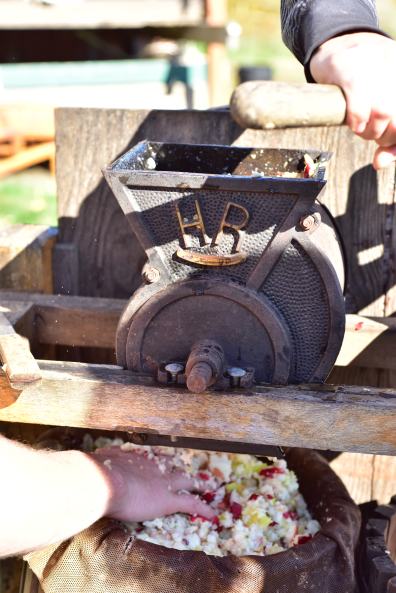
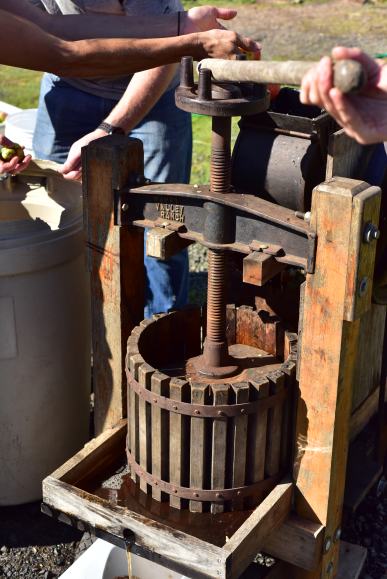
This press is pretty old-fashioned…except that it’s partially electric, so shredding the fruit is quicker and easier.

NJB_1040

One of many important foods pollinated entirely by bees.

For best results, use a mix of different apples so your cider is a balance of tart and sweet. And you don’t have to worry about bruised spots or any other damage, as the press takes no prisoners. Throw them all in.

NJB_1010

An action shot of an apple hitting the toothed shredding wheel. 

NJB_1012

The shredded pulp before pressing.

NJB_1014

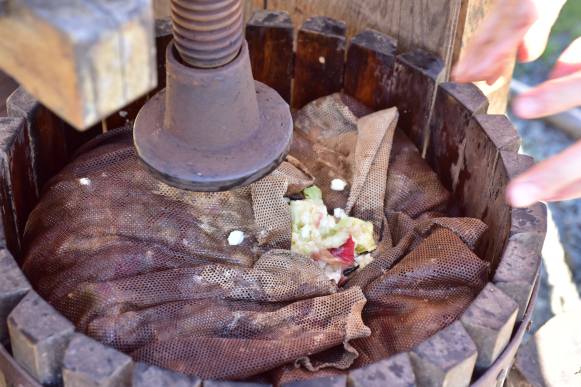
Gravity forces the pulp into a mesh bag for pressing and straining.

NJB_1018

Readying the pulp for pressing.

NJB_1020

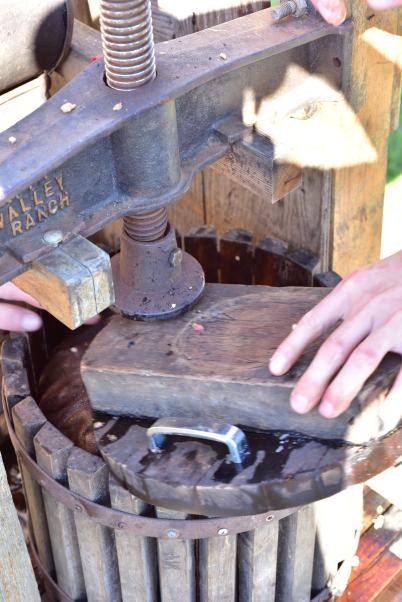
Placing the weighted lid on the bag.

NJB_1003

The electricity only helps with the shredding wheel; the press is still cranked by hand.

njb_1022.jpg

Leftover pulp is fed to the pigs. It’s like pre-marinating.

NJB_1001

And the result of all this hard work? The most incredible apple cider you’ve ever tasted.

NJB_1025

We pressed hundreds of pounds of apples; most of the juice was left for drinking fresh, but a few gallons will be turned into hard cider. Sadly, it won’t be ready for weeks, so we won’t be able to taste the fruits of our labors. (P.S. You can do this at home using a juicer…but it’s much more authentic if you’re fighting off aggressive wasps outside on a farm.)