India by train

In an average day, about 23 million people ride on Indian Railways, the fourth-largest railway system in the world. This is about the same as the entire population of Australia!

NJB_6517

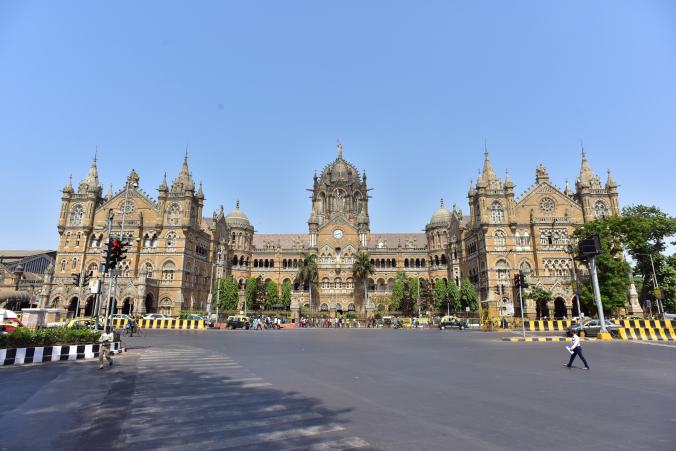
Victoria Railway Station, Mumbai.

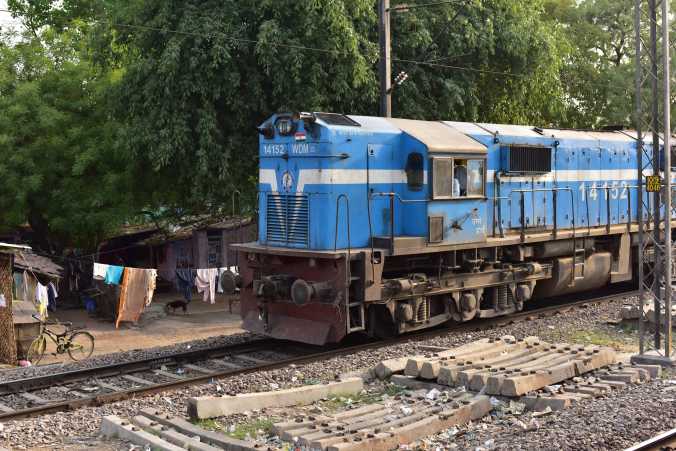
We took a lot of trains during our four-plus weeks in India; it’s a big country. We rode on sleepers and day trains and subways and coal-fired trains from the 1800s. Like our experience on trains in Vietnam, we believe this is one of the best ways to see a place. From big cities to tiny villages to rural agriculture, we loved experiencing India this way.

NJB_5514

NJB_5332.1

NJB_5439

NJB_5598

NJB_4872

It’s common to see dozens of people sleeping in the train stations.

NJB_5562

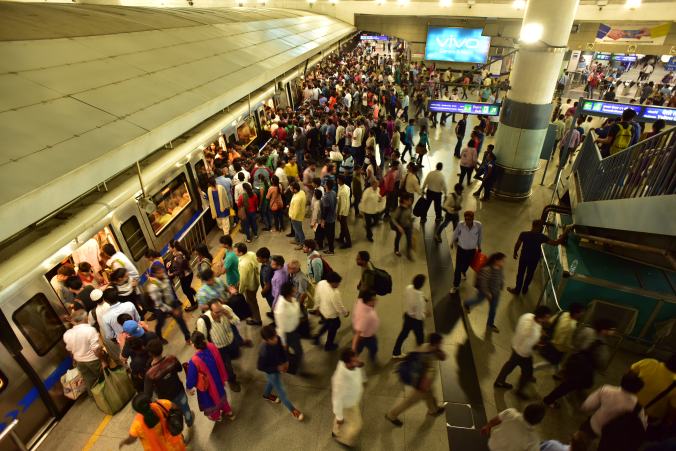
A metro station in Delhi.

NJB_5335

Keep your wits about you; the crowds are intense.

NJB_6958

A six-berth sleeper carriage.

NJB_4790

The locomotive of Darjeeling’s “toy train.”

NJB_4789

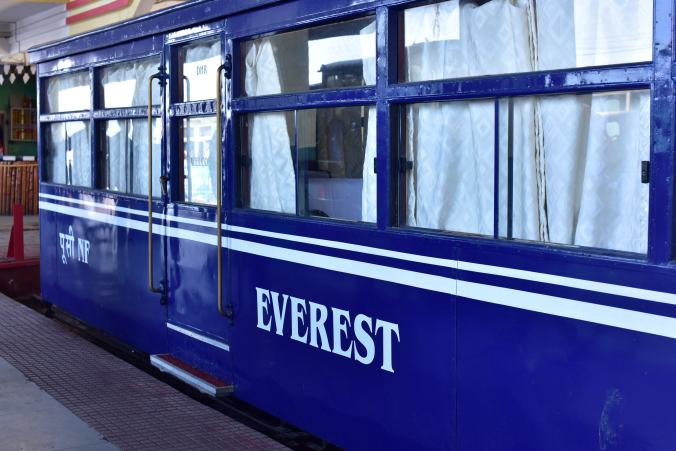
A carriage of the toy train.

One of the primary tourist attractions in Darjeeling – in addition to tea plantations – is the “toy train,” a narrow-gauge railroad built by the British in the late 1800s that runs for about 78 kilometers through West Bengal. The train was revolutionary when it was first constructed, since it both traveled at altitude (Darjeeling is at about 7,000 feet) and navigated treacherously steep mountainsides.

NJB_4831

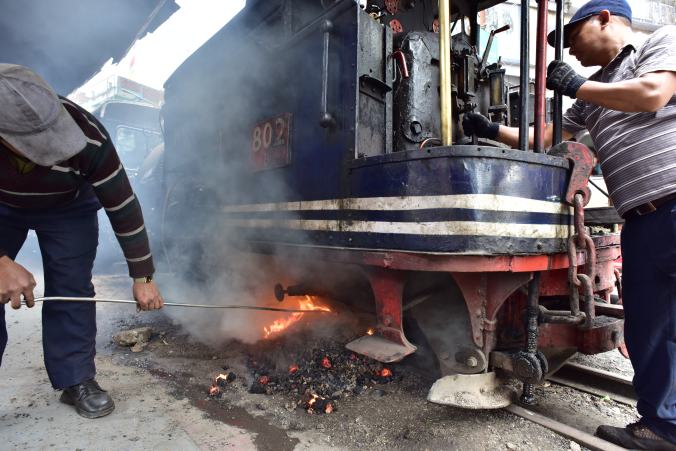
Emptying spent coal from the train’s furnace.

Nowadays it’s rather quaint (and slow), with piercingly loud horns and clouds of pollution from the coal, but it remains one of Darjeeling’s most popular tourist attractions.

NJB_5466

Despite its crowded cities, much of India is still almost entirely agricultural; this was often the view from the trains.

NJB_4143

NJB_4873

It was always a little disconcerting for our group of Westerners to conspicuously walk into a lounge labeled as “upper class.”

NJB_5512

NJB_5599

NJB_6962.1

Chaiwallahs offer hot, sweet tea throughout the train carriages.

NJB_6963

I’m not sure what the plan is if the hammer isn’t there.

Just like everything else in India, the trains are hot, crowded and noisy, but they’re a quintessentially Indian experience. Can you travel India more efficiently? Of course. But the greatest gift the trains offer is time; they force travelers to slow down and experience a country at its own pace. We’re so glad we saw India by train.

Spice plantation

We spent a few days in Goa, a state in western India situated along the Arabian Sea. Up until 1961, Goa was a Portuguese colony; it’s a major tourist destination now and is famous for its beaches. It’s India’s wealthiest state, with a per-capita GDP nearly three times that of the rest of the country. While we’re not so much for beaches, Goa is also famous for its tropical flora and fauna, and we loved visiting one of its spice plantations.

NJB_7252

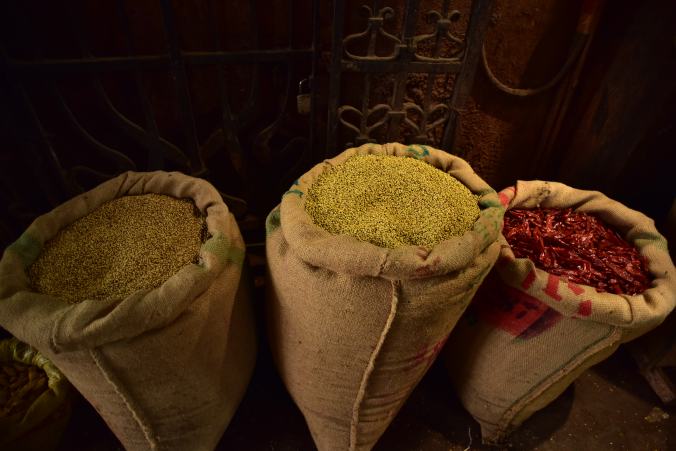
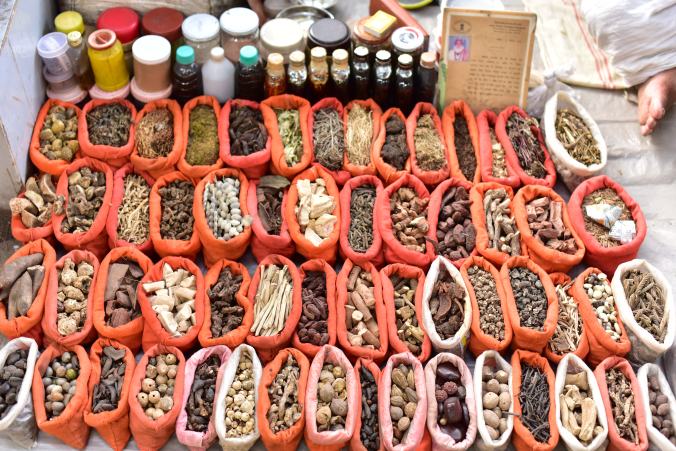
spice is a seed, fruit, root, bark, berry, bud or vegetable substance primarily used for flavoring, coloring or preserving food. Spices are different from herbs, which are parts of leafy green plants used for flavoring or as a garnish. Modern cooks definitely do not appreciate our plentiful and inexpensive supply of spices and herbs, many formerly so valuable that they were used as currency. (Want to incorporate more fresh herbs into your cooking? Join me on June 10 at the Denver Botanic Gardens. Learn more here!)

NJB_6637

A green cardamom plant, which will produce the familiar little seed pods.

NJB_6632

Black cardamom, which in Indian cuisine is used only for flavoring and isn’t eaten, unlike the green cardamom pods.

The majority of the most common culinary spices are grown in tropical areas, roughly twenty-five degrees north and south of the equator. This is the same area of the world where coffee and cacao are grown, too.

NJB_6651

Nutmeg on the tree.

Two of our most-loved baking spices, nutmeg and mace, both come from the same tree. Nutmeg is the seed and mace is the lacy covering of the seed. This is the only plant that produces two different commercially viable spices.

NJB_6704

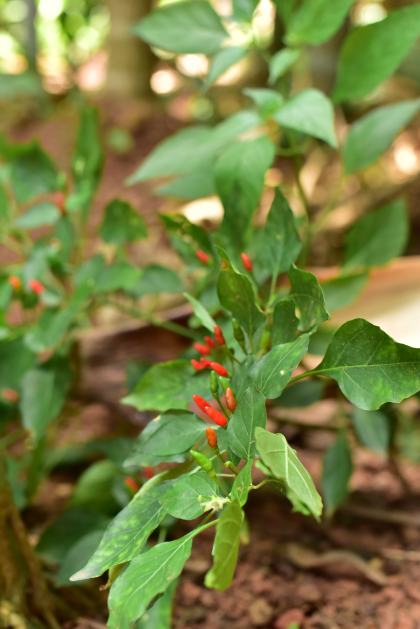
Peri peri chile peppers. Very small and very potent.

NJB_6638

Arabica coffee beans.

NJB_6653

This plant looks rather unassuming, but it’s actually the world’s second most expensive spice, after saffron. That vine will eventually produce vanilla pods.

NJB_6715.1

Turmeric is the new trendy ingredient in everything from lattes to roasted cauliflower. Here, the root has just been harvested…

NJB_5551

…and here it’s for sale in the market.

NJB_6625

Unripe peppercorns.

Black, green and white peppercorns all come from the same plant – like tea, the variation lies in how they’re dried and processed. (Pink peppercorns come from an entirely different plant altogether.) These were once so valuable that a serf could buy his freedom with a pound of peppercorns.

NJB_5538

Spice traders at work.

NJB_5533

NJB_5541

NJB_6533

NJB_5559

NJB_5864

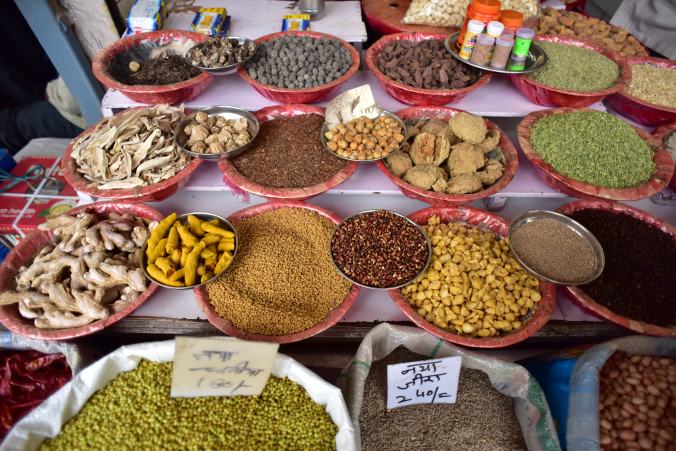
A gorgeous array of after-dinner refreshers, mostly based on fennel seed.

The next time you’re rummaging through your spice cabinet, remember that these seemingly innocuous plants changed the course of history! And while those of us in temperate zones can’t grow these spices without a greenhouse, you can easily grow lots of useful culinary herbs like basil, parsley, chives, mint and more in containers or a backyard garden.

NJB_6696

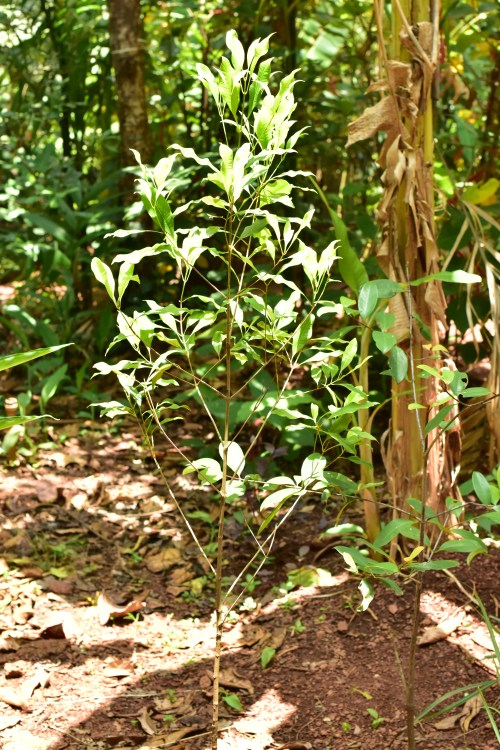
And if anyone can tell us what tropical spice plant this is, we’d be most grateful…it’s the only one we didn’t make a note of!

Scenes from India, vol. 1

A collection of some of our favorite photos from India; more to come.

NJB_6945

It’s very easy for Western tourists in India to blend in. Really, it’s tough to even find me in this photo.

One aspect of traveling in India that really surprised us was how many people wanted their photo taken with us. We were regularly asked to pose for photos with couples, families and children – sometimes babies would be shoved into our arms for pictures! In some of the more rural areas, we were apparently the first Westerners they had seen.

NJB_5698.1

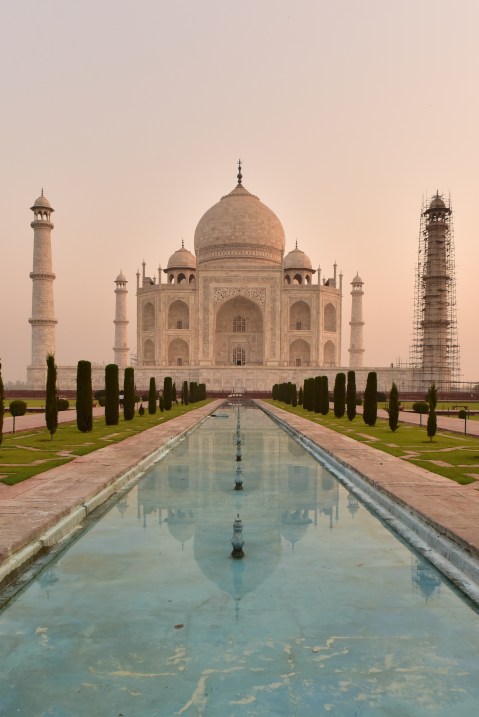
Sorry about the scaffolding; they’re giving the marble a mud bath treatment to remove the evidence of intense pollution.

NJB_5397

Traditional Muslim architecture at an imambara in Lucknow.

NJB_6916

Stepwells, used in ye olde times and still today to hold water for people and agriculture.

NJB_6451.1

It’s possible that this tractor’s trailer is ever-so-slightly overloaded.

NJB_6471

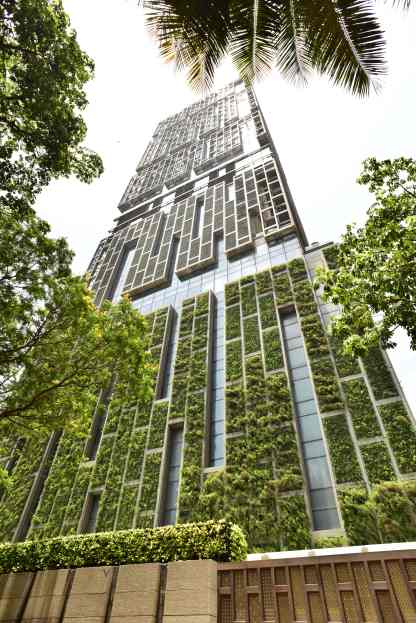
Mumbai’s most expensive home, valued at $1 billion. It has 600 rooms, but it still has views of slums, like the one below.

NJB_6483

One of Mumbai’s many slums. 

While out on a day tour of Mumbai, we were offered the chance to visit one of its slum communities. Tours like this are challenging – many people will call them “poverty porn” – but poverty is an issue that confronts travelers everywhere in India. The Mumbai slum is truly one of the most remarkable places we’ve been; the people we saw were hard at work in a variety of industries, including textile manufacturing and recycling.

NJB_6489

A “factory” in the slum.

Many of our Western luxury goods, such as branded handbags and clothing, are manufactured in places just like the one in the photo above. On the left, a roll of white fabric waits to be dyed; the red dye is bleeding out of the shop floor into the open sewer that runs along the buildings. The Dharavi slum, the second-largest in Asia, is thought to have a goods turnover of more than one billion dollars annually. While the ethics of visiting a place like this are debatable, there is no debate about the thriving economy that exists here.

NJB_5364

Both Muslim and Hindu architecture feature prominently in India.

NJB_7242

A statue of Lord Ganesha.

NJB_7010

Every Sunday evening, the Mysore Palace is illuminated with millions of old-fashioned lightbulbs.

NJB_5724

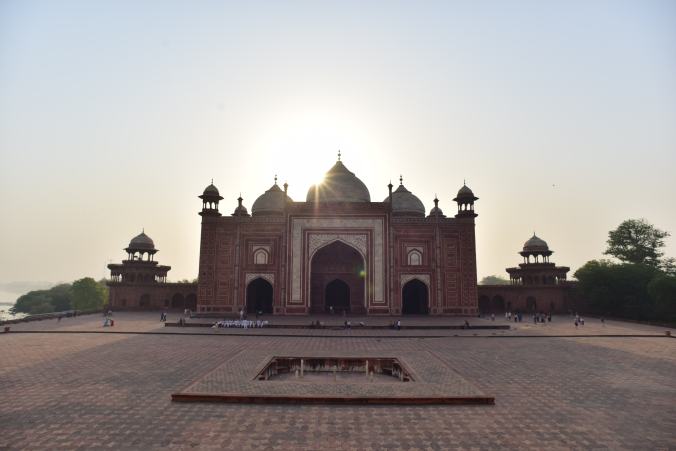
The red sandstone mosque next to the Taj Mahal.

NJB_6502

The world’s largest open-air laundry in Mumbai. There is a good chance your fancy hotel’s sheets were washed here.

NJB_5754

The Pink Palace of Jaipur.

NJB_7149

Almost every cargo truck we saw was brightly painted and often festooned with streamers and other decorations.

NJB_6163

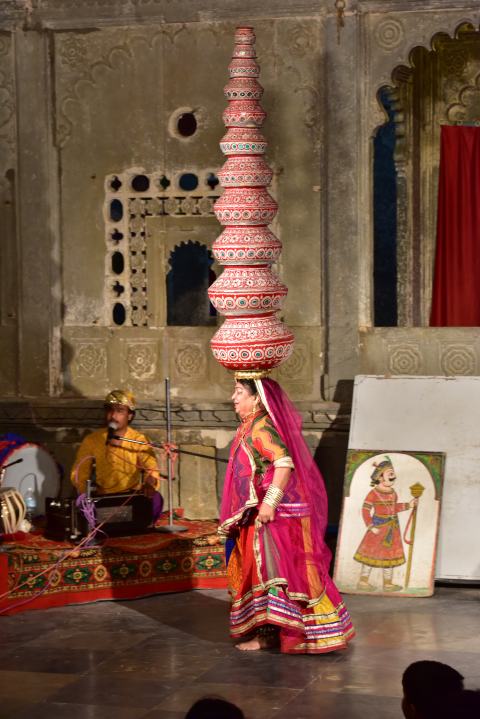
At a cultural dance performance in Rajasthani, this amazing woman danced while balancing these pots on her head.

NJB_7255

Kochi’s Chinese fishing nets.

NJB_6825

People leave offerings of fruit and other foods at temples, and now most temples have excessive populations of (sometimes aggressive) rhesus macaques and gray langurs.

Faces of India

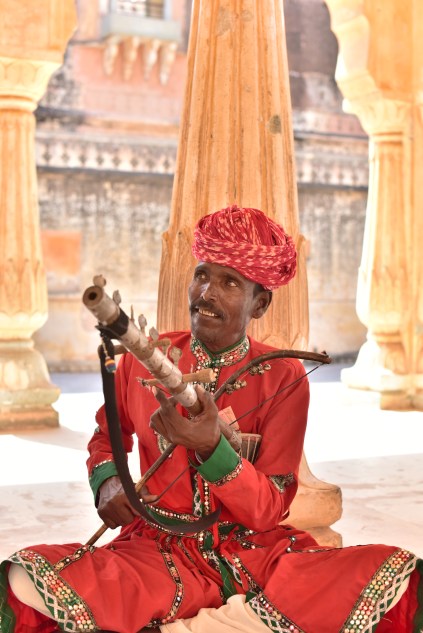
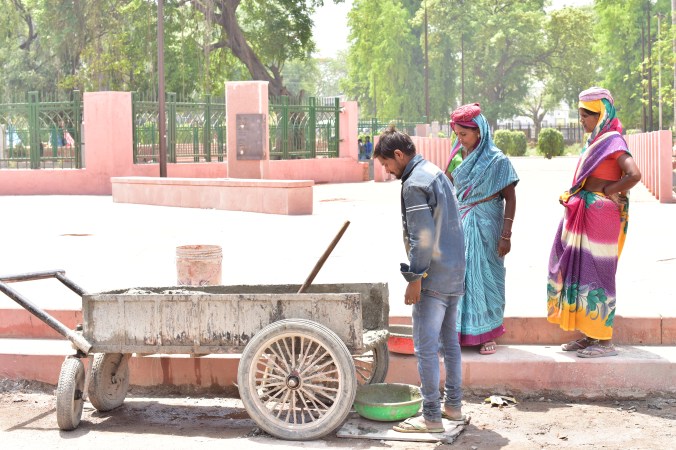
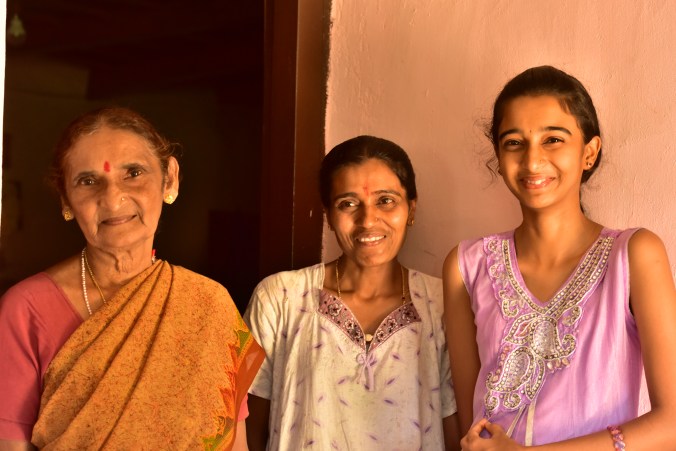
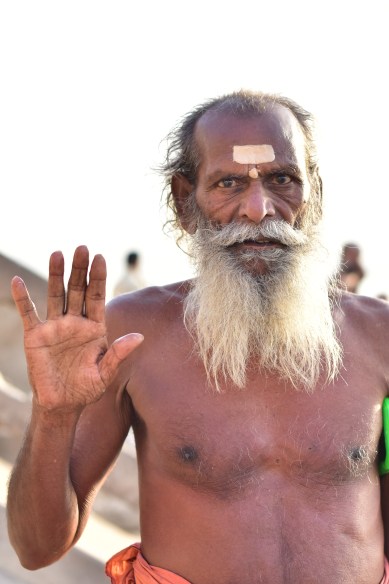
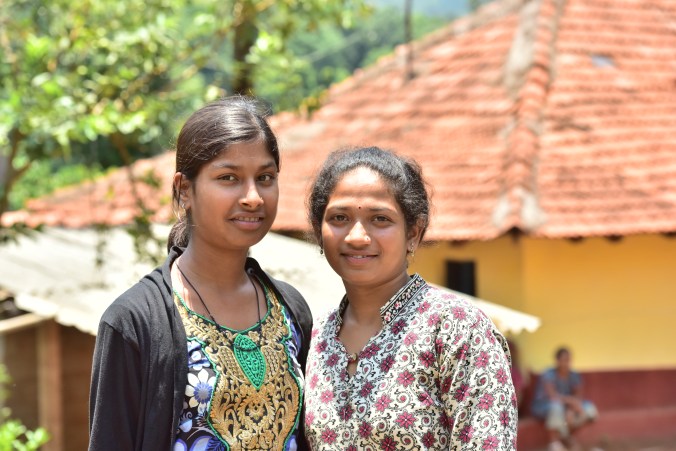
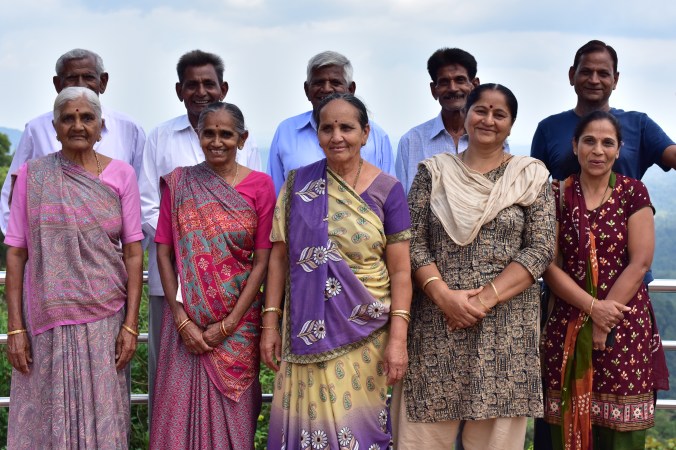
India is an exceptionally diverse country. Its landmass is slightly more than one-third the size of the U.S. but contains four times the population, about 1.3 billion people. It is the birthplace of four of the world’s major religions. It has 22 official languages and about 1,600 “other” languages or dialects. It has four main castes and thousands of sub-castes. Amidst all that, it’s interesting to note that it has no official racial designations; after Independence, the government sought to do away with racial classifications. Therefore, everyone born in India is Indian, and here we share with you some of the people of this beautiful, diverse, complicated place.

NJB_5007.1

NJB_6902.1

NJB_6135

NJB_5870

NJB_5818.1

NJB_5405.1

NJB_5783.1

NJB_7118

NJB_5196.1

NJB_5223

NJB_5791

NJB_5855

NJB_5914

NJB_7239.1

NJB_5859

NJB_6905.1

NJB_7183

NJB_5883

NJB_4299

NJB_5771.1

NJB_7124.1

NJB_7141.JPG

NJB_4314

Pilgrimage to Varanasi

Varanasi is a city in the Indian state of Uttar Pradesh, located on the banks of the sacred Ganges (or Ganga) River. It is considered the spiritual center of India and one of the world’s holiest places; millions of people make pilgrimages here every year.

NJB_4964

The view of the ceremony onshore.

Most of the pilgrims are Hindu; they come to worship, to bathe in the Ganges’ sacred waters, and to participate in funeral rites. Every morning and every evening, elaborate ceremonies take place along the river.

NJB_5010

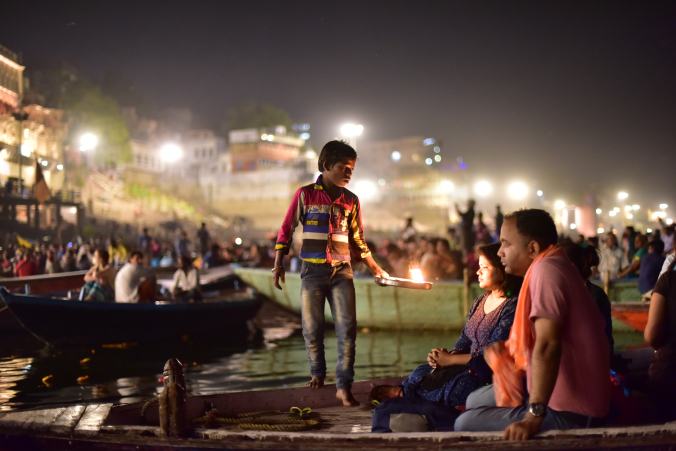
This boy is selling offerings, or diya, for placing in the Ganges.

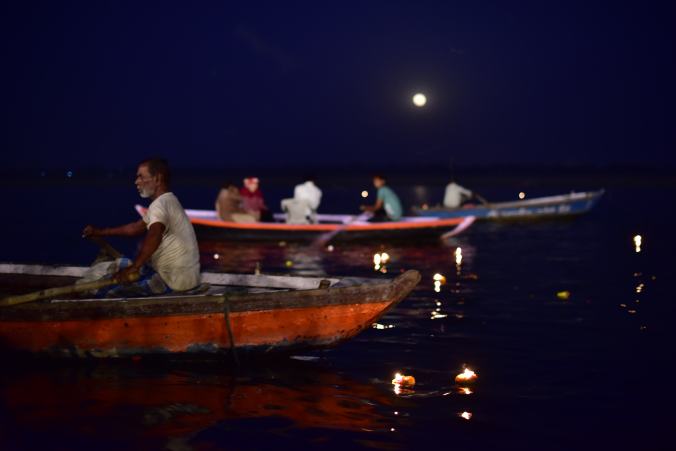
Dozens of slender boats sit just offshore, giving occupants an exceptional view of the ceremonies. The people in boats may just be tourists – like us – or they may have come on their own pilgrimage.

NJB_5020.1

Washing hands before making offerings.

NJB_4980

The boats are crowded, so it might be necessary to stand to view the ceremony.

NJB_4988

Dozens of boats, big and small, are rafted together just offshore.

NJB_4987

Our boat captain, sitting proud.

NJB_5078

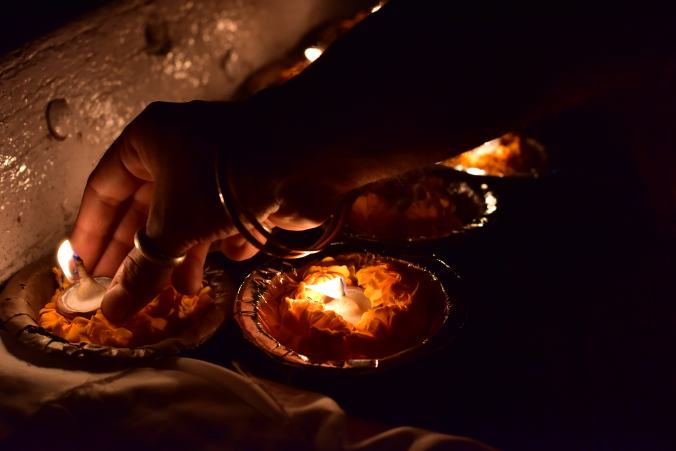
The traditional diya, or offering: marigolds are placed in little dishes with a lit candle.

NJB_4967

The diya are then set adrift in the Ganges.

NJB_5047

A ceremonial cremation ghat; understandably, no closer photographs were permitted.

Varanasi, also called Benares, has close to one hundred ghats, or stepped entrances leading to the river. Many are for bathing or puja ceremonies, but some are dedicated exclusively to cremation; some ghats are even privately owned. Hindus believe that cremation frees a soul from the continuous cycle of death and rebirth; thus, cremating a body along the Ganges is very much in demand and only for the wealthy. The cremation ghats at Varanasi operate twenty-four hours a day, every day of the year.

NJB_5100

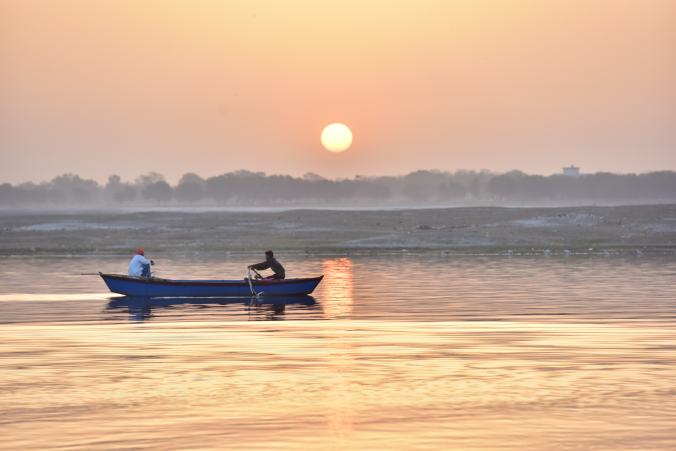
Sunrise on the Ganges.

NJB_5129

As always, Indian cities are quite an architectural free-for-all.

Varanasi is the oldest continuously inhabited city in India, and it’s sacred to Hindus, Buddhists and Jains. The city is a breathtaking mix of spiritual and secular, modern and ancient, calm and chaotic.

NJB_5112

Many of the widows’ quarters seen on the shore are now fancy guesthouses.

Sati (or suttee) is a now-obsolete Hindu funeral custom where widows would ceremonially commit suicide by throwing themselves on their husbands’ funeral pyres. Though it was officially banned by the British in 1829, women are still not allowed to take part in the cremation ceremonies. (Our guide told us it was because “women are too emotional.”) In much of India, widows are still expected to renounce all pleasure in life; in addition to being a spiritual center, Varanasi is known – and not in a complimentary way – as “The City of Widows.”

NJB_5133

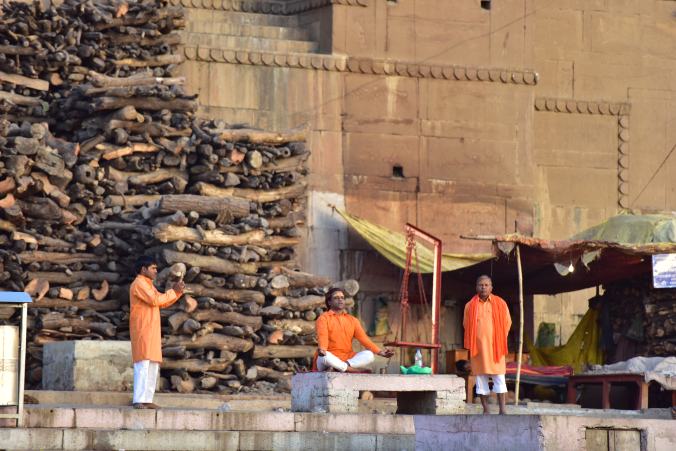
Monks performing a rite; wood for the cremation fires is seen on the left.

NJB_5190

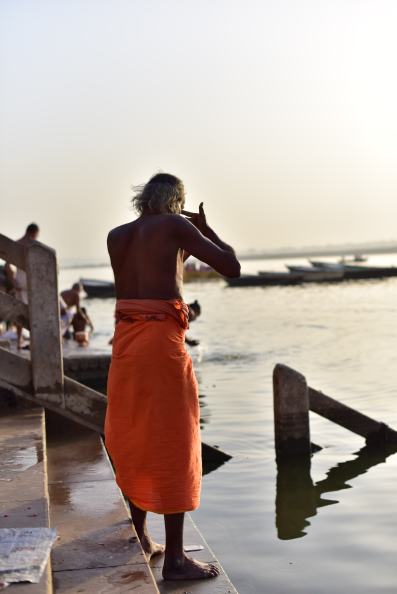
This man is applying his face paint after bathing in the Ganges.

NJB_5146

Daily bathing in the river, and a closer look at one of the ghats.

NJB_5202

sadhu worshiping on one of the ghats.

Holy men, or sadhus, are a common sight in Varanasi. In Hinduism and Jainism, a sadhu is any person who has renounced the worldly life in favor of religious asceticism. Most sadhus survive on food and clothing donated by the public and may travel great distances on their own spiritual pilgrimages.

NJB_5201

It’s impossible not to be caught up in the spirituality of this place. Our visit to Varanasi, and our voyages on the Ganges both at sunset and sunrise, were one of our most memorable experiences during our trip to India.

How things are made, vol. 2

Visiting workshops or homes to watch people make things by hand is one of our favorite traveling activities; in southeast Asia, we learned how to make incense, rice noodles and tofu. And now in India, where traditional handicrafts are still a way of life for millions of people, we’ve had more opportunities to see beautiful things take shape.

NJB_5900

India is justifiably famous for its textile industry.

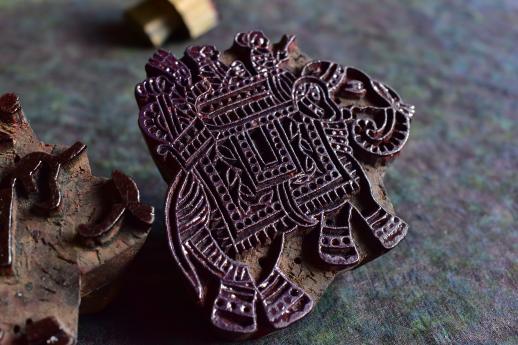
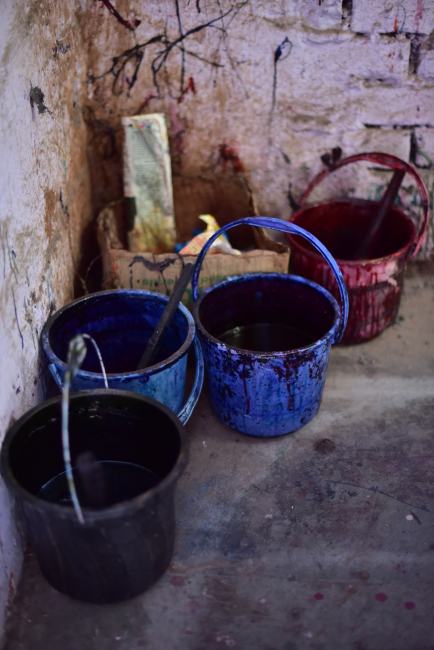
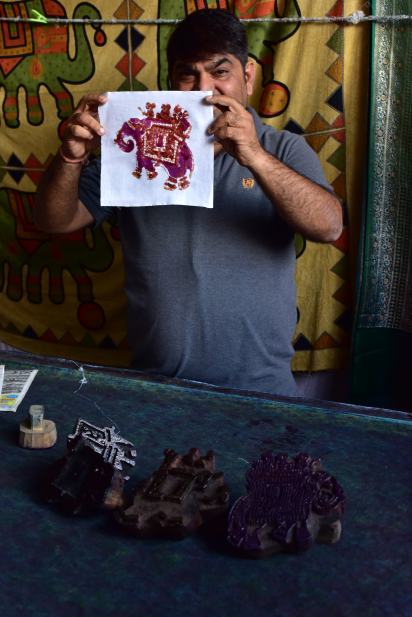
In Jaipur, we visited a traditional block-printing house. Block-printing is pretty much exactly what it sounds like: designs are hand-carved into blocks of teak, then dipped in ink and stamped onto fabric. Different colors can be layered in, and the design is dried then set permanently through a special chemical treatment.

NJB_5901

A hand-carved teak elephant block used for printing on fabric.

NJB_5906

Please do not trip over these.

NJB_5907

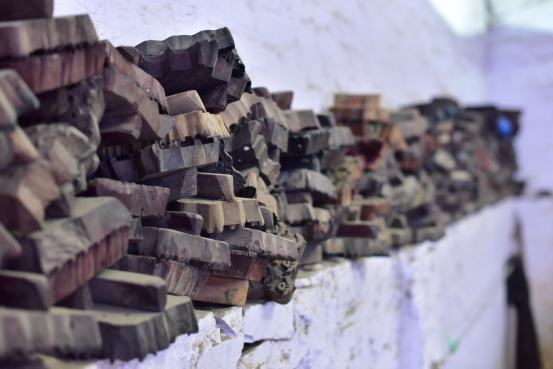
Hundreds of teak blocks in various designs.

Each block can only be used about two thousand times before the design becomes fuzzy and indistinct. That seems like a lot, but a single tablecloth might have three hundred or more imprints.

NJB_5899

Skilled artisans can layer in different colors within the same design.

NJB_5893

The fabric is placed in a chemical bath that alters some colors and sets the final design.

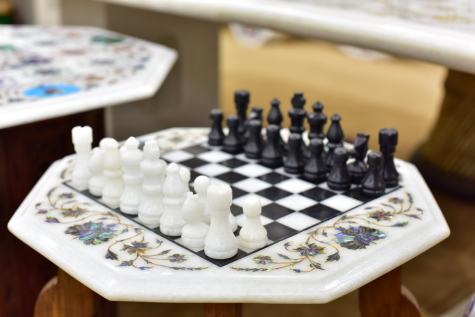
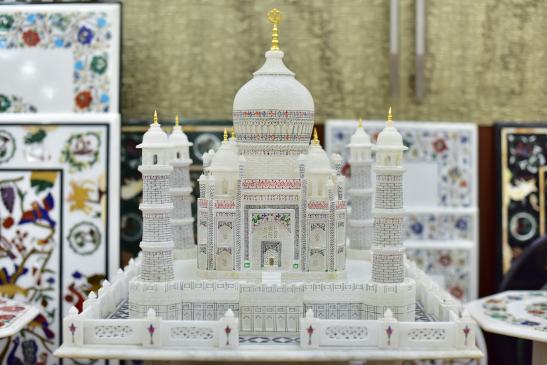
The city of Agra, in Uttar Pradesh, is known not only for India’s most famous attraction but also for its classical marble inlay work. This work involves carving shapes into marble, then filling those cut-outs with precisely cut semi-precious stones such as agate, turquoise, amethyst and onyx. Many of India’s significant monuments, including the Taj Mahal, showcase this craft; we were lucky enough to see it done up close.

NJB_5640

A marble inlay serving platter in its early stages.

NJB_5641.JPG

These artisans are carefully cutting semi-precious stones. The bamboo pole is attached to the wheel with string and operates the grinding wheel in a simple but ingenious manner. 

NJB_5643

Carving the design into marble; flowers and other natural motifs are traditional.

NJB_5644

Carved semi-precious stone pieces ready to be placed.

NJB_5646.1

This flower is made up of six individually carved pieces. The craftsmanship and attention to detail in this sort of work is staggering.

Like so many other traditional arts and crafts, marble inlay work, which requires thousands of hours of painstaking hand labor, is slowly being revived as people learn to value quality and authenticity again. The workshop we visited ships their marble pieces – some as large as tabletops! – all over the world.

NJB_5654

An array of elaborate pieces for sale in the attached shop.

NJB_5649

Can you imagine how many hours this took to make?

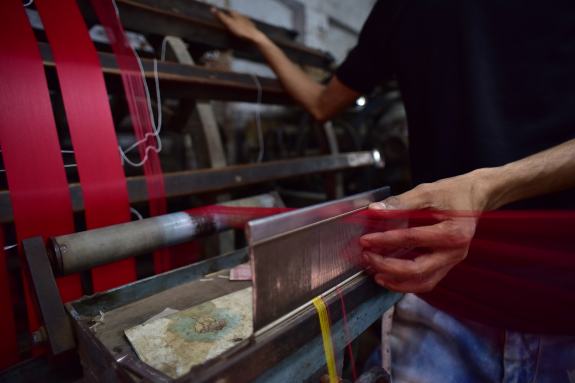
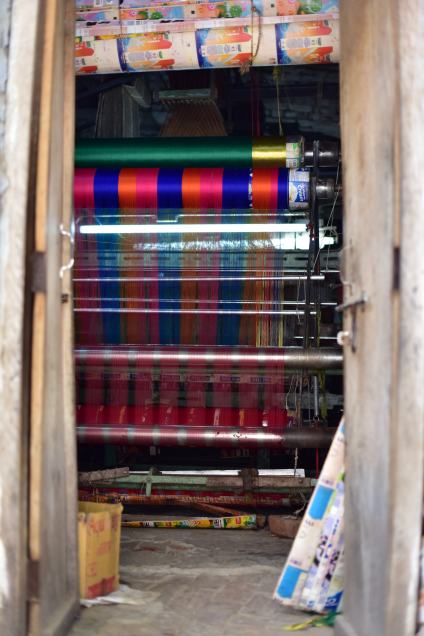
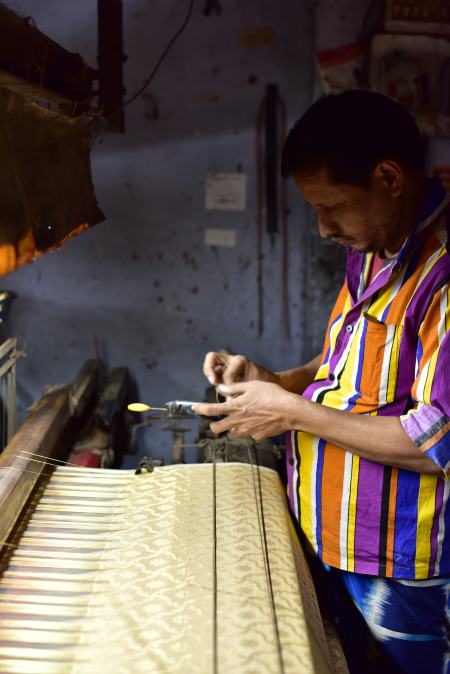
In the heart of Varanasi’s old city, thousands of people make their living spinning thread and weaving fabric into gorgeous, colorful saris, scarves and bedcoverings. The industry is centered in a rabbit warren-like area that houses both people and machinery. The clacking sound of the looms can be heard throughout the neighborhood.

NJB_4901

Thread spools awaiting the loom.

NJB_4909

Threading the loom is a complicated process.

NJB_4885

Almost every doorway in the old city offers a peek into Varanasi’s main industry.

NJB_4893

Even fabrics of a single color have such depth and texture.

NJB_4894

More elaborate designs might require numerous thread colors.

Interestingly, the Jacquard loom, which revolutionized the textile industry, was also an important precursor to modern-day computers. The loom, still in use today, holds specially-punched cards laced together in a specific sequence, allowing the creation of complicated designs in the fabric. Early computers received programming instructions from paper tape punched with coded holes. Now go win at your next bar trivia night.

NJB_4897

The noise of the looms operating was almost unbearable; of course, people still managed to live and sleep there.

NJB_4919

Finished shawls and scarves.

Travel is not always about crumbling monuments and boring history!


Dinner at a gurudwara

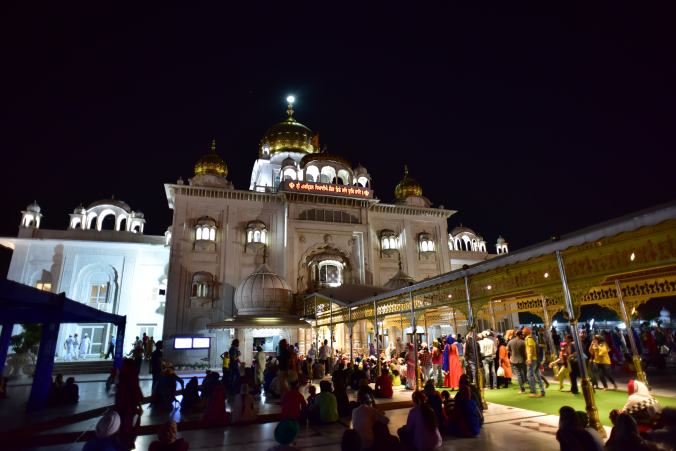
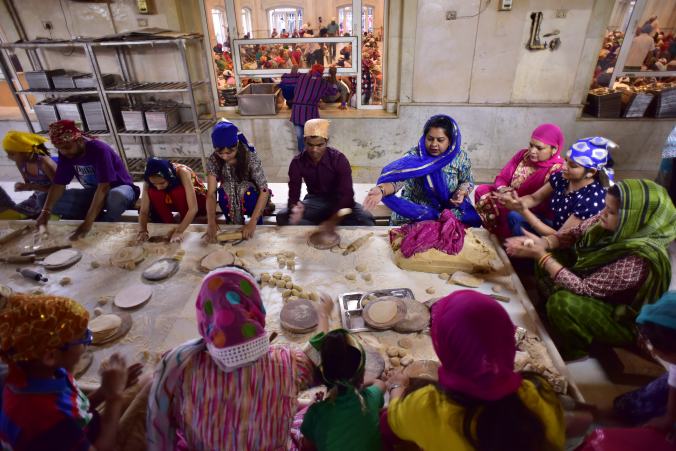
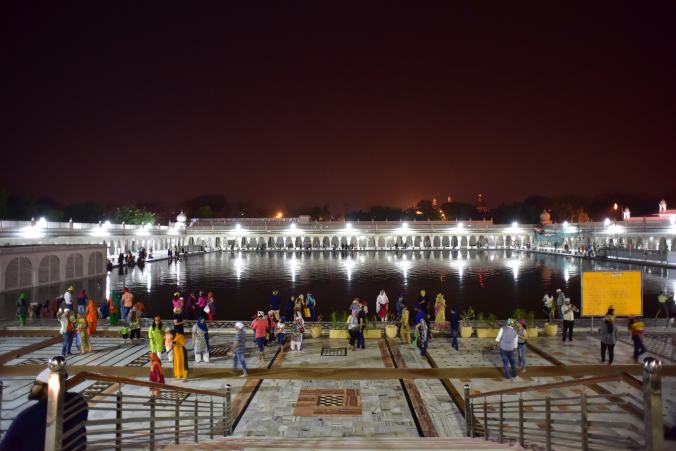
We’ve had a number of remarkable experiences in India, but one of our favorites so far has been the evening we spent at Gurudwara Bangla Sahib, a massive Sikh temple complex in Delhi.

NJB_5596.1

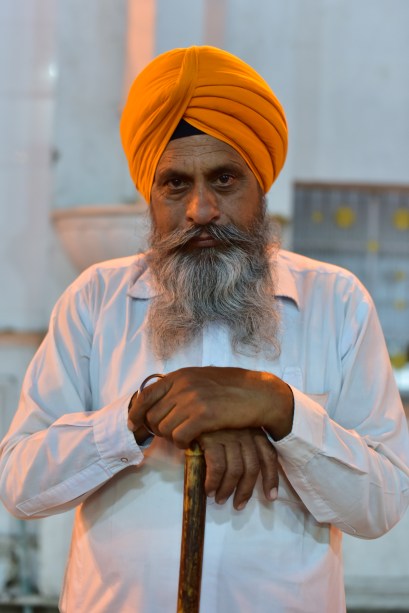
Male Sikhs are most recognizable by their distinctive turbans.

A gurudwara (or sometimes gurdwara) is a place of worship for Sikhs; the word literally translates as “door to the guru.” Sikhism is a fascinating religion; it’s one of the youngest major religions and has about 28 million adherents worldwide. It originated in India in the 15th century and broke from Hinduism primarily due to its rejection of the caste system.

NJB_5570

The gurudwara in Delhi sees a constant stream of visitors.

As we’ve mentioned, India is an intense place, and it’s easy to become overwhelmed rather quickly here. When your tour guide casually mentions that he’s taking you to dinner at a place that serves fifteen to twenty thousand meals a day, it doesn’t really engender a lot of confidence that the meal will be peaceful or calm. Yet that was exactly how the evening turned out.

NJB_5577

Making chapatis for the communal meal.

Everyone is welcome at a Sikh temple, whether or not you adhere to a specific belief system. All gurudwaras in the world have a langar hall, where vegetarian meals are served free of charge to anyone, sometimes twenty-four hours a day. No money ever changes hands, but it is understood that visitors to a gurudwara will participate in “selfless service” in exchange for their meal, which may mean assisting with cooking, cleaning, serving or any other necessary tasks.

NJB_5574

Chapati dough waiting to be rolled.

NJB_5578

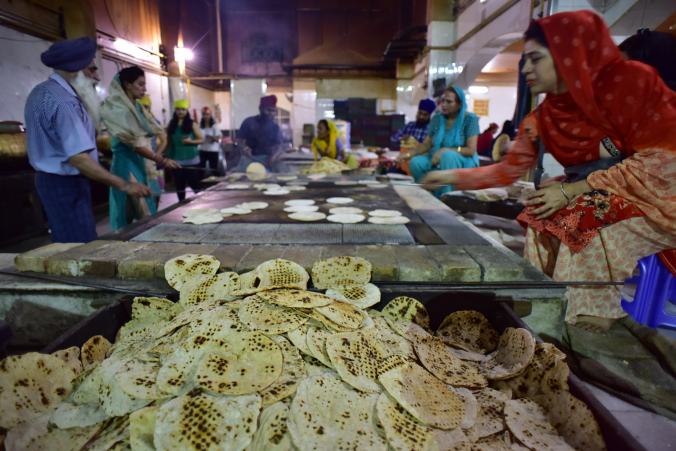
Cooking chapatis on the griddle.

NJB_5576

The Sikh gentleman on the left is supervising the cooking of the chapatis.

For our service, we sat down on the floor to roll out hundreds of chapatis, unleavened wheat flatbreads. It was a lovely experience to join the people already in the kitchen; though we don’t speak Hindi, no explanations were necessary. It was simple enough just to watch what others were doing and follow along.

NJB_5580

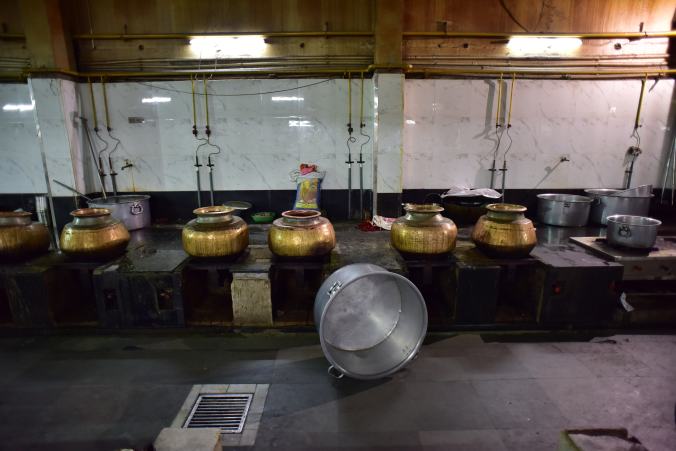
Rather a lot of food is produced in this kitchen.

NJB_5571

Vats of delicious dal bubbling away.

NJB_5582

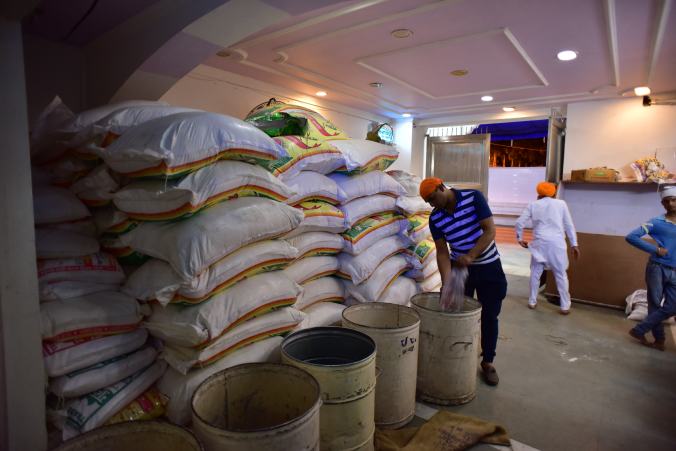
Bags of flour and rice in the temple’s pantry.

In addition to volunteering at the temple, most guests also provide an offering of food to the temple’s pantry. Fifty-pound bags of flour and rice line the walls, along with vegetables, lentils and anything else that can be used in the preparation of thousands of daily meals. All the food is strictly vegetarian, and nothing goes to waste.

NJB_5583

Cleaning the langar between meal shifts.

Around five hundred people eat in shifts in the langar hall; everyone sits on the floor. Guests queue outside in an orderly manner; in a country where patiently waiting in line doesn’t really happen, we were amazed at how smooth and orderly the process was.

NJB_5586

Seating the next round of guests in the hall.

As we filed in, we were given metal trays and shown where to sit. Our guide cautioned us against wasting any food; although you’re welcome to eat as much as you’d like, it is considered hugely disrespectful to take more than you will eat. We enjoyed dal, or spiced lentils, plus a vegetable curry, rice and of course our extremely well-made chapatis.

NJB_5587

Volunteers beginning the meal service.

Because there are always more people waiting to eat, everyone basically starts and finishes around the same time, then the hall is cleaned and readied for the next group. The efficiency and elegance of the entire evening was spectacular. The best part was looking around and knowing that the very rich and the very poor and everyone in between were sitting on the floor together, eating the same food. Truly a highlight of our visit to India.

NJB_5589

Regardless of gender, everyone is required to cover their heads in the temple. Scarves are provided in case you forgot yours.

After the meal, guests leave the hall, wash their hands and feet (as with most temples, shoes are left at the door) and enter the main temple for worship, chanting and fellowship.

NJB_5591

The temple also has a gorgeous reflecting pool.

One of the most interesting parts of our visit happened afterwards, when we were readying to leave. Our group was approached by a young woman with a small child who begged us for money – a very common occurrence in India, particularly for Western tourists. A Sikh immediately saw this and politely but firmly put a stop to it. Our guide explained that since everything is given for free at the temple – food, water, even a safe place to sleep, if necessary – they do not permit any begging on their grounds. This is extremely unusual in India.

NJB_5593

Sikh temples can be found all over the world, and a quick Google search will find one near you. If you have the opportunity, please visit your local gurudwara and spend a bit of time making delicious food in the kitchen, then sit down to enjoy it with friends and strangers alike. It is an experience not to be missed!

Interlude: Indian book club

(Forgive our extended absence, friends; we’re in rural India and Internet access is sporadic at best, and we need a really strong connection to upload photos. How about a suggested reading list to keep you busy until we return?)

Prior to a five-month trip, some people might well worry about how many pairs of shoes they can bring, or whether their hairdryer will fit in their backpack. Me? I stress about books.

NJB_2716.JPG

I am aware, dear reader, that there apparently exist magical devices powered entirely by witchcraft that allow one to carry dozens – nay, thousands! – of books on a tiny little computer. I, however, am an avowed Luddite and therefore refuse to succumb to the temptation of this modern silliness. I like books. Actual books. I like paper and covers and words printed on a page and I find e-readers inordinately difficult to, well, read. And I love reading so much that I don’t want anything to detract from my enjoyment. Plus, traveling in underdeveloped countries means on-demand electricity isn’t always a given, so what am I supposed to read once my e-reader fails? At least I have a battery-powered flashlight with which to read my paper books. And a lighter after that, although it’s admittedly a bit risky.
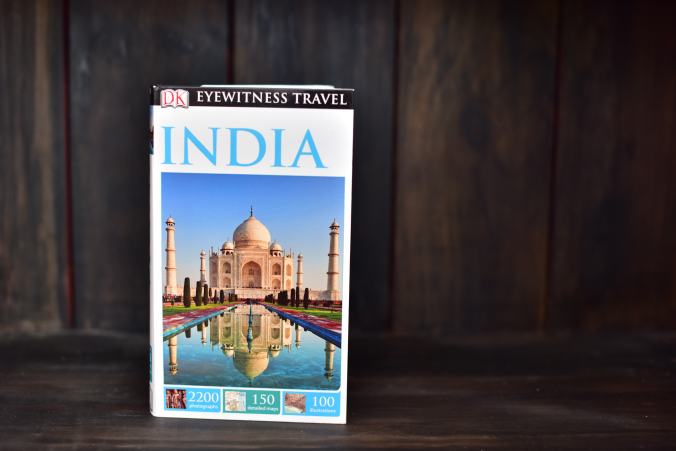
NJB_2294.JPG

So, I pack books. Lots of books…like ten, which takes up a seriously ridiculous amount of space in my backpack. And I pack with the expectation that those ten will maybe set me up for the first couple of months of travel but I’ll certainly be able to swap books out along the way…if in fact there is anyone else in the world who still reads books on paper. When we traveled New Zealand by campervan, I was thrilled to find that almost every campground we visited had a great book swap.

NJB_2714

This photo was taken in a used book store in Phnom Penh and not in our house, although the quantity isn’t far off. Also I haven’t labeled the shelves…yet.

In preparation for the trip, I scoured the hundreds of books I have at home to find some that were in some way relevant to where we’d be traveling. I read mainly modern fiction, but am pretty open-minded in my literary tastes and will read just about anything that crosses my path. I grabbed a couple on Japan, couldn’t find anything set in New Zealand, struggled with southeast Asia, and hit the mother lode with India. India-themed fiction has become quite popular in the past twenty years or so, and I already owned a good sampling.
NJB_2287.JPG

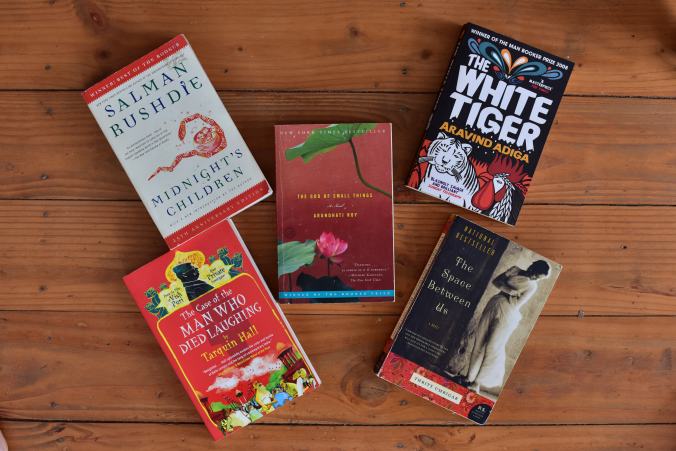
Without further ado and in no particular order, brief reviews of the selections chosen for my ongoing one-member Indian book club!

Shantaram, Gregory David Roberts

This book had been recommended to me repeatedly for years, and though it’s been on my bookshelf for some time I never got around to reading it. I grabbed it for this trip and am so glad I did. Shantaram is lengthy and twisty and convoluted and involves about ten thousand different characters, and yet the story grabs your heart and won’t let go. Bombay (now Mumbai) is its own vivid character in this book, and although Shantaram‘s claim as an accurate autobiography (is there such a thing?) has been repeatedly disputed, it absolutely holds up as a novel. I’m still thinking about this one months later, especially since we visited some of the book’s key locales while in Mumbai.

What Young India Wants, Chetan Bhagat

An unexpected find at a book exchange at our Mumbai hotel and by far the best book I read on India while in India. This book is intentionally simplistic: it’s a collection of very short non-fiction pieces by an Indian author who is essentially begging the youth of India to stand up and care about their country. India is without question the most complicated, difficult place I’ve ever traveled, and I’ll admit that I was often infuriated here. This book helped me to understand some of the country’s issues better, and I can only hope that young Indians are paying attention.

The Case of the Man Who Died Laughing, Tarquin Hall

Light, fluffy Indian detective fiction, in the vein of The Number One Ladies’ Detective Agency series. This is gentle social satire and although perhaps not particularly insightful, it gives a good feel for the scents, sights and – most importantly – the unrelenting heat of Delhi.

The God of Small Things, Arundhati Roy

There is nothing light and fluffy about this book. It is a stunning debut novel that took the author four years to finish, and it’s dense, layered, challenging and brutal. It won the Booker Prize…in my opinion, that committee loves books like this. Not an easy read; this one is firmly in the difficult-but-beautiful category.

The White Tiger, Aravind Adiga

Also a Booker Prize winner. I read this towards the end of our first week in India on a lengthy bus/train trip between Darjeeling and Varanasi, deep in the throes of severe culture shock. While the book’s first-person depiction of the sordid underbelly of India’s servant-to-master relationship intrigued me, I couldn’t get past the infuriating, hopeless, complicated frustrations of the country – mostly because we were experiencing them in real life one after another. And that was because I hadn’t yet learned how to see India for India, rather than what I expected India to be. I suspect if I read this book again, I’ll have a different opinion.

The Space Between Us, Thrity Umrigar

This is the story of two Indian women: a middle-class Parsi in an abusive marriage and her servant, who lives in a slum. At its heart, it’s a tale of class and status and the roles we’re born into, but it’s also about how women are treated as disposable property in much of the world (most definitely in India). I should have loved it, honestly, but it left me completely cold. I didn’t care about the characters and found the overwrought writing tedious. This book definitely didn’t represent the color and warmth of India for me.

Midnight’s Children, Salman Rushdie

In the U.S., at least, Rushdie is most famous for his controversial 1988 book The Satanic Verses and for introducing Americans to the concept of fatwa, which in his case was a Khomeini-issued death sentence that earned him British police protection after numerous failed assassination attempts. Midnight’s Children was released in 1981 and won Best of the Booker twice, which is pretty remarkable. Like all Booker Prize winners I’ve read (see above – maybe the committee really likes books set in India?), this one is complex and messy and confusing – like India itself – and just a huge, broad tale of a man and his beloved country. Midnight’s Children is considered magical realism, and Rushdie’s writing style took a bit for me to get into – I had to work at this one more than I usually do when reading. (It would help greatly to have a working knowledge of Indian history since Partition to assist in reading this book; I didn’t and it was more difficult because of that.) Ultimately, a complicated love letter to a complicated country.

Atlas Shrugged, Ayn Rand

Not Indian-themed, obviously, but I’ve read it numerous times and have taken – and given away – copies on all of my big trips. If you’re reading this in an airport or other public venue, I can almost guarantee you’ll be approached by someone who wants to discuss it, which has happened to me on more than one occasion. Really, there isn’t anything else to say about this one that hasn’t already been said. It is a love-it-or-hate-it manifesto and it’s about a thousand pages. Please don’t cheat and watch the film.

On the to-read list for when we return: The Things They Carried and A Rumor of War. I’ve realized how little I know about the Vietnam War, and visiting Vietnam has made me exceptionally curious to learn more.

Have any book recommendations? I would love to hear them, so please share!

P.S. If you’re an avid reader (and live in the U.S. – sorry) and you’re not a member of this site? Get there now.
Tea party

After water, tea is the most-consumed beverage in the world. It is produced in forty different countries in Asia, Africa and South America; China is the world’s largest tea grower, followed by India.
NJB_4728

The eastern Himalayan range as seen from Tiger Hill, Darjeeling.

NJB_4820

Recognize that famous red circle and blue bar logo?

India is particularly famous for its Darjeeling and Assam teas, from the regions of the same names. We visited Darjeeling, which sits at close to 7,000 feet and was a famous “hill station” during the colonial era.

NJB_4645

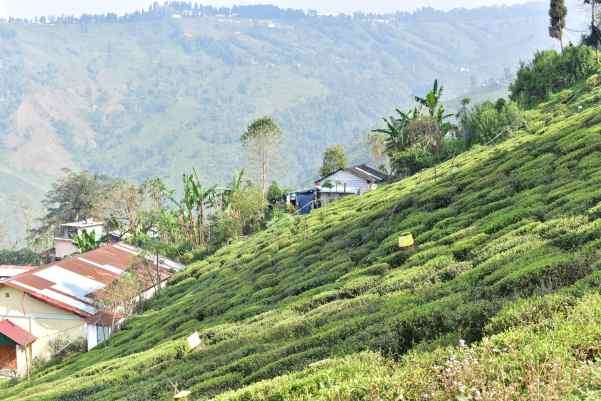
Tea plantation, Darjeeling.

In Darjeeling, tea is grown on steep slopes like these. Pickers – always women – harvest tea leaves into bamboo baskets they carry on their heads or backs. The pickers are paid about $2 a day for a minimum of ten hours of work. Leaves are harvested no matter the weather; the flush refers to the season when the tea was harvested. We visited during first flush, which is the first time the plant is harvested after its winter dormancy and produces the most flavorful and sought-after tea.

NJB_4643.1

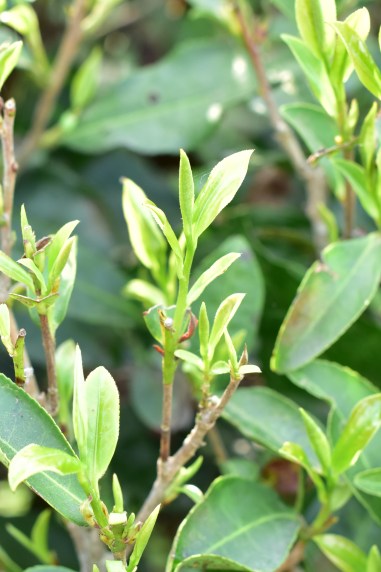
Camellia sinensis, or tea plant.

All true tea – white, green, oolong and black – comes from the leaves of the camellia sinensis plant, an evergreen shrub native to Asia. Herbal teas, like mint, chamomile or lemongrass, are technically tisanes and not teas since they contain no camellia sinensis. Once a tea bush is healthy and established, it can produce healthy leaves for about eighty years.

NJB_5237

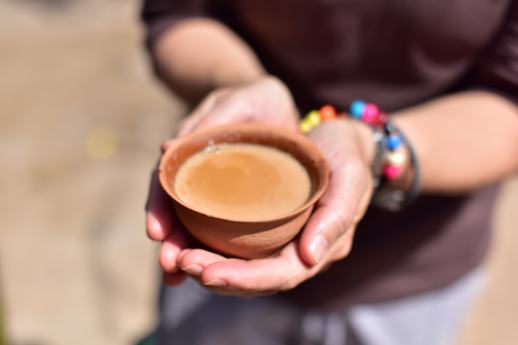
On the street, chai is sold everywhere in tiny terra cotta cups for 10 rupees (about 15 cents). After drinking, the cups are smashed on the ground.

India is famous for its chai tea, which is black tea blended with fragrant spices like cinnamon, cardamom and cloves, and served hot, milky and sweet. On the trains, chaiwallahs prowl the carriages selling drinks to passengers. Sometimes you even get little cookies, too!

NJB_4568

As with any agricultural crop, monitoring temperature and rainfall is paramount.

NJB_4578

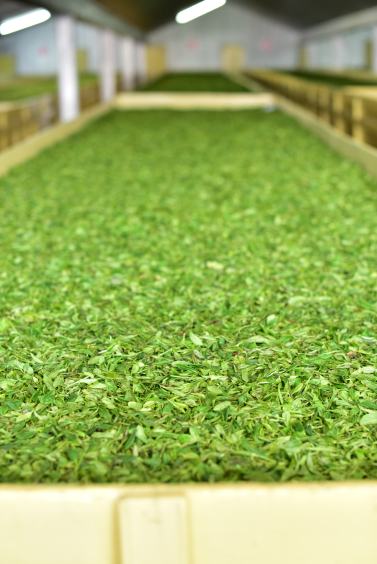
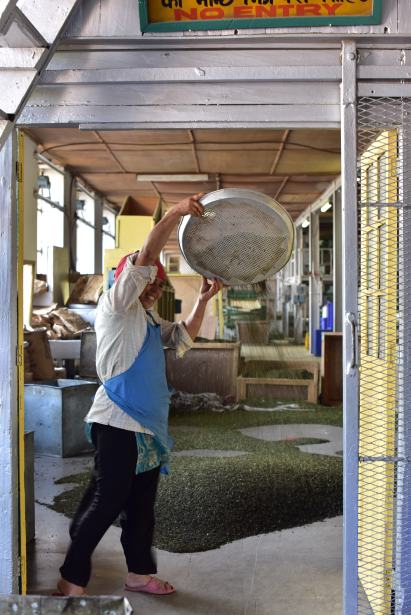
After harvesting, the green tea leaves are “withered” to reduce moisture.

The difference in teas simply comes from how it’s processed. White tea is the most expensive and only comes from the very best tips of the plant. Green tea isn’t fermented, leaving it delicate and soft; both black and oolong teas are fermented, which gives them a stronger flavor. True tea will always contain at least a small amount of caffeine; the amount depends on how the tea was processed and fermented. Herbal “teas” will only contain caffeine if it’s been added in.

NJB_4580

The tea leaves are exceedingly delicate before they’re dried and rolled.

NJB_4571

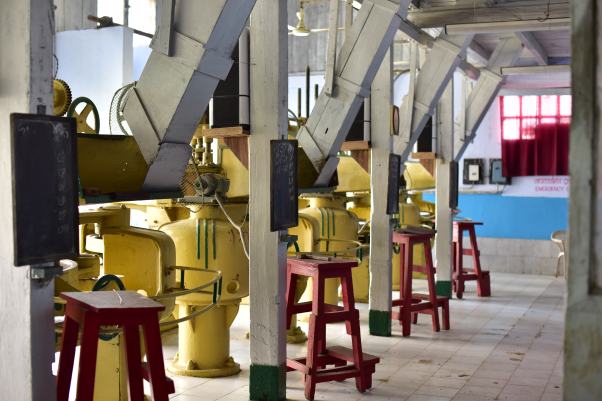
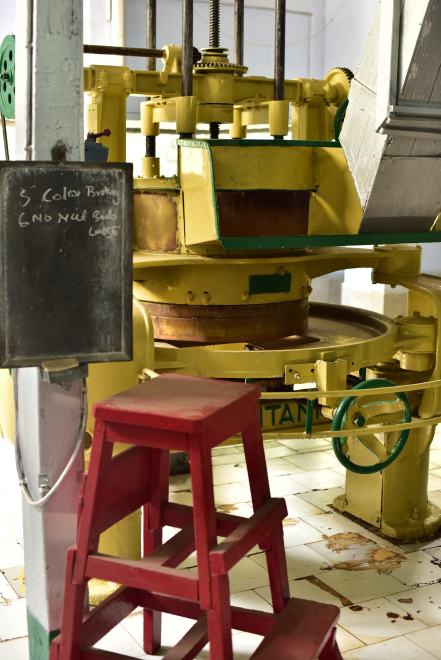
Withered leaves are funneled into rolling machines.

NJB_4584

The rolling machines crush the dried leaves to start the oxidation process.

The Darjeeling region is famous for delicate black teas that are traditionally served without milk or sugar. Because these teas aren’t as strong or tannic as Assam teas, they can be enjoyed straight. Darjeeling isn’t actually that big and produces a relatively small amount of tea; it’s common to find tea labeled as “100% Darjeeling” when it’s simply lower-grade tea from elsewhere in India. As with places like Champagne or Stilton that also produce unique foods or drinks, the name itself is a valuable brand and one that’s often misappropriated.

NJB_4570

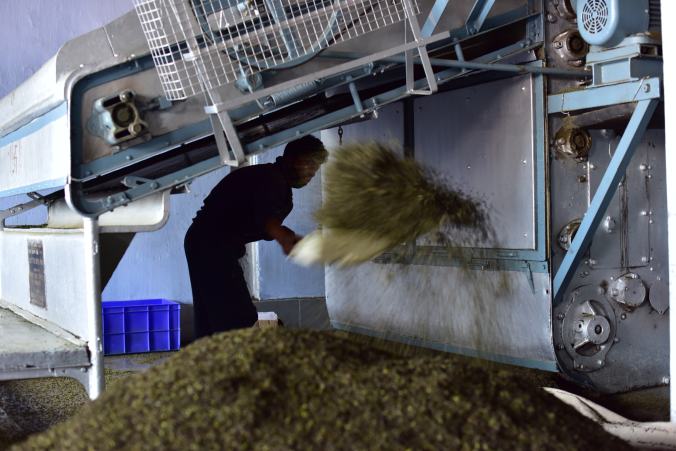
The tea is placed into drying machines to remove remaining moisture.

NJB_4609

Moving the dried tea.

NJB_4593

NJB_4595

NJB_4623

The dried tea is sifted and graded.

After the tea has been dried and sifted, it’s separated into grades of loose tea and “tea dust,” for bagged tea. Tea purists will always opt for loose tea; it is definitely of much higher quality than bagged tea. There is no arguing the convenience of tea bags, however.

NJB_4614

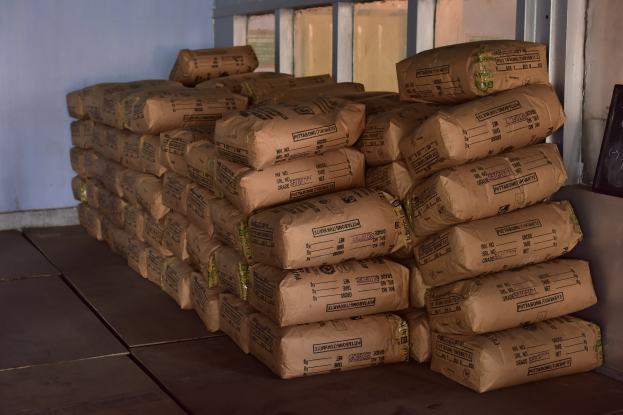
Finished tea in linen bags.

True tea aficionados will swear that you must use exact measurements when brewing tea, such as two grams of tea for eight ounces of water. Like cooking, however, I believe that what matters most is your own palate. Start with the professional guidelines and adjust from there to find out what you like best – I prefer my tea much stronger than most “experts” recommend, so that’s how I drink it. Ultimately, it’s your tea and you should drink it the way you like it.

NJB_4588

Loose tea ready for transport.

NJB_4629

NJB_4628

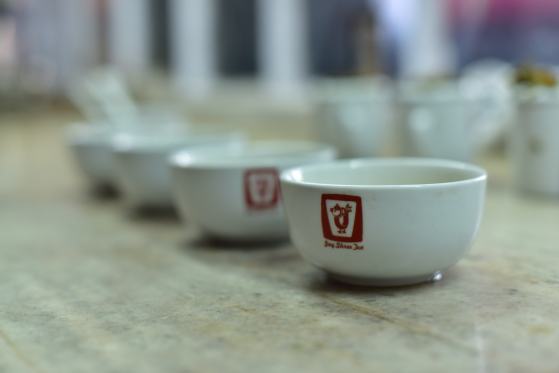
Tea tasting.

Tea is without question one of the world’s healthiest beverages (when it’s not loaded with sugar, obviously!) and Americans are slowly starting to explore the range of delicious teas available. Interested in learning more about teas and how to taste properly? Try here, here or here!


Kolkata flower market

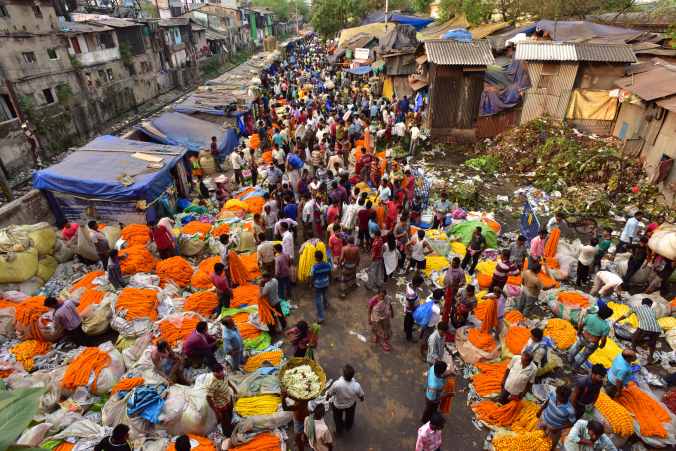
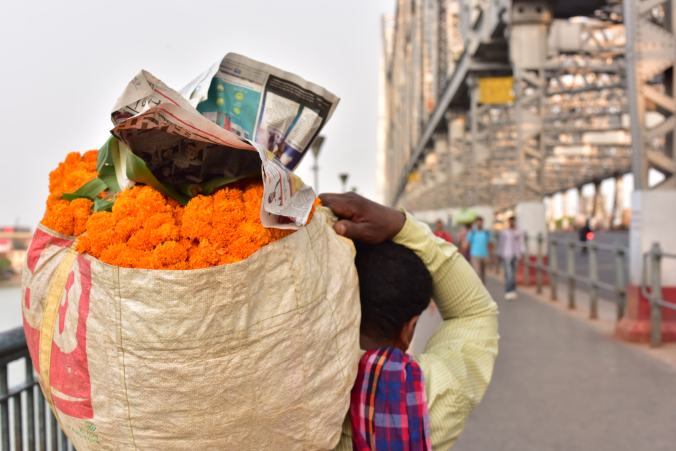
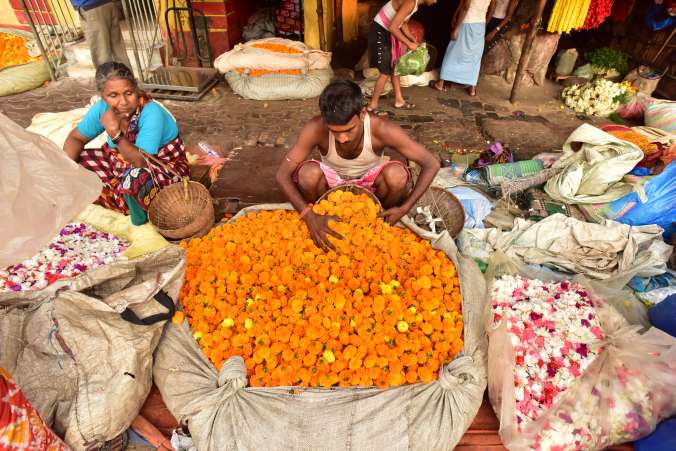
Early on the morning of our first full day in India, we took a tuk-tuk to Kolkata’s wholesale flower market, near the city’s famed Howrah Bridge. What a bold introduction to the country! Flowers arrive around sunrise each day and are sold by the kilo to retailers who then resell the blossoms for weddings, temple visits and puja ceremonies.

NJB_4098

Kolkata’s flower market as seen from Howrah Bridge.

NJB_4118

Making a delivery.

NJB_4087

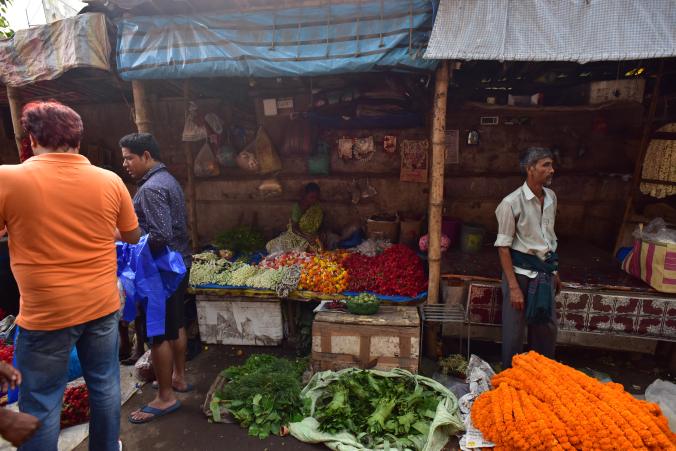
Many of the market’s vendors also live in their stands. 

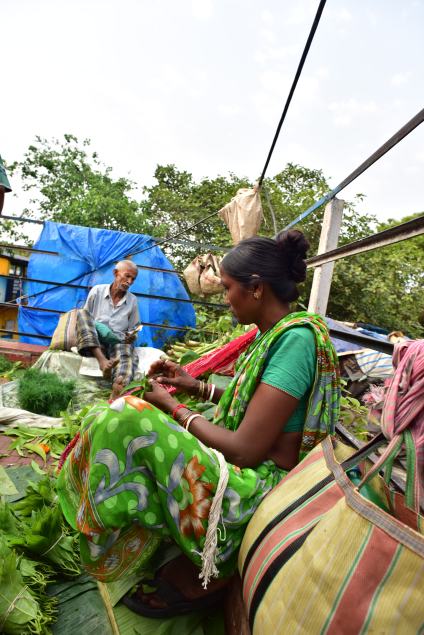
NJB_4086

A rare female vendor selling fresh greens for cooking.

The market is almost exclusively male; we saw very few women. As in most parts of India we’ve traveled – except in the larger cities – women remain largely behind the scenes, caring for the home and the children.

NJB_4113

Let the haggling begin.

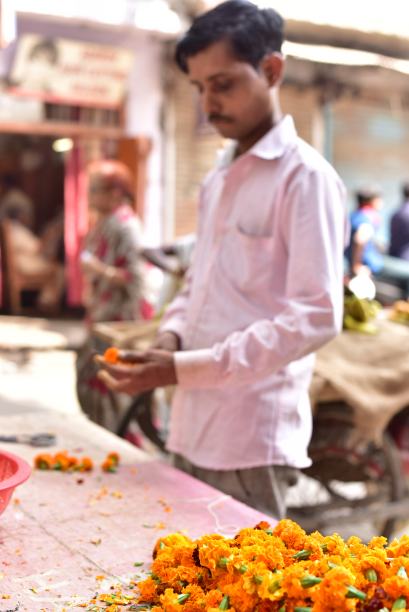
Marigolds are the primary flower sold at the market. The Portuguese introduced marigolds to India in the 1600s, and they’re now ubiquitous at all sort of ceremonies. Their rich shades of saffron and gold dominate the scene.

NJB_5412

NJB_5410

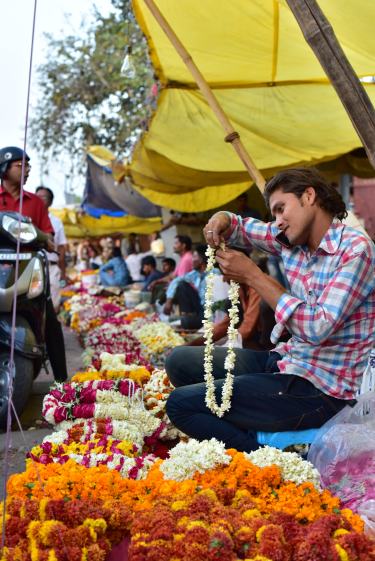
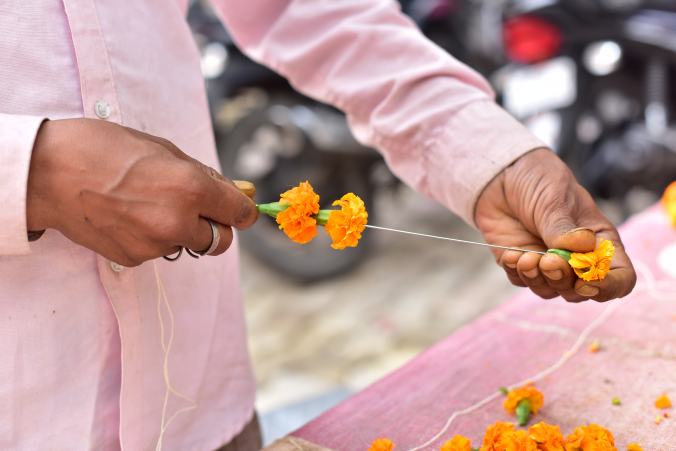
Stringing a marigold garland.

Marigolds now bear enormous cultural significance here; the blossoms are threaded onto string and used as temple adornments and offerings. They’re also made into necklaces and given as gifts to welcome honored visitors, similar to Hawaiian lei tradition.

NJB_4076

The white garlands are made of jasmine flowers, and they smell absolutely amazing.

NJB_4082

Immense quantities of flowers are sold every single day; the market operates around the clock.

NJB_4089

Women negotiating prices with the seller.

NJB_4092

Loose blossoms are sold by the kilo.

NJB_4088

NJB_4129

NJB_4101

NJB_4110

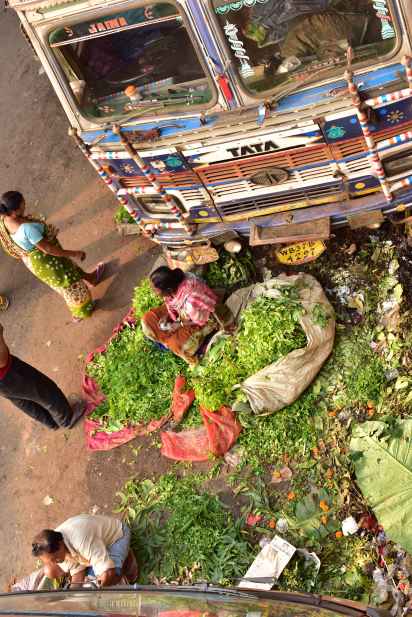
Unsurprisingly, a market like this generates a lot of waste.

NJB_4999

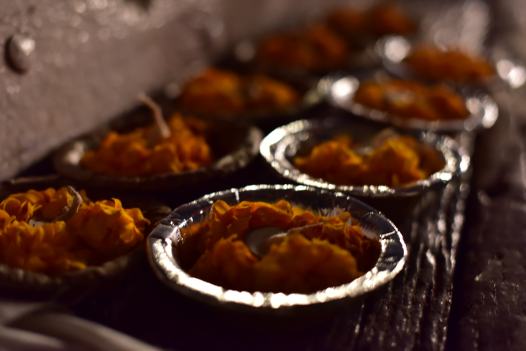
Marigold blossoms are used in offerings like these aartis, which are set alight and floated on the Ganges.

NJB_5415

The streets of India are filled with small altars; shops selling flower offerings are always nearby.

Like everything else in India, the market was loud, hot, chaotic and messy…but completely worth a visit!