You can pickle that

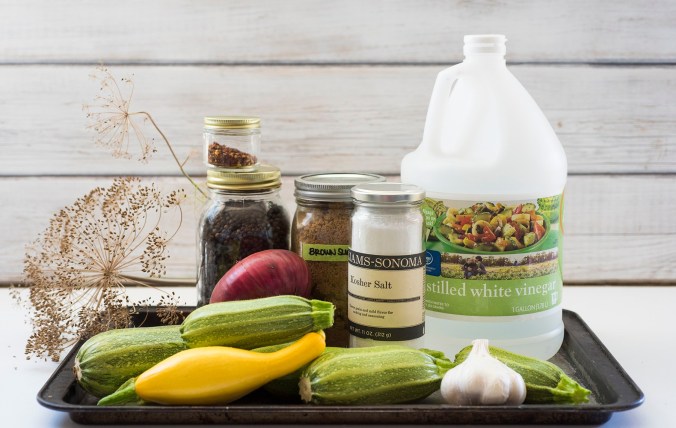
Are you swimming in zucchini and other summer squashes right now? We are, and grateful for it; if not for squash and kale and basil, I wouldn’t have grown much of anything this season. But what to do with all that zucchini, once you’ve grilled it in thick slices and tossed it with pasta and made overly-sweet not-at-all-healthy zucchini bread and so on? Those plants keep producing, even the surprise volunteers that showed up in the potato towers and the compost pile. Well, you could pickle that.

Canning 02 sml

What to do when the zucchini are threatening to take over.

The Quiet Farm household isn’t a huge fan of traditional cucumber dill pickles. I’ve tried them all the ways over the years – even traditional barrel fermentation, which meant that I once dumped five gallons of moldy, slimy cucumbers and their brine into our overwhelmed compost pile back at our old house in Denver – and it’s never been something that we’ve loved. (One of my sacrosanct rules of preserving: only make what you’ll actually eat.) Our altitude means that canned vegetables have to be processed much longer in a boiling water bath so pickles are almost always soggy; limp, overcooked cucumbers aren’t my thing. Also, even though I adore sharp, acidic flavors, standard vinegar pickles are sometimes just…too much.

Continue reading

The FAQ Series: Tomatoes

People think of tomatoes as a summer crop – as in June and July summer. And perhaps you live in a Magical Land of Elves and Unicorns (hello, Florida and southern California!) where field-grown tomatoes are available virtually year-round. Here in western Colorado, however, field-grown tomatoes don’t come on strong until August and September – but of course all the food blogs and magazines are telling us that it’s now time for apple cider and winter squash and pumpkin spice everything. It’s a confusing period, this shoulder season.

heirloom-tomatoes-05-sml.jpg

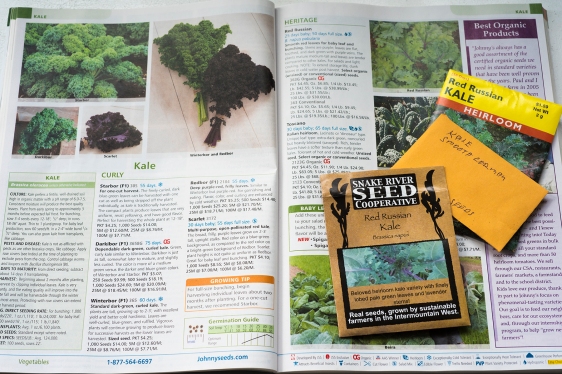
Seed packets offer plenty of information – and if it’s an heirloom, they’ll be sure to mention it.

There is no debate that tomatoes are the star of the garden. They’re by far the most popular crop for home gardeners as well as the biggest seller at farmers’ markets, and more tomatoes are grown each year than any other fruit in the world – including apples and bananas. There are more than twenty thousand known varieties of tomatoes, and new cultivars are developed every year.

Like the word organic, the word heirloom gets thrown around a lot in reference to tomatoes. But what is an heirloom tomato, exactly? And why do they cost five dollars a pound?

Continue reading

Small victories

In ten years of growing food, this is by far the most challenging season we’ve ever experienced. Between punishing hail, voracious deer, late snows, devastating winds, crafty rodents and ten million grasshoppers (I’m certain the locusts are on their way), we feel we’ve taken everything the world can throw at new farmers. We might be down, we might be bruised, but we’re not out yet. And in that spirit, how about we count up some wins?

Sunflowers 01 sml

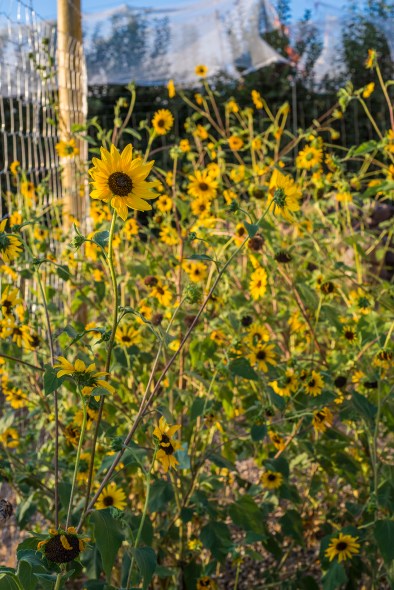
Thanks, sunflowers, for cheering us on with your bright faces.

Our farm is awash in sunflowers right now, not one of which we planted. They weren’t here last year when we moved in (historic drought?), but we’re so glad to see them this year. Hopefully they’ll continue to self-seed and their cheerful countenances will be part of every summer here.

Continue reading

Farm update: July 8

Hail 04 sml

This is not some sort of newfangled organic fertilizer.

Welcome to high summer. It’s hot, dry and crispy here at Quiet Farm…except when it’s hailing. We’ve had three significant hailstorms so far; the one pictured above did some pretty severe damage to our vegetables. Between the late start, our overwhelming whistle pig infestation and this extreme weather, we’ll be thrilled to harvest anything this season. Growing food is not for the faint-of-heart.

Continue reading

Farm update: June 10

Seedlings 02 sml

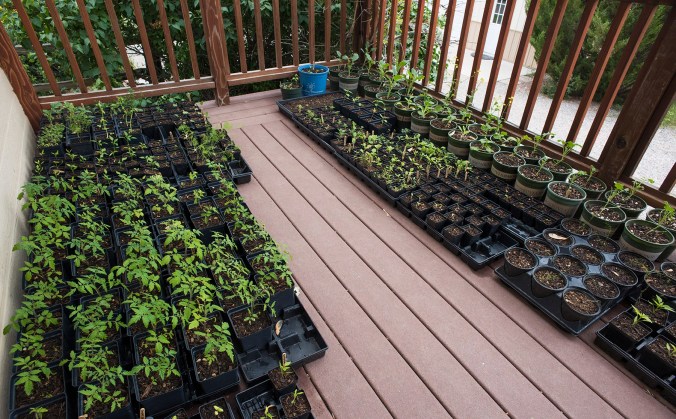
Still relatively safe on our west deck.

Why aren’t these plants in the ground, you say? Because our fence still isn’t finished. I know, I know…we’ve been going on about this game fence for what seems like decades; trust us, it’s twice as long when you’re actually building it. And we’re progressing, we really are – but it isn’t complete. And so these seedlings wait patiently on our sun porch, getting leggier and more rootbound every day. We’re glad this is a year focused on building infrastructure and learning, because if we actually had to harvest these crops on a specific schedule in order to make money, our season would already be shot. Most of them will thrive once they’re finally planted into raised beds, but some, like the pak choi, have already set flowers and are on their way to going to seed, so their life cycle is nearly complete. Had we known the pest pressure we’d face here, we would have started building the game fence last fall. Live and learn.

Whistle Pigs 01 sml

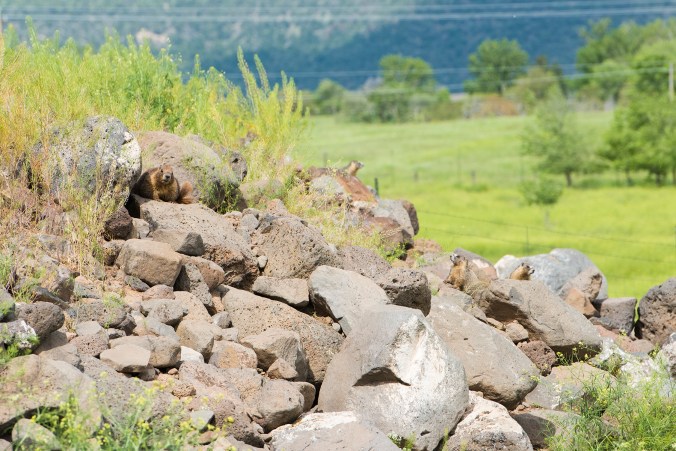
Look carefully…there are at least four visible in this photo. And probably four hundred hidden in the rocks.

Speaking of pest pressure, our resident whistle pigs have had a wildly successful breeding season. Not familiar with whistle pigs? They’re part of the large marmot family (Marmota monax), commonly known as ground squirrels, and they’re related to woodchucks, gophers and prairie dogs. They do actually whistle to warn their brethren of impending doom (like when we stroll down the lane to pick up the mail) and they live amongst our extensive rock collection. While they haven’t done much damage to crops yet (mostly because there aren’t any – see above), we do believe they’re orchestrating a stealthy and coordinated campaign to creep ever closer to the vegetables. They are exceptionally quick despite their awkward bulk, and they have lush, glossy pelts – perfect for a fashionable winter hat! Right now we’re offering a special: come collect one rock, and you get a free whistle pig. (Some trapping required.)

Continue reading

An ode to kale

Kale had a moment a few years back; it was suddenly – without warning – on every restaurant menu and in every recipe. It was as though kale had just been invented. Now, of course, it’s been supplanted as the trendy vegetable du jour – first by Brussels sprouts, and now by cauliflower. (I sincerely wish I’d invented “cauliflower rice;” the mark-up on those plastic packages – just for throwing it in a food processor! – is shocking.)

Kale 01 sml

There are lots more varieties of kale than just what you see in the supermarket.

Like most Americans, I first encountered kale when I worked in the catering industry. Curly kale is so often a garnish on salad bars and buffets that we think of it more as decoration than vegetable. But its very hardiness – its ability to sit out on a buffet table for hours on end no matter the temperature, without wilting, is precisely what makes it so valuable both in the garden and in the kitchen.

Continue reading

Farm update: May 6

It’s been mostly cool and rainy this week. We’re of course grateful for the moisture and lower temperatures, which might keep our snowpack in place longer, but the weather has literally put a damper on our excavator plans. Never mind, though; there are always plenty of other things to do!

Broad Tailed Hummingbird 02 sml

A male black-chinned hummingbird getting its sugar fix.

One of our most successful ventures recently has been installing hummingbird feeders around our house. We’ve been utterly astounded at the sheer number of hummingbirds that have appeared, including both the black-chinned and broad-tailed varieties. They’ve apparently informed all their friends that the bar is open!

Continue reading

Farm update: April 29

San Juans 00

Spring is truly here and the Quiet Farm project list expands daily! The weather has been unusually warm, so much so that everyone is concerned about our wonderful mesa snowpack melting too quickly and flooding the creeks. This sunny (and windy) week alone, we received deliveries of soil, lumber, fencing and concrete. We hauled railroad ties, hefted 80-pound bags of Quikrete, wheelbarrowed soil, hammered in T-posts and more. Our farm muscles are coming along nicely, and we’re trying hard to remember to apply sunscreen and drink enough water. When people say farming is hard work, they aren’t kidding – especially when you don’t yet own a tractor.

Continue reading

How to grow microgreens

We’re still firmly in winter’s icy grip here on Colorado’s Western Slope, and there’s no better cure for spring fever than growing something indoors. Let’s learn how to grow microgreens!

Microgreens 01 sml

Microgreens sound fancy and expensive, but really they’re just tiny versions of things we already eat, like kale, radishes and beets. They are packed with nutrition, super flavorful, quick and easy to grow with no special equipment needed and absolutely gorgeous on the plate. What more could you ask from an indoor crop?

Continue reading