How to save the world

Last Friday, millions of people around the world marched as part of a “global climate strike.” The march was intended to draw world leaders’ attention to the climate crisis in advance of the U.N. General Assembly taking place this week in New York City. While the sight of millions of mostly young people taking to the streets to make their voices heard is heartening in theory, teenagers in expensive sneakers carrying smartphones and pithy signs aren’t going to change the perilous trajectory we’re on.

Despite the fact that we are by far the world’s largest consumer and by extension the world’s largest polluter per capita, the U.S. is the only country in the world still debating the very existence of climate change. While other countries have their heads down working to find solutions, we’re still arguing over whether this is actually happening, and if so whose fault it is. (Spoiler alert: ours.) This disparity will be on full public view this week at the U.N.; once again, we’ll look like idiots on the world stage, a role in which we’re becoming increasingly comfortable.

Here’s the painful truth: we can’t protest the idea of large corporations destroying the planet, because we are the reason those corporations exist. If we didn’t buy their products – if we didn’t upgrade our iPhones every year, if we didn’t rob each other at gunpoint for thousand-dollar puffer jackets, if we didn’t accept and then dispose of two million plastic bags per minute – these corporations wouldn’t be able to plunder the planet. We are the problem, and by that logic we also have to be the solution.

Mental health professionals have reported a sharp uptick in the number of people seeking treatment for depression related to the environmental catastrophe we’re facing. It’s a massive, complex problem, and it’s easy to feel hopeless when confronted with its scale. On a personal level, I’ve long since graduated from severe eco-anxiety and now find myself teetering on the cliff of abject climate despair. I don’t think we’re going to be able to fix this, but we can’t choose to do nothing and watch the world implode around us. With that in mind, here are five things we can implement immediately that might just make a difference.

Continue reading

The FAQ Series: Tomatoes

People think of tomatoes as a summer crop – as in June and July summer. And perhaps you live in a Magical Land of Elves and Unicorns (hello, Florida and southern California!) where field-grown tomatoes are available virtually year-round. Here in western Colorado, however, field-grown tomatoes don’t come on strong until August and September – but of course all the food blogs and magazines are telling us that it’s now time for apple cider and winter squash and pumpkin spice everything. It’s a confusing period, this shoulder season.

heirloom-tomatoes-05-sml.jpg

Seed packets offer plenty of information – and if it’s an heirloom, they’ll be sure to mention it.

There is no debate that tomatoes are the star of the garden. They’re by far the most popular crop for home gardeners as well as the biggest seller at farmers’ markets, and more tomatoes are grown each year than any other fruit in the world – including apples and bananas. There are more than twenty thousand known varieties of tomatoes, and new cultivars are developed every year.

Like the word organic, the word heirloom gets thrown around a lot in reference to tomatoes. But what is an heirloom tomato, exactly? And why do they cost five dollars a pound?

Continue reading

Small victories

In ten years of growing food, this is by far the most challenging season we’ve ever experienced. Between punishing hail, voracious deer, late snows, devastating winds, crafty rodents and ten million grasshoppers (I’m certain the locusts are on their way), we feel we’ve taken everything the world can throw at new farmers. We might be down, we might be bruised, but we’re not out yet. And in that spirit, how about we count up some wins?

Sunflowers 01 sml

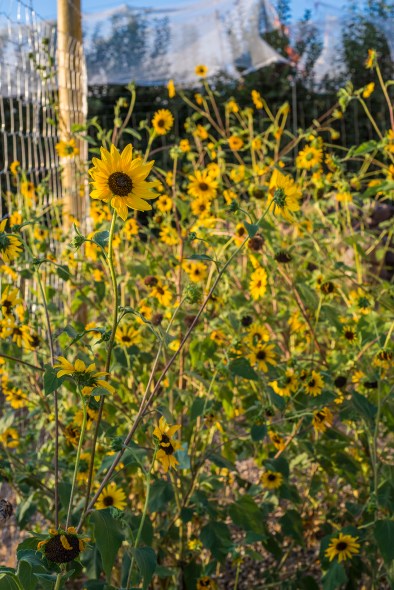
Thanks, sunflowers, for cheering us on with your bright faces.

Our farm is awash in sunflowers right now, not one of which we planted. They weren’t here last year when we moved in (historic drought?), but we’re so glad to see them this year. Hopefully they’ll continue to self-seed and their cheerful countenances will be part of every summer here.

Continue reading

Coming home to roost

One of the many reasons we were drawn to Quiet Farm was its collection of rather ramshackle yet usable outbuildings. Since keeping chickens for eggs (and entertainment) was always a top priority, renovating the chicken house was definitely high on our project list.

Chicken House 01 sml

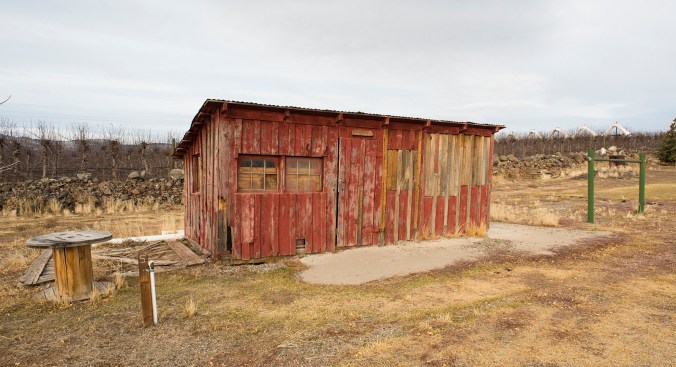
The ‘before’ photo, in bleakest winter.

Chicken House 02 sml

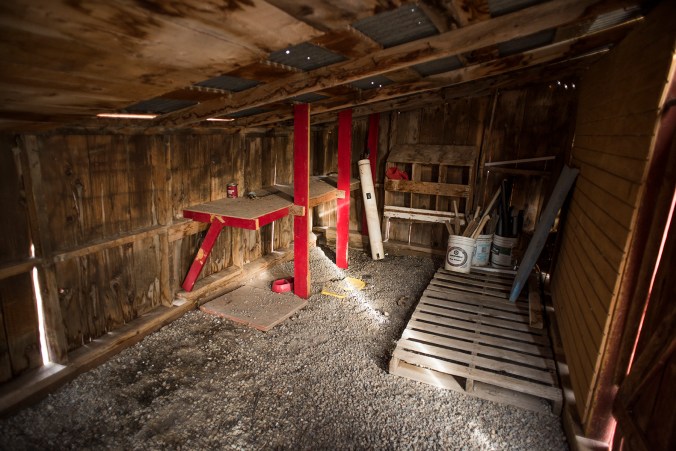
The original nest boxes on the far wall indicate that this may previously have been used as a henhouse.

Continue reading

The Farm Series: I-Guana Farm

As we’ve discussed previously, Quiet Farm is located in the “fruit basket” of Colorado. The Western Slope produces Colorado’s revered Palisade peaches, along with apples, cherries, plums, apricots, table grapes and wine grapes. Fruit grows so well here because the climate doesn’t experience the significant diurnal swings common on the Front Range. (In February 2018, the temperature in Denver dropped 72 degrees in forty hours.) Fruit trees, especially once they’re in flower, cannot survive extreme temperature shifts, so harvesting fruit on the Front Range is hit-or-miss. It’s hit-or-miss over here, too, as all farming is, but with a lot more hits than misses.

I-Guana Farm 03 sml

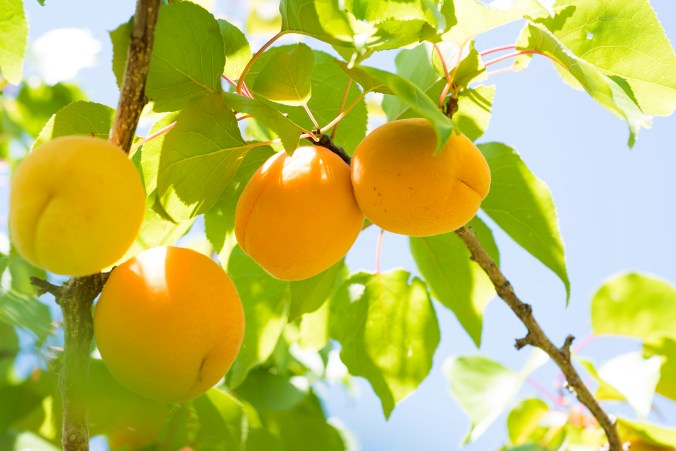
Last year – our first year as official Western Slope residents – we ate ourselves silly on local peaches, plums, cherries and apples. The apricots, though, were lost to a late spring freeze, so while a few orchards had a very small amount of fruit to sell, it wasn’t widely available and we missed out entirely. This year, between our record snowfall and ideal spring weather, the fruit growers in our area have a bumper crop of just about everything, with apricots no exception. We’re even seeing wild apricot trees, heavy with fruit, growing on roadsides around us. It’s been a banner year.

Continue reading

Lessons learned

Hello again, and please forgive us our recent absence. We’ve taken a small summer hiatus – not because we’ve actually been on vacation, but because for a period of time there we didn’t have many nice things to say about farming, and we didn’t want our space here to sound whiny and negative. We’re genuinely thrilled to be farming, even when we aren’t.

Hail 01 sml

One of early summer’s low points.

It’s been just under one year since we found Quiet Farm, and what a year it’s been. There have been highs and lows and successes and failures. And now that we’re one year wiser and can officially call ourselves farmers, we’re working hard on learning from our experiences. We always say that we’re allowed to make as many mistakes as we want, but we have to make different mistakes. If we make the same mistakes over and over, then we obviously haven’t learned anything.

Continue reading

Farm update: July 8

Hail 04 sml

This is not some sort of newfangled organic fertilizer.

Welcome to high summer. It’s hot, dry and crispy here at Quiet Farm…except when it’s hailing. We’ve had three significant hailstorms so far; the one pictured above did some pretty severe damage to our vegetables. Between the late start, our overwhelming whistle pig infestation and this extreme weather, we’ll be thrilled to harvest anything this season. Growing food is not for the faint-of-heart.

Continue reading

Deer diary, vol. 2

Game Fence 08 sml

Tools at the ready for constructing an H-brace.

Early this year, Colorado Parks and Wildlife delivered our game fencing materials. They also included a thin pamphlet with a few helpful suggestions on how to construct said fence – not really what we’d call “instructions.” As we’d never built even a simple fence before, this meant a lot of time on the University of YouTube. Our game fence is nine feet tall and composed of wood posts, metal T-posts, two strands of grid wire fencing and three strands of barbed wire. That’s a lot just to keep deer out – and each component has to be installed separately.

Game Fence 14 sml

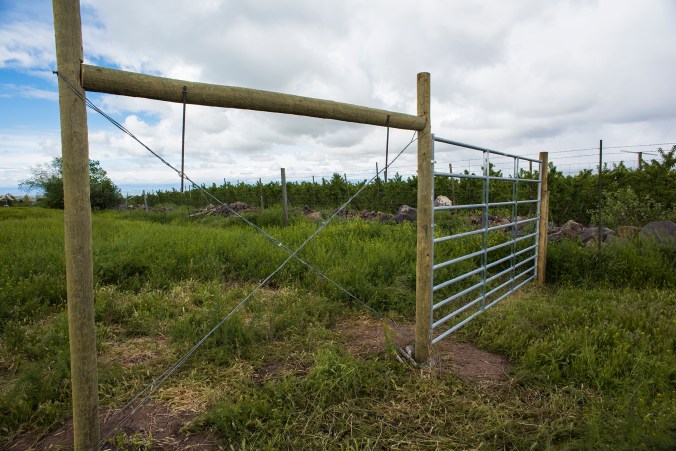
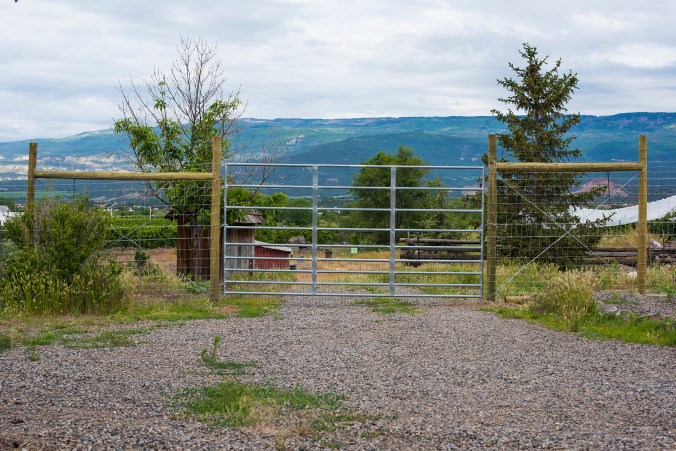
Once we’d set our wood posts in concrete, we went around building H-braces at corners. H-braces (seen above on the left and right sides of the gate) are required when the fence turns a corner to keep it supported. The H-braces seem relatively simple – you just notch the vertical posts, insert a horizontal post, then use massive nails (3/8 inch by 12 inches!) to secure the horizontal to the vertical. As with all aspects of this fence, though, this is simpler on paper than in reality. Notching the fenceposts required climbing on a rickety stepladder on very rocky and uneven ground and holding a reciprocating saw at an awkward angle while trying not to fall off the ladder. Not at all OSHA-approved.

Game Fence 13 sml

Four completed H-braces on either side of our corral gate.

With the posts successfully notched, we set about connecting the horizontal to the vertical. Driving the heavy, thick nails in proved to be yet another challenge. After hours of frustration, we finally bought an extra-long drill bit so we could pre-drill the holes for the nails. This was an important lesson learned: don’t try to do something the hard way if a power tool can make the task easier.

Game Fence 12 sml

Looking southwest at our pasture gate.

H-braces then have to be wrapped with nine-gauge wire in order to stabilize the posts. As with the nails, this was much easier in theory than in practice. The wire was delivered to us in huge coils which were absolutely unmanageable – no matter where you wanted the wire to go, it was set on uncoiling the wrong way somewhere else, usually slapping you in the face along the way. We each bear our fair share of fence scars.

Game Fence 15 sml

Using a come-along and a wood clamp to stretch the grid fencing.

Now that the H-braces are up and wrapped, the two strands of grid fencing have to be installed. We could have opted for one-strand fencing, but the fencing comes in 330-feet rolls and the two of us could barely lift one of the smaller rolls. So we chose to wrap two strands, which most small farms do. It takes longer, but it’s much easier for two people to handle.

We unrolled the coils along the fence line, then used a come-along and N’s very crafty wood plank clamp to stretch the fencing. It’s imperative that the fencing be as tight as possible, but because our posts aren’t exactly straight, we had to adapt a bit. We’ll call it “accounting for the curvature of the earth.” Once in place, the fencing was secured to the wood posts using thick staples, and to the T-posts using clips.

Game Fence 16 sml

Using the wood clamp and the ATV hook and cable to install the top row.

Installing the top row offered additional challenges, since we had to hold up hundreds of feet of fencing while stretching and then securing it. Our ATV’s hook and cable set-up helped a great deal here, as did some sturdy chains attached to our wood plank clamp.

Game Fence 20 sml

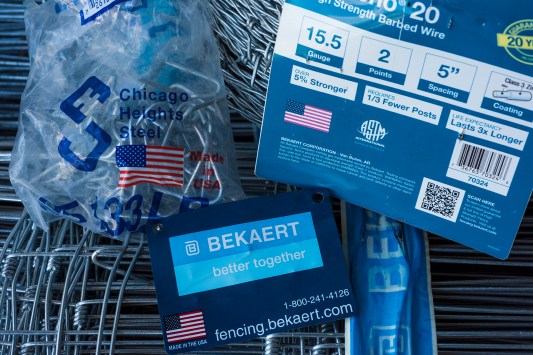
We were pleased (and surprised!) to find that all of our fencing materials were made in the USA.

Game Fence 18 sml

Waiting for barbed wire along the top and bottom.

Game Fence 17 sml

Nearly finished!

The complexity of the fence might seem like a bit much just for some deer…but we have watched these animals easily leap a six-foot fence from a standstill. The power in their strong legs and their lean bodies is remarkable, and the fence has to be nine feet tall to have any hope of keeping them out, especially when they’re moving at a full, panicked run.

Game Fence 19 sml

Dear deer: the Quiet Farm salad bar is officially closed. Go torment someone else.

Building our game fence is the most extensive, complex and difficult project we’ve tackled yet here on Quiet Farm, and we are so proud of the results. The fence isn’t perfect, but we did it ourselves for about one-tenth what it would have cost to hire a fencing company, and we learned so much along the way. This sense of accomplishment and self-sufficiency is why we’re out here.

Thanks for reading!


Farm update: June 10

Seedlings 02 sml

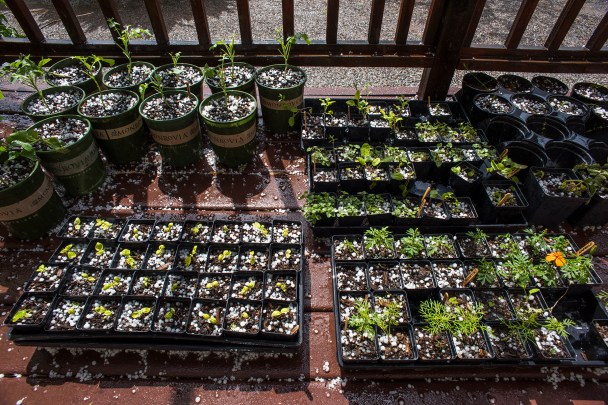
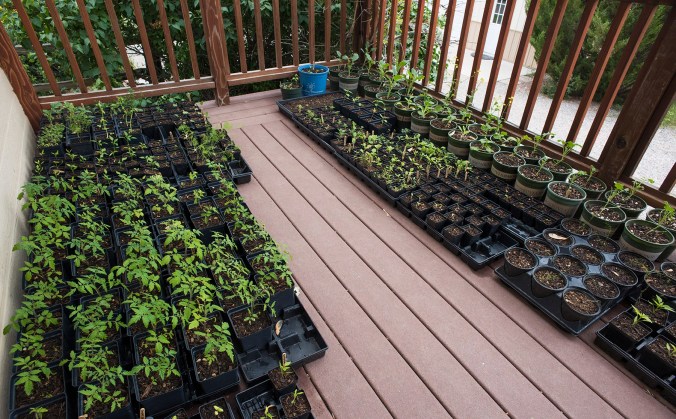
Still relatively safe on our west deck.

Why aren’t these plants in the ground, you say? Because our fence still isn’t finished. I know, I know…we’ve been going on about this game fence for what seems like decades; trust us, it’s twice as long when you’re actually building it. And we’re progressing, we really are – but it isn’t complete. And so these seedlings wait patiently on our sun porch, getting leggier and more rootbound every day. We’re glad this is a year focused on building infrastructure and learning, because if we actually had to harvest these crops on a specific schedule in order to make money, our season would already be shot. Most of them will thrive once they’re finally planted into raised beds, but some, like the pak choi, have already set flowers and are on their way to going to seed, so their life cycle is nearly complete. Had we known the pest pressure we’d face here, we would have started building the game fence last fall. Live and learn.

Whistle Pigs 01 sml

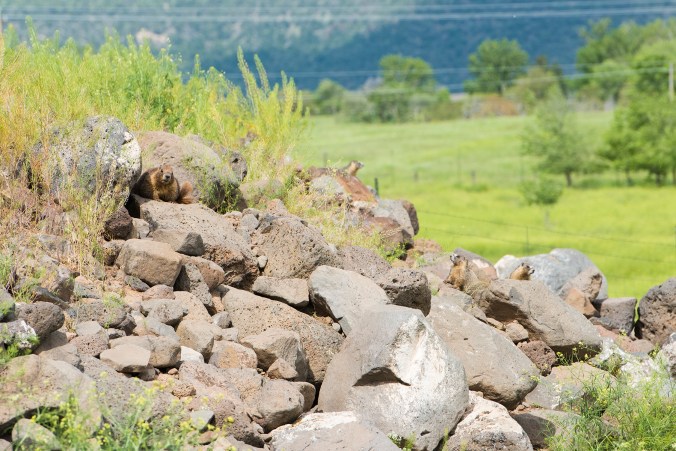
Look carefully…there are at least four visible in this photo. And probably four hundred hidden in the rocks.

Speaking of pest pressure, our resident whistle pigs have had a wildly successful breeding season. Not familiar with whistle pigs? They’re part of the large marmot family (Marmota monax), commonly known as ground squirrels, and they’re related to woodchucks, gophers and prairie dogs. They do actually whistle to warn their brethren of impending doom (like when we stroll down the lane to pick up the mail) and they live amongst our extensive rock collection. While they haven’t done much damage to crops yet (mostly because there aren’t any – see above), we do believe they’re orchestrating a stealthy and coordinated campaign to creep ever closer to the vegetables. They are exceptionally quick despite their awkward bulk, and they have lush, glossy pelts – perfect for a fashionable winter hat! Right now we’re offering a special: come collect one rock, and you get a free whistle pig. (Some trapping required.)

Continue reading