It is impossible to overstate the importance of the humble sheep in New Zealand. The famous Captain Cook first introduced sheep here in 1773; meat and wool, as well as numerous other byproducts, quickly formed the economic background of this young nation. Even today, New Zealand is well-known for its lamb and wool, and the oft-cited statistic that New Zealand has a lot more sheep than people (about 27 million to 4 million) still holds true, although the animal numbers have fallen dramatically in recent years. The worldwide introduction of synthetic fibers understandably had a massive impact on the wool industry.

One of the great joys of travel – especially on road trips – is stumbling upon something amazing that wasn’t in the day’s plans. We were on our way to camp on the beach at Clifton, in Hawke’s Bay on the east coast of the North Island, when we drove by Wool World. My head immediately filled with visions of a slick, American-style theme park devoted entirely to sheep, hopefully with a petting zoo, roller coaster and extensive gift shop. The reality was far different, and much better.

Clifton Station, Hawke’s Bay.

The dogs are coming…
Clifton Station (ranches in the U.S. are stations here) was founded in 1859 and has been run by the same family since. It encompasses about 2,000 acres on the east coast of the North Island. Despite the signage outside advertising shearing and herding demonstrations, Wool World is now only open for large groups of pre-booked cruise ship passengers. We got lucky, however, and walked up while a station hand was treating lambs in a gated paddock near the road. These lambs had just been taken off their mothers and were headed out to munch on fresh new pasture; the abrupt change in diet causes their delicate little lamb tummies to go a bit haywire, so they’re essentially given a pre-emptive antacid.

The station hand gave us free rein to walk into the old shearing barn, built in 1886 and still in use today. This barn is true living history and it was incredible to see the pride that this family takes in their property, their animals and their way of life. Places like these are becoming more and more rare, and recognizing the past is especially relevant because modern agriculture is changing so quickly. The opportunity to see this space will be one of the highlights of our trip to New Zealand.

Blade shearers in 1893 with shedhands and shepherds. The records indicate that 25,000 sheep were shorn in the shed that year.

Horse-drawn wool bales headed to the railyard for transport to Wellington or Napier.
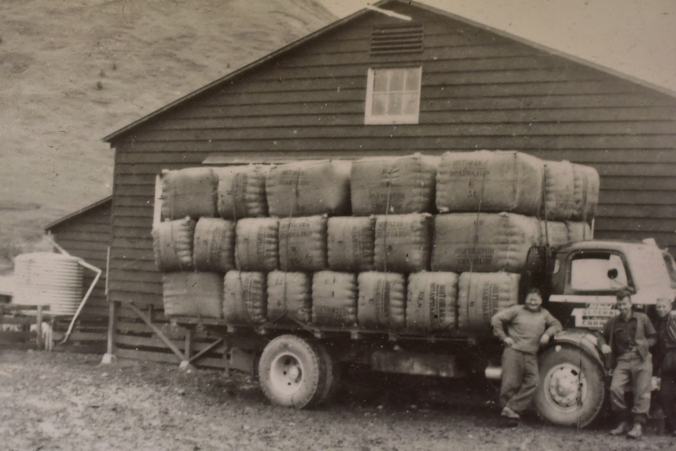
Bales of wool bound for a local wool sale.

Not much has changed in this woolshed since the late 1800s.

Shearing stalls.

Belt-driven machinery allowed multiple sheep to be shorn at one time.

Wool bales are stenciled with their station origin, destination, pack year and grade. Low-grade wool (and the sacks) were often used on walls for home insulation.
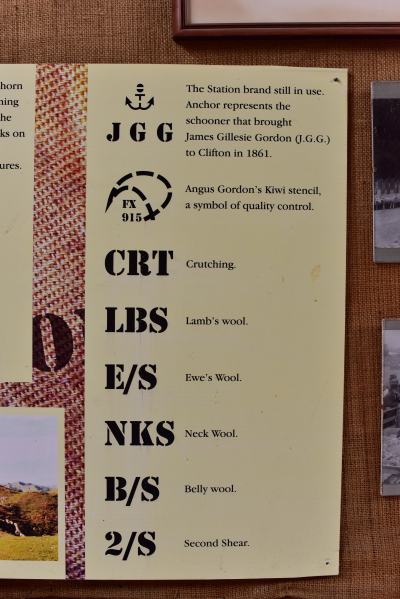
A helpful identification key for bale stencils.
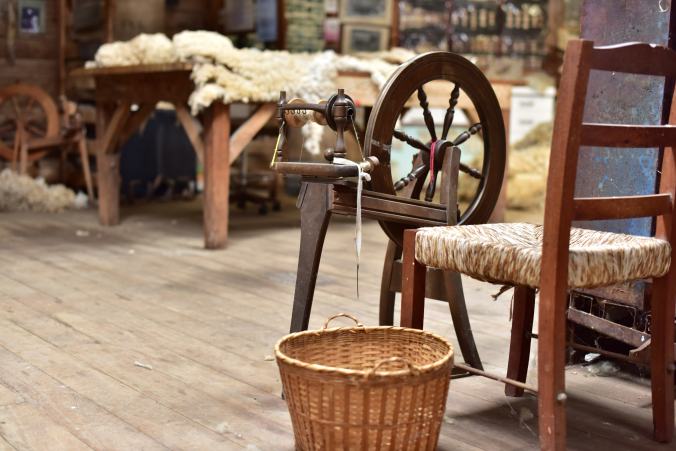
Ye Olde Spinning Wheel. Avoid at all costs, princesses.

If you should ever have the opportunity to see a herding demonstration, do not miss it! Watching the shepherd and the dogs run the sheep is truly remarkable.

 Finding Quiet Farm