Farm update: May 20

Hello friends, and how are things with you? We are quickly entering our busiest season on the farm, jumping between planting, irrigation and weeding, and are working hard on keeping ourselves physically and mentally healthy while still accomplishing our tasks. Here are a few recent images from the farm, if you’d like to see.

Plant ID is not tricky with this one.

The lilacs have nearly finished for the year, but the blooms and their scent were spectacular this season. We have primarily the classic pale purple flowers with a few white ones thrown in for good measure. While we have planted lots of things during our time at Quiet Farm, we cannot take any credit for the lilacs as all were planted before we found this place. They are such a welcome addition to our spring and we love their unmistakable scent as we go about our farm tasks. Do you have a favorite spring flower?

Continue reading

Farm update: October 26

Our first snowstorm arrived late last night, and with that, the 2020 growing season at Quiet Farm has officially concluded. Much of the past week has been spent preparing for this introduction to winter; though our skies will clear and temperatures will rise again later in the week, none of our annual crops will survive this cold snap. We’ve been threatened with hard freezes prior to this and have been lucky enough not to lose any plants; our season lasted far longer than expected. We’re hopeful that this early, wet storm will help the firefighters battling the numerous destructive wildfires currently raging across Colorado.

Flooding our pasture with snowmelt from the Grand Mesa.

We ran our final irrigation last week, then broke down most of our gated pipe so that we can repair any damaged gates and valves during the off-season. We have stellar water shares here at Quiet Farm, and thanks to N’s careful planning, we made our water last all season. This year was definitely a rebuilding year for our pasture, and we’re optimistic that our plans for next year’s irrigation run, which include reseeding, marking and thoughtful grazing by our herd, will yield even better results. Small farms are key to fighting climate change – if managed well, land like ours can absorb far more carbon than it emits. Establishing these “carbon sinks” across the country should be of highest priority; if this season’s devastating wildfires are any indication, the Rocky Mountain West has a tough road ahead.

Continue reading

One potato, two potato

Last year we planted potatoes for the first time and achieved a reasonable level of success for a freshman effort, though our part of Colorado isn’t at all suited for potato growing. To our south and east, however, you’ll find the San Luis Valley: the second-largest fresh potato-growing region in the country and justifiably famous for the crop. Their loose, sandy soils are much better for potatoes than our heavy, rocky clay.

Potato Towers 01 sml

Last season’s potato towers.

But like any stubborn farmer, we love being told what we can’t grow, so that we can try it anyway. We quickly realized that we wouldn’t be planting potatoes in the ground and so opted for potato towers: layers of soil, compost, newspaper and straw in a wire cage, with seed potatoes nestled gently in between. We planted about one and a half pounds of seed potatoes in each of three potato towers, and yielded about twenty pounds of potatoes in total – not bad, considering the minimal growing space and effort required, but not the thirty-plus pounds we were hoping for. And some of the potatoes were really tiny, like the size of marbles. Not very practical.

Continue reading

Farm update: June 10

Seedlings 02 sml

Still relatively safe on our west deck.

Why aren’t these plants in the ground, you say? Because our fence still isn’t finished. I know, I know…we’ve been going on about this game fence for what seems like decades; trust us, it’s twice as long when you’re actually building it. And we’re progressing, we really are – but it isn’t complete. And so these seedlings wait patiently on our sun porch, getting leggier and more rootbound every day. We’re glad this is a year focused on building infrastructure and learning, because if we actually had to harvest these crops on a specific schedule in order to make money, our season would already be shot. Most of them will thrive once they’re finally planted into raised beds, but some, like the pak choi, have already set flowers and are on their way to going to seed, so their life cycle is nearly complete. Had we known the pest pressure we’d face here, we would have started building the game fence last fall. Live and learn.
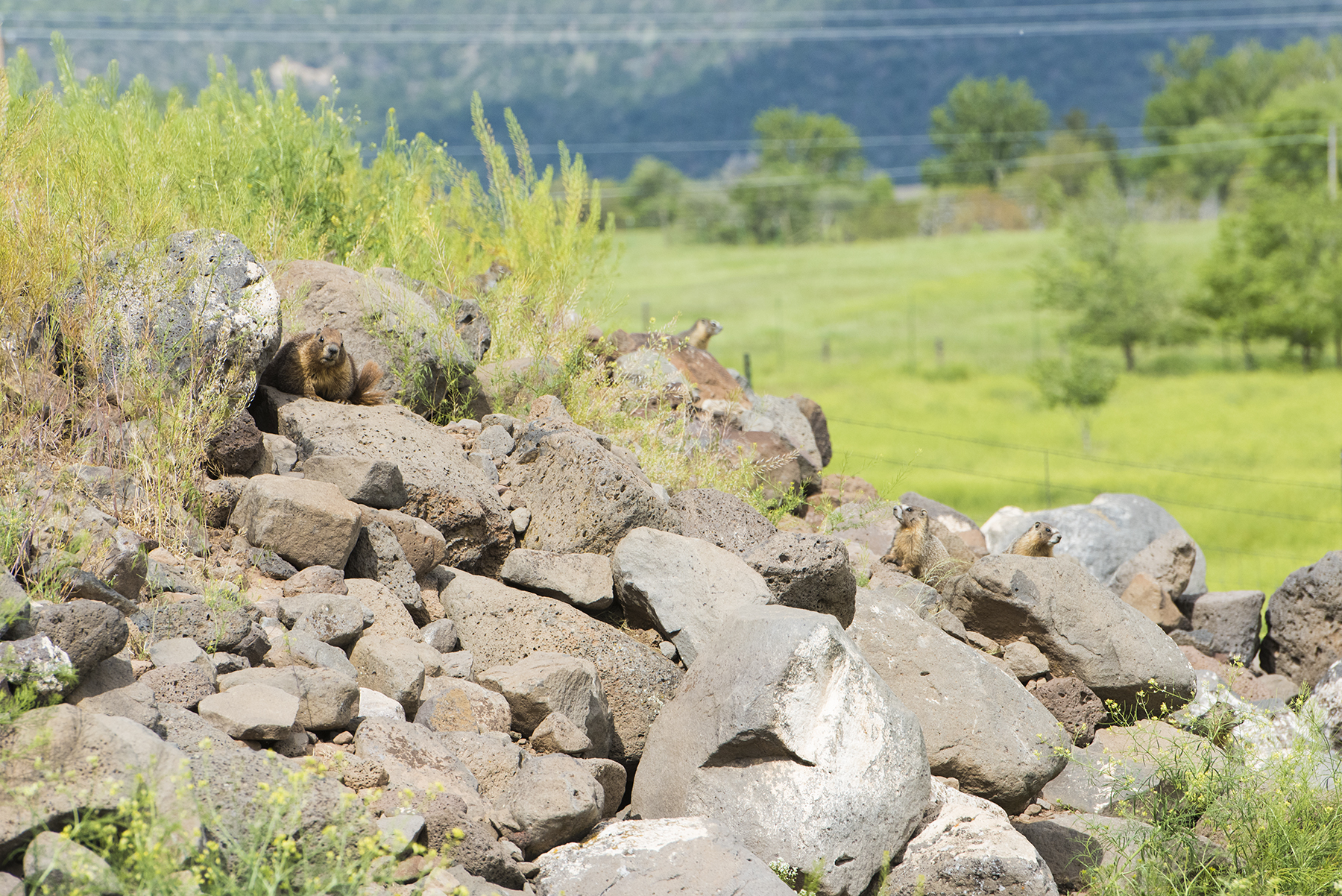
Whistle Pigs 01 sml

Look carefully…there are at least four visible in this photo. And probably four hundred hidden in the rocks.

Speaking of pest pressure, our resident whistle pigs have had a wildly successful breeding season. Not familiar with whistle pigs? They’re part of the large marmot family (Marmota monax), commonly known as ground squirrels, and they’re related to woodchucks, gophers and prairie dogs. They do actually whistle to warn their brethren of impending doom (like when we stroll down the lane to pick up the mail) and they live amongst our extensive rock collection. While they haven’t done much damage to crops yet (mostly because there aren’t any – see above), we do believe they’re orchestrating a stealthy and coordinated campaign to creep ever closer to the vegetables. They are exceptionally quick despite their awkward bulk, and they have lush, glossy pelts – perfect for a fashionable winter hat! Right now we’re offering a special: come collect one rock, and you get a free whistle pig. (Some trapping required.)

Continue reading

Farm update: May 20

Our average last frost date here at Quiet Farm is May 13; as a rough guideline, this means that it’s generally safe to plant warm-weather crops (tomatoes, peppers and so on) outside after this date. Except that we had about an inch of light, fluffy, powdery snow plus some shockingly low overnight temperatures this past week, and if we’d had all of these plants outside they would have died a chilly death. While some vegetables can handle low temperatures, our summer stars want heat and more heat, so ours are still safely tucked away in the sunroom. What do we learn from this? Always check the forecast, and never trust Colorado weather to do what you expect.

Seed Potatoes 01 sml

These seed potatoes are bred for the Rocky Mountain West.

We’re expecting another week of cool, wet weather, which makes it impossible to pour concrete for our fence posts. But there is always something that can be planted, even if it’s not tomatoes and peppers. Our locally-grown seed potatoes have been planted in “potato towers,” which we constructed from galvanized fencing and layers of newspapers, compost and straw. I planted a little over a pound of each variety; theoretically each pound planted should yield about ten pounds of fresh potatoes in maybe July or August. I’ve never planted potatoes in towers so am excited to see how this experiment turns out! (If you want to plant potatoes, buy certified seed potatoes and don’t plant those from the grocery store – they’ve typically been treated to prevent sprouting and therefore won’t grow.)

Continue reading