Let’s learn about the farm bill!

Since about – oh, let’s just say November 9, 2016, not to be too precise – many Americans have found themselves much more interested in politics than in times past. And while that’s a good thing, it’s an understatement to say American politics can be rather confusing. As in, we don’t really get what’s going on, but it doesn’t seem to have that much impact on our relatively comfortable day-to-day lives, so we just go along, merrily forwarding cat videos, virtual-signing critical online petitions that have absolutely no real-world impact and binge-watching the new season of Stranger Things.

NJB_0905.JPG

Finding Quiet Farm tries hard to both educate and entertain, so today we’re going to talk about the farm bill. Oh, I can hear you rolling your eyes right now all the way across the Interwebs, but bear with me. The farm bill, which as Michael Pollan says “should actually be called the food bill,” really does affect every single American, every single day. Multiple times a day, to be honest, because each bite of food you eat in this country is directly tied to the farm bill. And if you have kids, and if they eat any food at all in a school environment, then you’re affected even more. Without further ado, then, a brief, (hopefully) simple introduction to the farm bill, and why you should care about it.

NJB_0763.JPG

Let’s start with the basics. What is the farm bill?

The farm bill is a “multibillion dollar tangle of agricultural subsidies, welfare programs and environmental patronage,” or, more simply, it’s legislation that connects the food on our plates, the farmers and ranchers who produce that food, and the natural resources – our soil, air and water – that making growing food possible. It costs just under $500 billion – that’s half a trillion U.S. taxpayer dollars!

It’s a multiyear omnibus (meaning it covers many different programs) law revamped about every five years and the current farm bill will expire in 2018. That means it’s time for our beloved politicians to start crafting a new farm bill.

njb_0202.jpg

What does the farm bill do?

The National Sustainable Agriculture Coalition puts it best:

“In the simplest terms, the farm bill has a tremendous impact on farming livelihoods, how food is grown, and what kinds of foods are grown.  This in turn affects the environment, local economies, and public health.  These are some pretty good reasons to become involved in advocating for a farm bill that supports health and sustainability!

Through programs covering everything from crop insurance for farmers to healthy food access for low-income families, from beginning farmer training to support for sustainable farming practices, this powerful package of laws sets the course of our food and farming system – in good ways and bad. It’s our job to make sure the farm bill reflects what our country’s farmers and eaters need for a sustainable future.

Every five years, the farm bill expires and is updated: proposed, debated, and passed by Congress and then signed into law by the President. (The current farm bill, The Agricultural Act of 2014, was signed into law on February 7, 2014.)

The farm bill got its start in 1933 as part of President Franklin Delano Roosevelt’s New Deal legislation. Its three original goals –  to keep food prices fair for farmers and consumers, ensure an adequate food supply, and protect and sustain the country’s vital natural resources – responded to the economic and environmental crises of the Great Depression and the Dust Bowl. Although the farm bill has changed in the last 70 years, its primary purposes are the same.”

Basically, the farm bill does many things, but its most significant elements are the federal food stamp program (officially called the Supplemental Nutrition Assistance Program), crop insurance and crop subsidies. There are other, smaller aspects, but these are by far the most important (and costly).

Stone Barns 031.jpg

How does this affect me, or more literally, why should I care?

You should care if you either 1. eat food in the U.S. and/or 2. pay taxes, because you’re funding this monster. And if you’re concerned about our rapidly escalating health care costs, or that for the first time in modern industrial history the current generation has a lower life expectancy than their parents, or even if you only care about just your own household food budget, then the farm bill (and food policy in general) should matter to you.

NJB_0269.JPG

What’s wrong with the farm bill?

Where to begin? It was implemented in the 1930s, and modern agriculture is vastly different now than it was during the Great Depression and the ensuing years. After World War II, we got really, really good at growing vast quantities of corn, wheat and soy with the help of leftover nitrogen, which was made into powerful fertilizer. And in the 1970s farmers were encouraged to “get big or get out,” so the small, diversified family farm started to disappear, and farmers were paid to constantly increase their production of cereal grains, again primarily corn and soy – now used as inexpensive animal feed and as the primary ingredients in processed foods and drinks.

Now, fewer than two million Americans live on farms, while crop yields – and pesticide, herbicide and insecticide usage – continues to increase. Huge monoculture farms cover most of the Midwest, reducing natural diversity and vastly increasing the chances of another devastating Dust Bowl. Large monocrop farmers are millionaires many times over, and small farms are going under. We produce far more cheap, high-calorie, nutritionally-devoid food than we need in this country, and the result of that overproduction includes massive dead zones in the Gulf of Mexico, sick animals raised in their own waste, and a population ridden with heart disease, obesity, diabetes and other lifestyle-related ailments. Plus, many low-income Americans cannot afford fresh fruit and vegetables and other whole foods.

Without question, the farm bill needs revision so it can better impact our current crises, including our food-insecure population and the serious health and environmental burdens our country is facing. But Big Ag has a lot of money and a lot of influence, and the 2018 version is unlikely to offer any significant improvements.

Stone Barns 098.jpg
What can I do to help implement changes in future farm bills?

Well, I’d love to end this on a super-positive, grassroots movement note and tell you to write your elected representative! Call your elected representative! Stand outside the office of your elected representative! But let’s be truthful here: all of our elected representatives are on someone’s payroll, and lobbying is a lucrative career. So the best you can do, to be perfectly honest, is vote with your dollars, because that’s the only vote that really matters. And you vote every single time you spend money.

If you value small farms, find your local farms, know your farmer, and buy directly from them. Skip the middleman. Search out local CSAs, and patronize them. If you believe more federal dollars should support organic farms, buy organic. Read labels, and ask questions. If you want to eat animals that have lived a good life and had a humane death, stop buying cheap commodity feedlot meat and battery eggs. Buy from companies who honor the same values you honor. Do some research. Don’t buy heavily processed foods and drinks made from soy and corn derivatives. Grow your own food, if possible. Anything helps, even a few windowboxes of herbs. And above all else, refuse to believe that something is in your best interest just because someone tells you so. Stand up for yourself, your family, your health and your values – because everyone is out to sell you something, and it’s your responsibility to figure out whether you really should buy it.

NJB_0992


The Farm Series: Grassward Dairy

Well, hello there. We’re at this moment in Oregon, volunteering on farms and trying to determine if Quiet Farm wants to be born in this place. We planned to spend a month on one particular small goat dairy, but as we know from previous adventures, travel plans don’t always work out exactly as envisioned. So we ended up living in a vintage trailer (oh, the memories) for ten days here at Grassward Dairy, a micro-creamery just outside of a college town we know and love (go Beavs!).

NJB_0979.JPG

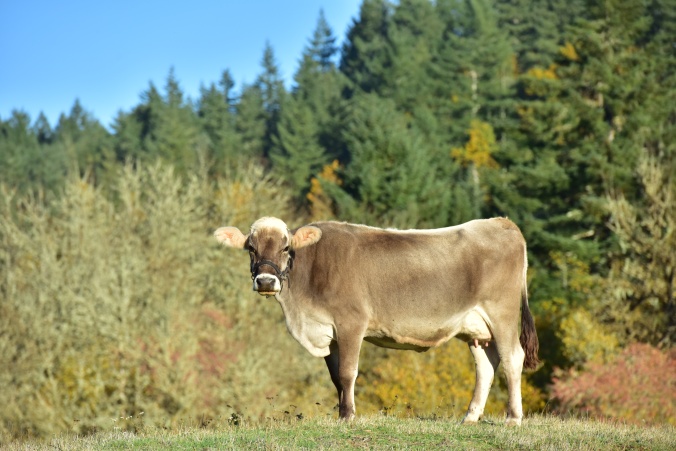
The farmers have to cross a road twice a day to move the cows for milking.

We’ve now worked and/or volunteered on more than half a dozen farms around the world, and every single one is different. Grassward Dairy sits on about one hundred rolling acres along Mary’s River in the southern stretch of the Willamette Valley; in addition to the three milking cows, there are ducks, laying hens, beef cattle, sheep, a donkey, a llama and a rambunctious cattle dog-in-training.

NJB_0713.JPG

Harold, on the left, and Hazelita are being raised for meat. Hand-feeding them collards and chard was one of the highlights of our time here.

NJB_0810.JPG

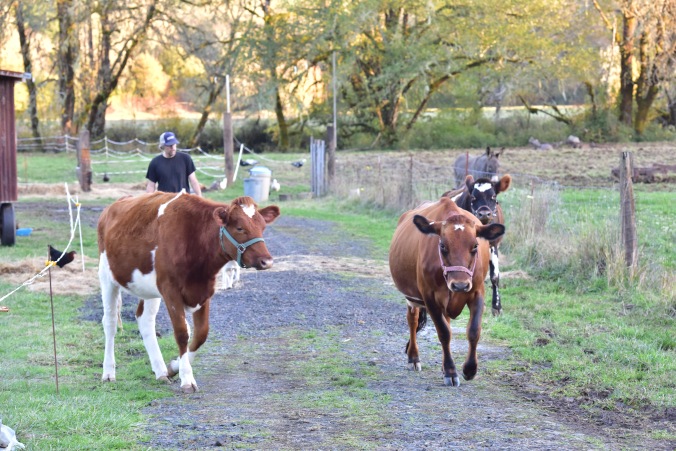
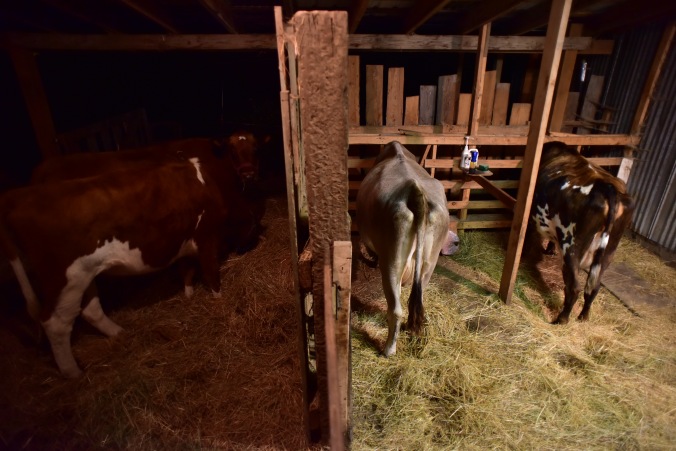
Cows on their way to the barn for the evening milking.

NJB_0970

It doesn’t always rain in Oregon.

NJB_0759.JPG

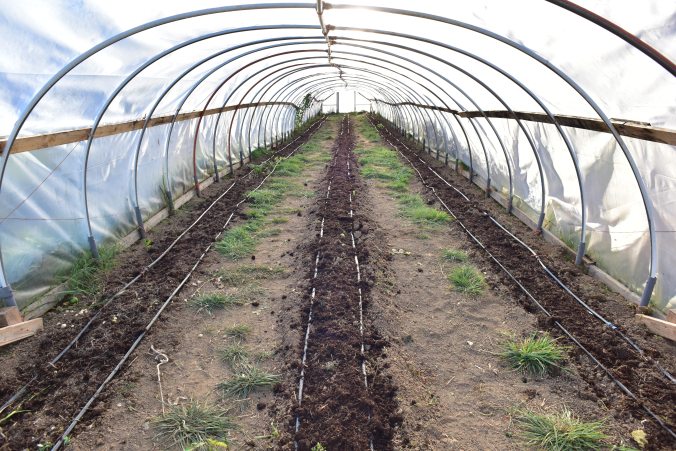
We cleaned out the tomato and pepper plants from this 100-foot hoop house, then prepped and reseeded the beds with winter greens.

NJB_0799.JPG

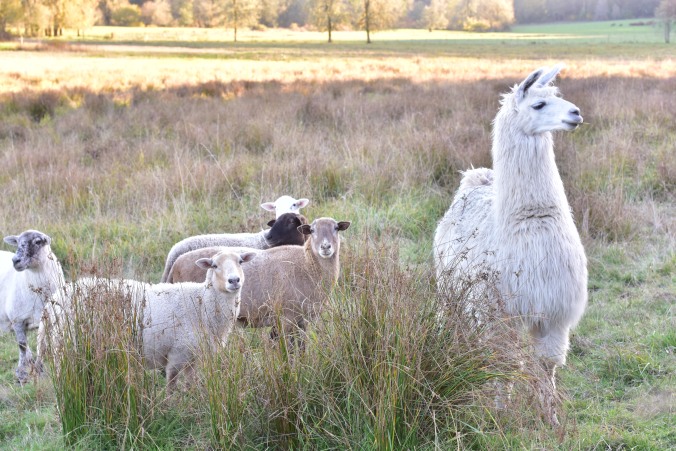
The guard llama and her flock.

Every farm is unique, and every farm’s business model is unique, too. Grassward Dairy offers a dairy CSA, which means that customers pay a fixed price each month in exchange for fresh raw milk, yogurt, cheese, butter and cream. In this agricultural part of Oregon, it’s easy to eat local just about all year.

NJB_0867.JPG

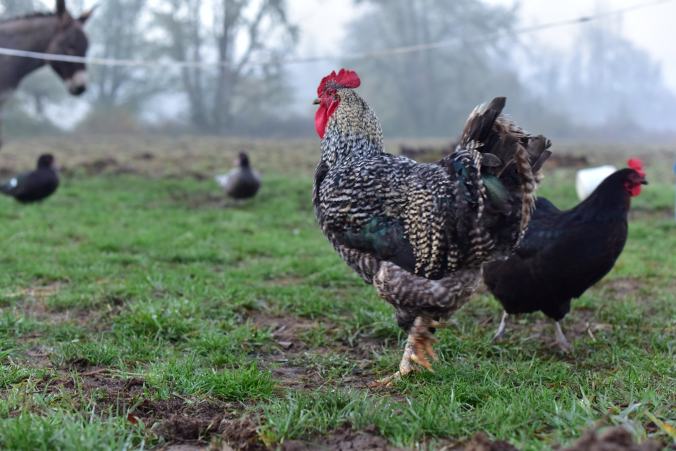
Terry the rooster, with one of his ladies. Muscovy ducks and Florencia the guard donkey can be seen in the background.

NJB_0766.JPG

Hattie, looking regal and proud.

NJB_0913

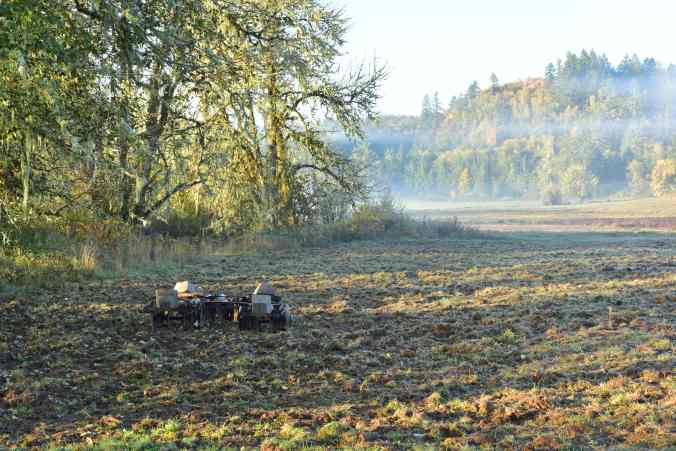
Disking one of the pastures in preparation for cover cropping. While we were there, heavy rains swelled the river and flooded this pasture, among others.

NJB_0824.JPG

The evening milking.

The more time we spend on farms, the more we know this is the right path for us. Many thanks to the team at Grassward Dairy for letting us be part of their farm family for a short time. And if you’re in the area, you can stay there too!


Cooking Class: Chiang Mai, Thailand

We’re excited to be headed out on the road again, and in that spirit we wanted to revisit some of our favorite moments from our adventures earlier this year. Some weeks back, we shared a cooking class we had taken in Udaipur, India. And as we’re in nostalgia mode, and I’ve got Thailand on my mind since I just spent time talking to a friend about his trip, let’s return to Chiang Mai and a fabulous cooking class we experienced there. Like our Indian class, this day out was one of the highlights of our trip to southeast Asia.

Thai dessert bowl

Looks like Thai green curry, but it’s actually dessert: sweet rice pudding with bananas and coconut milk.

Thai rice market

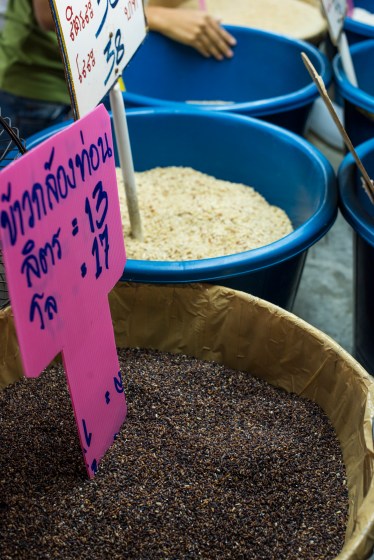
Dozens of varieties of rice are for sale at the market.

Thai ingredients market

Fish sauce, a key ingredient in southeast Asian cooking.

We started our cooking class at one of the many local markets, where we sampled various ingredients and drank cold, sweet Thai iced coffee. While the cooking school has an extensive garden and grows many of their own herbs and spices, they still need to shop for a few things. Many Thai homes don’t have refrigeration, so shopping each day for fresh ingredients is both a pleasure and a necessity.

Thai cooking tables

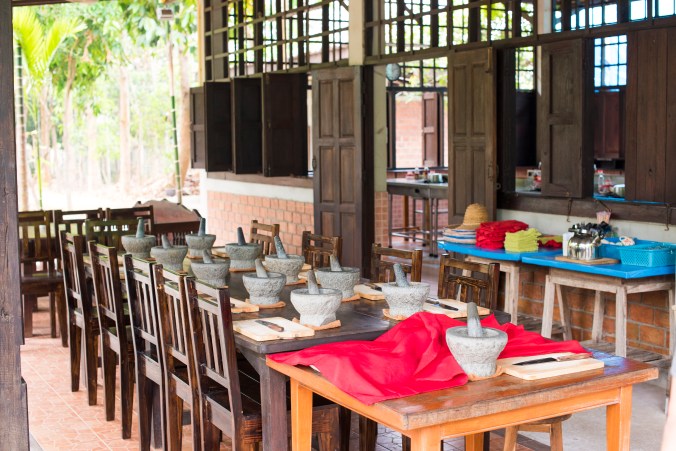
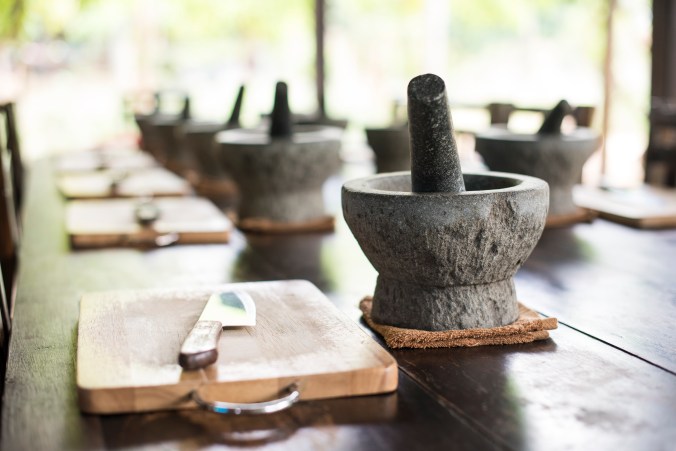
We’ll grind our curry pastes and chop our ingredients here.

We left the market and traveled by minibus to the school, where we were offered iced jasmine tea and given a tour of the property. The cooking school is perfectly set up to accommodate guests, with spaces for prep, cooking and eating together.

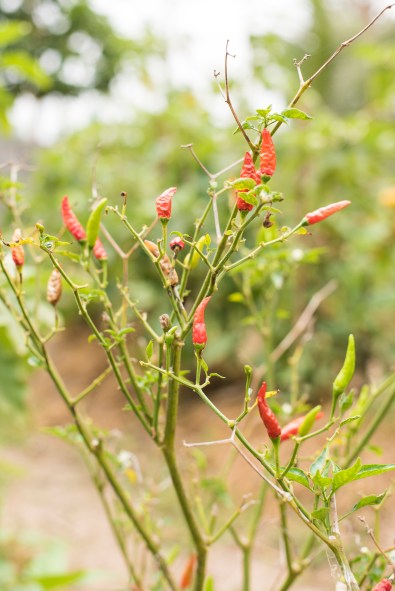
Thai garden chilies

Tiny, fiery Thai bird chiles. Typically, the smaller the chile, the bigger the punch.

Thai ingredients basket

Fresh herbs and aromatics, just harvested.

The cooking school has acres of gardens, where they grow lemongrass, basil, coriander, mint, galangal, ginger, kaffir lime, chiles and many other ingredients for their classes.

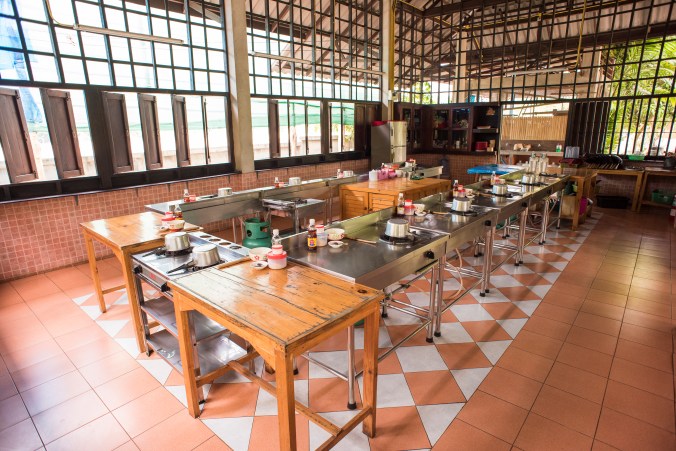
Thai cooking kitchen

Our indoor-outdoor kitchen, with cooking stations set up for each student.

Thai ingredients board

Thai ingredients bowls 01

Thai ingredients bowls 02

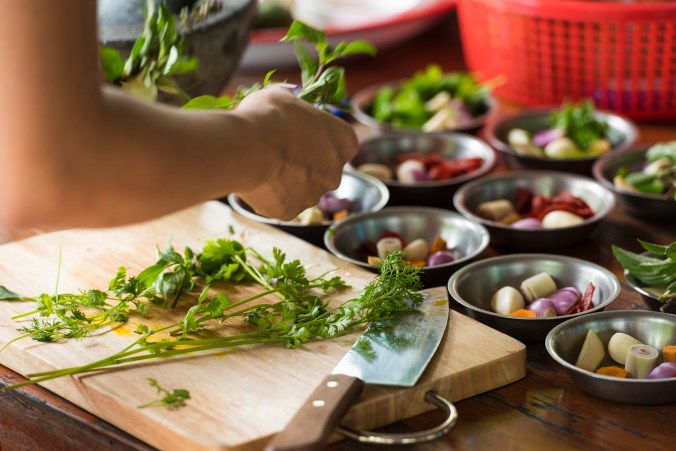
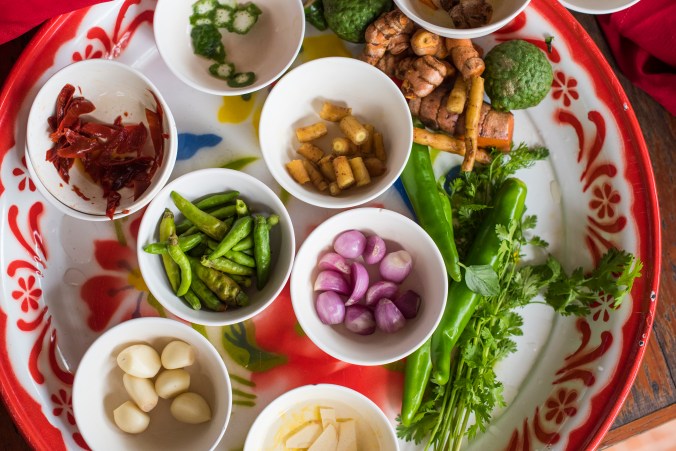
All of the components for the recipes we would make in class were neatly laid out for us. I emphasize this classical French technique a lot in my own cooking classes: it’s called mise-en-place, and it literally means “to put everything in its place.” When you’re cooking, assemble all of your ingredients like this in advance; it may seem tedious and time-consuming, but it actually makes preparing your dish much, much easier. Trust me.

Thai cutting board spoon

Fresh herbs and tamarind paste, like fish sauce, are key to classic Thai cooking.

Thai pestle mortar table

Although you can of course make curry paste in a blender, traditionally it’s prepared in a stone mortar and pestle.

Thai pestle mortar

Grinding aromatics for red curry paste.

Thai wok stir-fry veg

A wok allows for quick, high heat, so vegetables and proteins remain crisp and fresh.

Thai wok stir-fry tofu

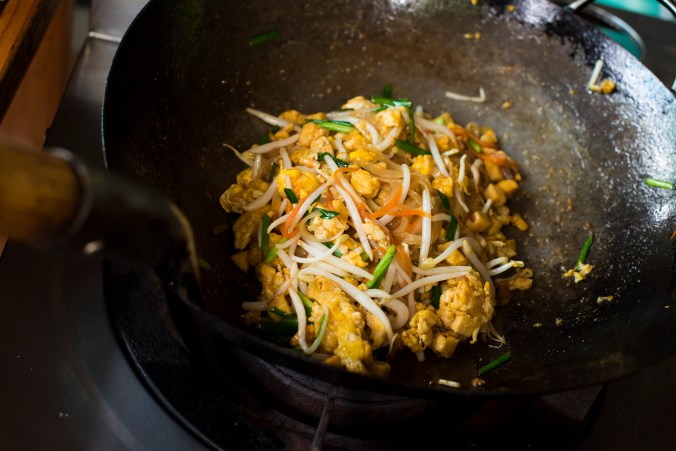
Pad thai, a favorite Thai dish. In Thailand it’s not quite as sweet as it often is in America.

Thai red curry

Vegetarian red curry soup. Good Thai food is most often a delicate balance of hot, sour, salty and sweet.

Craving some Thai food after reading this? Me too. Try here, here or here. And if you have the chance, definitely book a cooking class on your next adventure. It’s well worth the time and money to cook and eat like a local, if only for a few hours.

Food waste + helpful tips!

Thankfully, we’re finally, finally talking about food waste in the U.S. Chefs have long been painfully aware of the staggering quantities of perfectly edible food thrown out in restaurants and hotels on a daily basis, but only recently have we started discussing how much food is wasted in grocery stores and, more personally, at home.

Waste tomatoes

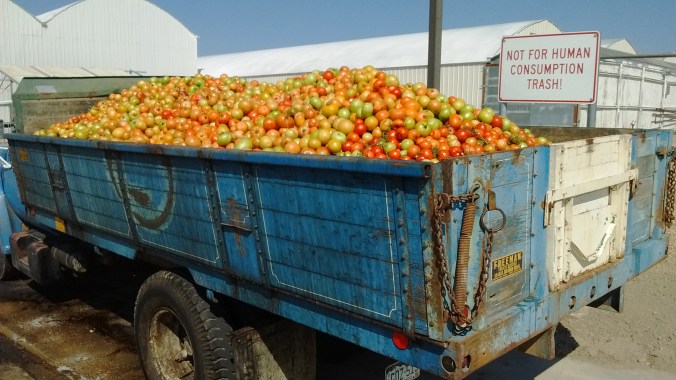
Trash tomatoes at a greenhouse operation in eastern Colorado.

I want people to cook at home, obviously, and I also want people to save money. I teach classes on how to reduce food waste, and I typically cite statistics like “40% of all edible food produced in the United States is thrown away uneaten” and “The average American family throws away over $2,000 worth of food every year.” I like to augment these cheery facts with even more cheery facts, like that the annual value of all edible food thrown away worldwide is over $3 trillion. That, however, isn’t even a comprehensible number, nor is the idea that food waste takes up more space in landfills than any other item – including the devil of them all, disposable diapers. Decomposing food contributes more methane to the environment than all livestock together; if food waste were a country, it would be the third-largest polluter in the world, after the U.S. and China.

Waste strawberries

All destined for the trash and no, they won’t be composted.

Let’s be realistic: I can drone on and on, citing all sorts of numbing statistics, but it makes for boring reading and quite frankly, no one really wants to read a blog where they’re lectured for their appallingly bad habits. Plus, eco-anxiety is an actual thing, and many of us, myself included, feel utterly powerless about our ability to do anything in the face of insurmountable problems like climate change. But minimizing your own food waste is something you can actually do to both save money and save the planet, rather than just wring your hands helplessly. So let’s keep it a bit more positive and I’ll just present a professional chef’s tips for minimizing food waste at home!

Zuccini

We grew these! Unfortunately, only one would be saleable at a standard grocery store. Our aesthetic expectations are utterly unrealistic.

But wait! Before we get into the helpful tips, let’s boost our positivity even further by highlighting organizations actually doing something about food waste!

Cucumbers

We grew these too! Same story as the zucchini above; only one is the correct size.

Americans throw away food for lots of different reasons – mostly because food here is cheaper than anywhere else in the world, and we’re really picky – but at home there are two key factors: meaningless expiration dates and poor planning. A bit of effort on your part will not only save you lots of money, but also keep food out of landfills. It’s a true win-win! (Fun fact: sell-by dates were introduced in Marks & Spencer storerooms in the 1950s; they first appeared on consumer-facing shelves in U.S. and Europe in the early 1970s.)

Waste Honey Jars

Honey doesn’t spoil. Ever. It’s been found in edible condition in Egyptian tombs. So why the expiration date?

At the Store:

  • Shop with a list and buy only what you need. Before going to the store, check out the coupons and promotions. Make a meal plan for the week and incorporate ingredients on sale, and review the contents of your pantry, refrigerator and freezer. How will you know what you need if you don’t know what you have?
  • Avoid “bulk club” buys unless you’ll actually use it. Warehouse-style shopping – i.e. ten pounds of spinach or quinoa – might seem like a bargain at the time, but if you let it spoil it just means money wasted. It seems counterintuitive, but there are times when spending more for a smaller amount is the better choice. Be honest with yourself about how much your household will actually eat.
  • Use the bulk department for spices, grains, beans and more. In addition to reducing packaging, you can buy exactly the amount you need and try lots of new ingredients too!
  • If you only need a tiny amount of an ingredient, consider the prepped food available in the store’s salad bar. This might avoid buying an entire package that you’ll then throw away, plus you’ll save on prep time.
  • If you only need half a cabbage or a tiny portion of cheese, just ask nicely. Most stores will be happy to provide exactly what you need instead of what they’ve already packaged.
  • If you’re going to buy a special, expensive ingredient for one recipe, figure out other recipes in which you can also use that ingredient rather than wasting it.
  • If you shop at your local farmers’ market and you’re planning on doing any canning or preserving, buy seconds. These are just as delicious as the first-run produce, but you get to pay less and your farmer doesn’t have to throw their hard work away.

Waste Salt

It’s a rock. I’m fairly certain we will expire long before it does.

At Home:

  • Most importantly, remember that all best-by dates are only a guideline. Please, use your common sense when deciding whether to throw something away simply because an unregulated date on the package says to. These dates are totally confusing, essentially meaningless and they contribute hugely to our food waste issue.
  • Shop from your own pantry and challenge yourself not to buy food for a week, two weeks or a month. Use up everything you have before buying more.
  • Learn to repurpose your food: when you make your weekly meal plan, also consider the meals you’ll make from the leftovers. Batches of whole grains or rice can be used for numerous meals.
  • Store your produce properly. Certain items should stay on the counter (tomatoes!) and others should go in the fridge (apples!). Know how best to keep everything fresh.
  • Use your freezer – if you’re not going to use something, freeze it. Bread freezes beautifully, as do most vegetables, meat and fruit. Use small containers and wrap items well; label and date everything.
  • Portion control is important. Start with a small amount on your plate, and get seconds if you want them rather than taking a huge serving and throwing most away. This goes for serving kids, too.
  • Devote one dinner per week to “favorites,” and eat leftovers rather than throwing them out.
  • Start a compost bin and be amazed by how much less trash your household produces; the compost you make will do wonders for your vegetable garden. Even better: get a flock of backyard chickens and enjoy fresh eggs while they enjoy your fruit and vegetable scraps.

Waste compost

Our compost pile looks a mess, but it turns into the most incredible soil.

What can you make with random odds and ends?

  • It mystifies me that people regularly throw away bread and buy croutons. If you’ve got stale bread, you’ve got croutons, crostini and bread crumbs. Tear or cut bread into chunks, toss it in a little olive oil, salt, pepper and garlic powder and toast in a 300 degree oven until golden and crispy. Slice slender baguettes into thin slices for crostini and toast as for croutons. Store in an airtight bag. Process in a food processor or blender to make bread crumbs; store crumbs in the freezer.
  • Just about any listless vegetable can become part of a delicious soup. Dice vegetables into small pieces, simmer in stock, and finish with a drizzle of good olive oil and a sprinkling of sharp cheese.
  • Tomato sauce can take a lot of extra vegetables without you even noticing! Add in not-so-perfect carrots, celery, greens, onions, squash…and puree the whole thing. The tomatoes will dominate, trust me.
  • And all those vegetable trimmings from your soups and sauces? Add onion tops, celery leaves, carrot peelings and other odds and ends to a zip-top bag and store in the freezer. When it’s full, simmer to make homemade vegetable stock. Add chicken or beef bones too, if you’ve got them.
  • Parmigiano rinds are every Italian grandmother’s secret to the most flavorful soups, stocks, broths and risottos. Store in the freezer and use as needed for extra umami punch.
  • Fruit no longer nice enough to eat fresh? Cut it into small pieces and freeze it on a cookie sheet. Once frozen, transfer the chunks to a zip-top bag and use for smoothies.
  • Speaking of smoothies, all your greens – kale, spinach, chard – can be thrown right in with your fruit and yogurt. You might notice the color, but you won’t notice the taste.

Above all else, consider the amount of time, effort and money that went into the food you’re eating – and respect that by treating it carefully and mindfully!

Hive inspection

Back in late July, we showed some photos of our beehive. A few weeks later, we opened the hive again for a summer inspection and wanted to share those pictures here too. As we’ve said before, we’re new to beekeeping, but we’re learning more every day.

Equipment.jpg

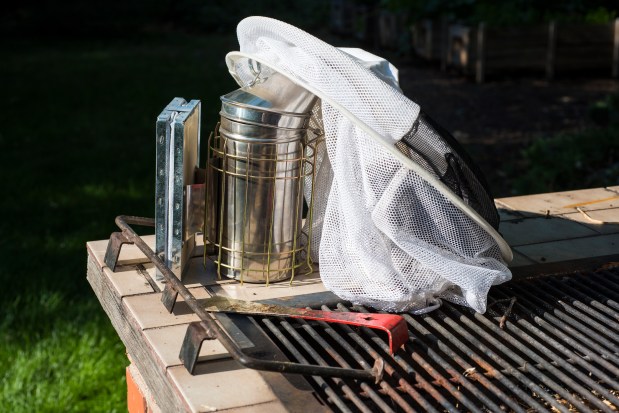
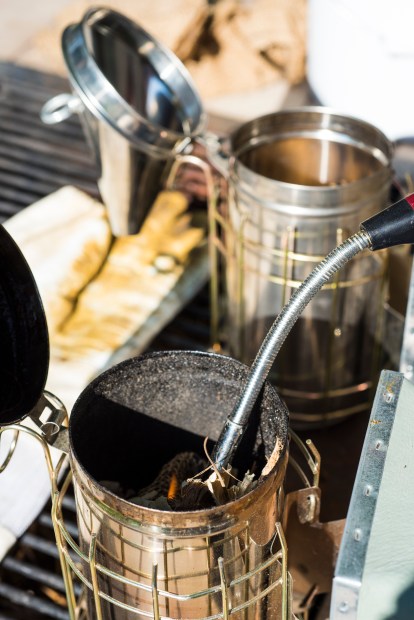
Necessary equipment: veil, smoker, pry bar and support frame.

Smoker Ignition.jpg

Lighting the smoker.

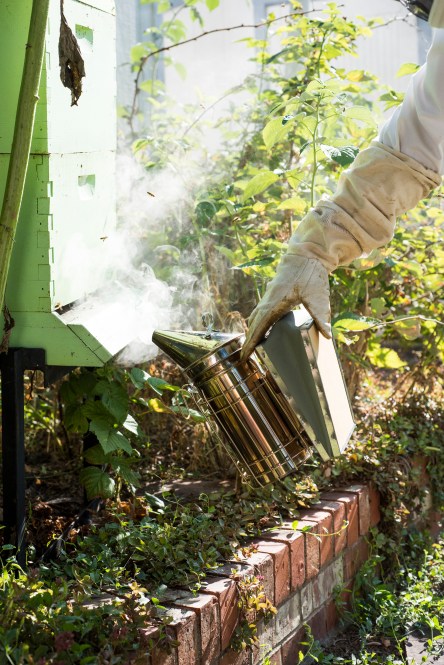
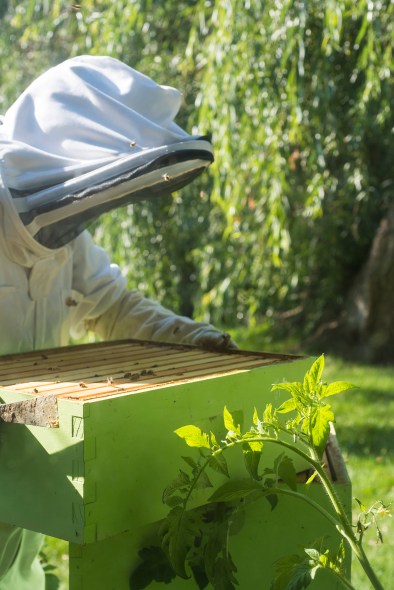
Smokers are commonly used by beekeepers when opening and inspecting hives. The smoke is thought to dampen the guard bees’ pheromone response, allowing the beekeeper to open the hive without a defensive reaction. This does not mean, however, that beekeepers don’t get stung – but the goal is to minimize the stings, because those are harmful not only to the beekeeper but obviously to the hive, too, as the bees die once they’ve stung. Good beekeepers want to reduce unnecessary bee death whenever possible.

Smoker Entrance

Smoking the hive in preparation for opening.

Hive Opening.jpg

Carefully opening the hive. (I am very helpfully holding an enormous sunflower stalk out of the way.)

Beekeepers traditionally wear white because large predators of hives – bears, raccoons, skunks – are overall dark in color. It is thought that the bees will be less stressed, and therefore less likely to attack, if the beekeepers are clothed in white. In South America, however, beekeepers most often wear red.

Honey Super.jpg

The inner workings of our Langstroth hive.

Frame Opening.jpg

Removing the frames one by one.

Frames 02.jpg

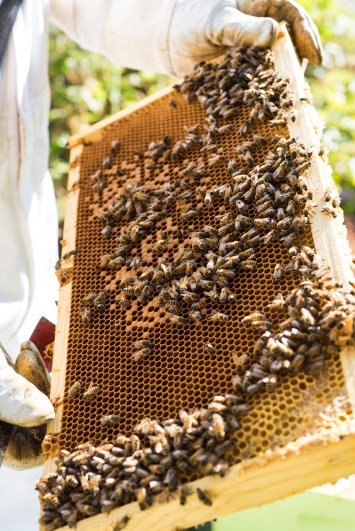
It is such a thrill to see so many healthy, thriving bees!

Frame Inspection 05.jpg

Frame Honeycomb.jpg

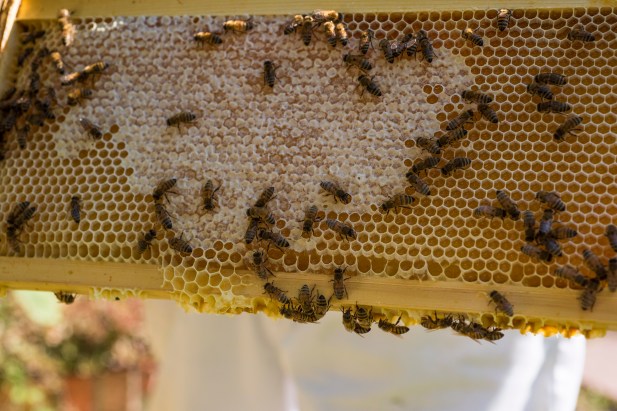
Honeycomb! We’ll leave some for the bees’ winter food supply, and hopefully there will be enough for us, too.

Frame Inspection 06.jpg

Can you spot the queen? I couldn’t.

Hive Open.jpg

Our hive without its top box and cover.

Hive Closing Up 02.jpg

Closing up the hive.

We’re hoping we’ll be able to harvest some of that gorgeous honey you saw above in a few weeks, before the weather turns. Stay tuned!

P.S. Jim, you’re the best. We couldn’t do this without you. Thanks!


Cookbook Club: Full Moon Suppers

It will come as precisely no surprise to any of you that I have what some might consider an excessive cookbook collection. I try to keep it pared down – honestly, I do – but then every October the local library has their annual book sale where you get to fill shopping bags for $6 each and I just lose any ability I might once have had to act like a rational adult. It’s true. And no one will ever, ever help us move.

Peach Cake Cook Book.jpg

Not long ago, this cookbook crossed my path, and it is pure and simple and lovely. As a professional chef, I know that most cookbooks are used by home cooks, and therefore I am infuriated (not too strong a word) by gorgeous, glossy, overproduced cookbooks with fabulous photos where the recipes don’t actually work. Home cooks, especially those just starting out, don’t need perfect photos of airbrushed superstars (or blog stars) happily munching on avocado toast. What they need are clear, easy to-understand recipes that have been tested many times, in many kitchens (preferably home kitchens), with variable equipment. And possibly not all of the correct ingredients.

Peaches Garden.jpg

The last of the season’s stone fruit. 

Annemarie Ahearn has been cooking and farming on her family’s property overlooking Penobscot Bay, Maine, since 2009. As she says,

“I had not moved to Maine on a whim. My plan was to open a cooking school for home cooks and teach people how to grow a kitchen garden. The mission of the school aligned with my personal ambition, which was to fundamentally change my daily routine. City life, while rich with professional opportunity, did not feed my soul in the way that I was hoping a more rural life would. And what better place to experience nature than on a farm, nestled between the mountains and the sea? So many skills that my grandmothers and generations prior to theirs possessed I did not know the first thing about. Chopping wood for warmth, putting up preserves for winter, catching a fish for dinner and raising laying hens for eggs were all efforts that I wanted to experience firsthand.”

The book is broken into twelve menus, appropriately themed to the twelve months of the year. Her recipes are simple, seasonal and easy to follow, and every single one pays homage to the land above all else. I can’t get the quality of Maine lobster that she has, nor fresh periwinkles, but there are plenty of recipes here that could easily be made across the country, depending on the season. We haven’t been to Salt Water Farm (yet), but we feel a definite kinship between the cooking and farming life Annemarie has forged for herself on Maine’s rocky, windswept coast and the cooking and farming life we want to build at Quiet Farm, wherever that may be.

Tomatoes Green.jpg

Please ripen before first frost hits…

I’ll be completely honest and say that I’m a little late on this post, but truly that’s only because I was (im)patiently waiting for our tomatoes to ripen so I could make a glorious summer salad. Salt Water Farm has a short growing season too; they treasure their warm-weather peaches, tomatoes and corn just as we do at nearly six thousand feet in the Rocky Mountains. You work with what you have.

Lovage G&T.jpg

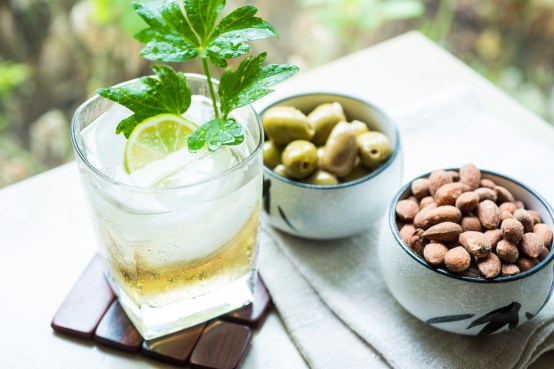
Cocktail hour is my favorite hour!

Each of the twelve menus in Full Moon Suppers starts with a paired beverage. N and I really only partake of gin-and-tonics in summer; they seem to suit the weather so well. I’ve seen a couple of recipes this summer encouraging the use of lovage in a simple syrup to add to G&Ts or sparkling water; since I have an abundance of lovage that I leave for the bees every year, I thought I might as well use it. The syrup is truly simple: combine two cups water, two cups sugar and bring to a boil. Add eight cups roughly chopped lovage, remove from heat and allow to cool completely while lovage steeps. Strain into a clean quart jar and store in refrigerator. It’s herby, grassy and deeply refreshing, whether in a cocktail or sparkling water. I’m surprised by how much I like it.

Tomatoes Tray 02.jpg

Tomato Cucumber Salad.jpg

I know that I said previously that once you finally have ripe tomatoes, you should only anoint them with olive oil and salt. But really, you should also find some amazing local sweet corn (I froze all my excess from this event) and some fresh cucumbers and you should make this salad. It has a simple vinaigrette made with lemon and mustard and honey and red wine vinegar, and honestly, it tastes like summer in a bowl. This is not a salad you’d make any other time of the year – only when the ingredients are at their absolute very best. And that window of opportunity is very swiftly closing.

Peach Cake Recipe.jpg

Peaches Tray.jpg

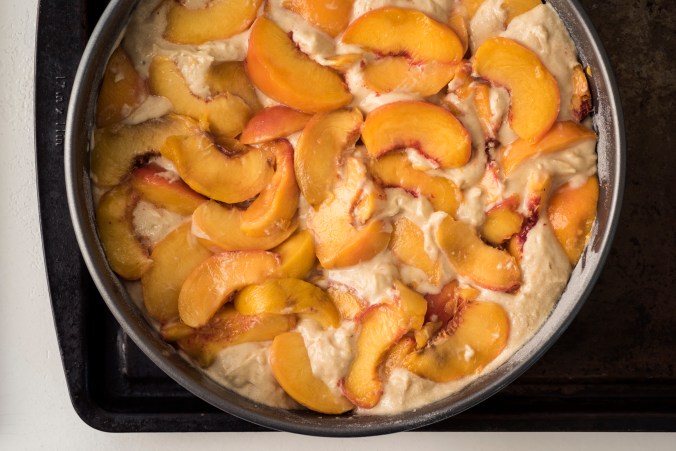
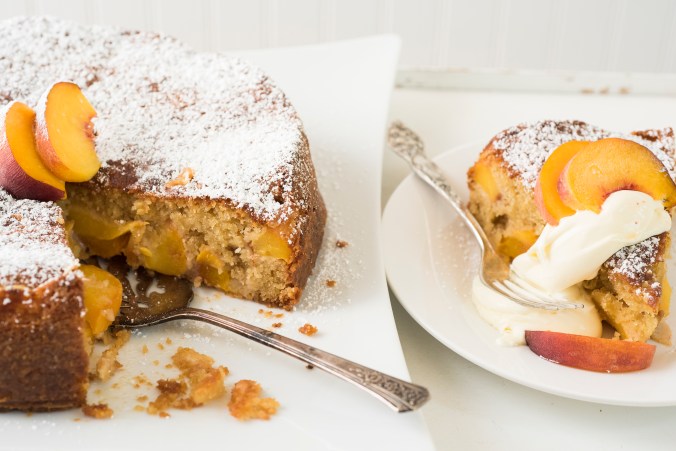
And then there’s the peach cake, although in my world it’s a peach and nectarine cake, plus I added almonds to complement the almond flour and for extra crunch. Oh, and I just served it with mascarpone rather than sweetened whipped cream. (It’s exceedingly difficult for me to follow recipes exactly.) But this one is worth the time and effort, and even though it takes forever to bake, you’ll be rewarded. The butter creates a gorgeous, rich crust, but the interior is as soft as a dream. And this would work beautifully with home-canned peaches, too, should you be so inclined, so you can make it more than two months of the year.

Peach Cake Uncooked.jpg

Peach Cake Cooked.jpg

Peach Cake.jpg

Peach Almond Cake with Mascarpone

Chef’s Notes: As mentioned above, I included 1/2 cup slivered almonds in the batter; incorporate these with the dry ingredients in the first step. I used a combination of ripe peaches and nectarines, and I served the cake with just a dollop of this plus additional sliced fresh peaches and nectarines on the side. No additional alterations are needed to bake this cake in the Denver area, although above 7,000 feet you may wish to make adjustments. This cake counts as breakfast, in case you’re wondering.

For The Cake

  • 1 cup all-purpose flour
  • ½ cup almond flour
  • ½ tsp. sea salt
  • 2 tsp. baking powder
  • 9 tbsp. unsalted butter, softened to room temperature
  • 1 heaping cup sugar
  • 3 extra-large eggs, at room temperature
  • 1 tsp. vanilla extract
  • ¾ cup cream
  • 4 large, pitted peaches, thinly sliced
  • 2 tbsp. melted butter

For The Cream

  • 2 cups heavy cream
  • 1 tbsp. sugar
  • ½ tsp. vanilla extract
  • ½ cup mascarpone
  • confectioner’s sugar for dusting
  

Directions

Preheat the oven to 375°. Line the bottom of an 8-inch springform pan with a round of parchment paper. Butter and flour the sides of the pan.

In a medium bowl, combine the all-purpose flour, almond flour, salt and baking powder. With a stand mixer fitted with the paddle attachment, whip together the butter and sugar. Incorporate the eggs one at a time, whipping well. Whip in the vanilla extract. Mix in a third of the dry ingredients, then a third of the cream. Continue alternating the dry ingredients and cream in thirds, scraping the sides of the bowl in between additions.

Pour the batter into the prepared cake pan. Spread the peach slices on top and press them into the dough. Brush with melted butter. Bake for 1 hour, or until the cake has set and turned golden on top. The cake is done when you insert a toothpick into the center and it comes out clean. Allow to cool on a rack; serve slightly warm or at room temperature.

Using your stand mixer fitted with a whisk, whip the cream with the sugar and vanilla extract until soft peaks form. Fold in mascarpone.

Serve slices of cake on individual plates with a generous spoonful of cream and a dusting of confectioner’s sugar on top.

(All recipes reprinted with permission from Full Moon Suppers at Salt Water Farm by Annemarie Ahearn and published by Roost Books, but the photographs are N’s!)

The Farm Series: Mountain Flower Goat Dairy

Part of our grand plan this summer, our transitional period between our round-the-world trip and our journey to find Quiet Farm, is to visit and volunteer on as many farms as possible. As we’ve said before, we can learn something from every single farm.

MFGD-01.jpg

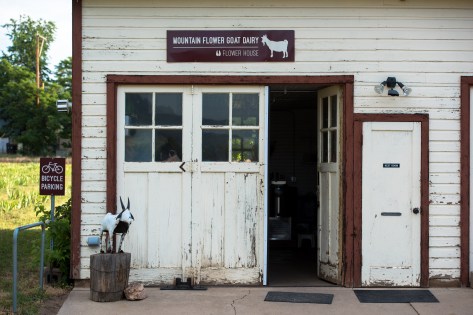
We’ve volunteered on vegetable farms (both cold and warm) before, but because we’re virtually certain we’ll have goats, for meat and milk, on Quiet Farm, we wanted to spend some time with these lovely creatures this summer. And that brought us here, to Mountain Flower Goat Dairy in Boulder. Mountain Flower is a non-profit committed to a few different key goals that we respect wholeheartedly: community engagement and education, sustainable agriculture and humane animal husbandry, and land conservation. All of these are tenets we plan to incorporate into Quiet Farm.
MFGD-22.jpg

Smart, inquisitive, affectionate and productive…goats are popular for good reason.

MFGD-02.jpg

Mountain Flower Goat Dairy is a raw-milk goat dairy, the only one within the city limits of the Kingdom of Boulder. There is a lot of controversy surrounding raw milk; the sale of it is illegal in most states and dairies must often sell “herd shares” in order to operate legally. It’s important to familiarize yourself with both the pros and the cons before forming your own opinion on raw milk. In MFGD’s own words:

“The primary focus at Mountain Flower Goat Dairy is to provide a supply of the most gorgeous, clean, healthy goat milk possible while demonstrating to the public a working urban farm. We are the only dairy in the Boulder city limits and we are delighted to fill this food void for our community. We allow the public the opportunity to own a portion of our herd and thereby gain access to raw milk.

A spirited debate exists over whether raw milk should be made available to the general public or not. Raw milk advocates have an uphill battle to shatter paradigms that remain from a time when little was known about microbiology and modern refrigeration did not exist. We believe it comes down to a person’s right to choose what food to put into their own bodies. We make a point to keep informed on and involved in the issues related to raw milk. We encourage you to do the same.

We do what feels right to us. That is to raise goats the way nature intended eating grass and alfalfa, grazing in the fields, playing with each other, being loved by humans and eating organic grains. We milk our goats in a low-stress environment and treat their milk with the utmost care, cleanliness and respect.”

MFGD-29.jpg

Relocating to greener pastures.

Mountain Flower keeps about thirteen adult does on hand for milking at any given time. They breed most of these does every year and either keep the young to expand their own herd, or sell the kids to families or farms who will uphold their high standards. Some of the kids are eventually used as pack animals, or family pets, or for meat.

MFGD-06.jpg

Up you go, darling.

MFGD-10

Cleanliness is of paramount importance in any dairy operation.

MFGD-14

Small goat dairies may still milk by hand…

MFGD-08

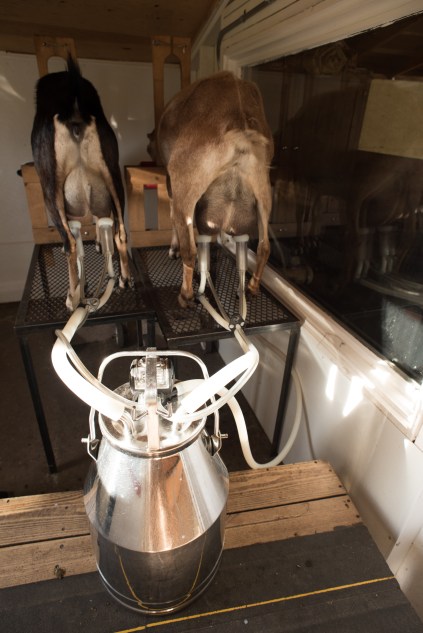
…but milking by machine is much quicker and more efficient.

Dairy goats are milked twice per day; the amount of milk they produce varies wildly based on grazing availability, season, breed, weather and other factors. While it’s now common to find goat cheese in grocery stores and on restaurant menus, goat (and its related value-added products) have only been well-known in the U.S. for about forty years or so. Despite being the world’s most commonly-consumed meat, goats are a relatively recent introduction to American palates. Goat milk, yogurt and cheese are now easy to market, but goat meat is still a hard sell – and the honest truth of any dairy operation, no matter the animal, is that approximately fifty percent of the babies born will be male. That logically means slaughter for meat, a reality that we’ll fully accept on Quiet Farm.

MFGD-21.jpg

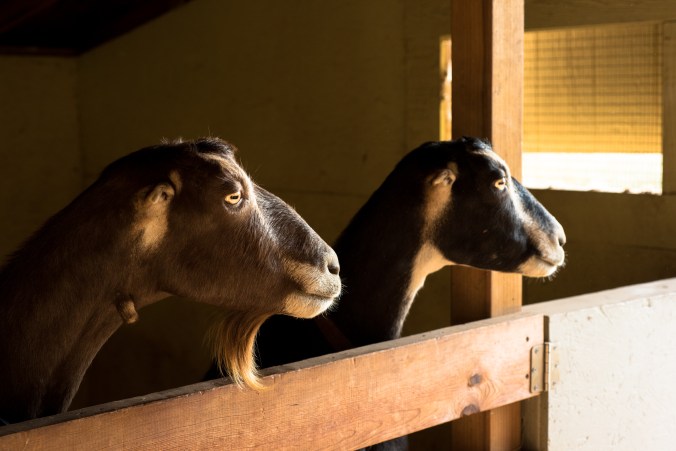
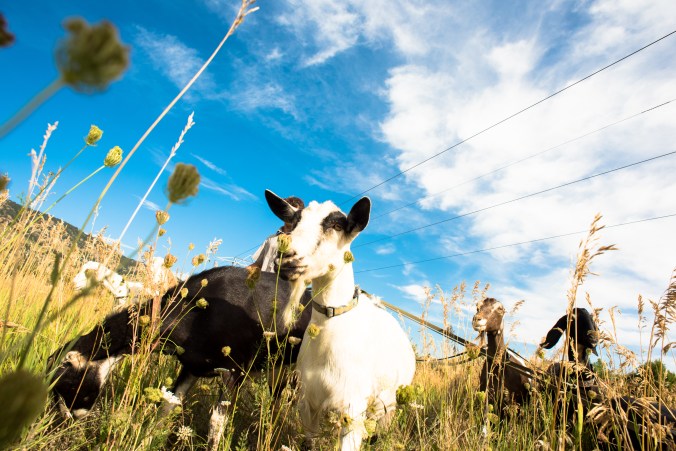
Pensive goats in thought, probably about how to escape their grazing pasture.

What we learned during our summer at Mountain Flower is that these are truly incredible animals. They are passionate and irascible and difficult and gorgeous and moody and infuriating and loving – just like humans. We learned that they remember you and your weirdly soft yet nubbly leather gloves and that there are few things more comforting than a doe leaning up against you for an aggressively affectionate scruffle. We acknowledge that the realities of raising livestock mean that they will eventually (hopefully) grace our table, and that we’ll be even more thankful for the gifts they’ve given us. We learned that we want these animals in our lives and on our farm.

MFGD-17.jpg

Fresh goat milk is truly amazing. Oh, and it makes incredible cheese, butter and yogurt.

MFGD-19.jpg

Ready for customers.

MFGD-34.jpg

The definition of “free range.”

MFGD-41.jpg

What’s going on over here?

MFGD-51.jpg

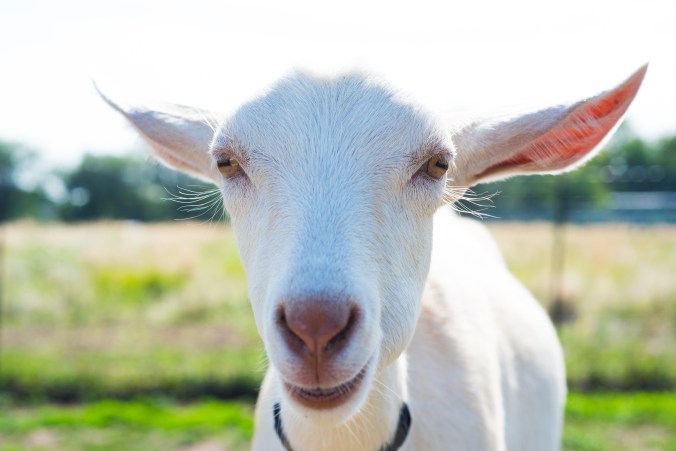
Come on! Who doesn’t want to cuddle that sweet face?

Know thy food, and know thy farmer. The more we learn about these animals (and farming in general), the more we want to know. Quiet Farm, here we come.

P.S. A huge thank-you to the wonderful team at Mountain Flower Goat Dairy for hosting us this summer. Catherine and Dennis, thank you for sharing your land. Michael, Maddie, Kallie and Ryen, thank you for showing us the ropes. Please come see us on Quiet Farm.

MFGD-03.jpg


Cooking from the garden

Friends, hello. It is early September and thus the height of the harvest season in our corner of the world. And though the tomatoes are finally, finally coming on after an unseasonably cool August, I find that I’m struggling to work up the enthusiasm I typically have during this time of abundance.

Veg Mixed

Right now seems to be a time of sadness for just about everyone. Not only are people suffering in our country and of course across the world, but closer to home friends and family are coping with grief, misfortune, illness, despair and all sorts of darkness. I struggle mightily (and often unsuccessfully) not to carry the weight of the world, so at times like these I always find myself back in the kitchen. We soldier on, doing our best; no matter what, we all need to eat.

Pepper Leaves.jpg

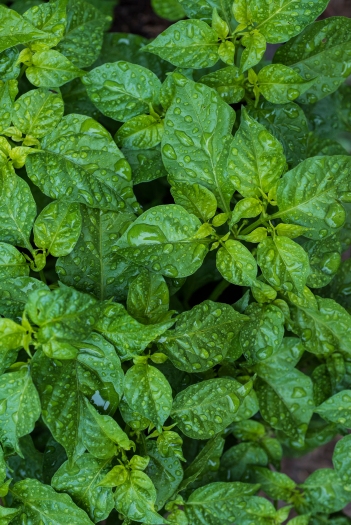
A habanero pepper plant after a rainstorm.

One of my biggest challenges in my cooking classes is providing clear, usable recipes, because more often than not, I don’t cook from them. I know well that everyone wants recipes – especially if you’re just starting out in the kitchen, recipes offer valuable handholding and a sense of regimented calm and comfort, a plan to follow. What I ultimately try to teach, however, is the confidence to cook without recipes – to improvise, to adjust, to have faith in the process and your own palate and that the end result might not be exactly what you planned but will still, most likely, be delicious. And summer and early fall are certainly one of the easiest times to cook without recipes, since you can let the produce guide you.

Peppers Raw.jpg

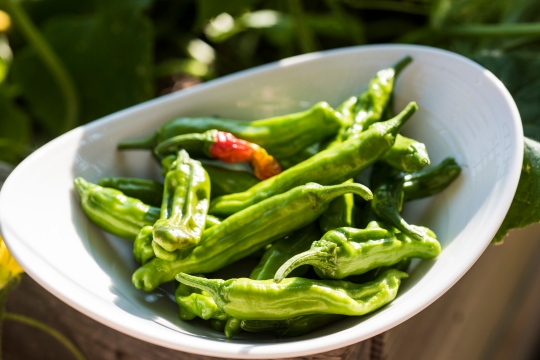
The before and after: shishitos raw…

Peppers Cooked.jpg

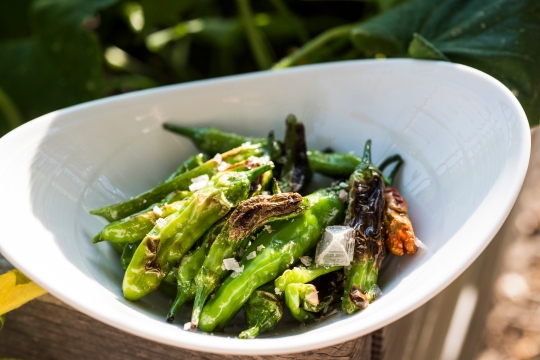
…and shishitos cooked, with flaky sea salt (of course).

As for improvisational cooking from the garden: let’s talk shishitos, just for a moment. These small peppers burst onto the culinary scene some years back as an appetizer in Japanese restaurants. The tip of the pepper is thought to resemble the head of a lion, shishi in Japanese; as such, their full name is shishitogarashi but is typically shortened to shishito. They’ll eventually turn red, like most peppers if left to ripen long enough, but they’re usually harvested green, about the size of a pinky finger. No recipe needed for these: crank up the heat on a cast-iron pan, drizzle with a tiny bit of neutral oil, like canola, and toss the peppers in just until they char and soften. Serve with soy sauce and flaky salt. I leave mine pretty crunchy, but you can cook them until they collapse, too, if that’s your preference.

Cucumber On Vine.jpg

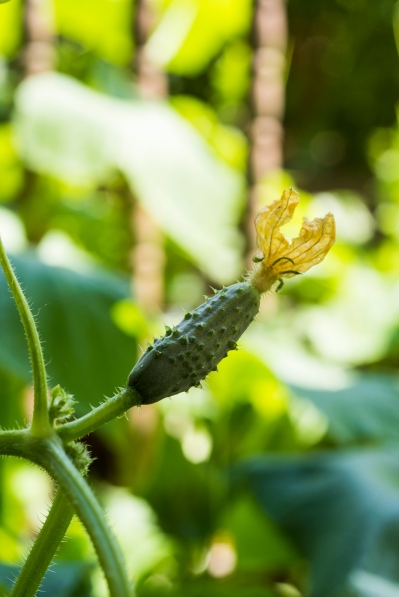
Cucumbers are another summer favorite; like tomatoes, the difference between harvesting your own and buying sad, bitter supermarket versions is night and day. These little ones are theoretically designed for pickling, but to be honest I end up eating most of them raw. Thinly sliced or cut into chunks, with slivers of red onion; they’re dressed lightly with rice vinegar, olive oil, salt and pepper. Plus, any variety of bright, fresh herbs that I might feel compelled to use. Simple, fresh, crunchy, tangy and satisfying.

Zuccini.jpg

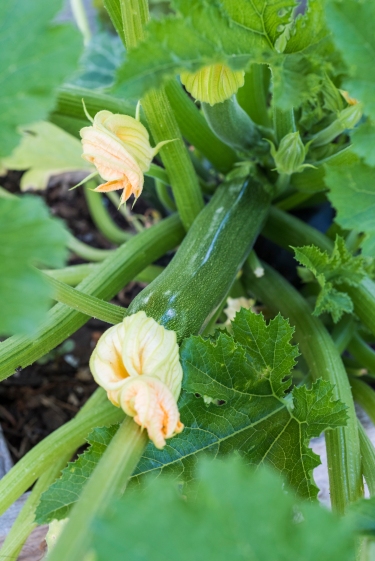
Unlike some, I am never tired of zucchini. Growing vegetables in our high-plains desert can be so challenging that I’m gratified by anything that produces so much for so little effort. Plus, zucchini is infinitely versatile, and it never goes to waste in my kitchen. Looking for an interesting spread for toast? Try this recipe from a talented Oregon farmer and home cook.

Zucchini Grilled Plate.jpg

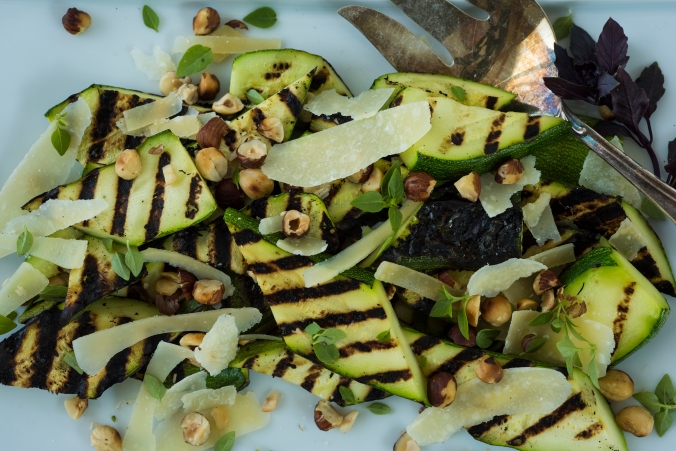
This summer, most of my zucchini starred in this Ottolenghi classic: lightly grilled with olive oil, then layered with fresh basil, toasted hazelnuts and slivers of Parmigiano, drizzled with hazelnut oil and white balsamic. I pretty much just gave you the recipe, but if you want more specific guidance, go here.

Tomatoes Heirloom

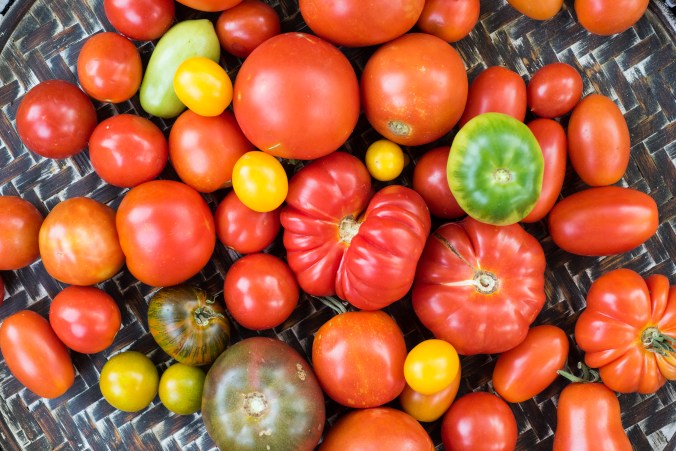
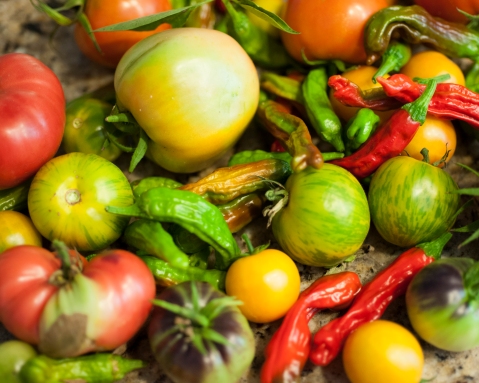
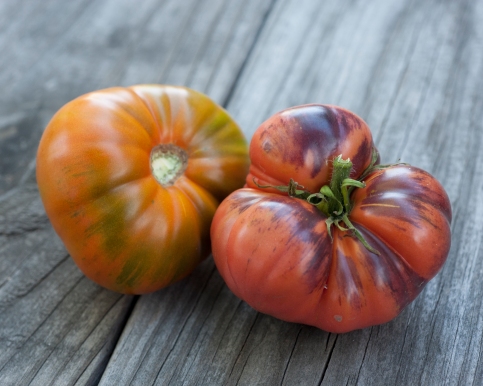
And these beauties? Nothing more than sliced, on a plate, with a drizzle of good olive oil and a sprinkling of salt. That’s it. Growing tomatoes in Colorado – and actually having them survive until harvest – is such a labor of love that it’s a crime to do anything more.

Take care of yourselves, friends, and make something delicious and nourishing to eat. Good food matters.


The Farm Series: Chatfield Farms

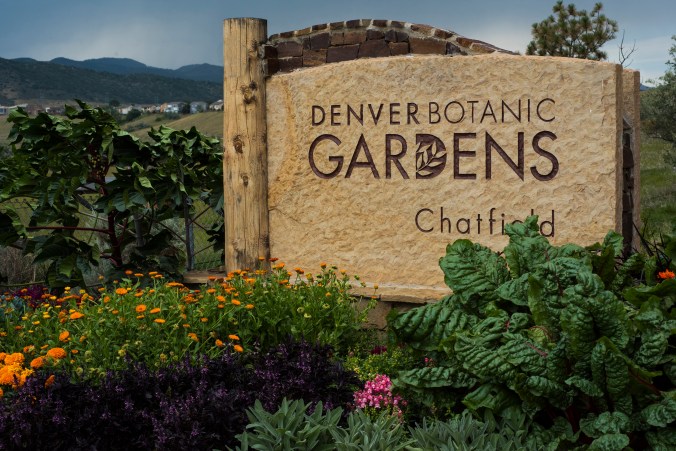
A couple of weeks ago, N and I spent some time at Denver Botanic Gardens’ Chatfield Farms, so we decided to make this the second post in our Farm Series. We’ve mentioned before that since we plan to buy a farm, we visit farms whenever possible. And we’re not fussy – we’ll visit any kind of farm, whether or not it’s similar to our vision for Quiet Farm, because we believe we can learn something from every single one.

Sweetcorn Chatfield 01

Chatfield Farms occupies 700 acres along the banks of Deer Creek. It’s a historical site, a native plant restoration area, and a working farm with a 270-family CSA program, plus it includes nature trails and spectacular birdwatching. I’ve been part of the Veterans-to-Farmers program here and taught cooking classes at DBG for years now, and N photographed a friend’s wedding at Chatfield a couple of years ago, but we hadn’t yet had the chance to spend an evening at Chatfield Farms. And what an evening it was.

Sweetcorn Chatfield 02.jpg

We were at the farm to participate in DBG’s annual Colorado Foodways event, which showcases both local food and local farmers. We showed up early with a car loaded down with grilled sweet corn and chiles from Palizzi Farm in Brighton, plus applewood-smoked goat cheese from Haystack Mountain, and we set about making samples for 150 guests.

Sweetcorn Chatfield 04

But see that dramatic Colorado sky? Oh yes, there was rain. And wind. And more rain, and more wind. And a tent that flipped itself over and very nearly took down all of my carefully prepared food with it. But we persevered, and we ended up having a wonderfully perfect summer night in Colorado. And in times like these, it’s always essential to remember that we may believe we’re fully in control, but nature often has other ideas entirely.

Sweetcorn Chatfield 03

Blue skies after all!

Sweetcorn Whole

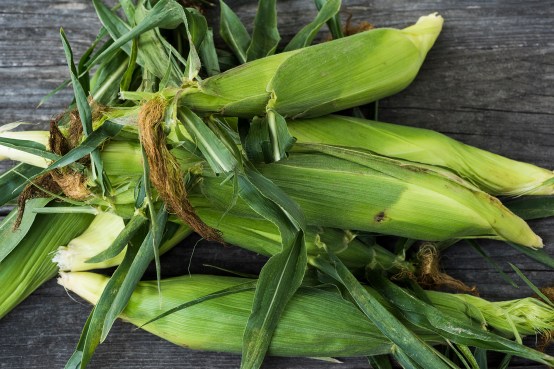
What says summer more than fresh, local sweet corn?

Sweetcorn Mixed Grilled

The sugars in sweet corn start turning to starch as soon as it’s picked. Leave the husks on until the very last minute, and eat it as soon as possible!

Sweetcorn Husks

Husking one hundred and twenty ears does leave quite a lot for compost.

Peppers Roasted

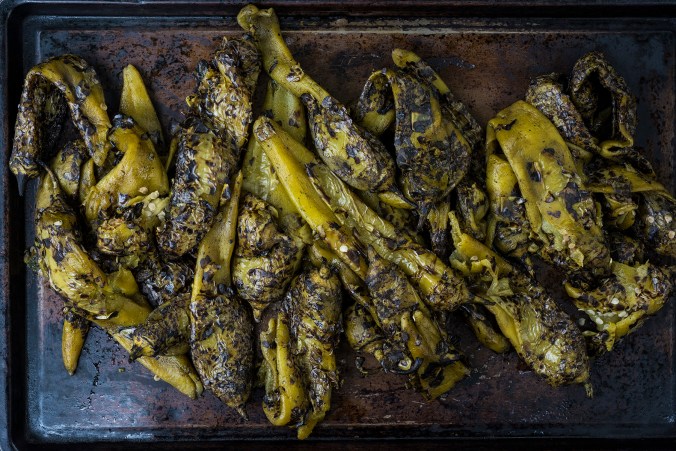
Charred green chiles…the scent of late summer and early fall in Colorado.

Sweetcorn Plated

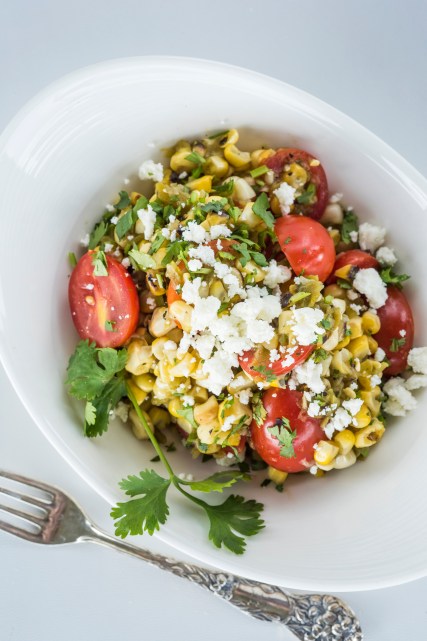
Colorado Charred Sweet Corn and Green Chile Salad


Ingredients

  • 8 ears fresh Palizzi Farm corn
  • Olive oil, as needed
  • 4 large Palizzi Farm green chiles
  • 1 large red bell pepper
  • 1 pint cherry tomatoes
  • 1 bunch cilantro, trimmed and chopped
  • 1 bunch scallions, trimmed and chopped
  • 1 jalapeno or other hot pepper, minced (optional)
  • Juice and zest from 3-4 limes
  • 1-2 tbsp. white wine vinegar
  • 1 tsp. chile powder
  • Kosher salt and freshly ground pepper, to taste
  • 4 oz. fresh Haystack Mountain goat cheese, crumbled
  

Directions

Preheat a grill or broiler to medium-high heat. Remove the corn husks and rub the ears gently with a paper towel to remove the silks.

Rub six ears of corn lightly with olive oil and place on grill. Cook, turning as needed, until corn kernels are lightly charred. Remove corn from grill and set aside to cool. When corn is cool enough to handle, place one end upright on a cutting board and use a sharp knife to remove kernels. Cut kernels off two remaining raw ears of corn and combine with grilled corn.

Roast the chiles and bell pepper until skins are blackened; place in a glass bowl or container and cover tightly to allow steam to loosen skins. When cool enough to handle, remove skins, stems and seeds; roughly chop chiles and pepper.

Halve the tomatoes, and combine in a large bowl with cilantro and scallions. Add chiles, peppers, raw and grilled corn and hot pepper, if using.

In a small jar, shake together juice, zest, vinegar, chile powder and a pinch of salt and pepper. Pour dressing over salad, and taste for seasoning, adjusting as necessary with additional lime juice, vinegar, salt and pepper. Serve at room temperature, garnished with crumbled goat cheese.

Fresh herbs

It’s August in Colorado and that means the garden is finally, finally overflowing. We’ve had more than a few cool, rainy days recently; that leaves everything looking (falsely) lush and green, although it certainly doesn’t help the tomatoes ripen. This is when cooking is the easiest it will be all year: just go outside and harvest.

Herb Assortment

Especially in summer, when they’re cheap and abundant, fresh herbs are by far my favorite way to elevate simple home cooking. I get rather resentful about buying expensive plastic clamshells of herbs well past their prime for nine months of the year, but in the summer I can add them to everything with abandon.

If you want to grow herbs at home, the most important thing to know is your zone: in the U.S., we classify the entire country into growing zones based on climate. Most herbs will grow well on a sunny patio or deck; some may be perennials, which means they’ll come back year after year, while others might be annuals, so they’ll only last for one season. Find a good local garden center or a proficient gardener friend to serve as a resource.

Basil.jpg

Genovese, Thai purple and Greek ‘Yevani’ basil.

Basil is one of summer’s most versatile herbs; it shines with tomatoes and in pesto, of course, but is also underutilized with summer stone fruits and in cocktails. Make pesto in large batches and freeze in ice cube trays; once the cubes are frozen, empty into plastic zip-top bags and use with pastas and soups throughout the winter.

Chives.jpg

Chives and chive flower.

Thank goodness for chives; they’re a perennial in the Denver area and typically the first sight of green after a bleak winter. I use chives almost more than any other herb; they offer bright, fresh onion flavor without being too aggressive. Perfect for eggs; use the flowers as a garnish on salads.

Cilantro.jpg

Love-it-or-hate it cilantro.

Cilantro appears most often in Mexican and Asian cuisines. It’s a bit tricky to grow in Denver, as it tends to bolt quickly in our intense heat, but it’s worth trying in a cool, shady container. The aversion to cilantro that makes it taste like soap to some people is thought to be genetic.

Dill.jpg

Dill, gone to seed.

Growing up, dill was always labeled “dill weed.” This is accurate in other parts of the country, but it doesn’t tend to overrun Colorado gardens. Annoyingly, my dill is always ready long before my pickling cucumbers. Delicate dill is a perfect partner for fish, potatoes and pickles of any variety.

Epazote.jpg

Epazote, popular in Mexican cooking.

A friend started epazote for my herb cooking class earlier this year (thanks, Jim!), so this is the first season I’ve had it. It’s most commonly used when cooking dried beans, as it moderates the “negative effects”. Use sparingly; a little goes a long way.

Garlic Chives.jpg

Garlic chives, recognizable by their flat rather than tubular appearance.

As with chives, garlic chives are a frequent guest in my kitchen. Ideal with eggs and perfect as a last-minute garnish over just about anything. They have a light garlicky bite but aren’t too strong.

Lemon Balm.jpg

Lemon balm is often considered an invasive weed.

Years ago, when we first moved in to our house, I planted lemon balm. I wasn’t much of a gardener then and had no idea how aggressive it can be; it’s a member of the mint family, however, so really I should have known better. Now we have lemon balm everywhere, but the bees love it and it’s rare to find plants that grow well in Denver’s harsh climate, so I leave it alone. Perfect for making teas and tinctures.

Lovage.jpg

Lovage leaves.

Lovage is another bee-friendly plant that I mostly leave alone, but this year I made lovage simple syrup for flavoring sparkling water and elevating gin and tonics. It has a pungent, celery-like flavor and can be used as a garnish for soups and stews, but as with other strongly flavored herbs, a little goes a long way.

Marjoram.jpg

Delicate, underused marjoram.

Marjoram is criminally underused in American cooking; it can go pretty much anywhere oregano might. It’s perfect in meat mixtures, such as meatballs or sausages, and adds lovely flavor to sauces, too. Any stuffed vegetable topped with tomato sauce is a great place to show off marjoram. Easy to grow in pots, but not a perennial in Denver.

Oregano.jpg

Oregano in flower.

Oregano pairs beautifully with tomatoes, especially in slow-simmered sauces. I also use it in herbed breads, typically mixed with thyme and sage. It’s a perennial where we live, so my plants come back every year. It’s one of the easiest herbs to dry for winter storage. Mexican and Greek oregano are the two most common varieties for home gardens.

Parsley.jpg

Flat-leaf parsley.

For so long, parsley has been relegated to a wilted garnish (with a sad orange slice, of course) on the side of the plate at cheap breakfast joints everywhere. With the interest in Mediterranean cooking, however, parsley is coming into its own. It’s an excellent source of vitamins C and K, and its bright, snappy flavor livens up just about anything. I use it in grain salads (like tabbouleh) for crunch and texture, and also add the leaves to salad greens. I prefer flat-leaf to curly, but both should be used more than they are.

Sage

Velvety sage leaves.

Sage is most often used with poultry, specifically Thanksgiving turkey. As with oregano, I use it frequently in herbed breads as well as sausages. It’s also a perennial and a bee favorite, plus the leaves dry really well and don’t lose too much flavor. And the plant grows into huge bushes here, which is rare in this climate.

Shiso.jpg

Soft, floppy shiso, a Japanese favorite.

Shiso is a recent discovery for me, and I’m really learning to love it. It is common in Japanese cuisine, along with many other herbs unfamiliar to American palates. The flavor is difficult to describe, but it’s herbaceous, with a little mintiness. It’s perfect thinly julienned in citrus or green salads, and it has a real affinity for fish. It’s also lovely in Vietnamese summer rolls, which typically contain an array of bright, fresh herbs. Surprisingly easy to grow (mine are in pots) once the seeds have started successfully.

Spearmint.jpg

Kentucky spearmint, one of the many members of the mint family.

There are hundreds of varieties of culinary mints; I prefer Kentucky spearmint. It grows well (some might say too well) and is useful in classic mint juleps, mojitos, fruit salads and every kind of summer vegetables. I add a little mint to salad greens, blend it into chocolate shakes and throw it on most grain salads. Again, an herb that I think everyone has but no one uses enough.

Thyme.jpg

English thyme, delicate and pretty.

Thyme has a soft flavor and pairs wonderfully with stone fruits like peaches and plums. It goes with summer vegetables, like eggplant and tomatoes, and is one of my culinary workhorses for focaccia and other breads. Great in desserts, too. To remove the tiny leaves, place one end of the stem through a hole in a sieve and pull gently. The leaves should remain inside the sieve, saving you a lot of time and trouble!