The FAQ Series: Sugar, Part Two

In Part One of our series on sugar, we discussed the most common sugars you might have at home and typically use in your own drinks and baked goods. Food processing companies, however, have access to dozens more ingredients that they can use in their products, all of which are sugar – but under different names.

sugar-19-sml-e1518656415874.jpg

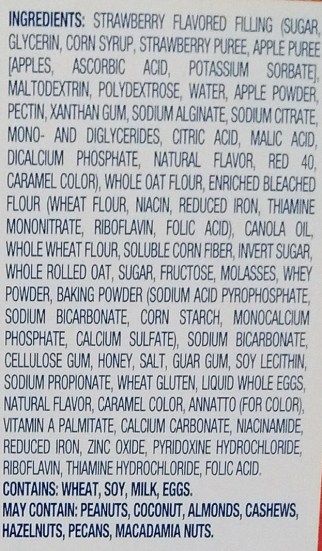
Here’s a fun game: how many different names for sugar can you find on this ingredient label?

Keep in mind that labeling laws in the U.S. require a product’s ingredients to be listed in descending weight order, with the most prevalent ingredient first and so on. Because added sugars are in at least 75% of all processed foods (a conservative estimate), manufacturers are understandably wary of listing sugar as one of the first three ingredients, even if that’s technically true. So the loophole here is to obviously identify sugars individually – that is, maltodextrin separate from high fructose corn syrup which is separate from invert sugar and so on. Did you know that sugar goes by over 60 different names on American food labels, and anything ending in “-ose” is sugar? If you see more than three of these on a product label – especially if they occur within the top three ingredients – put it back on the shelf.

  1. Agave nectar
  2. Barbados sugar
  3. Barley malt
  4. Barley malt syrup
  5. Beet sugar
  6. Brown sugar
  7. Buttered syrup
  8. Cane juice
  9. Cane juice crystals
  10. Cane sugar
  11. Caramel
  12. Carob syrup
  13. Castor sugar
  14. Coconut palm sugar
  15. Coconut sugar
  16. Confectioner’s sugar
  17. Corn sweetener
  18. Corn syrup
  19. Corn syrup solids
  20. Date sugar
  21. Dehydrated cane juice
  22. Demerara sugar
  23. Dextrin
  24. Dextrose
  25. Evaporated cane juice
  26. Free-flowing brown sugars
  27. Fructose
  28. Fruit juice
  29. Fruit juice concentrate
  30. Glucose
  31. Glucose solids
  32. Golden sugar
  33. Golden syrup
  34. Grape sugar
  35. HFCS (high-fructose corn syrup)
  36. Honey
  37. Icing sugar
  38. Invert sugar
  39. Malt syrup
  40. Maltodextrin
  41. Maltol
  42. Maltose
  43. Mannose
  44. Maple syrup
  45. Molasses
  46. Muscovado
  47. Palm sugar
  48. Panocha
  49. Powdered sugar
  50. Raw sugar
  51. Refiner’s syrup
  52. Rice syrup
  53. Saccharose
  54. Sorghum syrup
  55. Sucrose
  56. Sugar (granulated)
  57. Sweet sorghum
  58. Syrup
  59. Treacle
  60. Turbinado sugar
  61. Yellow sugar

Continue reading

The FAQ Series: Sugar, Part One

It’s February, and in America that means we’re celebrating both American Heart Month (take care of your heart!) and Valentine’s Day (so much excess sugar!). Ironic, no? We’re going to return to travel posts from our winter trip to Europe shortly, but in every single one of my recent corporate presentations, I’ve been asked about sugar. Therefore, I think it’s time that your trusted team over here at FQF HQ answer some questions about this ubiquitous yet widely misunderstood ingredient – one that we absolutely need to survive but that is also making us very, very sick.

Sugar 02 sml

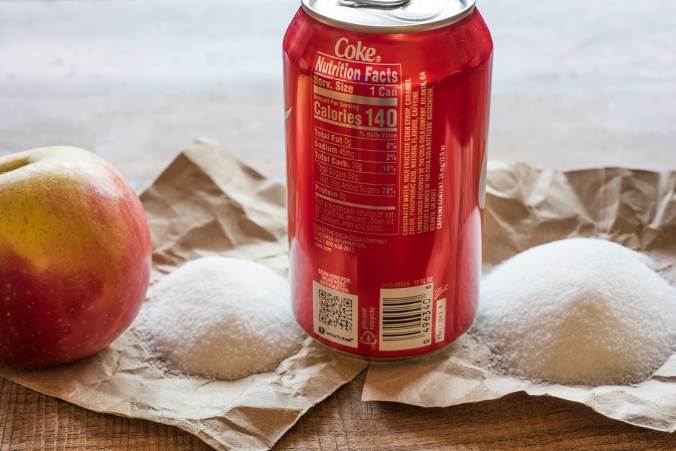
Oh my goodness! So very many sugars! All in my own cupboard!

We’re going to start with the basics, and we’re going to break this post into three parts because it’s that lengthy and it’s that important. (Also, I don’t want you to tune out due to boredom.) I’d argue that no other single ingredient in our collective Western diet right now is as significant as this one, so let’s get a few things straight.

  • sugarany of the class of soluble, crystalline, typically sweet-tasting carbohydrates found in living tissues and exemplified by glucose and sucrose; present in sorghum, maple sap, honey, etc.; used extensively as an ingredient and flavoring of certain foods and as a fermenting agent in the manufacture of certain alcoholic beverages

Let’s break that definition down a bit further: almost every single food we eat – fruit, vegetables, dairy – contains some quantity of naturally occurring sugar. It’s a carbohydrate, and it exists in simple and complex forms, and we need it to survive. But it’s not so much the naturally occurring sugars that are killing us, it’s the added sugars in just about everything.

In this first section, we’re going to talk about commonly available sugars: the ones we might find in our grocery store or pantry, the ones we use every day in our own coffee and tea and cookies and other things we make at home. And in the second section, we’re going to talk about industrial sugars: the ones that are added in for us, the ones we’re totally addicted to and the ones we eat way too much of. Finally, we’re going to discuss how the sugar industry has conspired for decades to convince us that butter and cream and eggs and bacon are the true villains, not sugar, even though they’ve long known otherwise.

Continue reading

Manger et boire à Paris

Of course we went on a food tour while in Paris. How could we not? This is the city where I learned to cook (and drink), and there are far too many delicious choices to navigate on your own. Many thanks to Jennifer from Paris by Mouth, who escorted us through the Saint-Germain neighborhood with grace, hospitality and true passion for food and wine.

PFT-02

PFT-01

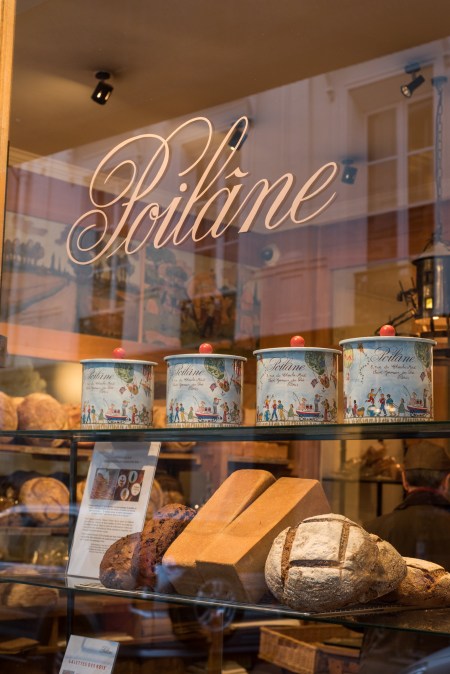
Our first stop: the esteemed Poilâne bakery, the most famous boulanger in the world. Poilâne is operated by Apollonia Poilâne, who took over the company when her parents died in an accident in 2002. She was eighteen, and she ran the company from her dorm room at Harvard until her graduation, four years later. Interviewed during that time, she said, “The one or two hours you spend procrastinating, I spend working. It’s nothing demanding at all.” Words of wisdom, indeed.

Continue reading

The FAQ Series: Box Meal Kits

Well, hello there! How is 2018 treating you thus far? We over here at FQF are currently swanning our way through France and Germany, and we’ll be sending you some delightful travel missives in the not-too-distant future. But until then, we’d like to talk about box meal kits, because they’ve been a popular topic of conversation lately on both our professional and personal circuits.

What are box meal kits, you might ask? They’re basically recipes and ingredients shipped to you on a regular or on-demand basis, from which you craft (hopefully) delicious, quick(ish) meals. You don’t need to shop or plan; all you need to do is decide which meals you want and how often you want them. And there are many, many companies from which to choose. HelloFresh is probably the most well-known, but there is also Blue Apron, Green Chef, Purple Carrot, Plated, Sun Basket and many others. Plus, Amazon recently bought Whole Foods, so they’re expected to enter the ring any day now, and Wal-Mart is jumping in, too.

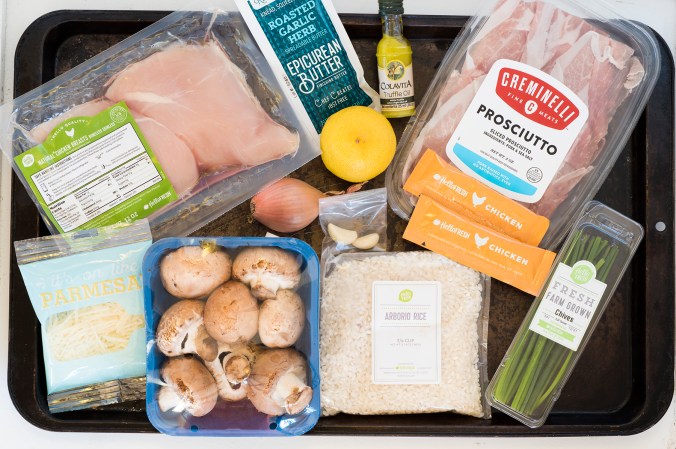
Food Box 01 sml

Thanks to our good friends over at Epicurean Butter, we received two HelloFresh meals to test: Prosciutto-Wrapped Chicken with Mushroom Risotto and Kale Grilled Cheese Sandwiches with Tomato Soup. Although HelloFresh offers a number of different plans to choose from, these two meals were each designed to serve two people and they cost about $20 each, or $10 per serving.

Each meal arrives much as you see above: a shopping bag contains the ingredients, plus a photo recipe card and nutritional info; the shopping bags are then all tucked into an insulated box with packing material and ice packs. Typically, you receive three different meals in a box, but again, this varies according to your plan and the company. Cooking oils, salt and pepper are not included, but everything else you need should be.

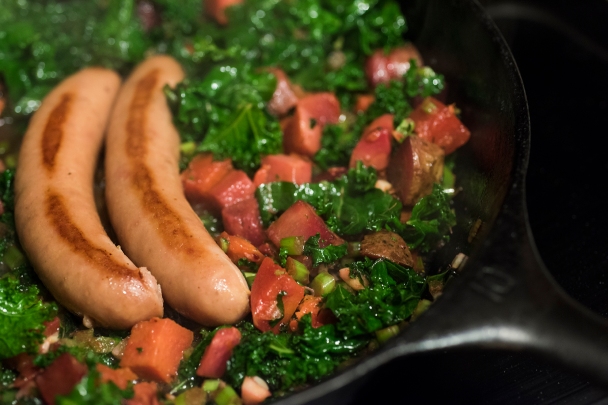
Food Box 02 sml

Despite the fact that I find following recipes very similar to being put in a choke collar, I wanted to honor the spirit of this experiment and pretend that I was a standard HelloFresh customer, rather than a professional chef. So I laid out all of my ingredients, checked them carefully against the recipe card, and followed the directions to the letter. N even read out the instructions to me while I was at the stove; this resulted in much hilarity as my natural instinct was to do everything my way – he had to correct me frequently, and of course I argued. My goal, obviously, was to see how close I could get to the presentation in the photo as well as the preparation time indicated.

Continue reading

How to eat healthier

I may not love Thanksgiving, but I do love everything about January. I love the quiet after the holidays, the fresh start, the clean slate. And of course, this is the time of year when so many of us promise to do better. When we promise to eat right, drink less, stop going out to restaurants so often, quit smoking, save our money, exercise more and all the rest.Snowy trees.jpgI don’t subscribe to the negativity often associated with New Year’s resolutions. (By mid-January, over a quarter of all New Year’s resolutions have been discarded, and only a scant 10% are actually followed through to the end of the year. Those are some pretty bleak statistics.) Changing habits is hard enough; I’d much rather start off on a positive note. I make a list of goals, not resolutions.
And with that positivity in mind, how about a quick primer on eating better in 2018? This isn’t designed to be an exhaustive list, nor a restrictive diet plan, merely a few simple tips to get your head in the right place for making healthy changes in your daily eating. Diets don’t work, but changing your mindset does.

Continue reading

Cooking in cast iron

In my holiday-themed classes, I talk about how I’d rather have two or three really stellar, delicious dishes at a meal than an extensive buffet of mediocrity. I feel the same way about cookware and knives: that is, I’d rather have a few sturdy, durable pieces that perform perfectly and can take a beating, rather than dozens of cheap, flimsy pans or knives that bend, warp, break or just plain fail. Cooking well isn’t only about starting with the best ingredients, but having the tools (and the skills) to turn those ingredients into something remarkable.

Cast Iron 01 sml

See how well-loved they are? I use mine every single day.

I love classic cast iron cookware. I love its heft, its lived-in appearance, its ability to retain heat. I love that it can be passed down through generations, and it only gets better. I love that it’s not shiny, not new, not a throwaway item. I love that it looks like something I should be using over a rickety camp stove to make a fry-up for hungry cowboys out on a cattle drive. I love that there is something of quality still manufactured in the United States. I love that cast iron asks you to cook well and simply and honestly.

Cast Iron 04 sml

You can roast peppers to smoky, tender perfection!

Cast iron cookware has been in use around the world for over two thousand years, and there’s a reason for that: nothing retains heat better while still holding its form. Before we became such a disposable society, cookware like this was valued for its durability and its effectiveness, especially when slow simmering tough cuts of meat. Cast iron goes from stove to oven, and it can be used to make anything: flavorful stews, crispy yet tender cornbread, smoky, filling beans. And nothing – I mean nothing – sears a steak like cast iron. Ask any cowboy.

Cast Iron 02 sml

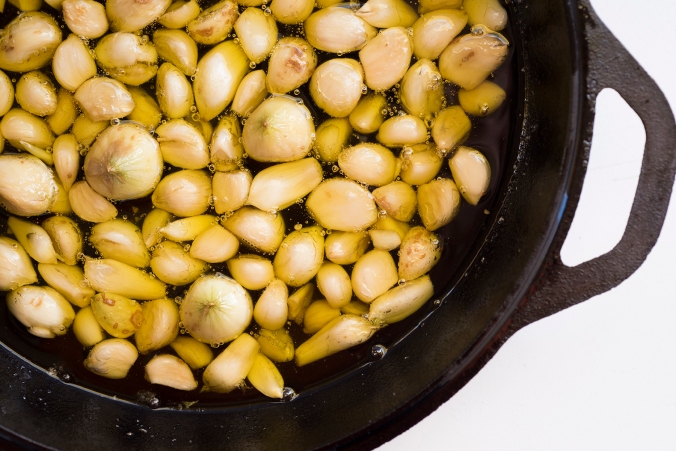
You can create the most amazing garlic confit!

In the first half of the 20th century, cast iron cookware was ubiquitous in America. Then – coincidentally, right about the time we started turning to processed “convenience” foods – cast iron fell out of favor. It was too heavy. Too unwieldy. Impractical for TV dinners. Not suitable for microwaving soup. Couldn’t be put in the dishwasher. And so, most of the American companies went out of business. Today, Lodge is the only major manufacturer in the U.S., although a couple of smaller, “artisan” brands like Finex have appeared recently.

Cast Iron 06 sml

You can make one-pan meals!

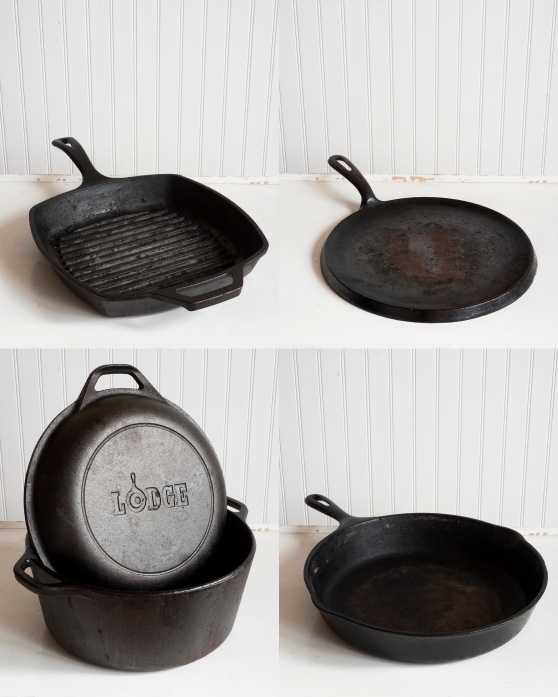
I got rid of my grandmother’s cast iron pans at a garage sale years ago. Freshly minted from an uppity French culinary school, I thought cast iron was too down home, too low-class, too American for my lofty European cooking skills. What misplaced arrogance; to this day, I regret selling those pans. Thankfully, N found a ten-inch skillet for me at a church rummage sale, and I picked up my comal, a flat, round griddle traditionally used for making fresh tortillas, at a thrift store. My other two are classic Lodge, a Dutch oven and a grill pan. They’re all pieces I love cooking with.

Cast Iron 03 sml

You can put a little char on your tomatoes!

If you have any cast iron, take good care of it and it will take care of you for decades. Once it’s seasoned, meaning that you’ve basically created a nonstick surface through a combination of cooking fat and heat, never, ever use soap or any other chemical cleaner on it. Don’t immerse it in water, either. I typically just wipe my pans with a dry paper towel, if necessary, but if you’ve got stuck-on bits, you can heat the pan with a bit of water until they loosen, then scrape them out with a spatula. Really tough messes can be tackled with coarse kosher salt and a scouring pad. You can’t scratch them, can’t break them, don’t have to use any fancy utensils. They are indispensable workhorses.

Cast Iron 07 sml

And the most essential thing you can cook in your cast iron Dutch oven…

Cast iron’s greatest advantage, of course, is also its greatest downfall: their weight means they retain heat beautifully, so they get hot and stay hot, and they’re heavy. Treat them carefully and respectfully. Use both hands when lifting; never try to “one-hand” a cast iron pan. When you remove the pan from the oven and set it back on the stove or other protected surface, do as restaurant chefs do and make sure you leave your kitchen towels on the pan to remind everyone (including you) that it’s hot. Large pans that have been heating for a while may take a couple of hours to cool down, so have a safe place to put them where no one will burn themselves. Don’t leave water in the pan, either, as they can rust, though if you find an unloved, rusty specimen, you can always remove the rust with salt and reseason the pan.

Cast Iron 08 sml

…is quite simply the best bread you’ll ever taste.

Want to build your own cast iron collection? Start here, and thanks for buying American. Their stuff is top-notch and remarkably well-priced. Visit thrift stores and garage sales and flea markets (maybe you’ll find my grandmother’s pans?) but stay away from anything called an “antique store.” Little-known fact: antique is actually French for “overpriced stuff bought cheaply in a thrift store and aggressively marked up.” Cast iron’s resurgent popularity in recent years means anything even vaguely vintage can cost a fortune.

Cast Iron 09 sml

And while we’re on the topic of the French and expensive things, this stuff is cast iron too, but with an enamel coating. It’s gorgeous, comes in an array of coordinating colors so the kitchen at your Provencal château can match the Parisian pied-a-terre and it’s priced for really rich people. Tread carefully with these: they’re beautiful and colorful, but you can scratch that enamel without too much effort, and not all of the knobs and handles are designed for high heat. These definitely require a bit more attention, and a lot more money.

Go cook, friends. And save me some cornbread.


A winter cake

It seems winter in Colorado has been canceled this year, considering that it was nearly seventy degrees (21C for our international audience) when we took these photos. In December. And on one hand, this is delightful, because driving in the snow is truly one of my least favorite activities, despite being a born-and-bred Colorado native. And on the other hand, these disconcerting weather patterns freak me out in a serious fashion. But I’m working on my anxiety, and my ability to “accept the things I cannot change.” So let’s make a cake.

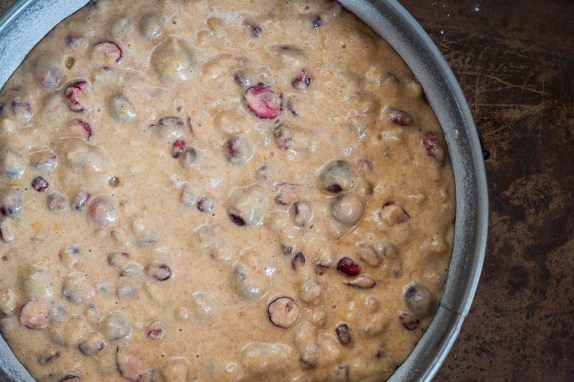
Pom Ginger Cran Cake 01 sml

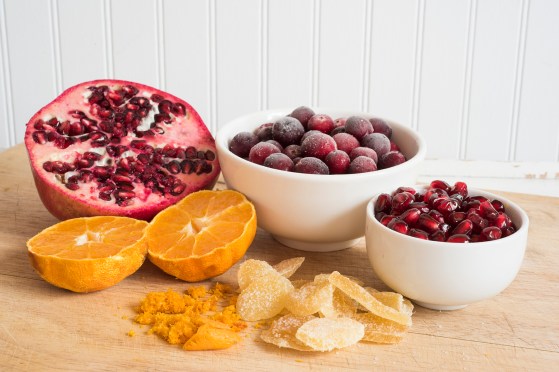
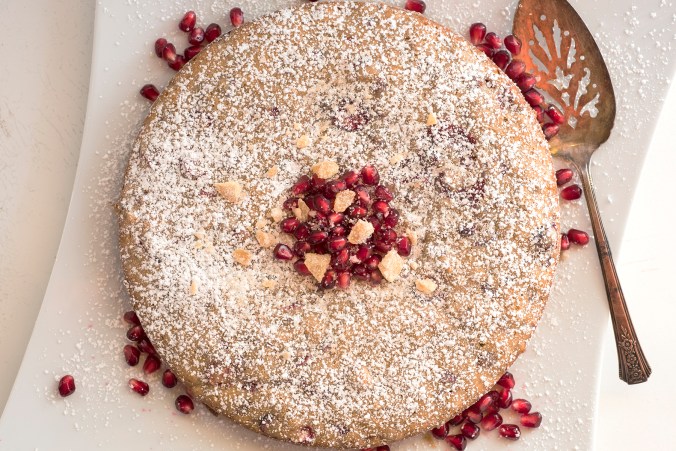
This lovely cake has all the flavors of winter: tangy, bright cranberries and citrus, plus sharp, spiky ginger. And pomegranates. Oh, pomegranates. Is there any fruit I adore more? I think not. When these babies are in season, as they are now, I often eat one a day. Somehow their tart sparkle seems to apologize for the misery of endless winter – or whatever season it is we’re currently having. The cake isn’t excessively sweet, either, which pleases me; if you had a strong, dark honey on hand, I imagine that might be compelling here.

Pom Ginger Cran Cake 03 sml

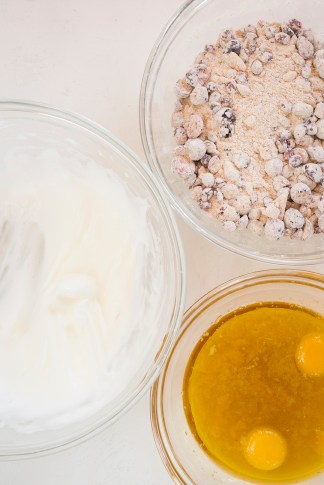
Any time you’re making a light, delicate cake, friends, please be careful not to overmix the batter – it’s a sure way to achieve dense, tough gumminess. This is even more key when baking at altitude, as we are here. Assemble all of your ingredients in advance, then place your liquids in one bowl, your dry ingredients and the fruit in another, and whip the egg whites at the very last minute, when everything else is ready. Never pre-whip your egg whites then go back to put together the other components – their ethereal fluffiness is exactly what you need. (Tossing dried, fresh or frozen fruit with flour helps keep it from sinking to the bottom of the cake, and from bleeding its juices, though that effect can actually be quite pretty. If you’re using frozen fruit, never let it thaw first but just throw it in frozen. And move quickly.)

Pom Ginger Cran Cake 04 sml

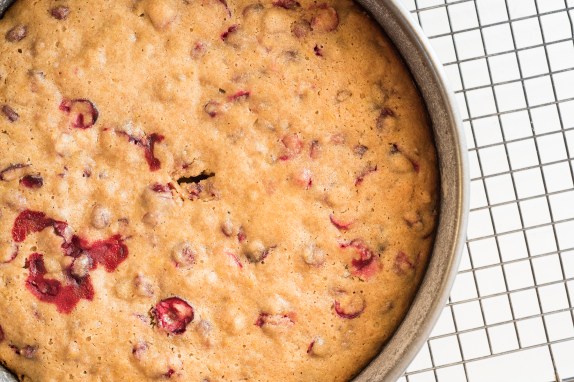
As before, make sure your pan is prepped and your oven is preheated. Once the batter is together, it needs to go straight into a hot oven. This is not the time to dilly-dally.

Pom Ginger Cran Cake 05 sml

This recipe as written makes for quite a moist cake, which is lovely here in Colorado as it stays fresher for longer in our dry climate. I reduced the leavening by 1/4 tsp. and added 1/4 cup extra flour, as is often done when adjusting baking recipes for altitude. If you’re at sea level, you may need to use a total of 3/4 tsp. baking powder. You can probably reduce the whole wheat pastry flour by 1/4 cup at sea level, too. Make sure to check carefully for doneness with this cake; I found that I needed a bit more baking time than the recipe indicates. Ovens vary; adjust accordingly.

Pom Ginger Cran Cake 06 sml


Pomegranate, Cranberry and Ginger Cake (written for 5,300 ft. elevation)

For The Cake

  • 1/2 cup honey
  • 1/4 cup mild olive oil
  • 2 large eggs, at room temperature, separated
  • 2 tbsp. freshly grated orange zest
  • 1/3 cup fresh orange juice
  • 5 tbsp. crystallized ginger, chopped
  • 1 1/4 cup whole wheat pastry flour
  • 2/3 cup all-purpose flour
  • 1/2 tsp. baking powder
  • 1/2 tsp. salt
  • 1/2 cup fresh or dried cranberries
  • 1/2 cup pomegranate seeds, plus more for garnish
  • 2 tsp. confectioner’s sugar for dusting
  

Directions

Preheat oven to 350 degrees. Butter and flour an 8-inch round cake pan; line with parchment paper and butter and flour the parchment.

In a small bowl, stir together honey, olive oil, egg yolks, zest, juice and 3 tbsp. crystallized ginger. In a large bowl, sift together both flours, baking powder and salt. Gently fold cranberries and pomegranate seeds into dry ingredients. In another bowl, beat egg whites and a pinch of salt with an electric mixer until soft peaks form, about 1-2 minutes. Using a rubber spatula, gently fold honey mixture into flour mixture, then fold in egg whites until combined. Do not overmix.

Pour and scrape batter into prepared pan and bake until toothpick inserted in center comes out clean, about 35 minutes. Allow cake to cool on a wire rack for at least 10 minutes; run a knife around sides of pan to loosen cake and turn it our onto rack. Remove paper and allow to cool completely.

To serve, sift confectioner’s sugar over cake and garnish with remaining crystallized ginger and additional pomegranate seeds.

Things that are great!

Friends, let’s start this week with an optimistic post (for once). How about a quick round-up of things that are great right now?


NJB_3308

A small family farm in Hoi An, Vietnam.

The Washington Post reports that a growing number of young Americans are leaving desk jobs to farm:

“For only the second time in the last century, the number of farmers under 35 years old is increasing, according to the U.S. Department of Agriculture’s latest Census of Agriculture. Sixty-nine percent of the surveyed young farmers had college degrees — significantly higher than the general population.

This new generation can’t hope to replace the numbers that farming is losing to age. But it is already contributing to the growth of the local-food movement and could help preserve the place of midsize farms in the rural landscape.”

Granted, the movement is small, but it is in fact a movement. And it’s moving in the right direction. There are numerous barriers, to be certain, but this is progress.

MFGD-46.jpg

How can you not love this munchkin?

Not only are young people going back to the land, but more women are making more incredible cheese than ever. Led by such trailblazing pioneers as Allison Hooper of Vermont Creamery and Mary Keehn from Cypress Grove, handcrafted cheese in this country – primarily made from goat milk, but sheep and cow, too – is truly enjoying its second wave:

“A commonly cited fantasy Plan B among urban paper-pushing professionals, the artisanal-cheese business has surged in recent years, with more than 900 specialty cheese makers in the United States, according to the American Cheese Society, a nonprofit trade organization in Denver. The A.C.S. does not keep data on gender, said its executive director, Nora Weiser, but compared with the bro-centric field of craft beer, where female brewers have struggled to get respect and recognition despite significant contributions, cheese making is a relative haven.”

While “American cheese” has long been a joke in the rest of the world, it is definitely no longer a joke – it’s remarkable. And delicious. Go buy some.

NJB_0197.JPG

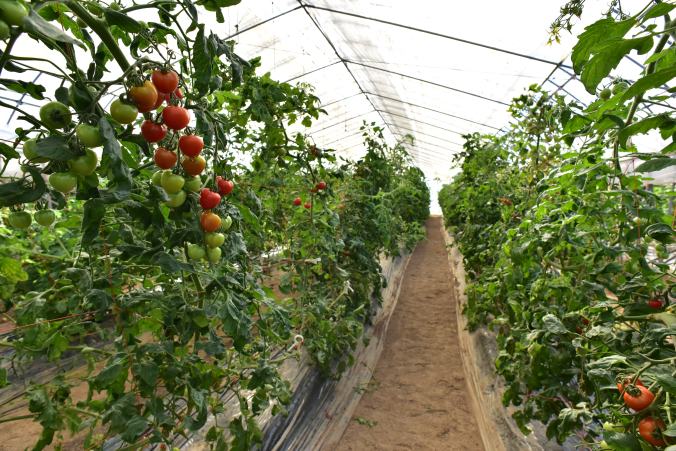
Greenhouse tomatoes in Japan.

In other positive news, vertical farming is finally coming into its own, pushed by high-dollar investments from people like Jeff Bezos, who clearly know a thing or two about running a business. Vertical farming is exactly what it sounds like: growing food in towers, with carefully controlled irrigation, lighting and temperature systems. While farmland continues to be gobbled up at staggering rates, vertical farming, which has been trialed successfully in repurposed shipping containers and other unusual places, might provide a local food alternative, especially in densely populated urban areas. There is still a lot of work to be done, but innovative, forward-thinking entrepreneurs are constantly revamping traditional farming rules. And we will need this sort of innovation, as both global temperature and global population climbs ever higher.

DSC_2678

I’m not putting a picture of soda on this blog. Drink water. (This is Victoria Falls, on the border of Zimbabwe and Zambia.)

And for our final Great Thing today, how about this: soda consumption in the United States has dropped again, for the twelfth consecutive year. This statistic is proof that anti-sugar publicity campaigns and soda taxes are working, at least in some areas. While we’re still drinking about forty gallons per person, per year on average (!!!), those numbers are trending down. And that is definitely a Great Thing.


Crantastic!

We continue our never-ending quest to absorb everything we can about all types of farming, and just in time for America’s most revered Day of Gluttony, N and I learned how to harvest, sort and process cranberries! One of the farms we worked on in Oregon was home to three organic cranberry bogs, so we were able to see firsthand how this unique fruit is both grown and harvested.

NJB_1166

A one-acre dry cranberry bog with harvester. The portion on the left still needs to be harvested, while the section on the right is finished. 

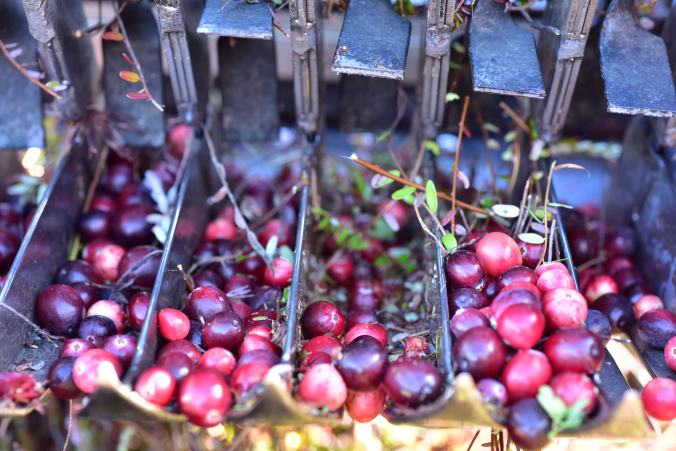
Cranberries are grown in Washington, Oregon, Wisconsin, Massachusetts and New Jersey, as well as in Canada; they’re a low-growing vined shrub and the plants can live indefinitely if cared for properly. The vast majority of cranberries are conventionally wet-harvested, in the traditional bog we know from the Ocean Spray commercials. The organic farm we worked on, however, used dry harvesting. This is substantially more labor-intensive and has lower yields, but organic dry-harvested berries sell for nearly twenty times the amount that conventional wet-harvested berries do. This is primarily because dry cranberries can be sold fresh, packaged into bags in your produce department. Wet berries need to be processed into juice or other cranberry products almost immediately.

NJB_1160

Aren’t they gorgeous? And so good for you. I ate a lot.

NJB_1114

The harvester at work.

NJB_1164

The harvester removes a lot of branches, but not all.

NJB_1141

We filled burlap sacks with berries for transport to the packing shed.

NJB_1225

A surprising number of cranberries are left behind after harvesting.

We followed our farmer with clean, dry burlap sacks, ready to replace the one on the harvester as soon as it was full. It’s really important not to overpack the bags and not to double-stack them on the trailer, as too much pressure will crush the berries and render them unsaleable. I hand-harvested a few pounds of berries left behind; this was unbelievably labor-intensive. Agricultural work is not for the faint-of-heart.

NJB_1245

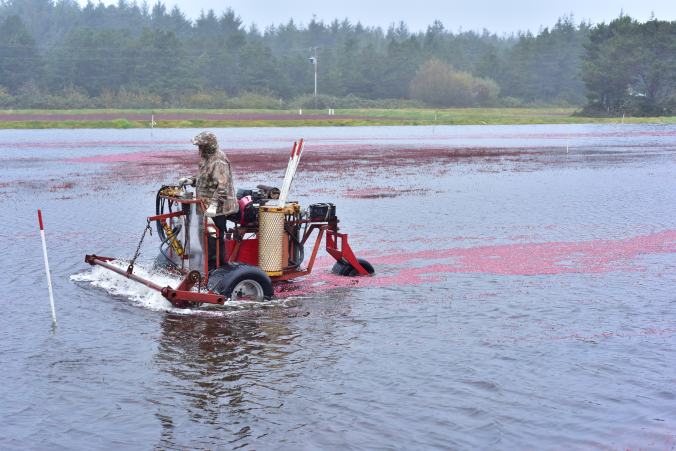
Traditional wet-harvesting involves flooding the bogs and a harvester like this one.

NJB_1246

The berries float to the surface of the flooded bog, where they can be easily scooped. 

We watched a traditional farmer wet-harvest his bogs on a miserably cold, rainy day: not at all fun. Our farmer can only harvest when it’s dry and clear, as the goal is for the berries never to get wet. Even the morning dew had to dry before we could harvest.

NJB_1239

Our daily harvest, ready to be put through the sorter.

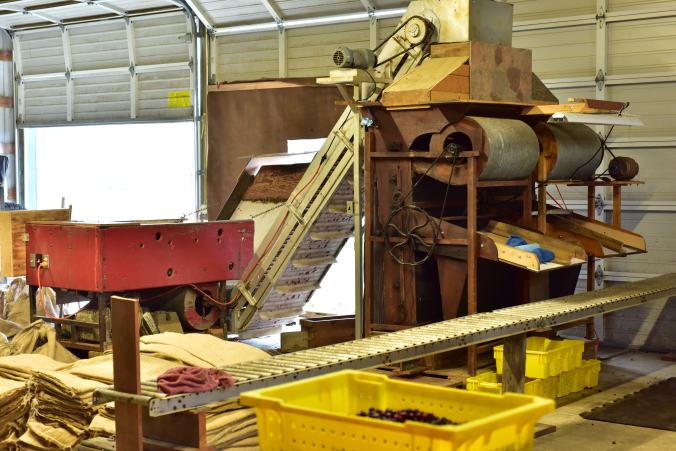
Every day after we harvested, we took our berries to a shared packing shed. Our farmer ran the berries through the sorter, and N and I sorted and packed on the opposite side. Once the berries started tumbling through the chute on our side, we really had to work quickly to keep up, and to ensure that our crates didn’t get too full. As with loading the bags during harvest, it’s essential not to crush the berries on the bottom.

NJB_1241

Berries are run up the conveyor belt, where they’re tested for ripeness.

NJB_1250

We stood here and sorted through the berries as they came down the belt, removing small branches, twigs, leaves and any damaged berries.

Unusually for most produce, cranberries actually bounce when they’re ripe (and float when they’re flooded), so the sorter both removes the larger vines and branches and tests the cranberries for ripeness. Berries that don’t make the cut are dropped into the yellow crates down below, and they’ll eventually be fed to pigs – just like our apple cider waste.

NJB_1211

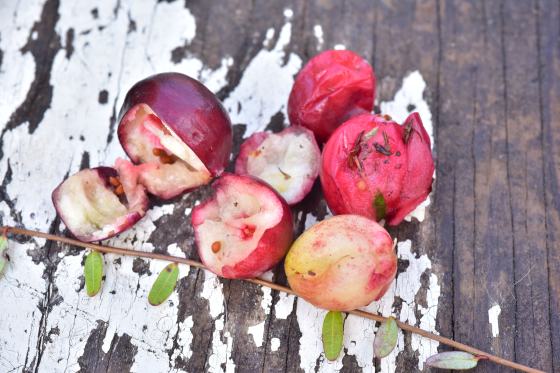
Berries that are split, crushed or otherwise open need to be removed, or they’ll spoil.

NJB_1249

Each crate holds about fifteen pounds of fruit after sorting.

Once our cranberries were sorted into the crates, they would be sent to a central distribution center, where they would be sorted again, washed and bagged. And then they’ll be on the shelves at your local grocery store!

IMG_0976

Only in cranberry country would you see fresh cranberries in bulk; mostly they’re sold pre-bagged.

I grew up in a household where the only “cranberries” we ever saw were in the exact shape of the can they came in. Once I discovered fresh cranberries, I always wondered why Americans only seem to use these once a year. They’re tart, crisp and delicious, and high in vitamin C, fiber and antioxidants, among numerous other health benefits. They’re delicious in oatmeal, baked goods, smoothies and of course as a condiment for roast turkey, goose or ham. Plus, they freeze beautifully, so buy a few extra bags when they’re on sale, and use them throughout the year. They’re great dried, too, but be aware that Craisins and other sweetened dried cranberries can contain as much as 85% sugar by weight, so they’re not nearly as healthy as you’d like to think. Buy unsweetened dried cranberries whenever possible. Oh, and “cranberry juice cocktail”? More sugar than soda. Don’t ever, ever drink it.

Cranberry sauce

Making your own cranberry sauce is by far the easiest thing you’ll prepare for a holiday dinner, and you can do it well in advance. Rinse one bag of fresh cranberries and place in a medium saucepan. Add about 1/2 cup water or orange juice (or Grand Marnier, if you’re feeling flush), a pinch of salt, the grated rind of two oranges or clementines, a bit of grated fresh ginger (or 1/4 tsp. powdered ginger) and about 1/4 cup brown sugar or honey. Simmer gently to allow the cranberries to burst, and stir occasionally to keep the sauce from sticking. Cook over low heat for about fifteen minutes or so, or until the sauce is the consistency you’d like, adding more liquid if needed. Taste and adjust the seasoning. I like to keep my cranberry sauce super-tart because I love the flavor and don’t like things overly sweet, but feel free to add more sweetener if you like. The sauce will thicken once refrigerated and will keep in the fridge for at least two weeks. I keep it thick and use it as jam on toast, too!

Need more inspiration for fresh cranberries? Go here.


Going nuts, vol. 2

We started the year learning about macadamias in New Zealand, so it’s only fitting that we should close it out harvesting chestnuts in Oregon. Prior to marrying an Englishman, I had never eaten a fresh chestnut – only candied, at culinary school in France – but they’ve become part of our fall traditions, as they were for him in childhood. And now that I’ve harvested them myself, I truly have a newfound appreciation for their exorbitant price. These things are little monsters.

NJB_1272

The trees in the grove we harvested are between fifteen and twenty years old.

Chestnut trees are grown across much of the world; chestnuts themselves are important food crops in Asia and Europe. Chestnuts were also hugely valuable to native Americans and early settlers; the fruit is primarily carbohydrates, has more starch by weight than potatoes and contains enough vitamin C to prevent scurvy. In the early 1900s, however, the Bronx Zoo imported Asian chestnut trees for their botanical collection and inadvertently introduced chestnut blight to North America. Within forty years, the blight wiped out nearly every single one of the forty billion chestnut trees in America, with only a few small isolated stands now remaining across the country.

NJB_1275

Usually you’ll find three chestnuts in the burr, but it depends on the species.

The actual chestnuts are contained in a burr, or hull, which is exactly like a tiny, angry porcupine. When the chestnuts are ripe, the chocolate-colored burrs fall to the ground; unlike other fruits or nuts, chestnuts are never harvested directly from the tree.

NJB_1279

Ripe burrs split open, as on the left.

The burrs split open on their own, further indicating ripeness; this is primarily due to soil humidity, as chestnut trees prefer more humid climates. Sometimes unripe (green) burrs will also fall, and if they haven’t opened they should be left to ripen further.

NJB_1271

Dry leaves and empty burrs after harvesting.

Things to know when harvesting chestnuts: you’ll need gloves. Kevlar gloves, to be precise, and yes, that is the material used for bulletproof vests. These things look relatively harmless but are truly vicious, and good gloves are mandatory. And it will take you ages to harvest these; the little burrs love to hide in the huge piles of dry leaves that have also fallen from the tree. They’re like adorable, spiky landmines, and now I know personally why they’re criminally expensive: the pain level is extraordinarily high. (I’m almost certain they were used as extras in this film.)

NJB_1262

Looks harmless. Isn’t.

These edible chestnuts aren’t to be confused with horse chestnuts, which are mildly toxic to humans, or water chestnuts, which are grown aquatically and used in Asian cuisine. Attempts have been made since the 1930s to hybridize the American and Asian chestnut trees, in order to create a native species resistant to blight, but it hasn’t as yet been hugely successful. (On a related note, we’re about to suffer another major loss of trees, as the emerald ash borer – also imported from Asia, on shipping pallets this time – continues its trail of destruction across America. Colorado alone is projected to lose more than two million trees.)

NJB_1261

It took forever to harvest a three-gallon bucket!

Chestnuts are used in savory and sweet preparations all over France and Italy; as with cranberries, they’re commonly seen in holiday recipes because their harvest time coincides perfectly. And in wintertime in cities like London or New York or Paris, you’ll often find street vendors roasting chestnuts over repurposed fifty-gallon oil drums.

NJB_1284

To roast fresh chestnuts at home, carefully cut an ‘X’ into the flat side of each nut. Use sturdy kitchen shears to do this and be very, very careful; the nuts are slippery and unwieldy. Place on a baking sheet and broil until you hear the first explosion, about ten minutes depending on the quantity and your broiler temperature; be patient and wait until the second explosion, which indicates that all of them should be cooked through. Open the oven carefully and quickly lay a kitchen towel over the entire tray as more explosions are likely to follow. Let cool until you can safely handle them, then peel and dip each nut into coarse salt and enjoy. (Sorry about your oven; you’ll probably need to clean up the shrapnel once it’s cooled down. And a pro tip: it’s not a great idea to roast chestnuts in someone else’s oven, unless you’re also willing to clean it.)

NJB_1290

Although chestnuts seem to thwart you at every turn, the reward is well worth the potential injury. Roasted chestnuts pair perfectly with a wee snifter of bourbon and are even better if enjoyed in front of a roaring fire. Take pleasure in the simple things, friends, and clean up the oven later.