Tomatoes not to buy

Definitely a non-GMO tomato harvest.

Hello there, friends. This is a brief but vital public service announcement coming to you from small farmers and seed savers everywhere.

We’ve just passed the Ides of March and are rapidly approaching the spring equinox. As such, in most of the northern hemisphere it is time to start tomato seeds. You might have missed the grand pronouncement – the current news cycle being what it is – but last fall, the first GMO tomato seeds for home garden use were approved by the USDA, and the seeds were released for purchase early this year.

Allow us to be perfectly clear – this is a major shift in GMO technology and marketing, as this tomato represents the very first GMO food crop to be released as seeds for home gardeners. All other GMO crops (primarily canola, corn, cotton, soy and sugar beet) are only available to commercial growers and heavily protected. This tomato was developed in the U.K., where GMOs are illegal to grow (as in Europe). It can only be sold in the U.S. because we steadfastly refuse to regulate GMOs. This tomato is aimed squarely at American home gardeners and will likely show up in stores and farmers’ markets this year.

Press releases for this tomato tout its higher anthocyanin content. If you want higher anthocyanins in your homegrown tomatoes, grow any of the ‘Indigo’ tomato family bred by Jim Myers out of Oregon State University. ‘Indigo Rose,’ ‘Indigo Apple,’ ‘Indigo Cherry’ and more were bred through traditional multi-generational breeding techniques to display deep purplish-black coloration and high anthocyanin content. This is how new tomato varieties should be developed – not by splicing in snapdragon genes.

Respectfully and with great seriousness, we ask you not to purchase these tomato seeds and not to purchase these tomato plants, and if your local garden center or big-box store is selling these, to politely explain your opposition to these plants. The company’s goal here is clearly to reduce American gardeners’ opposition to GMO seeds in the home garden, bringing more and more to market. GMO seeds are not open-pollinated and cannot be saved nor shared. While GMOs may have no impact on human or environmental health (very much still up for debate), they certainly have a significant impact on seed sovereignty and therefore food sovereignty. Seeds, especially food crops, are to be saved and shared, not developed in a lab in a country where they can’t even be sold and then patented and flogged to the ignorant American gardener. Don’t buy these tomatoes.

Questions? Send ’em our way. This is a topic we are happy to discuss at length.

Wishing you all an abundant growing season, wherever you might be in the world.

The 2023 bean harvest

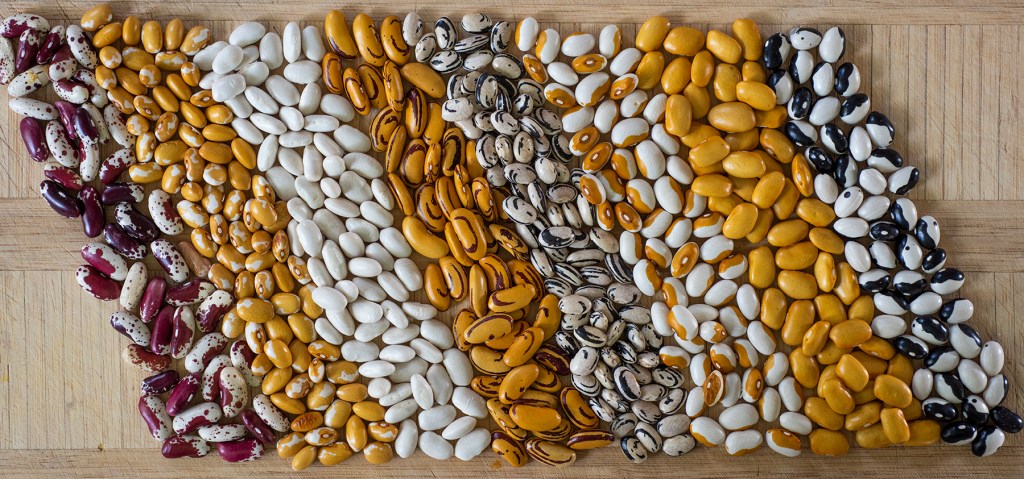
Well, hello there. It’s nice to be here again. We’ve taken a break from posting, but we certainly haven’t taken a break from farming. On the contrary, we have expanded our growing area and our crops. This year, we grew hundreds of pounds of organic vegetables, but we’re most proud of our dry bean harvest – twenty varieties! Read on to learn more about what we grew.

Clockwise from top left: Hopi Yellow, Vaquero, Bolita, Dragon’s Tongue.

Hopi Yellow: A classic yellow bean, larger than Buckeye. Perfectly at home in any soup or stew, this is a bean that will enhance any recipe yet never steal the spotlight. Excellent productivity.

Vaquero: Also called Orca or Yin-Yang (for obvious reasons), these small, dense beans cook up beautifully and produce a rich, inky pot liquor. A stunning bean and surprisingly productive for an heirloom.

Bolita: A lovely, delicate little bean in the pinto family, but smaller and sweeter in flavor. Bolitas are native to southwestern Colorado and New Mexico and figure prominently in the Indigenous cuisine of the region.

Dragon’s Tongue: These pale lavender wax beans grow inside pretty dark purple-striped pods and are most commonly eaten as a fresh green bean, though the attractive pod stripes unfortunately disappear when they’re cooked.

Clockwise from top left: Aztec White, Rio Zape, Jacob’s Cattle, Tiger’s Eye.

Aztec White: One of our very favorite varieties, Aztec White is our top producer and a bean we will likely always grow. These beans are perfect for a white chili or a lush, garlicky dip for crudités.

Rio Zape: We’re proud to grow this spectacular purple and black bean that inspired the creation of the legendary Rancho Gordo. An impressive member of the pinto family, this bean offers deep, dark flavor with coffee and chocolate notes.

Jacob’s Cattle: Like most beans in the kidney family, Jacob’s Cattle’s is dense, meaty and full-flavored. It holds its shape and stands up to strong seasoning, so it makes an excellent chili bean.

Tiger’s Eye: These stunning beans are honestly almost too beautiful to eat. Almost! Tiger’s Eye ripen early due to their thin pods; their correspondingly thin skin nearly disappears in cooking, but they’ll hold their own in any chili or soup.

Clockwise from top left: Hutterite, Cranberry, Palomino, Midnight Black.

Hutterite: Possibly brought to the northern Midwest by Ukrainians in the 1850s, or maybe selected from China Yellow by settlers – like many beans its origin story is a bit murky. This bean is creamy, productive and mild, perfect for any gentle, warming soup or stew.

Cranberry: This comes from a huge bean family; it is likely native to Colombia but is now bred around the world. It’s also called Borlotti, Wren’s Egg and more. Cranberry beans are soft and thin-skinned and they produce a luxurious pot liquor, perfect for pasta e fagioli.

Palomino: This bean is a golden variation of Anasazi, but we choose not to use that disputed name and so have branded it Palomino. Like other yellow beans, it is creamy, mild and versatile.

Midnight Black: A true black turtle bean with traditional flavor and an inky broth, this bean originates from Rancho Gordo’s seedstock. Fresh black beans, cooked from dry, will completely change hearts and minds on using canned black beans.

Clockwise from top left: Forelle, Mayocoba, Peregion, Yellow Eye.

Forelle: Officially known as Forelle fliederfarben, which translates to ‘lilac trout’ in German, these round, purple beans with black stripes are absolutely gorgeous. This variety produced abundantly, always a surprise for heirloom beans.

Mayocoba: Native to either Peru or Mexico, these are creamy, pale yellow, thin-skinned beans with a soft, buttery texture. They make excellent refried beans.

Peregion: These come out of the Pacific Northwest and have a gorgeous zebra coloration. One of the few beans where the striping is still (faintly) visible after cooking, Peregion are productive and delicious.

Yellow Eye: These beans are both rich and mild, more a supporting character than an outright star. They are an old New England variety and the bean of choice for classic Boston baked beans.

Clockwise from top left: Garbanzo, Buckeye, Marcella, Red Cranberry.

Garbanzo: Also called chickpea or ceci bean, this legume is most commonly used in hummus and other Middle Eastern dishes. Garbanzos are not native to North America like most other beans here and are low-yielding and tricky to grow – but the unusual, fronded plants are fun to see in the field.

Buckeye: Rancho Gordo says, “A small, dense yet velvety bean that holds its shape and provides a rich bean broth. Easily one of the staff’s favorite beans. Buckeye is incredibly creamy, almost more like a classic black turtle bean than anything else. It’s dense without being intense, if that makes sense.” Can’t top that description.

Marcella: A long white cannellini-style bean, named by Rancho Gordo in honor of the great Marcella Hazan. Thin-skinned and creamy; ideal for brothy Italian-style soups and rich, flavorsome dips and spreads.

Red Cranberry: An old variety, likely grown by Indigenous tribes in the northeast U.S. Gorgeous rich red color and much rounder than the more common striped/speckled cranberry bean above. Listed in Slow Food’s Ark of Taste.

We could go on and on about dry beans (and have, previously), but let’s sum it up like this: they’re native to our region and therefore exceptionally drought-tolerant. They’re an incredibly nutritious source of plant-based protein and beneficial fiber. They require almost no care, and they are not plagued by pests, viruses or disease so require no inputs, at least in our microclimate. They keep well. And they actually give more than they take, replenishing the soil with each season’s growth. Beans are an absolute powerhouse in every category, and they’re a great addition to Quiet Farm. We’re deeply proud of our 2023 harvest, and are already evaluating what varieties we’ll grow next year.

More than ever, we know that small, regenerative farms are the only sure way out of this increasingly catastrophic environmental mess we find ourselves in. We encourage you to support small farms in whatever way makes the most sense for you and your household.

As always, thanks for being here. We’ll be back again soon!
The season in review

It’s surprisingly cold now, in late November, although dry and clear. As always, we’d love for some of the snow blanketing other parts of the country (hello, six feet in Buffalo!) to bestow its generosity upon us here, but nothing shows in the forecast as yet. Days are crisp and blue, and nights definitely require extra quilts. The sunroom is still full of cardboard trays of slowly ripening tomatoes and peppers; this unheated room works perfectly for cold storage and allows these vegetables to ripen slowly with sunlight but without so much warmth that they’d rot. Certainly something is sacrificed in terms of flavor when crops aren’t allowed to ripen outside, but we have a reasonably short growing season here so we have to work with what we have – and it’s a lovely treat to enjoy our own fresh tomato salads well into winter.

Those cardboard trays are slowly transforming into rustic, delicate ristras and canning jars of salsa and sauce; seeds are mostly dried and packed away. The winter squash bounty hasn’t been tapped into yet; that will carry us through the coldest months and into fragile spring with warming soups and curries. New planting rows for next year have been plowed and filled with compost. The plants we pulled out have been mowed into bits to break down into compost over winter; the beds have been mulched with spent straw and next year’s garlic has been planted. In all ways, our season is gradually winding down and we’re more than ready to tuck ourselves in for a couple of months of much-needed rest.

We’re still reviewing our season, cataloguing our successes and noting what changes and improvements we plan to make for next year. This year certainly had its challenges, but it definitely offered wins, too! Read on for more about the 2022 growing season.

Continue reading

The bean harvest

Our eight bean varieties from the 2022 harvest.

Here we are, dear friends, and yet again I’m singing songs of love and devotion to beans – specifically our own 2022 harvest! My total and complete adoration of dried beans is no secret. Not only are beans one of the most inexpensive yet nutritious whole foods available, but as nitrogen-fixing legumes they actually improve soil. They grow well in our tricky high-plains desert environment, they don’t require much water and they’re very low-maintenance. There can hardly be a better edible crop to grow! Plus, as the world gradually starts to realize that a meat-centric diet for nine billion people simply won’t work, beans (and other nutritious legumes and pulses) will become ever more important as plant-based proteins. We’d like to get ahead of that curve and start cultivating more edible legumes on our farm, for both our own health and our soils, so this year we planted a test crop.

Continue reading

Hello + free class!

Hello there. It’s been a minute, no? This growing year has presented a new array of challenges and learning opportunities. We will shortly mark the fall equinox; like most (all?) farmers, we pay close attention to these seasonal transitions and how the gradual changes in light and warmth impact everything we do. Things are winding down here and we can tell that our bodies and minds are ready for the natural rest offered in late fall and winter. Humans may think they’ve evolved ‘beyond seasons,’ but the truth is, we are still agricultural beings at heart, and paying close attention to those shifting rhythms benefits everyone.

Before the much-welcomed slowdown, however, there is still lots of preserving to be done for the (hopefully long) winter ahead! And to that end, I’m teaching a free canning and preserving class this weekend at our local library. More information can be found here. If you’re in the area, please come out and say hello!

We’ll be back again soon with tales of our growing adventures, book recommendations and project highlights. Wishing you all a safe, healthy and pleasant fall.

Farm update: June 6

Hello, friends. Here are a few things we’ve been up to on the farm lately, if you’d like to see.

Look! Asparagus!

We are excited to announce our first official asparagus harvest. ‘Harvest’ is likely a bit of a misnomer, as virtually all stalks were snapped off and consumed fresh in situ, but still an event worthy of note. Asparagus is most commonly planted from crowns, which are often purchased at two or three years old and therefore more expensive; we started asparagus from seed two years ago (with a replant last year) which is markedly less costly. Starting from seed, however, is definitely not the way to go if you’re looking for rapid results. We now have eight healthy crowns and they’ll continue to produce for at least ten years, if not longer. Next year we’re very much looking forward to harvesting enough asparagus to actually use in a salad or pasta!

Continue reading

Fight inflation in the kitchen

The total came to nearly $90 – four painfully small canvas totes of groceries that did not include meat, cheese or eggs. Had I been shopping at an ultra-fancy Amazon-owned health-halo organic market, this might have seemed reasonable, or even a bargain. Instead, I was at the (sadly) best option in our poor, rural county: a grim, dark and untidy corporate chain store with exploitative policies, limited fresh produce and extensive displays of cheap soda, chips and cookies. Shopping here is not pleasurable, by any stretch of the imagination; both the atmosphere and the prices leave much to be desired.

Unless you’re named Musk or Bezos, you’ve likely noticed that inflation has started to bite, and to bite hard. In the twelve-month period ending this past March, the U.S. inflation rate was 8.5% – the highest it’s been since late 1981. In the simplest economic terms, inflation means that our money doesn’t go as far as it used to. The huge conflagration of various challenges we’re facing right now – a global pandemic, the pointless war in Ukraine, climate change, housing instability, supply-chain disruptions, insatiable greed – means that we’re all experiencing inflation to varying degrees. The good news is that in almost all cases, you can control how much inflation affects your individual household by adjusting your own behavior. No surprise, then, that one of the easiest places to accomplish this is in the kitchen.

Before we really start whining about grocery prices, however, I want to make it perfectly clear that the average American spends far less on food as a percentage of their household income than do most other developed nations. The best available statistics indicate that we spend about 7% of our budget on food, whereas in the U.K. it’s closer to 9.5%, and around 15% in France, Spain and Italy. On a relative basis, our food is devastatingly cheap here; this is because we have absurd federal farm subsidies and because we’re a net exporter of food, which means we produce a lot. (Our cheap food is obviously both terrible for the environment and our own health, but the system holds!) Unfortunately, we’re very spoiled and therefore accustomed to cheap food, which means that we’re far more sensitive to price increases than other countries. (See also: $90 for four tiny bags of groceries, above.)

If you, too, are starting to feel the sharp stick of inflation in your own food budget, we hereby present some easy ways to keep your food costs down, eat healthier, and reduce environmental impact. It’s a win-win-win!

Continue reading

Hello there

“We are bewildered at what can happen out in the world in such a short time. We are not qualified to make heads nor tails of it all, and it is humbling to be able to do so little in response. However, we do our work of peaceful and close-to-home living as best we can. Try not to depend too much on the larger greedy systems that perpetuate war and its profits. The daily points where our bodies remain connected simply and physically to the Earth still need looking after – food, shelter, warmth, family –  the seeds sown, the wood chopped, the flour ground, the dough mixed.  It’s a blessing to be given the time and space to do those things, thoughtfully and with humility.”

-Barn Owl Bakery, Lopez Island, WA, March 2022

Kale: strong, resilient, nutritious. The plant I aspire to be.

Hello there. We are here, and we hope you are, as well. In a world that feels ever more suffused with madness each passing day – e.g., the IPCC thoughtfully released its latest report three days after the invasion, thereby guaranteeing we will all continue to ignore the existential crisis staring us right in the face while we focus instead on a pointless and devastating and intentionally distracting war – we are planting seeds, tidying winter debris, plowing new beds and generally readying ourselves for another productive growing season at Quiet Farm. Collectively, we’ve careened wildly from one catastrophe to the next over the past two years, and we are all exhausted, drained, sad and anxious. Once again, getting our hands into the soil and quietly producing something real, substantial, edible and nourishing seems far and away the most useful response to the ever-increasing chaos out there.

We hope you, too, will plant something this year. We’ll be back again soon.

Farm update: November 22

Hello and what’s new in your world? Here at Quiet Farm we very much wish that winter would appear already. We haven’t had even a dusting of snow since that frost back in October, and it’s barely cold enough to freeze the animals’ water or kill off all the aphids on the kale. Far too warm for late November – but don’t you worry, our trusty politicians are taking care of that pesky climate collapse issue even as we speak.

Our fall harvest has all been successfully preserved; the last of the ripe tomatoes went into the sauce pot yesterday. Chiles are drying in the sunroom, ready to be pulverized into chile powder; pumpkins and squash are neatly stacked on shelves; apples and onions remain in cold storage in our insulated woodworking shed. We are stocked and ready, and we invite Serious Winter to show up immediately if not sooner.

Here are a few more things we’ve been up to recently, if you’d like to see:

Bright, tart pomegranate seeds make these amazing waffles even better.

Obviously we’ve discussed the waffles previously, but yet here we are again. I made a fresh batch last weekend and since holiday brunches and family gatherings and all sorts of festivities are lurking just around the corner, I must evangelize the waffles once more. Please, dear friends, if you do not make one other thing from scratch this holiday season, please make these waffles. I know this level of devotion to a seemingly innocuous breakfast food seems a bit over the top, but trust me – these are the best waffles ever, and you can stop Googling ‘best waffle recipe.’ Plus they’re very easy to make, and they freeze beautifully – you can just have fabulous homemade toaster waffles any time you like, and you can also stop buying expensive processed frozen waffles with mysterious ingredients! The recipe hails from Fannie Farmer by way of Marion Cunningham’s brilliant The Breakfast Book, which I highly recommend. (But seriously, go make these waffles. Do it now.)

Hot sauce doesn’t have to be just painfully ‘hot.’

Making hot sauce is always part of our farm preservation work each year. Although I’ve experimented with lots of different types of hot sauces, for the moment I’m keeping it simple – one fiery-sweet red version, very loosely based on Sriracha and this Melissa Clark recipe, and one fermented serrano version, a rough knock-off of green Tabasco. The red hot sauce is definitely milder, with a gentle undertone of sweetness from the red bell peppers, while the green is a tangier, sharper vinegar-based sauce, used more sparingly. As a personal rule, I don’t love aggressive, punch-in-the-face hot sauces; I want a bit of heat but would still like to taste whatever I’m eating. Hot sauce is simple and inexpensive to make at home, keeps indefinitely and is a thoughtful consumable gift for anyone on your list who likes things spicy. (P.S. If you buy classic Sriracha, save, wash and reuse the iconic squeeze bottles for your own homemade hot sauce.)

Small part. Big impact.

I don’t in any way fancy myself an influencer, but if I can influence you to NEVER, EVER buy GE appliances, please allow me to do so. We have a full suite of GE appliances in our kitchen – all of which came with the house – and every single one has failed at least once. Most recently we found ourselves without a functioning oven, which is quite challenging for someone who bakes on a more or less daily basis. Some investigation and a few helpful YouTube tutorials later, we ordered a new igniter. (Of course, I foolishly ordered the first igniter from GE and it arrived pre-broken, thanks to their careless packing. The second igniter, from an entirely different company, arrived in perfect condition, but obviously it was now two weeks later. Thanks again, GE. You’re tops.) We successfully installed the new igniter – a five-minute job, though gaining access to the compartment and putting everything back together neatly made it more like an afternoon – and lo and behold, we thankfully once again have a working oven. As always, successfully learning to repair things ourselves goes a long way towards our goal of self-sufficiency.

Crispy, salty, savory and delicious hot or at room temperature – galettes are winners.

And of course with a working oven, we can once again make delicious meals like galettes! Like the waffles above, we’ve extolled the virtues of galettes previously – they can be sweet or savory, hot or cold, made in advance or pulled fresh from the oven – and they lend themselves well to using up whatever odd bits and ends you might have on hand. They’re also beginner-friendly, if you’re intimidated by all the perfect pies you’re seeing right now; galettes are designed to be “artisanal” and “rustic” which – fun fact! – are both Latin for “messy” and “imperfect.” This time of year our galettes are most likely to have fall flavors, like delicata squash, caramelized onion, peppery goat cheese, sage and rosemary – but honestly, you can put pretty much anything you want in one. If you’ve got a couple rounds of pastry dough in the freezer you’re halfway there; galettes are easy to prep for holiday gatherings and perfect as a vegetarian main dish or as a simple, impressive dessert.

Available now as an NFT: “Untitled: Llama and Alpacas at Rest, 2021”

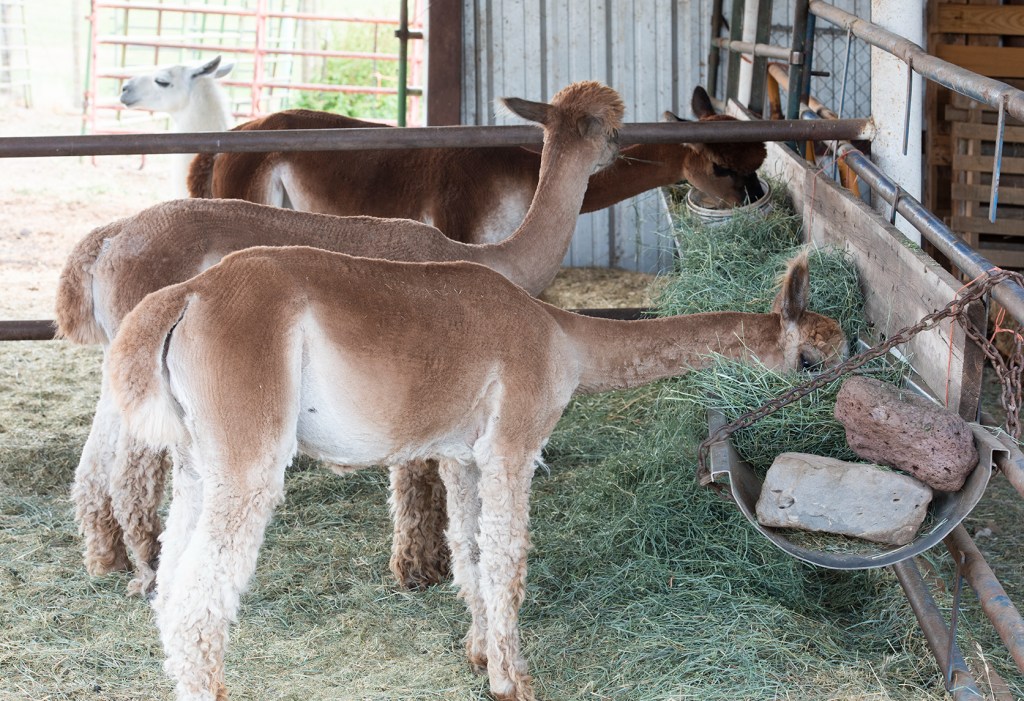
And finally, it’s always nice to observe our camelid herd lounging peacefully in the pasture; if they’re at rest, it means they’re getting plenty to eat. We’re regularly challenged by this rebellious bunch of feral miscreants, but they add a certain flair to Quiet Farm, and we’re glad to have them here.

Wishing you all the best during a tough time of year, dear friends.

A word on seeds

“The best way to oppose a system is often to create something better to replace it.”

Scarlet runner beans, grown mostly to attract hummingbirds but also delicious to eat. Plus the beans are gorgeous.

I read a Wall Street Journal piece recently that really stuck in my craw. The article details the ongoing global supply chain challenges, specifically focusing on the Halloween season:

“Ben Wieber, a 27-year-old professional services consultant in Kalamazoo, Mich., struck out trying to purchase a miniature haunted house in-store to add to his Lemax Spooky Town collection, a line of Halloween-themed animatronic figurines and buildings. He was also broadly disappointed in the amount of Halloween décor available at stores near him.

“I went to Lowe’s, Home Depot, T.J. Maxx, HomeGoods and I’m already seeing Christmas stuff replace the Halloween stuff, which is ridiculous,” Mr. Wieber says. “I’m like, hello? Are we just skipping Halloween this year?”

This appalling anecdote immediately brings to mind two things: 1. Obviously the pandemic is over and 2. Even more obviously the apocalypse is nigh. Late in 2021, after more than eighteen months of crushing loss and death and isolation and sickness and disinformation and loneliness and unrest and economic devastation and fury, we have clearly reached the point at which all of our mental energies – and our time and gas! – can be laser-focused on buying yet another cheap trinket that we don’t need but are angry that we can’t get. I’m like, hello?

We grew spectacular peas this season.

I am particularly caught up in this obsessive need to buy tacky, energy-intensive, disposable, Chinese-made plastic holiday decorations because at the moment, much of my own time and energy is focused on saving seeds from this growing season. We’ve talked about seeds regularly here at FQF HQ, but in the wake of what’s occurred over the past year and a half, and what’s certainly coming down the pipeline (I’m like hello, irreversible climate change!) seeds have taken on a new significance.

Cleaning saved basil seeds is a bit labor-intensive – the seeds are actually those tiny black specks in the lower right – but worth the effort.

To understand why seeds are so essential to human survival, it’s important to understand just how much has changed in only the past century. For about ten thousand years, since the shift from nomadic hunter-gatherer tribal living to established agriculture, humans have saved seeds. No seed companies existed until recently, of course, so the only way to ensure food for the following year was to save seeds from this season’s harvest, and to trade and barter with neighboring farmers for their seeds. Because seeds were so necessary for human survival, they were rarely shipped and therefore didn’t travel long distances; by their very nature, these seeds were perfectly adapted over generations to the unique microclimate of the area in which they were grown. Saving seed is so painfully obvious – the ability to grow food so clearly a basic human right – that it never occurred to small farmers that a seed could be patented as intellectual property, like a song or a book.

The squirrels didn’t steal all of our sunflower seeds this season!

This system worked beautifully until Big Ag wanted in on the action after World War II concluded. To summarize an incredibly complex situation in a few glib words: much of the world’s food supply is now based on patented hybrid and/or GMO seeds. Three large multinational corporations now control over 70% of the world’s seeds, and therefore over 70% of the world’s food. It is illegal under a variety of laws to save and propagate these seeds, and in most cases the seeds won’t breed true anyway. This global movement away from seed sovereignty (“the farmer’s right to breed and exchange diverse open-source seeds which can be saved and which are not patented, genetically modified, owned or controlled by emerging seed giants”) threatens everyone on the planet, yet apparently we’re too busy looking for unavailable Halloween decorations to care about that.

Even now, there are only a handful of seed companies in the U.S.; there used to be thousands, each with their own regional specialties. Buy from Johnny’s or High Mowing and you’ll likely get seeds grown out in Maine or Vermont or somewhere else in New England. They’ll probably produce, yes, but Maine and Vermont are pretty different climactically from the high-plains desert we grow in, and I’d like to have a greater chance at success with seeds adapted to my region. And of course we all remember what happened in the spring of 2020. Seed companies were entirely overwhelmed by demand once it became clear that the pandemic was here to stay, and seeds weren’t available anyway; if they did arrive, it was long after planting season. I’m simply not willing to stake my household’s food security on the rickety scaffolding of unprepared seed companies, global panic and the USPS.

Onion seeds are easy to harvest and save, but they must be collected before they’re wind-dispersed.

Back in September, the U.N. – an utterly useless pretend mafia of pompous self-important incompetent blowhards, if you want to know my real opinion – convened the first Food Systems Summit, which was theoretically designed to “determine the future of agriculture.” Yet the small farmers who actually grow the majority of the world’s food were not offered a seat at the table. Instead, in a move surprising to precisely no one, the loudest and most prominent voices were those of Big Ag and Big Pharma, mainly companies who have committed grievous biopiracy by patenting landrace seeds and inventing GMO crops that threaten both the planet and human health. Dear United Nations: Praising Monsanto/Bayer for its breathless promises to cure global hunger – an issue it directly causes AND profits from – by patenting seeds is like praising Jeff Bezos for his commitment to solving climate change. In effect, you don’t win a prize for claiming to “fix” a problem that you directly helped create (and made billions along the way!).

All this is to say: convening a bunch of billionaires – who have probably never grown a single tomato in their lives – in some sparkly ballroom in some fancy city far from any actual agriculture isn’t likely to solve the world’s food problems. And for that reason, hundreds of food sovereignty organizations, indigenous and smallholder farmer groups, and scientists boycotted the U.N. summit, and rightfully so. It is absurd to think that Big Ag and Big Pharma would have even the slightest interest in working in tandem with small farmers on improving food systems; their respective interests are entirely at odds. Seed companies don’t make money if people save their own seeds! To maintain the very profitable status quo, power must be kept in the hands of the few, and making seed saving illegal (and useless, in the case of GMOs and hybrids) is one very effective way to maintain that power. (These corporations would still do well to remember the other side of the coin: most revolutions start when people are hungry.)

Be careful with cayenne pepper seeds – gloves are recommended!

It is so easy to feel entirely hopeless and dejected in the face of the world’s mounting problems, and to feel as though our own actions don’t count in the slightest. It doesn’t matter that we conscientiously sort our recycling and bring it to the drop-off center; virtually all of America’s “recycling” is actually dumped straight into the landfill. It doesn’t matter that we don’t use A/C or heat in our house, and instead try to maintain comfort with fresh air and warm sweaters; most of the country is now accustomed to perfectly-calibrated indoor temperatures requiring vast amounts of energy. What does matter, however, is our seed bank. Saving our own heirloom, open-pollinated seeds, and sharing them widely with other growers in our area, actually makes a difference. That classic question about what you’d save in case of a fire? It’s a real consideration where we live, and our small, compact, lightweight, portable seed bank would be at the top of the list. With those seeds, we can feed ourselves, and there is no greater human accomplishment than self-reliance.

Marigolds always remind me of our travels in India.

We save seeds here at Quiet Farm because we want control over our own food supply. We save seeds because we want to share seeds and encourage others to grow food. We save seeds because we want to steward unique, rare varieties of plants that grow well in our challenging climate. We save seeds because we believe the only way to reasonably face climate change is through adaptation. We save seeds because we do not believe that Big Ag and Big Pharma have our best interests at heart. We save seeds because anyone can claim to be an ‘activist’ while not actually doing anything – but stewarding a seed bank is a tangible, useful, productive way to protest against our rapidly dwindling power as small farmers. We save seeds because it matters.

So save your seeds, friends. You might well need them someday. And save your animatronic haunted houses too – apparently they have some value on the resale market. Try Ben in Michigan.

Kale typically only sets seed after its second growing season here.

P.S. If you’re in our area (or even if you’re not!) and you’d like to learn more about saving seeds, please consider joining the Rocky Mountain Seed Alliance,  “a nonprofit organization working to assure an abundant and diverse supply of local seeds for the Rocky Mountain region through education, networking, and establishing community-based models of seed stewardship.”