Farm update: July 26

And here we are at the tail end of July, scrambling to complete everything that needs doing. Each night before sleep finally arrives I focus on designing bright, colorful quilt patterns in my head – calming mental Tetris – rather than running through all of the tasks I didn’t complete during the day. The tomatoes need to be pruned and re-staked, again. The arugula and lettuce seeds need to be harvested, the straggly plants composted and the beds reseeded. The garlic needs to be pulled and cured. The mallow, bindweed and puncturevine are threatening a total takeover. And on and on and on. I feel a thousand miles behind on everything, and I remind myself to complete one task at a time. Also, I regularly remind myself to enjoy the moment I’m in, rather than race on to the next without even pausing for breath. (Easier said than done, no?)

Purple coneflower (Echinacea purpurea).

Admiring our seasonal plants is a great way for me to stop my frenzied rushing for just a moment. Many of our flowering perennials didn’t bloom this year, thanks to the drought, but we do still have a few. Echinacea, or coneflower, is one of my favorites, and the bees love it, too. (Our pollinator population is also greatly diminished this year, likely due to the lack of blossoms in the neighboring orchards.) Echinacea has been touted for years as an herbal remedy for just about any ailment, including the common cold, but legitimate scientific studies on this are lacking in substance, to say the least. Still, the coneflowers grow well here and I’m hopeful that I can expand their presence on the farm in future years.

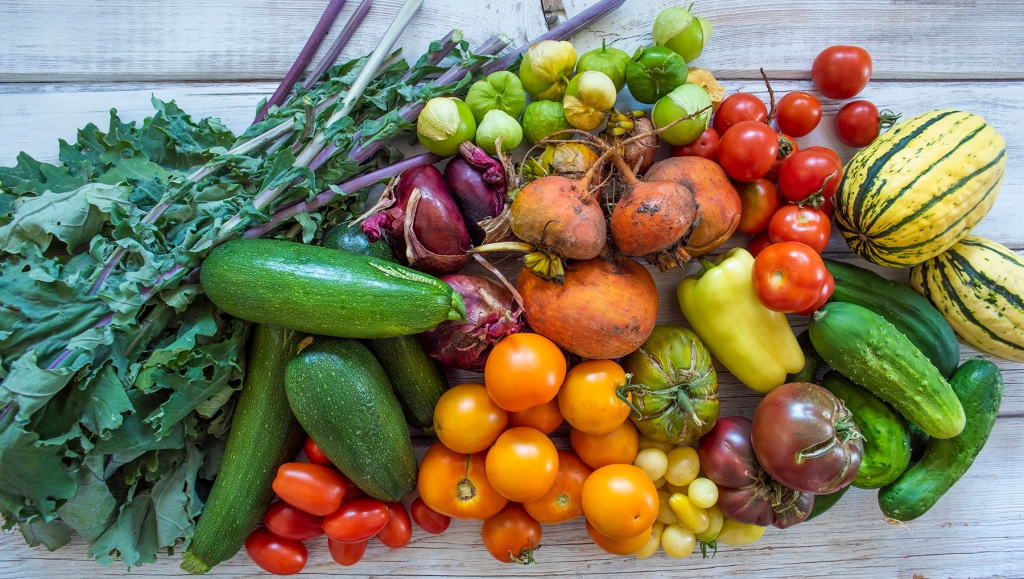
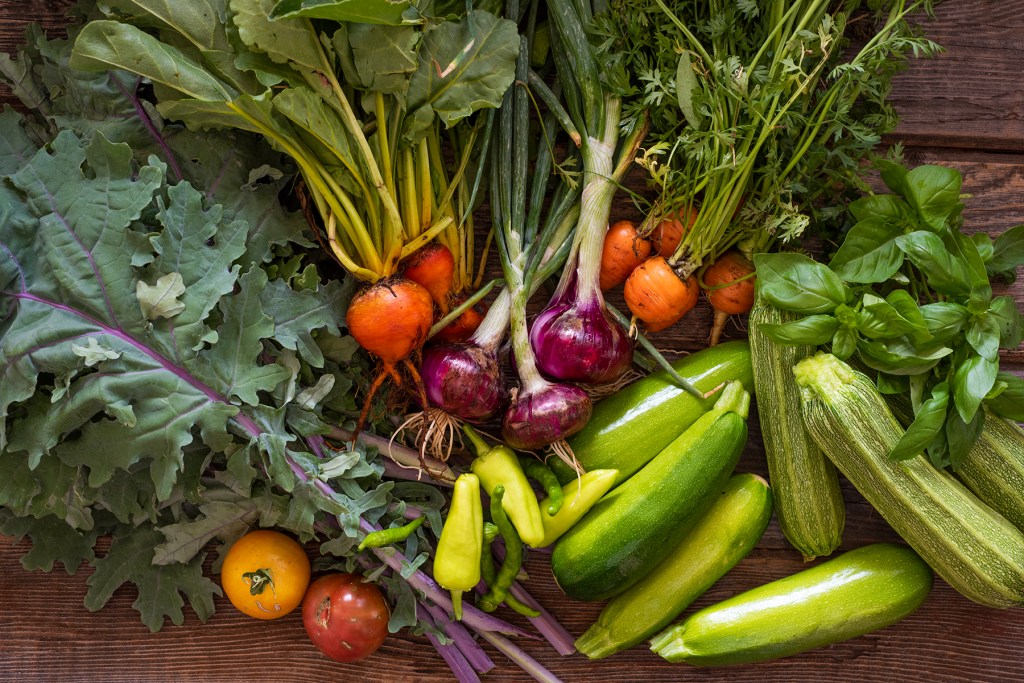
Just one day’s harvest…

Late July and August are the months we eagerly await all year – when the vegetables start rolling in. The flipside of that, of course, is that then you need to have a plan for what you’re going to do with all of that glorious food. Onions and kale are easy to deal with; they are garden stalwarts and stay fresh for weeks. Carrots and beets need to have their greens removed, at the very least; I usually don’t wash them until just before I’m ready to use them. The zucchini, of course, is where things start to feel overwhelming. Anyone who has planted zucchini knows full well that through some mysterious garden trickery you can check the plants twice a day and still end up with overgrown monsters. I like to harvest the squash when small and use it in salads, galettes and pastas; I also shred and freeze it for muffins. And our tomatoes are just now starting to come on; we’ve had a couple of early Juliets, plus a Lemon Boy and a Black Krim. The real bounty will start showing up in about ten days, and as with every year, I’m looking forward to an absurd excess of tomatoes. They never go to waste here.

So fresh! So crisp! So delicious!

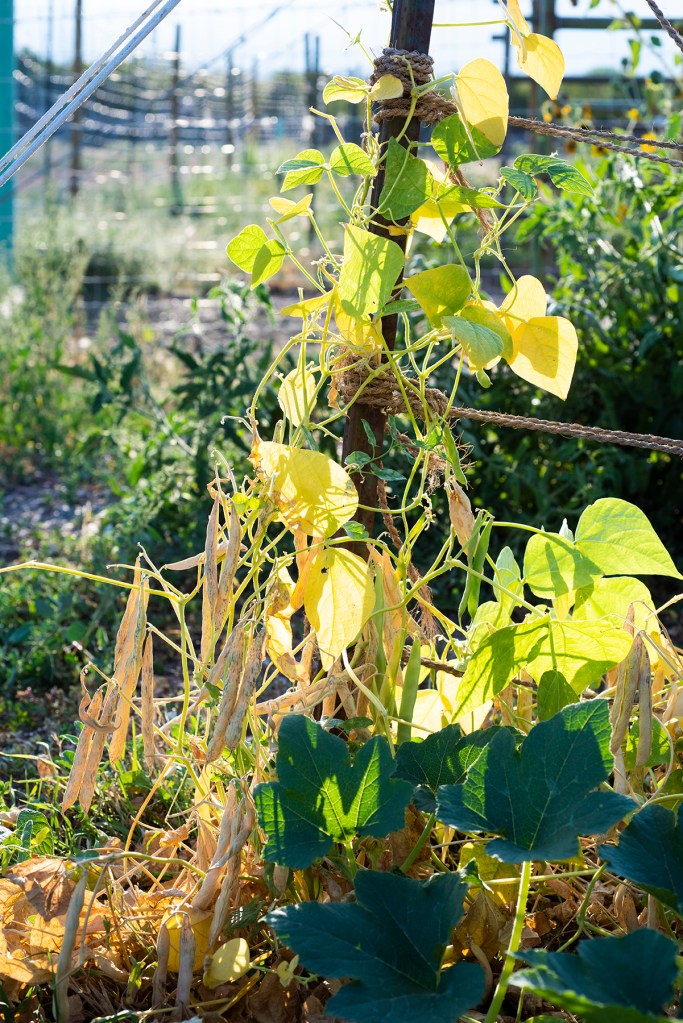
We had a ridiculously abundant crop of peas this year! I adore fresh peas, but they often struggle here because we typically move so quickly from winter to summer, and peas generally like cooler, more moderate temperatures. This year, however, the plants just kept on producing, even when the temperatures accelerated into triple digits. Many, many peas were simply eaten fresh outside as a garden snack while doing chores, and many more made it inside for salads and stir-fries. The plants are mostly finished now, the peas starchy and the vines slowly crisping and browning, and all the peas still hanging will be dried and saved for seed. This year was such a roaring success that I’m very seriously considering giving the peas their own special home next to the raspberry beds, and saving the space in the raised beds for other spring crops like carrots and onions.

Neatly stacking hay bales is definitely a cardio workout.

We are thrilled to have our winter hay stores for the animals laid in. We completely guessed at the number of bales we bought last year – never having overwintered livestock – and actually came pretty close in our estimate! The animals are mostly on pasture right now but get hay in the evenings; come winter, however, this will be all the food they have. The drought has forced many producers to cull their cattle and sheep because the land can no longer support that many head, and the lack of water means that hay is obviously much more costly, too. Our hay cost fifty percent more than last year; in all honesty, we were prepared to pay double. Our focus, as always, is on ensuring that we don’t overgraze our pasture and that we always have emergency feed reserves stockpiled.

Our sunflowers are cheerful and abundant, too.

And with that, we’re off to tackle our neverending task list. Do tell, though – if you have an excess of zucchini, what are your favorite ways of using it up? I always enjoy hearing how others move through an abundance of garden produce.

Wishing you a lovely week, dear friends.

Farm update: July 12

How are you? How is your July thus far? It’s high summer here at Quiet Farm and we spend more time outdoors than in – always, always wearing long sleeves, long pants, wide-brimmed hats and plenty of SPF 50 (only reef-safe zinc, though we’re nowhere near a reef!) on any exposed skin. Skin cancer is not to be taken lightly, especially since we’re more than a mile closer to the sun. Here are a few things we’ve been up to, if you’d like to see:

Sunchokes along the eastern edge of our game fence.

Each growing season, I aim to plant at least one new fruit, vegetable, herb or flower. Last year it was fennel (and unintentionally this year, too, since it self-seeded) but this year’s choice was sunchokes (Helianthus tuberosus). Sunchokes (also called Jerusalem artichokes, though they’re native to North America, not Israel) are in the sunflower family (Asteraceae), and the plants produce showy yellow flowers and an edible tuber. They’re not well known in the U.S.; even in France they’re grown primarily for animal feed. But! The crisp, white-fleshed tubers are rich in inulin (a dietary fiber) and are absolutely delicious when roasted and salted like potatoes. I might even try some sunchoke chips in the dehydrator! I’m excited to harvest these later this season, especially because once established, they’ll likely need no water and no maintenance, and will hopefully continue to produce a nutritious winter storage crop all on their own.

Nice buns.

Anyone who has read this blog for more than one minute knows that I am constantly trying to convince the entire world to bake their own bread. Really, you should! So easy! So satisfying! So much healthier and tastier than store-bought! But perhaps you find large burnished sourdough loaves to be somewhat intimidating? No problem. Start simple, like hamburger buns. I know that I’ve just missed the Fourth of July, a classic burger holiday if ever there was one. But if you start practicing now, you’ll have mastered homemade burger buns by Labor Day! (Only joking, because you don’t need any practice at all; buns are really easy.) Use this reliable recipe – I did not make any alterations for altitude – and bake a batch to tuck in your freezer for future grilling opportunities. The recipe yields eight large; I make sixteen if I want to serve sliders. Please, try this and let me know if you have troubles – I’ll help you sort them out!

Broad Tailed Hummingbird 05 sml

Broad-tailed hummingbirds at the feeder.

Our migratory hummingbird population is thriving; if we remain still, we’re able to see them up close on our feeders. We observe two species most commonly here – the broad-tailed (Selasphorus platycercus) and the black-chinned (Archilochus alexandri), and only very rarely a rufous (Selasphorus rufus). The hummingbirds are so much fun to listen to as they dive and swoop like miniature fighter jets. We’ve even discovered a tiny nest precariously perched on the twinkle light strands on our front porch; we’ve left it alone for the moment in the hopes that there might be viable eggs in it. Although we have dozens of incredible bird species here at Quiet Farm, the fast and spirited hummingbirds are definitely one of our favorites.

Fresh, crisp, satisfying and most of all – cold.

Despite the slider rolls above, supper is entirely abandoned more evenings than not here at Quiet Farm. When it’s pushing 100 degrees at 5:30PM and we’ve been out irrigating all day, the very last thing I want to do is turn on the oven or the stove. Enter the cold noodle salad, remarkably simple and infinitely variable. I cook the noodles in well-salted water first thing in the morning, when it’s (relatively) cool. Drain and toss the still-warm noodles in sesame oil, soy sauce, rice vinegar, and chile sauce if you like things spicy. Shred a whole mess of vegetables, whatever you have on hand – carrots, cabbage, snap peas, broccoli, bell peppers, cauliflower – and toss with a bit more soy and vinegar. Chill everything. When it’s time to eat, make yourself a beautiful, colorful plate and garnish with lots and lots of fresh herbs – I like a mixture of Thai basil, cilantro, scallions and mint. Add more soy or sesame oil as desired. Chopped salted peanuts are great, too! You could serve this on a bed of fresh greens, you could top this with crispy tofu or strips of a simple scallion omelette, or you could just eat it as is. One of my very favorite low-effort/high-flavor summer meals. (P.S. When you’re making something that will later be eaten cold, remember to have a generous hand with the seasoning. Cold dulls flavor, therefore it doesn’t taste as intense. Be lavish with salt and herbs!)

Adelaide apologizes for not tidying up all the hay on her face before this photo was snapped.

And finally, our animals are thrilled with their new haircuts. Although they have access to shade, they still spend their time happily grazing away in the pasture. Even on the hottest days, when we’re melting and seeking out any cool spot we can find, they’re happy to be out in the sun. Last summer was a different story, and we’re so pleased that we were able to get them sheared so they can be more comfortable during this brutal season.

Wishing you a pleasant week ahead, friends.

Farm update: June 14

Hello there, and how are things in your world? Here at Quiet Farm it’s hot, dry and smoky. The Pack Creek Fire, burning southeast of Moab, Utah – started by an unattended campfire! Thanks, thoughtful and responsible campers! – has filled our blue skies with thick smoke and turned our sunsets into a terrible neon orange ball of scorching flame. We’re forecast to spend the week ahead melting under triple-digit temperatures, and we plan to only be outside for the bare minimum of tasks between noon and six o’clock. This week will be all about survival – ensuring that we, and all of our plants and animals, have plenty of shade and fresh, cool water.

A few activities we’ve been up to recently on the farm:

Look at all those vitamins!

Our harvests lately have been greens, greens and more greens – no complaints, since we eat salad every day. The arugula, kale, spinach and mixed lettuces have all been crisp and delicious this season, but this week’s furnace-like temperatures will put an end to that abundance; as a rule, most lettuces and greens do not care for excessive heat and often turn unpalatably bitter. I’ve harvested just about every leaf out there; as usual, I leave a number of plants to intentionally go to seed for future plantings. I regularly replant salad greens underneath the tomatoes; by the time the greens are up, the tomato plant will shield the tender leaves from the scalding summer sun. We’re also harvesting garlic scapes (the squiggly things on the left side of the photo) to encourage the garlic plant to put all its energy into the underground bulb. Scapes are delicious in pesto, salad dressing or stir-fried. And we’re picking strawberries, too, which are spectacular and have never once made it all the way into the house except for this photo, after which they were promptly devoured.

Continue reading

A word on weeds

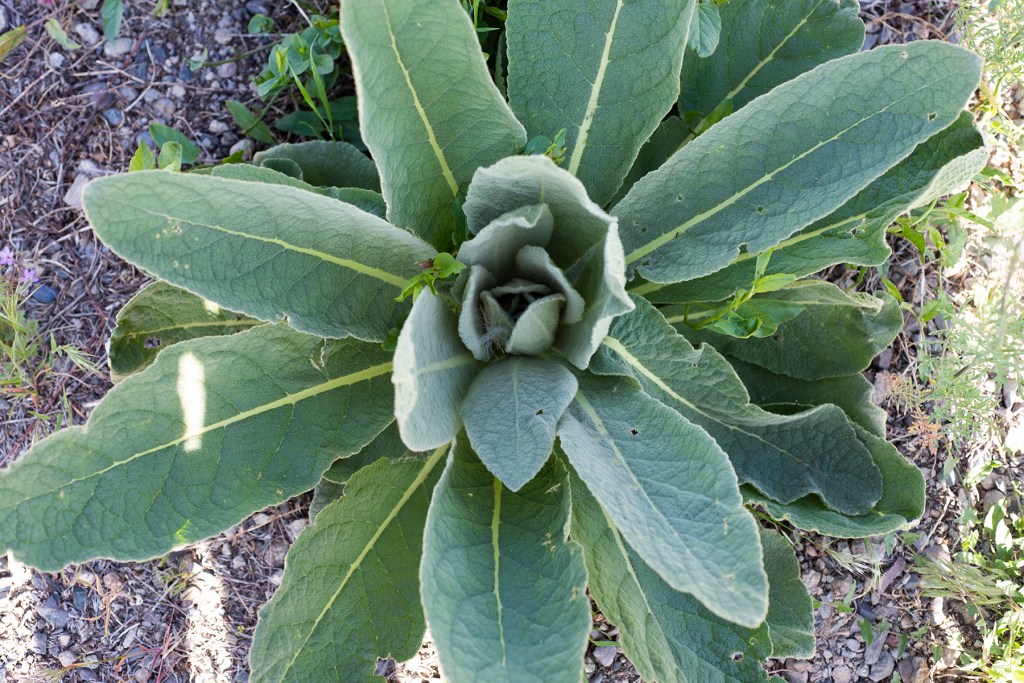
Soft and fuzzy common mullein (Verbascum thapsus).

A couple of years ago, a film titled The Biggest Little Farm was released in the U.S. It received quite a lot of publicity, especially unusual for a farm documentary, and was shown at film festivals and charity screenings across the country. The film opened shortly after we purchased Quiet Farm and was mentioned to us by scores of friends and acquaintances, so of course we had to watch it. The story follows John and Molly Chester as they attempt to regenerate an abandoned farm outside of Los Angeles.

Continue reading

This week in flowers: September 7

Slowly but surely, summer is giving way to fall – or winter, really, considering Tuesday night’s forecast. From a high today of just above 90, the thermometer will plummet sixty degrees to a projected hard freeze Tuesday night, and possibly snow, too. This shockingly early first frost (it usually occurs in the first or second week of October) is on-brand for the utter debacle that is 2020, and it will likely kill all of our tomatoes, peppers, squash, cucumbers, flowers and delicate herbs. None of these plants are even close to finished for the season, so our overall yields will be cut in half, at least. It’s a terrible, heartbreaking situation for any farmer, and we’re no exception.

At the moment, though, we still have lots of blooms on the farm, and it’s fascinating to watch the flowering plants shift with the seasons. Here are a few we’ve spotted recently (see blossoms from earlier this season here and here). After Wednesday morning, all of these will have vanished.

Continue reading

Let’s learn about alpacas and llamas!

Alpacas 04 sml

It’s a creative remake of The Sound of Music.

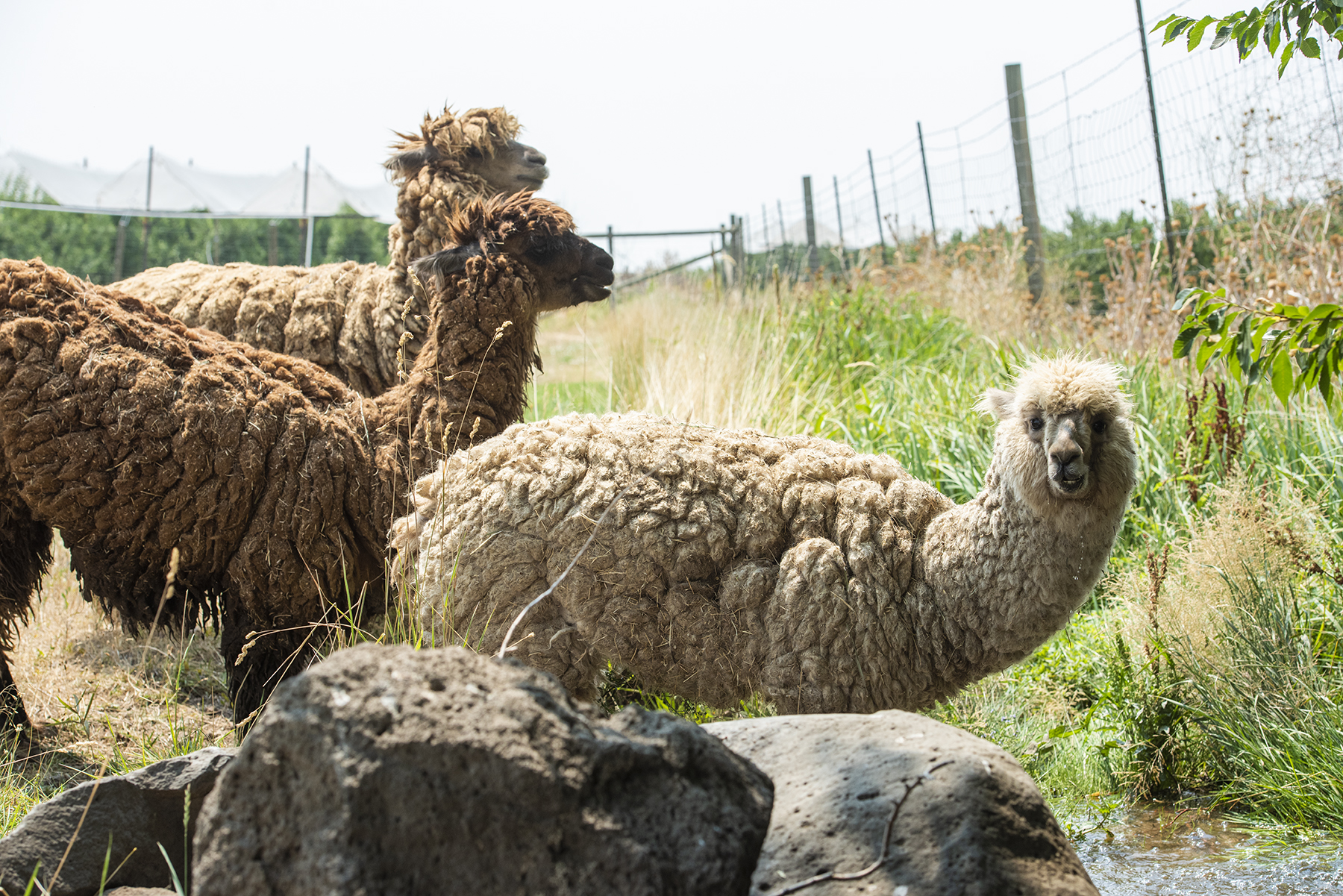
Some of you may recall that we expanded the Quiet Farm team a few weeks ago. We now have five alpacas and one llama on our farm, and they currently spend the majority of their time grazing placidly on our pasture. We’re new to livestock, and are doing as much research as possible, and we thought you might be interested in learning more about our new residents, too.

Alpacas 08 sml

See you at the old watering hole?

First, what even are these odd creatures, anyway? Llamas (Lama glama) and alpacas (Vicugna pacos) are both members of the camelid family, along with their wild cousins, viçunas and guanacos. (Collectively, this group is known as lamoids.) Camelids actually evolved in North America; some of their ancestors migrated to Africa to become the desert camels we’re familiar with. Other ancestors migrated south to what is now South America and evolved into the llamas and alpacas we associate with indigenous tribes of South America. As bison were essential to the Native Americans, so were llamas and alpacas to the indigenous peoples. These animals provided food, fiber, grease, draft power, fertilizer, fuel, leather and protection.

Continue reading

This week in flowers: July 13

Friends, it’s truly a surprise anything is blooming right now, considering our punishing temperatures – high nineties every day! – and total lack of moisture. Also, please send tax-deductible donations to help pay our extortionate water bill. But! We do have a few bright spots of color around the farm that we thought we’d share.

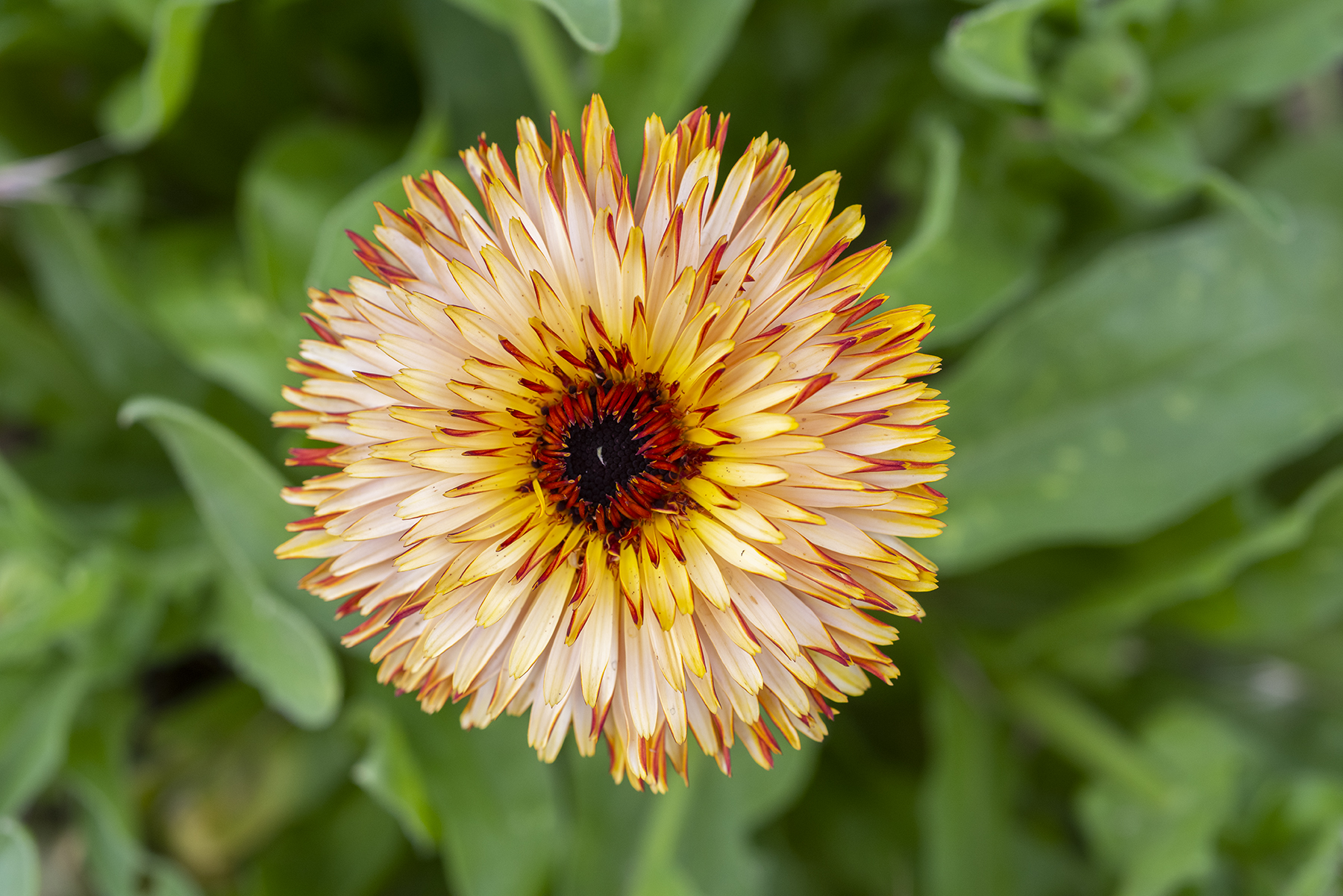
Calendula 01 sml

Calendula (Calendula officinalis) is a member of the marigold family.

We planted a number of different flowers, including calendula and marigolds, in our raised beds to both provide visual interest and to attract beneficial pollinators. Although calendula doesn’t love our intense summer weather, most seem to be doing reasonably well and will hopefully bloom again in fall’s cooler temperatures.

Continue reading

How to start composting

Americans produce about five times as much trash per capita as does the rest of the world: a truly shameful statistic. Even while the news shows images of food bank lines stretching for miles, we still manage to waste far more food (about 40% of everything we buy) than the average human. Most of this food waste ends up in landfills, which are rapidly reaching capacity; by some estimates, over half the waste in municipal landfills could be composted and used to build soil fertility. It’s also frustrating to see thousands of plastic trash bags filled with grass clippings and raked leaves headed to the landfill where they won’t decompose effectively when rebuilding the soil is one of the very best weapons we have against climate change.

QF Compost 01 sml

Our original compost pile.

If you’re looking to reduce your own waste stream, starting a compost pile is one of the best and easiest solutions. And if you’re cooking at home more these days, as most of us are, you might find yourself producing a lot of food scraps that could be put to much better use than the landfill. Composting has long been presented as too challenging / too time-consuming / too complicated / too messy / too smelly / impossible on a small scale. If managed correctly it is none of these, and is one of the very best ways to make your own plants better, even if you’re simply growing fresh herbs on a sunny windowsill.

Continue reading

Farm update: June 22

‘Tis the season of both growth and destruction. We spend most of our time weeding and watering and looking for new growth on our crops and in our pasture; in response, all of our crafty farm pests have come out with hunger in their tummies and destruction on their minds. Time spent not watering or weeding is instead spent defending our territory. It’s a hard-fought war of attrition out here, and both sides are digging their heels in.

Raspberry Growth 01 sml

A raspberry cane with reassuring new growth.

We’re so pleased to see new growth on most of our raspberry canes. You might remember that we planted forty canes last year and every single one failed; this year we regrouped with drip irrigation and we believe that made all the difference. Bramble fruits like raspberries and blackberries typically do well in our climate; we’d love to grow our own fruit as well as our own vegetables. We’re always, always learning out here, and we’re trying hard not to make the same mistakes twice. We like to make lots of different mistakes instead.

Continue reading

Farm update: June 8

“Good morning. Concentration is hard to come by these days, amid the nation’s strife. We are living through a tough and chaotic and wrenching time, filled with fury and an abiding sadness. We’re unsettled. We’re tense. We’re divided. The emotions arrange themselves in combinations that make it hard to work, to read, to watch, to listen, much less to think.

Cooking can help. The act of preparing food is a deliberate and caring one, even if you’re just making yourself a bowl of oatmeal at the end of a long night of worry. The way you sprinkle raisins over the top is an intentional act of kindness to yourself. So what I’m doing now, amid my restless skimming of nonfiction and news, thrillers and literature, poems that don’t bring solace: I read recipes, think about who in my family they might please, and I cook.”

-Sam Sifton, The New York Times

Brownies 01 sml

So much effort, yet so worth it.

While I was flipping through the April issue of Bon Appétit, N saw this recipe and asked me to make these “camouflage brownies.” And so I did. They required approximately seventeen different bowls, forty-two utensils, nine measuring devices and three separate batter components. (When a professional chef tells you a recipe is complicated and elaborate, believe her.) But the end result? Amazing. We don’t eat a lot of sweets, so we devoured this pan a little quicker than good sense would indicate, and it was entirely worth it. And I had to buy the cream cheese in a two-pack, so we’ll probably see these again in our kitchen very soon.

Continue reading