With the intense heat and the wildfire smoke, we’ve been spending more time than normal indoors lately. This is terrible news for our climate, but good news for our reading lists! This round-up is heavily weighted towards non-fiction (with a clear attention economy/stolen focus bent!), but I have a couple of dark suspense novels lined up (Lisa Jewell’s None of This Is True and Lucy Foley’s The Paris Apartment) to carry me through these dog days and into (hopefully) cooler temperatures. (You can check out a few previous book review posts here, here and here.)
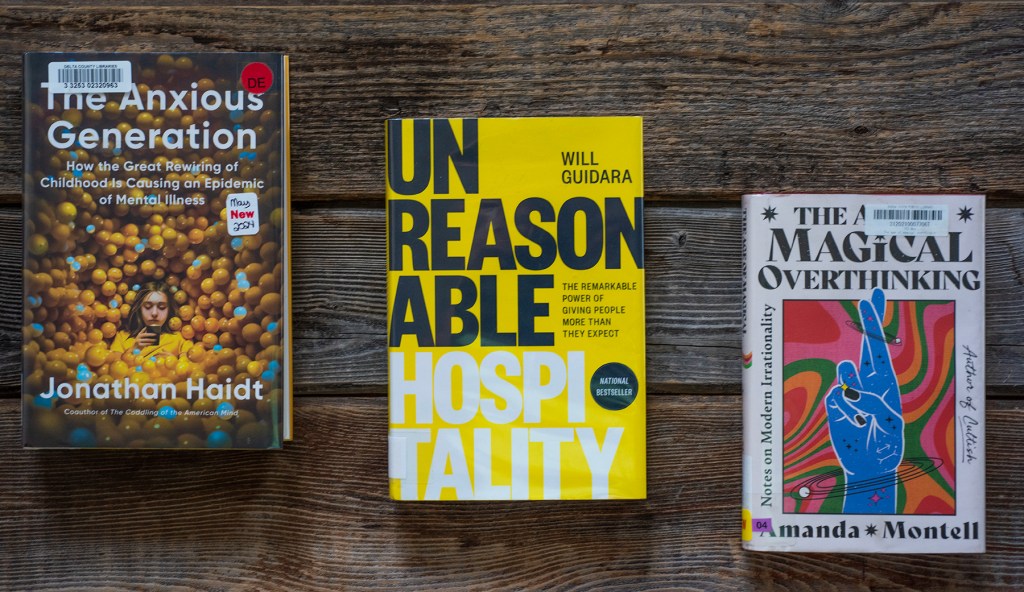
The Anxious Generation, Jonathan Haidt
Jonathan Haidt’s new book, subtitled How the Great Rewiring of Childhood is Causing an Epidemic of Mental Illness, has gotten a ton of both positive and negative press recently. The book’s essential thesis is that we’ve moved from a play-based childhood to a phone-based childhood, much to society’s detriment. Parents overprotect their children in the real world – no playing outside in the front yard on your own because you might be kidnapped! – whilst at the same time handing them a smartphone with unrestricted access to all of the horrors humans can dream up. He also argues that social media in particular has contributed to (caused?) most of the dramatic increases in depression, anxiety, eating disorders, suicidal ideation and more mental health issues seen in pre-teens and teenagers in the Anglosphere.
Back in 2021, farmer colleagues down in southwestern Colorado launched the Grasshopper Collective. This cooperative operation amongst growers was created in response to a particularly devastating grasshopper invasion that year:
“The intense growing conditions left us with many questions. In an age of drought and increasing climate instability, how can we adapt? How can vegetable growers be better prepared for years like this? What crops make sense for the future? Amongst our four farms, one plant stood out as particularly resilient, and that was GARLIC! Garlic harvests were bountiful across the board. It seemed that this pungent, powerful Allium was exceptionally undesirable to the hoppers. Beyond that, its timely July harvest window makes garlic a reliable crop to produce, even in the tightest of water years. Garlic thrives at our high elevation and appreciates the cool nights and desert air. On the consumer and market end, it is a keystone of the culinary world, and an essential item in many growers seed stock. Thus, the idea was born – let’s grow more garlic – let’s start a Garlic Seed Company – and with what better name than “The Grasshopper Collective.”
This is a smart team of growers who chose to work together to address the ongoing challenges presented by a changing climate, and one of their answers to those challenges was ‘garlic.’ While we are too far away geographically to team up with this lovely group, ‘garlic’ is the answer to some of our challenges here, too.
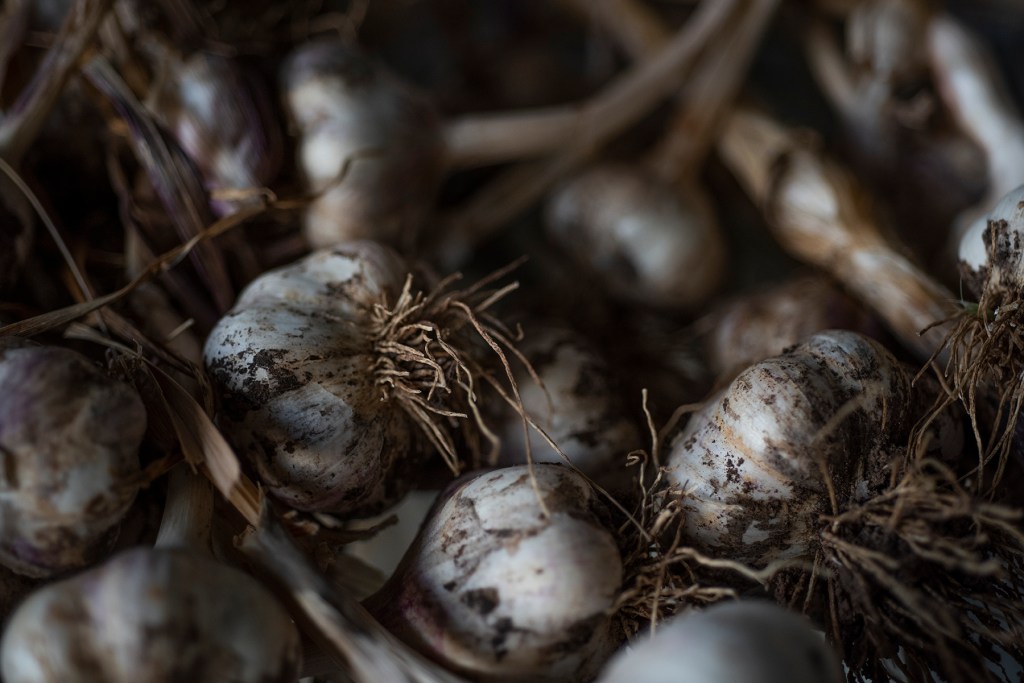
We mentioned in our last post that the grasshopper infestation this year is apocalyptic, dwarfing the damage we saw last year. This means we have missed out entirely on many of the favorite crops we grow, including tender salad greens, head lettuces, chard, kale, beets and carrots, to name a few. But in our lived experience (and this might certainly vary for others!) the grasshoppers never touch the alliums, a spicy, pungent plant family that also includes onion, leek, shallot and chive. And so, we’ve had a terrific garlic harvest of almost eighty pounds this year, nearly doubling last year’s yield.
It is official: we crown 2024 The Year of Mediocrity. Six years into our farming journey, it is expected that we might hit a slump – and so here we are. Numerous farming challenges large (hay delivery canceled, annual shearing rescheduled again and again, a goathead invasion, an apocalyptic plague of grasshoppers, rampaging rodents, hail) and small (late planting, poor germination, ricocheting temperatures) mean that this season, we’re going to be happy with anything we get. Anything! I’m not even weighing our harvests, because I’m not going to judge this year’s output against previous years – it’s not a fair fight. The brassicas were mowed down by hungry grasshoppers. The beets and carrots got too hot and never germinated. The strawberries were devoured by ravenous baby squirrels (a terrific band name!). The tomatoes and cucumbers and peppers and squash are all still so tiny and fragile and battered that the prospect of harvesting anything before Christmas seems laughable at the moment, but perhaps the tide will turn in our favor as we move into high summer. We do have plenty of irrigation water this year, which is something we never take for granted.
Much happier after taking off their winter sweaters.
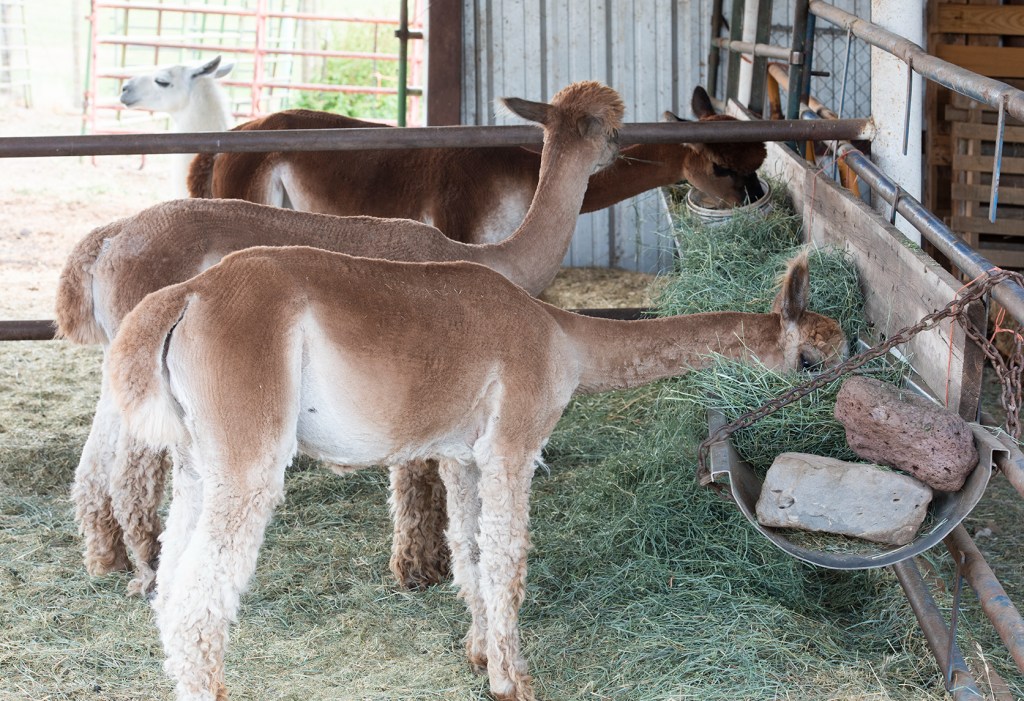
Despite an unplanned six-week delay that was entirely out of our control, our four rescue alpacas were successfully sheared a few days ago. They had really started to suffer in June’s abnormally high temperatures, constantly seeking out shade in the pasture and the cooling waters whenever we irrigated, and we were very glad to get their winter coats removed. I am in the process of learning how to spin their fleece into yarn and have attended a local spinning and weaving guild to observe and practice this ancient art. Like all handcraft there is a meditative aspect to spinning that soothes my constantly anxious mind, and this winter I hope to make some real headway on the bags of fleece we’ve accumulated over the years.
“Things are somewhat ugly out there. I couldn’t have imagined in the spring that we’d be suffering Covid (and fools) this long after a vaccine was announced, but here we are. One really fine manifestation of this has been to appreciate the things that are going right. Not as planned, but still in the right direction. Gardening and farming help a lot. Whether you pop a bean in a clay pot with some soil or you are farming thousands of acres, producing food is pretty cool and we’re lucky to be helping nature, in the garden and on the stovetop!” -Steve Sando, Rancho Gordo
Hello there, friends. As you might imagine, it is an exceptionally busy time on the farm. August and September are the months we wait all year for and the abundance is staggering. These are the days when all of the hard work done in early spring really comes to fruition, but the workload is staggering, too. In addition to harvesting each day, we also need to preserve the harvest, plant fall crops, collect seeds and start thinking about fall clean-up tasks and winterizing the farm. We’re still irrigating two days per week, too, which eats up a lot of time. No matter the long hours, though, the incredible food we’re growing makes it all worthwhile.
These squash bugs are having one heck of a party.
Every growing season we face different challenges – the weather, the water and the pests all vary from year to year. Ideally, though, we’re learning from each experience and are better equipped for future troubles. This year we were surprised to discover the common squash bug (Anasa tristis) attacking our summer squash. Despite our never-ending drought, our relentless winds and our high altitude, we do have one great advantage in farming where we do – insects are rarely (if ever) a major problem. I’ve never dealt with squash bugs before, and by the time I discovered them, they’d done a huge amount of damage. I researched organic control methods and laughed out loud at one not–at-all-helpful suggestion: “carefully remove each bug by hand.” (Let me tell you what I do not have time for right now: removing individual bugs by hand.) And so, I opted for a broader form of retaliation: I clear-cut the Costata Romanesco plant back to its roots, leaving only the two huge squashes that I’m saving for seed. I do think that the ‘overgrown tropical jungle’ aspect of this particular plant contributed to this infestation, since the bugs often shelter at the plant’s base, so I need to consider this for future plantings. Also, if we should be so unlucky as to have a mild winter the larvae will likely not be killed and I’ll encounter the same problem again. Therefore, crop rotation and careful attention before the bugs get out of hand are definitely on next year’s to-do list.
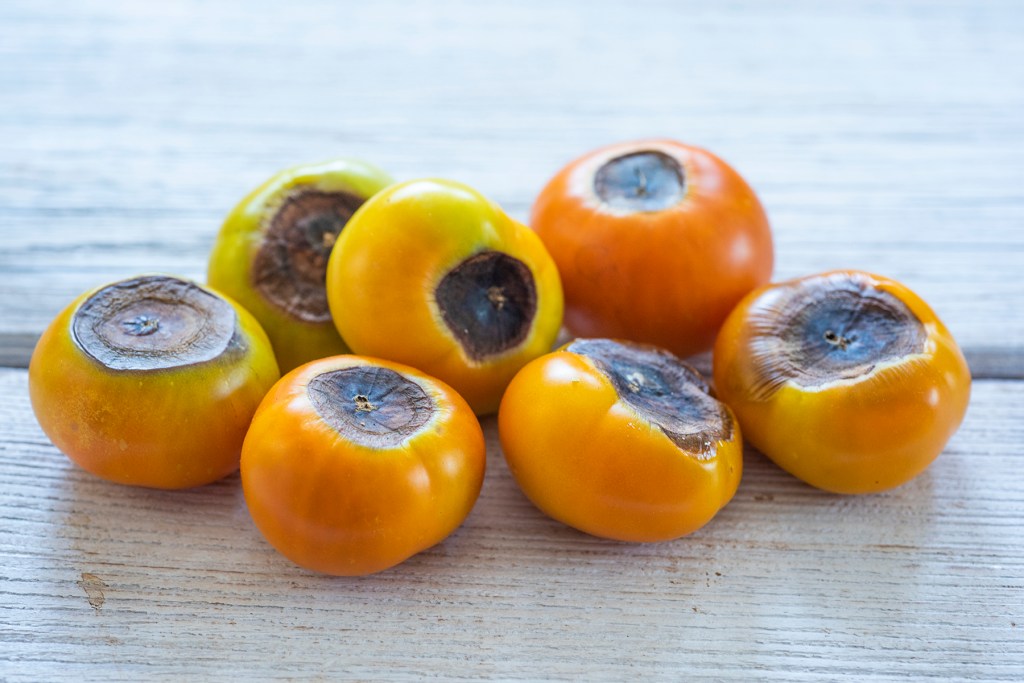
Blossom end rot is easy to identify.
One garden ailment that I am painfully familiar with is blossom end rot, commonly referred to as BER by horticulturalists and farmers. BER isn’t technically a pest or a disease; rather, it’s a physiological disorder caused by insufficient calcium uptake. Although BER can affect peppers, squash, cucumbers and melons, I’ve only ever encountered it in tomatoes. Though there can be various causes, in my growing experience, BER is most often caused by inconsistent watering – both too much and too little – which can definitely be an issue in our growing area. As an example: for the past few weeks we’ve been running our regular Wednesday/Thursday irrigation schedule, but then have also experienced dramatic midnight thunderstorms which of course soak the plants even further. BER usually appears when the fruit is about half-size, and the spot at the base will turn leathery and spongy and eventually cause the entire fruit to rot. BER won’t hurt you, and you can cut out the affected areas, but I usually throw affected fruits straight to the chickens. As always, keep good records – you may find that certain species are more affected by BER in your garden than others. This year, I’m only seeing it in the Jaune Flammes shown above, and not in other varieties, and only in one raised bed – which indicates that the drip irrigation in that particular bed may also need a closer look. Paying attention to what’s going on with your plants will usually teach you everything you need to know.
Tomatillos are one of our favorite summer staples.
Do you grow tomatillos? I feel like they’re not very well known outside of the American Southwest, but I adore them and grow them every year. They’re in the same nightshade family (Solanaceae) as tomatoes, peppers, eggplant and potatoes, and they’re also closely related to ground cherries and Cape gooseberries. They grow on plants similar to tomatoes and often need to be staked, because they’re quite sprawling and unkempt, but they’re prolific, hardy, drought-tolerant and delicious. Tomatillos are crisp and tart and usually ready to eat when the papery husk turns from bright green to a paler beige, or when they fall off the plant. Most of ours end up in salsa verde, but they make a wonderful sauce for enchiladas and a great addition to spicy soups, vegetarian tacos or green chile. Plus, they’re rich in fiber and vitamins C and K, too!
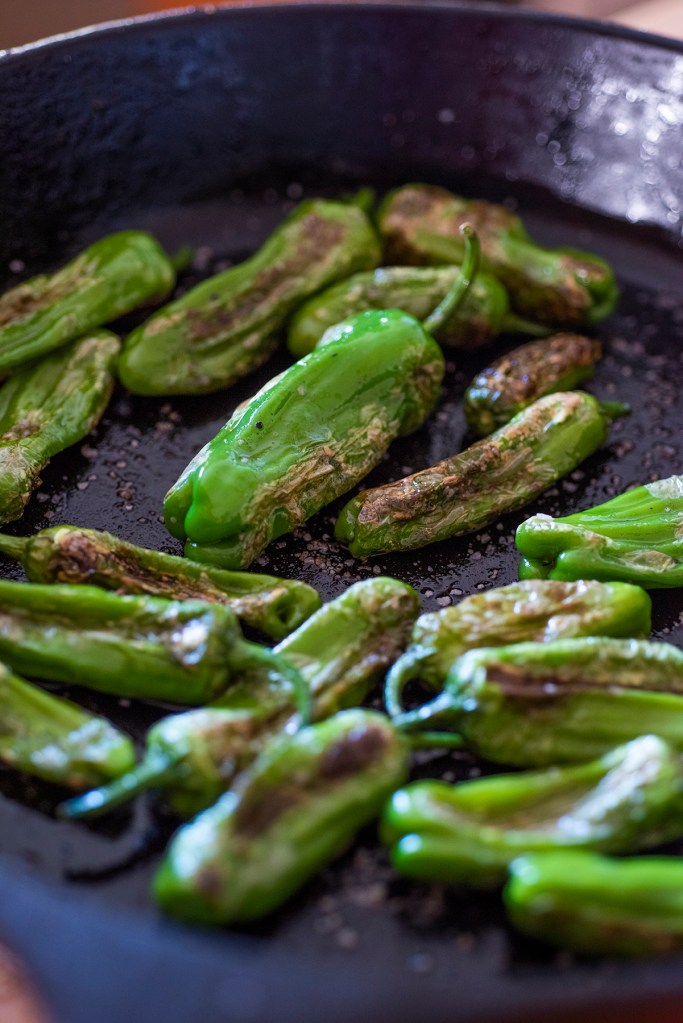
Blistered shishitos are often a pre-dinner snack.
Our shishito peppers have done well this year, which is terrific news because I haven’t had any success with this crop since we moved here. Shishitos are native to Japan, likely bred from the Spanish padrón pepper, and harvested green at about two inches long. We enjoy them in the most common fashion, seared in a screaming-hot cast iron skillet, dusted with flaky salt and nanami togarashi seasoning, then eaten whole out of hand (except for the stem). Shishitos are considered a “Russian roulette” pepper, in that they’re mostly quite mild but about one in ten will be eye-wateringly hot. This has a lot to do with their growing conditions, however, and ours have been pretty tame so far this year. As usual, I’ve left one pepper on the plant for the entire season so that I’ll have viable seeds for next year.
A great reason to dust off the angel food cake pan!
In addition to harvesting and preserving our own crops, this is also high time for purchasing fresh fruits and vegetables from other local farmers. We don’t grow sweet corn here at Quiet Farm; it’s a wind-pollinated grass, needs a good amount of land, and is virtually impossible to grow organically. Instead, I typically buy a case (about fifty ears) from a grower just down the road in Olathe, which is of course famous for its sweet corn. I grilled two-thirds of the ears and left the rest raw; all of the kernels, cooked and raw, were cut off the cob and frozen in small zip-top bags for adding to soups and chowders this winter. A few ears were saved for enjoying fresh, but most of this box went straight into the freezer as quickly as possible – corn does not improve once it’s been picked. I hope you were able to enjoy lots of fresh corn this summer, too.
One of the highlights of living where we do.
We’ve mentioned more than once this year that our local stone fruit growers were devastated by an early freeze last October, and many had no fruit at all. We were able to get out to pick a few peaches and have been enjoying them every day since. When I say “a few peaches,” what I actually mean is more than two hundred pounds – most went into the canning pot (fifty quarts), many into the dehydrator and the remainder into jam. This could well be our last year for peaches; we know many growers who are pulling out their peach trees because the heartache and stress simply isn’t worth it. And the orchard where we go to harvest is likely being sold soon, and it’s doubtful that a u-pick will be part of the new owner’s business model. Change is hard but inevitable, especially in the era of climate disruption – but at least we’ll have local peaches this winter.
As the world seems to spin more and more out of control each day, all we can do is focus on controlling what we can – and for us, that’s our land, our animals, what we grow and what we eat. We are doing our very best out here and hope you are, too, wherever you may be.
And here we are at the tail end of July, scrambling to complete everything that needs doing. Each night before sleep finally arrives I focus on designing bright, colorful quilt patterns in my head – calming mental Tetris – rather than running through all of the tasks I didn’t complete during the day. The tomatoes need to be pruned and re-staked, again. The arugula and lettuce seeds need to be harvested, the straggly plants composted and the beds reseeded. The garlic needs to be pulled and cured. The mallow, bindweed and puncturevine are threatening a total takeover. And on and on and on. I feel a thousand miles behind on everything, and I remind myself to complete one task at a time. Also, I regularly remind myself to enjoy the moment I’m in, rather than race on to the next without even pausing for breath. (Easier said than done, no?)
Purple coneflower (Echinacea purpurea).
Admiring our seasonal plants is a great way for me to stop my frenzied rushing for just a moment. Many of our flowering perennials didn’t bloom this year, thanks to the drought, but we do still have a few. Echinacea, or coneflower, is one of my favorites, and the bees love it, too. (Our pollinator population is also greatly diminished this year, likely due to the lack of blossoms in the neighboring orchards.) Echinacea has been touted for years as an herbal remedy for just about any ailment, including the common cold, but legitimate scientific studies on this are lacking in substance, to say the least. Still, the coneflowers grow well here and I’m hopeful that I can expand their presence on the farm in future years.
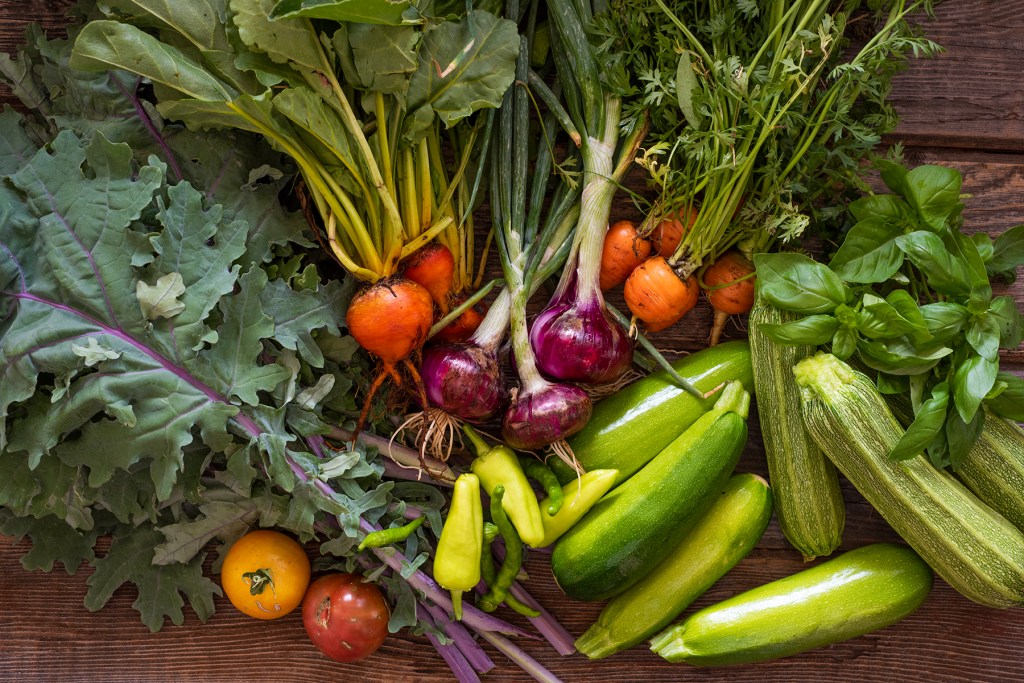
Just one day’s harvest…
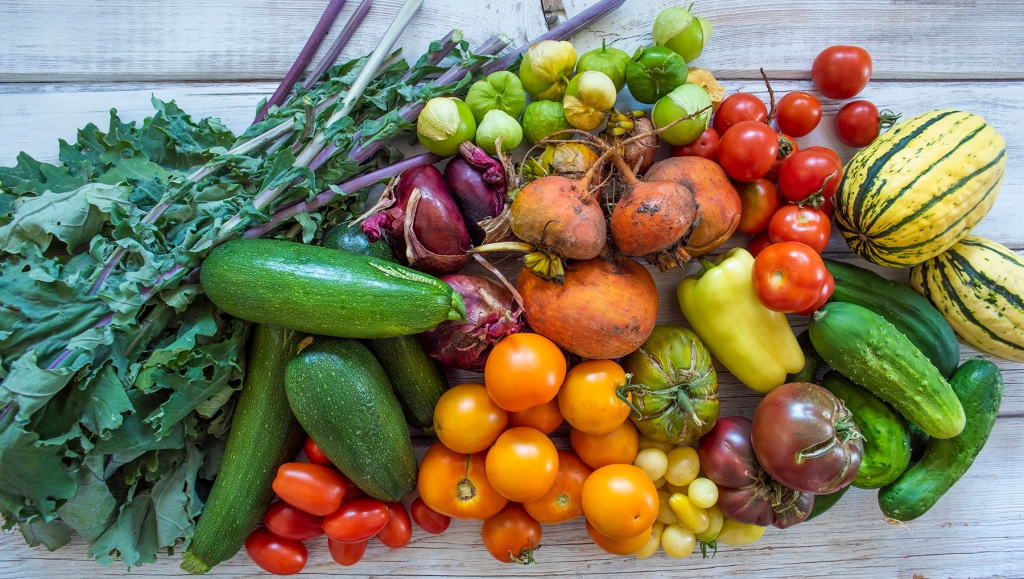
Late July and August are the months we eagerly await all year – when the vegetables start rolling in. The flipside of that, of course, is that then you need to have a plan for what you’re going to do with all of that glorious food. Onions and kale are easy to deal with; they are garden stalwarts and stay fresh for weeks. Carrots and beets need to have their greens removed, at the very least; I usually don’t wash them until just before I’m ready to use them. The zucchini, of course, is where things start to feel overwhelming. Anyone who has planted zucchini knows full well that through some mysterious garden trickery you can check the plants twice a day and still end up with overgrown monsters. I like to harvest the squash when small and use it in salads, galettes and pastas; I also shred and freeze it for muffins. And our tomatoes are just now starting to come on; we’ve had a couple of early Juliets, plus a Lemon Boy and a Black Krim. The real bounty will start showing up in about ten days, and as with every year, I’m looking forward to an absurd excess of tomatoes. They never go to waste here.
So fresh! So crisp! So delicious!
We had a ridiculously abundant crop of peas this year! I adore fresh peas, but they often struggle here because we typically move so quickly from winter to summer, and peas generally like cooler, more moderate temperatures. This year, however, the plants just kept on producing, even when the temperatures accelerated into triple digits. Many, many peas were simply eaten fresh outside as a garden snack while doing chores, and many more made it inside for salads and stir-fries. The plants are mostly finished now, the peas starchy and the vines slowly crisping and browning, and all the peas still hanging will be dried and saved for seed. This year was such a roaring success that I’m very seriously considering giving the peas their own special home next to the raspberry beds, and saving the space in the raised beds for other spring crops like carrots and onions.
Neatly stacking hay bales is definitely a cardio workout.
We are thrilled to have our winter hay stores for the animals laid in. We completely guessed at the number of bales we bought last year – never having overwintered livestock – and actually came pretty close in our estimate! The animals are mostly on pasture right now but get hay in the evenings; come winter, however, this will be all the food they have. The drought has forced many producers to cull their cattle and sheep because the land can no longer support that many head, and the lack of water means that hay is obviously much more costly, too. Our hay cost fifty percent more than last year; in all honesty, we were prepared to pay double. Our focus, as always, is on ensuring that we don’t overgraze our pasture and that we always have emergency feed reserves stockpiled.
Our sunflowers are cheerful and abundant, too.
And with that, we’re off to tackle our neverending task list. Do tell, though – if you have an excess of zucchini, what are your favorite ways of using it up? I always enjoy hearing how others move through an abundance of garden produce.
How are you? How is your July thus far? It’s high summer here at Quiet Farm and we spend more time outdoors than in – always, always wearing long sleeves, long pants, wide-brimmed hats and plenty of SPF 50 (only reef-safe zinc, though we’re nowhere near a reef!) on any exposed skin. Skin cancer is not to be taken lightly, especially since we’re more than a mile closer to the sun. Here are a few things we’ve been up to, if you’d like to see:
Sunchokes along the eastern edge of our game fence.
Each growing season, I aim to plant at least one new fruit, vegetable, herb or flower. Last year it was fennel (and unintentionally this year, too, since it self-seeded) but this year’s choice was sunchokes (Helianthus tuberosus). Sunchokes (also called Jerusalem artichokes, though they’re native to North America, not Israel) are in the sunflower family (Asteraceae), and the plants produce showy yellow flowers and an edible tuber. They’re not well known in the U.S.; even in France they’re grown primarily for animal feed. But! The crisp, white-fleshed tubers are rich in inulin (a dietary fiber) and are absolutely delicious when roasted and salted like potatoes. I might even try some sunchoke chips in the dehydrator! I’m excited to harvest these later this season, especially because once established, they’ll likely need no water and no maintenance, and will hopefully continue to produce a nutritious winter storage crop all on their own.
Nice buns.
Anyone who has read this blog for more than one minute knows that I am constantly trying to convince the entire world to bake their own bread. Really, you should! So easy! So satisfying! So much healthier and tastier than store-bought! But perhaps you find large burnished sourdough loaves to be somewhat intimidating? No problem. Start simple, like hamburger buns. I know that I’ve just missed the Fourth of July, a classic burger holiday if ever there was one. But if you start practicing now, you’ll have mastered homemade burger buns by Labor Day! (Only joking, because you don’t need any practice at all; buns are really easy.) Use this reliable recipe – I did not make any alterations for altitude – and bake a batch to tuck in your freezer for future grilling opportunities. The recipe yields eight large; I make sixteen if I want to serve sliders. Please, try this and let me know if you have troubles – I’ll help you sort them out!
Broad-tailed hummingbirds at the feeder.
Our migratory hummingbird population is thriving; if we remain still, we’re able to see them up close on our feeders. We observe two species most commonly here – the broad-tailed (Selasphorus platycercus) and the black-chinned (Archilochus alexandri), and only very rarely a rufous (Selasphorus rufus). The hummingbirds are so much fun to listen to as they dive and swoop like miniature fighter jets. We’ve even discovered a tiny nest precariously perched on the twinkle light strands on our front porch; we’ve left it alone for the moment in the hopes that there might be viable eggs in it. Although we have dozens of incredible bird species here at Quiet Farm, the fast and spirited hummingbirds are definitely one of our favorites.
Fresh, crisp, satisfying and most of all – cold.
Despite the slider rolls above, supper is entirely abandoned more evenings than not here at Quiet Farm. When it’s pushing 100 degrees at 5:30PM and we’ve been out irrigating all day, the very last thing I want to do is turn on the oven or the stove. Enter the cold noodle salad, remarkably simple and infinitely variable. I cook the noodles in well-salted water first thing in the morning, when it’s (relatively) cool. Drain and toss the still-warm noodles in sesame oil, soy sauce, rice vinegar, and chile sauce if you like things spicy. Shred a whole mess of vegetables, whatever you have on hand – carrots, cabbage, snap peas, broccoli, bell peppers, cauliflower – and toss with a bit more soy and vinegar. Chill everything. When it’s time to eat, make yourself a beautiful, colorful plate and garnish with lots and lots of fresh herbs – I like a mixture of Thai basil, cilantro, scallions and mint. Add more soy or sesame oil as desired. Chopped salted peanuts are great, too! You could serve this on a bed of fresh greens, you could top this with crispy tofu or strips of a simple scallion omelette, or you could just eat it as is. One of my very favorite low-effort/high-flavor summer meals. (P.S. When you’re making something that will later be eaten cold, remember to have a generous hand with the seasoning. Cold dulls flavor, therefore it doesn’t taste as intense. Be lavish with salt and herbs!)
Adelaide apologizes for not tidying up all the hay on her face before this photo was snapped.
And finally, our animals are thrilled with their new haircuts. Although they have access to shade, they still spend their time happily grazing away in the pasture. Even on the hottest days, when we’re melting and seeking out any cool spot we can find, they’re happy to be out in the sun. Last summer was a different story, and we’re so pleased that we were able to get them sheared so they can be more comfortable during this brutal season.
Lots of newspapers and magazines like to publish “summer reading lists,” implying that the only thing you have to do this summer is relax on a lounge chair by the pool, languidly sipping cold drinks and tearing through page after page of the latest bestseller. For us, at least, this aspirational vision bears absolutely zero resemblance to our real lives – we actually read less in summer, mainly because maintaining the farm is more than a full-time occupation. (Also we don’t have a pool. ) Even with all of our tasks and projects, however, I have managed to read more this year than I did in 2020 – I know plenty of avid readers who struggled with focus and the inability to finish books last year. Based on the round-up below, it certainly looks as though non-fiction, specifically focused on human psychology and behavior, is my genre of choice these days; with that in mind, we offer a few book recommendations. As always, we’d love to hear yours, too!
Hello there, and how are things in your world? Here at Quiet Farm it’s hot, dry and smoky. The Pack Creek Fire, burning southeast of Moab, Utah – started by an unattended campfire! Thanks, thoughtful and responsible campers! – has filled our blue skies with thick smoke and turned our sunsets into a terrible neon orange ball of scorching flame. We’re forecast to spend the week ahead melting under triple-digit temperatures, and we plan to only be outside for the bare minimum of tasks between noon and six o’clock. This week will be all about survival – ensuring that we, and all of our plants and animals, have plenty of shade and fresh, cool water.
A few activities we’ve been up to recently on the farm:
Look at all those vitamins!
Our harvests lately have been greens, greens and more greens – no complaints, since we eat salad every day. The arugula, kale, spinach and mixed lettuces have all been crisp and delicious this season, but this week’s furnace-like temperatures will put an end to that abundance; as a rule, most lettuces and greens do not care for excessive heat and often turn unpalatably bitter. I’ve harvested just about every leaf out there; as usual, I leave a number of plants to intentionally go to seed for future plantings. I regularly replant salad greens underneath the tomatoes; by the time the greens are up, the tomato plant will shield the tender leaves from the scalding summer sun. We’re also harvesting garlic scapes (the squiggly things on the left side of the photo) to encourage the garlic plant to put all its energy into the underground bulb. Scapes are delicious in pesto, salad dressing or stir-fried. And we’re picking strawberries, too, which are spectacular and have never once made it all the way into the house except for this photo, after which they were promptly devoured.
“This pandemic feels like a relay race and if that means that every once in a while, you need to break down and freak out, that’s fine. We can carry the baton for each other while we lose it, gather strength, and then carry on. The world seems out of control, but we can control our kitchens and the good things that come out of them. That’s something.”
-Steve Sando, Rancho Gordo
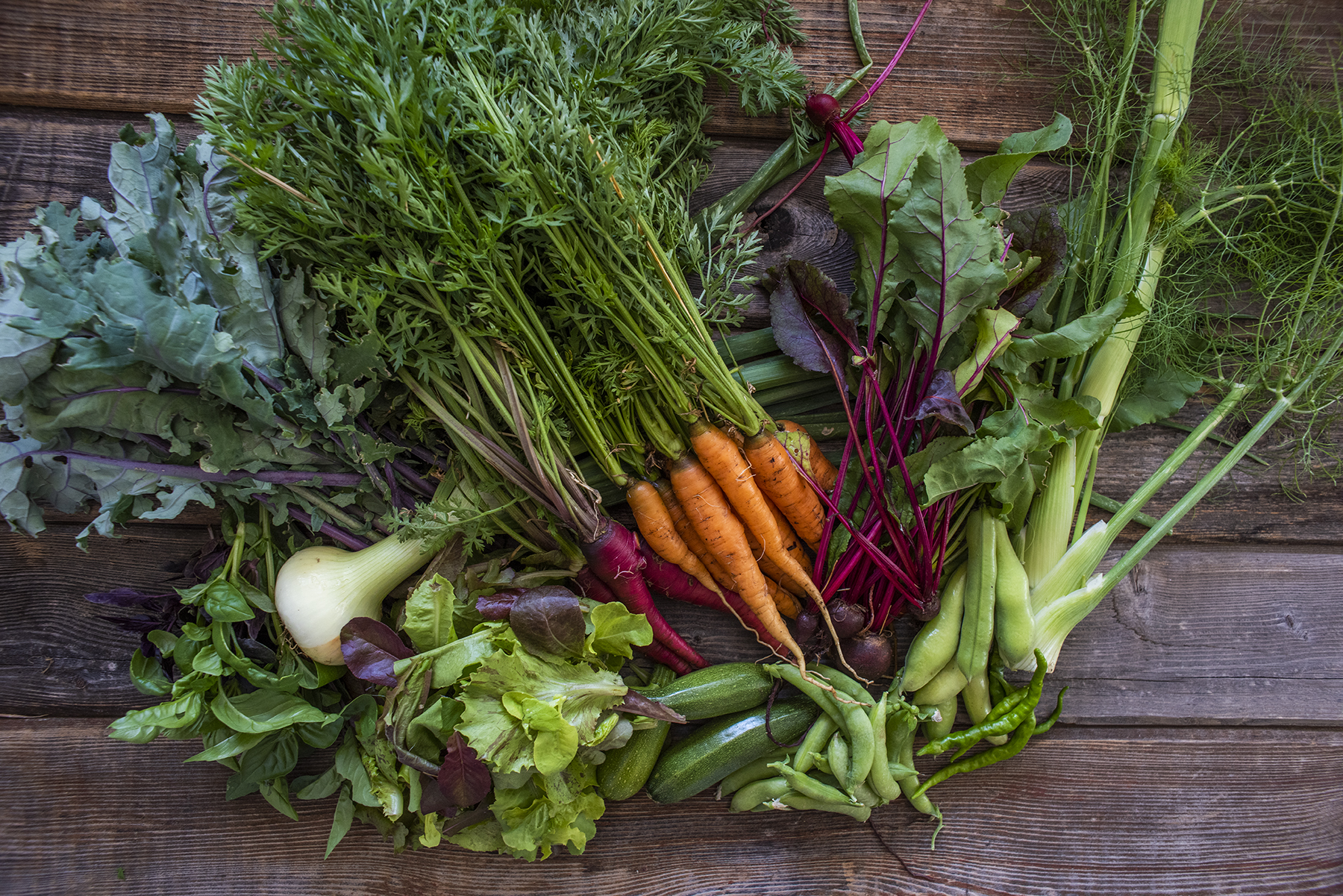
A daily harvest last week.
It’s reaching that point in the season when all of our hard work starts to pay off in abundance. Harvests now happen daily, rather than weekly or every few days, and a small bucket is required. Although the stars of summer – tomatoes and peppers – haven’t really come on yet, we’re swimming in greens, carrots, beets, onions, zucchini, fennel, kale and fresh herbs. It’s not going to be a great year for either winter squash or sweet peppers, much to our disappointment, and we fear that the squirrels have pre-harvested many of our potatoes. But we’re looking forward to cucumbers and fresh beans along with a (hopefully strong) tomato crop.
“Still, I cook. We need to cook, after all, to nourish ourselves and those around us. We need to cook to feel better, to make others feel better, to get along. I may begin the process in weariness, but as often as not I end it in surprise and triumph, happy at least to have made something delicious, to have shared it with those with whom I shelter.”
-Sam Sifton, The New York Times
No longer trendy but still delicious.
One of the cruel ironies of being a farmer is that when the vegetables really start rolling in, it’s way too hot to cook. Plus, after twelve hours working in the blazing sun all we want is chilled watermelon and ice-cold beer – not exactly a balanced diet. Enter the quiche! Long a mainstay of stuffy, boring women’s luncheons, quiche is hopelessly out of fashion but so well-suited for hot summer months, especially when fresh eggs, vegetables and herbs are in abundance. I always bake first thing in the morning (the house doesn’t need any help heating up later in the day), and quiche is perfect warm, cold or at room temperature. It has a reputation for being terribly unhealthy, but loaded with broccoli, spinach, peppers and herbs, with just a little egg and sharp, savory cheese to bind it all together, it’s an ideal summer staple. Let’s bring quiche back!







 Finding Quiet Farm