The FAQ Series: Sugar, Part Two

In Part One of our series on sugar, we discussed the most common sugars you might have at home and typically use in your own drinks and baked goods. Food processing companies, however, have access to dozens more ingredients that they can use in their products, all of which are sugar – but under different names.

sugar-19-sml-e1518656415874.jpg

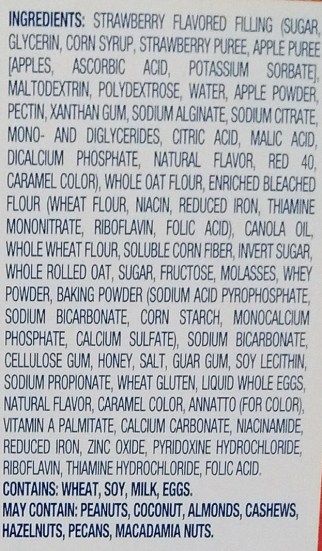
Here’s a fun game: how many different names for sugar can you find on this ingredient label?

Keep in mind that labeling laws in the U.S. require a product’s ingredients to be listed in descending weight order, with the most prevalent ingredient first and so on. Because added sugars are in at least 75% of all processed foods (a conservative estimate), manufacturers are understandably wary of listing sugar as one of the first three ingredients, even if that’s technically true. So the loophole here is to obviously identify sugars individually – that is, maltodextrin separate from high fructose corn syrup which is separate from invert sugar and so on. Did you know that sugar goes by over 60 different names on American food labels, and anything ending in “-ose” is sugar? If you see more than three of these on a product label – especially if they occur within the top three ingredients – put it back on the shelf.

  1. Agave nectar
  2. Barbados sugar
  3. Barley malt
  4. Barley malt syrup
  5. Beet sugar
  6. Brown sugar
  7. Buttered syrup
  8. Cane juice
  9. Cane juice crystals
  10. Cane sugar
  11. Caramel
  12. Carob syrup
  13. Castor sugar
  14. Coconut palm sugar
  15. Coconut sugar
  16. Confectioner’s sugar
  17. Corn sweetener
  18. Corn syrup
  19. Corn syrup solids
  20. Date sugar
  21. Dehydrated cane juice
  22. Demerara sugar
  23. Dextrin
  24. Dextrose
  25. Evaporated cane juice
  26. Free-flowing brown sugars
  27. Fructose
  28. Fruit juice
  29. Fruit juice concentrate
  30. Glucose
  31. Glucose solids
  32. Golden sugar
  33. Golden syrup
  34. Grape sugar
  35. HFCS (high-fructose corn syrup)
  36. Honey
  37. Icing sugar
  38. Invert sugar
  39. Malt syrup
  40. Maltodextrin
  41. Maltol
  42. Maltose
  43. Mannose
  44. Maple syrup
  45. Molasses
  46. Muscovado
  47. Palm sugar
  48. Panocha
  49. Powdered sugar
  50. Raw sugar
  51. Refiner’s syrup
  52. Rice syrup
  53. Saccharose
  54. Sorghum syrup
  55. Sucrose
  56. Sugar (granulated)
  57. Sweet sorghum
  58. Syrup
  59. Treacle
  60. Turbinado sugar
  61. Yellow sugar

Continue reading

The FAQ Series: Sugar, Part One

It’s February, and in America that means we’re celebrating both American Heart Month (take care of your heart!) and Valentine’s Day (so much excess sugar!). Ironic, no? We’re going to return to travel posts from our winter trip to Europe shortly, but in every single one of my recent corporate presentations, I’ve been asked about sugar. Therefore, I think it’s time that your trusted team over here at FQF HQ answer some questions about this ubiquitous yet widely misunderstood ingredient – one that we absolutely need to survive but that is also making us very, very sick.

Sugar 02 sml

Oh my goodness! So very many sugars! All in my own cupboard!

We’re going to start with the basics, and we’re going to break this post into three parts because it’s that lengthy and it’s that important. (Also, I don’t want you to tune out due to boredom.) I’d argue that no other single ingredient in our collective Western diet right now is as significant as this one, so let’s get a few things straight.

  • sugarany of the class of soluble, crystalline, typically sweet-tasting carbohydrates found in living tissues and exemplified by glucose and sucrose; present in sorghum, maple sap, honey, etc.; used extensively as an ingredient and flavoring of certain foods and as a fermenting agent in the manufacture of certain alcoholic beverages

Let’s break that definition down a bit further: almost every single food we eat – fruit, vegetables, dairy – contains some quantity of naturally occurring sugar. It’s a carbohydrate, and it exists in simple and complex forms, and we need it to survive. But it’s not so much the naturally occurring sugars that are killing us, it’s the added sugars in just about everything.

In this first section, we’re going to talk about commonly available sugars: the ones we might find in our grocery store or pantry, the ones we use every day in our own coffee and tea and cookies and other things we make at home. And in the second section, we’re going to talk about industrial sugars: the ones that are added in for us, the ones we’re totally addicted to and the ones we eat way too much of. Finally, we’re going to discuss how the sugar industry has conspired for decades to convince us that butter and cream and eggs and bacon are the true villains, not sugar, even though they’ve long known otherwise.

Continue reading

Manger et boire à Paris

Of course we went on a food tour while in Paris. How could we not? This is the city where I learned to cook (and drink), and there are far too many delicious choices to navigate on your own. Many thanks to Jennifer from Paris by Mouth, who escorted us through the Saint-Germain neighborhood with grace, hospitality and true passion for food and wine.

PFT-02

PFT-01

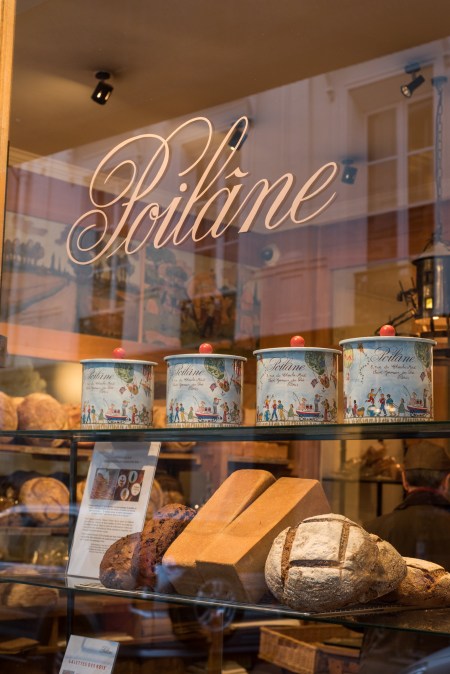
Our first stop: the esteemed Poilâne bakery, the most famous boulanger in the world. Poilâne is operated by Apollonia Poilâne, who took over the company when her parents died in an accident in 2002. She was eighteen, and she ran the company from her dorm room at Harvard until her graduation, four years later. Interviewed during that time, she said, “The one or two hours you spend procrastinating, I spend working. It’s nothing demanding at all.” Words of wisdom, indeed.

Continue reading

Paris, je t’aime

Pariscolor-01

Pariscolor-14

Pariscolor-04

“In every corner of Paris I was reminded: the city is old; it stays the same. People will try to tell you how different it is, how it has evolved: the food scene is different; the construction is killing that neighborhood; the tourists are getting more obnoxious. But for me, those changes barely register. Paris is essentially the same. That’s the whole point of it.”

Continue reading

Scouting trip

For a site called Finding Quiet Farm, we don’t actually write that much about finding Quiet Farm. This isn’t because we’re not looking, but because we haven’t found much worth sharing. Farmland in the U.S. is bulldozed and paved over for housing developments and shopping malls at a staggering rate of forty acres per hour, and the land that is available tends to be just a touch out of our price rangeWe spent a month in Oregon this fall, volunteering on farms and looking for our own place, but ultimately decided that Oregon wasn’t our home. We drove back to Denver through Colorado’s Western Slope, and decided to give that part of the state – previously ignored – a closer look in the new year.

Colorado sign sml

The first week of 2018 saw us westbound from Denver crossing the high mountain passes, which was easy instead of treacherous because winter in Colorado was canceled this year. We visited Grand Junction, Delta, Montrose, Olathe, Hotchkiss and Paonia, areas famous for peaches and sweet corn and cherries and the center of Colorado’s nascent wine industry, too.

Car sml

Our trusty road trip car. (Just kidding.)

Over the course of three long, intense days, we saw maybe a dozen properties. Most, of course, were discarded immediately: rickety house in need of extensive, costly renovation, sketchy neighbors, too much infrastructure devoted to horses, odd adobe construction, property too close to busy roads. But there were two in particular that caught our attention: one forty-acre parcel just outside of Grand Junction, a reasonably major population center, and one in a tiny apple-growing area just up the Grand Mesa, the largest flat-topped mountain in the world.

Orchards

Apple trees with protective winter coverings ready for use…if winter ever appears.

Continue reading

Saddle up

Howdy, pardner! Are you one of the over twelve hundred people who relocated to Colorado last month (just like every month for the past three years or so, which makes us one of the fastest-growing states in the country)? If you’re new here, you might not know that January means only one thing in our town, and that’s the National Western Stock Show. Never been? Get your boots on and let’s go.

Cowgirl Flag sml

“Ladies and gentlemen, please remove your hats and stand for our national anthem.”

Posters sml

For a long time, Denver was embarrassed about its cowtown reputation. We were embarrassed that we weren’t seen as elegant and sophisticated, like New York or Los Angeles. We were embarrassed that we didn’t have fancy restaurants but instead had an abundance of steakhouses, particularly classy joints where they’d cut your necktie off. We were embarrassed that we wore blue jeans (pressed) and boots (clean) to just about every gathering, formal or not.

Continue reading

How to eat healthier

I may not love Thanksgiving, but I do love everything about January. I love the quiet after the holidays, the fresh start, the clean slate. And of course, this is the time of year when so many of us promise to do better. When we promise to eat right, drink less, stop going out to restaurants so often, quit smoking, save our money, exercise more and all the rest.Snowy trees.jpgI don’t subscribe to the negativity often associated with New Year’s resolutions. (By mid-January, over a quarter of all New Year’s resolutions have been discarded, and only a scant 10% are actually followed through to the end of the year. Those are some pretty bleak statistics.) Changing habits is hard enough; I’d much rather start off on a positive note. I make a list of goals, not resolutions.

And with that positivity in mind, how about a quick primer on eating better in 2018? This isn’t designed to be an exhaustive list, nor a restrictive diet plan, merely a few simple tips to get your head in the right place for making healthy changes in your daily eating. Diets don’t work, but changing your mindset does.

Continue reading

How to make yogurt

There are foods and drinks we should buy, and foods and drinks we should make at home. I would place things like tofu, amazing soft-ripened cheeses, bacon and hoppy IPAs in the first category; though I can make these things, other people are doing a much better job at it. The second category, however, would include granola, bread, salsa, applesauce, hummus and yogurt, among many others – all of these are much better-tasting, healthier and certainly cheaper made at home.

I’ve been asked a number of times recently for instructions on how to make yogurt, and since I make it once a week on average, I thought it might be high time to share this magic with the world. Making yogurt is not difficult or expensive, but it does require a bit of patience and a basic understanding of fermentation – which is typically referred to as “culturing” when used in context with dairy products. Keep in mind that the instructions below are for cow’s milk yogurt; other milks, such as sheep or goat, or non-dairy products, like almond, soy or hemp, don’t turn into yogurt the same way.

Yoghurt 01 sml

Yes, that is the current temperature in our sunroom.

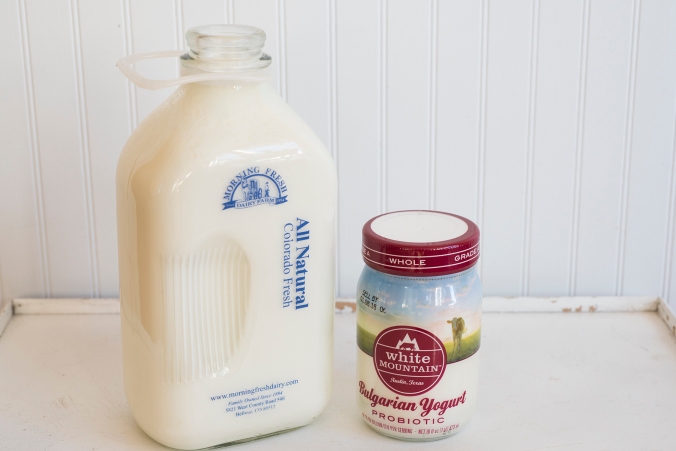
Let’s be clear on what you absolutely do not need to make yogurt: you do not need a fancy yogurt maker, or an Instapot, or specially-purchased mail-order yogurt cultures. You can use these things if you have them, but to me they all fall firmly into the category of “convincing people they can’t cook without expensive gadgets and hard-to-find ingredients.” Peasants have been making yogurt for literally thousands of years; I’m pretty sure they didn’t stop at Bed Bath & Beyond to grab a yogurt maker on their way back from the fields. What you do need: fresh milk, starter yogurt culture, a heavy pot, an accurate thermometer, a ladle, a wooden spoon, clean jars and lids, and a warm, safe place to keep your yogurt while it’s culturing.
Yoghurt 03 sml

Fresh milk + starter culture = homemade yogurt!

I make my yogurt in one-gallon batches, which yields four quarts plus a bit. If your household doesn’t eat much yogurt, or if you want to start small, make a half-gallon batch. You can always scale up when you realize how much yogurt you’re eating. Don’t buy UHT or other long-life milk to make yogurt or other cultured dairy products; its protein structure has been irreparably changed by the heating process used to make it shelf-stable. And when you’re buying a starter yogurt culture, buy plain, full-fat yogurt; no fruit or other sweeteners, thickeners like carrageenan or pectin, stabilizers or other mysterious ingredients (please, no M&Ms, sprinkles or chocolate chips). Yes, you can use skim or low-fat milk to make yogurt, but why would you? I am an advocate for full-fat dairy at all times; cows don’t give skim milk, so I see no point in consuming it.
Yoghurt 04 sml

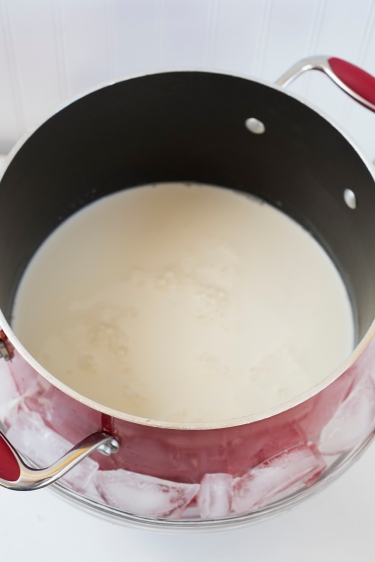
Placing your pot of hot milk in an ice bath will cool it to 110 degrees quickly.

To start, place two tablespoons (for a half-gallon) or four tablespoons (for a full gallon) of starter yogurt into a medium bowl and set aside. Pour the milk into the heavy pot. If your thermometer clips onto the side of the pan, attach it now; ensure the tip doesn’t touch the bottom of the pan or you’ll get an inaccurate reading. Heat the milk gently, stirring occasionally to prevent scorching; you’ll want to bring it up to about 175 degrees F (this could take as long as thirty minutes for a full gallon). Once it’s reached 175, remove it from heat and place it into an ice bath to rapidly bring its temperature down to about 115 degrees F. You can let it cool as is, but icing it is much quicker; stirring it frequently will bring the temperature down, too. (For those of you at altitude, please note that you do not need to adjust these temperatures.)

While you’re waiting for the milk to cool, bring a kettle of water to a boil, and place your clean jars on a folded kitchen towel on your worktop. Fill each jar with boiling water; always wash and warm one more pint jar than you think you need. Place the lids in a separate heatproof bowl and cover those with boiling water, too.

When the milk is around 110 degrees, whisk about one-half cup into the bowl you set aside with your starter culture. This tempers the culture, bringing the two liquids to a similar temperature and ensuring that the starter culture doesn’t cook when it’s added to the warm milk. Now, add the thinned and warmed starter culture to the pot of milk, and stir well. Pour the boiling water out of your first jar, and set it back on the towel. Ladle the warm milk and starter mixture into this clean, hot jar (a funnel comes in handy here). Repeat the process for the remaining jars until you’ve used all of the milk. Put the lids on the jars and close gently; the lids just need to be snug enough to keep from falling off but they shouldn’t be lumberjack tight. Wipe the jars and lids with a clean, damp towel to remove any milk residue.

You can now place the jars into a cozy spot, like a cooler lined with towels, or your (turned off) oven or microwave. The idea is to keep the jars pretty warm, which allows the culture to activate and thicken the milk. I use my dehydrator on a low setting; some people use a slow cooker or even surround the jars with heating pads or hot water bottles. You may need to experiment to figure out what works best in your household; just remember that you’re trying to keep the yogurt reasonably warm and undisturbed. Yogurt cultures love an ambient temperature range of 95 to 115 degrees; the cooler it is, the longer it will take to get a set (but it will still work!).
Yoghurt 05 sml

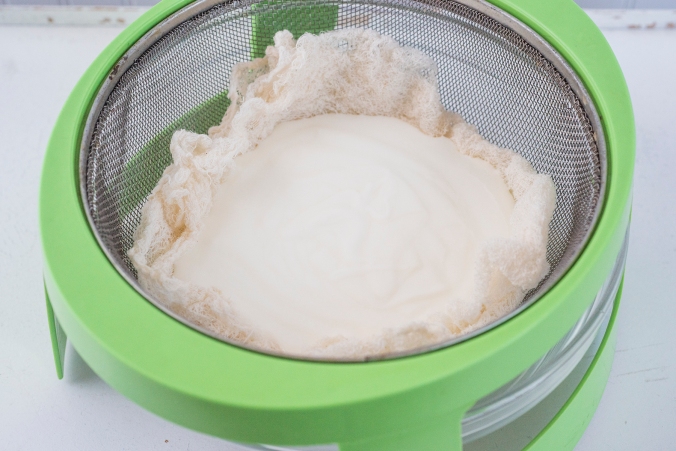
Draining the yogurt in triple-layered cheesecloth will create a thick “Greek-style” yogurt.

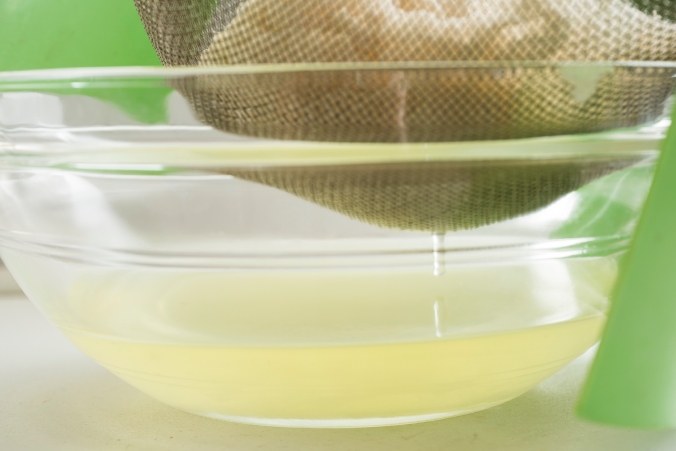
I typically leave my yogurt to culture overnight, depending on how much I’m making and the ambient temperature in my house. It will thicken more once it’s been refrigerated, and you can also drain the whey out, leaving you with thick, “Greek-style” yogurt. Drained whey can be added to bread doughs or smoothies, or used as a starter culture for lacto-fermented vegetables, if you’re so inclined. I almost never drain my yogurt, preferring instead to let it culture longer so I have a thicker product and can use every bit of it; when I do have leftover whey I use it to cook grains, like farro and wheatberries. I always leave my yogurt plain so I can use it in both sweet and savory applications; if you want to add in jam or vanilla or honey or maple syrup or any other sweetener or flavoring, do so on an individual basis and not to an entire batch.

Of all the hundreds of batches of yogurt I’ve made, I’ve never had a batch not set. That said, if your yogurt isn’t turning out, I’d recommend first calibrating your thermometer so you know that you’re adding culture at 110 degrees. Too hot and it will die, too cold and it will go dormant. Just like using yeast in bread baking, temperature matters a lot. If you’re confident your thermometer is accurate, I’d next change the brand of milk you’re using, and then I’d change the starter culture, again thoroughly examining that ingredient label to verify that there is nothing in the yogurt besides milk and active cultures. Storebought yogurt has a lot of junk in it; read all your food labels carefully.
Yoghurt 06 sml

Use the drained whey to bake bread, cook grains or ferment vegetables.

The temperature and speed that your yogurt cultures at determines the thickness of the final product, so once you’ve got the basic technique down, feel free to experiment with how long you let it set, and at what temperature. I’ve read that heating the milk to 195 degrees F allows for an even thicker yogurt because it denatures the proteins further, but I haven’t tried it. Know also that eventually your starter culture will wear out; if you’re making a lot of yogurt, you might find that you need to purchase a fresh starter yogurt every few months to keep your set strong.
Yoghurt 02 sml

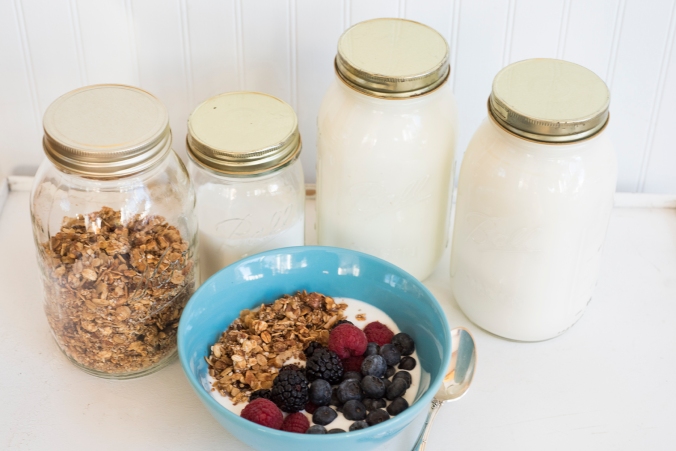
Homemade yogurt, homemade granola and fresh berries. Nom nom nom.

What else should you do with your homemade yogurt, besides enjoy it with fruit and granola? Bake with it. Blend it into smoothies. Use it to marinate meats. Freeze it in popsicle molds with swirls of jam and honey to make your own frozen treats. Add in fresh herbs and salt and make it into a tangy salad dressing or dip for fresh vegetables. Just remember to save a couple of tablespoons to start your next batch!
Cooking in cast iron

In my holiday-themed classes, I talk about how I’d rather have two or three really stellar, delicious dishes at a meal than an extensive buffet of mediocrity. I feel the same way about cookware and knives: that is, I’d rather have a few sturdy, durable pieces that perform perfectly and can take a beating, rather than dozens of cheap, flimsy pans or knives that bend, warp, break or just plain fail. Cooking well isn’t only about starting with the best ingredients, but having the tools (and the skills) to turn those ingredients into something remarkable.

Cast Iron 01 sml

See how well-loved they are? I use mine every single day.

I love classic cast iron cookware. I love its heft, its lived-in appearance, its ability to retain heat. I love that it can be passed down through generations, and it only gets better. I love that it’s not shiny, not new, not a throwaway item. I love that it looks like something I should be using over a rickety camp stove to make a fry-up for hungry cowboys out on a cattle drive. I love that there is something of quality still manufactured in the United States. I love that cast iron asks you to cook well and simply and honestly.

Cast Iron 04 sml

You can roast peppers to smoky, tender perfection!

Cast iron cookware has been in use around the world for over two thousand years, and there’s a reason for that: nothing retains heat better while still holding its form. Before we became such a disposable society, cookware like this was valued for its durability and its effectiveness, especially when slow simmering tough cuts of meat. Cast iron goes from stove to oven, and it can be used to make anything: flavorful stews, crispy yet tender cornbread, smoky, filling beans. And nothing – I mean nothing – sears a steak like cast iron. Ask any cowboy.

Cast Iron 02 sml

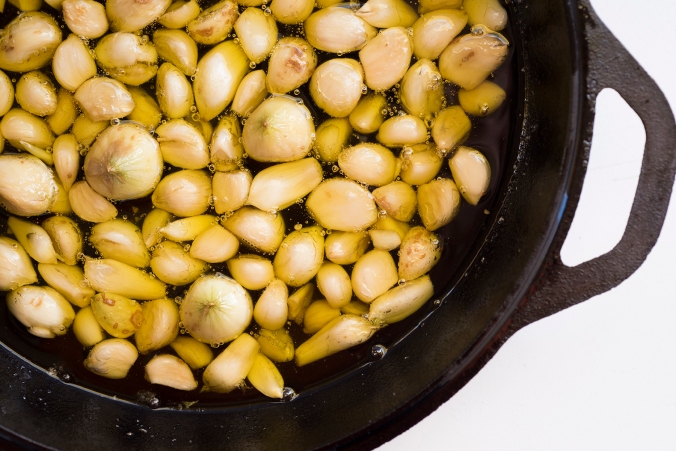
You can create the most amazing garlic confit!

In the first half of the 20th century, cast iron cookware was ubiquitous in America. Then – coincidentally, right about the time we started turning to processed “convenience” foods – cast iron fell out of favor. It was too heavy. Too unwieldy. Impractical for TV dinners. Not suitable for microwaving soup. Couldn’t be put in the dishwasher. And so, most of the American companies went out of business. Today, Lodge is the only major manufacturer in the U.S., although a couple of smaller, “artisan” brands like Finex have appeared recently.

Cast Iron 06 sml

You can make one-pan meals!

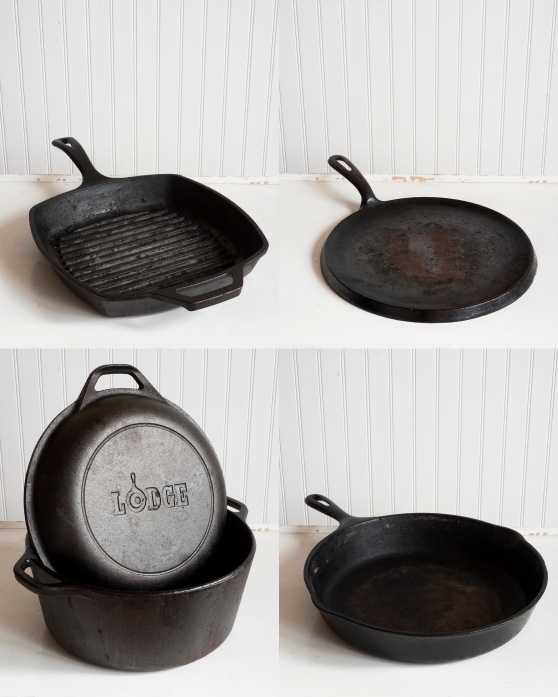
I got rid of my grandmother’s cast iron pans at a garage sale years ago. Freshly minted from an uppity French culinary school, I thought cast iron was too down home, too low-class, too American for my lofty European cooking skills. What misplaced arrogance; to this day, I regret selling those pans. Thankfully, N found a ten-inch skillet for me at a church rummage sale, and I picked up my comal, a flat, round griddle traditionally used for making fresh tortillas, at a thrift store. My other two are classic Lodge, a Dutch oven and a grill pan. They’re all pieces I love cooking with.

Cast Iron 03 sml

You can put a little char on your tomatoes!

If you have any cast iron, take good care of it and it will take care of you for decades. Once it’s seasoned, meaning that you’ve basically created a nonstick surface through a combination of cooking fat and heat, never, ever use soap or any other chemical cleaner on it. Don’t immerse it in water, either. I typically just wipe my pans with a dry paper towel, if necessary, but if you’ve got stuck-on bits, you can heat the pan with a bit of water until they loosen, then scrape them out with a spatula. Really tough messes can be tackled with coarse kosher salt and a scouring pad. You can’t scratch them, can’t break them, don’t have to use any fancy utensils. They are indispensable workhorses.

Cast Iron 07 sml

And the most essential thing you can cook in your cast iron Dutch oven…

Cast iron’s greatest advantage, of course, is also its greatest downfall: their weight means they retain heat beautifully, so they get hot and stay hot, and they’re heavy. Treat them carefully and respectfully. Use both hands when lifting; never try to “one-hand” a cast iron pan. When you remove the pan from the oven and set it back on the stove or other protected surface, do as restaurant chefs do and make sure you leave your kitchen towels on the pan to remind everyone (including you) that it’s hot. Large pans that have been heating for a while may take a couple of hours to cool down, so have a safe place to put them where no one will burn themselves. Don’t leave water in the pan, either, as they can rust, though if you find an unloved, rusty specimen, you can always remove the rust with salt and reseason the pan.

Cast Iron 08 sml

…is quite simply the best bread you’ll ever taste.

Want to build your own cast iron collection? Start here, and thanks for buying American. Their stuff is top-notch and remarkably well-priced. Visit thrift stores and garage sales and flea markets (maybe you’ll find my grandmother’s pans?) but stay away from anything called an “antique store.” Little-known fact: antique is actually French for “overpriced stuff bought cheaply in a thrift store and aggressively marked up.” Cast iron’s resurgent popularity in recent years means anything even vaguely vintage can cost a fortune.

Cast Iron 09 sml

And while we’re on the topic of the French and expensive things, this stuff is cast iron too, but with an enamel coating. It’s gorgeous, comes in an array of coordinating colors so the kitchen at your Provencal château can match the Parisian pied-a-terre and it’s priced for really rich people. Tread carefully with these: they’re beautiful and colorful, but you can scratch that enamel without too much effort, and not all of the knobs and handles are designed for high heat. These definitely require a bit more attention, and a lot more money.

Go cook, friends. And save me some cornbread.


Food stamp challenge

One of the comments I hear most frequently in my cooking classes and presentations is that “it’s impossible to eat healthy on a budget.” I wholeheartedly disagree with this statement, and to prove my point, I decided N and I would take part in the Food Stamp Challenge. In Colorado, the challenge is organized by Hunger Free Colorado; your state will have different resources available.

While SNAP (Supplemental Nutrition Assistance Program) benefits vary from place to place and family to family, in Colorado food stamps amount to approximately $4.20 per person, per day. That amounts to $1.40 per meal, if you eat three meals a day, or about $29.40 per week; that number encompasses everything you consume, including drinks and snacks. (Legally, you cannot buy alcohol, tobacco, lottery tickets or non-food products with food stamps, but unfortunately you can buy soda, energy drinks, candy, cakes, chips, cookies, ice cream and plenty of other unhealthy items.) This is going to take some planning, and some smart shopping.

Here’s the tricky bit, though: SNAP benefits can’t be used for any sort of takeaway food, and can’t be used for anything consumed within a store. So no prepared deli items, no to-go coffees, no rotisserie chickens. It’s easy to see why smart hunger relief experts advocate cooking classes along with SNAP benefits; to make the most of this program, you really need to know how to cook from scratch.

Since my household comprises two adults, I’ll allot us a total weekly budget of $58.80. And since I want to play in the most honest way possible, I’ll plan for the way we currently eat: we drink black coffee in the mornings but don’t eat an early-morning breakfast; we typically eat around 10AM and 4PM (it works for us). We also eat very little meat, so going mostly vegetarian won’t be much of a struggle; this budget definitely doesn’t allow for a lot of good meat. And we only eat at restaurants when we’re traveling, so planning and cooking all of our meals at home won’t stress us, either.

Food Stamp 05 sml

Scanning for sales is key to eating well on a budget.

A couple of other caveats about our food stamp challenge:

  • A challenge like this is necessarily a snapshot in time. We’re doing our challenge in December, which definitely makes most fresh fruits and vegetables harder to come by in our Rocky Mountain region – and they’re certainly not local, except for onions and greens! Fresh produce would be more abundant and less expensive in late summer.
  • To play fair, I am not using our backyard honey, or my own canned and frozen goods pantry. I have dozens of jars of applesauce, salsa, Western Slope peaches and other homemade canned goods, plus lots of produce in the freezer, but since I can’t truly ascribe a dollar value to these, we’re not eating these during the challenge.
  • I refuse to dramatically change our standard eating style in order to adhere to the budget; I’m not going to add cheap meat or nutritionally devoid, high-sugar cereal to our shopping list just to have something on the table. That isn’t what we eat now, and I believe the point of this challenge is to make fresh, delicious, nutritious food on a limited budget – not to just eat for the sake of eating.
  • As mentioned above, we’re a household of two healthy adults, and we only eat two meals a day. Your own household’s food stamp challenge will look very different, but we would love to hear about it!

Food Stamp 03 sml

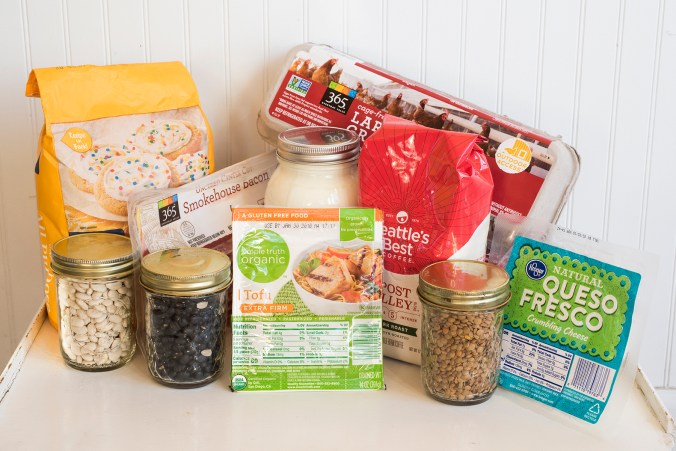
Some of our food stamp challenge ingredients. Embrace the bulk department.

Here’s what I bought for our challenge:

  • 12 oz. whole-bean coffee ($4.99, and it amounts to about $0.12 per cup. Worth every penny.)
  • 12 oz. animal-welfare certified bacon ($4.99)
  • dairy: 1 gal. local whole milk ($2.19), plain yogurt for starter ($0.59), 10 oz. queso fresco cheese ($2.49)
  • two dozen non-GMO cage-free with outdoor access eggs ($5.98)
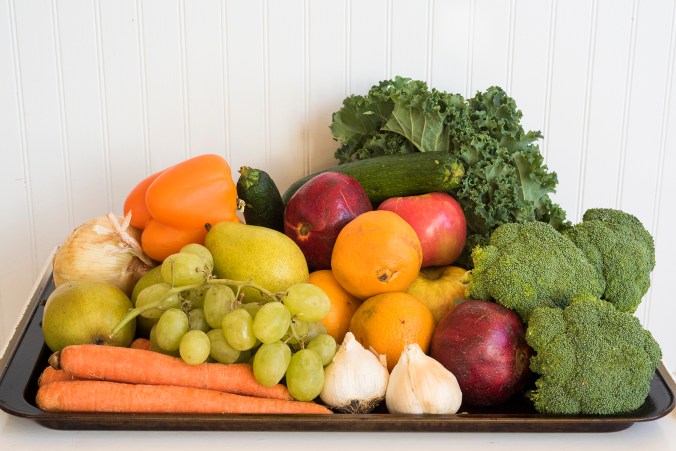
  • fruit: 3 apples ($0.98), 3 grapefruit ($0.99), 1 lb. grapes ($0.97), 6 kiwi ($0.99), 3 pomegranates ($0.99), 3 pears ($0.98), 8 satsuma clementines ($1)
  • grains and legumes: 0.5 lb. dried black beans ($0.85), 0.5 lb. brown rice ($0.35), 0.5 lb. dried chickpeas ($0.75), 0.5 lb. green lentils ($0.59), 0.5 lb. rolled oats ($0.35), 1 lb. linguine ($0.99), 0.5 lb. white beans ($0.99)
  • 1 lb. organic tofu ($1.79)
  • vegetables: 2 lb. broccoli ($1.76), 1 lb. carrots ($0.69), 1 bunch cilantro ($0.33), 12 oz. frozen corn ($1), 2 cucumbers ($1), 3 bell peppers ($0.99), 2 heads garlic ($0.66), 2 bunches kale ($1.98), 1 lb. yellow onions ($1), 12 oz. frozen peas ($1), 5 oz. salad greens ($1.69), 1 bunch scallions ($0.33), 3 zucchini ($0.99)
  • staples: assorted bulk spices ($1), 0.5 lb. roasted almonds ($2.99), corn tortillas ($0.99), 5 lb. flour ($1.79), 0.25 lb. roasted pumpkin seeds ($1.25), 3 packets yeast ($1.19 with coupon), hot sauce ($0.99)

Total spent: $58.41

Food Stamp 04 sml

Thanks to savvy shopping and the discount table, this is less than $10 of healthy, nutrient-dense fruits and vegetables!

And here is our simple seven-day menu plan; again, we start with a pot of black coffee and only eat two meals per day. For snacks, we eat fresh fruit or raw vegetables, plus a handful of almonds and pumpkin seeds.

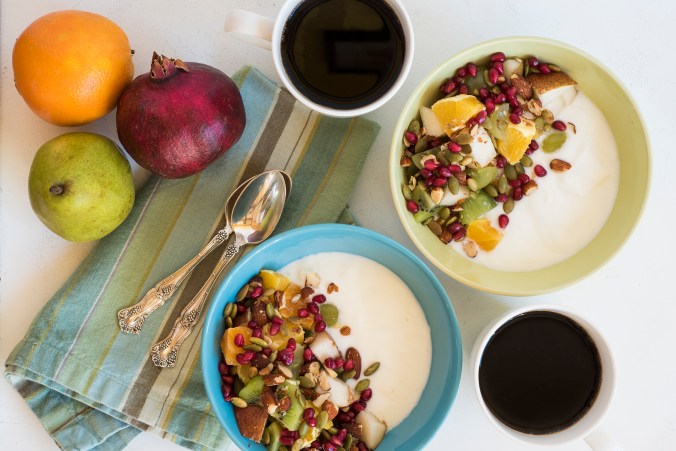
  • Day One: yogurt with fruit and almonds; white beans and sautéed kale with fried eggs; fresh bread
  • Day Two: breakfast tacos with eggs, zucchini, peppers, onions and queso fresco; tofu and broccoli stir-fry over brown rice; green salad
  • Day Three: oatmeal with fruit and almonds; pasta with bacon, garlic, zucchini and peppers; green salad; fresh bread
  • Day Four: eggs on toast with sautéed greens; lentil, vegetable and chickpea soup; green salad; fresh bread
  • Day Five: yogurt with fruit and almonds; frittata with vegetables, greens and queso fresco
  • Day Six: oatmeal with fruit and almonds; spicy black bean and corn soup; kale salad
  • Day Seven: huevos rancheros with leftover beans and rice; “favorites” (i.e. everything remaining from the week)

Cast Iron 05 sml

Remind me again why vegetables are boring?

My comments on the week:

  • Our menu wasn’t really that different from what we eat on a regular basis. Each day included at least four servings of various fruits and vegetables and usually more, plus grains and legumes. Virtually everything we ate was healthy, flavorful and made from scratch. We didn’t feel hungry or deprived, but I can easily see how someone accustomed to eating at restaurants and/or eating a lot of meat might find this challenge…well, challenging.
  • I chose bacon as our only meat for the week because it offers so much flavor in even tiny quantities. In addition to adding it to pasta and soups, I also used the rendered fat for sautéing vegetables and greens for extra savory punch. Skipping the bacon entirely would obviously leave about ten percent of the weekly budget for other items, but that’s a sacrifice I’m willing to make. I’d rather eat a small amount of good, flavorful meat than a lot of cheap meat.
  • I made four quarts of my own yogurt from one gallon of whole milk; the starter culture only has to be purchased once since you use a bit of your own yogurt as the starter for future batches. Plain full-fat yogurt made from good milk is a great source of quality protein, fat and calories, and dramatically cheaper than buying it premade.

Food Stamp 07 sml

Does it still count as breakfast if we eat at eleven o’clock?

  • I also baked my own fresh bread as I do now, both for health and economic reasons. Although one could claim that whole wheat flour would be a better choice for homemade bread, I would argue that any homemade bread is far better than what you can buy, and far cheaper. Plus, stale bread becomes croutons and breadcrumbs, which add extra value and flavor; storebought sandwich bread doesn’t go stale, it just molds. (I buy my yeast in one-pound bags for $2.99 from a local restaurant-supply store; this is far cheaper than three packets for $1.19, even with a coupon. If you bake bread regularly, buy your yeast in bulk.)
  • It’s virtually impossible to eat purely organic on a budget this tight. While I appreciate the virtues of organic, with so little money to spend I’d far rather eat more conventional fruits and vegetables than just a few organic ones. Value for money wins here, although some of the discounted produce was organic.
  • I did miss having access to a well-stocked pantry, specifically various oils, vinegars, cooking fats (including good butter), seasonings and condiments. It’s very easy to make delicious, healthy food by just dressing it up a bit, and citrus, spices and other flavor enhancers really come in handy.
  • I also really missed cheese. We eat a lot of cheese, both on its own and as a garnish for vegetables and grains, and while I love queso fresco, I really enjoy using a variety of specialty cheeses in almost every meal. Plus, good cheese can often be found at a discount at our grocery store, too!

Food Stamp 02 sml

Because we’re obsessed with aesthetic perfection and meaningless sell-by dates, it’s easy to find supermarket bargains.

Tips for success for your own food stamp challenge:

  • Flexibility is absolutely key. I bought what was on sale, rather than what I necessarily wanted. If you’re going to cook well on a budget, pay attention to store advertising circulars, clip coupons and learn to adjust your meal plan based on what’s available at a good price, rather than what you feel like eating.
  • Our local grocery store has recently started selling blemished or undersized produce at a discount. This produce made all the difference in our food stamp challenge; most of our fruits and vegetables came from this table, usually packed at three for $0.99. I also always search for items close to their sell-by date that the store is looking to offload at a discount; I’ve purchased a lot of healthy, cheap and still-good food this way (see photo above). Don’t ignore this option if you’re cooking on a budget.
  • Also, don’t ignore frozen vegetables. They are cheap, healthy and easy to have on hand, plus they were frozen when that vegetable was actually in season. Fresh vegetables aren’t always the best option, especially on a tight budget.
  • Shop the bulk department for grains, legumes and spices; skipping the inflated packaging makes a huge difference in price. Dried beans are far less expensive than canned, and they don’t contain excess salt, either. Soaking beans overnight takes virtually no time and a slow cooker makes preparing healthy food easy.
  • Search out local ethnic markets. I could have spent substantially less on produce and beans if I had gone to any one of our incredible Mexican markets here in Denver. I wouldn’t buy animal products there, but I’d definitely buy pantry staples.

Food Stamp 01 sml

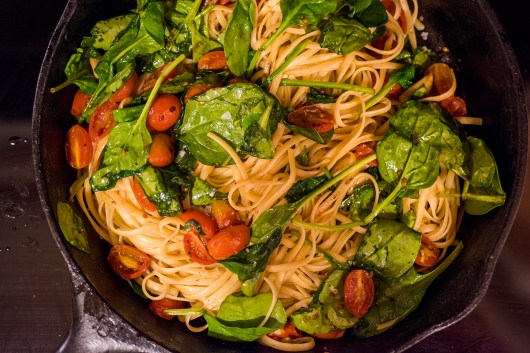
Pasta is oft-maligned, but it is quick, inexpensive, filling, and most importantly easy to pack with lots of vegetables.

  • Get a good knife and a good cutting board and learn how to prep your own fruits and vegetables. Paying for the precut product costs a lot extra and it’s already started to deteriorate, too.
  • Think nutrient-dense and lots of color: discounted spinach, sturdy kale or purple cabbage rather than cheap but nutritionally vacant iceberg; black beans over pinto beans. Whenever possible, choose the most intensely colored whole food (that Windex-colored Gatorade does not qualify).
  • And think high flavor, too. I used small amounts of bacon, sharp, salty queso fresco and crunchy nuts and seeds to add a lot of flavor and texture to our dishes. You don’t need much, but they add interest. I spent money on onions, garlic, scallions and cilantro, both because they’re healthy and because they add a ton of flavor and punch without spending a fortune. Growing your own fresh herbs is a great way to enhance your meals.
  • We had quite a bit of food remaining at the end of the week (both prepared and raw ingredients); this is partially why our final day incorporated “favorites.” If you want to eat on a budget, you have to make use of leftovers, too. Throwing away food is exactly the same as throwing away money.

Food Stamp 06 sml

Garlicky white beans and kale with fried eggs: pretty much perfect, in my opinion.

N pointed out that this challenge was easy for me, because I know how to prepare healthy, delicious food and enjoy doing so. While that’s certainly true, I would say yet again that the number-one best thing you can do for both your physical and your financial health is to learn how to cook, and cook often – whether or not you’re on a strict food budget. Take responsibility for your own health, and cook yourself some wholesome, tasty food. You don’t need to break the bank to do that.

If you choose to organize your own food stamp challenge, please share it with us!