The FAQ Series: Box Meal Kits

Well, hello there! How is 2018 treating you thus far? We over here at FQF are currently swanning our way through France and Germany, and we’ll be sending you some delightful travel missives in the not-too-distant future. But until then, we’d like to talk about box meal kits, because they’ve been a popular topic of conversation lately on both our professional and personal circuits.

What are box meal kits, you might ask? They’re basically recipes and ingredients shipped to you on a regular or on-demand basis, from which you craft (hopefully) delicious, quick(ish) meals. You don’t need to shop or plan; all you need to do is decide which meals you want and how often you want them. And there are many, many companies from which to choose. HelloFresh is probably the most well-known, but there is also Blue Apron, Green Chef, Purple Carrot, Plated, Sun Basket and many others. Plus, Amazon recently bought Whole Foods, so they’re expected to enter the ring any day now, and Wal-Mart is jumping in, too.

Food Box 01 sml

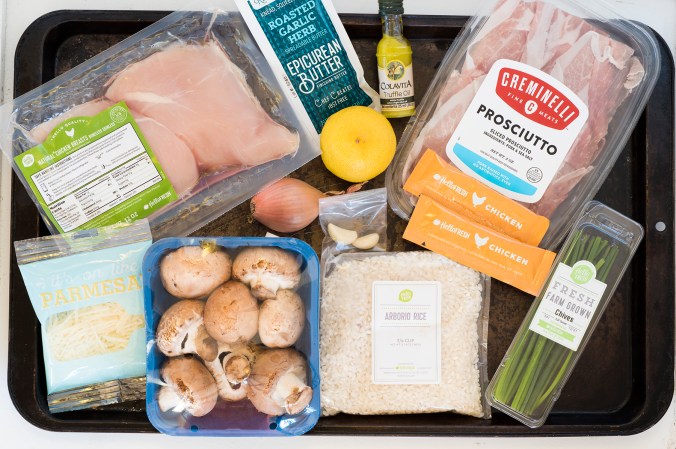
Thanks to our good friends over at Epicurean Butter, we received two HelloFresh meals to test: Prosciutto-Wrapped Chicken with Mushroom Risotto and Kale Grilled Cheese Sandwiches with Tomato Soup. Although HelloFresh offers a number of different plans to choose from, these two meals were each designed to serve two people and they cost about $20 each, or $10 per serving.

Each meal arrives much as you see above: a shopping bag contains the ingredients, plus a photo recipe card and nutritional info; the shopping bags are then all tucked into an insulated box with packing material and ice packs. Typically, you receive three different meals in a box, but again, this varies according to your plan and the company. Cooking oils, salt and pepper are not included, but everything else you need should be.

Food Box 02 sml

Despite the fact that I find following recipes very similar to being put in a choke collar, I wanted to honor the spirit of this experiment and pretend that I was a standard HelloFresh customer, rather than a professional chef. So I laid out all of my ingredients, checked them carefully against the recipe card, and followed the directions to the letter. N even read out the instructions to me while I was at the stove; this resulted in much hilarity as my natural instinct was to do everything my way – he had to correct me frequently, and of course I argued. My goal, obviously, was to see how close I could get to the presentation in the photo as well as the preparation time indicated.

Continue reading

Food stamp challenge

One of the comments I hear most frequently in my cooking classes and presentations is that “it’s impossible to eat healthy on a budget.” I wholeheartedly disagree with this statement, and to prove my point, I decided N and I would take part in the Food Stamp Challenge. In Colorado, the challenge is organized by Hunger Free Colorado; your state will have different resources available.

While SNAP (Supplemental Nutrition Assistance Program) benefits vary from place to place and family to family, in Colorado food stamps amount to approximately $4.20 per person, per day. That amounts to $1.40 per meal, if you eat three meals a day, or about $29.40 per week; that number encompasses everything you consume, including drinks and snacks. (Legally, you cannot buy alcohol, tobacco, lottery tickets or non-food products with food stamps, but unfortunately you can buy soda, energy drinks, candy, cakes, chips, cookies, ice cream and plenty of other unhealthy items.) This is going to take some planning, and some smart shopping.

Here’s the tricky bit, though: SNAP benefits can’t be used for any sort of takeaway food, and can’t be used for anything consumed within a store. So no prepared deli items, no to-go coffees, no rotisserie chickens. It’s easy to see why smart hunger relief experts advocate cooking classes along with SNAP benefits; to make the most of this program, you really need to know how to cook from scratch.

Since my household comprises two adults, I’ll allot us a total weekly budget of $58.80. And since I want to play in the most honest way possible, I’ll plan for the way we currently eat: we drink black coffee in the mornings but don’t eat an early-morning breakfast; we typically eat around 10AM and 4PM (it works for us). We also eat very little meat, so going mostly vegetarian won’t be much of a struggle; this budget definitely doesn’t allow for a lot of good meat. And we only eat at restaurants when we’re traveling, so planning and cooking all of our meals at home won’t stress us, either.

Food Stamp 05 sml

Scanning for sales is key to eating well on a budget.

A couple of other caveats about our food stamp challenge:

  • A challenge like this is necessarily a snapshot in time. We’re doing our challenge in December, which definitely makes most fresh fruits and vegetables harder to come by in our Rocky Mountain region – and they’re certainly not local, except for onions and greens! Fresh produce would be more abundant and less expensive in late summer.
  • To play fair, I am not using our backyard honey, or my own canned and frozen goods pantry. I have dozens of jars of applesauce, salsa, Western Slope peaches and other homemade canned goods, plus lots of produce in the freezer, but since I can’t truly ascribe a dollar value to these, we’re not eating these during the challenge.
  • I refuse to dramatically change our standard eating style in order to adhere to the budget; I’m not going to add cheap meat or nutritionally devoid, high-sugar cereal to our shopping list just to have something on the table. That isn’t what we eat now, and I believe the point of this challenge is to make fresh, delicious, nutritious food on a limited budget – not to just eat for the sake of eating.
  • As mentioned above, we’re a household of two healthy adults, and we only eat two meals a day. Your own household’s food stamp challenge will look very different, but we would love to hear about it!

Food Stamp 03 sml

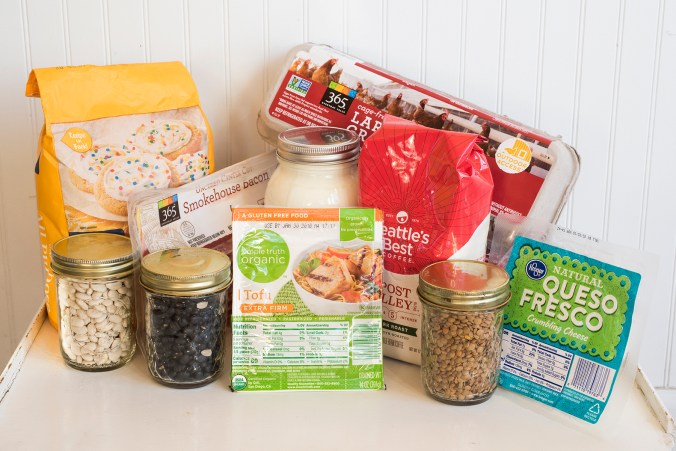
Some of our food stamp challenge ingredients. Embrace the bulk department.

Here’s what I bought for our challenge:

  • 12 oz. whole-bean coffee ($4.99, and it amounts to about $0.12 per cup. Worth every penny.)
  • 12 oz. animal-welfare certified bacon ($4.99)
  • dairy: 1 gal. local whole milk ($2.19), plain yogurt for starter ($0.59), 10 oz. queso fresco cheese ($2.49)
  • two dozen non-GMO cage-free with outdoor access eggs ($5.98)
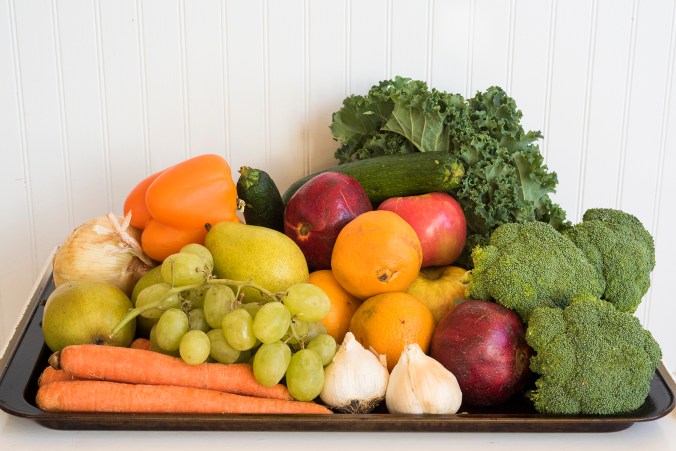
  • fruit: 3 apples ($0.98), 3 grapefruit ($0.99), 1 lb. grapes ($0.97), 6 kiwi ($0.99), 3 pomegranates ($0.99), 3 pears ($0.98), 8 satsuma clementines ($1)
  • grains and legumes: 0.5 lb. dried black beans ($0.85), 0.5 lb. brown rice ($0.35), 0.5 lb. dried chickpeas ($0.75), 0.5 lb. green lentils ($0.59), 0.5 lb. rolled oats ($0.35), 1 lb. linguine ($0.99), 0.5 lb. white beans ($0.99)
  • 1 lb. organic tofu ($1.79)
  • vegetables: 2 lb. broccoli ($1.76), 1 lb. carrots ($0.69), 1 bunch cilantro ($0.33), 12 oz. frozen corn ($1), 2 cucumbers ($1), 3 bell peppers ($0.99), 2 heads garlic ($0.66), 2 bunches kale ($1.98), 1 lb. yellow onions ($1), 12 oz. frozen peas ($1), 5 oz. salad greens ($1.69), 1 bunch scallions ($0.33), 3 zucchini ($0.99)
  • staples: assorted bulk spices ($1), 0.5 lb. roasted almonds ($2.99), corn tortillas ($0.99), 5 lb. flour ($1.79), 0.25 lb. roasted pumpkin seeds ($1.25), 3 packets yeast ($1.19 with coupon), hot sauce ($0.99)

Total spent: $58.41

Food Stamp 04 sml

Thanks to savvy shopping and the discount table, this is less than $10 of healthy, nutrient-dense fruits and vegetables!

And here is our simple seven-day menu plan; again, we start with a pot of black coffee and only eat two meals per day. For snacks, we eat fresh fruit or raw vegetables, plus a handful of almonds and pumpkin seeds.

  • Day One: yogurt with fruit and almonds; white beans and sautéed kale with fried eggs; fresh bread
  • Day Two: breakfast tacos with eggs, zucchini, peppers, onions and queso fresco; tofu and broccoli stir-fry over brown rice; green salad
  • Day Three: oatmeal with fruit and almonds; pasta with bacon, garlic, zucchini and peppers; green salad; fresh bread
  • Day Four: eggs on toast with sautéed greens; lentil, vegetable and chickpea soup; green salad; fresh bread
  • Day Five: yogurt with fruit and almonds; frittata with vegetables, greens and queso fresco
  • Day Six: oatmeal with fruit and almonds; spicy black bean and corn soup; kale salad
  • Day Seven: huevos rancheros with leftover beans and rice; “favorites” (i.e. everything remaining from the week)

Cast Iron 05 sml

Remind me again why vegetables are boring?

My comments on the week:

  • Our menu wasn’t really that different from what we eat on a regular basis. Each day included at least four servings of various fruits and vegetables and usually more, plus grains and legumes. Virtually everything we ate was healthy, flavorful and made from scratch. We didn’t feel hungry or deprived, but I can easily see how someone accustomed to eating at restaurants and/or eating a lot of meat might find this challenge…well, challenging.
  • I chose bacon as our only meat for the week because it offers so much flavor in even tiny quantities. In addition to adding it to pasta and soups, I also used the rendered fat for sautéing vegetables and greens for extra savory punch. Skipping the bacon entirely would obviously leave about ten percent of the weekly budget for other items, but that’s a sacrifice I’m willing to make. I’d rather eat a small amount of good, flavorful meat than a lot of cheap meat.
  • I made four quarts of my own yogurt from one gallon of whole milk; the starter culture only has to be purchased once since you use a bit of your own yogurt as the starter for future batches. Plain full-fat yogurt made from good milk is a great source of quality protein, fat and calories, and dramatically cheaper than buying it premade.

Food Stamp 07 sml

Does it still count as breakfast if we eat at eleven o’clock?

  • I also baked my own fresh bread as I do now, both for health and economic reasons. Although one could claim that whole wheat flour would be a better choice for homemade bread, I would argue that any homemade bread is far better than what you can buy, and far cheaper. Plus, stale bread becomes croutons and breadcrumbs, which add extra value and flavor; storebought sandwich bread doesn’t go stale, it just molds. (I buy my yeast in one-pound bags for $2.99 from a local restaurant-supply store; this is far cheaper than three packets for $1.19, even with a coupon. If you bake bread regularly, buy your yeast in bulk.)
  • It’s virtually impossible to eat purely organic on a budget this tight. While I appreciate the virtues of organic, with so little money to spend I’d far rather eat more conventional fruits and vegetables than just a few organic ones. Value for money wins here, although some of the discounted produce was organic.
  • I did miss having access to a well-stocked pantry, specifically various oils, vinegars, cooking fats (including good butter), seasonings and condiments. It’s very easy to make delicious, healthy food by just dressing it up a bit, and citrus, spices and other flavor enhancers really come in handy.
  • I also really missed cheese. We eat a lot of cheese, both on its own and as a garnish for vegetables and grains, and while I love queso fresco, I really enjoy using a variety of specialty cheeses in almost every meal. Plus, good cheese can often be found at a discount at our grocery store, too!

Food Stamp 02 sml

Because we’re obsessed with aesthetic perfection and meaningless sell-by dates, it’s easy to find supermarket bargains.

Tips for success for your own food stamp challenge:

  • Flexibility is absolutely key. I bought what was on sale, rather than what I necessarily wanted. If you’re going to cook well on a budget, pay attention to store advertising circulars, clip coupons and learn to adjust your meal plan based on what’s available at a good price, rather than what you feel like eating.
  • Our local grocery store has recently started selling blemished or undersized produce at a discount. This produce made all the difference in our food stamp challenge; most of our fruits and vegetables came from this table, usually packed at three for $0.99. I also always search for items close to their sell-by date that the store is looking to offload at a discount; I’ve purchased a lot of healthy, cheap and still-good food this way (see photo above). Don’t ignore this option if you’re cooking on a budget.
  • Also, don’t ignore frozen vegetables. They are cheap, healthy and easy to have on hand, plus they were frozen when that vegetable was actually in season. Fresh vegetables aren’t always the best option, especially on a tight budget.
  • Shop the bulk department for grains, legumes and spices; skipping the inflated packaging makes a huge difference in price. Dried beans are far less expensive than canned, and they don’t contain excess salt, either. Soaking beans overnight takes virtually no time and a slow cooker makes preparing healthy food easy.
  • Search out local ethnic markets. I could have spent substantially less on produce and beans if I had gone to any one of our incredible Mexican markets here in Denver. I wouldn’t buy animal products there, but I’d definitely buy pantry staples.

Food Stamp 01 sml

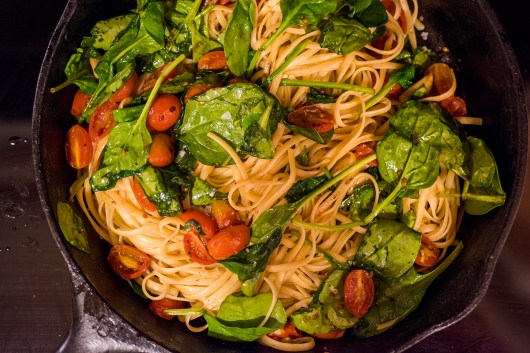
Pasta is oft-maligned, but it is quick, inexpensive, filling, and most importantly easy to pack with lots of vegetables.

  • Get a good knife and a good cutting board and learn how to prep your own fruits and vegetables. Paying for the precut product costs a lot extra and it’s already started to deteriorate, too.
  • Think nutrient-dense and lots of color: discounted spinach, sturdy kale or purple cabbage rather than cheap but nutritionally vacant iceberg; black beans over pinto beans. Whenever possible, choose the most intensely colored whole food (that Windex-colored Gatorade does not qualify).
  • And think high flavor, too. I used small amounts of bacon, sharp, salty queso fresco and crunchy nuts and seeds to add a lot of flavor and texture to our dishes. You don’t need much, but they add interest. I spent money on onions, garlic, scallions and cilantro, both because they’re healthy and because they add a ton of flavor and punch without spending a fortune. Growing your own fresh herbs is a great way to enhance your meals.
  • We had quite a bit of food remaining at the end of the week (both prepared and raw ingredients); this is partially why our final day incorporated “favorites.” If you want to eat on a budget, you have to make use of leftovers, too. Throwing away food is exactly the same as throwing away money.

Food Stamp 06 sml

Garlicky white beans and kale with fried eggs: pretty much perfect, in my opinion.

N pointed out that this challenge was easy for me, because I know how to prepare healthy, delicious food and enjoy doing so. While that’s certainly true, I would say yet again that the number-one best thing you can do for both your physical and your financial health is to learn how to cook, and cook often – whether or not you’re on a strict food budget. Take responsibility for your own health, and cook yourself some wholesome, tasty food. You don’t need to break the bank to do that.

If you choose to organize your own food stamp challenge, please share it with us!


Things that are great!

Friends, let’s start this week with an optimistic post (for once). How about a quick round-up of things that are great right now?


NJB_3308

A small family farm in Hoi An, Vietnam.

The Washington Post reports that a growing number of young Americans are leaving desk jobs to farm:

“For only the second time in the last century, the number of farmers under 35 years old is increasing, according to the U.S. Department of Agriculture’s latest Census of Agriculture. Sixty-nine percent of the surveyed young farmers had college degrees — significantly higher than the general population.

This new generation can’t hope to replace the numbers that farming is losing to age. But it is already contributing to the growth of the local-food movement and could help preserve the place of midsize farms in the rural landscape.”

Granted, the movement is small, but it is in fact a movement. And it’s moving in the right direction. There are numerous barriers, to be certain, but this is progress.

MFGD-46.jpg

How can you not love this munchkin?

Not only are young people going back to the land, but more women are making more incredible cheese than ever. Led by such trailblazing pioneers as Allison Hooper of Vermont Creamery and Mary Keehn from Cypress Grove, handcrafted cheese in this country – primarily made from goat milk, but sheep and cow, too – is truly enjoying its second wave:

“A commonly cited fantasy Plan B among urban paper-pushing professionals, the artisanal-cheese business has surged in recent years, with more than 900 specialty cheese makers in the United States, according to the American Cheese Society, a nonprofit trade organization in Denver. The A.C.S. does not keep data on gender, said its executive director, Nora Weiser, but compared with the bro-centric field of craft beer, where female brewers have struggled to get respect and recognition despite significant contributions, cheese making is a relative haven.”

While “American cheese” has long been a joke in the rest of the world, it is definitely no longer a joke – it’s remarkable. And delicious. Go buy some.

NJB_0197.JPG

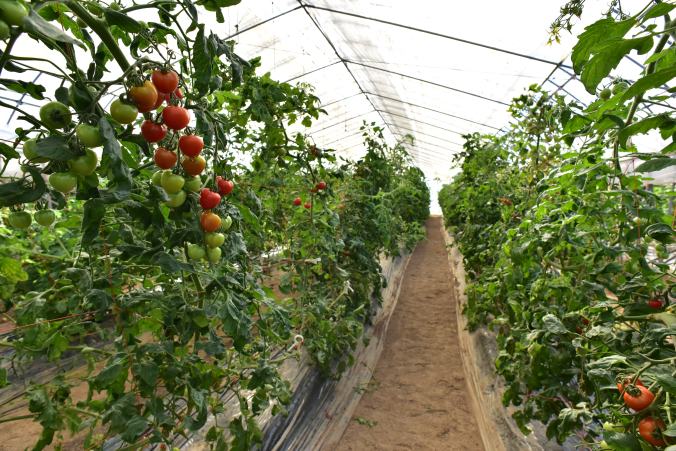
Greenhouse tomatoes in Japan.

In other positive news, vertical farming is finally coming into its own, pushed by high-dollar investments from people like Jeff Bezos, who clearly know a thing or two about running a business. Vertical farming is exactly what it sounds like: growing food in towers, with carefully controlled irrigation, lighting and temperature systems. While farmland continues to be gobbled up at staggering rates, vertical farming, which has been trialed successfully in repurposed shipping containers and other unusual places, might provide a local food alternative, especially in densely populated urban areas. There is still a lot of work to be done, but innovative, forward-thinking entrepreneurs are constantly revamping traditional farming rules. And we will need this sort of innovation, as both global temperature and global population climbs ever higher.

DSC_2678

I’m not putting a picture of soda on this blog. Drink water. (This is Victoria Falls, on the border of Zimbabwe and Zambia.)

And for our final Great Thing today, how about this: soda consumption in the United States has dropped again, for the twelfth consecutive year. This statistic is proof that anti-sugar publicity campaigns and soda taxes are working, at least in some areas. While we’re still drinking about forty gallons per person, per year on average (!!!), those numbers are trending down. And that is definitely a Great Thing.


Enough

Back in the Ye Olden Days, N and I worked on boats. One of these boats – the one we met on – was a scuba diving liveaboard that plied the waters between St. Maarten and St. Kitts, in the Netherlands Antilles. Much of our history together, along with thousands of other people, was erased earlier this year with the landfall of Hurricane Irma. The island we knew so well doesn’t exist any longer.

Thanksgiving magazines

Every year, they promise the PERFECT Thanksgiving. And every year, we buy it.

On this particular dive boat, there were as many as eighteen guests and eight crew. I cooked, and N guided dives. And because provisioning in the Caribbean is never easy, the weekly menu was set by the home office, and it was the same, week in and week out. We had Taco Night, and a barbecue, and because most of our guests were American, every Thursday was a full Thanksgiving spread. Because – trust me – there is nothing you want to eat more in the middle of a humid Caribbean July than the heaviest meal known to man. Every. Single. Thursday.

Thanksgiving turkey ad

We’re so rich in this country that we will give you a free turkey!

I’ve cooked well more than fifty full Thanksgiving meals in my time on this planet thus far, and I’d like to state here and now that I am done. Unsurprisingly, N cannot stand the meal either. I’ve talked about this before in my classes – how much I really, really loathe this season – but this year, it’s worse than ever. I simply cannot embrace the excess. The waste. The sheer, utter, obscene overconsumption just for the sake of pointless tradition.

Stone Barns-11.jpg

Over two hundred million pounds of food will be thrown away on or shortly after Thanksgiving. The USDA conservatively estimates that over one-third of all turkeys raised for this one day will be thrown out, uneaten. These animals lived a horrible life and died for nothing. This is the season both for abundance and for waste, when we’re both begged to donate to hundreds of needy charities yet told at every turn that we need to buy more, eat more, consume more. I can no longer support America’s most gluttonous holiday: we’re the only country in the world that celebrates Thanksgiving, and we do so with such little regard for the shocking overconsumption that we promote to the rest of the world. And then there’s the day after Thanksgiving.

NJB_1413

Because nothing says “giving thanks” like buying a bolt-action rifle on Black Friday.

A holiday devoted to proudly eating oneself into a “turkey coma,” followed by camping out so we can buy ever-larger televisions or the latest iPhone? Or a new gun? What is there to celebrate, honestly? While this holiday may have actually originated as a rightful celebration of having enough, now it’s about having more. More of everything. More food, specifically the dishes we just “have to have at the table.” You know, Aunt Mildred’s casserole that everyone secretly hates but it’s tradition. And so it sits there, congealing, and is quietly thrown out at the end of the evening because no one, no one wants to take it home. Or the two meat main courses, because everyone really needs both ham and turkey. And everyone really needs eight different side dishes. And everyone really needs three desserts. And everyone really needs to throw all this excess food away on the Sunday evening after Thanksgiving because, quite frankly, everyone is f*ing tired of looking at it.

Turkey.jpg

How about this year, we declare it enough. We have enough. Enough food. Enough electronics. Enough guns. Enough unused things in our house collecting dust. How about this year we agree to eat less, to buy less, to not feel sick at ten o’clock at night while we’re camping out at Bed Bath & Beyond. How about this year, we don’t worry about what do with all those leftovers because we just cooked enough. How about this year, we just decide that what we have is enough. And how about we leave it at that.

Thanks, but no thanks

Dear Oregon:

It is with regret that we inform you that you are no longer a candidate for the location of Quiet Farm. Although we visited you with highest hopes, we found that our expectations did not coincide with reality.

NJB_1223

Praying Mantis

NJB_1196

Fly Agaric Mushroom (poisonous!)

It goes without saying, Oregon, that your flora and fauna are simply exceptional. Just look at these photos! Coming from our dry, stark, high-plains desert, we were stunned by the sheer life found everywhere in this damp climate: on fallen logs, under chestnut leaves, buried in cranberry bogs.

NJB_1278

Pacific Tree Frog

NJB_1199

Still Life with Mushrooms

And the water! All the free water, everywhere! Just falling from the sky! Oh look, it’s still raining! Truly, it’s a miracle, and it means you can grow pretty much anything here. But we also found that farming in the pouring rain wasn’t as much fun as we’d hoped. Slogging through inches of sloppy mud while trying to dig out a stuck tractor or get feed to hungry animals sounds adventurous, but we’re afraid it would just become rather tedious.

NJB_1260

Rough-Skinned Newt (its underside is bright orange!)

NJB_1044

Cascades Frog

(While we’re on the topic of growing things, Oregon, we’d like to talk about “medicinal substances,” if you get our meaning. As a state, it seemed to us that you’ve embraced the recreational drug lifestyle just a touch too enthusiastically for our comfort, and that’s saying something, considering we hail from Colorado.)

NJB_1049

Woolly Bear Caterpillar

NJB_1268

Angel Mushroom (unconfirmed ID)

This is a tough letter for us to write, Oregon, because we were pretty much ready to set up shop and get Quiet Farm up and running. But outside of Portland or possibly Eugene, we don’t feel confident that the community can support the type of business we want to start. And unfortunately, we can’t afford any property near Portland or Eugene. Apparently it’s all being snatched up by escaping Californians.

NJB_1206

Red-Veined Meadowhawk

Please know, Oregon, that you’re more than welcome to reapply as a potential Quiet Farm location at any time. We’ll just need to see a dramatic reduction in your extortionate property prices as well as a corresponding reduction in your precipitation rates. Oh, and lay off the weed for a bit, please. There’s work to be done.

With regards,

The Quiet Farm Scouting Team


Let’s learn about the farm bill!

Since about – oh, let’s just say November 9, 2016, not to be too precise – many Americans have found themselves much more interested in politics than in times past. And while that’s a good thing, it’s an understatement to say American politics can be rather confusing. As in, we don’t really get what’s going on, but it doesn’t seem to have that much impact on our relatively comfortable day-to-day lives, so we just go along, merrily forwarding cat videos, virtual-signing critical online petitions that have absolutely no real-world impact and binge-watching the new season of Stranger Things.

NJB_0905.JPG

Finding Quiet Farm tries hard to both educate and entertain, so today we’re going to talk about the farm bill. Oh, I can hear you rolling your eyes right now all the way across the Interwebs, but bear with me. The farm bill, which as Michael Pollan says “should actually be called the food bill,” really does affect every single American, every single day. Multiple times a day, to be honest, because each bite of food you eat in this country is directly tied to the farm bill. And if you have kids, and if they eat any food at all in a school environment, then you’re affected even more. Without further ado, then, a brief, (hopefully) simple introduction to the farm bill, and why you should care about it.
NJB_0763.JPG

Let’s start with the basics. What is the farm bill?

The farm bill is a “multibillion dollar tangle of agricultural subsidies, welfare programs and environmental patronage,” or, more simply, it’s legislation that connects the food on our plates, the farmers and ranchers who produce that food, and the natural resources – our soil, air and water – that making growing food possible. It costs just under $500 billion – that’s half a trillion U.S. taxpayer dollars!

It’s a multiyear omnibus (meaning it covers many different programs) law revamped about every five years and the current farm bill will expire in 2018. That means it’s time for our beloved politicians to start crafting a new farm bill.
njb_0202.jpg

What does the farm bill do?

The National Sustainable Agriculture Coalition puts it best:

“In the simplest terms, the farm bill has a tremendous impact on farming livelihoods, how food is grown, and what kinds of foods are grown.  This in turn affects the environment, local economies, and public health.  These are some pretty good reasons to become involved in advocating for a farm bill that supports health and sustainability!

Through programs covering everything from crop insurance for farmers to healthy food access for low-income families, from beginning farmer training to support for sustainable farming practices, this powerful package of laws sets the course of our food and farming system – in good ways and bad. It’s our job to make sure the farm bill reflects what our country’s farmers and eaters need for a sustainable future.

Every five years, the farm bill expires and is updated: proposed, debated, and passed by Congress and then signed into law by the President. (The current farm bill, The Agricultural Act of 2014, was signed into law on February 7, 2014.)

The farm bill got its start in 1933 as part of President Franklin Delano Roosevelt’s New Deal legislation. Its three original goals –  to keep food prices fair for farmers and consumers, ensure an adequate food supply, and protect and sustain the country’s vital natural resources – responded to the economic and environmental crises of the Great Depression and the Dust Bowl. Although the farm bill has changed in the last 70 years, its primary purposes are the same.”

Basically, the farm bill does many things, but its most significant elements are the federal food stamp program (officially called the Supplemental Nutrition Assistance Program), crop insurance and crop subsidies. There are other, smaller aspects, but these are by far the most important (and costly).

Stone Barns 031.jpg

How does this affect me, or more literally, why should I care?

You should care if you either 1. eat food in the U.S. and/or 2. pay taxes, because you’re funding this monster. And if you’re concerned about our rapidly escalating health care costs, or that for the first time in modern industrial history the current generation has a lower life expectancy than their parents, or even if you only care about just your own household food budget, then the farm bill (and food policy in general) should matter to you.

NJB_0269.JPG

What’s wrong with the farm bill?

Where to begin? It was implemented in the 1930s, and modern agriculture is vastly different now than it was during the Great Depression and the ensuing years. After World War II, we got really, really good at growing vast quantities of corn, wheat and soy with the help of leftover nitrogen, which was made into powerful fertilizer. And in the 1970s farmers were encouraged to “get big or get out,” so the small, diversified family farm started to disappear, and farmers were paid to constantly increase their production of cereal grains, again primarily corn and soy – now used as inexpensive animal feed and as the primary ingredients in processed foods and drinks.

Now, fewer than two million Americans live on farms, while crop yields – and pesticide, herbicide and insecticide usage – continues to increase. Huge monoculture farms cover most of the Midwest, reducing natural diversity and vastly increasing the chances of another devastating Dust Bowl. Large monocrop farmers are millionaires many times over, and small farms are going under. We produce far more cheap, high-calorie, nutritionally-devoid food than we need in this country, and the result of that overproduction includes massive dead zones in the Gulf of Mexico, sick animals raised in their own waste, and a population ridden with heart disease, obesity, diabetes and other lifestyle-related ailments. Plus, many low-income Americans cannot afford fresh fruit and vegetables and other whole foods.

Without question, the farm bill needs revision so it can better impact our current crises, including our food-insecure population and the serious health and environmental burdens our country is facing. But Big Ag has a lot of money and a lot of influence, and the 2018 version is unlikely to offer any significant improvements.

Stone Barns 098.jpg
What can I do to help implement changes in future farm bills?

Well, I’d love to end this on a super-positive, grassroots movement note and tell you to write your elected representative! Call your elected representative! Stand outside the office of your elected representative! But let’s be truthful here: all of our elected representatives are on someone’s payroll, and lobbying is a lucrative career. So the best you can do, to be perfectly honest, is vote with your dollars, because that’s the only vote that really matters. And you vote every single time you spend money.

If you value small farms, find your local farms, know your farmer, and buy directly from them. Skip the middleman. Search out local CSAs, and patronize them. If you believe more federal dollars should support organic farms, buy organic. Read labels, and ask questions. If you want to eat animals that have lived a good life and had a humane death, stop buying cheap commodity feedlot meat and battery eggs. Buy from companies who honor the same values you honor. Do some research. Don’t buy heavily processed foods and drinks made from soy and corn derivatives. Grow your own food, if possible. Anything helps, even a few windowboxes of herbs. And above all else, refuse to believe that something is in your best interest just because someone tells you so. Stand up for yourself, your family, your health and your values – because everyone is out to sell you something, and it’s your responsibility to figure out whether you really should buy it.

NJB_0992


Eating healthy on the road

Oh, the quintessential American road trip. Our country’s iconic open highways have been immortalized in so many classic movies, like when we thought “the Rocky Mountains would be a whole lot rockier.” Or perhaps you need to bootleg a few Coors Banquets from Texas to Georgia? Maybe two legendary ladies in a ’66 T-Bird is more your style? Whatever your favorite road trip film might be, there is no arguing that eating healthy while driving American highways is no easy feat.

IMG_20171014_101120147

Hello Wyoming, and thanks for inventing cruise control. (Photo may have been taken in 1987 or 2017. With filters, who knows?)

I like to move food. It’s my thing. Whenever we leave our house, it’s a guarantee that there are a few canvas shopping bags and maybe a plastic tub or two stacked by the door. We go to my sister’s for dinner and I bring jars of homemade applesauce, fruit leather for my niece (also known as “repurposed jam”) or gorgeous cheese from these lovely folks. My book club ladies leave with end-of-the-garden produce, dinner leftovers and more cheese. And if we’re off on a trip, whether by car or by plane, I simply will not be held hostage by the American industrial food complex.

IMG_0764

Mmmm…McDonald’s or Cinnabon? Why not both?

The vast majority of food in this country is based on two key ingredients: corn and soy. We are very, very good at growing corn and soy, and even better at turning it into cheap meat, soda and processed food. And these “edible foodlike substances” are most of what’s on offer at your standard convenience store or truck stop. And to add insult to injury, it is absurdly priced! I will not play by those rules.

IMG_20171016_204714

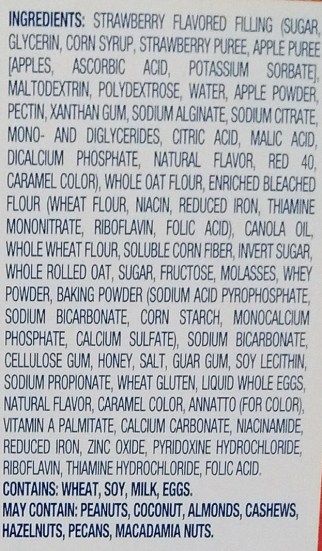
Example A, above. Look! It’s a $2.79 “meal replacement bar!” You know, so we don’t have to eat an actual meal! Can you read the first ingredient? It’s soy protein isolate. The second ingredient is sugar, and the third is soluble corn fiber. If all of your standard meals are composed of soy, sugar and corn, then by all means, please choose this as a meal replacement. But this is just one of many examples of a giant, powerful marketing machine that has convinced the American public that we 1. don’t have time to cook and 2. can eat some junk like this with “PROTEIN” printed in large font and call it a meal. No, no and no.

IMG_0760.JPG

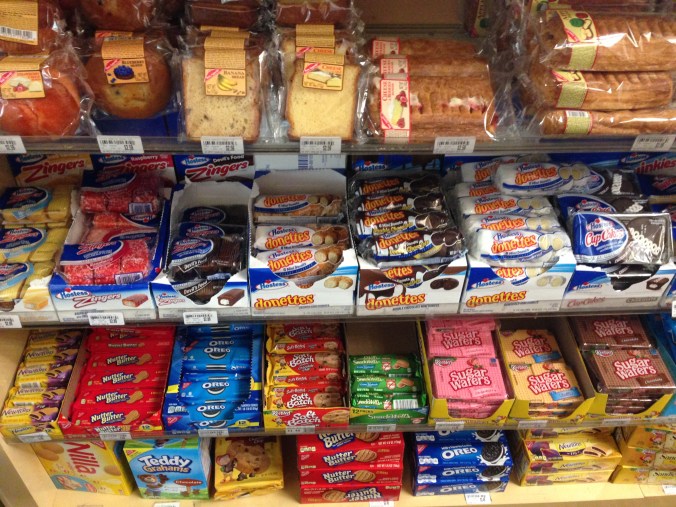
Absolutely no actual food was harmed in the making of these edible foodlike substances.

If you’re on a road trip, whenever possible get off the highway and into a town supermarket. Gas stations, convenience stores and truck stops are by their very nature stocked with cheap, non-perishable food, so that’s what you’ll buy. Their staff has neither the time or inclination to stock and then dispose of fresh fruit, vegetables and meat, so instead you’ll encounter a display like the one above. If you can make it away from the interstate and into a small grocery store, you’ll hopefully have access to a much better selection of food.

IMG_20171015_122515762

I genuinely pity the poor animals who died to make these “meat sticks.” (Also, “thungry?” Is this like “hangry?” Notice that it’s trademarked.)

NJB_0687.JPG

Part of our road trip survival kit.

So what’s a person to do in the face of this pretend food trash? Easy answer: plan in advance. Just like cooking healthy food at home, eating well on the road requires a bit of time and planning. But if you’re already doing other pre-road trip tasks like checking your tire pressure and refilling your windshield wiper fluid, why not get some healthy food in order? For me, it’s mostly shelf-stable items, plus a few perishables in a cooler. My basic road trip essentials, most of which are easily found in the bulk section of a good supermarket:

  • stellar cheese and good crackers are mandatory
  • dried fruit, including figs, apricots and homemade fruit leather
  • fresh fruit that can last, such as citrus and apples (no berries or bananas!)
  • homemade granola, to eat on its own or with purchased yogurt
  • jerky, either homemade or from well-raised animals
  • nuts, which for us are typically roasted salted almonds
  • rice cracker mix, pretzels or other reasonably healthy salty snacks
  • homemade granola or energy bars, or packaged bars with clean labels (be able to pronounce and understand every single ingredient, and the first three ingredients shouldn’t be soy, sugar and corn)
  • good-quality dark chocolate, preferably without soy lecithin

And for equipment:

  • without question, a good chef’s knife and paring knife, protected in sheaths, and a small polypropylene cutting board.
  • we bring our own coffeemaker, grinder, beans and mugs. We sleep cheap, and I’m not drinking Motel 6 coffee. Not negotiable.
  • cutlery rolls, which include an inexpensive metal fork, knife, spoon, reusable straw and corkscrew. We don’t use single-use items, with the exception of compostable paper napkins.
  • Mason jars with screw-top lids and a few plastic containers. These can be used for drinks, storing snacks or to eat meals.
  • a wooden spoon, rubber spatula and metal tongs
  • a small electric burner plus a frying pan and mini stockpot. This makes meal prep on the road easy – and more importantly – possible.

In all honesty, at various stops along this trip I did notice small containers of cut fresh fruit, hardboiled eggs and some seemingly fresh sandwiches and wraps, which indicates that demand is shifting. But there is no guarantee that every gas station will have these, and if you pack your own food you’ll have a much better selection and save a ton of money. I saw two packaged hardboiled eggs priced at $1.99; with a cooler and ice packs, a dozen well-sourced hardboiled eggs, flaky salt and hot sauce can easily be brought along for about $4 and a few minutes’ work in advance. There is simply no one thing you can do to improve both your physical and financial health more than planning, cooking and bringing your own food. Enough said.

Friends, please remember that your health is your responsibility, and what you choose to eat makes a huge difference in your health. Take some time prior to your next trip and bring food along, and stand in opposition to a system that insists you have to eat what it offers.


On the road again + best travel tips

It’s early October, cool and crisp. N and I have been home from our round-the-world adventure for about four months, and it’s time to go again. We’re at the moment in a flurry of last-minute preparations to head to Oregon for a month, where we’ll volunteer on another goat dairy. This trip is quite a bit easier than the last one: no worrying about visas or passports, no cramming everything into just one bag, plus we’ll only be gone for one month, instead of five. But in the spirit of adventure, we thought we’d share some of our most useful travel tips, gleaned from nearly two decades (!) of short- and long-term travel.

Travel Books.jpg

There are vacations, and then there are trips. One could argue that a trip is a bit more serious than a vacation; it might last for more than a month and involve a committed disentanglement from the everyday world. And nowadays, with opportunities for remote work increasing, it’s more likely that you might be able to swing that four-months-or-more abroad plan you’ve been ruminating on for ever so long. Below, our most useful tips for those of you who might be thinking about making the leap from a standard holiday to a trip.

  • Identify – roughly, at least – what you expect to get out of your travel. If you’re just traveling to capture Insta followers or get paid for blogging, fair enough. Or if you’re running away from a difficult situation, be honest about that, too. But don’t go traveling without at least a reasonably clear idea of what you hope to accomplish. Any less, and you’re asking the travel itself to do all the work. You have to show up, too.

Travel Blur.jpg

  • Make a budget. Then increase it by 25%. The old adage goes like this: “Lay out everything you think you need. Then take half that and twice the money,” and it holds true. For our five months overseas, we budgeted generously for two adults and still went over that number by 20%. They may say that the best things in life are free, but the truth is that travel costs money, and there is no glory in arriving back in your own country completely, totally broke. Account for the unexpected; for us, that was the high cost of point-to-point travel in Japan and unexpected gratuities required literally everywhere in India.
  • Ensure your passport is valid for at least six months beyond your return date. This seems like a surprisingly obvious tip, but you’d be amazed at how many travelers are caught out by it. Different countries have different requirements, but having at least six months’ validity, plus at least three or four blank pages, in your passport will make border crossings much easier.

Travel Diary.jpg

  • Please, research your destinations – and their visa rules – before you go. Again, different countries have different requirements and all of this information can easily be found online, most likely through your home country’s government. “I didn’t know” is simply not a valid excuse at any international border crossing.
  • Also, do a bit of research on your destinations and their customs. In many countries, it’s not appropriate to show shoulders and/or knees. Women might be expected to cover their heads. Certain countries may only eat with the right hand. Knowing this in advance can save a lot of awkwardness once you arrive, and you should always, always be respectful of the customs of the country you’re visiting.

IMG_20171011_095945299.jpg

  • If possible, sign up for a debit card that reimburses ATM fees. In the U.S., Charles Schwab provides some terrific options that can save you a lot of money. Find out if any banks in your country offer similar programs because ATMs are simply the very best way to withdraw local currency and avoid usurious fees. Money changers – especially in airports and train stations – should be used as an absolute last resort. (Thanks, India, for only having broken ATMs in your airports so we were forced to use money changers.)
  • Get travel insurance, and know its limitations. There are a number of great plans out there, but they vary enormously based on your home country and where and how long you plan to travel for. Do your research and don’t skimp on the essentials, and make sure you understand what will be covered if you’re required to be repatriated to your home country for additional treatment. Oh, and know that you’re rarely, if ever, covered for high-risk activities like skydiving, bungee jumping and so on.

Travel backpack.jpg

Five months in just one backpack each.

  • Pack less than you think you need, and buy your travel clothes at your local Goodwill or op-shop. It sounds counterintuitive, but you actually need far less for travel of more than two weeks than you do for a standard holiday. Bring some concentrated biodegradable laundry soap, and get used to washing your smalls in a hostel sink. Pegs and a simple washing line come in handy, too. Don’t take any article of clothing that you absolutely treasure – my favorite jumper is lost forever somewhere on an Indian train, or hopefully keeping someone else warm. You can always buy things on the road and donate what no longer serves you.
  • Ziptop bags, duct tape, safety pins and a small sewing kit are absolute necessities. If there is one thing that long-term travel teaches you, it’s to be resourceful with what you have. Especially if you’re traveling extensively in underdeveloped countries, you’ll find that things we take for granted at home aren’t always available. Being able to successfully repair your own kit is good for the wallet and the psyche.

TajMahal 1.jpg

Oh, this? Just doing a few renovations at our summer cottage.

  • Identify your priorities, and leave the rest to chance. In any country, there will be a few must-sees. Choose your top two or three mandatory sights, and let the rest of your trip happen as it will. Serendipitous travel moments rarely occur when every single second is carefully plotted out.

Above all else, go. Don’t let this or any of the billions of other pre-travel posts out there scare you – just go. There are few experiences in life as enriching as long-term travel and it will change you in ways you never even knew were possible. Grab your passport and your backpack and get out there. The world needs you.


Food waste + helpful tips!

Thankfully, we’re finally, finally talking about food waste in the U.S. Chefs have long been painfully aware of the staggering quantities of perfectly edible food thrown out in restaurants and hotels on a daily basis, but only recently have we started discussing how much food is wasted in grocery stores and, more personally, at home.

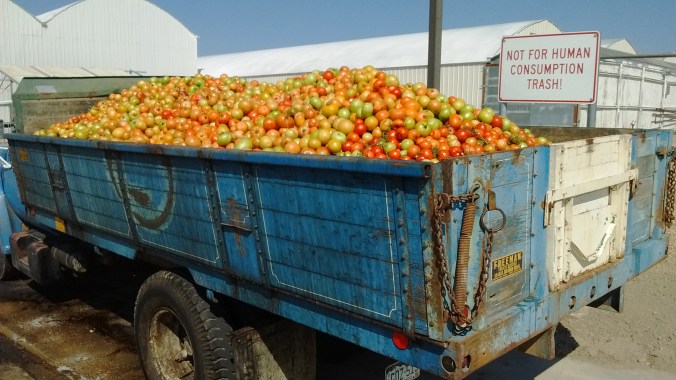
Waste tomatoes

Trash tomatoes at a greenhouse operation in eastern Colorado.

I want people to cook at home, obviously, and I also want people to save money. I teach classes on how to reduce food waste, and I typically cite statistics like “40% of all edible food produced in the United States is thrown away uneaten” and “The average American family throws away over $2,000 worth of food every year.” I like to augment these cheery facts with even more cheery facts, like that the annual value of all edible food thrown away worldwide is over $3 trillion. That, however, isn’t even a comprehensible number, nor is the idea that food waste takes up more space in landfills than any other item – including the devil of them all, disposable diapers. Decomposing food contributes more methane to the environment than all livestock together; if food waste were a country, it would be the third-largest polluter in the world, after the U.S. and China.

Waste strawberries

All destined for the trash and no, they won’t be composted.

Let’s be realistic: I can drone on and on, citing all sorts of numbing statistics, but it makes for boring reading and quite frankly, no one really wants to read a blog where they’re lectured for their appallingly bad habits. Plus, eco-anxiety is an actual thing, and many of us, myself included, feel utterly powerless about our ability to do anything in the face of insurmountable problems like climate change. But minimizing your own food waste is something you can actually do to both save money and save the planet, rather than just wring your hands helplessly. So let’s keep it a bit more positive and I’ll just present a professional chef’s tips for minimizing food waste at home!

Zuccini

We grew these! Unfortunately, only one would be saleable at a standard grocery store. Our aesthetic expectations are utterly unrealistic.

But wait! Before we get into the helpful tips, let’s boost our positivity even further by highlighting organizations actually doing something about food waste!

Cucumbers

We grew these too! Same story as the zucchini above; only one is the correct size.

Americans throw away food for lots of different reasons – mostly because food here is cheaper than anywhere else in the world, and we’re really picky – but at home there are two key factors: meaningless expiration dates and poor planning. A bit of effort on your part will not only save you lots of money, but also keep food out of landfills. It’s a true win-win! (Fun fact: sell-by dates were introduced in Marks & Spencer storerooms in the 1950s; they first appeared on consumer-facing shelves in U.S. and Europe in the early 1970s.)

Waste Honey Jars

Honey doesn’t spoil. Ever. It’s been found in edible condition in Egyptian tombs. So why the expiration date?

At the Store:

  • Shop with a list and buy only what you need. Before going to the store, check out the coupons and promotions. Make a meal plan for the week and incorporate ingredients on sale, and review the contents of your pantry, refrigerator and freezer. How will you know what you need if you don’t know what you have?
  • Avoid “bulk club” buys unless you’ll actually use it. Warehouse-style shopping – i.e. ten pounds of spinach or quinoa – might seem like a bargain at the time, but if you let it spoil it just means money wasted. It seems counterintuitive, but there are times when spending more for a smaller amount is the better choice. Be honest with yourself about how much your household will actually eat.
  • Use the bulk department for spices, grains, beans and more. In addition to reducing packaging, you can buy exactly the amount you need and try lots of new ingredients too!
  • If you only need a tiny amount of an ingredient, consider the prepped food available in the store’s salad bar. This might avoid buying an entire package that you’ll then throw away, plus you’ll save on prep time.
  • If you only need half a cabbage or a tiny portion of cheese, just ask nicely. Most stores will be happy to provide exactly what you need instead of what they’ve already packaged.
  • If you’re going to buy a special, expensive ingredient for one recipe, figure out other recipes in which you can also use that ingredient rather than wasting it.
  • If you shop at your local farmers’ market and you’re planning on doing any canning or preserving, buy seconds. These are just as delicious as the first-run produce, but you get to pay less and your farmer doesn’t have to throw their hard work away.

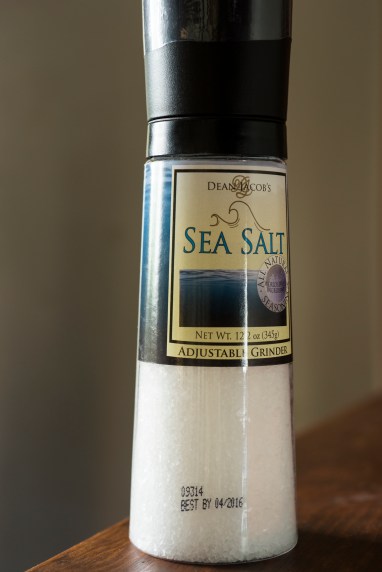
Waste Salt

It’s a rock. I’m fairly certain we will expire long before it does.

At Home:

  • Most importantly, remember that all best-by dates are only a guideline. Please, use your common sense when deciding whether to throw something away simply because an unregulated date on the package says to. These dates are totally confusing, essentially meaningless and they contribute hugely to our food waste issue.
  • Shop from your own pantry and challenge yourself not to buy food for a week, two weeks or a month. Use up everything you have before buying more.
  • Learn to repurpose your food: when you make your weekly meal plan, also consider the meals you’ll make from the leftovers. Batches of whole grains or rice can be used for numerous meals.
  • Store your produce properly. Certain items should stay on the counter (tomatoes!) and others should go in the fridge (apples!). Know how best to keep everything fresh.
  • Use your freezer – if you’re not going to use something, freeze it. Bread freezes beautifully, as do most vegetables, meat and fruit. Use small containers and wrap items well; label and date everything.
  • Portion control is important. Start with a small amount on your plate, and get seconds if you want them rather than taking a huge serving and throwing most away. This goes for serving kids, too.
  • Devote one dinner per week to “favorites,” and eat leftovers rather than throwing them out.
  • Start a compost bin and be amazed by how much less trash your household produces; the compost you make will do wonders for your vegetable garden. Even better: get a flock of backyard chickens and enjoy fresh eggs while they enjoy your fruit and vegetable scraps.

Waste compost

Our compost pile looks a mess, but it turns into the most incredible soil.

What can you make with random odds and ends?

  • It mystifies me that people regularly throw away bread and buy croutons. If you’ve got stale bread, you’ve got croutons, crostini and bread crumbs. Tear or cut bread into chunks, toss it in a little olive oil, salt, pepper and garlic powder and toast in a 300 degree oven until golden and crispy. Slice slender baguettes into thin slices for crostini and toast as for croutons. Store in an airtight bag. Process in a food processor or blender to make bread crumbs; store crumbs in the freezer.
  • Just about any listless vegetable can become part of a delicious soup. Dice vegetables into small pieces, simmer in stock, and finish with a drizzle of good olive oil and a sprinkling of sharp cheese.
  • Tomato sauce can take a lot of extra vegetables without you even noticing! Add in not-so-perfect carrots, celery, greens, onions, squash…and puree the whole thing. The tomatoes will dominate, trust me.
  • And all those vegetable trimmings from your soups and sauces? Add onion tops, celery leaves, carrot peelings and other odds and ends to a zip-top bag and store in the freezer. When it’s full, simmer to make homemade vegetable stock. Add chicken or beef bones too, if you’ve got them.
  • Parmigiano rinds are every Italian grandmother’s secret to the most flavorful soups, stocks, broths and risottos. Store in the freezer and use as needed for extra umami punch.
  • Fruit no longer nice enough to eat fresh? Cut it into small pieces and freeze it on a cookie sheet. Once frozen, transfer the chunks to a zip-top bag and use for smoothies.
  • Speaking of smoothies, all your greens – kale, spinach, chard – can be thrown right in with your fruit and yogurt. You might notice the color, but you won’t notice the taste.

Above all else, consider the amount of time, effort and money that went into the food you’re eating – and respect that by treating it carefully and mindfully!

The FAQ Series: Salt

We’re starting a new thing over here at Finding Quiet Farm: the FAQ Series. This programming will be based on the most common questions I’ve been asked over nearly a decade of teaching cooking classes to thousands of people; hopefully you’ll learn something and improve your own cooking. Let’s kick this show off right with the number-one question I hear: “How can I make my food taste more like restaurant food?”

Salt Crystals 01

The iconic pyramidal crystals of Maldon salt, harvested off the coast of England.

Pose this question to any professional chef, and the answer will be the same: learn how to use salt properly. (Just to quell the suspense, the second most popular question is “What sort of salt should I use?”)

Salt Selection.jpg

I don’t find it at all unreasonable that I have more than ten varieties of salt in my kitchen…except I only use two. You don’t need this many.

Learning how to season food properly – and specifically, how to use salt – is what separates mediocre cooks from amazing cooks. Whether in a restaurant or at home, salt is far and away the single most important component after the raw ingredients themselves – you can get by without almost anything else, but nothing (savory, at least) tastes good unless it’s been properly salted. And most sweet things need a little salt too, for balance. (Looking at you, salted caramel.)

Salt is the only rock we eat, and it’s vital to our health. It’s been prized for thousands of years throughout the world; Roman soldiers used to be paid their monthly wages in salt, hence our word salary. Salad, too, originates from salt since the Romans salted their greens. The Bible carries dozens of references, including salt of the earth and pillar of salt. Someone without esteem is not worth their salt. Simply put, it’s essential to our survival.

Salt Flats

The salt flats in Bonaire.

Salt is actually composed of two minerals, sodium and chloride. It’s produced either through mining deep deposits in the earth, or through solar evaporation. Most standard table salt is heavily processed and includes both added iodine (as a public health measure) and anti-caking agents to keep it free-flowing. Sea salt is, as you might expect, evaporated from seawater; fleur de sel is the crunchy, delicate top layer of sea salt and is typically used as a finishing salt. There are no health benefits to sea salt, despite a marketing campaign designed to make you think otherwise, but chefs don’t like the intensely chemical taste of iodized salt. We also use so much of it that we can’t spend our entire budget on fancy sea salts. We love coarse kosher salt.

Kosher Salt.jpg

So 11 ounces is less than 48 ounces but the bottle costs $12.95 and the box costs $2.99? I sense a swindle.

The term kosher just means that the crystals are larger and therefore more effective in drawing blood out of meat after it’s been slaughtered, in keeping with kosher tradition. Chefs love it because we use our fingertips to pick it up; most of us have those measurements so carefully calibrated that we’re more accurate than a set of teaspoons. All you need in your kitchen is a box of coarse kosher salt, poured into a small dish and set near the stove, plus a finishing salt like Maldon, whose large pyramidal crystals offer a satisfying crunch and burst of flavor when used properly on top of caramels or fresh ricotta with peaches on crostini or a beautifully seared steak. Don’t ever waste your finishing salt in pasta water or in baking recipes, and don’t ever pay $12.95 for the branded bottle on the left when the box on the right is the exact same thing, contains more than four times as much and costs $2.99.

Salt Dishes.jpg

It’s the only rock we eat…and it’s gorgeous. And delicious. And necessary.

Like our newfound obsession with the mysterious gluten, however, we’ve gotten our relationship with salt all wrong. The American Heart Association and other major medical organizations have shouted for years that Americans consume way too much salt and that it is a leading cause of high blood pressure, diabetes and other lifestyle-related diseases. The Mayo Clinic claims the average American consumes about 3,400 milligrams of salt each day, while the recommendation is 1,500 milligrams or less.

We avoid using salt the few times we do cook at home – that’s the salt we can control – because we’re so scared of it, and as a result our food is bland and tasteless. So we go out, or buy premade foods, because they taste better. Unfortunately, we get the vast majority of our salt (and our sugar) from these processed foods, including the ones we don’t even think about: sliced bread. Salad dressing. Bottled spaghetti sauce. Pastries. And obviously, any fast food will be loaded with salt. A single Egg McMuffin contains over 700 milligrams of salt – good luck staying under that 1,500 milligram mark if you eat fast food. Salt is a flavor enhancer, but more importantly for the processed food industry, it’s a preservative.

Kosher Salt Seasoned

I’ve taught numerous cooking classes where I’ve added salt to a dish and acknowledged gasps of horror at the quantity I’m using. Please, trust me on this: if you are eating most of your meals at home, cooked from fresh, healthy, whole foods and not from boxes and packets, and if you avoid processed foods like bottled salad dressings, take-out pizza, commercial lunch meats and cheap sliced sandwich bread, you don’t need to worry about adding salt when you cook. You’re already way ahead of the game.

Salt Book.jpg

You only need two salts: one for finishing, on the left, and one for everything else, on the right. Oh, and read that book.

How can you become more proficient about using salt? Taste your food. Taste it before you add salt, and after. Slice a fresh summer tomato and eat it without any salt. Now take another slice, sprinkle it with crunchy Maldon, and taste it again. Cut a steak in half, and cook it exactly the same, but use salt on one portion and not on the other. Your pasta water should taste like the sea, according to Italian grandmothers everywhere, and you should never cook beans or rice or vegetables or grains in unsalted water. Seasoning should be done in layers, as you build a dish, rather than just dumping a bunch of salt on at the end. Taste and taste again. Salt should never make food taste salty, it should make food taste more like itself; it’s designed to enhance food, not to overwhelm it. Restaurant food tastes delicious – and ideally not salty – because those amounts are carefully calibrated.  And because chefs have spent years learning how to season.

CCA-11.jpg

Learning to cook well at home is a process, as I’ve mentioned many times. And learning to season is part of that process, just like learning your own palate. Remember those famous words: “salt to taste.” So go get a box of kosher salt, and start using it. With your fingertips, please.

Salt Crystals 02.jpg