The Farm Series: Western Culture

Western Culture 01 sml

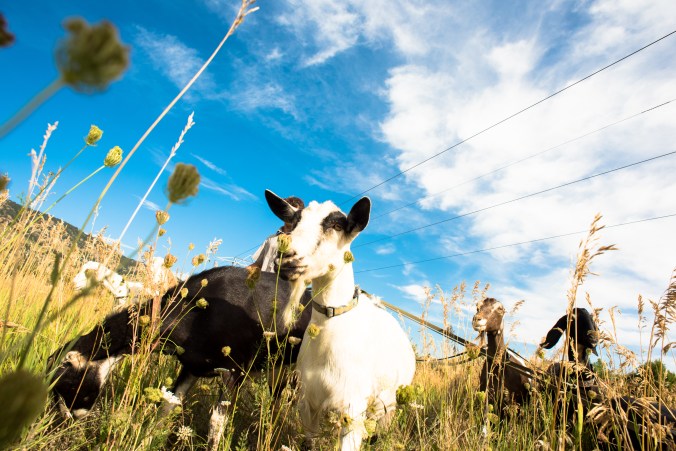
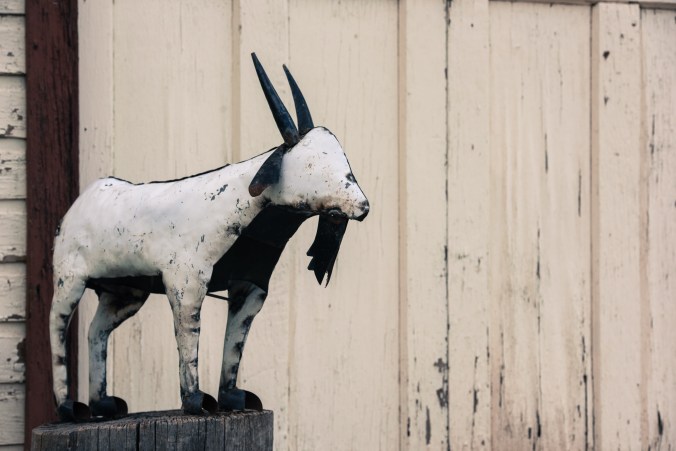
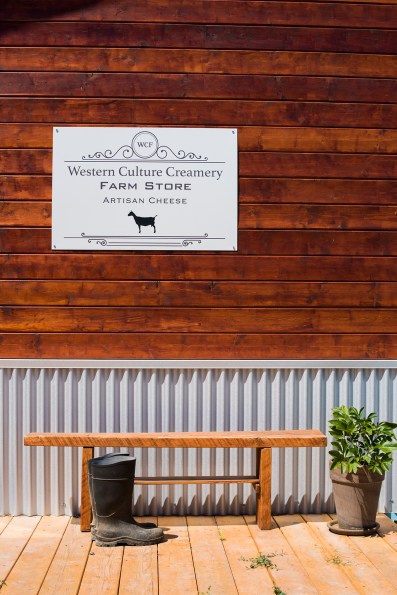
Now that we actually have a farm, we can get a bit more serious about researching where we’ll obtain our animals. We plan to raise dairy goats and laying hens, with the intention of producing enough milk, cheese and eggs to supply our own kitchen as well as our cooking school. Because healthy animals produce healthy food, it’s essential that we know exactly where our animals come from.

Western Culture 07 sml

We still have a lot of work to do on both our chicken house and our goat barn to get them ready for animals, and we don’t plan to purchase any until next spring. We want to make our reservations now, however, so that when we’re ready we’ve got animals waiting for us. Small dairies especially need to know in advance how many animals they can sell during a given season so they can plan their breeding program.

Western Culture 11 sml

Continue reading

An announcement

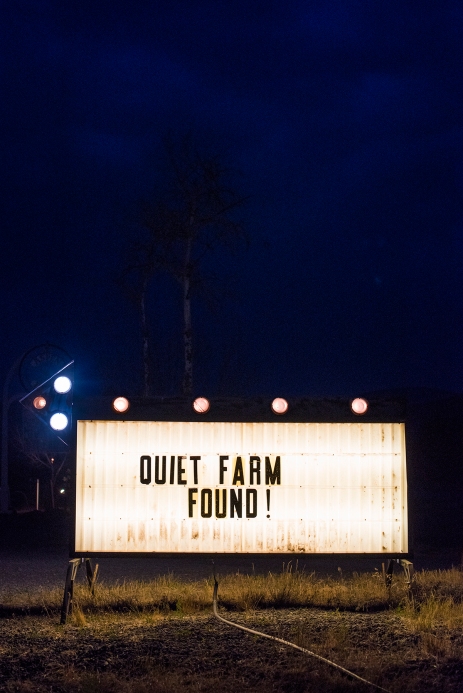
Many of you know this, and the rest of you have probably guessed, but N and I found Quiet Farm. (We’re not changing our website, however.) We closed on the property in early August and have just now gotten all of our things moved from the Front Range over to our (new to us) house. We heard too many horror stories about unscrupulous, lazy and irresponsible moving companies, so we opted to do the whole move ourselves. N had plenty of experience driving a 25-foot RV, so driving a 26-foot box truck couldn’t be much different, right? (P.S. We sold the RV. Bittersweet, but it served its purpose for our transient summer. And it’s just right down the road from us, so we can visit it if we want!)

QF 02 sml

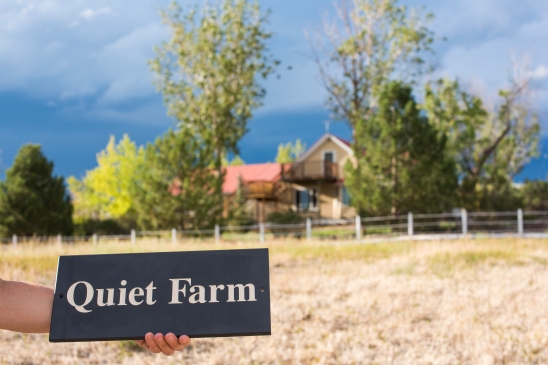
Quiet Farm is a ten-acre parcel just outside of Cedaredge, on Colorado’s Western Slope. We’re tucked under the Grand Mesa and surrounded on three sides by apple orchards; to the south we can see all the way to the San Juan Mountains. Just over eight acres of the property is in pasture, but both the land and the house have been essentially abandoned and unloved for about five years. It will take a lot of time and hard work and water to regenerate the pasture; historically it’s always been alfalfa, but we’re looking at other drought-tolerant options, too – maybe hops or quinoa?

Bluebird Rooster grey final

Our vision for Quiet Farm is an organic teaching farm and cooking school. We plan to build a certified commercial kitchen in a detached garage on the property. We’ll offer classes on everything from healthy cooking basics to bread baking to canning and preserving to beekeeping to fermentation to knife skills, and any other homesteading topics that our guests might be interested in. We’ll keep laying hens for eggs and pest control, goats for milk and entertainment, beehives and extensive vegetable and perennial plantings. We want to be part of the community and host potluck suppers and farm tours and coffee klatches and food swaps. We want to showcase the amazing fruit and animals and people this part of Colorado offers. We want Quiet Farm to be an agritourism destination.

QF sign 01 sml.jpg

We’ll post regular farm updates here, with before-and-after pictures so you can see our progress. It took us three years to find Quiet Farm, and we’ve got a lot of work to do to fully realize our vision, but we’re exactly where we want to be. Thank you for joining us on this journey, and we’re so much looking forward to all of the incredible adventures ahead. We can’t wait to share Quiet Farm with you!


Let’s learn about goats!

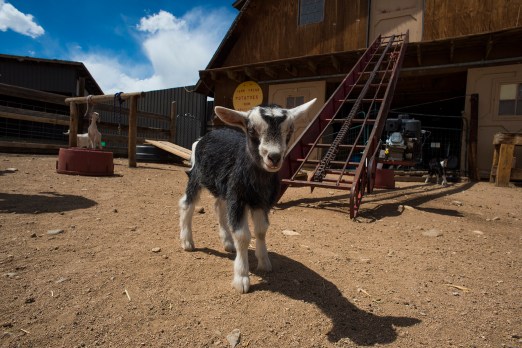
JGGD 11 sml

This is not the first time we’ve posted photos of #totesadorbs baby goats, and it certainly won’t be the last. We’ve known since we first invented Quiet Farm in our heads that we want to keep milking does, so as with all other aspects of farming, we’re learning how to do that from books and the University of YouTube and on-farm experience, too. By the time we actually find our farm, hopefully we’ll (sort of) know what we’re doing.

NJB_5018

Some fun facts about goats:

  • Goats have a reputation for eating just about anything, including clothes, trash and other inedible items. This is entirely untrue; goats are browsers, rather than grazers, and are naturally curious. They use their lips and teeth much as we use our fingertips – to investigate unknown objects – and they’re actually quite fussy about what they’ll eat. Goats also only have teeth on their bottom jaw, not their upper.
  • Goats are fantastic climbers and love to quickly attain the highest perch available – hence the popularity of goat yoga. Goats can climb trees!

Continue reading

Things that are great!

Friends, let’s start this week with an optimistic post (for once). How about a quick round-up of things that are great right now?


NJB_3308

A small family farm in Hoi An, Vietnam.

The Washington Post reports that a growing number of young Americans are leaving desk jobs to farm:

“For only the second time in the last century, the number of farmers under 35 years old is increasing, according to the U.S. Department of Agriculture’s latest Census of Agriculture. Sixty-nine percent of the surveyed young farmers had college degrees — significantly higher than the general population.

This new generation can’t hope to replace the numbers that farming is losing to age. But it is already contributing to the growth of the local-food movement and could help preserve the place of midsize farms in the rural landscape.”

Granted, the movement is small, but it is in fact a movement. And it’s moving in the right direction. There are numerous barriers, to be certain, but this is progress.

MFGD-46.jpg

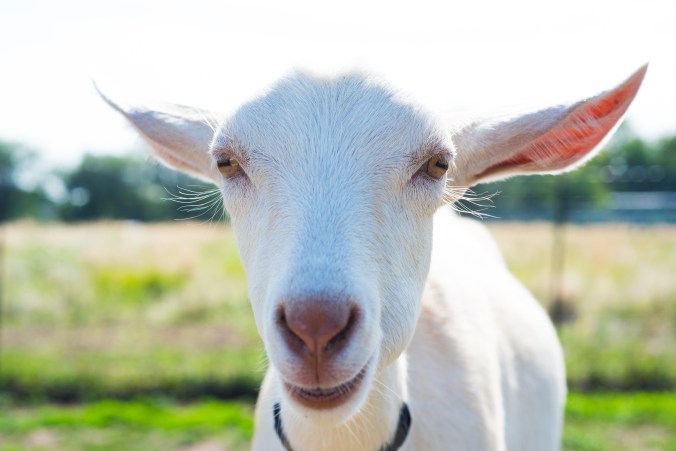
How can you not love this munchkin?

Not only are young people going back to the land, but more women are making more incredible cheese than ever. Led by such trailblazing pioneers as Allison Hooper of Vermont Creamery and Mary Keehn from Cypress Grove, handcrafted cheese in this country – primarily made from goat milk, but sheep and cow, too – is truly enjoying its second wave:

“A commonly cited fantasy Plan B among urban paper-pushing professionals, the artisanal-cheese business has surged in recent years, with more than 900 specialty cheese makers in the United States, according to the American Cheese Society, a nonprofit trade organization in Denver. The A.C.S. does not keep data on gender, said its executive director, Nora Weiser, but compared with the bro-centric field of craft beer, where female brewers have struggled to get respect and recognition despite significant contributions, cheese making is a relative haven.”

While “American cheese” has long been a joke in the rest of the world, it is definitely no longer a joke – it’s remarkable. And delicious. Go buy some.

NJB_0197.JPG

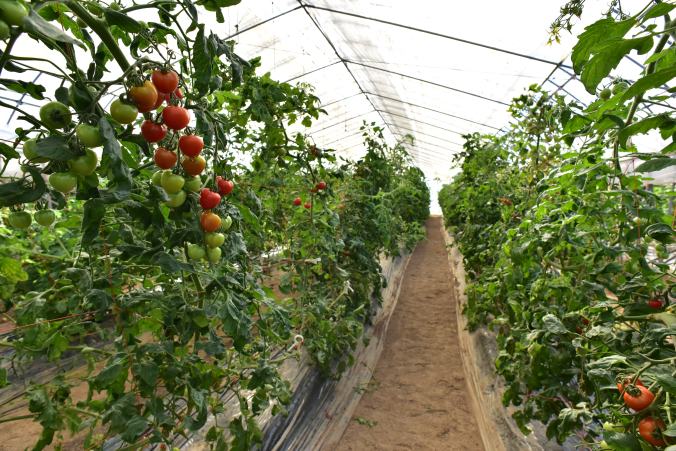
Greenhouse tomatoes in Japan.

In other positive news, vertical farming is finally coming into its own, pushed by high-dollar investments from people like Jeff Bezos, who clearly know a thing or two about running a business. Vertical farming is exactly what it sounds like: growing food in towers, with carefully controlled irrigation, lighting and temperature systems. While farmland continues to be gobbled up at staggering rates, vertical farming, which has been trialed successfully in repurposed shipping containers and other unusual places, might provide a local food alternative, especially in densely populated urban areas. There is still a lot of work to be done, but innovative, forward-thinking entrepreneurs are constantly revamping traditional farming rules. And we will need this sort of innovation, as both global temperature and global population climbs ever higher.

DSC_2678

I’m not putting a picture of soda on this blog. Drink water. (This is Victoria Falls, on the border of Zimbabwe and Zambia.)

And for our final Great Thing today, how about this: soda consumption in the United States has dropped again, for the twelfth consecutive year. This statistic is proof that anti-sugar publicity campaigns and soda taxes are working, at least in some areas. While we’re still drinking about forty gallons per person, per year on average (!!!), those numbers are trending down. And that is definitely a Great Thing.


The Farm Series: Mountain Flower Goat Dairy

Part of our grand plan this summer, our transitional period between our round-the-world trip and our journey to find Quiet Farm, is to visit and volunteer on as many farms as possible. As we’ve said before, we can learn something from every single farm.

MFGD-01.jpg

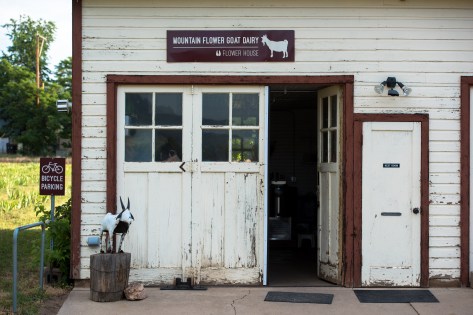
We’ve volunteered on vegetable farms (both cold and warm) before, but because we’re virtually certain we’ll have goats, for meat and milk, on Quiet Farm, we wanted to spend some time with these lovely creatures this summer. And that brought us here, to Mountain Flower Goat Dairy in Boulder. Mountain Flower is a non-profit committed to a few different key goals that we respect wholeheartedly: community engagement and education, sustainable agriculture and humane animal husbandry, and land conservation. All of these are tenets we plan to incorporate into Quiet Farm.

MFGD-22.jpg

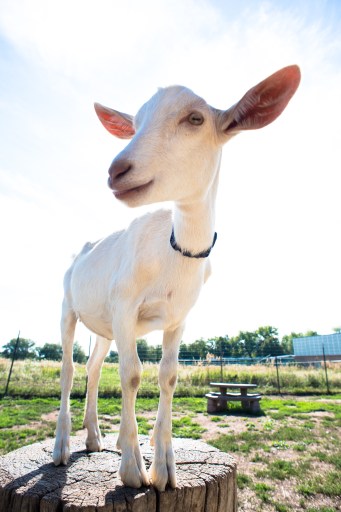
Smart, inquisitive, affectionate and productive…goats are popular for good reason.
MFGD-02.jpg

Mountain Flower Goat Dairy is a raw-milk goat dairy, the only one within the city limits of the Kingdom of Boulder. There is a lot of controversy surrounding raw milk; the sale of it is illegal in most states and dairies must often sell “herd shares” in order to operate legally. It’s important to familiarize yourself with both the pros and the cons before forming your own opinion on raw milk. In MFGD’s own words:

“The primary focus at Mountain Flower Goat Dairy is to provide a supply of the most gorgeous, clean, healthy goat milk possible while demonstrating to the public a working urban farm. We are the only dairy in the Boulder city limits and we are delighted to fill this food void for our community. We allow the public the opportunity to own a portion of our herd and thereby gain access to raw milk.

A spirited debate exists over whether raw milk should be made available to the general public or not. Raw milk advocates have an uphill battle to shatter paradigms that remain from a time when little was known about microbiology and modern refrigeration did not exist. We believe it comes down to a person’s right to choose what food to put into their own bodies. We make a point to keep informed on and involved in the issues related to raw milk. We encourage you to do the same.

We do what feels right to us. That is to raise goats the way nature intended eating grass and alfalfa, grazing in the fields, playing with each other, being loved by humans and eating organic grains. We milk our goats in a low-stress environment and treat their milk with the utmost care, cleanliness and respect.”
MFGD-29.jpg

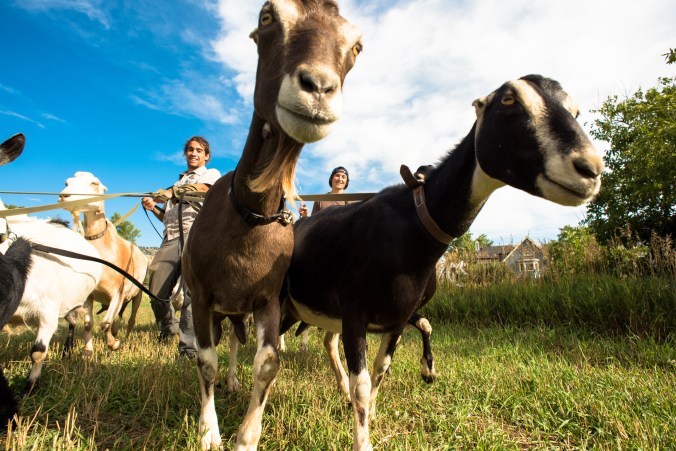
Relocating to greener pastures.

Mountain Flower keeps about thirteen adult does on hand for milking at any given time. They breed most of these does every year and either keep the young to expand their own herd, or sell the kids to families or farms who will uphold their high standards. Some of the kids are eventually used as pack animals, or family pets, or for meat.

MFGD-06.jpg

Up you go, darling.

MFGD-10

Cleanliness is of paramount importance in any dairy operation.

MFGD-14

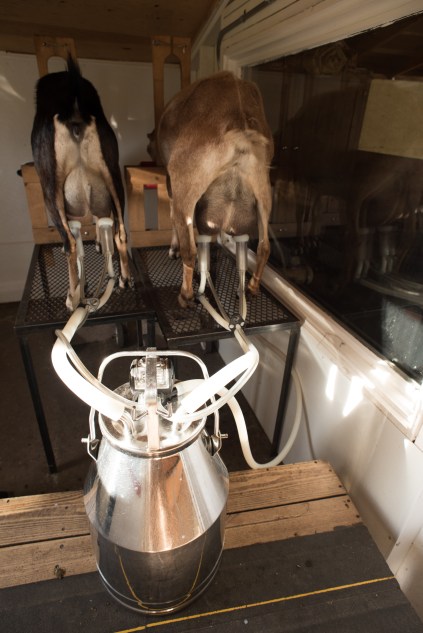
Small goat dairies may still milk by hand…
MFGD-08

…but milking by machine is much quicker and more efficient.

Dairy goats are milked twice per day; the amount of milk they produce varies wildly based on grazing availability, season, breed, weather and other factors. While it’s now common to find goat cheese in grocery stores and on restaurant menus, goat (and its related value-added products) have only been well-known in the U.S. for about forty years or so. Despite being the world’s most commonly-consumed meat, goats are a relatively recent introduction to American palates. Goat milk, yogurt and cheese are now easy to market, but goat meat is still a hard sell – and the honest truth of any dairy operation, no matter the animal, is that approximately fifty percent of the babies born will be male. That logically means slaughter for meat, a reality that we’ll fully accept on Quiet Farm.
MFGD-21.jpg

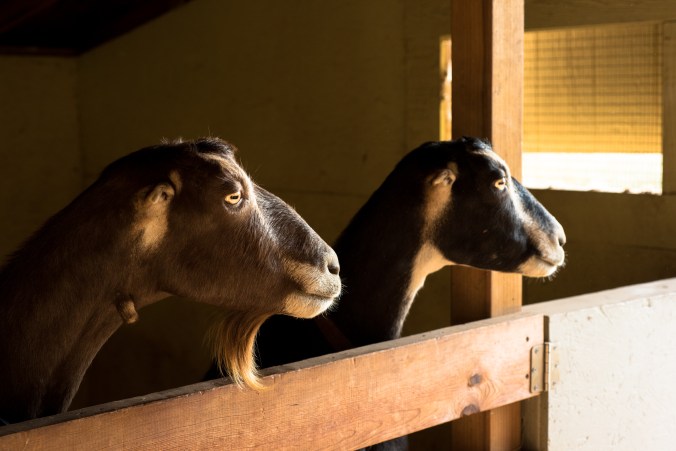
Pensive goats in thought, probably about how to escape their grazing pasture.

What we learned during our summer at Mountain Flower is that these are truly incredible animals. They are passionate and irascible and difficult and gorgeous and moody and infuriating and loving – just like humans. We learned that they remember you and your weirdly soft yet nubbly leather gloves and that there are few things more comforting than a doe leaning up against you for an aggressively affectionate scruffle. We acknowledge that the realities of raising livestock mean that they will eventually (hopefully) grace our table, and that we’ll be even more thankful for the gifts they’ve given us. We learned that we want these animals in our lives and on our farm.

MFGD-17.jpg

Fresh goat milk is truly amazing. Oh, and it makes incredible cheese, butter and yogurt.

MFGD-19.jpg

Ready for customers.

MFGD-34.jpg

The definition of “free range.”

MFGD-41.jpg

What’s going on over here?

MFGD-51.jpg

Come on! Who doesn’t want to cuddle that sweet face?

Know thy food, and know thy farmer. The more we learn about these animals (and farming in general), the more we want to know. Quiet Farm, here we come.

P.S. A huge thank-you to the wonderful team at Mountain Flower Goat Dairy for hosting us this summer. Catherine and Dennis, thank you for sharing your land. Michael, Maddie, Kallie and Ryen, thank you for showing us the ropes. Please come see us on Quiet Farm.
MFGD-03.jpg