Farm update: August 31

How are you doing out there, friends? Here at Quiet Farm we’re immensely grateful for clearer skies and cooler temperatures. We’re about seventy miles from the largest wildfire in Colorado’s history, and there were days over the past couple of weeks where it felt as though we lived inside of a barbecue grill. Although the air still smells of smoke, and we don’t have our crystalline blue skies back, conditions have definitely improved. We send our heartfelt thanks to all of the fire fighters, police officers, and other emergency services personnel who put their lives on the line every single day. Thank you.
Peaches 01 sml

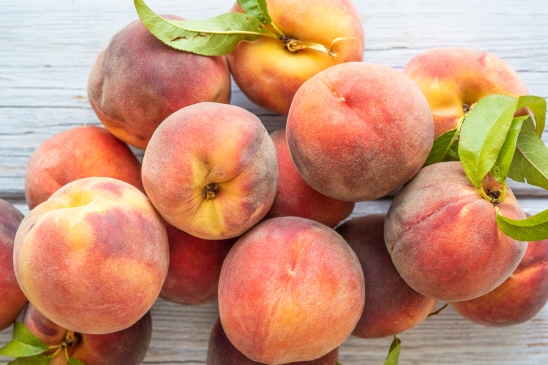
To be eaten out of hand over the sink.

We went peach picking this past week; these are likely the last of this year’s harvest and ninety pounds are now nestled in boxes in our garage fridge awaiting processing. Colorado is most famous for its Palisade peaches, north of us in Mesa County; unfortunately – as though 2020 weren’t awful enough! – Palisade lost about eighty percent of its peach crop this year to that killing frost we had back in April. Our peach trees here in Delta County didn’t suffer nearly as badly (we did lose all of our cherries), so we’ll have local canned peaches in January that taste like liquid sunshine. (Fun fact: if you’re buying Palisade peaches on the Front Range, you should ask what orchard the fruit actually came from. Most of the peaches sold as “Palisade” this year didn’t come from Colorado, but from California. Also, in a season like this one, many of our Delta County peaches get rebranded as Palisade. Brand names sell, plain and simple.)
Fox 01 sml

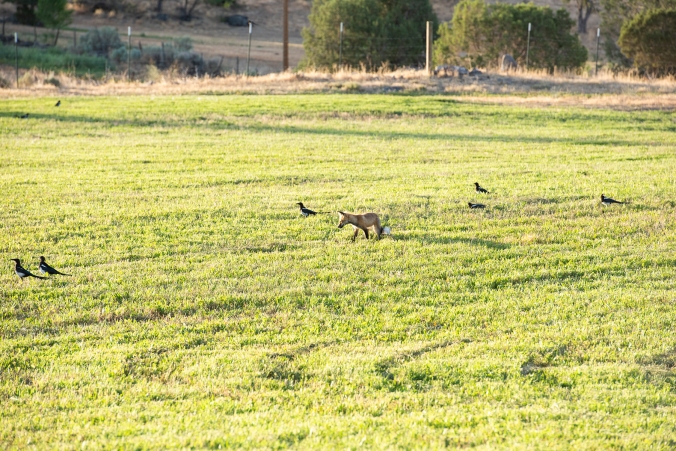
Hunting with an audience.

N captured this early morning shot of our resident young fox hunting voles in our pasture. The magpies, never shy about their desire for a free meal, wait patiently in the hope that they too might share in the spoils. It’s tough to balance our ecosystem’s need for apex predators – we definitely want the fox to help control our rodent population, but we’d also like it to stay far away from our chickens. This debate is currently playing out on a much larger scale, as the Colorado ballot this November will ask whether voters want to reintroduce gray wolves, eradicated around 1940, in our part of the state. (Also please observe how beautiful that pasture looks. All credit to N for his mowing and irrigation work this season!)
Wheat 01 sml

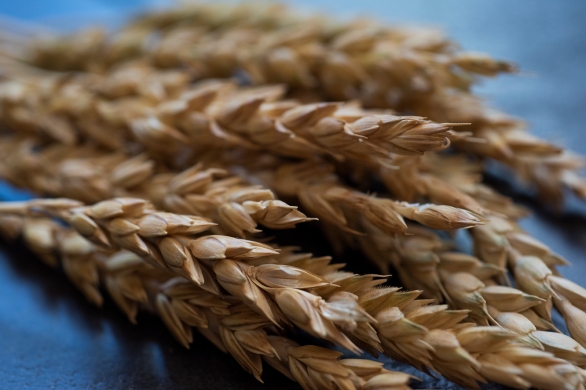
‘Marquis’ spring wheat.

We grew wheat! We opted to participate in small-scale wheat trials this year, and while much of our trial crop was demolished by deer, rabbits and squirrels, and plenty more taken out by strong winds, we did harvest a few stalks. The wheat still needs to be separated from the chaff and field notes beg to be written, plus seed must be returned to the seed bank organizing the project. If we actually grew enough to bake a single loaf of bread, I’ll be amazed – but it’s really exciting to grow grains. In decades past, most regions in the U.S. had their own uniquely adapted grain varieties, and of course this also supported the mills and bakeries required to process those grains. Those disappeared in the centralization of agriculture, but local heritage grains are staging a resurgence across the country. We want to be part of that trend, even on a minuscule scale.
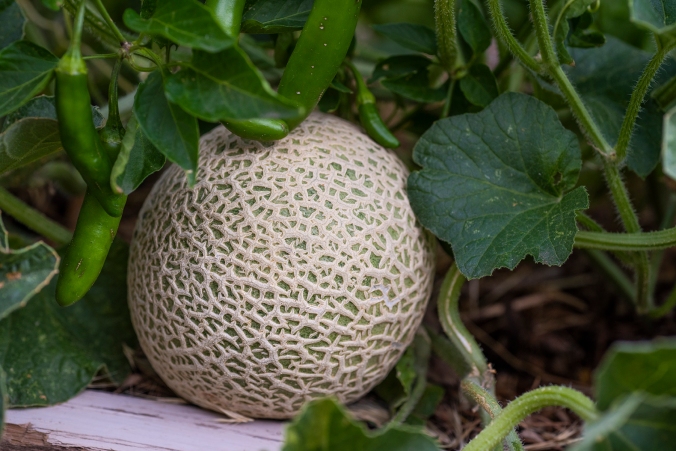
Cantaloupe 01 sml

Not bad for an unintentional crop.

We also grew melons! This is amusing because we didn’t plant any melons. We do, however, have a thriving compost pile, and members of the vast curcubit family (squash, cucumbers and melons) are notorious both for cross-pollinating and for volunteering in unexpected places. This miniature cantaloupe (each is about the size of a softball) appeared in the hot pepper bed, where the serranos and cayennes are flourishing. We have five or six mature fruits now, and are excited to harvest one to see what we grew. If it’s delicious, we’ll save the seeds in the hopes we can grow it again, and we’ll have a melon bred just for Quiet Farm!
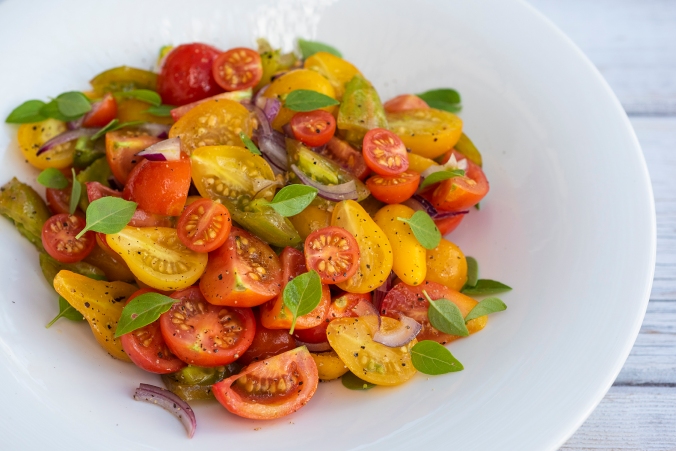
Tomato Plate 01 sml

Definitely qualifies as a meal.

And finally, our tomatoes are coming on strong. The intense heat wave we’ve just endured definitely hastened the tomato ripening schedule, though we’ve obviously needed to irrigate much more frequently. This time of year we’re likely to have a tomato salad at every meal, if only because the season is so fleeting. No recipe needed: sun-warmed tomatoes, halved or quartered, good olive oil, thinly-sliced red onion, a few grinds of black pepper, basil and a generous sprinkling of crunchy salt. Fresh mozzarella, ricotta or cotija would obviously not go amiss here. Honestly, it’s summer in a bowl and we’ll make the most of it while it lasts.

With that, we’re off to tackle a busy week that will hopefully include a hay delivery, a pre-winter fireplace inspection and more than a few canning projects. Wishing you all safety and health.

Farm update: July 20

“Still, I cook. We need to cook, after all, to nourish ourselves and those around us. We need to cook to feel better, to make others feel better, to get along. I may begin the process in weariness, but as often as not I end it in surprise and triumph, happy at least to have made something delicious, to have shared it with those with whom I shelter.”

-Sam Sifton, The New York Times

Quiche 01 sml

No longer trendy but still delicious.

One of the cruel ironies of being a farmer is that when the vegetables really start rolling in, it’s way too hot to cook. Plus, after twelve hours working in the blazing sun all we want is chilled watermelon and ice-cold beer – not exactly a balanced diet. Enter the quiche! Long a mainstay of stuffy, boring women’s luncheons, quiche is hopelessly out of fashion but so well-suited for hot summer months, especially when fresh eggs, vegetables and herbs are in abundance. I always bake first thing in the morning (the house doesn’t need any help heating up later in the day), and quiche is perfect warm, cold or at room temperature. It has a reputation for being terribly unhealthy, but loaded with broccoli, spinach, peppers and herbs, with just a little egg and sharp, savory cheese to bind it all together, it’s an ideal summer staple. Let’s bring quiche back!

Continue reading

Farm update: April 27

Hello there. How are things in your world? It’s an odd and unsettled time, to be sure. Here at Quiet Farm we’re keeping our heads down and our hands busy as we navigate the seasonal weather shifts that have us careening from wind to rain to sun to hail and back again, all in the space of a few minutes.

House Finch 01 sml

House finch (Haemorhous mexicanus).

Spring is underway, slowly but surely, and our diverse bird life reflects that. The bald eagle pair we’d been keeping an eye on has vanished, presumably for colder climes; now the gorgeous call of the Western meadowlark (Sturnella neglecta) marks our days. Watching the scrappy magpies fight off aggressive egg-stealing ravens is decent entertainment, too.

Continue reading

Farm update: January 6

Hello there, and a very happy new year to you and yours. If you’re here for the first time, welcome! If you’re returning after our hiatus, thanks for coming back! We look forward to sharing a new year of food and farm adventures with you.

ATV Plow 01 sml

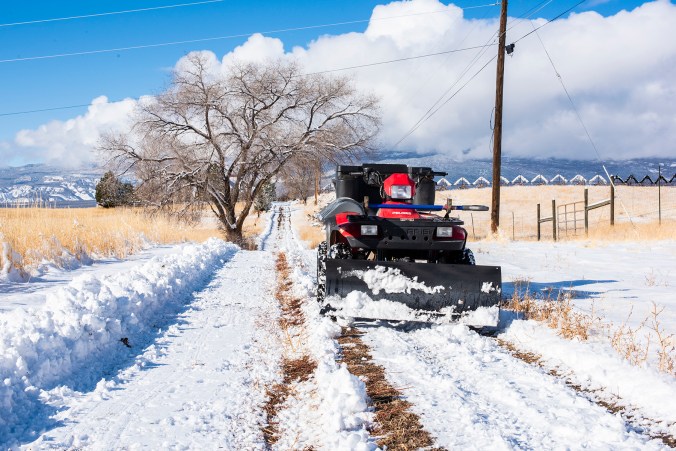
Our updated Snow Management Plan in action!

Last winter – our first winter at Quiet Farm – our area received an unprecedented amount of snow. Our inaugural Snow Management Plan was…ineffective, shall we say; we had no tractor and no plow and no way of getting out of our quarter-mile driveway with a foot of snow on the ground. At one point, we resorted to begging a friend with a truck to flatten the snow by driving up and down our lane so we could at least leave the farm (thanks, Joe!). Needless to say, that was not a sustainable long-term solution.

This winter we haven’t had nearly as much snow, but we do have a plan – a detachable plow for our ATV. And so far, the ATV plow has worked like a champion. We’re even thinking of purchasing other implements for the ATV, so that we can use it like a mini-tractor, since we’ve been unsuccessful in finding a reasonably-priced midsize tractor to manage our pasture. Stay tuned.

Continue reading

The Farm Series: I-Guana Farm

As we’ve discussed previously, Quiet Farm is located in the “fruit basket” of Colorado. The Western Slope produces Colorado’s revered Palisade peaches, along with apples, cherries, plums, apricots, table grapes and wine grapes. Fruit grows so well here because the climate doesn’t experience the significant diurnal swings common on the Front Range. (In February 2018, the temperature in Denver dropped 72 degrees in forty hours.) Fruit trees, especially once they’re in flower, cannot survive extreme temperature shifts, so harvesting fruit on the Front Range is hit-or-miss. It’s hit-or-miss over here, too, as all farming is, but with a lot more hits than misses.

I-Guana Farm 03 sml

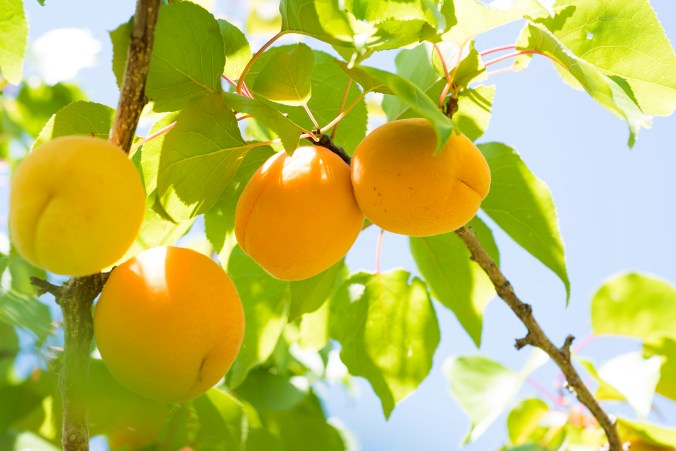
Last year – our first year as official Western Slope residents – we ate ourselves silly on local peaches, plums, cherries and apples. The apricots, though, were lost to a late spring freeze, so while a few orchards had a very small amount of fruit to sell, it wasn’t widely available and we missed out entirely. This year, between our record snowfall and ideal spring weather, the fruit growers in our area have a bumper crop of just about everything, with apricots no exception. We’re even seeing wild apricot trees, heavy with fruit, growing on roadsides around us. It’s been a banner year.

Continue reading

Farm update: July 8

Hail 04 sml

This is not some sort of newfangled organic fertilizer.

Welcome to high summer. It’s hot, dry and crispy here at Quiet Farm…except when it’s hailing. We’ve had three significant hailstorms so far; the one pictured above did some pretty severe damage to our vegetables. Between the late start, our overwhelming whistle pig infestation and this extreme weather, we’ll be thrilled to harvest anything this season. Growing food is not for the faint-of-heart.

Continue reading

Farm update: June 3

Hello there! Has summer finally started where you live? We’re excited for warm weather and sunshine and to get all of our tomatoes, peppers, eggplant and other summer crops into the ground finally.

Rasberry Beds 04 sml

The raspberry plants are tiny, like our fruit trees, and are protected with plastic cages.

A few weeks ago we planted forty raspberry plants, ten each of four different cultivars. We planted both summer-bearing and fall-bearing varieties, in the hopes of having fresh raspberries for months on end. We don’t expect to see any fruit this year, but raspberries typically do well in this area so we’re looking forward to bountiful future harvests. In order to plant these canes, we used the excavator to dig long, wide beds, then we filled those beds with about eight cubic yards of soil from Mount Doom. This meant around thirty-six wheelbarrow loads moved by hand – we farm like it’s the 1850s over here, friends. One day, we’ll have a tractor. One day.

Kale Salad 01 sml

Greens this fresh make those plastic supermarket packets taste like nothing.

We were excited to harvest our first salad greens and radishes; shown here is a mixture of Buttercrunch lettuce, pak choi, red Russian kale and lacinato kale. Our greens are pretty late this year; next year we hope to have our high tunnel built so that we have fresh greens throughout the winter and early spring. Few things taste better after months of heavy, rich, starchy foods than a bright, crisp salad.

Bullock's Oriole 02 sml

A male Bullock’s oriole waiting for the buffet to open.

Although we love seeing the hummingbirds at our feeders, we’ve found that the local population of Bullock’s orioles (Icterus bullockii) appreciates the easy sugar hit, too. The orioles are much bigger than the tiny hummingbirds, and when they’re on the feeders they scare the hummingbirds away. Because they’re so big, they also cause the feeders to swing wildly and spill sugar syrup everywhere, which makes a sticky mess. We haven’t yet figured out how to keep the hummingbirds coming while discouraging the orioles, even though their flashy yellow plumage is gorgeous.

Compost 03 sml

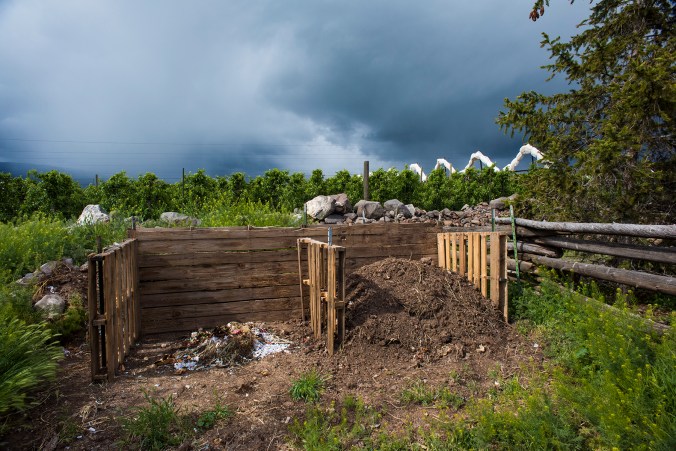
So much tidier now!

We built a new bin structure for our compost using salvaged shipping pallets; you can see the original small compost pile here. (We think pallets are one of the most useful free things you can find!) Now the compost can be kept neater, and it’s simple to throw fresh organic material into the left bin while waiting for the right side to finish “cooking.” When we get that tractor it will be a lot easier to move the finished compost onto the vegetable beds.

Chickens 01 sml

Welcome home, chickens!

And then there’s this news: Quiet Farm has twelve new residents. They are a motley, ragtag bunch, who came to us because a friend was moving house. We have at least two roosters (maybe three; one is sensibly staying quiet for the moment) and an assortment of breeds. They’re still laying pretty well for older birds – certainly enough for our needs – and thus far they’ve had an exciting time exploring their new home. More on the chicken house renovation coming soon!

Have a great week!


Farm update: May 20

Our average last frost date here at Quiet Farm is May 13; as a rough guideline, this means that it’s generally safe to plant warm-weather crops (tomatoes, peppers and so on) outside after this date. Except that we had about an inch of light, fluffy, powdery snow plus some shockingly low overnight temperatures this past week, and if we’d had all of these plants outside they would have died a chilly death. While some vegetables can handle low temperatures, our summer stars want heat and more heat, so ours are still safely tucked away in the sunroom. What do we learn from this? Always check the forecast, and never trust Colorado weather to do what you expect.

Seed Potatoes 01 sml

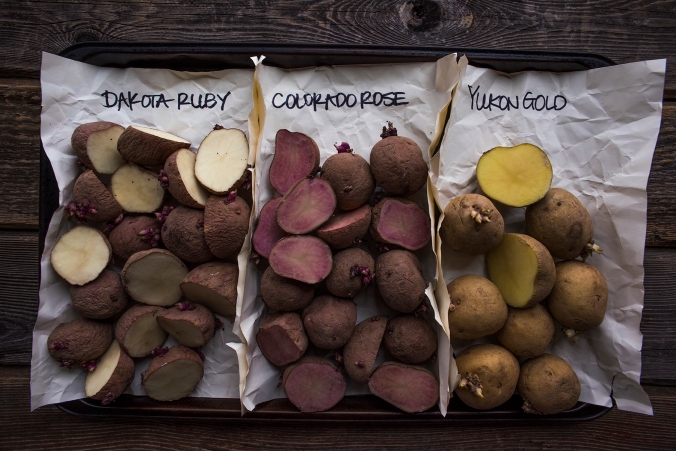
These seed potatoes are bred for the Rocky Mountain West.

We’re expecting another week of cool, wet weather, which makes it impossible to pour concrete for our fence posts. But there is always something that can be planted, even if it’s not tomatoes and peppers. Our locally-grown seed potatoes have been planted in “potato towers,” which we constructed from galvanized fencing and layers of newspapers, compost and straw. I planted a little over a pound of each variety; theoretically each pound planted should yield about ten pounds of fresh potatoes in maybe July or August. I’ve never planted potatoes in towers so am excited to see how this experiment turns out! (If you want to plant potatoes, buy certified seed potatoes and don’t plant those from the grocery store – they’ve typically been treated to prevent sprouting and therefore won’t grow.)

Continue reading

Farm update: February 25

It hasn’t really been the most exciting week here on Quiet Farm, dear readers. We’ve been busy with boring but grown-up things like obtaining contractor quotes for electrical refits and game fencing (tedious), comparison shopping for auto insurance (horrible), changing oil in the cars (chilly), and taxes (the new 1040 is rather streamlined!). While necessary, none of those tasks make for very interesting tales.

Snow Removal 01 sml

Like a real farmer!

Winter continues its slog. After another six inches of fresh powder we did finally see our bluebird sky again, which was a welcome change. N borrowed our neighbor’s tractor to do some plowing; we’ve also been out shopping for our own tractor and ATV, since our current Snow Management Plan – i.e. ignore it and hope it melts – is definitely not panning out.

Game Fence 01 sml

All this just to protect some vegetables!

This uninspiring pile of materials is the beginning of our game fence. We can’t install it until the ground is a little more workable, and the hungry deer are taking full advantage of their current unrestricted freedom. We thought seriously about installing the fence ourselves, but once we realized we’d need to rent heavy equipment (skid-steer, auger and probably some other complicated, expensive, possibly dangerous things) we decided to hire it out. It’s going to cost us many thousands of dollars, but some jobs should be left to the professionals. We hope the deer will learn to respect our boundaries.

Continue reading