Dinner at a gurudwara

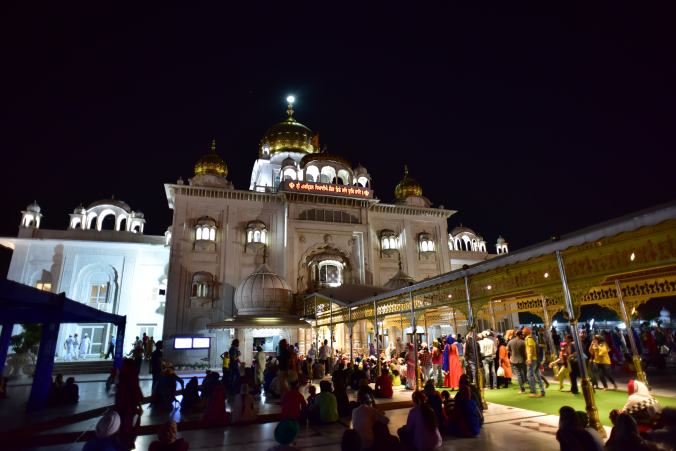
We’ve had a number of remarkable experiences in India, but one of our favorites so far has been the evening we spent at Gurudwara Bangla Sahib, a massive Sikh temple complex in Delhi.
NJB_5596.1

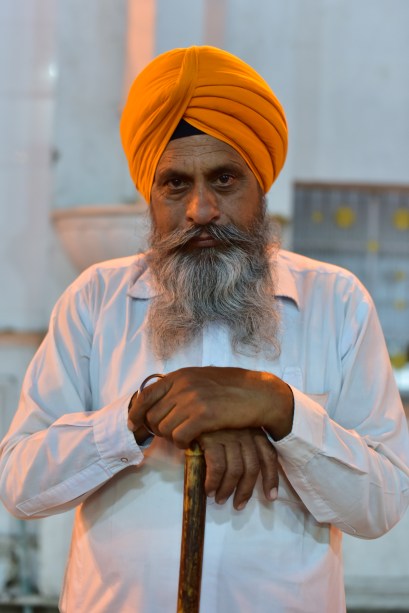
Male Sikhs are most recognizable by their distinctive turbans.

A gurudwara (or sometimes gurdwara) is a place of worship for Sikhs; the word literally translates as “door to the guru.” Sikhism is a fascinating religion; it’s one of the youngest major religions and has about 28 million adherents worldwide. It originated in India in the 15th century and broke from Hinduism primarily due to its rejection of the caste system.
NJB_5570

The gurudwara in Delhi sees a constant stream of visitors.

As we’ve mentioned, India is an intense place, and it’s easy to become overwhelmed rather quickly here. When your tour guide casually mentions that he’s taking you to dinner at a place that serves fifteen to twenty thousand meals a day, it doesn’t really engender a lot of confidence that the meal will be peaceful or calm. Yet that was exactly how the evening turned out.
NJB_5577

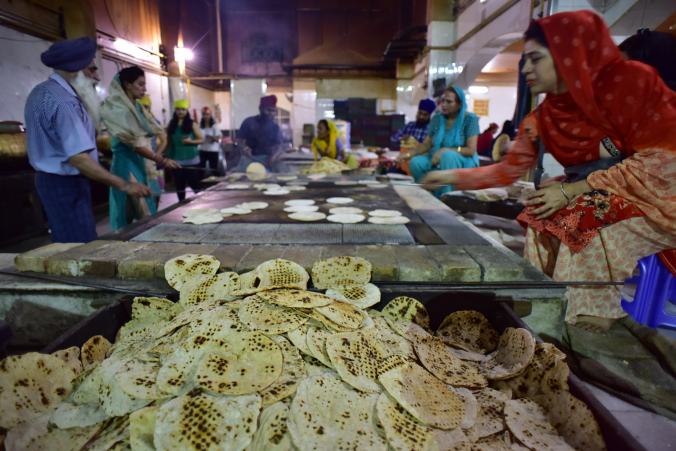
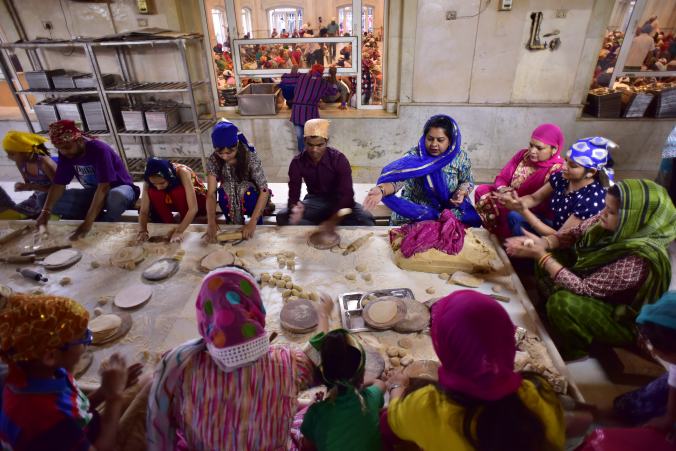
Making chapatis for the communal meal.

Everyone is welcome at a Sikh temple, whether or not you adhere to a specific belief system. All gurudwaras in the world have a langar hall, where vegetarian meals are served free of charge to anyone, sometimes twenty-four hours a day. No money ever changes hands, but it is understood that visitors to a gurudwara will participate in “selfless service” in exchange for their meal, which may mean assisting with cooking, cleaning, serving or any other necessary tasks.

NJB_5574

Chapati dough waiting to be rolled.

NJB_5578

Cooking chapatis on the griddle.

NJB_5576

The Sikh gentleman on the left is supervising the cooking of the chapatis.

For our service, we sat down on the floor to roll out hundreds of chapatis, unleavened wheat flatbreads. It was a lovely experience to join the people already in the kitchen; though we don’t speak Hindi, no explanations were necessary. It was simple enough just to watch what others were doing and follow along.
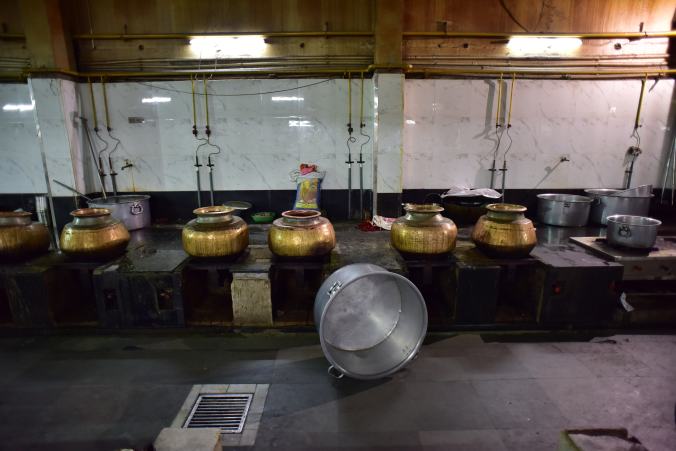
NJB_5580

Rather a lot of food is produced in this kitchen.

NJB_5571

Vats of delicious dal bubbling away.

NJB_5582

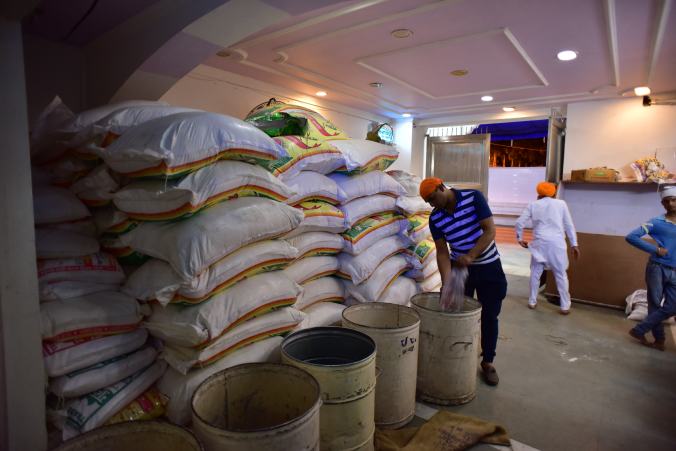
Bags of flour and rice in the temple’s pantry.

In addition to volunteering at the temple, most guests also provide an offering of food to the temple’s pantry. Fifty-pound bags of flour and rice line the walls, along with vegetables, lentils and anything else that can be used in the preparation of thousands of daily meals. All the food is strictly vegetarian, and nothing goes to waste.

NJB_5583

Cleaning the langar between meal shifts.

Around five hundred people eat in shifts in the langar hall; everyone sits on the floor. Guests queue outside in an orderly manner; in a country where patiently waiting in line doesn’t really happen, we were amazed at how smooth and orderly the process was.

NJB_5586

Seating the next round of guests in the hall.

As we filed in, we were given metal trays and shown where to sit. Our guide cautioned us against wasting any food; although you’re welcome to eat as much as you’d like, it is considered hugely disrespectful to take more than you will eat. We enjoyed dal, or spiced lentils, plus a vegetable curry, rice and of course our extremely well-made chapatis.

NJB_5587

Volunteers beginning the meal service.

Because there are always more people waiting to eat, everyone basically starts and finishes around the same time, then the hall is cleaned and readied for the next group. The efficiency and elegance of the entire evening was spectacular. The best part was looking around and knowing that the very rich and the very poor and everyone in between were sitting on the floor together, eating the same food. Truly a highlight of our visit to India.

NJB_5589

Regardless of gender, everyone is required to cover their heads in the temple. Scarves are provided in case you forgot yours.

After the meal, guests leave the hall, wash their hands and feet (as with most temples, shoes are left at the door) and enter the main temple for worship, chanting and fellowship.
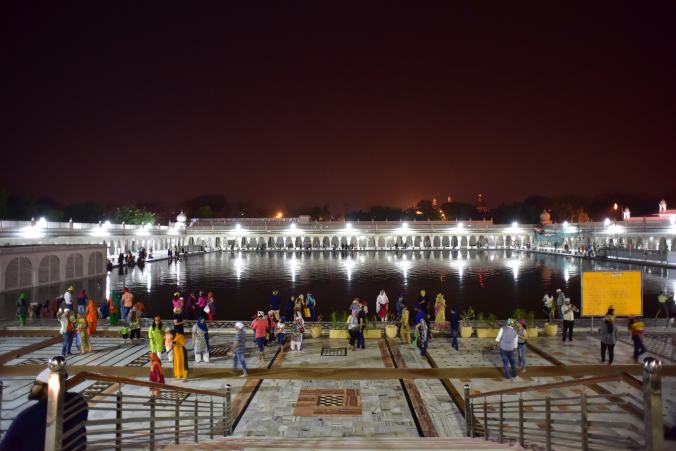
NJB_5591

The temple also has a gorgeous reflecting pool.

One of the most interesting parts of our visit happened afterwards, when we were readying to leave. Our group was approached by a young woman with a small child who begged us for money – a very common occurrence in India, particularly for Western tourists. A Sikh immediately saw this and politely but firmly put a stop to it. Our guide explained that since everything is given for free at the temple – food, water, even a safe place to sleep, if necessary – they do not permit any begging on their grounds. This is extremely unusual in India.

NJB_5593

Sikh temples can be found all over the world, and a quick Google search will find one near you. If you have the opportunity, please visit your local gurudwara and spend a bit of time making delicious food in the kitchen, then sit down to enjoy it with friends and strangers alike. It is an experience not to be missed!

Tea party

After water, tea is the most-consumed beverage in the world. It is produced in forty different countries in Asia, Africa and South America; China is the world’s largest tea grower, followed by India.

NJB_4728

The eastern Himalayan range as seen from Tiger Hill, Darjeeling.

NJB_4820

Recognize that famous red circle and blue bar logo?

India is particularly famous for its Darjeeling and Assam teas, from the regions of the same names. We visited Darjeeling, which sits at close to 7,000 feet and was a famous “hill station” during the colonial era.

NJB_4645

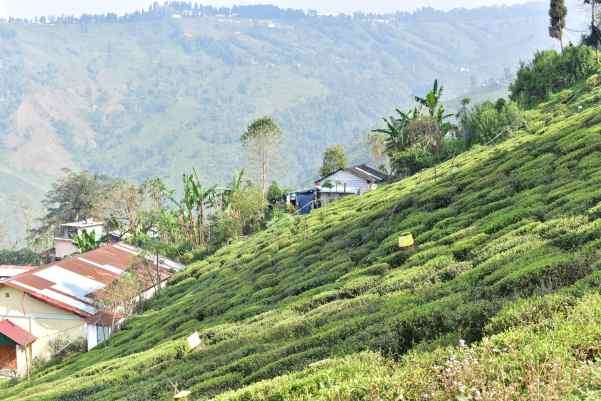
Tea plantation, Darjeeling.

In Darjeeling, tea is grown on steep slopes like these. Pickers – always women – harvest tea leaves into bamboo baskets they carry on their heads or backs. The pickers are paid about $2 a day for a minimum of ten hours of work. Leaves are harvested no matter the weather; the flush refers to the season when the tea was harvested. We visited during first flush, which is the first time the plant is harvested after its winter dormancy and produces the most flavorful and sought-after tea.

NJB_4643.1

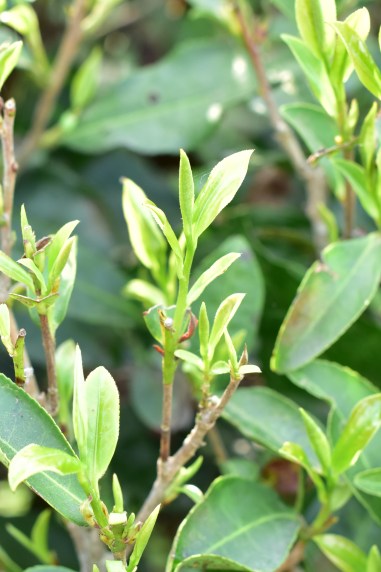
Camellia sinensis, or tea plant.

All true tea – white, green, oolong and black – comes from the leaves of the camellia sinensis plant, an evergreen shrub native to Asia. Herbal teas, like mint, chamomile or lemongrass, are technically tisanes and not teas since they contain no camellia sinensis. Once a tea bush is healthy and established, it can produce healthy leaves for about eighty years.

NJB_5237

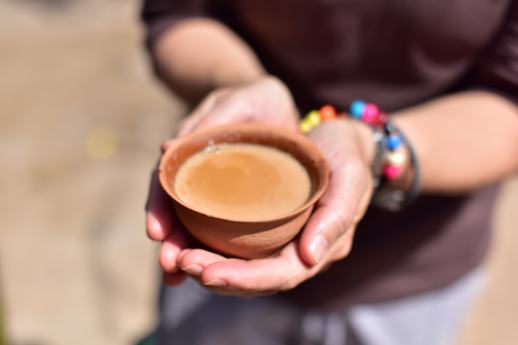
On the street, chai is sold everywhere in tiny terra cotta cups for 10 rupees (about 15 cents). After drinking, the cups are smashed on the ground.

India is famous for its chai tea, which is black tea blended with fragrant spices like cinnamon, cardamom and cloves, and served hot, milky and sweet. On the trains, chaiwallahs prowl the carriages selling drinks to passengers. Sometimes you even get little cookies, too!

NJB_4568

As with any agricultural crop, monitoring temperature and rainfall is paramount.

NJB_4578

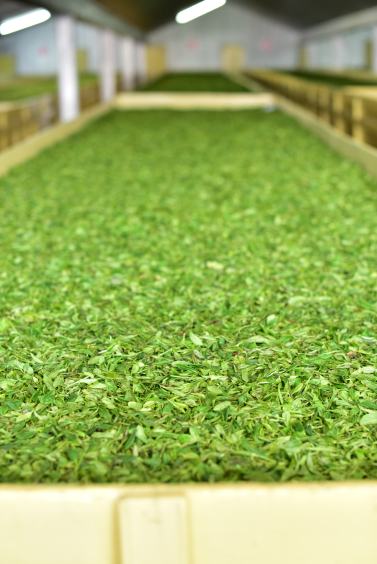
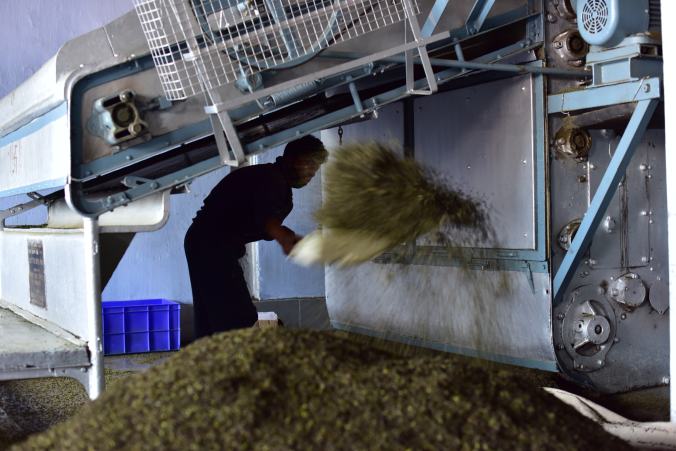
After harvesting, the green tea leaves are “withered” to reduce moisture.

The difference in teas simply comes from how it’s processed. White tea is the most expensive and only comes from the very best tips of the plant. Green tea isn’t fermented, leaving it delicate and soft; both black and oolong teas are fermented, which gives them a stronger flavor. True tea will always contain at least a small amount of caffeine; the amount depends on how the tea was processed and fermented. Herbal “teas” will only contain caffeine if it’s been added in.

NJB_4580

The tea leaves are exceedingly delicate before they’re dried and rolled.

NJB_4571

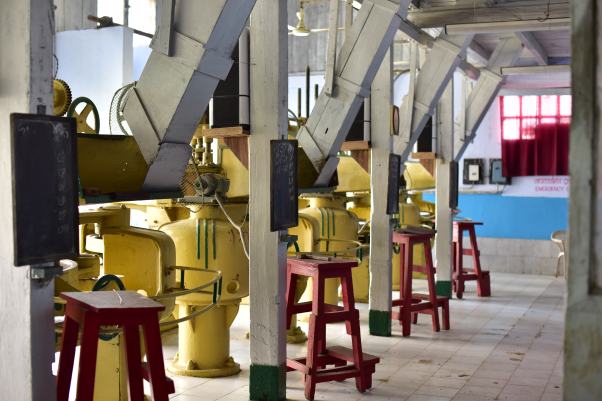
Withered leaves are funneled into rolling machines.

NJB_4584

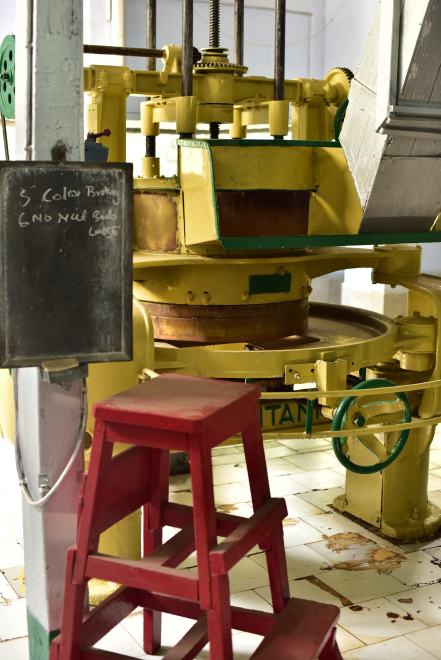
The rolling machines crush the dried leaves to start the oxidation process.

The Darjeeling region is famous for delicate black teas that are traditionally served without milk or sugar. Because these teas aren’t as strong or tannic as Assam teas, they can be enjoyed straight. Darjeeling isn’t actually that big and produces a relatively small amount of tea; it’s common to find tea labeled as “100% Darjeeling” when it’s simply lower-grade tea from elsewhere in India. As with places like Champagne or Stilton that also produce unique foods or drinks, the name itself is a valuable brand and one that’s often misappropriated.

NJB_4570

The tea is placed into drying machines to remove remaining moisture.

NJB_4609

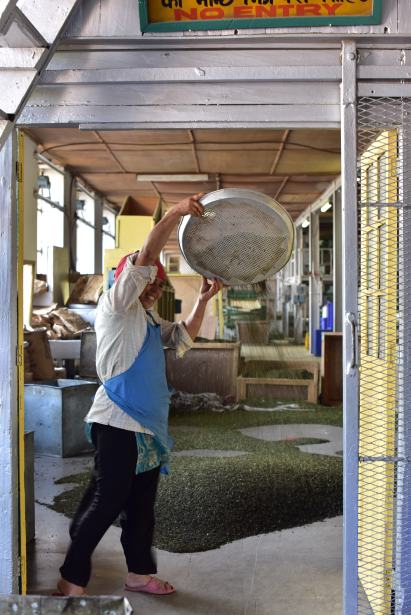
Moving the dried tea.

NJB_4593

NJB_4595

NJB_4623

The dried tea is sifted and graded.

After the tea has been dried and sifted, it’s separated into grades of loose tea and “tea dust,” for bagged tea. Tea purists will always opt for loose tea; it is definitely of much higher quality than bagged tea. There is no arguing the convenience of tea bags, however.

NJB_4614

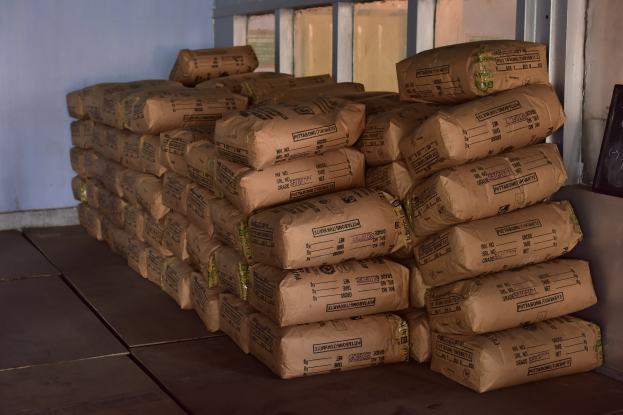
Finished tea in linen bags.

True tea aficionados will swear that you must use exact measurements when brewing tea, such as two grams of tea for eight ounces of water. Like cooking, however, I believe that what matters most is your own palate. Start with the professional guidelines and adjust from there to find out what you like best – I prefer my tea much stronger than most “experts” recommend, so that’s how I drink it. Ultimately, it’s your tea and you should drink it the way you like it.

NJB_4588

Loose tea ready for transport.

NJB_4629

NJB_4628

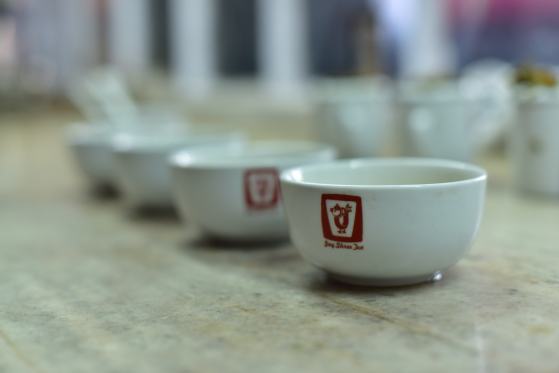
Tea tasting.

Tea is without question one of the world’s healthiest beverages (when it’s not loaded with sugar, obviously!) and Americans are slowly starting to explore the range of delicious teas available. Interested in learning more about teas and how to taste properly? Try here, here or here!


Scenes from the Banana Pancake Trail

We’ve never claimed to be the world’s most adventurous travelers, and our travel in southeast Asia definitely adhered to the classic Banana Pancake Trail. Nevertheless, we had a phenomenal time here and loved seeing countries that were new to both of us. We visited Cambodia, Vietnam and Thailand in just under a month; below, some of our favorite images from this portion of the trip. We’re off to India!

NJB_3399

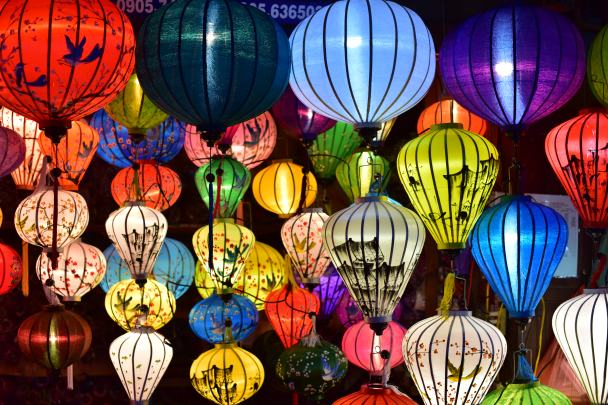
Illuminated lanterns in Hoi An’s Old Quarter.

Hoi An, near Da Nang on Vietnam’s central coast, was most certainly our favorite place in the country. We loved its antiquated feel and the charming Old Quarter, which is decorated with tens of thousands of brightly colored lanterns hung all over the shops and streets. Strolling here after sunset was such a pleasure.

NJB_3433.1

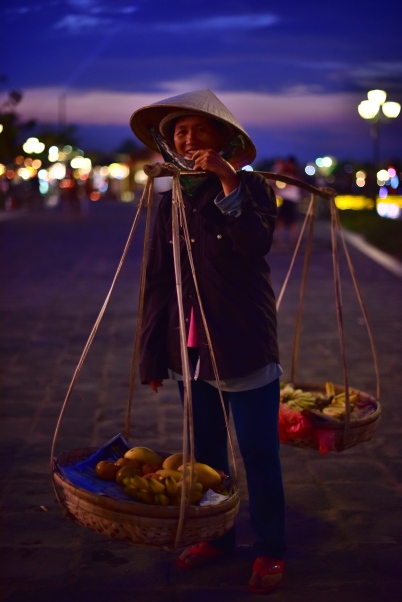
A fruit vendor in Hoi An.

NJB_3349.1

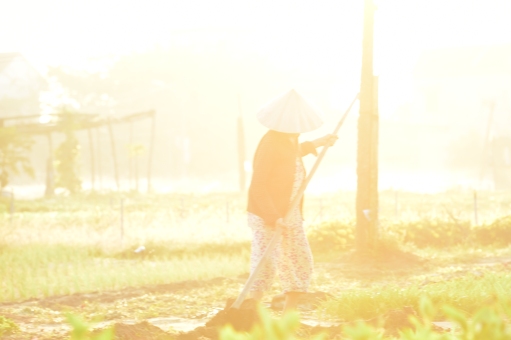
Early morning gardening in Vietnam.

In Hoi An, we participated in a sunrise bicycle tour that took us to the daily market, an organic farm and out to the rice paddies. Truthfully, most small village farms in developing countries are organic because labor there is cheap and chemicals are expensive. In the U.S., unfortunately, the opposite is true.

NJB_2552

The stunning interior of a village temple outside of Siem Reap.

This gorgeous temple was on a dusty road leading out of Siem Reap; from the outside, you’d never know that the interior was this incredible. Each fresco had a number painted in the corner; this indicated the amount of money raised by the village to pay for that particular painting.

NJB_3491

Vietnam’s favorite son is absolutely revered in this country.

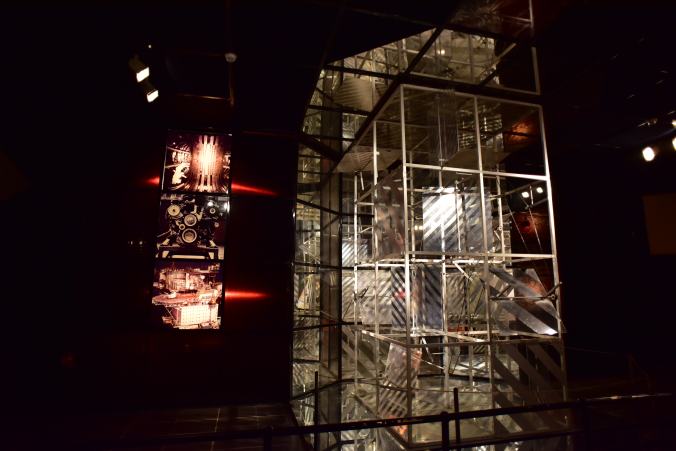
Vietnam’s national hero, Ho Chi Minh, is celebrated all over the country but nowhere more so than in his namesake museum in Hanoi. The museum is one of the strangest and darkest – both in terms of actual light and the overall mood – places we’ve ever visited. It’s an unsettling combination of blatant propaganda and modern art installation, and worth seeing just for the weirdness.

NJB_3495

See how dark this museum is?

The placard on this exhibit in the Ho Chi Minh Museum read, in part, “The models in this hall give visitors information about how scientific and technical achievements have been made use of for peaceful and beneficial purposes. The models at the same time condemn those who have utilized these achievements for aggressive and destructive purposes.” What?

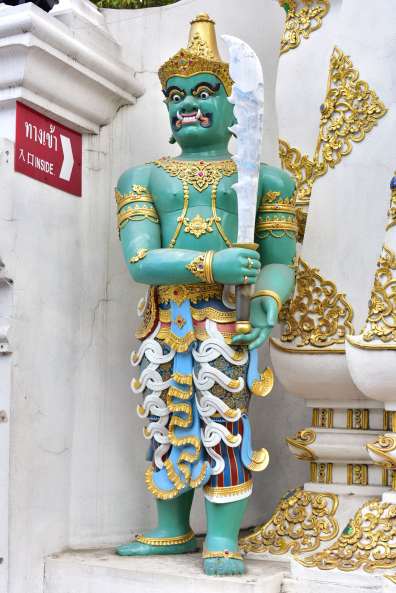
NJB_3717

A ferocious temple guardian in Chiang Mai.

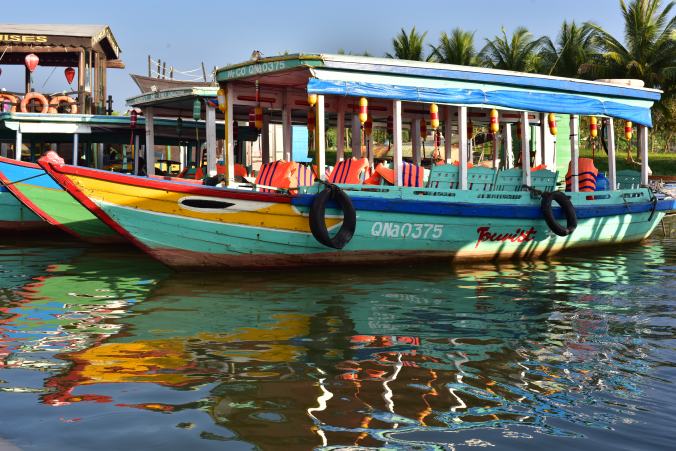
NJB_3353

Look closely: the labeling on these boats in Hoi An lets everyone know you’re a tourist.

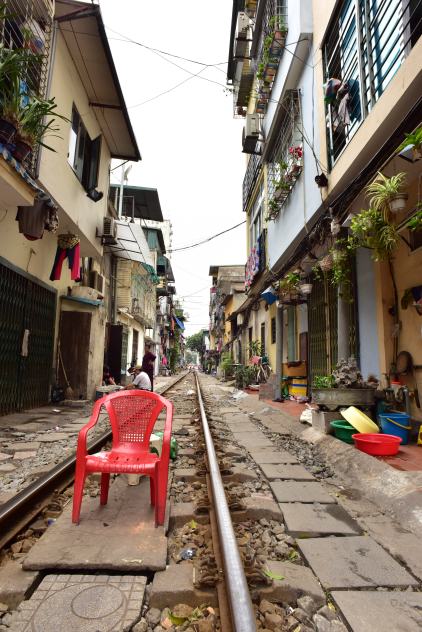
NJB_3482

Trainspotting might be a bit risky in Vietnam.

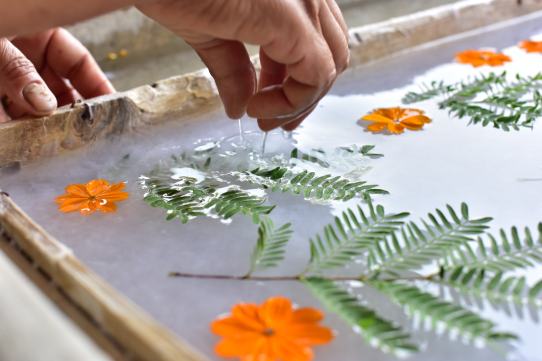
NJB_3827

Adding decoration to our handmade paper.

In Thailand, we took a papermaking class and created gorgeous papers with leaves and blossoms. It’s simple and rewarding and beautiful; we’re hoping to make our own to wrap our handmade cheeses in at Quiet Farm.

NJB_2953

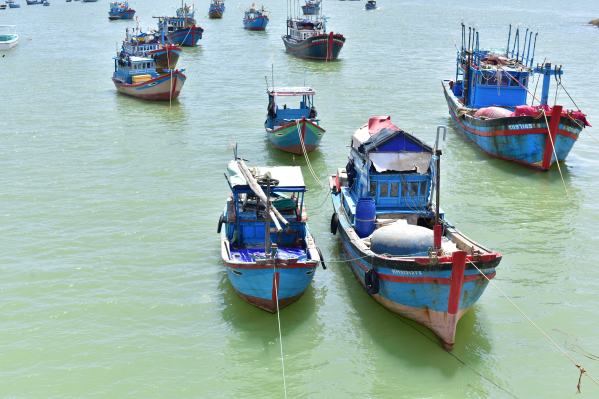
Fishing boats on the river in Nha Trang.

NJB_3700

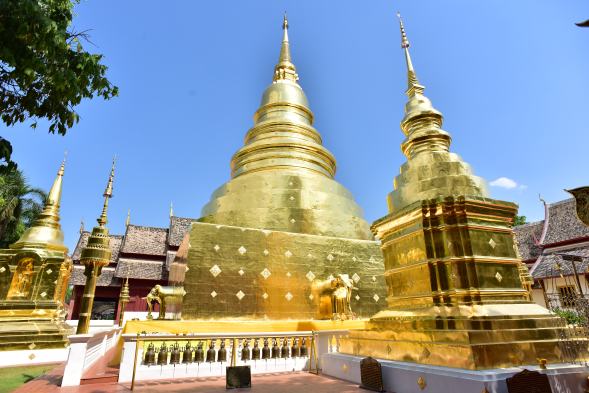
One of Chiang Mai’s many elaborately decorated temples.

NJB_3138

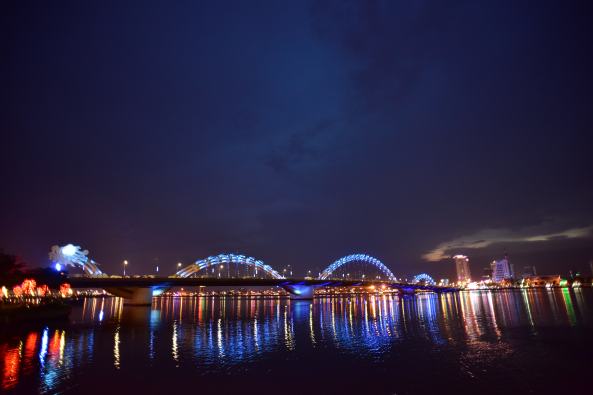
Da Nang’s famous (and very expensive) Dragon Bridge changes colors – and on weekend nights, it also sprays water and breathes fire!

NJB_3389

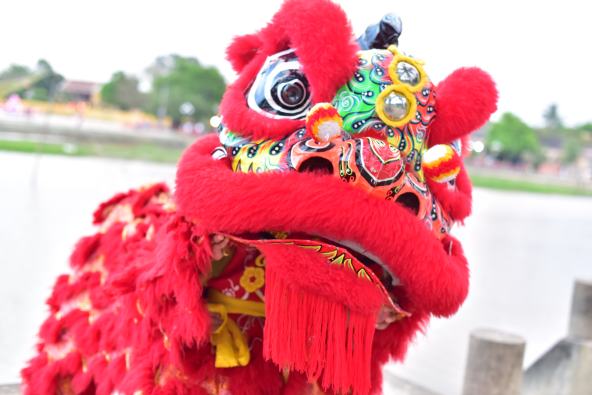
We found this lion dancer at an international food festival in Vietnam.

NJB_2917

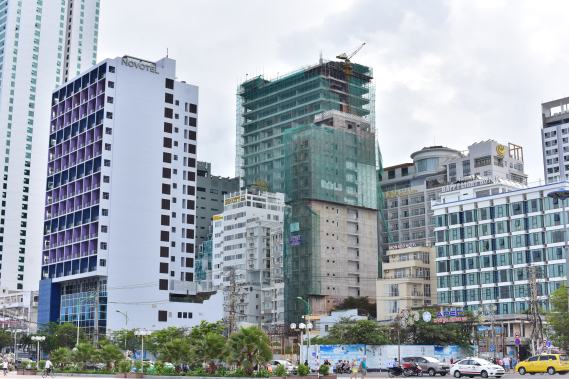
The building boom in Nha Trang, a beach resort popular with Russian tourists.

Vietnam is in a mad rush to modernize, so hotels are constructed at a breakneck pace. This means that not only are there hammers and saws competing with motorbike horns at all hours, but that a lot of construction is left partially finished when workers move on to the next project.

NJB_3550

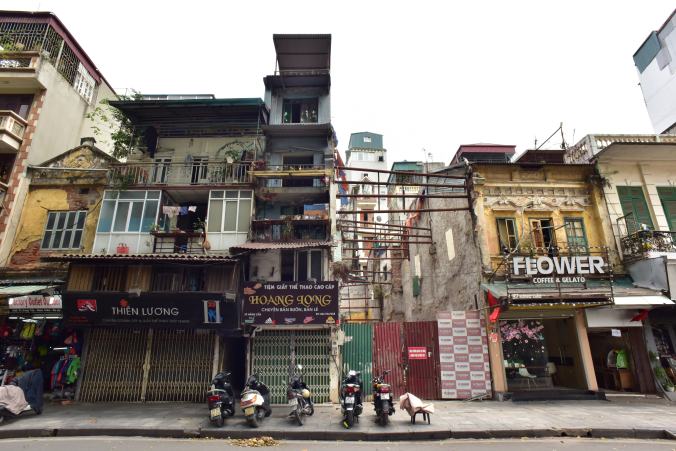
A “skinny house” in Hanoi.

Even more common than all the new construction is making do with what’s already there. The skinny house above has been tucked in; notice that the bamboo poles are actually structural and are keeping the two buildings from leaning in. Presumably something will be quickly built in that empty space. But there’s a fancy coffee shop! With gelato!

NJB_3565

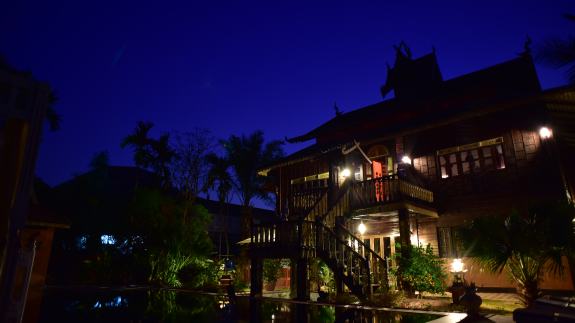
The exterior of the traditional lanna house we stayed at outside Chiang Mai.

NJB_2742

A monk studying at a temple in Phnom Penh.

Monks in orange robes with shaved heads are a common sight throughout southeast Asia; it’s amusing to see them with earbuds and mobile phones, too. Even monks have to modernize.

NJB_3747

Is this for here or to go?

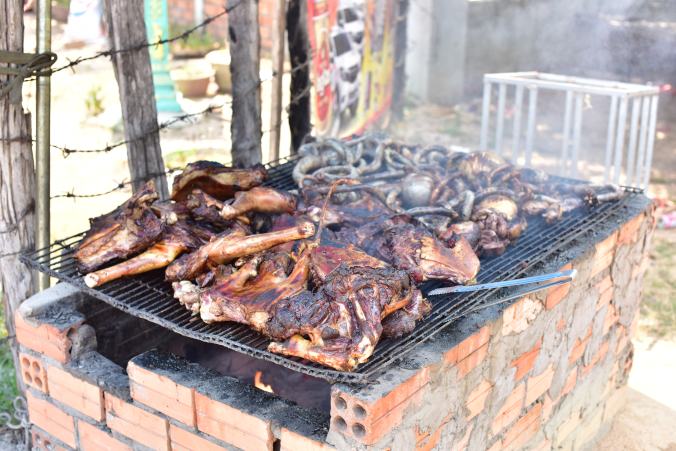
And we leave you with this photo, and dare you not to smile. While dogs are still eaten in southeast Asia, as the region grows in economic prosperity, its people want what they perceive as middle-class luxuries – and that includes house pets. So now it’s more common here to see dogs on a leash rather than on a grill.

Street food

After the markets, street food vendors are one of the most colorful sights in southeast Asia. From fresh fruits and vegetables to juices, meat and snacks, just about anything you fancy is available from a street stall. Although you might not know exactly what you’re eating, it’s worth watching just for the show.

NJB_2928

A lobster stall in Nha Trang setting up for business.

NJB_2926

Crocodile farming – for both meat and leather – is big business in central Vietnam; the industry is definitely not PETA-approved. This enticement is outside a restaurant in Nha Trang.

NJB_2645

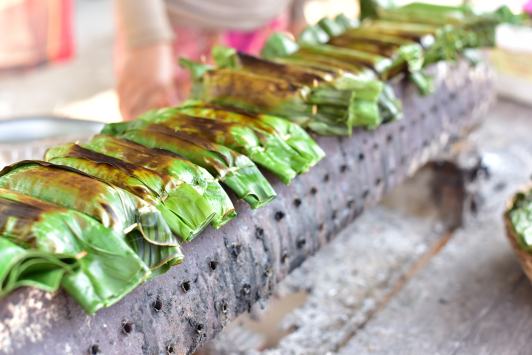
These delicious little packets contain sticky rice stuffed with bananas, eaten as a snack or dessert.

NJB_3735

These lovely women are running a rotee stand. Rotees in Thailand fall somewhere between a crêpe and a pancake and are filled with sweet or savory ingredients.

NJB_3723

Carts are set up along just about every street.

NJB_2923

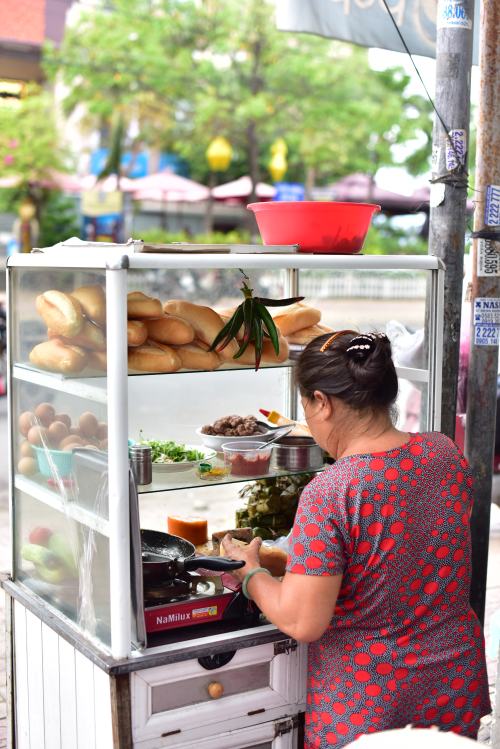
This woman is making Vietnam’s world-famous banh mi sandwich, sold for about 75 cents.

NJB_2911

These tiny bananas (about the length of a finger) are so much more flavorful than the standard Cavendish variety we get at home.

NJB_3173

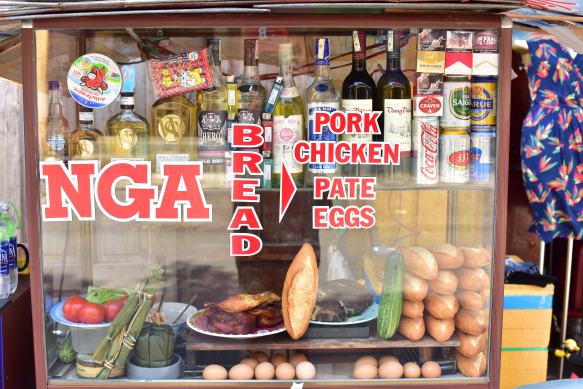
Fancy some whiskey or red wine with your street food meal? You can have it.

NJB_3743

Perhaps you’d like a meatball skewer?

NJB_2496

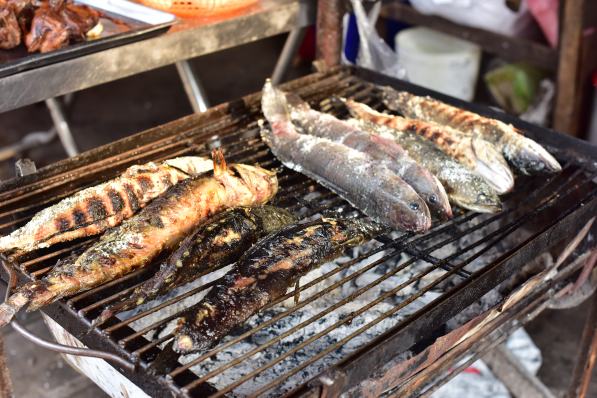
Salted whole fish, ready to eat.

NJB_2486

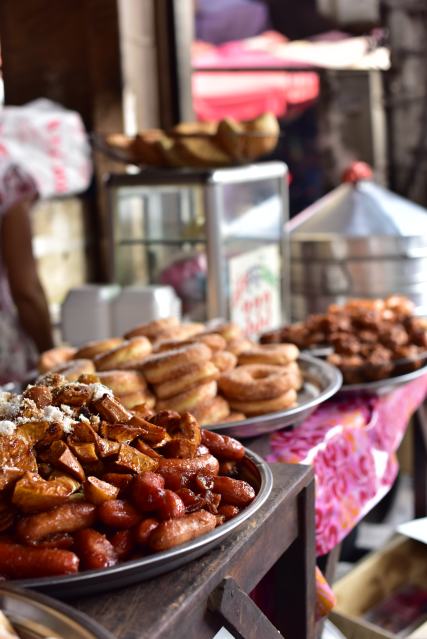
Fried sweet potato, banana and other tasty treats.

NJB_2597

The “special meat” restaurant outside of Siem Reap. Sit, stay…good dog.

NJB_2488

Little sweet cakes, served hot.

NJB_2781

Skewers and more, ready for the grill.

NJB_2755

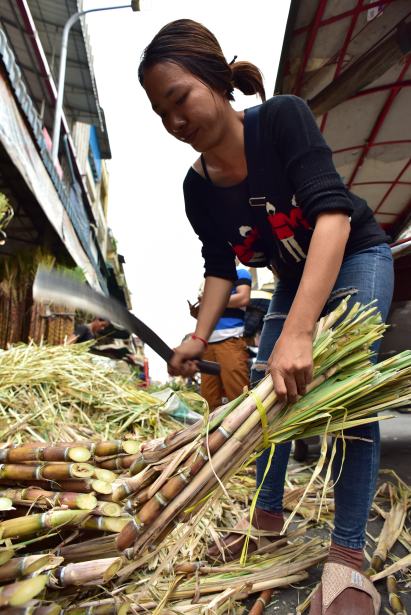
Baling sugarcane on the streets of Phnom Penh.

NJB_2479

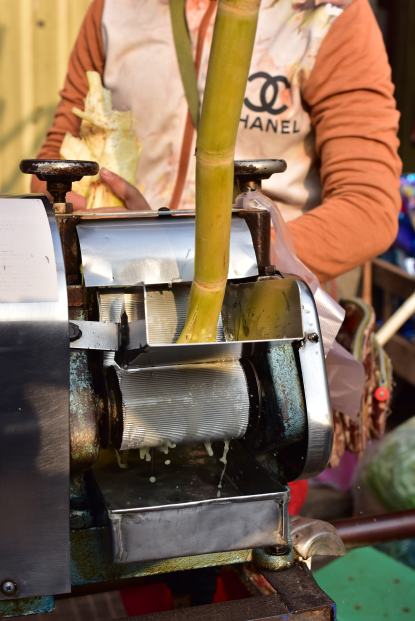
The sugarcane is crushed through a press to produce delicious juice, which is flavored with fresh lime and sold in little baggies as a refreshing drink.

NJB_2656

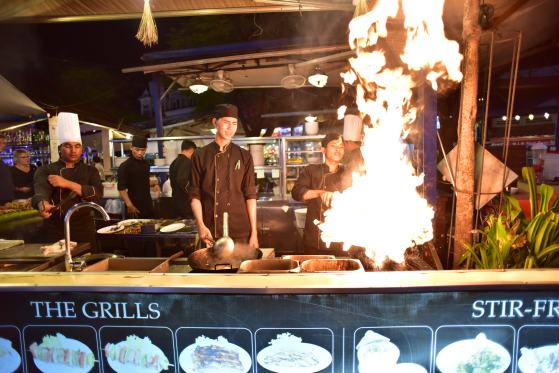
Chefs demonstrate their stir-fry skills at Siem Reap’s night market.

NJB_3740

Honestly, I don’t know. But what colors!


To market, to market

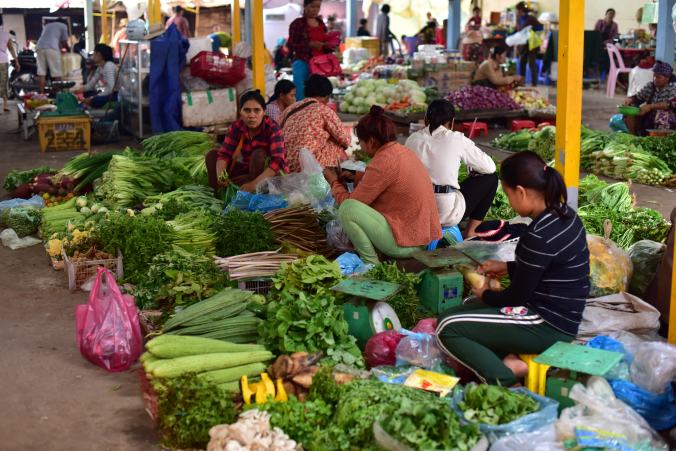
For a chef and a photographer, traditional food markets are a wonderland. We visit markets whenever possible and do our best to capture the scents, sounds and tastes through our words and photos. These markets are often messy, fragrant, hot and noisy, to say the least, but they capture a place and its people the way few other tourist attractions do.

P.S. If you’re in the Denver area, I’m teaching an incredible cooking class on exploring ethnic markets in June at the Botanic Gardens. Learn more here!

NJB_2489.JPG

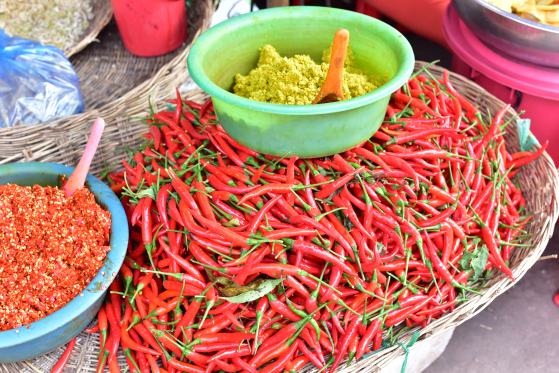
Chile paste, fresh chiles and ground turmeric.

NJB_2513.JPG

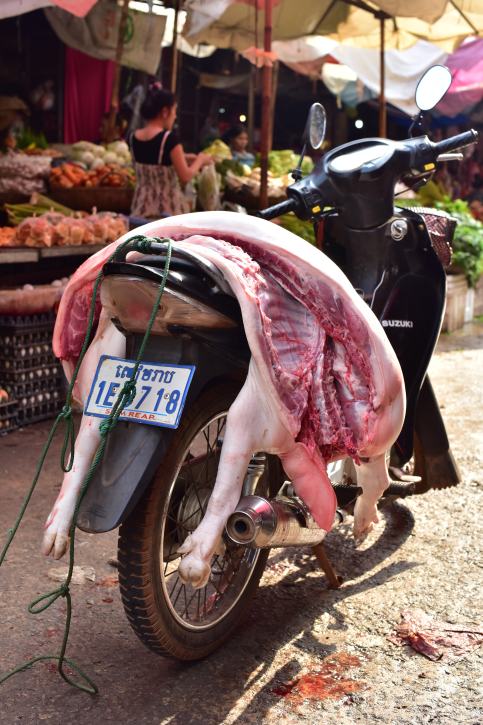
This little piggy went to market…

NJB_3271

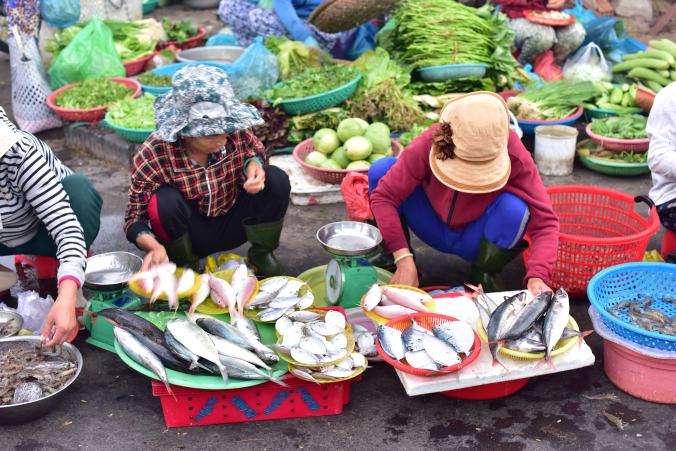
The morning fish market in Hoi An.

NJB_2504.JPG

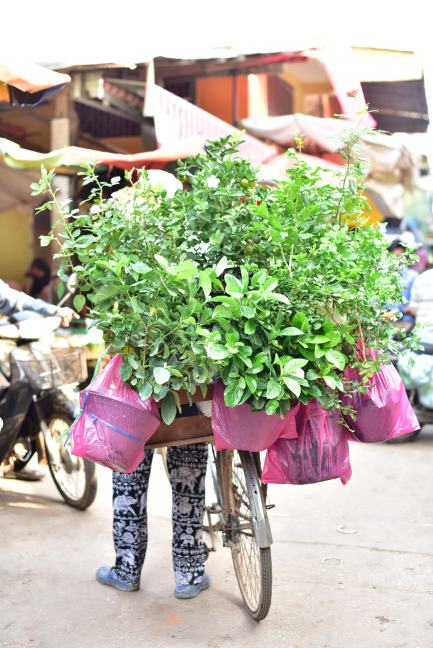
Fresh herbs, delivered by bicycle.

NJB_2491.JPG

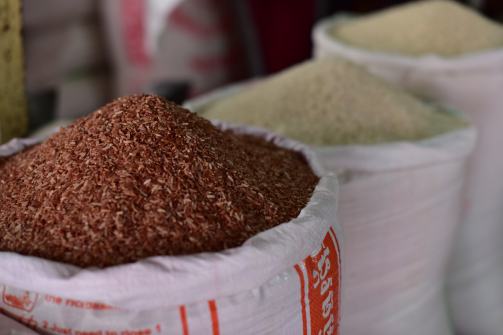
Rice is the staple food for more than two-thirds of the world’s population, unsurprisingly, there is a lot available for purchase here.

NJB_2510.JPG

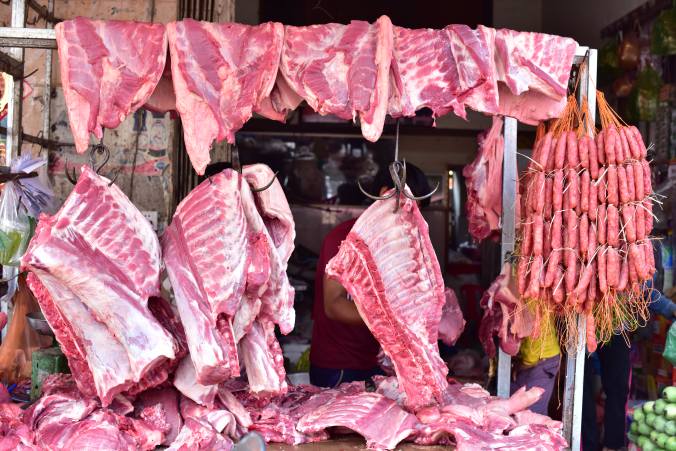
Know where your meat comes from.

NJB_2317.JPG

Siem Reap’s famous Night Market.

NJB_2503

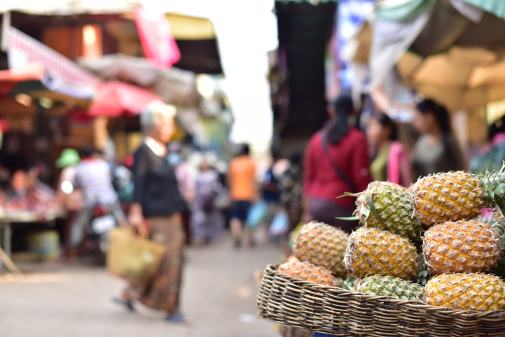
Fresh pineapples are often sold peeled and cut for an easy to-go snack. 

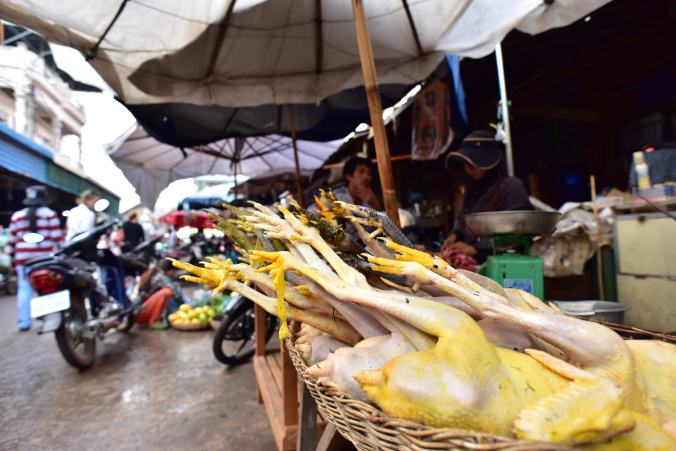
NJB_2472.JPG

The “blackfoot chicken” is just one of the many poultry options available. Every conceivable type and size of bird is eaten here.

NJB_2763.JPG

Lots of unusual fruit varieties that I’ve never seen before!

NJB_2500.JPG

This is what chefs mean when they talk about “nose-to-tail” cooking.

NJB_2477.JPG

Most markets we’ve seen are conducted primarily on the ground.

NJB_2519.JPG

This is not the gluten-free section.

NJB_2493

Spices ready to blend into fiery curry pastes.

NJB_2306

NJB_2304

Markets in southeast Asia aren’t just for food; Cambodia and Vietnam produce a great deal of the world’s “fast fashion,” typically in abysmal working conditions.

NJB_2507.JPG

Everything you need to garnish pho.

Needless to say, I’m looking forward to cooking again when we get home!


How things are made

Hi! We’re in Cambodia! Adjusting to southeast Asia’s extreme temperatures (currently 96°F with 43% humidity) after New Zealand’s temperate climate has been a bit of a shock, but we’re adapting. The key? Drinking plenty of water and a hotel with a pool. Plus, no heavy-duty touring activities (like dusty temples) between the intense hours of noon and 5PM. One must take good care of oneself when traveling.

NJB_2321.JPG

$29 a night gets you quite a bit of luxury in Siem Reap.

One of the benefits of traveling in less developed countries like Cambodia is often the opportunity to see things being made by hand that are almost always created by machine elsewhere. We participated in a tour that took us through small villages outside of Siem Reap where we had the chance to see incense, rice noodles, and tofu, among other things, all crafted by hand.

NJB_2608

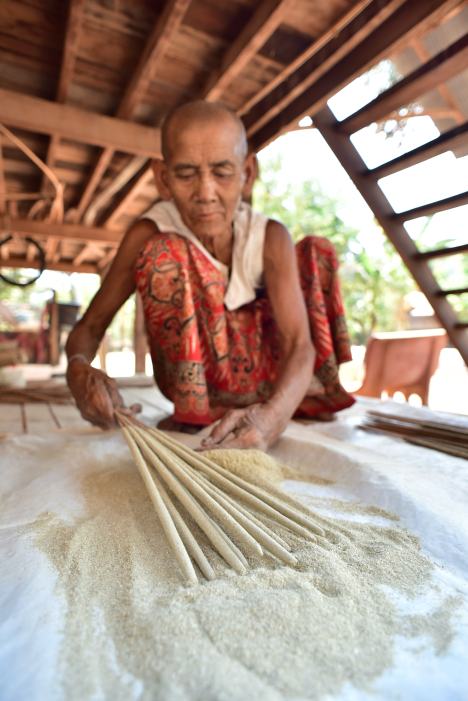
This incredible woman has been making incense sticks since she was 15. She’s now 76.

NJB_2614

Scented bark, used as the base for the incense sticks.

Bark and other raw materials for the incense are collected from the surrounding area, then sifted and made into a paste with water. The paste is rolled around bamboo sticks, dusted and dried in the sun.

NJB_2609.JPG

61 years of making incense by hand might be the embodiment of mastering one’s craft.

NJB_2620

Dusting the incense sticks before they’re left to dry in the sun.

NJB_2613.JPG

The finished incense sticks are collected into bundles and sold at the market for ceremonial use at altars such as the one below.

NJB_2558

An altar at a village pagoda.

We stopped at a home in a village outside of Siem Reap where fresh rice noodles are made. As with most of the homes we visited, this business is a family affair, with everyone participating in the household’s livelihood.

NJB_2583

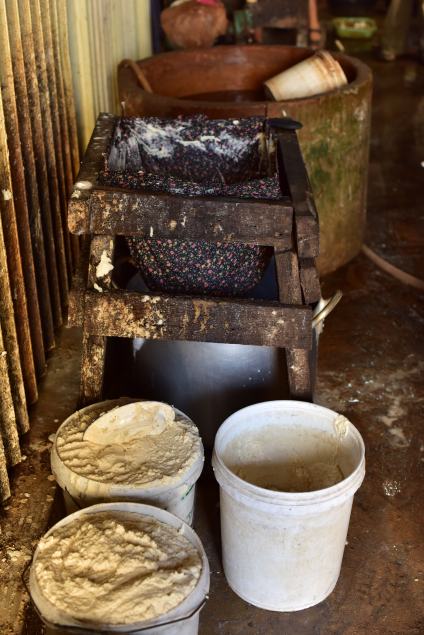
The dough for these noodles is simply finely ground rice and water.

NJB_2592

This contraption uses the well-known engineering theory of “playground seesaw” to knead and pound the dough in shallow pans.

NJB_2577

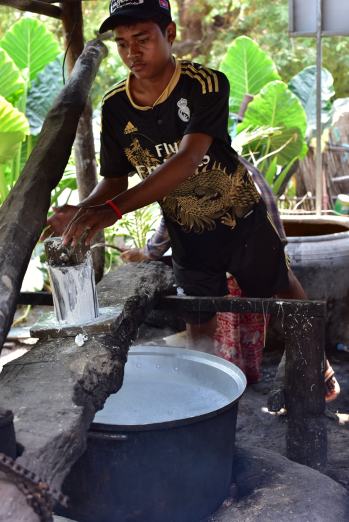
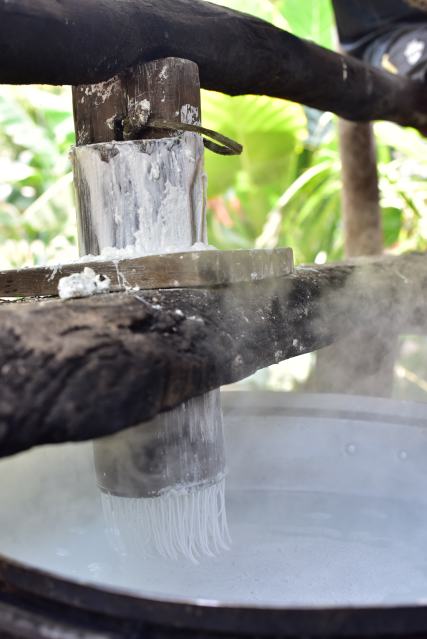
The noodle dough is placed in the cylindrical press and tamped down with a wooden plunger.

NJB_2584

The boy wasn’t heavy enough to weigh down the press, so another family member joined in.

NJB_2580

Noodles gently dropping into their hot bath.

The family’s press is a simple yet ingenious human-weighted device that forces the thick, dense dough through a metal sheet pricked with tiny holes, creating the thin noodles. The noodles are quickly cooked in boiling water, then removed and drained.

NJB_2590

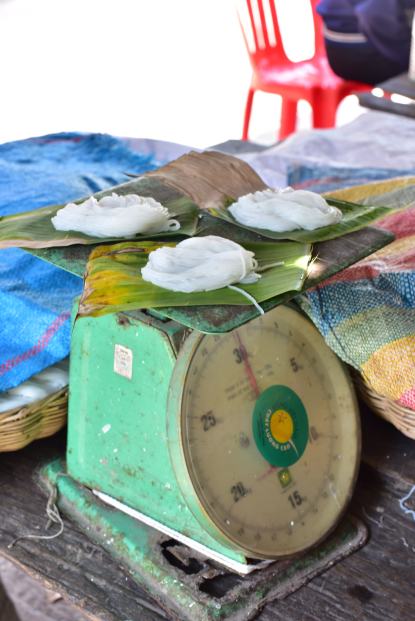
Bundles are carefully weighed, although these women are so skilled and accurate that the scale probably isn’t even necessary.

NJB_2576

The noodle bundles are packed in bamboo-lined rattan baskets for transport to the market and local restaurants.

Another stop was a house near Siem Reap’s wholesale market where a local family makes fresh tofu. Batches and batches are made every day and sold at the market or to a multitude of small restaurants. The “production kitchen” is of course also the family’s home.

NJB_2525

The wood-fired stove used for heating the soymilk.

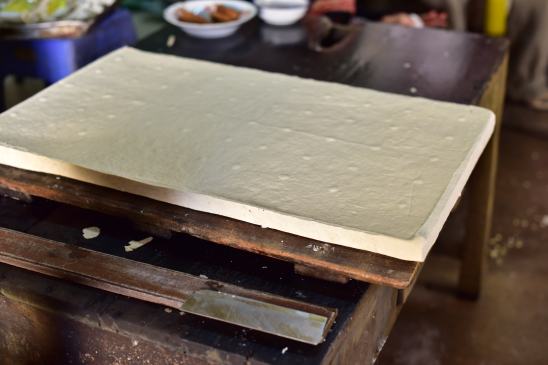
Tofu is made in a manner very similar to cheese: fresh soy milk is heated, a coagulant is added to curdle the milk, and the mixture is pressed to remove liquid.

NJB_2537

The hot soymilk curdles immediately after the coagulant is added. 

NJB_2526

The curd is drained through fabric before being placed in the press.

NJB_2527

The drained curd is placed in a tray and pressed to remove liquid. Note the clever use of a bottle jack!

NJB_2529

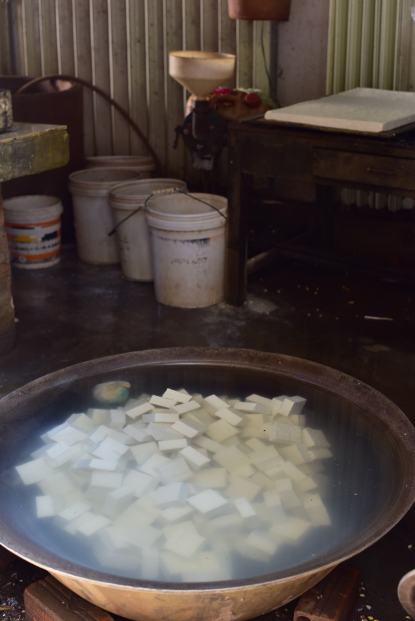
Finished tofu.

NJB_2531

Tofu cubes, ready for sale. Tofu is always stored in liquid (usually filtered water) to keep it fresh and moist. 

If you’re interested in making your own homemade tofu, start here!

Mad about ewe

It is impossible to overstate the importance of the humble sheep in New Zealand. The famous Captain Cook first introduced sheep here in 1773; meat and wool, as well as numerous other byproducts, quickly formed the economic background of this young nation. Even today, New Zealand is well-known for its lamb and wool, and the oft-cited statistic that New Zealand has a lot more sheep than people (about 27 million to 4 million) still holds true, although the animal numbers have fallen dramatically in recent years. The worldwide introduction of synthetic fibers understandably had a massive impact on the wool industry.

NJB_1837

One of the great joys of travel – especially on road trips – is stumbling upon something amazing that wasn’t in the day’s plans. We were on our way to camp on the beach at Clifton, in Hawke’s Bay on the east coast of the North Island, when we drove by Wool World. My head immediately filled with visions of a slick, American-style theme park devoted entirely to sheep, hopefully with a petting zoo, roller coaster and extensive gift shop. The reality was far different, and much better.

NJB_1891

Clifton Station, Hawke’s Bay.

NJB_1846

The dogs are coming…

Clifton Station (ranches in the U.S. are stations here) was founded in 1859 and has been run by the same family since. It encompasses about 2,000 acres on the east coast of the North Island. Despite the signage outside advertising shearing and herding demonstrations, Wool World is now only open for large groups of pre-booked cruise ship passengers. We got lucky, however, and walked up while a station hand was treating lambs in a gated paddock near the road. These lambs had just been taken off their mothers and were headed out to munch on fresh new pasture; the abrupt change in diet causes their delicate little lamb tummies to go a bit haywire, so they’re essentially given a pre-emptive antacid.

NJB_1865

The station hand gave us free rein to walk into the old shearing barn, built in 1886 and still in use today. This barn is true living history and it was incredible to see the pride that this family takes in their property, their animals and their way of life. Places like these are becoming more and more rare, and recognizing the past is especially relevant because modern agriculture is changing so quickly. The opportunity to see this space will be one of the highlights of our trip to New Zealand.

NJB_1880

Blade shearers in 1893 with shedhands and shepherds. The records indicate that 25,000 sheep were shorn in the shed that year.

NJB_1876

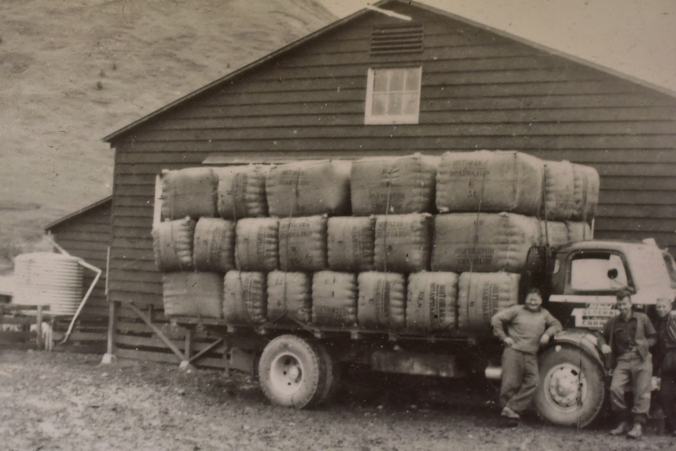
Horse-drawn wool bales headed to the railyard for transport to Wellington or Napier.

NJB_1877

Bales of wool bound for a local wool sale.

NJB_1848

Not much has changed in this woolshed since the late 1800s.

NJB_1853

Shearing stalls.

NJB_1871

Belt-driven machinery allowed multiple sheep to be shorn at one time.

NJB_1860

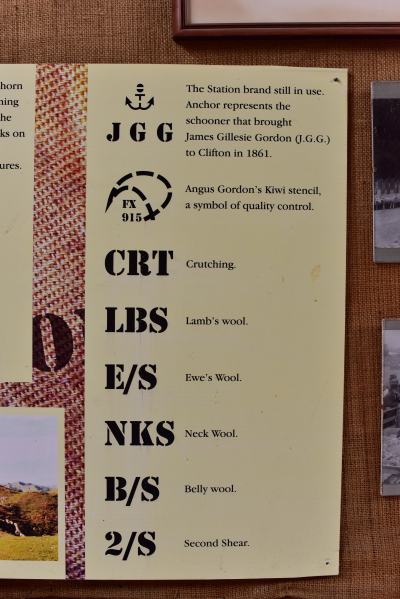
Wool bales are stenciled with their station origin, destination, pack year and grade. Low-grade wool (and the sacks) were often used on walls for home insulation.

NJB_1873

A helpful identification key for bale stencils.

NJB_1861

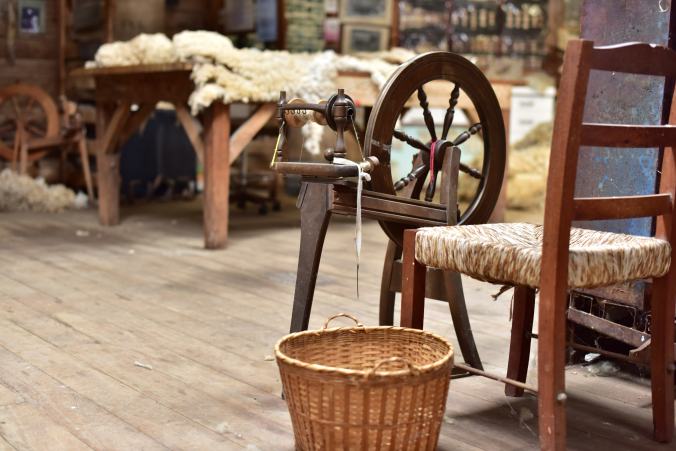
Ye Olde Spinning Wheel. Avoid at all costs, princesses.

NJB_1843

If you should ever have the opportunity to see a herding demonstration, do not miss it! Watching the shepherd and the dogs run the sheep is truly remarkable.

How to campervan in New Zealand

When organizing this impulsive trip, we gave a lot of thought not only to where we would go, but also how we’d get around once we got there. We planned on mostly using public transportation – trains, buses, ferries and so on – instead of renting cars, but in New Zealand, we wanted to rent a campervan. And we are so pleased that we did.

NJB_1153

If you’re British, you probably get the inside joke of the license plate.

New Zealand is roughly the same size as Great Britain or Japan, but holds just over four million residents in comparison with Britain’s 64 million and Japan’s stunning 127 million. This means, of course, that there is a great deal of open country – and because food and accommodation might be few and far between, a campervan is the perfect way to explore. (It’s also called caravanning, but that’s usually only when you’re using a regular vehicle to tow a caravan that has no engine of its own. That’s commonly known as fifth-wheeling in the U.S.)

New Zealand is so friendly and welcoming to campervans; we’ve seen hundreds and hundreds of vans of all shapes and sizes during our time here, proving that it is one of the most popular ways to see the country. There are campgrounds everywhere, from basic and rustic to luxurious; most of these have small motel rooms as well as powered and non-powered sites plus places for tent campers. Amenities vary, but almost always include common showers, toilets and kitchens, and there is often a pool or hot spring too.

NJB_1319

Fernland Spa, near Tauranga, offers private open-air hot spring pools. The pools are filled from the spring, then drained into the nearby estuary, cleaned and refilled after every use, eliminating the need for chemical treatments.

The greatest advantage of campervanning is definitely the flexibility. We drafted a rough itinerary before we arrived, mostly based on N’s year living here back in the early 2000s, of places he wanted to revisit or had never been. But once we got on the road, we loved being able to stay in a place longer or leave early if it suited our plans. Had we booked all of our accommodation at B&Bs and hotels in advance, there would be none of this.

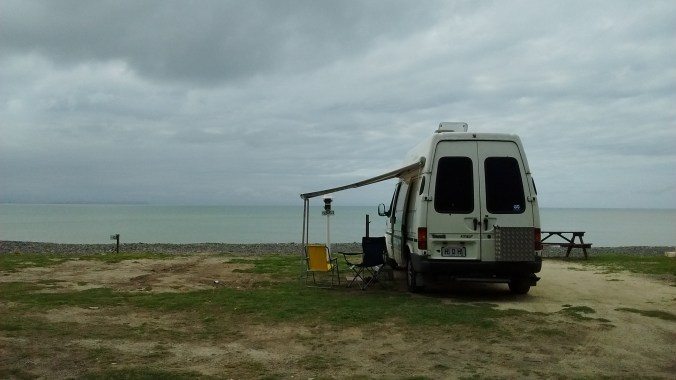
IMG_20170227_152617942

One of our very favorite campsites right on the ocean in Clifton, Hawke’s Bay.

The other biggest draw, especially on a trip of this length, is the ability to save a lot of money by cooking most of our own food. While I’m not making anything fancy, I am cooking simple, delicious meals appropriate to the summery weather and what we discover on our travels. We’ve been in a lot of agricultural regions, and many farms and orchards have unmanned honesty stands on the side of the road. Signs advertise what’s available, you select what you want and put your money in the box. We’ve bought just-harvested tomatoes, dried figs, zucchini, new potatoes, tons of fruit and anything else that catches our fancy. We’ve eaten a lot of local lamb, plus fresh sausages from the butcher, and it’s refreshing not to agonize over my meat purchase for endless minutes: all of the meat is pasture-raised in New Zealand, and none of it comes from a CAFO. Even tiny grocery stores in dusty little towns have a great selection of local meat. Just being able to make our own coffee and tea saves so much money rather than buying to-go drinks every day.

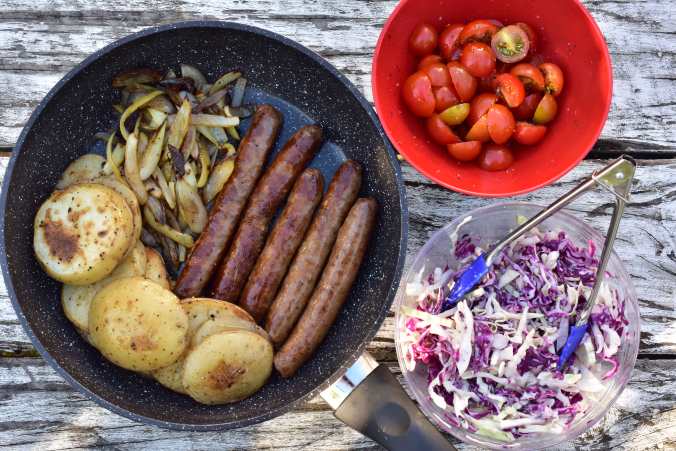
NJB_1485

On the menu: local venison and merlot sausages, grilled potatoes and onions, fresh tomatoes with olive oil and salt, and a simple cabbage coleslaw.

As in the U.S., there are various membership programs you can join that offer discounted rates at particular campgrounds; we’ve used an invaluable (and free!) app called CamperMate to navigate our way to parks in a particular region. Freedom camping is also popular and it’s pretty much exactly what it sounds like: sleeping in a designated area for free, but without any services like showers and sometimes not even toilets. This is often not popular with local residents, however, because there have been many cases of freedom campers basically turning a lovely local spot into their own unserviced campground, and therefore freedom camping is heavily regulated and often banned outright. We’ve freedom-camped a couple of times, but it’s not always ideal for a variety of reasons.

NJB_1344

Camping by a gorgeous river near Tongariro National Park.

If you want to travel New Zealand by campervan, do your research; it’s essential to understand exactly what size and style of vehicle you’ll be renting. If you plan on doing any freedom camping, you’ll need to be certified self-contained, or CSC. The CSC sticker allows you to stay in more remote sites where other vehicles wouldn’t be permitted, and there are definitely rangers patrolling who will issue stiff $200 fines if yours isn’t displayed. You should also know that renting a campervan isn’t cheap; when we were first researching, we were stunned by quotes of nearly $8K for our month here, and after that you still need to pay for campgrounds unless you freedom-camp exclusively. There are also diesel taxes, tolls, and hefty charges for the ferry if you want to travel between the North and South Islands.

NJB_1446

Semis at sunrise on the Interisland Ferry en route from Wellington to Picton.

For our American readers, remember that New Zealand drives on the left; unless you’re very comfortable with handling larger vehicles, you’ll absolutely want to book in some practice time in a safe area before you hit the open road. And finally, New Zealand has basically one major north-south motorway; all of its other roads are relatively small two-lane roads, especially compared to our massive flat, straight American highways. Journeys here are measured by time, not by distance; you can’t read “Auckland to Wellington, 658 kilometers” on the map and assume that will only be an six-hour journey – it’s closer to ten. It takes a lot longer to get to places here than you might expect, and the driving can be challenging and tiring with a lot of hills and narrow, windy roads. Driving a campervan in New Zealand isn’t for the faint-of-heart – but we’d argue that it’s by far the best way to see these gorgeous islands.

P.S. A million thanks to my amazing, incredible partner, who grew up driving on the left and took on the challenge of this journey with literally no help from me whatsoever. I will never be able to make him enough coffees to thank him!

Going nuts, vol. 1

When roadtripping in New Zealand in a converted 1999 Ford Transit van with less-than-ideal brakes, there are few things that your partner – who is gamely doing all of the driving – enjoys more than you screeching “Hey! Fresh avocados!” or “Stop! They’ve got pick-your-own strawberries!”, thus forcing him to make dramatic unplanned stops and U-turns, typically on dusty gravel roads with no turning room whatsoever. No, seriously, he loves this! Sometimes, however, you get your act together enough in advance that you can actually plan a visit to a farm, and so it was with our stop at Cathedral Cove Macadamias.

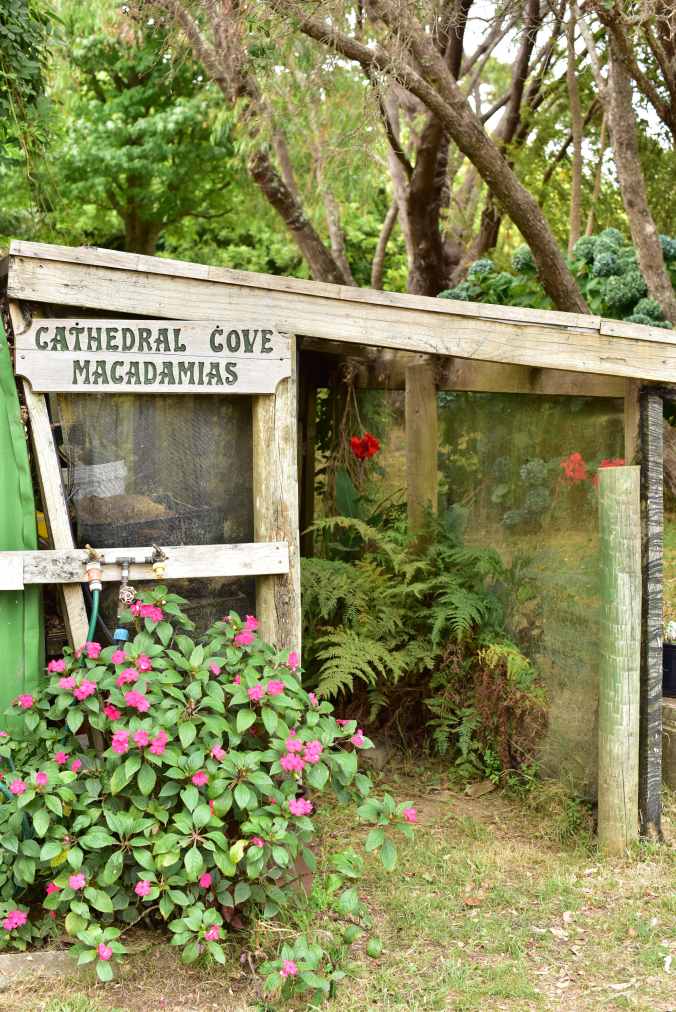
NJB_1177

Cathedral Cove is located on the Coromandel Peninsula, east of Auckland on New Zealand’s North Island. Macadamias, named in 1857 in honor of Scottish-Australian chemist John Macadam, are native to Australia and grown commercially in many of the world’s tropical regions, including Hawaii, South America, Australia and New Zealand.

NJB_1178

Cathedral Cove’s storefront and open-air tasting parlor.

South Africa now produces most of the world’s macadamias, although Hawaii is credited with “introducing” the nut to consumers, specifically with their ubiquitous and smartly-marketed Royal Hawaiian chocolate macadamia boxes which have been given as gifts by travelers returning from Hawaii for decades.

NJB_1182

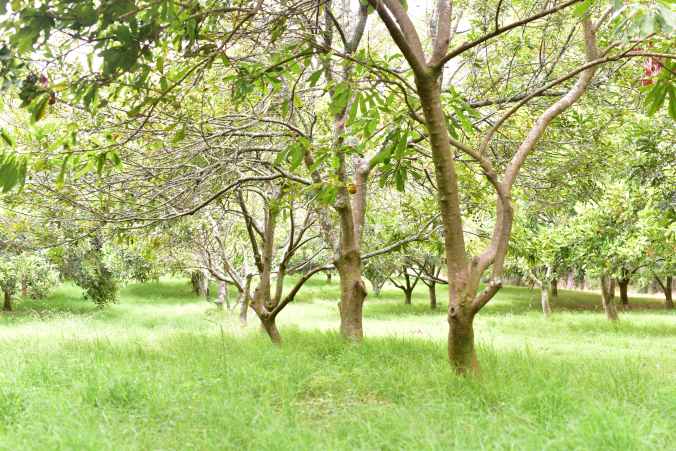
A few of Cathedral Cove’s mature macadamia trees.

Macadamia trees are propagated by grafting, and they start producing in abundance at about seven to ten years of age. Once established, the trees can produce for over 100 years. They are higher in overall nutrition than any other nut, and they are also typically the most expensive, with the exception of the treasured pine nut.

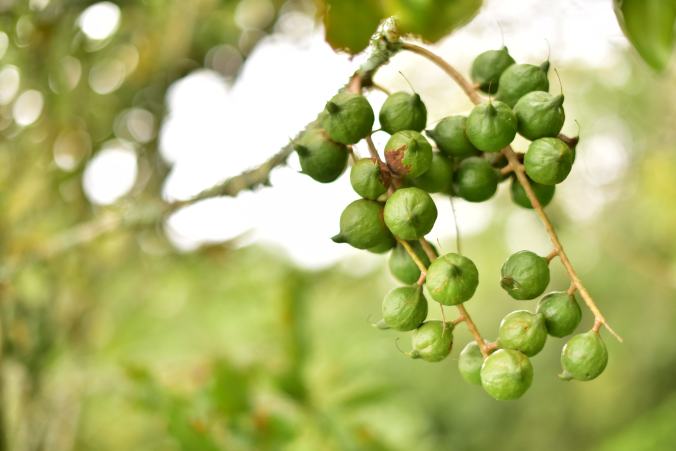
NJB_1187

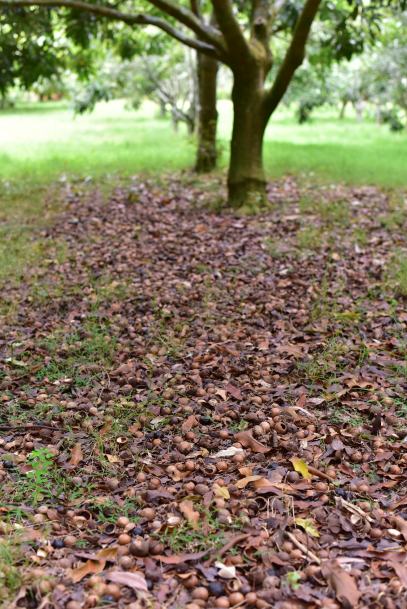
These macadamias will be ready to harvest in April or May. After they’re hulled, they’ll be dried for about six weeks before they’re ready to consume.

NJB_1190

Hulls from the previous year’s crop are used as mulch in the orchard, ensuring that nothing goes to waste.

At Cathedral Cove, the macadamias are processed entirely by hand from start to finish, and they’re also completely organic. The macadamias are sold fresh and roasted, and pressed into oil and made into butter, brittle and other value-added products. In addition to macadamias, Cathedral Cove also grows avocados, figs, apples and a variety of citrus fruits.

NJB_1173

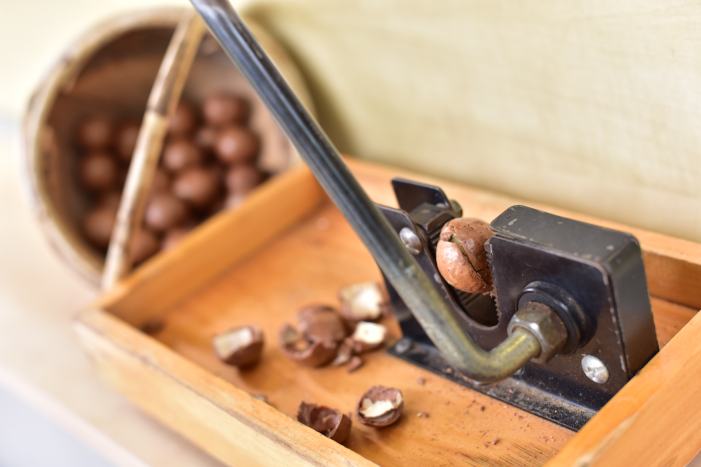
At the little storefront you get to eat as many macadamias as you crack!

NJB_1181

Macadamia oil, best used as a simple, flavorful drizzle over salad or grilled bread. It also works wonders as a hair or skin moisturizer!

NJB_1215

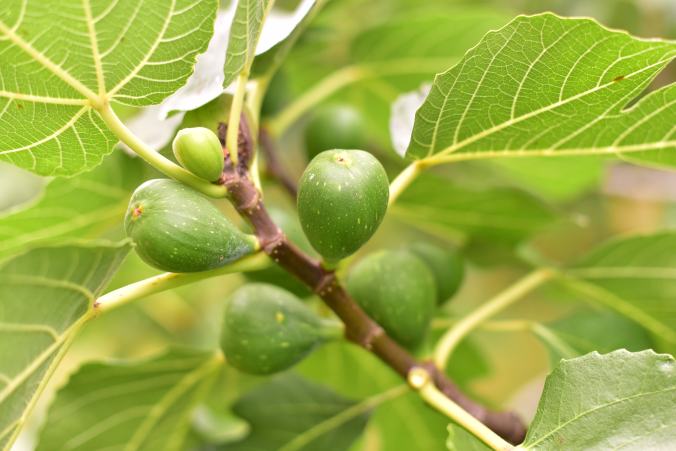
Fresh figs that were sadly not yet ready to eat when we visited.

NJB_1191

Cathedral Cove is organic, so no chemical pesticides or herbicides are used in the orchard.

NJB_1188

Bees are absolutely integral to a successful orchard. As at most of the farms we’ve seen, maintaining a healthy pollinator population is essential to a healthy ecosystem.

NJB_1204

We bought avocados to eat with heirloom tomatoes from the farmers’ market…it is summer here, after all.

NJB_1199

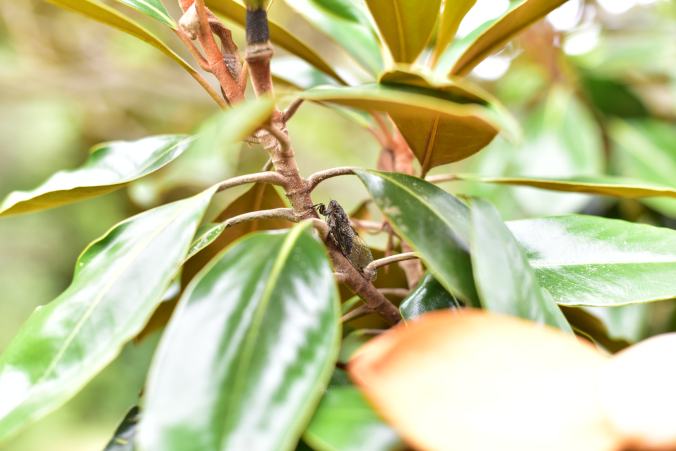
Look closely…New Zealand’s most vocal yet least seen creature, the cicada, is hiding here.

NJB_1205

One of the many citrus trees on the property.

NJB_1213

Definitive proof that “drinking wine” actually qualifies as “eating fruit.”

NJB_1203

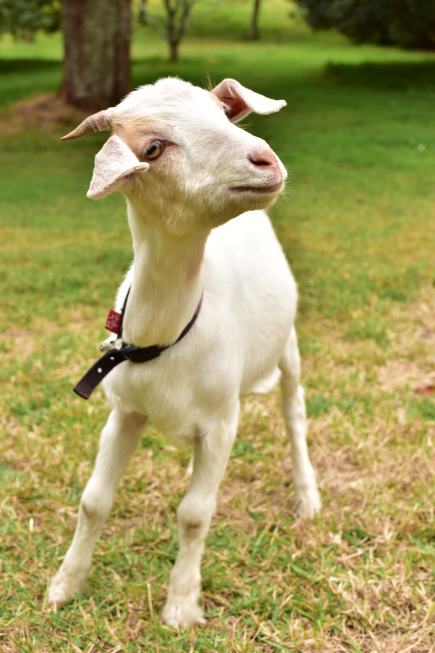
Meet Willow, one of Cathedral Cove’s organic lawnmowers.

Because macadamias are so delicious (and so precious), they’re best used as a showcase ingredient. As with all nuts, lightly toasting them in a dry pan will bring out their flavorful oils, but tread carefully – nuts burn very quickly. For storage, place in an airtight bag or container in the refrigerator or freezer as the good fats in nuts cause them to turn rancid quickly. Always buy nuts from stores with high turnover (of product, not staff) and whenever possible, smell them before purchasing – rancidity is definitely noticeable. Should you find yourself with a wealth of macadamias, try this. Or maybe this. Or just eat them lightly toasted and salted, perhaps with a gentle dusting of curry powder.

Many thanks to Cathedral Cove Macadamias for welcoming us onto their beautiful property!

Interlude: Cows love Skittles

Friends, we interrupt our regularly scheduled light and fluffy travel programming to bring you a brief interlude on cows. Cows and Skittles, to be precise. If you are here just for fun travel adventures, please feel free to tune out now – this one is about food politics.

Perhaps some of you noticed a little story that a couple of papers ran recently about a Skittles spill on a Wisconsin highway (although I’m painfully aware that there are one or two more significant American news stories to focus on right now). To summarize, a truckload of red Skittles missing their signature “S” spilled onto the road thanks to a rain-saturated cardboard box. When the local sheriff’s department came out to investigate, they discovered that the candy was on its way to be used as cattle feed. Maybe it’s fake news? Now that so much of what we read contains “alternative facts,” it’s hard to know what to believe. (You can read versions of the article here, here and here, and I’m sure there are plenty more.) Feeding food waste to cattle is apparently common practice in the U.S.

Stone Barns-06

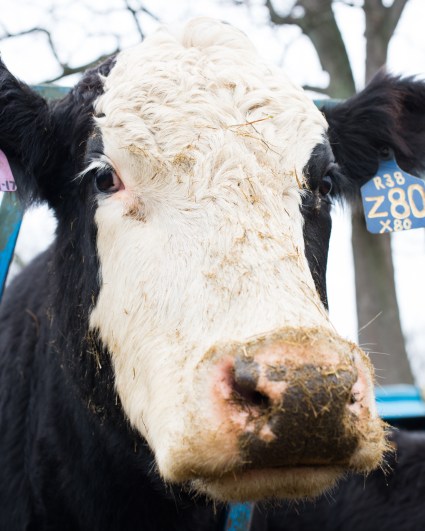
Bessie here actually prefers M&Ms to Skittles, if you want to know the truth.

Back in 2012, the severe drought that swept across the country caused corn prices to skyrocket, and that’s reportedly when the trend of feeding excess food to cattle really accelerated. In some cases, cows were even fed candy that was still wrapped, although a professor of animal nutrition seemed mostly convinced that the wrappers would pass through the cow without issue. I’m in no way a vet or other animal expert, but I imagine that plastic really can’t be good for an animal’s insides – even one as large and tough as a cow.

But wait, you might say. Skittles are mostly just corn syrup, which is just corn, right? And that’s what the cow would be eating if corn prices hadn’t risen so much, so really, what’s the big deal? It’s actually not the Skittles that bother me – it’s all the other stuff we don’t know about. Consider that the only reason we now know that these Skittles were intended for cattle feed is because they spilled. Had they not spilled, we’d still be shoveling our CAFO hamburgers in, none the wiser. This story indicates that a lot of other mysterious food waste goes to our cows, including but not limited to stale baked goods, peanut and almond shells, and orange rinds. Probably harmless, yes, but do these ingredients affect the integrity (what little there is) of the meat? Could a severely peanut-allergic person have a reaction to beef from a cow fed on peanut meal? I have no idea. And I also have no idea what is in our food.

Stone Barns 074

My point is not that the Skittles themselves that are inherently bad (although they are). It’s that you didn’t know they were there. How can anyone make an informed decision about what they eat when they don’t have all the information? How can I implore my cooking students to read the label of every food item they buy when I know full well that label is inherently misleading? I also resent the implication that feeding Skittles to cows saves them from the landfill and is therefore virtuous. In a country that wastes over 40% of all edible food produced, I’m fairly certain that the quantity of Skittles we’re talking about here is negligible enough that the landfill excuse doesn’t hold up – greenwashing at its finest.

Some time ago, a friend who shops very consciously received a recall notice at the bottom of her grocery store receipt indicating that the big-brand chicken she’d purchased weeks earlier had been recalled. Since she deliberately never purchased big-brand chicken, she knew this had to be a mistake – yet when she contacted store management, she received a boilerplate customer service response that didn’t address the issue. Follow-up calls and emails went ignored, leaving her to assume that of course she had purchased that chicken – labeled as organic and packaged under a “clean” name – even while trying so hard not to. Plus, organic and conventional chicken were both part of the same recall, so how can one trust that the organic product really is? And that leaves us here, stumbling around the grocery store in a panic, reading labels frantically and generally feeling like a failure all the time because we no longer have any faith in a system designed to protect us from fraud and mislabeling.

These stories are compelling on many levels, but my takeaway is this: unless we’ve grown, raised and processed food ourselves from start to finish, we no longer can have any faith that we’re buying what we think we’re buying. I know plenty of people who wouldn’t feed their kid Skittles (concerns over Red 40 high on the list) but would certainly offer a lean beef stir-fry with plenty of supposedly organic vegetables and arsenic-free brown rice. Yet these same people, who are working so hard to get it right, are getting it wrong. Again and again, because they cannot trust that they’re buying and consuming what they think they are.

Stone Barns 070

I’d love to end on a positive note, so I’ll leave you with this – if you want to trust your food, grow your own. Start a small garden. (If you’re in the Denver area, support a locally-owned business and go here for everything you need to get growing.) Raise backyard chickens. Get a beehive. Join a CSA. Know what you’re eating and where it came from, and be willing to ask questions. Also: eat less meat, and spend more money on it, and know who raised and processed it. And please, let us know your thoughts on this story. We’d specifically like to hear if you feel confident about label honesty and accuracy (including organic vs. conventional) and what exactly is in the food you buy.

chickens2