The Farm Series: Colorado Aromatics

Simply put, we are killing it over here at Finding Quiet Farm! In addition to our new FAQ Series (which already has not one but TWO posts, on salt and cooking fats), we’re launching yet another new programming line-up. This series is focused on farms, because we’re focused on farms. Also, we think sometimes our audience might need just the tiniest break from the constant lecturing on food politics blah blah blah and know your ingredients blah blah blah. Behold: pretty pictures from The Farm Series!

Garden Flags

It’s not much of a secret – our blog title might actually give it away – that N and I plan to buy a farm. We want to find a piece of agricultural property between fifty and one hundred acres, but we only plan on farming the tiniest portion of that land. The remainder we want to turn into a nature reserve of sorts, a place where farm guests can walk for miles and hopefully see native birds, plant life and more. We want our farm to fit comfortably into an existing place; we don’t want to bulldoze acres of wetland or turn a previously wild space into a bare, sterile monoculture.

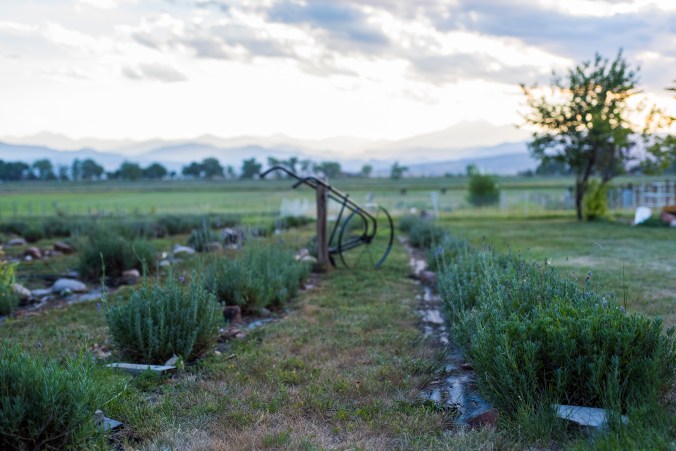
Mountains.jpg

Longs and Meeker Peak, looking west from Colorado Aromatics.

Great; those are all lofty goals. But how do we do this? How do we go about the process of 1. finding a farm and 2. determining if that farm is the right place for us? Our answer: we visit as many farms as we possibly can, in Japan and England and in the U.S. And we talk to farmers and we volunteer on farms and we just make every effort possible to get as much experience as we can before we jump in with both feet. It might not be the right answer, but it’s our answer.

Farm Sign.jpg

A couple of weeks ago, we visited Colorado Aromatics, north of us in Longmont; we are always appreciative of any farmer who opens up their property to visitors. Colorado Aromatics offers “farm-to-skin” products made from plants grown on their nine-acre property. They are certified naturally grown, which allows smaller market growers to achieve recognizable certification without jumping through the (somewhat absurd) hoops required by national organic certification programs.

Tour Group

Colorado Aromatics’ primary crop is lavender, which grows beautifully in much of Colorado’s high-plains desert climate. But they also grow a wide variety of other medicinal herbs, plus they keep chickens and goats who provide valuable manure for the farm’s plants. Any good farmer knows that well-raised animals (and their waste) are an essential aspect of a healthy farm.

Chickens.jpg

Everyone needs backyard chickens!

Goat.jpg

Angora goats are most often raised for their lovely wool rather than their meat or milk.

Lavender Garden.jpg

Lavender in the field.

Comfrey.jpg

Bees love comfrey!

Calendula.jpg

Calendula in flower.

Black Peppermint.jpg

Black peppermint.

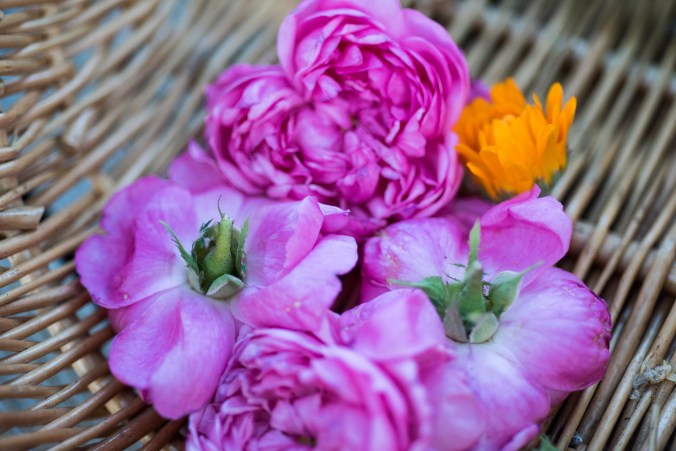
Bulgarian Roses

Bulgarian roses, grown for their intense scent (and oils) rather than their appearance.

Fennel.jpg

Fennel in bloom.

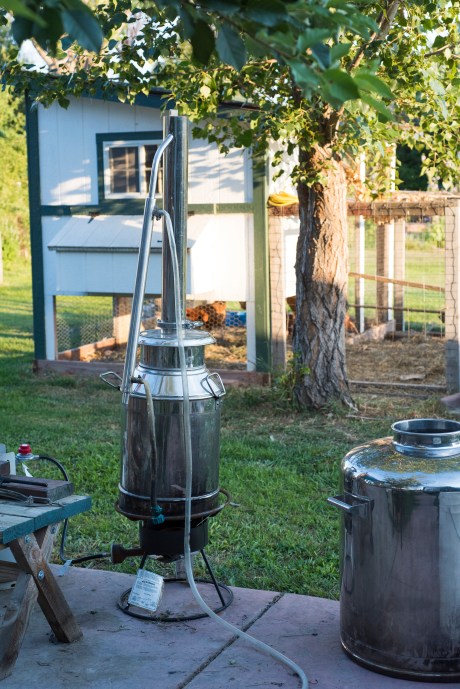
Distil.jpg

The distillate operation.

Red Clover Dried.jpg

Red clover drying.

Lemon Balm.jpg

Here lemon balm is an actual cash crop rather than an invasive weed, as most of us in Colorado perceive it.

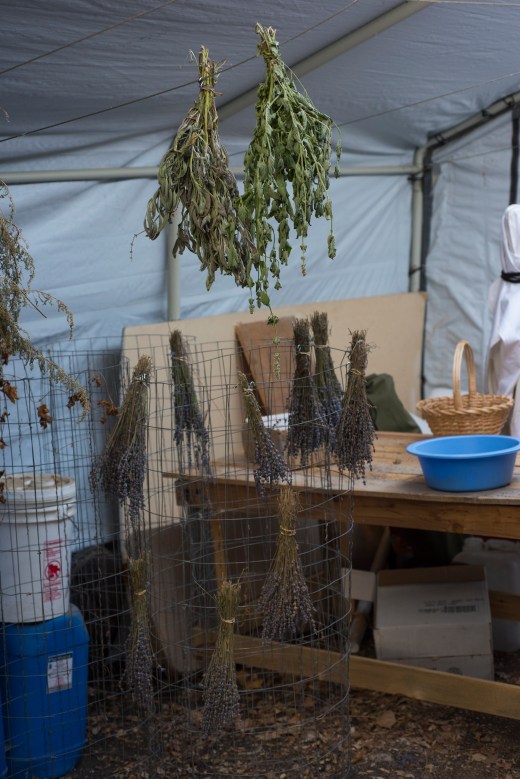
Drying Room.jpg

The drying room.

Mailette.jpg

One of the many varieties of lavender grown here.

Thank you for hosting us, Colorado Aromatics!


Saving the bees

On a cool spring day four years ago, our friend Jim came to pick us up in his truck. We drove to a local feed store where we waited forever with dozens of other eager apiarists to pick up our new beehive. The sellers had driven down from Wyoming, where their hives and queens were specifically raised in extreme environments (mainly intense winter winds), meaning they’d likely survive their move to the Front Range.

Bee 01.jpg

That first hive didn’t make it. We lost it two years ago, and to this day we still don’t know why it didn’t overwinter successfully. Because our neighbors’ lawn care company uses ten thousand different poisonous chemicals? Because we didn’t maintain the winter sugar water supply properly? Because of colony collapse disorder? We don’t know, and we won’t ever know. That total lack of knowledge is one of the most challenging aspects of keeping honeybees.

Bumble Bee 01.jpg

Such remarkably strong and beautiful creatures.

We are very new to beekeeping. We’re on our second hive, and though it seems to be exceptionally strong at the moment, there are a lot of different pressures on pollinators right now. We try to do our very best by our bees; we read and we talk to friends who keep bees and we monitor the hive carefully, but ultimately we’re not entirely in control of the situation.

Bee 02.jpg

Planting flowers that bees love is one of the best things you can do to help them.

In June, the U.S. officially withdrew from the Paris climate accord. This decision sent yet another exceptionally strong message to the rest of the world that Americans are basically a bunch of nutjob flat-earthers who believe climate change is a global conspiracy cooked up by the Chinese. In challenging times like these, it’s easy to believe that nothing we do makes any difference and that we’re all doomed. Keeping bees, however, is one of our small commitments to creating the kind of world we want to live in.

Hive

Our basic hive set-up, strapped down to keep out hungry raccoons.

It’s no great secret that honeybees and other pollinators are under a huge amount of stress. Whether from loss of habitat, monocropping, neonicotinoids, or other factors, pollinators are disappearing at critical rates. One-third of our total food supply requires pollinators to thrive, and it’s only in recent years that farmers, home gardeners and scientists have started addressing this issue. Colony collapse disorder has gotten a lot of attention, but it’s still not widely understood, and the disappearance of pollinators most likely can’t be exclusively blamed on CCD. It’s a complicated story.
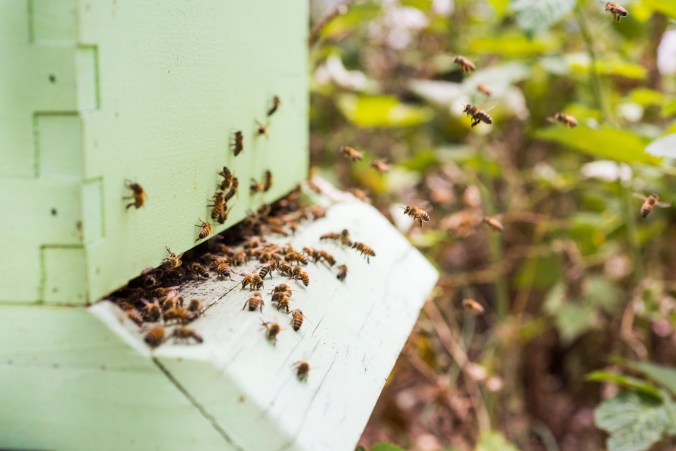
Bee entrance.jpg

Watching the bees at the hive entrance is one of the great joys of beekeeping.

The term pollinator doesn’t refer to just bees; pollinators can also include birds, bats, butterflies, beetles and other small mammals. All of these creatures are responsible for helping to propagate certain plants, but honeybees give humans the greatest return for their investment. Honey is the only food produced by insects that humans eat, although protein derived from insects is about to become the next big trend in sustainable eating. (You heard it here first, friends.)

Hive 02

Our hive is a Langstroth; the other most common style is called a top-bar hive.

We started keeping bees to help pollinators and to help our garden, and because we know we’ll have hives on our farm. The honey is no small bonus either, especially since eating it regularly has seemed to really help N with the seasonal allergies he’s struggled with here in Colorado. Beekeeping isn’t necessarily difficult, but it does require a certain investment in time, money and equipment; we’re always trying to learn more about how we can become better beekeepers.
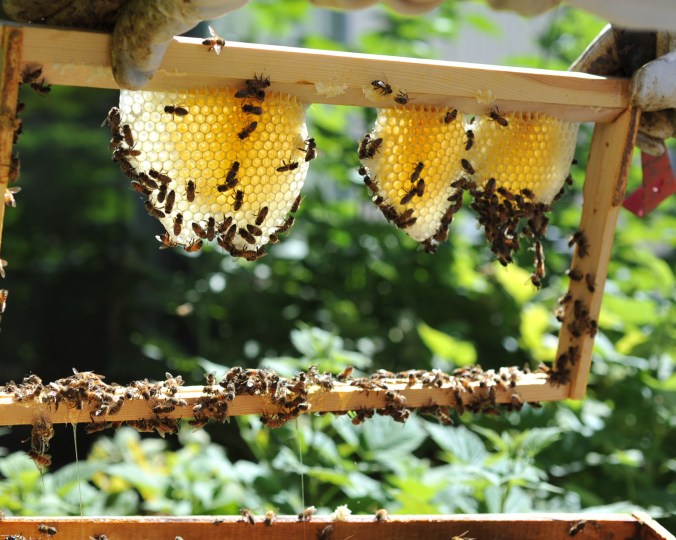
Honeycomb

Examining built-up comb on a frame.

Beehives are unbelievably complex and elaborate communities; a typical honeybee hive usually contains about 50,000 bees. There is a basic three-tier caste system: one queen, plus workers, who are female, and drones, who are male. Drones only exist to mate with the queen and are incapable of feeding themselves or foraging, plus they die immediately after mating. Workers, on the other hand, might be nurses, attendants, cleaners, foragers, guards or undertakers. Healthy queens live for an average of two to three years but have been known to live as long as five years; workers and drones live between two to four months, depending on their role in the hive.

NJB_0213.JPG

Greenhouses often have to bring in pollinators to mimic conditions outdoors.

A single bee colony can produce between sixty and one hundred pounds of honey in a year. For every pound of honey produced, the bees have visited two million flowers and flown over 55,000 miles. And each individual honeybee only produces about 1/12th of a teaspoon of honey in its lifetime, so the next time you’re grousing over the price of local honey, consider how much work went into creating it. Bees fly up to about five miles from their home hive to forage; for obvious reasons it’s tough to find true organic honey – how often can you guarantee that every single plant bees might visit within a five-mile radius is completely organic? Our honey definitely isn’t (see neighbor reference above).

Bumble Bee 02.jpg

Bumblebees are easily recognizable by their plump, furry bodies.

People are scared of bees. We’re always careful to warn guests and workmen about our hive and to inquire about allergies. We’ve both been stung numerous times, some occasions definitively our fault and some entirely unprovoked. I’ve been lucky enough to actually see the bees swarm – when the hive becomes too crowded and a group decides to set off for greener pastures – which isn’t ideal for beekeepers but is a remarkable (and slightly spooky) experience. Our hive this year is also strong enough that we’ve been able to take a split, which is essentially a controlled division of the hive before it has a chance to swarm. Splits are better than swarms in most cases, because with a swarm there is always a risk of losing the queen. Unless the hive can produce a new queen, the entire colony will die.

Spider bee.jpg

Spiders have to eat too.

To make the clear, clean honey you most often find at the grocery store, the honey is heated and filtered to remove beeswax, pollen, bee parts and other potential contaminants. Certain beekeepers claim that this heat treatment removes the most beneficial components of the honey, so some honey is labeled “raw.” True raw honey has never been heated beyond naturally occurring hive temperatures, about 95 degrees Fahrenheit, but this labeling term – like so many in the U.S. – isn’t regulated and therefore no one is checking up on manufacturers who use the term illicitly. There have also been numerous instances of honey being adulterated with corn syrup and other sweeteners; when there is money to be made someone will always find a way to do so fraudulently. As with just about every food, buy as close to the source as possible, read the label carefully and ask questions. Local honey is sold almost everywhere in the world; it’s worth seeking some out where you live.
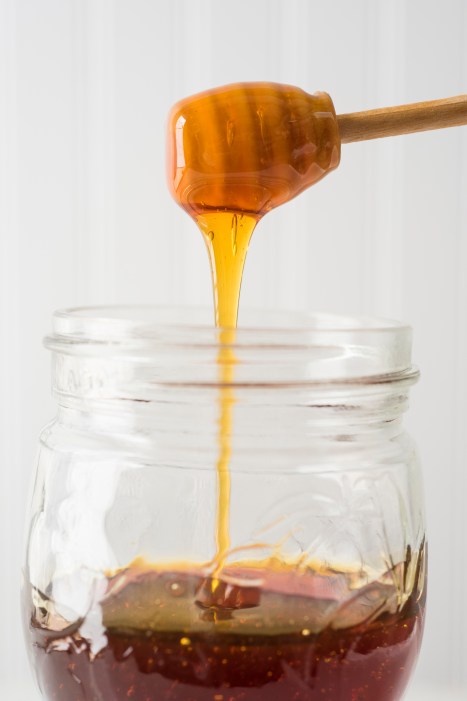
Honey Flow

Is it any wonder this stuff is referred to as liquid gold?

In the Western world, it’s common for new mothers to be told not to feed honey to infants under one year of age. This came about in the late 1970s because it is theoretically possible for honey to contain Clostridium botulinum bacterium, which could (again theoretically) cause infant botulism. It’s extremely rare, however, and after twelve months the intestinal system has matured so that the toxin will no longer pose a risk. Considering that the bacterium is commonly found in dirt and dust everywhere, and that we regularly advocate feeding infants formula containing monocropped GMO soybeans and yogurt laced with food dye and high-fructose corn syrup, this warning against one of nature’s true pure foods seems a little panicky. As we’ve discussed, however, we love to identify a single villain rather than target the entire compromised system. Invariably we ignore all sensible advice to the contrary.

Honey Jars.jpg

Notice the different colors; darker honey is typically stronger in flavor than lighter.

If you have the space and the inclination, please consider starting your own backyard hive. Like chickens, it’s a lot less work than people think, and the rewards are more than worth the effort. If having your own hive isn’t practical, seek out the best local honey you can find and support your local beekeepers. A farmers’ market is often a great place to find local honey, or you can try this site. If you’re buying honey at the grocery store, read the label carefully: in Colorado, I’ve seen “local honey” on products from California and other states. That might have been local when it was collected and packaged, but it’s also a very easy way to mislead consumers into paying more. Be a conscious consumer.
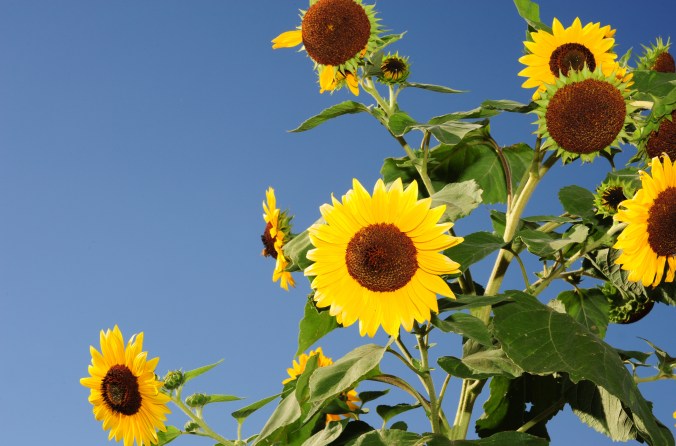
Sunflowers

It’s easy to feel overwhelmed when faced with critical issues of this scale, but this is actually one where small actions can make a difference. Want to learn more about pollinators and how you can help? Go here, here and here.

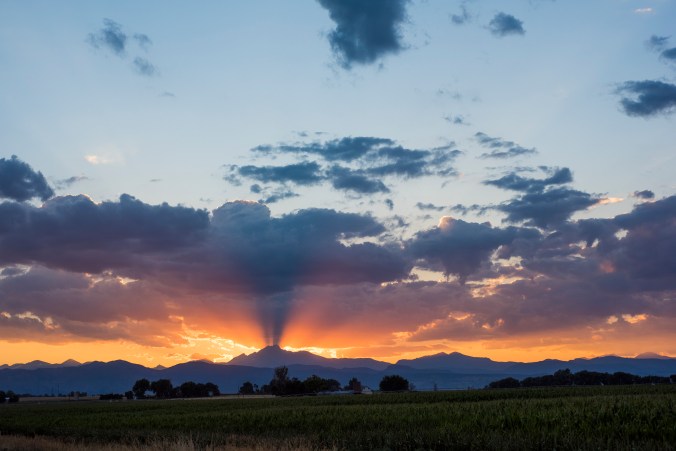
Pilgrimage to Varanasi

Varanasi is a city in the Indian state of Uttar Pradesh, located on the banks of the sacred Ganges (or Ganga) River. It is considered the spiritual center of India and one of the world’s holiest places; millions of people make pilgrimages here every year.

NJB_4964

The view of the ceremony onshore.

Most of the pilgrims are Hindu; they come to worship, to bathe in the Ganges’ sacred waters, and to participate in funeral rites. Every morning and every evening, elaborate ceremonies take place along the river.

NJB_5010

This boy is selling offerings, or diya, for placing in the Ganges.

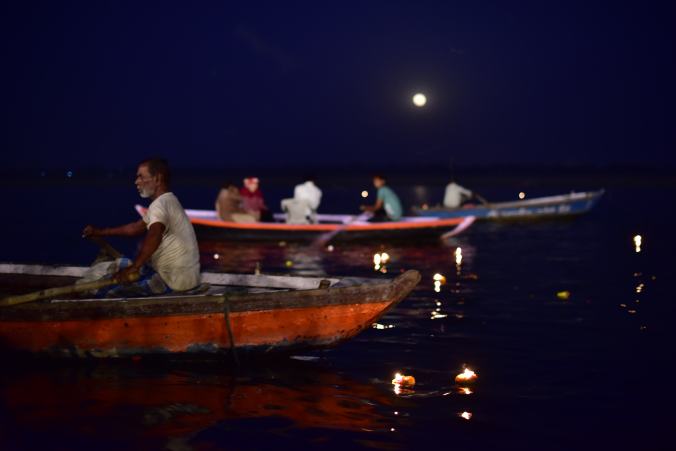
Dozens of slender boats sit just offshore, giving occupants an exceptional view of the ceremonies. The people in boats may just be tourists – like us – or they may have come on their own pilgrimage.
NJB_5020.1

Washing hands before making offerings.

NJB_4980

The boats are crowded, so it might be necessary to stand to view the ceremony.

NJB_4988

Dozens of boats, big and small, are rafted together just offshore.

NJB_4987

Our boat captain, sitting proud.

NJB_5078

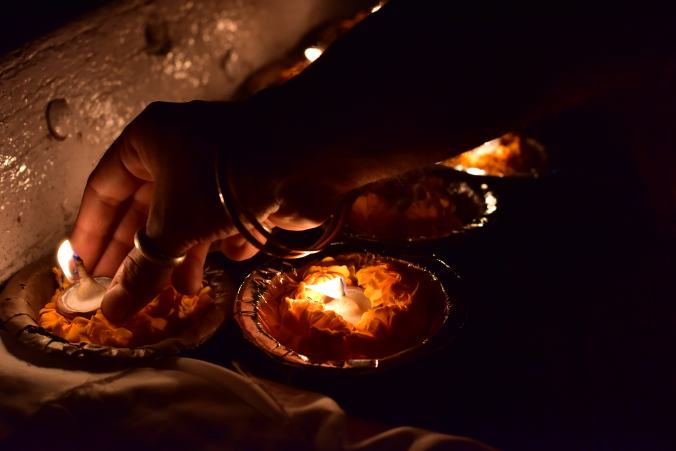
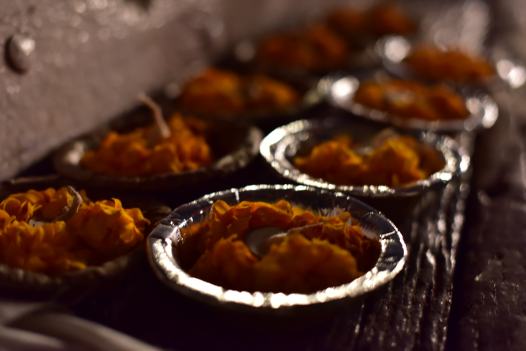
The traditional diya, or offering: marigolds are placed in little dishes with a lit candle.

NJB_4967

The diya are then set adrift in the Ganges.

NJB_5047

A ceremonial cremation ghat; understandably, no closer photographs were permitted.

Varanasi, also called Benares, has close to one hundred ghats, or stepped entrances leading to the river. Many are for bathing or puja ceremonies, but some are dedicated exclusively to cremation; some ghats are even privately owned. Hindus believe that cremation frees a soul from the continuous cycle of death and rebirth; thus, cremating a body along the Ganges is very much in demand and only for the wealthy. The cremation ghats at Varanasi operate twenty-four hours a day, every day of the year.

NJB_5100

Sunrise on the Ganges.

NJB_5129

As always, Indian cities are quite an architectural free-for-all.

Varanasi is the oldest continuously inhabited city in India, and it’s sacred to Hindus, Buddhists and Jains. The city is a breathtaking mix of spiritual and secular, modern and ancient, calm and chaotic.

NJB_5112

Many of the widows’ quarters seen on the shore are now fancy guesthouses.

Sati (or suttee) is a now-obsolete Hindu funeral custom where widows would ceremonially commit suicide by throwing themselves on their husbands’ funeral pyres. Though it was officially banned by the British in 1829, women are still not allowed to take part in the cremation ceremonies. (Our guide told us it was because “women are too emotional.”) In much of India, widows are still expected to renounce all pleasure in life; in addition to being a spiritual center, Varanasi is known – and not in a complimentary way – as “The City of Widows.”

NJB_5133

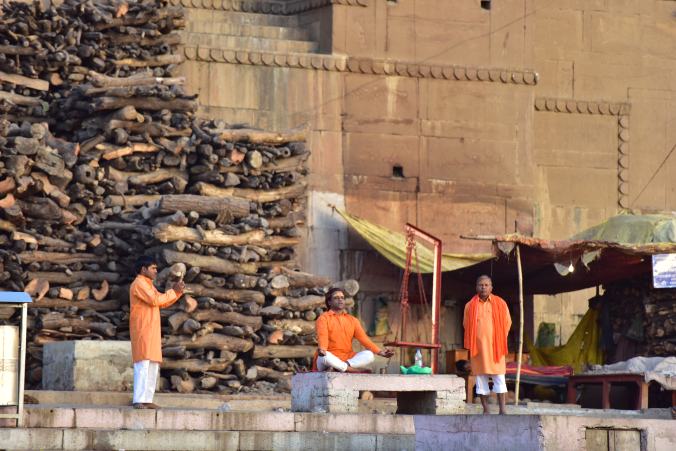
Monks performing a rite; wood for the cremation fires is seen on the left.

NJB_5190

This man is applying his face paint after bathing in the Ganges.

NJB_5146

Daily bathing in the river, and a closer look at one of the ghats.

NJB_5202

sadhu worshiping on one of the ghats.

Holy men, or sadhus, are a common sight in Varanasi. In Hinduism and Jainism, a sadhu is any person who has renounced the worldly life in favor of religious asceticism. Most sadhus survive on food and clothing donated by the public and may travel great distances on their own spiritual pilgrimages.

NJB_5201

It’s impossible not to be caught up in the spirituality of this place. Our visit to Varanasi, and our voyages on the Ganges both at sunset and sunrise, were one of our most memorable experiences during our trip to India.

Kolkata flower market

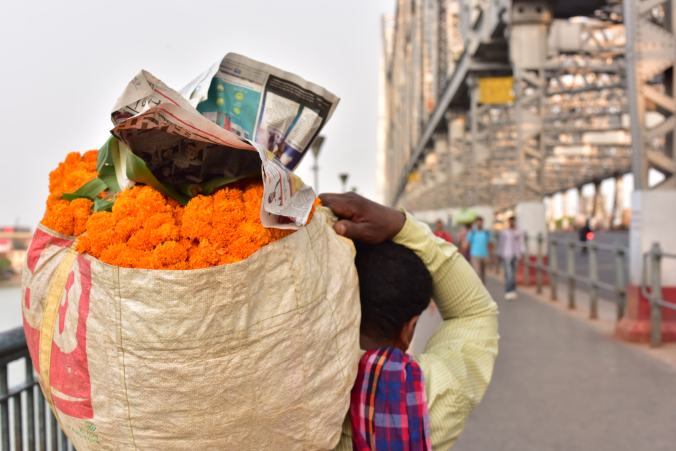
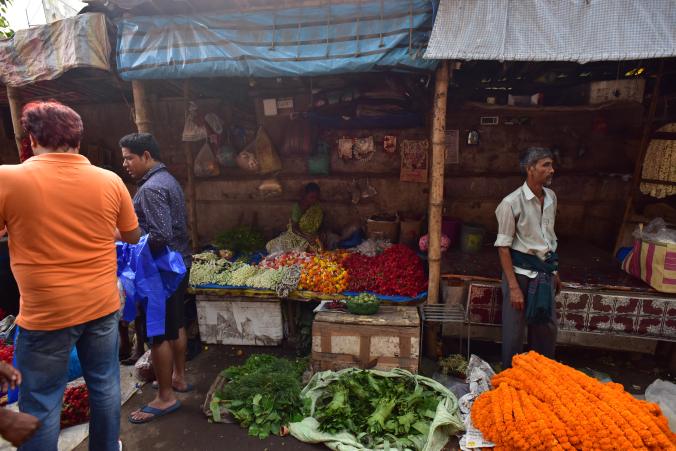
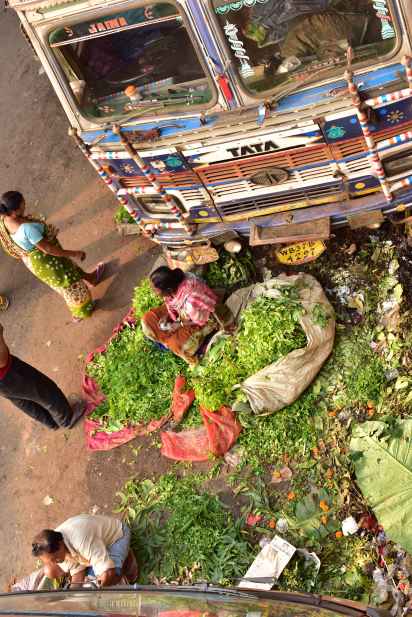
Early on the morning of our first full day in India, we took a tuk-tuk to Kolkata’s wholesale flower market, near the city’s famed Howrah Bridge. What a bold introduction to the country! Flowers arrive around sunrise each day and are sold by the kilo to retailers who then resell the blossoms for weddings, temple visits and puja ceremonies.

NJB_4098

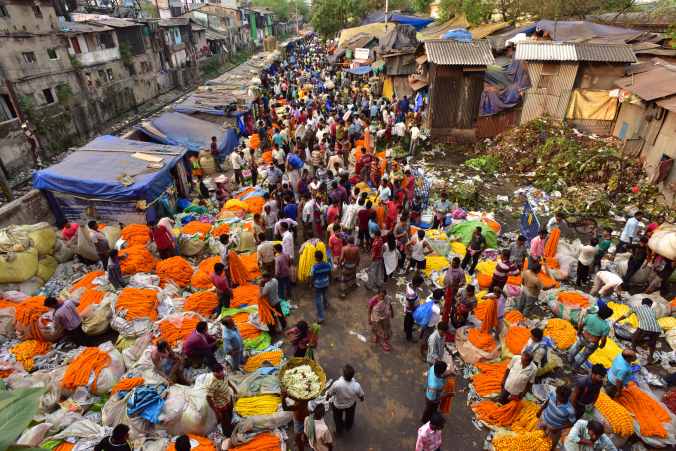
Kolkata’s flower market as seen from Howrah Bridge.

NJB_4118

Making a delivery.

NJB_4087

Many of the market’s vendors also live in their stands. 

NJB_4086

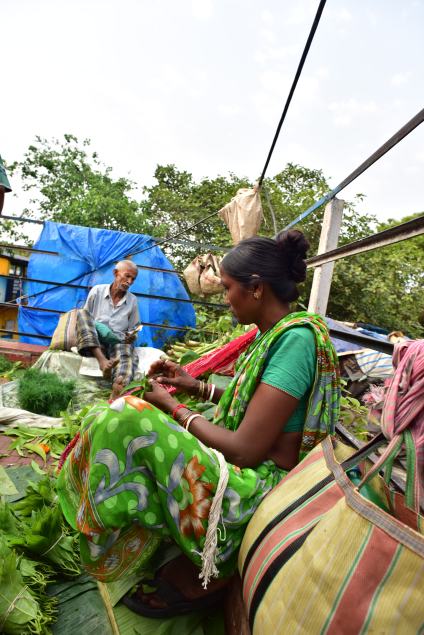
A rare female vendor selling fresh greens for cooking.

The market is almost exclusively male; we saw very few women. As in most parts of India we’ve traveled – except in the larger cities – women remain largely behind the scenes, caring for the home and the children.

NJB_4113

Let the haggling begin.

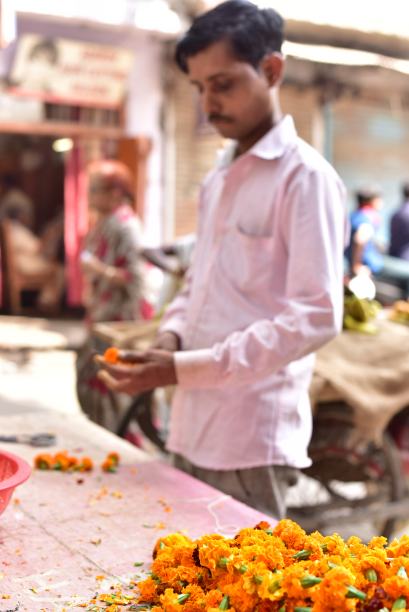
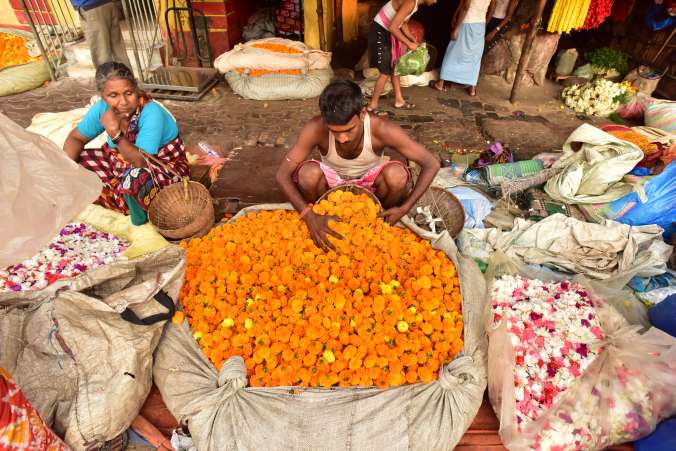
Marigolds are the primary flower sold at the market. The Portuguese introduced marigolds to India in the 1600s, and they’re now ubiquitous at all sort of ceremonies. Their rich shades of saffron and gold dominate the scene.

NJB_5412

NJB_5410

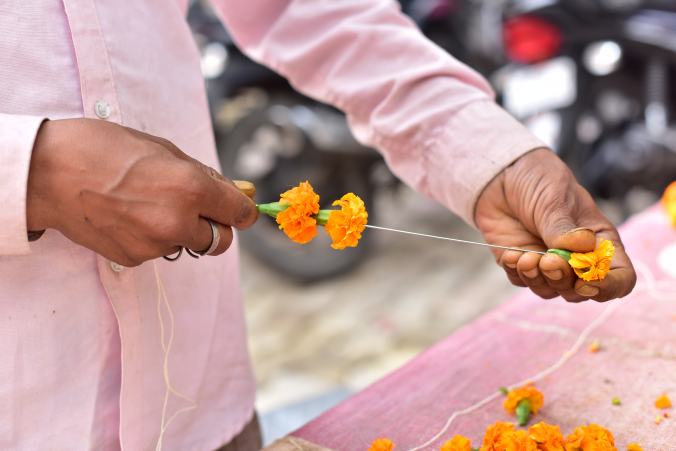
Stringing a marigold garland.

Marigolds now bear enormous cultural significance here; the blossoms are threaded onto string and used as temple adornments and offerings. They’re also made into necklaces and given as gifts to welcome honored visitors, similar to Hawaiian lei tradition.

NJB_4076

The white garlands are made of jasmine flowers, and they smell absolutely amazing.

NJB_4082

Immense quantities of flowers are sold every single day; the market operates around the clock.

NJB_4089

Women negotiating prices with the seller.

NJB_4092

Loose blossoms are sold by the kilo.

NJB_4088

NJB_4129

NJB_4101

NJB_4110

Unsurprisingly, a market like this generates a lot of waste.

NJB_4999

Marigold blossoms are used in offerings like these aartis, which are set alight and floated on the Ganges.

NJB_5415

The streets of India are filled with small altars; shops selling flower offerings are always nearby.

Like everything else in India, the market was loud, hot, chaotic and messy…but completely worth a visit!