We speak for the trees

“The best time to plant a tree was twenty years ago. The second best time is now.”

Our farm had been mostly abandoned for a number of years prior to our purchase, and even with three years of hard work, there is always more to be done. One task that we try to accomplish every year is to plant more trees – although we did opt out this year because we knew that water would be in such short supply. We still have trees to care for, of course, and if this drought cycle ever eases (looking unlikely, in all honesty) we’ll definitely plant more trees. Every project we choose is focused on improving our land, for us and for the future.

Cedar Trees 01 sml

Our Eastern red cedar (Juniperus virginiana) saplings, ready for planting.

Trees are an incredible weapon against the climate crisis, yet we don’t call them into service nearly often enough. Any homeowner knows how valuable trees are in keeping houses cool in summer, and many cities have started planting trees in public spaces as a natural heat sink against all that concrete. With so many new housing developments cropping up, however, trees are mowed down and then halfheartedly planted again as an afterthought, and often left to wither and die without proper care. And of course it takes years, if not decades, for the shade canopy to grow. Healthy, mature trees are a valuable asset to any property; we’re working hard to save the ones we have and add as many more as possible.

Cedar Trees 03 sml

Planting our Eastern red cedar windbreak along the southern line of our game fence.

One of the very best things we’ve discovered since moving to the farm is the CSU Seedling Tree Program. This is a joint project of the Colorado Forest Service and Colorado State University, and it provides seedling trees, bushes and other perennials to homeowners at an exceptionally low cost. We’ve used the program twice now with great success, and will definitely participate again. The only downside is that many of the tiny seedlings are sold in packs of 25 or 30 – meaning you either need a lot of land, or you need to make share arrangements with friends and neighbors. It’s also essential to plan in advance, as the sale opens in November (trees arrive the following May) and plants sell out quickly.
Cedar Trees 04 sml

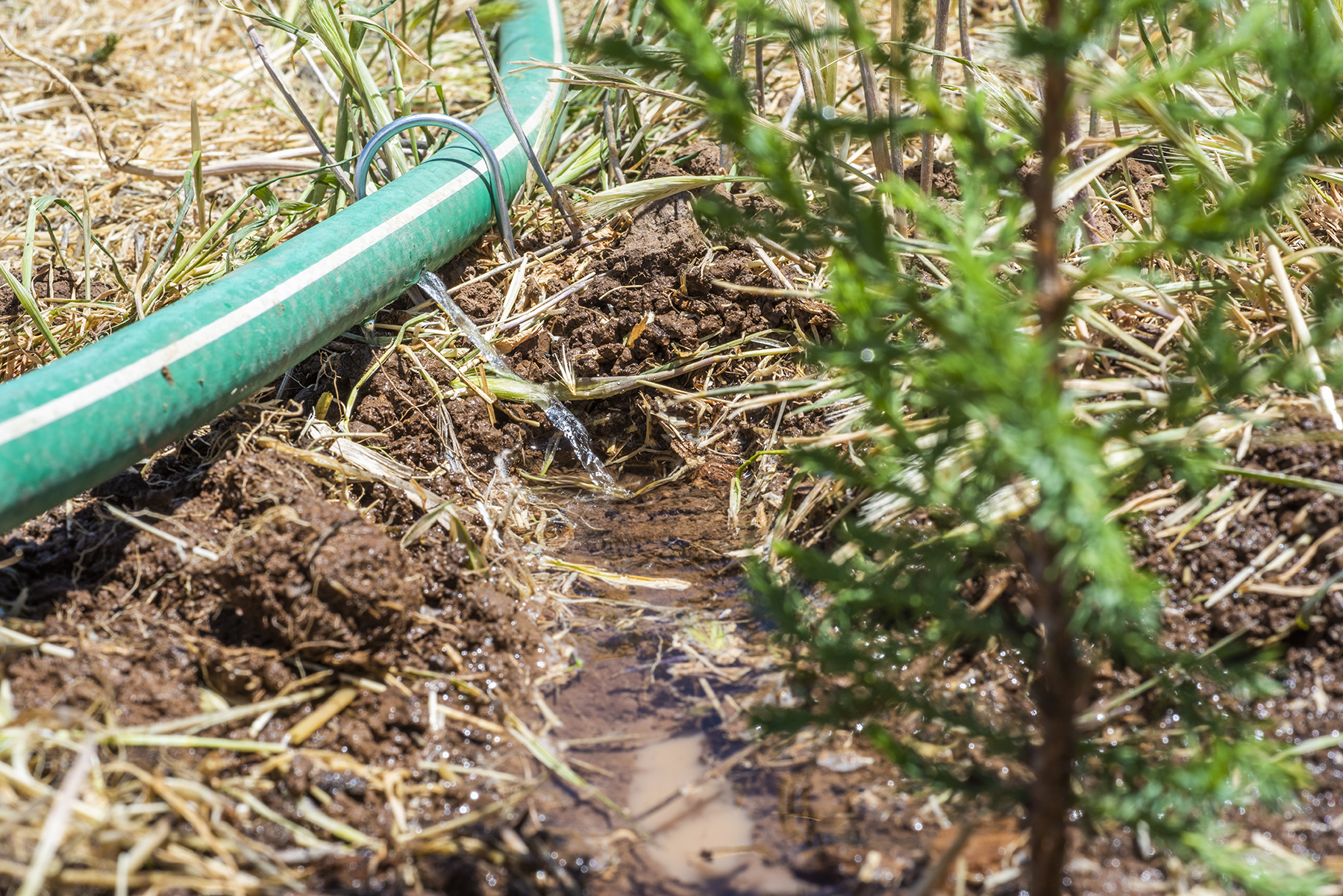
A damaged garden hose makes great drip line!

The biggest advantage to purchasing plants from this state program is that everything is grown in Colorado, meaning it will likely survive our harsh conditions if properly cared for. Additionally, there is a helpful information sheet that shows which plants will grow best where; some are suitable for up to seven thousand feet – perfect for us! – and some can tolerate the higher mountain elevations. The program also provides planting guides and lots of other useful tips to keep the trees healthy.
Tree Mulch 01 sml

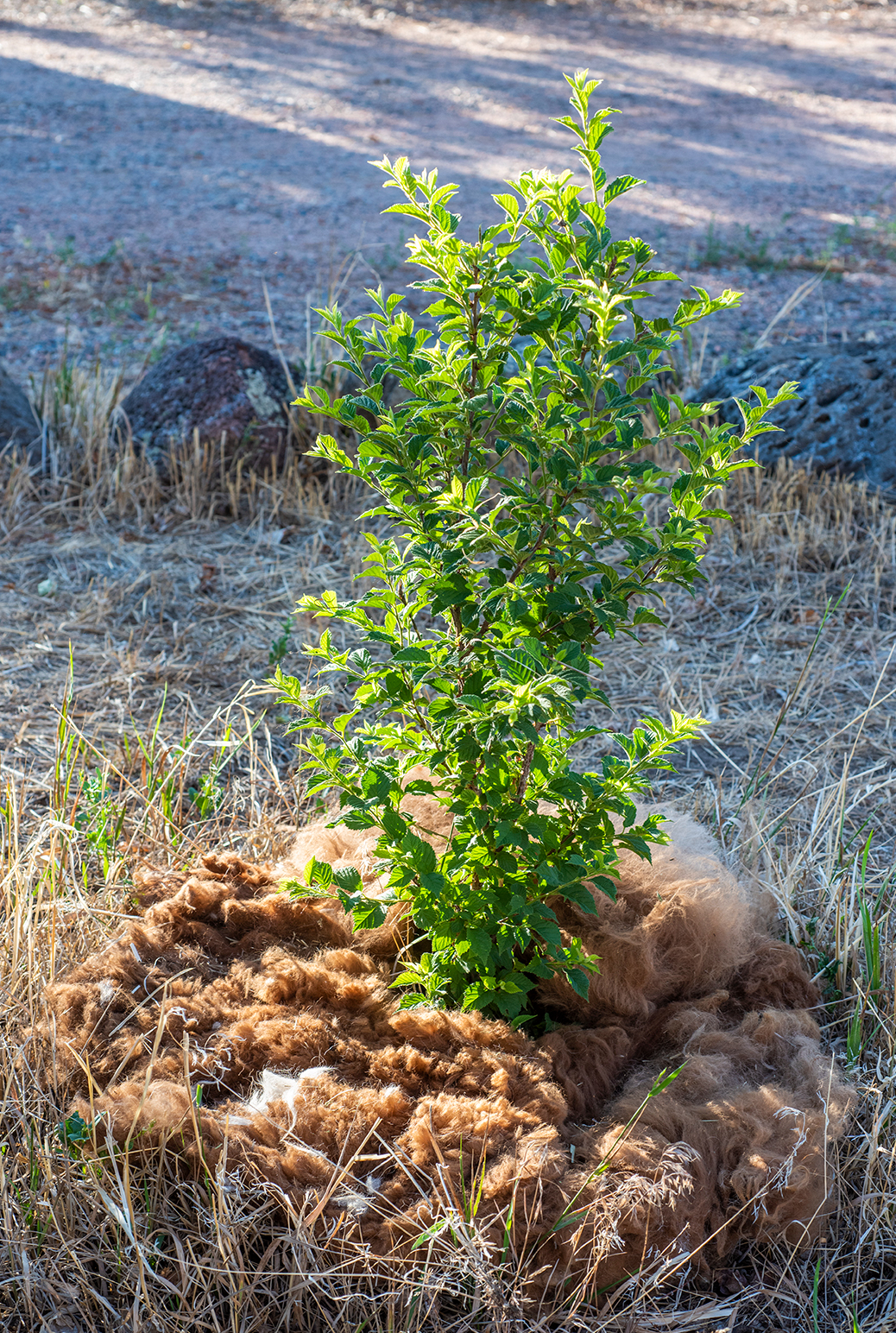
One of our Nanking cherry trees, heavily mulched with an alpaca fleece blanket.

Quality trees are expensive. They’re rightfully expensive because they took a lot of labor and care and investment to grow. Many people don’t realize that while big-box stores might be cheap, they’re not necessarily going to sell plants suitable for that particular area; those national purchasing decisions are made months, if not years, in advance, by some corporate executive at the head office in some vague place a thousand miles and many weather patterns away from Colorado’s arid high-plains desert. If you’re spending good money on trees, it makes sense to choose trees that are appropriate for your space. Figure out where you want to plant – is it sunny? Shaded? What sort of soil? What’s the elevation? Do you want a deciduous option? Is there good drainage? Will it impact overhead wires? Near sewer lines? Once you’ve got the site narrowed down, do some research about your hardiness zone and what might suit your needs. Go to a reputable local nursery that knows what works in your climate, not some impersonal big-box store looking to offload ten thousand Meyer lemon trees because they didn’t sell in Arizona.

We caged the saplings to protect them; somehow, this one was missed when we removed the cages. It has since been freed and is growing nicely.

Once you’ve chosen your trees, make sure you know how and when to plant them. Here, we can plant some things in spring and others in fall, and it makes a big difference for the tree’s long-term success. Follow the planting instructions from the nursery, if they’re trustworthy; you can also check with your local Extension office. (Pro tip: when you know you have trees arriving, prepare your planting holes well in advance so that you can plant your trees as soon as possible. It rarely benefits a tree to keep it in its pot for any longer than necessary.) Make sure your spacing and placement account for the tree’s eventual canopy spread and possible interference with overhead obstructions.

We think some of our fruit trees have an aphid infestation; the presence of ladybugs is a good sign that nature is usually capable of defending itself if left alone.

One of the biggest mistakes people make in Colorado is not to water in seedlings thoroughly in the first year, or during dry winters. Especially in this climate, little saplings will often suffer from severe transplant shock and will need far more water than you might think. If your land isn’t set up with drip irrigation or some other similar system, it’s imperative that you figure out how those tiny trees will get the water they need. Although our orchard is on drip, many of our other trees are watered by hand, and especially this year we’re giving them a deep soak with every week’s irrigation run. Those roots will never establish properly if the tree is drought-stricken in its first year.

We’ve lopped the crowns off some of our struggling mature trees; most are showing growth again at the base.

Many homeowners think that it would be great fun to plant fruit trees for fresh, homegrown fruit, but be aware that fruit trees have their own set of challenges. The Front Range is particularly harsh on fruit trees because of the dramatic diurnal temperature swings; the main reason Colorado’s fruit industry is centered on the Western Slope is because we rarely experience those. (With the obvious exception of last October’s horrible freeze, which is why we have no local fruit this year.) And if your trees do bear fruit, they’ll bring pests (wasps! deer!) along with them. The majority of our fruit trees are outside our game fence, and we know that expanding that fence will be something we’ll need to tackle sooner rather than later if we ever want to harvest our own plums and Nanking cherries.

We didn’t think our Northern Catalpa (Catalpa speciosa) survived the winter, but it is thriving!

There is a perfect tree for every situation, but it might take a bit of effort on your part to figure out exactly what that tree is. Trees add so much intrinsic beauty and value to our world that it’s our responsibility to plant them wherever we can. If possible, dear friends, please consider planting trees where you live, work and play. We don’t plant trees for ourselves, we plant trees for future generations – and since we have rather a lot to apologize for, planting a few trees seems to be the least we can do.

P.S. If you’re not familiar with the title reference, it’s paraphrased from this classic, which was first released in 1971 and was well ahead of its time. It was banned in a California school district in 1989 because it was thought that it would “turn children against the logging industry.” Maybe it was the devastating and rapacious clearcutting of old-growth forests that actually turned people against the logging industry, and not a silly children’s book?

Farm update: June 14

Hello there, and how are things in your world? Here at Quiet Farm it’s hot, dry and smoky. The Pack Creek Fire, burning southeast of Moab, Utah – started by an unattended campfire! Thanks, thoughtful and responsible campers! – has filled our blue skies with thick smoke and turned our sunsets into a terrible neon orange ball of scorching flame. We’re forecast to spend the week ahead melting under triple-digit temperatures, and we plan to only be outside for the bare minimum of tasks between noon and six o’clock. This week will be all about survival – ensuring that we, and all of our plants and animals, have plenty of shade and fresh, cool water.

A few activities we’ve been up to recently on the farm:

Look at all those vitamins!

Our harvests lately have been greens, greens and more greens – no complaints, since we eat salad every day. The arugula, kale, spinach and mixed lettuces have all been crisp and delicious this season, but this week’s furnace-like temperatures will put an end to that abundance; as a rule, most lettuces and greens do not care for excessive heat and often turn unpalatably bitter. I’ve harvested just about every leaf out there; as usual, I leave a number of plants to intentionally go to seed for future plantings. I regularly replant salad greens underneath the tomatoes; by the time the greens are up, the tomato plant will shield the tender leaves from the scalding summer sun. We’re also harvesting garlic scapes (the squiggly things on the left side of the photo) to encourage the garlic plant to put all its energy into the underground bulb. Scapes are delicious in pesto, salad dressing or stir-fried. And we’re picking strawberries, too, which are spectacular and have never once made it all the way into the house except for this photo, after which they were promptly devoured.

Continue reading

A word on weeds

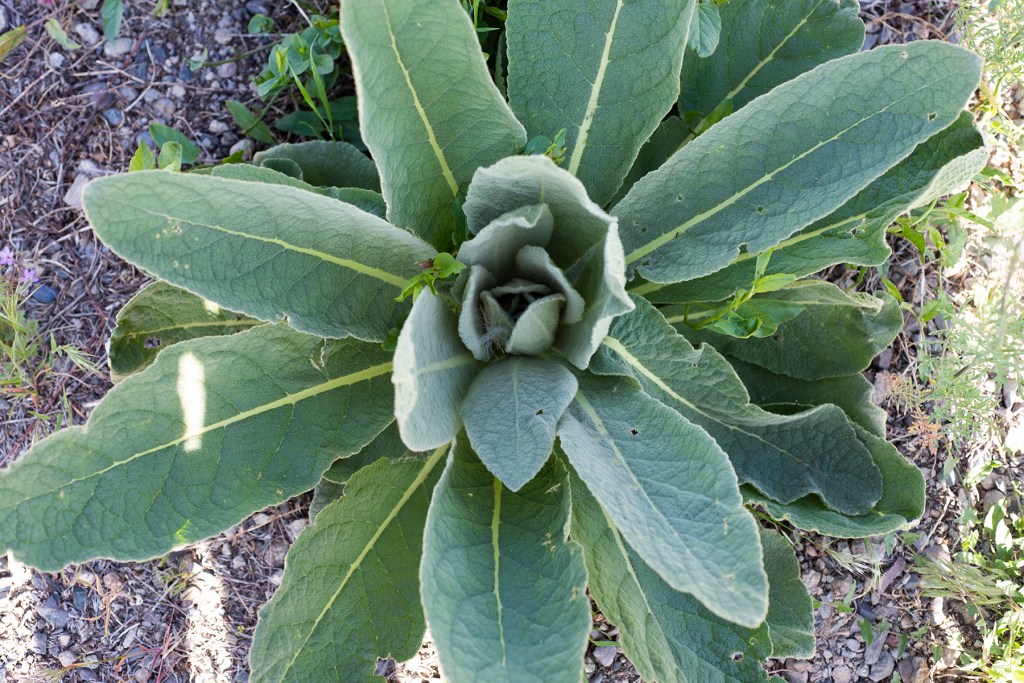
Soft and fuzzy common mullein (Verbascum thapsus).

A couple of years ago, a film titled The Biggest Little Farm was released in the U.S. It received quite a lot of publicity, especially unusual for a farm documentary, and was shown at film festivals and charity screenings across the country. The film opened shortly after we purchased Quiet Farm and was mentioned to us by scores of friends and acquaintances, so of course we had to watch it. The story follows John and Molly Chester as they attempt to regenerate an abandoned farm outside of Los Angeles.

Continue reading

Gardening book club

The world feels far too heavy and sad, particularly here in Colorado, for some absurdly cheerful post about alpacas or chickens or whatever we’re doing on the farm. Instead, we’ll offer a brief round-up of some favorite gardening books, in the hopes that you might be inspired to search these out at your local library or favorite independent bookseller. As with cooking, there is always something new to learn about gardening and growing food, no matter how long you’ve been doing it. And as with cooking, where feeding hungry people nourishing, healthy food feels like an act of pure hope and a direct rebellion against the stupid, meaningless tragedy of the world, so does planting a seed or a sapling.

Continue reading

Farm update: March 22

We are sorely disappointed to report that we did not receive even one paltry inch of snow from the massive spring storm that walloped Denver and the Front Range last weekend. To add insult to injury, snow was in the forecast again today, to no avail – I promise you that it is clear and dry outside right now. We joke regularly about checking (In)AccuWeather on our phones, where it’s always “currently snowing in Delta County” – no. No, it isn’t. We have learned from our time here to only trust the weather that we can actually see and feel. All other promises and forecasts ring hollow.

So what we’re not doing on the farm right now is plowing or shoveling snow. But here are a few other things we’ve been up to lately, if you’d care to see.

Continue reading

Gone to seed

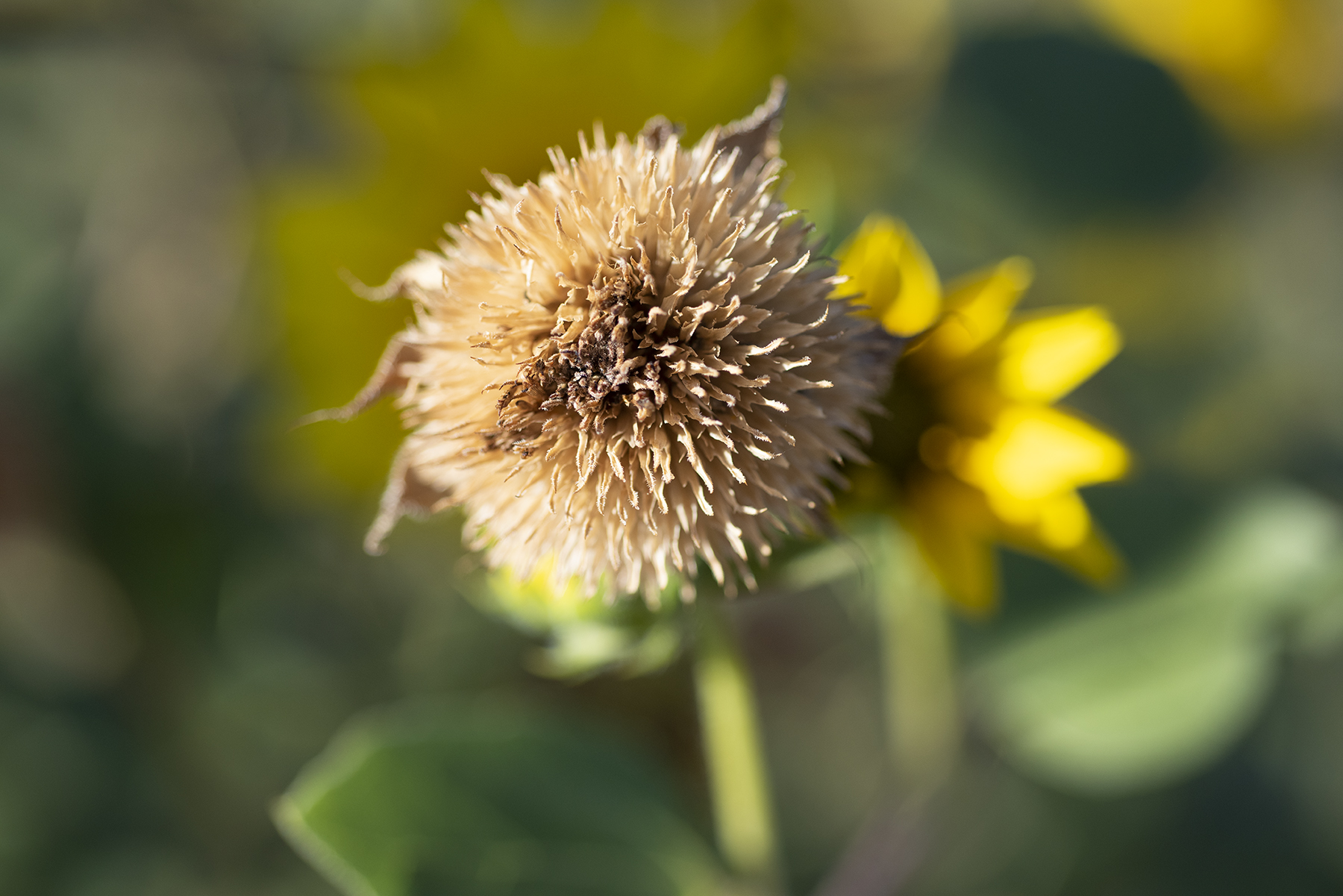
We talk a lot about saving seeds here at FQF, and since fall is definitely underway, they’re on our minds more than ever at the moment. In addition to all of our canning and preserving projects and other preparations for winter, collecting and storing seeds is a big part of our autumn task list.

Sunflower Seeds 01 sml

Collect your sunflower seeds before the birds and squirrels do!

We use the idiom “go to seed” to refer to someone or something that’s let itself go. It’s become messy or unattractive or disheveled or unkempt; it no longer appears tidy and neat. It’s obviously a phrase of agricultural origin, and this is the time of year when it takes on significance in the garden, as most annuals are coming to the end of their natural lives. In their quest to reproduce, the plants have gone to seed: typically they flower first, then the flowers produce seeds, which are spread by wind, insects, animals or human intervention.

Lettuce Seeds 01 sml

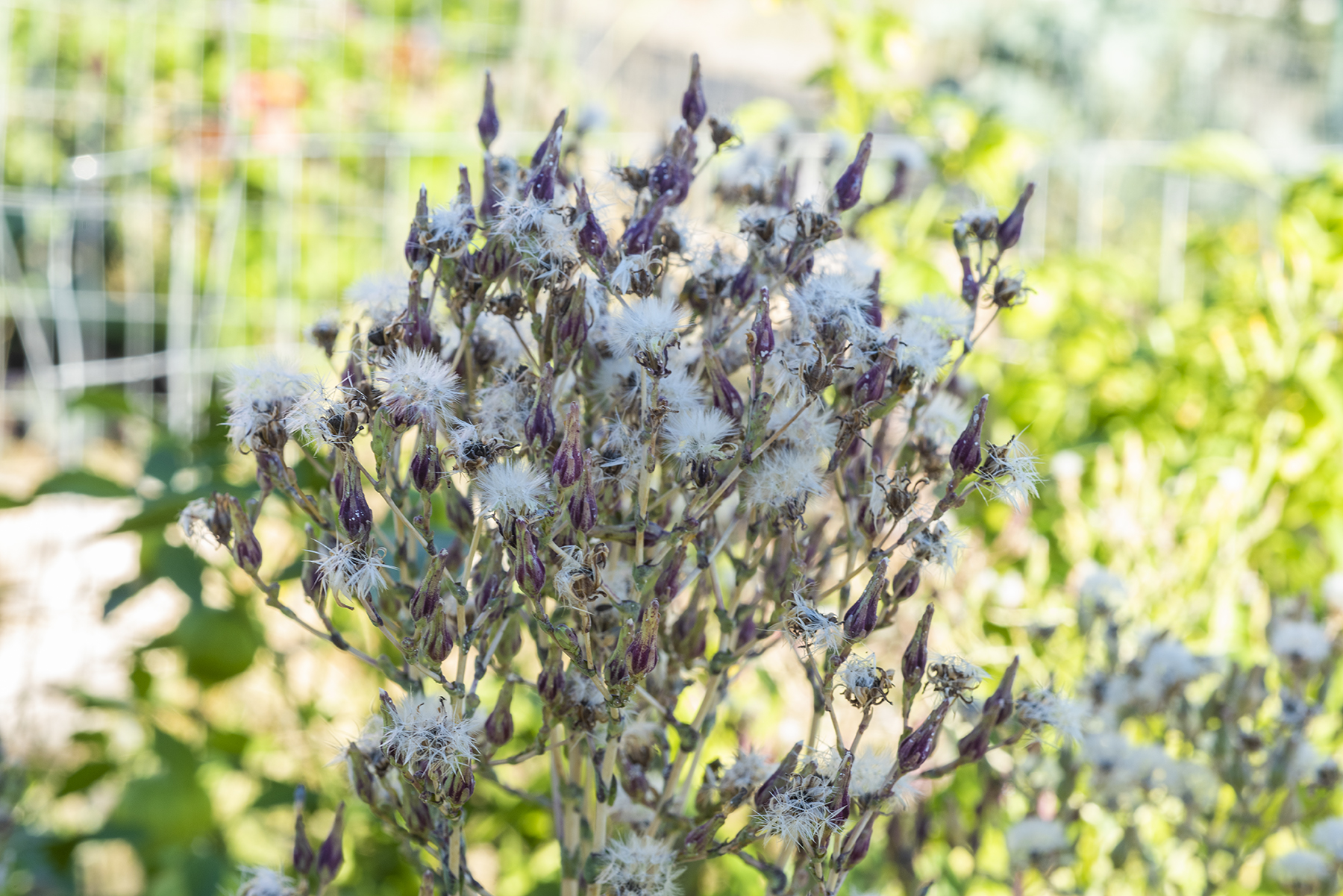
Lettuces are one of the easiest plant families from which to save seeds.

It’s unfortunate, truly, that so many gardeners are offended by the appearance of plants gone to seed, and especially in perfectly manicured suburban settings are likely to rip plants out at the first sign of flowering. Letting plants proceed through their natural life cycle teaches you a lot about botany and helps you become a better grower. Plus, if you’re careful and diligent, you can start building your own unique seed bank, which will both save you money and improve plant diversity.

Continue reading

This week in flowers: September 7

Slowly but surely, summer is giving way to fall – or winter, really, considering Tuesday night’s forecast. From a high today of just above 90, the thermometer will plummet sixty degrees to a projected hard freeze Tuesday night, and possibly snow, too. This shockingly early first frost (it usually occurs in the first or second week of October) is on-brand for the utter debacle that is 2020, and it will likely kill all of our tomatoes, peppers, squash, cucumbers, flowers and delicate herbs. None of these plants are even close to finished for the season, so our overall yields will be cut in half, at least. It’s a terrible, heartbreaking situation for any farmer, and we’re no exception.

At the moment, though, we still have lots of blooms on the farm, and it’s fascinating to watch the flowering plants shift with the seasons. Here are a few we’ve spotted recently (see blossoms from earlier this season here and here). After Wednesday morning, all of these will have vanished.

Continue reading

Let’s learn about alpacas and llamas!

Alpacas 04 sml

It’s a creative remake of The Sound of Music.

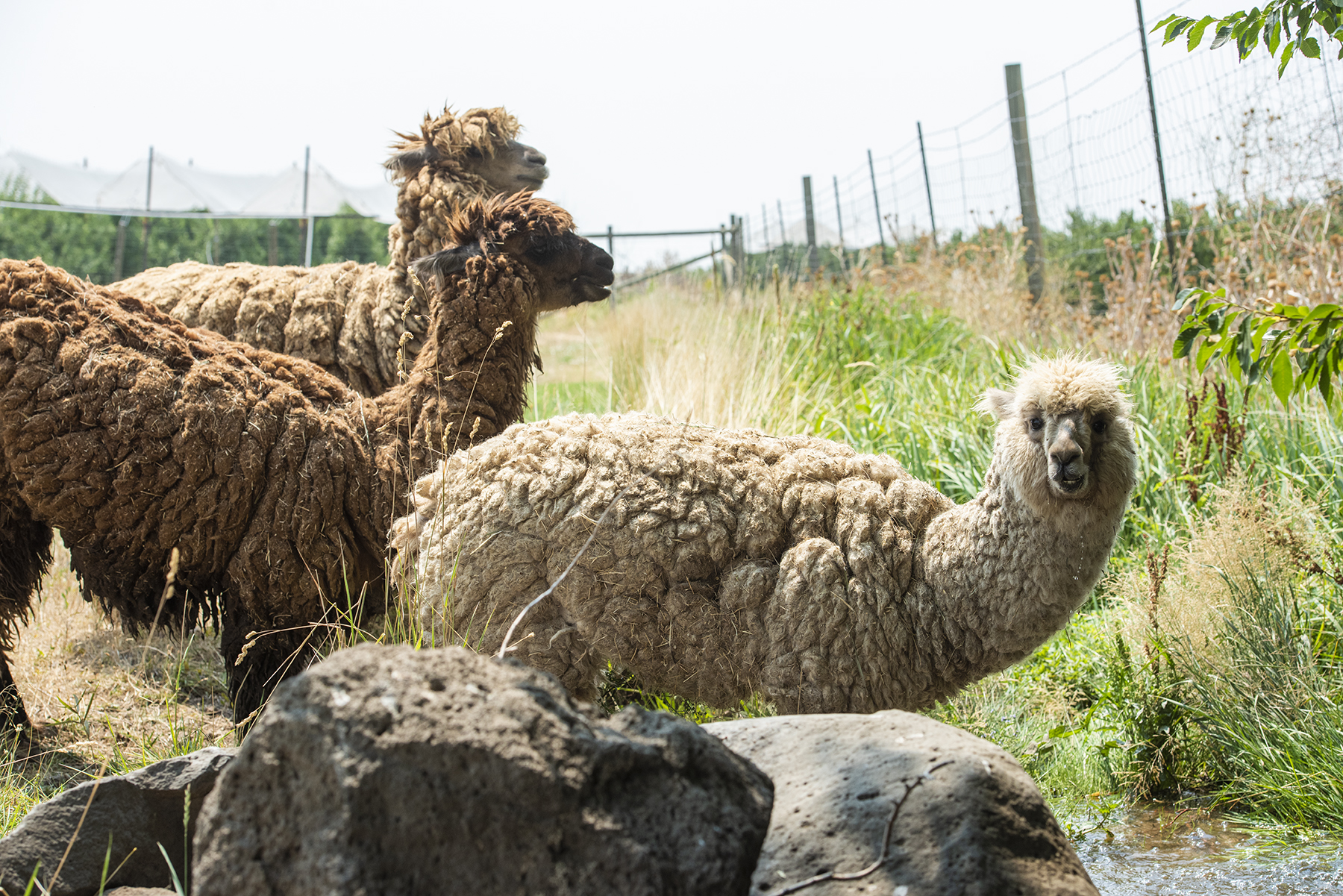
Some of you may recall that we expanded the Quiet Farm team a few weeks ago. We now have five alpacas and one llama on our farm, and they currently spend the majority of their time grazing placidly on our pasture. We’re new to livestock, and are doing as much research as possible, and we thought you might be interested in learning more about our new residents, too.

Alpacas 08 sml

See you at the old watering hole?

First, what even are these odd creatures, anyway? Llamas (Lama glama) and alpacas (Vicugna pacos) are both members of the camelid family, along with their wild cousins, viçunas and guanacos. (Collectively, this group is known as lamoids.) Camelids actually evolved in North America; some of their ancestors migrated to Africa to become the desert camels we’re familiar with. Other ancestors migrated south to what is now South America and evolved into the llamas and alpacas we associate with indigenous tribes of South America. As bison were essential to the Native Americans, so were llamas and alpacas to the indigenous peoples. These animals provided food, fiber, grease, draft power, fertilizer, fuel, leather and protection.

Continue reading

This week in flowers: July 13

Friends, it’s truly a surprise anything is blooming right now, considering our punishing temperatures – high nineties every day! – and total lack of moisture. Also, please send tax-deductible donations to help pay our extortionate water bill. But! We do have a few bright spots of color around the farm that we thought we’d share.

Calendula 01 sml

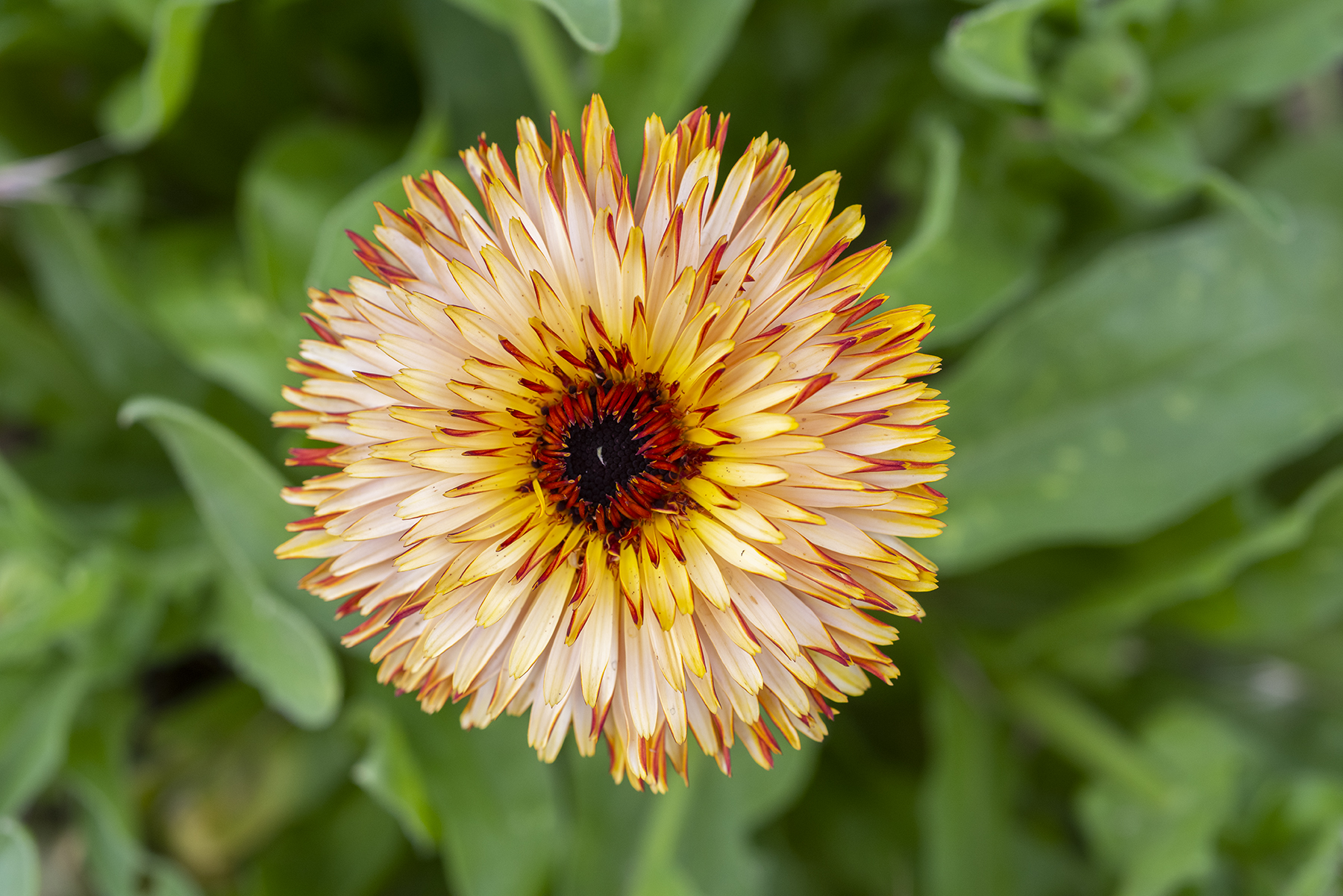
Calendula (Calendula officinalis) is a member of the marigold family.

We planted a number of different flowers, including calendula and marigolds, in our raised beds to both provide visual interest and to attract beneficial pollinators. Although calendula doesn’t love our intense summer weather, most seem to be doing reasonably well and will hopefully bloom again in fall’s cooler temperatures.

Continue reading

Fantastic beasts

As we’ve mentioned previously, we want rich, abundant, diverse life here at Quiet Farm. We can best accomplish this by planting a wide variety of different plants (rather than a monoculture), by avoiding chemicals, sprays and poisons and by learning to live with socially-unacceptable “weeds.” Here are a few beautiful creatures that have been spotted on our farm recently!

Butterfly 01 sml

Two-tailed swallowtail butterfly (Papilio multicaudata).

Butterflies (and moths, to a lesser extent) are hugely important pollinators and are indicative of healthy ecosystems, so we’re always happy to see them flitting about the farm. The presence of butterflies typically indicates a healthy environment for other unseen invertebrates, too. This two-tailed swallowtail, which expired in our garlic bed, is particularly gorgeous.

Continue reading