The Farm Series: Fritchman Orchards

Fritchman 01 sml

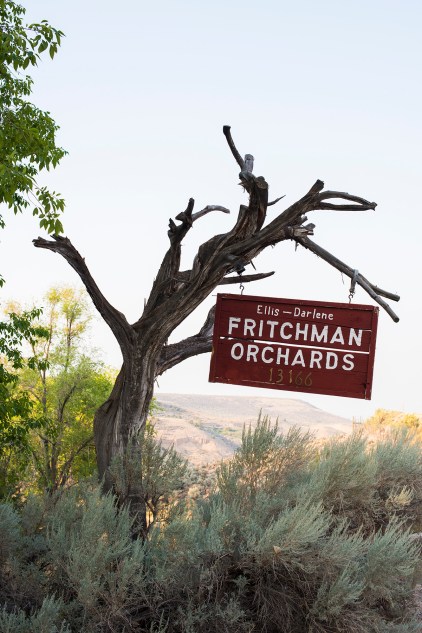
It’s August, and it’s punishingly hot, but at least we’ve got peaches. This week we went up to Fritchman Orchards to watch a bit of the peach harvest. As always, it’s humbling to observe just how much work goes into producing the fruits and vegetables we take for granted. At this time of year, harvest starts around six in the morning, so that the majority of the work can be done before the temperature tops 90 degrees.

Fritchman 03 sml

Fritchman 13 sml

Experienced pickers harvest peaches by color.

When we tell people on the Front Range that we’re moving to the Western Slope, they invariably ask about peaches. Specifically, they ask about Palisade peaches. And this is not designed to malign Palisade peaches – because they’re spectacular, of course! – but to introduce the concept of branding, and how it can perhaps to be used to confuse a situation, especially when it comes to local food.

Continue reading

The Farm Series: Desert Weyr

Of late, our Western Slope farm visits have taken us to pick delicious cherries and to meet happy pigs. How about we introduce you to some unusual sheep?

Weyr 01 sml - Copy

Desert Weyr is perched high on a mesa above the town of Paonia.

In the late 1990s, Eugenie “Oogie” McGuire decided she wanted to craft herself a traditional medieval cloak – from scratch. It would be made from wool, of course. She purchased one ram, five ewes and a loom, taught herself how to spin, weave and sew, and eventually made the cloak. As she says, “It’s more accurate for the 18th century. It took me six years to weave the fabric, two more to get up the courage to cut it, and two weeks to hand-sew it.” But what commitment! Now, Oogie and her husband, Ken, raise a large flock of Black Welsh Mountain sheep on pasture above Paonia.

Continue reading

Adventures in RVing, vol. 2

Oh, hello there! We’re not really lost in the wilds somewhere; we’re just spending the summer traveling back and forth between the Western Slope and the Front Range. This is only a 300-mile commute but it’s so much more adventurous than it sounds!

Monarch Pass 01 sml

If you drive between the Western Slope and the Front Range you must cross the Continental Divide (whether you want to or not). On this trip, we chose Monarch Pass.

Cattle Drive 01 sml

Sometimes you get caught in a cattle drive. Livestock always have right-of-way.

Shady Creek 01 sml

Our house (on the left) is tiny compared to some of the big rigs we’ve seen!

Flair 02 sml

Learning to back N into tight spots is one of my newly acquired skills.

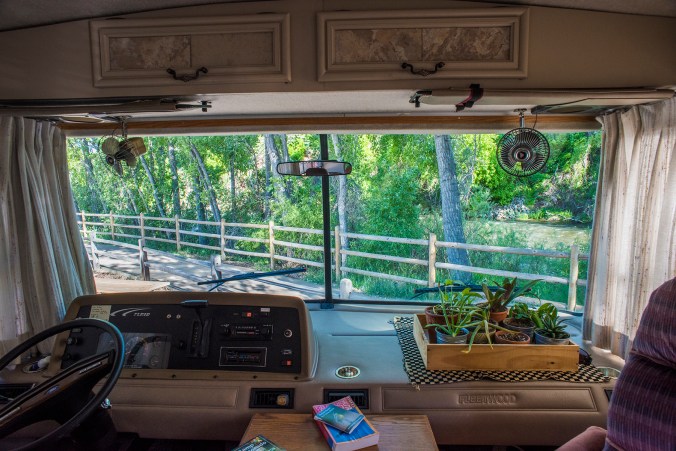
Hot Seat 01 sml

N can drive the RV and take photos. Don’t try this at home, kids.

IMG_20180609_074639898[1]

Apparently I can drive and take photos, too. Isn’t Colorado pretty?

njb_5245.jpg

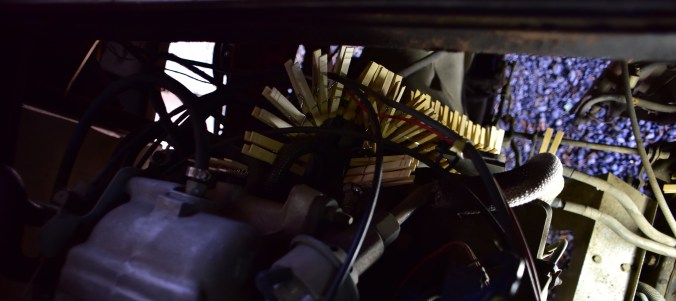
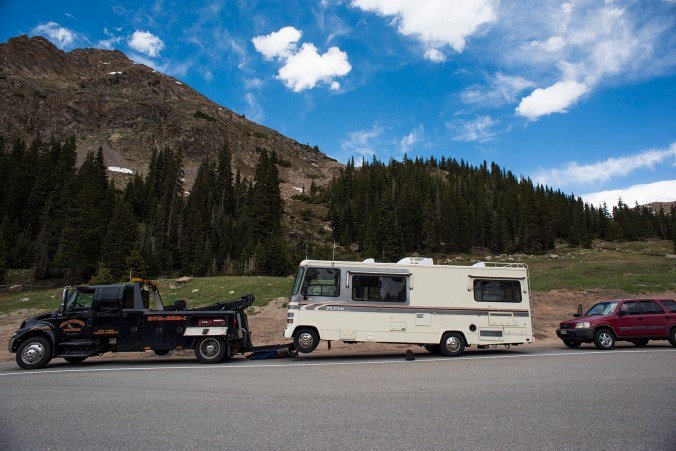
In case you’re wondering, wooden clothespins do not solve vapor lock. We’re hoping a new fuel pump will.


Ode to the cherry

One key element missing from our globalized grocery industry is seasonality. By that, I mean that we can have virtually whatever food we want, whenever we want it. It doesn’t occur to us that tomatoes taste better in August, or that citrus is sweeter and juicier in winter. Our supermarket produce departments know no seasons, and that is a loss – but because most of us have never known true seasonality, we don’t demand it. We should.

AH Cherries 01 sml

AH Cherries 03 sml

AH Cherries 06 sml

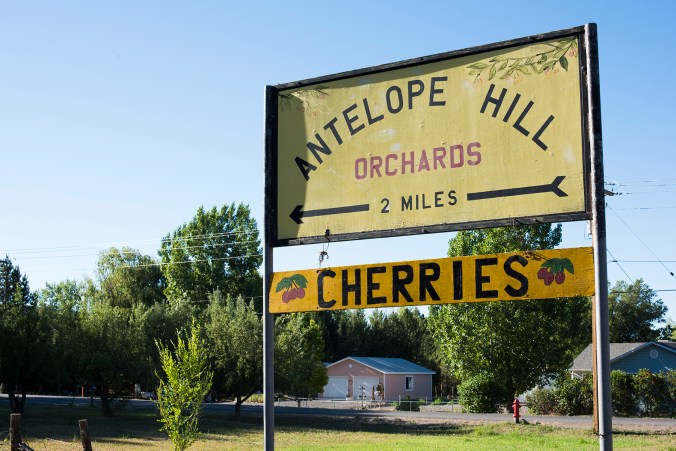
Colorado’s Western Slope has long grown most of the stone fruit produced between California and the Midwest, and wine grapes are now in vogue here as well. Make no mistake, though: growing fruit in a high-plains desert more than five thousand feet above sea level, with less than ten inches of total precipitation a year (that’s rain and snow), isn’t easy. Plus, the orchards and vineyards here are tiny, averaging only a few dozen acres; these are micro-orchards compared to those in California and Oregon and Washington, which cover thousands of acres. All of that means when cherries are in season here, often for as little as two weeks, one must act quickly. And so we did, hustling up to Antelope Hill Orchards for the opportunity to pick our own.

Continue reading

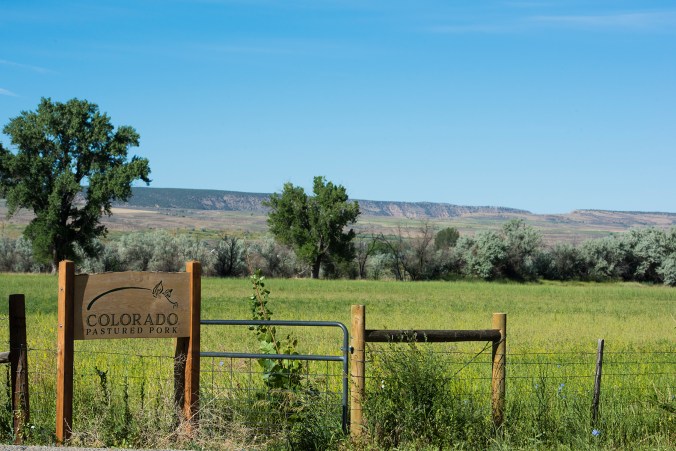
The Farm Series: Colorado Pastured Pork

We’ve (sort of) relocated to the Western Slope, and we’re focused on meeting as many local farmers as possible. If we truly intend to start Quiet Farm here, and if we intend for it to grow into a thriving business, building a strong local producer network will be key to our success. To that end, when we’re not driving around looking for property, we’re visiting farms and ranches who practice the same sort of farming we plan to embrace.

CPP 01 sml

The Western Slope – specifically Delta County, where we’re currently based – has a long history of agriculture, but most of those ag products were shipped to population centers in Denver (to the east) and Salt Lake City (to the west). Now, with “local food” and “agritourism” evolving as valid ways for poorer counties to earn revenue, there is a movement afoot to encourage small farmers and other sustainable, innovative producers to make their mark here. Surprisingly, Delta County has more acres of organic farmland than any other county in Colorado (I know, we thought it was the Kingdom of Boulder, too).

CPP 02 sml

CPP 03 sml

Continue reading

RV book club

Pretty much every RV we’ve encountered on our travels thus far has had a television, and most carry a satellite dish. We’ve seen some TVs on the big rigs that would cover an entire wall in our tiny home, if we could even get the thing through the door. For us, though, no TV. And no Netflix, either, because even though we have a device on which to watch, most parks don’t have Internet service strong enough to support streaming. (Serious RVers also carry Internet boosters.) So we read, and that’s not intended as a complaint.

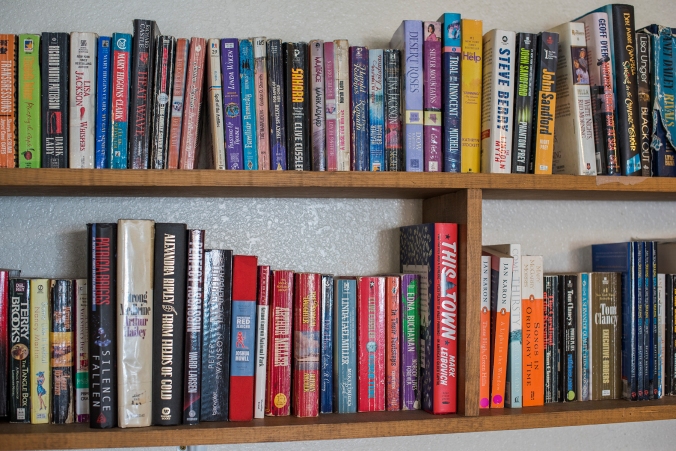
RV Books 02 sml

A selection of reading material at an RV park.

We packed an eclectic selection of books, of course, before throwing everything else into boxes and jamming it all into a rented storage unit. We happened to be camped at the fairgrounds when our local county library held their semi-annual book sale there, so we grabbed a few then, too. And most every park we’ve stayed at has had a book exchange, typically located near the laundry facilities. I’ll confess that most of the books at the RV parks are not to my taste – they lean heavily towards bodice-rippers, legal thrillers and Stuart Woods – but truly, I’m happy when anyone is reading actual paper books and I am not passing any judgment on these. And there are occasionally diamonds in the rough. So what are we reading these days on the RV?

Continue reading

Let’s learn about goats!

JGGD 11 sml

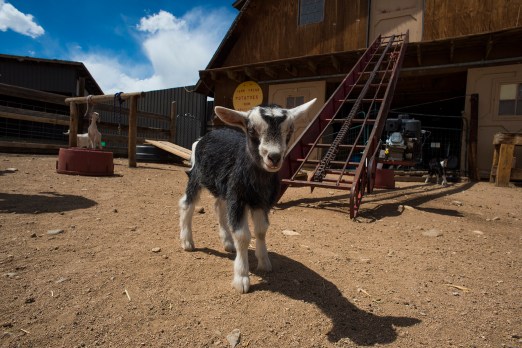
This is not the first time we’ve posted photos of #totesadorbs baby goats, and it certainly won’t be the last. We’ve known since we first invented Quiet Farm in our heads that we want to keep milking does, so as with all other aspects of farming, we’re learning how to do that from books and the University of YouTube and on-farm experience, too. By the time we actually find our farm, hopefully we’ll (sort of) know what we’re doing.

NJB_5018

Some fun facts about goats:

  • Goats have a reputation for eating just about anything, including clothes, trash and other inedible items. This is entirely untrue; goats are browsers, rather than grazers, and are naturally curious. They use their lips and teeth much as we use our fingertips – to investigate unknown objects – and they’re actually quite fussy about what they’ll eat. Goats also only have teeth on their bottom jaw, not their upper.
  • Goats are fantastic climbers and love to quickly attain the highest perch available – hence the popularity of goat yoga. Goats can climb trees!

Continue reading

Downsizing

An announcement: we’re on the road again. Four weeks ago, we sold our house. Three weeks ago, we bought a vintage (“vintage” is an official rebranding of just plain “old”) Class A motorhome. Two weeks ago, we moved out of our house into our RV, and now we’re full-timers.

68th-01-sml.jpg

Above: our first home. Below: our second home. 

Flair 03 sml.jpg

Please forward our mail to this address. Thank you.

Selling our first house wasn’t easy, by any stretch. People do this all the time, yet for us it seemed a monumental task. We disliked every part of the process, from working with real estate agents to staging the home (goodbye, cherished family photos!) to disappearing on command during showings and open houses to negotiating complicated repair and inspection requests. Signing the papers at closing was painfully bittersweet. Ultimately, though, both the worst and the best part of the entire tedious process turned out to be the sorting, the culling, and the discarding.

Continue reading

Sowing the seeds

As recently as three or four generations ago, the vast majority of seeds planted in home gardens were saved from year to year. Gardeners learned what plants thrived in their unique microcosm, and they might have saved seeds from the earliest beans, or the largest cucumber, or the most delicious tomato. Season after season, these saved seeds protected plant diversity, acted as a hedge against famine and in many cases were so treasured that they were sewn into hems of immigrants’ clothes when they traveled – voluntarily or not – to new lands.

Seeds 02 sml

A few samples from the Quiet Farm seed bank.

Now, we think nothing of buying seed packets every growing season. Wintertime brings glossy seed catalogs to the mailbox, filled with mouth-watering descriptions of intensely flavorful tomatoes, trendy kalettes, or spicier peppers. We page through these during the dark, cold days, eagerly anticipating the chance to get our hands in the soil once again, and often we order much more than we need. Most home gardeners have a wealth of seeds left over from previous years, and even this abundance doesn’t stop us from buying just a few more. They’re just tiny packets, we reason. A few more couldn’t hurt.

Continue reading