Chick lit

A couple of weeks ago The New York Times ran an article about how, in addition to guns, seeds, toilet paper and yeast, Americans have “stress-bought all the baby chickens.” For the record, N and I would like to point out that raising chicks was always in our 2020 plan, even before this pandemic wreaked havoc on the universe. And so it happens that ten chicks now reside in a makeshift fort in our sunroom, deftly constructed of cardboard, repurposed pallets, a vintage metal fireplace guard, free Harbor Freight tarps, and salvaged window screens. This chicken palace is a thing of architectural beauty, make no mistake.

Bielefelder Chick sml

Bielefelder

What distressed me most about that NYT article – and to be fair, this happens every Easter – is how many people buy chicks (and puppies, and kittens…) without thinking beyond their cuteness stage. Do you know anything about keeping chickens? Where do you plan to house them? How will you keep them safe from predators? What if you end up with a rooster, which are illegal in most municipalities? This flock will be our fourth, and before we had chickens at our old house we did a ton of research on how to keep them safe, healthy and happy.

Continue reading

Winter on the farm

In nautical terminology, “the doldrums” refer to an actual place – waters near the Equator where sailing ships were often stuck for days or weeks in windless seas. In common parlance, however, the doldrums mean “a state or period of stagnation, inactivity or depression.” And so here we are in deepest winter.

Raised Beds 02 sml

Our dormant raised beds, slumbering under snow.

Continue reading

Farm update: January 6

Hello there, and a very happy new year to you and yours. If you’re here for the first time, welcome! If you’re returning after our hiatus, thanks for coming back! We look forward to sharing a new year of food and farm adventures with you.

ATV Plow 01 sml

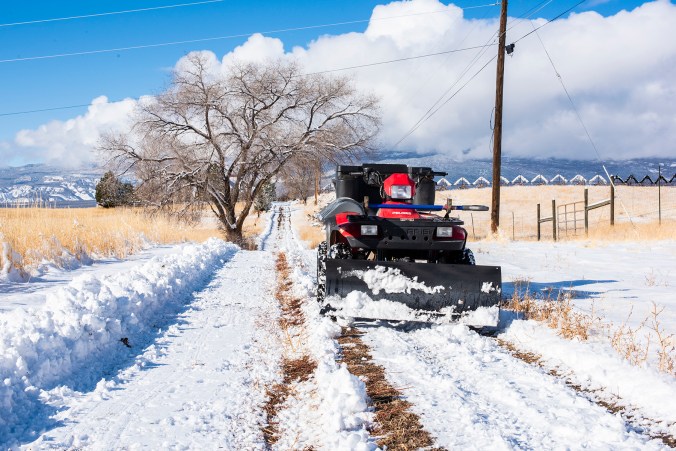
Our updated Snow Management Plan in action!

Last winter – our first winter at Quiet Farm – our area received an unprecedented amount of snow. Our inaugural Snow Management Plan was…ineffective, shall we say; we had no tractor and no plow and no way of getting out of our quarter-mile driveway with a foot of snow on the ground. At one point, we resorted to begging a friend with a truck to flatten the snow by driving up and down our lane so we could at least leave the farm (thanks, Joe!). Needless to say, that was not a sustainable long-term solution.

This winter we haven’t had nearly as much snow, but we do have a plan – a detachable plow for our ATV. And so far, the ATV plow has worked like a champion. We’re even thinking of purchasing other implements for the ATV, so that we can use it like a mini-tractor, since we’ve been unsuccessful in finding a reasonably-priced midsize tractor to manage our pasture. Stay tuned.

Continue reading

Farm update: June 3

Hello there! Has summer finally started where you live? We’re excited for warm weather and sunshine and to get all of our tomatoes, peppers, eggplant and other summer crops into the ground finally.

Rasberry Beds 04 sml

The raspberry plants are tiny, like our fruit trees, and are protected with plastic cages.

A few weeks ago we planted forty raspberry plants, ten each of four different cultivars. We planted both summer-bearing and fall-bearing varieties, in the hopes of having fresh raspberries for months on end. We don’t expect to see any fruit this year, but raspberries typically do well in this area so we’re looking forward to bountiful future harvests. In order to plant these canes, we used the excavator to dig long, wide beds, then we filled those beds with about eight cubic yards of soil from Mount Doom. This meant around thirty-six wheelbarrow loads moved by hand – we farm like it’s the 1850s over here, friends. One day, we’ll have a tractor. One day.

Kale Salad 01 sml

Greens this fresh make those plastic supermarket packets taste like nothing.

We were excited to harvest our first salad greens and radishes; shown here is a mixture of Buttercrunch lettuce, pak choi, red Russian kale and lacinato kale. Our greens are pretty late this year; next year we hope to have our high tunnel built so that we have fresh greens throughout the winter and early spring. Few things taste better after months of heavy, rich, starchy foods than a bright, crisp salad.

Bullock's Oriole 02 sml

A male Bullock’s oriole waiting for the buffet to open.

Although we love seeing the hummingbirds at our feeders, we’ve found that the local population of Bullock’s orioles (Icterus bullockii) appreciates the easy sugar hit, too. The orioles are much bigger than the tiny hummingbirds, and when they’re on the feeders they scare the hummingbirds away. Because they’re so big, they also cause the feeders to swing wildly and spill sugar syrup everywhere, which makes a sticky mess. We haven’t yet figured out how to keep the hummingbirds coming while discouraging the orioles, even though their flashy yellow plumage is gorgeous.

Compost 03 sml

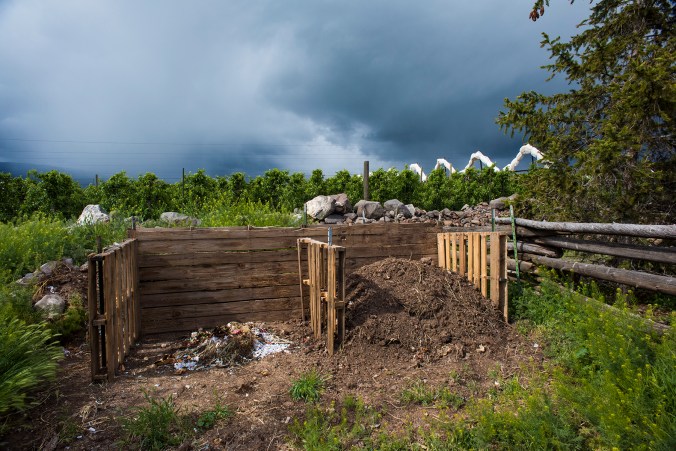
So much tidier now!

We built a new bin structure for our compost using salvaged shipping pallets; you can see the original small compost pile here. (We think pallets are one of the most useful free things you can find!) Now the compost can be kept neater, and it’s simple to throw fresh organic material into the left bin while waiting for the right side to finish “cooking.” When we get that tractor it will be a lot easier to move the finished compost onto the vegetable beds.

Chickens 01 sml

Welcome home, chickens!

And then there’s this news: Quiet Farm has twelve new residents. They are a motley, ragtag bunch, who came to us because a friend was moving house. We have at least two roosters (maybe three; one is sensibly staying quiet for the moment) and an assortment of breeds. They’re still laying pretty well for older birds – certainly enough for our needs – and thus far they’ve had an exciting time exploring their new home. More on the chicken house renovation coming soon!

Have a great week!


Farm update: May 6

It’s been mostly cool and rainy this week. We’re of course grateful for the moisture and lower temperatures, which might keep our snowpack in place longer, but the weather has literally put a damper on our excavator plans. Never mind, though; there are always plenty of other things to do!

Broad Tailed Hummingbird 02 sml

A male black-chinned hummingbird getting its sugar fix.

One of our most successful ventures recently has been installing hummingbird feeders around our house. We’ve been utterly astounded at the sheer number of hummingbirds that have appeared, including both the black-chinned and broad-tailed varieties. They’ve apparently informed all their friends that the bar is open!

Continue reading

The cranes are here!

Crane Days 01 sml

There are so many benefits to living where we do now, including but not limited to lots of fresh, local fruit in the summer. But just now, coming off a long, dark winter, we’re most excited to see one of the true harbingers of spring: the greater sandhill crane on its annual migration between New Mexico and the Yellowstone ecosystem (northern Idaho and Montana).

Cranes 03 sml

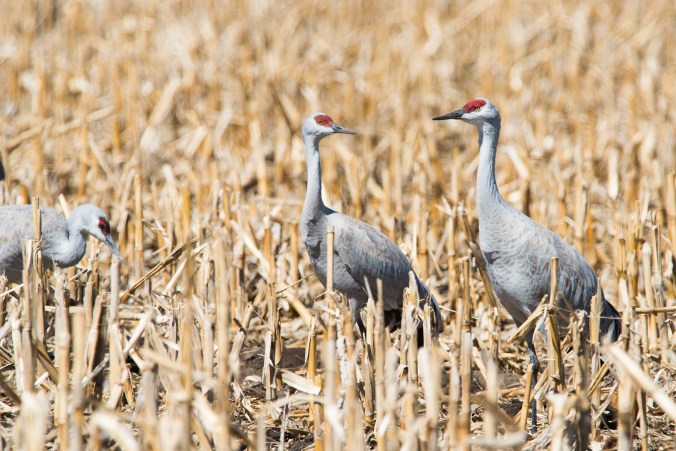
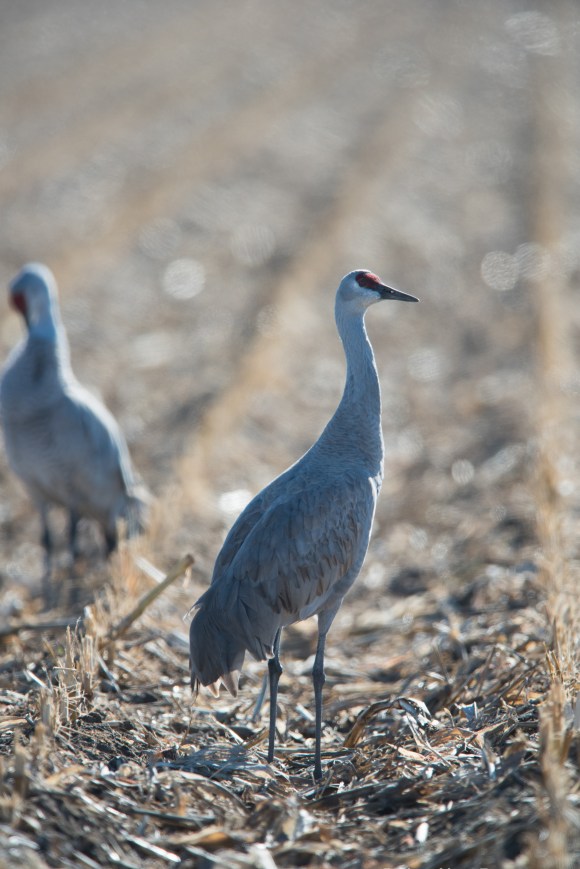
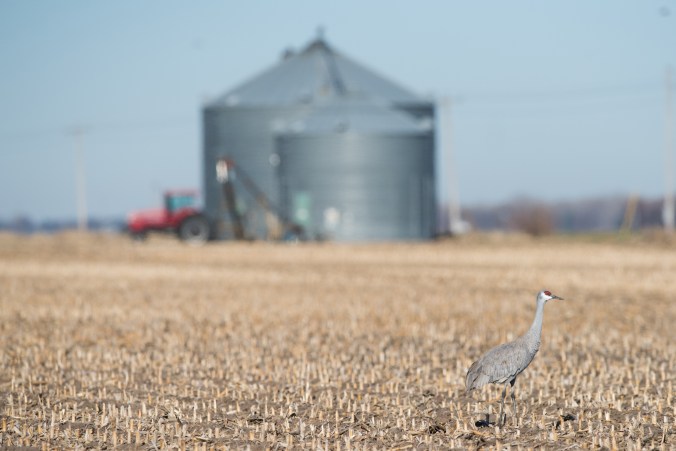
Greater sandhill cranes are big, gorgeous, elegant birds; adults stand about four feet tall and have a six-foot wingspan. They’re most easily recognized by their sooty gray coloring and the red patches on their eyes and head, and that they flock by the thousands. Their plumage can take on a rusty red sheen, because they often preen by rubbing their feathers with iron-rich mud.

Cranes 04 sml

In Colorado, a flock of about twenty thousand birds gathers in February and March in the San Luis Valley, where they rest and forage before heading further north. About five thousand of these birds then make their way straight over Delta County, where we live, often stopping at Fruitgrowers’ Reservoir just to the east of our farm.
Cranes 05 sml

Greater sandhill cranes are the oldest birds still living today; fossil records from two and a half million years ago indicate that they’ve changed hardly at all. Rock art and other artifacts in the San Luis Valley show that cranes have been important to the region’s people for as long humans have inhabited the area. Their annual migration is a sure sign that we’ve survived another winter, and spring is on its way.
Cranes 01 sml

Sandhill cranes sleep in shallow, calm water to keep themselves safe from predators, so a reservoir like Fruitgrowers’ is a perfect stopover location. These birds are opportunistic feeders; they most often eat plants and grains, but they’ll also feast on invertebrates and small mammals, if available. The Western Slope and the San Luis Valley offer thousands of acres of fallow cornfields in which to forage.
Cranes 02 sml

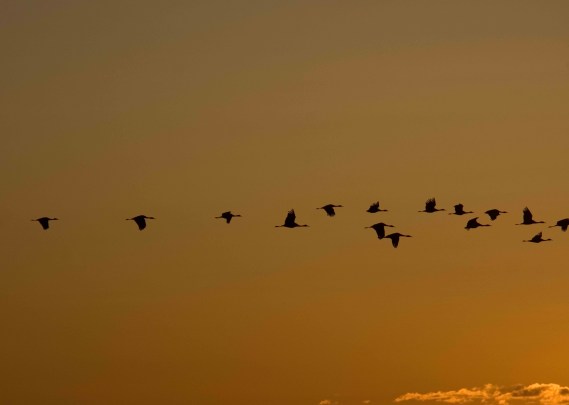
The cranes are most active at dawn and dusk when they “commute” to and from their daytime feeding grounds. The population along the Platte River in Nebraska is so large – half a million birds – that the cranes’ noise can drown out normal conversation. Sandhill cranes have a distinctive call, and the birds can frequently be heard even when they can’t be seen. The cranes are often spotted along the same transitory route in fall, but they rarely stop over in Delta County. Local experts believe this is because the reservoir is dry in the autumn, so there is no place to for the birds to sleep safely.

Cranes 09 sml

Although sandhill cranes aren’t quite as demonstrative as the famous dancing prairie chicken, the birds will perform for their prospective mate. Sandhill cranes mate for life and can live up to twenty years, a remarkable lifespan for a wild bird. These cranes don’t nest here in Colorado but instead lay their eggs up north; the female typically lays two eggs and the male guards the nest. It takes a month for the eggs to hatch and two months for the chicks to reach maturity, although only one chick usually survives.
Cranes 07 sml

We are thrilled to share space with these magnificent birds, and we look forward to their migration every spring.

P.S. If you’re interested in seeing the cranes in huge numbers, the two best locations are Monte Vista in southern Colorado and along the Platte River in central Nebraska. Both are definitely worth the trip!

Cranes 06 sml