One potato, two potato

Last year we planted potatoes for the first time and achieved a reasonable level of success for a freshman effort, though our part of Colorado isn’t at all suited for potato growing. To our south and east, however, you’ll find the San Luis Valley: the second-largest fresh potato-growing region in the country and justifiably famous for the crop. Their loose, sandy soils are much better for potatoes than our heavy, rocky clay.

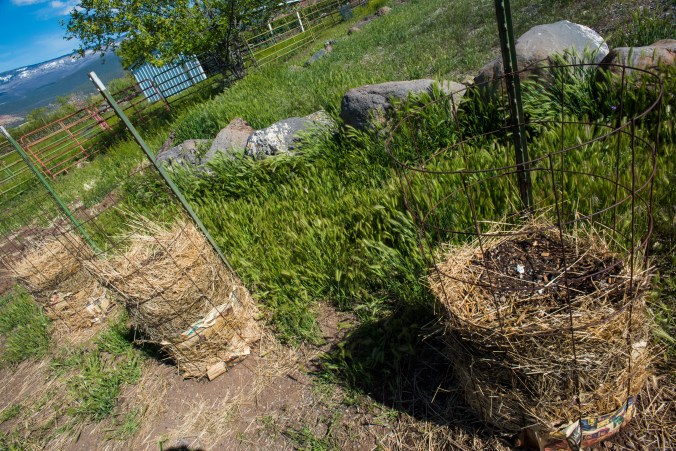
Potato Towers 01 sml

Last season’s potato towers.

But like any stubborn farmer, we love being told what we can’t grow, so that we can try it anyway. We quickly realized that we wouldn’t be planting potatoes in the ground and so opted for potato towers: layers of soil, compost, newspaper and straw in a wire cage, with seed potatoes nestled gently in between. We planted about one and a half pounds of seed potatoes in each of three potato towers, and yielded about twenty pounds of potatoes in total – not bad, considering the minimal growing space and effort required, but not the thirty-plus pounds we were hoping for. And some of the potatoes were really tiny, like the size of marbles. Not very practical.

Continue reading

Farm update: April 27

Hello there. How are things in your world? It’s an odd and unsettled time, to be sure. Here at Quiet Farm we’re keeping our heads down and our hands busy as we navigate the seasonal weather shifts that have us careening from wind to rain to sun to hail and back again, all in the space of a few minutes.

House Finch 01 sml

House finch (Haemorhous mexicanus).

Spring is underway, slowly but surely, and our diverse bird life reflects that. The bald eagle pair we’d been keeping an eye on has vanished, presumably for colder climes; now the gorgeous call of the Western meadowlark (Sturnella neglecta) marks our days. Watching the scrappy magpies fight off aggressive egg-stealing ravens is decent entertainment, too.

Continue reading

Chick lit

A couple of weeks ago The New York Times ran an article about how, in addition to guns, seeds, toilet paper and yeast, Americans have “stress-bought all the baby chickens.” For the record, N and I would like to point out that raising chicks was always in our 2020 plan, even before this pandemic wreaked havoc on the universe. And so it happens that ten chicks now reside in a makeshift fort in our sunroom, deftly constructed of cardboard, repurposed pallets, a vintage metal fireplace guard, free Harbor Freight tarps, and salvaged window screens. This chicken palace is a thing of architectural beauty, make no mistake.

Bielefelder Chick sml

Bielefelder

What distressed me most about that NYT article – and to be fair, this happens every Easter – is how many people buy chicks (and puppies, and kittens…) without thinking beyond their cuteness stage. Do you know anything about keeping chickens? Where do you plan to house them? How will you keep them safe from predators? What if you end up with a rooster, which are illegal in most municipalities? This flock will be our fourth, and before we had chickens at our old house we did a ton of research on how to keep them safe, healthy and happy.

Continue reading

Farm update: March 9

How are you doing? It’s probably been a whipsaw week where you live, too. Here we are trying our best to stay busy and avoid the headlines (easier said than done). A few things we’ve been up to, if you’d like to see:

Bees Coffee Filter 01 sml

The bees love coffee as much as we do!

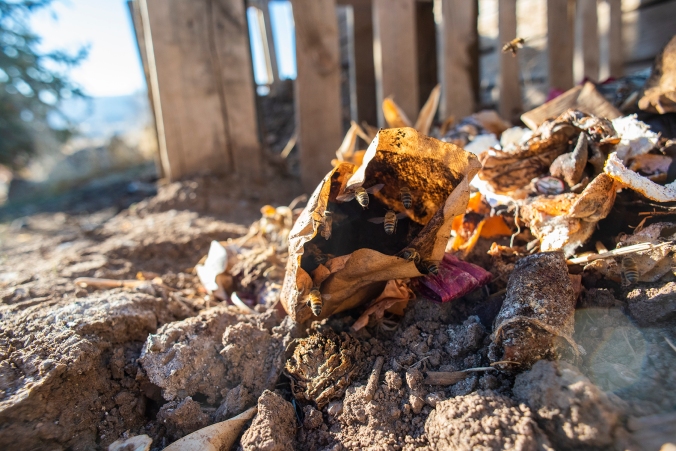
One sure sign of warming weather (which is coming far too early, in our opinion) is enhanced bee activity. On warm, sunny days we’re seeing lots of bees buzzing in the compost pile (they particularly love our spent coffee filters) and also near one of our big trees that’s in early bud. The apple trees in the surrounding orchards haven’t bloomed yet, but it’s always nice to know that our resident bee population survived another winter.

Continue reading

Starting seeds

Welcome to March! Our spring is shaping up to be a bit too premature and a bit too warm and a bit too dry for our liking; we’d like to see quite a lot more moisture. This time last year, we still had at least four inches of snowpack on the ground; this year, zilch. Also last year, we were adorable, eager, optimistic, first-year farmers, and we started our seeds way too early. This year, we’re hardened, grizzled veterans, so we know better. And next year? Watch out.

Compost 08 sml

If you’re going to grow anything outside, the single most important piece of information you need is your average first and last frost date. This statistic is pretty much exactly what it sounds like; weather stations all over the country send data to the USDA, which in turn calculates average first and last frost dates. These dates are essential because most (but not all) annual food crops will not tolerate freezing temperatures.

Here at Quiet Farm, our average last frost is May 13, and our average first frost is October 4 for a 143-day growing season; this means we’re almost assured not to have frost between these dates. Keep in mind, however, that this is an average, not a guarantee – you’re safer assuming that frost is possible one to two weeks on either side of these dates. (The location of weather stations varies widely and can sometimes be inaccurate, so check where your closest weather station is located to ensure you’re getting the best information. Plus, the climate emergency is totally destroying the consistency and reliability of these dates. It’s all pretty much guesswork from here on out.)

Continue reading

The best books about food

Apparently this country is electing a president this year and probably electing some other people too, though over here at Quiet Farm we’re doing our damnedest to ignore the entire circus. One thing that still surprises (and infuriates!) me immensely in every single election cycle is that we never, ever discuss national food policy. Neither side even mentions it in passing, unless a hotdish fundraiser happens. We talk about defense, and education, and occasionally the climate crisis, and of course health care, and yet we never discuss the single issue that unites every one of us, regardless of party affiliation. We never talk about the fact that if we changed our food system, we’d naturally change our health care system for the better. And that changing our food system would be a huge step towards repairing our devastated planet. Changing our food system would also mean more military readiness, since we’re now too fat to fight. And our children would gain a better education if they had access to better nutrition for growing brains and bodies. We always ignore the food, when it’s the one issue we should talk about more than any other.

Continue reading

Winter on the farm

In nautical terminology, “the doldrums” refer to an actual place – waters near the Equator where sailing ships were often stuck for days or weeks in windless seas. In common parlance, however, the doldrums mean “a state or period of stagnation, inactivity or depression.” And so here we are in deepest winter.

Raised Beds 02 sml

Our dormant raised beds, slumbering under snow.

Continue reading

Farm update: October 21

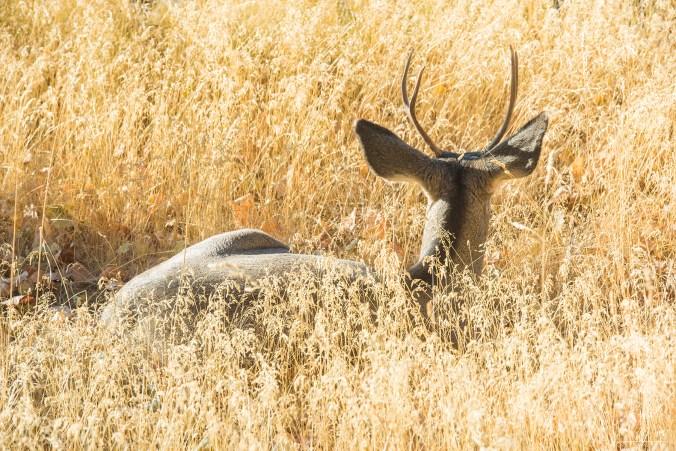
Buck 01 sml

The south lawn of our house makes a peaceful resting spot.

Is it autumn where you live? Is it crisp and cool with bright scarlet and gold leaves everywhere? Is it dark when you wake up in the morning? It is here, and we’re settling into this brief transition season before winter extends its icy grip. Much of our work these days involves cleaning, tidying, preserving, covering and generally setting things in place for the colder months. We try to take advantage of these bluebird fall days for as long as we can; once the snows come, we won’t be working outside much.

Garlic Slate 01 sml

Growing garlic takes forever, but it’s worth the wait.

Ninety of this season’s largest garlic cloves have been planted in a bed newly prepared with lots of rich compost. Last year’s garlic went into an existing cinderblock bed that was here when we moved in; a few weeks ago we broke that bed down and dispersed the soil into new trenches for garlic and asparagus. The cloves will slumber quietly here over the winter, and in the spring we’ll hopefully see green garlic peeking up through mulch and snow. Every year we’ll plant more and more garlic; we eat a lot of it, of course, but since garlic adapts to its unique environment, we want a generous quantity to save for planting.
Irrigation Water 01 sml

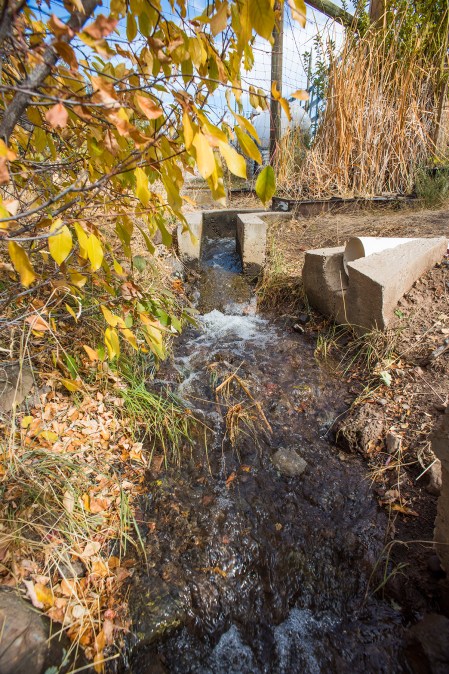
The water runs through a culvert underneath our driveway and out into our pasture. You can see our flume in the upper right.

We ran our irrigation water for the first time this season, and it went surprisingly well. Our pasture isn’t planted right now so the irrigation run was more of an experiment to see how the water would move through our gated pipe system. We own shares in a local creek that pulls water from reservoirs on the Grand Mesa; when we want to run water we order a certain amount for a certain period and that water is deducted from our account. This run was for two days (forty-eight hours straight!) and it requires a lot of hands-on management, mainly opening and closing gates manually in the big pipes. When we’re more comfortable with our irrigation we won’t need to babysit it as much, but we’re unleashing hundreds of thousands of gallons of water mere feet from our house, and we definitely want to pay close attention to where it’s going.

Tomatoes Ripening 01 sml

Our tomato crop redeemed itself after a rocky start.

We harvested all of our vegetables prior to our recent hard freeze and brought in just over one hundred pounds of green, unripe tomatoes. In the past I’ve never had good luck ripening tomatoes indoors, but for whatever reason these are ripening quite well. They’re no longer good to eat fresh – the overnight temperatures dropped too low, so the tomatoes taste as though they’ve been refrigerated – but they’re perfect for sauces, soups and purees. A pantry stocked with canned homegrown tomatoes is a winter gift indeed.
Tree Mulch 01 sml

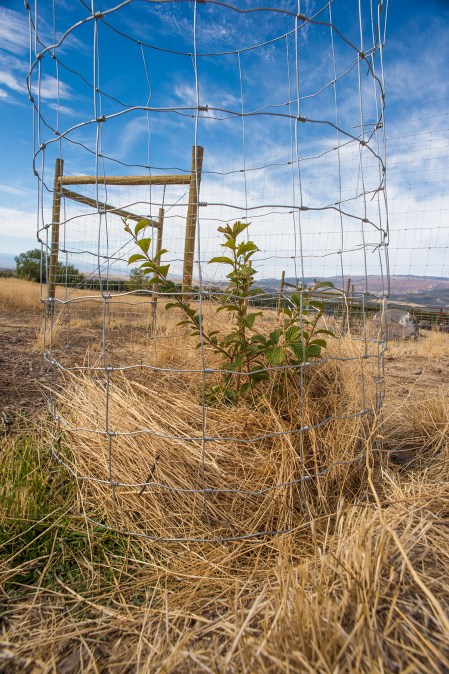
One of our little saplings, hopefully protected from winter weather (and deer). 

We’ve hustled recently to layer all of our fruit tree saplings with warm winter mulch. Some of our little trees look healthy and others are…struggling. We’re hopeful that the mulch blanket will keep the trees protected from our harsh winter weather, since their root systems are likely to still be quite delicate. One of our priority spring projects next year will be to put a drip irrigation system in the orchard so we can stop watering the trees by hand.

We’re back to work, friends. We wish you a good week.
 

Save our seeds

Seeds 01 sml

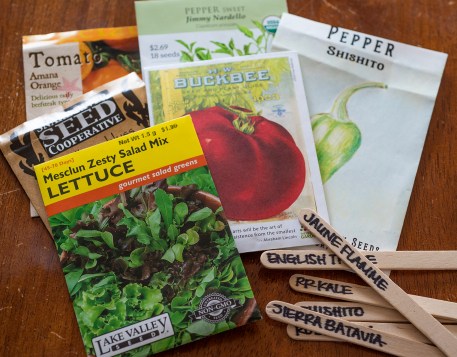
Our first hard frost is forecast this week, so there is much to be done. In addition to lots of canning and preserving, autumn on a small homestead means saving seeds. We’ve talked about the importance of seed saving previously, and each season we’re working on expanding our seed bank. Never before has it been so important to save our own seeds and thereby take responsibility for our own food supply; as seed companies are again and again snapped up by massive agrochemical conglomerates, our control of our own seeds – our fundamental birthright, and the source of our food supply – becomes ever more tenuous.

Lettuce Seed 01 sml

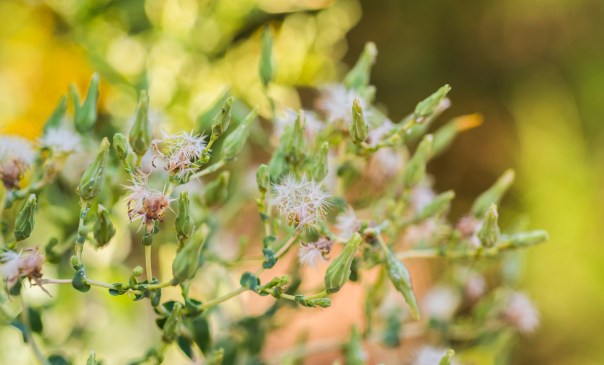
Most lettuces and other salad greens encase their seeds in little windblown puffballs.

As I wrote in our previous seed post, “Today, nearly three-quarters of all seeds planted in the U.S. – both unmodified and genetically engineered varieties – are privately owned and controlled by three large agrichemical corporations. Growing food is a basic human right, and we are quickly moving towards a future in which we will no longer own the source of our food. Lack of food leads to hunger, which leads to unrest, which leads to revolution, which leads to profitable wars benefitting those same corporations. Building our own seed banks, even if technically illegal, means we still have some say in our food supply. Seed saving is a small but powerful act of resistance.”

Continue reading