Farm update: February 25

It hasn’t really been the most exciting week here on Quiet Farm, dear readers. We’ve been busy with boring but grown-up things like obtaining contractor quotes for electrical refits and game fencing (tedious), comparison shopping for auto insurance (horrible), changing oil in the cars (chilly), and taxes (the new 1040 is rather streamlined!). While necessary, none of those tasks make for very interesting tales.

Snow Removal 01 sml

Like a real farmer!

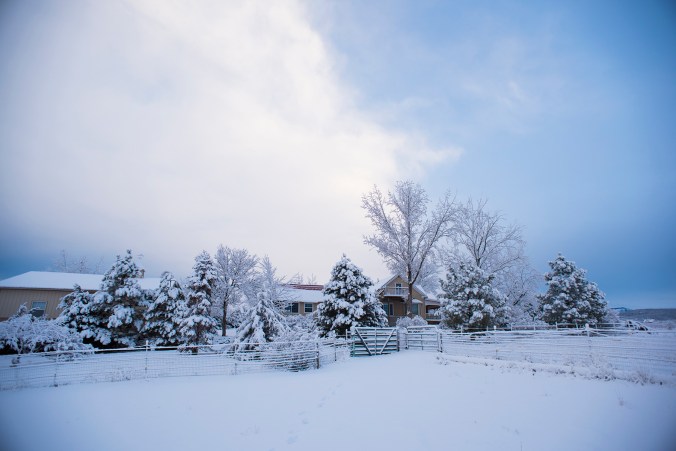
Winter continues its slog. After another six inches of fresh powder we did finally see our bluebird sky again, which was a welcome change. N borrowed our neighbor’s tractor to do some plowing; we’ve also been out shopping for our own tractor and ATV, since our current Snow Management Plan – i.e. ignore it and hope it melts – is definitely not panning out.

Game Fence 01 sml

All this just to protect some vegetables!

This uninspiring pile of materials is the beginning of our game fence. We can’t install it until the ground is a little more workable, and the hungry deer are taking full advantage of their current unrestricted freedom. We thought seriously about installing the fence ourselves, but once we realized we’d need to rent heavy equipment (skid-steer, auger and probably some other complicated, expensive, possibly dangerous things) we decided to hire it out. It’s going to cost us many thousands of dollars, but some jobs should be left to the professionals. We hope the deer will learn to respect our boundaries.
Continue reading

Farm update: February 18

Despite the snow on the ground, spring is in the air. We’re entering the freeze-thaw cycle (also known as mud season) and our quarter-mile driveway is the worse for it, but all around us, things seem to be softening and readying for growth. We’re excited for spring, friends. This winter has offered much more moisture than last year’s punishing drought, and we’re looking forward to seeing how our fields regenerate once the snows have disappeared for good.

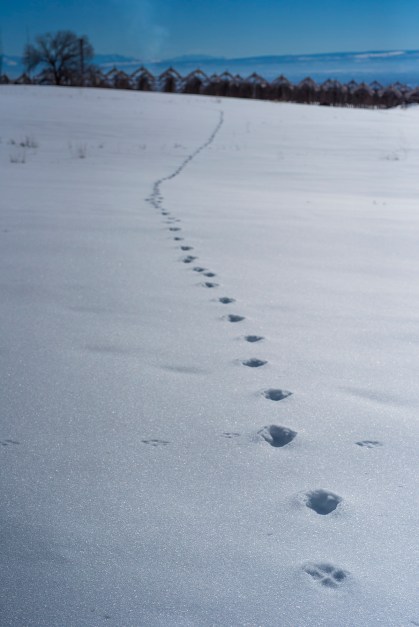
Snow Tracks 01 sml

One of our favorite winter activities has been watching for wildlife across our land; the persistent snow has made tracks easy to see. We’ve spotted coyotes, foxes, rabbits, raccoons, ground squirrels and of course our nemesis, deer. We are trying hard to learn this land, to know what lives here now and what was here before us so we can figure out how to best live in harmony.

Continue reading

Things that are great, vol. 2

Modern lives contain way too much negativity, a cycle perpetrated by a fear-mongering media looking to sell us stuff we don’t need. In the interest of combatting that mentality, then, we present our second “Things That Are Great” link round-up, highlighting news stories and trends that we think are worth celebrating. (Read our first positive link collection here!)

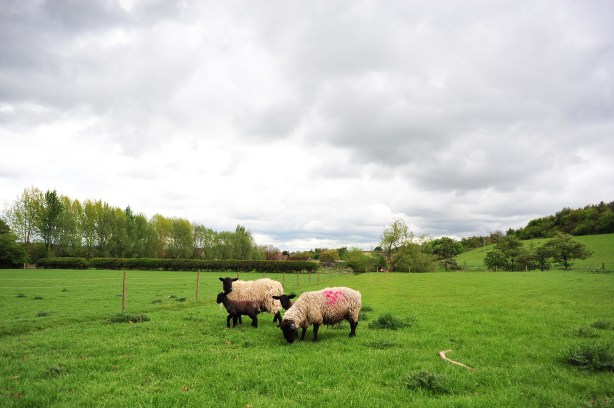
Sheepsies 01 sml

Photo clearly not taken in Colorado.

If you had to guess at the largest irrigated crop in America, you might well assume corn or soy. You’d be wrong; however; according to a 2015 NASA study, lawns represent about 40 million acres in the U.S., or about three times as much land as corn. All this grass comes at a steep price: 9 billion gallons of water per day, plus hundreds of millions of pounds of fertilizers and pesticides and other chemical treatments, all of which eventually end up in our water sources. And yard waste, including grass clippings and leaves, represents the largest single occupant of our landfills, too. All this for a crop we can’t even eat? Ridiculous.

02 February

Thankfully, though, forward-thinking companies are working to change that antiquated attitude. All across the country, edible landscapes are “unlawning” America. Converting pointless, thirsty lawns into healthy, local human food? Yes, please. These edible landscapers often face a lot of resistance from restrictive HOAs, but progress is still being made, albeit slowly. If you’d like to replace your lawn with native plants, check with your local extension agent – they’re often the best source of information for what will grow best and still look nice in your region.

Continue reading

Farm update: February 4

The first time we walked into our old house, the one we sold last year, we fell hard for the woodburning stove and the built-in bookshelves. We don’t have a woodburning stove here at Quiet Farm – hell, we don’t even have a furnace – but we have the opportunity to make our own custom built-in bookshelves. And so we did.

Here’s how this project went in my head:

  1. Look at gorgeous photos of floating bookshelves on design blogs.
  2. Buy authentic vintage distressed barnwood and artistic handmade wrought-iron brackets.
  3. Attach aforementioned barnwood and hardware to wall.
  4. Fill with carefully curated books, black-and-white photos and trendy succulents.
  5. Admire. Photograph. Repeat. Earn generous sponsorship from major power tool companies. Probably succulent companies too. Quit farming to run profitable design blog. Live happily ever after.

bookshelves 01 sml

Our library, pre-shelving. Don’t judge the brassy ceiling fan; it will be replaced eventually.

Continue reading

Cooking with dried beans

My love for beans knows no bounds. They’re cheap, filling, easily available, simple to cook, packed with nutrition and utterly delicious. Seriously, what more could you want? There’s a good reason rice and beans are the staple food for well more than half the world’s population.

I’m on a personal mission to encourage people to cook dried beans, rather than canned. Look, I’m a big fan of having a well-stocked pantry, and if storing a couple of cans of black beans or chickpeas in yours means you’re more likely to whip up a quick soup or homemade hummus, then I’m all for it. But for sheer value and flavor, you can’t beat dried beans. They’re way cheaper, they’re not difficult to cook and they really don’t take more time – you just need to plan in advance. There are a lot of fairly strong opinions on how to cook dried beans, so if you already have a way that works well for your household, keep it. I’m here to tell you how I do it and why, but ultimately it doesn’t matter to me how you prepare your dried beans, just that you do.

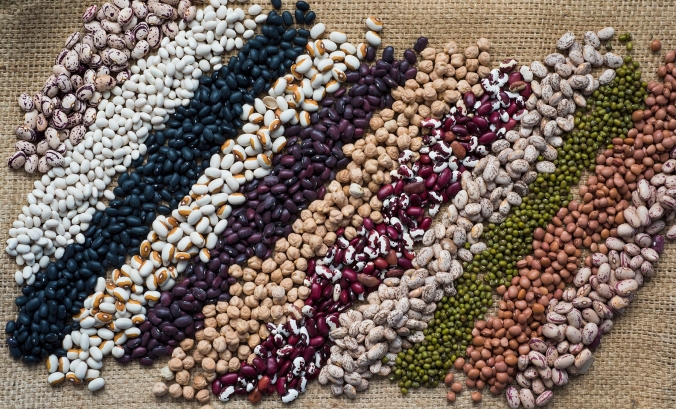
bean stripes 01 sml

Apparently we have quite a few different dried beans in our pantry.

Spoiler alert (and controversial bean-cooking tip alert, too): I cook all of my beans the exact same way, in a slow cooker (also commonly known as a Crock-Pot). And I no longer soak the beans in advance. Plus, I salt them at the beginning. That’s right, friends: I don’t soak my beans. And I salt before they’ve started cooking. I have spent years and years cooking dried beans, and I’ve tried every method: simmering on the stove, pressure cooker and on and on, and I’m personally convinced that the slow cooker, with its incredibly gentle simmer and moist, low-heat environment, is perfect for beans. And I get to skip the soaking step, too. (I don’t have an InstaPot, and I’m not going to buy one, but if you have it and you like it, then use it for beans.)

Continue reading

Winter book club

Though the solstice has passed and days are theoretically growing longer, we have settled into deepest winter here. Famed organic farmer Eliot Coleman calls this the “Persephone period,” when winter days are less than ten hours in length. Late sunrises, early sunsets and a chilly winter sun barely peeking through the gloom create perfect days for curling up in front of the fire with a book. Though we should be studying farming materials – and we are, I promise! – I also devote plenty of time to non-farm reading, too.

Book Club 04 sml

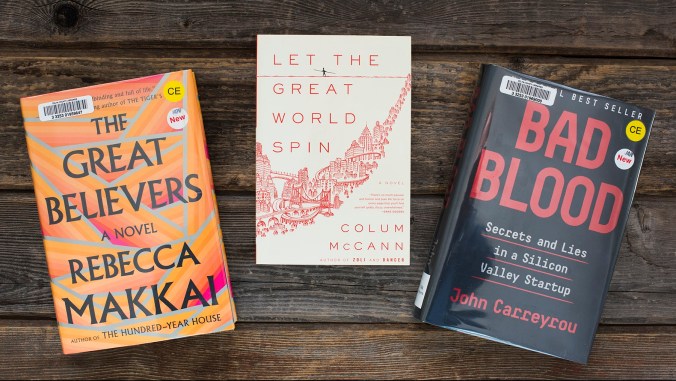
The Great Believers, Rebecca Makkai

This book appeared on a number of 2018’s “Best Of” lists and won numerous prizes, and for good reason. Like Jonathan Franzen’s Freedom, this book, to me, perfectly represents The Great American Novel. It concerns two parallel stories, one set in Chicago in the mid-eighties during the height of the AIDS crisis and one in 2015 Paris, and both stories grab you by the throat and consume you completely. This was a book that I had a hard time putting down even when I couldn’t keep my eyes open late at night, and one that I dove into when I was supposed to be doing ten million other things. It’s only been a few short decades, but it’s difficult to acknowledge now just how blind and how cruel we were when AIDS ravaged our country. Now that HIV/AIDS is no longer a guaranteed death sentence, it seems even more shocking that we let thousands of people, mostly young, vibrant men, die horribly – because we didn’t agree with their lifestyles, because “God is punishing them.” Along with Vietnam and civil rights, I’d identify this period as one of the most truly shameful in American history. Layered, gorgeous and tragic, The Great Believers is one of the best books I’ve read recently.

Continue reading

Farm update: January 14

We’re striding into 2019 full of vigor, purpose and excitement. We’ve erased and rewritten our Quiet Farm project whiteboard – it has three columns, Now, Soon and Later – and although we’re totally overwhelmed by the sheer number of tasks, we’re looking forward to an incredible year. First on the list is to finish our home renovations, then to build out our commercial kitchen so we have an amazing space ready for classes and workshops and events. Over the course of the year we’ll continue to share everything we’re up to here on Quiet Farm, and we’re so glad to have you along for the journey!

Fire Water 01 sml

Late last year I made my first batch of fire cider, a legendary homeopathic folk remedy popularized by the herbalist Rosemary Gladstar. Recipes vary, of course, but most include raw onion, garlic, horseradish, ginger, lemon, chiles, apple cider vinegar and honey for sweetening. I also included lots of turmeric, a powerful anti-inflammatory, plus extra citrus for the vitamin C boost. I usually take a shot each morning and follow it with lots of water; this brew is intense and can definitely upset sensitive tummies! But I believe firmly in supporting our immune systems with good food and potions like this and ideally not getting sick at all. (Oh, and wash your hands with hot, soapy water. All the time. Regular handwashing is the single most powerful weapon we have against colds and flu.)

Continue reading

Paris in black and white

Bonjour, nos amis! We’re not actually in Paris, but we were one year ago! And since life on Quiet Farm is rather, well, quiet, right now, we thought we’d share some atmospheric photos from our travel that didn’t make it into our posts last year. Paris in winter is so perfectly suited to black-and-white photography that it seems a shame to let these gorgeous images languish on a hard drive somewhere.

Parisbw-09

Continue reading

A fresh start

QF Snow 02 sml

I love everything about January. I love the quiet, the fresh start, the clean slate. And of course, this is the time of year when so many of us promise to do better. When we promise to eat right, drink less, stop going out to restaurants so often, quit smoking, save our money, exercise more and all the rest.

I don’t subscribe to the negativity often associated with New Year’s resolutions. (By mid-January, over a quarter of all New Year’s resolutions have been discarded, and only a scant 10% are actually followed through to the end of the year. Those are some pretty bleak statistics.) Changing habits is hard enough; I’d much rather start off on a positive note. I make a list of goals, not resolutions.

And with that positivity in mind, let’s revisit our annual primer on eating better. This isn’t designed to be an exhaustive list, nor a restrictive diet plan, merely a few simple tips to get your head in the right place for making healthy changes in your daily eating. Allow me to shout this from the rooftops: diets don’t work. Changing your mindset does.

Continue reading

Farm update: December 17

Hello! How are you? We’ve still got quite a lot of snow sticking around, but it’s been dry for a week and we’d love to have more moisture. We attended the annual meeting of our ditch company recently, and all of the stoic old-time farmers seemed quite thrilled at the snowpack thus far this year. It’s a big change for the better from last year, to be certain, and we hope the pattern continues.

Orchard Snow 01 sml

The peach orchard across the road.

Fall CSA wk5 01 sml

One of the most delicious items we received in our CSA was heirloom cornmeal, ground from Painted Mountain corn. We take corn so much for granted in this country – as Michael Pollan says, we’re “the United States of Corn” – and sometimes we forget how much of humanity has been nourished on this incredible grain. Growing heirloom corn for eating fresh and for grinding is just one way we can recapture some of the food sovereignty that we’ve lost. I made fabulous hot pepper cornbread and plan on making cheesy polenta this week.

Continue reading