Farm update: May 11

It’s hot, dry and windy out here, and feels more like late July than early May. We seem to have skipped straight from a parched winter into an equally arid summer, missing the soft green lushness of spring entirely; the peas and radishes survived frost damage only to turn bitter and pithy from sun scald. Last year we had rain almost every single day in May, and this year it’s unlikely we’ll see any. Early reports indicate that the mountain snowpack is melting far too quickly, thanks to this premature summer, and our primary focus these days is on keeping all of our plants irrigated. Here are a few more things we’ve been up to recently.

Irrigation 02 sml

Our gated irrigation pipe at work. 

All of our irrigation water comes from snow on the Grand Mesa. When the snow thaws each spring, the snowmelt makes its way down the mountain through an intricate series of ditches, headgates, creeks and pipes. We’re focused this year on regenerating our pasture, so have started flood-irrigating our land to see what grows. Later this season we’ll remark our pasture (cut channels that direct the water) and hopefully seed it with perennial grasses, too. Eventually we’ll use the land for rotational grazing, likely a grass-fed steer or two. Flood irrigation requires a lot of work – the water has to be “moved” by opening and closing valves and gates along the pipes – but it’s the system we have, so we’re learning how to use it to the land’s advantage.

Continue reading

One potato, two potato

Last year we planted potatoes for the first time and achieved a reasonable level of success for a freshman effort, though our part of Colorado isn’t at all suited for potato growing. To our south and east, however, you’ll find the San Luis Valley: the second-largest fresh potato-growing region in the country and justifiably famous for the crop. Their loose, sandy soils are much better for potatoes than our heavy, rocky clay.

Potato Towers 01 sml

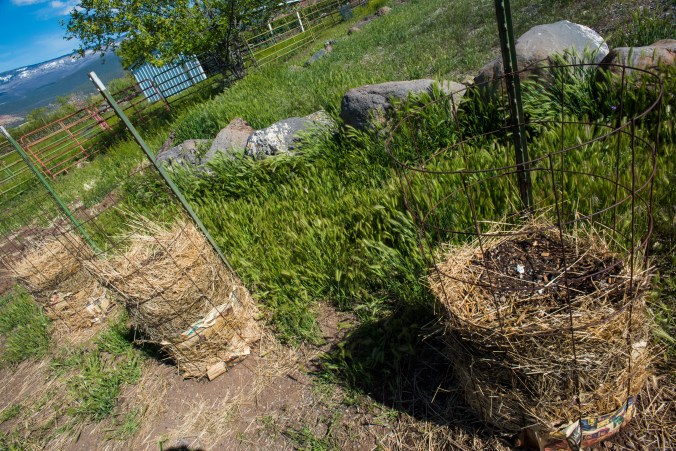
Last season’s potato towers.

But like any stubborn farmer, we love being told what we can’t grow, so that we can try it anyway. We quickly realized that we wouldn’t be planting potatoes in the ground and so opted for potato towers: layers of soil, compost, newspaper and straw in a wire cage, with seed potatoes nestled gently in between. We planted about one and a half pounds of seed potatoes in each of three potato towers, and yielded about twenty pounds of potatoes in total – not bad, considering the minimal growing space and effort required, but not the thirty-plus pounds we were hoping for. And some of the potatoes were really tiny, like the size of marbles. Not very practical.

Continue reading

Farm update: April 27

Hello there. How are things in your world? It’s an odd and unsettled time, to be sure. Here at Quiet Farm we’re keeping our heads down and our hands busy as we navigate the seasonal weather shifts that have us careening from wind to rain to sun to hail and back again, all in the space of a few minutes.

House Finch 01 sml

House finch (Haemorhous mexicanus).

Spring is underway, slowly but surely, and our diverse bird life reflects that. The bald eagle pair we’d been keeping an eye on has vanished, presumably for colder climes; now the gorgeous call of the Western meadowlark (Sturnella neglecta) marks our days. Watching the scrappy magpies fight off aggressive egg-stealing ravens is decent entertainment, too.

Continue reading

The sourdough bandwagon

Here’s what N and I have learned in the five-odd weeks since this madness really kicked off: the things we’ve been doing for years – growing food, baking bread, keeping chickens, buying only secondhand, cutting our own hair – are exactly what all of America seems to want to do right now. Listen up, everyone: we’re cool and we’re on-trend and we are probably influencers too. We’re going to call ourselves influencers, anyway. We’d like to influence you to bake sourdough, mostly because no one can find any yeast yet people still really, really like fresh bread.

Sourdough 05 sml

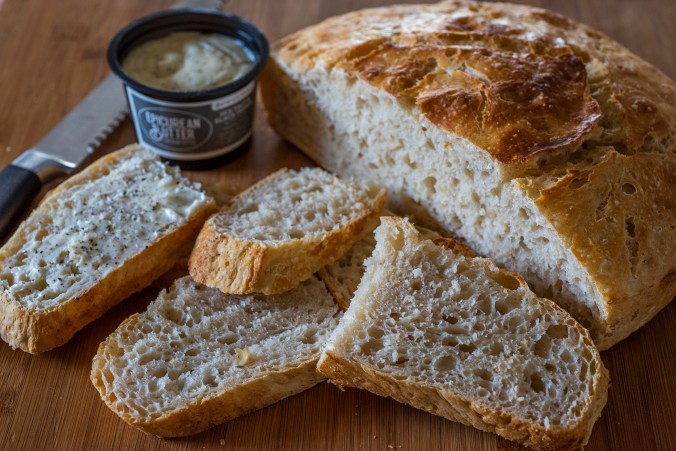
Really, what’s better than fresh bread and good butter?

I’m not at all surprised by the gardening and the bread baking, truly. People have extra time on their hands and want to do something both purposeful and satisfying, plus spring has arrived in most places and it’s a pleasure to be outside. But the sourdough thing? That did take me by surprise, as sourdough has a reputation for being so tricky and difficult and obsessive and a little weird because people name their sourdough starters and refer to them as pets. But then of course all of the country’s commercial yeast disappeared somewhere so it’s only natural that everyone would turn to sourdough, and people also need new pets in this time of isolation, kind of like Wilson in Castaway, so it all sort of makes sense.

Continue reading

Chick lit

A couple of weeks ago The New York Times ran an article about how, in addition to guns, seeds, toilet paper and yeast, Americans have “stress-bought all the baby chickens.” For the record, N and I would like to point out that raising chicks was always in our 2020 plan, even before this pandemic wreaked havoc on the universe. And so it happens that ten chicks now reside in a makeshift fort in our sunroom, deftly constructed of cardboard, repurposed pallets, a vintage metal fireplace guard, free Harbor Freight tarps, and salvaged window screens. This chicken palace is a thing of architectural beauty, make no mistake.

Bielefelder Chick sml

Bielefelder

What distressed me most about that NYT article – and to be fair, this happens every Easter – is how many people buy chicks (and puppies, and kittens…) without thinking beyond their cuteness stage. Do you know anything about keeping chickens? Where do you plan to house them? How will you keep them safe from predators? What if you end up with a rooster, which are illegal in most municipalities? This flock will be our fourth, and before we had chickens at our old house we did a ton of research on how to keep them safe, healthy and happy.

Continue reading

Kitchen substitutions

A lifetime ago, N and I worked and lived on boats. We worked on fancy boats and not-so-fancy boats and were often at sea for days or even weeks at a time, traveling from southern Florida to the Caribbean, or across the Atlantic to make quick landfall in the Azores before an intense Mediterranean charter season. Being at sea meant no quick runs to the store, no online grocery delivery, and so I grew adept at using the ingredients I had on hand and figuring out what substitutions I could make.

It turns out that this skill comes in handy in our new world, too. Americans are cooking and baking more than ever – which is fantastic! – and more often than not, we’re doing so with a limited selection of ingredients, thanks to supply-chain bottlenecks and unnecessary hoarding and other factors. So it might be useful to learn some simple kitchen substitutions, which will make you a better cook and a better baker both during quarantine and once things return to “normal,” whatever that might mean.

Continue reading

Gardening for beginners

The aftermath of both September 11 and the 2008 economic collapse brought a renewed interest in home gardening, and our current catastrophe looks to be no different. Garden centers have started operating online, seed companies are back-ordered for the foreseeable future and lots of people are reviewing their HOA regulations and eyeing available space in their suburban backyards. While it might not be practical to expect a backyard garden to provide all necessary food for a standard American family (how do you grow dinosaur-shaped chicken nuggets, anyway?), gardening offers an active yet meditative experience, an immense sense of satisfaction and self-sufficiency, and a deeper appreciation for how much work it takes to grow food. With that in mind, we offer a few basic tips for people looking to start their own garden.

Seedling 02 sml

The current seed-starting set-up in our sunroom, expanding by the day.

Start small, and plant what you’ll actually eat. In moments of stress or panic (or when we suddenly have an unexpected amount of free time on our hands) we might be tempted to dig up our entire backyard and start an urban farm. This is great in theory, but if you’ve never grown a single basil plant before, we highly recommend that you start small – maybe just a couple of herb pots or a tidy little container garden on a sunny patio. It’s easy to think big and abundant, but when things return (somewhat) to normal, whenever that may be, you may not have the necessary time to devote to your garden. You can always expand if it turns out you love growing food.

Also in the interest of keeping things manageable, plant what you’ll actually eat. I’ve decided this year that I’m no longer going to devote precious garden space to eggplant, because although we don’t hate it, we don’t love it, either. And our vegetable real estate is exceedingly valuable – more so every year – and I want to plant things we adore, like tomatoes and peppers and interesting culinary herbs. When you’re choosing what you’ll grow, make sure you have a selection of vegetables and herbs that are relevant to your household, and if possible, try one new variety that you’ve never eaten before.

Continue reading

The second week

Citrus 01 sml

Hi there. How are you holding up? Like most of you, we’re entering our second week of self-quarantine. Some of you are under a mandatory shelter-in-place order. It is no exaggeration to say that our world has turned completely upside down over the past week, and that we’re all doing our best to make sense of a fraught situation that has no logic, no precedent, no guidebook.

I am working diligently on acknowledging what I can control and letting go of the rest. To that end, I believe that our single most important job right now is to stay healthy. For those of us who are low-risk and currently healthy, the most valuable contribution we can make to our community is to remain isolated and entirely out of the medical system, so they can put their attention and skills and dwindling supplies towards those who need it. Obviously everyone’s situation is unique, but here’s what we’re prioritizing at Quiet Farm:

Limited sugar / unlimited fruits and vegetables. When this pandemic imploded in the U.S. two weeks ago, my first instinct was to grab all of my chocolate and butter and flour and cover every available surface in my kitchen with an elaborate array of cookies and brownies and comfort cakes, like some sort of mad bakery vision devised by Lewis Carroll. Baking is regimented and precise and calming, and something we can control when everything else has gone by the wayside. Instead of filling our house with sweets, though, we’re eating as much fresh (and frozen!) fruit and vegetables as we can manage. (When everyone else was stocking up on toilet paper, we were buying citrus. There was plenty.) It’s easy to justify scarfing a lot of junk food and “emergency snacks” when we’re anxious, but sugar is highly inflammatory and I think our bodies are under enough stress as it is. We’re consuming lots of salads and green smoothies and stir-fries, and when I do bake, I bake muffins loaded with fruit purees and nuts and seeds.

(P.S. If you’re buying salad ingredients for longer-than-usual storage now, avoid anything pre-cut and think hardy brassicas like kale, Brussels sprouts and cabbages. These are all super-nutritious and delicious shredded into a salad, and they’ll keep much longer than pre-washed bagged greens.)

Hydration. We live at 6,300 feet in a high-plains desert, so we’re naturally a bit dehydrated most of the time anyway. Dehydration contributes to headaches, irritability, muscle aches, mental fuzziness, exhaustion and a host of other ailments, none of which we need right now. We might be less active these days and so think that we need to drink less, but a cool glass of water could be exactly what we need to right our ship in this moment. We’re drinking lots of water, plus plenty of mint tea and a hot honey-lemon-ginger tonic that soothes throats and nerves. When it seems like everything is about to go entirely off the rails and I can’t take this for one more minute, I stop, breathe and drink a glass of water. It doesn’t change what’s happening in the world, but it does allow me to accept it without panicking.

Movement and fresh air. I’d much rather be outdoors than in even in the best of times, but a heavy, wet spring snowstorm this week has turned our farm into one giant muddy puddle. Despite the poor weather, I compel myself to get outside every day for at least thirty minutes, even if it’s just to empty the compost bin or watch the chickens or check on seedlings. And I never seem to actually want to go for a walk or a run, but once I’m out and moving, I never regret the decision. If you’re able to do so safely (and with appropriate six-foot-plus social distancing), please get outside, even if it’s just to feel the sun on your face. Do ten jumping jacks. Stretch like a contented cat. Skip rope. Run around in circles. Dance like a person possessed. Spring is here, and there is new growth to see everywhere, even if it doesn’t feel much like a time of hope and renewal right now.

Sleep. It is oddly comforting to me, somehow, to know that every single human on the planet right now is under some degree of stress from this new enemy; collectively, we are suffering together. But we’re concentrating on keeping our immune systems strong, and stress, anxiety and poor sleep are in direct opposition to this. So we sleep, as much as we’re able. There is no shame in going to bed at nine o’clock (without our phones!); no shame in sleeping past our usual waking time. Sleep is our bodies’ time to heal and to repair, and we all need that right now. If you can, get some extra sleep. It definitely can’t hurt.

I’m well aware that these are small and meaningless tasks, and they’re nothing compared to what the people on the front lines of this crisis are facing. But these are things I can control, and that’s all any of us have right now. And we need to stay healthy, first and foremost.

How is your household navigating our new world? We’d love to hear what you’re prioritizing. Stay healthy and well.

Flatten the curve

Waffles Pommegranate 01 sml

I read a story this past week – possibly apocryphal, but right now, who cares? – about shoppers in a Trader Joe’s who got into a fistfight over the last package of frozen waffles. My first thought: isn’t an indefinite home quarantine a great time to learn how to make your own waffles? My second thought: Americans display Black Friday tendencies even in the face of an unprecedented global crisis.

Our county is sparsely populated, especially compared to much of the rest of the state, but we have an extraordinarily high percentage of elderly residents. We’re following the “flatten the curve” guidance and will be on self-isolation for at least the next two weeks. I’ll be entirely honest: this doesn’t really change our normal lives at all; we’ve regularly gone two or more weeks without leaving the farm and without encountering other people. So it’s business as usual for us here, with the added incentive to get lots of seeds started and spring planting done; thankfully, the weather ahead looks perfect for outdoor work.

Some ideas if you, too, are staying home to protect your community: plan your garden! Make soup! Start seeds! Bake bread! Cook a pot of beans! Go on a long walk! Grow some microgreens! Make yogurt! Dust off your sewing machine or your knitting needles and do something creative and relaxing! (I’m super-excited to see that “visible mending” is now a legitimate trend – and I have a big pile of socks to repair!) Start a compost pile! Read some great books! Make waffles so other people can fight over the frozen packets! Make the most of this difficult situation and learn something new. Enjoy unexpected time with loved ones and limit your news access, too. (Again, easier said than done.)

Be calm, be kind and be gentle – with yourself, and with others. I hope we get through this and come out better and stronger on the other side. Andrà tutto bene, friends.


Farm update: March 9

How are you doing? It’s probably been a whipsaw week where you live, too. Here we are trying our best to stay busy and avoid the headlines (easier said than done). A few things we’ve been up to, if you’d like to see:

Bees Coffee Filter 01 sml

The bees love coffee as much as we do!

One sure sign of warming weather (which is coming far too early, in our opinion) is enhanced bee activity. On warm, sunny days we’re seeing lots of bees buzzing in the compost pile (they particularly love our spent coffee filters) and also near one of our big trees that’s in early bud. The apple trees in the surrounding orchards haven’t bloomed yet, but it’s always nice to know that our resident bee population survived another winter.

Continue reading