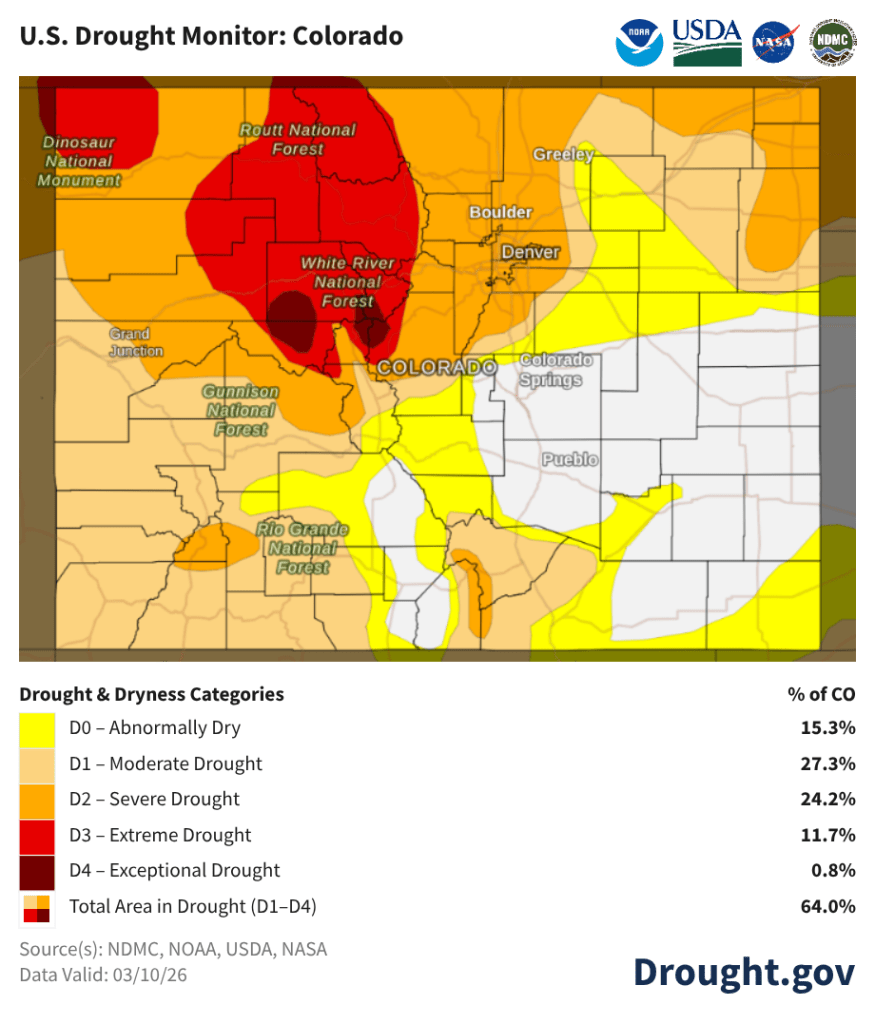
Mid-March over here and we are preparing for a growing season that will challenge us yet again. While last year was the toughest we’ve experienced, 2026 looks likely to be harder. We simply did not have winter at all this year. This week’s predicted heat dome will break records across the region and might push our highs into the mid 80s – in March. Snowpack across the American West is in many places at its lowest recorded levels ever, most Mesa reservoirs are at 20% or less of capacity, the Colorado River will not meet its obligations this year, and we are girding ourselves for a hot, dry and fiery season. Will the grasshoppers return? Probably; they thrive in drought conditions, unlike us.
Enjoy this federally-provided data while you still can.
While our irrigation allocation won’t be announced until mid-May or later, we are preparing for our lowest allotment since starting the farm in 2018. This means altering our irrigation schedule, buying in more hay, and planting fewer crops. We are having lots of hard conversations about how we’ll manage our pasture and our crops on minimal water, and what changes we’ll make to prioritize our own physical and mental health – something we really struggled with last year.
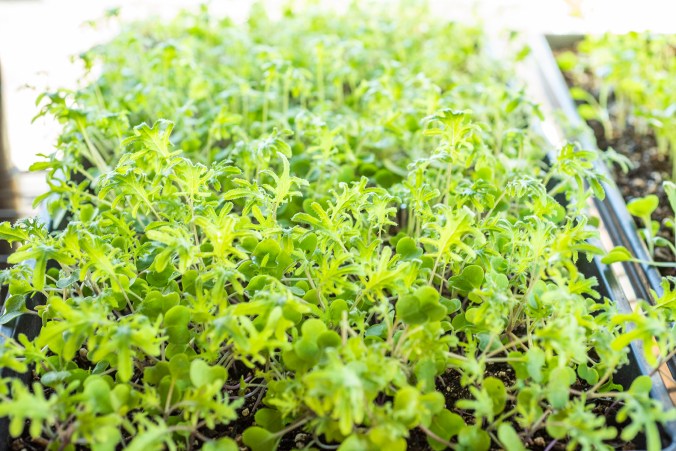
Kale sprouts in the sunroom.
The sunroom is currently packed with the usual assortment of starts – peppers, tomatoes, greens, onions and much more. Even though it’s unlikely that I’ll plant as much I have in previous years, on the outside chance that we score a wet spring I’d still like to have our own organic starts ready to go in. I’m also growing lots of salad sprouts this year, which has been remarkably gratifying – the nutritious sprouts are so crunchy and fresh in our daily salads, and I can control the environment much better indoors. I plan to grow sprouts continuously, if I can manage it!
Outside beds have been seeded with all manner of hardy greens, plus peas and fava beans. I’m trying black chickpeas for the first time this season; unlike most dry beans, they’re planted early and I’m curious to see how they’ll fare here. We usually go straight from winter into summer, skipping the cool season loved by peas, rhubarb, cilantro and asparagus, but since we’re already in spring and have been since January…well, it’s difficult to know how well anything will grow. Historic temperature records and weather patterns might once have been useful, but now all bets are off and it’s just one big rickety roulette wheel. In a stable climate, temperature and precipitation levels are rarely broken; highs and lows exist within established, constant parameters. In a destabilizing climate, however, records are broken all the time; certainly we’ve seen this play out across the country over the past few years and especially this winter.
The climate crisis is forcing us all to adapt in various ways, and farmers are no exception. This week we watched this one-hour documentary about farmers across Colorado incorporating agrivoltaics on their land. Much of the film was shot here in Delta County and features many of our farmer friends and colleagues. Watch for free here, if you’d like.
Despite the obstacles, we’ll carry on growing food in a high-plains desert – at least for now. It feels like our food security is shakier and therefore more important than ever, yet in my anecdotal experience, fewer people are choosing to grow food, even in small quantities. Will you plant a garden this year or has it all become too much?
“The best time to plant a tree was twenty years ago. The second best time is now.”
Our farm had been mostly abandoned for a number of years prior to our purchase, and even with three years of hard work, there is always more to be done. One task that we try to accomplish every year is to plant more trees – although we did opt out this year because we knew that water would be in such short supply. We still have trees to care for, of course, and if this drought cycle ever eases (looking unlikely, in all honesty) we’ll definitely plant more trees. Every project we choose is focused on improving our land, for us and for the future.
Our Eastern red cedar (Juniperus virginiana) saplings, ready for planting.
Trees are an incredible weapon against the climate crisis, yet we don’t call them into service nearly often enough. Any homeowner knows how valuable trees are in keeping houses cool in summer, and many cities have started planting trees in public spaces as a natural heat sink against all that concrete. With so many new housing developments cropping up, however, trees are mowed down and then halfheartedly planted again as an afterthought, and often left to wither and die without proper care. And of course it takes years, if not decades, for the shade canopy to grow. Healthy, mature trees are a valuable asset to any property; we’re working hard to save the ones we have and add as many more as possible.
Planting our Eastern red cedar windbreak along the southern line of our game fence.
One of the very best things we’ve discovered since moving to the farm is the CSU Seedling Tree Program. This is a joint project of the Colorado Forest Service and Colorado State University, and it provides seedling trees, bushes and other perennials to homeowners at an exceptionally low cost. We’ve used the program twice now with great success, and will definitely participate again. The only downside is that many of the tiny seedlings are sold in packs of 25 or 30 – meaning you either need a lot of land, or you need to make share arrangements with friends and neighbors. It’s also essential to plan in advance, as the sale opens in November (trees arrive the following May) and plants sell out quickly.
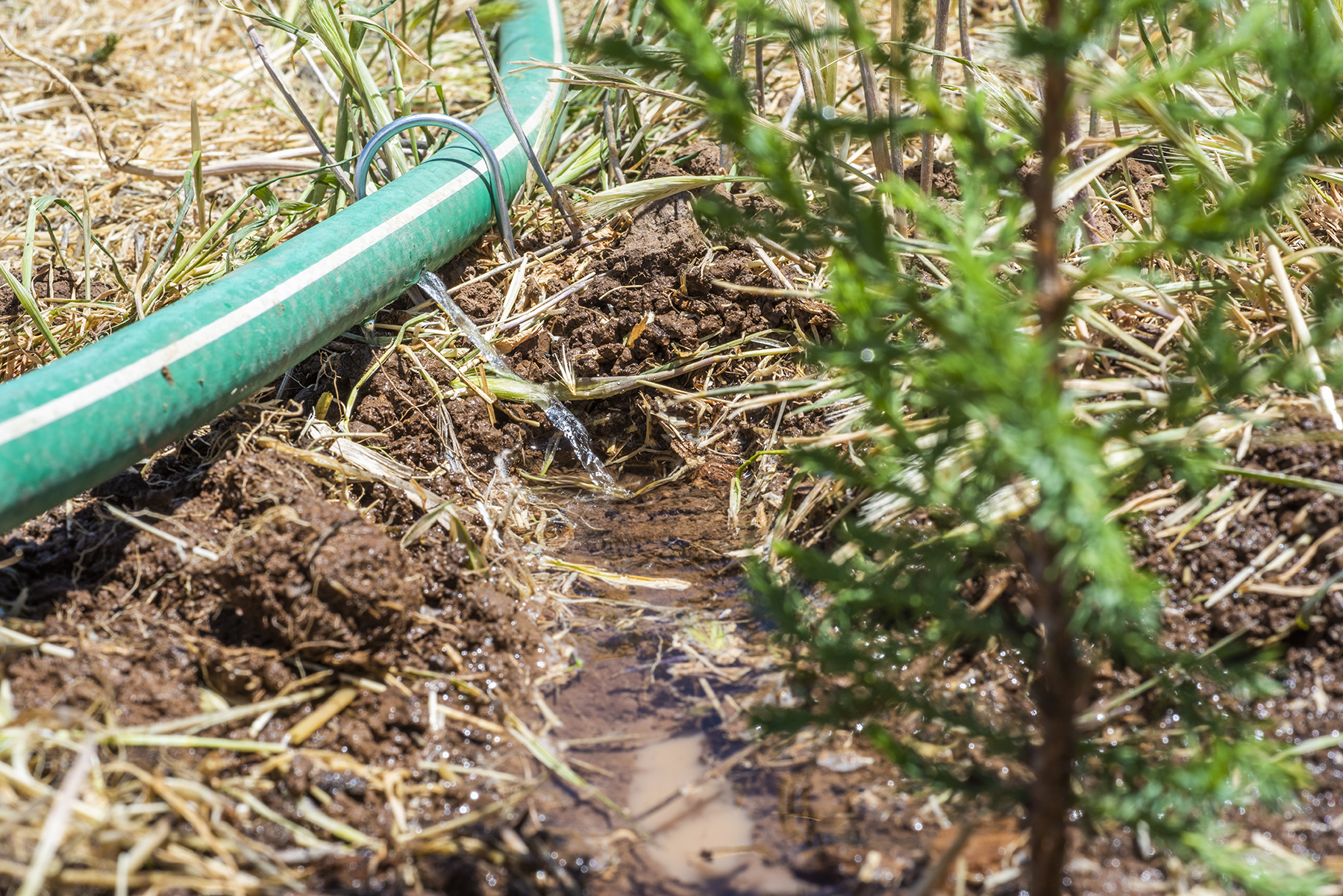
A damaged garden hose makes great drip line!
The biggest advantage to purchasing plants from this state program is that everything is grown in Colorado, meaning it will likely survive our harsh conditions if properly cared for. Additionally, there is a helpful information sheet that shows which plants will grow best where; some are suitable for up to seven thousand feet – perfect for us! – and some can tolerate the higher mountain elevations. The program also provides planting guides and lots of other useful tips to keep the trees healthy.
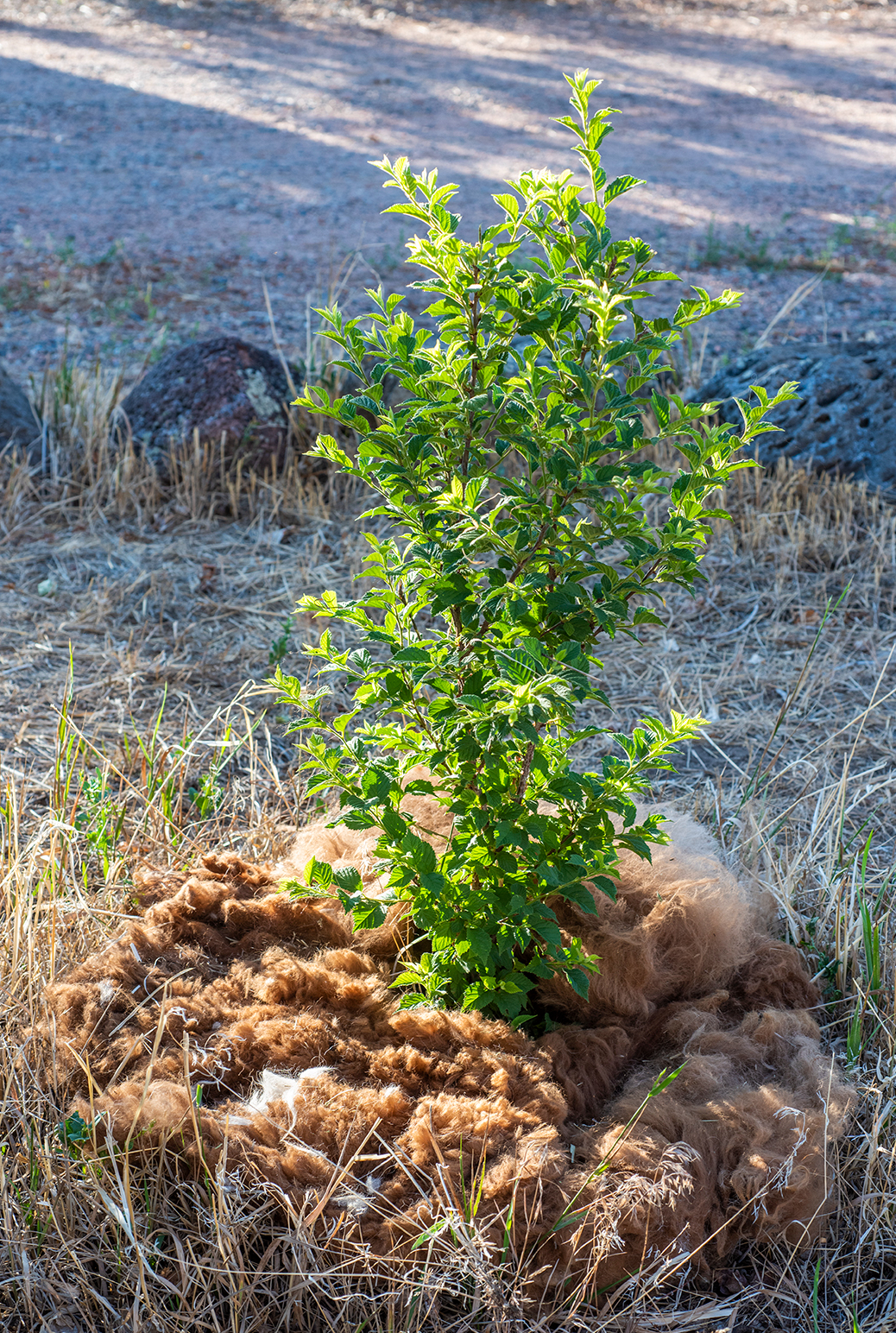
One of our Nanking cherry trees, heavily mulched with an alpaca fleece blanket.
Quality trees are expensive. They’re rightfully expensive because they took a lot of labor and care and investment to grow. Many people don’t realize that while big-box stores might be cheap, they’re not necessarily going to sell plants suitable for that particular area; those national purchasing decisions are made months, if not years, in advance, by some corporate executive at the head office in some vague place a thousand miles and many weather patterns away from Colorado’s arid high-plains desert. If you’re spending good money on trees, it makes sense to choose trees that are appropriate for your space. Figure out where you want to plant – is it sunny? Shaded? What sort of soil? What’s the elevation? Do you want a deciduous option? Is there good drainage? Will it impact overhead wires? Near sewer lines? Once you’ve got the site narrowed down, do some research about your hardiness zone and what might suit your needs. Go to a reputable local nursery that knows what works in your climate, not some impersonal big-box store looking to offload ten thousand Meyer lemon trees because they didn’t sell in Arizona.
We caged the saplings to protect them; somehow, this one was missed when we removed the cages. It has since been freedand is growing nicely.
Once you’ve chosen your trees, make sure you know how and when to plant them. Here, we can plant some things in spring and others in fall, and it makes a big difference for the tree’s long-term success. Follow the planting instructions from the nursery, if they’re trustworthy; you can also check with your local Extension office. (Pro tip: when you know you have trees arriving, prepare your planting holes well in advance so that you can plant your trees as soon as possible. It rarely benefits a tree to keep it in its pot for any longer than necessary.) Make sure your spacing and placement account for the tree’s eventual canopy spread and possible interference with overhead obstructions.
We think some of our fruit trees have an aphid infestation; the presence of ladybugs is a good sign that nature is usually capable of defending itself if left alone.
One of the biggest mistakes people make in Colorado is not to water in seedlings thoroughly in the first year, or during dry winters. Especially in this climate, little saplings will often suffer from severe transplant shock and will need far more water than you might think. If your land isn’t set up with drip irrigation or some other similar system, it’s imperative that you figure out how those tiny trees will get the water they need. Although our orchard is on drip, many of our other trees are watered by hand, and especially this year we’re giving them a deep soak with every week’s irrigation run. Those roots will never establish properly if the tree is drought-stricken in its first year.
We’ve lopped the crowns off some of our struggling mature trees; most are showing growth again at the base.
Many homeowners think that it would be great fun to plant fruit trees for fresh, homegrown fruit, but be aware that fruit trees have their own set of challenges. The Front Range is particularly harsh on fruit trees because of the dramatic diurnal temperature swings; the main reason Colorado’s fruit industry is centered on the Western Slope is because we rarely experience those. (With the obvious exception of last October’s horrible freeze, which is why we have no local fruit this year.) And if your trees do bear fruit, they’ll bring pests (wasps! deer!) along with them. The majority of our fruit trees are outside our game fence, and we know that expanding that fence will be something we’ll need to tackle sooner rather than later if we ever want to harvest our own plums and Nanking cherries.
We didn’t think our Northern Catalpa (Catalpa speciosa) survived the winter, but it is thriving!
There is a perfect tree for every situation, but it might take a bit of effort on your part to figure out exactly what that tree is. Trees add so much intrinsic beauty and value to our world that it’s our responsibility to plant them wherever we can. If possible, dear friends, please consider planting trees where you live, work and play. We don’t plant trees for ourselves, we plant trees for future generations – and since we have rather a lot to apologize for, planting a few trees seems to be the least we can do.
P.S. If you’re not familiar with the title reference, it’s paraphrased from this classic, which was first released in 1971 and was well ahead of its time. It was banned in a California school district in 1989 because it was thought that it would “turn children against the logging industry.” Maybe it was the devastating and rapacious clearcutting of old-growth forests that actually turned people against the logging industry, and not a silly children’s book?
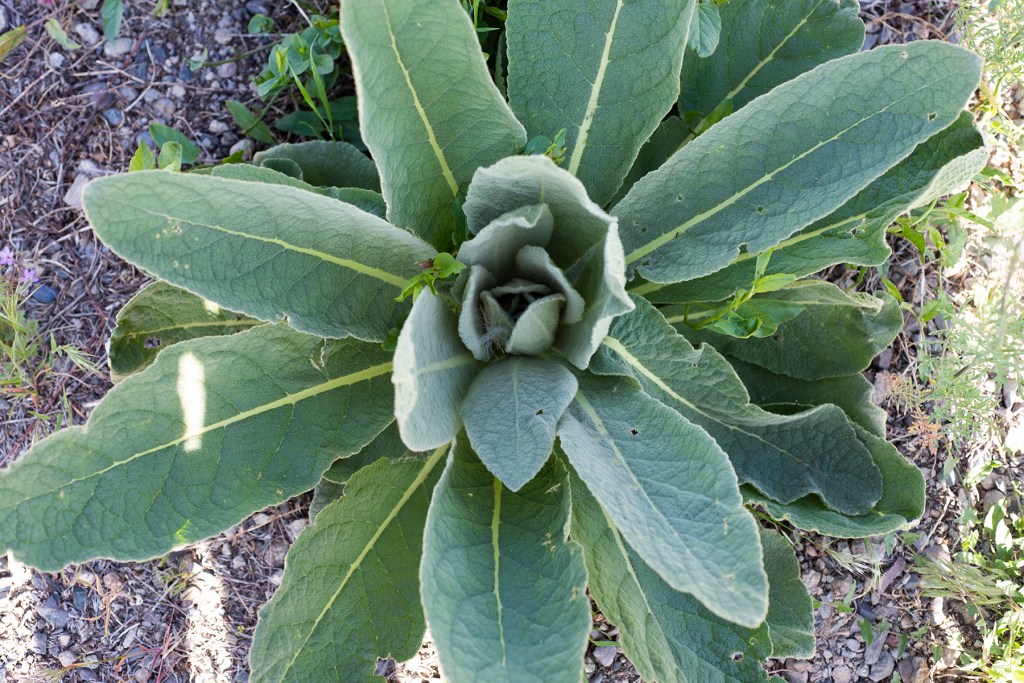
Soft and fuzzy common mullein (Verbascum thapsus).
A couple of years ago, a film titled The Biggest Little Farm was released in the U.S. It received quite a lot of publicity, especially unusual for a farm documentary, and was shown at film festivals and charity screenings across the country. The film opened shortly after we purchased Quiet Farm and was mentioned to us by scores of friends and acquaintances, so of course we had to watch it. The story follows John and Molly Chester as they attempt to regenerate an abandoned farm outside of Los Angeles.
Our first snowstorm arrived late last night, and with that, the 2020 growing season at Quiet Farm has officially concluded. Much of the past week has been spent preparing for this introduction to winter; though our skies will clear and temperatures will rise again later in the week, none of our annual crops will survive this cold snap. We’ve been threatened with hard freezes prior to this and have been lucky enough not to lose any plants; our season lasted far longer than expected. We’re hopeful that this early, wet storm will help the firefighters battling the numerous destructive wildfires currently raging across Colorado.
Flooding our pasture with snowmelt from the Grand Mesa.
We ran our final irrigation last week, then broke down most of our gated pipe so that we can repair any damaged gates and valves during the off-season. We have stellar water shares here at Quiet Farm, and thanks to N’s careful planning, we made our water last all season. This year was definitely a rebuilding year for our pasture, and we’re optimistic that our plans for next year’s irrigation run, which include reseeding, marking and thoughtful grazing by our herd, will yield even better results. Small farms are key to fighting climate change – if managed well, land like ours can absorb far more carbon than it emits. Establishing these “carbon sinks” across the country should be of highest priority; if this season’s devastating wildfires are any indication, the Rocky Mountain West has a tough road ahead.
‘Tis the season of both growth and destruction. We spend most of our time weeding and watering and looking for new growth on our crops and in our pasture; in response, all of our crafty farm pests have come out with hunger in their tummies and destruction on their minds. Time spent not watering or weeding is instead spent defending our territory. It’s a hard-fought war of attrition out here, and both sides are digging their heels in.
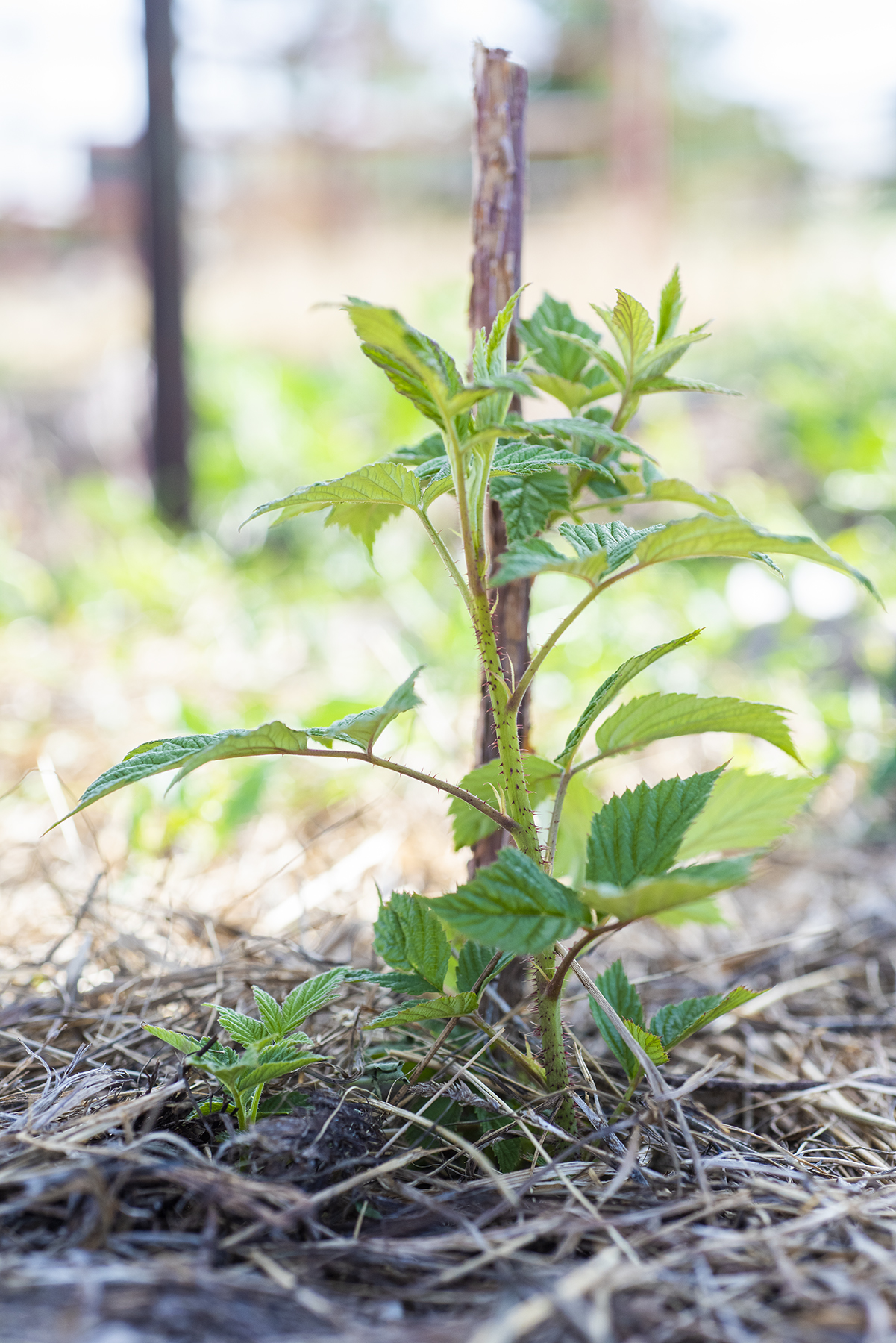
A raspberry cane with reassuring new growth.
We’re so pleased to see new growth on most of our raspberry canes. You might remember that we planted forty canes last year and every single one failed; this year we regrouped with drip irrigation and we believe that made all the difference. Bramble fruits like raspberries and blackberries typically do well in our climate; we’d love to grow our own fruit as well as our own vegetables. We’re always, always learning out here, and we’re trying hard not to make the same mistakes twice. We like to make lots of different mistakes instead.
Hello! How are you? We’ve still got quite a lot of snow sticking around, but it’s been dry for a week and we’d love to have more moisture. We attended the annual meeting of our ditch company recently, and all of the stoic old-time farmers seemed quite thrilled at the snowpack thus far this year. It’s a big change for the better from last year, to be certain, and we hope the pattern continues.
The peach orchard across the road.
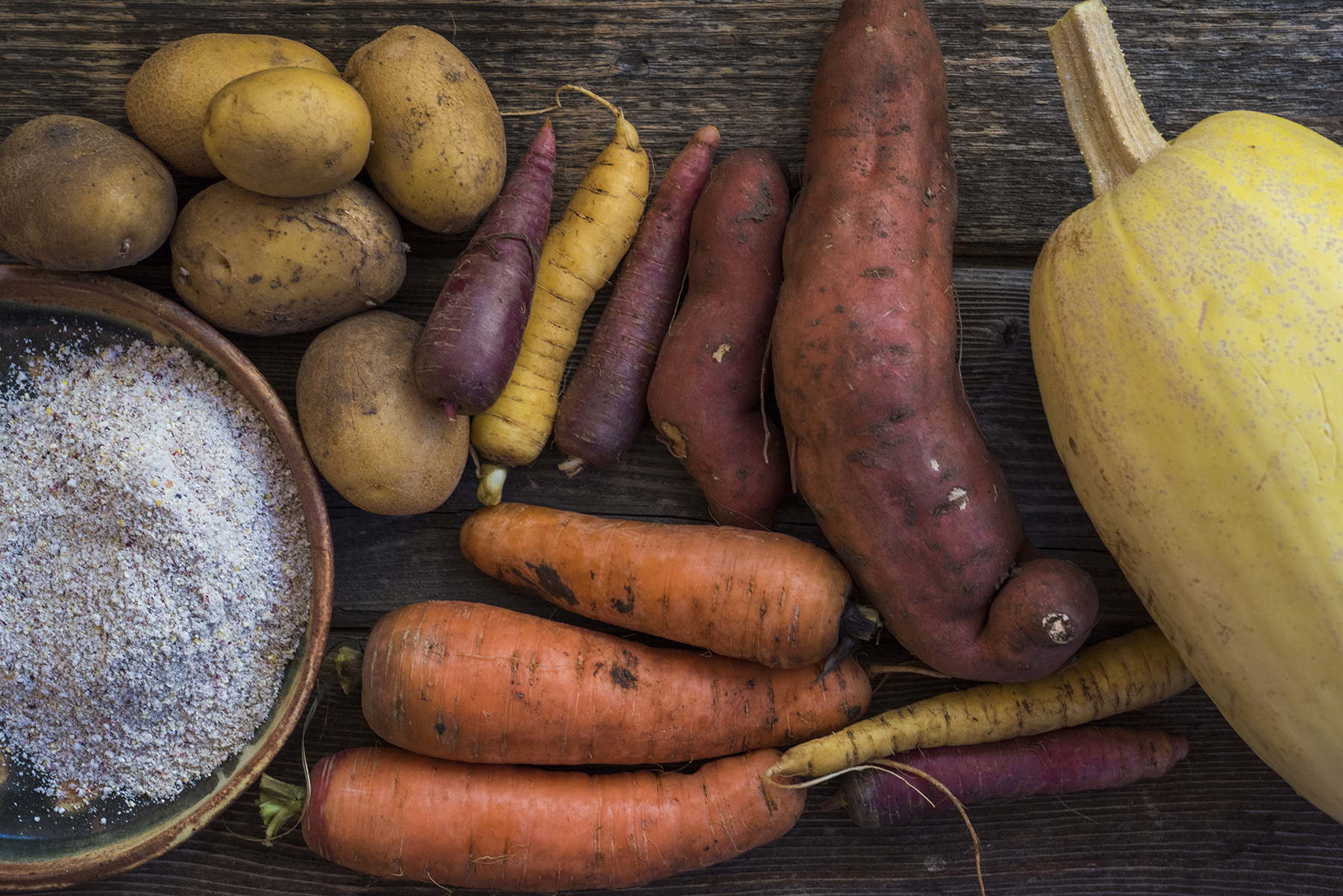
One of the most delicious items we received in our CSA was heirloom cornmeal, ground from Painted Mountain corn. We take corn so much for granted in this country – as Michael Pollan says, we’re “the United States of Corn” – and sometimes we forget how much of humanity has been nourished on this incredible grain. Growing heirloom corn for eating fresh and for grinding is just one way we can recapture some of the food sovereignty that we’ve lost. I made fabulous hot pepper cornbread and plan on making cheesy polenta this week.
Hello, could everyone please put on their interested faces? We’re going to get into the nuts and bolts of learning how to run ditch water on our farm, and we know you won’t want to miss a single moment.
We ordered our water two weeks ago; today is the final day of the season we can have it. We’ve called for half a foot for two days, the minimum we can request and hopefully enough for us to test our gated pipe and our repairs. There will be no more testing this season after this run, so we need to learn all we can.
At the headgate before sunrise.
The morning of the irrigation call starts with a pre-dawn alarm and a drive to the headgate (about a half-mile north of our farm). On the stile post we find a metal tin with the day’s water requests: where the water is going and in what quantity. The paper below it lists which households are on which ditch lateral (west or south).
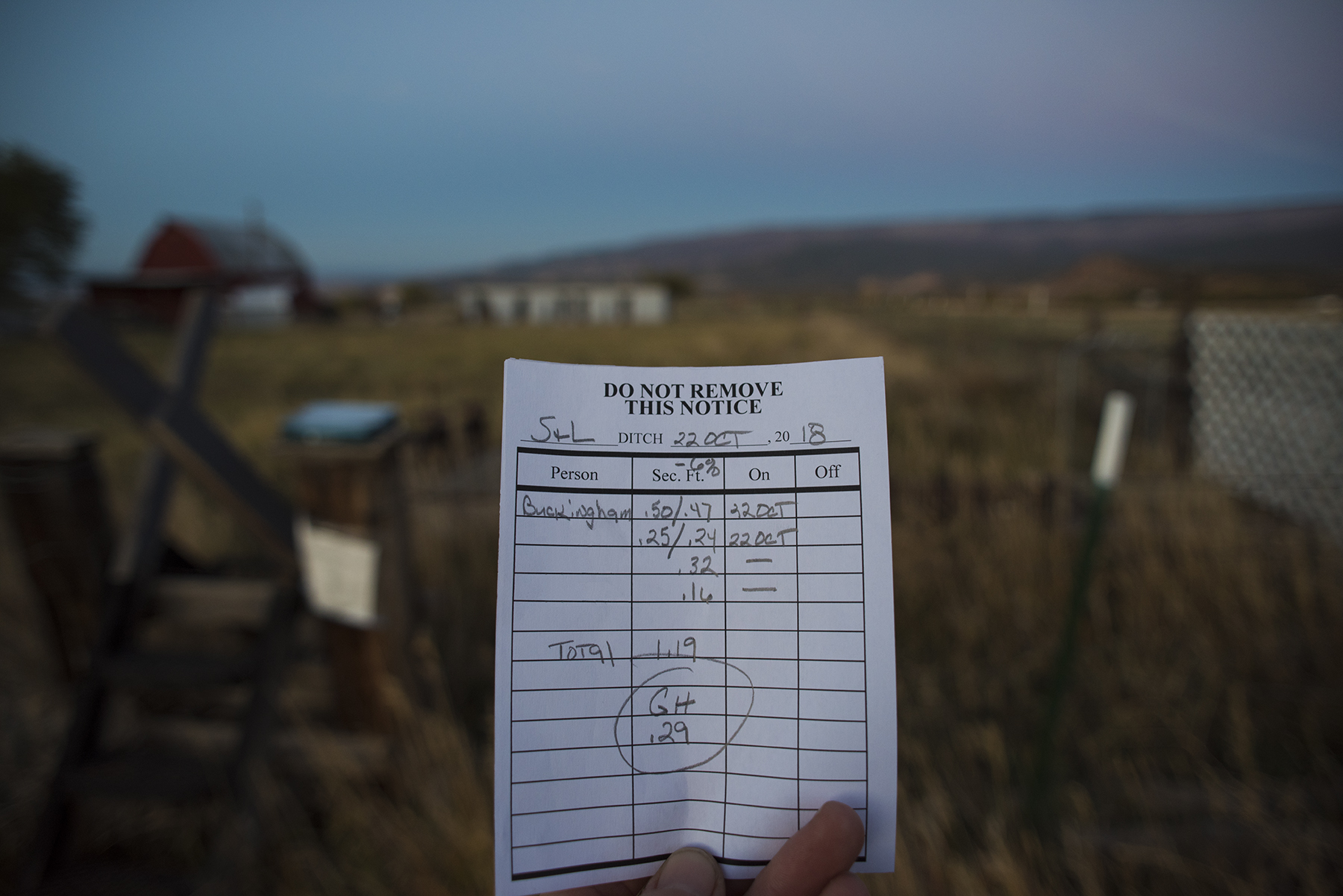
This is the Stevens and Linder ditch ticket; there are four requests with the totals listed (names underneath ours removed for privacy). All four of the day’s requests are located on the west lateral so the first task was to shut the headgate to the south lateral, thereby directing all the water to the west.
The ticket shows the quantity of water requested by us (.50 or half a foot), the corresponding gauge chart conversion (.47) – to be remembered to help set the flow gauge on our property – and lastly the water shrink to be expected due to ditch loss (6%). Requests three and four on the ticket won’t suffer the 6% water shrink because they’re on decree water and it doesn’t apply. Those folks have senior water rights which allows them decree water (free and separate from their water shares) even at the end of the season. For almost everyone else this season, there was no decree water at all; the reservoirs are too low to allow it. We’re supposedly in a hundred-year drought, but even that is a misnomer; we’ll almost certainly see a drought this severe or worse again in our lifetimes. Extreme drought is the new normal here, and learning how to properly manage our water rights will be key to our longterm success.
Before we moved to the Western Slope, we were told again and again to make sure we buy water, not just a farm. Over here, water and land are sold separately, like toys and batteries. Just because water runs through, on or over your property doesn’t necessarily mean you have any right to use it.
The good news is that Quiet Farm does have adequate water, in most years. The bad news, however, is twofold: first, the Western Slope is in an unprecedented drought and at the moment no one has enough water. And second, we know precisely nothing about irrigation management. When you live in modern suburbia you just turn on the tap and the water flows magically, right? That is so much not the case here.
Irrigation management on Quiet Farm doesn’t look like this.
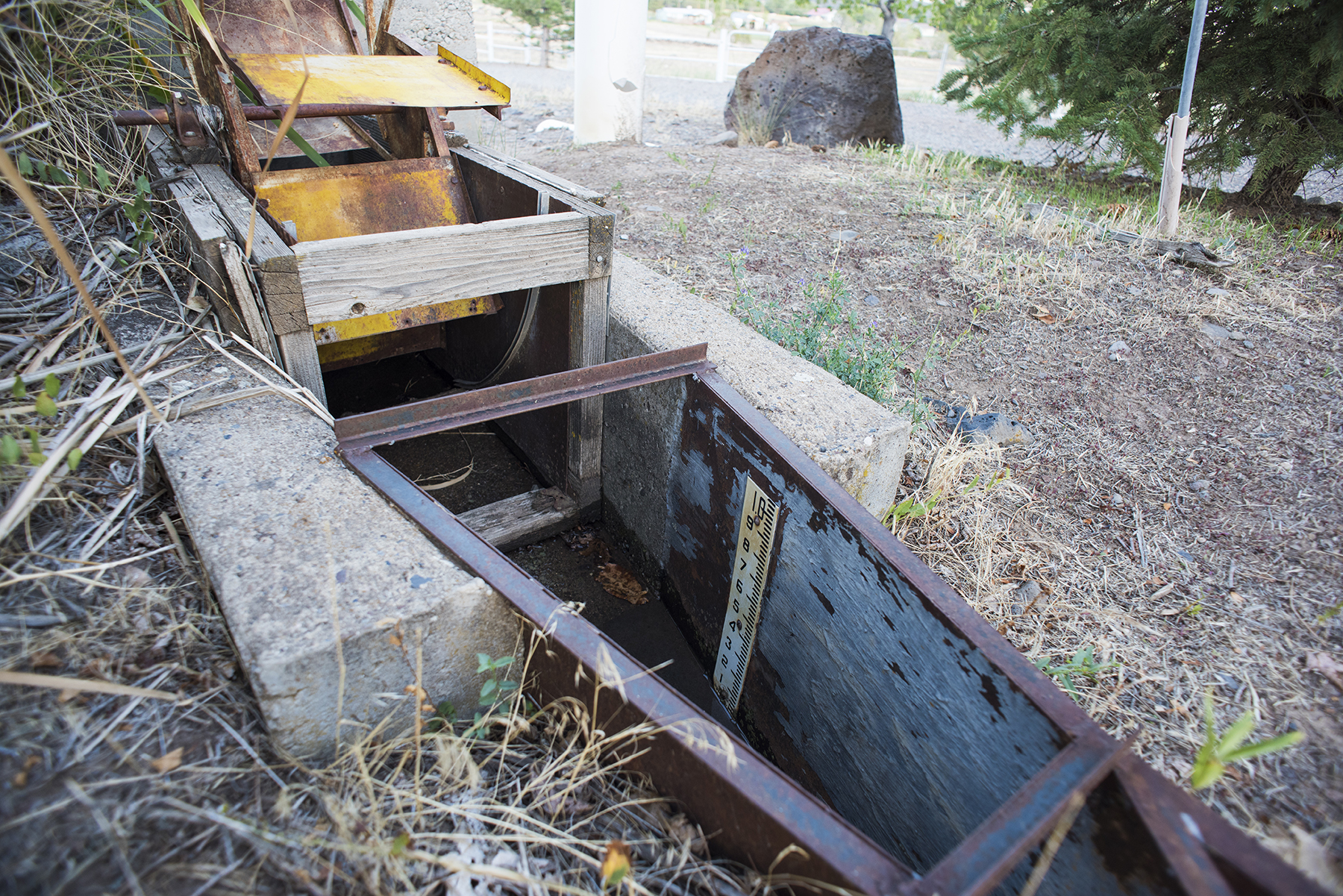
It looks like this: our Parshall flume (or weir) with attached flow gauge. No, we don’t know what any of those words mean, either.
This is our water pump with screen to catch wildlife – raccoons, ground squirrels, marmots, whistlepigs, ponies, etc. – when they fall in. Looking forward to THAT happening.
We now own two shares of one of the Western Slope’s strongest irrigation ditches. There are dozens of ditch and reservoir companies; the vast majority of the area’s water comes from hundreds of lakes and reservoirs up on the Grand Mesa which are filled with precipitation each winter. When there is no snow, like last year, then there is no water in the ditches or reservoirs. And so water becomes a very valuable commodity.
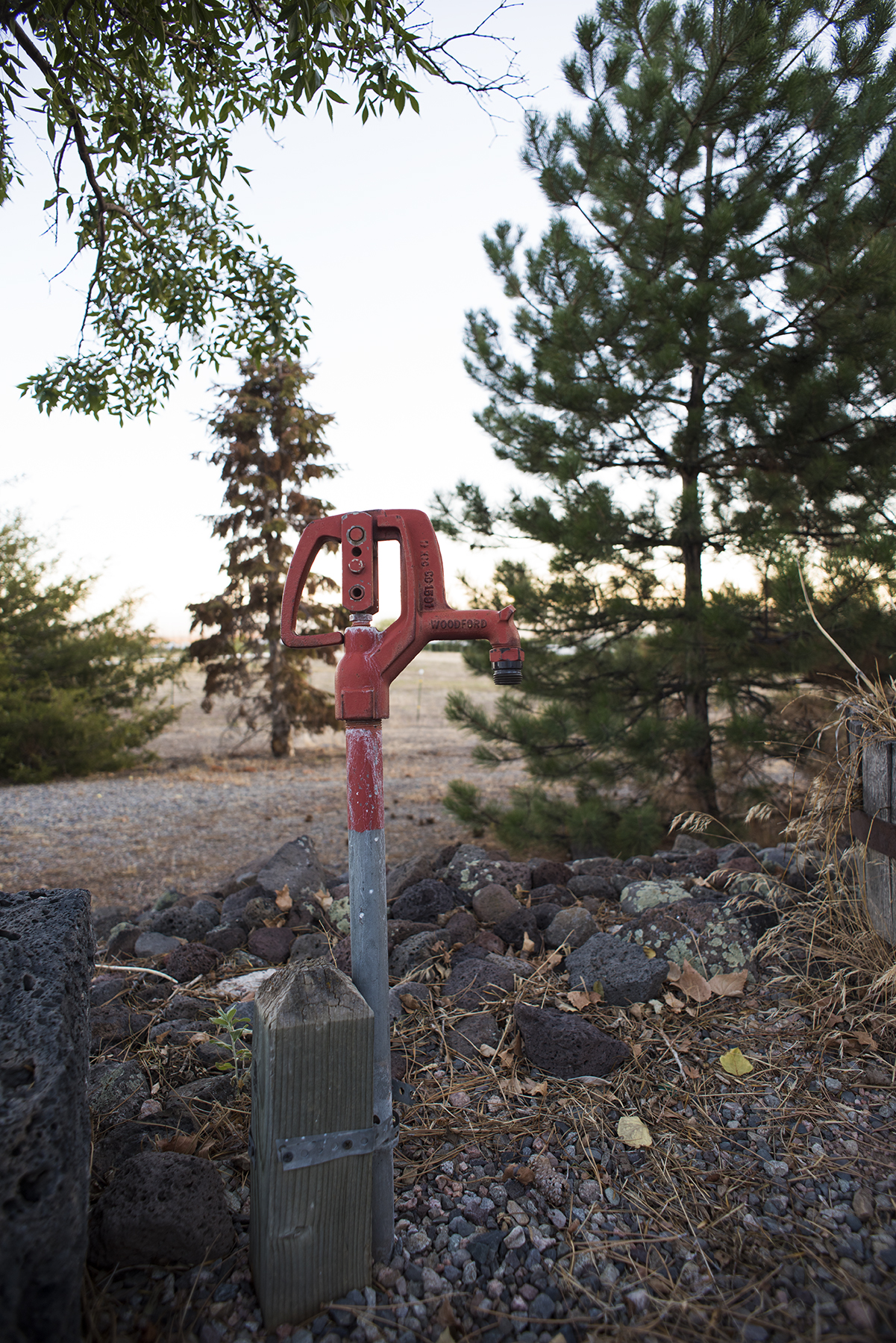
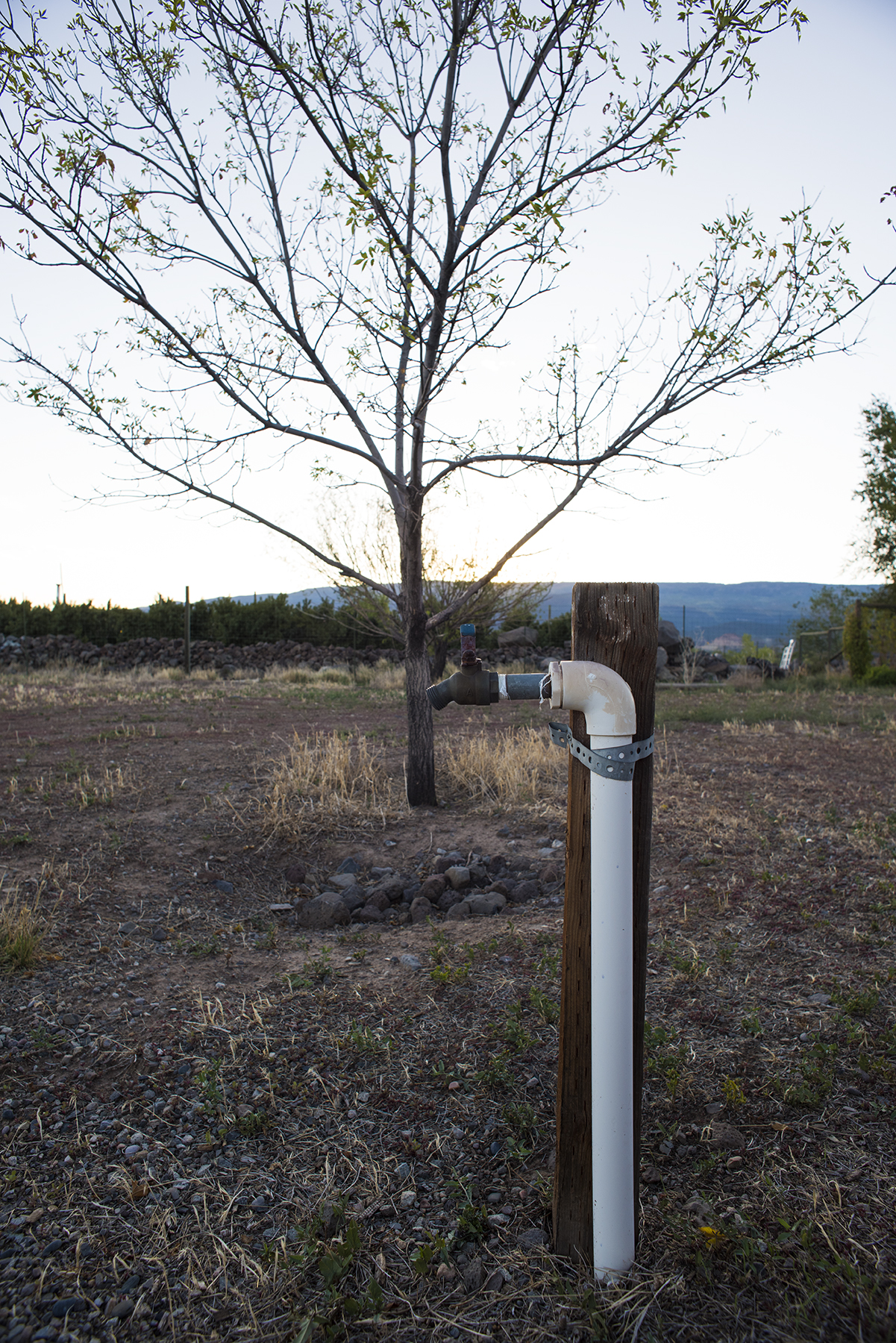
This is known as an “ag tap,” an abbreviation for agricultural. The water from this tap, however, is from our domestic supply. Confused? So are we.
This is downstream of the water pump and will help irrigate our land with irrigation water. We think. Or maybe not.
When we want some of our water for irrigation – which we can have between the beginning of April and the end of October – we order a precise amount from the ditch company, accounting for absorption and loss along the way. Ditch riders, who live up on the mesa during the season, use a complicated system to send the water down the correct ditch to our property on a specific day. We have to be out at our headgates at about 6AM to start our run, and the water we use is debited from our account, just like a bank. We can lease, sell, trade or give away our water as we see fit, but if we order water, it’s coming to our property whether we’re ready or not. So figuring out our irrigation system is of paramount importance to our future success.
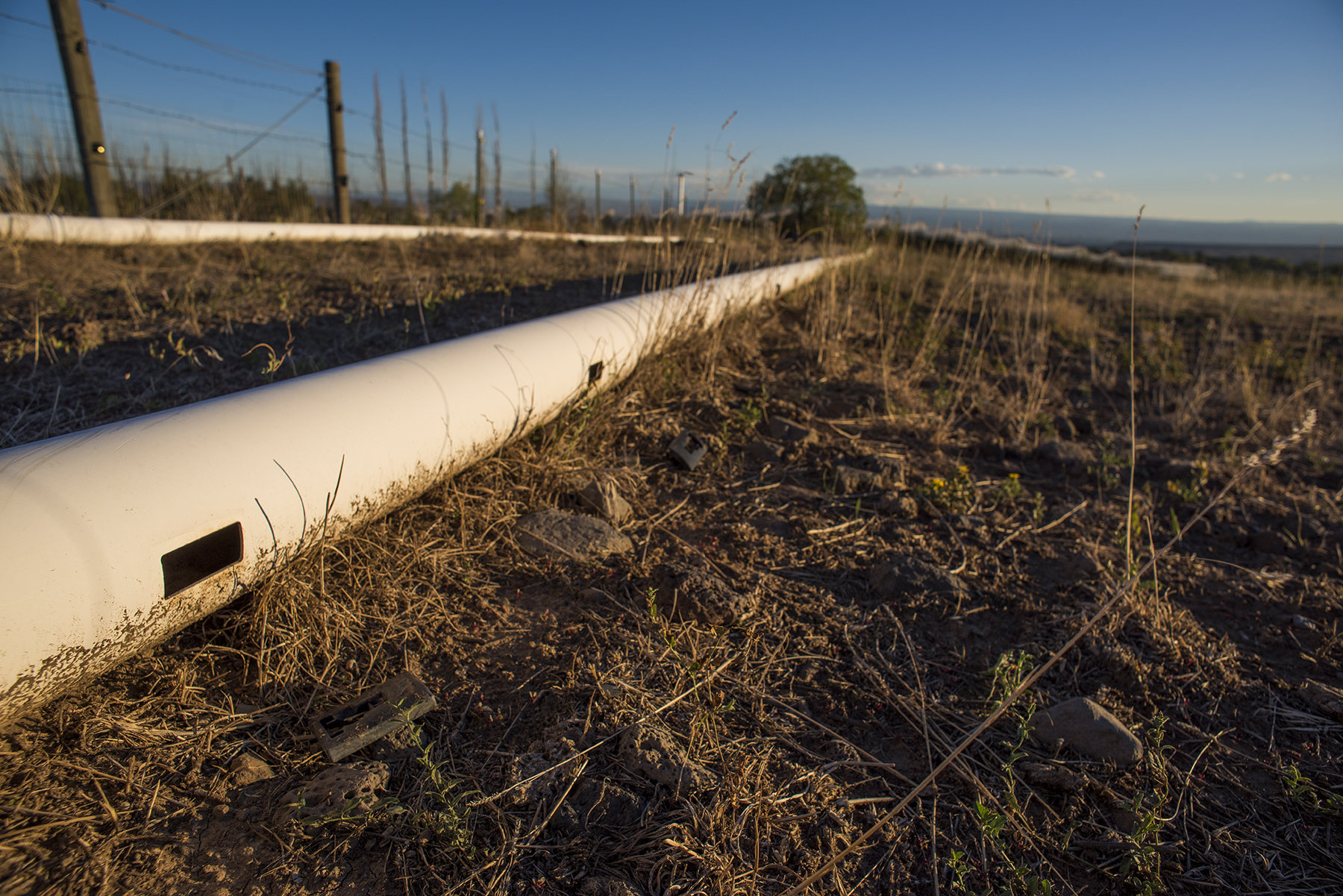
Our water will run through gated pipe, a common sight in our area. Big farms will own thousands of feet and it’s set up according to your property’s individual landscape and contour. The black gates open and shut to control the water flow.
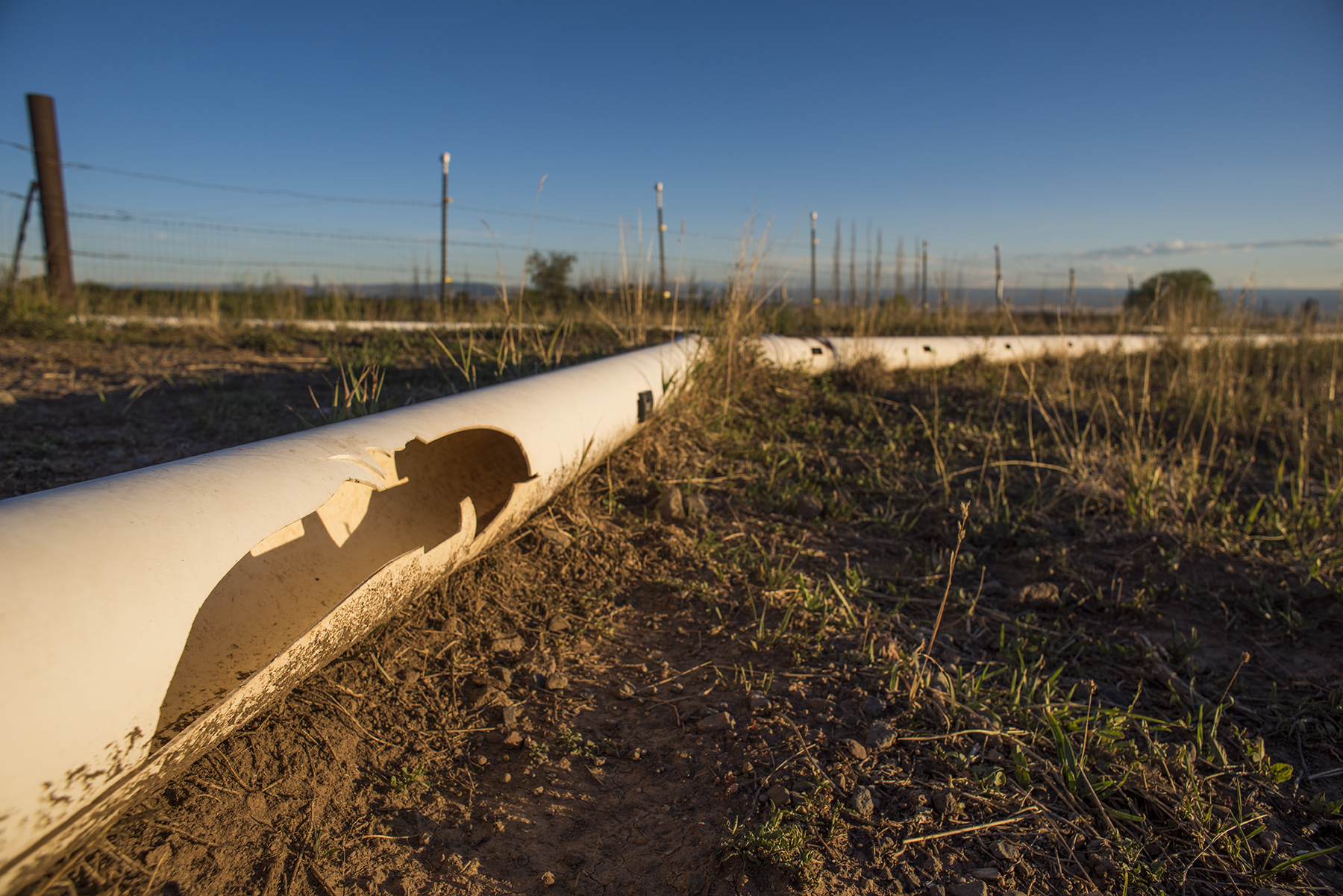
A lot of our gated pipe currently looks like this, which is obviously not workable. Even we know that.
In case you’re worried that we’re actually living in Little House on the Prairie, our house has a domestic tap, which is just like water in a normal house. Except that domestic water here is crushingly expensive, especially compared to Front Range rates, which means we absolutely cannot run a farm on domestic water without bankrupting ourselves. No more domestic taps are being issued in our area; local government doesn’t think we have the water to support additional growth – unlike on the Front Range, where greedy, short-sighted counties sell their water to the big cities and then wonder why their towns die. Domestic taps are worth tens of thousands of dollars over here, if you could even buy one.
Apparently little critters like chewing on the gates inside the pipe. The gates cost $3 each, and we have dozens missing. The few remaining intact ones are probably being eaten right now while you’re reading this.
The end of the line. Of course, if the pipes aren’t connected properly we’ll just flood everything and there is no way to turn the water off once we’ve called for it. So good luck with that.
We’ve got just about a month to figure this system out, because once the water goes off at the end of October we’ll have no way of testing our work. And when the water (hopefully) starts running again next spring, we want to be ready to get our pasture in good shape.
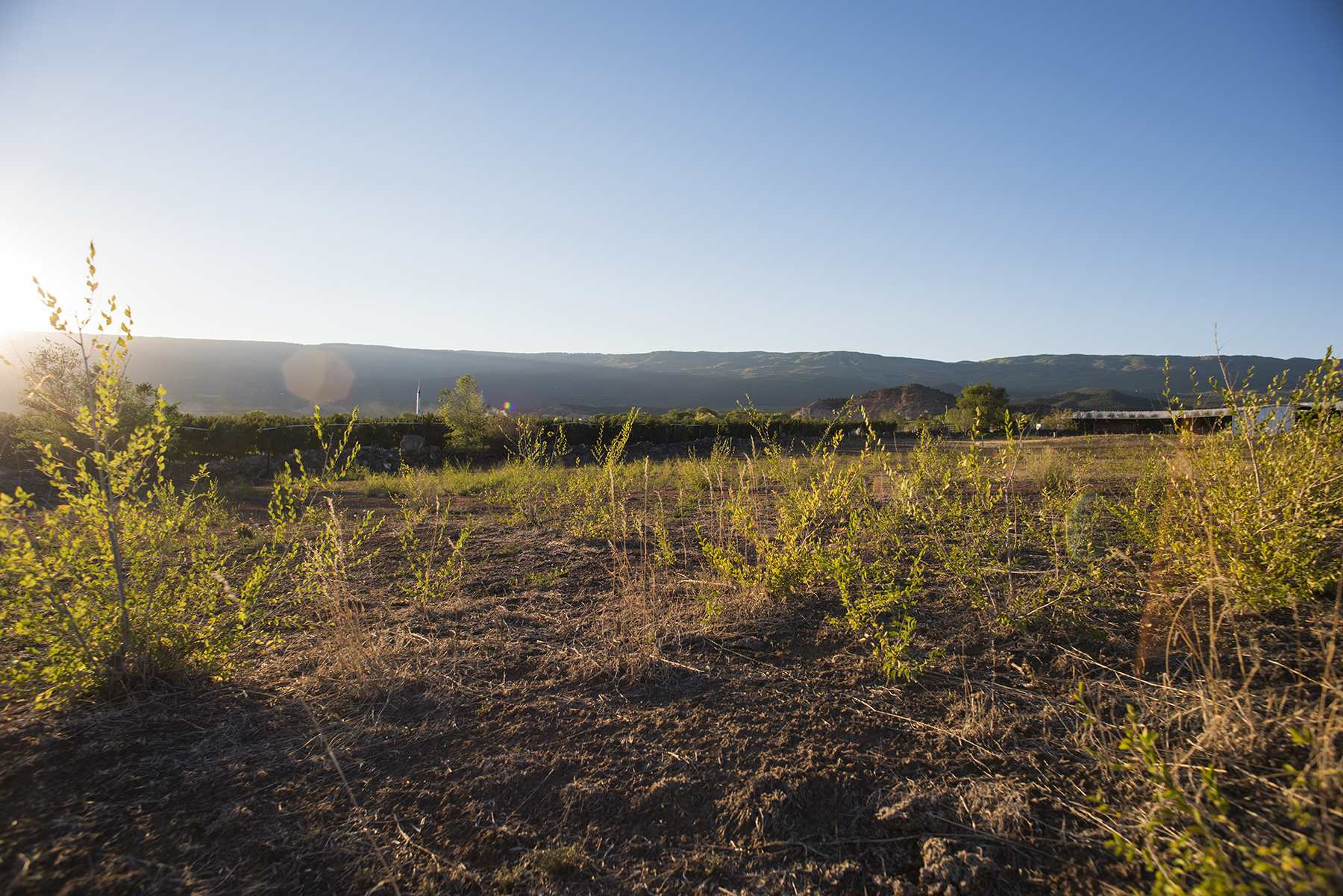
Good news, though! We’re unknowingly growing a pasture of invasive elm trees that will need to be removed by hand…
…when we’re not growing anything at all. Surprisingly, bare pasture is actually worse than having even invasive plants in the ground.
The moral of this tale, friends, is not to take water for granted. The daily luxury of fresh, clean, potable water is an absolute gift and one that not even everyone in the U.S. has access to. So treat your water like the precious resource it is, and know that it is finite. And wars over water will be much more devastating than wars over oil.
There is much work to be done, and winter is coming. Pray for snow.
For a site called Finding Quiet Farm, we don’t actually write that much about finding Quiet Farm. This isn’t because we’re not looking, but because we haven’t found much worth sharing. Farmland in the U.S. is bulldozed and paved over for housing developments and shopping malls at a staggering rate of forty acres per hour, and the land that is available tends to be just a touch out of our price range. We spenta monthin Oregonthis fall, volunteering on farms and looking for our own place, but ultimately decided that Oregon wasn’t our home. We drove back to Denver through Colorado’s Western Slope, and decided to give that part of the state – previously ignored – a closer look in the new year.
The first week of 2018 saw us westbound from Denver crossing the high mountain passes, which was easy instead of treacherous because winter in Colorado was canceled this year. We visited Grand Junction, Delta, Montrose, Olathe, Hotchkiss and Paonia, areas famous for peaches and sweet corn and cherries and the center of Colorado’s nascent wine industry, too.
Our trusty road trip car. (Just kidding.)
Over the course of three long, intense days, we saw maybe a dozen properties. Most, of course, were discarded immediately: rickety house in need of extensive, costly renovation, sketchy neighbors, too much infrastructure devoted to horses, odd adobe construction, property too close to busy roads. But there were two in particular that caught our attention: one forty-acre parcel just outside of Grand Junction, a reasonably major population center, and one in a tiny apple-growing area just up the Grand Mesa, the largest flat-topped mountain in the world.
Apple trees with protective winter coverings ready for use…if winter ever appears.













 Finding Quiet Farm