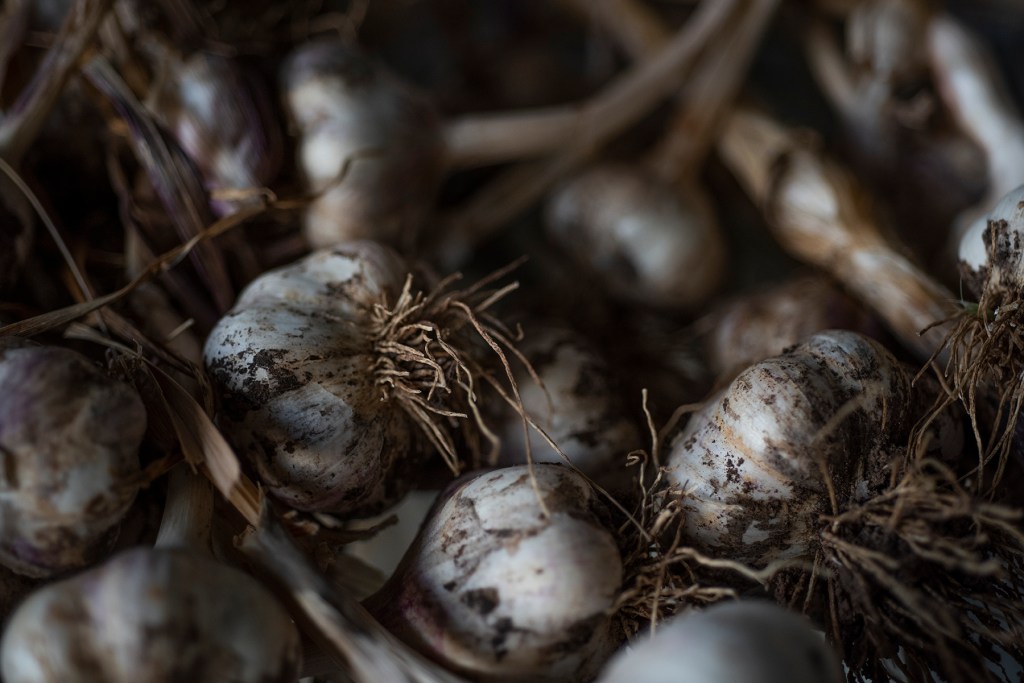
Back in 2021, farmer colleagues down in southwestern Colorado launched the Grasshopper Collective. This cooperative operation amongst growers was created in response to a particularly devastating grasshopper invasion that year:
“The intense growing conditions left us with many questions. In an age of drought and increasing climate instability, how can we adapt? How can vegetable growers be better prepared for years like this? What crops make sense for the future? Amongst our four farms, one plant stood out as particularly resilient, and that was GARLIC! Garlic harvests were bountiful across the board. It seemed that this pungent, powerful Allium was exceptionally undesirable to the hoppers. Beyond that, its timely July harvest window makes garlic a reliable crop to produce, even in the tightest of water years. Garlic thrives at our high elevation and appreciates the cool nights and desert air. On the consumer and market end, it is a keystone of the culinary world, and an essential item in many growers seed stock. Thus, the idea was born – let’s grow more garlic – let’s start a Garlic Seed Company – and with what better name than “The Grasshopper Collective.”
This is a smart team of growers who chose to work together to address the ongoing challenges presented by a changing climate, and one of their answers to those challenges was ‘garlic.’ While we are too far away geographically to team up with this lovely group, ‘garlic’ is the answer to some of our challenges here, too.
We mentioned in our last post that the grasshopper infestation this year is apocalyptic, dwarfing the damage we saw last year. This means we have missed out entirely on many of the favorite crops we grow, including tender salad greens, head lettuces, chard, kale, beets and carrots, to name a few. But in our lived experience (and this might certainly vary for others!) the grasshoppers never touch the alliums, a spicy, pungent plant family that also includes onion, leek, shallot and chive. And so, we’ve had a terrific garlic harvest of almost eighty pounds this year, nearly doubling last year’s yield.
Continue reading













 Finding Quiet Farm