It is official: we crown 2024 The Year of Mediocrity. Six years into our farming journey, it is expected that we might hit a slump – and so here we are. Numerous farming challenges large (hay delivery canceled, annual shearing rescheduled again and again, a goathead invasion, an apocalyptic plague of grasshoppers, rampaging rodents, hail) and small (late planting, poor germination, ricocheting temperatures) mean that this season, we’re going to be happy with anything we get. Anything! I’m not even weighing our harvests, because I’m not going to judge this year’s output against previous years – it’s not a fair fight. The brassicas were mowed down by hungry grasshoppers. The beets and carrots got too hot and never germinated. The strawberries were devoured by ravenous baby squirrels (a terrific band name!). The tomatoes and cucumbers and peppers and squash are all still so tiny and fragile and battered that the prospect of harvesting anything before Christmas seems laughable at the moment, but perhaps the tide will turn in our favor as we move into high summer. We do have plenty of irrigation water this year, which is something we never take for granted.
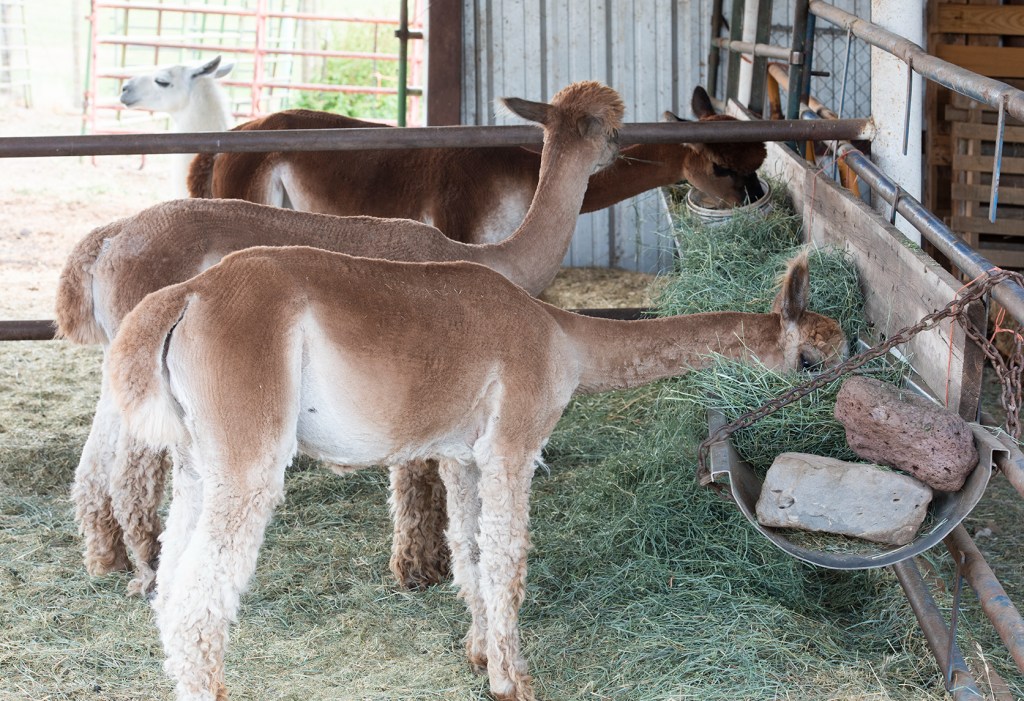
Much happier after taking off their winter sweaters.
Despite an unplanned six-week delay that was entirely out of our control, our four rescue alpacas were successfully sheared a few days ago. They had really started to suffer in June’s abnormally high temperatures, constantly seeking out shade in the pasture and the cooling waters whenever we irrigated, and we were very glad to get their winter coats removed. I am in the process of learning how to spin their fleece into yarn and have attended a local spinning and weaving guild to observe and practice this ancient art. Like all handcraft there is a meditative aspect to spinning that soothes my constantly anxious mind, and this winter I hope to make some real headway on the bags of fleece we’ve accumulated over the years.
Autumn is very much on its way here at Quiet Farm. Overnight lows plunge to the mid-40s, though our daytime temperatures remain in the mid-80s. The plants are all starting to look a bit tired, a bit yellowed, a bit lackluster. The seasonal transition has begun, and we are looking forward to the slower rhythms of late fall and winter. This remains an exceptionally busy time for us; here are a few things we’ve been up to, if you’d like to see.
One day’s harvest of an easy twenty-five pounds.
Despite a rough start, we’ve had a spectacular year for tomatoes. We planted about sixty tomato plants of about fourteen different varieties, and our yields have been simply staggering. We’ve grown full-size heirlooms that I never thought possible, believing that our growing season was simply too short, and the smaller cherry and grape tomatoes have done well too. Every night for weeks now there’s been a fresh tomato salad with supper, and we’ve put up sauce, soup and salsa for a warm and nourishing winter. I never, ever tire of fresh tomatoes, and since we don’t eat storebought tomatoes, we’re getting our fill now. We will miss these gorgeous things until next summer.
Spotted on an evening irrigation check.
As we’ve spoken of many times here, we focus our efforts on improving our land and our soil, and one of the best ways we can do that is by encouraging both native plants and the pollinator population. Monarch butterflies are an iconic pollinator species; the western U.S. monarch population is currently traveling south on its fall migration. The monarch caterpillar (Danaus plexippus) shown above feeds exclusively on milkweed; once the caterpillar has transformed into a butterfly, it has a much more varied diet. Unfortunately, milkweed is also toxic to livestock, so ranchers regularly treat pasture milkweeds with toxic herbicides – which is why the monarch population is declining, because the larvae cannot survive without these plants. We keep camelids here at Quiet Farm, and have spent hours worried about our animals becoming ill from consuming milkweed in our pastures; obviously, we’re not going to spray and we don’t particularly want to pull all these host plants.
After extensive research, our solution – for the moment – is to let things stand as they are. Hardy alpacas and llamas, native to the high Andes, aren’t nearly as delicate as domesticated cattle and sheep, so are far less likely to become sick. Plus, we’re intentionally cultivating a mixed pasture, with lots of different plants for our animals to graze; the likelihood of any of our animals eating enough milkweed to become seriously ill is slender indeed. There are never perfect methods of pasture management, but we’re working hard at figuring out what we can do to maintain balance.
Beautiful photo. Terrible plant.Just look at its horrible weaponry!
One thing that is very much not in balance is our puncturevine population. The farm is absolutely overrun with this heinous plant this year, and we’ve spent countless hours trying to eradicate it – pulling by hand, obviously, as dousing the entire farm in glyphosate is clearly not an option. Puncturevine (Tribulus terrestris) is an invasive weed, uniquely adapted to our desert climate, that grows where few other plants will; most infuriatingly, the seeds can remain dormant in the soil for seven to ten years. While we’re happy to let neutral weeds, like purslane and mullein, grow freely, the puncturevine burrs are harmful to humans and animals – and bicycle tires, too. For reasons unknown to us, this year conditions were absolutely perfect for puncturevine to take over our land and so it has. We are hoping that we’ve removed most of it, but we know that some of those viciously sharp little seeds are simply biding their time until next year. Or the year after that. Or the year after that. The battle continues.
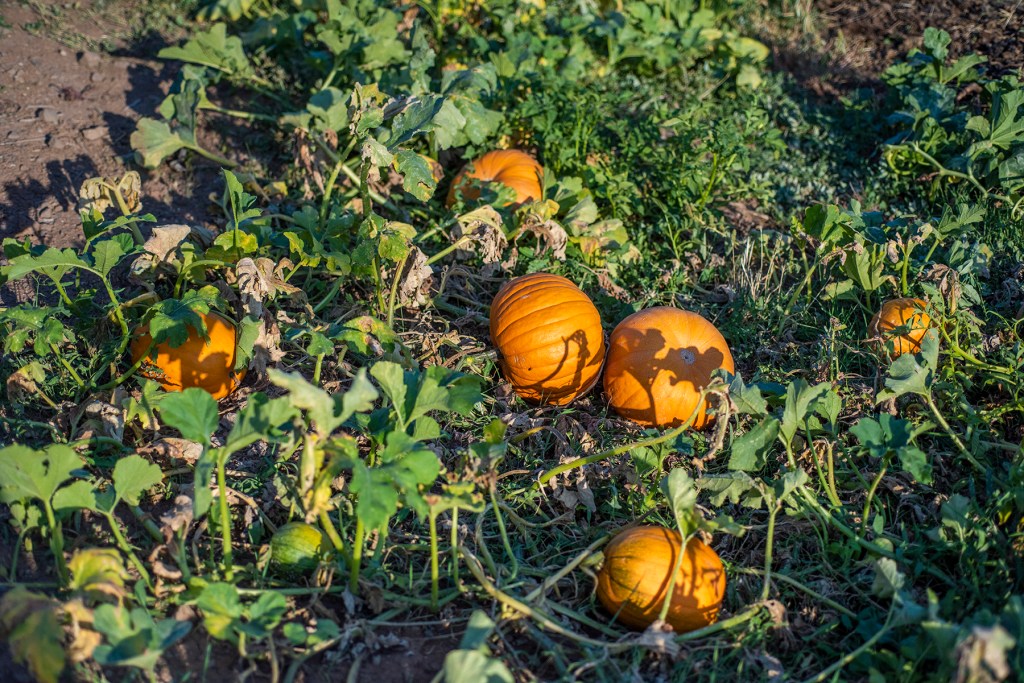
The Quiet Farm pumpkin patch.
We’ve done well with winter squash this year, though as usual there are some squashes that didn’t exactly breed true – always a risk with saved seeds and limited isolation practices. Squash plants are a reliable harbinger of fall; ours usually start showing signs of powdery mildew, and the vines themselves start to fade and turn a bit crispy. I usually trim immature fruit so that the plant devotes all its energies to ripening the larger fruits, but this year I’ve mostly left the squash patch to its own devices. Depending on the variety, most pumpkins start out dark green with stripes; the fruits turn the classic bright orange in the same way leaves change color on deciduous trees. These jack o’lantern pumpkins yielded nicely; they’ll be cured for winter storage and won’t be carved but instead used for soups, curries and muffins.
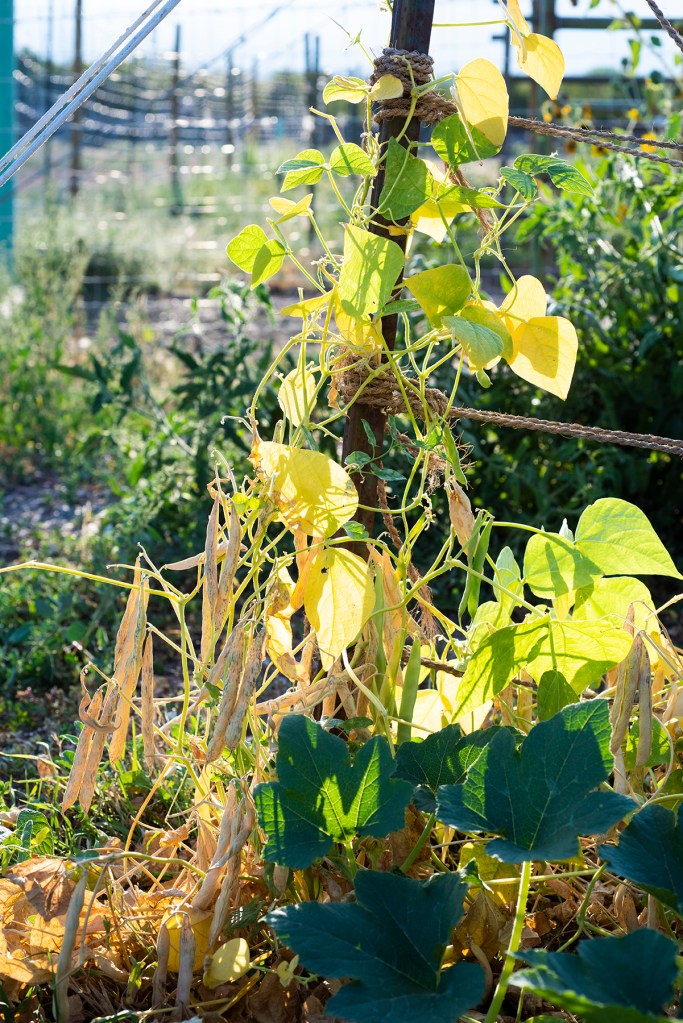
As with other annuals, the bean plants will also clearly demonstrate that they’re nearly finished for the season. These are labeled as ‘Aztec White’, but based on the small size I suspect they’re more along the lines of a true navy bean. Dry beans can stay on the vine until frost threatens, a huge bonus for the time-starved farmer; if there isn’t time to shell the beans immediately, they can be tossed into repurposed feed sacks and stored in a cool, dark, dry place, away from pests and damp. Shelling dry beans is a perfect project for a crisp, late fall day, when the more pressing tasks have been completed! Once they’re shelled I’ll hopefully have a better idea of the variety, although when it comes to heirloom beans I’m not hugely bothered about specifics, especially when seeds are freely shared amongst local growers. If the beans grow well and taste delicious, that’s really all that matters.
Farm candy.
And to end on a sweet note, we’re pleased to share that our raspberry patch is finally producing. It’s taken us a couple of years to get these canes established, but we’re now harvesting enough raspberries to actually bring a few inside, rather than just eat them all in the field. We’re hopeful that we’ll have a few more weeks before a hard frost, so that all of the unripe berries will have a chance to ripen, but we’re thrilled with anything we get – these are like candy. As with tomatoes, the difference between just-picked raspberries, still warm from the sun, and those sitting in the cold case at your local supercenter is night and day, and we’ll eat our fill for as long as we possibly can.



 Finding Quiet Farm