Farm update: May 6

It’s been mostly cool and rainy this week. We’re of course grateful for the moisture and lower temperatures, which might keep our snowpack in place longer, but the weather has literally put a damper on our excavator plans. Never mind, though; there are always plenty of other things to do!

Broad Tailed Hummingbird 02 sml

A male black-chinned hummingbird getting its sugar fix.

One of our most successful ventures recently has been installing hummingbird feeders around our house. We’ve been utterly astounded at the sheer number of hummingbirds that have appeared, including both the black-chinned and broad-tailed varieties. They’ve apparently informed all their friends that the bar is open!

Continue reading

Farm update: April 29

San Juans 00

Spring is truly here and the Quiet Farm project list expands daily! The weather has been unusually warm, so much so that everyone is concerned about our wonderful mesa snowpack melting too quickly and flooding the creeks. This sunny (and windy) week alone, we received deliveries of soil, lumber, fencing and concrete. We hauled railroad ties, hefted 80-pound bags of Quikrete, wheelbarrowed soil, hammered in T-posts and more. Our farm muscles are coming along nicely, and we’re trying hard to remember to apply sunscreen and drink enough water. When people say farming is hard work, they aren’t kidding – especially when you don’t yet own a tractor.

Continue reading

Farm update: April 15

Things are getting busy here at Quiet Farm! The weather is (mostly) conducive to working outside, and we’ve got a list of projects lined up. More trays of seedlings are potted up every day, we’re working hard on finishing the chicken house so we can bring pullets home, and plans for installing our game fence are coming together (I get to drive an excavator!).

Deldee 02 sml

Run, Pony, run. But not right at us, please. It’s scary when you do that.

Temporary Pony is alive and well and running around our pasture at top speed while performing complicated dance moves. Someday soon she’ll leave for her new home, but she’s certainly provided plenty of entertainment (and no small amount of terror) during her time here.

Continue reading

Farm update: April 8

QF Purple Flowers 01 sml

The hills are alive…with weeds! But we call them “wildflowers.”

The snow is finally gone at this elevation, even though plenty can still be seen on the mesa. Our pasture is coming back with a vengeance, and we spend our days walking the land, looking at what plants are coming up and trying to decide whether they’re helpful or harmful to us. Since we bought Quiet Farm at the end of a blistering summer in the midst of a hundred-year drought, pretty much everything was crispy and dormant. We hadn’t yet determined what bushes and trees might survive, and what would need to be removed. We’re giving everything a generous opportunity to stage a spring comeback before we tear it out.

Continue reading

The cranes are here!

Crane Days 01 sml

There are so many benefits to living where we do now, including but not limited to lots of fresh, local fruit in the summer. But just now, coming off a long, dark winter, we’re most excited to see one of the true harbingers of spring: the greater sandhill crane on its annual migration between New Mexico and the Yellowstone ecosystem (northern Idaho and Montana).

Cranes 03 sml

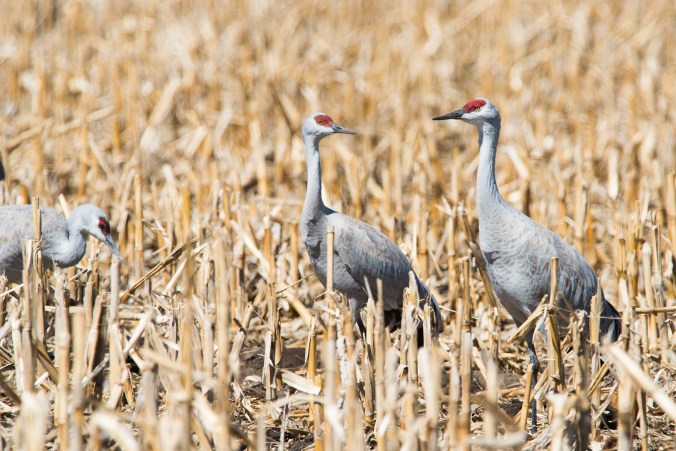
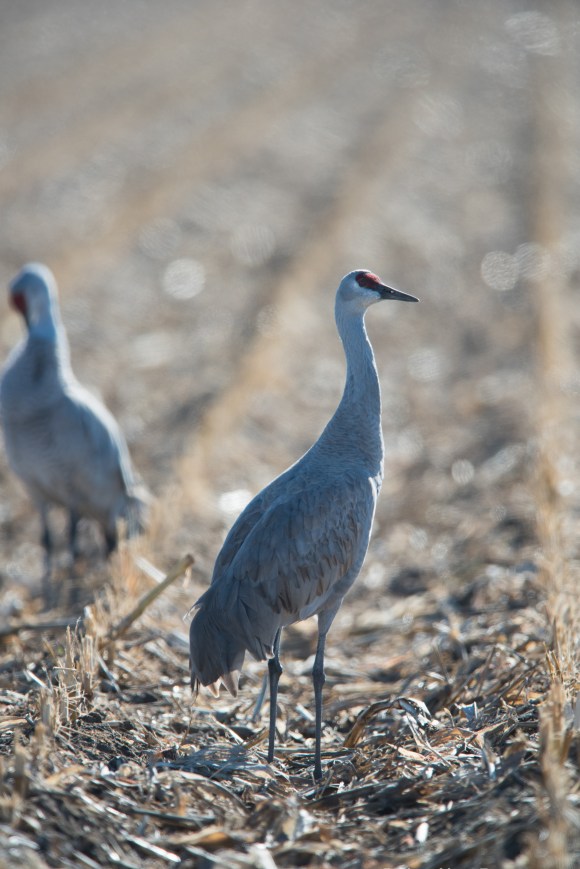
Greater sandhill cranes are big, gorgeous, elegant birds; adults stand about four feet tall and have a six-foot wingspan. They’re most easily recognized by their sooty gray coloring and the red patches on their eyes and head, and that they flock by the thousands. Their plumage can take on a rusty red sheen, because they often preen by rubbing their feathers with iron-rich mud.

Cranes 04 sml

In Colorado, a flock of about twenty thousand birds gathers in February and March in the San Luis Valley, where they rest and forage before heading further north. About five thousand of these birds then make their way straight over Delta County, where we live, often stopping at Fruitgrowers’ Reservoir just to the east of our farm.
Cranes 05 sml

Greater sandhill cranes are the oldest birds still living today; fossil records from two and a half million years ago indicate that they’ve changed hardly at all. Rock art and other artifacts in the San Luis Valley show that cranes have been important to the region’s people for as long humans have inhabited the area. Their annual migration is a sure sign that we’ve survived another winter, and spring is on its way.
Cranes 01 sml

Sandhill cranes sleep in shallow, calm water to keep themselves safe from predators, so a reservoir like Fruitgrowers’ is a perfect stopover location. These birds are opportunistic feeders; they most often eat plants and grains, but they’ll also feast on invertebrates and small mammals, if available. The Western Slope and the San Luis Valley offer thousands of acres of fallow cornfields in which to forage.
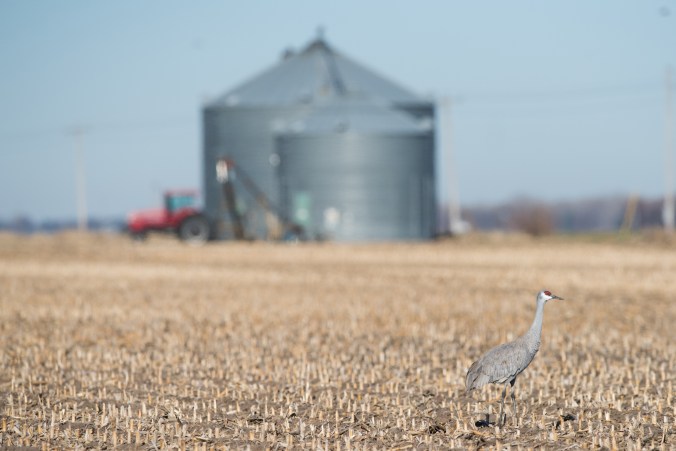
Cranes 02 sml

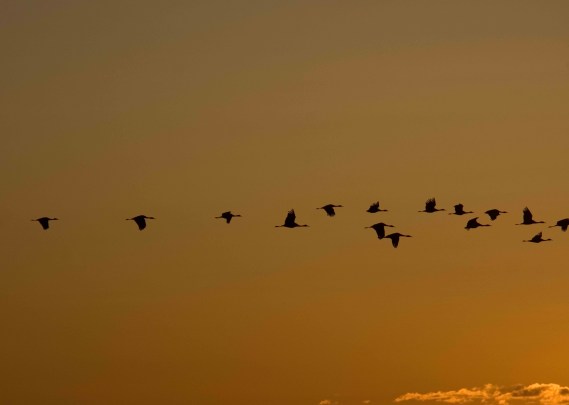
The cranes are most active at dawn and dusk when they “commute” to and from their daytime feeding grounds. The population along the Platte River in Nebraska is so large – half a million birds – that the cranes’ noise can drown out normal conversation. Sandhill cranes have a distinctive call, and the birds can frequently be heard even when they can’t be seen. The cranes are often spotted along the same transitory route in fall, but they rarely stop over in Delta County. Local experts believe this is because the reservoir is dry in the autumn, so there is no place to for the birds to sleep safely.

Cranes 09 sml

Although sandhill cranes aren’t quite as demonstrative as the famous dancing prairie chicken, the birds will perform for their prospective mate. Sandhill cranes mate for life and can live up to twenty years, a remarkable lifespan for a wild bird. These cranes don’t nest here in Colorado but instead lay their eggs up north; the female typically lays two eggs and the male guards the nest. It takes a month for the eggs to hatch and two months for the chicks to reach maturity, although only one chick usually survives.
Cranes 07 sml

We are thrilled to share space with these magnificent birds, and we look forward to their migration every spring.

P.S. If you’re interested in seeing the cranes in huge numbers, the two best locations are Monte Vista in southern Colorado and along the Platte River in central Nebraska. Both are definitely worth the trip!

Cranes 06 sml


How to grow microgreens

We’re still firmly in winter’s icy grip here on Colorado’s Western Slope, and there’s no better cure for spring fever than growing something indoors. Let’s learn how to grow microgreens!

Microgreens 01 sml

Microgreens sound fancy and expensive, but really they’re just tiny versions of things we already eat, like kale, radishes and beets. They are packed with nutrition, super flavorful, quick and easy to grow with no special equipment needed and absolutely gorgeous on the plate. What more could you ask from an indoor crop?

Continue reading

Farm update: February 18

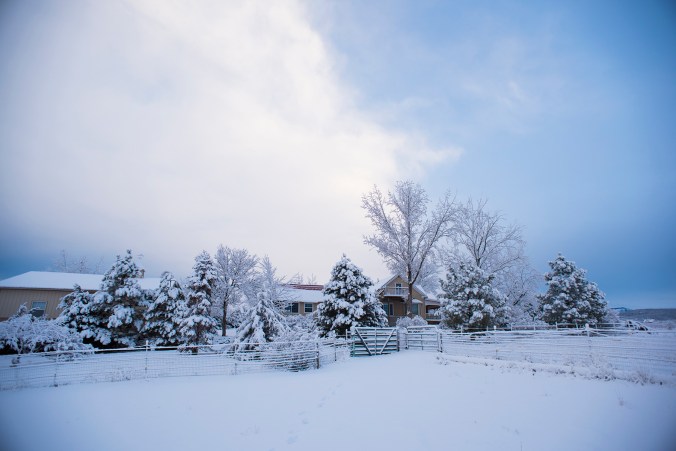
Despite the snow on the ground, spring is in the air. We’re entering the freeze-thaw cycle (also known as mud season) and our quarter-mile driveway is the worse for it, but all around us, things seem to be softening and readying for growth. We’re excited for spring, friends. This winter has offered much more moisture than last year’s punishing drought, and we’re looking forward to seeing how our fields regenerate once the snows have disappeared for good.

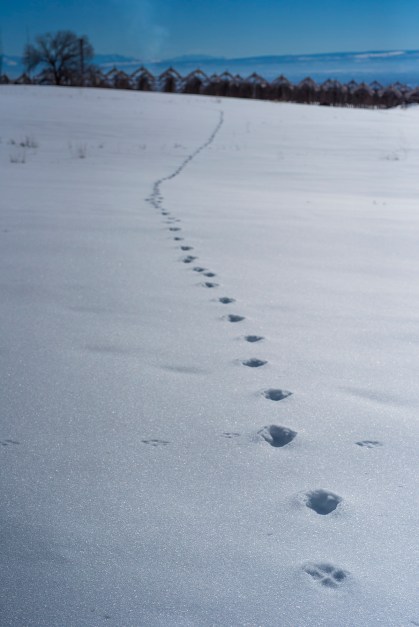
Snow Tracks 01 sml

One of our favorite winter activities has been watching for wildlife across our land; the persistent snow has made tracks easy to see. We’ve spotted coyotes, foxes, rabbits, raccoons, ground squirrels and of course our nemesis, deer. We are trying hard to learn this land, to know what lives here now and what was here before us so we can figure out how to best live in harmony.

Continue reading

Farm update: February 4

The first time we walked into our old house, the one we sold last year, we fell hard for the woodburning stove and the built-in bookshelves. We don’t have a woodburning stove here at Quiet Farm – hell, we don’t even have a furnace – but we have the opportunity to make our own custom built-in bookshelves. And so we did.

Here’s how this project went in my head:

  1. Look at gorgeous photos of floating bookshelves on design blogs.
  2. Buy authentic vintage distressed barnwood and artistic handmade wrought-iron brackets.
  3. Attach aforementioned barnwood and hardware to wall.
  4. Fill with carefully curated books, black-and-white photos and trendy succulents.
  5. Admire. Photograph. Repeat. Earn generous sponsorship from major power tool companies. Probably succulent companies too. Quit farming to run profitable design blog. Live happily ever after.

bookshelves 01 sml

Our library, pre-shelving. Don’t judge the brassy ceiling fan; it will be replaced eventually.

Continue reading

Paris in black and white

Bonjour, nos amis! We’re not actually in Paris, but we were one year ago! And since life on Quiet Farm is rather, well, quiet, right now, we thought we’d share some atmospheric photos from our travel that didn’t make it into our posts last year. Paris in winter is so perfectly suited to black-and-white photography that it seems a shame to let these gorgeous images languish on a hard drive somewhere.

Parisbw-09

Continue reading

A fresh start

QF Snow 02 sml

I love everything about January. I love the quiet, the fresh start, the clean slate. And of course, this is the time of year when so many of us promise to do better. When we promise to eat right, drink less, stop going out to restaurants so often, quit smoking, save our money, exercise more and all the rest.

I don’t subscribe to the negativity often associated with New Year’s resolutions. (By mid-January, over a quarter of all New Year’s resolutions have been discarded, and only a scant 10% are actually followed through to the end of the year. Those are some pretty bleak statistics.) Changing habits is hard enough; I’d much rather start off on a positive note. I make a list of goals, not resolutions.

And with that positivity in mind, let’s revisit our annual primer on eating better. This isn’t designed to be an exhaustive list, nor a restrictive diet plan, merely a few simple tips to get your head in the right place for making healthy changes in your daily eating. Allow me to shout this from the rooftops: diets don’t work. Changing your mindset does.

Continue reading