This week in flowers: June 1

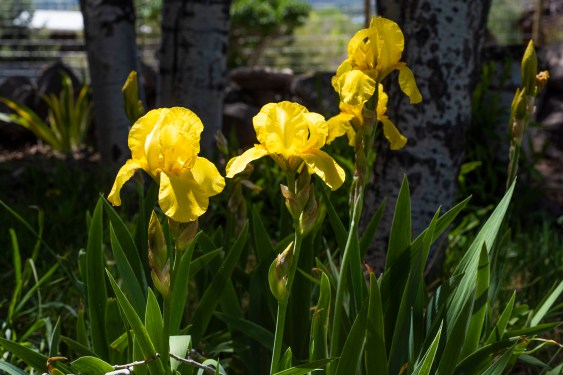
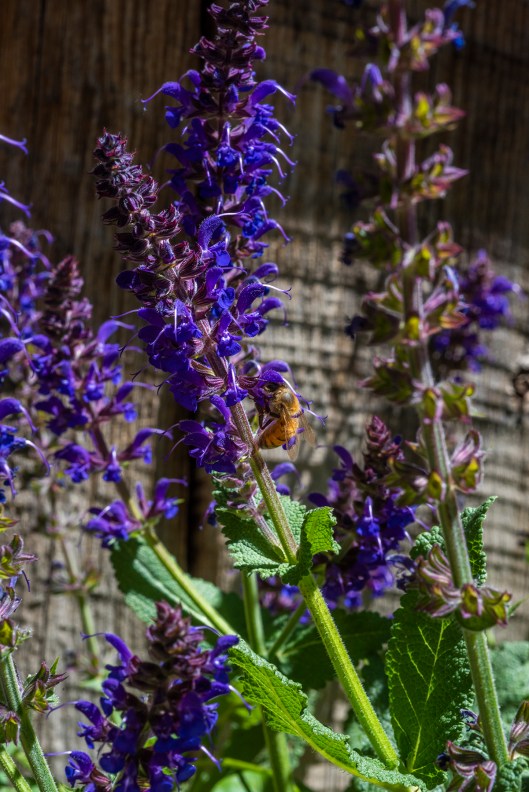
We’re working hard at creating space for a diverse array of organisms at Quiet Farm. We want plants blooming and flowering and setting seed, plants in every stage of life, throughout the season. We want our plants and trees to provide food and pollen and a home for all manner of things. We want to be a welcoming haven for songbirds and bees and insects and hummingbirds and toads and raptors and every other winged and crawling creature. We want not monoculture but polyculture, a place that mimics a natural ecosystem as closely as possible. We want life, and lots of it, everywhere we look and listen.

Flowers 03 sml

Bumble Bee 01 sml

Iris 02 sml

Flowers 04 sml

Iris 04 sml

Flowers 05 sml

If we spent all our time spraying poisons and pulling “weeds,” or removing plants that didn’t fit a perfect garden aesthetic, we’d have none of this. No birdsong, no beneficial insects, no pollinators. Instead, we have a farm that bursts with color and vibrancy and life.

The world is furious and raging right now. In response: plant something colorful. Grow something delicious. Create something beautiful. Cook something nourishing. Wishing you and yours a calm, peaceful and healthy week.

Where the water goes

There has long existed a tired stereotype of a farmer as some sort of rural idiot, a barely-literate country bumpkin who can only just string two sentences together. If there is anything we’ve learned during our nearly two-year (!) farming adventure, it’s that a successful small farmer is anything but stupid. You have to be a veterinarian and a seedsman and an ATV mechanic and a soil scientist and an entomologist. You have to dig holes, repair fences, build structures, patch hoses and outwit pests. You have to be strong, creative, resourceful, thrifty and tireless. And you have to know how to manage the water on your property, no matter how it gets there.

Drip Irrigation 02 sml

The components of one of our drip irrigation kits.

One of our goals for this, our second full season of farming, is to get our irrigation dialed in. We don’t farm in a traditional American sense, i.e. hundreds of acres of the same crop (usually corn or soybeans) laid out in precise rows and neat blocks. Irrigating that sort of monocrop is relatively easy, because every plant is identical and therefore its water needs are identical, too. Once that irrigation system is established, it’s basically set-it-and-forget-it. Instead, we farm in a sort-of patchwork style all across our property: perennial herbs in this corner, a bed or two or nine here, trees over there. As a result, our irrigation is similarly patchwork, because there is no one-size-fits-all solution.

Continue reading

The meat of the matter

The past two months have exposed a great number of frailties in systems we’ve long taken for granted. From child care to health care, we’ve learned firsthand that most – if not all – of our societal structures are built on debt-ridden quicksand. Nowhere has this fragility been more apparent than in our food supply, long the envy of less-developed nations.

Meat 01 sml

Mmmm…meat in tubes. Delicious.

If you’ve ever traveled in the Caribbean or Africa or Asia – really, anywhere outside of the U.S. and Europe – you know that a standard Western grocery store is a thing of miracles. The glossy, perfect produce, appealingly stacked in lush displays. With artificial thunderstorms! Acres of cold-storage, displaying hygienically shrink-wrapped packages of beef, pork, chicken and fish, none of which resemble the animal they once were. The deli abounds with cheeses and olives and overflowing dishes of prepared foods, enticingly displayed on beds of ornamental kale.  Aisle upon aisle of boxed mixes and snack foods and sodas and candy and cookies and chips, plus thousands of cleaning products and toiletries and other various and sundry items, all brightly-colored and stocked in abundance. A standard Western grocery store never has bare shelves, because that violates its very reason for existing – that we have so much, we can replenish each item before it’s even made its way to the check-out.

Continue reading

Farm update: May 11

It’s hot, dry and windy out here, and feels more like late July than early May. We seem to have skipped straight from a parched winter into an equally arid summer, missing the soft green lushness of spring entirely; the peas and radishes survived frost damage only to turn bitter and pithy from sun scald. Last year we had rain almost every single day in May, and this year it’s unlikely we’ll see any. Early reports indicate that the mountain snowpack is melting far too quickly, thanks to this premature summer, and our primary focus these days is on keeping all of our plants irrigated. Here are a few more things we’ve been up to recently.

Irrigation 02 sml

Our gated irrigation pipe at work. 

All of our irrigation water comes from snow on the Grand Mesa. When the snow thaws each spring, the snowmelt makes its way down the mountain through an intricate series of ditches, headgates, creeks and pipes. We’re focused this year on regenerating our pasture, so have started flood-irrigating our land to see what grows. Later this season we’ll remark our pasture (cut channels that direct the water) and hopefully seed it with perennial grasses, too. Eventually we’ll use the land for rotational grazing, likely a grass-fed steer or two. Flood irrigation requires a lot of work – the water has to be “moved” by opening and closing valves and gates along the pipes – but it’s the system we have, so we’re learning how to use it to the land’s advantage.

Continue reading

Farm update: April 27

Hello there. How are things in your world? It’s an odd and unsettled time, to be sure. Here at Quiet Farm we’re keeping our heads down and our hands busy as we navigate the seasonal weather shifts that have us careening from wind to rain to sun to hail and back again, all in the space of a few minutes.

House Finch 01 sml

House finch (Haemorhous mexicanus).

Spring is underway, slowly but surely, and our diverse bird life reflects that. The bald eagle pair we’d been keeping an eye on has vanished, presumably for colder climes; now the gorgeous call of the Western meadowlark (Sturnella neglecta) marks our days. Watching the scrappy magpies fight off aggressive egg-stealing ravens is decent entertainment, too.

Continue reading

Gardening for beginners

The aftermath of both September 11 and the 2008 economic collapse brought a renewed interest in home gardening, and our current catastrophe looks to be no different. Garden centers have started operating online, seed companies are back-ordered for the foreseeable future and lots of people are reviewing their HOA regulations and eyeing available space in their suburban backyards. While it might not be practical to expect a backyard garden to provide all necessary food for a standard American family (how do you grow dinosaur-shaped chicken nuggets, anyway?), gardening offers an active yet meditative experience, an immense sense of satisfaction and self-sufficiency, and a deeper appreciation for how much work it takes to grow food. With that in mind, we offer a few basic tips for people looking to start their own garden.

Seedling 02 sml

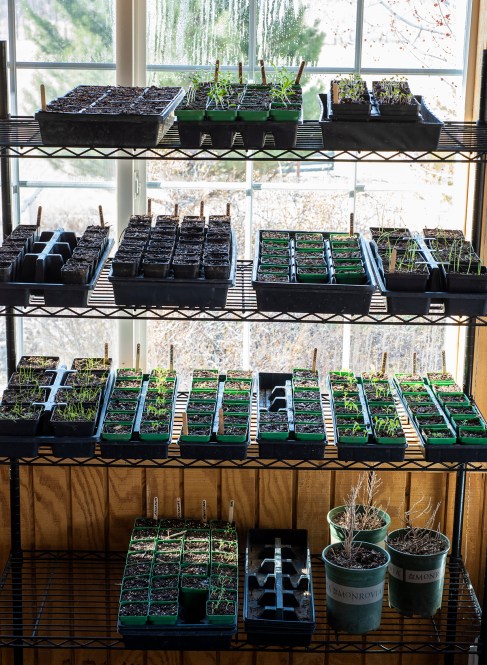
The current seed-starting set-up in our sunroom, expanding by the day.

Start small, and plant what you’ll actually eat. In moments of stress or panic (or when we suddenly have an unexpected amount of free time on our hands) we might be tempted to dig up our entire backyard and start an urban farm. This is great in theory, but if you’ve never grown a single basil plant before, we highly recommend that you start small – maybe just a couple of herb pots or a tidy little container garden on a sunny patio. It’s easy to think big and abundant, but when things return (somewhat) to normal, whenever that may be, you may not have the necessary time to devote to your garden. You can always expand if it turns out you love growing food.

Also in the interest of keeping things manageable, plant what you’ll actually eat. I’ve decided this year that I’m no longer going to devote precious garden space to eggplant, because although we don’t hate it, we don’t love it, either. And our vegetable real estate is exceedingly valuable – more so every year – and I want to plant things we adore, like tomatoes and peppers and interesting culinary herbs. When you’re choosing what you’ll grow, make sure you have a selection of vegetables and herbs that are relevant to your household, and if possible, try one new variety that you’ve never eaten before.

Continue reading

Farm update: February 24

Greetings! We are currently stuck in that awkward phase between winter and spring. Some days it’s all teasing warmth and perfect blue skies, and some days it’s bleak and grey with icy, biting winds. Most of our snow is gone, though we expect (and hope for) one or two more storms, at least. It’s a changeable season, but spring is definitely in the air and we’re starting to hear more songbirds and see new growth everywhere we look. Here are a few things we’ve been up to recently.

Prairie Falcon 01 sml

A prairie falcon (Falco mexicanus) in one of our towering cottonwoods.

We still haven’t captured a photo of our shy Northern harrier, seen regularly hunting mice in our pasture on sunny afternoons, but N did snap this lovely photo of a prairie falcon. The prairie falcon is about the size of a peregrine falcon, but with a much different hunting style (low swooping over the ground, rather than rapid dives). Unfortunately for the songbirds we’ve been hearing, much of the prairie falcon’s winter diet is the Western meadowlark, but we hope this one will focus more on our ground squirrel population. As with all falcons, the female is substantially larger than the male. Continue reading

The best books about food

Apparently this country is electing a president this year and probably electing some other people too, though over here at Quiet Farm we’re doing our damnedest to ignore the entire circus. One thing that still surprises (and infuriates!) me immensely in every single election cycle is that we never, ever discuss national food policy. Neither side even mentions it in passing, unless a hotdish fundraiser happens. We talk about defense, and education, and occasionally the climate crisis, and of course health care, and yet we never discuss the single issue that unites every one of us, regardless of party affiliation. We never talk about the fact that if we changed our food system, we’d naturally change our health care system for the better. And that changing our food system would be a huge step towards repairing our devastated planet. Changing our food system would also mean more military readiness, since we’re now too fat to fight. And our children would gain a better education if they had access to better nutrition for growing brains and bodies. We always ignore the food, when it’s the one issue we should talk about more than any other.

Continue reading

Save our seeds

Seeds 01 sml

Our first hard frost is forecast this week, so there is much to be done. In addition to lots of canning and preserving, autumn on a small homestead means saving seeds. We’ve talked about the importance of seed saving previously, and each season we’re working on expanding our seed bank. Never before has it been so important to save our own seeds and thereby take responsibility for our own food supply; as seed companies are again and again snapped up by massive agrochemical conglomerates, our control of our own seeds – our fundamental birthright, and the source of our food supply – becomes ever more tenuous.

Lettuce Seed 01 sml

Most lettuces and other salad greens encase their seeds in little windblown puffballs.

As I wrote in our previous seed post, “Today, nearly three-quarters of all seeds planted in the U.S. – both unmodified and genetically engineered varieties – are privately owned and controlled by three large agrichemical corporations. Growing food is a basic human right, and we are quickly moving towards a future in which we will no longer own the source of our food. Lack of food leads to hunger, which leads to unrest, which leads to revolution, which leads to profitable wars benefitting those same corporations. Building our own seed banks, even if technically illegal, means we still have some say in our food supply. Seed saving is a small but powerful act of resistance.”

Continue reading

Lessons learned

Hello again, and please forgive us our recent absence. We’ve taken a small summer hiatus – not because we’ve actually been on vacation, but because for a period of time there we didn’t have many nice things to say about farming, and we didn’t want our space here to sound whiny and negative. We’re genuinely thrilled to be farming, even when we aren’t.

Hail 01 sml

One of early summer’s low points.

It’s been just under one year since we found Quiet Farm, and what a year it’s been. There have been highs and lows and successes and failures. And now that we’re one year wiser and can officially call ourselves farmers, we’re working hard on learning from our experiences. We always say that we’re allowed to make as many mistakes as we want, but we have to make different mistakes. If we make the same mistakes over and over, then we obviously haven’t learned anything.

Continue reading