Hello there. We want to say that we’re still here on Quiet Farm, and that it’s been a rather challenging start to the growing season. One hundred percent of our county is currently in “exceptional drought” – the scale doesn’t go any higher! In official government parlance that translates to “dust storms and topsoil removal are widespread; agricultural and recreational economic losses are large.” We’d agree with that assessment – and it’s only May.
We have not yet received our official irrigation allotment for the season, but are expecting less than half of what we had last year. Wildfire season (now really year-round rather than just a season) has already started in California, New Mexico and Arizona, and promises to be grim here again, too. Dust storms and relentless wind are a regular feature of our days, and it’s impossible to keep the cool-weather crops properly irrigated. We have not had any moisture at all since January.
To compound our troubles, our hundreds of plant seedlings in the sunroom have been infected by an unknown disease or other ailment, and as a result are tiny, stunted and definitely not thriving. They should be going outside in about three weeks, but at this point it’s unlikely that we’ll have any at all, and it’s too late now to start more warm-weather crops. Perhaps the universe is sending a clear message that this isn’t our year.
That said, what else can we do but keep going? This blog isn’t meant to be a place for complaints and whining. We have a comfortable house, plenty to eat and we’re healthy and safe. Many, many people have it far worse than we do, and we’re well aware of that. We will do what we can with what we have, and perhaps the growing season will stage a recovery of sorts. And if it’s a total write-off, then we’ll try again next year.
Tip your hat to a farmer the next time you meet one – this growing food thing is no joke. Thanks as always for reading, and we hope you and yours are safe, healthy and well.
We are sorely disappointed to report that we did not receive even one paltry inch of snow from the massive spring storm that walloped Denver and the Front Range last weekend. To add insult to injury, snow was in the forecast again today, to no avail – I promise you that it is clear and dry outside right now. We joke regularly about checking (In)AccuWeather on our phones, where it’s always “currently snowing in Delta County” – no. No, it isn’t. We have learned from our time here to only trust the weather that we can actually see and feel. All other promises and forecasts ring hollow.
So what we’re not doing on the farm right now is plowing or shoveling snow. But here are a few other things we’ve been up to lately, if you’d care to see.
Hello there, and welcome to March. (March?!? Really? We are completely not prepared for all of our spring tasks yet.)Also, welcome to the nearly one-year anniversary of the pandemic lockdowns. A year of this madness. How is everyone doing out there? The “pandemic wall” is a real thing, make no mistake, and I think a lot of us have hit it. Hard.
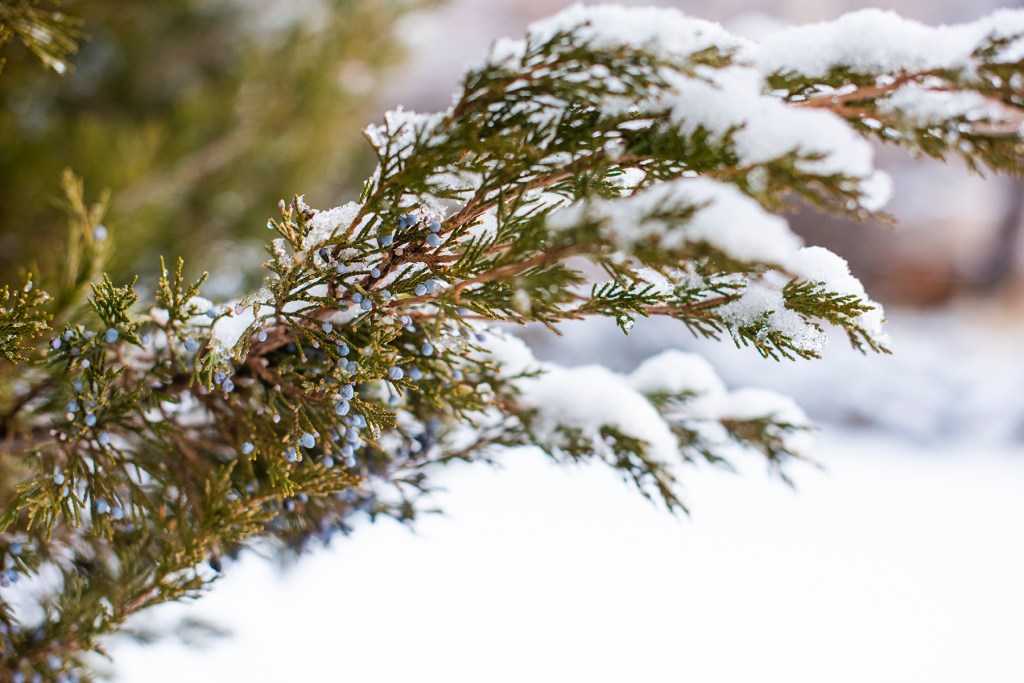
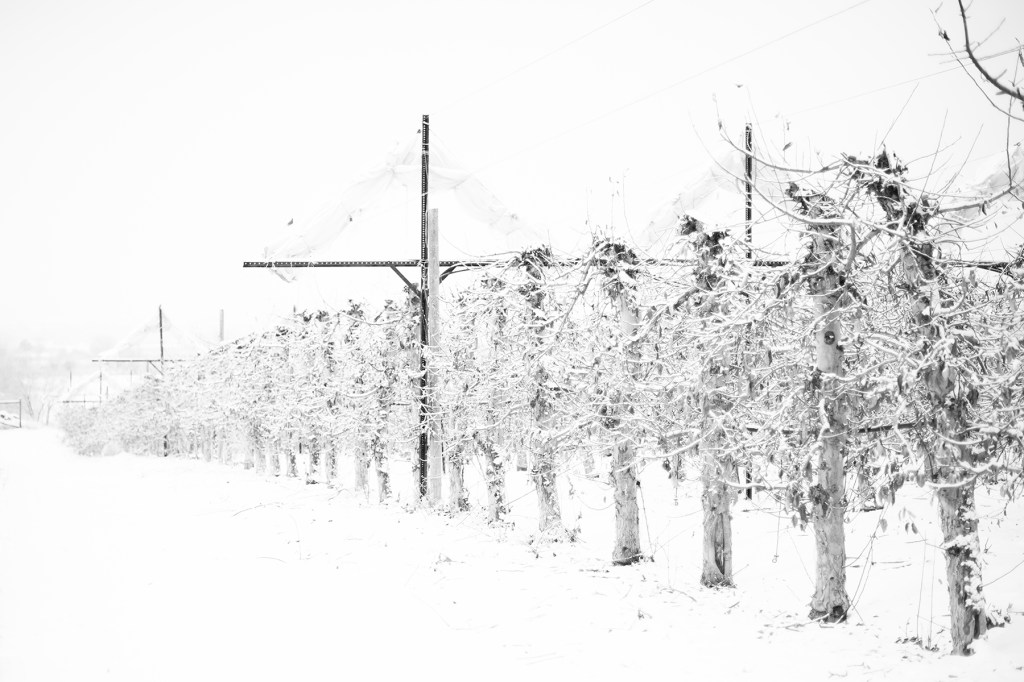
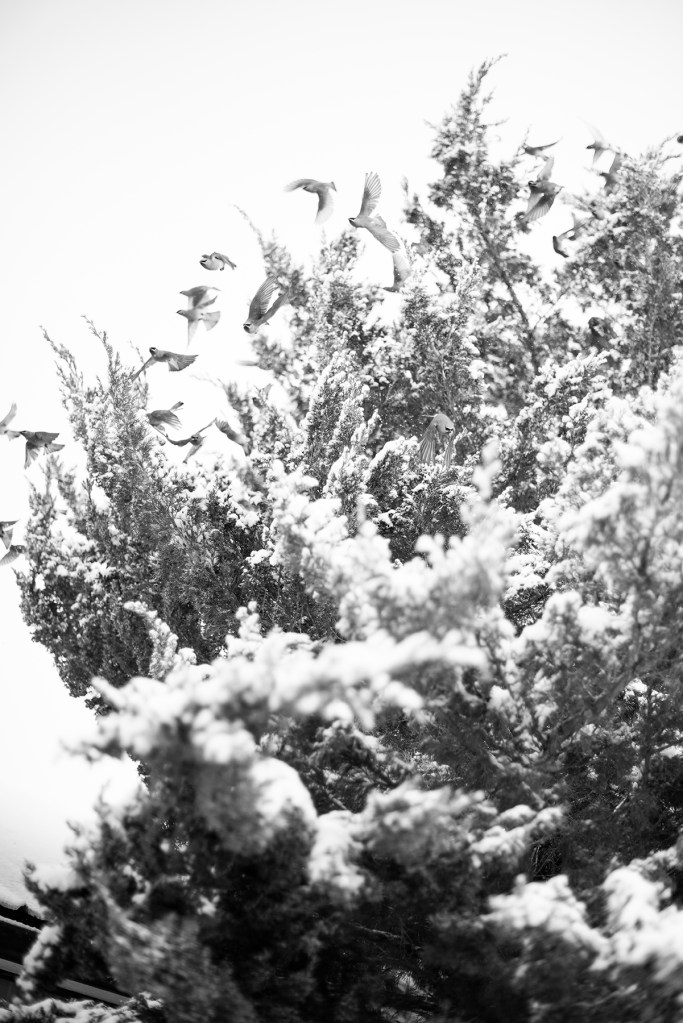
The images in this post might convince you that we’re buried in snow over here at Quiet Farm; sadly, that is not at all true. We have gotten a bit of snow both here and up on the mesa, and of course we’re grateful for every last flake, but it’s still looking as though it’s going to be a painfully dry year. As always, the only thing within our control is how we use the water we do have, so we’ll be focusing our efforts on making sure that not a drop goes to waste.
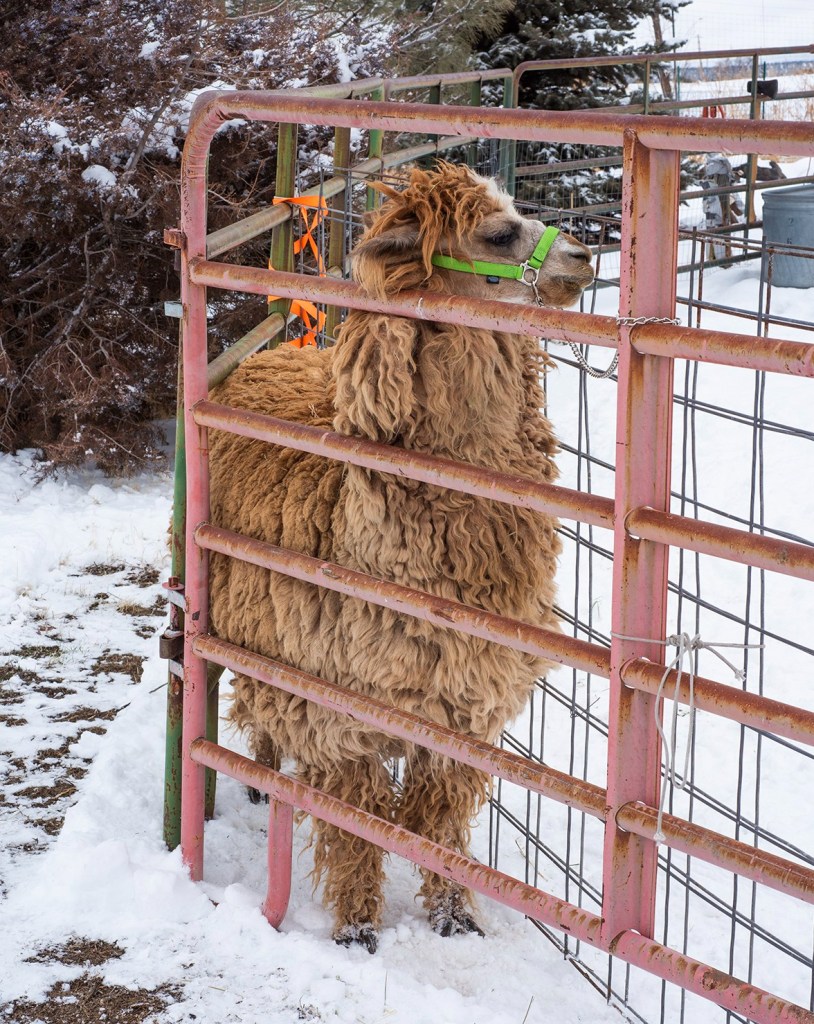
Paris secured in our makeshift crush before the vet’s arrival.
One great accomplishment that we’ve had recently is to successfully geld one of our male alpacas, Paris. His behavior had become increasingly aggressive and since we are not running a breeding program, there is no reason to keep an intact male on the farm. We were able to safely secure him in a “crush,” and our terrific local vet took care of the rest. It takes about sixty days for all the testosterone to leave his system, but his aggressive behavior has definitely lessened since the fateful day. We’re also pleased to announce that we’re on the mobile shearing schedule for the spring, so the alpacas will be getting a tidy cut in late May or early June, which will make them much more comfortable this summer. We are working on halter-training all the animals so that we can handle them in a safe and calm manner – this is much easier said than done, and frequently both humans and alpacas stomp off in frustration and tears. (Okay, maybe not the alpacas. Definitely the humans.)
Our game fence is good for more than just keeping out deer!
I’m also proud to announce that I’ve finished a patchwork quilt I started late last year. I won’t lie: I made approximately ten million mistakes on this quilt and learned so much about what not to do in quilting. I also unknowingly caused a lot of my own problems by designing a somewhat complicated pattern that required an excessive amount of piecework and stop/start stitching. (It’s only my fourth full-size quilt, however, so perhaps I should cut myself a bit of slack. I am very much a novice.) I read an article recently about different crafting hobbies people had taken up during the pandemic; one woman tackled a complicated shawl using fairly advanced knitting techniques. She wrote, “I almost quit a lot of times. But I kept at it, and I was both miserable and joyful at times – it was a good emotional process for me. The challenge was a great distraction from the chaos and stress of the unknown.” That accurately sums up my feelings about making this quilt – and I’m already excited about starting my next one.
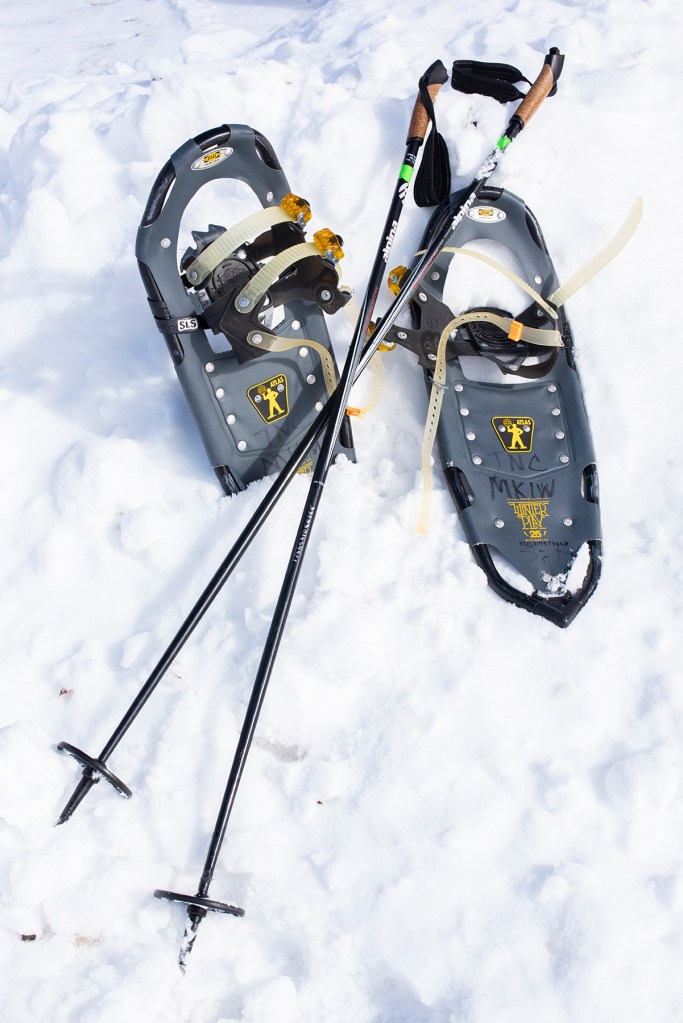
Snowshoeing is a surprisingly challenging workout!
We’ve mentioned on more than one occasion how much we adore our local library system; to make us love them even more, they’ve started loaning snowshoeing equipment! We’re about twenty minutes’ away from some of the best snowshoe/cross-country trails in the West, and borrowing equipment and just running up the mountain for a couple of hours has been a terrific break. (Even better: many of the trails ban loud, obnoxious snowmobiles.) We’re hopeful that we’ll be able to go a few more times before the demands of spring on the farm limit our time away.
This is an ideal afternoon snackwith a strong cup of PG Tips.
There’s been more comfort baking than usual ’round these parts lately. One favorite is a long-ago classic that I’ve resurrected because for once I have a massive bag of spelt flour andplenty of fresh rosemary on hand: this rosemary-chocolate olive oil cake, originally from Kim Boyce’s Good to the Grain. This may not be to everyone’s liking – rosemary isn’t frequently used in desserts – but I love it and don’t find the piney herb flavor overwhelming at all. The cake is tender, delicate and not too sweet, and is a perfect afternoon pick-me-up. I highly recommend a good-quality 70% dark chocolate bar here, cut into rough chunks, plus a generous sprinkling of turbinado sugar on top for extra crunch and texture. (For high-altitude bakers: I reduced the baking powder to 1 tsp. but didn’t make any other changes.) As with most things I bake, more than half of this cake promptly went straight into the freezer as a gift to my future self.
Stay calm and stay sane out there, dear friends. The best thing we can do is just to keep going.
Hello there, and how are things in your world? We’re still in the slower season here at Quiet Farm, but we’re starting to think about spring planting and other farm tasks on our to-do list. The biggest issue on our minds right now is definitely water, or lack thereof – it’s been far too warm and dry this winter, with very little snow. We need about twenty feet of snowpack on the Grand Mesa in order to have decent irrigation run-off in spring and summer, and right now we have two feet – or ten percent of what we need. We are hoping for an exceptionally wet spring, but to be honest it’s looking as though our “extraordinary drought conditions” will persist, which likely means more wildfires, too. With that concern front and center, we’re always thinking of ways we can use the water we do have more efficiently.
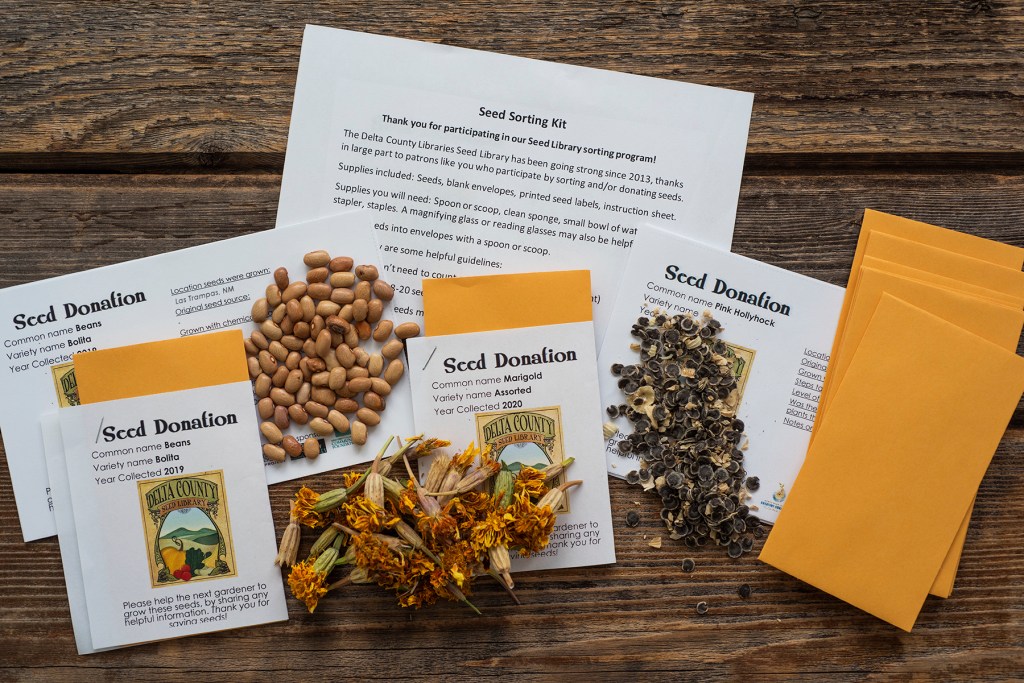
We love our local library’s seed bank!
We are huge fans of the Delta County Library system, which does yeoman’s work on a painfully limited budget. In years past we’ve attended “seed-sorting parties” in late winter to help the library prepare its extensive seed bank for the spring growing season. Obviously we cannot gather in person at the moment, so the library managed a perfect pivot and created take-home kits for volunteers. Each kit contained donated seeds (we received bolita beans, marigolds and pink hollyhock) and we sorted and packaged the seeds into individual labeled envelopes. Local gardeners are encouraged to “check out” seeds in spring, grow out the crop, then collect and return seeds to the library in autumn to share with other gardeners. The seed library has been going strong in Delta County since 2013; this program not only encourages seed-saving, but also provides an incredible wealth of locally-adapted seeds and helps build our foodshed’s sovereignty. A task like this is well worth our time.
“In a year that stripped life to bare fundamentals, the natural world has become our shared story. Seasons have offered the rare reminder that the world moves on even as our sense of time blurs.”
“The undeniable hardship of this winter is a reminder that for much of human history, particularly in colder climates, winter was a season simply to be survived. Winter is a primal time of death and loss, and a time for grief. It reminds us that darkness, not only light, is part of the recurring rhythm of what it means to be human.”
There’s no question that it’s been one hell of a week. Scratch that: it’s been one hell of a year. Over here at Quiet Farm, though, we carry on planting, tidying, baking, canning, caring for our animals and preparing for winter. Here are a few things we’ve been up to recently, if you’d like to see.
Ready for a long winter’s nap.
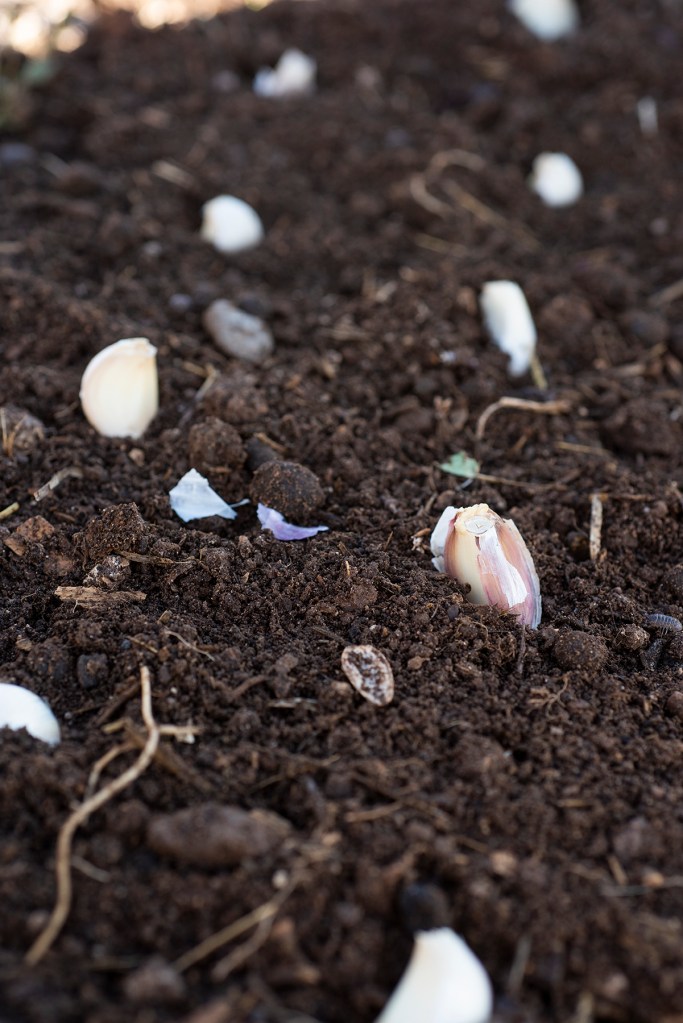
We planted our 2021 garlic crop this week; it’s tucked under a warm, cozy blanket of compost, alpaca manure and straw. Garlic is a unique annual crop in that it stays in the ground for about nine months, but during that time it requires almost no maintenance beyond occasional watering. As usual, we’d separated this year’s garlic harvest and saved the largest cloves for planting; thanks to garden magic, each individual clove grows into a full head. We planted about one hundred and fifty cloves in two new beds, then a friend texted with an offer of extra garlic that she had over-ordered (thanks, Judy!), so another seventy cloves went into an additional row. Every year I run out of garlic before the July harvest, and every year I vow to plant more. Will over two hundred heads be enough for next year? Stay tuned, and vampires beware.
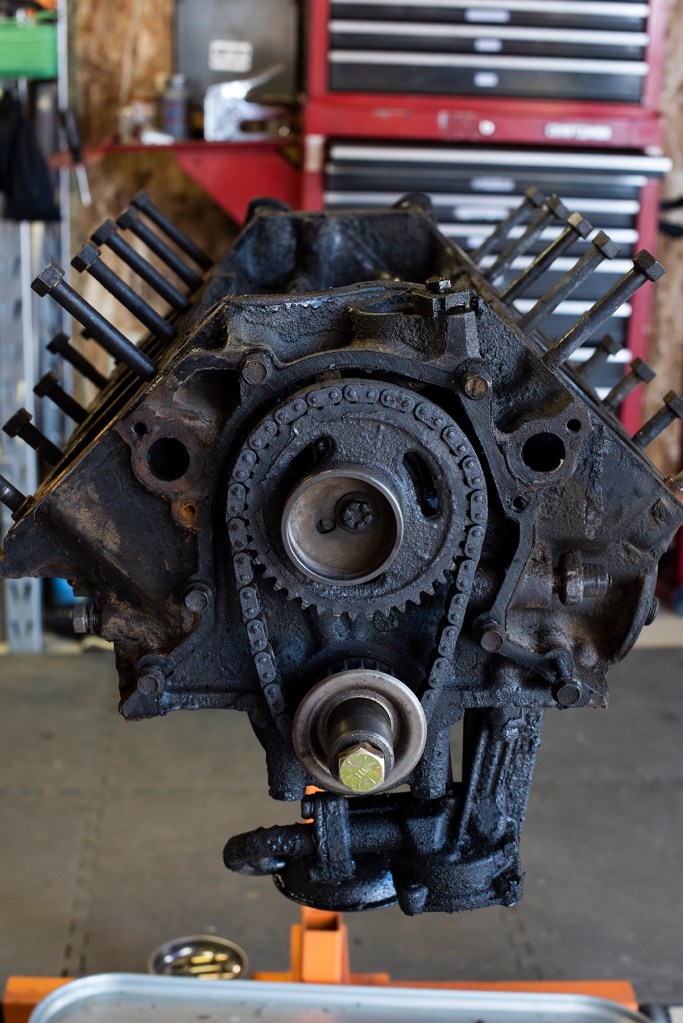
Simple. Elegant. Gorgeous. (Also filthy.)
My winter will hopefully involve lots of sewing and reading, and N will focus his time and energy on this rescued beauty. For all you gearheads out there, this is a classic example of American motor muscle: a Ford 289 small-block V8 manufactured in the summer of 1964; it likely came out of a Mustang or a Galaxie. At the moment, it needs a lot of cleaning and possibly a replacement part or two, but who knows what it could accomplish once restored to its former glory? While electric cars might be all the rage, there is much to be said for the elegant simplicity of a powerful internal combustion engine. (We obviously love beautiful 1960s Americana here; see also the recently-acquired Singer Touch ‘N’ Sew.)
So thrilled with our dry bean harvest!
I may well be more proud of the beans we grew than just about any other crop. While I love growing vegetables, with each passing year (especially when there’s a pandemic and associated food scarcity!) I am more and more committed to growing long-term food storage crops like grains and beans. We planted just one small row of these ‘Peregion’ beans this season, and though I doubt I have more than a few pounds of homegrown beans for the winter, I know that I’ll be expanding on the varieties we grow next season. Dry beans are easy to grow and to store, require very little post-harvest processing and punch well above their weight in terms of nutritional value. Plus, they’re delicious! We hope to grow a lot more beans here at Quiet Farm.
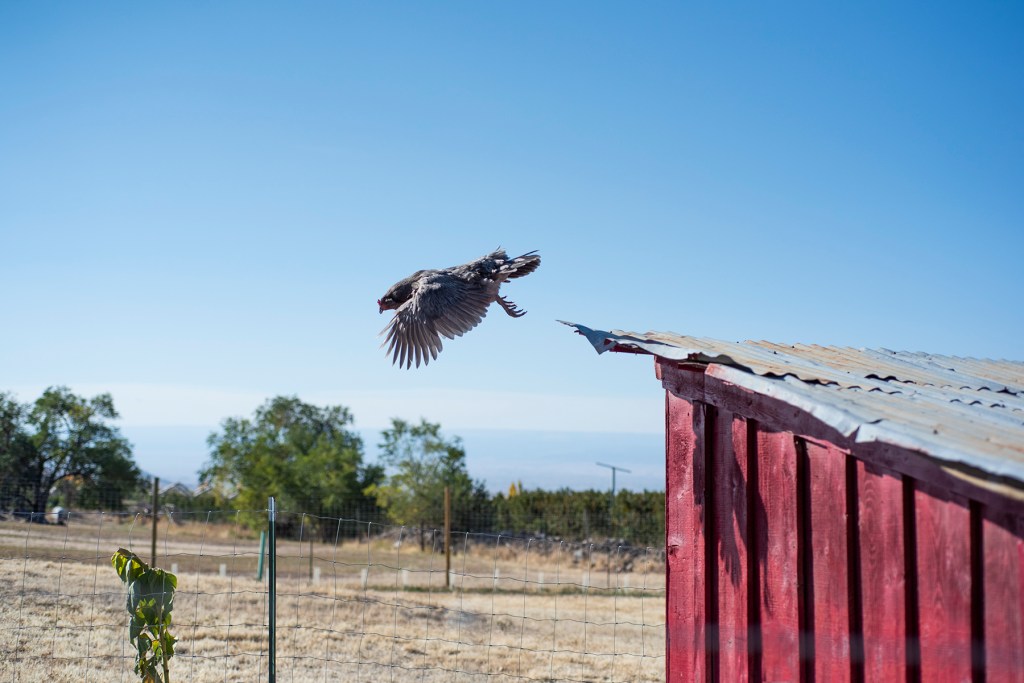
Flying the coop.
Domestic chickens are the closest living relatives of the T.Rex (that’s true) and have similarly tiny brains. Here, one of our genius hens decided to make her way to the top of the chicken house, but was understandably somewhat perplexed as to how she might get down – although she did finally make the leap. Little does she know that the roof offers zero protection from raptors, of which we have many, and actually makes a perfect runway for a hungry hawk searching for a tasty chicken meal. If she continues her high-flying adventures, she’ll learn that lesson the hard way.
This is how we roll.
True confession time, friends: all November and December issues of food and entertaining magazines (Bon Appetit, Food & Wine, Martha Stewart, etc.) received at Quiet Farm usually go straight into the library donation bin without even being opened once. Such is the extent of my loathing for the end-of-year holidays and all the attendant expectations, “must-have foods,” waste and excess! This year, however, a customer requested soft, fluffy dinner rolls, and I wanted to experiment with a few different iterations. Plus, I was completely sold on this caption: “If food could give you a hug, these rolls definitely would.” As we face the end of one of the most difficult years any of us have ever experienced, is there anything we all need more than a giant, warm, comforting hug? I think not. (P.S. The rolls are a bit labor-intensive but excellent, and they work at altitude. Worth your time.)
Wishing everyone a calm, restful and healthy week.
Our first snowstorm arrived late last night, and with that, the 2020 growing season at Quiet Farm has officially concluded. Much of the past week has been spent preparing for this introduction to winter; though our skies will clear and temperatures will rise again later in the week, none of our annual crops will survive this cold snap. We’ve been threatened with hard freezes prior to this and have been lucky enough not to lose any plants; our season lasted far longer than expected. We’re hopeful that this early, wet storm will help the firefighters battling the numerous destructive wildfires currently raging across Colorado.
Flooding our pasture with snowmelt from the Grand Mesa.
We ran our final irrigation last week, then broke down most of our gated pipe so that we can repair any damaged gates and valves during the off-season. We have stellar water shares here at Quiet Farm, and thanks to N’s careful planning, we made our water last all season. This year was definitely a rebuilding year for our pasture, and we’re optimistic that our plans for next year’s irrigation run, which include reseeding, marking and thoughtful grazing by our herd, will yield even better results. Small farms are key to fighting climate change – if managed well, land like ours can absorb far more carbon than it emits. Establishing these “carbon sinks” across the country should be of highest priority; if this season’s devastating wildfires are any indication, the Rocky Mountain West has a tough road ahead.
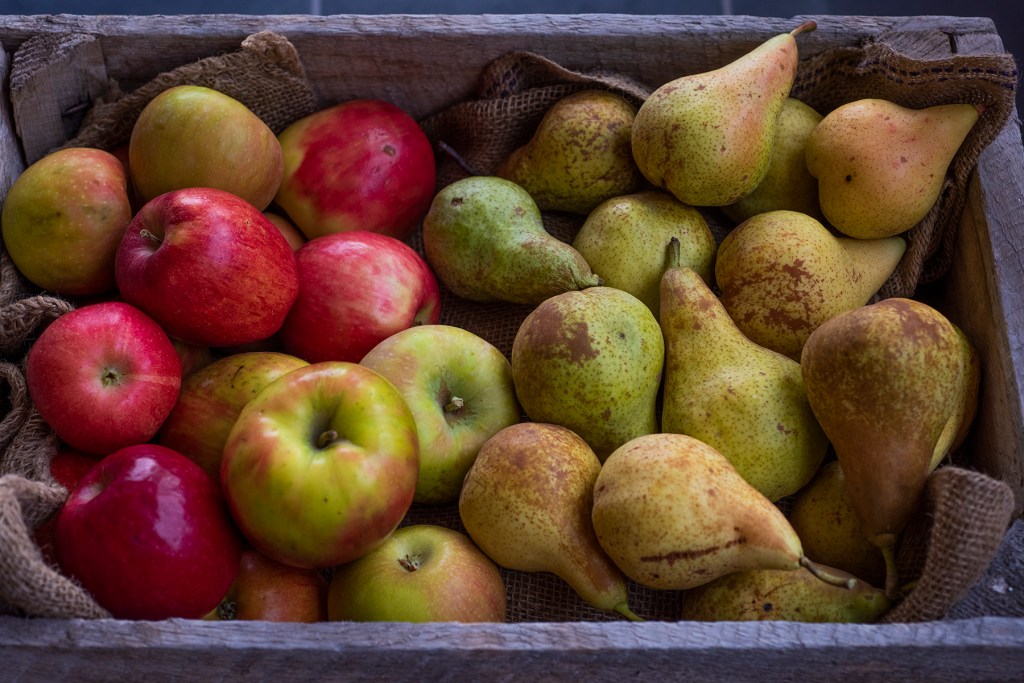
Fresh, local fruit is one of the great joys of living where we do.
There is much to be done outdoors – plant garlic, collect seeds, tidy irrigation – but there is much to be done indoors, too. We are in the height of harvest season, and every available surface in our house is littered with canning jars, dehydrator trays and other preservation projects in various stages of completion. Our goal is to eat locally as much as possible, and in the dark months of winter and early spring, that means we eat from the pantry and freezer – but only if we’ve done the hard work in advance.
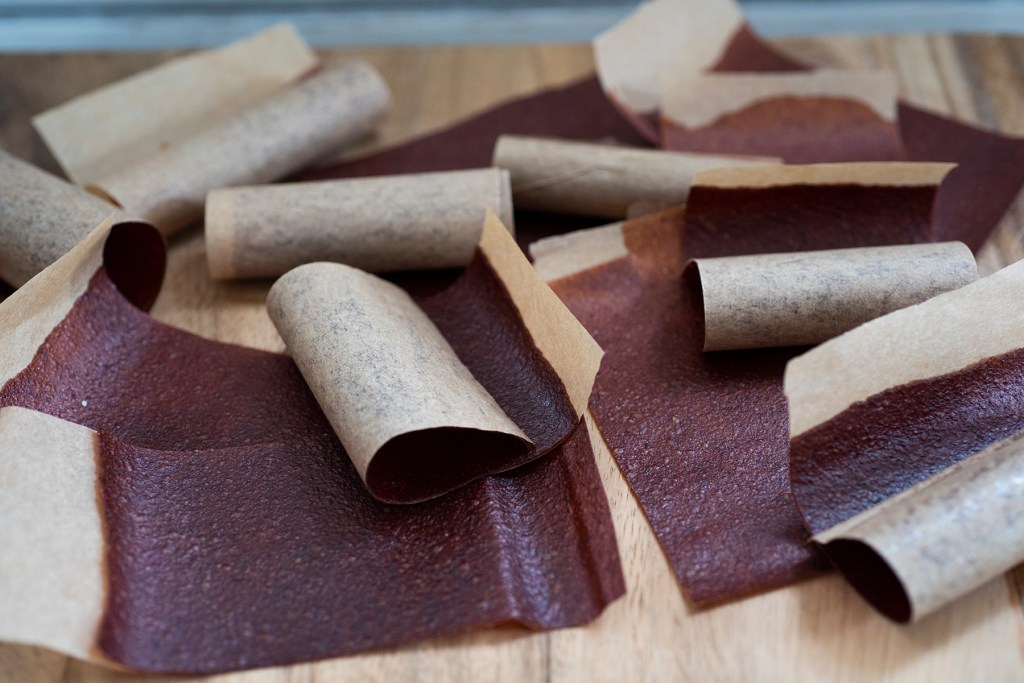
Homemade fruit leather makes a perfect healthy and portable snack.
Obviously, no one has to preserve and store the harvest any longer, and many would think the extra work we do this time of year is preposterous. Preservation is a dying art, because we live in a magical world where any food we might want, in season or not, is available with a single click. Also, most of us don’t grow our own food, so there’s even less incentive to preserve. Where our great-grandmothers might have been obligated to can their summer vegetables in order to have anything to eat in winter, we most definitely are not. And preserving can be tedious, time-consuming work. Why, then, go through all this extra effort?
How are things in your world, friends? It’s officially autumn here, with clear bluebird days and crisp, cool nights; the destructive Pine Gulch fire, sparked at the end of July about seventy miles away, is thankfully entirely contained. Our neighboring orchards are nearly all harvested, and our task list is packed with tidying, organizing, preserving, cleaning and stocking up for what we hope is a very snowy winter.
Hay for animal feed has to stay dry at all costs.
The winter feed for our alpacas and llama has been delivered and safely stored in our de facto hay barn. As this is our first year with the animals, we had to guess on quantities and are hoping that we won’t find ourselves out of hay in frigid January with no green pasture on the near horizon – in a situation like that, a hay farmer will be able to charge us whatever he wishes, and rightfully so. Our llama, Kingston, has already figured out that with some crafty contortionist maneuvering he can reach the fresh bales through the corral panels. Bless his tenacity, and his flexible neck.
Slowly but surely, summer is giving way to fall – or winter, really, considering Tuesday night’s forecast. From a high today of just above 90, the thermometer will plummet sixty degrees to a projected hard freeze Tuesday night, and possibly snow, too. This shockingly early first frost (it usually occurs in the first or second week of October) is on-brand for the utter debacle that is 2020, and it will likely kill all of our tomatoes, peppers, squash, cucumbers, flowers and delicate herbs. None of these plants are even close to finished for the season, so our overall yields will be cut in half, at least. It’s a terrible, heartbreaking situation for any farmer, and we’re no exception.
At the moment, though, we still have lots of blooms on the farm, and it’s fascinating to watch the flowering plants shift with the seasons. Here are a few we’ve spotted recently (see blossoms from earlier this season here and here). After Wednesday morning, all of these will have vanished.